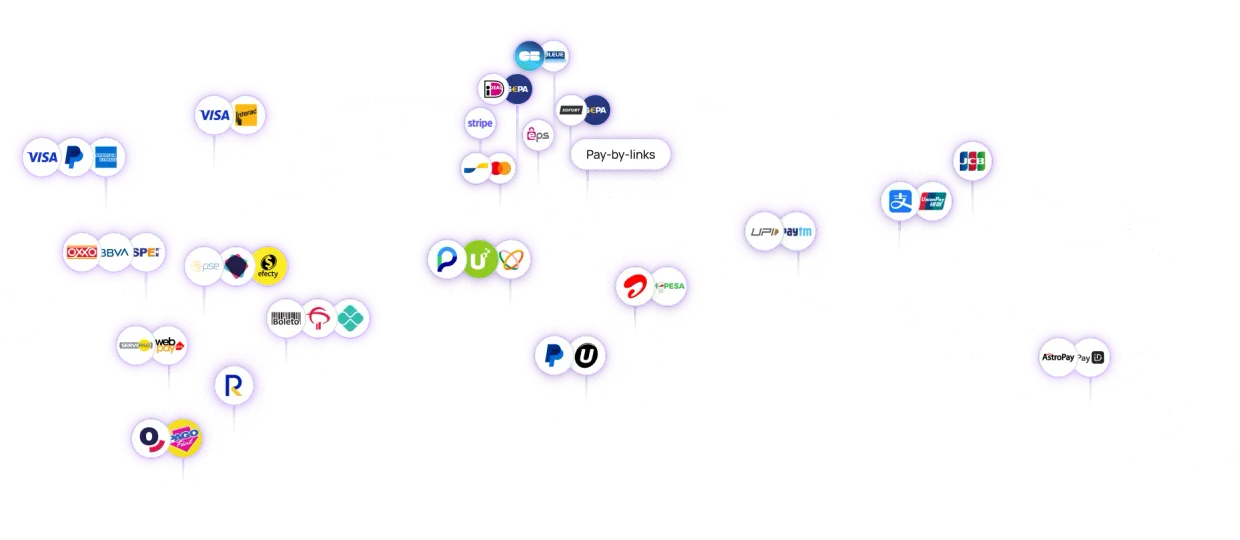
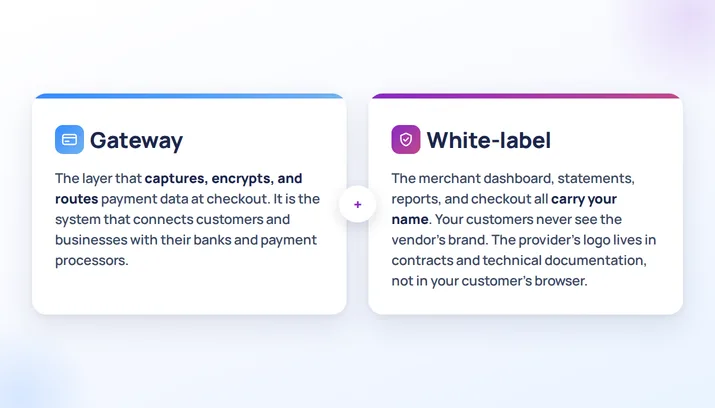
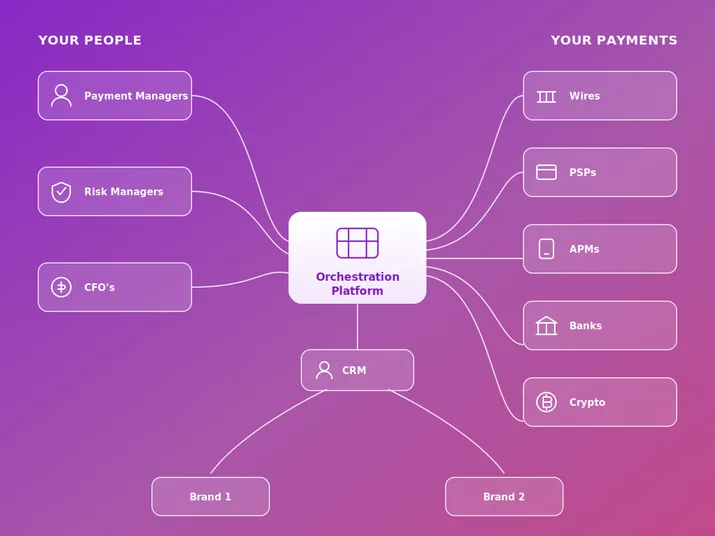
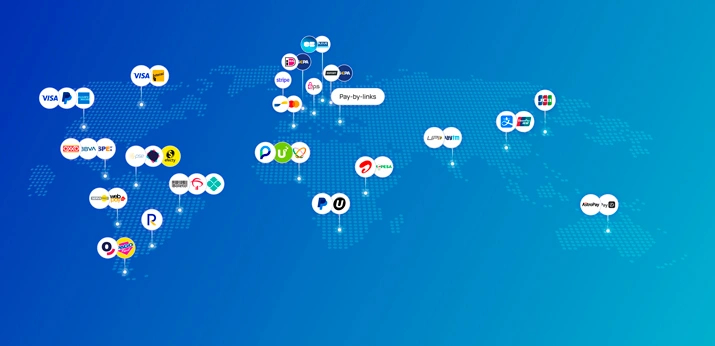
# Payneteasy — Full Content > Payneteasy is a global payment technology company providing white-label payment gateway, payment orchestration, and fintech infrastructure for PSPs, banks, and enterprise merchants. Trusted since 2005, the platform processes up to 10 million transactions per day with 1000+ payment integrations and PCI DSS Level 1 compliance. Source: full markdown dump of indexable pages from payneteasy.com, generated automatically on each deploy. --- ## Payment Orchestration & Gateway Platform | Payneteasy Source: https://test-seo-payenteasy.pne.io _With the help of our payment solutions you can expand the possibilities of your business. All payment methods in one system - Payneteasy_ [](/static/video/mainBgVideo.webm) The best white-label payment gateway for PSPs and an advanced Orchestration Platform for large merchants to enable seamless payment processing Book a demo Contact sales ## The one-stop solution caters to all your needs: from integration to reconciliation Our PCI DSS Level 1 Gateway brings together everything you need to manage payments, payouts and expand your business Advanced Routing and Cascading Cutting-Edge Risk Management Superior Reporting and Reconciliation Real-Time Support [99.95% Verified Uptime 4 years on Pingdom](https://status.payneteasy.eu/) Fast Integration Services ## An expert approach to payments and finance Payneteasy is proud to be a trusted partner of top-tier PSPs, high-traffic systems, and the largest merchants and financial institutions across the world. In collaboration with these prominent industry players, we tackle projects of remarkable scale and complexity and explore new horizons of payment solutions. over 20 years of servicing payment businesses worldwide more than [1000](/integrations) integrations worldwide up to 10M transactions per day can be processed with Payneteasy any currency and payment method is supported by design ## The Key Pillar for Global Commerce Meet the ever-changing client demand for emerging and innovative payment methods in consumer, merchant, and corporate transactions worldwide Swipe to see full map ## Overcome Today's Challenges of Payments Rapidly respond to shifting trends, new regulatory mandates, and emerging competition across all lines of business and payment types with a state-of-the-art payment platform Contact our team [Discover technology](/payment_technologies) Flexible Technology Cover all the demands of today's global payment landscape with our easy-to-use, responsive, and flexible technology Secure Payment Environment Enhance your brand by creating a safe payment environment for your customers and partners with our powerful and secure software solutions Customization Compete in the global market while benefiting from the convenience of software integrated with hundreds of successful banks, PSPs, and financial institutions worldwide and tailored to your specific business needs Ultimate Solution No matter what you are looking for in a payment platform and how high you’re aiming, we have the ultimate solution for you Products ## Boost your business with our all-in-one payment products ecosystem [PSP ### Payneteasy Payment Gateway Our white-label payment gateway provides a scalable technical infrastructure that we continually maintain and enhance for you, allowing you to get online quickly and easily. Enjoy the advantages of a sophisticated ready-made payment gateway and a team of payment industry experts at your disposal Learn more](/solutions/gateway) [Merchants ### Payment Orchestration Platform The only integration you need to consolidate all your payment providers into a unified management system. Control your payments, increase your acceptance rate, and reduce your operational costs via a single interface. Learn more](/solutions/orchestration-payment-platform) [Merchants ### Leads Protection System LPS is a powerful solution based on the best PCI DSS practices. It is a technological solution for GDPR compliance that will protect your most valuable data and leads from hackers, thieves, malware, and even from trusted employees Learn more](/solutions/leads_protection_system) Services ## Our services are built to meet any specific business needs [### Payneteasy Payment Channels Start using any PSP in 5-7 business days with documentation ready upfront and avoid long delays caused by your cashier integration process. 1000+ integrations already available Learn more](/solutions/channels) [### 3DS Adapter Our solution enables you to process payments in compliance with all the current regulations while achieving a high approval rate due to the advanced authentication step’s invisibility for your clients Learn more](/solutions/3ds_adapter) [### Tailor-Made Projects Implement payment and card processing projects of any complexity using Payneteasy’s supreme technologies Learn more](/solutions/individual_solutions) ## Unleash your possibilities with powerful preprocessing management Expand the possibilities of your business and achieve global recognition with the most innovative approach to working with payments, setting up the processing flow, managing traffic, and analyzing data ### Multichannel API Such a flexibility layer in the processing flow enables the system to accept any payment data from the client and integrate it into a unified traffic management system. Payneteasy offers multichannel APIs for processing all payment types. ### Custom API Configuration When Adding a New Business Payneteasy provides the opportunity to configure a custom API to PSPs and merchants whose needs do not fit the mold. The new API is created with all client requirements and payment flow specifics in mind. ### Full White-Label Solution And Platform Branding - Company logo and brand colors - Printed forms and documentation - Site pages and web & mobile app payment forms - Custom API configuration ## Masterfully Handling Heavy-Load Payment Processes Payneteasy offers a reliable, convenient, and secure payment platform for organizations that handle high-load transactions like PSPs, banks, and large retail projects ### Designed for high transactional volumes Our processing solution, built on an independent proprietary platform, can handle up to 10 million transactions per day. ### A horizontally and vertically scalable infrastructure Capable of handling large volumes of payment transactions and is being constantly maintained and improved for your convenience ### Stable operations 24/7 Payneteasy processing centers are based at multiple locations and connected by a fault-proof channel ### Open-source developments based on Java and MySQL Make it possible to organize the solution’s convenient and straightforward implementation by technical specialists, significantly reducing the time and labor costs for launching, configuring, and refining the platform ## Get optimal setup for your industry to ensure better payment experience for your customers [PSPs](/branches/provider) [Banks](/branches/banks) [Merchants](/branches/retail) [Fintech](/branches/fintech) [Marketplaces](/branches/marketplaces) --- ## Future of Retail: Key Trends & Considerations for 2024 | Blog Payneteasy Source: https://test-seo-payenteasy.pne.io/blog/top-retail-trends-merchants-cant-ignore-in-2024-and-beyond _Which factors defined the retail sector in 2023? What trends will drive commerce in 2024? Get all the answers in this insightful overview!_ 14.11.2023 6 min read Table of contents 1. [Looking Back at the 2023 Retail Landscape](#looking-back-at-the-2023-retail-landscape) 2. [5 Key Retail Trends to Watch Out for in 2024](#5-key-retail-trends-to-watch-out-for-in-2024) 3. [The Future of Retail: Long-Term Forecasts to Keep in Mind](#the-future-of-retail-long-term-forecasts-to-keep-in-mind) Contact author Contact author The retail sphere has been experiencing drastic changes over the past years, following the global pandemic. What’s more, this sector is generally never stagnant, as it evolves alongside technological progress and consumer needs. Thus, for merchants to ensure their business remains successful in the long run, it is crucial to keep up with the latest trends and continuously adapt their operations. With this in mind, as 2023 is coming to an end, it is the perfect time to reflect on the past year and set expectations for the upcoming months. In this guide, you will find the insights you need to put together a picture of the current state of global retail, the key forces behind its evolution, and the future prospects for the industry. Keep reading for all the details! ## Looking Back at the 2023 Retail Landscape The year 2023 was marked by the continuation of shopping digitalization that has been previously accelerated by the COVID-19 pandemic. However, this doesn’t mean that consumers do not wish to shop offline anymore. In fact, US offline retail sales are expected to reach an impressive [$4.2 trillion](https://www.forrester.com/blogs/us-offline-retail-sales-will-reach-4-2-trillion-by-2028/) by 2028, with many other countries witnessing a similar uptrend. Due to this, many modern retailers seem to have set their course on creating a balanced mix of offline and online experiences. This tactic enables businesses to cater to wider audiences while making each individual customer feel like their unique needs and preferences are understood. Here are some of the most prominent retail trends that have been reflecting this major tendency throughout 2023: - **Meeting shoppers where they are.** According to a [2023 Customer Experience Trends report](https://cxtrends.zendesk.com/?_ga=2.183776421.2017553835.1698854097-1338309247.1698854097&_gl=1*19lnvfm*_ga*MTMzODMwOTI0Ny4xNjk4ODU0MDk3*_ga_FBP7C61M6Z*MTY5ODg1NDA5Ny4xLjEuMTY5ODg1NTQyMy42MC4wLjA.), 64% of shoppers spend more if their issues get resolved via their preferred channel. Many retailers respond to this tendency by leveraging various offline and online platforms to engage with clients and ensuring the convenience and accessibility of shopping experiences. - **Phygital retail.** This current trend is all about blending the physical and digital shopping experiences. Retailers are integrating new-gen technology into offline stores, enhancing the customer journey with AR, interactive displays, and seamless omnichannel shopping. - **Metaverse shopping.** In 2023, we saw the metaverse grow into a more feasible frontier for retail as more merchants explored immersive virtual environments to engage with customers and offer unique shopping experiences. For instance, Tommy Hilfiger hosted an offline fashion show that was also [broadcast to Roblox users](https://hypebeast.com/2022/7/tommy-hilfiger-to-host-nyfw-show-inside-robloxs-metaverse) in real time. - **Streamlined return process.** Retailers are placing increased emphasis on optimizing the return process. This year, an increasing number of stores introduced automated return kiosks, enhanced online return procedures, and introduced sustainable initiatives to reduce waste. - **Personalization of the shopping experience.** Nowadays, retailers are actively leveraging data and advanced analytics to provide highly personalized shopping experiences. This trend involves tailoring product recommendations, marketing, and in-store interactions to match individual preferences better than ever before. Given the effectiveness of these initiatives, it is safe to assume that they are here to stay for 2024. But will there be any new trends taking center stage? Keep reading to find out! ## 5 Key Retail Trends to Watch Out for in 2024 Here are the top factors that are likely to be the retail industry’s main driving forces in 2024: **1. Shifting Consumer Preferences** eCommerce is set to continue expanding its presence, with the revenue from it expected to top [$1 trillion](https://archerpoint.com/ecommerce-trends-for-2024/) in 2024 and account for nearly 20% of all retail sales in the US alone. However, the categories of goods that people are buying online seem to be changing. For instance, essential products like groceries and personal care products are predicted to attract a higher number of Internet shoppers. On the other hand, the online sales of home improvement goods and large appliances are forecast to either decline or see minimal growth. However, experts agree that retailers will have to put additional effort into attracting consumers to physical stores in the coming year. This involves providing unique offerings, such as exclusive products, special deals, or enjoyable and distinctive in-store experiences that can’t be replicated online. **2. Personalized Deals** In 2024, providing deals and discounts will continue to be important for attracting new customers and retaining the old ones, particularly when it comes to digital advertising. What’s more, these offers need to be personalized for the best results. A great rule of thumb here is to focus on delivering the right product to the right consumer at the right price. **3. Data-Driven Approach to Omnichannel Retail** As you know, modern shopping has evolved beyond traditional in-store and online experiences. Instead, it is now a flexible process throughout which a person might initiate their customer journey in an offline location and finalize their purchase online, and vice versa. However, as we approach 2024, it is becoming more and more critical for retailers to understand that not every channel serves as a direct sales driver. Thus, merchants need to analyze where their audience discovers products, gathers information about them, and ultimately makes purchases. These valuable insights will enable them to distribute their resources effectively and unlock the full potential of the omnichannel approach. **4. Social Commerce** Based on the latest forecasts, US retail social commerce sales are projected to reach $82.82 billion next year, demonstrating impressive 23.5% year-over-year growth. While Gen Z is expected to be the primary driver of this increase, Generation Alpha is closely following suit. Despite their young age, the latter are already rapidly discovering brands via social media and paving the way for even higher sales in the future. Interestingly, this Gen Alpha is distinct from the previous ones in that they mainly discover brands through video-dominated platforms like YouTube and TikTok. Interestingly, Gen Alpha is drawn to creator-generated content, such as unboxing videos and gaming streams. They also value the autonomy they have in curating their content experiences. This emphasizes the need for retailers to turn to social media and the creation of exciting content to raise brand awareness and engage with younger consumers. **5. Advertising Cooperation** Ad spend in the retail sphere is expected to keep growing in 2024, increasing by 22.5% to reach $55.31 billion. However, for this trend to continue, both retailers and advertisers need to take some important steps. For instance, retail media networks (RMNs) should start adopting common methods to measure how well ads are performing across different platforms. It is also advisable to try out new advertising opportunities in areas like connected TV, social media, and the open web. Advertisers, on the other hand, need to make sure their goals and budgets match up to get the most out of their investments. ## The Future of Retail: Long-Term Forecasts to Keep in Mind As you can see, retailers have a lot on their plates for the upcoming year. However, while keeping up with the trends mentioned above is essential, it is also crucial to keep long-term industry shifts in mind. One of such standout tendencies is the continued ascent of eCommerce as the primary driver of retail sales growth, with experts projecting double-digit growth through 2027. Due to this, retailers must invest in robust online platforms, optimized customer experiences, and efficient supply chain management. Moreover, retailers should not underestimate the importance of integrating state-of-the-art technology and advanced data analytics into their operations. For instance, the use of smart tech, such as AI-driven chatbots and augmented reality, is already expected by some customer groups across various retail subsectors. Finally, sustainability and ethical considerations are gaining prominence in the long-term outlook for retail. As consumers are becoming more concerned about the environmental impact of their shopping choices, retailers that embrace sustainable practices and transparent practices are likely to gain a significant competitive edge in 2024 and beyond. [Orchestration Platform Merchants Only one integration to consolidate all your payment providers to a unified management system.](/solutions/orchestration-payment-platform) [White Label Payment Gateway PSP Offer your customers a top-level payment solution, increase your turnover and boost your business profit.](/solutions/gateway) [Payneteasy 3DS Adapter Strike a balance between utmost security and frictionless checkout with Payneteasy 3DS Adapter.](/solutions/3ds_adapter) Contact author ### Empower your business with strong technology today! Learn how --- ## Card-on-File: What It Is & How It Boosts Checkout | Blog Payneteasy Source: https://test-seo-payenteasy.pne.io/blog/what-is-card-on-file-and-why-do-businesses-need-it _Card-on-file can help a store make transactions smoother, optimize checkout, increase customer satisfaction during payments, and boost sales. Learn how it works!_ 09.11.2022 4 min read Table of contents 1. [What Is Card-on-File and How Does It Function?](#what-is-card-on-file-and-how-does-it-function) 2. [Card-on-File Advantages for a Business](#card-on-file-advantages-for-a-business) 3. [Main Card-on-File Challenges](#main-card-on-file-challenges) 4. [Use Cases of Card-on-File Payments](#use-cases-of-card-on-file-payments) 5. [How to Implement Card-on-File Transactions Effectively](#how-to-implement-card-on-file-transactions-effectively) 6. [Is Card-on-File Worth Implementing?](#is-card-on-file-worth-implementing) Contact author Contact author Merchants nowadays are continuously searching for ways to streamline the payment process to cater to customers who appreciate shopping with speed and convenience. While it can be achieved in multiple ways, card-on-file (CoF) transactions remain one of the most effective tools to optimize checkout and boost sales. This guide contains all the information you need to know about CoF, including an explanation of how it works and why it can be effective, examples of its use cases, a list of benefits and challenges linked to it, and some practical tips on this solution’s implementation. Read ahead not to miss any of these valuable insights! ## What Is Card-on-File and How Does It Function? The card-on-file concept is very straightforward: it is a practice when a business stores the payment card data with the cardholder’s consent. These stored details are used for future payments to ensure a faster and smoother checkout. Each card-on-file transaction features five essential participants: - **Customer.** The individual who uses their card to initiate the transaction and purchases a product or service. - **Business.** The establishment or entity receiving the money for products or services. - **Payment processor.** The company responsible for facilitating the payments between the customer and the business. - **Card network.** The organization issuing the card, such as Visa or Mastercard. - **Bank.** The financial institution holding the customer account. Also, there are two types of card-on-file payments: - **Consumer-Initiated Transactions (CITs).** This method is applicable when the customer is physically present when providing their data to the merchant. It usually occurs either at a POS terminal of a brick-and-mortar store or an online website page. - **Merchant-Initiated Transactions (MITs).** This approach requires a CIT to take place previously so that the merchant is authorized to initiate a transaction without the cardholder being present and no extra verification required. MITs are typically used when it comes to automated billing and subscriptions. There are multiple ways in which businesses can receive cardholders’ consent to store payment information, such as by prompting them to: - Use their debit or credit card at a POS terminal and sign a receipt - Fill in a form online - Share their bank card details during a phone call Aside from being fairly easy to implement, card-on-file transactions have a plethora of other benefits for both business entities and consumers. ## Card-on-File Advantages for a Business While CoF is a simple tool at first glance, implementing it can be extremely effective for business entities. Card-on-file transactions play a critical role in: - **Ensuring a faster checkout experience.** Not having to fill in all the payment details can be a relief for consumers, as it makes swift one-click transactions possible. - **Improving the cash flow.** An efficient checkout process promotes a more consistent cash flow. In addition, CoF creates an opportunity for merchants to offer subscription plans and ensures the invoices are paid on time. - **Boosting the customer retention rate.** A smooth payment experience creates a competitive advantage for businesses and encourages their customers to make repeat purchases. - **Leveraging advanced security and privacy measures.** CoF is extremely secure, as it typically uses encryption and tokenization to effectively prevent fraud and privacy breaches when storing sensitive information. - **Reducing the need for staff effort.** Due to automated payment collection with CoF, employees do not face the need to remind clients about upcoming payments and manually input their payment data multiple times. As you can see, the benefits are plenty - but does CoF also have downsides? ## Main Card-on-File Challenges While CoF has significantly more pros than cons, there are a few challenges of which any business needs to be aware: - **Possible customer hesitation.** Cautious customers may be hesitant to allow merchants to store their card data due to the risks of encountering dishonest players. - **Regulations compliance.** The storage of payment data requires merchants to comply with PCI DSS. - **Manual debit or credit card details updates required.** Consumers have to update their payment details if their debit or credit card expires or they lose it. All in all, based on the overview you’ve just read, the advantages of CoF payments clearly outweigh the downsides both for various customer categories and business entities. ## Use Cases of Card-on-File Payments Given the abundance of CoF’s advantages, it is no surprise that it can be used across a variety of industries and business models. Here are some examples of this solution’s use cases: - **Subscriptions** - CoF is extremely convenient for recurring subscription payments, as the cardholder can be billed periodically without any extra confirmation steps. - **Buy Now, Pay Later services** - BNPL providers often choose to enhance the customer experience by saving debit or credit card details with the help of CoF. - **Mobility and delivery apps** - Applications that provide transportation and delivery services often turn to card-on-file to prevent their customers from re-entering the same information for every ride and order they make. - **Hospitality and travel** - Frequent travelers know how tedious it can get to enter the same payment details over and over again. CoF solves this problem and ensures the payment process is simple and smooth. - **Cashierless stores** - Autonomous stores use AI-based solutions to detect the consumers’ shopping activity and charge them accordingly as they leave. CoF is typically used to complete the payment during the walk-out stage. - **Unified commerce businesses** - Retailers applying the unified commerce model can implement CoF to collect payment data via one platform to simplify the checkout process across all channels they are using. Those are just some examples of where card-on-file transactions can be implemented. As the popularity of online shopping continues to increase, CoF becomes a standard practice at more and more establishments and gradually transforms into an essential feature of the shopping experience that consumers expect to be offered. ## How to Implement Card-on-File Transactions Effectively Incorporating card-on-file transactions into your business can significantly reduce errors in the online payments flow and enhance customer satisfaction. Keep the following considerations in mind when integrating card-on-file: **Streamline Customer Onboarding** You have to consider simplifying the procedure of onboarding customers by minimizing the steps one needs to go through to add and store cards on file. To achieve it, you may want to publish explicit instructions and set up a user-friendly interface that will seamlessly guide consumers. You can also incorporate automatic card recognition and validation to reduce friction, ensure the clients are content, and ultimately boost sales on your site. **Get Explicit Consent** Prior to collecting and storing customers' card information, your business needs to receive permission from the clients in the form of a signed agreement. Therefore, you must clearly convey the terms and benefits of card-on-file transactions, along with the pricing policy and measures in place to ensure information protection. Overall, transparency and confidence are key to getting more and more customers to sign up for recurring payments or simply return to your website for products and services in the future. **Prioritize Security Measures** Ensuring that customer information is secure can be the most crucial step in building trust with your loyal and recurring clients. Thus, you may need to adopt secure encryption protocols and tokenization techniques, evaluate your infrastructure all the time, and stay up-to-date with the newest industry standards. **Give Incentives to Customers** You may want to get more customers to sign up for card-on-file transactions by using such incentives as exclusive discounts or loyalty rewards. Also, remember to emphasize the convenience and time-saving benefits your customers will gain by storing their information for future seamless purchases on your site. **Monitor and Analyze Performance** Regularly monitor and analyze the collected information and key performance metrics linked to card-on-file transactions on your website. These include aspects like conversion rates, average order values, and customer satisfaction levels. You can then learn from these insights and use them to optimize your strategies, identify areas for enhancement, and continually adjust your approach to card-on-file payments over time. ## Is Card-on-File Worth Implementing? Overall, card-on-file transactions have a wide scale of implementation and a multitude of benefits for businesses and customers alike, which contributes to the growth of their presence. As a result, they are becoming so commonplace at this point that merchants who do not adopt this feature risk being left behind. Thus, if, after reading the information above, you see an opportunity for your company to leverage the power of card-on-file to improve operations and drive sales up, it is best not to miss out on it. Contact author ### Empower your business with strong technology today! Learn how --- ## Smart Payment Routing & Balancing | Payneteasy Source: https://test-seo-payenteasy.pne.io/payment_technologies/routing_and_balancing_system _This technology allows you to configure routing distribution depending on the type of traffic, business specifics, and risk management requirements._ Payneteasy provides a comprehensive toolset of traffic routing and balancing, which helps to increase acceptance rate, reduce processing costs and meet agreed limits with PSPs and other financial institutions. ## Routing system The routing system allows to combine different types of traffic and send it to different processors, based on multiple transaction criteria, e.g. country, card type, transaction amount, etc. [Learn more ](/payment_technologies/routing_and_balancing_system/flexible_payment_routing) ## Intelligent balancing system The balancing and cascading system accumulates processing statistics and helps to define which acquirer is most useful for each client and traffic type in terms of increased conversion rate and cost reduction. [Learn more ](/payment_technologies/routing_and_balancing_system/machine_learning_balancing_system) ## Limits and filters Use limits and filters in order not to exceed the permissible traffic volumes for business, merchant or even a customer. [Learn more ](/payment_technologies/routing_and_balancing_system/limits_and_filters_for_acquirers) ## Smart Routing in Action Real-world data demonstrates how intelligent payment routing transforms business performance. +23% Payment conversion increase 47 Routing scenarios configured 34% Cost reduction achieved 5-7 days New method deployment [Read the full case study: E-Commerce Payments in 2026 →](/blog/ecommerce-payments-2026) ## See also [### Technologies Payneteasy wants to make sure that every legit transaction through the gateway turns into profit.](/payment_technologies) ## Frequently Asked Questions ### How does smart payment routing improve approval rates? Smart routing analyzes each transaction and directs it to the acquirer most likely to approve it based on card type, issuer country, amount, and historical performance data. For [white label gateway](/solutions/gateway) operators processing cross-border payments, this can increase approval rates by 5-15% compared to static routing. ### What is transaction cascading? Cascading automatically reroutes a declined transaction to an alternative acquirer. If the primary channel declines, the system tries the next best option in real time — without the customer noticing. This is a core feature of Payneteasy's [payment orchestration platform](/solutions/orchestration-payment-platform). ### Can I configure routing rules per merchant? Yes. Each merchant project in the [white label payment gateway](/solutions/gateway) has independent routing configuration. Set acquirer priorities, amount limits, geographic rules, and fallback chains per merchant — giving your clients optimized payment processing without manual intervention. --- ## Payment Integration Services — Launch in Days | Payneteasy Source: https://test-seo-payenteasy.pne.io/solutions/payment-integration _Payment integration services by Payneteasy: single API, 1000+ methods, 200+ countries. Launch in days, not months. PCI DSS Level 1, smart routing, 24/7 support._ Connect to 1000+ payment methods through a single API. Payneteasy provides the technology platform, integration expertise, and 24/7 support to get your payment project live — fast. Contact Sales ## One integration. Every payment capability you need. Powered by Payneteasy's PCI DSS Level 1 certified payment technology platform [1000+ Payment Methods](/integrations) 200+ Countries Covered 3–14 Day Go-Live 99.95% Uptime 150+ Anti-Fraud Filters 24/7 Technical Support ## Why Payment Integration Takes Months — and How to Fix It Building payment gateway integration from scratch is one of the most underestimated technical challenges in fintech. Companies routinely spend 3–6 months and $100K–$500K connecting to a single [payment gateway](/glossary/what-is-a-payment-gateway), only to realize they need three more for different markets. ### Fragmented Provider Landscape Each [payment processor](/glossary/what-is-a-payment-processor) has its own API format, authentication scheme, error codes, and settlement logic. Supporting 5 providers means building and maintaining 5 separate integrations. ### Regulatory and Compliance Burden Handling raw card data requires [PCI DSS certification](/legal/pcidss) — an expensive, time-consuming process. Different regions impose additional requirements: PSD2/SCA in Europe, RBI guidelines in India, PIX regulations in Brazil. ### Ongoing Maintenance Payment APIs change. Card network rules evolve. 3-D Secure versions update. Each change requires development resources that could be spent building your core product. ## How Payneteasy Payment Integration Works Three steps from zero to processing. Our integration team handles the complexity. 01 Connect Integrate with Payneteasy's unified [API](/glossary/what-is-api) — a single connection point for all payment methods, acquirers, and processors. Choose server-to-server API, hosted payment form, or e-commerce plugin (WooCommerce, Magento, PrestaShop). Our integration engineers provide dedicated support throughout the process. 02 Configure Set up your payment strategy: [routing rules](/glossary/what-is-payment-routing), anti-fraud filters, 3-D Secure policies, [payment method](/glossary/what-is-a-payment-method) selection per region, currency conversion, and reconciliation preferences. Every parameter is configurable through the back office — no code changes needed. 03 Go Live Switch from sandbox to production. Your first transaction processes within days of starting integration. As your business grows, add new payment methods, acquirers, and markets through configuration — no additional development required. ## Payment Methods Available Through a Single Integration - ### Cards - ### APMs - ### Wallets & Crypto - ### Bank Transfers & Payouts ### Card Payment Integration Process cards from every major network through a single API call: Visa, Mastercard, American Express, JCB, UnionPay, Discover, and local card schemes [Smart routing](/payment_technologies/routing_and_balancing_system) across multiple acquirers for maximum [acceptance rates](/glossary/what-is-acquiring) Built-in [EMV 3DS 2.x](/solutions/3ds_adapter) with frictionless authentication Tokenization for [recurring payments](/glossary/recurring-payments) and one-click checkout Support for sale, preauth/capture, refund, void, and card-to-card transfers ### APMs Reach customers who prefer local [payment methods](/blog/the-exhaustive-guide-to-online-payment-methods) over cards: **Europe:** SEPA, iDEAL (Netherlands), Bancontact (Belgium), Giropay (Germany), Przelewy24 (Poland), MB Way (Portugal), Trustly **Latin America:** PIX (Brazil), Boleto, OXXO (Mexico), PSE (Colombia), Webpay (Chile) **Asia-Pacific:** UPI (India), GCash (Philippines), GrabPay, LINE Pay, KakaoPay, Alipay **Africa & Middle East:** M-Pesa, Airtel Money, MTN Mobile Money All accessible through the same API endpoint. Adding a new APM is a configuration change, not a development project. ### Digital Wallets & Cryptocurrency Apple Pay, Google Pay, Samsung Pay — native mobile payment experiences PayPal, Skrill, Neteller, Paysafecard, and 20+ digital wallet providers Cryptocurrency: Bitcoin, Ethereum, USDT, USDC via CoinsPaid and Finrax Automatic fiat conversion for crypto payments ### Bank Transfers & Payouts SWIFT, SEPA Credit Transfer, ACH, and local bank transfer schemes [Payout](/glossary/what-is-a-payout) capabilities: Visa Direct, Mastercard Money Send, bank wire Automated invoice generation and payment reconciliation Real-time payment status tracking through webhooks and polling API ## API & Integration Technical Overview ### Multiple Integration Methods Payneteasy supports multiple payment gateway API integration approaches to match your technical requirements: - **Server-to-Server API** — full control over the payment flow. RESTful API with JSON payloads, webhook notifications, and comprehensive transaction management. - **Hosted Payment Page** — Payneteasy Smart Checkout handles the entire payment form. Fully brandable, PCI-compliant by design, with geo-smart method display. - **E-commerce Plugins** — pre-built modules for WooCommerce, Magento, PrestaShop, OpenCart, Drupal, and more. Install, configure, accept payments. - **mPOS SDK** — Android and iOS SDK for in-person payments. Supports Visa payWave, Mastercard PayPass, Apple Pay, Google Pay, Samsung Pay. [View API Documentation](https://doc.payneteasy.com) ### Sandbox & Testing Environment Every integration starts in a fully functional sandbox. Test transactions, error handling, webhook delivery, 3-D Secure flows, and reconciliation reports without processing real payments. When you are ready, switching to production is a configuration change. Payneteasy assigns a dedicated integration engineer to your project. They review your implementation, help troubleshoot issues, and ensure your go-live is smooth. ## Build Your Own vs. Payneteasy Managed Integration The full picture: what it actually costs to build and maintain payment integration in-house versus partnering with Payneteasy. | Factor | Self-Build | Payneteasy | | --- | --- | --- | | Time to first transaction | 3–6 months | 3–14 days | | Integration cost | $100K–$500K+ per provider | Included in service | | PCI DSS compliance | $50K–$200K/year + audit | Covered (Level 1 certified) | | Payment methods | Build each individually | 1000+ out of the box | | Adding new PSP | Weeks of development | 5–7 business days, configuration only | | Smart routing | Custom ML pipeline required | Built-in, +5–15% approval rate | | Anti-fraud | Buy or build separately | 130+ filters included | | Ongoing maintenance | Dedicated team (3–5 engineers) | Handled by Payneteasy | | Uptime SLA | Depends on your ops team | 99.95% | | White-label | N/A (it is your build) | Full white-label included | ## Who Uses Payneteasy Payment Integration Our technology platform serves payment businesses across industries — from established financial institutions to fast-growing fintech startups. - ### PSPs - ### Banks - ### E-commerce - ### Fintech - ### Marketplaces ### Payment Service Providers [PSPs](/branches/provider) plug into our [orchestration platform](/solutions/orchestration-payment-platform) through a single REST API and go live in weeks — fully under their own brand. One integration replaces years of building gateways, acquirer connectors, and compliance frameworks from scratch. That integration unlocks 1000+ payment methods across 200+ countries, with per-tenant routing, fraud filters, and merchant pricing. Built-in PCI DSS Level 1, [intelligent routing](/glossary/what-is-payment-routing), and multi-acquirer failover let PSPs compete with established players from day one. Show more ### Banks & Financial Institutions [Banks](/branches/banks) modernize payment infrastructure without replacing core banking — the platform sits alongside existing rails, adding card acquiring, [3-D Secure](/glossary/what-is-3ds-3d-secure), real-time fraud prevention, and multi-channel acceptance. White-label architecture preserves bank branding across dashboards, statements, and checkout. Integration completes in weeks via REST API with 24/7 production SLAs — turning payments from a cost center into a revenue stream for corporate and SME clients. Show more ### Large E-commerce & Retail [Large merchants and e-commerce platforms](/branches/retail) integrate Payneteasy to boost acceptance rates and cut transaction costs. The orchestration layer routes each transaction across multiple PSPs through one API — based on BIN, country, and real-time acquirer performance. Chargeback prevention with Ethoca and Verifi stops disputes before they hit the acquirer. [Automated reconciliation](/glossary/payment-reconciliation) across acquirers, currencies, and methods removes hours of daily finance work. One integration replaces 5–10 direct acquirer connections and gives finance teams a single source of truth for every payment flow. Show more ### Fintech Companies [Fintech companies](/branches/fintech) integrate payment capabilities in days — not quarters — through a modern REST API with production-ready SDKs. Teams focus on their core product instead of building payment infrastructure from scratch. The platform supports cryptocurrency processing, split payments, multi-party settlements, and subscription billing. PCI DSS, cross-border FX, acquirer contracts, and compliance audits are handled by Payneteasy — fintech teams ship faster without a dedicated payments squad. Show more ### Marketplaces & Platforms [Marketplace platforms](/branches/marketplaces) handle split payments between vendors, multi-currency processing, automated payouts, and regulatory compliance through one integration — from buyer charge to vendor payout. Flexible commission structures, per-vendor reconciliation, and [global payout rails](/payment_technologies/payouts) across 200+ countries let marketplaces scale without a dedicated payments team. KYC/KYB on vendor onboarding and cross-border tax handling are built into the platform. Show more ## Real-World Integration Speed How payment businesses launched with Payneteasy — in days, not months. ### European PSP: Live in 5 Days A mid-size European PSP needed to launch a new payment brand for the UK market. They had 3 acquirer relationships but no gateway infrastructure. **Challenge:** Go live with 3 acquirers, smart routing, and [fraud prevention](/payment_technologies/risk_management_and_dispute_management_system) before a regulatory deadline. **Result:** Payneteasy deployed a fully white-labeled gateway with all 3 acquirers connected, routing rules configured, and the back office customized — in 5 business days. The PSP was processing live transactions on day 6. ### Fintech Startup: 12 Payment Methods in 10 Days A Series A fintech building a cross-border remittance product needed to accept payments in 8 countries simultaneously. Their previous approach — integrating each PSP individually — was projected to take 4 months. **Challenge:** Accept cards, bank transfers, and local APMs across Europe and Latin America through a single integration. **Result:** Through Payneteasy's [Payment Channels](/solutions/channels), they connected to 4 PSPs and 12 payment methods in 10 days. Adding new markets now takes 5–7 business days of configuration, not months of development. ### E-commerce Platform: +18% Approval Rate A large online retailer was losing revenue due to a 67% card approval rate on their single-acquirer setup. Transactions from certain European markets were declining at over 40%. **Challenge:** Improve approval rates without disrupting the existing checkout experience. **Result:** After integrating Payneteasy's orchestration engine with 3 acquirers, the retailer's approval rate increased to 85% (+18 percentage points). Smart routing automatically sends each transaction to the acquirer with the highest historical approval rate for that card type and region. Annual recovered revenue: estimated $2.4M. ## Why Choose Payneteasy as Your Payment Integration Partner 20+ years building payment technology. Enterprise-grade reliability. Proven at scale. ### We Are the Provider, Not a Reseller Unlike integration agencies that connect you to third-party solutions, Payneteasy builds and operates the payment platform itself. You work directly with the technology team — no middlemen, no finger-pointing when issues arise. ### 20+ Years in Payments Payneteasy has been building payment technology since the early 2000s. Our platform processes up to 10 million transactions per day with 99.95% uptime. We have seen — and solved — every integration challenge in the industry. ### Certified and Compliant [PCI DSS Level 1](/legal/pcidss) certified. [Mastercard SDP](/legal/mastercard) registered. [Visa Global Registry](/legal/visa) member for 7+ years. Google Pay Authorized Partner. EMV-certified terminals. ### Full White-Label Deploy our gateway, payment forms, merchant dashboard, and API documentation under your own brand. Your clients and merchants interact with your brand — Payneteasy is invisible. ### Configuration, Not Development Adding a new acquirer, payment method, or routing rule is a configuration task — completed in days through the back office. No code deployments, no API version changes, no downtime. ### 24/7 Expert Support Dedicated integration engineers during onboarding. 24/7 technical support in production. Direct access to L2/L3 engineering — not a helpdesk queue. We also provide direct support to your key merchants. ## Ready to integrate? Let's get your payment project live. Tell us about your payment integration requirements — our team will propose the fastest path to production. Contact Sales ## Frequently Asked Questions About Payment Integration Services ### What are payment integration services? Payment integration services connect your business application — whether it is an e-commerce platform, mobile app, or SaaS product — to payment processing infrastructure. This includes card networks (Visa, Mastercard), alternative payment methods (PIX, iDEAL, UPI), digital wallets (Apple Pay, Google Pay), and cryptocurrency processors. Payneteasy provides this through a single API integration, so you connect once and access 1000+ payment methods across 200+ countries. ### How long does payment gateway integration take with Payneteasy? A typical Payneteasy integration takes 3 to 14 days depending on complexity. Simple payment form integration can be live in 3–5 days. Full white-label gateway deployment with custom routing rules and multi-acquirer setup typically takes 5–7 business days with documentation ready upfront; complex cases may extend this. This compares to 3–6 months for building a custom payment integration from scratch. ### What payment methods can I integrate through Payneteasy? Payneteasy supports 1000+ payment methods: international and local card brands (Visa, Mastercard, AmEx, UnionPay, JCB), alternative payment methods (SEPA, iDEAL, PIX, UPI, GCash, M-Pesa), digital wallets (Apple Pay, Google Pay, Samsung Pay), cryptocurrency (Bitcoin, Ethereum, USDT), and bank transfers (SWIFT, SEPA, ACH). New methods are continuously added through the orchestration platform. ### Do I need PCI DSS certification to use Payneteasy? No. Payneteasy is PCI DSS Level 1 certified. When you integrate through our API, sensitive card data is handled on our certified infrastructure. Your servers never touch raw card numbers, which significantly reduces your PCI compliance scope and costs. ### What is the difference between payment integration and payment orchestration? Payment integration is the technical connection between your application and payment processors. Payment orchestration is an advanced layer on top: managing multiple providers through a single interface, applying intelligent routing, cascading, and unified reporting. Payneteasy provides both: the integration layer and the orchestration engine. ### Can Payneteasy integrate with my existing PSP? Yes. Payneteasy has 1000+ pre-built integrations with PSPs, acquirers, and payment methods. If you already work with Stripe, Paysafe, PayU, Nuvei, Cybersource, DLocal, or others, we can connect them through a single unified API. Adding a new PSP is configuration, not development — typically done in 5–7 business days with documentation ready upfront. ### How does smart routing improve acceptance rates? Payneteasy's smart routing engine analyzes each transaction in real time and routes it to the acquirer most likely to approve it — based on card type, issuing country, amount, and historical data. If declined, cascading retries through an alternative provider automatically. This typically increases approval rates by 5–15% compared to static routing. ### What anti-fraud protection is included? Every integration includes 130+ customizable anti-fraud filters: duplicate detection, velocity checks, geo-restriction, BIN validation, behavioral analysis, and device fingerprinting. Plus [EMV 3DS 2.x](/solutions/3ds_adapter), Ethoca and Verifi for [chargeback](/glossary/what-is-a-chargeback) prevention, and ML-based risk scoring. ### Does Payneteasy support white-label payment integration? Yes. The entire gateway is fully white-label. PSPs, banks, and fintech companies deploy payment forms, merchant dashboard, API documentation, and back-office tools under their own brand. No Payneteasy logos or branding are visible to your merchants or their customers. ### What does Payneteasy's payment integration cost? Payneteasy uses a custom pricing model based on transaction volume, payment methods, and feature requirements. Integration setup and dedicated technical support are included. Contact our sales team for a tailored quote. ## Explore the Payneteasy Platform [White Label Payment Gateway Offer your customers a top-level payment solution, increase your turnover and boost your business profit.](/solutions/gateway) [Tailor-Made Solutions Implement payment and card processing project of any complexity, using Payneteasy's supreme technologies.](/solutions/individual_solutions) [Fintegrate Only one integration to consolidate all your payment providers to a unified management system.](/solutions/orchestration-payment-platform) [Smart Checkout Adaptive hosted payment page with geo-smart routing. One form aggregates all payment methods from your connected PSPs — cards, APMs, crypto.](/solutions/smart-checkout) --- ## How Sustainability Has Shaped the European Payments Industry | Blog Payneteasy Source: https://test-seo-payenteasy.pne.io/blog/sustainable-payment-solutions-new-challenges-and-opportunities _The pressures of climate change have prompted the payments industry to develop green payment solutions. This article explores these new eco-friendly options._ 22.08.2024 5 min read Table of contents 1. [The Importance of Sustainability](#the-importance-of-sustainability) 2. [Sustainable Payment Solutions](#sustainable-payment-solutions) 3. [Conclusion](#conclusion) Contact author Contact author Sustainability has become something of a buzzword these days — but for good reason. Last year, the Intergovernmental Panel on Climate Change (IPCC) published a synthesis report confirming that climate change is steadily worsening, with greenhouse gas emissions having reached record levels. However, it isn’t all doom and gloom; according to the IPCC, we can still turn things around — and with the future of our planet and our species at stake, it is vital that we take the necessary action to do so now. One of the ways we can combat climate change is by refiguring the payment industry, developing and implementing more environment-conscious payment solutions for now and the future. This article will consider the importance of sustainability in the payment industry and will discuss how e-wallets, contactless payments, and other ‘green’ payment methods can pave the way to a brighter future. ## The Importance of Sustainability Thes effects of climate change are causing great harm not to our ecosystems and to people’s lives and livelihoods. According to a report from the Office of the United Nations High Commissioner for Human Rights, these changes can impact everything from cultural rights and the right to self-determination to the right to health and life itself. The payments industry is one of many that should consider its role in the ongoing climate crisis, as a recent report from Osborne Clarke makes clear. Today’s credit and debit cards are mostly made from non-recyclable polyvinyl chloride, or PVC, withEMV chips made from glass and circuitry, materials that do not degrade and are bad for the environment. Furthermore, the payments industry uses a significant amount of energy to process digital transactions. According to Osborne Clarke, three-quarters of the energy used by the industry goes towards processing digital operations, an effort that relies heavily on mobile and cloud infrastructures. Some steps have already been made to address these concerns. In the next section of this article, we’ll consider how sustainability and environmental standards are beginning to shape payment technologies in Europe. ## Sustainable Payment Solutions Sustainability in the payments industry takes many different forms. From the use of recyclable materials in eco-friendly payment cards to the implementation of renewable energy in green data processing centres, there are many ways we can lessen our environmental impact. In this article, however, our focus will be on payment systems and methods. Read on to find out more. ### ‘Green’ Payment Systems When we talk about ‘green’ payment systems, we refer to systems that make it a priority to mitigate their ecological impact. Digital methods of payment are already a step in the right direction, as cashless technologies are more energy-efficient, eliminating the need for transportation and saving the overall cost to the environment. With that being said, these methods still require a great deal of electricity to power them — electricity generated in large part by fossil fuels. To combat this, companies can: - Use and promote renewable energy sources. - Reduce paper usage, water consumption, and waste production. - Recover and recycle waste — i.e., from shredded banknotes. - Improve both material and energy efficiency. Some of the world’s leading payment networks are already taking steps in the right direction. Mastercard and Visa are two such examples, with both companies having made the transition to using 100% renewable energy sources. Other examples of climate-positive action these influential brands have taken include Mastercard’s Carbon Tracking product and Priceless Planet Coalition initiative, and Visa’s dedication to carbon neutrality. ### Eco-Friendly Payment Methods There is still much progress to be made regarding sustainability in the payments industry, but eco-friendly payment methods are steadily being adopted by a greater and greater number of people. E-wallets and contactless payments are two such methods; according to a report from the European Central Bank, the number of cashless payments rose significantly from 21% in 2016 to 41% in 2022. With a growing interest in central bank digital currencies across the entirety of the continent, it seems likely that this shift towards digital methods of payment is only likely to increase in the coming years. Additionally, many banks across Europe have launched or are currently in the process of launching ‘green’ cards; the Tred and Wise eco-friendly cards are both examples of this. Santander Bank has also accelerated the rollout of cards made from sustainable materials, promising that all bank cards in the Europe region will be eco-friendly by 2025. More research is required to determine how we can continue to mitigate the environmental impact of the payments industry, but the methods and systems described above at least have us moving in the right direction. While the work is far from over, giants in the industry have proven their dedication to it, which is most encouraging. ## Conclusion The consequences of climate change are not a matter of debate; however, if we act today, we can still mitigate our impact on the planet and safeguard its future. For this to be actualised, we must enact real change, and we must do so now, across all industries. This article has explored the various ways in which the European payments industry in particular is being shaped by these growing climate concerns. Eco-friendly payment systems and payment methods may not be enough to single-handedly save our planet, but they are a welcome step in the right direction. The more companies that choose to ‘go green’, the better — and it’s a sure thing that their future customers will agree with that, too. So, we can expect to see a growing emphasis on environmentally-friendly solutions in the payments industry going forward as Europe rises to meet the challenge of climate change. [White Label Payment Gateway PSP Offer your customers a top-level payment solution, increase your turnover and boost your business profit.](/solutions/gateway) [Orchestration Platform Merchants Only one integration to consolidate all your payment providers to a unified management system.](/solutions/orchestration-payment-platform) Contact author ### Empower your business with strong technology today! Learn how --- ## How Do Regulations Influence the Evolution of A2A Transfers? | Blog Payneteasy Source: https://test-seo-payenteasy.pne.io/blog/the-role-of-regulation-in-the-evolution-of-a2a-payments _A2A payments are only at the beginning of their development. Check out this guide to learn how regulation influences their evolution and global growth!_ 30.11.2022 4 min read Table of contents 1. [Global Demand for A2A Payment Schemes](#global-demand-for-a2a-payment-schemes) 2. [Why Is Regulation Crucial for A2A Payments?](#why-is-regulation-crucial-for-a2a-payments) 3. [Current State of the A2A Regulation](#current-state-of-the-a2a-regulation) 4. [The Future of A2A Schemes’ Regulatory Frameworks](#the-future-of-a2a-schemes-regulatory-frameworks) Contact author Contact author The advancement of open banking and Application Programming Interfaces (APIs) has catalyzed the appearance of multiple new access and connectivity opportunities. This innovation course, in turn, has played a critical role in strengthening the links between FinTechs, banks, and payment platforms and streamlined the rise of account-to-account (A2A) payments. Of course, the rapid development of this payment technology wouldn’t be possible without a strong regulatory framework to back it up. Read on to get to know which rules and guidelines currently govern A2A payments and find out how they are expected to influence their evolution in the upcoming years. ## Global Demand for A2A Payment Schemes A2A payments have been around for quite a while in some countries, such as Sweden (Swish) and the Netherlands (iDEAL). Besides, the SEPA Credit Transfer (SCT) scheme facilitates account-to-account money transfers across the SEPA area. With that said, real-time payment systems are still new to North America and parts of Europe and have a lot of potential yet to be tapped into. The versatility, cost-effectiveness, and speed of A2A systems continue to drive interest toward this payment solution worldwide and give industry experts the grounds to claim that it will be able to replace credit cards in the foreseeable future. ## Why Is Regulation Crucial for A2A Payments? Aside from the growing demand for A2A payment schemes, there are also some prerequisites that need to be in place to ensure their global expansion. One of these decisive factors is the ability of regulation to keep up with the pace of innovation and create the right environment for competition to flourish. Without A2A payment schemes being regulated, non-issuing banks would not have the capability to offer the set of services and guarantees fit to compete with credit cards. This is due to the fact that issuers offer services that differentiate credit card payments from A2A transactions and are not accessible to other banks, such as: - Revolving credit - Transaction disputes - Fraud insurance Yet, these services typically come at a high price for both merchants and consumers. In a market with healthy competition, users will be able to access A2A and card-based payments for the same price, which would lead to: - Eliminated friction - Lower interchange fees - Simpler integration of innovative technologies As you can see, using A2A rails to provide the infrastructure would help to significantly improve global payment processes. But how close are we to this order of things? ## Current State of the A2A Regulation One excellent example of the way regulation can support the expansion of A2A payment schemes is Europe’s Strong Customer Authentication (SCA). This extra security layer was introduced to boost the security of online and contactless transactions by requiring additional authentication steps during checkout. However, apart from achieving its initial goals, SCA has also inadvertently allowed A2A transactions to compete with card-based ones by enabling advanced security for payments while keeping them frictionless. What’s more, there is plenty of deliberate action across the globe promoting the growth of A2A payments. **United Kingdom** The UK currently has two active A2A-related initiatives: - The establishment of a regulatory body for governing open banking and A2A payment processes under the supervision of the UK's Treasury, Financial Conduct Authority (FCA), and Payment Systems Regulatory (PSR). - The proposal of new regulations into parliament by the PSR and FCA aimed at minimizing fraud. **European Union** The EU is promising to take regulatory action in the upcoming months to improve the current state of real-time payments. In addition, the European Central Bank has prompted the EU Payments Council to speed up the updating of existing instant payments with the help of the SEPA Instant Credit Transfer Scheme. **USA** In the United States, the Federal Reserve is launching its own RTP scheme, FedNow. The system is expected to go live already in 2023. In preparation for this event, the organization finalized the rules that will govern fund transfers over the FedNow network in May 2022. ## The Future of A2A Schemes’ Regulatory Frameworks While the A2A payments concept is relatively new, it is clear to see that countries across the globe recognize its potential and take regulatory action to promote its adoption. However, we are yet to witness whether these initiatives will prove to be fruitful. What can be said with certainty, however, is that the past years have created a strong basis for the long-term development of account-to-account transfers. As a result, despite the unwillingness of many issuers to encourage the spread of this payment method, the demand for A2A transactions continues to grow. [White Label Payment Gateway PSP Offer your customers a top-level payment solution, increase your turnover and boost your business profit.](/solutions/gateway) [Payneteasy 3DS Adapter Strike a balance between utmost security and frictionless checkout with Payneteasy 3DS Adapter.](/solutions/3ds_adapter) Contact author ### Empower your business with strong technology today! Learn how --- ## Local Payment Methods | Blog Payneteasy Source: https://test-seo-payenteasy.pne.io/blog/global-means-local-how-local-payment-methods-can-grow-your-business _Want your online business to succeed internationally? Implementing local payment methods is key. Our guide shows you how to help your business go global._ 20.12.2021 15 min read Table of contents 1. [Regional Success](#regional-success) 2. [Why Local Payment Methods Are Important](#why-local-payment-methods-are-important) 3. [Does Culture Really Impact Online Payments?](#does-culture-really-impact-online-payments) 4. [Payment Kaleidoscope: Local Payments & Their Types](#payment-kaleidoscope-local-payments-their-types) 5. [Payments with Benefits](#payments-with-benefits) 6. [What is Popular in the Regions?](#what-is-popular-in-the-regions) 7. [How to Accept the Local Payment Methods?](#how-to-accept-the-local-payment-methods) 8. [It’s Pay Time](#it-s-pay-time) Contact author Contact author ## Regional Success Businesses are no longer limited by geography. Entering the global market has never been easier, all thanks to eCommerce. You can easily set up a store, boutique or a service using a popular social media like Instagram, and attract customers from different countries — the whole operation may take just a few hours. But there’s also a significant pitfall that will get in the way, impeding the sales growth, discouraging the customers and causing a lot of abandoned carts. This pitfall is called local payment methods. In the western world, we are sure accustomed to see almost every single customer having a Visa, Mastercard or the likes of PayPal and Venmo. However, when it comes to cross-border commerce, you will discover that the locally popular payment methods radically outshine those that we see “conventional” in our part of the world. There are numerous factors responsible for that: culture, economic development, available technologies, living standards and even religious beliefs. (To an extent). Luckily, you don’t need to dive into these complicated issues. All you need is the access to a modern system that can facilitate local payment methods that customers from Brazil or Norway favor the most. ## Why Local Payment Methods Are Important Okay, take a look at the stats: - **Long-term prognosis.** It is expected that the international eCommerce will grow by $1 trillion by 2025. - **Short-term prognosis.** 22% of all physical sales in eCommerce will belong to the cross-border sales. *It is expected that the internation eCommerce will grow by $1 trillion by 2025.* That means, the buying activity will only grow in countries where alternative payment methods rule supreme. Naturally, you can’t afford to miss any of that action. As we’ve mentioned, there are numerous reasons certain local payment methods have gained the monopoly. Let’s quickly review some of them to give you the full picture. - **Lag in technology.** Many of the foreign countries are still developing. The popular payment methods appeared there, because PayPal and the co. failed to arrive on time to fill the niche. - **Politics.** Customers from Spain or China have their preferred methods, because their national policies are rather protective when it comes to payment methods. - **Economics.** Did you know that in Latin America they have their own type of credit services? The local customers often prefer installment payments. - **Cultural.** The reason why Klarna is one of the top popular payment methods in Sweden is because the Swedish shoppers are pretty conservative when it comes to money management. They’d rather trust a payment system that’s originally from their own place and has already gained favorable reputation. So, these are just the basic pillars of the popularity behind the local payment methods. For instance, in certain countries — particularly on the African continent — bank industry is in its infancy stages. And operating a digital wallet is the preferred way to handle finances for both merchants and customers. Especially in economic conditions where the local currency has little value and all transactions are made in the USD or similar equivalents. ## Does Culture Really Impact Online Payments? Undeniably, national culture impacts the payment preferences a lot. For instance, invoices occupy the second place among the top popular payment methods in Germany. Historically, German shoppers favored buying various kinds of stuff from the product catalogs. That means you get an item — like a frying pan. You can test it and then either buy or return it. This cultural heritage echoes today through their payment habits, making PayPal with its invoices the leading alternative payment platform in the entire country. In the Netherlands, the most popular online payment method is iDeal — the request-to-pay service. Obviously, there is a historic premise, which explains why Dutch customers prefer bank transfers to everything else. In Indonesia, the Ulama Council — a group of religious scholars — put Bitcoin under a fatwa, making all cryptocurrency transactions and payments forbidden. But a number of enthusiasts found a few loopholes to avoid the ban. ## Payment Kaleidoscope: Local Payments & Their Types For starters, let’s define what an alternative payment method — also known as APM — actually is. Basically, an alternative payment method is anything that doesn’t involve either cash or the traditional bank cards. Among them, we can name digital wallets, cryptocurrency wallets, cash vouchers, debit/credit networks of local popularity, and so on. Frankly speaking. PayPal could be considered as an APM too. But its exceptional presence on the market makes it a metaphorical “whale” of the payment industry. Now, let’s take a closer look at the most widespread and popular payment methods. - **Digital wallets.** According to the FIS global payments report, digital wallets were already the most popular payment method in the world back in 2020. They are accessible and don’t need a bank account to function. Plus, they offer security and customers can top up a digital wallet in a store or from an ATM or terminal. - **Invoicing.** The purchased products are shipped to a customer, while a digital invoice remains open. The customer has to make a payment during a given amount of time or the item returns to the merchant. A major pitfall is that there’s no upfront payment at all, which makes the whole deal risky to the merchant. - **Vouchers.** Another payment method, it involves cash vouchers. After ordering an item online, a customer receives a coupon. Later, at a pick point they need to have it scanned and make a cash/card payment. - **Installments.** This payment type becomes more popular in the eCommerce these days. It allows the customers to buy goods now and pay for them later. For example, a payment worth of $300 can be broken up into three installments of $100. Basically, it’s a credit program. And it’s gaining so much popularity that PayPal offers a “4 installment payment plan”. *According to the FIS global payments report, digital wallets were already the most popular payment method in the world back in 2020.* - **COD.** COD or Cash on Delivery isn’t a global trend — it’s responsible for just 5% of the world’s eCommerce. At the same time, it’s a popular payment option in the Eastern Europe, as well as in India. The customer receives the parcel with goods at a pick point. There they can check the items and then pay with cash or a credit card. COD has a potential for growth in the CIS countries, as well as in countries where bank infrastructure is yet poorly developed. - **Bank transfers.** This method is quite old. To make a payment, the customer should use an individual reference number, plus the details of a bank account, which will receive their payments. Then, a payment can be done by mailing a check, making an online transaction with a digital wallet, and so on. This method is popular among those shoppers, who don’t want to use a credit/debit card at the checkout or just don’t have one. As you can see, it’s a colorful kaleidoscope. Every continent has a constellation of popular payment methods, that affect the local and global eCommerce alike. And how do businesses benefit from employing these payment types? How will the local methods and options reward your venue for making them a part of your brand’s family? ## Payments with Benefits Adapting your venue to the regionally specific preferences looks like a hassle. So, is it even worth the trouble? Maybe you can just leave a few global online payment options popular in the US and call it a day? Not exactly. When you offer the popular local methods, you win much more for your business than you can imagine. Let’s review some of the rewards that you can claim. *When you offer the popular local methods, you win much more for your business than you can imagine. Let’s review some of the rewards that you can claim.* - **Customer experience.** If you want to enter the global market painlessly, establish a steady client base and make your sales grow, then offering a smooth checkout process is an absolute must. If the shoppers from Bangkok, Kraków or Amsterdam won’t see their favorite payment method, they’ll just leave the cart and go to a rival venue. They won’t reject their shopping habits or get a new Visa card just to shop at your place. - **Reputation and image.** You need to “disguise” your business as something aboriginal and native. It includes offering the local currency, a preferred payment system, language of the region, and so forth. When your customers see the familiar symbols — like pesos or their mothertongue — they fall under an impression that’it’s a local merchant they are dealing with. As a result, this can boost engagement and trust. *Customers expect to be understood and respected. This includes treating their traditions, habits and cultural preferences with regard.* - **Increased conversions.** As practice shows, customers feel rather disappointed when they don’t get to use their favorite payment methods at the checkout. What’s even worse, they never come back. While looking for the products and services that you offer somewhere else. On the contrary, if the preferred methods are there, they’ll want to do business with you in the future, possibly advertising your brand among their friends and family. - **Relevancy.** A behemoth service like PayPal may be not that much popular in a country with the growing economy. The reason is its commission — a local payment network can charge a smaller fee, as well as offer bonuses that can be a game-changer for the customers from this region. So, you have a chance to make your brand relevant. And of course, the local payment methods can make your venue look more appealing from the cultural point of view. Customers expect to be understood and respected. This includes treating their traditions, habits and cultural preferences with regard. In turn, this cross-border approach can guarantee more sales, bigger revenue and a steadily growing client base. ## What is Popular in the Regions? So, now you know how versatile eCommerce is. But which payment methods play the role of “khalifas” on the regional level? Let’s do a quick investigation from Africa to Australia. **1. Asia** Asia is an absolute heavyweight when it comes to digital commerce. For starters, we have here two countries with the biggest population on planet: India and China. China alone is responsible for almost 60% of all digital shopping in the world, according to statistics. India can’t boast of that. But its share in business-to-customer eCommerce is expected to show a yearly growth of 26%. At the same time, the “internet penetration” in both countries is far from reaching its apogee. For comparison, in China, only about half of the population have access to the online space. That means digital sales will only keep on growing in the future. Japan, Korea, and Singapore are more developed in the context of bank services and technology. But e-wallets still play a significant role in these countries. And in South Korea the Buy Now Pay Later model is getting more popularity. The most popular payment methods: - **India:** PayZap, PayUMoney, Pockets, Cheque, MobikWik. Cashfree. - **China:** WeChat Pay, AliPay, China UnionPay. - **Singapore:** Singtel Dash, Moblamo. - **Japan:** D-Barai, PayPay, Rakuten Pay. - **South Korea:** Naver Pay, Kakao Pay, Payco, Toss. Other Asian countries have their own lesser-known payment methods as well, like ShurjaPay in Bangladesh. **2. Europe** Europe is, probably, the most culturally diverse region. In some countries credit or debit cards are in everyday use like in the UK or France. So, the cultural nuances greatly impact the preferred payment methods, which vary from digital and BTC wallets to cash-on-demand mode. The most popular payment methods: - **UK:** MuchBetter, Neteller, Revoult. - **Germany:** PayPal, Novalnet, HiPay, Paymil, Klarna. - **France:** Carte Bancaires, Carte Bleue. - **Netherlands:** iDeal, Neteller, Masterpass, Sofort. Even though Europe has a variety of digital payment systems, cash payments still play a certain role in countries like Spain, where 19% of eCommerce payments involve cash-on-delivery. So, the COD scheme is still in demand there in a number of regions. **3. Latin America** The Latin America’s case is interesting, because the credit cards there are of little use outside the respective countries. Therefore, cash-on-demand and vouchers, play a significant role in the region’s eCommerce. As of the digital; wallets, they haven’t established a powerful presence yet, except for Brazil. And this is another example of the cultural impact. The problem is: the customers from the Latin countries would rather trust a bank than an online payment system. The most popular payment methods: - **Brazil:** PagBank, Boleto Bancario, RappiPay, MercadoPago. - **Argentina:** Pagofacil, Mobiamo, Rapipago. - **Columbia:** Daviplata, Nequi, RappiPay. - **Chile:** Mobiamo, Mint, Effectivo, Red Compra. Probably one of the most popular payment options in the region is RappiPay. It has a network of 100,000 affiliates, where people can top up their wallets. Transfers and payments in it are done with QR codes. And the service is cross-border, working in Brazil, Columbia, and other countries. **4. Africa** Even though in many African countries eCommerce or basic bank infrastructure aren’t accessible yet, mCommerce shows an impressive growth on the continent. Mobile transfers are among the most secure payment methods in Africa. This is because more traditional tools like credit cards are simply unavailable or not trusted by the local population. The most popular payment methods - **South Africa:** Fitbit Pay, Garmin Pay, Apple Pay. - **Nigeria:** Transferwise, Quickteller, Ecopayz. - **Morocco:** AlliedWallet, UnionPay, PaySera, Boku. - **Kenya:** M-Pesa, MobiKash, Orange Money. M-Pesa is a bright example of an APM becoming the main payment network. About 58% of the Kenyan population have the app and use it instead of bank cards. **5. Australia & Oceania** A continent on its own, Australia is the biggest eCommerce market in Oceania. With a humble population of 25 million, Australia plays a noticeable role on the global digital market, occupying the 10th place. It is expected that by 2025 Australian eCommerce will reach the 35 billion capitalization mark. And while bank cards are a #1 go-to among the local shoppers, alternative payment options are also in demand. The most popular payment methods: - **Australia:** PayPal, V.me (by Visa), PayPass Wallet, Lemon Wallet, Poli - **New Zealand:** Skrill, PayPal, UPayCard, Dosh. Interestingly, digital wallets saw a surge in popularity in Australia lately. They occupy the second place among the most popular payment methods in the Sunburnt Country, with 22%. ## How to Accept the Local Payment Methods? So, now you can see how important it is to accept local payments at the checkout. But there’s a myriad of systems and methods in different countries. How do you handle this all? Obviously, you can’t contact all of them in person and ask for “cooperation”. Searching through the list of local payment options is also a fruitless task — this list can literally go for miles. Luckily, there’s a ready-made solution that can take this headache from you. Payneteasy knows everything about the local payment methods, their popularity and relevance. Here’s what we can do for you: - **Quick solution.** We’ll prepare a cavalcade of the popular payment options for each region/country. From Visa to AliPay — we’ve got your business covered anywhere. - **Flexibility.** You can add and remove the payment methods if necessary. If you need one to be added to your arsenal asap, you can request its addition. - **Security.** Our payment solutions are compliant with the world’s leading online security standards. From PCI DSS to Know Your Client — we’ll make sure that neither you nor your customers will fall a victim to the malicious actors. - **Privacy.** We employ specific methods — like tokenization and encryption — that make data leakages virtually impossible. Your clientele won’t have to worry about their credit card data or the shopping history being revealed. - **Simplicity.** Your customers can pay with a single tap. No drudgery, long loading screens or annoying bugs. Just simple, smooth and laconic checkout process. - **Customer experience.** We’ll do whatever we can to make online shopping at your venue a pleasant adventure. In turn, this can increase the number of sales and boost the customer loyalty. - **Support.** We stay in touch 24/7 to make sure that no problems will undermine the flow of your business. Contact us right away, so we can make your brand international in the matter of minutes. Smooth and failproof checkout will be at your disposal in no time. ## It’s Pay Time As you can see, to launch an international business, you should think both globally and locally. There is a caboodle of details to consider in the  eCommerce landscape. From multicurrency support to cultural differences that can be observed in absolutely every region of the world. But all this hard work is totally worth it. When your customers see how much care and respect you have for them, they’ll choose to stick to your brand for good. And this will bring more sales, bigger revenues, more exposure and a dynamic growth of your company. Don’t be afraid to enter the local markets: they are waiting for quality goods. *And we can help you with everything related to the payments. We’ll help you collect your money, protect your transactions and more. Read our guides and contacts us for further assistance.* Contact author ### Empower your business with strong technology today! Learn how --- ## Rising Credit Card Use Among Younger Generations Explained | Blog Payneteasy Source: https://test-seo-payenteasy.pne.io/blog/credit-card-use-among-gen-z-and-millennials-in-times-of-economic-uncertainty _Learn about the impact of modern-day economic uncertainty on the credit card habits of Gen Z and Millennials and get to know how the situation is expected to change!_ 25.05.2023 7 min read Table of contents 1. [Factors Causing Economic Distress for Young Consumers in 2023](#factors-causing-economic-distress-for-young-consumers-in-2023) 2. [How Are Millennials & Gen Z Dealing with the Current Financial Situation?](#how-are-millennials-gen-z-dealing-with-the-current-financial-situation) 3. [Credit Card Use Among Younger Generations](#credit-card-use-among-younger-generations) 4. [The Potential Consequences of Increased Credit Card Use](#the-potential-consequences-of-increased-credit-card-use) 5. [Bottom Line: How Is the Credit Card Use Rate Expected to Change?](#bottom-line-how-is-the-credit-card-use-rate-expected-to-change) Contact author Contact author In the current economic climate, the financial stability of many individuals and families has been challenged. This is especially true for younger consumers, who are facing unique financial challenges in the midst of an unstable job market and rising debt. In this context, credit card use has become an increasingly important tool for many young people, both as a means of financial support and as a way to build credit. In this article, we will explore how much the period of economic turbulence is influencing the credit card use of Gen Z and Millennials and explain what its potential consequences could be. ## Factors Causing Economic Distress for Young Consumers in 2023 In times of economic downturn, it is often the youngest generations that take the biggest hit due to the fact that they are still in the process of achieving financial independence or stability. While this is often due to limited work experience, higher unemployment rates, and lower job security, every period of financial turbulence has its own unique challenges. Here are some of the key factors driving economic distress for Millennials and Gen Z in 2023: - **Recovery from the global pandemic.** The COVID-19 pandemic has had far-reaching impacts on economies worldwide, and its effects continue to be felt as societies strive to bounce back and rebuild. - **Inflation.** The sustained increase in the general price level of goods and services over time has played a decisive role in reducing the younger generations’ purchasing power, devaluing their savings, and forcing banks to set higher interest rates. - **Rising debt levels.** Many young individuals face significant student loan debt, which can be a burden on their finances. Additionally, high housing costs and other expenses contribute to increasing levels of debt among Gen Z and Millennials. - **Job market adjustments.** While rapid technological advancements and automation are generally considered positive tendencies, they can lead to job displacement and changes in employment patterns. This can create uncertainty for younger workers, who may need to adapt to new skill requirements or face competition from emerging technologies. - **Income inequality.** Uneven income distribution has been a growing concern in many societies. As a result, younger generations often face challenges in achieving financial stability due to lower starting salaries, limited job opportunities, and higher living costs. Recognizing such struggles faced by younger individuals during economic crises is crucial for understanding their resulting consumer behavior and investment decisions. ## How Are Millennials & Gen Z Dealing with the Current Financial Situation? In light of the economic challenges they face, Millennials and Gen Z have been adapting their financial behaviors in a number of ways, namely: - **Increased credit card usage.** Credit cards provide a flexible source of funds that can be used for essential expenses, such as groceries, utilities, and medical bills, when income is limited or unstable. Due to this, many Millennials and Gen Z individuals have been relying on credit cards as a means of financial support during these uncertain times. - **Diving into budgeting and financial literacy.** Economic uncertainty has prompted many Millennials and Gen Zers to become more proactive in managing their budgets, tracking expenses, and seeking out educational resources to improve their financial knowledge. - **Seeking additional income sources.** Many young consumers are actively seeking additional income sources. This includes taking on part-time jobs, freelance work, or exploring entrepreneurial ventures. By diversifying their income streams, Millennials and Gen Z hope to mitigate the impact of economic turbulence and reduce their reliance on credit cards. - **Exploring alternative credit options.** In response to rising debt levels and the challenges of obtaining traditional credit, younger consumers are also exploring alternative options. This includes considering fintech solutions, such as digital lending platforms and BNPL services, which may offer more accessible and flexible credit terms. While some of these practices, like investing in financial literacy and diversifying income sources, are likely to have a positive effect on consumers’ budgets, the situation with traditional and alternative credit services is not that straightforward - read on to learn more about it. ## Credit Card Use Among Younger Generations The latest [research](https://www.pymnts.com/study/credit-card-use-during-economic-turbulence-consumer-finance/) conducted among **2,203 US** consumers between **February 27 and March 1, 2023**, has demonstrated that the role of credit cards in modern society has evolved dramatically in recent times. Here are some key findings that demonstrate their significance for younger consumers nowadays: - Approximately **77%** of adults in the United States possess at least one credit card, which emphasizes their widespread usage as a financial tool. - Among consumers with bank-issued credit cards, **55%** pay their balances in full each month, while **45%** frequently carry revolving balances. - During a period of heightened inflation, **33%** of cardholders have increased their dependence on credit cards in the past six months. Conversely, only **15%** have decreased their reliance. This trend is primarily driven by younger generations and high-spending revolvers who consistently carry balances of **40%** or more of their expenses on credit cards. - Consumers nowadays tend to prioritize credit cards that offer rewards and financial management features. When choosing a card, **31%** of cardholders consider reward and cash-back programs, while **13%** value immediate fraud detection alerts. Individuals without credit cards are particularly drawn to options that provide flexible spending limits. Overall, inflation plays a significant role in determining consumers’ reliance on credit cards. Those who feel a greater impact from it, typically younger individuals, are more likely to use credit cards for a significant portion of their spending, increasing the likelihood of carrying revolving balances. ## The Potential Consequences of Increased Credit Card Use While increased credit card use can provide short-term financial support and help build a credit history, it also comes with potential consequences, especially if not managed responsibly. Here are some potential consequences that we are likely to see should the increased credit card use among Millennials and Gen Z persist: - **Debt accumulation.** One of the biggest risks of increased credit card use is the accumulation of debt. If young consumers rely heavily on credit cards without a solid plan to repay their balances in full each month, they may end up carrying revolving balances and accumulating high-interest debt. This can lead to financial strain and long-term consequences, including interest payments that can become overwhelming and hinder their ability to save or invest. - **Credit score impact.** Credit card use, particularly when managed responsibly, can help build a positive credit history. However, if Millennials and Gen Z individuals exceed their credit limits or are unable to make timely payments, their credit scores will be impacted negatively. - **Financial dependency.** Increased reliance on credit cards can create a financial dependency cycle, where young consumers become dependent on credit to meet their day-to-day expenses. This reliance can hinder their ability to develop healthy financial habits and make it harder for them to transition to a financially independent lifestyle in the long run. - **Impaired financial goals.** Excessive credit card use can impede Millennials and Gen Z from achieving their financial goals. High levels of debt and interest payments can limit their ability to save for emergencies, invest for the future, or make significant purchases, such as buying a home or starting a business. What’s more, similarly to increased credit card use, the rising utilization of alternative credit solutions by Millennials and Gen Z also carries potential consequences, such as limited credit-building opportunities, higher interest rates and fees, potential for overborrowing, and room for predatory lending practices’ growth. Thus, it is essential for modern-day consumers to focus on developing healthy budgeting habits and navigate their resources toward saving and investing to build reliable financial safety pillows and ensure their resilience in the face of economic instability. ## Bottom Line: How Is the Credit Card Use Rate Expected to Change? The economic landscape is ever-changing, which is why it is challenging to make forecasts regarding future credit card use dynamics. However, what can be said with confidence is that the trajectory of credit card use among younger generations is likely to depend on the following factors: - **Economic conditions.** Economic factors, such as job prospects, income levels, and access to credit, can significantly impact credit card usage among younger generations. Should the situation improve, individuals may have more disposable income, which will make them less inclined to rely on credit cards as heavily as they do nowadays. - **Technological advancements.** As technology continues to evolve, new payment methods and financial tools may emerge. Gen Z, in particular, is known for embracing digital innovation, and their preferences for payment methods may impact credit card usage rates. - **Regulatory and industry changes.** Adjustments in regulations or industry practices, such as interest rate limits, credit card rewards programs, or lending standards, could influence Millennials’ and Gen Z’s decisions regarding credit card use. All in all, younger generations tend to be adaptable and flexible, which means they have plenty of potential to effectively overcome periods of economic distress. Thus, with such factors as the global economy setting the course toward recovery, rapid technological process, and increasing financial literacy, Gen Zers and Millennials have grounds to hope that their reliance on credit cards will be reduced in the foreseeable future. [White Label Payment Gateway PSP Offer your customers a top-level payment solution, increase your turnover and boost your business profit.](/solutions/gateway) ### Empower your business with strong technology today! Learn how --- ## Are One-Click Payments Worth Implementing for Your Business? | Blog Payneteasy Source: https://test-seo-payenteasy.pne.io/blog/what-are-one-click-payments-and-how-can-your-business-benefit-from-them _Learn about the benefits and challenges of one-click payments for businesses and their customers with the help of this informative guide!_ 20.03.2023 5 min read Table of contents 1. [What Is a One-Click Payment?](#what-is-a-one-click-payment) 2. [What Are the Benefits of One-Click Payments?](#what-are-the-benefits-of-one-click-payments) 3. [One-Click Payment Challenges Merchants Should Know About](#one-click-payment-challenges-merchants-should-know-about) 4. [How Do I Enable Single-Click Payments?](#how-do-i-enable-single-click-payments) 5. [Would Your Business Win from Adopting One-Click Payments?](#would-your-business-win-from-adopting-one-click-payments) Contact author Contact author Online shopping has become an integral part of our daily lives and a highly competitive niche for businesses to operate in. With the growing demand for eCommerce services, comes the challenge of providing a smooth and hassle-free checkout experience for customers, which is why single-click transactions have become one of the most popular payment methods out there. In this article, we explain what exactly one-click online payments are, uncover their pros and cons, and provide insights into how merchants can enable them successfully - read ahead for all the details! ## What Is a One-Click Payment? Single-click payments, as their name suggests, enable consumers to make purchases quickly and easily using one click of a button or tap of a screen, without having to manually enter their payment and shipping information every time. This becomes possible if the customer gives an eCommerce site or app permission to store their details for subsequent purchases. ## What Are the Benefits of One-Click Payments? Nowadays, approximately [17%](https://baymard.com/lists/cart-abandonment-rate) of online shoppers choose not to complete their purchases if the checkout process is too long or complicated. Fortunately, one-click payments help to tackle this issue by offering a variety of advantages for businesses and their clients. Here are some of the benefits associated with them: **1. Convenience** When users are required to re-enter multiple pieces of information, such as their name, shipping address, and payment details, it can create a sense of frustration and lead to abandoned carts. One-click payments reduce this friction by streamlining the checkout process. **2. Increased Conversion Rates** The lack of need for clients to repeatedly go through a tedious checkout process helps to reduce shopping cart abandonment rates and increase the likelihood of successful purchases. **3. Faster Checkout Times** Single-click payment solutions allow consumers to complete transactions in seconds, which saves them a lot of time in the long run. **4. Improved Customer Experience** With one-click payments, businesses can offer a seamless checkout experience that leads to higher customer satisfaction, boosted retention rates, and word-of-mouth referrals. ## One-Click Payment Challenges Merchants Should Know About While one-click payments offer an abundance of benefits for businesses, there are also several challenges associated with them that merchants should be aware of, namely: **1. Security Concerns** While single-click payments are generally secure, storing payment information inevitably increases the risk of data breaches. Thus, merchants need to ensure that they are using a trusted payment service provider that complies with the latest security standards, such as PCI DSS. **2. Customer Privacy Doubts** Some consumers may be hesitant to allow their payment information to be stored due to concerns about privacy. To address them, businesses should be transparent about their data privacy policies and ensure that customers have control over their personal information. **3. Possibilities of Human Error** The most significant risk associated with one-click transactions is human error, particularly when consumers accidentally click "buy", which acts as a payment trigger without any extra confirmation required. These types of mistakes can result in merchants having to manage multiple chargeback issues. ## How Do I Enable Single-Click Payments? To set up one-click payments, merchants require three key components: - A reliable payment gateway - A top-tier fraud prevention system - A well-designed storefront With these aspects in place, businesses can ensure the convenience of single-click transactions. However, what exactly does it entails to keep one-click payments secure? Let’s dive into it. **One-Click Payment Security Explained** When customers enter their card details on your checkout page, only the acquiring bank and certified payment gateway can access and store them. This data undergoes the process of tokenization, during which it gets converted into unique identifiers (tokens), which can be used for transactional purposes in place of the original sensitive information. Thus, neither merchants nor PSPs that are not certified by PCI DSS can access or store the actual card details. Instead, you receive these tokens and use them to charge the customer's card when necessary. This process ensures that payment data is not exposed, reducing the risk of fraudulent activities. This is the reason why PCI DSS Level 1 gateways are the most cost-effective and secure option for one-click transactions. Using them enables merchants to accept card-on-file payments with just the lowest self-assessment questionnaire grade (SAQ-D) met. While tokenization plays a crucial role in securing one-click payments, it is not the only factor to consider. As a merchant, it is also important to implement robust fraud prevention mechanisms to protect your customers' sensitive data and prevent fraudulent transactions. This may include biometric-based user authentication, secure storefronts to prevent user account takeover attempts, and other fraud detection and prevention systems. By taking a comprehensive approach to security, businesses can build trust with their customers and create a safe and reliable shopping experience. ## Would Your Business Win from Adopting One-Click Payments? While there are potential challenges associated with one-click payment solutions, adopting them can be a game-changer for businesses in the online shopping industry. By providing a streamlined checkout process, merchants can significantly improve customer satisfaction, increase conversion rates, and reduce shopping cart abandonment, which ultimately leads to higher revenues. However, merchants must also ensure the security and privacy of their customers' sensitive information by implementing robust fraud prevention mechanisms and partnering with trusted PSPs. Without these factors in place, they risk compromising sensitive payment data and causing permanent reputational damage to their brand. Overall, if conducted carefully and in sync with current security regulations, implementing one-click payments can be a brilliant strategic move for businesses looking to stay competitive in the rapidly growing eCommerce market which will yield plenty of benefits both in the short and long term. [White Label Payment Gateway PSP Offer your customers a top-level payment solution, increase your turnover and boost your business profit.](/solutions/gateway) [Payneteasy 3DS Adapter Strike a balance between utmost security and frictionless checkout with Payneteasy 3DS Adapter.](/solutions/3ds_adapter) Contact author ### Empower your business with strong technology today! Learn how --- ## Contactless Payments are the Future & Here’s Why | Blog Payneteasy Source: https://test-seo-payenteasy.pne.io/blog/contactless-payments-are-the-future-heres-why _What to consider when implementing your own contactless payment solutions, pros and cons of technology and industry trends._ 14.01.2022 4 min read Table of contents 1. [Welcome to the New Age](#welcome-to-the-new-age) 2. [1. Taps & Phones](#1-taps-phones) 3. [2. Facial recognition](#2-facial-recognition) 4. [3. Voice](#3-voice) 5. [What Else We Need to Know](#what-else-we-need-to-know) 6. [Possible Threats](#possible-threats) Contact author Contact author In light of pandemic issues, consumers choose to avoid cash. Now, payment preferences lean toward phones, facial recognition and… cars. ## Welcome to the New Age The trend has become feasible back in 2020. At the dawn of the pandemic, digital money became a preferred payment method. As Forbes reports, it took just half a year for the contactless trend to become a new reality. Worrying about their health and well-being, clients prefer to avoid not just paper money and coins — they don’t fancy entering a PIN, touching a terminal screen or leaving the car either. Here are the key highlights of the report: - 60% of shoppers plan to switch to contactless payments. - 54% are worried that cash usage can be dangerous. - 32% vote for dismissing physical money per se. - 30.5% would prefer to see nickels removed. Naturally, more contactless solutions have been introduced lately. We’ll overview the prevailing solutions, employed by retailers, restaurateurs, and so forth. ## 1. Taps & Phones It turns out, that tap-and-go concept has been especially on the rise lately. For instance, consumers in Asia Pacific — China, Japan, South Korea — have been switching to tap-&-go 2,5 times faster just in 2020. This solution is possible thanks to Near Field Communication (NFC). In essence, all up-to-date smart gizmos are equipped with it: from smartwatches to phones. Plus, this method is awfully convenient. No need to rumble through a wallet or purse, searching for the bank card or a bunch of fivers and tenners. Just a quick tap, and your costumer will pay for groceries, new outfit or medications. The procedure takes merely 2-3 seconds, which contributes to the customer’s satisfaction. ## 2. Facial recognition Customers can pay by letting the terminal (kiosk) scan their faces too. Once the person in question is identified, the system will confirm the transaction and the money will be withdrawn from their card. In US, PopID is in charge of creating the first national face recognition payment system. Restaurants from its hometown — like Daddy’s Chicken Shack — have already installed the kiosks. But a Pop app is required to make paying possible. The method is also popular in China and India. Juniper Research reports that by 2025, 1,4 billion payments will be made with the help of facial recognition. ## 3. Voice Another biometry-based method allows customers to pay with a vocal command. For that, a voice assistant is used to accept, recognize and verify your command. Notably, voice payments are used as part of the in-vehicle payments. For instance, while on a drive-through, a consumer won’t need to use cash/card or let alone step out of the car. Instead, paying for a yummy burger will be limited to a short phrase. And the market looks quite promising, to say the least. Already in 2019, the so-called “motorist market” — e.g. purchases made by people from their vehicles — was estimated to be worth $230 billion. On a daily basis. This includes everything a person on the road might want to need: a gas refill, tire repair, fast food or a cup of coffee. And as the prognosis by Ptolemus shows, in-car payments will reach the $500 billion mark by 2030. To quote more facts, Juniper Research also mentions a collaboration between Honda and Visa. As it appears, voice assistant will become a standard addition to a car, like a cup holder. And this will take in-car payment acceleration even further. ## What Else We Need to Know Contactless payments are also expected to make another giant leap in the future. We’re talking about the Internet of Things. In essence, Internet of Things (IoT) is a smart ecosystem, which allows multiple home appliances to interact with each other via a wireless communication channel. They are becoming more popular: there are 38.82 billion IoT gadgets used as of now, according to Statista. Their number will grow up to 43 billion by 2025. And these gadgets can power payments too, often relying on a [multi channel payment gateway](/solutions/channels) to process transactions securely across smart devices. For instance, it’s already possible to order a list of groceries, using a smart fridge. Just imagine what a leeway for shopping IoT will open. Consumers can order all types of goods — light bubs, power tools, clothes, medicine — using a hub of the IoT system. Which is additionally powered by a voice assistant. ## Possible Threats With all that, contactless payments raise a serious concern — live spoofing. Malicious actors already target and attack biometric systems on a regular basis. First, a malicious actor can masquerade himself as a legitimate user, employing various techniques: masks, synthesized voice, printed photos, and even fake sculpted heads. Unfortunately, voice and facial recognition are still vulnerable. And IoT protection against spoofing attacks faces such serious issue as inaudible commands. So, it’s important to choose a payment system that is firmly protected against various threats. Contact author ### Empower your business with strong technology today! Learn how --- ## The Status of Central Bank Digital Currencies in Europe | Blog Payneteasy Source: https://test-seo-payenteasy.pne.io/blog/central-bank-digital-currencies-cbdcs-prospects-for-europe _Governments all across Europe are currently researching and developing central bank digital currencies. This paper explores CBDCs, their present and future._ 04.09.2024 5 min read Table of contents 1. [What Are Central Bank Digital Currencies (CBDCs)?](#what-are-central-bank-digital-currencies-cbdcs) 2. [The Current Status of CBDCs in Europe](#the-current-status-of-cbdcs-in-europe) 3. [What Implications Might CBDCs Have for Businesses and Consumers?](#what-implications-might-cbdcs-have-for-businesses-and-consumers) 4. [Conclusion](#conclusion) Contact author Contact author Since the nineties, central banks have been exploring the possibilities of digital currency, beginning with Finland’s Avant e-money card, launched in 1993. This invention didn’t make it far past the beginning of the new millennium, but many today still view it as the first central bank digital currency (CBDC), even if it wasn’t described as such at the time. Cut to 2014. China began researching a CBDC of their own, while some ten thousand miles away, Ecuador launched a mobile-based digital currency, ‘Dinero Electrónico.’ This concept only accelerated in growth over the years until now, a decade later, the phrase ‘central bank digital currency’ has entered common parlance. According to the Central Bank Digital Currency Tracker, over 130 countries and currency unions are currently researching CBDCs, including a host of European nations. But what exactly are CBDCs? What is their current status in Europe, and how might that status develop going forward? Finally, what implications might these digital currencies have for businesses and consumers? These are the questions this article sets out to answer. ## What Are Central Bank Digital Currencies (CBDCs)? A CBDC can most easily be described as the digital form of a nation’s fiat currency — that is, a currency without an intrinsic value of its own that is both backed and issued by a government. Historically, fiat money has been issued in the form of coins and notes, though credit and debit cards have existed in one form or another since the 60s and 70s, respectively. Physical money has seen a drop in usage in a number of developed countries, particularly since the pandemic, with people opting to use credit cards, debit cards, and e-wallets instead. This shift, along with a growing interest in blockchain technology, has prompted many countries to explore the potential of adopting CBDCs as a digital alternative. ### What Is the Purpose of CBDCs? There are many potential uses for CBDCs, but in this article, we are going to explore a few of the most important ones. The primary purpose of CBDCs is to provide easy access to financial services. In 2022, the World Bank published a report estimating that around 25% of the global adult population is ‘unbanked’ — i.e., unable to access a bank account or use a mobile phone to send and receive money. This surprising figure highlights the need for accessible financial solutions, which is where CBDCs come in. A CBDC would allow unbanked individuals an easily accessible method for receiving, storing, and sending currency. However, accessibility and financial security aren’t the only things CBDCs can offer. As crucial as they are, these digital currencies also provide both businesses and consumers with privacy and convenience. Supported by state-of-the-art encryption technology, CBDCs will be safe and easy to transfer both between banks (wholesale CBDC) and between businesses and consumers (retail CBDC). Another benefit of CBDCs is that they may help to reduce the maintenance costs associated with current financial systems — for example, by decreasing cross-border transaction fees. ## The Current Status of CBDCs in Europe Different countries within Europe are at different stages in the CBDC implementation pipeline. Hungary and the Czech Republic are both still in the research phase, while the United Kingdom, Norway, and Belarus are in the development phase. With the exception of Denmark, for whom CBDC is currently inactive, all other European countries have successfully reached the pilot stage. Currently, the majority of European nations plan to support either retail CBDCs or both retail and wholesale CBDCs together, with a minority opting for wholesale adoption only. In July 2021, the European Central Bank began its digital euro project — a CBDC for use in the Eurozone. As of November 2023, this project has been in its two-year preparation phase, during which partners will be selected, and the digital euro will be tested. Before the digital currency can go live, however, the regulations surrounding CBDCs must be greenlit by the European Parliament and Council. To summarise, it is difficult to give a cohesive picture of the status of CBDCs in Europe as a whole, as this varies from country to country. With that being said, one thing is clear: the age of centralised digital currencies is right around the corner. ## What Implications Might CBDCs Have for Businesses and Consumers? The implementation of CBDCs will represent an era of opportunity for both businesses and consumers alike — but, equally, it will come with its challenges. First, there are difficulties surrounding the widespread adoption of CBDC. Technological and regulatory challenges aside, public education must be put into place to establish trust in digital currency before it can be considered a viable alternative to traditional fiat money. Many people have also expressed doubts about putting central banks in control of their money, wary of what this may imply later down the line. Finally, there are concerns about CBDC’s impact on financial stability and, therefore, its effect on welfare at large. With that being said, there are plenty of benefits to businesses and consumers, including efficient and secure bank access and direct use of a country’s central bank. CBDCs will also help streamline finance by enabling peer-to-peer transactions and eliminating the need for third-party involvement. This will not only decrease transaction time but also the associated costs. ## Conclusion CBDCs hold a lot of promise for the future — but, one way or the other, introducing them invites significant change. It is easy to see why so many governments within Europe have set aside such significant amounts of time to research and development before deploying this new technology. However, with so many governments developing CBDCs and with central banks in Jamaica, Nigeria, and the Bahamas already having launched their own, it seems that widespread adoption in Europe is inevitable. While we can guess the impact this momentous change will have on European businesses and consumers, it is impossible to predict such a thing with total accuracy. As the saying goes, however, progress is inevitable — and central bank digital currencies are a part of it. [White Label Payment Gateway PSP Offer your customers a top-level payment solution, increase your turnover and boost your business profit.](/solutions/gateway) [Orchestration Platform Merchants Only one integration to consolidate all your payment providers to a unified management system.](/solutions/orchestration-payment-platform) Contact author ### Empower your business with strong technology today! Learn how --- ## White Label Payment Processing | How It Works & Benefits 2026 Source: https://test-seo-payenteasy.pne.io/glossary/white-label-payment-processing _Learn what white label payment processing is, how it works, and how businesses launch their own branded payment infrastructure. Compare build vs buy vs white-label approaches._ Table of contents 1. [What Is White Label Payment Processing?](#what-is-white-label-payment-processing) 2. [How White Label Payment Processing Works](#how-white-label-payment-processing-works) 3. [Build vs Buy vs White Label](#build-vs-buy-vs-white-label) 4. [Who Uses White Label Payments](#who-uses-white-label-payments) 5. [Key Features to Look For](#key-features-to-look-for) 6. [White Label Solutions from Payneteasy](#white-label-solutions-from-payneteasy) 7. [Frequently Asked Questions](#frequently-asked-questions) Contact author White label payment processing allows businesses to offer a fully branded [payment gateway](/glossary/what-is-a-payment-gateway) and processing platform under their own name — without building the technology from scratch. The technology provider handles infrastructure, compliance, and maintenance while the reseller owns the client relationship, branding, and commercial terms. ## What Is White Label Payment Processing? White label payment processing is a technology licensing model where a platform provider builds and operates the complete payment infrastructure — and other companies rebrand and resell it as their own product. The end clients (merchants) interact with a payment platform that carries the reseller's branding, never seeing the underlying technology provider. This model creates a three-tier structure: - **Technology provider** — builds and maintains the payment platform, handles [PCI DSS compliance](/glossary/what-is-the-pci-dss), manages processor connections, and provides technical support - **White label reseller** — brands the platform, acquires and manages merchants, sets pricing, and owns the commercial relationship - **Merchants** — use the platform for payment processing, seeing only the reseller's branding throughout their experience The model is analogous to white label manufacturing in physical goods — one factory produces the product, multiple brands sell it under their own names. ## How White Label Payment Processing Works The technical and commercial flow of white label payment processing: - **Platform configuration** — the technology provider sets up a dedicated instance with the reseller's branding: logo, color scheme, domain, email templates, and merchant-facing documentation - **Processor connections** — payment methods and processor connections are activated based on the reseller's market and merchant needs. With platforms offering 1,000+ pre-built connections, this is configuration rather than development - **Merchant onboarding** — the reseller onboards their merchants through the branded management portal. Merchants receive credentials, API documentation, and sandbox access under the reseller's brand - **Transaction processing** — when a merchant's customer makes a payment, it flows through the white label platform. [Smart routing](/glossary/what-is-payment-routing) and [fraud prevention](/glossary/payment-fraud-prevention) operate behind the scenes - **Reconciliation & settlement** — the platform handles [reconciliation](/glossary/settlement) with processors, and funds flow according to the agreed settlement model - **Ongoing management** — the reseller manages merchant relationships while the technology provider handles platform updates, security patches, and compliance ## Build vs Buy vs White Label Three approaches to offering payment processing. Each serves a different business stage and objective: | Factor | Build Your Own | Buy (PayFac/Aggregator) | White Label | | --- | --- | --- | --- | | **Time to market** | 12-18 months | 1-4 weeks | 2-4 weeks | | **Upfront cost** | $500K-2M+ | Minimal | Setup fee + monthly | | **Branding control** | Full | Limited (provider's brand visible) | Full (your brand throughout) | | **Revenue model** | Keep all fees | Pay provider fees | Set your own fees, keep spread | | **PCI compliance** | Your responsibility | Provider handles | Provider handles | | **Maintenance** | Dedicated team needed | Provider handles | Provider handles | | **Scalability** | Depends on your infra | Provider's capacity | Provider's capacity (enterprise-grade) | | **Best for** | Large enterprises with unique needs | Businesses accepting payments | Companies reselling payment services | ## Who Uses White Label Payments - **Payment Service Providers (PSPs)** — expand their product offering without building infrastructure. Add new payment methods, currencies, and regions through the white label platform's existing connections - **Banks and financial institutions** — modernize digital payment capabilities. White label technology bridges the gap between legacy banking systems and modern payment processing - **SaaS platforms** — embed [payment capabilities](/glossary/what-are-embedded-payments) for their users. A CRM, e-commerce platform, or marketplace can offer payment processing as a feature, creating new revenue streams - **ISOs and MSPs** — Independent Sales Organizations and Member Service Providers build branded payment services for their merchant portfolios - **Fintech startups** — launch [payment products quickly](/glossary/payment-gateway-for-startups) with proven technology, focusing investment on go-to-market rather than infrastructure ## Key Features to Look For When evaluating white label payment processing platforms, prioritize: - **Full branding customization** — logo, colors, domain, email templates, merchant portal, and API documentation should all carry your brand - **Multi-level merchant management** — support for reseller hierarchies, role-based access, and merchant-level configuration - **Broad processor coverage** — the more pre-built connections available, the faster you can serve merchants in different markets and verticals - **[Smart routing](/glossary/what-is-payment-routing) and cascading** — these directly impact your merchants' approval rates, which affects their satisfaction and your revenue - **[Fraud prevention](/glossary/payment-fraud-prevention)** — configurable fraud filters that you can tune per merchant. Protecting your merchants protects your business - **[PCI DSS Level 1](/glossary/what-is-the-pci-dss) compliance** — the highest level of payment security certification, essential for handling card data at scale - **Sandbox environment** — your merchants need a testing environment to integrate. The sandbox should be available under your brand - **Reporting and analytics** — real-time dashboards and reconciliation tools, both for your operations team and for merchant self-service ## White Label Solutions from Payneteasy Payneteasy provides white label payment technology built on over 20 years of payment processing infrastructure: - **Complete branding** — fully customizable merchant portal, documentation, and payment interfaces under your brand - **1,000+ payment connections** — processors, acquirers, and [alternative payment methods](/integrations) worldwide, activated through configuration - **Multi-tier architecture** — support for complex reseller hierarchies with role-based access (Administrator, Superior, Manager, Merchant, Reseller, Dealer) - **[Payment orchestration](/glossary/what-is-payment-orchestration)** — smart routing, cascading, and Endpoint Groups for multi-currency consolidation - **130+ fraud filters** — configurable per merchant with auto-learning capabilities - **PCI DSS Level 1** — certified infrastructure handling compliance so you don't have to - **99.95% verified uptime** — enterprise-grade reliability your merchants can depend on - **Launch in weeks** — from contract to live processing in 2-4 weeks with dedicated integration support **Ready to launch your own payment brand?** Payneteasy's white label technology platform gives you the infrastructure of a payment processor under your own brand — 1,000+ connections, smart routing, fraud prevention, and 99.95% verified uptime. [Explore the platform](/solutions/gateway) or [contact our team](javascript:void(0)) to discuss your white label requirements. ## Frequently Asked Questions ### What is white label payment processing? A licensing model where a technology provider builds payment infrastructure and other companies rebrand and resell it under their own name. Merchants see your brand; the technology provider operates behind the scenes. ### How is it different from a regular payment gateway? A regular gateway lets you accept payments under the provider's brand. White label lets you become the provider — your brand, your merchants, your pricing, your support portal. ### Who uses white label payments? PSPs, banks, SaaS platforms, ISOs/MSPs, and fintech startups — anyone who wants to offer branded payment services without building infrastructure. ### How long does it take to launch? With a mature technology provider: 2-4 weeks from contract to live processing. Building from scratch: 12-18 months. ### What features should the platform include? Full branding, multi-level merchant management, broad processor coverage, smart routing/cascading, fraud prevention, PCI DSS compliance, sandbox, and real-time reporting. ### Is white label payment processing profitable? Yes — you set your own merchant fees and retain the spread. Revenue includes per-transaction fees, monthly fees, setup fees, and value-added services, all without the cost of building infrastructure. Payneteasy Technology ### White Label Payment Gateway Launch your branded payment gateway with PCI DSS compliance, smart routing, and 1,000+ integrations. Ready in weeks, not months. [Learn More](/solutions/gateway) Contact Sales --- ## Chinese Apps Embrace International Cards: Benefits Explained | Blog Payneteasy Source: https://test-seo-payenteasy.pne.io/blog/how-did-alipay-and-wechat-pay-unlock-new-benefits-for-foreign-users _Learn how Alipay and WeChat Pay, China’s dominant mobile payment apps, enabled linking international cards, and get to know what this step means to the local market!_ 10.08.2023 6 min read Table of contents 1. [A Glimpse at Mobile Payments in China](#a-glimpse-at-mobile-payments-in-china) 2. [Why Couldn’t Tourists Use WeChat Pay & Alipay Before?](#why-couldn-t-tourists-use-wechat-pay-alipay-before) 3. [Everything You Need to Know About the Updates](#everything-you-need-to-know-about-the-updates) 4. [How Will Businesses and Consumers Benefit from the New Rules?](#how-will-businesses-and-consumers-benefit-from-the-new-rules) Contact author Contact author Starting last week, foreigners were enabled to link their international cards to WeChat Pay and Alipay, China’s two dominant payment apps. This is big news for anyone planning to visit the Middle Kingdom, as it allows tourists to conduct cashless transactions as conveniently and seamlessly as locals do. In this overview, we explain why overseas shoppers had to wait for this update for so long, list the credit card brands to which it applies, and share insights into what it could potentially mean for local commerce. Keep reading for all the exciting details! ## A Glimpse at Mobile Payments in China Before we delve into reviewing the newly released updates, let’s take a moment to take a look at the big picture and see why mobile payments play a critical role in Chinese commerce. If you have visited China recently, you probably know that many local stores and establishments don’t accept cash. This is mainly due to the country’s lasting ambition to become a cashless society, which was further accelerated by the COVID-19 outbreak. As part of this large-scale agenda, Chinese authorities are actively developing a CBDC (the digital Yuan, e-RMB), promoting innovation, and encouraging the use of mobile payments. In fact, China’s mobile payments services market has been expanding at a CAGR of 21.8% from 2017 to 2023. As a result, it tripled in size, soaring from $30 trillion to $97 trillion in under six years. Such impressive growth is largely attributed to two competing payment apps: - **Alipay** originated in [2003](https://www.cgap.org/research/publication/china-digital-payments-revolution) as an online payment solution for the Alibaba eCommerce website. In 2008, Alipay introduced its mobile wallet and expanded its services beyond Alibaba products, becoming a widely used payment app. - **WeChat Pay.** Initially launched as a chat application in [2011](https://www.businessofapps.com/data/wechat-statistics/#:~:text=WeChat%20was%20launched%20in%202011,valuable%20companies%20in%20the%20world.), WeChat has gradually become a super app that features food delivery, taxi services, an entertainment booking system, shopping, and its own mobile wallet - WeChat Pay. As of [2022](https://www.enterpriseappstoday.com/stats/alipay-statistics.html#:~:text=the%20succeeding%20years-,Alipay%20has%20around%2054%25%20of%20the%20market%20share%20in%20China,4%25%20of%20the%20market%20share.&text=the%20Chinese%20market-,In%20the%20month%20of%20September%202022%2C%20Alipay.com%20received%20around,visits%20from%20around%20the%20world.), Alipay had around 54% of China’s market share, whereas WeChat Pay had approximately 42%, making both apps giants in the local mobile payment sector. However, despite such significant success and influence throughout the years, both apps were only catering to users with Chinese bank accounts, which made them inaccessible to tourists and short-term residents. Find out the reasons behind these limitations below! ## Why Couldn’t Tourists Use WeChat Pay & Alipay Before? Until recently, the registration process for both Alipay and WeChat Pay involved verifying the user’s identity by linking a Chinese national ID and a valid local bank account, which limited access to the country’s citizens and permanent residents. Despite increasing demand from foreigners, these rules were in place for multiple reasons, including: - **Authentication challenges.** The identity verification procedure is more complex for foreign users due to differences in authentication systems and documentation across countries. - **Compliance complexity.** Local mobile payment apps have to adhere to China’s strict financial regulations, which complicates parallel compliance with international financial regulations for non-resident users. - **Tax implications.** Extending payment services to foreigners requires additional tax and regulatory considerations. - **Global pandemic.** China was one of the biggest epicenters of the COVID-19 outbreak, making it essential for mobile payment service providers to focus on accommodating local users rather than making efforts to appeal to a foreign audience. Overall, restricting the availability of mobile payments through Alipay and WeChat Pay to local users was mainly done to provide robust security, ensure regulatory compliance, and mitigate fraud and money laundering. ## Everything You Need to Know About the Updates Fortunately for those traveling to China after the end of July 2023, the local mobile payment giants have found a way to cater to short-term visitors without compromising the apps’ security and convenience. Here are the newly announced conditions: **New WeChat Pay Rules for Foreigners** Since the update went live, any international user can link a Visa, Mastercard, or JCB card to the WeChat Pay wallet and verify their identity by uploading photos of their passport to the app. It is also now possible to use a foreign phone number to receive verification codes needed to activate the account. Yet, certain features will remain unavailable to tourists. For instance, they won’t be able to experience the digitized Chinese hongbao custom, which entails sending or receiving digital versions of red envelopes containing money. This feature was one of the main drivers of WeChat’s early adoption. Besides, foreign users cannot send, as China strictly regulates capital flows across borders. WeChat Pay has also set spending limits for foreigners that are as follows: - **¥6,000** per transaction - **¥50,000** per month - **¥60,000** per year What’s more, while transaction fees are waived for payments below ¥200, any amount above this threshold will incur a 3% fee. As for the exchange rates, they will be determined by the card organization and issuing bank. **Alipay’s Updated Conditions for Tourists** In its statement announcing the new rules for linking international cards to the app, Alipay highlighted that as such major events as the Chengdu Universiade and the Hangzhou Asian Games are approaching, an increasing number of foreigners will be visiting China and relying on mobile payments for their daily needs. To cater to these needs, Alipay, as the official payment partner of the Hangzhou Asian Games, will now be accepting Visa, Mastercard, JCB, Diners Club, and Discover cards from foreign users, with the same 3% fee applying for transactions over ¥200. ## How Will Businesses and Consumers Benefit from the New Rules? Without a doubt, Alipay’s and WeChat Pay’s recent developments mark a significant improvement in the payment experiences of foreign visitors in China. With both apps being prevalent in the online and offline retail sectors, tourists will now be able to enjoy a wide array of services, from hailing a DiDi car, using the subway, and renting a shared bike to purchasing goods from local grocers, ordering food delivery, and shopping online seamlessly. What’s more, according to Venetia Lee, the general manager for Greater China at Ant Group, the mother company that owns Alipay, the collaboration between the payment app and international cards aims to not only enhance the experience for international travelers visiting China but also to create new business prospects for merchants by enabling them to appeal to a wider audience. Lee emphasized that, given the anticipation of rapid growth in the global travel sector, the new service is set to facilitate a seamless and rewarding experience for consumers and SMEs alike, enabling them to make the most out of digital payment capabilities. All in all, the new collaboration of Alipay and WeChat Pay with international cards offers plenty of opportunities for Chinese commerce as a whole to thrive and foster stronger connections with international customers. As a result, it is safe to say that this initiative fully aligns with China’s greater agenda, which involves modernizing payment systems, achieving a cashless society, promoting business growth, and making transactions more accessible for both domestic and international consumers. [White Label Payment Gateway PSP Offer your customers a top-level payment solution, increase your turnover and boost your business profit.](/solutions/gateway) [Orchestration Platform Merchants Only one integration to consolidate all your payment providers to a unified management system.](/solutions/orchestration-payment-platform) Contact author ### Empower your business with strong technology today! Learn how --- ## Mastercard SDP Compliant Service Provider - Payneteasy Source: https://test-seo-payenteasy.pne.io/legal/mastercard _Payneteasy is a registered Mastercard SDP Compliant Service Provider. Learn about our certification, AOC/ROC, and how we ensure secure payments_ Partner with a PCI DSS-certified service provider recognised by Mastercard. ## Clients benefit directly from Payneteasy’s services Payneteasy is a Mastercard SDP Compliant Service Provider, certified to meet rigorous payment security standards. Our clients benefit from reliable, secure, and fully PCI DSS compliant payment solutions that help build trust and simplify compliance. PCI DSS Validated Global Trust Simplified Compliance Growth Advantage Reduced Risk Strong Partnerships ## What Mastercard SDP Means and Why It Matters The Site Data Protection (SDP) Program is Mastercard’s framework for service providers that handle payment data. It sets high standards for security and compliance so merchants, PSPs, and acquirers can trust the partners they work with. A service provider earns Mastercard SDP certification after completing a formal registration and validation process. This includes submitting a current PCI DSS Attestation of Compliance and demonstrating that security practices meet Mastercard’s protection standards. Certification is maintained through regular reviews and updates, typically on an annual basis, to ensure ongoing compliance. Show more ### Role and Importance for PSPs and Acquirers Payment service providers (PSPs) and acquirers hold a central place in the payment ecosystem, connecting merchants, banks, and card networks. Their work includes processing transactions and taking responsibility for keeping sensitive cardholder data secure while meeting regulatory standards. Many earn recognition through Mastercard SDP certification as part of their compliance process. #### Building Trust and Reputation A presence in Mastercard’s SDP Registered Service Provider list or Visa’s Global Registry shows that an organisation meets strict PCI DSS standards. Merchants, partners, and regulators can see that cardholder data is handled carefully. Acquirers can rely on providers that have passed this validation, and PSPs demonstrate responsibility and reliability to the people they work with. Show more #### Compliance as a Growth Advantage Merchants and enterprise clients seek reassurance before signing agreements. Large retailers, iGaming platforms, and cross-border marketplaces frequently ask for proof of SDP or Visa Registry inclusion before moving forward. For PSPs, these credentials help earn trust and open doors to new partnerships. For acquirers, working with validated providers simplifies due diligence and makes onboarding smoother. Show more #### Lower Legal and Financial Risks Non-compliance and a lack of risk management can lead to fines, additional monitoring fees, or even loss of processing rights. Partnering with Mastercard- or Visa-validated providers reduces exposure to these risks and shows that regulatory and financial responsibilities are taken seriously. #### Operational Efficiency Mastercard and Visa keep their monitoring processes up to date. When a PSP holds official validation, acquirers spend less time on audits and manual checks. Day-to-day coordination flows more smoothly, and operational strain decreases. #### Supporting expansion and partnerships For PSPs and acquirers looking to move into new countries, compliance matters even more. Many banks and regulators want to see proof of PCI DSS validation through Mastercard’s listings before they work with a provider. Without it, breaking into new markets can become a real challenge. When these credentials are in place, they not only satisfy those requirements but also open the door to stronger partnerships and make it easier for acquirers to grow their operations. Show more When these credentials are in place, they not only satisfy those requirements but also open the door to stronger partnerships and make it easier for acquirers to grow their operations. ### Payneteasy and Mastercard SDP: a Proven Example Payneteasy provides a clear example of a successful Mastercard SDP provider and maintains strong payment security and PCI DSS compliance. You can view our registration and certification details [Explore Mastercard’s SDP Registry](https://www.mastercard.com/content/dam/mccom/shared/business/cybersecurity-fraud-prevention/site-data-protection-pci/documents/sdp-compliant-registered-service-provider-list.pdf) ## How to Register for the SDP Mastercard Program: Our Path Payneteasy has achieved Mastercard SDP certification through a structured process for strong payment security and regulatory compliance. Closely working with QSA (an independent security expert approved by PCI SSC) we have prepared and submitted AOC/ROC official documents that our system, policies and procedures comply with PCI DSS standard. On the technical side, we have implemented robust measures, such as encryption, tokenisation, to protect cardholder data throughout its lifecycle. On completion of this process, our certification was published in the Mastercard SP Post List, making our commitment to secure payment operations visible to clients and partners. ### How Mastercard SDP Status Benefits Clients Merchants can feel confident because Payneteasy keeps payments secure and protects sensitive cardholder data. Acquirers place trust in our ability to meet strict due diligence standards and maintain consistent service levels. Partners and clients face lower risk because our systems and processes comply with rigorous security and compliance requirements. ## Supporting Clients with Best Practices Payneteasy supports merchants and PSPs through a combination of guidance and technical expertise. Provide compliance guidance to help clients meet PCI DSS and Mastercard SDP requirements Implement high security standards in our infrastructure Share hands-on expertise to help clients operate securely and confidently Advise on practical steps to reduce risk and maintain trust with partners and customers We provide straightforward support for payments with simple, clear measures. ## Frequently Asked Questions ### What does SDP Compliant status mean for clients? Being SDP Compliant means the provider meets Mastercard’s Site Data Protection standards. Clients can trust that their payment data is handled in accordance with rigorous security requirements and that processes follow recognised industry practices. ### How does Payneteasy maintain compliance with standards? Payneteasy meets PCI DSS requirements and uses technical measures, such as encryption, tokenisation, and P2PE, to protect data. Qualified security assessors validate our systems and processes, and we conduct regular reviews to keep our operations aligned with Mastercard standards. ## Take the Next Step Take a moment to check Payneteasy’s SDP status and see how we handle payment security in practice. You can also download our PCI/SDP checklist to get a clear understanding of key compliance requirements and best practices. [Verify Our PCI DSS & SDP Status](/legal/pcidss) If you have questions or need guidance for your business, our compliance expert is ready to provide personalised support. --- ## Get to Know Our CEO - Boaz Gam | Payneteasy Source: https://test-seo-payenteasy.pne.io/authors/boaz_gam _Boaz Gam is the CEO of Payneteasy and the expert voice behind its blog. Get to know more about his background, projects, and thoughts here!_ Prior to his current position as CEO of the leading payment and compliance platform provider Payneteasy, Boaz’s background included the benchmarks of CEO at Aquitek Systems, and Director of Sales at RAD, an Israeli IT firm. He holds a BA in Electrical and Electronics Engineering from Tel Aviv University. [](https://www.linkedin.com/in/boaz-gam-28a9a6/) ## Recent articles [Global ## Risk Management in Payment Orchestration Platforms Risk management in payment orchestration platforms combines fraud detection, real-time monitoring, and automated dispute handling into a centralised system. Learn how built-in risk controls protect revenue, reduce chargebacks, and maintain compliance across multiple payment providers. 8 min](/blog/risk-management-in-payment-orchestration-platforms) [Global ## Case Study: Safeguarding MIDs and Slashing Chargebacks by 87% Through Automated Resolution A growing online merchant faced rising chargebacks that threatened MID stability. Payneteasy deployed automated chargeback prevention with Ethoca and Verifi alerts, cutting the chargeback ratio by 87% and preserving banking relationships. 7 min](/blog/safeguarding-mids-and-slashing-chargebacks-by-87) [Global ## Reducing Settlement Risk with Open Banking Flows Payneteasy's case study highlights how B2B platforms can update balances early, monitor payer-side and payee-side settlement statuses in real time, and reduce operational friction using a status-driven Open Banking payment flow with ISO 20022 mapping. 8 min](/blog/reducing-settlement-risk-with-open-banking-flows) [Global ## Pay by Bank, Instant Payments, Alternative Payment Methods: What Really Works for E‑Commerce in 2026 How a pan-European fashion marketplace with €450M GMV increased payment conversion from 58% to 71.4%, cut transaction costs by 34%, and deployed new payment methods in days instead of months — through payment orchestration and smart routing. 12 min](/blog/ecommerce-payments-2026) [Global ## Why Live Support Is More Important Than Fully Automated Call Centers in Payment Infrastructure When a flash sale generated 15,000 transactions per hour and the primary PSP went down, an automated system kept routing to a broken provider. A human support agent recovered €230,000 in sales within 5 minutes. Here's why the hybrid model wins. 8 min](/blog/live-support-vs-automation-payments) [Global ## UK Payment Methods: Security, Speed, and Compliance The UK payment market is a quick-moving, mature, heavily regulated marketplace. Any business operating in the UK needs to align its payment setup with local regulatory requirements, card and bank-transfer rails, and UK-specific compliance expectations. 9 min](/blog/uk-payment-methods-security-speed-and-compliance) [Global ## Everything You Need to Know about Ecommerce Payment Processing Each time someone clicks on the “Buy Now” button, a long chain of events takes place in less than a few seconds. The seller will only see the final result: either a successful transaction or a failed one. Everything else that happens in between determines your approval rates, settlement timelines, fraud exposure, and, finally, your revenue. 7 min](/blog/everything-you-need-to-know-about-ecommerce-payment-processing) [Global ## Why Europe and the UK Are Pushing for Alternatives to Visa and Mastercard Up to now, card payments in Europe have run on domestic schemes and two global networks for over thirty years, with the majority of transactions handled by Visa and Mastercard. This long-standing duopoly is now facing unprecedented structural competition. 7 min](/blog/why-europe-and-the-uk-are-pushing-for-alternatives-to-visa-and-mastercard) [Global ## Payment Gateway vs Payment Processor Explained If your business accepts card payments, that means your payment infrastructure consists of two core components: a payment gateway and a payment processor. 6 min](/blog/payment-gateway-vs-payment-processor-explained) Shown 1 - 9 articles from 318 1 2 3 ... 36 ### Do you have a question? Send your question to the author. --- ## Subscription Payment — A Magic Key to More Sales | Blog Payneteasy Source: https://test-seo-payenteasy.pne.io/blog/subscription-payment-a-magic-key-to-more-sales _How to increase sales using subscription payments, the article contains examples of the successful use of this method by innovative companies_ 14.01.2022 4 min read Table of contents 1. [1. Bark](#1-bark) 2. [2. Adobe](#2-adobe) 3. [3. Masterclass](#3-masterclass) 4. [4. Daily Harvest](#4-daily-harvest) 5. [5. Spotify](#5-spotify) 6. [Subscribe, leave a tip](#subscribe-leave-a-tip) Contact author Contact author The subscription payment model is adapted by more companies these days. What’s the secret behind this uproar? Let’s investigate It seems like a one-time purchase is becoming an anachronism. It’s never been easier to access digital content and physical products than today. All thanks to a myriad of shops and services. Naturally, they compete. Naturally, they seek for creative ways to attract clientele. And naturally, subscriptions prove to be an ultimate weapon in this “race of arms”. Here’s why the subscription model is so good: it allows a larger number of consumers to explore your brand immediately. Right this very second. The idea is close to the installment payments. Rather than painfully saving up enough money to buy a telescope with a good aperture or a 55-gallon water heater, you can get the desirable item right now. And who said that the same concept cannot apply to services and consumables? We’ve prepared 5 cases of companies successfully adapting the payment subscription model. ## 1. Bark Bark is a go-to place when you need some delicious dog food or a squeaky rubber toy. They have been using the subscription model for years now, increasing their sales by 70% in the span of just two years: from 2017 to 2018. While the client retention rate is near 95%. The company started off by selling dog toys from third-party brands Later, they began making their own toys for tail-waggers, exploring the feedback they’d receive from customers. At the moment, Bark has 2.1 million subscribers and is present in 23,000 physical locations. This case proves that the subscription model and traditional sales can effectively co-exist. ## 2. Adobe Home of Photoshop, Adobe offers a constellation of apps to produce content. And while being rich in features, these apps are pretty pricey as well. The subscription deal changed it all. Now, instead of “coughing up” $239 for Adobe Premiere, subscribers can stick to just $21/month. Or they can claim the whole of Adobe’s arsenal — from Photoshop to Acrobat — by paying a $60 fee monthly. Instead of shelling out $1,299 upfront. This maneuver was successful. Now, an army of beginning creators, freelancers and start-ups would prefer getting the software legally. (Instead of torrent piracy). First, the lowered initial cost made a top-notch product available to everyone, basically. Cheaper or free alternatives like Pixelmator or GIMP can’t provide a powerful feature palette “married” to a streamlined GUI, like PS does. Second, pirating software is a painstaking and dangerous process. No one can guarantee that it won’t be lousy with crypto-miners, spy-bots, and other stuff. As a result, Adobe saw a rise in market cap by 87%. It also won a more predictable profit rate, as fees keep on flowing monthly. ## 3. Masterclass With Masterclass you can learn what it takes to be a leader from Bill Clinton. Or master a few culinary tricks from chef Ramsay. They will teach you almost in person. While the guru roster is quite impressive — Annie Leibovitz. Neil deGrasse Tyson, Carlos Santana etc. — their precious knowledge is hidden behind a paywall. Which isn’t too high, though: $15/month, instead of the annual $180. A clever detail about this online course is that it offers more than life-changing lectures and stories from the renowned people. It also includes an interactive component. Students get feedback on their progress, team up with other students, and can also access all masterclasses for the same price. The base of the paid subscribers isn’t that large: about 1 million people. But in monthly payments, it translates to $15 million or the same $180 million yearly. And the lower subscription fee is certainly an extra selling point for the new students. ## 4. Daily Harvest Dog food isn’t the only food you can subscribe to. Soups, smoothies and lattes are also available via this model, courtesy of Daily Harvest. The startup specializes in organic, healthy and ready-to-consume meals, also offering specialty menus for vegetarians and vegans. It’s all possible, starting at $48 per week. During the pandemic’s dawn, Daily Harvest had a boost in demand, delivering frozen meals to the “generation that hates to cook”. (Forbes). Interestingly, the food subscription segment seems to grow. If in 2015 Daily Harvest was a peculiar startup, now it has such competitors as Hungryroot, SplendidSpoon, and others. ## 5. Spotify Odds are, you have this app on your smart gizmo. Just like 391 million monthly users do. (Statista). Of whom 172 are premium users. Interestingly, 90% of its profits come from the paid-for accounts, while the remaining 10% are the ads-generated revenue. For $10, users unlock a number of neat features. Among them are ads removal, high sound quality, and music storing on your gadget for offline listening. Just for 10 bucks, these features seem to be a good deal to millions. ## Subscribe, leave a tip Subscription model might be the future of e-commerce. This is your key to attracting new clientele and winning their loyalty via offering a quality product at a smaller initial price. Contact author Contact author ### Empower your business with strong technology today! Learn how --- ## Custom Acquirer Limits & Filters | Payneteasy Source: https://test-seo-payenteasy.pne.io/payment_technologies/routing_and_balancing_system/limits_and_filters_for_acquirers _Limit and filter technology is needed to ensure that traffic volumes are not exceeded for the business, vendor or customer._ Use limits and filters in order not to exceed the permissible traffic volumes for business, merchant or even a customer. ## Multi-Level Limitation System Payneteasy allows to specify internal limitations, which help to control the payment flow and successfully predict your traffic distribution, even in global projects with lots of currencies involved: Comply with existing agre­ements between all parti­cipants of payment flow Set your own rules to control payment volumes Optimize processing costs Get notified about each limit status Swipe to see full scheme ### Filters for a particular customer payment method Increase the acceptance rate per customer for each payment method in use. Set special filters for traffic coming from each customer to address known processing issues and successfully handle each legitimate payment attempt. ### See also [#### Technologies Payneteasy wants to make sure that every legit transaction through the gateway turns into profit.](/payment_technologies) --- ## Are Bank Cards Gradually Becoming Outdated? | Blog Payneteasy Source: https://test-seo-payenteasy.pne.io/blog/are-bank-cards-soon-to-become-a-thing-of-the-past _Are debit and credit cards becoming outdated as digital payments evolve? Find out what is likely to happen to bank cards in the foreseeable future!_ 16.01.2024 4 min read Table of contents 1. [Why Is the Future of Bank Cards Under Question?](#why-is-the-future-of-bank-cards-under-question) 2. [Bank Cards’ Key Competitors in the Modern Payments Landscape](#bank-cards-key-competitors-in-the-modern-payments-landscape) 3. [Does the Emergence of New Payment Methods Mean the End for Cards?](#does-the-emergence-of-new-payment-methods-mean-the-end-for-cards) Contact author Contact author Now that the payments landscape is abundant with innovative digital solutions that require nothing but a smart device at hand to make a purchase, many begin to wonder: are debit and credit cards becoming outdated? In this overview, we attempt to answer this critical question by analyzing current industry trends, consumer preferences, and forecasts made by analytics and experts. Keep reading to form an opinion on whether bank cards will maintain relevance in the foreseeable future! ## Why Is the Future of Bank Cards Under Question? Bank cards have become an integral part of people’s everyday lives. It is estimated that by the end of 2023, there will be over [29 billion](https://rcbccredit.com/blogs/credit-card-statistics-global-facts-data-and-figures-16#:~:text=General%20Credit%20Card%20Facts&text=In%202019%2C%20there%20were%20approximately,cards%20is%20being%20used%20globally.) debit, credit, and prepaid cards worldwide. However, lately, the center-stage position of this payment method is being questioned by many - some of the main reasons behind it include: - **The rapidly growing popularity of digital payments.** The COVID-19 pandemic has highlighted the importance of alternative payment options in the modern world. As a result, innovative contactless methods like digital wallets, QR codes, and P2P payment apps gained prominence. - **Cards’ susceptibility to fraud.** Despite advancements in security features, traditional bank cards are still susceptible to fraud and unauthorized transactions. They also face a risk of being lost or stolen. - **Sustainability concerns.** The environmental impact of producing and disposing of plastic cards is a growing concern. As sustainability becomes a key focus globally, more and more card issuers are facing pressure to optimize their processes. For instance, Mastercard is already working on removing first–use PVC plastics from its cards by 2028. - **Changing consumer behavior.** Consumer preferences and behavior shift all the time. It is particularly noticeable when it comes to the choices made by younger generations. For instance, most [Gen Zers prefer BNPL services](https://www.paymentsdive.com/news/how-does-gen-z-feel-about-credit-cards-its-complicated/620125/) over conventional credit cards due to their convenience, flexibility, and additional features. Moreover, tech progress is never stagnant, so new and exciting payment solutions keep emerging all the time. These technologies may offer features like decentralization, enhanced transparency, and lower transaction costs, which may result in them becoming the preferred alternatives to traditional payment options like cash and bank cards. ## Bank Cards’ Key Competitors in the Modern Payments Landscape As you may have guessed, the speculations regarding the debit and credit cards’ gradual loss of relevance come hand-in-hand with forecasts on which payment methods have the potential to replace them. Some of the most promising alternatives are as follows: - **Digital wallets.** E-wallets are secure, convenient, and user-friendly payment options that are widely accepted across the globe. There are over [2.8 billion](https://rcbccredit.com/blogs/credit-card-statistics-global-facts-data-and-figures-16#:~:text=General%20Credit%20Card%20Facts&text=In%202019%2C%20there%20were%20approximately,cards%20is%20being%20used%20globally.) digital wallets in use today, accounting for nearly half of the world’s eCommerce transactions. - **Biometric payments.** Biometric payments identify users by analyzing their unique physical traits, such as fingerprints, iris scans, or facial features. Thus, this option provides a high level of security without compromising on payment speed and convenience. - **Voice-enabled purchases.** While there are still plenty of advancements required for voice payments to reach their full potential, they offer a promising alternative to bank cards due to their convenience and hands-free usage. - **Wearable devices.** There are currently more than [219 million](https://www.demandsage.com/smartwatch-statistics/#:~:text=Smart%20Watch%20Statistics%3A%20Top%20Picks,219.43%20million%20smartwatch%20users%20worldwide.) smartwatch devices worldwide, many of which are NFC-enabled and allow users to make payments easily and securely. With nearly 180 million more smartwatches expected to be delivered to consumers in 2024, it is clear to see why payments via wearable devices are set to gain more popularity. What’s more, many industry experts agree that Central Bank Digital Currencies (CBDCs) are also gaining attention as potential replacements for traditional debit and credit cards. ## Does the Emergence of New Payment Methods Mean the End for Cards? As you can see, there are plenty of reasons for debit and credit cards to become a thing of the past, as well as a plethora of emerging innovative solutions to take the lead instead. Due to these factors, we are witnessing the relevance of these seemingly outdated payment options becoming a hot topic. According to Megan Bramlette, Director of North America & EU Payment Acceptance at Amazon, for bank payments to take flight, the customer experience will need to be significantly better than the one currently offered by cards. While all these notions are true, it is safe to say that bank cards will not be going anywhere in the near future. This is mainly due to the fact that no other modern payment method currently beats their adoption level, connectivity, and acceptance. After all, [76%](https://rcbccredit.com/blogs/credit-card-statistics-global-facts-data-and-figures-16#:~:text=General%20Credit%20Card%20Facts&text=In%202019%2C%20there%20were%20approximately,cards%20is%20being%20used%20globally.) of consumers have at least one credit card. Besides, the global credit card industry is expected to grow to $107.69 billion by 2025. Therefore, while credit and debit cards are no longer an absolute necessity in offline and online purchases, they remain an integral part of the payments landscape. In the foreseeable future, we are likely to see them evolve and find a way to co-exist as one of the many payment alternatives available in the market. [White Label Payment Gateway PSP Offer your customers a top-level payment solution, increase your turnover and boost your business profit.](/solutions/gateway) [Orchestration Platform Merchants Only one integration to consolidate all your payment providers to a unified management system.](/solutions/orchestration-payment-platform) [Payneteasy 3DS Adapter Strike a balance between utmost security and frictionless checkout with Payneteasy 3DS Adapter.](/solutions/3ds_adapter) Contact author ### Empower your business with strong technology today! Learn how --- ## What Is a Recurring Payment: Benefits & Integration | Blog Payneteasy Source: https://test-seo-payenteasy.pne.io/blog/your-ultimate-guide-to-recurring-payments _How to set up recurring payments, who needs them and what benefits they will bring to your business, read the article._ 13.09.2021 6 min read Table of contents 1. [What Are Recurring Payments?](#what-are-recurring-payments) 2. [Why Your Business Will Benefit from Recurring Payments](#why-your-business-will-benefit-from-recurring-payments) 3. [How to Integrate Recurring Payments in an Offline Business?](#how-to-integrate-recurring-payments-in-an-offline-business) 4. [Dealing with Expired Credit Cards: Account Updater Service](#dealing-with-expired-credit-cards-account-updater-service) 5. [All-in-One Recurring Payments Solution from Payneteasy](#all-in-one-recurring-payments-solution-from-payneteasy) Contact author Contact author As a consumer, nearly every person has encountered recurring payments in action. But, as a business owner, have you considered introducing this billing type into your company’s practice? If you are still undecided, this guide is for you. Here we will tackle all the main aspects of this tech solution and explain how to integrate it into your business. ## What Are Recurring Payments? Recurring payments, also known as recurring billing, are regular financial transactions that don’t require a confirmation from the cardholder and are conducted at a prearranged schedule. They are useful for both consumers who purchase products or services on an ongoing basis and for businesses that want to increase their turnover and provide their clients with convenient service. There are two types of recurring payments: - **Fixed** - the same amount is deducted from the consumer in every payment cycle. Some examples are such fixed-price products and services as Netflix subscription, gym membership, magazine charges. - **Variable** - the sum deducted might change in every payment cycle. These payments include usage-based billing, like utility and phone bills, and quantity-based billing, such as some cloud storage services. **How Do Recurring Payments Work?** In a nutshell, the recurring billing algorithm is as follows: 1. The client selects the recurring payment option on your website and accepts the terms and conditions. 2. The customer is then redirected to the payment page, where they need to enter their card information and confirm the transaction. 3. The subscription is complete, and the user will be charged automatically until further notice. **Industries That Use Subscription Billing** Generally, a business in any industry can integrate recurring payments. Here are some examples of the niches that use it widely: - Education - online courses, private lessons. - Entertainment - series, movies, TV shows, games. - Financial services - credit monitoring, card maintenance. - Software - anti-virus programs, CRMs, apps. - Wellness - gym passes, nutrition, cosmetics. - Media - content sources, news platforms. - Communication - dating websites, matchmakers. - Telecom - regular phone balance recharges, internet services. - Transportation - city bikes, scooters, car rentals. Now that you are familiar with the concept of recurring billing, you may be wondering how exactly your business could benefit from it, and we have the answers for you. ## Why Your Business Will Benefit from Recurring Payments Recurring payments have the power of optimizing and speeding up the billing process for a company. Here are the top reasons why so many merchants have implemented this approach into their operation: - **Monotonous workload minimization**. Having recurring billing in your company only requires setting up an initial payment schedule and introducing occasional updates if changes occur. Thus, it is a simple process that relieves your staff members from sending invoices manually every month. - **Increasing authorization rates**. Fewer transaction declines due to user errors when entering card or password data result in a greater payment acceptance rate. - **Ensuring predictable traffic flow**. Overdue invoices impact a business’s cash flow negatively. Recurring payments eliminate the possibility of a client forgetting to pay a bill and make the cash flow predictable. This will enable you to forecast your income and create effective promotion strategies. - **Better customer relationships**. Sending out reminder emails or having late payment discussions via phone is a time-consuming and unpleasant task. Luckily, recurring billing doesn’t require any communication from the parties involved, as the process is completely automated. Besides, the clients will have no need to look for payment details and initiate the transaction every time, which results in a better consumer experience. Subscription payments also show a positive dynamic in improving companies’ revenues. Here are a few reasons why: - **Enhancing consumer loyalty**. When clients commit to a subscription, you can rest assured that you will be receiving payments from them permanently until further notice. A great trick for converting clients into recurring payers is to offer a subscription at a discounted price. - **Lower expenses**. Using recurring billing is a practice that will enable you to save money on labor costs while improving the quality of the service. It also saves your employees time for more significant issues. - **Smaller installments**. Small monthly installments are a lot more attractive to an average client than a large one-time payment. That’s why recurring billing is highly likely to bring you more customers and, consequently, increase your business’s revenue. All this makes a recurring payment system extremely beneficial for both online and offline businesses. ## How to Integrate Recurring Payments in an Offline Business? Who says an offline business can’t integrate recurring billing? This misconception may derive from the fact that there is no way of confirming a subscription via a POS terminal. Yet, the existence of QR codes solves this issue with ease. All that an offline business owner has to do is place a QR code at the selling point. Upon scanning, it will forward the client to the subscription page - simple as that! Another question about recurring payments that arises quite often is connected with credit card expiration - does the subscription end then? Read ahead for the answer! ## Dealing with Expired Credit Cards: Account Updater Service If you are a merchant dealing with recurring charges, expired credit card numbers may be challenging to track. Luckily, an updater program can do it for you! This service automatically forwards all the necessary information to your business once a client’s card is renewed. Mastercard, Visa, American Express, and Discover all offer a credit card automatic update service that you can avail of. Yet, opting for a package solution, such as Payneteasy Billing API, is advisable for the sake of convenience. ## All-in-One Recurring Payments Solution from Payneteasy Payneteasy is an industry leader in payment optimization. Our easy-to-integrate Billing API offers will enable you to accept subscription payments in no time. Our clients receive our full support and have the opportunity to: - Test our convenient card registering options through financial and non-financial transactions. - Enjoy the perks of an integrated credit card updater service. - Design various payment plans and have the freedom to choose from multiple payment methods available for a single profile (credit cards, IBANs, e-wallets) - Adjust custom subscription logic features, such as payment currency, sum, frequency, sequence of amounts, and more. - Facilitate international transactions and comply with PCI DSS. - Set up reminders and notifications for your clients, alongside internal messages for the payments received. - Control recurring payments manually if needed for any extra confirmation of charge-off. Convert one-time buyers to lifelong customers and increase business revenues with the smart all-in-one solution from Payneteasy! Contact author ### Empower your business with strong technology today! Learn how --- ## Everything You Need to Know About Casino Payments | Blog Payneteasy Source: https://test-seo-payenteasy.pne.io/blog/casino-payment-methods-complete-guide _Find out how to keep casino payments safe and easy, and pick the payment method that works best for you._ 21.05.2025 10 min read Table of contents 1. [Understanding Casino Payment Methods](#understanding-casino-payment-methods) 2. [Types of Casino Payment Methods](#types-of-casino-payment-methods) 3. [How Deposits and Withdrawals Work](#how-deposits-and-withdrawals-work) 4. [Choosing the Right Payment Method for You](#choosing-the-right-payment-method-for-you) 5. [Common Problems and How to Solve Them](#common-problems-and-how-to-solve-them) 6. [Legal and Responsible Gambling Considerations](#legal-and-responsible-gambling-considerations) 7. [FAQ](#faq) Contact author Contact author Online casinos have come a long way in recent years. What used to be something you had to travel for is now right there on your phone, ready whenever you are. But let’s be honest: if you’re going to play with real funds, the way they move it in and out of your account matters. It needs to be safe. It needs to be quick. And it shouldn’t be complicated to top up your account or get the winnings. Thankfully, there are plenty of gambling payment options to choose from, and this guide will explain everything you need to know. ## Understanding Casino Payment Methods Casino payment methods are the ways players add money to their accounts and withdraw their winnings. They connect the cash to the casino so users can play and get paid securely. If you’re involved in online gambling in any way, it helps to know how these payment options work. ### Why Payment Methods Matter for Online Gambling A bad payment experience can turn people away fast. In fact, [88% of users](https://s3.amazonaws.com/coach-courses-us/public/theuxschool/uploads/The_Trillion_Dollar_UX_Problem.pdf) are less likely to return to a digital platform after a single frustrating interaction. That’s why fast, smooth transactions, especially when it comes to withdrawals, are becoming a top priority for online casinos. Instant payouts make a big difference. No one wants to wait days to access their winnings. With options like e-wallets and cryptocurrencies, many players can get their money within minutes. As more casinos catch on, instant withdrawals are quickly becoming the standard. ### Regulations in the UK (UKGC, FCA, Credit Card Ban) Gambling industry laws in the UK are some of the strictest in the world: - UK Gambling Commission – Every online casino offering services to UK players must hold a UKGC license. The Commission enforces rules around fair play, secure payments, age verification, anti-money laundering, and responsible gambling tools. You can check a casino’s license status on the [UKGC website.](https://www.gamblingcommission.gov.uk/public-register/businesses) - Financial Conduct Authority – The FCA doesn’t regulate casinos, but it does oversee the payment services they use. This ensures these services keep money safe and help prevent fraud. - Credit card ban – Since April 2020, credit cards can [no longer be used to fund gambling accounts](https://www.gamblingcommission.gov.uk/news/article/gambling-on-credit-cards-to-be-banned-from-april-2020) in the UK, including through e-wallets linked to them. This rule was brought in to help stop problem gambling and keep people from using borrowed money to place bets. ## Types of Casino Payment Methods There’s a wide range of payment methods available at online casinos today. Each one comes with its own advantages and drawbacks, and some will suit certain players better than others. Let’s take a look at the most common types. ### Debit Cards These are among the most familiar options – Visa, Mastercard, and sometimes American Express. Most players already know how to pay using them: just enter your card details, and you’re good to go. Deposits are usually instant, which makes them great for getting started right away. - Pros: Widely accepted, fast deposits, simple to use. - Cons: Withdrawals can take a few business days; some banks block gaming payments. ### E-Wallets E-wallets (PayPal, Skrill, Neteller, and ecoPayz) are digital wallets linked to your bank account or card. Once set up, you can make gambling online payments without sharing any financial details with the casino. - Pros: Fast transactions, extra privacy, easy setup. - Cons: Not accepted at every casino; some fees may apply. ### Bank Transfers Online casino banking is a traditional option that moves money directly between the bank and the casino. It’s good for large amounts, but not the fastest method out there. - Pros: High limits, very secure, good for big deposits/withdrawals. - Cons: It can take several days and may involve fees. ### Cryptocurrencies Crypto (Bitcoin, Ethereum, Tether, USD Coin, Litecoin, and other coins) offers fast, private payments with low fees. It’s popular among players who want more control over their data. - Pros: Fast, low-cost, and anonymous. - Cons: Value can change quickly; not every casino accepts crypto. ### Mobile Payment Solutions Apple Pay, Google Pay, Boku, and other mobile options allow you to pay using your smartphone. Funds can be taken from your linked bank account or phone bill. - Pros: Highly convenient, especially for smaller deposits. - Cons: Usually deposit-only; not widely supported for withdrawals. ## How Deposits and Withdrawals Work When users play at an online casino, their money moves through a few steps—from making a deposit to cashing out the winnings. ### Step-by-Step Guide to Making a Deposit The steps required for most online casino payment methods are generally consistent: 1. Log in to your casino account. 2. Go to the deposit or cashier section. 3. Select your preferred payment method. 4. Enter your payment details. 5. Choose how much you want to deposit. 6. Double-check the information and confirm the payment. If required, complete extra security steps, such as entering a bank code or performing verification. Quick security tips: - Use only licensed and trusted casinos. - Stick with payment methods you’re familiar with. - Don’t deposit more than you can afford to lose. - Avoid sharing your payment details with anyone. - Watch for deposit fees—some methods may charge extra. ### How Withdrawals Are Processed To get their winnings, users start by requesting a withdrawal from their casino account. The casino will then check that request. They might ask the player to verify their identity or make sure they’ve met any bonus rules. After they approve it, they send the money to the chosen payment service. How long this takes depends on the method they pick: - E-wallets: the fastest, within minutes or a few hours - Debit cards: 1 to 5 business days, depending on the bank - Bank transfers: 3 to 7 business days - Cryptocurrency: quick, usually a few hours, but it can vary - Mobile solutions: within a few hours The casino’s checks and processing can add some extra time. ### Verification and KYC Requirements Know Your Customer is a process casinos use to confirm the player’s identity and keep things secure. It helps prevent fraud, money laundering, and underage gambling. Members usually need to provide documents like a photo ID (passport or driver’s license), proof of address (utility bill or bank statement), and sometimes proof of a payment method (a photo of a card or e-wallet account). Casinos typically ask for these documents when the user makes their first withdrawal or if they notice unusual activity on their account. ### Limits and Fees Explained Casinos often set limits on how much users can deposit or withdraw at one time. These help them manage their spending. There may be daily, weekly, or monthly limits depending on the casino’s policies. On top of that, some payment providers may charge fees for processing transactions. These fees aren’t set by the casino but by the payment service itself. For example, a bank might charge for an international transfer, or an e-wallet could have withdrawal fees. ## Choosing the Right Payment Method for You When it comes to paying at online casinos, there’s no one-size-fits-all solution. What works best depends on what you care about most. ### Factors to Consider Keep a few key things in mind: - Availability and accessibility – Available betting payment options should be accepted in the UK. - Transaction fees – Some methods come with higher fees. Make sure to check your payment provider’s costs before committing. - Processing times – E-wallets and cryptocurrencies offer instant deposits, whereas bank transfers and card withdrawals can take several days to go through. - Security and privacy – SSL encryption and two-factor authentication are a must. However, good protection goes beyond that; for example, anti-fraud tools and regular security audits. - Deposit and withdrawal limits – Different payment types have different limits. Bank transfers and e-wallets allow higher amounts, and prepaid cards are usually best suited for smaller deposits. Cryptocurrencies generally don’t have limits. ### Risk Management and Budgeting One of the biggest risks in gambling is getting caught up in the moment and losing track of how much you’ve spent. Players should try not to bet more money than they can afford to lose. For example, they can use payment methods that track their spending easily and even temporarily block transactions if needed. The idea is to spot when things aren’t going as planned and take a step back when needed. As for budgeting, users should set a spending limit and stick to it, whether on their own or by using tools that help manage their spending. ### Matching Payment Options with Casino Bonuses Some casinos won’t give you a bonus if you deposit using certain methods—Skrill and Neteller are common examples. If you’re hoping to get a bonus, choose a method that the casino includes in the offer. ## Common Problems and How to Solve Them Even with the best casino payment methods, issues can sometimes crop up. ### Delayed Withdrawals Withdrawals can take longer if your account hasn’t been verified or if the payment provider is slow. Make sure your ID is approved to avoid delays. ### Declined Transactions A deposit or withdrawal might fail if your bank blocks gambling payments or you’ve hit a limit. You can try a different method or call your bank for help. ### Currency Conversion Issues If you’re using a different currency, your bank or e-wallet might charge a fee for converting it. To avoid this, choose a payment method in your local currency when possible. ### Verification Delays Casinos need to confirm your identity before letting you withdraw. Upload clear, valid documents (ID and proof of address) to speed things up. ### Payment Method Restrictions Some payment methods aren’t available everywhere. UK players, for example, can’t use credit cards. It’s best to check which options the casino accepts. ## Legal and Responsible Gambling Considerations Playing at online casinos should always be safe and legal. Following the rules and setting personal limits helps make gaming more enjoyable. Here’s what players need to know to stay within the law. ### Age and ID Verification In the UK, you must be 18 or older to gamble with real money. Before letting a user play, casinos will ask them to confirm their age and identity. That usually means sending in a photo ID, like a passport or driver’s license. ### Self-Exclusion Tools and Payment Blocks [GAMSTOP](https://www.gamstop.co.uk/) is a free service that lets users block themselves from all UK-licensed gambling sites for a set period. Once they sign up, participating casinos must not let them log in or open a new account. People can block gambling payments directly through their bank. Many UK banks now let them turn off gambling transactions through their online banking app without any calls or paperwork. Most casinos also offer self-exclusion tools that let users block access to their accounts for a set period—weeks, months, or even permanently. ### UK Gambling Commission Requirements If a casino is licensed by the UKGC, it must meet certain standards: - Casinos are required to verify player identities before allowing real money play. - They must use secure payment systems and clearly explain how deposits and withdrawals work. - They need to monitor for unusual activity and report any suspicious behavior. - Support tools, such as options to set limits, take breaks, or self-exclude, should be easy to access and use. - Casinos must provide clear terms, fair bonuses, and a straightforward way for players to raise complaints. With all the checks and safeguards in place, the most important responsibility still lies with the player—they should stay informed and make sure they’re gambling for fun. ## FAQ ### What is the fastest payment method for online casinos in the UK? PayPal, Skrill, and Neteller offer the fastest deposits and withdrawals. Transactions often happen instantly or within a few hours. In comparison, bank transfers and card payments take a few days to process. ### Are e-wallets safer than bank cards? E-wallets help keep the user’s card details private – they work as a go-between for the bank and the casino. Both options are safe as long as users stick with trusted services. ### Can I gamble online in the UK using PayPal? Yes, it’s a popular choice because it’s easy and secure. Just make sure the casino is licensed to operate in the UK. ### Is crypto gambling legal in the UK? Cryptocurrency is legal to use, but very few UK-licensed casinos accept it. The UK Gambling Commission regulates licensed casinos, and most do not allow crypto payments. ### Why was my casino deposit declined? Deposits can be declined for several reasons, such as insufficient funds, incorrect payment details, or restrictions from your bank. Sometimes, the casino may block certain payment methods. Contact your payment provider or casino support for help. ### Which payment method has the lowest fees? Bank transfers and debit cards usually have low or no fees for deposits. Some e-wallets charge for withdrawals or currency conversion. ### How do I set deposit limits using my payment method? Most payment methods don’t set deposit limits themselves. These limits are set through the casino’s responsible gambling tools. You can also use third-party apps or bank services to manage your spending. ### Are there any payment methods banned in the UK for gambling? Yes. For example, credit cards are banned for all gambling-related transactions. You should always check which payment options the casino allows before depositing. ### Can I claim bonuses through all payment methods? Not always. Some casinos exclude certain payment methods, like Skrill or Neteller, from bonus offers. You’ll usually find that information in the bonus terms. [Orchestration Platform Merchants Only one integration to consolidate all your payment providers to a unified management system.](/solutions/orchestration-payment-platform) [Payneteasy Channels Start using any PSP in 5-7 business days with documentation ready upfront, and avoid long delays caused by your cashier integration process.](/solutions/channels) Contact author ### Empower your business with strong technology today! Learn how --- ## UAE Payments: Present Dynamics and Future Directions | Blog Payneteasy Source: https://test-seo-payenteasy.pne.io/blog/uae-current-payment-environment-and-future-trends _Learn about the UAE’s evolving payment landscape, where FinTech innovation and supportive regulations drive digital solutions._ 14.11.2024 10 min read Table of contents 1. [Overall Direction of the UAE’s Payment Landscape](#overall-direction-of-the-uae-s-payment-landscape) 2. [Recent Payment Transformations in Numbers](#recent-payment-transformations-in-numbers) 3. [eCommerce Surge and Shifting Shopping Habits](#ecommerce-surge-and-shifting-shopping-habits) 4. [Key Trends Shaping the Digital Payment Landscape in the UAE](#key-trends-shaping-the-digital-payment-landscape-in-the-uae) 5. [Trends in Cross-Border Payments](#trends-in-cross-border-payments) 6. [The Impact of Younger Generations](#the-impact-of-younger-generations) 7. [What Lies Ahead for Payments in the UAE?](#what-lies-ahead-for-payments-in-the-uae) Contact author Contact author Located at the intersection of East and West, the Middle East and Gulf regions have strong connections with both emerging and established economies. This unique position has allowed them to adopt various global best practices and made the region an exciting place for payment system innovation. The UAE is at the forefront of a FinTech revolution, with its payments landscape changing rapidly, much faster than anyone expected just ten years ago. The country is focused on adopting advanced financial technologies and has modern regulations that support this growth. As a result, the UAE has become a key player in innovation, both regionally and globally. ## Overall Direction of the UAE’s Payment Landscape The UAE’s payment system is moving from traditional processes to a fully digital, tech-forward ecosystem. Through its [Financial Infrastructure Transformation program](https://www.centralbank.ae/media/mdupathy/cbuae-launches-a-financial-infrastructure-transformation-programme-to-accelerate-the-digital-transformation-of-the-financial-services-sector-en.pdf), the UAE Central Bank has outlined a clear plan under the National Payments Systems Strategy. This initiative aims to strengthen the existing system, ensure long-term resilience, and keep the UAE at the forefront of payment innovation. Digital payments are already making an impact in the UAE. A market that once depended on paper processes now has a robust digital foundation. Core systems like cheque truncation (digital cheque processing), Direct Debit, the Wage Protection payroll system, and a 24/7 Immediate Payment System are streamlining payments nationwide. The addition of Payment Gateway tools for eCommerce is accelerating this shift even further. With strong FinTech growth, banks’ digital initiatives, and enhanced infrastructure for local and regional transactions, the UAE’s payment system is set for a major transformation. Dubai and Abu Dhabi are leading FinTech hubs, supported by the Dubai Financial Services Authority and Abu Dhabi Global Market. [Local startups and international payment providers](https://www.dubaichamberdigital.com/documents/20119/0/Dubai-Startup-Guide-2024.pdf) are finding a home in an environment shaped by innovation-friendly policies, regulatory sandboxes, and proximity to regional sovereign wealth funds. Together, these factors are driving new digital payment options for both businesses and consumers. Security and regulation are also getting more attention. New policies are sharpening oversight on cross-border payments, stored-value facilities, high-value transactions, and [cybersecurity](https://www.wam.ae/en/article/141cc1n-uae-issue-new-policies-boost-cybersecurity-end). Financial institutions are expected to fully embrace the digital agenda with the goal of safeguarding money transfers and meeting global standards. Corporate treasurers are also adopting best practices, using advanced ERP and Treasury Management Systems to streamline bank connectivity, data handling, and reconciliation. ## Recent Payment Transformations in Numbers By 2019, the country had achieved a digital readiness score of [16.42 out of 25](https://www.statista.com/statistics/1180845/uae-digital-readiness-score-by-component/) and was placed in the Amplify phase, a stage reached by nations with significant digital progress. This score reflects advancements across seven essential areas shaping the UAE’s digital landscape, with notable growth in basic needs, ease of doing business, and workforce development. At the same time, other areas, like the startup scene and investment in business and government, are still evolving. Investment in information and communications technology has also ramped up, especially in telecom services. It accounted for $8.77 billion, half of the UAE’s ICT spending in 2019. This investment has allowed companies across industries to step up digitally: [over a third of UAE businesses](https://www.statista.com/statistics/1184407/uae-share-of-organizations-adopting-digital-transformation-by-stage/) have adopted a full digital strategy, and nearly all were engaged in digital initiatives. As already mentioned, the UAE’s payment landscape is also advancing quickly. With 83% of the population using banking services and 37% card penetration (according to ADGMA Research Centre), the foundation for digital payments is strong. Paired with one of the highest smartphone penetration rates globally ([96%](https://www.statista.com/topics/5338/smartphone-market-in-mena/#editorsPicks)) and a highly tech-savvy population, digital payment adoption is growing fast. Government initiatives, like the Wage Protection System and the Dubai Smart City project, are promoting financial inclusion and introducing digital payment solutions, such as the Trriple mobile wallet for unbanked individuals. As a result, banks in the UAE are innovating rapidly to stay competitive and offer a wider range of digital services. In eCommerce, payment options have diversified notably. By 2020, cards were the [most popular payment method at 49%](https://www.statista.com/statistics/1177187/uae-payment-methods-breakdown/), followed by eWallets at 18%, with Visa as the leading card provider. Non-cash payments, especially at points of sale, have also surged. The value of card payments grew by 17.7% in 2022, followed by a 14.6% increase in 2023, which amounted to AED 451.4 billion ($123.0 billion). The UAE is well on its way to a fully digital economy, as it positions itself as a key player in the digital finance world. ## eCommerce Surge and Shifting Shopping Habits With nearly everyone in the UAE connected by mobile phones and internet access, eCommerce is on the rise, with sales expected to [reach $8 billion by 2025](https://www.mediaoffice.ae/en/news/2021/June/23-06/Dubai-Chamber), according to the Dubai Chamber of Commerce. ### Popular Categories and Consumer Preferences When Amazon acquired Souq.com in 2017, it established a strong foothold in the UAE market and sparked even more competition as traditional retailers upgraded their online services. Mohamed Alabbar, founder of Noon.com, created a major regional competitor to Amazon and by partnering with eBay in 2018. Noon made U.S. products more accessible to UAE customers. Popular items online include electronics, fashion, cosmetics, and media, with UAE shoppers seeking competitive pricing, smooth service, and user-friendly sites. Besides retail products, travel services like flights, hotels, and cabs are also in high demand online. Leading retailers like Carrefour and Lulu Group have quickly joined the digital shift and launched online shopping platforms to stay relevant. The pandemic initially spurred online shopping growth, but trust in eCommerce has continued to build. UAE residents are now familiar with digital transactions across [government e-services](https://icp.gov.ae/wp-content/uploads/2021/08/%D9%85%D9%86%D9%87%D8%AC%D9%8A%D8%A9-%D9%85%D8%A8%D8%AA%D9%83%D8%B1%D8%A9-%D9%84%D9%84%D8%AA%D8%AD%D9%88%D9%84-%D8%A7%D9%84%D8%A5%D9%84%D9%83%D8%AA%D8%B1%D9%88%D9%86%D9%8A.pdf), too, and use online portals to pay bills, manage licences, and apply for visas. The Dubai Free Zones Council recently introduced [regulations for free zone eCommerce](https://u.ae/en/information-and-services/business/doing-business-in-free-zones/starting-a-business-in-a-free-zone), a move to attract more foreign investment and further strengthen the UAE’s position in the online retail sector. ### Localisation and Cross-Border Shopping To meet local needs, many retailers now offer Arabic-language options to break down language barriers that previously kept some shoppers offline. Cross-border shopping is also growing. [89% of respondents](https://pattern.com/news/uae-shopper-report-2022) reported that they had made an online purchase with delivery from another country. They named secure payment gateways and dependable delivery services as primary factors. Social media heavily influences shopping choices here. Product reviews and recommendations are shaping consumer behaviour and giving eCommerce brands a valuable channel to boost sales. Yet, challenges remain. Many consumers still prefer cash-on-delivery, with some hesitant about online payment security. Logistics can also be tricky, with the absence of a unified address system complicating last-mile deliveries, and the inability to touch products beforehand remains a drawback for some. ## Key Trends Shaping the Digital Payment Landscape in the UAE The digital payment landscape is driven by several key factors that are reshaping how consumers and businesses interact: ### eWallets eWallets, also known as mobile wallets, are transforming the way people manage their money. These apps allow users to store, access, send, and receive funds directly from their smartphones, which makes it easy to track transactions in one place. The convenience of eWallets has made them one of the most popular methods for digital payments in the UAE in recent years. They are simplifying domestic transactions and making it easier to send money internationally, positioning themselves as trustworthy services for managing finances. ### Biometric Payments Biometric payments are gaining traction as a secure and efficient method for processing transactions at point-of-sale terminals. This technology uses fingerprint recognition to identify the cardholder. Users simply place their finger on the device, and if it matches a registered card, the transaction can proceed after entering a personal identification number. ### QR Code Payments QR codes are making payments faster and more convenient. By scanning a QR code at a POS terminal, customers can connect directly to the payment gateway without needing to enter banking information. This allows consumers to complete purchases without cash or physical interaction with the payment device and contributes to a smoother shopping experience. ### NFC-Enabled Cards Near Field Communication technology is changing how people use their credit and debit cards. NFC-enabled cards allow users to make payments with a simple tap on the POS device. There’s no need to swipe or enter a PIN, which makes transactions quicker and more convenient. As consumers become more comfortable with this technology, NFC-enabled cards are expected to grow in popularity within the UAE. ### Integrated Payment Links Payment links are emerging as a practical solution for completing transactions. These links, often in the form of a URL, direct users to a secure webpage where they can finalise their payments. This approach is especially beneficial for businesses looking to simplify the purchasing process for their customers. In addition to these trends, the rise of virtual cards and digital currencies is also noteworthy in the UAE’s digital payment scene. ## Trends in Cross-Border Payments Cross-border payments are vital to the UAE’s economy, particularly due to its status as a global business hub and its large expatriate community. A notable example is the [UAE-India remittance corridor](https://remittanceprices.worldbank.org/corridor/United-Arab-Emirates/India), which is the second largest in the world. It illustrates the critical need for efficient payment systems for individuals and businesses involved in international trade and tourism. The UAE’s supportive regulatory environment is driving the growth of innovative cross-border payment solutions for various needs, including consumer-to-business, peer-to-peer, and business-to-business transactions. Both traditional banks and emerging FinTech companies are entering this dynamic market and promise to create a competitive ecosystem focused on the user experience. For instance, networks like Visa are [expanding](https://corporate.visa.com/en/products/visa-direct/resources/payment-guides/remittances.html) their capabilities beyond card transactions to include digital wallets and bank transfers. The goal is to make payments not only quick and secure but also accessible to a wider audience. ### The Significance of the Digital Dirham The recent introduction of the [Digital Dirham](https://www.centralbank.ae/media/q5nldmrv/cbuae-launches-the-central-bank-digital-currency-strategy-the-digital-dirham-en.pdf), the UAE’s central bank digital currency, marks a major milestone in the evolution of cross-border payments. This digital currency aims to streamline international transactions and become a more efficient and secure alternative to traditional payment methods. The successful [completion of a cross-border transaction](https://www.linkedin.com/pulse/uae-marks-milestone-first-digital-dirham-cross-border-rehan-ahmed-ggxff) using the Digital Dirham signals its potential to reduce costs and improve transaction speeds. The endorsement of the Digital Dirham by prominent leaders, including Sheikh Mansour bin Zayed Al Nahyan, stresses the UAE’s commitment to innovation in finance. As businesses and consumers become more familiar with digital currencies, the Digital Dirham could be the next thing to reshape the payment landscape in the region. ## The Impact of Younger Generations Small and medium-sized enterprises are fundamental to the UAE economy, accounting for [94% of all businesses and 86% of jobs](https://wuab.org/magazine-articles/smes-in-uae/). Among these businesses, many micro-enterprises founded by young entrepreneurs are leading the way in adopting new technologies and digital solutions. This new generation of leaders recognises the growing importance of cashless transactions and is eager to integrate digital payments into its operations. Millennials play a significant role in this shift, as they make up a large portion of the UAE’s consumer base. Their online shopping habits influence how businesses adapt their services to meet the expectations of today’s consumers. Many of these young professionals live in vibrant urban areas, where they enjoy promising careers and possess considerable purchasing power while being comfortable with technology. As Generation Z comes into focus, their consumer behaviours are also shaping the future of shopping. Notably, [two-thirds of the UAE’s Gen Z population](https://ae.visamiddleeast.com/content/dam/VCOM/regional/cemea/unitedarabemirates/global-elements/documents/discover-the-rising-power-of-gen-Z-consumers-uae-research-march-2023.pdf?elqTrackId=61c4f3fee6dc46a49146d2eee88ee81b&elqTrack=true) already uses digital or mobile wallets for everyday transactions. A [recent survey by SixthFactor](https://m.media-amazon.com/images/G/01/APS/website/reimagine-payments/RP_GenZ_WhitePaper_Saudi_Arabia.pdf) shows that this group feels the pressure to stay current with the latest trends, particularly in digital payments, and they express confidence in the security and reliability of these methods. ### Innovations in Payment Solutions for Young Consumers The market is seeing partnerships emerging between instalment providers, like banks and FinTech companies, merchants, marketplaces, and service providers. These collaborations aim to offer instant instalment options designed especially for young consumers. New integrated systems are being developed to give Gen Z and millennials more control over how they pay. Gen Z, in particular, is increasingly open to exploring Buy Now, Pay Later options from reputable companies, so a growing demand for this type of payment solution isn’t expected to stop. The UAE is seeing a rise in BNPL adoption across various sectors, with service providers expanding their offerings to include virtual cards that facilitate BNPL services in physical stores. ## What Lies Ahead for Payments in the UAE? The FinTech scene in the UAE is thriving and shows no signs of slowing down. Efforts by regulatory bodies and government authorities have made the region appealing to local startups and well-known international payment service providers alike. The introduction of regulatory sandboxes and access to sovereign wealth funds has also created a lively environment for innovation. Various digital payment solutions have come up to serve both businesses and everyday consumers. Looking ahead, the payment landscape in the Middle East and the UAE is set for continued growth and international collaboration. [White Label Payment Gateway PSP Offer your customers a top-level payment solution, increase your turnover and boost your business profit.](/solutions/gateway) [Orchestration Platform Merchants Only one integration to consolidate all your payment providers to a unified management system.](/solutions/orchestration-payment-platform) Contact author ### Empower your business with strong technology today! Learn how --- ## Merchant Account UK: Accept Card Payments Securely Source: https://test-seo-payenteasy.pne.io/glossary/merchant-account _Learn what a merchant account is, how it works, and why UK businesses need one. Discover fast setup, secure payment processing, and providers like Payneteasy._ Table of contents 1. [What Is a Merchant Account?](#what-is-a-merchant-account) 2. [Why Your Business Might Need One](#why-your-business-might-need-one) 3. [How to Get a Merchant Account](#how-to-get-a-merchant-account) 4. [FAQ](#faq) Contact author A merchant account is a specific type of bank account that allows businesses to accept and process card payments. It helps in making transactions possible and provides access to money sooner. For UK businesses to streamline payment processing, providers like Payneteasy offer reliable support and competitive rates. ## What Is a Merchant Account? If you’re wondering about the merchant account meaning, it refers to an account that temporarily holds money from credit card merchant account transactions. When a customer pays by card, funds are first collected in the merchant account before being transferred to your main business account. ### Merchant Bank Account vs Business Bank Account A merchant bank account enables you to accept card payments, whereas a business bank account helps you carry out your regular banking activities for your company. You should have both: the former will allow you to process transactions securely, while the latter will make it easier for you to manage your cash flow. ## Why Your Business Might Need One Merchant accounts give UK businesses many benefits, such as allowing customers to pay in a variety of ways and making sure payments are processed quickly and securely. They are also fully compliant with the PCI DSS, which means all transactions are totally secure. And with clear transaction fees and potential charge costs, you can plan ahead and keep control of your cash flow. ## How to Get a Merchant Account Opening a merchant account involves several steps, including choosing a provider like Payneteasy, providing documentation, and undergoing risk assessment. Payneteasy makes this process simpler and helps merchants get set up for secure payments in no time. ## Frequently Asked Questions ### Do I need a merchant account to accept card payments? Yes, it is required to accept direct card payments. ### What’s the difference between a merchant account and a payment processor? A merchant account holds funds temporarily, and a processor moves the money between banks. ### How long does it take to get approved in the UK? Approval can take from a few days to a few weeks. It depends on documentation and provider checks. Payneteasy Technology ### White Label Payment Gateway Launch your branded payment gateway with PCI DSS compliance, smart routing, and 1,000+ integrations. Ready in weeks, not months. [Learn More](/solutions/gateway) Contact Sales --- ## How Are Commerce & Payments Expected to Transform by 2030? | Blog Payneteasy Source: https://test-seo-payenteasy.pne.io/blog/how-will-commerce-and-payments-change-by-2030 _Wondering which factors will shape the future of commerce and payments? Read this guide to learn about the most exciting industry trends and their potential impact!_ 21.11.2023 5 min read Table of contents 1. [5 Key Trends Set to Revolutionize Payments & Commerce](#5-key-trends-set-to-revolutionize-payments-commerce) 2. [Summing Up: What Will Commerce Look Like in 2030?](#summing-up-what-will-commerce-look-like-in-2030) Contact author Contact author The pace of the evolution of commerce has exceeded the expectations of most experts and industry observers from a few decades ago. Think about it: the first POS terminal was developed in [1973](https://www.mobiletransaction.org/history-of-point-of-sale/), and already today, traditional and digital payment channels intersect, transactions are processed in real time, and it’s enough for a merchant to have a smartphone to facilitate purchases. In addition, the industry is being continuously pushed forward by rapid technological progress and the persistent consumer demand for instant gratification. With these factors in mind, it is only natural to ponder what commerce and payments will look like by 2030. Keep reading for some of the latest predictions and insights regarding the future of these spheres! ## 5 Key Trends Set to Revolutionize Payments & Commerce Nowadays, we are witnessing drastic transformations in the field of commerce. But which trends are driving these changes, and what do they mean for the future of shopping and payments? Here are some of the key factors you need to keep in mind to be future-ready: **1. Fusion of In-Store and Online Payments** In the past, paying for goods at a physical store and on the Internet used to be two completely separate procedures. However, the line between these two experiences is becoming more and more blurred. As a result, the modern customer journey can start online and finish offline, or the other way around. For example, a consumer can research a new smartphone online and then visit a local store to physically try it out. After making a decision to buy it, they can place an online order using a discount coupon they found in the store’s newsletter. Finally, they could choose to pick up the phone in person on the way home from work. What’s more, when people shop, they expect the process to be quick, simple, and convenient regardless of the channel they are using. This is already made possible by means of: - Omnichannel commerce - One-click shopping - Buy online, pick up in-store (BOPIS) options - E-wallets The list of innovative solutions goes on and continues to expand each year. Thus, when looking ahead to 2030, it is safe to assume that in-store and online payments will become even more closely intertwined, creating an all-around seamless experience. One of the most exciting prospects in this regard is linked to the developments in the AR and VR spheres. Already today, some forward-looking retailers offer customers the opportunity to try on products virtually and even integrate payments within these immersive environments. **2. Decreasing Use of POS Terminals & Cash** The contactless payments trend has taken the world by storm during the COVID-19 pandemic and is currently accelerated by the rise of the tap-on-phone feature. As a result, total contactless transactions are expected to surpass the $10 trillion mark by 2027, reflecting a whopping 221% surge from 2022. What’s more, it is also projected that the contactless spend per consumer will double by 2026, soaring from $4,177 in 2022 to $7,827. As you can see, contactless transactions are set to become a prevailing norm in the upcoming years. This tendency is mainly due to the fact that all the functionalities a consumer or business needs to make or facilitate payments are currently available through smartphones, tablets, and other NFC-enabled devices. This, in turn, makes industry experts forecast that the use of POS terminals will significantly decline by 2023 due to their relative inconvenience. The same is also true for cash, given the growing interest in the cashless society concept across various nations. **3. Growing Demand for Social Commerce** Over the next decade, many expect social media platforms to transform from simple communication tools into shopping hubs. We can already see social commerce becoming the new norm with platforms like Instagram, TikTok, and Pinterest offering users to purchase goods in a matter of clicks. In fact, global sales through social media platforms are anticipated to reach $1.298 billion by the end of 2023. What’s more, this upward trend is expected to persist, with the figures hitting $3 trillion already by 2026. By 2030, the integration of social media payments is likely to be interwoven with the user experience even more seamlessly. It is also forecasted that AI algorithms will learn to tailor product recommendations based on the person’s interests and social connections even better. **4. Shift Toward Exclusively Real-Time Transactions** In today’s fast-paced world, consumers have become used to getting what they want quickly. This applies not only to purchasing products and services but also to how payments are made. Thus, it comes as no surprise that real-time transactions are becoming increasingly common thanks to faster payment systems and blockchain solutions. In the foreseeable future, the majority of businesses are expected to process transactions instantly. Additionally, many of them are likely to use real-time payment data to offer clients personalized deals and rewards right when they make purchases. For example, you could receive a discount for a coffee at a nearby cafe immediately after purchasing a book from a local bookstore. **5. AI-Driven Transformations** AI is one of the major factors that will undoubtedly play a critical role in shaping the future of payments and commerce in a variety of spheres, including: - Payment processing - Refund facilitation - Customer behavior analysis - Personalized offers - Inventory forecasting and optimization - Cybersecurity - Customer support All in all, AI-driven algorithms have plenty of implementation areas in modern-day commerce and are sure to get even more use cases by 2030. In fact, the value of the AI market is predicted to grow twentyfold by 2030, increasing from nearly $100 billion in 2023 to nearly $2 trillion. ## Summing Up: What Will Commerce Look Like in 2030? Overall, we can expect the 2030 commerce landscape to be marked by seamless integrations, instant transactions, and AI-driven insights. What’s more, it is also wise for merchants to prepare themselves for unexpected fresh solutions to emerge - after all, modern tech is more advanced and dynamic than ever before. Finally, with all these ongoing shifts and the increasing competition in the industry, it is essential for businesses to stay flexible and start adapting to the consumers’ changing needs without delay. By doing so, they will not only be able to retain their clients and attract new ones but also play an active part in shaping the future of payments and commerce as a whole. [Orchestration Platform Merchants Only one integration to consolidate all your payment providers to a unified management system.](/solutions/orchestration-payment-platform) [White Label Payment Gateway PSP Offer your customers a top-level payment solution, increase your turnover and boost your business profit.](/solutions/gateway) Contact author ### Empower your business with strong technology today! Learn how --- ## 3 Key Driving Forces of eCommerce Evolution in 2024 | Blog Payneteasy Source: https://test-seo-payenteasy.pne.io/blog/which-trends-are-set-to-transform-ecommerce-in-2024 _The eCommerce sphere is continuously evolving. Let’s take a look at the main trends that will be shaping it in 2024 and beyond!_ 14.12.2023 5 min read Table of contents 1. [Current State of Global Payments & eCommerce](#current-state-of-global-payments-ecommerce) 2. [Top 3 eCommerce Trends to Watch Out for in 2024](#top-3-ecommerce-trends-to-watch-out-for-in-2024) 3. [What Do These Tendencies Mean for the Industry’s Future?](#what-do-these-tendencies-mean-for-the-industry-s-future) Contact author Contact author The modern payments landscape is continuously undergoing major transformations that never fail to impress. Think about it: in 2021, most people couldn’t even imagine that an iPhone would be used as a POS in business operations. Besides, until BNPL caused a revolution during the pandemic, the only widely accepted way to pay for products and services in parts was by using a credit card. Thus, it is safe to say that we are sure to see more exciting industry shifts in the foreseeable future. And what better moment to analyze and ponder what they could be than the final days of 2023? Keep reading to gain valuable insights into the latest trends that are set to drive changes in the eCommerce sphere in 2024! ## Current State of Global Payments & eCommerce Nowadays, the payments sector is the essential bridge connecting individuals and businesses in both the physical and digital realms. What’s more, it is no longer limited to financial transactions. Instead, it has evolved into a dynamic ecosystem encompassing a wide array of services, promoting connectivity and data exchange. As a result, eCommerce has become an integral part of daily life, with [77%](https://business.worldline.com/Expectations-of-online-shoppers-2023) of global consumers engaging in online shopping at least once a month. Yet, despite such promising figures, many people still have concerns regarding advancing fraud, privacy issues, and other dishonest practices linked to online transactions. Navigating through such an uncertain environment can be challenging. Thus, it is essential for online merchants to keep track of the current industry trends to be able to develop short and long-term strategies for sustainable business growth and better resilience. Below, you will find a list of the key payment and commerce tendencies that should not be disregarded in the upcoming year. ## Top 3 eCommerce Trends to Watch Out for in 2024 The key forces that are expected to be driving the evolution of eCommerce and payments in 2024 and onward include: **1. Data-Driven & Customer-Centric Approach** Modern consumers have plenty of choices around them, which is why it often takes an outstanding shopping experience to make them complete a purchase and return for more. In response to such high expectations, merchants actively adopt tactics that are meant to optimize the customer journey and make it unique, such as: - Diverse payment plans - Beneficial subscription models - Enticing promotions - Loyalty programs - Various bonuses However, these days, it is not enough for an online retailer to simply introduce such measures. It takes in-depth research to figure out which approach would work for a specific brand and target group. Therefore, businesses are increasingly relying on data when making critical strategic decisions. Analyzing data enables merchants to understand customer preferences, deliver personalized recommendations, and target promotions. While this personalized approach can be a lot of work, it has proven to be effective in boosting client engagement and loyalty. In fact, 70% of Europeans express a stronger desire to purchase products that come with customized discounts and content. For even better results in cultivating customer loyalty, businesses also need to leverage cutting-edge payment methods as a sign of commitment to technological advancement. This is particularly important for attracting and retaining younger consumers. Finally, to truly stand out from the competition, businesses must combine these factors with customer-centric practices, such as: - Collecting client reviews - Ensuring responsive support - Implementing flexible return policies - Consistently refining the operations based on customer feedback A combination of these activities enables continuous business improvement, ultimately nurturing long-term customer loyalty in the dynamic eCommerce landscape. **2. Advanced Tech Solutions to Combat Fraud** In 2022, eCommerce payment fraud losses reached $41 million. By the end of 2023, this number is expected to exceed $48 billion. Therefore, forward-looking online retailers are continuously implementing state-of-the-art technologies to address sophisticated fraud practices. Currently, two of the main innovative directions rapidly gaining prominence in the cybersecurity space are AI-based solutions and two-factor authentication (2FA). However, while there are ongoing advancements in payment security, fraudsters are also actively hopping on the AI trend. For instance, the UK’s National Cyber Security Centre issued a [press release](https://www.ncsc.gov.uk/news/black-friday-bargain-hunters-warned-of-enhanced-online-scams-after-millions-lost-last-year) in November 2023 cautioning consumers about the likelihood of cyber criminals leveraging large language models to create convincing fraud emails, deceptive adverts, and counterfeit websites. Thus, aside from adopting new tech, it is also crucial for merchants to prepare for the upcoming implementation of the Payment Services Directive (PSD3). This regulation will focus on enhancing customer authentication and facilitating information exchange among PSPs to minimize online transaction fraud. **3. Focus on Merchant Experiences** Another big trend gaining steam in the eCommerce sphere is the prioritization of the merchant experience. This concept entails a keen focus on the needs of online retailers themselves, as opposed to only seeking the satisfaction of end consumers. As a result, eCommerce platforms are increasingly introducing versatile tools that enhance online merchant experiences. This includes such aspects as: - User-friendly interfaces - Advanced analytics - Simplified back office - Omnichannel inventory management - Easy-to-use marketing features The goal of these instruments is to empower merchants to manage their businesses efficiently and make more informed decisions, which ultimately is also more beneficial for consumers. ## What Do These Tendencies Mean for the Industry’s Future? As technology, market dynamics, and consumer preferences become more and more sophisticated, it is becoming trickier for online merchants to establish effective growth strategies. Yet, the current industry tendencies listed above reflect the ongoing search for responses to these new challenges. Overall, each of the trends listed above points to the continuation of the eCommerce and payment landscapes’ transformation into a vibrant and interconnected ecosystem. With such powerful driving forces, the industry is positioned for a future where trade seamlessly transcends platforms, borders, and modes of interaction. [White Label Payment Gateway PSP Offer your customers a top-level payment solution, increase your turnover and boost your business profit.](/solutions/gateway) [Orchestration Platform Merchants Only one integration to consolidate all your payment providers to a unified management system.](/solutions/orchestration-payment-platform) Contact author ### Empower your business with strong technology today! Learn how --- ## The Role of Fintech Partnerships in eCommerce Resilience | Blog Payneteasy Source: https://test-seo-payenteasy.pne.io/blog/how-can-fintech-partnerships-boost-long-term-ecommerce-resilience _Find out why the integration of fintech solutions is a crucial step that every forward-looking eCommerce platform should take to succeed in the long run!_ 12.09.2024 4 min read Table of contents 1. [Why Is the eCommerce & Fintech Tandem Important?](#why-is-the-ecommerce-fintech-tandem-important) 2. [3 Must-Have Fintech Integrations for Modern eCommerce Platforms](#3-must-have-fintech-integrations-for-modern-ecommerce-platforms) 3. [Approaching a More Interconnected Future](#approaching-a-more-interconnected-future) Contact author Contact author Throughout the years, we have witnessed the growing popularity of eCommerce around the world, all despite economic fluctuations and global uncertainties. This trend affirms resilience as one of the sector’s key characteristics and presents plenty of opportunities to enhance it further through strategic collaborations. In this guide, we talk about the ways in which online commerce platforms can leverage partnerships with fintech companies for the sake of improving their service quality, ensuring smoother consumer experiences, boosting agility in response to challenging market conditions, and, ultimately, maximizing their revenues in the long term. Keep reading for all the details! ## Why Is the eCommerce & Fintech Tandem Important? Nowadays, it is not uncommon for eCommerce platforms to offer built-in financial solutions to end users. These services include such payment options as: - BNPL (Buy Now, Pay Later) - Streamlined one-click transactions - Co-branded bank cards - Integrated digital wallets The list goes on and is continuously topped up with emerging innovative fintech features. Such collaborations enable fintechs to access a broad customer base and reduce acquisition costs. At the same time, eCommerce businesses get to enhance their payment processes and generate additional income through new monetization strategies and profit-sharing models. Finally, this synergy also means a more streamlined, secure, and seamless shopping experience for consumers. As you can see, these partnerships offer plenty of benefits to all parties involved, which highlights their importance in the future of eCommerce. ## 3 Must-Have Fintech Integrations for Modern eCommerce Platforms While the fintech market is saturated with various options, it is crucial for eCommerce businesses to focus on integrating solutions that bring them the most value and are in demand among consumers. Thus, it is crucial to keep up with the latest innovations in the sphere. As of 2024, the key trends that eCommerce platforms shouldn’t miss out on are: ### 1. Rapid Rise of Embedded Finance The embedded finance market is set to surge to [$7.2 trillion](https://www.businessinsider.com/embedded-finance-explainer) by 2030, with significant growth driven by sectors like insurance, financing, and payments. Notably, B2B BNPL and trade financing solutions are playing a critical role in this trend, offering merchants quicker access to working capital and fueling broader adoption among businesses and consumers. With this in mind, it is crucial to note that fintech-enabled marketplaces and platforms are receiving higher valuations compared to their peers that don’t leverage embedded finance capabilities. As we progress through 2024, the fusion of financial services with non-financial experiences will continue to deepen. This shift is anticipated to generate a substantial portion of fintech revenue through embedded channels, underscoring the transformative impact of this technology. ### 2. Growing Importance of Digital Wallets Having a digital wallet infrastructure in place allows businesses to offer users in-house wallets to conveniently store, send, and receive funds. It also enables eCommerce platforms to unlock additional revenue streams through wallet-based transactions within their apps and websites, which will not limit customization and revenue opportunities in contrast to some external payment flows. Besides, wallet infrastructure simplifies financial management by facilitating the creation of multiple accounts for various transaction types—such as commission, platform fees, as well as sellers’, and buyers’ wallets. This segmentation improves financial transparency and gives both parties better control over their funds. What’s more, wallet infrastructure can support seller earnings management by allowing them to track revenue and expenses, manage payouts, and access detailed financial insights. ### 3. Payment Unification Through Orchestration While wallet infrastructure offers numerous advantages, it is not sufficient for creating scalable payment solutions on its own. Therefore, an eCommerce platform needs a payment orchestration layer that integrates distinct payment systems into a unified and interoperable ecosystem while providing greater control and flexibility for scaling financial operations. In traditional vendor-locked payment setups, sensitive data is often stored in non-interoperable token vaults managed by individual PSPs. In contrast, achieving automation in an Embedded Finance framework without an interoperable token vault can be complex. Additionally, managing refunds and chargebacks across multiple payment providers and methods calls for either developing a unified PaymentOps ledger or juggling multiple provider dashboards, both of which are time-consuming and resource-intensive ventures. Fortunately, an orchestration layer not only optimizes operations but also connects the eCommerce platform with a network of third-party providers, including payment methods, fraud prevention solutions, and content management systems (CMS). This network facilitates faster integrations and enhances overall operational efficiency. ## Approaching a More Interconnected Future With that said, as unified experiences become the new standard, we can expect the eCommerce payment stack to evolve into a significantly more interconnected ecosystem. Due to this, embracing embedded finance, wallet-based infrastructure, and payment orchestration is essential for modern eCommerce marketplaces to achieve agile and scalable operations in the long run. After all, this unified approach not only enhances efficiency and revenue growth but also ensures that the business model remains future-proof as digital commerce continues to evolve. [White Label Payment Gateway PSP Offer your customers a top-level payment solution, increase your turnover and boost your business profit.](/solutions/gateway) [Orchestration Platform Merchants Only one integration to consolidate all your payment providers to a unified management system.](/solutions/orchestration-payment-platform) Contact author ### Empower your business with strong technology today! Learn how --- ## White Label Marketplace Payment Platform | Payneteasy Source: https://test-seo-payenteasy.pne.io/branches/marketplaces _White label marketplace payment platform with split payments, multi-currency payouts, smart routing, and real-time fraud protection. Launch your branded marketplace payment gateway with Payneteasy._ Payneteasy is built to make payments simple for fast-growing marketplaces that need something they can count on. Our [white label payment gateway](/solutions/gateway) covers everything — from taking online payments and sending payouts to streamlining the entire workflow. Leading marketplaces rely on Payneteasy for its consistent performance, even when things get complicated, and smaller ones like how easy it is to get started and stay organised as they grow. The interface is simple, the tools are reliable, and it scales easily without getting in the way. Contact sales ## Key Challenges Running payments for a two-sided marketplace is fundamentally different from standard e-commerce. Every transaction involves multiple parties, currencies, and compliance requirements — and the wrong setup can stall growth. ### Complex Fund Splits Every order may involve platform fees, seller payouts, refunds, and taxes — all routed correctly in real time across multiple parties. ### Cross-Border Friction Sellers and buyers in different countries mean multi-currency conversion, local payment methods, and varying regulatory requirements. ### Fraud at Both Ends Marketplaces face risks from both buyers and sellers — chargebacks, identity fraud, and fake merchants all require layered protection. ### Seller Payout Speed Delayed payouts push sellers to competing platforms. Fast, reliable disbursements are essential to retain and grow your seller base. Payneteasy solves these challenges with a single platform — split payments, multi-currency payouts, smart routing, and fraud prevention built into one white label gateway. ## Explore Payneteasy’s Marketplace Payment Platform Payneteasy offers the core capabilities marketplaces need to manage payments at scale. ### Multiple Payment Methods Give your customers the freedom to choose. With flexible marketplace payment options, checkout becomes faster, easier, and more familiar, leading to happier users and higher conversion rates. #### Credit Cards Payneteasy supports all major credit cards, including Visa, Mastercard, American Express, JCB, and UnionPay. Your customers will be able to make payments no matter where they are, and you’ll cater to a global audience with ease. Show more #### Bank Transfers The system supports both local and international bank transfers so that businesses can handle payments from customers around the world. This is especially useful for larger transactions or when working with B2B clients. Show more #### Digital Wallets Payneteasy is integrated with well-known digital wallets like PayPal, Apple Pay, and Google Pay. This allows your customers to pay quickly, securely, and in the way that’s most convenient for them. This gives them more payment options. Show more ### Unified Integration for Easy Setup Payneteasy connects with your platform, cuts development time and costs, and helps you get started right away. API Integration We provide a flexible marketplace payment API that can connect directly with your platform. It gives you the freedom to build the payment experience that fits your setup. Plugin Integration We offer pre-built plugins for well-known marketplace platforms. They’re easy to install and help you start accepting payments without the need for a long setup or custom code. ### International Payments and Multi-Currency Support Is your organization selling globally? Don’t allow borders to slow you down at all. Payneteasy works with any currency and supports multi-currency configurations, which allows international sales and guarantees you fast and simple transactions worldwide. #### Currency Conversion Payneteasy automatically converts currencies with competitive rates using our built-in [real-time FX rate engine](/solutions/fx_rate), so your customers can pay in their local currency without any extra steps. #### Cross-Border Transactions We support secure and efficient cross-border payment processing that meets international compliance standards. You can confidently sell to customers around the world without worrying about delays or regulatory problems. ### Instant Payouts for Sellers Fast access to funds builds trust with sellers and increases satisfaction, and we can help you with that. Real-Time Transactions Payneteasy supports real-time [global payouts](/payment_technologies/payouts), so sellers get their money right when they need it. In a fast-moving marketplace, that speed builds trust and helps everything stay on track. Custom Payout Rules Payout strategies can be customised with additional security layers and business approval stages. It’s easy to set up and protects your process without disrupting the flow. Simplified Withdrawal Options Merchants can easily move their funds to a bank account, card, or digital wallet, whatever works best for them. There are no long waits or complicated steps. #### Ready to launch? Let’s discuss your project! ## Security and Compliance in Marketplace Payment Solutions Security is a top priority at Payneteasy. We stay fully compliant with industry standards and work hard to protect your data at every step. ### Robust Data Security Features We use advanced encryption and secure infrastructure to protect transactions. Strict access controls and regular security checks help safeguard all user data. • Encryption Technology Security starts with encryption, and we take it seriously. Payneteasy uses advanced protocols to lock down your data so that every transaction stays private and protected from the moment it begins. • Secure Payment Gateway With built-in checks and intelligent monitoring, our [white label payment gateway](/solutions/gateway) keeps your transactions safe and helps prevent threats before they reach your system. ### Fraud Prevention and Chargeback Management The system includes over 130 customisable [fraud protection filters](/payment_technologies/control/antifraud), behaviour analysis, and tools like [3-D Secure](/solutions/3ds_adapter), blocklists, and [dispute management](/glossary/what-is-a-payment-dispute). You can use ready-made settings or create your own based on your risk policy. It integrates with third-party tools like Ethoca, Verifi, and Maxmind for an additional layer of protection. Payneteasy supports custom fraud profiling based on your traffic and business patterns, which offers more precise protection as your operations evolve. ### PCI DSS Compliance Payneteasy is fully [PCI DSS](/glossary/what-is-the-pci-dss) compliant and meets strict global standards for card transaction security. Regular audits ensure the safe processing, storage, and transmission of payment data. You and your customers can trust that sensitive information stays protected at every step. ## Payneteasy Makes Marketplace Payments Easy Payneteasy is more than just a provider of convenient payment solutions for marketplaces. It gives your business the tools and capabilities to streamline operations and keep improving with every step of growth. Whether your business is small or large, a niche marketplace or a global platform, Payneteasy scales to fit your needs and covers every transaction from start to finish. ### Streamlined Checkout and User Experience The checkout process needs to be quick, intuitive, and effortless for your customers. The easier the transfer, the lower the cart abandonment rate will be, and the more customers will complete their purchases. Perfectly flowing checkouts translate into fewer interruptions, faster transactions, and an overall smoother buyer journey. Payneteasy allows you to customize the payment interface's look and feel so it integrates seamlessly with your platform and delivers a familiar, trusted experience for users. Show more ### Customisable Fee Structures Completely customizable, giving you complete freedom across charging model developments, commission settings, and [payout](/payment_technologies/payouts) management. Everything can be adjusted according to your business model, with flexibility for flat rates or even percentage-based fees. This also allows you to quickly respond to market changes, promotional pricing, or tiered seller plans. Marketplace operators can easily assign various fee structures to specific seller categories, regions, or product types, giving you complete financial control. Show more ### Scalable Payment Solutions for Growth As your business grows, so does the number of operations you can process. The Payneteasy [payment orchestration platform](/solutions/orchestration-payment-platform) is designed to scale with your marketplace. Paying will never be a headache, no matter how large or expanded your operations get. The system easily handles peak traffic, seasonal spikes, and rapid expansion into new markets. With a robust backend architecture, focus on growth without compromising performance or reliability. Show more ## Why Choose Payneteasy? ### Made for Marketplaces Specifically designed to support fast-growing platforms with complex payment needs, whether it's for digital services, physical goods, bookings, or subscription-based marketplaces. As a complete [payment platform](/payment_platform), Payneteasy takes care of every path of the payment, from buyer to seller and then to the platform. ### Simple and Flexible Setup Simple integration via API or plugins, plus customisable fees and payout options to fit your model. Developers appreciate the well-documented tools, and business managers enjoy fast deployment without any unnecessary restrictions. ### Global Payment Support Accept a wide range of different currencies and [payment methods](/glossary/what-is-a-payment-method) to make certain that you can sell to users in every region. This includes localized payment methods, alternative payment solutions, and mobile-friendly options powered by [smart payment routing](/payment_technologies/routing_and_balancing_system) to make sure you can confidently expand into new regions. ### Secure and Compliant Advanced encryption, PCI DSS compliance, and smart fraud prevention protect all your data. Automated underwriting monitoring and fraud-filtering tools protect your marketplace while helping to keep manual checks to a minimum. ### Reliable Payouts and Support Instant seller payouts, real-time report insights, transaction information, and 24/7 expert customer support when you need it most. Payneteasy guarantees sellers super-fast access to their earnings, building trust and long-term loyalty. ## How Payneteasy Helps Your Marketplace Thrive Offering extra support by helping sellers after the integration, resolving issues, and advising them in their further growth. We make everything work smoothly so your businesses can continue to grow. Your marketplace will see the benefits right away from Payneteasy's reliable technology and human support. ### Making Operations Easy with Support Running online marketplaces comes with questions, big and small. Our team is on hand, ready to help, so you're never left to figure things out alone. You can depend on us to be there for you: from troubleshooting to optimisation advice, Payneteasy offers you both technical and strategic assistance. #### 24/7 Support Availability Our service is always available whenever you need it. Our team is available around the clock, so you get the support you require, whether it’s during busy times or when technical issues arise. #### Dedicated Account Managers You won’t be alone with Payneteasy. Our dedicated account managers are here to guide you and offer personalised strategic support. They help you monitor performance, plan improvements, and maintain strong payment operations. ### Easy Onboarding for Sellers and Users Getting started with Payneteasy is fast and easy. Sellers can set up their accounts and start receiving global payments immediately, with minimal steps and clear guidance throughout the process. #### Simplified Registration Process Sellers simply provide the required details, and the system handles the rest. This streamlined approach helps you get up and running quickly, so you can focus on what matters most. #### Multi-Language Support Payneteasy is available in several languages, which helps sellers and users from different countries feel at home and easily find the support they need. ## Why Marketplaces Choose a White Label Payment Gateway Building payment infrastructure from scratch takes years and millions in development. With Payneteasy's [white label payment gateway](/solutions/gateway), you launch a fully branded marketplace payment platform in weeks — not months. ### Build vs Buy: The Real Cost Developing a custom marketplace payment gateway requires PCI DSS certification, acquirer integrations, fraud systems, and ongoing compliance. A white label solution delivers all of this out of the box — already certified, already integrated with 1,000+ payment providers, and backed by [real-time fraud protection](/payment_technologies/control/antifraud). ### Your Brand, Our Technology Every touchpoint — checkout pages, merchant dashboards, reports, and payout interfaces — carries your brand. Your sellers and buyers interact with your platform, powered by Payneteasy's [payment orchestration](/solutions/orchestration-payment-platform) engine behind the scenes. ### Complete Marketplace Toolkit Split payments, seller onboarding, [multi-currency FX conversion](/solutions/fx_rate), [smart payment routing](/glossary/what-is-payment-routing), cascading, [tokenization](/glossary/tokenization-in-payments), and [risk management](/glossary/what-is-risk-management-in-payments) — all integrated and ready to deploy under your brand. ## Get Started with Payneteasy Today Ready to take the next step with Payneteasy? Sign up today or book a demo to see how easy marketplace payment processing can be. Contact sales ## Frequently Asked Questions ### What is a marketplace payment solution? It helps platforms manage payments from buyers and payouts to sellers. It keeps transactions organised, secure, and compliant. ### How does Payneteasy ensure the security of transactions? Payneteasy uses advanced encryption and secure infrastructure to protect every transaction. We meet PCI DSS standards and undergo regular audits, keeping sensitive data safe at all times. ### How does multi-currency support help my business? It allows buyers to pay in their local currency, making purchases easier and more convenient. It also helps marketplaces expand globally without added complexity. Currency conversion is automatic and offers competitive rates ### How does Payneteasy handle chargebacks and fraud prevention? Payneteasy uses over 130 filters, behavioral analysis, and tools like 3-D Secure to prevent fraud. We work with trusted partners such as Verifi and Ethoca to provide added protection. The system also simplifies chargeback handling and dispute management. ### Can I offer different ways to pay? You can accept credit cards, bank transfers, popular digital wallets, and other payment methods to improve the customer experience and increase conversion rates. Payneteasy supports both local and international payment options. ### How can I scale my marketplace with Payneteasy? Payneteasy is built to grow with your business. We can handle higher volumes and more users without losing performance. You can customize fees and purchase & payout structures to fit your financial model. ### How do I integrate Payneteasy into my marketplace? Integration is straightforward with API and plugin options, saving development time and helping you launch quickly. Full documentation and support are available throughout the process. ### Why do marketplaces need payment solutions? A reliable payment solution keeps transactions between buyers and sellers secure and on track. It helps you manage cash flow, meet compliance requirements, and earn user trust. ### Why should payments be seamless for marketplaces? Smooth payment experiences reduce friction at checkout and help improve conversion rates. Fast, reliable payouts also play a key role in keeping sellers satisfied. ### Can I white-label a marketplace payment gateway? Yes. Payneteasy provides a fully brandable [white label payment gateway](/solutions/gateway) designed for marketplaces. Every element — from checkout pages to merchant dashboards and payout reports — carries your brand. The platform includes split payments, multi-currency support, and smart routing out of the box. ### What is the difference between a marketplace payment platform and a standard payment gateway? A standard [payment gateway](/solutions/gateway) processes transactions between a buyer and a single merchant. A marketplace payment platform handles multi-party transactions — splitting funds between the platform, multiple sellers, and service providers while managing [payouts](/payment_technologies/payouts), fees, and compliance for each party. ### How does smart payment routing improve marketplace approval rates? [Smart payment routing](/glossary/what-is-payment-routing) automatically directs each transaction to the acquirer most likely to approve it, based on card type, geography, amount, and historical performance. For marketplaces processing cross-border payments, this can increase approval rates by 5–15% compared to static routing. Payneteasy's [routing and balancing system](/payment_technologies/routing_and_balancing_system) handles this automatically. --- ## Alternative Credit Data: The Future of Loan Decision-Making | Blog Payneteasy Source: https://test-seo-payenteasy.pne.io/blog/can-lenders-benefit-from-analyzing-alternative-credit-data _More and more modern lenders begin to use alternative credit data when assessing applicants’ creditworthiness. Check out this overview to find out why!_ 15.12.2022 4 min read Table of contents 1. [Traditional Vs. Alternative Credit Data - Key Distinctions](#traditional-vs-alternative-credit-data-key-distinctions) 2. [The Importance of Alternative Credit Data](#the-importance-of-alternative-credit-data) 3. [Alternative Credit Data Use Benefits for FIs](#alternative-credit-data-use-benefits-for-fis) 4. [What Is the Future of Credit Scoring?](#what-is-the-future-of-credit-scoring) Contact author Contact author Until just a few years ago, lenders would only take “traditional” credit data into account when assessing people’s solvency and making loan decisions. However, this approach is far from perfect, as it doesn’t take a large share of the population into account. As a result, millions of individuals overlooked by the old scoring system remain virtually invisible to finance companies. In addition, with such major events as the COVID-19 pandemic causing financial disbalance across social groups, credit scores are failing to grasp the bigger picture, and, hence, are becoming less reliable. Fortunately, there’s a modern way of addressing these concerns by using alternative credit data. Keep reading to find out what it is and how it can be used to better assess potential borrowers! ## Traditional Vs. Alternative Credit Data - Key Distinctions Traditional credit data is collected by credit bureaus that create reports about individuals and businesses. Then, lending institutions review these reports to get an idea of the consumers’ ability to pay back loans. Such data typically includes the following details: - Credit card history - Loan repayment history - Mortgage history - Credit inquiries - Bankruptcy files Alternative credit data, on the other hand, cannot be found in the databases of the national credit reporting agencies (NCRAs) yet has the capability to enhance consumer lending decisions. Some examples of such information are: - Rent and utility payments - Money management markers - how long a person's bank account has been active, the frequency of deposits and withdrawals, the amount of savings, etc. - Property and asset records - Reports on alternative lending payments (payday loans, installment loans, auto title loans, and so on) - Demand deposit account (DDA) information, such as recurring payroll payments and average balance Such insights enable private persons to stand a chance when applying for credit and to break out of the vicious cycle when they can’t get loans because of a lack of credit history, and vice versa. But how sharp is the need for alternative credit data use in the finance sector? ## The Importance of Alternative Credit Data In the US, 24% of adults are underbanked and 10% are completely unbanked, which sums up to roughly one-third of the country’s citizens finding themselves cut off from traditional banks and loan companies. In developing countries, these figures tend to be even more alarming. The concept of alternative credit data plays into promoting financial inclusion by humanizing potential borrowers. This means that the use of the insights it provides enables lenders to see loan applicants as people in their real-life context rather than as mere numbers reflecting credit scores. This is extremely important in modern circumstances, as the world is experiencing a series of major events that often result in unexpected situations. For instance, an individual could earn a poor credit score due to a medical emergency or another type of one-time debt. In the long run, such a flaw in the credit history may not reflect the person’s true risk for the lender. Thus, while the implementation of alternative credit data in the assessment of people’s creditworthiness doesn’t require a lot of resources from the lenders’ side, it has the power to create a significant impact on a global scale. What’s more, this initiative offers advantages not only for consumers but also for financial institutions - find out more about it below. ## Alternative Credit Data Use Benefits for FIs Lenders can implement alternative credit data across the loan lifecycle. Here are a few examples demonstrating how an FI’s strategy can benefit from additional financial insights: - **Improved marketing.** Analyzing additional applicant data enables FIs to better understand and segment their audiences and deliver more targeted content along the consumer journey. - **More informed decision-making.** More data means a better understanding of overall credit risk and enhanced loss forecasting for FIs. - **Lower chances of fraud.** When requesting alternative credit data, FIs get an excellent opportunity to identify potential red flags in applicants. - **Better customer experiences.** Additional financial details enable lenders to provide service to their clients in a more personalized way. - **Higher revenues.** Alternative credit data enables lenders to widen the pool of potential clients and increase the number of profitable loans in their portfolios. As you can see, there is plenty of potential that alternative credit data offers not only to consumers but also to lenders, which makes the interest in it grow more and more. ## What Is the Future of Credit Scoring? The use of additional financial insights in solvency assessment is transforming the concept of the credit score as we know it today. While alternative credit data is not widely adopted just yet, newly emerging scoring models tend to factor it in. For instance, FICO® '08 takes utilities and telecom bill payments into account, while FICO® '09 also pays attention to rental tradelines. These baby steps help to set up a strong foundation for a future with inclusive, fair, and accessible money lending services, financial inclusion, and sustainable economic growth. Contact author ### Empower your business with strong technology today! Learn how --- ## New Cross-Border Retail Payments Platform in Asia | Blog Payneteasy Source: https://test-seo-payenteasy.pne.io/blog/asian-central-banks-and-indias-upi-unite-for-cross-border-payments _Project Nexus is a collaborative initiative between several Asian countries that is set to transform the global payments landscape. Learn more about it here!_ 06.09.2024 3 min read Table of contents 1. [The Bigger Picture: What Is Project Nexus?](#the-bigger-picture-what-is-project-nexus) 2. [Payment System Synergies Between Asian Countries](#payment-system-synergies-between-asian-countries) 3. [India Steps in to Lead the Way: UPI’s Role in the Collaboration](#india-steps-in-to-lead-the-way-upi-s-role-in-the-collaboration) 4. [What Can We Expect from Project Nexus?](#what-can-we-expect-from-project-nexus) Contact author Contact author India’s United Payment Interface (UPI) is set to connect with the central banks of four forward-looking Asian countries to create an instant cross-border retail payments platform. This initiative is executed under the guidance of the Bank of International Settlements (BIS) as part of Project Nexus - a set of efforts for enhancing cross-border payments. This exciting collaboration is big news, as it’s expected to lay the groundwork for an expansive retail network throughout South and Southeast Asia. In this overview, we shed some light on the roles that the different stakeholders play in this venture and explain how it can influence the dynamics of regional financial transactions. Keep reading for all the details! ## The Bigger Picture: What Is Project Nexus? Project Nexus, launched by BIS in 2022, aims to interconnect the real-time digital payment infrastructures of countries across Asia, including India, Malaysia, Thailand, Singapore, and the Philippines, with Indonesia initially acting as an observer but likely to hop on the train in the near future. Yet, nowadays, BIS only acts as a consulting body for the project, while the administration of the Nexus protocol is overseen by the Nexus Scheme Organisation (NSO), the ownership of which is entirely in the hands of the central banks of the member nations, namely: - Bank Negara Malaysia - Bangko Sentral ng Pilipinas - Monetary Authority of Singapore - Bank of Thailand - Reserve Bank of India According to Elisa Tavilla, Director of Debit Payments at Javelin Strategy & Research, as this project evolves, it is forecast to revolutionize instant cross-border payments and make the essential steps to drive the global digital economy forward. What’s more, Agustín Carstens, General Manager at the BIS, states that even with just the first wave of countries on board, the Nexus Project demonstrates significant potential to transform the payments landscape by connecting a market of 1.7 billion people globally and enabling them to make instant payments easier and cheaper than ever before. ## Payment System Synergies Between Asian Countries It’s crucial to note that a joint project like Nexus does not come as a surprise since the nations involved in it have had ongoing ad-hoc collaborations over the past years. For instance, a new cross-border payment system streamlining transactions for the citizens of Singapore, Thailand, Malaysia, and Indonesia was introduced in [October 2023](https://www.mas.gov.sg/news/media-releases/2023/launch-of-cross-border-real-time-payment-systems-connectivity-between-singapore-and-malaysia). The same year, Singapore and India unveiled a partnership between their real-time payment systems, enabling immediate transfers of funds via mobile phones across both countries. Besides, Singapore has already forged a link with Thailand and is in the process of developing a similar connection with Malaysia. Therefore, the emergence of a unified payment alliance that unites all the major economies across Asia was as expected as it was necessary. ## India Steps in to Lead the Way: UPI’s Role in the Collaboration While every stakeholder involved in the Nexus initiative contributes to its goals significantly, many industry experts agree that with India joining the list of participating countries, the project is set to develop at an accelerated pace. This is mainly due to India’s vast market size and rapidly growing digital payment ecosystem. In fact, India’s UPI processes a higher volume of digital transactions than any other system globally. In 2023 alone, its cumulative transactions exceeded the [100 billion](https://economictimes.indiatimes.com/tech/technology/total-upi-transactions-cross-100-billion-mark-in-2023/articleshow/106492917.cms?from=mdr) threshold, establishing India as the most influential force in digital payments. ## What Can We Expect from Project Nexus? All in all, Project Nexus is expected to demonstrate the power of collaboration and innovation in the financial sector. By leveraging the strengths of each member country’s digital payment systems, it is creating a seamless and efficient cross-border payment network that could serve as a model for future global financial integration. With the strategic guidance of the BIS and the operational leadership of the NSO, the project is well-positioned to address the complexities of international payments. As Nexus continues to evolve, it could not only enhance economic ties between Asian countries but also help to facilitate a new era of global digital financial services that are more inclusive, efficient, and accessible to all. [White Label Payment Gateway PSP Offer your customers a top-level payment solution, increase your turnover and boost your business profit.](/solutions/gateway) [Orchestration Platform Merchants Only one integration to consolidate all your payment providers to a unified management system.](/solutions/orchestration-payment-platform) Contact author ### Empower your business with strong technology today! Learn how --- ## Enterprise Payment Platform | Payneteasy Source: https://test-seo-payenteasy.pne.io/payment_platform _Enterprise payment platform built for high-volume processing. Handle 10M+ transactions/day with smart routing, PCI DSS Level 1 compliance, and 24/7 uptime. Trusted by PSPs, banks, and global merchants._ Process millions of transactions daily with an enterprise payment platform built for scale, security, and performance. Payneteasy provides the payment infrastructure that PSPs, banks, and global merchants rely on to power their operations. Request a Demo Up to 10M transactions processed per day [Verified 99.95% uptime since 2022 (Pingdom)](https://status.payneteasy.eu/) [Certified PCI DSS Level 1 by QSA auditor](/legal/pcidss) ## What Is an Enterprise Payment Platform? An enterprise payment platform is a comprehensive [payment processing](/glossary/what-is-payment-processing) infrastructure designed for businesses that require high throughput, multi-acquirer connectivity, and advanced customization. Unlike standard [payment gateways](/glossary/what-is-a-payment-gateway), it serves as the central nervous system of your entire payment operation. For organizations handling thousands or millions of daily transactions — whether you are a PSP managing multiple merchant portfolios, a bank launching digital payment services, or a large merchant expanding globally — an enterprise payment solution provides the reliability, flexibility, and control that off-the-shelf products cannot match. Payneteasy's platform goes beyond transaction processing. It combines smart payment routing, real-time fraud scoring, unified reporting, and deep business system integration into a single, scalable architecture — giving you complete ownership of your payment flow. ## Core Capabilities of Payment Infrastructure High Volume Payment Processing Process up to 10 million transactions per day on a platform engineered for enterprise-scale workloads. Our horizontally scalable architecture handles peak loads without latency spikes, making it ideal for high-traffic e-commerce, marketplace, and financial service operations. Show more 24/7 Uptime with Multi-Region Failover Our processing centers span multiple locations including Amsterdam, connected by fail-safe channels with automatic failover. Even during connectivity disruptions, the platform continues at full capacity — delivering the reliability that enterprise payment processing demands. Show more Flexible Architecture Embed custom data processing logic at any stage of the payment flow — from CRM and ERP integration to loyalty programs, custom validation rules, and [payout](/glossary/what-is-a-payout) automation. The platform adapts to your business, not the other way around. PCI DSS Level 1 Compliance Our payment infrastructure undergoes annual audits for compliance with the latest [PCI DSS standard](/legal/pcidss) — the highest level of security certification in the payments industry. Every component meets stringent data protection requirements. We're proud to be an authorised partner of Google Pay, a Mastercard SDP Compliant Provider, and a Visa Authorised Service Provider. ## Enterprise Payment Processing at Scale Scaling payment operations across regions, currencies, and acquirers introduces complexity that basic payment processors are not built to handle. Payneteasy's architecture addresses these challenges at every level. #### Smart Routing & Cascading Our [traffic routing system](/payment_technologies/routing_and_balancing_system) directs each transaction to the acquirer most likely to approve it — based on card type, geography, transaction amount, and historical success rates. When a soft [decline](/glossary/what-is-a-payment-decline) occurs, cascading automatically retries through alternative acquirers, recovering 10-30% of otherwise lost transactions. Learn more about [how smart payment routing works](/glossary/what-is-payment-routing). Show more #### Route #### Multi-Currency & Multi-Region Process payments in 100+ currencies across 150+ countries from a single integration. Local acquiring in key markets reduces cross-border fees and increases approval rates. Unified settlement simplifies reconciliation for your finance team, while dynamic currency conversion provides transparent pricing for international customers. Show more #### Process #### Analytics & Fraud Management Monitor transaction flows, approval rates, and decline patterns in real time. 130+ customizable fraud filters combined with machine learning-based scoring protect against [chargebacks](/glossary/what-is-a-chargeback). Customer DNA technology builds behavioral profiles to distinguish legitimate customers from bad actors — reducing false declines while maintaining security. Granular reporting by acquirer, card brand, and geography gives you the data needed to optimize continuously. Show more #### Protect ## Who Uses Our Enterprise Platform Payment Service Providers Launch or scale your PSP business with a [white-label payment gateway](/solutions/gateway) that supports multi-merchant management, sub-account hierarchies, and per-merchant routing rules. Banks & Financial Institutions Modernize your acquiring infrastructure without replacing legacy systems. Payneteasy integrates alongside existing platforms, adding smart routing and real-time monitoring. Merchants & Marketplaces Reduce costs and increase conversion with multi-acquirer processing, [payment orchestration](/solutions/orchestration-payment-platform), split payments, seller payouts, and per-seller reporting. ## Integration & Technical Flexibility RESTful API & Webhooks Comprehensive API documentation, sandbox environments, and real-time webhooks for transaction events. Standard integration takes 2-4 weeks with dedicated technical support throughout the process. Business System Integration Connect payment data directly to your CRM, ERP, accounting, and business intelligence tools. Embed custom logic at any stage of the payment flow — from pre-authorization checks to post-settlement reconciliation. White-Label Deployment Deploy the platform under your own brand with customizable checkout pages, merchant dashboards, and reporting interfaces. Your customers interact with your brand while Payneteasy handles the infrastructure. Modular Architecture Start with core processing and add modules as needed: [smart routing](/payment_technologies/routing_and_balancing_system), fraud management, [3-D Secure](/solutions/3ds_adapter), tokenization, recurring billing, and payouts. Each module works independently. ## Frequently Asked Questions ### What is an enterprise payment platform? An enterprise payment platform is a comprehensive payment infrastructure designed to handle high transaction volumes, multiple payment methods, and complex business logic. Unlike basic payment gateways, enterprise platforms offer smart routing, multi-acquirer connectivity, advanced fraud management, and deep customization — all within a single, unified system. ### How many transactions can the platform handle per day? The Payneteasy enterprise payment platform can process up to 10 million transactions per day. The architecture is built for horizontal scalability, meaning capacity can be increased further based on business requirements without downtime or performance degradation. ### What is high volume payment processing? High volume payment processing refers to the ability to handle thousands or millions of transactions per day without latency spikes or failures. It requires enterprise-grade infrastructure with load balancing, failover mechanisms, multi-region deployment, and real-time monitoring — all of which are core capabilities of the Payneteasy platform. ### How does enterprise differ from standard processing? Enterprise payment processing goes beyond simple transaction authorization. It includes smart routing across multiple acquirers, cascading for failed transactions, real-time analytics, advanced fraud scoring, multi-currency and multi-region support, and deep integration with business systems like CRM and ERP. ### Is the platform PCI DSS compliant? Yes. Payneteasy maintains full [PCI DSS Level 1 compliance](/legal/pcidss) — the highest level of payment security certification. The platform undergoes annual audits covering all aspects of cardholder data storage, processing, and transmission. ### What industries does the platform serve? Payneteasy serves PSPs, acquiring banks, large e-commerce merchants, fintech companies, and marketplace platforms across industries including retail, travel, gaming, financial services, and SaaS. The platform's flexible architecture adapts to industry-specific requirements. ### How long does integration take? Standard API integration typically takes 2-4 weeks. Payneteasy provides comprehensive documentation, sandbox environments, and dedicated technical support. The modular architecture allows businesses to integrate core processing first and add advanced features incrementally. ### Does the platform provide 24/7 uptime? Yes. Payneteasy maintains [99.95% verified uptime](https://status.payneteasy.eu/) since April 2022, publicly tracked by Pingdom. Processing centers are deployed across multiple locations connected by fail-safe channels with automatic failover. ## Ready to scale your payment operations? Talk to our team about how Payneteasy's enterprise payment platform can reduce your decline rates, lower processing costs, and support your growth across new markets. Contact Us --- ## Payment Fraud Prevention | How It Works & Best Practices 2026 Source: https://test-seo-payenteasy.pne.io/glossary/payment-fraud-prevention _Learn about payment fraud prevention: types of fraud, detection methods, and best practices. Discover how 130+ fraud filters, 3-D Secure, and risk scoring protect transactions._ Table of contents 1. [What Is Payment Fraud Prevention?](#what-is-payment-fraud-prevention) 2. [Common Types of Payment Fraud](#common-types-of-payment-fraud) 3. [How Payment Fraud Prevention Works](#how-payment-fraud-prevention-works) 4. [Fraud Prevention Methods Compared](#fraud-prevention-methods-compared) 5. [Best Practices for Merchants](#best-practices-for-merchants) 6. [Fraud Prevention with Payneteasy](#fraud-prevention-with-payneteasy) 7. [FAQ](#faq) Contact author Payment fraud prevention is the set of technologies and processes that detect and block fraudulent transactions in real time. From [3-D Secure authentication](/solutions/3ds_adapter) to machine learning risk scoring and configurable fraud filters, modern payment platforms deploy multiple layers of protection to safeguard merchants and cardholders while maintaining high approval rates for legitimate payments. ## What Is Payment Fraud Prevention? Payment fraud prevention encompasses all the technologies, rules, and processes designed to identify and stop fraudulent transactions before they complete. In the online payment ecosystem, fraud prevention operates at multiple levels — from the moment a customer enters payment details through final authorization and settlement. The challenge is dual: block as much fraud as possible while minimizing false positives (blocking legitimate transactions). Overly aggressive fraud rules reduce chargebacks but also reduce revenue. The most effective fraud prevention uses layered approaches that combine rule-based filters with behavioral analysis and machine learning. Key fraud prevention objectives: - **Real-time detection** — evaluate and score transactions in milliseconds during the authorization flow - **Configurable rules** — allow merchants to adjust fraud thresholds based on their risk tolerance and business model - **Adaptive learning** — continuously improve detection accuracy based on confirmed fraud and false-positive data - **Chargeback reduction** — prevent fraudulent transactions before they result in costly chargebacks and disputes ## Common Types of Payment Fraud Understanding fraud types is essential for configuring effective prevention. The main categories affecting online payments: ### Card-Not-Present (CNP) Fraud The most prevalent type in e-commerce. Fraudsters use stolen card numbers, often purchased on dark web marketplaces, to make online purchases. The merchant never sees the physical card, making verification harder. [3-D Secure](/solutions/3ds_adapter) and AVS (Address Verification Service) are primary defenses. ### Friendly Fraud (Chargeback Fraud) Occurs when a legitimate cardholder makes a purchase and then disputes the charge, claiming they didn't authorize it. This is the hardest type to prevent because the person making the payment is the actual cardholder. Detailed transaction logs, delivery confirmation, and chargeback alert services help combat this. ### Account Takeover (ATO) Criminals gain access to a customer's account through phishing, credential stuffing, or social engineering, then make purchases using saved payment methods. Device fingerprinting and behavioral analytics detect unusual login patterns that indicate ATO. ### Identity Fraud Using synthetic identities (combining real and fake information) or fully stolen identities to open accounts and make purchases. KYC (Know Your Customer) verification and identity checks at onboarding reduce this risk. ### BIN Attacks Automated testing of card numbers within a Bank Identification Number (BIN) range to find valid card combinations. Velocity filters that limit transactions per BIN range, CAPTCHA challenges, and rate limiting are effective defenses. ## How Payment Fraud Prevention Works Modern fraud prevention follows a layered architecture where each transaction passes through multiple checkpoints: 1. **Pre-authorization screening** — before sending the transaction to the processor, the payment platform applies fraud filters: velocity checks, BIN validation, IP geolocation, device fingerprinting, and amount thresholds 2. **Risk scoring** — a composite score (typically 0-100) is calculated based on multiple signals: transaction amount, customer history, device data, geographic consistency, and time patterns. Transactions above the merchant's risk threshold are flagged or blocked 3. **3-D Secure authentication** — for transactions that meet risk criteria, the platform triggers [3-D Secure](/solutions/3ds_adapter) verification where the cardholder authenticates with their issuing bank 4. **Authorization response analysis** — the processor's response codes are evaluated. Specific decline codes (lost/stolen card, pick-up card) trigger different actions than generic declines 5. **Post-authorization monitoring** — after approval, the system continues monitoring for patterns across related transactions (same card across different merchants, unusual refund patterns) 6. **Chargeback management** — integration with chargeback alert networks provides early warning of disputes, allowing merchants to refund before a formal chargeback is filed ## Fraud Prevention Methods Compared Different fraud prevention methods serve different purposes. Most effective strategies combine multiple approaches: | Method | What It Does | Fraud Types Addressed | Impact on UX | Implementation | | --- | --- | --- | --- | --- | | **Fraud Filters** | Rule-based transaction screening | CNP, BIN attacks, velocity fraud | None (backend) | Configuration | | **EMV 3DS 2.x** | Cardholder authentication via issuer | CNP fraud, liability shift | Low (risk-based) | API integration | | **Risk Scoring** | ML-based transaction evaluation | All types (pattern detection) | None (backend) | Platform feature | | **AVS / CVV** | Address and card code verification | CNP fraud (stolen card data) | Low (form fields) | Standard | | **Device Fingerprinting** | Identifies device characteristics | ATO, bot attacks, multi-accounting | None (passive) | JS snippet | | **Chargeback Alerts** | Early dispute notification | Friendly fraud (mitigation) | None | Service integration | ## Best Practices for Merchants Effective fraud prevention requires ongoing attention and tuning. Key practices: - **Layer your defenses** — no single method catches all fraud. Combine fraud filters, 3DS, risk scoring, and device fingerprinting for comprehensive coverage - **Monitor false positives** — track how many legitimate transactions your rules block. A 1% reduction in false positives on high-volume processing can mean significant revenue recovery - **Customize by transaction type** — apply different rules for first-time vs. returning customers, high-value vs. micro-transactions, domestic vs. cross-border payments - **Review and tune regularly** — fraud patterns evolve constantly. Review your filter performance monthly and adjust thresholds based on actual fraud and decline data - **Use 3DS selectively** — apply [3-D Secure](/solutions/3ds_adapter) based on risk level rather than for every transaction. This reduces checkout friction while maintaining protection where it matters - **Maintain blacklists and whitelists** — block known-bad cards, IPs, and devices while fast-tracking known-good customers - **Invest in data quality** — the more data points available for each transaction (device data, behavioral signals, customer history), the more accurate your fraud scoring becomes ## Fraud Prevention with Payneteasy Payneteasy's technology platform provides comprehensive fraud prevention built into the payment processing infrastructure: - **130+ configurable fraud filters** — velocity, amount, BIN, geo, device, and custom rules with real-time configuration. Merchants adjust filters without code changes through the management interface. - **Auto-learning fraud engine** — filters adapt to emerging fraud patterns based on confirmed fraud data, reducing manual rule tuning over time. - **[EMV 3DS 2.x](/solutions/3ds_adapter) integration** — risk-based authentication with frictionless flow for low-risk transactions and challenge flow for high-risk ones. - **Real-time risk scoring** — each transaction receives a risk score based on multiple signals, with configurable thresholds per merchant and transaction type. - **[Smart routing](/glossary/what-is-payment-routing) with fraud awareness** — routing decisions factor in fraud risk, sending transactions to processors with the best approval/fraud ratio for each type. - **Detailed fraud analytics** — real-time dashboards showing fraud rates, filter performance, false positive rates, and chargeback trends across all payment channels. - **PCI DSS Level 1 compliance** — the platform's security infrastructure protects card data throughout the transaction lifecycle, meeting the highest industry security standards. ## FAQ Payneteasy Technology ### Fraud & Risk Management 130+ customizable fraud filters, 3-D Secure, chargeback prevention, and Customer DNA profiling. Protect revenue while maximizing approvals. [Learn More](/payment_technologies/risk_management_and_dispute_management_system) Contact Sales --- ## What is a PCI DSS certificate - who needs it | Blog Payneteasy Source: https://test-seo-payenteasy.pne.io/blog/pci-dss-certificate-why-your-business-needs-it-right-now _Payment Card Industry Data Security Standard (PCI DSS) - what the certificate is for, who is eligible to get it and how._ 11.08.2021 7 min read Table of contents 1. [PCI DSS Certificate — No Fraud Is Allowed](#pci-dss-certificate-no-fraud-is-allowed) 2. [How to Join the Compliance Alliance?](#how-to-join-the-compliance-alliance) 3. [Essential Information on PCI DSS Compliance Levels](#essential-information-on-pci-dss-compliance-levels) 4. [Benefits](#benefits) 5. [How to Maintain PCI DSS Compliance?](#how-to-maintain-pci-dss-compliance) 6. [PCI DSS Violation Consequences](#pci-dss-violation-consequences) 7. [Integration: How Long & How Much?](#integration-how-long-how-much) 8. [How Can Payneteasy Contribute to Your PCI DSS Compliance?](#how-can-payneteasy-contribute-to-your-pci-dss-compliance) Contact author Contact author PCI DSS is a security standard that was designed to protect credit/debit card transactions. Let’s see why your company needs it and which benefits it will bring. ## PCI DSS Certificate — No Fraud Is Allowed Typically, the online payment algorithm looks like this: So, what is PCI DSS? It stands for Payment Card Industry Data Security Standard. Back in 2004, it was designed by the Payment Card Industry Security Standards Council and then was employed by 5 biggest payment transaction companies — MasterCard, American Express, Visa, JCB International and Discover Financial Services This standard was designed to ensure that all companies that accept, process, store or transmit the credit card information maintain a secure environment to make all card operations safe, minimizing the possible risks of fraud, and so on. While PCI DSS is not an obligation enforced by federal law, multiple state regulations are actively demanding compliance. A similar situation appears in other countries worldwide. If your ecommerce business is dealing with credit or debit card processing, this means that it works closely with sensitive data that should be protected. Thus, the PCI DSS requirements apply in your case, and you have the responsibility to ensure that the transactions are carried out in a secure way. After all, every cardholder should feel safe when they make a purchase via the payment system you offer. The PCI DSS meaning is that merchants and customers are protected from fraud. This compliance serves to safeguard against such typical threats as: - Money theft. - False chargebacks. - Sensitive data getting stolen from both merchants/shoppers, etc. These are extremely serious factors to consider. For instance, in 2016 it was estimated that [chargeback](/blog/what-is-chargeback-and-how-to-avoid-it) frauds alone cost companies $2.40 for every single dollar they have to reimburse. So, this certificate is basically one of the pillars that carry every successful payment network, both online or physical. But what does PCI DSS certification exactly include? Let’s investigate. ## How to Join the Compliance Alliance? You may ask, what are the requirements set by this standard? And how to become PCI DSS- compliant? Universally, there are 12 key principles to follow. Let’s take a quick look: 1. Payment security can be achieved with a secure network only. So, the cardholder data must be protected with a firewall. 2. Your company cannot rely upon basic and default safety parameters, which apply to [Payment Orchestration](/solutions/orchestration-payment-platform), and so on. Plus, no simple or predictable passwords are allowed. 3. The cardholder’s personal data must be strongly protected, according to the strict PCI DSS rules. 4. Encryption of cardholder data is the key when it comes to protecting the sensitive information across any given public network (WiFi). 5. All anti-virus databases that you employ must be regularly updated. 6. Employ only secure and trustworthy apps and utilities. 7. Access to the cardholder’s data must be limited. 8. Every online customer should have a unique ID. 9. Physical access to the client’s data must also be limited. 10. Access to the client’s data must be closely monitored along with the usage of the network resources. 11. Security system must be kept in check and tested for vulnerabilities on a regular basis. 12. Your company’s policy and card payment network must be based on the information security principles. Now, let’s see which security level your network should be compliant with. **Validating PCI DSS Compliance** There are three main ways of estimating to which extent your business is compliant with PCI DSS: - **PCI Compliance Self-Assessment Questionnaire (SAQ).** This is a survey with yes-no questions that each company can perform quarterly and report the results to the relevant organizations. - **PCI Compliance Qualified Security Assessors (QSA).** QSAs are people or companies certified to run PCI DSS security assessments. Hiring a QSA is not mandatory to complete the SAQ, but if you select this option, try to find an assessor that has a clear understanding of your business needs. - **PCI Approved Scanning Vendor (ASV).** ASVs scan the business’s externally-facing credit card processing network and submit a report to the acquiring bank. This procedure, if executed successfully, proves a merchant’s PCI DSS compliance. Below, we will talk more about which merchants are eligible to conduct self-assessment procedures and which have no other choice but to submit an application to undergo a Payment Card Industry scan by ASVs. ## Essential Information on PCI DSS Compliance Levels It is generally accepted that there are 4 levels of PCI DSS security compliance. Here’s a short review of each one. - Level 1 This level is required for those entities, who process at least 6 million credit/debit card transactions each year or more. Besides, this level requires that a business venue hosts an internal audit annually — this can be done with the help of an authorized PCI DSS auditor only. Plus, a company must submit a PCI scan — a scan for vulnerabilities — via an ASV (Approved Scanning Vendor). - Level 2 This requirement is for the entities who process from 1 to 6 million card transactions each year. It is also mandatory for them to conduct an annual self-assessment with the help of a SAQ — Self-Assessment Questionnaire. In some cases, a company has to submit the PCI scan too. - Level 3 This level applies to all entities who hold from 20 thousand to 1 million card transactions each year. It also implies that SAQ is necessary. And optionally, the PCI Scan of your payment network might be required as well. - Level 4 Finally, companies that have up to 20 thousand yearly transactions can qualify for this level. SAQ is mandatory, PCI scanning may be required. As you can see, even a small company can adhere to the PCI DSS standards, which automatically improves its security ecosystem. At the same time, reality is that it costs to invest in building and maintaining the infrastructure that is necessary to make your enterprise fully PCI DSS-compliant. It includes hiring professionals, expanding the staff, licensing software, going through an audit, etc. But wait: what do you win exactly from introducing these seemingly intricate security algorithms to your business? | Compliance Level | Number of Transactions | Requirements | | --- | --- | --- | | Level 1 | 6 million or more | - Yearly internal audit - PCI Scan - AOC verified by an Approved Scanning Vendor | | Level 2 | 1 - 6 million | - Yearly Self-Assessment Questionnaire - PCI Scan | | Level 3 | 20,000 - 1 million | - Yearly Self-Assessment Questionnaire - PCI Scan | | Level 4 | Fewer than 20,000 | - Yearly Self-Assessment Questionnaire - PCI Scan | ## Benefits The literal PCI DSS definition includes a bunch of technical procedures. But metaphorically speaking, it also implies protecting your clientele and winning their trust. Here are some of the benefits that you get from employing PCI DSS requirement set: 1. Reputation No commerce, including its digital iteration, can exist without trust. The more you invest in protecting your customers, the more you contribute to building up your reputation. The modern merchant definition surely implies taking care of your clientele among all else. 2. Global access If your business meets global standards, it has a bigger chance to enter the global market successfully. For example, the standard is widely used in Europe. And though it has no legal force at the moment, it’s possible that PCI DSS requirement list may become obligatory for all e-merchants in the future. 3. Prevent attacks Online attacks may produce disastrous consequences: stolen money, hijacked accounts, damaged reputation and even lawsuits, as the Scripps Health incident showed us when the database with personal details of 150,000 patients was stolen, which resulted in a collective lawsuit against the company. 4. Even more security Once your company works in unison with PCI DSS, it’ll be much easier to introduce other security standards: ISO, GDPR, and others. 5. Smoother workflow A secure payment gateway will allow every cardholder you deal with to pay instantly with no extra hassle or bustle. ## How to Maintain PCI DSS Compliance? Maintaining compliance with PCI DSS goes far beyond staying tuned for the new requirements. There are a number of procedures that a merchant can follow to ensure that the PCI standards compliance status is valid, such as: - Performing an annual formal risk assessment. - Completing the SAQ every year. - Monitoring for internal threats, malware, and data security breaches. - Doing a quarterly internal vulnerability scan. - Carrying out a quarterly external vulnerability scan via an ASV. - Formal periodic training of employees providing information regarding the functioning of PCI standards and data security. - Tracking file activity and cardholder behavior. - Annual training for non-IT personnel of the organization on the basics of data security standards. These actions are helpful to effectively monitor PCI DSS compliance and minimize the risks of data breaches and fines. ## PCI DSS Violation Consequences Should you really focus on following the requirement list provided by PCI? As indicated above, following the PCI DSS is mandatory, although the applicability of its requirements varies depending on the entity. This standard establishes the fundamental conditions in terms of security to protect transactions with payment card data, so merchants that decide to ignore PCI DSS may face severe consequences. For instance, they may encounter limitations to process transactions introduced by payment service providers, acquiring banks, or payment gateways. Besides, should there be an occurrence of a security incident that affects credit card data, when the entity doesn’t comply with the standard, it must assume all the derived expenses, including: - Fees for lawsuits and compensation to those affected. - Costs of fraud with transactions made with the affected card. - Renewal costs of the affected payment card. - Fines by payment brands, based on the amount of payment card data involved, ranging from $5,000 to $100,000 per month until the business fulfills all the requirements. - Legal fines for affecting personal cardholder data, such as those enforced by GDPR. - Forensic investigation costs, conducted by a professional PCI Forensic Investigator (PFI). - Post-incident PCI DSS control implementation costs. - Costs derived from ruined reputation. These charges are enough to make even a large-scale company bankrupt. Thus, if your business is still not PCI-compliant, it is advisable to update your security policies and submit a certification application as soon as possible. ## Integration: How Long & How Much? And finally: how do you apply to be PCI DSS-certified? Read ahead for all the information! Certification process requires companies of Level 2, 3 and 4 to fill a Self-Assessment Questionnaire. Its number of questions may vary: sometimes there can be as many as 300+. And then you will need to prepare the Attestation of Compliance (AOC). If your entity is Level one, then a Qualified Security Assessor will need to participate too. But before you can submit all these forms and docs, you’ll need to invest a good amount of time and money into “fine-tuning” your company. There's no definite answer on how much time it'll take or how big your costs will be to attain the desirable compliance. It may stretch from $500 to $70,000 annually, depending on the size of your enterprise. It includes buying antivirus software, employing encryption technologies, paying for a security audit, and so on. But there’s a shortcut. Instead of doing all this, you can use an out-of-box solution that will make your company compliant instantly — [the PCI DSS-compliant gateway](/solutions/gateway). Once it’s connected to your venue’s ecosystem, you can: - Keep track of all money transactions. - Advertise your business as PCI DSS-compliant. - Accept payments right away: no need to lose time. - Save money: extra costs like paying for boosting your security system can be cut. As you can see, the lengthy procedure can be shortened. Lose no time and solve the issue of PCI DSS compliance with one elegant move. Submit an application to connect the PCI DSS gateway and your company will enter the next level of security. ## How Can Payneteasy Contribute to Your PCI DSS Compliance? When you become a client of Payneteasy, you can rest assured that all the services you receive from us match the highest data security standards. Hence, when opting for our [white-label payment gateway solution](/solutions/gateway), you are receiving a completely ready-to-use PCI DSS system that spares you the need to invest more in product development and additional security features. Safeguard the cardholder data and your payment network with our custom solutions! For any additional information, don’t hesitate to contact us, and we will get back to you within one workday. Contact author Contact author ### Empower your business with strong technology today! Learn how --- ## Proven Tips to Combat Seller Fraud on Marketplaces | Blog Payneteasy Source: https://test-seo-payenteasy.pne.io/blog/seller-fraud-at-online-marketplaces-how-to-combat-it _Growing marketplaces are extremely vulnerable to seller fraud and other types of malicious attacks. Find out how to minimize their likelihood in this guide!_ 24.03.2022 4 min read Table of contents 1. [Types of Risks Faced by Marketplaces](#types-of-risks-faced-by-marketplaces) 2. [What Forms Can Seller Fraud Take?](#what-forms-can-seller-fraud-take) 3. [Preventing Online Marketplace Fraud](#preventing-online-marketplace-fraud) 4. [Bottom Line: Is Eliminating Seller Fraud at Marketplaces Possible?](#bottom-line-is-eliminating-seller-fraud-at-marketplaces-possible) Contact author Contact author Ecommerce business expansion on online marketplaces inevitably goes hand in hand with the increasing risk of facing fraud. This is majorly due to the fact that modern marketplaces with embedded payments often act as payment facilitators for the merchants. Despite the fact that this practice allows transaction processing to be more intuitive and easily scalable, it also makes it more prone to malicious attacks. Learn how marketplaces can anticipate and prevent fraudulent activity to avoid significant financial and reputational damage in this comprehensive guide. ## Types of Risks Faced by Marketplaces As a rule of thumb, the larger the marketplace, the higher the chances of it suffering from fraud coming from both buyers and sellers. Ironically, the approachability and accessibility of such platforms that make them so popular is the core reason behind their vulnerability to fraudulent activity. There are three layers of risks when it comes to marketplaces, namely: 1. **Payment transaction risk.** This is when a dishonest shopper performs a fraudulent purchase using stolen credit card details. 2. **Onboarding and Know Your Customer (KYC) risk.** A situation that occurs when a new seller signs up to the platform with false information. 3. **Seller risk.** In this case, a merchant that is already registered on the platform conducts fraudulent transactions. The latter type has recently become increasingly disturbing to growing marketplaces, threatening their security and creating obstacles that prevent frictionless operations. ## What Forms Can Seller Fraud Take? **Seller fraud** is the type of malicious activity common at scaling marketplaces when merchants are conducting fraudulent operations while feigning authenticity. They have different approaches to do so - for example, by means of creating multiple seller accounts. The instances of such dishonest actions from merchants leave marketplaces with a dilemma A fraudulent seller gains access to the account of a genuine merchant to steal the funds or perform scams.of balancing between simple sign-up and onboarding processes and advanced authentication and security measures. Besides, there are a plethora of modern fraud variations that are continuously evolving, such as: - **Account takeovers.** - **Collusion.** One entity performs the functions of both the seller and the buyer to process stolen bank cards or to transfer illegally acquired funds. - **Fraud rings.** Multiple seller accounts are created with the use of false personally identifiable information to hide fraudulent activity. - **Synthetic fraud.** The type of illegal activity on marketplaces when a user account combines actual personal information with fake data to generate new identities and establish fraudulent accounts. - **Platform abuse.** This category entails various scams like fake listings and non-delivered items, the goal of which is to steal money or personal data, as well as instances when the marketplace policies are abused. Considering the large scale of some modern-day online marketplaces, all these fraud types can result in significant financial losses and a decrease of credibility rating among users. ## Preventing Online Marketplace Fraud While the fraud situation at online marketplaces is indeed difficult, there are tech solutions that help to tackle it. Payneteasy’s advanced risk- and dispute-management tools enable clients to achieve high sales with minimum risks. Our smart solutions include: - **Multi-stage anti-fraud system.** This tool thoroughly analyzes user traffic and effectively detects suspicious bank card transactions. - **Seamless Ethoca integration.** It ensures a lower chargeback ratio and improved fraud management. Our risk and fraud management system based on machine learning enables fraud risk mitigation, saving funds, and maintaining an excellent impeccable reputation among the users. With the presence of such a powerful fraud management infrastructure at the online marketplace, spotting and blocking seller fraud becomes a lot easier. Besides, it’s a long-term solution, as the algorithm will keep registering emerging signs of fraud and creating risk signals for them. ## Bottom Line: Is Eliminating Seller Fraud at Marketplaces Possible? While the notion of fully eliminating seller fraud at online marketplaces is unrealistic, it’s possible to minimize the likelihood of malicious attacks. To do so, it’s critical to invest in state-of-the-art risk management software that offers all-round protection for the eCommerce platform alongside real-time fraud alerts. After all, marketplaces create unique opportunities for small businesses to grow and thrive in an environment with an international outreach. That’s why it’s essential to prevent various fraud types from becoming an integral part of marketplaces and negatively affecting their credibility and sales volumes. Contact author ### Empower your business with strong technology today! Learn how --- ## The Power of AI: Modern Payment Optimization Solutions | Blog Payneteasy Source: https://test-seo-payenteasy.pne.io/blog/ai-based-solutions-driving-payment-optimization-in-2022 _The payment industry is ever-evolving and requires tech solutions that can keep up with its pace. Find out how AI-powered solutions drive FinTech progress!_ 29.06.2022 4 min read Table of contents 1. [Why Are AI-Driven Solutions Leading in the Market?](#why-are-ai-driven-solutions-leading-in-the-market) 2. [State-of-the-Art AI Software for Payment Optimization](#state-of-the-art-ai-software-for-payment-optimization) 3. [The Versatile Payment Innovation Solution](#the-versatile-payment-innovation-solution) Contact author Contact author Nowadays, merchants and financial institutions alike face the need to address bigger audiences, process larger payment volumes, and scale efficiently. Thus, software that tackles FinTech-related challenges is in high demand. Artificial intelligence (AI) and machine learning (ML) solutions are among the most progressive and fast-developing ones in the field, leading on FinTech trends lists for multiple years in a row. Read on to learn how AI-based tech innovation is shaping the modern payment industry and catering to the needs of modern organizations and businesses. ## Why Are AI-Driven Solutions Leading in the Market? The boom of online payments accelerated by the global pandemic as well as the ever-growing competition for customer engagement and loyalty drive companies to seek advanced payment solutions. According to the latest Global FinTech Adoption Index report, 25% of small & medium businesses worldwide readily accept tech innovation in the banking, financing, and financial management spheres. While most industry players primarily focus on advanced cybersecurity and document digitization solutions, they are also interested in boosting payment processing speed and improving user experience. That’s where AI steps in. This revolutionary technology is predicted to transform the business landscape over the next decade. Already now, AI-based solutions perform tasks that previously required human intelligence and are defining how businesses promote their products and services, interact with clients, process payments, and detect potential fraud. ## State-of-the-Art AI Software for Payment Optimization The adoption of AI software solutions for payment optimization is flourishing now more than ever. Here are some of its common use cases: **1. Virtual Agents** AI-powered digital assistants that make the organizations’ automated communication “come alive” are gaining popularity among financial institutions. DBS Bank is one example of the implementation of such technology. This Singapore-based bank uses KAI, a digital experience platform developed by Kasisto, trained to emulate expert employees. KAI virtual agents host human-like conversations, matching and even exceeding live agent performance, being available round the clock across all channels. This tech solution is at work in some of the world’s biggest financial institutions, optimized to field millions of phrases with speed and accuracy. Such software helps companies boost consumer experience, promote products and services, and reduce operational expenses. **2. Fraud Detection** Fraudulent mechanisms are continuously advancing, so companies require progressive detection methods to battle them effectively. AI tools have proven themselves to be extremely effective in this role. In 2021, financial institutions reportedly spent $217 billion on AI apps focused on risk assessment and fraud prevention. What’s more, 64% of financial institutions stated their beliefs in the fact that AI can get ahead of fraud. Visa is a great example of using AI solutions to tackle the cyber fraud issue. In fact, the payment industry giant has been implementing artificial intelligence for fraud detection and payment authorization since 1993. All this time, the Visa Advanced Authorization (VAA) software has been analyzing user behavior and determining patterns in it. This allows it to accurately select suspicious activity from non-fraudulent transactions, flag it, and report the problem to the issuing bank. **3. Chatbots** Some chatbots are rule-based and can only deal with predefined, simple requests. However, AI-powered chatbots are much more advanced and can conduct conversations with the customers, respond to complex queries, and carry out tasks like canceling a standing order or providing information on a transaction a client doesn’t recognize. PayPal, for instance, uses smart AI chatbots to respond to customer queries and prevent their customer service centers from overloading. In addition, the payment industry giant also uses ML and AI to detect and prevent fraud. ## The Versatile Payment Innovation Solution As you can see, AI isn't limited to just one single type of software - it’s a versatile technology with unlimited potential to automate workflows and quickly analyze large volumes of data. Its implementation in the payment industry is still fairly recent, and we are sure to see impressive advancements in the near future. Already now, AI is rapidly evolving in the following FinTech-related directions: - Know Your Customer (KYC) and Anti Money Laundering (AML) - Payment speed and efficiency optimization - Payment orchestration and [smart traffic routing](/) - Online shopping experience customization - Biometric authentication The list goes on! Whether you are a PSP, financial institution representative, or business owner, it’s crucial to stay tuned for updates in the AI sphere or simply collaborate with a payment platform provider who will do it for you. At Payneteasy, we know that timely innovation is key to staying ahead of the competition, so we actively implement the latest tech into our solutions. Check out our [advanced and comprehensive solutions](/solutions/individual_solutions) that can be customized to fit your specific needs and requests! Contact author ### Empower your business with strong technology today! Learn how --- ## Challenges and Competitiveness Perspectives of Banks and FIs | Blog Payneteasy Source: https://test-seo-payenteasy.pne.io/blog/competitiveness-of-banks-and-fis-trends-issues-perspectives _What are the current trends and challenges banks and FIs face? Will they remain competitive in the post-pandemic environment? Find the answers in this review._ 16.03.2022 5 min read Table of contents 1. [Key Trends for FIs and Banks in the Near Future](#key-trends-for-fis-and-banks-in-the-near-future) 2. [Main Challenges Faced by Industry Players](#main-challenges-faced-by-industry-players) 3. [Bottom Line: Will Banks and FIs Manage to Stay Competitive?](#bottom-line-will-banks-and-fis-manage-to-stay-competitive) Contact author Contact author Companies in the financial sector are going through major adjustments in the environment that experienced a drastic shift throughout the global pandemic. Apart from keeping up with the massive adoption of payment technologies, businesses had to update their strategies while remaining compliant with the new regulations. This situation also has a significant influence on banks and financial institutions that need to stay competitive despite the growing interest toward real-time payments and the changing consumer expectations regarding the transactions’ speed, security, and costs. Read ahead to find out how the future of competitive advantage looks for these entities and what their main focal points should be. ## Key Trends for FIs and Banks in the Near Future Here are the main trends for FIs’ and banks' competitiveness determined by the Future of Competitive Advantage in Banking & Payments report published by Bottomline: - **Digital transformation.** The competitiveness in the banking industry in the short term will be determined by successful digital transformation, with 64% of respondents acknowledging this need and setting it as their top priority. - **Real-time transactions.** For 41%, the biggest current objective is real-time payments. It’s no surprise as the growth of this sphere is extremely rapid, with a record 70.3 billion transactions processed in 2020. This is 41% higher than the figures in 2019. By 2025, real-time payments are forecasted to have a 17% share of global payments. - **Cross-border money transfers.** 37% report cross-border payments as their core focal point in the foreseeable future. - **Connected finance.** According to the report results, 75% of respondents have a strong desire to transition to a payments ecosystem within the next 5 years. This signifies an intensifying tendency toward eliminating silos in financial institutions. - **RegTech.** 63.5% of respondents stated that Regulatory Technologies will be gaining importance in the near future. This is largely due to the fact that FIs currently see RegTech’s best practices as a positive influence on interoperability, data, and easier access models. Despite an obvious trend toward digitalization and innovation among FIs and banks, 19% of the respondents are somewhat skeptical regarding the perspectives of creating a modernized strategy. Besides, surprisingly, only 31.5% of FIs mentioned migrating to cloud or SaaS technology as a top objective for the upcoming 12 months. This means that the majority of respondents don’t see the SaaS payments ecosystem being more beneficial than an on-premise one. ## Main Challenges Faced by Industry Players Apart from the need to follow the industry trends to remain competitive, FIs and banks also have to deal with some challenges. Here are the main obstacles that financial organizations face with their current payments infrastructure: 1. **47%** - Legacy systems 2. **42%** - Lack of operational efficiency 3. **40%** - Interoperability between internal systems 4. **40%** - Scalability 5. **24%** - True connectivity 6. **11%** - Ability to have remote access Thus, it’s clear that delaying digital transformation among organizations operating within the financial industry is no longer an option. The global pandemic accelerated these changes by altering the end user expectations and shifting the competitive landscape. **Common Real-Time Payments Adoption Issues** Since real-time payments are among the top industry trends and are estimated to hit a nearly 24% annual clip for the next five years. Thus, one of the report’s goals was to determine the issues banks and financial institutions face in adopting them. Here are the main highlights: 1. **38%** of businesses find it challenging to prioritize their efforts in payment modernization and digitalization and fit in another initiative to an already-busy roadmap. 2. **36%** of organizations find it difficult to adapt a legacy infrastructure. 3. **34%** of institutions face a lack of IT resources. 4. **30%** of respondents are avoiding the costs and hassle associated with implementing a new payment rail. 5. **26%** of FIs and banks are struggling to keep up with the ongoing compliance challenges. **Cross-Border Payments Pain Points** When it comes to international money transfers, the challenges faced by the majority of respondents are as follows: 1. **31%** - Costs of maintaining multiple nostro accounts 2. **27%** - Slow or unknown speed for arrival 3. **24%** - Lack of transparency when it comes to the payment status 4. **10%** - Trapped Liquidity in the system 5. **8%** - Poor quality or loss of data These common issues highlight the imperfections of the existing cross-border payment systems and the reluctance of industry players to deal with the consequences caused by those flaws. **ISO 20022 Implementation Obstacles** Banks and FIs have faced multiple regulations, such as SWIFT CSP, PSD2, Confirmation of Payee, and ISO 20022. The figures listed in the report demonstrate the implementation of the latter is only beginning. Here are the key findings regarding the progress: 1. **25%** of the respondents haven’t begun the shift toward ISO 20022 compliance. 2. **23%** of the organizations have just started the planning process. 3. **15%** of institutions are mid-way through implementing the standard. 4. **13%** have already fully implemented it. 5. **13%** have finalized the planning process and are ready to implement ISO 20022. 6. **11%** are still gathering information on the matter. These numbers demonstrate that a lot of banks are facing the underestimated complexity of transitioning to ISO 20022 or have difficulties attaining the right resources to perform the migration procedure. ## Bottom Line: Will Banks and FIs Manage to Stay Competitive? Nowadays, the profitability of businesses working in the payment industry stands at a crossroads. With competition, regulations updates, consumer needs, and modernization trends clashing together, operating profit margins are under extreme pressure. However, at the same time, the global pandemic managed to boost the adoption of digital payments and thus created fresh opportunities for banks and financial institutions. Thus, it’s safe to assume that the industry players flexible enough to adjust to the current trends and overcome the existing challenges will not only remain competitive but also will thrive in the modern payments ecosystem. Contact author ### Empower your business with strong technology today! Learn how --- ## 5 Use Cases of AI Revolutionizing the Payments Industry | Blog Payneteasy Source: https://test-seo-payenteasy.pne.io/blog/beyond-fraud-how-ai-is-transforming-the-payments-industry _Check out this overview to explore the various ways in which AI is transforming the payments industry from fraud prevention to predictive analytics!_ 16.03.2023 3 min read Table of contents 1. [Top 5 AI Use Cases Related to the Payments Sphere](#top-5-ai-use-cases-related-to-the-payments-sphere) 2. [Summing Up: The Future of AI-Powered Payment Services](#summing-up-the-future-of-ai-powered-payment-services) Contact author Contact author The payments industry has undergone significant changes over the past years driven by the advent of technology and the increasing demand for faster and more convenient experiences. One of the innovative solutions that have played a crucial role in this transformation is Artificial Intelligence (AI). Although initially AI was primarily used for fraud detection, its use cases have now expanded beyond this sphere and are set to revolutionize the entire payments ecosystem. In this article, we will explore the various ways in which AI is driving change in the payments industry and talk about the future of these developments. As you probably know, AI helps prevent payment fraud by analyzing data in real time to detect suspicious activity and adapting to new tactics used by fraudsters. There has also been a lot of buzz around AI-powered biometric authentication, such as facial recognition or fingerprint scanning, which is a secure and convenient way to verify a customer's identity. While these implementations of AI technology are impressive, there are many more opportunities to explore. Below, you’ll find some of the most outstanding payment-related AI developments: **1. Customer Service** AI-powered chatbots are redefining the customer service experience in the payments industry. These virtual assistants help clients with their payment-related queries 24/7, reducing wait times and improving consumer satisfaction. What’s more, they use machine learning algorithms to gain knowledge from customer interactions, becoming smarter and more efficient over time. While as of now such chatbots may not be able to handle complex queries, such as disputes or account-related issues, they have enormous potential. Thus, we are sure to see them perform more sophisticated interactions as their technology evolves. **2. Predictive Analytics** Predictive analytics is another groundbreaking AI use case in the payments industry. By analyzing historical data, AI-based programs can make predictions about future consumer behavior, such as purchasing patterns, payment method preferences, and even their likelihood of defaulting on bills. Such software enables businesses to anticipate customer needs and preferences and tailor their offerings accordingly, ultimately leading to better client experiences and higher revenue. **3. Connected Cars** AI technology has proven to be extremely useful when it comes to connected cars, enabling one to make seamless and secure payments directly from the vehicle. For example, drivers can pay for fuel, parking, tolls, and other services without the need for cash or credit cards. Besides, AI can also enable personalized offers and discounts based on the driver's location, preferences, and past transaction history. **4. Voice Assistance** With the rise of smart speakers and mobile phones, AI voice assistants are becoming a convenient and seamless way to make payments without the need for manual input. This is achieved through the use of natural language processing (NLP) to interpret spoken commands and execute transactions. Such solutions offer unmatched convenience for consumers, enabling them to authorize transactions without having to navigate through multiple screens - instead they can use simple voice commands. They can also be used for such activities as checking account balances, transferring funds to other users, and setting up recurring payments. **5. Smart Contracts** Smart contracts are digital programs that execute the terms of a contract automatically. They currently work based on specific rules and inputs, yet many believe that AI is their next logical evolutionary step, which is yet to be tapped into. Thus, while smart contracts do not currently use AI to a significant extent, some initiatives are actively developing such solutions. With AI, smart contracts can be made more intelligent and responsive, adapting to changing conditions and ensuring that they are executed only when the necessary conditions are met. ## Summing Up: The Future of AI-Powered Payment Services Although AI has already been implemented in many payment services, its potential in this industry is just beginning to be explored. As technology continues to advance, businesses can look forward to more AI-driven solutions emerging and improving the efficiency, security, and usability of payments. What’s more, should the current pace of AI evolution in payments keep up, we can expect to see even more rapid advancements to occur in the near future. Contact author ### Empower your business with strong technology today! Learn how --- ## Online Payment Fraud Prevention System | Payneteasy Source: https://test-seo-payenteasy.pne.io/payment_technologies/risk_management_and_dispute_management_system _Mitigate fraud risks with our comprehensive risk and dispute management tools, part of Payneteasy's integrated platform that simplifies secure transactions._ Safeguard your business from fraud, prevent disputes and be aware of the most up-to-date tools with Payneteasy AML, Risk management & Fraud Monitoring system. The system is designed to weed out only fraudsters without blocking bona fide buyers. ## Improve your payment flow and reduce the potential impact of fraud with 150+ Customizable Filters Behavior Analysis Seamless Ethoca & Verifi Integration Dispute Management Tools 3D & Non 3D Traffic Control Multi-level Allow & Block Lists ## AML & Fraud Monitoring System Analyzes client traffic, filters out fraudulent card transactions using a flexible filtering system, and generates its own fraud signs for each business. ### 130+ customizable anti-fraud filters and block lists Contact us to set it up Use ready-made sets of parameters or configure filters manually to match the corporate risk management policy. The filters will block fraudulent transactions based on any transaction criteria. Add an unlimited number of custom rules to check traffic reliability (manual review, phone check, etc.) Contact us to set it up Credit card type Country of issue Bank, currency Combinations of characteri­stics ## Pre-installed filters Get immediate access to all pre-installed filters in the system. If you have a specific business task, we can always modify the existing filters or create new ones. 6 technical Compare two or more requests from the customer or platform in order to detect duplicate transactions. 16 referral Refer to the configured lists of allowed card types, transaction amounts, traffic countries origin and more. 83 velocity The most flexible part of filter checks allows you to set quantitative restrictions on the conduct of operations, depending on the various attributes of the transaction and the velocity of their changes. These filters allow you to protect yourself from both fraud attacks and deliberate attempts by users to violate the client's AML rules. 7 consistency Filters aimed at analysing different parameters within a single transaction. For example, comparing the cardholder's name with the name provided by customer in the merchant's system; checking the country of the client's IP address with the country of the card issuer. 6 custom business validation Additional filters based on other business rules, including local and global compliance regulations Multi-level allow & block lists Block lists help to mark specific transaction criteria and restrict further traffic from unreliable sources. Allow lists help to ease anti-fraud checks for trusted customers. ## Predict and prevent fraud and financial crimes Improved Scoring Use traffic monitoring to detect financial fraud and boost your risk management strategy. 3DS Protocol Management Increase acceptance rate with dynamic usage of 3D secure and flexible handling of its results. [Learn more](/solutions/3ds_adapter) Trainable Anti-fraud System Level up your forecasting abilities and improve the results of fraud detection with Payneteasy intelligent anti-fraud system ## Risk Management System Protects your business at several stages: starting from client traffic analysis using standard filters and behavioral analysis, to built-in integrations with third-party systems (Ethoca, G2, Maxmind) for a detailed study of traffic in various sections in order to provide qualitative conclusions about its nature. Consumer Behavior Analysis The Payneteasy system analyzes consumer behavior, focusing on the fraud profile specific to the business type in question. If an atypical situation is identified, the payment is blocked or suspended until an employee resolves the case. You can use both ready-made profiles created in collaboration with our specialists or create new ones based on traffic analysis over the past 6 months. 360° Customer Profile The Payneteasy system analyzes consumer behavior, focusing on the fraud profile specific to the business type in question. If an atypical situation is identified, the payment is blocked or suspended until an employee resolves the case. You can use both ready-made profiles created in collaboration with our specialists or create new ones based on traffic analysis over the past 6 months. Contact us to set it up ## Expert traffic evaluation In addition to AML and fraud monitoring of traffic, Payneteasy can provide an expert assessment of traffic and make its own conclusion about its nature and origin based on transaction data and information about the merchant. Having extensive experience working with clients in various industries, we have collected a comprehensive library of behavioral models of clients based on the characteristics of their traffic. Using Payneteasy expertise you get a risk dossier for each traffic source with recommendations on: - • the formation of requests (with subsequent analysis) to identify the true origin of customer traffic - • working with traffic to minimize risks and create a compliance profile within a financial institution. ## Advantages for PSPs Know to which category each client belongs Make informed decisions regarding merchant traffic adjustments Have additional information to improve risk management and dispute control ### See also [#### Technologies Payneteasy wants to make sure that every legit transaction through the gateway turns into profit.](/payment_technologies) --- ## Which eCommerce Business Opportunities Does Australia Offer? | Blog Payneteasy Source: https://test-seo-payenteasy.pne.io/blog/why-is-australia-a-promising-location-for-ecommerce-businesses _Looking to expand your eCommerce business? Check out this guide to understand whether Australia should be your next strategic move!_ 11.04.2023 6 min read Table of contents 1. [The Current State of Australian eCommerce](#the-current-state-of-australian-ecommerce) 2. [An Overview of Australia’s Preferred Payment Methods](#an-overview-of-australia-s-preferred-payment-methods) 3. [Challenges of Entering the Australian eCommerce Market](#challenges-of-entering-the-australian-ecommerce-market) 4. [What Can We Expect from the Australian eCommerce Scene?](#what-can-we-expect-from-the-australian-ecommerce-scene) 5. [Is It Worth Expanding an eCommerce Business to Australia?](#is-it-worth-expanding-an-ecommerce-business-to-australia) Contact author Contact author In recent years, Australia has emerged as a promising destination for eCommerce businesses looking to tap into a tech-savvy and digitally-connected consumer base. What’s more, the country's stable political environment, developed infrastructure, and high standard of living make it a great entry point for establishing a foothold in the Asia-Pacific region. Australia's innovative payment landscape with a strong focus on contactless and mobile payments presents exciting opportunities for companies looking to stay ahead of the curve. Read on to find out all of the reasons why you should consider expanding your operations into this dynamic and forward-thinking market! ## The Current State of Australian eCommerce The eCommerce industry in Australia experienced an upward trend during the Covid-19 outbreak and continues to flourish In the post-pandemic era, with local consumers spending [twice](https://www.jpmorgan.com/content/dam/jpm/treasury-services/documents/global-e-commerce-trends-report.pdf) as much on online shopping than on purchases made in physical stores. In 2022, the country's eCommerce market reached AUD 47 billion, marking an 8.9% growth compared to the previous year. Besides, with over 90% of internet users making online purchases, this figure is expected to increase further in the coming years. What makes the Australian market even more attractive to companies seeking to expand their operations globally is the fact that [61%](https://www.jpmorgan.com/content/dam/jpm/treasury-services/documents/global-e-commerce-trends-report.pdf) of its online shoppers have experience making cross-border purchases, which results in a total market value of AUD 4.2 billion. However, to succeed in this market, merchants must optimize the payment solutions they offer to Australian consumers - read ahead to learn how this can be achieved. ## An Overview of Australia’s Preferred Payment Methods In recent years, it has become more important than ever for businesses to select a payment platform that offers local acquiring for a seamless checkout experience. To do it, you must take your time to familiarize yourself with the local payment landscape before entering it. In Australia, debit and credit card payments account for [50%](https://www.statista.com/topics/7753/digital-payments-in-australia/#topicHeader__wrapper) of all eCommerce transactions, with digital wallets also gaining popularity and used in 33% of online payments. Thus, it is safe to say that these payment options are here to stay for years to come. However, it is also crucial to not overlook other payment methods. For instance, Australia's New Payments Platform (NPP) has processed over [1 billion](https://www.rba.gov.au/speeches/2022/pdf/sp-so-2022-05-03.pdf) transactions worth more than AUD 1 trillion in the past year. It is a real-time payments infrastructure that allows individuals and businesses to make instant payments, 24/7. Moreover, there has been a significant rise in the popularity of Buy Now, Pay Later (BNPL) services, with 30% of Australian adults being their active users. Thus, to ensure an optimal consumer experience and stay on top of the Australian eCommerce game, merchants should opt for a platform that provides a comprehensive solution for all of the payment methods listed above and is flexible and scalable enough to keep up with the rapidly evolving market trends. ## Challenges of Entering the Australian eCommerce Market As you now know, the Australian eCommerce market has plenty of opportunities to offer, yet entering it can be a complicated process for businesses due to the following aspects: - **Competition.** Australian eCommerce is highly competitive, with both domestic and international players vying for market share. This can make it difficult for new businesses to establish themselves and attract customers. - **Market size.** While the Australian eCommerce market is growing, it is still relatively small compared to other countries such as the US and China. This means that businesses may need to invest heavily in marketing and advertising to generate significant sales. - **Logistics.** As you are probably aware, Australia is a large and geographically dispersed country, which can make logistics and shipping more complex and expensive. Thus, companies need to carefully plan how they will manage their supply chain and ensure timely delivery of products to customers. - **Regulations.** Australia has strict regulations around eCommerce, particularly around data privacy and consumer protection. Businesses will need to ensure they comply with these regulations, which can add to the cost and complexity of doing business. Note that while a strong regulatory framework can be a challenge for businesses entering the Australian market, it also provides a high level of consumer protection and trust. Thus, companies that comply with regulations and prioritize client privacy and data protection are sure to put this aspect to their benefit by achieving a positive reputation and lasting customer loyalty. ## What Can We Expect from the Australian eCommerce Scene? The Australian eCommerce market is expected to continue growing in the coming years at a CAGR of 13.7% between 2022-2027. This growth is likely to be driven by several key factors, namely: - **Growing consumer adoption.** More and more Australian consumers are adopting online shopping as a convenient and accessible way to purchase goods and services. This trend is expected to continue as technology advances and consumer behavior continues to shift. - **Mobile commerce.** The popularity of mobile shopping is rapidly growing in Australia and is forecast to continue to dominate the eCommerce landscape in the future. Thus, businesses that invest in mobile-friendly websites, apps, and other mobile technologies will be ahead of the competition. - **Sustainable and ethical eCommerce.** Australian consumers are increasingly concerned about the impact of their purchases on the environment and society and are looking for sustainable and ethical products and practices. Companies that prioritize sustainability and social responsibility will be better positioned to succeed in the future. - **Personalization.** Consumers expect a more personalized shopping experience, and businesses that can deliver this will be more successful. Personalization can be achieved through data-driven marketing strategies, customizable subscriptions, and single-click checkout. - **Artificial Intelligence.** AI-powered technologies like chatbots and virtual assistants are becoming increasingly popular in Australian eCommerce, following global trends. This allows businesses to provide better customer service and support and can be used to improve product recommendations, search results, and overall customer experience. Overall, it is clear to see that the Australian eCommerce market is expected to see continued innovation, particularly in areas such as payment processing, logistics, and customer experience. Businesses that can stay ahead of these trends and adopt new technologies will be well-positioned for success both in the short and long term. ## Is It Worth Expanding an eCommerce Business to Australia? As you can see, the Australian market is an attractive destination for eCommerce players due to its stable political and economic environment, strategic location, high internet penetration rates, and tech-savvy consumers who are comfortable with online shopping. While it is definitely a viable option to consider, remember that expanding an eCommerce business to any new area can be a significant investment of time and money, so it's important to put a lot of analysis into this step. Therefore, make sure you carefully assess your business's goals, resources, competition, and target audience before finalizing your decision to enter the Australian market. [White Label Payment Gateway PSP Offer your customers a top-level payment solution, increase your turnover and boost your business profit.](/solutions/gateway) Contact author ### Empower your business with strong technology today! Learn how --- ## Why Live Support Beats Fully Automated Call Centers in Payments | Blog Payneteasy Source: https://test-seo-payenteasy.pne.io/blog/live-support-vs-automation-payments _When a PSP went down during a flash sale, automation kept routing to a broken provider. A human agent recovered 230K in 5 minutes. The case for hybrid payment support._ 27.04.2026 8 min read Table of contents 1. [What Automation Does Well — And Where It Fails](#what-automation-does-well-and-where-it-fails) 2. [Case Study: Flash Sale Payment Crisis](#case-study-flash-sale-payment-crisis) 3. [The Role of Live Support in Payment Infrastructure](#the-role-of-live-support-in-payment-infrastructure) 4. [Why Automated Systems Struggle With Critical Events](#why-automated-systems-struggle-with-critical-events) 5. [The Value of Human Expertise in Payments](#the-value-of-human-expertise-in-payments) 6. [The Hybrid Model: Best of Both Worlds](#the-hybrid-model-best-of-both-worlds) 7. [Why This Matters for Your Business](#why-this-matters-for-your-business) Contact author Contact author Over the past decade, many companies have shifted to fully automated support. The numbers looked promising: cost per contact went down, response times improved, and scaling seemed effortless. But as financial services become more complex and interconnected, the limits of automation are increasingly apparent. When money stops moving, transactions get declined, and revenue drops by the minute — businesses need more than a chatbot. They need a human who understands context, sees the full picture, and takes responsibility for the outcome. This article examines why live support remains essential in payment infrastructure, where automation falls short during critical events, and how the most effective organizations combine both approaches to protect revenue and maintain operational resilience. ## What Automation Does Well — And Where It Fails Automated support systems excel at linear, predictable tasks. They handle status updates efficiently, guide users through documentation, collect structured data, and resolve common issues that follow well-defined decision trees. For high-volume, low-complexity interactions, automation delivers measurable improvements in speed and cost efficiency. The problems begin when situations fall outside pre-defined decision trees — which, in payment infrastructure, happens more often than most vendors acknowledge. Consider a scenario that payment operations teams encounter regularly: a sudden conversion decline concentrated in one region or affecting a specific card range. The root cause could be any number of factors — issuer-side policy changes, a provider experiencing intermittent degradation, [fraud protection](/payment_technologies/control/antifraud) rule side effects generating false positives, or channel congestion during a traffic spike. Each cause demands a fundamentally different response. An automated system sees individual tickets. It processes each timeout or decline as an isolated event. It cannot correlate signals across multiple data sources, weigh business context against technical indicators, or make judgment calls about acceptable risk. It lacks the holistic system view that separates incident management from incident resolution. ## Case Study: Flash Sale Payment Crisis A large online retailer processing approximately 15,000 transactions per hour launched a flash sale campaign. Within minutes of the promotion going live, payment timeout rates began climbing. PSP-1, which handled the majority of the merchant's transaction volume, saw response times deteriorate from a normal 800ms to over 12 seconds. Cart abandonment surged from a baseline of 15% to 47%. This is where the difference between automated and human-led support becomes measurable in revenue. ### What the Automated System Did - Continued [payment routing](/payment_technologies/routing_and_balancing_system) to PSP-1 according to default configuration settings - Sent generic error messages to customers: "Payment processing error, please try again later" - Created individual incident tickets for each timeout event - Could not assess the broader revenue impact or customer experience degradation - Waited for either manual intervention or PSP self-recovery — whichever came first The automated system followed its programming correctly. Every rule was applied as designed. And the merchant continued losing sales every second. ### What the Human Support Agent Did - Recognized the timeout pattern as concentrated specifically with PSP-1, not a platform-wide issue - Analyzed PSP-2 and PSP-3 performance — both operating normally with sufficient available capacity - Verified contract terms: backup PSPs supported the same card schemes and currencies - Executed a traffic reroute: 70% to PSP-2, 30% to PSP-3, with a small percentage remaining on PSP-1 for monitoring - Notified the merchant immediately with a clear impact assessment and recovery timeline - Coordinated directly with PSP-1's technical team to identify the root cause - Gradually shifted traffic back to PSP-1 after 45 minutes once performance stabilized ### Measurable Results The outcome speaks for itself: - Cart abandonment dropped from 47% to 18% within 5 minutes of the reroute completing - Approximately **€230,000** in prevented lost sales during the flash sale window - Only 8 minutes of peak impact before the reroute was fully executed - A detailed post-incident report with specific recommendations for future campaigns — including pre-positioned failover configurations for known high-traffic events No automated system currently deployed in production could have replicated this sequence of decisions. The agent drew on knowledge of the merchant's business model, the PSP landscape, contractual constraints, and real-time telemetry — synthesizing all of it into a coherent action plan within minutes. ## The Role of Live Support in Payment Infrastructure In companies that build and operate [payment gateway](/solutions/gateway) platforms, support is not an afterthought or a cost center to be minimized. It is a core component of the operating model. The support team functions as a bridge between three domains: payment data and system telemetry, client business logic and commercial priorities, and platform capabilities including [payment orchestration](/solutions/orchestration-payment-platform) tools. Their task extends far beyond closing tickets. They help clients make the right decisions at the right time — whether that means adjusting routing rules, modifying risk parameters, disabling an underperforming provider, or activating alternative payment scenarios. Industry research consistently shows that while chatbots and automated systems handle approximately 80% of routine support inquiries effectively, the remaining 20% — particularly AI failures and complex multi-system issues — actually increase demand for human expertise. These are precisely the interactions where the financial stakes are highest. ## Why Automated Systems Struggle With Critical Events Automated support systems are built on historical patterns. They perform well when today looks like yesterday. But the events that cause the most damage in payment infrastructure are, by definition, the ones that don't match historical patterns. These systems adapt poorly to rare but high-impact events: flash sales and seasonal traffic spikes, regulatory changes that alter processing rules overnight, sudden shifts in issuer behavior, or cascading failures across interconnected providers. They cannot interpret metrics in business context, correlate signals from multiple data sources simultaneously, or communicate in the language of risk and consequences that decision-makers need. An automated monitoring system can report "all systems functioning within normal parameters" while decline rates for a specific BIN range have doubled — because the overall system metrics remain within threshold. It takes a human analyst to notice that a 4% decline rate increase concentrated in premium Visa cards from a single issuer represents a six-figure revenue impact for a specific merchant, and to investigate whether the cause is a fraud rule adjustment, an issuer-side technical issue, or a regulatory compliance change. ## The Value of Human Expertise in Payments Payment infrastructure companies view transactions not as isolated events but as **flows** — organized by country, issuing bank, acquiring provider, card scheme, and currency. This perspective enables pattern recognition that no rule-based system can replicate. Experienced payment support specialists detect anomalies earlier because they understand what "normal" looks like across dozens of dimensions simultaneously. They recognize when a minor fluctuation in one metric is an early warning of a larger problem developing elsewhere in the payment chain. This ability to intervene before a minor issue escalates into a crisis is where human expertise delivers its highest ROI. But this value only materializes when clients have direct access to human experts — professionals who read system telemetry and translate it into concrete, actionable recommendations. A knowledgeable specialist who can say "your approval rate on Mastercard transactions through Provider X dropped 3% in the last hour; here's what we recommend and why" is worth more than any dashboard alert. ## The Hybrid Model: Best of Both Worlds The argument for live support is not an argument against technology. The most effective support model is a hybrid one — deliberately designed to leverage the strengths of both automation and human judgment. Routine interactions benefit from self-service portals, intelligent chatbots, and well-designed interfaces. Password resets, transaction status lookups, documentation requests, and standard configuration changes should be automated. This is where technology delivers genuine efficiency gains without meaningful risk. Critical interactions demand human judgment. When the situation involves ambiguity, financial risk, or cross-system complexity, a live expert must be in the loop. In practice, the hybrid model works best when automation prepares the ground for human decision-making. Automated systems gather relevant logs, aggregate performance metrics, pull historical context, and present a structured briefing. The human expert then makes the final call — whether that's adjusting [payment routing](/payment_technologies/routing_and_balancing_system) weights, accepting a calculated risk, tightening fraud controls, or escalating to a provider's technical team. These decisions happen through live dialogue between the client and the expert, not through a ticket queue. ## Why This Matters for Your Business The question is not how to minimize the cost per support interaction. The question is how to minimize the cost of **unresolved problems**. When the cost of an error is measured in lost sales, churned customers, and direct financial damage — as it routinely is in payment infrastructure — the investment in human specialists pays for itself many times over. A single incident like the flash sale case study above can justify an entire year of dedicated support coverage. The companies that get this right provide not just a technology platform but a partnership. They co-manage complex money flows with their clients, bringing expertise that complements the client's own business knowledge. They understand that machines handle the repeatable and predictable, while humans handle the ambiguous and high-stakes — and that both domains will always exist in payments. When evaluating a [payment gateway](/solutions/gateway) or [payment orchestration](/solutions/orchestration-payment-platform) provider, look beyond the technology stack. Ask who answers the phone at 2 AM when your conversion rate drops. Ask how quickly they can reroute traffic when a provider goes down. Ask whether their support team understands your business well enough to make recommendations — not just respond to tickets. The answer to those questions will tell you more about the provider's value than any feature comparison matrix ever could. Contact author [White Label Payment Gateway PSP Offer your customers a top-level payment solution, increase your turnover and boost your business profit.](/solutions/gateway) [Orchestration Platform Merchants Only one integration to consolidate all your payment providers to a unified management system.](/solutions/orchestration-payment-platform) [Leads Protection System Merchants The technological solution for GDPR compliance, and will protect your most valuable data and leads from hackers, thieves, malware, AND trusted employees. Based on the best PCI DSS practices.](/solutions/leads_protection_system) ## Frequently Asked Questions ### Can automated systems handle payment routing decisions during outages? Automated systems can execute pre-configured failover rules — for example, switching to a backup PSP when the primary exceeds a response time threshold. However, they struggle with nuanced routing decisions during outages. They cannot assess whether a backup provider has sufficient capacity for the current traffic volume, verify that contractual terms cover the affected card schemes and currencies, or weigh the business impact of different routing strategies. During critical events, human experts analyze the full context — including provider performance, merchant business priorities, and contract constraints — to make optimal routing decisions in real time. ### How does live support prevent revenue loss during payment disruptions? Live support specialists monitor transaction flows as interconnected systems rather than isolated events. When a disruption occurs, they can identify the root cause faster by correlating signals across multiple data sources — provider response times, decline codes, geographic patterns, and card scheme behavior. They then take immediate corrective action such as rerouting traffic, adjusting risk parameters, or activating backup payment methods. In documented cases, this rapid human intervention has reduced recovery time from hours to minutes, preventing six-figure revenue losses during high-traffic periods like flash sales or seasonal campaigns. ### What is the hybrid support model for payment infrastructure? The hybrid support model combines automated systems for routine tasks with human expertise for complex and critical situations. Automation handles high-volume, predictable interactions such as transaction status inquiries, documentation requests, and standard configuration changes. For complex issues — provider outages, conversion anomalies, regulatory changes, or multi-system failures — human specialists take over. Automation supports this process by gathering logs, aggregating metrics, and presenting structured context, while the human expert makes the final decision through direct dialogue with the client. ### Why do payment companies need human experts alongside automation? Payment infrastructure operates at the intersection of technology, finance, and regulation — a domain where edge cases are frequent and costly. Human experts bring three capabilities that automation cannot replicate: contextual interpretation of data across multiple systems, business judgment that weighs risk against commercial impact, and adaptive problem-solving for scenarios that fall outside pre-defined rules. While automated systems handle approximately 80% of routine inquiries efficiently, the remaining 20% — particularly complex multi-provider issues and critical incidents — require human expertise. ### Empower your business with strong technology today! Learn how --- ## 5G: Redefining Payments and Connectivity | Blog Payneteasy Source: https://test-seo-payenteasy.pne.io/blog/how-5g-is-transforming-payment-networks-with-speed-and-scalability _Here are the ways 5G is transforming payments with blazing speeds, smarter devices, and limitless possibilities. See how businesses can prepare for the change._ 28.12.2024 5 min read Table of contents 1. [What Is 5G?](#what-is-5g) 2. [How 5G Transforms Payments and Customer Experiences](#how-5g-transforms-payments-and-customer-experiences) 3. [Machine-to-Machine Payments](#machine-to-machine-payments) 4. [5G Redefining Transactions and Trust](#5g-redefining-transactions-and-trust) 5. [Takeaway](#takeaway) Contact author Contact author Payment systems are changing quickly as technology keeps advancing. With 5G now in the mix, we’re seeing payments become quicker, easier, and more connected, and that’s opening up new possibilities for businesses and consumers alike. From the early days of simple cashless payments to today’s digital wallets and contactless options, things have come a long way. Now, with 5G’s speed and ability to connect smart devices, the future of payments is more focused than ever on making transactions more convenient, no matter where or when they happen. ## What Is 5G? 5G, short for fifth-generation mobile technology, is the latest standard for telecommunications networks, introduced in 2019. It builds on the foundation of earlier networks like 3G and 4G but offers transformative improvements in speed, reliability, and connectivity. Unlike its predecessors, 5G is designed to support a wide range of advanced applications — from streaming high-definition video and gaming to powering IoT devices and technologies like self-driving cars. Key features of 5G include: - Data transfer rates can reach up to 20 Gbps, so tasks such as downloading large files or backing up data happen almost instantaneously. - With response times as low as one millisecond, 5G is ideal for applications requiring real-time precision. - 5G networks can handle more devices at once and maintain reliable performance even in crowded areas. - Smaller, more efficient transmitters allow networks to expand coverage across urban and rural areas. - Operating across a wide spectrum, 5G can deliver stronger, faster connections with fewer errors. ## How 5G Transforms Payments and Customer Experiences With 5G, we’ll see more places where digital payments are possible. Over the past few years, digital payments have grown worldwide thanks to point-of-sale systems that run on tablets and smartphones. As technology becomes more affordable, even more devices will be able to accept payments. At the same time, we’ll see a rise in devices equipped with sensors. These sensors will track information about users and their surroundings and subsequently create a network of data points that improve and simplify payment experiences. This shift will give merchants more flexibility to rethink how and when they interact with customers, including payments. Augmented reality, for example, could bring shopping experiences to life in new ways, like virtual stores or endless aisles. Plus, as more devices feature smart assistants, voice and chat will continue to play a bigger role in customer interactions. 5G will also provide a faster and smarter connection between a customer’s device, which holds their preferences, and a merchant’s physical infrastructure. These secure connections will give merchants valuable insights and allow them to offer more personalised services at just the right moment — this will change how we think about customer engagement before and after a transaction. ## Machine-to-Machine Payments Along with expanding payment options, 5G could change who is involved in a transaction. With the Internet of Things, 5G could enable devices — both fully autonomous and semi-autonomous — to handle transactions on their own. For example, an HVAC system could track air quality and usage to automatically replace filters when needed, or sensors in the ground could order seeds or fertiliser to improve crop yields. With the right controls, some transactions might even happen without any human involvement. These machine-to-machine transactions will be different from the usual consumer payments we’re used to. For one, they’ll likely be smaller and happen more often. Thanks to 5G’s constant connectivity, anything from a service to a product could be paid for on a per-use basis. Transactions could occur between physical devices — like tolls and parking meters — or between devices and cloud services, such as accessing data or analytics. ## 5G Redefining Transactions and Trust It’s almost certain that 5G will have a major impact. The way information moves, how much of it we share, and how we connect with one another are key parts of transactions, partnerships, and networks. Because of this, it’s hard to see any industry that won’t experience some form of change over the next decade — especially those that rely on sharing information. In payments, 5G will change what’s possible before, during, and after a transaction. With fast, always-on connections, consumers will have more choices, real-time information, and personalised content right at their fingertips. Merchants, whether large or small, will gain more insights into their markets, products, and customers. Devices, machines, and even everyday objects will play a role in transactions. Shopping experiences will move beyond just the store, and digital interactions will go beyond the living room. As this shift happens, it’s important to have the right security and consumer controls in place. For example, businesses will need to implement strong encryption to protect sensitive data as it moves across networks, especially when multiple devices are involved in transactions. Consumers should also be empowered to control what information they share and with whom, possibly through simple, easy-to-use privacy settings. This could include giving users the ability to approve or reject transactions in real time so that they’re always in control of their purchases. ## Takeaway While it’s hard to predict exactly when this will happen on a large scale, 5G is already being rolled out. It’s already clear that 5G will help payment systems evolve by improving how they operate. This means faster transactions, better security, and the ability to handle more data. As 5G generates a lot of data, payment systems will need to update how they handle this information. Without technologies like cloud and edge computing, traditional data centres may struggle to keep up. So, to fully benefit, businesses must make sure their IT infrastructure can support it and develop a plan for how 5G will impact their operations. Even without a full 5G rollout, companies must ensure their systems are ready to handle the shifts in data flow and speed. [White Label Payment Gateway PSP Offer your customers a top-level payment solution, increase your turnover and boost your business profit.](/solutions/gateway) [Orchestration Platform Merchants Only one integration to consolidate all your payment providers to a unified management system.](/solutions/orchestration-payment-platform) [Payneteasy 3DS Adapter Strike a balance between utmost security and frictionless checkout with Payneteasy 3DS Adapter.](/solutions/3ds_adapter) Contact author ### Empower your business with strong technology today! Learn how --- ## What Is Social Commerce and How to Make the Most Out of It? | Blog Payneteasy Source: https://test-seo-payenteasy.pne.io/blog/the-power-of-social-shopping-how-can-vendors-leverage-it _Shopping on social media platforms is a trend that merchants shouldn’t ignore. Find out how to harness the power of social commerce in our detailed guide!_ 06.09.2022 5 min read Table of contents 1. [Understanding the Potential of Social Commerce](#understanding-the-potential-of-social-commerce) 2. [Top 3 Trends Shaping Social Shopping in 2022](#top-3-trends-shaping-social-shopping-in-2022) 3. [Best Social Commerce Platforms](#best-social-commerce-platforms) 4. [How to Accept Payments Through Social Media Platforms?](#how-to-accept-payments-through-social-media-platforms) Contact author Contact author Nowadays, nearly every social network offers its users an opportunity to make in-app purchases. This type of shopping is gaining popularity fast - **98%** of consumers are planning to place at least one order using social media in **2022**, a giant leap compared to **68%** from the year before[1](#note1). Thus, social shopping is already far more than just a trend - it’s an integral part of global eCommerce that has everything it takes to get the biggest slice of the pie in the foreseeable future. Read this guide to find out how direct sales over social media platforms work and how your business can make the most out of them! Social commerce enables merchants to offer their products directly through platforms like Instagram, Facebook, TikTok, and Twitter. This shopping method is forecasted to reach a market size of **$2.9 trillion by 2026**[2](#note2). One of the biggest pros of social commerce for consumers is that they don’t have to search for the vendor’s website manually to make a purchase - the checkout option is available right in the network through which they are browsing. However, it’s not the only benefit it offers - other pros of social shopping include: - **Better customer engagement.** Social commerce makes interacting with a brand easier than ever for clients. This means that they are more likely to leave comments and reviews for the products and will probably browse through a larger amount of items. - **Higher average order value.** The seamless shopping experience, interactive lookbooks, targeted ads, and direct checkout are perfect ways to motivate potential clients to shop more. - **Consistent audience growth.** The shopping option on social media helps brands attract new audiences and build a loyal customer base. - **Higher ranking in search results.** Social shopping increases the flow of traffic to your website, promotes link build-up, and helps your store receive feedback. Such organic actions increase your digital footprint, which, in turn, results in a higher search engine ranking. - **Advanced customer insights.** Measuring KPIs and evaluating your business insights through social platforms is very convenient, as these channels have built-in tracking for metrics like impressions, engagement, and reach. As you can see, social commerce has plenty to offer when it comes to building a winning retail strategy. However, simply being present across social media channels isn’t enough - merchants must understand the main trends driving social commerce to harness it to its full potential. Social commerce is evolving fast, with new trends arising continuously. Implementing these fresh tendencies into your eCommerce strategy will help you boost conversions and sales revenue. Some of the latest social shopping trends are: - **Collaborating with influencers. 45%** of online shoppers globally say they want to buy products promoted by creators directly on social media[3](#note3). - **Exploring the metaverse.** AR and live commerce are bringing merchants and consumers one step closer to a fully virtual shopping experience, so it’s about time to hop on this trend if you still haven’t. Check out our [detailed guide to payments in the metaverse](/blog/everything-you-need-to-know-about-payments-in-the-metaverse) for more information! - **Having strong brand values. 56%** of consumers worldwide admit that brand values play a critical role in their decision to purchase goods[4](#note3). These trends are prominent across all social media networks, so implementing them will be beneficial regardless of the primary sales channel you’re using. If you still haven’t established a presence on any social media platform and are wondering where to start, read ahead for valuable insights! You are sure to benefit from setting up a store profile on any social media platform. However, the networks that are currently offering the biggest potential for merchants are: 1. **Instagram** - According to the latest data, **70%** of online shoppers use Instagram for product discovery. This social network with approximately **1 billion** active users is perfect for promoting your products through eye-catching photos and videos to people aged 18-34 (**61.6%** of the platform’s users)[5](#note5). 2. **Facebook** - With **3.45 billion** monthly active users in **2021**, Facebook is one of the oldest global social networks with excellent opportunities for merchants. Once your potential clients discover your business page, Facebook will promote the products to them based on their unique preferences and search history. This provides users with a personalized shopping experience and increases the likelihood of purchase. 3. **TikTok** - Even before the launch of the TikTok For Business feature in 2020, the trend called “TikTok made me buy it” has already been a big hit. Nowadays, this social network features shoppable posts, live stream commerce, and influencer marketing opportunities, making it the perfect engine to help your products go viral. Other platforms that offer social commerce include: - Pinterest - Twitter - Snapchat - WeChat - Amazon Live And many more! Remember that your product types, target audience, and brand image are the factors that will ultimately determine which social media channels are the most beneficial for your business. It is typically a fast and straightforward process to begin accepting payments through social media. The algorithm of actions is similar from one platform to another and usually follows a sequence like this: 1. The merchant sets up a business account on a social media platform of choice. 2. The seller then receives access to such features as inventory, orders, checkout, and payouts. 3. After all the necessary information is filled up, and the social media storefront is up and running, the platform will charge a commission for every item sold. Simple as that! After setting up your shopping outlet, all you have to do is adopt a clever promotion strategy that blends great content with the latest social commerce trends, and the sales are sure to follow. *1 - Sproutsocial - Social Shopping in 2022: Consumer Behaviors in the Social Shopping Cart 2 - BusinessWire - Social Commerce Global Market Report 2022 3, 4 - Meta - Trends Shaping Social Commerce in 2022 5 - Hootsuite - The Global State of Digital 2022* Contact author ### Empower your business with strong technology today! Learn how --- ## EBA Discussion Paper - Review of the PSD2 Contents | Blog Payneteasy Source: https://test-seo-payenteasy.pne.io/blog/psd2-review-insights-from-the-eba-discussion-paper _The PSD2 regulations are constantly evolving. Find out the latest observations and forecasts regarding its performance based on the EBA Discussion Paper._ 10.03.2022 4 min read Table of contents 1. [Analysis Overview](#analysis-overview) 2. [Key PSD2 Performance Trends Outlined in the Discussion Paper](#key-psd2-performance-trends-outlined-in-the-discussion-paper) 3. [Conclusions Deriving from the EBA Discussion Paper](#conclusions-deriving-from-the-eba-discussion-paper) 4. [PSD2 Evolution - What to Expect?](#psd2-evolution-what-to-expect) Contact author Contact author The Second Payment Services Directive (PSD2) is the current set of guidelines that regulates payment services across the European Union and the European Economic Area. This directive is being regularly updated to suit the evolving technology and confront the emerging fraud methods. It is also continuously monitored to ensure its effectiveness. The results of the most recent inspection became available on January 17, 2022. The European Banking Authority (EBA) shared a Discussion Paper with the public that sheds light on its preliminary observations of selected payment fraud data under the PSD2. Read ahead for the key takeaways from this document. ## Analysis Overview The payment fraud data covered by the EBA in this analysis was reported by the industry and aggregated by national authorities throughout the years 2019 and 2020. The observations listed in the Discussion Paper are based on the preliminary patterns that were noticed when analyzing three payment instrument categories: - Credit transfers - Card-based payments - Cash withdrawals However, it’s important to note that some of those patterns are still inconclusive and require additional assessment from market stakeholders. Thus, the Discussion Paper also contains questions that should be answered before April 19, 2022, in support of the research performed by the EBA, the European Central Bank (ECB), and national authorities. The responses received will help interpret the collected payment fraud data and further improve PSD2. ## Key PSD2 Performance Trends Outlined in the Discussion Paper According to the Discussion Paper, the current PSD2 performance trends are: - The payment security regulations are demonstrating the desired effect. - The share of fraud occurrences in the overall payment volume and value is substantially lower in transactions using the Strong Customer Authentication (SCA) compared to those conducted without it. - Payment fraud is three times higher in cross-border transactions with the participating parties located outside the EEA than in those conducted within this area, regardless of the payment instruments used. - Debit and credit cards remain to be the most used payment instruments and are subject to the highest fraud rates yet the lowest average fraud amounts registered. These key takeaways lead to important conclusions that will become milestones in the improvement of payment security guidelines. ## Conclusions Deriving from the EBA Discussion Paper While the observations collected in the EBA Discussion paper are preliminary, it’s already possible to understand and forecast the direction of the payment security efforts in the foreseeable future: **One-Leg-Out Transactions** Further attention is most likely to be given to improving the security of cross-border transactions - payments with counterparts outside the EEA. **Non-Remote Card Payments** According to the findings, a lower fraud rate in transactions within the EEA has a correlation with the implementation of SCA, so, if confirmed to be effective, its presence is likely to be strengthened. **Remote Credit Transfers** As opposed to the previous observation, the fraud rate for SCA-authenticated payments in remote credit transfers is higher than in those without it. This topic will be further investigated, but the Discussion Paper points out some of the possible reasons for these figures: - The low-value payments exempted from SCA are inherently less vulnerable to payment fraud than the transactions subject to it. - Spoofing, which implies authorized push payments and transactions initiated by the account holders after being phished by fraudsters. As indicated in the Discussion Paper, in such cases, SCA is not a sufficient fraud prevention measure. This draws up a perspective of reviewing this type of authentication or introducing additional security measures. **Payment Service Users** According to the information provided in the EBA Discussion Paper, in the second half of 2020, PSUs bore 68 percent of fraud losses from fraudulent credit transfers. This pattern is conflicting with Article 73 of the PSD2, which states that payment service providers should be primarily liable for unauthorized transactions unless the user was caught on fraudulent activity. Besides, the share of the losses borne by the PSUs varies from one EEA country to another. The Discussion Paper states that such distinctions may be driven by the fact that the PSD2 has been transposed differently across the EU Member States. This makes it possible to suppose that the Third Payment Services Directive (PSD3) would result in the European legislative initiative being applied directly at a national level, avoiding transposition, and taking the form of a Payment Services Regulation (PSR1). ## PSD2 Evolution - What to Expect? The EBA Discussion Paper has raised important questions regarding the evolution of the PSD2 regulations. Due to the fact that there is a large amount of data to be processed, a lot of stakeholder opinions to be collected, and a variety of payment industry factors to be taken into account, it is yet unclear what exactly the future of the Payment Services Directive will be. However, with the help of the key trends listed above and by following the updates released by official entities, merchants and PSPs can stay aware of the current situation in the payment industry and be prepared for any upcoming changes. Contact author ### Empower your business with strong technology today! Learn how --- ## How the APAC Region Shapes the Future of Global Payments | Blog Payneteasy Source: https://test-seo-payenteasy.pne.io/blog/asia-pacific-region-driving-change-in-global-payments _The Asia-Pacific region leads by example in many spheres, including the payments industry. Find out what the latest APAC payment trends are in this overview!_ 04.08.2022 5 min read Table of contents 1. [Understanding the APAC Payments Landscape](#understanding-the-apac-payments-landscape) 2. [Key Payment Trends in the Asia-Pacific Region in 2022](#key-payment-trends-in-the-asia-pacific-region-in-2022) 3. [What Can Merchants Learn from APAC’s Example?](#what-can-merchants-learn-from-apac-s-example) Contact author Contact author The world’s retail eCommerce sales are expected to rise from $4.2 trillion in 2020 to $7.3 trillion by 2025. One of the main contributors to such rapid growth is the Asia-Pacific (APAC) region, with its focus on innovation in the payments technology field. Aside from online sales, there are many other aspects in which APAC shapes the future of the global payments landscape. Find out which industry trends are rooted in this region and what the future of this area looks like, according to experts. ## Understanding the APAC Payments Landscape There is no official definition of the APAC region and its borders. However, it is generally considered to encompass the geographical area across 13 countries throughout eastern and southern Asia and Oceania. APAC stretches over a vast territory and is home to over 60% of the world’s population, which makes it an extremely diverse region with highly competitive markets. In fact, the Asia-Pacific area dominated the global payments industry in 2020, with approximately $900 billion in revenue. In addition, the APAC payments landscape is very flexible and dynamic, which creates a perfect environment for the creation and adoption of industry trends and, as the global pandemic has shown, is resilient enough to recover from crisis situations. ## Key Payment Trends in the Asia-Pacific Region in 2022 APAC has a significant influence on the global payments landscape, so It's important to stay updated on the current state of affairs in this area. Here are some of the main payment trends in the Asia-Pacific region in 2022: **1. Offering Unmatched Payment Processing** Merchants across the APAC race to optimize their operations and improve consumer experiences. This is due to the fact that consumers nowadays have a plethora of stores and payment methods to choose from. Such a competitive environment makes it difficult for businesses to determine the customer journey and predict their actions. Thus, merchants focus on delivering the best shopping experience possible to attract potential clients, win their loyalty, and get bigger revenues. This is done by the following means: - Focusing on [omnichannel retail](/blog/what-is-omnichannel-retail-and-why-it-works-miracles) - Ensuring a straightforward checkout process - Facilitating frictionless transactions - Offering a wide variety of payment methods - Minimizing waiting times - Providing impeccable customer service and support A flaw, even in one of these aspects, would put a merchant several steps behind the competitors. **2. Using Data to Personalize Customer Experiences** Another way for a business to stand out in a highly competitive market is to make its clients feel like they are special and all their unique preferences are met. Merchants across APAC understand the importance of creating a fully personalized shopping experience for every client by offering the products they need through their favorite channels with payment methods convenient for them. Such customization is possible thanks to the [power of data](/blog/how-can-merchants-make-the-most-out-of-payments-data-analytics). When a purchase is made, the business collects information on the products the client is interested in, the payment method used, the platform through which the transaction was conducted, and other details of the customer journey. This data is then analyzed and used to create a tailored experience for every consumer. **3. Building Long-Term Payments Strategies** When COVID-19 hit, the APAC region was the one to suffer the first wave of the pandemic. It forced many businesses to speed up digitization to offer eCommerce services and contactless payments. In 2022, some of these merchants found themselves stuck with a fragmented network of payment channels that fails to offer accurate data insights. At this point, it’s clear that issues like this could be avoided with the help of a thought-out payments strategy that takes into account the potential radical shifts in consumer behavior and makes businesses more agile and resilient. Thus, a common trend for merchants in APAC countries nowadays is to invest in a long-term payments strategy to be prepared for any market challenges that may arise. **4. Rapidly Moving Away from Cash** APAC is leading the payments revolution as the region with the fastest-growing volume of non-cash transactions. Here are some numbers that prove it: - The share of cashless transactions in APAC is forecasted to rise by 109% in the period from 2020 to 2025. - Eight of the top ten countries to embrace mobile payments are located in APAC. - The contactless and electronic payments market in the Asia-Pacific region is expected to grow at an unmatched CAGR of 22.4% from 2022 to 2027. - China and India combined account for more than 50% of the world's smartphone users, with eWallets being ubiquitous in these countries. - Mobile payments help resolve the issue with unbanked individuals in APAC. For instance, India's Payments Banks (PBs) are primarily used for mobile payments and have the potential to serve 190 million unbanked adults. As you can see, there’s plenty of evidence supporting the theory that many countries in APAC are quickly moving toward a [cashless economy](/blog/when-will-the-world-be-ready-to-go-cash-free). ## What Can Merchants Learn from APAC’s Example? The Asia-Pacific region’s example demonstrates that staying ahead of the growing global competition requires businesses to adopt a detail-oriented approach that tracks and takes into account every preference of the clients throughout their customer journeys. Merchants have to put a personalized shopping experience at the heart of their payment strategy and develop an action plan that’s thought-through, long-term, and based on insights derived from the collected data. Trying to adjust to the changing consumer behavior, add new payment methods, and comply with international regulations is a lot of work. Payneteasy optimizes every part of the process to help you navigate the ever-changing payments landscape with maximum efficiency. [Reach out to our sales team now](/contacts) for more information on our solutions! Contact author ### Empower your business with strong technology today! Learn how --- ## 2022 Recap: 5 Game-Changing Trends of the BNPL Market | Blog Payneteasy Source: https://test-seo-payenteasy.pne.io/blog/buy-now-pay-later-2022-trends-recap-and-future-forecast _2022 was an eventful year for Buy Now, Pay Later service providers. Find out which trends were truly game-changing for the BNPL market here!_ 23.01.2023 4 min read Table of contents 1. [5 Trends That Were Shaping the BNPL Industry in 2022](#5-trends-that-were-shaping-the-bnpl-industry-in-2022) 2. [Summing Up: What Does the Future of BNPL Services Look Like?](#summing-up-what-does-the-future-of-bnpl-services-look-like) Contact author Contact author Buy now, pay later (BNPL) services have experienced a massive surge in popularity at the beginning of the pandemic and their prominence has kept growing ever since. The year 2022 was no exception, as consumers continued opting for payment methods that promote flexibility and merchants became even more open to collaborating with BNPL companies. As a result, the total value of BNPL demonstrated a 25.5% year-over-year increase in 2022 in the US alone. In this overview, you will find a summary of the key tendencies that contributed to this success as well as predictions regarding the foreseeable future of the BNPL services. ## 5 Trends That Were Shaping the BNPL Industry in 2022 The BNPL niche has seen a lot of changes over the past year. Here is a compilation of the most notable ones: **1. Advancement of Regulations** As of August 2022, there have been more than [150](https://thepaymentsassociation.org/article/an-overview-of-buy-now-pay-later-regulation-in-the-uk-eu-usa-australia-singapore/) BNPL providers worldwide offering their services to an estimated [360 million](https://explodingtopics.com/blog/bnpl-stats) users. Despite these massive numbers, the vast majority of countries didn’t have appropriate legislation in place to regulate this industry until recently, while some are still working on establishing it. 2022 was marked by significant progress in the field of Buy Now, Pay Later regulations. Here are some of the most critical advancements: - The Consumer Financial Protection Bureau (CFPB) in the US released an [80-page report](https://files.consumerfinance.gov/f/documents/cfpb_buy-now-pay-later-market-trends-consumer-impacts_report_2022-09.pdf) that covered the topics, such as data harvesting, debt accumulation, and the lack of consumer protection, and announced its plans to establish regulations to address these matters. - In June 2022, the UK authorities published the [official response](https://www.gov.uk/government/news/regulation-of-buy-now-pay-later-set-to-protect-millions-of-people) to the BNPL regulation consultation and outlined their plans for making adjustments in the near future. - A number of other countries, including Australia and New Zealand, are also moving closer to implementing state-of-the-art BNPL legislation, as they publish documents focused on developing the sector’s future regulatory framework. All these events are setting a solid foundation for fairer and more secure BNPL services globally. **2. Expanding Scope of Operations** As new BNPL companies keep emerging, the competition increases. Due to this, many service providers in the niche choose to expand their operations and enter such industries as: - Healthcare - Grocery shopping - Housing - Insurance - Travel The high level of competition in the market has also prompted BNPL firms to launch non-BNPL products. One example of such an initiative is Klarna’s price comparison tool which went live in October 2022. **3. Apple’s BNPL Program** Apple is a tech giant with a loyal customer base and global reach. This makes their announcement of launching an in-house BNPL service called Apple Pay Later big news. This project is promising to be particularly popular among younger clients who are already using Apple Pay on a regular basis. Although the service didn’t go live in autumn 2022 as initially planned, BNPL industry players are already preparing for its postponed launch in spring 2023. **4. Acceptance by Payment Industry Giants and Banks** It took a fair amount of time for big payment industry players and banks to come to terms with the BNPL concept. In 2022, we could finally see industry heavyweights like Paypal, Mastercard, and Visa roll out their solutions for installment payments. In addition, financial institutions like Ant Bank in Asia and NatWest and Santander in Europe have also hopped on the BNPL trend. Moving forward, we are sure to see even more examples of big payment companies and FIs following suit. **5. Declining Valuations** In 2022, even established BNPL firms like Affirm and Klarna saw a significant valuation fall triggered by increased market volatility. Such times of economic instability affect companies within the Buy Now, Pay Later sector majorly due to their reliance on raising capital and the intensifying competition. ## Summing Up: What Does the Future of BNPL Services Look Like? By 2027, the number of BNPL users worldwide is expected to surpass 900 million people, a 157% increase compared to 2022. This figure demonstrates that industry experts strongly believe in the sector’s ability to continue evolving and being in demand despite all the challenges. While the year 2022 brought a lot of positive changes to the BNPL industry, it has also emphasized the need for changes when it comes to regulations, the scope of operations, and strategizing. Addressing these issues is expected to be on top of the 2023 agenda for companies working in this field. [Orchestration Platform Merchants Only one integration to consolidate all your payment providers to a unified management system.](/solutions/orchestration-payment-platform) [Tailor-Made Solutions Implement payment and card processing project of any complexity, using Payneteasy’s supreme technologies.](/solutions/individual_solutions) Contact author ### Empower your business with strong technology today! Learn how --- ## What Is P27 and Will It Affect Your Business? | Blog Payneteasy Source: https://test-seo-payenteasy.pne.io/blog/p27-explained-current-state-perspectives-and-impact-on-businesses _P27 is a pan-Nordic real-time payment system that is expected to launch in 2022. Find out how it can impact your business and what you can do to prepare for it!_ 08.07.2022 4 min read Table of contents 1. [What Exactly Is P27?](#what-exactly-is-p27) 2. [Key Benefits of P27 for Businesses](#key-benefits-of-p27-for-businesses) 3. [How to Prepare for the Nordic Payment Landscape Optimization?](#how-to-prepare-for-the-nordic-payment-landscape-optimization) Contact author Contact author They say there is safety in numbers, meaning that uniting multiple parties is often more efficient than each of them taking action on one’s own. This principle proves to be right for a variety of niches, including the payment industry. P27, the new Nordic payment infrastructure, is set to become yet another proof that a wise alliance can move mountains. Find out how exactly this system will function and what business owners can expect from it in this guide! ## What Exactly Is P27? P27 is a real-time cross-currency Nordic payments platform that encourages collaboration rather than competition. Its aim is to offer 27 million Nordic residents a simpler way to conduct payments. The initiative was launched in February 2018, when several financial institutions stated an ambition to create a common Nordic payment infrastructure for improved efficiency, standardization, freedom of choice, and cost optimization. P27 is a joint project between six of the largest banks in the Nordics: - Danske Bank - Handelsbanken - Nordea - OP Financial Group - SEB - Swedbank P27’s ownership is divided equally among these banks. The pan-Nordic project was originally scheduled to go live in the first quarter of 2021, but the launch was delayed by COVID-19. Hence, the updated goal is for P27 to begin processing payments in 2022. ## Key Benefits of P27 for Businesses The introduction of P27 is an event awaited by many in the Nordic countries, as it comes with a lot of benefits. The main advantages of this payment system are: **1. Payment Standardization** One of the key principles in P27 is to harmonize and standardize payments. Thus, when it goes live, there will be a shift from domestic clearing to Nordic clearing. This means that the local formats, such as LB, KI, or other bank-specific variants, will be replaced with ISO20022. While an immediate return on investment is not expected, in the long run, the transfer to a standard ERP and payment processing software to automate payment processes will be beneficial for businesses, creating new opportunities for merchants to offer their products and services in new markets across the Nordics and reach more clients. **2. Reduced System Maintenance Costs** Businesses operating domestically in a Nordic country will need to make significant adjustments to their payable and receivable systems with the introduction of P27 to shift from local reporting formats. However, despite the work that needs to be done in the beginning, the changes will lead not only to payment landscape optimization but also to a significant reduction in the operating costs for companies. **3. Fewer Bank Accounts** P27 will be extremely useful for businesses with suppliers and clients within Europe, as it will enable them to conduct supplier payments using a single account. However, note that while it will be possible to use just one account for all operations, currency conversion may remain, so many suppliers are expected to stick to local accounts even after P27 goes live. **4. Real-Time Transactions** Undoubtedly, real-time cross-border payments in the Nordics are extremely beneficial for both businesses and consumers. Merchants will receive funds from their clients instantly and pay in real-time, which will give them insights into their actual financial situation and improve the control they have over it. **5. New Functionalities** Experts predict that P27 will boost the emergence of new services handled by banks or 3rd parties, focusing on: - Salary management - Single and total booking - Remittance information and reconciliation In Sweden, for example, salaries are currently processed via Bankgirot, but as P27 goes live, the service is expected to close, leading to the emergence of new salary service providers. If the forecasts prove to be correct, businesses can expect the release of advanced software with a focus on smoother and faster operations. **6. User Identification** Central P27 proxy services could evolve, impacting how a user is identified through multiple IDs. For instance, if a bank is a member of P27, SEPA, and Straks payment systems, it could reach a customer through any of the systems across the Nordics. **7. Invoicing Services** P27 comes together with request-to-pay and other invoicing services. Automating collection processes through this technology is likely to result in less delayed payments from the consumers. This is due to the fact that some customers tend to pay faster when prompted on their mobile devices. It also is highly beneficial for utility-type payments, providing them with characteristics similar to direct debit: being pull-based, low-cost, automated, and flexible. ## How to Prepare for the Nordic Payment Landscape Optimization? As you can see, P27 is expected to be a true game-changer not only for the Nordics but also for the rest of the EU. An open-access and common infrastructure is sure to bring further harmonization to the European payments landscape. P27 is developing common Nordic standards for payments and is forecasted to boost trade, encourage business growth, improve employment rates, and build a stronger foundation for innovation. Such major changes require careful preparation from companies. When the new payment system is launched, it’s important that you don’t get caught off-guard and have everything it takes to adjust to it. A hassle-free way of doing it involves partnering with a reliable service provider that can take care of the technical adjustments while you focus on conducting business as usual. Contact author ### Empower your business with strong technology today! Learn how --- ## How to Boost Payment Performance in the Travel Industry | Blog Payneteasy Source: https://test-seo-payenteasy.pne.io/blog/expert-tips-on-maximizing-payment-performance-in-the-travel-industry _Check out this guide to learn how to maximize payment performance in the travel sector, stay ahead of the industry trends, and ensure business resilience!_ 10.05.2023 6 min read Table of contents 1. [How Have Payments in the Travel Sphere Changed Recently?](#how-have-payments-in-the-travel-sphere-changed-recently) 2. [Key Payment Trends to Follow in the Travel Industry Nowadays](#key-payment-trends-to-follow-in-the-travel-industry-nowadays) 3. [The Importance of Payment Orchestration in the Travel Sector](#the-importance-of-payment-orchestration-in-the-travel-sector) 4. [Payment Optimization for Long-Term Travel Business Success](#payment-optimization-for-long-term-travel-business-success) Contact author Contact author The travel industry is a dynamic and rapidly evolving sector, with millions of people worldwide relying on it to connect with others, explore new destinations, and conduct business. Yet, with the rise of digital payment methods, increased competition, and changing consumer behavior, travel companies are under constant pressure to optimize their performance and stay ahead of the curve. In this article, we will provide you with practical advice on maximizing payment performance in the travel industry, from reducing processing costs to enhancing customer experiences. Whether you're running a hotel, a transportation company, or a tour business, these tips will allow you to stay competitive in today's fast-paced and ever-changing travel landscape. Let's dive in! ## How Have Payments in the Travel Sphere Changed Recently? Over the past few years, we have all witnessed the travel industry go through drastic changes due to global events and technological progress. For instance, the rise of digitalization has been leading to an increase in online bookings and payments for a while, with consumers relying more on electronic channels to plan their trips. The COVID-19 pandemic has further accelerated this trend and streamlined the adoption of contactless and cashless payment methods, with many consumers avoiding physical contact with banknotes and cards. As a result, travel firms had to adapt by offering more digital payment options and handling a large influx of customer requests. Furthermore, the pandemic has caused significant disruptions, causing many flights and reservations to be canceled or postponed. This has resulted in a surge in refunds and chargebacks, which has put pressure on travel companies to implement more robust payment systems and fraud prevention measures. These factors have shaped the payments landscape that we see in the travel industry today. But which forces are driving its further developments? ## Key Payment Trends to Follow in the Travel Industry Nowadays The travel industry has always been at the forefront of innovation and technology adoption when it comes to payments. Today, we're seeing several payment trends that are reshaping the travel sector and transforming the way people book and pay for their trips, namely: - **The continuing rise of mobile payments.** More and more travelers nowadays use their smartphones to make bookings and payments on the go, driven by their convenience and speed. - **The growing popularity of digital wallets.** With the growing concerns around data security and privacy, e-wallets like Apple Pay, Google Pay, and PayPal are reliable and safe options for travelers to store their payment information. What’s more, they offer a quick and easy way for travelers to make payments and store tickets, making them a preferred choice for many. - **An increasing demand for Buy Now, Pay Later services.** Although Europe saw a 172% rise in international tourist arrivals between **January-July 2021 and 2022**, travel has become more expensive, squeezing consumer budgets. This has led to the growing popularity of BNPL solutions, with [28%](https://www.oney.com/wp-content/uploads/2022/04/INFOGRAPHIC_European-Barometer-of-better-consumption-UK.pdf) of customers in the tourism sector expressing interest in split payments. - **A shift toward real-time payments.** With RTPs, travelers can quickly and securely pay for their travel-related expenses, such as tickets, accommodation, and activities, without having to deal with any processing delays. - **The need to offer multi-currency payments.** As the number of travelers keeps growing, the need for seamless and cost-effective multi-currency transactions has become critical. By providing clients with the ability to pay in their local currency, you can help them avoid unnecessary charges and eliminate the confusion associated with foreign exchange rates. Businesses that adapt to these payment trends will be better positioned to succeed in the increasingly competitive travel industry. However, in addition to the aspects listed above, it is also crucial to keep payment orchestration in mind - read on to learn more about it. ## The Importance of Payment Orchestration in the Travel Sector Payment orchestration is the process of managing and optimizing multiple payment providers in a unified and streamlined way. Although it is a relatively new concept in the travel industry context, it's rapidly gaining popularity due to the variety of benefits it offers, such as: - **Increased conversion rates.** By using [payment orchestration](/solutions/orchestration-payment-platform), companies in the travel industry can offer a wider range of payment methods to their customers, including local and regional options that may not be available through a single PSP. This can drive conversions, as clients are more likely to complete a purchase if they can use their preferred methods. - **Reduced payment processing costs.** Payment orchestration can also help travel businesses to reduce their transaction processing costs by streamlining their operations and optimizing payment routing. - **Improved security and fraud prevention.** Payment orchestration can provide travel businesses with advanced risk management capabilities, better compliance with regulatory requirements, strong customer authentication methods, and enhanced fraud intelligence. - **Streamlined payment operations.** Implementing payment orchestration enables companies in the travel sector to optimize their operations. By managing multiple payment providers via a single platform, firms can reduce the amount of time and resources required to manage transactions, freeing up staff to focus on other tasks. Overall, payment orchestration can bring significant benefits to the travel sector, from increased conversion rates and reduced costs to improved security and streamlined operations. As such, it's likely that we'll see more and more companies in the industry adopting this approach in the coming years. ## Payment Optimization for Long-Term Travel Business Success Developing winning tactics is not always easy and straightforward when running a travel business due to the peculiarities of the industry, yet following current trends and adopting innovative approaches is typically very effective for ensuring a company’s success. What’s more, for a travel firm to have a strong foundation and solid resilience to the changing market conditions, business owners should also focus on implementing some of the best payment optimization practices that have proven to be effective over time, including: - **Simplifying the checkout process.** The travel industry moves at a fast pace, and customers want to book and pay for their trips quickly and easily. Thus, it’s essential to ensure that the checkout process is user-friendly, mobile-optimized, and clearly displays the accepted payment methods. - **Leveraging data to improve payments.** Data analytics can assist travel companies in identifying trends in consumer behavior, such as the most popular payment methods or peak booking times. This information can help optimize a company’s operations and increase conversions. - **Offering a variety of relevant payment options.** Travel businesses cater to a diverse range of customers, each with their own preferences for payment methods. By offering a variety of options, such as digital wallets, credit cards, and installment payments, they can increase the chances of customers completing their purchases. - **Complying with regulations.** The travel industry is subject to a plethora of regulations that vary from one country to another. It's important to stay up-to-date with these requirements to avoid legal issues and penalties. - **Collaborating with a reliable payment gateway.** Travel companies process a large volume of payment transactions, which makes them a prime target for fraudsters and cybercriminals. Thus, a scalable and secure payment gateway is critical for data protection and business expansion. With these tips in mind, you can build a timeless strategy for your travel-related business, enhance payment performance, meet customer expectations, and stay competitive in the industry for years to come. [White Label Payment Gateway PSP Offer your customers a top-level payment solution, increase your turnover and boost your business profit.](/solutions/gateway) [Payneteasy 3DS Adapter Strike a balance between utmost security and frictionless checkout with Payneteasy 3DS Adapter.](/solutions/3ds_adapter) [Leads Protection System Merchants The technological solution for GDPR compliance, and will protect your most valuable data and leads from hackers, thieves, malware, AND trusted employees. Based on the best PCI DSS practices.](/solutions/leads_protection_system) ### Empower your business with strong technology today! Learn how --- ## SEPA Payment Account Access (SPAA) Rulebook Summary | Blog Payneteasy Source: https://test-seo-payenteasy.pne.io/blog/1st-sepa-payment-account-access-spaa-rulebook-a-detailed-overview _The recently published SEPA Payment Account Access (SPAA) scheme rulebook has a lot to unpack. Find out its key points and their potential impact here!_ 09.01.2023 3 min read Table of contents 1. [EPC’s First SPAA Rulebook in a Nutshell](#epc-s-first-spaa-rulebook-in-a-nutshell) 2. [What to Expect from the Rulebook’s Updated Version?](#what-to-expect-from-the-rulebook-s-updated-version) 3. [What Does the New Rulebook Mean for the Payments Ecosystem?](#what-does-the-new-rulebook-mean-for-the-payments-ecosystem) Contact author Contact author On 30 November 2022, the European Payments Council (EPC) published the first SEPA Payment Account Access (SPAA) scheme [rulebook](https://www.europeanpaymentscouncil.eu/news-insights/news/publication-first-spaa-scheme-rulebook). This set of guidelines and standards stretches beyond the PSD2 scope to new premium concepts and creates a foundation for businesses to adopt a wider array of open banking-powered payments. The first version of the regulation takes into account the opinions received during a three-month rulebook public consultation (closed on 12 September 2022) and will go into full effect on 30 November 2023. Find out what the highlights of this document are to prepare your business for the changes it enables in advance. ## EPC’s First SPAA Rulebook in a Nutshell The newly-released rulebook is a [119-page document](https://www.europeanpaymentscouncil.eu/sites/default/files/kb/file/2022-11/EPC012-22%20v1.0%20SEPA%20Payment%20Account%20Access%20Scheme%20Rulebook.pdf) that covers a variety of topics related to the SPAA scheme, its operational model, management principles, and the rights and obligations of its participants. The three key points presented in the first version of the SPAA rulebook are: - The intention to standardize the approach and implementation of data exchange for it to support “premium” opportunities powered by open banking across asset holders (banks) and asset brokers (third-party providers). - A draft framework to facilitate new payment flows of varying complexity. SPAA supports simple one-off payments and future-dated transactions as well as dynamic recurring payments, which are similar to UK’s Variable Recurring Payments (VRP). - An opportunity for banks and third-party providers to join the SPAA scheme as participants from 1 September 2023. This gives the organizations sufficient time to prepare their submissions before the day when the scheme goes into effect. The rulebook also features an outlook on future initiatives - find out everything you need to know about it below. ## What to Expect from the Rulebook’s Updated Version? All the services listed in the rulebook’s 1.0 version are currently optional. However, in the following months, the SPAA Multi-Stakeholder Group (SPAA MSG) is set to define a “minimum viable product” (MVP). This will be a subset of services selected from the document’s first edition that will be mandatory for the asset holders participating in the SPAA scheme. The MVP service selection will be based on market demand and on the updates of the default business conditions performed by an independent economic consultant. The MVP list will be available to the public in an updated version of the rulebook that is scheduled for publishing by Q2 2023. The set of default business conditions mentioned above will also be published within the same timeframe and will contain the default fees that the scheme will permit on the “premium” assets that banks make available to third-party providers in addition to the use of the SPAA API itself. ## What Does the New Rulebook Mean for the Payments Ecosystem? The SPAA rulebook offers a forward-looking approach to commerce regulations that matches the needs of modern-day businesses and the current payments landscape. Its take on providing a clear framework to support a new frontier of A2A for merchants is promising reduced costs, higher efficiency, and advanced security. Payment industry experts agree that, should the SPAA be well-supported by payment schemes, the European Union will have all the chances to overtake the UK’s position as the market leader in open banking transactions. What’s more, SPAA’s initiative in developing default asset fees has the potential to convince banks to become a part of the scheme early on, given commercial opportunities. Yet, it’s important to note that SPAA MSG must assess fee proposals and base costs thoroughly to make sure they match market expectations - only then will the SPAA scheme be able to fulfill its true potential for merchants. Contact author ### Empower your business with strong technology today! Learn how --- ## Secure and Seamless E-commerce Payment Gateways Explained Source: https://test-seo-payenteasy.pne.io/glossary/e-commerce-payment-gateway _Learn what an e-commerce payment gateway is, how it works, and its main types. Discover secure online payment solutions from Payneteasy in the UK._ Table of contents 1. [How E-commerce Payment Gateways Work](#how-e-commerce-payment-gateways-work) 2. [Key Types of Payment Gateways](#key-types-of-payment-gateways) 3. [FAQ](#faq) Contact author An e-commerce payment gateway is a protected online platform that lets customers pay for products or services on a website. It acts as a bridge between the customer, the merchant’s website, and the financial institutions involved in the transaction. This platform ensures transaction safety, speed, and security. Payneteasy is one such platform in the UK, offering reliable [e-commerce payment solutions](/branches/retail) and helping businesses to process transactions smoothly while protecting their customers from fraud. ## How E-commerce Payment Gateways Work To understand how e-commerce payment gateways work, let’s look at the simple process: 1. The customer initiates a payment at checkout using a credit or debit card. 2. The payment gateway encrypts the data to ensure security and prevent fraud, whether the gateway is integrated directly into a merchant’s website or deployed as part of a [white-label payment gateway solution](/solutions/gateway). 3. The transaction details are sent to the issuing bank for authorization. 4. Once approved, a confirmation is sent to both the merchant and the customer in real time. This cutting-edge technology makes paying online simple, safe and fast. It also works good on desktops and mobile devices. ## Key Types of Payment Gateways There are three main types of payment gateway in e-commerce: - Hosted Gateways: They take the customer to a third-party page, and payments are made securely. - Self-hosted Gateways: The merchant can collect payment details right on their site and then send these details to the provider. - API-integrated Gateways: Fully customizable and embedded for a seamless user experience as well as advanced technology control. Businesses can choose the best option based on their needs, fees, and desired level of security. ## Frequently Asked Questions ### What is a payment gateway in e-commerce? It’s a secure technology that processes online card payments between customers, merchants, and banks. ### What are the types of payment gateways? Hosted, Self-hosted, and API-integrated gateways are the main types of payment gateway in e- commerce. ### How does a payment gateway work? It encrypts payment data, verifies it with the bank, and confirms the transaction securely in real time. Payneteasy Technology ### White Label Payment Gateway Launch your branded payment gateway with PCI DSS compliance, smart routing, and 1,000+ integrations. Ready in weeks, not months. [Learn More](/solutions/gateway) Contact Sales --- ## Payneteasy at SBC Summit Lisbon 2025 presenting Payment Solutions | Blog Payneteasy Source: https://test-seo-payenteasy.pne.io/blog/riding-the-wave-at-sbc-summit-lisbon-2025-payneteasys-take-on-the-payment-revolution _Payneteasy orchestration and white-label gateway solutions are solving scaling issues at the SBC Summit Lisbon 2025_ 26.09.2025 3 min read Table of contents 1. [Industry Trends and Our Solutions](#industry-trends-and-our-solutions) 2. [Partnerships Forged](#partnerships-forged) 3. [The Future of iGaming & Fintech: Let’s Continue to Innovate Together](#the-future-of-igaming-fintech-let-s-continue-to-innovate-together) Contact author Contact author You know those moments when the air buzzes with raw energy, as if the whole industry were holding its breath? That's what hit us all as we stepped into the Feira Internacional de Lisboa last week for the SBC Summit Lisbon 2025. This beast of an event drew over 10,000 experts and enthusiasts across iGaming and fintech from all corners of the globe, turning the venue into a hive of deals, discussions, and bold ideas. The future of online gaming is changing rapidly. The shift to AI-driven personalisation has become a common request. At Payneteasy, in booth B802, we were right in the thick of this evolution. Payments, like every other aspect of the industry, need to get faster, safer, and remain under the user’s control. ## Industry Trends and Our Solutions Across sessions and panels, it has become increasingly clear that the focus of iGaming and fintech is shifting towards fraud prevention and streamlining faster PSP onboarding. Another wave rolling through the industry is the move toward payment orchestration. With operators juggling dozens of PSPs, acquirers, and regional quirks, orchestration cuts through the chaos. It pulls all those connections into one streamlined system, letting you route smarter, reconcile faster, and scale without hitting technical walls. ### The result? Lower costs, higher acceptance, and way less friction when expanding globally. In online gaming, orchestration isn’t optional, it’s survival. That’s why our system delivers banking-grade reliability, top acceptance rates through smart cascading and traffic control, and live chat support when you need it most. Integration typically takes 5-7 business days with documentation ready upfront, security and anti-fraud run deep, and our reporting tools give you a crystal-clear view of every transaction. For operators, that means more wins, fewer headaches, and a checkout flow that never slows down. Scalability was another hot topic; our platform’s horizontal and vertical scaling handles peak loads effortlessly. For fragmented markets, our global coverage supports multiple currencies and regulations, making expansion smoother. Bottom line, these aren't just buzzwords. They're tools that let you iterate quickly, such as A/B testing routes in staging environments before production. ## Partnerships Forged One of the highlights of attending SBC Summit Lisbon 2025 was the opportunity to meet new people, reconnect with colleagues, and explore potential partnerships. Our team met with industry leaders and newcomers, discussing potential collaborations. We spoke with iGaming operators about integrating our payment gateway for faster payouts and connected with a fintech group to explore combining our orchestration with AI-driven fraud detection tools. These conversations, often over quick coffees, ranged from regulatory challenges to payment trends. We left with plans for follow-up meetings and ideas for joint projects, like webinars on payment optimisation. The connections made at booth B802 are set to drive real impact. ## The Future of iGaming & Fintech: Let’s Continue to Innovate Together At Payneteasy, we’re not satisfied with just participating in the iGaming and fintech industries. We’re leading the way, pushing boundaries and redefining what’s possible. Our presence at SBC Summit Lisbon 2025 was just one example of how we’re continuously driving innovation and shaping the future of these dynamic sectors. If you didn’t attend the summit, don’t worry, the conversation doesn’t end here. We encourage you to reach out and connect with us to learn more about how our [Orchestration System](/solutions/orchestration-payment-platform) and [White-Label Payment Gateway](/solutions/gateway) can help you overcome operational challenges, improve user experiences, and position your business for sustainable growth. At Payneteasy, we believe in the power of collaboration to spark real change, and we’re excited about what lies ahead. If you're building or optimising, get in touch with us for a unique solution from Payneteasy experts. Contact author ### Empower your business with strong technology today! Learn how --- ## Real-Time Fraud Filters for Payment Gateways | Payneteasy Source: https://test-seo-payenteasy.pne.io/payment_technologies/control/antifraud _130+ real-time fraud protection filters built into Payneteasy's white label payment gateway. Velocity checks, blacklists, scoring, IP/country validation, 3DS consistency — fully configurable per merchant._ Over 130 configurable fraud filters built into every [white label payment gateway](/solutions/gateway) deployment. Velocity checks, blacklists, scoring, behavioral analysis — all operating in real time, all under your brand. Contact Sales ## How Fraud Scoring Works Every transaction passes through your configured filter chain in real time. Each filter evaluates risk signals and assigns a score (0–100). When the cumulative score reaches 100, the transaction is automatically declined — no manual review needed. Score-Based Decisions Filters don't just block or pass — they assign weighted scores. A slightly suspicious IP adds 20 points; a mismatched country adds 40. Only when signals accumulate does the system act, reducing false positives. Per-Merchant Configuration Each merchant project gets its own filter set. High-risk verticals can tighten thresholds; trusted merchants can relax them. Endpoint-level overrides enable even finer control. Real-Time Processing All filters execute synchronously during transaction authorization. No batch processing, no delayed reviews — fraud is caught before the transaction completes. Specific Error Codes Each filter returns a unique decline code, so merchants know exactly which rule triggered. This enables precise tuning and transparent fraud management across your gateway. ## 6 Filter Categories — Complete Protection From duplicate detection to behavioral analysis, every angle of payment fraud is covered. ### Technical Filters Detect duplicate requests, repeated invoices, same-card reuse within time windows, and transactions on cards with unknown status. Prevent replay attacks and accidental double charges automatically. ### Referral Lists (Black / White / Loyalty) Manage [blacklists, whitelists, and loyalty lists](/payment_technologies/control/blacklist-whitelist) across 20+ attributes: cards, IPs, emails, device fingerprints, BINs, and countries. Bulk import via CSV, role-based access, and cross-project synchronization. ### Consistency Checks Compare IP country vs. issuer country, customer name vs. cardholder name (Levenshtein distance), [3-D Secure](/solutions/3ds_adapter) IP consistency, birthday validation, and card expiration proximity — catching mismatches that signal stolen credentials. ### Velocity Monitoring Track transaction frequency across 24h/7d/30d windows for cards, emails, IPs, device fingerprints, and accounts. Detect rising amount sequences, cross-attribute abuse (card used from multiple IPs), and decline rate spikes. Configurable per time window and merchant. ### Country & Card Restrictions IP country trust lists, issuer country whitelists/blacklists, billing country validation, card type restrictions (prepaid, corporate, reward), BIN range monitoring, and payment-method-specific country rules. Full geographic control over your [payment routing](/glossary/what-is-payment-routing). ### Network Intelligence Detect anonymous VPNs, proxy servers, Tor exit nodes, and hosting providers. Score IPs by user count and residential vs. commercial classification. Block untrusted network ranges via CSV-uploaded IP lists. ## Part of the White Label Payment Gateway The fraud protection system integrates with every component of your branded gateway: ### [White Label Gateway](/solutions/gateway) Fraud filters run on every transaction processed through your branded gateway — no additional integration, no separate vendor contracts. ### [Smart Routing](/payment_technologies/routing_and_balancing_system) Routing decisions work alongside fraud scoring — transactions blocked by filters never reach acquirers, saving processing fees and protecting your approval rates. ### [Payment Orchestration](/solutions/orchestration-payment-platform) In multi-PSP environments, fraud filters apply consistently across all connected acquirers — one fraud policy, multiple payment channels. ### [Chargeback Prevention](/glossary/what-is-a-chargeback) Integrated with Ethoca and Verifi for alert-based chargeback prevention. Combined with [dispute management](/payment_technologies/dispute_management_system), you get end-to-end fraud-to-chargeback protection. ### [Marketplace Payments](/branches/marketplaces) Per-merchant fraud profiles mean each seller on your marketplace gets tailored protection — different risk levels, different filter configurations, one unified dashboard. ### [FX Rate Engine](/solutions/fx_rate) Amount-based fraud filters work in both original and converted currencies, ensuring consistent protection across multi-currency transactions. ## Protect Your Gateway from Day One 130+ fraud filters, real-time scoring, and full merchant-level control — included in every [white label payment gateway](/solutions/gateway) deployment. No add-ons, no extra licenses. Contact Sales ## Frequently Asked Questions ### How many fraud filters does Payneteasy's payment gateway include? Payneteasy's [white label payment gateway](/solutions/gateway) includes over 130 configurable fraud protection filters covering velocity checks, referral lists, consistency validation, country restrictions, card type filtering, and behavioral analysis — all operating in real time. ### How does real-time fraud scoring work? Each filter assigns a score from 0 to 100. Scores accumulate across all triggered filters during transaction processing. When the total reaches 100, the transaction is automatically declined with a specific error code — enabling precise, tunable fraud sensitivity. ### Can merchants configure their own fraud filters? Yes. Each merchant project has its own filter configuration within the [white label gateway](/solutions/gateway). They can enable/disable filters, set thresholds, manage time windows, and maintain their own [blacklists and whitelists](/payment_technologies/control/blacklist-whitelist). Endpoint-level settings override project defaults. ### What velocity checks are available? Velocity filters monitor transaction frequency across 24-hour, 7-day, and 30-day windows for cards, emails, IPs, device fingerprints, and accounts. They detect usage spikes, rising amount sequences, cross-attribute patterns, and decline rate anomalies — all configurable per merchant. ### Is fraud protection included in the white label gateway? Yes. The complete fraud protection system — 130+ filters, [BWL management](/payment_technologies/control/blacklist-whitelist), velocity monitoring, and scoring engine — is built into every [white label payment gateway](/solutions/gateway) deployment. No separate integration or additional licensing required. --- ## Your Guide to Navigating the Modern APAC Retail Landscape | Blog Payneteasy Source: https://test-seo-payenteasy.pne.io/blog/apac-retail-a-detailed-overview-of-modern-challenges-and-opportunities _Curious about the evolving retail landscape of the Asia-Pacific region? Explore its challenges and opportunities with the help of this data-packed overview!_ 17.10.2023 7 min read Table of contents 1. [Asia-Pacific Retail Overview: Key Industry Shifts in Numbers](#asia-pacific-retail-overview-key-industry-shifts-in-numbers) 2. [How Are APAC Retailers Responding to Changes?](#how-are-apac-retailers-responding-to-changes) 3. [The Future of Retail in APAC: What Does It Look Like?](#the-future-of-retail-in-apac-what-does-it-look-like) Contact author Contact author Over the course of the past decade, the retail sector has been facing plenty of challenges, from supply chain bottlenecks to surging inflation. Besides, as living costs rise, consumers become more cost-conscious, demand more value for money, and seek to be rewarded for their loyalty to brands. This situation is true for many locations across the globe, including the Asia-Pacific (APAC). This guide is here to provide you with insights into how this vibrant region is coping with such turbulent times and unlocking new opportunities for growth. From Australia and Hong Kong to Singapore and Japan, local retailers sure do have some valuable lessons and trends to uncover to the global retail scene. ## Asia-Pacific Retail Overview: Key Industry Shifts in Numbers Inflation has had a major impact on the retail landscape. Based on the latest research, 36% of APAC consumers nowadays choose to wait for major sales, such as Singles’ Day, Black Friday, or the winter holidays to shop. This trend is particularly evident in Singapore, where 2 out of 5 shoppers delay their purchases until substantial discounts are available. At the same time, the demands and preferences of consumers in the Asia-Pacific are also gradually evolving. For instance, in Australia, 59% of stores have reported increased customer expectations due to the rising cost of living. Besides, 57% of modern APAC shoppers are ready to abandon an online or offline purchase if their preferred payment method is not available. Notably, this figure is in line with the global average of 55%, which highlights the growing importance of smooth customer experience worldwide. What’s more, in Hong Kong, where the government has distributed consumption vouchers through various payment platforms, this figure even reaches a whopping 66%. Not all businesses are able to adapt to such drastic changes, with nearly half of retailers struggling to retain customers. This challenge is partly due to the fact that around 50% of APAC retailers lack a customer loyalty reward program. For example, in Japan, as many as 83% of retailers do not utilize customer relationship management (CRM) systems to gain better consumer understanding. On the other hand, retailers who analyze the latest tendencies among shoppers and make efforts to adjust their operations accordingly are likely to see drastic sales improvements and future-proof their business. But which strategies are effective in such turbulent conditions? Keep reading to find out! ## How Are APAC Retailers Responding to Changes? The rapid shifts experienced by APAC retailers are urging them to revolutionize their approaches. Here are some of the trending tactics local businesses have been adopting: **Using Customization to Overpower Consumer Doubts** Investing in a state-of-the-art CRM system is one effective way for retailers to attract new customers and boost loyalty among their existing clientele. Such data-driven solutions enable a more personalized shopping experience for consumers, which is what at least two-thirds of APAC shoppers wish for. Moreover, consumers are eager to engage with the brands they buy from, especially if they get special offers in return. For instance, most modern-day shoppers are open to downloading a retailer’s app if it provides access to tailored loyalty rewards. This readiness to interact with companies through various channels opens up plenty of online and offline opportunities for retailers to collect valuable data and enhance the customer experience. **Unifying Online & Offline Shopping Experiences** Even though people are going back to offline stores after the pandemic, it does not drive online sales down. As a result, retailers worldwide, and in APAC in particular, are expected to make money from both revenue streams. Due to this, as mentioned earlier, creating a smooth shopping experience is quickly becoming one of the top priorities for retailers nowadays. While this aspect can entail many elements, one of the key considerations is the synchronized operation of physical and online shopping experiences. Yet, it is crucial to note that using separate systems for online and in-store shopping is likely to result in customer dissatisfaction and missed data insights. In fact, over 70% of retailers agree that physical stores influence people’s decisions, even if they end up buying online. Thus, it is clear to see that an omnichannel retail approach is essential for stable business growth. Over half of APAC consumers already prefer stores that let them switch between channels, like checking things out in-store and buying online (showrooming) or vice versa (webrooming). Besides, people across the region tend to enjoy having self-checkout and smartphone payment options at physical stores, with less than 5% saying they had bad experiences. Besides, these upgrades are beneficial not only for customers but also for retailers in countries with staff shortages, like Singapore. There, 55% of consumers reportedly used self-checkout kiosks in 2022 alone. **Expanding Business to New Territories** Another sphere of commerce that is experiencing a resurgence after the COVID-19 pandemic is cross-border trade. As the number of international purchases increases, retailers in the Asia-Pacific region are actively expanding into nearby markets. More than 50% of businesses report improved performance due to their international expansions, while 1/3 of retailers are looking into online or offline commerce opportunities in foreign countries. However, for these investments to yield desired profits, it is crucial to ensure a seamless and cost-effective customer journey. In fact, 34% of APAC consumers will only purchase from international retailers that offer reasonable shipping rates. Additionally, providing commonly accepted international payment methods is essential to cater to the preferences of wider audiences. Surprisingly, less than 33% of APAC retailers currently do so, with Singapore leading in this regard. While there is still plenty of room for improvement in APAC when it comes to this sphere, one out of every five local consumers has shopped from an overseas retailer in the past six months. Chinese retailers tend to be particularly successful due to their competitive pricing and diverse product offerings. **Adopting a Holistic Approach to Commerce** Another great step that retailers in the APAC region and other countries across the globe can take to optimize their operations is to consolidate their processes on a single platform. This may include such online and offline elements as: - Payments - Supply chain logistics - Inventory management - Loyalty programs - Promotions - Inventory tracking - Data analysis tools The list goes on! A good software solution will be able to logically display these elements, access real-time data from diverse sources, and provide high-quality insights. This approach not only optimizes the creation of personalized shopping experiences but also serves as a solution to break down organizational silos, a challenge encountered by approximately one-third of APAC businesses. Notably, in Hong Kong, more than 80% of retailers have either initiated or are contemplating investing in unified commerce to address this challenge. Those APAC retailers that have already adopted the unified commerce approach, have reported a 9% increase in revenue compared to those who have not embraced it yet. Impressively, some Japanese retailers have reportedly more than doubled their revenue by implementing this strategy. Yet, over 90% of Japanese retailers have yet to make sufficient investments in it, which clearly indicates the existence of adoption barriers. In contrast, unified commerce is gaining momentum in Singapore and Australia, with twice as many retailers planning to invest in related technologies compared to last year. ## The Future of Retail in APAC: What Does It Look Like? Think about it: many retailers and shoppers expect physical stores to transition from being the primary shopping locations to just fun places to visit in the near future, with 39% of APAC retail customers wanting in-store shopping to be more exciting. In Malaysia, the percentage is even higher (56%), with clients wanting more in-store tech and integrated online and offline shopping systems. However, as retailers modernize the shopping experience, it is also crucial not to forget about fraud. 1 out of 5 shoppers in Asia-Pacific had problems with payment fraud in 2022. And, due to this, 2/3 of them will be more cautious with online shopping in the future. Thus, we can expect more and more APAC retailers to implement advanced AI-based solutions to prevent fraud and protect their clients. Overall, the retail landscape in APAC is a dynamic environment that is rapidly evolving to cater to the changing consumer needs and preferences. As a result, the untapped market potential for local businesses willing to make the necessary data-driven adjustments is immense. However, those who are not flexible enough to adjust their operations risk being left lagging behind. [Orchestration Platform Merchants Only one integration to consolidate all your payment providers to a unified management system.](/solutions/orchestration-payment-platform) [Payneteasy 3DS Adapter Strike a balance between utmost security and frictionless checkout with Payneteasy 3DS Adapter.](/solutions/3ds_adapter) Contact author ### Empower your business with strong technology today! Learn how --- ## Ghana’s First Cross-Border Real-Time Transfer with PAPSS | Blog Payneteasy Source: https://test-seo-payenteasy.pne.io/blog/ghanas-1st-papss-cross-border-real-time-transfer-marks-a-new-milestone _Learn about Ghana's recent accomplishment in conducting its first cross-border real-time transfer with the Pan-African Payment and Settlement System (PAPSS) here!_ 27.03.2023 3 min read Table of contents 1. [What Is the Pan-African Payment and Settlement System?](#what-is-the-pan-african-payment-and-settlement-system) 2. [Why Is Ghana’s Participation in PAPSS Important?](#why-is-ghana-s-participation-in-papss-important) 3. [Ways in Which PAPSS Is Expected to Change Payments in Ghana](#ways-in-which-papss-is-expected-to-change-payments-in-ghana) 4. [What’s Next for PAPSS?](#what-s-next-for-papss) Contact author Contact author Recently, GCB Bank, one of the largest banks in Ghana, marked a significant milestone with its first cross-border real-time transfer in connection with the Pan-African Payment and Settlement System (PAPSS). Read ahead to find out more about the importance of this event in the context of PAPSS and gain insights regarding the initiative’s future developments! ## What Is the Pan-African Payment and Settlement System? PAPSS is a continental payment and settlement platform launched by the African Union to promote economic integration and facilitate trade among African countries. The system aims to address some of the major challenges associated with cross-border payments and settlements in Africa, such as: - High transaction costs - Long processing times - Currency conversion issues - Limited interoperability - Cybersecurity risks Thus, PAPSS is designed to provide a low-cost, fast, and secure means of conducting cross-border payments, thereby enhancing economic growth and development on the continent. The system is open to all African countries, and its adoption is expected to increase over time as more jurisdictions seek to leverage its benefits. The system was formally launched in [January 2022](https://www.trade.gov/market-intelligence/pan-african-payment-and-settlement-system) and currently has central banks of nine African countries connected to its network, namely: - Djibouti - Gambia - Ghana - Guinea - Liberia - Nigeria - Sierra Leone - Zambia - Zimbabwe What’s more, PAPSS also has many strategic partnerships with commercial banks and other payment-related services, which makes it a tool that will inevitably play a critical role in the transformation of the African payments landscape. ## Why Is Ghana’s Participation in PAPSS Important? Ghana’s first transaction linked to PAPSS occurred on [March 8, 2023](https://www.myjoyonline.com/gcb-bank-completes-first-pan-african-payment-and-settlement-system-client-transaction-in-ghana/). A Ghanaian company initiated a supplier payment from GCB in Ghana Cedis to a recipient in Nigeria who received the payment in Naira instantly. This event not only showcases Ghana's commitment to enhancing financial inclusion and facilitating intra-African trade but also sets the stage for other countries in the region to follow suit. According to Mr. Kofi Adomakoh, the Managing Director of GCB, the bank is thrilled to be among the first adopters of such an innovative and cutting-edge technology platform as PAPSS. He also expressed his belief that this system is a vital enabler for the African Continental Free Trade Area (AfCFTA) agenda. ## Ways in Which PAPSS Is Expected to Change Payments in Ghana The PAPSS integration is expected to bring a wide array of benefits to Ghana, namely: - **Increased payment efficiency.** The PAPSS integration will make it faster and easier for Ghanaian businesses and individuals to conduct cross-border transactions, as they will no longer need to rely on slow and outdated payment systems. - **Reduced transaction costs.** The integration of PAPSS is likely to result in cost savings for both consumers and businesses in Ghana, as it eliminates the need for intermediaries and uses real-time settlement mechanisms. - **Better accessibility.** PAPSS makes modern payment systems more accessible to those who were previously excluded or underserved. - **Enhanced international trade.** Improved cross-border payment systems can be helpful in promoting international trade between Ghana and other countries, which could lead to increased investment and economic opportunities. - **Better security and transparency.** The PAPSS integration is set to significantly improve security and transparency in Ghana’s cross-border transfers by providing real-time tracking and monitoring of transactions. As you can see, the implementation of the Pan-African Payment and Settlement System has plenty of advantages for Ghana’s payments landscape, which makes its adoption perspectives in other countries very promising. ## What’s Next for PAPSS? Despite GCB’s immense contribution, the adoption of the Pan-African Payment and Settlement System in Ghana is still in its early stages. However, the government of Ghana has expressed its commitment to promoting the use of PAPSS as part of its efforts to increase financial inclusion and boost economic advancements. The situation is similar in other areas of the African continent, with many countries actively working toward integrating PAPSS into their financial systems. Besides, the African Export-Import Bank (Afreximbank), which developed and operates PAPSS, has been working closely with African authorities and financial institutions to promote the adoption of the platform. Overall, the integration of PAPSS into financial systems across Africa is still ongoing, but progress has been made, and there is growing momentum toward the expansion of the platform across the continent. [White Label Payment Gateway PSP Offer your customers a top-level payment solution, increase your turnover and boost your business profit.](/solutions/gateway) Contact author ### Empower your business with strong technology today! Learn how --- ## How Can PSPs Promote the Adoption of A2A Payments? | Blog Payneteasy Source: https://test-seo-payenteasy.pne.io/blog/the-role-of-psps-in-the-growth-of-the-a2a-payment-trend _A2A transfers are a fast-evolving solution that has the potential to transform the payments industry. Read this guide to learn how PSPs can boost their adoption!_ 27.03.2023 4 min read Table of contents 1. [Tapping into the Account-to-Account Payments’ Full Potential](#tapping-into-the-account-to-account-payments-full-potential) 2. [Is the Adoption of A2A Payments Linked to the PSPs’ Support?](#is-the-adoption-of-a2a-payments-linked-to-the-psps-support) 3. [What’s in it for PSPs?](#what-s-in-it-for-psps) 4. [How PSPs Can Win at Offering Account-to-Account Payments](#how-psps-can-win-at-offering-account-to-account-payments) Contact author Contact author Over the past few years, novel payment methods have emerged and quickly transformed the way we buy goods online and in physical stores. What’s more, the pace of their adoption and expansion across the world has highlighted the public’s tremendous appetite for flexibility and convenience. One such solution that is steadily gaining popularity but is yet to realize its full potential is A2A payments. In this guide, we will explain why industry experts call this payment method a global megatrend and discuss the role PSPs are expected to play in its evolution. ## Tapping into the Account-to-Account Payments’ Full Potential With A2A payments, funds are transferred directly from one bank account to another. Although basic A2A payments have been in existence for a while, advancements in Open Banking have considerably improved the functionality, speed, and security of such solutions. Due to these advancements, modern A2A transfers have the potential to decrease payment costs, minimize friction, and increase efficiency by eliminating the need for intermediaries, which is especially relevant now as businesses face macroeconomic pressures. That’s why A2A transfers are expected to shake up the payments industry, with industry experts predicting that they could account for [20%](https://offers.worldpayglobal.com/rs/850-JOA-856/images/GPR-2020.pdf?mkt_tok=eyJpIjoiWm1SalpEUXhOelEyWkdZeiIsInQiOiJXbXVmdHZ4OFJuNXlyM2cxbWRMUGliZThRU044RnBQbUVZdGJkdDNrdUxkMU1SSGl3NmRGOVFsSXhlRDVuV1dvNXFaSTVra2ZJZFFZWmI4SUN3R0ZkQ3h2M2IrUktLOHcrZGhBaHduN2FidmlPRWpNYlBLMFJmYUFUaXpPQ0ZzYiJ9) of all eCommerce payments by the end of 2023, surpassing credit and debit cards. [Reports](https://www.mckinsey.com/~/media/mckinsey/industries/financial%20services/our%20insights/tracking%20the%20sources%20of%20robust%20payments%20growth%20mckinsey%20global%20payments%20map/global-payments-report-2019-amid-sustained-growth-vf.ashx) also suggest that A2A payments will eventually challenge cards' dominance in the retail sphere. Yet, despite the promising forecasts and the potential benefits of A2A payments across various sectors, many still view them as an alternative payment method. As a result, merchants tend to opt for the ubiquity of card payments, oftentimes ignoring the fact that they entail much higher costs compared to A2A options. Thus, for A2A payments to reach their full potential and truly reach scale, businesses need to have a better understanding of how they work and which benefits they offer. ## Is the Adoption of A2A Payments Linked to the PSPs’ Support? One of the key goals of PSPs is to help businesses accept the appropriate payment methods for every market they operate in. This is particularly crucial when expanding across borders, which is a common growth strategy for European e-commerce merchants. However, many PSPs are hesitant to offer alternative payment options like A2A transfers due to their unfamiliarity and prefer to rely on traditional payment options that are already in demand. With that said, a significant number of merchants depend on PSPs for payment processing. Thus, if a payment method is unavailable through the PSP, it is often more challenging for merchants to provide it to their customers. In such a scenario, neither the PSP nor the merchant will fail to reap the benefits. ## What’s in it for PSPs? There is no doubt that the state of affairs described above has to change, as for PSPs that prioritize merchants' needs and are focused on addressing their key challenges, A2A payments are a logical choice. By embracing A2A transfers, PSPs can be among the "first movers" in the market and address such major merchant pain points as: - Card fraud - Chargebacks - High operational costs - Cash flow management issues What’s more, there is clear evidence of how significant the impact of novel payment solutions can be when PSPs adopt them, as seen with BNPL in recent years. Although offering A2A payments may not substantially increase market size in established industries, it will fundamentally transform how consumers make payments in these sectors, making the process more streamlined for all parties involved. Therefore, PSPs are crucial aggregators for merchants and payment providers, and powerful advocates for A2A transfers. Their unique role in the ecosystem makes them a crucial piece of the puzzle for introducing a new category of payments to the market. ## How PSPs Can Win at Offering Account-to-Account Payments While A2A is expected to spread across a variety of spheres in the long run, it may gain quicker adoption in sectors with specific and strong use cases, similar to BNPL in the retail fashion industry. Thus, it’s highly advisable for PSPs to focus on meeting the unique needs of their clients within specific sectors. For instance, A2A payments are a perfect match for rapidly-evolving spheres like marketplaces and the gig economy. All in all, it’s crucial to understand that PSPs cannot stay on the sidelines as the A2A payments revolution continues to gain speed. Instead, they should innovate and develop solutions that meet the evolving needs of their customers. Given the increased security, faster transaction times, and improved user experiences, A2A payments offer a compelling value proposition. By offering them to merchants, PSPs can position themselves as leaders in the industry and drive growth for their businesses. The time to act is now, and those who fail to do so risk being left behind in a rapidly changing payments landscape. [White Label Payment Gateway PSP Offer your customers a top-level payment solution, increase your turnover and boost your business profit.](/solutions/gateway) [Orchestration Platform Merchants Only one integration to consolidate all your payment providers to a unified management system.](/solutions/orchestration-payment-platform) [Payneteasy Channels Start using any PSP in 5-7 business days with documentation ready upfront, and avoid long delays caused by your cashier integration process.](/solutions/channels) Contact author ### Empower your business with strong technology today! Learn how --- ## What’s the Difference Between Authorization and Capture? | Blog Payneteasy Source: https://test-seo-payenteasy.pne.io/blog/authorization-vs-capture-heres-what-merchants-need-to-know _Payment authorization and capture are two procedures involved in card processing. Read this guide to understand why they are important and how they differ!_ 01.12.2022 3 min read Table of contents 1. [Authorization and Capture Explained](#authorization-and-capture-explained) 2. [Authorization and Capture Examples](#authorization-and-capture-examples) 3. [Bottom Line: Why Are the Authorization and Capture Steps Necessary?](#bottom-line-why-are-the-authorization-and-capture-steps-necessary) Contact author Contact author From a consumer’s perspective, card payments are quick and simple transactions that only take seconds to complete. However, there are many processes that take place behind the scenes after a purchase is initiated. Understanding these ins and outs of a payment’s lifecycle is extremely important for merchants to deliver impeccable service and retain customers. In this guide, we will take a closer look at two card processing steps that are commonly confused: authorization and capture. Read on to find out what these terms mean and which roles they play in the payment procedure. ## Authorization and Capture Explained The definitions of authorization and capture are best explained in the context of the card payment processing flow. Card processing can be divided into three major steps: 1. Authorization 2. Settlement 3. Funding That’s where the first term on which this guide is focusing comes in. Let’s take a look a its definition: **Transaction Authorization** In a nutshell, authorization is the process when a card issuer approves a payment transaction after confirming that it meets a number of conditions. Here’s how it goes: 1. The cardholder places an order and presents a card for payment at the merchant site, app, or POS terminal. 2. The software then sends a request to the processor or acquirer, asking for the transaction to be authorized. 3. The acquirer receives the request and forwards it to the issuer through the card network for approval. 4. The issuing bank checks whether the card is valid and ensures that there are sufficient funds available to cover the purchase. 5. Once the checking is complete, the issuer will return a decision to the acquirer. This could either be an approval with an authorization code that allows the transaction to be finalized, or a decline with an error code. Now that it’s clear what authorization is, you might be wondering at which point the capture step occurs. **Payment Capture** In short, the capturing phase of the card payment process is when the business acquirer requests the authorized funds to be forwarded from the issuing account. Even though the issuing bank confirms the availability of a sufficient amount of funds or credit to complete a purchase during the authorization step, money doesn’t move anywhere at that point. Instead, it is withdrawn on the capturing stage. The payment capture timeline can vary, yet it is typically concluded within 5-10 days, as it is the period after which most card authorizations expire. ## Authorization and Capture Examples While for some transactions, the capture step is finalized already during checkout, for others, it may take days. In the latter case, the process of the payment’s approval is called pre-authorization. Here are a couple of common examples illustrating situations when there may be an extended gap between authorization and capture: - **Pre-order.** If an online merchant doesn’t have the goods available to ship when the order is placed but is expected to receive them soon, the transaction will initiate a pre-authorization process. Once the products are ready to ship, a capture request will be issued, and the payment card will be charged. - **Hotel check-in.** When a client checks in, hotels typically use an authorization-only request to verify the payment card. The authorization amount is usually larger than the final total, as it includes a damage deposit. This sum is kept on hold until the traveler checks out, which means that the pre-authorization and capture may take place several days apart, depending on the length of the stay. In such cases, it is essential to ensure that the consumer is aware of the pending charge. Explaining how it works to the clients helps to minimize the number of inquiries related to the reserved sum. ## Bottom Line: Why Are the Authorization and Capture Steps Necessary? Both payment authorization and capture are in place to protect merchants and businesses from financial liability and potential losses by making the transactions more secure. While these two procedures are often thought to be the same due to the fact that they go hand-in-hand in facilitating card processing, it’s essential to differentiate them, as they play equally critical yet distinct roles. [White Label Payment Gateway PSP Offer your customers a top-level payment solution, increase your turnover and boost your business profit.](/solutions/gateway) [Payneteasy 3DS Adapter Strike a balance between utmost security and frictionless checkout with Payneteasy 3DS Adapter.](/solutions/3ds_adapter) Contact author ### Empower your business with strong technology today! Learn how --- ## Mobile Payment Systems: Types, Benefits, and Integration | Blog Payneteasy Source: https://test-seo-payenteasy.pne.io/blog/mobile-payment-systems-overview-types-benefits-and-integration _In this article, you will learn about all types of mobile payment systems, their features and understand what is right for you._ 11.10.2021 8 min read Table of contents 1. [What Are Mobile Payment Systems?](#what-are-mobile-payment-systems) 2. [How Mobile Payment Systems Works](#how-mobile-payment-systems-works) 3. [Benefits of Mobile Payment Systems](#benefits-of-mobile-payment-systems) 4. [The Future of Mobile Payments](#the-future-of-mobile-payments) 5. [Mobile Payment Systems Solution from Payneteasy](#mobile-payment-systems-solution-from-payneteasy) Contact author Contact author Smartphones and tablets are the mobile devices that the majority of consumers have at hand at all times, making them even more convenient to use for payment than a credit card or cash. Thus, no matter if you sell your goods or services online or in-store, integrating a way to pay via mobile in addition to traditional credit card processing methods is vital for offering a smooth shopping experience for your clients. Mobile payment systems allow business owners to better connect with customers, secure sensitive data, and increase revenues. Continue reading to find out how your company can implement mobile payments alongside card transactions and reap all the benefits they provide. ## What Are Mobile Payment Systems? **Mobile payment systems** are services that enable consumers to make purchases via Apple or Android smartphones, tablets, or wearable devices using all major credit, debit, and gift card networks, alongside bank account information. Due to their universality, mobile payments are steadily strengthening their global presence and are driving growth in the non-cash transactions field. **Types of Mobile Payments** Mobile payments come in a variety of forms: - **Browser-based payments.** Consumers can simply enter their payment details into a checkout form on a mobile version of a website or an app. - **Mobile wallets.** Any near-field communication-enabled (NFC) mobile device can become a secure virtual wallet for storing payment information, coupons, and loyalty rewards. Mobile wallet apps, such as Samsung Pay, Google Pay, and Apple Pay enable users to make both in-store and eCommerce payments. - **SMS payments.** You can enable your clients to pay for purchases via SMS. All they will have to do is send a message to a specified number. When the transaction is cleared, the sum will be added to the consumer’s phone bill. - **mPOS.** Merchants can turn an assigned smartphone or tablet into a powerful point-of-sale system. - **Mobile P2P.** Peer-to-peer payment apps, such as PayPal, Zelle, Venmo, or Cash App, make the mobile purchase process simple and fast for shoppers. Now, let’s take a look at how these methods enabling consumers to pay through mobile operate to see if it’s convenient for a business to introduce them into their operation alongside card transactions. ## How Mobile Payment Systems Works The operating principle of a mobile payment system depends on its type. The main solutions powering mobile payments are: - **NFC.** If your clients are using a mobile wallet, they can simply hold their device over a terminal to complete a payment. The NFC technology embedded in the phone and the terminal enables them to exchange encrypted payment information via radio-frequency identification (RFID). - **Network tokens.** This method is made possible by mobile payment tokenization and is useful for storing and processing the consumers’ payment information. Network tokens enable businesses to avoid dealing with sensitive data and lower the risks of a data security breach. - **QR codes.** These are secure tools used to exchange encrypted payment data. It is a convenient method for both merchants and customers, as a quick scan of the QR code is enough to conduct a transaction. - **Virtual terminals.** If you are a merchant in need of integrating an mPOS system, you have to install an app- or web-based virtual terminal on your device. Simple as that - the mPOS is ready for use. As you can see, mobile methods open plenty of payment channels in comparison to card transactions. Besides, there are many ways for businesses to enable mobile payments, but is it worth the effort? ## Benefits of Mobile Payment Systems Still haven’t made up your mind on whether or not you should implement mobile payment systems in your business operations instead of having your customers pay only through traditional card transactions? Here is a list of the benefits they offer to help you decide: - **Improved customer satisfaction.** Mobile payment systems allow for a smooth payment process and contribute to an overall positive shopping experience. - **Boosted convenience.** Fast and flexible transactions that can be conducted from anywhere in the world as long as the shopper has their device with them is extremely convenient. - **High security level.** Mobile payments often use advanced data protection and authorization features, such as multi-factor authentication, biometrics, and tokenization. - **Increased retention rate and consumer loyalty.** When clients enjoy their shopping experience and feel that their funds and sensitive data are secure, they are highly likely to return to the merchant who provided such exceptional service. - **Amplified revenue.** The use of mobile payment systems is predicted to keep growing with time. For instance, NFC payments alone are forecasted to reach 1.31 billion users worldwide in 2023, compared to 950 million users in 2019. Hence, companies that manage to stay on top of this trend can expect an increase in revenues. ## The Future of Mobile Payments Experts are certain that there’s a bright future awaiting mobile payments. It is forecasted that by 2024 there will be 4 billion mobile wallet users in comparison with today’s 2.3 billion. Thus, it is no wonder that this transaction type will be experiencing plenty of innovation. Below are the top five trends we are likely to see mobile payments follow in the near future. **1. Faster Utility and Service Payments** It’s most likely that you get charged for your utility bills through regular credit card payments. Thus, to pay for electricity, water, or gas, you have to access your bank account and initiate the transaction. However, in the future, mobile payment APIs are aiming to enable companies to implement a plug-and-play solution that will integrate an entire local ecosystem of utility service providers via just one endpoint. An example of this is already seen in China, where the WeChat app hosts thousands of lightweight APIs and empowers over a billion users to make everyday payments comfortably from a mobile phone. There’s no doubt that such convenient real-time payments will be welcomed worldwide, enabling people to save time and avoid long queues at municipal institutions like the Department of Motor Vehicles. Besides, this opens plenty of business prospects for companies that deal with invoicing. **2. Simplified Cross-Border Trade** Even nowadays, the majority of cross-border payments remain expensive and fairly slow. Mobile payments can make this process easier for cross-border trade by facilitating faster international payments and remittances from the comfort of a digital wallet. This would not only provide unmatched comfort for users to pay and send money internationally fast but would also open up plenty of business opportunities. The remittance market alone is forecasted to grow to $930.44 billion by 2026 at 3.9% CAGR AMR. **3. Convergence of Social Media and Mobile Payments** Social media is an integral part of daily life and is likely to play an even more important role in the foreseeable future. For instance, such platforms are predicted to offer adjacent financial services. Imagine such spheres as credit, savings, and insurance embedded into an app where you already spend plenty of time. Apart from the opportunity to pay for an increased number of services, social media and messaging can merge with payment platforms for improved customer support experiences. There’s a growing number of businesses offering clients the opportunity to chat and pay - think apps like Venmo and xZelle. **4. Mobile Wallet Cloud Integrations** A mobile wallet that features cloud-based technology is a solution that enables users to pay in a frictionless manner due to a network of remote servers. With all devices, modules, and network paths having a duplicate kept in a cloud environment, there is no SPOF (Single Point of Failure). Thus, apart from convenience, such solutions also enhance payment safety. **5. Sound Wave-Based Payments** Audio signal-based payments are even more advanced than the NFC technology. Thanks to it, a user doesn’t need a credit card terminal, banking app, or mobile wallet to pay for a product or service. Such transactions are powered by sound waves that contain encrypted payment data, making internet connection redundant to conduct the purchase. Similarly to a mobile wallet, you don’t need any additional hardware to avail of sound wave-based payments functionality, which makes it easy to pay using it. It’s also very convenient, as you don’t have to carry anything like a credit card or cash with you - it’s all in your smartphone. As you can see, the mobile payment systems’ role is likely to gain even more significance on a global scale. Therefore, it is highly beneficial for merchants to be adaptive and process mobile payments. Besides, the integration of mobile payment systems alongside card payment processing is no longer a challenge for a business if you find the right [multichannel payment provider](/solutions/channels), such as Payneteasy. ## Mobile Payment Systems Solution from Payneteasy At Payneteasy, we are channeling all our multi-year experience to provide clients with smart mobile and card payment solutions tailored to their needs. Since 2005, we have been closely cooperating with PSPs, banks, nonprofits, and financial institutions worldwide and know exactly what can improve your business’s performance. Here's what we offer: - **Payneteasy Payment Gateway.** This [white-label solution](/solutions/gateway) is convenient, reliable, and fast to integrate. It has the flexibility to cater to any type of payment interaction and includes an advanced management system with over 130 customizable anti-fraud filters. - **Smart.mPOS.** Processing payments with mPOS terminals has never been easier than with the Smart.mPOS solution from Payneteasy. We offer a user-friendly SDK library for Android and iOS, a convenient management system, and multiple banks support in one solution. - **Customized solutions.** We are happy to provide our clients with tailor-made service packages to maximize the benefits your business receives. It is our pleasure to assist you, so don’t hesitate to contact us anytime regarding card and mobile payments and other software and hardware solutions for your business! Simply fill out the [form](/contacts) with some details on your project, and we will get back to you within one workday. Contact author ### Empower your business with strong technology today! Learn how --- ## Integrations | 1,000+ Payment Connections Through One API | Payneteasy Source: https://test-seo-payenteasy.pne.io/integrations _Payneteasy integrates with 1,000+ payment providers, methods, and platforms through a single API. Explore our public integration partners — card networks, digital wallets, PSPs, and ecommerce plugins._ One API. Every payment method your customers need. Payneteasy's [orchestration platform](/solutions/orchestration-payment-platform) connects your business to 1,000+ payment providers, methods, and platforms — integrate once, accept payments everywhere. 1,000+ Payment connections through a single API 150+ Countries and territories covered Days Typical integration time, not months 99.95% Platform uptime No matches found. Try refining the keyword. ## Card Networks & Digital Wallets Global card networks and digital wallets that cover the vast majority of online transactions worldwide. Accept cards, wallets, and buy-now-pay-later through a single integration. Visa Mastercard JCB UnionPay PayPal Klarna ## Alternative & Local Payment Methods Regional and alternative payment methods that increase conversion in local markets. Offering customers their preferred payment method [boosts checkout completion by 20-30%](/glossary/ecommerce-payment-processing). Skrill Neteller Sofort UPI GCash Interac Yapily Volt Paysafecard Neosurf AstroPay Flexepin Perfect Money Ecopayz jeton MiFinity CoinsPaid Finrax Wyre ## Payment Service Providers Connect to leading PSPs through Payneteasy's [orchestration layer](/glossary/what-is-payment-orchestration). [Smart routing](/glossary/what-is-payment-routing) sends each transaction to the optimal provider — maximizing approval rates and minimizing costs. Stripe Nuvei Paysafe PayU Cybersource DLocal PayOp Truevo Interkassa PayRetailers Praxis BridgerPay PaymentIQ Finteqhub Digitain TMA Spell Akurateco Corefy Payon Coriunder Pay.tech ## Ecommerce Platform Plugins Ready-made plugins for popular ecommerce platforms. Install, configure your credentials, and start accepting payments — no custom development needed. [Ideal for startups](/glossary/payment-gateway-for-startups) and businesses that want to launch fast. WordPress WooCommerce PrestaShop Magento OpenCart Joomla Drupal CS-Cart osCommerce Shop-Script PHP SDK ## Your Integrations Stay Confidential This page lists our publicly known integration partners. The full scope of 1,000+ connections is significantly broader. We sign NDAs with our clients and do not disclose their payment infrastructure as a competitive advantage. If another client needs the same integration, we enable it — but only when they ask. **We protect our clients' competitive advantages.** This is how we've operated for 20+ years. Your payment stack is your business — we keep it that way. ## How One Integration Connects Everything Integrate Once Connect to Payneteasy's [single API](/glossary/payment-gateway-api-integration). 28 documented use cases. Full sandbox. Integration Panel with real-time logging. Access Everything All 1,000+ payment methods, PSPs, and platforms are available immediately. No additional development for each provider. Route Intelligently [Smart routing](/glossary/what-is-payment-routing) sends each transaction to the optimal provider. Automatic [failover](/glossary/payment-orchestration-vs-gateway) if one provider is down. Scale Freely Add new markets, methods, or providers with configuration — not code. [Unified reconciliation](/glossary/payment-reconciliation) across all channels. ### Need a specific integration? Tell us what you need — if we don't have it yet, we'll build it. Most custom integrations are live within weeks. --- ## What Is Payment Orchestration? Benefits and Key Insights | Blog Payneteasy Source: https://test-seo-payenteasy.pne.io/blog/payment-orchestration-what-it-is-how-it-works-and-why-it-matters-for-modern-businesses _Payment orchestration explained: explore its meaning, benefits, and role in helping companies manage global payments more efficiently._ 10.09.2025 11 min read Table of contents 1. [Introduction to Payment Orchestration](#introduction-to-payment-orchestration) 2. [How Does Payment Orchestration Work?](#how-does-payment-orchestration-work) 3. [Payment Orchestration vs Traditional Payment Systems](#payment-orchestration-vs-traditional-payment-systems) 4. [Core Components of a Payment Orchestration Platform](#core-components-of-a-payment-orchestration-platform) 5. [Benefits of Payment Orchestration for Businesses](#benefits-of-payment-orchestration-for-businesses) 6. [Real-World Use Across Teams](#real-world-use-across-teams) 7. [How to Choose the Right Payment Orchestration Provider](#how-to-choose-the-right-payment-orchestration-provider) 8. [The Future of Payment Orchestration](#the-future-of-payment-orchestration) 9. [FAQ](#faq) Contact author Contact author Payment orchestration unites payment gateways, processors, acquirers, and other financial service providers on a single platform. In turn, businesses can manage transactions more efficiently, cut down on technical complexity, and operate across multiple markets. All of this happens while still meeting a wide range of customer preferences. In 2022, the global payment orchestration market was worth [$1.13 billion,](https://www.grandviewresearch.com/industry-analysis/payment-orchestration-platform-market-report) and it is expected to hit $6.52 billion by 2030. Such rapid growth means payment orchestration will play a bigger role in how businesses handle payments and operate online. In this article, we explore payment orchestration, meaning we provide a definition, investigate its key features, and learn why it matters for modern businesses. ## Introduction to Payment Orchestration Many businesses aim to consolidate their payment vendors, but in practice, fragmentation is often necessary. Businesses need different gateways, acquirers, and alternative payment methods to meet the needs of customers in various regions. In fact, S&P Global [reports](https://www.spglobal.com/market-intelligence/en/news-insights/research/a-primer-on-payments-orchestration) that most companies with over 1,000 employees prefer to use multiple providers to stay flexible, access multiple geographies, and optimise costs. However, managing multiple services also increases complexity, so companies rely on an orchestration system to coordinate and optimise these connections. Some large merchants build custom in-house platforms to handle orchestration, but this approach requires significant engineering and operational resources. Payment orchestration platforms solve this problem by providing prebuilt integrations with dozens or even hundreds of providers through a single cloud-based interface. Industries with high transaction volumes or global operations, such as e-commerce, igaming, forex, casino, and large operators, benefit most because orchestration systems simplify international expansion and enhance the overall payment experience. ## How Does Payment Orchestration Work? A [payment orchestration platform](/solutions/orchestration-payment-platform) manages the full journey of a transaction, from the moment a customer initiates a payment to its final reconciliation. ### 1. Transaction Initiation When a customer makes a payment, the platform chooses the provider that offers the best chance of success. It looks at cost, approval likelihood, customer preferences, currency, and regional rules to decide the route. ### 2. Routing and Processing The platform handles communication between the customer and the chosen provider. If a transaction fails, it can try another route. Multiple gateways and PSPs work together through APIs to authorise and complete the payment. ### 3. Reconciliation and Data Management Once a payment is processed, the platform checks that records match across all providers and accounts. It consolidates statements and tracks each transaction so finance teams can see exactly what happened. ### 4. Analytics and Insights The platform collects information about every transaction and shows patterns, reasons for payments being declined, and performance trends. ### 5. Customisation and Control Rules and workflows can be set to match a business’s priorities. This allows it to decide how payments are processed, monitored, and managed, without building separate connections for each provider. ## Payment Orchestration vs Traditional Payment Systems Traditional payment systems usually rely on a single payment service provider or gateway. A PSP handles transactions and may include fraud-prevention tools. A payment gateway, on the other hand, moves transaction data between the customer’s bank, the acquiring institution, and the payment portal. Expanding into new regions or supporting multiple payment methods often requires working with several PSPs and gateways, which makes operations harder to manage. Payment orchestration platforms go beyond processing individual payments. | Feature | Traditional payment systems | Payment orchestration platforms | | --- | --- | --- | | Setup | One PSP or gateway at a time; simple but limited | Multiple providers; more setup, but centralised | | Flexibility | Limited to each provider’s coverage | Many providers and methods need careful configuration | | Control | Managed separately for each provider | Central control over routing and workflows | | Optimisation | Some built-in tools | Can optimise routing and approvals | | Reporting | Provider-specific reports, manual consolidation | Consolidated insights | | Fraud & security | Depends on provider tools | Integrated tools improve coverage; needs monitoring | ## Core Components of a Payment Orchestration Platform An orchestration system blends the technical backbone with practical tools that support reliable processing, adaptability, and clear oversight of payment operations. ### Smart Routing & Optimisation Smart routing ensures each payment takes the path most likely to be approved. It factors in location, currency, and how each processor has performed in the past. If a transaction is declined, fallback logic immediately sends it through another route to reduce the risk of losing a sale. For example, some platforms use dynamic processor selection to raise approval rates and keep processing costs in check. ### Payment Method Aggregation Instead of building separate connections for every payment option, a payment orchestration platform links you to many at once: cards, bank transfers, digital wallets, alternative payments, and cryptocurrencies. This way, it’s much easier to adapt to customer preferences in different regions. ### Customisation of Payment Forms & Method Display A payment orchestration platform connects multiple payment methods and also gives businesses control over how they are presented to customers. Payment forms can be customised to display preferred methods in one place, while specific options can be enabled or disabled based on region, customer type, or popularity. For example, a merchant may rank certain payment methods higher for customers in Europe while prioritising mobile wallets in Asia. ### Analytics & Reporting All payment data is brought together in one place. For example, you can combine profit reporting, reconciliation checks, and processor-level analytics. This gives businesses a clearer overview of how their payments are performing and makes it easier to see how providers stack up. Also, real-time dashboards and clear reporting help teams understand what’s working and where adjustments are needed. ### Third-Party Integrations An orchestration platform connects with the systems a business already uses, such as a CRM, ERP, BI tool, fraud prevention solution, or KYC services. Teams can improve security and make operational changes without having to overhaul their setup. Such platforms can embed adaptive anti-fraud filters and connect with external services that reduce chargebacks and keep payment channels secure. ## Benefits of Payment Orchestration for Businesses A payment orchestration platform can reshape how a business manages its transactions. Let’s look at how this approach can create real, measurable advantages for companies of all sizes. ### Higher Acceptance Rates Using multiple payment providers and automatic retry mechanisms increases the number of successful transactions. Well-built platforms demonstrate how this approach can noticeably improve approval rates. ### Cost Optimisation The platform can select the most cost-effective route for each payment, which lowers processing fees. Access to multiple providers also gives businesses better negotiation leverage, and centralising operations reduces administrative overhead. ### Improved User Experience Providing local and familiar payment options, combined with fast processing, makes checkout simpler for customers. This helps reduce abandoned carts and improves conversion rates. ### Enhanced Fraud Management Built-in or integrated fraud tools, such as 3-D Secure, tokenisation, and rules engines, protect payments across regions. These systems adjust to the risks in each market, reduce chargebacks, and allow genuine transactions to go through. ### Global Scalability Orchestration platforms simplify expansion into new countries by integrating local acquirers and payment methods. Businesses can start serving customers in different regions quickly, with the payment options they expect. ### Who Needs a Payment Orchestration Solution? These are some types of businesses that benefit most from a payment orchestration solution: - [Large e-commerce sites](/branches/retail) – Global e-commerce retailers handle dozens of currencies and regional payment methods. For example, a retailer selling in both Europe and Asia may need separate gateways for credit cards, local wallets, and alternative methods to reach customers in each market. - SaaS platforms & subscription services – Subscription-based software companies often deal with recurring payments in multiple countries. A SaaS provider with global monthly plans may see frequent declines from expired cards or bank-specific rules, which means they need to manage multiple payment providers. - Multi-region businesses – Travel agencies, hotel chains, and online marketplaces that operate internationally need to accept local payment methods and follow regional rules. For example, a hotel booking platform handles payments in different currencies while meeting PCI standards and local tax requirements. - [Marketplaces](/branches/marketplaces) – Online marketplaces link buyers and sellers and tend to require split payments or custom payout schedules. For example, a global craft marketplace processes payments for hundreds of vendors, handles refunds, and supports both local and international payment methods at the same time. - Other high-volume or complex businesses – High-volume sectors like gaming, digital media, or ticketing, process thousands of transactions every day. For example, a concert ticketing platform may use multiple PSPs to manage peak traffic and quick settlements during busy events. In betting, payments also need careful routing to follow local regulations and keep operations compliant. ## Real-World Use Across Teams Payment orchestration platforms help businesses manage complex payment operations, and their impact can be seen across different roles: ### Payment Managers All information from various PSPs is consolidated into a single management interface. The platform provides unified reports and statements that combine traffic from all providers. Analytical tools track earnings in real time, and the system identifies the reasons for payments being declined by each processor. ### Risk Managers The platform helps safeguard the business against fraud and prevent disputes. Built-in anti-fraud filters with auto-learning capabilities can enforce transaction limits, and integrations with services like [Ethoca](https://www.ethoca.com/) help prevent chargebacks and protect payment channels. ### CFOs Finance teams can check that figures match agreed parameters. The platform verifies that PSP and wallet statements are accurate and confirms that the correct amounts have been paid to the bank. ## How to Choose the Right Payment Orchestration Provider Do you need a simple integration or more flexibility? How quickly are your transactions growing, and which payment methods matter most to your customers? Can your team manage complex requirements, and how important is visibility into costs and declines? Thinking through these questions will point you toward the right solution for your operations. ### Key Features to Consider When looking at payment orchestration platforms, it helps to focus on the features that actually make your day-to-day operations more manageable: - Ease of integration – The platform should connect quickly to existing systems, including CRMs, ERPs, and payment providers, without requiring extensive development work. - Uptime and reliability – High availability ensures transactions are processed reliably and reduces the risk of downtime or lost revenue. - Dashboard and reporting – A centralised dashboard should provide real-time insights into transaction flows, earnings, and decline reasons. - [Smart routing](/payment_technologies/routing_and_balancing_system) – The system should intelligently select the best payment route based on cost, success rates, and customer preferences to optimise approvals. - Scalability – The platform must handle increasing transaction volumes and easily support expansion into new markets or regions. - Support and documentation – Access to responsive support and clear documentation helps resolve issues quickly and makes onboarding easier. - Sandbox environment – A sandbox or test environment lets businesses try integrations and workflows before going live, which helps prevent errors and lowers risk. ### Compliance and Security A payment orchestration platform must meet strict compliance standards to protect both businesses and their customers. Most top platforms hold PCI DSS Level 1 certification, which keeps card data secure. Token vaults and secure APIs provide extra protection and reduce the risk of fraud or data breaches. In addition to payment security, platforms should support compliance with data privacy regulations like GDPR. This helps businesses manage personal data responsibly and maintain customer trust. ## The Future of Payment Orchestration Payment orchestration is moving beyond basic routing to a broader ecosystem approach. Open banking lets regulated businesses access customer bank accounts securely and enables direct payments with Face ID or fingerprint authentication. While orchestration platforms can incorporate open banking, these payments don’t depend on them. Variable Recurring Payments (VRP) is set to transform recurring payments. Unlike traditional Card-on-File setups, VRPs give consumers control over how and when payments are made to reduce declines and unexpected charges. Merchants benefit from immediate settlement, better payment matching, and less back-end work. Machine learning is playing a bigger role. It helps platforms predict which processors are most likely to approve transactions based on location, time, and history. Embedded finance is also expanding. Businesses can integrate payments, loyalty programmes, and commission distribution directly into their platforms, producing richer and more efficient systems. Ecosystem orchestration ties all these capabilities together to keep everything coordinated. All things considered, the future will bring intelligent networks that make payments faster and give businesses the tools to grow worldwide while keeping customers’ experiences simple and reliable. Contact author ## Frequently Asked Questions ### What is a payment orchestration platform? A payment orchestration platform connects multiple payment providers, banks, and methods through a single system. It manages the full payment process, including routing, reporting, and reconciliation. ### Is payment orchestration the same as a payment gateway? No. A payment gateway only transfers payment data securely between a merchant and a processor. A payment orchestration platform includes a gateway and adds routing, analytics, fraud prevention, and management of multiple providers. ### Do I need a payment orchestration system for my e-commerce store? Possibly. It is most useful for businesses with multiple payment providers, international customers, or a need to increase transaction success rates. Smaller stores may also benefit if they plan to expand or offer more payment options in the future. [Orchestration Platform Merchants Only one integration to consolidate all your payment providers to a unified management system.](/solutions/orchestration-payment-platform) ### Empower your business with strong technology today! Learn how --- ## Is Storing Cardholder Data Possible Without the PCI Scope? | Blog Payneteasy Source: https://test-seo-payenteasy.pne.io/blog/storing-cardholder-data-outside-the-pci-dss-scope _The PCI DSS guidelines don’t advise storing cardholder data. Yet, it’s useful for providing an excellent user experience. Find out what the compromise is here!_ 13.04.2022 3 min read Table of contents 1. [Can Entities Store Cardholder Data Without the PCI Scope?](#can-entities-store-cardholder-data-without-the-pci-scope) 2. [Ways of Storing PAN Data Securely According to PCI DSS](#ways-of-storing-pan-data-securely-according-to-pci-dss) 3. [The Most Optimal Method of PAN Data Storage](#the-most-optimal-method-of-pan-data-storage) 4. [Which Type of Tokenization Serves the Purpose Best?](#which-type-of-tokenization-serves-the-purpose-best) Contact author Contact author The Payment Card Industry’s Data Security Standard (PCI DSS) states that entities should refrain from storing cardholder data unless there is a legitimate reason to do so. However, with the technological solutions that are currently available, it turns out that the merchants and PSPs hardly ever have an indisputable reason to keep such sensitive details. While the PCI DSS guidelines provide a certain degree of protection against fraud and data theft, they also impose challenges to achieving the one-click payments that the majority of customers these days want. Keep reading to find out whether there are ways of overcoming this obstacle while remaining PCI-compliant. ## Can Entities Store Cardholder Data Without the PCI Scope? Here’s a spoiler: storing cardholder data without the PCI DSS scope is not possible, but there’s a way to store a reference to it. Requirement 3 of PCI DSS addresses the protection of stored cardholder data and states that if it is to be kept by an entity, it should be rendered unreadable by means of industry-standard techniques. The instance when a merchant or PSP needs to store cardholder data is when they need to authorize additional transactions with the consumers. According to the PCI DSS requirements, entities can store the following data, if absolutely necessary: - Primary Account Number (PAN) - Cardholder name - Service code - Expiration date However, the Sensitive Authentication Data listed below must never be kept: - Full magnetic stripe data - CAV2, CVC2, CVV2, or CID - PIN or PIN Block Thus, the PAN data should always be masked when shown and must be stored in a way that it conveys no meaning to fraudsters. Additional cardholder data also must have an advanced level of protection if kept alongside the PAN. ## Ways of Storing PAN Data Securely According to PCI DSS The PCI DSS requirements contain several options for making the PAN data unreadable, namely: - Tokenization holding a replacement or proxy for the PAN - Strong cryptography involved in core security procedures - Truncation that stores a PAN section (not exceeding the first six and last four characters) - Cryptography-based one-way hashes with all digits replaced While all these methods are acceptable, which one should you choose? ## The Most Optimal Method of PAN Data Storage While the cryptographic process is a PCI DSS-compliant and reliable way of storing cardholder details, it is rather complex and is best suited for the transmission of sensitive information rather than its storage and utilization. Tokenization, on the other hand, is often considered to be a better alternative since tokens can be stored in the same 16-digit form and be only partially masked. In other words, it’s possible to create a secure token that keeps a part of the PAN unchanged. It’s an important factor for card processing entities, as maintaining the first 6 digits representing the BIN unaltered can improve routing and reporting. However, many merchants decide to keep the last 4 digits unchanged, which is useful for verification and customer service purposes. Thus, leaving a part of the token without changes makes it not only secure but also useful. ## Which Type of Tokenization Serves the Purpose Best? There are both non-reversible and reversible tokenizations. However, for the sake of storing cardholder data, the latter type fits best since the tokens can be brought back to their initial PAN form via de-tokenization by a data look-up in a secure card data vault (CDV). Thus, the original PAN will be accessible after the de-tokenization request is submitted by an authorized user. The most efficient way of facilitating it is via a third-party entity - a payment processor, an acquiring bank, or a payment gateway like the one offered by Payneteasy. Learn more about tokenization and the services we offer in our guide “[Advanced Data Security: Tokenization Explained](/blog/advanced-data-security-tokenization-explained)”. Contact author ### Empower your business with strong technology today! Learn how --- ## How Can Suppliers Optimize B2B Payment Processes? | Blog Payneteasy Source: https://test-seo-payenteasy.pne.io/blog/can-optimized-b2b-payments-aid-suppliers-in-times-of-economic-crisis _Find out how optimizing B2B payments can aid suppliers in times of economic distress by reducing costs, improving cash flow, and streamlining transactions!_ 22.03.2023 4 min read Table of contents 1. [Coping with Rising Costs: Top Strategy for B2B Merchants](#coping-with-rising-costs-top-strategy-for-b2b-merchants) 2. [Tips on Addressing B2B Payment Inefficiencies Effectively](#tips-on-addressing-b2b-payment-inefficiencies-effectively) 3. [How Can Suppliers Make the Most Out of B2B Payments?](#how-can-suppliers-make-the-most-out-of-b2b-payments) Contact author Contact author As the global economy continues to face uncertainty and instability, businesses are grappling with mounting financial challenges, including rising costs of operations and declining profit margins. In the B2B sector, suppliers are the ones that especially feel the pinch as they struggle to keep up with their day-to-day expenses while navigating the rapidly evolving market landscape. From rising energy bills to escalating inflation, suppliers are experiencing a range of economic difficulties that threaten their sustainability and long-term growth prospects. This article explores how B2B payment transformation can help them optimize financial management, streamline transactions, and reduce plenty of costs. ## Coping with Rising Costs: Top Strategy for B2B Merchants In the past, suppliers have often resorted to raising prices to maintain their profit margins. However, in the current economic climate, where buyers are also struggling, such an approach may be perceived as unfair and out of touch. Instead, B2B merchants need to explore other ways of maintaining their profit margins without overburdening their clients. One way to do this is by identifying areas of internal inefficiency and implementing improvements. For many B2B players, payments are a key challenging area, with paper invoicing and Bacs transactions that take 3 working days to clear being particularly prone to human error and wasted time. Modernizing these payment processes can help to reduce costs and improve cash flow without compromising the quality of the services delivered. ## Tips on Addressing B2B Payment Inefficiencies Effectively Many suppliers are still utilizing outdated payment processes that have been in place for several years or even decades. One such practice is collecting payments using the mail order/telephone order (MOTO) channel. This method is not secure and poses challenges for businesses in terms of PCI-DSS compliance and data protection. Besides, if a payment is late, the supplier will have to incur additional costs when chasing creditors, which is not sustainable, especially in the current economic climate. To reduce the likelihood of late payments, suppliers should make it as easy as possible for buyers to complete transactions. This is why many B2B merchants are adopting new payment methods that are more efficient and secure. For instance, accepting commercial cards is critical for suppliers, as they are becoming increasingly popular among B2B buyers. What’s more, commercial cards offer benefits to both parties, allowing buyers to extend their days payable outstanding (DPO) while minimizing the supplier's days sales outstanding (DSO) and reducing the cost of cash collection. Additionally, optimizing B2B payments through payment links also improves efficiency. It converts risky over-the-phone transactions into secure online transfers by simply forwarding links to buyers via email, text, or e-invoice. The link takes the buyer to a secure hosted payment page where they can complete the transaction using their card or Click-to-Pay. Another useful practice suppliers must consider adopting is straight-through processing (STP). It is a buyer-initiated process that automatically pushes a payment and remittance to the supplier using a commercial card at the point of order or post-invoice. STP eliminates manual processing for both parties and reduces the burden of PCI-DSS compliance. It is also essential for B2B merchants to take advantage of real-time reporting data provided by digital payment platforms to be able to make forecasts regarding their resources, gain a clear overview of their cash flow, and ensure informed business decision-making. The key insight here is to stop viewing B2B payments digitization as a vague future opportunity but rather embrace it as a current need and start implementing it without delay. ## How Can Suppliers Make the Most Out of B2B Payments? While cash has been overtaken by digital payment methods in the B2C payments landscape, the B2B sphere is still playing catch-up. Recent research confirms that the adoption of new payment methods in this area has been slow so far, and the management of account payable and receivable processes has created an overly complex ecosystem. Yet, big changes are underway, with 35% of revenue from embedded payments forecasted to derive from the B2B segment by 2027. This improvement is sure to be heavily influenced by such solutions as Click-to-Pay and STP, as they simplify the buying and supplying process by enabling effortless instant purchases. All in all, suppliers need to implement smoother payment processes to build and maintain reliable buyer-supplier relationships. With that in mind, they should be prepared to accept the fastest and most convenient payment methods to keep pace with the industry. Contact author ### Empower your business with strong technology today! Learn how --- ## What Is an OCT? Fast Payouts Explained Source: https://test-seo-payenteasy.pne.io/glossary/what-is-an-original-credit-transaction-oct _Learn what an Original Credit Transaction (OCT) is, how it works, why it’s used for fast payouts and refunds, and what to consider before using it._ Table of contents 1. [How Does an Original Credit Transaction Work?](#how-does-an-original-credit-transaction-work) 2. [Why Choose an Original Credit Transaction?](#why-choose-an-original-credit-transaction) 3. [Popular Applications of OCT in Payments](#popular-applications-of-oct-in-payments) 4. [Key Considerations When Using OCT](#key-considerations-when-using-oct) 5. [FAQs](#faqs) Contact author An Original Credit Transaction, or OCT, is a type of payment in which businesses can send money directly to a customer’s card account. Unlike traditional card payments that pull money from the customer, original credit transactions push money out, making them ideal for [payouts](/payment_technologies/payouts), refunds, or instant transfers. They're fast, secure, and often used by fintech apps, gig platforms, and online marketplaces. ## How Does an Original Credit Transaction Work? Here’s what is a credit transaction in simple terms: A company tells its payment provider to send money to someone’s debit or prepaid card. The bank checks if the card can receive funds. If all are good, the money is deposited—sometimes in just minutes. The person doesn’t have to do anything but wait for the funds to land in their account. ## Why Choose an Original Credit Transaction? Original credit transactions are fast, easy, and convenient. Merchants use them to pay out earnings, issue refunds, or send rewards quickly without needing the customer’s bank account number. People like them because they don’t have to wait days for a transfer or deal with extra steps. ## Popular Applications of OCT in Payments Original credit transactions are used across many industries. Freelancers often receive project earnings this way. Ride-share drivers get paid at the end of a shift. E-commerce companies issue refunds without delay. Insurance companies use OCT to disburse claims directly to policyholders. Loyalty programs and cashback offers are also commonly paid out through original credit transactions. Its versatility makes it a go-to solution for many real-time financial interactions. ## Key Considerations When Using OCT While Original Credit Transactions offer speed and convenience, they come with specific requirements that businesses must understand before adopting them. ### Eligibility Restrictions Not every card can receive original credit transactions payments. Some debit or prepaid cards, especially those issued outside supported regions, may be excluded. Businesses must confirm with their payment provider which card types are accepted and be aware that daily limits or transaction caps may apply. Sending funds without verifying eligibility can result in failed payments and a poor customer experience. ### Regulatory Compliance In the UK, companies must follow rules like KYC (Know Your Customer) and AML (Anti-Money Laundering). When processing payouts, you need to ensure that you comply with all relevant financial regulations. ### Technology Dependency OCTs require solid tech infrastructure. Your platform must integrate with payment processors that support original credit transactions and manage fraud protection and real-time reporting. ## Frequently Asked Questions ### What is the difference between original credit transactions and traditional credit card payments? OCTs send money to the customer. Traditional card payments take money from the customer. ### How fast are Original Credit Transactions processed? Many are processed within 30 minutes. Depending on the bank, some may take up to a few hours. ### Are there any fees associated with original credit transactions? Yes, but they’re usually lower than wire transfers or manual payment methods. The exact cost depends on your payment provider. ### Can original credit transactions be reversed or refunded? No. Once the money is sent and accepted, it can’t be reversed. If needed, you’d have to initiate a new refund or payment. Payneteasy Technology ### Global Payout Platform Send payouts worldwide via bank transfers, cards (OCT), and e-wallets. Multi-currency support with smart routing for maximum speed. [Learn More](/payment_technologies/payouts) Contact Sales --- ## What Are the Dominant Credit Card Challenges in 2024? | Blog Payneteasy Source: https://test-seo-payenteasy.pne.io/blog/the-2024-outlook-for-credit-cards-navigating-turbulent-times _Learn everything you need to know about the key challenges credit card service providers face in 2024 and explore tips on how to address them!_ 06.02.2024 4 min read Table of contents 1. [3 Main Credit Card Challenges FIs Must Keep in Mind](#3-main-credit-card-challenges-fis-must-keep-in-mind) 2. [What Is the Winning Strategy for Modern Financial Institutions?](#what-is-the-winning-strategy-for-modern-financial-institutions) Contact author Contact author Over the past several years, the global payment ecosystem has been experiencing significant challenges, such as major economic shifts caused by the pandemic, rising inflation, and increasing interest rates. These issues have been manifesting themselves across a variety of aspects, including the performance of credit cards. Therefore, FIs face a pressing need to optimize the resilience of their services in light of tighter household budgets, liquidity concerns, and changing consumer preferences. In this guide, we go over the main obstacles payment cards are expected to encounter in 2024 and provide insights into how they can potentially be addressed. Keep reading not to miss out on all the practical tips! ## 3 Main Credit Card Challenges FIs Must Keep in Mind The payment industry is extremely dynamic, as it is influenced by a variety of forces. While some of them drive positive changes, others create substantial setbacks. Below, you will find the three key factors that are currently presenting challenges in the credit card sphere: **1. Economic Downturn** During the COVID-19 outbreak, many governments across the globe launched relief programs that were aimed at helping individuals and businesses cope with the unexpected economic challenges. As a result of these measures, people’s savings increased while credit card metrics, on the contrary, dropped to record lows. Yet, now that the world is recovering from the pandemic and relief schemes are no longer in effect, there are growing concerns about the potential onset of a recession. As consumers start feeling the pinch of increasing prices caused by inflation, they often begin to rely on credit cards too much and end up having trouble paying even the minimum monthly installments. Besides, the [prime rate surged](https://javelinstrategy.com/research/2024-trends-predictions-credit-payments) from 3.5% in March 2022 to 8.5% in July 2023, and it is not expected to return to the 4% range in another 2-4 years. While credit card companies can’t control such unwanted things that are happening in the economy, there are still ways in which they can prepare themselves and their clients for what the future may hold. For instance, FIs need to take steps to reassess their risk management strategies and adjust credit limits and interest rates accordingly to mitigate potential losses. Additionally, introducing flexible credit bill payment options and financial education programs can help their customers better manage debt during periods of inflationary pressure. **2. Delinquency Increase** Another prevalent issue in the financial sphere is linked to the increasing delinquency rate. This is mainly due to household budget constraints aggravated by inflation and higher costs of financing through credit cards, installment loans, and home financing. Even though consumer rates are slowly beginning to [drop](https://www.statista.com/statistics/256598/global-inflation-rate-compared-to-previous-year/) from recent highs, it is forecast that it will still take two to three years for inflation to return to the Federal Reserve’s targeted rate of 3%. Consequently, protecting the balance sheet in the face of weakened credit quality will be a fundamental challenge for FIs in 2024. To effectively address delinquency during such a trying time, companies offering credit card services must adopt a holistic approach. This involves implementing advanced risk assessment tools, actively engaging with struggling borrowers, conducting extensive market research, and actively designing tailored financial products based on the gained insights. **3. Regulatory Adjustments** Both domestic and international regulatory changes have the power to significantly impact the operations and profitability of credit card issuers. For example, the Durbin Amendment, which was enacted in [2010](https://www.investopedia.com/terms/d/durbin-amendment.asp#:~:text=Understanding%20the%20Durbin%20Amendment,0.05%25%20of%20the%20transaction%20amount.), had a profound impact on debit card interchange fees, capping interchange fees at 21 cents plus 0.05% per payment. In other words, the bill limited the amount banks could charge for debit transactions. In response to this initiative, most banks implemented new fees and eliminated some free services to offset their revenue losses. Now, Senator Durbin is proposing legislation for credit cards, which is set to affect the rewards model, the cornerstone for a wide array of credit card services. If the [Credit Card Competition Act of 2023](https://www.durbin.senate.gov/imo/media/doc/The%20Credit%20Card%20Competition%20Act%20of%202023%20-%20one-pager.pdf) goes into force, it is likely to boost competition in the industry and restructure fee systems. Moreover, FIs may be facing new regulations on data privacy, anti-money laundering, and security protocols in the foreseeable future. All of these measures are sure to transform credit card services, which is why all relevant stakeholders must be prepared. Credit card issuers must proactively monitor legislative developments and continuously adapt their operations to stay compliant. It is also crucial to leverage current trends and find creative approaches to service innovation. For instance, should the rewards model as we know it disappear, credit card issuers must find ways to adapt and meet customer needs. One potential solution could involve the implementation of merchant-funded rewards, introducing a “do this, get that” approach. ## What Is the Winning Strategy for Modern Financial Institutions? Overall, the payment sphere is currently going through a challenging time marked by economic uncertainty, major regulatory changes, and rising delinquency cases. Therefore, we may be on the brink of seeing a completely new credit card model evolve in response to these shifting conditions. FIs that will focus on taking strategic steps to prioritize technological innovation, flexibility, affordability, and enhanced customer engagement are sure to be able to navigate this rapidly evolving landscape effectively. Moreover, such an approach will help them to build up resilience and position themselves for sustained success in the payment industry. [White Label Payment Gateway PSP Offer your customers a top-level payment solution, increase your turnover and boost your business profit.](/solutions/gateway) [Orchestration Platform Merchants Only one integration to consolidate all your payment providers to a unified management system.](/solutions/orchestration-payment-platform) Contact author ### Empower your business with strong technology today! Learn how --- ## What Is an API? Payment API Meaning, Types, and Integration Source: https://test-seo-payenteasy.pne.io/glossary/what-is-api _Understand the definition of API and how they connect software systems. Discover their role in payments, integration benefits, and endpoints._ Table of contents 1. [What Does API Stand For?](#what-does-api-stand-for) 2. [What is a Payment API?](#what-is-a-payment-api) 3. [Types of APIs in the Payment Sector](#types-of-apis-in-the-payment-sector) 4. [What is Application Programming Interface Integration?](#what-is-application-programming-interface-integration) 5. [FAQ](#faq) Contact author An API definition is a set of protocols that act as a bridge between software systems, applications, or services and allow them to communicate with each other. API – is the description of interaction methods between instances. It's how modern cloud and web-based technologies exchange data and perform actions in a structured and documented way. ## What Does API Stand For? An API meaning an Application Programming Interface. How does API work? This technology makes sure one application knows how to interact with others, including what kind of request it can send, what response it will get, how to deliver them between entities, and how to do it in a secure way. Particularly, API provides safe communication between servers and clients through a gateway. ## What is a Payment API? A Payment API enables transactions to be processed seamlessly through websites, apps, or digital platforms, facilitating interactions among businesses, banks, and merchants. It operates behind the scenes, unlike manual systems or payment gateways that rely on redirection. It enables enterprises to: - Initiate traditional payments and APMs - Tokenize information - Handle payment authorization and capture - Process refunds - Manage recurring charges - Verify customer identity - Operate with callbacks - Get balances etc. ## Types of APIs in the Payment Sector The payment industry relies on several Application Programming Interfaces to move data securely between systems like banks, apps, and online stores. Each type serves a unique role in how payment processes are initiated, handled, and confirmed. ### REST Application Programming Interfaces REST stands for Representational State Transfer. It is a widely used method for data exchange between client and server in finance and other industries. ### SOAP Application Programming Interfaces SOAP is a Simple Object Access Protocol known for strict XML formatting and high security. It is used in large financial institutions or enterprise systems where secure data management is a top priority. ### GraphQL Application Programming Interfaces GraphQL stands for Graph Query Language. It is designed to let clients request exactly the data they need from an Application Programming Interface. Compared to REST, GraphQL is more efficient, as it returns all requested data after one query instead of multiple. ### Webhooks Webhooks are not traditional APIs but serve as event-driven mechanisms that notify systems when something specific events occur. The most used application automates workflows and sends instant updates or messages to users without the need of polling. ## What is Application Programming Interface Integration? API integration is the process of connecting software applications using API. For instance, linking a company’s internal software with external tools like payment gateways. This allows real-time data exchange, improves management, and reduces human error. ## Frequently Asked Questions ### What is an API endpoint? An Application Programming Interface endpoint is a URL where an application can send requests to connect and communicate with another server or system. It provides structured and secured interactions between services. ### How does API documentation help in integration? Documentation provides developers with the rules on how to make requests, handle responses, and manage security. It facilitates API integration, prevents miscommunicationand errors, and speeds up overall development. ### What are the costs associated with implementing a payment API? Application Programming Interfaces come with various costs, such as setup fees, per-transaction charges, or monthly access. Payment platforms might also introduce security and management charges. Payneteasy Technology ### Explore Our Payment Solutions See how Payneteasy's technology platform can power your payment business. [Learn More](/solutions/gateway) Contact Sales --- ## CVC on Card: What Is the Card Verification Value & Why It Matters Source: https://test-seo-payenteasy.pne.io/glossary/what-is-cvc-cvv-on-a-card _What is CVC on card? Learn about Card Verification Code and Card Verification Value, where to find the CVV code on your credit card, and how this security measure protects your account._ Table of contents 1. [What Is the Card Verification Code on a Credit Card?](#what-is-the-card-verification-code-on-a-credit-card) 2. [What Does CVV Stand For?](#what-does-cvv-stand-for) 3. [Where to Find the Card Security Code and Card Number](#where-to-find-the-card-security-code-and-card-number) 4. [How Does the CVV Code Work on a Credit Card?](#how-does-the-cvv-code-work-on-a-credit-card) 5. [Why Is the Card Security Code Important for Credit Card Safety?](#why-is-the-card-security-code-important-for-credit-card-safety) 6. [CVC vs PIN: What Is the Difference?](#cvc-vs-pin-what-is-the-difference) 7. [How to Keep Your Credit Card Information Safe](#how-to-keep-your-credit-card-information-safe) 8. [Credit Card Verification for Online Shopping in the UK](#credit-card-verification-for-online-shopping-in-the-uk) 9. [Frequently Asked Questions](#frequently-asked-questions) 10. [Similar Questions](#similar-questions) Contact author When you shop online or pay by phone, you are asked for a digit code on your credit card. This is the CVC on card — a security measure to protect your account. ## What Is the Card Verification Code on a Credit Card? CVC stands for Card Verification Code. It is a digit code on your physical card that confirms you have it during online or phone transactions. This code is not stored on the magnetic stripe, so it cannot be captured by skimmers. The card verification value is an additional security measure. When a merchant asks for it, they confirm that the person entering credit card information holds the card. Your bank uses this code to verify every remote credit card transaction. ## What Does CVV Stand For? CVV stands for Card Verification Value. CVC, CVV, CSC, and card identification number are terms used by different networks for the same feature. Regardless of what your card issuer calls it, the purpose is identical: to protect your credit card account. ## Where to Find the Card Security Code and Card Number ### Visa Cards and Mastercard On Visa cards and Mastercard [credit](/glossary/what-is-credit-card) and [debit cards](/glossary/what-is-debit-card), the three digit code is on the back of the card, near the signature strip. It is separate from the card number and expiration date. ### American Express Cards CVV Code American Express cards display a four digit code on the front, above the card number. If you have American Express cards, look on the front rather than the back. ### Getting a New Card When your bank issues a new card, it comes with a fresh code. Even if the card number stays the same, the CVC will be different. Check your new card before your next credit card purchase. ## How Does the CVV Code Work on a Credit Card? The merchant asks for your card number, expiration date, and digit code. Your bank validates everything. Because the code is not on the magnetic stripe or magnetic strip, it provides protection beyond the data on the strip. Each card issuer generates the code using a secure algorithm linked to your account. Every physical card has a unique code only the issuing bank can validate. ### Dynamic CVV Technology Some banks offer dynamic CVV codes that change periodically on a small screen built into the card. This makes it harder for criminals to use stolen credit card information for fraudulent transactions. ## Why Is the Card Security Code Important for Credit Card Safety? Here is an important information message for UK customers: ### Card Verification and Protection Against Credit Card Fraud Credit card fraud costs UK banks billions each year. The CVC proves you have the physical card. Without it, a criminal with only your card number cannot complete a credit card transaction. This information message is essential for anyone dealing with card security. ### PCI DSS Compliance PCI DSS prohibits merchants from storing security codes after authorisation. For product information, message help centres at your bank provide guidance on credit card security. ### How Banks Reduce Fraud When a credit card transaction is declined because of an incorrect code, fraud is prevented. You are on the right track if you always enter the code carefully. ## CVC vs PIN: What Is the Difference? **CVC/CVV code**: For remote credit card transactions — online shopping and phone orders. **PIN**: For in-person transactions at shops and ATMs. Your bank will never ask for your code by email, text message, or unsolicited phone call. ## How to Keep Your Credit Card Information Safe Protecting your code is essential for your financial wellbeing throughout life events — whether managing reward accounts, investment support, or everyday credit card spending. ### Only Use Secure Websites for Credit Card Payments Check the URL begins with "https://" and shows a lock icon. Only enter card details on secure websites. Not a complicated article topic — just look for the lock before entering credit card information. ### Never Share Your Code Avoid sharing your CVC by email, text message, or phone. Contact your bank support centre if suspicious. Topics like banking security are in their help sections — look for the home information message or view their FAQ about information message dealing. ### Monitor Your Bank Account Check account statements for unfamiliar credit card activity. Home existing customer support lines assist with disputes. ### Credit Card Security When Travelling Abroad and Life Events When travelling abroad, banking security is even more important. Use your credit or debit card only at trusted merchants. US investment support and international teams help with overseas queries. Life making financial decisions abroad requires caution. ## Credit Card Verification for Online Shopping in the UK Whether you use Visa, Mastercard, or American Express cards, every merchant requires the code. Providers like Payneteasy verify card number and code in real time, ensuring every credit card transaction is compliant with PCI DSS. Looking for a payment platform that handles CVC/CVV verification as part of a broader security stack? Payneteasy's [fraud prevention platform](/payment_technologies/control/antifraud) uses CVC/CVV checks alongside 130+ filters and behavioral analysis to stop fraud before it happens. ## Frequently Asked Questions Your feedback helps us keep this information message up to date. If the topic seems complicated, this article breaks it down. Your feedback helps us improve. ### What does CVC stand for on a credit card? Card Verification Code — a digit code on your credit card to verify identity by phone or online. Was this answer helpful? Your feedback helps us. ### Is the CVC the Same as the CVV Code on a Credit Card? Yes. CVC, CVV code, and CSC all refer to the same security feature on credit and debit cards. Different card issuers use different names. Your feedback helps us improve this information message. ### Where is the code on a Visa or Mastercard? A three digit code on the back near the signature strip. The card number is on the front. ### Can Merchants Store Credit Card Information? No. PCI DSS prohibits storing the code after authorisation. It is discarded along with other card details. ### What if I Cannot Find the Card Number or CVC on Card? Contact your card issuer for a new card. Check if loans, child accounts, or later life products also need updating with your new card number. ### Is it safe to give the code over the phone? Only if you initiated the phone call to a trusted merchant or your bank. ## Similar Questions — Was This Answer Helpful? Similar questions customers ask: "What is the difference between CVC and CVV?", "Where do I find the four digit code on my Amex?". Your feedback helps us add new answers. If you have similar questions, explore our [glossary](/glossary). Your feedback helps us understand what matters. Your feedback helps us create the best resources for our customers. Payneteasy Technology ### Fraud & Risk Management 130+ customizable fraud filters, 3-D Secure, chargeback prevention, and Customer DNA profiling. Protect revenue while maximizing approvals. [Learn More](/payment_technologies/risk_management_and_dispute_management_system) Contact Sales --- ## Technological flexibility: a bank’s dream come true | Blog Payneteasy Source: https://test-seo-payenteasy.pne.io/blog/technological-flexibility-a-banks-dream-come-true _Partnering with an external provider that positions banks as tech leaders is a smart, cost-effective approach to driving business growth and staying competitive._ 20.07.2018 2 min read Contact author Without doubt, banks have come to the realization that a technology-driven strategy is essential for operational efficiency. Most of the industry’s giants went digital long ago in terms of the user experience with apps and portals. That’s crucial for their UX – in terms of how their customers see them. But being truly technologically inclined runs much deeper, and is mostly prevalent in gateway technology, back office systems, integration capabilities, and having an additional flexibility layer to cater to new and non-standard payment interactions. Banks often lose business time, because the integration period for onboarding new merchants is too lengthy. With an additional flexibility layer, they can quickly integrate with the merchant through their external provider while they complete their own integration. This would allow them to profit from the business opportunity almost instantly. Most bank R&D departments are tied to rigid long-term planning, and by the time they complete development for new technology, it is already obsolete and/or resources have run dry. That could mean they don't have the budget - or manpower - to provide solutions outside of their designated plans. Therefore, when non-standard requirements arise from certain customers, they often find themselves declining opportunities which not only hinder the customer's growth, but their own as well. When faced with these opportunities for non-standard requests that banks simply do not want to turn down, they have two options. The first is to expand their R&D departments, which requires onboarding and training new employees - and making large investments if they don't want to use old systems to create new solutions. The management of such projects do not end upon development, as there are constant upgrades and ongoing maintenance. This option does not allow banks to concentrate on what they do best: banking. Therefore, a smarter solution would be to partner with an external provider whose expertise and focus is in financial technology. The same goes for merchants that have great potential, and the bank wants to start profiting from the partnership immediately. [Financial platform providers](/), such as Payneteasy, can provide that flexibility layer, so merchants can be on-boarded especially fast. They have designed their infrastructure to be configurable from the most primary layer. This means that when a bank partners with Payneteasy, they have the flexibility that allows them to introduce new integrations, services and products in a matter of days. They can offer the latest payment methods, such as card-to-card payments that fully support MC Money send and Visa Direct, including merchant payout services. Integrations to third party partners such as providers of the very in-demand face recognition software, KYC, fraud / [chargeback prevention](/blog/what-is-chargeback-and-how-to-avoid-it) providers (such as Maxmind or Ethoca) is performed in no time at all, without having to dedicate their own power to the project. To summarize, banks, especially the larger ones, have set protocols and well-planned pipelines. However, in this ever-changing dynamic world of online payments, partnering with an external provider whose core essence revolves around positioning banks as technology industry leaders is the smart and cost-effective approach to business growth. Contact author ### Empower your business with strong technology today! Learn how --- ## Thank you - We Will be in Touch Soon | Payneteasy Source: https://test-seo-payenteasy.pne.io/contact-us-thank-you _Thank you for contacting Payneteasy. We have received your message and will get back to you shortly._ Thank you for reaching us. Your request has been sent successfully. We will get back to you within 1-3 business days. [Back to homepage](/)Send another request ### Empower your business with strong technology today! Learn how --- ## Why Payment Money Holds Happen and What to Expect Source: https://test-seo-payenteasy.pne.io/glossary/what-is-a-payment-hold _What is a payment money hold, why do gateways freeze funds, and how long can it last? Learn what triggers a hold and how to avoid unnecessary delays._ Table of contents 1. [Why Do Payment Gateways Hold Funds?](#why-do-payment-gateways-hold-funds) 2. [How Long Do Payment Holds Last?](#how-long-do-payment-holds-last) 3. [When Are Holds Commonly Used?](#when-are-holds-commonly-used) 4. [How to Minimise or Avoid Holds](#how-to-minimise-or-avoid-holds) 5. [Are Payment Holds Safe?](#are-payment-holds-safe) Contact author A payment hold means a temporary delay in making funds available after a transaction. The money is still in process — not lost or denied. This is not the same as a failed transaction, which doesn’t go through at all. Instead, it’s a delay while the system checks that everything is correct. For businesses and customers alike, this is a standard part of secure transaction processing. ## Why Do Payment Gateways Hold Funds? Why would a provider freeze access to cash? Mostly, it’s about managing risk. If an account is new, has unusual activity, or processes a large transfer suddenly, a payment money hold can be triggered. It’s also a common step to screen for fraud, prevent chargeback procedures, or meet compliance rules. From the customer side, this helps avoid duplicate fees or misuse. For merchants, it helps avoid disputes and losses. ## How Long Do Payment Holds Last? Delays typically range from one to seven days, depending on the provider and the type of transaction. Some cases — like flagged accounts, high-limit payments, or B2B transfers — may take up to 30 days. There’s no single rule; timelines vary by bank, region, and provider. It’s always worth checking the specific policy tied to your account or platform. ## When Are Holds Commonly Used? Delays like this aren’t random. They follow patterns meant to protect both parties and prevent risky transactions. Some examples are built into standard industry practices. ### Online Subscriptions and Ecommerce First-time orders, digital goods, and online subscriptions often involve a verification step. This pause checks if the account has enough balance, confirms identity, or allows time to flag irregular behaviour before services are delivered. ### High-Risk Transactions Large payments, cross-border transfers, or transactions from monitored regions often trigger extra scrutiny. These are seen as higher risk, especially if they come from a new customer or involve unusual patterns. In such cases, what is a payment money hold becomes clear — it’s a temporary freeze while the system verifies the legitimacy of the transaction. This may include checking for stolen cards, mismatched credentials, or signs of fraud. While it can feel inconvenient, this step protects both sides and helps avoid chargebacks, disputes, or financial loss. ## How to Minimise or Avoid Holds If you’re a user, the best strategy is consistency. Use the same card, make sure your balance can cover the amount, and avoid sudden large amounts or cross-border transactions. For businesses, clear refund and delivery policies, verified information, and reliable providers help reduce delays. A merchant with a good track record will experience fewer issues with fund access. ## Are Payment Holds Safe? Many wonder: can payment gateway hold money, and is this even lawful? Know these are controlled steps. It’s easy to worry when money doesn’t show up right away. But a payment hold isn’t a red flag — it’s a safety net. It ensures the transaction is legitimate, the account is real, and no one gets double charged. In the end, it’s about preventing losses and keeping the system clean. Payneteasy Technology ### Explore Our Payment Solutions See how Payneteasy's technology platform can power your payment business. [Learn More](/solutions/gateway) Contact Sales --- ## Payment Gateway Comparison in the UK | Choosing the Right Payment Gateway | Blog Payneteasy Source: https://test-seo-payenteasy.pne.io/blog/payment-gateway-comparison-in-the-uk _Compare white-label and standard payment gateways, along with cost structures, branding, compliance, and security considerations for UK businesses._ 11.02.2026 9 min read Table of contents 1. [What You'll Learn in This Article](#what-you-ll-learn-in-this-article) 2. [White-Label vs Normal Payment Gateways](#white-label-vs-normal-payment-gateways) 3. [What Is a Payment Gateway?](#what-is-a-payment-gateway) 4. [Normal (Standard) Payment Gateways Explained](#normal-standard-payment-gateways-explained) 5. [What Is a White-Label Payment Gateway?](#what-is-a-white-label-payment-gateway) 6. [Key Differences Between White-Label and Normal Payment Gateways](#key-differences-between-white-label-and-normal-payment-gateways) 7. [Cost and Commercial Considerations](#cost-and-commercial-considerations) 8. [Security, Compliance, and Regulation in the UK](#security-compliance-and-regulation-in-the-uk) 9. [Scalability and Long-Term Growth Considerations](#scalability-and-long-term-growth-considerations) 10. [Which Type of Gateway Is Right for Your Business?](#which-type-of-gateway-is-right-for-your-business) 11. [Choose the Right Payment Gateway in the UK](#choose-the-right-payment-gateway-in-the-uk) 12. [Key Takeaways](#key-takeaways) Contact author Contact author ## What You'll Learn in This Article - The fundamental differences between normal (standard) and white-label payment gateways, and how each operates - How branding, customization, and customer relationship ownership vary between the two gateway types. - Cost structures, compliance requirements, and security considerations for UK businesses. - Scalability implications and long-term growth potential of each gateway model. - Which type of payment gateway best fits your business based on its size, goals, and industry? ## White-Label vs Normal Payment Gateways The UK’s digital economy is moving forward to make the most of global opportunities. To be successful, companies must stay ahead of the game, and one way to do it is with the right payment gateway. An easy-to-use and streamlined payment process directly affects your customers’ experience, brand perception, and regulatory compliance. Payment gateways are necessary for all types of businesses selling online, including up-and-coming e-commerce brands, subscription-based services, or fintech companies. To be prepared and make the best choice for your business, you need to know the available payment gateway options in the UK, with detailed information about each. We have put together a clear outline of the differences between normal (standard) payment gateways and white-label payment gateways to help UK businesses access the best solution for their needs. Once you understand how each model works and how they compare, you will be ready to choose the right one for scalable growth. ## What Is a Payment Gateway? A payment gateway is the technology that securely processes online payments by sending payment details between customers, sellers, banks, and card companies. It authorizes transactions, guarantees all sensitive data is encrypted, and allows the transfer of data and funds. Payment gateways in the UK help businesses to accept online card payments, digital wallets, and alternative payment methods, while complying with strict regulatory requirements such as PCI DSS and PSD2. The process remains fundamentally the same whether your company uses a white-label or a normal gateway. The main difference lies in the level of control, branding, and flexibility you have over the process. ## Normal (Standard) Payment Gateways Explained Normal payment gateways are third-party service providers that businesses sign up with directly to process their online payments. These gateways are the most commonly used gateway solutions among UK merchants, particularly small and medium-sized companies that need a quick and reliable way to accept online payments. ### How Normal Payment Gateways Work With a normal payment gateway, providers supply the payment infrastructure, compliance framework, and transaction processing capabilities. Sellers incorporate the gateway into their website or application with hosted payment pages, APIs, or plugins. At the checkout point, customers may see the gateway provider’s branding or be redirected to a payment page under the provider's control. The gateway handles card data, fraud screening, authorization, and final settlement. This process minimizes technical and regulatory issues for the seller. It offers the most straightforward payment solution for businesses that want simple, fast transactions without having to build or manage their own online payment infrastructure. ### Branding and User Experience The most obvious sign of a normal payment gateway is the provider’s branding, often displayed during checkout. Items like logos, payment confirmations, or redirects can cut into the merchant’s brand journey. Such visibility can build trust through the payment gateway's reliability and recognition, but it can also undermine the brand's consistency and, in some cases, increase checkout friction. For smaller businesses, this unavoidable trade-off is acceptable. But for brands that highlight their customer experience and want full ownership of every sales touchpoint, this limitation can become a limitation as the business grows. ### Popular Normal Payment Gateways in the UK The UK market has several well-known, well-established payment gateways, including Stripe, PayPal, Worldpay, Adyen, and Square. These providers are known and trusted by consumers and widely supported by e-commerce platforms, accounting systems, and third-party tools. They are commonly chosen because they offer easy integration, transparent pricing, and extensive documentation, making them ideal for businesses that want to start processing payments with minimal setup time and expense. ## What Is a White-Label Payment Gateway? A [white-label payment gateway](/solutions/gateway) is a payment processing platform that UK businesses can use to fully brand and use as their own payment solution. Outside specialist providers design the technology, but the merchant controls the exact appearance and the user experience, as well as all customer-oriented features of the gateway. White-label gateways are a firm favorite among fintech companies, banks, payment service providers, and marketplaces. Large-sized merchants that need to receive payments as a central part of their sales also opt for a white-label gateway. ### How White-Label Gateways Operate Technically, white-label gateways perform the same core functions as standard gateways, including payment capture, transaction routing, fraud detection, and settlement. The main difference is that all interfaces, dashboards, checkout processes, and communications are branded to the merchant’s identity. The Payneteasy gateway, for example, offers a white-label payment solution that lets you control your own fully branded payment gateway without building your own infrastructure. The platform includes its own secure processing and compliance requirements and incorporates advanced risk management. It is entirely invisible to the business's customers, who see the merchant's brand from beginning to end. ## Key Differences Between White-Label and Normal Payment Gateways ### Branding and Ownership Branding is the key difference between white-label payment gateways and normal ones. Normal gateways will always show the provider's branding at key points of the checkout process, which can dilute the seller’s brand identity. White-label gateways keep the seller’s branding consistent throughout the whole checkout process, reporting, and customer communications. This ownership of the payment experience strengthens customer trust and positions payments as under the seller’s website's control, rather than as an external service. ### Customization and Control Local customer preferences influence conversation and long-term retention, especially in a market such as the UK, where card payments, digital wallets, and buy-now-pay-later options are widely used. Normal payment gateways offer limited customization. Sellers must work within predefined, limited checkout flows, reporting tools, and fraud settings, all defined by the provider. While this can be a simple, straightforward solution for businesses, it is not flexible enough, especially as requirements increase. White-label gateways offer greater control and flexibility. Businesses can customize their payment flows, reporting structures, transaction routing, and risk rules to their branding needs. That is especially useful for companies that run subscription models, marketplaces, or multi-merchant platforms. ### Merchant and Customer Relationships With a normal gateway, sections of the customer relationship are often shared with the provider. Things like transaction fees, records, email communication, and payment data may carry the gateway’s own branding rather than the merchant’s. White-label gateways give businesses the power to retain full ownership of customer relationships, communication history, and complete data insights. They can build and improve customer loyalty and support by maintaining a consistent, visible brand from beginning to end. Businesses also have the space to develop additional financial services beyond regular payments. ## Cost and Commercial Considerations Normal payment gateways operate on a transaction-based pricing model. They take a small percentage of each payment, along with a fixed fee. Some providers also charge monthly fees and additional costs for access to more advanced features. This pricing model is straightforward for small businesses that consider this setup more practical and accessible. White-label gateways feature platform/license fees that reflect the level of customization in structure, branding, and support. The initial investment is higher, but the white-label solutions give businesses the freedom to monetize payments more strategically and reduce per-transaction costs at scale. ## Security, Compliance, and Regulation in the UK Security and regulatory compliance are key aspects of the UK's payment systems. Both white-label and normal payment gateways are PCI DSS compliant, have encryption and fraud prevention tools, and meet PSD2 requirements. Normal gateways deal with compliance issues on behalf of sellers. White-label gateways provide a compliant infrastructure, but sellers may assume additional responsibilities, usually when onboarding sub-merchants or operating as a payment service provider. This shared responsibility model balances flexibility with regulatory assurance. Full ownership of customer relationships and communications guarantees that every step of the sales journey meets these regulatory standards, including FCA Consumer Duty expectations, which emphasize transparency, fair value, and clear customer outcomes throughout the payment journey. ## Scalability and Long-Term Growth Considerations Businesses must consider scalability, especially if they plan for long-term global growth. While both normal and white-label gateways handle a rise in transactions easily, they both scale differently. ### Scaling with a Normal Payment Gateway Normal payment gateways work with a large merchant base and can process higher volumes as business comes in. Their potential to scale, however, is often slowed by predefined pricing tiers, features, and provider roadmaps. As transaction amounts increase, processing fees can become an issue, and limitations in reporting, routing, or payment methods can become more obvious. These gateways handle steady growth well, but can quickly become restrictive for businesses with complex or demanding payment strategies. ### Scaling with a White-Label Payment Gateway White-label gateways are built with ongoing scalability in mind. Businesses can: - Adapt the payment infrastructure as they grow bigger - Add new payment methods - Prioritize routing - Configure region-specific fraud rules, which are particularly helpful for companies that operate across multiple markets or currencies. The Payneteasy payment platform provides an enterprise-grade infrastructure that easily handles high transaction volumes. It gives businesses complete, custom control over their brand and operational flexibility, with an eye to future growth and expansion. Organizations planning international expansion or launching payment-related services can make the most of white-label gateways for sustainable development. ## Which Type of Gateway Is Right for Your Business? ### When a Normal Payment Gateway Is the Best Fit Normal payment gateways are an excellent starting point for small- to medium-sized companies, e-commerce startups, and merchants who need an instant, affordable way to accept payments. They fit businesses looking for simplicity, rapid deployment, and minimal technical requirements. ### When a White-Label Gateway Makes More Sense White-label payment gateways fit businesses such as [fintech companies](/branches/fintech), [marketplaces](/branches/marketplaces), [banks](/branches/banks), [payment service providers](/branches/provider), and large merchants that process large transactions daily. They need complete control over their own brand, customer experience, and payment strategy. Solutions like Payneteasy’s white-label gateway help such businesses scale payments as a core service while guaranteeing excellent security, compliance, and flexibility. ## Choose the Right Payment Gateway in the UK The choice between a white-label and a standard payment gateway depends on your current business goals and the level of control you want over your brand. Standard gateways offer convenience, reliability, and quick setup, making them a good solution for many UK merchants. White-label gateways are designed for businesses that want to own the payment experience, strengthen their brand identity, and build scalable payment infrastructure for the future. The best payment gateway must align with your long-term objectives and help you create a payment experience that supports growth, builds trust, and boosts competitiveness in the UK market. ## Key Takeaways - Normal payment gateways offer quick setup and reliability but display provider branding at checkout, which can dilute the merchant's brand identity. - White-label gateways provide complete branding control and customization, allowing businesses to own the entire payment experience from start to finish. - Cost models differ significantly: normal gateways use transaction-based pricing while white-label solutions typically involve platform/license fees with lower per-transaction costs at scale. - Both gateway types are PCI DSS and PSD2 compliant, but white-label solutions give businesses more control over fraud rules, routing, and payment method selection. - White-label gateways are ideal for fintech companies, marketplaces, and high-volume merchants planning international expansion, while normal gateways suit smaller businesses that prioritize simplicity and speed. Contact author [White Label Payment Gateway PSP Offer your customers a top-level payment solution, increase your turnover and boost your business profit.](/solutions/gateway) ### Empower your business with strong technology today! Learn how --- ## Reducing Settlement Risk with Open Banking Flows | Payneteasy Source: https://test-seo-payenteasy.pne.io/cases/reducing-settlement-risk _Learn how Payneteasy reduces settlement risk through real-time Open Banking payment flows, ISO 20022 mapping, and in-flight exposure management._ B2B platforms needed to update balances quickly, but early payment statuses did not always mean final [settlement](/glossary/settlement). This created [reconciliation](/glossary/payment-reconciliation) complexity, settlement uncertainty, and exposure when funds left the payer but had not yet reached the merchant. Open Banking A2A Payments B2B Discuss your settlement workflow ## The Challenge In B2B platforms, a single settlement misstep can disrupt operations. Unlike card-based processing, Open Banking separates funds leaving the payer (debtor) from those reaching the merchant (creditor) into distinct stages. Updating balances too soon after payer-side settlement can create exposure before merchant-side confirmation. If funds aren't received promptly, workflows stall and orders are delayed. With these pressures in mind, our clients were looking for a solution that could: 1 Support timely balance updates without treating early payment status as final settlement. 2 Use internal operational stages aligned with [Open Banking payment statuses](/glossary/settlement) for payer-side and payee-side settlement. 3 Reduce administrative overhead in reconciliation and exception handling. 4 Maintain a smooth customer experience while minimising risk. ## Operational and Financial Risks in Early Authorisation Card-based authorisation and capture don't directly map to Open Banking, so here they serve only as internal labels. This created several operational challenges: ### Misaligned Terminology and Expectations Names implying sure-shot fund guarantees risked acting before actual settlement. ### Uncertainty of Status Reporting Banks report varying levels of detail: some only show initiator ACWC/RJCT/ACSP/ACCC, others show payer UKWN or payee NACQ settlement. ### Reconciliation Complexity Platforms manually tracked exceptions and pending payments, which increased operational costs and errors. ### User Experience Friction Delays confirming funds created frustration for end users and eroded merchant confidence in the platform. ### Financial Exposure If the client released a payment after approval — but the bank funds bounce, the merchant and issuing payer bear the financial risk. ## How We Reduced Exposure in In-Flight Transactions Payneteasy introduced a status-driven Open Banking payment flow built for B2B platforms. ## Mapping Internal Operational Stages to ISO 20022 Payment Statuses For internal operational, monitoring, and reconciliation purposes, transaction stages are aligned with ISO 20022 payment statuses. ### Payment Initiated Monitor ### In Flight/Pending Provisional Update ### Payer-side Settlement Flag ### Payee-side Settlement Confirm Payer-side settlement status signals that funds have left the payer's account, which allows the platform to update internal records for monitoring. Payee-side settlement status indicates funds have reached the beneficiary, which marks the point for final settlement confirmation and reconciliation. With this mapping in place, internal teams gain clearer visibility into transaction progression and can make operational decisions based on actual settlement status. ## Status Monitoring Platforms gain visibility from pre-auth to final [settlement](/glossary/settlement), with status changes monitored for confirmations and exceptions. The monitoring logic can be applied across different payment rails, including Faster Payments, SEPA, and cross-border transfers, while accounting for differences in settlement timing and status reporting. This helps operational teams identify unresolved transactions earlier and reduce manual follow-up. Combined with Payneteasy's [payout platform](/payment_technologies/payouts), it provides end-to-end visibility across the entire payment reconciliation cycle. Payment status overview in USD Total balance $58,421.12 Available to pay out $22,278.12 Available soon $17,327.00 In transit to bank $18,816.00 Recent events February 17, 2026, 3:45 PM Paid Visa \*\*\*\*7963 $3,671.00 February 5, 2026, 1:15 PM Paid Mastercard \*\*\*\*2345 $2,300.00 January 10, 2026, 11:30 AM Failed American Express \*\*\*\*5245 $1,050.25 ## Improving Operational Flow We enabled provisional balance updates once payer-side settlement was detected, while keeping final settlement and reconciliation tied to later confirmation. Transactions that didn't reach payer-side settlement were automatically flagged, which reduced manual reconciliation and follow-up. Status events were also integrated with merchant workflows to update order fulfilment. Automated updates cut delays and eased operational friction across the payment lifecycle. Want to reduce settlement exposure on your platform? See how Payneteasy's status-driven approach maps to your payment flows. Book a technical walkthrough ## Managing In-Flight Payment Exposure To reduce financial risk, the system enforces limits on in-flight transactions (those that are pre-authorised but not yet captured). Users face both count and amount restrictions. Exposure limits Updated 2 min ago Max in-flight transactions 50 Current limit Max exposure amount $100,000 Current limit For instance, a user may only have two pre-authorised transactions in progress. Any attempt to start a third is held until one of the previous transactions is captured. Similarly, a maximum value can be set, such as $5,000, and any new transaction above that limit waits until earlier pre-auths are completed. All transactions are tracked per payer using identifiers, such as card holder and email, which gives platforms clear oversight of pending activity. ## Reducing Risk and Handling Stale In-Flight Transactions The system separates initiation, payer-side settlement, and payee-side settlement to show which payments are in progress, unresolved, or fully settled. If a transaction remains payer-settled but not merchant-settled for several days, this indicates unresolved settlement exposure that requires review. By combining limits with status-based monitoring, the platform keeps in-flight exposure low without disrupting daily operations. ## Key Operational Benefits for Platforms Key outcomes of the new approach: ### Reduced Financial Exposure Enforcing count and amount limits on in-flight transactions reduced the risk of over-committing unsettled balances. ### Clear Visibility of All Payments Real-time status tracking across payer-side and payee-side settlement stages gave teams a clear view of which payments are in-flight, unresolved, or fully settled. ### Faster Operational Response Automated events and exception handling allowed platforms to prioritise pending deposit, approval, or voided transaction agents. ### Improved User Experience Early balance updates reflected progress where appropriate, while limits on in-flight transactions prevented users from over-committing funds. ### Cross-Border Payment Reconciliation The status-driven approach works across Faster Payments, SEPA, and [cross-border payout rails](/payment_technologies/payouts), adapting to local settlement timing and reporting differences. Payneteasy's status-driven Open Banking flow provided a structured, risk-aware framework with ISO 20022 statuses, real-time monitoring, and pre-auth controls. Clear pre-auth/capture separation and enforced limits boosted security and efficiency. The key point is to treat payer- and merchant-side settlement as separate stages with controls between them. ## Related Case Studies ## Reduce settlement risk on your platform Let our team map your Open Banking payment flows and show where status-driven controls reduce exposure. Discuss your settlement workflow --- ## The Untapped Potential of Africa’s Payment Industry | Blog Payneteasy Source: https://test-seo-payenteasy.pne.io/blog/tapping-into-the-potential-of-africas-payment-industry _Africa’s payment industry is unexplored yet offers plenty of opportunities for businesses and PSPs - find out how to make the most out of them in this guide!_ 09.08.2022 4 min read Table of contents 1. [Africa’s Payments Landscape in 2022: What’s It Like?](#africa-s-payments-landscape-in-2022-what-s-it-like) 2. [Challenges Faced by Africa’s Payment Industry](#challenges-faced-by-africa-s-payment-industry) 3. [How Are Local Banks Supporting Innovation?](#how-are-local-banks-supporting-innovation) 4. [Making the Most Out of the African Payments Landscape](#making-the-most-out-of-the-african-payments-landscape) Contact author Contact author While Africa’s emerging market offers plenty of growth opportunities for various types of businesses, organizations that deal with digital transactions are the ones that will explore the local potential to the fullest. But what exactly can the merchants and PSPs entering the continent’s payments ecosystem expect? If you are wondering what Africa’s current payment landscape is like and want to find out the forecasts regarding the region’s future development, this guide is for you. Read ahead for valuable insights! ## Africa’s Payments Landscape in 2022: What’s It Like? Africa’s population is rapidly expanding and is set to reach 1.7 billion people by 2030, which will inevitably lead to economic growth. However, what makes this continent even more attractive for businesses and PSPs, is the fact that Africa is the global leader in the speed of mobile penetration. In 2018, 44% of the continent's population owned a mobile phone, while in 2020, the figure grew to 65%. If such a pace persists, the number of unique mobile subscribers is forecasted to reach 634 million by 2025. Hence, it is no surprise that Africa is also the leading continent for mobile-money services. The value of such transactions in the region grew by 39%, from $495 billion in 2020 to $701.4 billion in 2021, equalling 70% of the world's total mobile money value. In sub-Saharan Africa, over 60% of adults have a mobile money account. Besides, great opportunities to unlock similar figures exist in Nigeria, Ethiopia, and Egypt, which altogether makes it evident that the future of African banking is mobile. ## Challenges Faced by Africa’s Payment Industry While the African payments landscape is very promising, it still faces a number of challenges. Here are some aspects new market entrants should keep in mind: - **Uneven development pace.** Africa is a diverse continent, where one region may vary significantly from another in terms of technology adoption. For instance, while Ivory Coast favors visa-branded cards, 40% of Tanzanians prefer using mobile network operators (MNOs) like M-Pesa. For businesses and PSPs entering the market, this signifies the need for thorough market research and flexibility in adjusting to local payment methods. - **Inefficient cross-border transfers.** Cross-border transfers within sub-Saharan Africa have to travel via multiple payment corridors, time zones, and banks, which results in slow transaction speed and extremely high fees. All in all, these challenges come down to the lack of interoperability between financial institutions (FIs) and payment networks across Africa. However, as the adoption of new technology becomes more widespread, we are sure to see a smoother payment flow within the continent and outside of it. One of the key forces in accelerating the spread of digital payments is the local banks. ## How Are Local Banks Supporting Innovation? FIs play a significant role in creating new opportunities for digital payments by launching and promoting the adoption of mobile banking apps. Banks also encourage consumers to use Unstructured Supplementary Service Data (USSD) payments. These are transactions that can be conducted offline with the help of shortcodes. In Nigeria, this initiative has helped the country to make significant progress on the way to going cashless by providing all members of society with the opportunity to access basic banking services via their phones, regardless of the availability of an Internet connection. ## Making the Most Out of the African Payments Landscape The African payments landscape has everything it takes to become a coveted space for businesses and PSPs, namely: - Growing and tech-savvy population - Society open to innovation - Increasing access to mobile money accounts - High rate of mobile penetration - Strong prospects for achieving a cashless economy Hence, it is safe to assume that in the foreseeable future, FinTech companies will succeed in tackling the interoperability challenges across the country. In fact, already now, Africa’s key payment ecosystem players are working on unifying the diverse banking processes, systems, and tech solutions. For instance, the Nigeria Interbank Settlement System (NIBSS), assists banks in removing bottlenecks related to interbank funds transfer and settlement. While Africa’s payment industry is yet to experience its bloom, it is still possible to enter this market and conduct profitable sales with the support of advanced FinTech solutions. Payneteasy is here to help you maximize your business returns, regardless of your location. [Reach out to us](/contacts) for a consultation regarding your upcoming project! Contact author ### Empower your business with strong technology today! Learn how --- ## What Is a Payout? Definition & Types Source: https://test-seo-payenteasy.pne.io/glossary/what-is-a-payout _Learn what a payout is, its meaning in business, key types of payouts, and how they impact financial management._ Table of contents 1. [Payout Meaning in Business](#payout-meaning-in-business) 2. [Types of Payouts](#types-of-payouts) 3. [FAQ](#faq) Contact author The question that is often asked in business and finance is: "What is a payout?" Payout refers to the distribution of funds from one party to another, typically as part of a financial obligation or transaction. Payouts make cash accessible and manageable, supporting smooth financial operations for UK businesses. ## Payout Meaning in Business The payout meaning in a business context covers a payment that is distributed for a specific reason. They include salary and bonus payments, paying vendors, and dividend payouts. Modern payouts often occur via card transactions, digital wallets, or bank transfers. That way, payments are faster, safer, and more convenient. Making sure payouts are made efficiently is very important for a company in terms of managing its cash, payroll, and accounting systems. It also helps maintain trust – and the confidence that comes with it – among key stakeholders such as employees, partners, and investors: allowing businesses to meet their financial obligations reliably and on time. ## Types of Payouts Businesses need to recognize that there are different types of payments which depend on their nature and who receives them. This would enable them to streamline financial services and adhere to regulations more effectively. ### Salary and Bonuses Salary and bonus payouts are the most common in employment. They form part of payroll, covering regular wages as well as performance-based bonuses. Salaries are usually monthly, while bonuses may be quarterly or annual. For HR teams, ensuring accuracy and timeliness in these payouts directly affects employee satisfaction and retention. ### Vendor and Partner Payouts Suppliers, contractors, freelancers, or affiliates receive payments under vendor and partner payouts. The payouts may either be one-time (for instance, project based settlements) or recurring (monthly service charges). Automation tools are useful in enhancing effective management of such payouts by businesses, reducing errors while strengthening long-term business relationships. ### Instant Payouts The trend in fintech is towards instant payouts. Businesses can now send money immediately to their employees, gig workers or partners using services such as Payneteasy which also offer a particular degree of employee flexibility. Companies in the UK gain from this as they reduce waiting times, enhance cash flow, and become more competitive— especially in markets where quick transfer rates are important. For a detailed look at how Payneteasy handles payouts, see our [payout processing platform](/payment_technologies/payouts). ## Frequently Asked Questions ### What’s the difference between a payout and a payment? A payout is a transfer of funds from one party to another, which can be tied to business obligations or regular payments via card, digital wallet, or bank transfer. A payment is any money transfer, including consumer purchases of goods or services. ### Are payouts taxable in the UK? Yes. Most payouts—whether salaries, dividends to shareholders, or buybacks—are taxable. The rate depends on income type and recipient status. Payneteasy Technology ### Global Payout Platform Send payouts worldwide via bank transfers, cards (OCT), and e-wallets. Multi-currency support with smart routing for maximum speed. [Learn More](/payment_technologies/payouts) Contact Sales --- ## What Is a Payment Aggregator? | Definition, How It Works & Examples Source: https://test-seo-payenteasy.pne.io/glossary/what-is-a-payment-aggregator _A payment aggregator pools multiple merchants under one master account to simplify onboarding and payment acceptance. Learn how aggregators work, pros and cons, and how they compare to traditional merchant accounts._ Table of contents 1. [How Payment Aggregators Work](#how-payment-aggregators-work) 2. [Payment Aggregator vs Gateway vs Facilitator](#payment-aggregator-vs-gateway-vs-facilitator) 3. [Advantages of Payment Aggregators](#advantages-of-payment-aggregators) 4. [Limitations and When to Outgrow One](#limitations-and-when-to-outgrow-one) 5. [Building Your Own Aggregator Model](#building-your-own-aggregator-model) 6. [FAQ](#faq) Contact author A payment aggregator is a [payment service provider](/glossary/payment-service-provider-psp) that processes card transactions on behalf of multiple merchants using a single master [merchant account](/glossary/merchant-account). Rather than requiring each business to apply for and maintain its own merchant account with an [acquiring bank](/glossary/what-is-acquiring), the aggregator pools merchants together under one umbrella. This model dramatically simplifies the onboarding process, enabling businesses to start accepting payments in minutes rather than the days or weeks required for traditional merchant account applications. ## How Payment Aggregators Work The aggregator model operates by inserting an intermediary between individual merchants and the broader payment ecosystem. Understanding this architecture is key to evaluating whether it fits your business needs. ### The Master Merchant Account At the core of the aggregator model is the master merchant account. The aggregator establishes a relationship with one or more acquiring banks and obtains a master merchant identification number (MID). All transactions from the aggregator's sub-merchants are processed under this single MID. The acquiring bank sees one large merchant (the aggregator), not hundreds or thousands of individual businesses. ### Transaction Processing Flow When a customer makes a purchase from a sub-merchant, the transaction flows through the aggregator's [payment gateway](/glossary/what-is-a-payment-gateway) to the acquiring bank for authorization. The card network routes the authorization request to the issuing bank, which approves or declines. Upon approval, the aggregator receives settled funds from the acquirer and then distributes the appropriate amount to each sub-merchant, minus processing fees. ### Sub-Merchant Onboarding Aggregators perform streamlined [KYC](/glossary/what-is-kyc) (Know Your Customer) verification during onboarding. Because the aggregator assumes the risk associated with its sub-merchants, it can offer a lighter-touch application process. Basic identity verification, business validation, and risk assessment are performed, but the extensive underwriting typical of traditional merchant accounts is not required for each sub-merchant. ## Payment Aggregator vs Gateway vs Facilitator These three concepts are often confused. While they overlap, each serves a distinct function in the payment ecosystem: | Aspect | Payment Aggregator | [Payment Gateway](/glossary/what-is-a-payment-gateway) | [Payment Facilitator](/glossary/what-is-a-payment-facilitator) | | --- | --- | --- | --- | | Primary Function | Pools merchants under master account | Transmits transaction data securely | Registered aggregator with card networks | | Merchant Account | Shared master MID | Merchant's own or provided by PSP | Shared master MID (formally registered) | | Risk Liability | Aggregator bears risk | No risk assumption | Full sub-merchant risk liability | | Network Registration | Not always required | Not required | Required (Visa, Mastercard) | | Examples | Square, Stripe, PayPal | Payneteasy, Authorize.net | Stripe (as registered PayFac) | ## Advantages of Payment Aggregators The aggregator model has revolutionized payment acceptance for small and mid-sized businesses: ### Speed of Onboarding The most significant advantage is time-to-market. Traditional merchant accounts require applications, underwriting, credit checks, and bank approval — a process that typically takes 3-14 business days. Aggregators can approve and activate merchants in minutes. For platforms and marketplaces that need to scale their merchant base quickly, this eliminates the biggest friction point. ### Simplified Pricing Aggregators typically offer flat-rate pricing (e.g., 2.9% + $0.30 per transaction) rather than interchange-plus models. While this may be more expensive at scale, it provides predictable costs that simplify financial planning. There are usually no monthly fees, gateway fees, or minimum volume requirements — you pay only when you process. ### Reduced Compliance Burden The aggregator handles [PCI DSS](/glossary/what-is-the-pci-dss) compliance at the platform level. Sub-merchants benefit from the aggregator's security infrastructure without needing to independently achieve and maintain PCI certification. This is particularly valuable for small businesses without dedicated security teams. ## Limitations and When to Outgrow One While aggregators excel at simplicity and speed, they come with trade-offs that become more significant as businesses grow: ### Higher Per-Transaction Costs Flat-rate pricing is convenient but expensive at scale. A business processing $500,000 per month at 2.9% pays $14,500 in fees. With a dedicated merchant account on interchange-plus pricing, the same volume might cost $8,000-$10,000. The break-even point typically falls between $10,000 and $50,000 in monthly volume, depending on the industry and average transaction size. ### Account Stability Risks Because aggregators bear the risk for all sub-merchants, they tend to be more conservative with account holds, freezes, and terminations. Sudden spikes in volume, higher-than-average [chargeback](/glossary/what-is-a-chargeback) rates, or transactions flagged by risk algorithms can result in frozen funds with limited recourse. Dedicated merchant accounts offer more stability and direct relationships with acquiring banks. ### Limited Customization Aggregators offer standardized checkout experiences with limited branding options. Businesses that need [white-label payment solutions](/solutions/gateway), custom checkout flows, or deep integration with internal systems often find aggregator APIs restrictive compared to enterprise [payment processing](/glossary/what-is-a-payment-processor) platforms. ## Building Your Own Aggregator Model For platforms and marketplaces that want to offer aggregator-like simplicity to their merchants while maintaining control over the payment experience, there are two paths: ### Become a Registered PayFac Registering with Visa and Mastercard as a [payment facilitator](/glossary/what-is-a-payment-facilitator) gives you formal authority to aggregate sub-merchants. This requires significant investment in compliance infrastructure, underwriting capabilities, and acquiring relationships. Typical timeline: 12-18 months. Best for platforms with clear payment monetization strategies and the resources to build compliance teams. ### Use a PayFac-as-a-Service Platform Payneteasy provides a payment infrastructure platform used by payment aggregators (PayFacs) and PSPs to manage processing, routing, and integrations. ## FAQ Payneteasy Technology ### Payment Platform for PSPs Enter new markets fast. Payneteasy's technology connects you to 1,000+ payment methods with intelligent routing and full white-label control. [Learn More](/branches/provider) Contact Sales --- ## Building a robust PSP business | Blog Payneteasy Source: https://test-seo-payenteasy.pne.io/blog/building-a-robust-psp-business _Learn the main differences between payment service providers, including their features, fees, security measures, and how to choose the right one for your business._ 04.05.2018 5 min read Table of contents 1. [1. Fast integrations](#1-fast-integrations) 2. [2. Be customizable](#2-be-customizable) 3. [3. Utilize transaction optimization tools](#3-utilize-transaction-optimization-tools) 4. [4. Be innovative](#4-be-innovative) Contact author Contact author It's no secret that the payment industry has come a long way. From 1997, when Authorize.net started it all by collecting transactions by fax and email, the developments have been extraordinary. Today, we are looking at a rapidly evolving industry, from instant payments, thousands of payment methods, global infrastructure, open API, remote KYC, to purchases for cryptocurrency. Keeping up with the technological developments has proven to be quite challenging for even the most modern payment service provider (PSP). However, compromising on technological advancements is not an option for those who want to stay at the forefront of the business. It’s needless to say that nowadays payment providers should offer much more than just a platform for transaction processing. They should be able to offer merchants with every payment method and type that present profit opportunities. Their business processes should be automated, with fast and clear analytics, and technology should be dynamic and innovative. The choices are endless with [payment gateways](/solutions/gateway). However, for a PSP business, the perfect recipe can be questionable. Payneteasy has brought together a number of thoughts, based on case studies, client and partner surveys and communications, and the firm’s own research on what separates leading PSPs from the crowd. ## 1. Fast integrations The ability to integrate fast with financial institutions, banks, new payment methods, products, etc. is one of the most important factors in being a great PSP. Merchant demands are constantly on the rise, and the PSPs that can deliver the fastest are the ones that will win the race. Upon request for certain integrations that can boost their profits, if it takes months to deliver, or the PSP hesitates because it's not worth the financial investment that the project requires, the company will most likely lose the client to a more prepared PSP. ## 2. Be customizable "Our merchants have such an array of needs and requests, and if we weren't able to customize our solution for them, we wouldn't be where we are today," says one of Payneteasy’s leading clients. Those clients that bring profits know their worth, so if a PSP doesn’t value them enough to customize projects that further their growth, they will go to another PSP that does and has probably already propositioned them. Each PSP can grow from their clients’ needs because upon creating for them, that PSP will have just added another product to its portfolio. Requests repeat themselves, and expanding an offerings only increases the PSP’s value. For example, Payneteasy’s client, a large PSP, was launching a new product for micro financial institutions (MFIs), and the goal was to provide an efficient solution in terms of cost and productivity. Payneteasy approached it by dividing classic P2P transfer transactions into 2 parts – CFT and AFT- account to card and card to account. For the loan payouts, CFT was used, so MFIs could easily make their payouts to client cards. For the loan repayment, irrevocable AFT operations were used which could be configured as a recurring payment according to the needed scenario. The solution including a scoring function, that provides cardholder information regarding reliability and history that activates upon start of processing. ## 3. Utilize transaction optimization tools Firms need to make every transaction count. A legitimate transaction should never fail and PSPs can use tools to increase traffic volume and acceptance rates. The first way to go about this is with easy, customizable, smart payment forms. Most modern PSPs have all the global payment methods from Visa, MC, to APM and local payment methods. It is inarguable that providing all possible methods definitely increases the number of payments. However, one of Payneteasy’s clients discovered that too many options sometimes lead to confusion and abandonment of their merchant's website. In conclusion, the company discovered that too many choices aren't good either and the best approach is to be smart and informed, and to give only the relevant choices. Together with Payneteasy, the firm designed a payment form that should not accumulate all possible payment methods on one page, but only to display relevant ones according to customers' IP address or other criterion. This simplifies the process, and provably increases payments. The second way is to customize payment routing and balancing systems. Directing traffic the right way is imperative to optimizing payments. For this to take place, PSPs need a flexible routing system that could be based on any transaction API parameter, that could also include any additional parameters obtained after undergoing third party systems (such as a loyalty system that defines whether it's a returning customer, etc.). The combination of routing and balancing systems that consider different transaction criterion before directing to the acquirer or chain of acquirers will significantly boost acceptance rates and henceforth profitability. ## 4. Be innovative Innovation is key in an industry whose regulatory initiatives are constantly evolving, fraud is prevalent, customization is necessary, and insight and analytics are crucial. Anyone operating in this sphere wants to be the trend-setter, not the follower, in order to be positioned as a leader. When building a payment solution, it’s important to keep in mind that the faster you’ll be able to provide partners with the new high-demanded technologies the more success you get. Although being innovative could be quite challenging for payment providers as it costs a lot and takes up huge resources, there is always a way to achieve this. The option is there to partner with a [platform provider](/payment_platform) that enables the PSP to be the best and to implement innovations fast and without necessity to develop it by yourself. Contact author ### Empower your business with strong technology today! Learn how --- ## The Latest Methods of Using QR Codes in Business & Commerce | Blog Payneteasy Source: https://test-seo-payenteasy.pne.io/blog/modern-ways-of-implementing-qr-codes-in-business-and-commerce _QR codes serve businesses and commercial establishments in many ways. Find out what the most exciting modern use cases of this technology are in this overview!_ 07.09.2022 5 min read Table of contents 1. [Spheres of Application of Different QR Code Types](#spheres-of-application-of-different-qr-code-types) 2. [Ready to Make the Most Out of QR Codes?](#ready-to-make-the-most-out-of-qr-codes) Contact author Contact author Over **4%** of all online purchases in the world are conducted via QR codes[1](#note1), and we are sure to see this figure grow in the upcoming years. Already by **2025, 29%** percent of mobile users across countries are forecasted to be using this payment type, with the global transaction volume expected to reach **$2.7 trillion**[2](#note1). Such a demand for this technology drives its evolution and increases the variety of ways in which it is applied. In this overview, we will take a look at some of the modern experiences in the payment industry facilitated by QR codes and provide examples of how merchants implement them in their business operations. ## Spheres of Application of Different QR Code Types There are different types of QR codes, and each of them proves to be useful in business and commerce. Below, you’ll find information on some interesting use cases of QR code variations: **1. Static QR Codes** The most common QR code type used for payment transactions is the static one. Such QR codes have an embedded URL with a fixed destination that can’t be updated. You will often see them used as a payment option offered by: - Restaurants and cafes - Taxis - Brick-and-mortar retail stores - Street vendors Apart from being implemented as a method of accepting payments, static QR codes can also be utilized for: - **Providing Wi-Fi access.** Static QR codes can often be found in hotels and cafes where their role is to redirect clients to the authorization page for entering the Wi-Fi network. - **Offering detailed product information.** Some merchants embed static QR codes into the product packaging so that the consumers could check the items’ authenticity and get additional details that otherwise would have not fit on the label. - **Explaining more about events.** Festivals, concerts, and other events nowadays usually implement outdoor posters and online banners with static QR codes. Upon scanning, the user typically gets redirected to a page with event details and payment options. - **Creating minimalistic business cards.** Merchants often choose to print out cards that provide brief information about the business for the clients. Static QR codes relieve them from the need to try to fit in too many details in a limited space. - **Listing menu items.** Cafes and restaurants widely adopted the practice of replacing paper menus with QR codes during the COVID-19 outbreak, and this trend lives on even in post-pandemic times. As you can see, there are plenty of ways to implement static QR codes in business and commerce. However, it’s crucial to remember that such QR codes are fairly easy for criminals to replace with fraudulent ones. If merchants choose to offer this payment option, they should continuously monitor it to ensure that their customers’ data and funds are safe. **2. Dynamic QR Codes** Just like their static counterparts, dynamic QR codes feature a link and take users to a page with certain information. However, what makes them "dynamic" is the fact that the link they contain redirects the customers to yet another URL that can be edited as many times as needed. Some benefits of dynamic QR codes are: - Higher scanning speed compared to static QR codes - Trackable scans - Unlimited reusability Due to these advantages, these QR codes can be used as a convenient payment method in all types of merchant establishments. Apart from being an efficient and secure option to accept purchases at the counter, dynamic QR codes serve businesses in other ways, such as: - **BOPIS authentication.** The buy online, pick up in-store shopping option has been steadily gaining traction since the beginning of the pandemic. Dynamic QR codes are perfect for consumers to show at brick-and-mortar locations when they arrive to retrieve their orders. - **Self-service store identification.** When a customer enters a grab-and-go store, they usually have to scan a dynamic QR code that will register their personal information and payment details and grant them access to the shop. Once the client is done shopping, they can exit the store, and their account will be charged automatically. - **Ticket generation.** A lot of transportation companies nowadays use dynamic QR codes to provide their customers with tickets that are immune to being duplicated. The same applies to gym passes, concert entrance tickets, and so on. - **Implementation of coupon codes.** Dynamic QR codes are also extremely useful when it comes to loyalty programs and seasonal coupons, helping merchants boost consumer loyalty and drive conversions. Dynamic QR codes are more advanced and secure compared to static ones and thus are preferable for commercial use. **3. Consumer-Presented QR Codes** Once a merchant scans a consumer-presented QR code, they can request a payment from the customer. The client then reviews the amount and approves the withdrawal of funds. At the moment, this payment option is in fairly early stages of development, so there is a limited number of vendors who offer it. Some examples of merchants that deal with consumer-generated QR codes are: - CVS - Walmart - 7-Eleven PayPal’s “Show to Pay” is one of the most well-known tech solutions used to enable consumers to generate QR codes to conduct purchases. All in all, it is an easy-to-integrate, simple, and secure option that diversifies the variety of payment methods for consumers and enhances their shopping experience. ## Ready to Make the Most Out of QR Codes? As the popularity of QR codes continues to grow, more creative ways of implementing them in business and commerce are sure to arise in the foreseeable future. Thus, it’s important for both merchants and consumers to remain agile and adapt to these changes timely. If you still haven’t introduced QR codes into your operations, we hope that the use cases and examples listed above have provided you with ideas on how to apply this technology, accept payments efficiently, and ensure top customer service. *1, 2 - Scanova - QR Code Statistics 2022: Up-To-Date Numbers On Global QR Code Usage* Contact author ### Empower your business with strong technology today! Learn how --- ## How Can Alternative Payment Methods Support Business Growth? | Blog Payneteasy Source: https://test-seo-payenteasy.pne.io/blog/why-are-alternative-payment-methods-essential-for-business-growth _Read this guide to gain insights into the significance of alternative payment methods in driving business growth and assess their benefits and potential challenges!_ 04.05.2023 8 min read Table of contents 1. [What Is An Alternative Payment Method?](#what-is-an-alternative-payment-method) 2. [Why Are Alternative Payment Methods Important?](#why-are-alternative-payment-methods-important) 3. [Different Types of Alternative Payment Methods Explained](#different-types-of-alternative-payment-methods-explained) 4. [What Are Alternative Payments Methods Used For in Business?](#what-are-alternative-payments-methods-used-for-in-business) 5. [Key Challenges Associated With APMs](#key-challenges-associated-with-apms) 6. [How to Successfully Integrate Alternative Payment Methods?](#how-to-successfully-integrate-alternative-payment-methods) 7. [Summing Up: Will Your Business Benefit from APMs?](#summing-up-will-your-business-benefit-from-apms) Contact author Contact author As the world becomes increasingly digitized, traditional payment methods like cash, credit cards, and checks are gradually becoming less popular. As a result, more and more companies turn to alternative payment options, such as digital wallets and BNPL, to keep up with the times and attract a wider customer base. In this article, we will explore why alternative payment methods have become essential for business growth and examine the benefits they can provide. We will also discuss the potential drawbacks and challenges associated with these methods and offer insights into how businesses can successfully integrate them into their operations - keep reading for all the details! ## What Is An Alternative Payment Method? An alternative payment method (APM) is any payment option that is not considered conventional. Unlike traditional payment means, such as cash, checks, and credit or debit cards, APMs provide businesses and consumers with more diverse, secure, and convenient ways to purchase goods and services. ## Why Are Alternative Payment Methods Important? Whether you're a small e-commerce business owner or a seasoned executive, understanding the importance of alternative payment methods can help you stay ahead of the competition and ensure long-term success. APMs are becoming increasingly popular because they offer faster processing times, lower transaction fees, advanced transaction security, and greater flexibility for both businesses and consumers. As the world becomes more digital and globalized, alternative payment methods are no longer considered merely a value-added feature but are rather seen as a necessity enabling businesses to remain competitive and meet the changing needs and expectations of their customers. ## Different Types of Alternative Payment Methods Explained Given the importance of APMs as well as their growing popularity, it comes as no surprise that the variety of these payment options keeps expanding. Here are some of the most renowned APM examples: - **Digital Wallets.** These are apps that allow users to store their payment information securely, making it easy to make purchases both online and in-store. Popular digital wallet options include PayPal, Apple Pay, Google Pay, and Samsung Pay. - **Mobile Payment Methods.** This concept refers to using a mobile device to conduct online payment transactions. It can be done through mobile banking apps, payment apps like Venmo or Cash App, or even via SMS messages. - **Bank Transfers.** These are transactions where money is transferred from one bank account to another. This can be done via online banking, mobile banking, or even via ATMs. - **Buy Now, Pay Later.** BNPL is a type of alternative payment method that enables consumers to pay for goods or services over time, often with no extra interest or fees. A couple of the most popular BNPL options are Klarna and Afterpay. - **Central Bank Digital Currencies.** CBDCs are a type of digital currency issued and backed by a central bank. While most CBDCs are still in the development and testing stages, they have the potential to become a ubiquitous alternative payment method in the near future. These are just a few examples of the many APMs available today. As technology continues to evolve, we can expect to see even more innovative alternative payment methods emerge in the future. For example, some experts predict that voice-activated payments could become more widespread, allowing users to make one-time and recurring payments using voice commands. Others suggest that augmented and virtual reality technologies could be used to create immersive shopping experiences that allow users to make purchases within virtual environments. ## What Are Alternative Payments Methods Used For in Business? Businesses use alternative payment methods for a variety of reasons, such as: - **Expanding the customer base.** By offering a range of payment options, businesses can cater to a wider audience. What’s more, APMs enable them to also target those consumers who prefer not to use or do not have access to traditional payment methods like debit cards. - **Improving customer experience.** APMs can provide a more convenient and streamlined checkout experience for customers, which can lead to increased satisfaction rates and client loyalty. - **Increasing security.** Some alternative payment methods like e-wallets, for instance, offer increased security measures compared to traditional payment methods, such as cash. - **Lowering transaction costs.** Alternative payment methods can sometimes charge lower transaction fees compared to their conventional counterparts, which can be beneficial for both businesses and customers. - **Offering faster payment processing.** Some APMs guarantee faster processing times compared to traditional options, such as credit card payments or bank transfers. - **Optimizing cross-border payments.** For businesses that operate globally, APMs can provide a more efficient and cost-effective way to process cross-border payments. As you can see, there are plenty of practical benefits offered by APMs - harnessing them will enable businesses to remain competitive and grow. ## Key Challenges Associated With APMs Now that we’ve discussed the advantages of alternative payment methods, it’s crucial to talk about the main challenges related to their adoption and use. Here are some of the key APM-related obstacles that businesses may face: - **Integration with existing systems.** One of the biggest challenges companies face when implementing APMs is integrating them with their existing payment and accounting systems. This can be especially difficult for small businesses that may not have dedicated IT staff or resources to manage the integration process. - **Security concerns.** While some APMs offer increased security measures compared to traditional payment methods, others may be more susceptible to fraud and cyberattacks. Thus, companies need to carefully evaluate the security features of any APM before adopting it to ensure that it is secure and compliant with industry standards. - **Consumer doubts.** Even if businesses offer a range of APMs, some consumers may still prefer traditional payment options. Therefore, firms need to continue catering to this audience while striving to educate their customers on the benefits of using APMs and providing a seamless user experience to encourage their adoption. - **Regulatory compliance.** APMs may be subject to specific regulations in some jurisdictions. Thus, companies that use alternative payment methods need to ensure that they are compliant with all relevant regulations and that they are following proper procedures for record-keeping and reporting. Overall, while APMs can offer many advantages, businesses need to be aware of the potential challenges associated with them to avoid unpleasant surprises and effectively mitigate risks. ## How to Successfully Integrate Alternative Payment Methods? As mentioned above, integrating APMs can be a complex process. However, there are several steps businesses can take to successfully adopt and implement these payment methods, namely: - **Conduct thorough research.** Before adopting any APMs, firms must take their time to research what are the preferred payment options among their target audience and which methods are used by their competitors. They should also evaluate the costs, benefits, and risks associated with each APM. - **Choose the right provider.** Once the company’s team has identified which APMs it wants to adopt, it should choose a provider that offers the features, functionality, and security they need. Businesses should evaluate each provider's reputation, experience, and customer support before making the final decision. - **Integrate with existing systems.** Businesses need to ensure that the APMs they adopt can integrate seamlessly with their existing payment and accounting systems. They may need to work with a developer or IT team to customize the integration process and ensure that data is properly synced between systems. - **Invest in employee training.** Firms should provide training to their staff to ensure that they are familiar with the new APMs and can help customers navigate the checkout process. This can help reduce errors and boost client satisfaction rates. - **Test and monitor.** Before launching any new APM, businesses should conduct thorough testing to ensure that they are working properly and that customer data is being securely transmitted. They should also monitor transactions and user feedback to identify any issues and make necessary improvements. By following these steps, firms can successfully integrate APMs and offer an extended range of payment options to their customers. ## Summing Up: Will Your Business Benefit from APMs? All in all, alternative payment methods can provide businesses and consumers with more flexibility, security, and convenience in the payment process, leading to a better overall experience for all parties involved. But is introducing them the right solution for your company? Determining whether your firm will benefit from adopting APMs requires a careful analysis of your target audience, your existing payment processing systems, and your business goals. Here is a quick overview of the steps you can take to evaluate whether APMs are right for your company: - **Analyze customer preferences.** Start by analyzing your target audience and their preferred payment methods. For example, if you have a younger demographic, they may be more likely to use mobile wallets or digital currencies. - **Evaluate current payment processing systems.** Consider whether your existing payment processing software can support APMs. Do you need to upgrade or replace them to support new payment options? - **Assess costs and benefits.** Evaluate the expenses and advantages associated with adopting APMs. How much will the integration cost you? Will offering APMs increase customer satisfaction, loyalty, and sales? Will it give you a competitive advantage? - **Consider security.** Analyze the risks associated with APMs and determine whether your online business has the necessary security measures in place to protect customer data and transactions. Will the APMs you choose meet the security standards required by your jurisdiction? - **Set goals and metrics.** Determine what goals and metrics you will use to measure the success of APM adoption. Are you looking to increase sales, improve customer satisfaction, or reduce transaction costs? Make sure you have a clear understanding of what success looks like and how you will measure it. By following these steps, you can determine whether APMs are right for your business and make an informed decision about which payment methods to adopt. Finally, remember that by keeping an eye on emerging APM trends and integrating relevant new technologies as they become available, you can remain at the forefront of the industry and continue to deliver innovative and effective payment solutions to your customers. [White Label Payment Gateway PSP Offer your customers a top-level payment solution, increase your turnover and boost your business profit.](/solutions/gateway) [Orchestration Platform Merchants Only one integration to consolidate all your payment providers to a unified management system.](/solutions/orchestration-payment-platform) Contact author ### Empower your business with strong technology today! Learn how --- ## The Rise of UPI Transactions in India’s Retail Landscape | Blog Payneteasy Source: https://test-seo-payenteasy.pne.io/blog/are-unified-payments-interface-upi-transactions-taking-over-indias-retail-space _Check out this guide to discover why Unified Payments Interface (UPI) transactions are growing in popularity in India and learn how they are reshaping local retail!_ 07.06.2023 6 min read Table of contents 1. [What Exactly Is UPI?](#what-exactly-is-upi) 2. [UPI Adoption in India: Current State & Growth Prospects](#upi-adoption-in-india-current-state-growth-prospects) 3. [What Does UPI’s Increasing Ubiquity Mean for India’s Retail Sector?](#what-does-upi-s-increasing-ubiquity-mean-for-india-s-retail-sector) 4. [A Glance at UPI’s Future in the Retail Sphere](#a-glance-at-upi-s-future-in-the-retail-sphere) Contact author Contact author In recent years, India has witnessed a revolutionary shift in the way financial transactions are conducted, particularly within the retail sector. This is largely attributed to the advent of the Unified Payments Interface (UPI), which is a convenient and secure real-time payment system used by both consumers and businesses. As UPI’s adoption grows and the number of transactions this platform processes continues to soar, it is only natural to wonder about the scale of its influence on India’s payments landscape. In this article, we delve into the current impact of UPI on the local retail industry and explain how it could evolve in the years to come - read on not to miss out on all the insights! ## What Exactly Is UPI? Before we talk about the growing influence of UPI, let’s take a moment to review what this platform is all about. In a nutshell, the Unified Payments Interface is a real-time payment solution introduced by the National Payments Corporation of India (NPCI) in [2016](https://timesofindia.indiatimes.com/business/india-business/fifteen-banks-ready-to-roll-out-upi-by-july-31/articleshow/53467107.cms). This revolutionary platform simplifies the process of making and processing payments by providing a single interface for various banking services, including online purchases, peer-to-peer transfers, bill payments, and beyond. UPI is rooted in a mobile-centric approach, allowing users to perform transactions conveniently through their smartphones. It also eliminates the need for traditional payment methods like cash or cheques while making digital transactions seamless and hassle-free. UPI transactions can be initiated using different identifiers, such as mobile numbers, virtual payment addresses (VPAs), or QR codes. Thus, one of the main advantages of this payment solution is its interoperability, due to which users can transact across different banks using a single UPI-enabled app. This factor has led to UPI’s widespread adoption across various sectors, including retail. ## UPI Adoption in India: Current State & Growth Prospects" The digital payments market in India has been consistently excelling over the past few years, with a compound annual growth rate (CAGR) of 50% in transaction volume. Moreover, it is expected to continue its upward trend, reaching 411 billion transactions in the fiscal year 2026-27, which represents a significant increase from the 103 billion payments recorded in FY 2022-23. With this in mind, it comes as no surprise that the Unified Payments Interface is also demonstrating a substantial growth trajectory, with a shift from 83.71 billion transactions recorded in 2022-23 to 379 billion transactions by 2026-27. This means that in 3 to 4 years, UPI is estimated to facilitate a staggering [1 billion](https://government.economictimes.indiatimes.com/news/digital-payments/upi-to-corner-90-of-retail-digital-payments-in-india-by-2026-27-pwc/100570269?redirect=1) transactions per day. What’s even more impressive is that UPI is expected to account for 90% of all retail digital transactions in India already by 2027, as opposed to 75% in 2023. **Will UPI Replace Bank Cards in India?** While UPI is clearly the frontrunner in India’s retail payments, it’s essential to note the importance of the local bank card sector, which continues to exhibit strong growth. Both debit and credit cards remain popular choices for retail digital transactions in the country. However, experts predict a shift in dominance from debit to credit cards by FY [2024-2025](https://www.businesstoday.in/technology/news/story/upi-transactions-expected-to-account-for-90-of-retail-digital-payments-by-2026-27-report-383167-2023-05-28). Credit and debit card issuance is projected to rise at a CAGR of 21% and 3% until 2027, respectively. The lower pace on the debit card usage side is mainly due to the fact that their primary use case, cash withdrawals, is effectively replaced by the convenience of UPI. With that said, even though UPI has gained significant traction, it is unlikely to completely replace bank cards in the near future, as they still hold a significant share of India’s retail payments ecosystem. Besides, they feature unique advantages and use cases that make them relevant and preferred by different segments of the population. For instance, while UPI is convenient for small-value retail transactions and person-to-person transfers, bank cards offer advantages like reward programs, credit facilities, wider acceptance, and higher transaction limits. ## What Does UPI’s Increasing Ubiquity Mean for India’s Retail Sector? The increasing usage of UPI in India’s retail transactions has multiple benefits, such as: - **Convenient and seamless payments.** UPI offers a simple and user-friendly interface, enabling customers to make quick and hassle-free payments using their smartphones. This convenience encourages more people to adopt digital payments, even in remote areas, consequently leading to a surge in retail transactions. - **A step toward a cashless economy.** As UPI gains wider acceptance, it reduces the dependence on cash transactions and promotes digital transactions. This shift can lead to greater transparency in the retail sector, reduced black market activities, and improved tax compliance among merchants and consumers. - **Financial inclusion.** UPI allows linking mobile wallets and Jan Dhan accounts, contributing to the promotion of financial inclusion. The system enables individuals without traditional bank accounts to participate in the formal economy and make online purchases. - **A boost for small businesses.** UPI provides small retailers with a cost-effective and efficient payment solution. It eliminates the need for physical point-of-sale infrastructure and reduces transaction fees compared to traditional payment methods, helping merchants to streamline their operations, reduce cash handling risks, and expand their customer base. - **Data-driven insights.** With the rise of UPI, a significant amount of transaction data is generated, offering valuable insights for businesses. Retailers can analyze consumer spending patterns, preferences, and purchase behaviors, which allows them to make informed decisions on inventory management, marketing strategies, and customer engagement. - **Fostering innovation.** The increasing adoption of UPI is driving innovation in the Indian retail sector as businesses are developing solutions to integrate UPI into various platforms, including e-commerce websites, mobile applications, and payment gateways. This enables retailers to provide excellent personalized shopping experiences to their clients. All in all, the growing adoption of UPI in India is enhancing payment convenience, promoting online shopping accessibility, driving digital transformation, and supporting the overall growth of the retail sector in the country. ## A Glance at UPI’s Future in the Retail Sphere As you can see, the future of UPI in the retail sphere in India appears promising, with several trends and developments indicating its continued increase in significance, namely: - **Continuing adoption.** UPI has already witnessed significant adoption since its introduction in 2016. As awareness and familiarity with this system continue to grow, more retailers are likely to adopt it as a preferred payment method. - **Integration with offline retail.** E-commerce platforms and online marketplaces already widely accept UPI payments. Moving forward, more traditional brick-and-mortar stores, small retailers, and street vendors are likely to adopt it, replacing or complementing cash transactions. - **Enhanced security.** UPI transactions are already secured through features like two-factor authentication, PIN codes, and encryption. Yet, there is a continuous focus on strengthening security measures around them to further protect users and combat fraud. Future advancements may include biometric authentication and advanced encryption techniques. - **Integration with loyalty programs and offers.** UPI platforms have the potential to integrate loyalty programs, discounts, and cashback offers to incentivize consumers and encourage repeat purchases. - **Innovation in payment solutions.** UPI’s success has fueled payment innovation, and this trend is likely to continue. Businesses will continue to develop new FinTech solutions and platforms built around UPI, potentially offering value-added services like instant credit, installment options, and customized payment solutions for specific retail segments. - **Cross-border transactions.** While UPI is currently mainly focused on domestic transactions within India, there is a possibility of its expansion for cross-border transactions. Efforts to enable UPI-based international payments are already underway, with the integration with Singapore’s PayNow system being one prominent example. In summary, UPI’s role as a key driver of digital payments in the retail sector is expected to strengthen further, contributing to a more inclusive, efficient, and digitally enabled retail ecosystem in India. [White Label Payment Gateway PSP Offer your customers a top-level payment solution, increase your turnover and boost your business profit.](/solutions/gateway) [Orchestration Platform Merchants Only one integration to consolidate all your payment providers to a unified management system.](/solutions/orchestration-payment-platform) Contact author ### Empower your business with strong technology today! Learn how --- ## What Is Mastercard SecureCode Explained Source: https://test-seo-payenteasy.pne.io/glossary/what-is-mastercard-securecode _Learn how Mastercard SecureCode protects online payments, reduces fraud risk, and keeps every transaction safe and verified._ Table of contents 1. [How Does Mastercard SecureCode Work?](#how-does-mastercard-securecode-work) 2. [Benefits of Using Mastercard SecureCode](#benefits-of-using-mastercard-securecode) 3. [FAQ](#faq) Contact author Mastercard SecureCode is an added security layer for online payments with Mastercard. It requires cardholders to enter a personal code at the point of sale, which helps to ensure that the transaction is being authorized by the actual cardholder. It works by adding a password protection step during checkout, thus providing a greater level of protection against fraud and potential chargebacks. ## How Does Mastercard SecureCode Work? 1. In the process of an online payment, the cardholder will be prompted to key in details of their Mastercard just as has always been done. 2. At checkout, an issuer asks for the Mastercard Security Code via the [payment gateway](/solutions/gateway). It is a unique password known by only the cardholder. 3. Once inputted, it verifies that indeed it is the real cardholder performing this purchase, securing the transaction. This extra verification step ensures that even if card details are stolen, they cannot be used without SecureCode. This is very common in the UK – most banks and financial institutions support it, which makes internet shopping more secure. ## Benefits of Using Mastercard SecureCode Key benefits of using Mastercard SecureCode are: - Better protection from online fraud. - Fewer chargeback issues. - More trust in payment systems. - Works with most banks worldwide. - A safer, verified checkout that feels secure. Simply put, SecureCode lets users opt for safer online transactions with less risk. ## Frequently Asked Questions ### Is Mastercard SecureCode free to use? Yes. Banks offer this service at no additional cost to cardholders. ### Do all Mastercard cards support SecureCode? Most Mastercard credit and debit cards support SecureCode, but check with your bank. ### Does Mastercard SecureCode prevent all online fraud? Even though no system can guarantee 100% protection, this greatly reduces risk. ### How can I activate Mastercard SecureCode with Payneteasy? To activate your card, you first have to register your card on your bank’s website and then follow the verification steps. Payneteasy Technology ### Fraud & Risk Management 130+ customizable fraud filters, 3-D Secure, chargeback prevention, and Customer DNA profiling. Protect revenue while maximizing approvals. [Learn More](/payment_technologies/risk_management_and_dispute_management_system) Contact Sales --- ## What Is Web Acquiring & How It Works? | Blog Payneteasy Source: https://test-seo-payenteasy.pne.io/blog/web-acquiring-why-your-business-needs-it _In this article we will tell you why web acquiring is needed, how it works, who it suits and how to integrate it in your company._ 09.07.2021 5 min read Table of contents 1. [What is web acquiring & how it works?](#what-is-web-acquiring-how-it-works) 2. [What kind of business can contribute from it?](#what-kind-of-business-can-contribute-from-it) 3. [Successful Integration: How?](#successful-integration-how) 4. [How to find a reliable acquiring provider?](#how-to-find-a-reliable-acquiring-provider) 5. [Target acquired](#target-acquired) Contact author Contact author Online acquiring is a crucial component of every type of business. We'll tell you why you need it, how it works, and how to integrate it in your company. ## What is web acquiring & how it works? Every time you want to pay for a new pair of jeans in an internet store or for a spicy falafel in a brick-and-mortar café with a bank card, an invisible assistant comes into play. It’s called online or web acquiring. So, in simple terms, an online acquiring service allows a venue to accept payments made with one of the compatible credit/debit cards from an authorized card issuer. So, once you swipe your bank card through the card-reading machine at the store, a chain reaction begins: - Quick check. The acquirer needs to make sure that here’s money on your bank account. That it's actually you who pays with it. That there's no fraud taking place, and so on. So, a special signal is sent to your provider through the network. - Response. If the required sum of money is really there and nothing suspicious is happening, the provider gives a thumbs up for the payment acceptance. - Deduction. Finally, acquirer withdraws the money from your account and transfers it to the merchant before the daily settlement. Nice and simple! This procedure is charmingly laconic and involves just a few counterparties: - Customer: Makes a purchase at a physical store or online venue - [Acquirer bank](/blog/acquiring-bank-and-issuing-bank-what-are-they-and-why-are-they-needed): Acquirer banks provide info on whether the transfer is legit or not and then give a green light for the transaction to happen - Issuing bank: A bank that issued the customer’s card. - [Service provider](/): It’s a company that makes the entire procedure of online acquiring simple and clear by integrating the merchant’s online store, mobile cash register, etc. with the acquirer bank. For both sides — a customer and a merchant acquiring the money — the entire process takes less than 1 second. (Although, don’t forget that it can take up to 48 hours for the funds deducted to be moved). ## What kind of business can contribute from it? The answer is straightforward: [online acquiring](/blog/web-acquiring-why-your-business-needs-it) is an absolute must-have for every enterprise that sells goods and services. And it doesn't matter if talk about the electronic commerce or online boutiques that reside comfortably on Instagram’s commercial platform. And there are some solid reasons. For starters, contactless payment has been gaining momentum lately. Especially since the early dawn of the pandemic era. And even though cash money won’t become a historic atavism any time soon, as the Bank of England reports, customers will treat physical banknotes with caution. Then, your business should provide every customer with as much convenience as possible. People prefer having just a small amount of cash in their pockets for random expenses. And serious payments are usually made with a card, as everyday practice shows. And of course, you can't forget about the latest trends: businesses have to go digital. And it’s not just a fad artificially boosted by marketing gurus. It’s more of a matter of survival. At the moment, about 70% of all American businesses prefer working via Instagram and other similar platforms like Facebook. There, they can advertise their brands, find clientele, use analytical and demographic tools, employ free promotion through hashtags, and so on. And the reason for this eCommerce migration is people. People seem to enjoy virtual shopping more and more, especially now when another lockdown can break out any moment. So, if your company doesn't have a website or at least an Instagram account through which your customers can request whatever you can offer — it’s right about time to do adopt the “going digital” strategy. ## Successful Integration: How? To connect acceptance of a bank card to your business, you may need some help from a professional team — the acquiring service provider. And here's why. In reality a regular bank can provide the same acquiring services. But there's a catch: you will pay a much higher price, which may not be acceptable for your company. Especially if your business is still in its early stages. An acquiring provider can offer a more comprehensive service at a more affordable price. This benefit comes from a fact that such a company has a big pool of clients, which in turn allows it to get the acquiring service at a "wholesale" price, so to say. And apart from basic acquiring we offer a whole repertoire of extra options: [anti-fraud protection](/payment_technologies/risk_management_and_dispute_management_system), comprehensive analytical tools, and other crucial features. Usually, integration is available in different plans or service packages. They determine a feature palette that will be at your disposal, as well as the connection fee. Depending on your budget, vision and goals, you can get: | Plan Type | Integration Time | What It is | | --- | --- | --- | | Basic | Less than one hour | A compact widget placed on your website that provides one-touch service connection. | | Template | Minimum 3 hours | A more comprehensive payment template with features like online crediting. | | Template Plus | Minimum 10 hours | A template with more feature available such as charging recurring payments for regular customers, etc. | | Custom | — | A [solution tailored individually](/solutions/individual_solutions) to solve your company’s needs. | As you can see, there’s a solution for every business type: from a humble online store that only begins a business odyssey to a whole corporation that has multiple branches throughout the country. ## How to find a reliable acquiring provider? But before you invest in a such a provider, here are some of the features they should typically offer: - Omni channel solution to accept all types of payments - Multi-currency payments. - Out-of-box solution and quick integration. - AML & Anti-fraud monitoring and prevention - Flexible traffic management. - User-friendly back office giving you all the necessary features. - Customized payment form in a PCI DSS secured environment, which makes money transferring highly secure for both sides And many other services. As you can see, it’s an impressive feature list. And we can provide all of them and even more. If necessary, we’ll design a solution from scratch if you need to connect acquiring based on your unique goals and strategies. We provide [client support](/payment_technologies/payment_solution_support) around the clock and make sure that e-payments always come through: no glitches, errors or delays. ## Target acquired Contact us and choose acquiring for the electronic bank payments — it is one of the pillars of the today’s business. And it will be a reliable basis for your company’s success. Contact author ### Empower your business with strong technology today! Learn how --- ## Digital Euro: Latest Developments & Future Forecast | Blog Payneteasy Source: https://test-seo-payenteasy.pne.io/blog/what-are-the-latest-updates-on-the-digital-euro-project _The digital euro is an initiative that can potentially transform the eurozone’s payment landscape. Find out how this project is progressing from this overview!_ 14.02.2023 4 min read Table of contents 1. [The Digital Euro Initiative’s Scope in a Nutshell](#the-digital-euro-initiative-s-scope-in-a-nutshell) 2. [Which Tools Will Be Used to Introduce the Digital Euro?](#which-tools-will-be-used-to-introduce-the-digital-euro) 3. [What’s the Digital Euro Project Development Agenda for 2023?](#what-s-the-digital-euro-project-development-agenda-for-2023) 4. [How Likely Is the Digital Euro to Go Live?](#how-likely-is-the-digital-euro-to-go-live) Contact author Contact author The European Central Bank (ECB) began investigating the potential of introducing the digital euro over a year ago. Since then, the work on this project has been actively progressing, with the ECB holding multiple discussions about its key design options with the Committee on Economic and Monetary Affairs of the European Parliament over the course of 2022. On [23 January 2023](https://www.ecb.europa.eu/press/key/date/2023/html/ecb.sp230123~2f8271ed76.en.html), Fabio Panetta, a Member of the Executive Board of the ECB, shared the key developments related to this initiative. Below, you’ll find an overview of the highlights of his statement that shed light on the current stage of the digital euro’s evolution and give an idea of what the eurozone’s payment landscape may look like after its implementation. ## The Digital Euro Initiative’s Scope in a Nutshell According to the ECB's 2022 [study](https://www.ecb.europa.eu/stats/ecb_surveys/space/shared/pdf/ecb.spacereport202212~783ffdf46e.en.pdf) on the payment attitudes of consumers, people’s preferences and behavior are changing at an unprecedented speed. Over the past three years alone, the share of cash transactions in the euro area has dropped **from 72% to 59%**, while digital payments, on the contrary, are becoming increasingly popular. For instance, in Finland and the Netherlands, cash is used only in **one-fifth** of cases. However, people there still tend to prefer to have public money available as a payment method. Given this state of affairs, the priority of the digital euro initiative is to preserve the role of central bank money in retail payments while providing an additional option for payments with public money. Panetta claims that this innovative project will complement the existing ecosystem and effectively cater to the growing trend for electronic transactions by making public money available in digital form without trying to replace other electronic payment methods or cash. All in all, the digital euro’s availability alongside cash is expected to bring a variety of benefits to the eurozone, namely: - Decreased transaction costs across member countries - Enhanced strategic autonomy - Boosted financial inclusion - Improved convenience of cross-border payments As you can see, this initiative is likely to take Europe’s payment landscape to a whole new level. But how are the authorities planning to facilitate the implementation of such a large-scale project? ## Which Tools Will Be Used to Introduce the Digital Euro? Due to the fact that the digital euro is intended to be easily accessible throughout the eurozone, just like cash is nowadays, it has been agreed that its introduction requires the creation of a unified regulatory scheme. This means that the EU authorities would need to develop a framework of universal rules, standards, and procedures, with the goal of enabling intermediaries to develop products and services built on the digital euro. The said scheme would also allow citizens to access certain core services, regardless of which intermediaries their accounts or wallets are tied to. It is planned that intermediaries compliant with the regulatory scheme will be able to integrate the digital euro into their proprietary platforms so that users could conveniently access it through familiar interfaces. Additionally, the Eurosystem is considering creating a new digital euro app, which would feature only the basic payment functionalities facilitated by supervised intermediaries. This application would help to ensure the digital euro’s across all jurisdictions within the euro area. The app’s first releases are likely to focus on offering online and contactless transactions, including those conducted through QR codes. As the tech solution evolves, other payment forms are expected to become available. As for the hardware part, users will have the option to pay using their mobile phones, physical cards, and possibly other devices, such as smartwatches. ## What’s the Digital Euro Project Development Agenda for 2023? In his official statement, Panetta also mentioned the work agenda for 2023 in the context of the digital euro initiative. He stated that the ECB and the Committee will proceed with the investigation phase of the project, gathering as much data, insights, and authoritative opinions as possible. This stage will last until autumn and, once it’s complete, the ECB Governing Council will decide whether it will continue to the realization phase. The shift to the next phase, however, wouldn’t mean issuing the digital euro but would rather entail the development and testing of the technical solutions and business agreements necessary to eventually facilitate its potential distribution. The executive board member also claimed that the ECB is in the process of analyzing the possible compensation model for the digital euro in collaboration with the European Commission. At the same time, they are actively reviewing design variants to come up with a high-level result by spring. Finally, Panetta confirmed that the EU payment industry authorities are working together on finalizing the prototyping work and collecting input from market players to get a broad overview of the potential digital euro components and services. ## How Likely Is the Digital Euro to Go Live? While the digital euro initiative still requires a lot of work and is yet to undergo multiple rounds of approval from several EU authorities, it is already supported by a variety of entities and individuals across the eurozone. Given the enthusiasm from all parties involved in the payment industry and the increasing interest of relevant stakeholders, this project is highly likely to be finalized and launched. What’s more, this can happen sooner than we expect - according to Panetta’s forecast, the world could see the introduction of the digital euro already in [2026](https://www.square-management.com/articles/horizon-2026-rendez-vous-with-the-digital-euro/). Contact author ### Empower your business with strong technology today! Learn how --- ## The Reasons Behind Canada’s Real-Time Rail Project Delays | Blog Payneteasy Source: https://test-seo-payenteasy.pne.io/blog/canadas-real-time-rail-launch-is-delayed-whats-stalling-the-project _Canada’s Real-Time Rail initiative is experiencing its 3rd delay. What are the reasons behind it, and what to expect from the project’s timeline? Find out here!_ 14.07.2023 5 min read Table of contents 1. [What Is the Real-Time Rail?](#what-is-the-real-time-rail) 2. [Why Does RTR’s Timeline Keep Changing?](#why-does-rtr-s-timeline-keep-changing) 3. [A Glance at RTR’s Development Perspectives](#a-glance-at-rtr-s-development-perspectives) Contact author Contact author Payments Canada, an organization responsible for Canada’s payment clearing and settlement infrastructure, has recently announced yet another delay in the launch of the Real-Time Rail (RTR) system. As the project’s revised launch date awaits confirmation, it is only natural to wonder what is pushing back its release. This overview will shed light on the setbacks that are stalling the real-time payment initiative’s deadline already for the second time in its history and reveal its potential development trajectory in the near future. Read on for all the details! ## What Is the Real-Time Rail? In a nutshell, the Real-Time Rail is a payments system that is set to revolutionize the country’s economy by facilitating instant, data-rich transactions. Once launched, this cutting-edge platform using the ISO 20022 messaging standard is expected to provide Canadians with unparalleled payment convenience, security, and transparency 24/7/365. The project is conducted by Payments Canada in collaboration with multiple vendors. For instance, Vocalink, a subsidiary of Mastercard, is responsible for developing RTR’s clearing and settlement infrastructure, while Interac, a local debit network, serves as the exchange solution provider. Moreover, Tata Consultancy Services (TCS) has been engaged as the system’s integration lead. According to Payments Canada, the launch of the RTR initiative will be extremely beneficial for all user groups, including: - **Consumers.** Having access to convenient and flexible real-time payment services translates to a wider range of options for sending and receiving money for consumers and significantly shorter waiting times. - **Businesses.** With the help of secure real-time payments enabled by RTR, Canadian businesses are sure to experience enhanced financial liquidity and operational efficiency. - **Financial Institutions.** By embracing the modernized Real-Time Rail, FIs will gain real-time liquidity management capabilities, enabling faster payment settlement and the provision of state-of-the-art services to their clients. - **Payment Service Providers.** Once launched, the RTR will foster competition among PSPs, resulting in a wider array of service choices for Canadian businesses and consumers. - **Developers.** Real-Time Rail participants will have the opportunity to connect and create novel ways of conducting payments, facilitating seamless transactions for Canadians while competing on national and international levels. - **Government.** By leveraging RTR’s data-rich transactions, the Canadian government will be able to effectively streamline financial, corporate, and reconciliation processes. As you can see, the potential impact of the Real-Time Rail project on the Canadian payment ecosystem is going to be massive, which is why its creators must make sure that it is completely secure and error-free before its grand launch. ## Why Does RTR’s Timeline Keep Changing? Initially, the Canadian Real-Time Rail was scheduled to go live in mid-2022, yet the deadline was eventually postponed to June 2023, as stated in the project’s Q2 update published in [July 2022](https://www.openbankingexpo.com/news/payments-canada-delays-launch-of-real-time-rail-payment-system/). Later on, in the Q3 Roadmap Delivery update released on October 11 last year, Tracey Black, president and CEO of Payments Canada, revealed that RTR’s go-live date had to be pushed back once more to allow for extra validation and testing of the various components of the system and to ensure its seamless end-to-end integration. Black’s statement also mentioned that the launch of [Lynx](https://www.bankofcanada.ca/wp-content/uploads/2022/05/Overview-Lynx-Canadas-High-Value-Payment-System.pdf), Canada’s high-value clearing system that had been up and running for one year by the time of the publication, would have been impossible without the industry’s participation, and the same was true for RTR. This referred to the fact that Payments Canada was working with multiple stakeholders on updating the project’s timeline. On June 13, 2023, Payments Canada published a new statement, which marks the RTR project’s third major delay. According to the official news post, the latest hold-up is not related to the exchange technology components and requires further research. To get to the bottom of it, Payments Canada will undertake a three-month investigation into the key risks identified in the RTR’s delivery process. Payments Canada recognizes the impact of the RTR’s launch delays on the payments landscape. However, the company also stresses the importance of the final product’s alignment with established public policy objectives, as it strives to provide a secure, stable, and effective payment platform that will enable Canada to remain competitive on the global stage. ## A Glance at RTR’s Development Perspectives Although Payments Canada has not shared the specific details on the issues causing the latest hold-up of the Real-Time Rail’s launch yet, many industry experts agree that it did not come as a surprise, given the project’s complexity and intricate technological requirements. The public perception of the timeline delays for the Real-Time Rail project seems to be split into several distinct camps. Some interpret them as a sign of the local payment ecosystem’s lack of preparedness for significant changes, arguing that if the ecosystem was ready for innovation, the project would have progressed more smoothly and met its original deadlines. Another perspective on the project’s slow progress stresses the fact that the initiative is limited by the pace of its slowest participant, acknowledging that implementing a complex project like the RTR involves collaboration among multiple stakeholders, including FIs, PSPs, government entities, and technology vendors. Others explain the timeline delays with the dynamic nature of the global payments landscape, with new technological advancements, risks, and compliance requirements arising at a rapid pace. These factors can introduce new challenges that need to be addressed during the development and implementation of the RTR system. Overall, it is hardly possible to point out a single cause stalling the Canadian Real-Time Rail’s launch at this point. Due to this, it would also be unfeasible to rule out the chances of further delays. Yet, while the project’s timely implementation is important, ensuring its integrity, security, and stability remains paramount, making all existing and potential deadline shifts justified. [White Label Payment Gateway PSP Offer your customers a top-level payment solution, increase your turnover and boost your business profit.](/solutions/gateway) [Orchestration Platform Merchants Only one integration to consolidate all your payment providers to a unified management system.](/solutions/orchestration-payment-platform) Contact author ### Empower your business with strong technology today! Learn how --- ## Trade Acquiring – What is it and Who is it suitable for? | Blog Payneteasy Source: https://test-seo-payenteasy.pne.io/blog/trade-acquiring-what-is-it-and-who-is-it-suitable-for _The main functions of trade acquiring and how they differ from other types of acquiring. How to choose an organization for profitable trade acquiring?_ 26.07.2021 5 min read Table of contents 1. [Benefits of using Trade Acquiring in your Business](#benefits-of-using-trade-acquiring-in-your-business) 2. [Difference from Mobile and Internet Acquiring](#difference-from-mobile-and-internet-acquiring) 3. [Who Benefits from Offline Acquiring and in What Way?](#who-benefits-from-offline-acquiring-and-in-what-way) 4. [How to pick the Right Acquirer?](#how-to-pick-the-right-acquirer) 5. [Types of Terminals: Which One to Choose](#types-of-terminals-which-one-to-choose) 6. [Buy VS Rent?](#buy-vs-rent) 7. [How to Order?](#how-to-order) 8. [How to Conclude the Contract?](#how-to-conclude-the-contract) Contact author Contact author Trade (offline) acquiring is a service connected by banking institutions so that any retail point of sale, from a local store up to large supermarkets, can accept cashless payments. For this purpose, a specialized device – a POS terminal – is required to make payments using the client’s bank card. ## Benefits of using Trade Acquiring in your Business A businessman who connects to this service gets simpler, faster, and more convenient solutions for making payments. 1. The main advantage of using trade acquiring is an increase in the clients’ solvency through non-cash payments. 2. It reduces the level of risk of getting counterfeiting money. 3. It becomes easier to manage the [Payment Orchestration](/solutions/orchestration-payment-platform). 4. An entrepreneur can save a lot on cash collection and commissions for crediting cash to a current account. ## Difference from Mobile and Internet Acquiring | Trade | Internet | Mobile | | --- | --- | --- | | This is a service that an acquiring bank provides to a store or other commercial organization that works with customers. It allows a merchant to accept cards for payments. The bank installs POS terminals in merchant’ sales points to carry out cashless transactions. | This is one of the types of trade acquiring. Its difference is that the merchant and the customer do not interact directly; in this case, we deal with e-commerce, i.e. purchases with the card are made via the Internet. As soon as the client buys the product in an online store, the merchant is instructed to transfer money from the client’s account to the store’s account using card details. | This is one of the new technologies of accepting card payments using a mobile application and a special terminal. This type of acquiring is welcomed by couriers who deliver purchases directly to the customer’s home. The mPOS terminal reads the card data and transmits it to the courier’s smartphone, where the transaction is carried out using a special application. | ## Who Benefits from Offline Acquiring and in What Way? Today, a competitive shop must provide the option of non-cash payments. Otherwise, customers will quickly switch over to more advanced competitors. The advantages are obvious: 1. More and more customers prefer cashless payments. 2. Revenue is higher. It is proved that people tend to spend 10-15% more when paying non-cash. 3. Cash collection is cheaper. With non-cash payment, there is no need to use cash collection services. 4. Cashiers’ obligations are reduced, and the scope of work is getting less. A cashier does not have to give change and count cash. Thus, less time is spent on serving one client. 5. It is guaranteed that no counterfeit money will be received. ## How to pick the Right Acquirer? The quality and effectiveness of [trade acquiring](/payment_technologies/risk_management_and_dispute_management_system) depend on the qualifications and options provided by financial institution. Looking through the offers of different organizations, you need to pay attention to: - A variety of services provided. It is good if a merchant bank does not just process transactions, but also provides clients with additional services. - Payment equipment. Depending on the choice of particular devices, the terms of service differ. - Tariffs. The percentage is often set individually, based on the turnover, the number of customers of a company. Check out the equipment rental rates. - Provided technology. These are not only standard terminals, but also cash registers, pin-pads, processing software and hardware. - The type of communication with the representative of the institution affects the speed of payment. Read the terms and conditions before signing a contract. The main ones are the points that list your responsibilities and rights. If any requirements are violated, the bank will go to court. ## Types of Terminals: Which One to Choose They distinguish the following types of terminals: - Stationary. They are placed in one specific place. These are large-sized models that work only when plugged in. They are connected to the network via a cable. - Portable. Devices with built-in batteries. Portable models work using Wi-Fi. - POS systems. This is a whole complex consisting of a terminal, a device for entering information about a product or service being sold, a fiscal manager, a barcode scanner. - Pinpad is a supplement to the main device. It is an external keyboard for entering a pin-code and presenting a card. If there is such a device, it is possible not to use the terminal for making a payment. ## Buy VS Rent? Under the terms of the agreement with the acquiring bank, the client has the right to buy equipment for permanent use or rent it. Both methods can be both beneficial and disadvantageous. It all depends on the operating mode of the outlet, the needs of a particular business. The prices for terminals are set depending on the additional functionality and capabilities. It is unprofitable for young entrepreneurs to pay for all equipment at once, especially if they plan to purchase several models at once. Some banks offer to rent for free. This is a good option for a beginner. But under such conditions, as a rule, used equipment is provided. With free rentals, you often have to pay more commission. Sometimes restrictions on monthly turnovers are imposed for such clients. ## How to Order? - Look through the tariff plans offered by different banks. - Apply for the service. Clients can do it by filling in the online form on the website, calling the hotline, or visiting the bank. - When the application is approved, the client will need to sign a contract. - Collect all the required documents (the list is similar for all banks). - When the contract is concluded, the acquirer’s employees visit a store and install the equipment, explain how to use it, test and configure the whole system. Before ordering the service, you need to take into account that all organizations set fees for merchant acquiring services. It is determined for each amount debited from the client's card when making a payment. ## How to Conclude the Contract? To do this, you will need the following documents: - the client’s passport, company registration certificate; - constituent papers (provided by LLC); - title documentation (for the store), bank account details; - licenses; - signatures. If you have an open current account in this bank, you do not need to collect a package of documents. It is enough to come with a passport. Upon connection to the service, the contract is concluded between the parties. There, detailed information about the entrepreneur, the bank, the rules of cooperation, and the established tariffs are prescribed. It takes some time for employees to check all the documents. The installation and configuration of the equipment take a couple of days. It usually takes from a few business days to a couple of weeks from submitting an application to connecting the terminals. Contact author ### Empower your business with strong technology today! Learn how --- ## Debit Defined: Understanding Debit in Banking and Accounting Source: https://test-seo-payenteasy.pne.io/glossary/what-is-a-debit _Discover what debit means in accounting and banking, how it works in financial transactions, and common debit examples in business and payments._ Table of contents 1. [Debit Meaning in Modern Payments](#debit-meaning-in-modern-payments) 2. [How Debits Work in Financial Accounts](#how-debits-work-in-financial-accounts) 3. [Common Scenarios Where Debits Occur](#common-scenarios-where-debits-occur) 4. [Debit vs Credit](#debit-vs-credit) 5. [What Does “Debited” Mean on a Bank Statement?](#what-does-debited-mean-on-a-bank-statement) Contact author What is debit? In finance, it means money leaving an account. It can be a card purchase, an ATM withdrawal, a payment to a vendor, or a subscription charge. It draws directly from available funds, not borrowed like a credit transaction. ## Debit Meaning in Modern Payments What does debit mean in daily use? You see it when tapping a payment card at checkout or when a bill payment goes out. Being in debit just means money was pulled from your own balance. Fintech services label these transactions clearly, so customers can track where their funds go. ### Accounting vs Banking While in accounting it increases assets or expenses and decreases liabilities, in banking, the term means an outgoing transaction. For example, buying office supplies is a debit to your expense record in accounting and a withdrawal from your bank statement in practice. ## How Debits Work in Financial Accounts In any financial system, debit shows as a deduction. In double-entry accounting, this means a withdrawal from one account and a matching credit to another. If you pay rent, it charges the rent expense and credits cash. Over time, repeated withdrawals from an account can create a debit balance. ### Impact on Assets and Liabilities Debits increase assets like inventory and decrease liabilities like loans. If you buy stock for resale, your inventory goes up. If you repay a loan, your liability drops. Each of these transactions is recorded with a charge entry. ### Examples of Debits in Business Accounts Charge entries track money going out for operational needs. A few common cases: - Buying supplies (increases expense, credits cash) - Receiving inventory (adds to inventory, credits funds) - Paying invoices (payables or expense rise, bank credited) They all reduce cash and are tracked in the ledger with matching entries. ## Common Scenarios Where Debits Occur Charge transactions happen constantly in both personal and business settings. Below are typical real-world situations where money moves out of an account, either manually or automatically. ### Point-of-Sale Transactions Tapping a payment card at a physical terminal or in online payment services starts a transaction. The amount is subtracted instantly, removing the funds from the customer and settling them with the merchant. ### Scheduled Payments and Subscriptions Automatic withdrawals let companies pull money for utilities, subscriptions, software, or loan payments. The system triggers a deduction on the due date and processes it without manual input. ### Refunds and Chargebacks Refunds and [chargebacks](/glossary/what-is-a-chargeback) reverse earlier payments. For a business, they appear as withdrawals from their account when funds are sent back to the customer. ## Debit vs Credit Both work together to balance accounts. Let’s see the difference: | Category | Debit | Credit | | --- | --- | --- | | Direction | Funds out | Funds in or borrowed | | Affects Assets | Increase | Decrease | | Affects Liabilities | Decrease | Increase | | Use Case | Pay the bill, buy goods | Take a loan, earn income | ## What Does “Debited” Mean on a Bank Statement? When a line item shows like this, it means money has left the bank account. It could be settled or still pending, depending on the transaction type. Looking for a payment platform that handles debit and credit card transactions at scale? Payneteasy's [white label payment gateway](/solutions/gateway) processes debit and credit card transactions with smart routing and 130+ fraud filters. Payneteasy Technology ### Explore Our Payment Solutions See how Payneteasy's technology platform can power your payment business. [Learn More](/solutions/gateway) Contact Sales --- ## What Are Embedded Payments? | Definition, Benefits & Use Cases Source: https://test-seo-payenteasy.pne.io/glossary/what-are-embedded-payments _Embedded payments integrate payment processing directly into software platforms. Learn how embedded finance works, its benefits for SaaS and marketplaces, and implementation strategies._ Table of contents 1. [How Embedded Payments Work](#how-embedded-payments-work) 2. [Embedded Payments vs Traditional Integration](#embedded-payments-vs-traditional-integration) 3. [Benefits for Platforms and Merchants](#benefits-for-platforms-and-merchants) 4. [Embedded Payments Use Cases](#embedded-payments-use-cases) 5. [Implementation with Payneteasy](#implementation-with-payneteasy) 6. [FAQ](#faq) Contact author Embedded payments refer to the integration of payment processing capabilities directly into software platforms, applications, and digital experiences. Rather than redirecting users to an external [payment gateway](/glossary/what-is-a-payment-gateway) or checkout page, embedded payments make the transaction a seamless part of the platform's native workflow. This approach transforms non-financial software into a payment-enabled platform, creating new revenue streams while improving the end-user experience. The embedded payments market is projected to exceed $7 trillion in transaction volume by 2026, driven by the convergence of software platforms and financial services. ## How Embedded Payments Work Embedded payments rely on APIs and SDKs that allow software platforms to incorporate payment functionality without building the underlying financial infrastructure from scratch. ### Architecture The architecture consists of three layers: the platform's user interface (where the payment experience lives), the payment orchestration layer (which handles routing, risk assessment, and compliance), and the processing layer (which connects to [acquirers](/glossary/what-is-acquiring) and card networks). Modern embedded payment platforms abstract the complexity of the bottom two layers, exposing simple APIs that platform developers can integrate in days rather than months. ### Payment Flow In a typical embedded payment flow, the customer interacts with the platform's native interface — placing an order, booking a service, or subscribing to a plan. Payment information is captured through tokenized form fields embedded directly in the platform's UI. The token is sent server-to-server to the payment processor, which handles authorization, [3-D Secure authentication](/glossary/what-is-3ds-3d-secure) if required, and settlement. The platform receives real-time webhooks about transaction status and can update its own systems accordingly. ### Sub-Merchant Management For marketplace and multi-seller platforms, embedded payments include sub-merchant onboarding APIs. The platform can register new sellers, perform automated [KYC](/glossary/what-is-kyc) verification, and enable payment acceptance — all without the seller needing to interact with the payment provider directly. Settlement is split automatically between the platform (which takes its fee) and the sub-merchant. ## Embedded Payments vs Traditional Integration Understanding the spectrum from basic payment integration to fully embedded payments helps platforms choose the right approach: | Aspect | Redirect (Basic) | iFrame/Hosted Fields | Fully Embedded | | --- | --- | --- | --- | | User Experience | Leaves platform for payment | Stays on platform, some visual gaps | Seamless, native feel | | Branding Control | Limited to payment page theme | Moderate customization | Full white-label control | | Conversion Rate | Lowest (redirect friction) | Moderate improvement | Highest (no context switch) | | PCI Scope | SAQ-A (minimal) | SAQ-A (minimal) | SAQ-A-EP or SAQ-D | | PSD2/SCA (Europe) | SCA handled by PSP; 3DS2 challenge built into hosted page automatically | PSP manages 3DS2 flow; platform may pass exemption flags (MIT, low-value, TRA) | Platform integrates 3DS2 SDK; manages SCA challenge UI and exemption strategies (MIT, low-value <€30, TRA) | | Development Effort | Hours | Days | Weeks (with modern APIs) | | Revenue Potential | None (referral only) | Limited markup | Full payment monetization | ## Benefits for Platforms and Merchants Embedded payments create value for both the platform operator and the businesses using it: ### For Platform Operators **Revenue multiplication:** a SaaS platform earning $50/month per subscriber in licensing fees can add $200-500/month per merchant in payment processing revenue. Companies like Shopify derive more revenue from payment processing (Shopify Payments) than from subscription fees. For platforms processing $1B+ annually, embedded payments can generate $25-50M in incremental revenue. **Increased retention:** when payments are deeply integrated, switching to a competitor means also migrating the payment infrastructure — a significant barrier. Platforms with embedded payments see 20-40% lower churn rates compared to those with bolt-on payment integrations. **Data advantage:** transaction data combined with platform usage data creates rich insights. Platforms can offer merchants analytics on revenue trends, customer behavior, and operational efficiency that standalone payment processors cannot provide. ### For End Merchants **Unified experience:** merchants manage their business and payments in one place. No separate logins, dashboards, or reconciliation between systems. This reduces operational overhead and error rates. **Faster onboarding:** through the [payment facilitator](/glossary/what-is-a-payment-facilitator) model underlying most embedded payment implementations, merchants can start accepting payments immediately without separate bank applications. ## Embedded Payments Use Cases Different industries implement embedded payments in ways that match their specific workflow requirements: ### SaaS Platforms Vertical SaaS companies embed [recurring payment](/glossary/recurring-payments) processing for their users' customers. A restaurant management SaaS embeds payment acceptance directly into its POS interface. A property management platform embeds rent collection and tenant [payouts](/glossary/what-is-a-payout). The platform handles the payment complexity while the end merchant interacts only with the familiar software interface. ### Marketplaces Two-sided marketplaces embed payments to manage buyer-to-seller transactions, split settlements, and escrow flows. The platform orchestrates fund collection from buyers, holds funds during fulfillment, and automatically distributes payments to sellers minus platform fees. This requires sophisticated [payment routing](/glossary/what-is-payment-routing) and split settlement capabilities. ### E-Commerce Platforms E-commerce platform builders embed one-click checkout, saved payment methods, and [subscription billing](/glossary/what-is-a-saas-payment-gateway) into their merchants' storefronts. The merchant builds their store using the platform's tools and automatically gets enterprise-grade payment processing without additional integration work. ## Implementation with Payneteasy Payneteasy's [technology gateway platform](/solutions/gateway) provides the processing infrastructure for embedded payment implementations. As a technology bridge between payment businesses and global payment networks, Payneteasy delivers fast integration, 24/7 support with proactive monitoring, and enterprise-grade reliability: - **Server-to-server API:** full control over the payment experience with direct API calls for sale, preauth, capture, void, and refund operations - **Hosted payment forms:** customizable, PCI-compliant payment forms that can be styled to match any brand - **Sub-merchant management:** APIs for onboarding, KYC, and managing merchants under the platform's master account - **[Payment orchestration](/solutions/orchestration-payment-platform):** smart routing across multiple acquirers to maximize approval rates - **Settlement and payouts:** automated split settlement with configurable payout schedules - **Apple Pay and Google Pay:** native digital wallet integration for [contactless payments](/glossary/what-is-nfc) - **Real-time reporting:** transaction analytics, settlement reports, and reconciliation tools ## FAQ Payneteasy Technology ### Payment Orchestration Platform Unify all your PSPs into one platform. Smart routing, automatic failover, and real-time analytics to maximize approval rates. [Learn More](/solutions/orchestration-payment-platform) Contact Sales --- ## Mastercard’s Latest Solution Against Chargeback Abuse | Blog Payneteasy Source: https://test-seo-payenteasy.pne.io/blog/mastercard-first-party-trust-program-addressing-chargeback-misuse _How will Mastercard’s newly launched First-Party Trust program affect sellers, chargeback processes, and the broader market? Find out in this guide!_ 01.07.2024 4 min read Table of contents 1. [Why Is Mastercard’s New Program a Much-Needed Step?](#why-is-mastercard-s-new-program-a-much-needed-step) 2. [What Is First-Party Trust All About?](#what-is-first-party-trust-all-about) 3. [Who Can Become a Part of This New Program?](#who-can-become-a-part-of-this-new-program) 4. [A New Chapter for Chargebacks](#a-new-chapter-for-chargebacks) Contact author Contact author Based on a study conducted by Mastercard, first-party chargeback misuse, commonly known as friendly fraud, accounts for 75% of all chargebacks reported under the fraud reason code. This means that in two-thirds of cases, cardholders and issuers file false claims of fraud either deliberately or by mistake even though they have genuinely participated in transactions. To address this issue, the payment industry giant designed the First-Party Trust program that is set to roll out already this year starting with the US market. Let’s take a closer look at how this initiative aims to help merchants defend themselves against suspected cases of friendly fraud and reduce unnecessary hurdles during the resolution process! ## Why Is Mastercard’s New Program a Much-Needed Step? With friendly fraud presenting significant challenges to merchants, the First-Party Trust program is a much-needed step toward a safer global commercial scene. Here are some of the key reasons why this solution is expected to be in high demand among business owners: ### 1. Lower Risk of Financial Losses Friendly fraud can lead to considerable revenue losses for merchants. After all, each chargeback not only reverses the transaction amount but also incurs additional fees and potential penalties. Thus, by addressing false claims more effectively, the First-Party Trust program is forecast to drastically reduce such financial setbacks. ### 2. Improved Fraud Detection and Prevention The First-Party Trust program is designed to enhance the accuracy of fraud detection. By differentiating between genuine fraud and its “friendly” counterpart, Mastercard aims to provide issuers and merchants with better tools and data insights to identify and prevent false claims. ### 3. Faster Dispute Resolution Process Resolving chargeback disputes has traditionally been a time-consuming and complex process for merchants. The First-Party Trust program’s goal is to simplify it by establishing clearer guidelines and support mechanisms. This not only reduces the administrative burden on merchants but also accelerates the resolution timeline, leading to quicker and more reliable outcomes. ### 4. Enhancing Trust Between Stakeholders By addressing friendly fraud more effectively, the First-Party Trust program will promote transparency among all stakeholders in the payment ecosystem, including cardholders, issuers, and merchants. It will also encourage accountability and help ensure that all parties involved take their responsibilities seriously. ## What Is First-Party Trust All About? First-Party Trust shares similarities with Visa's Compelling Evidence 3.0. Its key operational principle involves enabling merchants to utilize key data elements to prove to card issuers that a cardholder legitimately made a transaction, thereby invalidating false fraud claims. For instance, if a consumer files a chargeback claiming a purchase was fraudulent, but key data elements such as shipping address, email, or IP address match their previous transactions, the claim can be invalidated. In contrast, before this update, merchants could only present this evidence in an advisory capacity, which cardholders or issuers could decide to ignore. Once Mastercard First-Party Trust goes live in October 2024, a fraud chargeback will be disqualified if the seller meets the transaction data requirements. ## Who Can Become a Part of This New Program? To be able to benefit from the Mastercard First-Party Trust program, a merchant must have these two key elements in place: - **Robust data management and fraud detection systems.** These systems should be capable of collecting, securely storing, and sharing detailed transaction information with issuing banks in real time. - **Enrolment in the Consumer Clarity platform.** Essentially, it is a secure channel for sharing transaction data with issuing banks. By utilizing Consumer Clarity, merchants can forward all the details necessary to resolve disputes swiftly and securely. It’s also crucial to note that Mastercard hasn’t officially released the exact requirements for transaction data yet. However, sellers will need to submit records from previous, undisputed transactions with multiple matching data points to verify the consumer’s identity. Specifically, merchants are expected to have data from at least two transactions that were not previously reported as fraudulent. Besides, these purchases should be between 120 and 365 days old. Business owners will also most likely need to provide evidence from three of the following categories: - **Device identity.** This could be such data points as device fingerprint or IP address. - **Delivery factor.** Data like shipping address or email will be accepted. - **Additional factor.** This category entails data like login ID, phone number, device location and name, shipping and billing addresses, and so on. With that said, while the Mastercard First-Party Trust program will provide a great deal of support to merchants, it doesn’t guarantee the dispute resolution to go in their favor. Therefore, sellers need to keep their reporting and data collection processes in check to make the most out of this opportunity. ## A New Chapter for Chargebacks Overall, Mastercard’s First-Party Trust program is a significant advancement in combatting friendly fraud. Besides, by providing merchants with better tools, clearer processes, and stronger protection, this initiative addresses a critical pain point in the payment ecosystem. Additionally, a more secure and efficient payment environment will inevitably have a positive impact on the broader market by encouraging growth and innovation. After all, sellers are more likely to invest in new technologies and expand their operations when they are confident in the integrity of the payment system. [Orchestration Platform Merchants Only one integration to consolidate all your payment providers to a unified management system.](/solutions/orchestration-payment-platform) [White Label Payment Gateway PSP Offer your customers a top-level payment solution, increase your turnover and boost your business profit.](/solutions/gateway) Contact author ### Empower your business with strong technology today! Learn how --- ## Real-Time Payments in India & Brazil: A Closer Look | Blog Payneteasy Source: https://test-seo-payenteasy.pne.io/blog/a-closer-look-at-the-growth-of-real-time-payments-in-brazil-and-india _Discover the benefits of real-time payments for India and Brazil and learn more about the factors driving their rapid adoption with the help of this overview!_ 21.03.2023 4 min read Table of contents 1. [What Is the Current Situation in India and Brazil Like?](#what-is-the-current-situation-in-india-and-brazil-like) 2. [Why Are India & Brazil Actively Adopting Real-Time Payments?](#why-are-india-brazil-actively-adopting-real-time-payments) 3. [Benefits of RTPs for Indian and Brazilian Payment Ecosystems](#benefits-of-rtps-for-indian-and-brazilian-payment-ecosystems) 4. [Will the Growth of RTPs in India and Brazil Continue?](#will-the-growth-of-rtps-in-india-and-brazil-continue) Contact author Contact author Accessing financial services presents similar challenges for individuals across India and Brazil. This is particularly true for situations when those lacking bank accounts are attempting to make domestic or international transfers. Fortunately, real-time payments effectively help citizens of both countries to address these challenges, which results in their rapidly increasing adoption. Read ahead to gain a better understanding of these dynamics and learn more about their future prospects! ## What Is the Current Situation in India and Brazil Like? At first glance, it might seem counterintuitive to compare such inherently different payment landscapes, such as India and Brazil. However, it turns out that they have a lot in common. About 34% of Brazilians lack access to bank accounts, making it challenging for them to conduct online payments. Similarly, in India, about [130 million](https://www.worldbank.org/en/publication/globalfindex) people do not have bank accounts, which forces them to rely solely on cash. Such issues particularly disenfranchise local Indian women, who may lack formal identification and access to technology. This is also true for Brazil where the biggest part of the underbanked population is female. Notably, one reason for the low adoption of traditional financial services in India is the distance from banking services. Even among those who have accounts, over 540 million people have not made any digital payments, while 670 million have made merchant purchases only in cash. **Recent Progress with Real-Time Payments** Despite the complex situation with banking services, India has already made significant strides in the real-time payment space with the launch of the Unified Payments Interface (UPI) in 2016. UPI has transformed the way payments are made in India, enabling instant and seamless peer-to-peer (P2P) transfers, bill payments, and merchant transactions. The adoption of UPI has been rapid, with over [8 billion](https://bfsi.economictimes.indiatimes.com/news/fintech/upi-transactions-witnesses-2-6-rise-clocking-record-high-of-8-bln-transactions-in-jan23/97573915#:~:text=According%20to%20latest%20data%20by,lakh%20crore%2C%20in%20January%202023.) transactions with a value of about Rs 13 lakh crore (approximately $169 billion) processed in January 2023 alone. As for Brazil, the country’s Central Bank launched the Instant Payment System (PIX) in November 2019, which enables instant and 24/7 payments between individuals and businesses. PIX has been well-received locally, with more than [1.3 billion](https://www.bcb.gov.br/en/financialstability/pix_en) transactions processed in its first year of operation. Over [60%](https://www.bnamericas.com/en/news/in-two-years-pix-consolidates-itself-as-the-most-used-means-of-payment-and-transactions-continue-to-rise-in-the-country) of Brazilians now regularly use PIX for more than 6 billion transfers worth over $680 billion. ## Why Are India & Brazil Actively Adopting Real-Time Payments? The COVID-19 pandemic has led to limited face-to-face contact worldwide, prompting a surge in the use of digital payments. In India alone, around 80 million people made their first digital merchant payment during this period. As alternatives to traditional payment services offered by banks and credit card providers continue to grow, digital wallets are becoming increasingly popular for those seeking fast, seamless, and low-cost transactions. This shift is crucial, particularly for customers in countries with limited banking access like Brazil and India, as the eCommerce market is projected to be worth approximately [$7.4 trillion](https://www.globenewswire.com/en/news-release/2022/03/28/2411173/0/en/B2C-E-Commerce-Market-Size-to-Surpass-US-7-5-Trillion-by-2030.html) by 2030, with more than $1 billion being transacted across borders. ## Benefits of RTPs for Indian and Brazilian Payment Ecosystems The rise in the adoption of real-time payments in India and Brazil is extremely advantageous for both countries for a number of reasons. Here are some of the key benefits that this tendency yields: - **Modernization of payment systems.** India and Brazil's existing payment systems are mostly outdated and inefficient, which can lead to delays, errors, and security vulnerabilities. Real-time payments can help to modernize these systems and provide a more streamlined and secure way to conduct transactions. - **Promotion of financial inclusion.** RTPs can help to drive financial inclusion by providing access to financial services to those who are unbanked or underbanked and making it easier and more affordable for Indian and Brazilian individuals and businesses to participate in the digital economy. - **Reduction of cash reliance.** Cash is still widely used in India and Brazil, which can make transactions cumbersome and increase the risk of fraud and theft. RTPs can help to reduce these issues and provide a better way to conduct transactions. - **Boost for economic growth.** By providing a more efficient and transparent way to conduct transactions, RTPs can help to drive economic growth in India and Brazil. This can be particularly beneficial for small and medium-sized enterprises. - **Improved cash flow for businesses.** Real-time payments can help to enhance cash flow for businesses by providing faster and more efficient payment processing, which will lead to improved efficiency and reduced administrative costs. - **Global competitiveness.** Real-time payments are becoming increasingly common around the world, and India and Brazil must adopt them to remain competitive in the global marketplace. With these benefits in mind, it’s safe to say that the future of real-time payments in Brazil and India looks promising. ## Will the Growth of RTPs in India and Brazil Continue? As you now know, real-time payments are experiencing increased traction in India and Brazil, and there is every reason to believe that this trend will continue in the coming years. These dynamics will be driven by factors such as increasing digitization, the growing popularity of mobile payments, and the convenience and speed offered by RTPs. The regulatory environment and the demand for smooth cross-border transfers will also play a crucial role in shaping the growth trajectory of RTPs in these countries. [White Label Payment Gateway PSP Offer your customers a top-level payment solution, increase your turnover and boost your business profit.](/solutions/gateway) [Payneteasy Channels Start using any PSP in 5-7 business days with documentation ready upfront, and avoid long delays caused by your cashier integration process.](/solutions/channels) Contact author ### Empower your business with strong technology today! Learn how --- ## How Payment Gateways Assist International Business Payments | Blog Payneteasy Source: https://test-seo-payenteasy.pne.io/blog/the-role-of-payment-gateways-in-supporting-cross-border-transactions _Nowadays, processing cross-border transactions is essential for a business to stay competitive. Find out how the right payment gateway can help with it!_ 07.04.2023 4 min read Table of contents 1. [The Link Between Merchants and Payment Gateways Explained](#the-link-between-merchants-and-payment-gateways-explained) 2. [How Do Gateways Help Merchants Tackle Cross-Border Payments?](#how-do-gateways-help-merchants-tackle-cross-border-payments) 3. [How to Use a Payment Gateway to Its Full Potential](#how-to-use-a-payment-gateway-to-its-full-potential) Contact author Contact author In today's global economy, businesses need to be able to conduct cross-border transactions seamlessly and efficiently to remain competitive. However, there are numerous challenges that come with processing payments across different countries, including currency conversion, regulatory compliance, and security concerns. To overcome these hurdles, businesses often rely on payment gateways - third-party technological solutions that provide a wide range of payment processing, fraud management, and back-office services. In this article, we will explore the role of gateways in supporting cross-border transactions and explain how they help businesses overcome modern challenges associated with them. ## The Link Between Merchants and Payment Gateways Explained A merchant is an individual or business entity that sells goods or services and accepts payments from customers. Payment gateways, on the other hand, are the technological platforms that enable merchants to securely process transactions from customers conducted via credit or debit cards, online banking, e-wallets, and other electronic payment methods. When a customer makes a purchase from a merchant's website or mobile app, the payment gateway securely collects the customer's payment information and sends it to the merchant's acquiring bank for authorization. The acquirer then communicates with the customer's issuing bank to verify the availability of funds and approve or decline the transaction. Once the transaction is authorized, the acquiring bank sends the funds to the merchant's account. ## How Do Gateways Help Merchants Tackle Cross-Border Payments? As you can see, the payment gateway acts as the intermediary between the merchant and the acquiring bank, ensuring that the transaction is secure and the funds are transferred in a timely and accurate manner. However, merchants rely on gateways in many other ways aside from handling the complex process of accepting electronic payments, especially when it comes to cross-border transactions. Some international transaction challenges that payment gateways can help to address include: **1. Currency Conversion** Payment gateways can automatically convert purchases performed in foreign currencies into the merchant's preferred currency, making it easier for businesses to process transactions from customers around the world. **2. Payment Method Flexibility** Gateways typically accept a variety of globally popular payment options, as well as locally renowned methods. By offering the latter, payment gateways can help merchants reach a wider customer base. For example, in China, many consumers prefer to use digital wallets such as WeChat Pay and Alipay for online payments, while in Japan, bank transfers are way more popular. By accepting these local payment options, merchants can increase their chances of converting customers and providing a seamless checkout experience. **3. Timely Innovation & Updates** The technological landscape is constantly evolving, and it can vary significantly from one region to another. To operate in specific markets, businesses need to quickly adopt the necessary features and functionalities, and technical integrations can help with this. These integrations can include not only local payment methods but also business automation platforms, point-of-sale networks, and other third-party services. Payment gateway solutions can either have a fixed number of pre-built integrations or allow merchants to select additional services based on their needs. This flexibility in integration options can help businesses achieve optimal performance and functionality. **4. Compliance with Local Regulations** Payment gateways can help merchants comply with local regulations and requirements for cross-border transactions, such as tax laws and data protection laws. Without their support, businesses would have had to navigate the complex landscape of cross-border payments regulations and requirements on their own. This can be a daunting task, as requirements can vary widely between countries and regions. What’s more, failure to comply with these rules can result in fines, legal issues, and reputational damage. **5. Fraud Prevention** Payment gateways use advanced fraud prevention tools to detect and prevent fraudulent transactions, protecting both the merchant and the customer. This is particularly useful in the context of cross-border transactions, as online stores can be particularly vulnerable to fraud due to the lack of familiarity with the payment methods and the differences in laws and regulations between countries. **6. Multi-Language Interface** Payment gateways that feature multiple language options help to reduce the potential for errors or confusion during the checkout process, which can lead to cart abandonment and lost sales. **7. Transparent Fees** Payment gateways can provide transparent pricing and fees for cross-border transactions, helping merchants to manage their costs and optimize their pricing strategies. ## How to Use a Payment Gateway to Its Full Potential Overall, a payment gateway can help a merchant navigate the complexities of cross-border payments and expand their customer base to reach customers around the world. What’s more, a [payment gateway white label solution](/solutions/gateway) can be utilized as a single control panel for managing day-to-day business operations while maintaining consistent branding across multiple markets. In other words, apart from acting as a hub for integrating key services, it can also offer valuable back-office capabilities, including automation for compliance and onboarding, standard and customized reporting, managing sub-merchant accounts, and providing consistent payment data for business intelligence insights. However, it’s crucial to note that not every payment gateway offers all the capabilities discussed above. As a merchant, you must evaluate your specific needs and determine which features and functionalities are most important to you. Then, you can research and compare different payment gateway options to find the one that aligns with your needs and budget. By choosing the right service provider, you can optimize your business’s payment processing operations, mitigate risk, and ultimately improve customer satisfaction. Therefore, it is essential to pick a payment gateway wisely to ensure the long-term success of your business. [White Label Payment Gateway PSP Offer your customers a top-level payment solution, increase your turnover and boost your business profit.](/solutions/gateway) [Orchestration Platform Merchants Only one integration to consolidate all your payment providers to a unified management system.](/solutions/orchestration-payment-platform) [Payneteasy 3DS Adapter Strike a balance between utmost security and frictionless checkout with Payneteasy 3DS Adapter.](/solutions/3ds_adapter) Contact author ### Empower your business with strong technology today! Learn how --- ## Types of Express Checkout: Which One Is Best? | Blog Payneteasy Source: https://test-seo-payenteasy.pne.io/blog/3-ways-to-offer-your-clients-express-checkouts _There are 3 different types of express checkout you can offer your clients. Find out which one will work best for your business in this guide!_ 27.09.2022 4 min read Table of contents 1. [Different Types of Express Checkout](#different-types-of-express-checkout) 2. [How to Make the Most Out of Express Checkout](#how-to-make-the-most-out-of-express-checkout) Contact author Contact author Every online merchant is familiar with losing a sales opportunity when the consumer was already about to pay for their order. While there are multiple reasons why this could happen, a long or complicated checkout process is one of the major decisive factors, accounting for 26% of shopping cart abandonment cases[1](#note1). Fortunately, there are ways to address this frustrating issue. Express checkout enables shoppers to make a payment in a matter of clicks instead of struggling to fill up lengthy forms. Read on to find out more about the different types of one-click transactions and learn how to implement them to boost your store’s performance! ## Different Types of Express Checkout While this is typically not noticeable for the consumers, there are key differences between the ways in which their payment data is stored to facilitate express checkout. Below, we list the three parties that can store customer information for one-click payments and explain the pros and cons of each of them: **1. The Business** As a merchant, you can choose to keep your customers’ details in your database so that the next time they shop at your store, their data will be filled in automatically. There are two types of consumer information you can save to facilitate express checkout: - **Shipping details.** You can keep this information on the business’ platform as long as you comply with the active privacy legislation. - **Payment data.** Such sensitive data gets stored with the help of tokenization that replaces it with non-sensitive equivalents - tokens. Any PCI DSS-compliant party can keep such encrypted information, be it a business or a Payment Service Provider (PSP). The advantages of this express checkout type are: - Simple implementation - Extremely fast checkout in a few simple steps - Easy integration with loyalty programs linked to the clients’ accounts or email addresses On the other hand, the downsides of this approach are: - Availability only to returning clients who have previously filled in all their payment details when placing their first order at your website - The limited use of saved data - it is only stored on one specific site All in all, this is a great option for merchants who have a lot of returning customers. If you operate in a niche where the consumers tend to make one-time purchases, it is worth considering other options for storing data. **2. The Payment Method** Another party that can store the consumers’ sensitive details is the payment method. This approach to data storage ensures faster order placement across sites, as long as the user selects the same payment option enabled with the express checkout feature. Some providers of such services include: - PayPal - Apple Pay - Google Pay - Amazon Pay - iDEAL - Click to Pay All the customer has to do to initiate an express transaction is to click a payment method's logo on the checkout page and log in to their account. After that, the last step would be to confirm the payment with biometrics, a password, or another authentication option, if requested. The pros of this type of express checkout are: - Suitability for both new and returning clients - Application across various sites and businesses - Boosts consumer trust due to the familiarity with the payment method - Synchronization with your PSP’s reporting and authentication features, if implemented through it The cons you may encounter when using this approach include: - More challenging integration - Typically, a maximum of two express payment methods at checkout - The possibility of a lower Average Transaction Value (ATV) - The likelihood of each express payment method providing addresses in different formats Thus, while the implementation of express payment methods only requires adding a dedicated button to your preferred pages, it’s best to limit these options to no more than two to avoid confusion. Due to this, the competition between them is fierce, and it might take time for you to select the ones that your business will benefit from the most. **3. Third-Party Solution** Finally, businesses can outsource services from companies that focus on boosting the checkout process speed. The clients will be able to pay within just a few seconds after logging in to their account with the third-party service provider. What’s more, there are also examples when an express checkout solution enables its customers to purchase the products of partner businesses directly through its site. The benefits of this one-click checkout type are: - Availability for first-time and returning clients - Improved conversions among audiences with high solution adoption rates - Usable on a variety of websites The downsides of third-party express payment solutions are: - Tricky implementation and maintenance - Higher expenses due to extra fees - Limited integration of novel payment methods - The need to adjust to the third party’s PSP when it comes to reconciliation and backend integration Keep in mind that the payment features provided by a third-party checkout service can be more limited than the ones offered when integrating with a regular PSP, so it’s critical to pick the company you will collaborate with wisely. ## How to Make the Most Out of Express Checkout Every merchant’s goal is to make the clients’ shopping experience as smooth as possible, and express checkout is of great help in achieving it. Regardless of the type of one-click payment integration you choose, make sure you follow these tips for the best results: - Ensure the checkout page is mobile-friendly - Avoid overcrowding the screen with too many payment features and buttons - Stay up-to-date and compliant with all the current payment regulations - Continuously update the payment solutions you’re using for proper performance With these principles in mind, you are sure to minimize card abandonment instances and boost conversions! *1 - Kinsta - How to Decrease Shopping Cart Abandonment on Your Ecommerce Site* Contact author ### Empower your business with strong technology today! Learn how --- ## Is B2B Payments’ Digitization the Next Trend? | Blog Payneteasy Source: https://test-seo-payenteasy.pne.io/blog/b2b-payments-digitization-what-to-expect-in-2022-and-beyond _The digitization of B2B payments is becoming inherently important, and it’s crucial for businesses to embrace this trend - learn more about it in this overview._ 13.05.2022 4 min read Table of contents 1. [What Is the Current State of B2B Payments?](#what-is-the-current-state-of-b2b-payments) 2. [Challenges of Paper Checks](#challenges-of-paper-checks) 3. [The Benefits of Digitizing B2B Transactions](#the-benefits-of-digitizing-b2b-transactions) 4. [B2B Payments’ Digitization in 2022 and Beyond](#b2b-payments-digitization-in-2022-and-beyond) Contact author Contact author Historically, B2C payments have always been digitized sooner than B2B transactions. Now that the world is recovering from the pandemic, this gap is becoming even more prominent. Due to this, 2022 is marked by a transformation in B2B payments characterized by a strengthening focus on meeting the expectations of suppliers and merchants. Read on to learn more about the digitization of B2B transactions in the near future and the payment trends associated with it. ## What Is the Current State of B2B Payments? Despite the fact that we are living in a digital era, there’s still a lot of paperwork involved in B2B transactions. For instance, paper checks still account for over half of the overall B2B transaction value, even though the number of organizations that use them is gradually decreasing. It’s also common for businesses to send out paper invoices or to print out the emailed ones for them to be annotated and registered into an ERP system. When it comes to the payment experience itself, it is also often manual, inefficient, and lacking security. ## Challenges of Paper Checks Despite remaining a common B2B payment method, paper checks are associated with a variety of downsides, including: - **High costs.** Paper checks cannot be considered cost-effective, as it costs approximately $4-$20 to process one. Besides, you should also count in the associated taxes and the payment for the time your employees spend processing such transactions manually. - **Mail delays.** Commercial mail deliveries typically take around 3.5 days, and delays can’t be avoided completely. - **Fraud susceptibility.** In 2021, paper checks were the payment method targeted by fraudsters the most. - **On-premise processing.** Nowadays, processing payments remotely is critical to the efficient functioning and growth of businesses. As you can see, there are plenty of disadvantages related to the manual processing of B2B payments. But can digitization address them? ## The Benefits of Digitizing B2B Transactions With a drastic shift toward remote work due to the COVID-19 pandemic, businesses have faced the reality in which their employees need to manage the incoming and outgoing payments outside of the office. Thus, it’s crucial to digitize some critical B2B payment processes within the organizations, such as: - Accounts payable - Accounts receivable - Expense reimbursement - Employee-initiated spending Making the above tasks less manual brings plenty of benefits to businesses, such as: - Transparency in the movement of funds - Optimized cash flow - Lower risk of payment-related fraud - More control over the transactions - Reduced errors - Less time needed to be dedicated to monotonous tasks Yet another decisive factor in favor of B2B payments’ digitization is that this shift cuts the costs businesses face in the long term. Reducing the use of paper checks by 10% leads to $1.3 billion in annual savings. If the company manages to decrease the use of traditional checks by 50%, it’s likely to save approximately $58.3 billion every year. With that said, it’s safe to assume that the shift toward global B2B non-cash payments is inevitable. It’s estimated that there will be around 200 billion of such transactions by 2025, as opposed to 121.5 billion in 2020. ## B2B Payments’ Digitization in 2022 and Beyond At this point, it’s evident that the transitioning from paper-based B2B payments to their digital counterparts should become one of the top priorities for businesses of all scales. Some great alternatives include: - **EFT and ACH.** Electronic Funds Transfers help send money digitally from one bank to another while requiring zero direct participation of the bank staff. Automated Clearing House payments are a type of EFTs available in the US and run by the National Automated Clearing House Association (NACHA). - **Credit and debit cards.** Even though card transactions can be more expensive compared to ACH payments, their popularity in B2B financial operations is increasing due to almost instant processing times. - **Virtual cards.** These are temporary cards that can be used online and are tied to a permanent bank account. Virtual cards provide extra security since the details of the main card aren’t being used and thus cannot leak in a potential data breach. - **Digital wallets.** E-wallets are online applications that enable users to securely store their payment information and are very convenient to use for both individual and business purposes. Ultimately, increased efficiency, reduced costs, and advanced security will be the main factors driving this trend and bringing some fintech providers ahead of their competition. Payneteasy is today's leading payment platform provider that combines all of those aspects alongside additional benefits, such as tailored solutions, fast integration, straightforward functioning, and thorough technical support all the way. Reach out to us now to start digitizing your B2B transactions now or if you have any other project in mind! Contact author ### Empower your business with strong technology today! Learn how --- ## Debit Card Meaning and How It Works for Payments Source: https://test-seo-payenteasy.pne.io/glossary/what-is-debit-card _See how debit cards work, when to use them, and why they may be safer for daily payments. Includes tips for online use and security._ Table of contents 1. [How Does a Debit Card Work?](#how-does-a-debit-card-work) 2. [Debit Card Payments: How Can You Pay with a Card?](#debit-card-payments-how-can-you-pay-with-a-card) 3. [Debit Card vs Credit Card](#debit-card-vs-credit-card) 4. [What is a Debit Card Number and Other Card Information?](#what-is-a-debit-card-number-and-other-card-information) Contact author A debit card is a key to money already in your bank account. When you make a payment, the merchant connects directly to your account and deducts the payment amount almost instantly. You can use it to pay in stores, online, and to withdraw cash at ATMs. Unlike a credit one, it doesn’t let you borrow — you’re just using your money. ## How Does a Debit Card Work? When you use a debit card, your bank checks to see if you have enough money in your account. If yes, the payment goes through, and the balance is updated right away. Some payments require a [PIN](/glossary/what-is-a-personal-identification-number-pin), contactless tap, or app confirmation. For online payments, you’ll also be asked to confirm the purchase for security. ## Debit Card Payments: How Can You Pay with a Card? Debit cards can be used in a few different ways depending on where, how to pay with card and what card details to give for payment. ### Online Payments When paying online, you enter the long number on the front, the expiry date, and the CVV code on the back. These details help the payment go through securely. Some websites ask you to confirm the purchase through your banking app or with a one-time password. ### In-store Payments You can insert, swipe, or tap it at a shop or terminal. Contactless payments are usually faster and don’t require a PIN if the amount is small. For bigger purchases or when contactless isn’t available, the terminal will ask for your PIN. ## Debit Card vs Credit Card A debit card lets you spend money from your bank account. A credit one lets you borrow money up to a set limit from the bank. The money leaves your account immediately when you pay with debit. With credit, you pay later—either in full or over time with interest. Credit cards are often used to build credit history or manage large purchases. But you'll owe interest if you don’t pay the full balance on time. Debit ones don’t charge interest because you’re using your own money. Debit cards help you avoid debt and stay on budget. Credit ones offer more flexibility but come with the risk of overspending. ## What is a Debit Card Number and Other Card Information? A debit card has a 16-digit number that identifies it. You’ll also find an expiry date and a [CVV code](/glossary/what-is-cvc-cvv-on-a-card), usually three digits on the back. These are used for online purchases. It may also have your name, the bank’s logo, and sometimes contactless or mobile payment symbols. It’s important to keep this information private. Anyone with your debit card details can try using them for online transactions, so your bank may ask for extra steps like app approval or Face ID to confirm payments. Looking for a payment platform that handles debit card acceptance reliably? Payneteasy’s [white label payment gateway](/solutions/gateway) supports all major card networks with intelligent routing for maximum acceptance rates. Payneteasy Technology ### Explore Our Payment Solutions See how Payneteasy's technology platform can power your payment business. [Learn More](/solutions/gateway) Contact Sales --- ## What Is Omnichannel Retail: Advantages & Integration | Blog Payneteasy Source: https://test-seo-payenteasy.pne.io/blog/what-is-omnichannel-retail-and-why-it-works-miracles _Learn what omnichannel retail is, examples of an omnichannel strategy, and how to integrate it into your business to create seamless customer experiences across all channels._ 23.09.2021 11 min read Table of contents 1. [Omnichannel Retailing Definition](#omnichannel-retailing-definition) 2. [Advantages of Omnichannel Sales](#advantages-of-omnichannel-sales) 3. [Let the Numbers Speak: Omnichannel Retail Statistics](#let-the-numbers-speak-omnichannel-retail-statistics) 4. [Excellent Examples of an Omnichannel Strategy in Retail](#excellent-examples-of-an-omnichannel-strategy-in-retail) 5. [How to Adopt the Omnichannel Approach?](#how-to-adopt-the-omnichannel-approach) 6. [Possible Challenges When Shifting to an Omnichannel Approach](#possible-challenges-when-shifting-to-an-omnichannel-approach) 7. [Fast and Simple Omnichannel Integration with Payneteasy](#fast-and-simple-omnichannel-integration-with-payneteasy) Contact author Contact author The sales process constantly evolves to improve communication, customer satisfaction, and commerce profitability. Before, one sales channel, such as a physical store, was enough. Later on, technology advanced, and merchants started interacting with the customers via multiple channels, so email marketing, websites, chatbots, etc., added up. However, the most modern approach to retail is the omnichannel strategy. Read ahead to find out the definition of omnichannel retail, how it affects the online and offline customer experience, and whether you should introduce it in your ecommerce business operation. ## Omnichannel Retailing Definition Omnichannel retailing combines all client communication and sales across online, offline, and media channels into one system, thus enabling continuous interaction with the customers and seamless transition from one channel to another. Omnichannel integration allows you to combine marketing efforts and develop the best possible business response to changes in customer behavior. Here is an example of an omnichannel customer journey: 1. A client wants to buy a new sweater. 2. He or she starts **Googling** options and follows the first link from the search. 3. The customer compares the results among several **different sources** and selects the preferred option. 4. The user then checks the selected **website** for offers and promotions. 5. The client joins the **mailing list** to receive a welcome bonus for the first purchase. 6. Then, the user applies the received promo code and selects the **click-and-collect** option. 7. The customer visits the offline store to collect the order and try on the sweater. 8. The client sees another item they like in-store and purchases it as well. This chain of events showcases how an omnichannel system works. Such a smooth customer experience is possible due to the fact that the online and offline sales outlets of the store are integrated and synchronized instead of being managed separately. There are plenty of benefits that come along with omnichannel presence in commerce, which we will take a look at below. ## Advantages of Omnichannel Sales Now that you know how to define omnichannel retail, the next question is how you can benefit from implementing this strategy across your social media, offline and online channels. Here are some of the advantages an omnichannel retailer is sure to experience: - **Improved efficiency**. Having a centralized database, accessible through any channel, implies increased visibility of your goods and promotions and easily accessible product information. Besides, interconnected online and offline sales outlets are extremely convenient for consumers. - **Increased sales**. Your retail business’s sales volume will rise with the adoption of an omnichannel strategy since the products you offer will be available for ordering 24/7 in any convenient way for the clients. - **Higher retention rates**. Users tend to return to companies with great products and customer service. An omnichannel business contributes to the latter and turns one-time buyers into your loyal clients. - **Better understanding of your consumers**. The omnichannel technology enables you to collect valuable customer data from a variety of sources. For instance, you will know what the users check at the website, whether they read the newsletters, from which channel they purchase more often. This data can be used for end-to-end analytics and adjusting your sales accordingly. - **Faster updates**. The synchronization between the sales channels allows you to speed up the process of introducing updates. Instead of dealing with multiple different services, you can manage everything in one window. - **Higher customer satisfaction**. You won’t face the need to duplicate messages in different channels and spam your clients with irrelevant information. For example, when they buy a product, they will not receive an email or push notification promoting the same item. The list goes on - sounds great, doesn’t it? What’s more, the latest statistics prove these statements about omnichannel retail to be right. ## Let the Numbers Speak: Omnichannel Retail Statistics Here are some impressive stats that further showcase the advantages of omnichannel solutions: - 71% of in-store shoppers who use smartphones for online research claim that their device is becoming increasingly important for their experience at the physical store. - Businesses with the strongest omnichannel customer engagement maintain an average of 89% of their clients, in contrast with 33% for companies where the omnichannel strategy is weak. - The number of click-and-collect orders has grown by 208% throughout the pandemic. - 45% of consumers expect sales associates at land-based stores to be aware of the online-only products. - Omnichannel strategies generate an 80% higher rate of the clients’ in-store visits. As you can see, omnichannel shopping has become an integral part of life for many customers across the globe. So if your retail business hasn’t adopted this strategy just yet, there’s no time better than now! ## Excellent Examples of an Omnichannel Strategy in Retail Omnichannel retail is no longer a black and white process like when it was just starting to emerge. Since there are many channels and strategies a store can use to attract and engage customers, businesses have to stay innovative to have a competitive advantage. Here are some great examples of retail companies that bring the omnichannel marketing strategy to a whole new level: **Timberland** Timberland is a renowned outdoor brand and omnichannel retail chain. It generates personalized offers for its customers by collecting data on their purchasing behavior in its offline stores around the world. At points of sale, customers receive free tablets with information about the products, such as their characteristics and availability. Using a mobile gadget, every visitor can view the items online and decide which store to go to if they want to buy them. The store collects the data received online and uses it to form a mailing list via the Internet so that after a while, the customer receives a personalized offer by e-mail. **Amazon** Amazon is possibly one of the most renowned omnichannel retailers in the world with an unmatched customer experience. This sales platform has an app and website that automatically sync customers’ shopping carts and offers a choice of client support options. The Amazon Prime members experience the company’s omnichannel approach to the fullest, as they get access to all their membership benefits across all platforms and devices they are using. **TOPSHOP** A fun example of omnichannel in retail was the marketing campaign of Topshop for London Fashion Week. The retail brand placed digital billboards across the UK, a ten-minute walking distance away from the store. Each of these billboards was synchronized with the company’s Twitter account. When social media followers and customers used the hashtag #LFW when tweeting, the billboards displayed the tweets with a relevant product from Topshop’s catalog. This way, fashion enthusiasts could see where they could purchase a trending item. **ORVIS** Orvis is a retailer of sporting goods that received awards for its clever omnichannel strategy. The brand analyzed first-party data and realized that its target customer groups consisted mainly of customers over the age of 50. With this knowledge, the company concluded that while this demographic isn’t fluent with technology, they demonstrate a genuine interest in such modern tools. That’s why the brand provided its employees with tablets that had Customer Relationship Management and ecommerce tools installed, enabling ordering out-of-stock items to the brick-and-mortar store and charging customers for online and offline shopping. This idea has proven to boost customer experience and collect valuable data from the clients, such as shopping habits and purchase history. ## How to Adopt the Omnichannel Approach? The main question is: how difficult is it to implement the omnichannel strategy in the online and offline platforms of a retail store? Adopting an omnichannel trading model is a natural process that more and more companies of various scales are getting involved in across many industries. Here are the main steps you should take for a smooth transition from a multichannel to an omnichannel marketing strategy: **1. Customer Profiling** The first thing you could do to adopt an omnichannel approach is customer profiling. Unlike a business-centric multichannel strategy, the logical path of an omnichannel system is traced from the client to the merchant. Thus, the better you understand the habits of your target customer groups and social following, the more precisely you will know how to adjust the omnichannel marketing strategy to the needs of your store. **2. Optimizing Data Collection** The second step of shifting from a multichannel to an omnichannel strategy is optimizing the storage and processing of data across all sales platforms your store uses, like the website, social media, and land-based locations. The key data to collect is: - Full name - Age - Gender - E-mail address - Online cookies - Home address - IP address - Cell phone number The more data you can collect about customers across channels, the more accurately you can offer them products. Besides, you’ll be able to better select a communication approach and target your ad spend wisely. **3. Create a Channel Roadmap** For step three, it’s advisable to prepare a roadmap of the channels your store uses to reach out to the customers and think about how they will be developing when they are linked together in an omnichannel system. Undoubtedly, your expectations for the future may end up not matching reality, as customer habits change, new channels will appear, and fresh payment trends arise. However, the aim of such a roadmap is not to make an accurate prediction but rather to have an overview of the channels you currently have and a clear understanding of your vision and goals. **4. Determine the Tools You Will Need** Various types of businesses will need different tools to transition to an omnichannel marketing approach in their operation, this also includes [multichannel payment integration](/solutions/channels) to support transactions across separate sales channels before they are fully synchronized.. The main options you will have to choose from are: - In-house resources - Ready-made solutions from vendors - SaaS If you have a team of professionals in your team that are ready to make the necessary adjustments for your store to shift to an omnichannel model, it can be a great option. However, as you can see, there are many nuances to take into account for such significant updates to be conducted successfully. ## Possible Challenges When Shifting to an Omnichannel Approach It’s not always easy to implement omnichannel marketing solutions. Here are some common obstacles retail businesses can face along the transition process: **Established Business Processes** Companies that have been operating for more than a year, as a rule, have long-established strategies of interacting with customers and work algorithms that aren’t easy to change when switching to an omnichannel operation model. In particular, there can be technical difficulties with optimizing the Customer Relationship Management software, connection of new communication channels, and challenges with the training of employees. **Lack of Finance** The integration of an omnichannel retail solution can be quite expensive if the organization is large and requires the design of an individual system to achieve its goals. However, the investment that a store makes to join the offline and online channels in a unified system pays off rather fast. **Shift of Roles** The job tasks of the retail store employees may experience big changes after the introduction of the omnichannel approach. For instance, a cashier at a brick-and-mortar store might face the need to deal with customers picking up click-and-collect orders, processing online returns, and new logistic mechanisms. Therefore, it’s important to keep in mind that when online and offline channels blend, you will need to provide your staff members with proper training and, perhaps, expand the team to avoid compromising customer experience. **Shortage of Staff** Some retail businesses hope to save up money when transitioning to an omnichannel marketing approach by avoiding outsourcing services and trying to perform the shift with the help of in-house talent. While large companies that have employees that specialize in marketing, IT, and sales and have a clear understanding of the company goals may handle the omnichannel transition process, smaller businesses are likely to face significant challenges due to limited human resources. Thus, a safe option that guarantees you peace of mind, smooth experience of transitioning to an omnichannel retail system, and customer satisfaction is reaching out to a trusted industry expert. ## Fast and Simple Omnichannel Integration with Payneteasy Have you made up your mind to introduce an omnichannel retail strategy to your company’s operation? Payneteasy is here to make your sales channels convenient for every end customer both online and offline. With our all-in-one solution, you can offer your customers to make payments via: - **A website** with a branded payments page. Manage multiple payment options through one interface. - **A mobile app** using an SDK library for the integration of a payment acceptance function. - **mPOS and POS terminals** at physical stores. - **ChatBots** on any social media platform. - **Phone** using Mail Order/Telephone Order (MOTO) transactions. - **Digital Wallets**, such as American Express, Apple Pay, Microsoft Wallet, Samsung Pay, and more. Reach out to us now and receive a working effective omnichannel solution in no time! Contact author ### Empower your business with strong technology today! Learn how --- ## A Detailed Overview of the UK’s Digital Securities Sandbox | Blog Payneteasy Source: https://test-seo-payenteasy.pne.io/blog/what-to-expect-from-the-uks-plan-to-set-up-a-digital-securities-sandbox _Find out the key details about the UK’s plan of establishing a Digital Securities Sandbox and learn how it is expected to shape the local digital assets market!_ 26.07.2023 5 min read Table of contents 1. [Why Is the UK Government Working on a Regulatory Sandbox?](#why-is-the-uk-government-working-on-a-regulatory-sandbox) 2. [What Is the DSS Initiative & How Is It Projected to Evolve?](#what-is-the-dss-initiative-how-is-it-projected-to-evolve) 3. [Current Focus: What Is the Role of the Consultation?](#current-focus-what-is-the-role-of-the-consultation) 4. [An Overview of Similar Initiatives Across Other Jurisdictions](#an-overview-of-similar-initiatives-across-other-jurisdictions) Contact author Contact author At the beginning of July 2023, the UK government opened a [consultation](https://www.gov.uk/government/consultations/consultation-on-the-digital-securities-sandbox) on the introduction of a Digital Securities Sandbox (DSS), which marks a significant step toward promoting financial innovation and embracing the potential of digital assets in the local market. This detailed guide aims to delve into the backstory of this initiative, explain what the consultation round is expected to achieve, and share thoughts on how the DSS could influence the UK’s digital assets market once it goes live. ## Why Is the UK Government Working on a Regulatory Sandbox? The fast-paced development of fintech and digital assets has created various regulatory challenges on a global scale, as existing frameworks struggle to adequately govern emerging solutions and practices. In the UK, HM Treasury (HMT) took the first steps to address these challenges already back in Q1 of 2021, when it rolled out a consultation and call for evidence on the “UK regulatory approach to cryptoassets and stablecoins”. This document suggested that it could be helpful to utilize existing schemes like the [Financial Conduct Authority (FCA) sandbox](https://www.fca.org.uk/firms/innovation/regulatory-sandbox) or create new initiatives specifically designed to test the operation of a DLT-based Financial Market Infrastructure (FMI) in the market. Since then, the initiative has been undergoing further adjustments, with the key milestones being as follows: - **April 2021** - The government announced plans for a dedicated FMI sandbox in collaboration with the Bank of England (BoE) and the FCA. - **April 2022** - In its [response](https://assets.publishing.service.gov.uk/government/uploads/system/uploads/attachment_data/file/1088774/O-S_Stablecoins_consultation_response.pdf) to the 2021 consultation, the UK government agreed with the need for changes in the legislative framework to support the use of DLT in financial market infrastructures and stated that the sandbox would be up and running already in 2023. - **June 2023** - The Financial Services and Markets Act 2023 received Royal Assent, granting HMT the power to establish FMI sandboxes via statutory instruments (SI), enabling the temporary modification of relevant legislation for sandbox participants. This series of joint efforts brings us to the first FMI sandbox, aka the DSS, the consultation on which was issued in July. ## What Is the DSS Initiative & How Is It Projected to Evolve? The primary purpose of the DSS is to create a controlled environment where financial market infrastructure providers and other relevant entities can experiment with innovative technologies and practices, such as distributed ledger technology (DLT). With the help of SI, while the DSS is running, certain regulations will be temporarily adjusted or waived to facilitate the testing and adoption of the new advancements. As a result, the sandbox is expected to serve as a catalyst for transformative changes in the UK’s fintech scene that are highly anticipated by many industry players. Notably, in the DSS consultation document, HM Treasury highlights the challenge of establishing a comprehensive framework in advance due to uncertainties surrounding the future of financial markets. It also emphasizes the significance of avoiding inertia in the regulatory domain while recognizing that the task of rethinking legislation in the financial services sphere will be an ongoing process, potentially lasting several years. All in all, this means that as the consultation progresses and stakeholders offer their input, the design of the sandbox will keep evolving to strike the right balance between encouraging innovation and safeguarding against potential risks. ## Current Focus: What Is the Role of the Consultation? While the prospects of the DSS’s further developments have already created plenty of discussion, HM Treasury’s current focal area lies in the consultation published lately. The document seeks input from the industry regarding the approach to the DSS and welcomes feedback on a range of policy and legal matters. Moreover, the document encourages respondents to express their interest in utilizing the sandbox, with the aim of initiating early conversations with potential applicants. The consultation period ends at 23:59 on August 22, 2023. It is also worth noting that the responses will, by default, be shared with the Bank of England and the Financial Conduct Authority. Once the consultation round closes, the authorities will begin the process of reviewing and analyzing the responses received. The next step involves implementing the gained insights and finalizing the DSS’s design. ## An Overview of Similar Initiatives Across Other Jurisdictions The UK’s efforts in launching the DSS are following the global trend of attempting to regulate digital asset projects and foster innovation in this sphere. Here are some of the most prominent initiative examples in other jurisdictions: - **The European Union. On March 23, 2023**, the [DLT Pilot Regime](https://eur-lex.europa.eu/legal-content/EN/TXT/PDF/?uri=CELEX:32022R0858) came into force, launching a dedicated sandbox across member states. Additionally, in April, European parliamentarians approved the [Markets in Crypto Assets (MiCA)](https://www.esma.europa.eu/esmas-activities/digital-finance-and-innovation/markets-crypto-assets-regulation-mica#:~:text=The%20Markets%20in%20Crypto%2DAssets,by%20existing%20financial%20services%20legislation.) regulation, making the EU the world’s first major jurisdiction to establish a comprehensive regulatory framework in this field. - **Switzerland.** The Swiss Confederation introduced its DLT Act in August 2021, demonstrating its progressive approach to regulating emerging technologies. - **Singapore.** Singapore has also been at the forefront of DLT regulation, gradually establishing a comprehensive framework starting with the [Payment Services Act](https://www.loc.gov/item/global-legal-monitor/2019-04-17/singapore-payment-services-act-passed-regulating-cryptocurrency-dealing-or-exchange-services/#:~:text=(Apr.,central%20bank%20and%20financial%20regulator.) dating back to 2019. The country has also conducted several practical experiments in this sector, one example being [Project Guardian](https://www.mas.gov.sg/news/media-releases/2022/mas-partners-the-industry-to-pilot-use-cases-in-digital-assets), launched in May 2022. As digital assets continue to gain prominence, we are sure to see more and more regulatory sandboxes and other innovative initiatives emerge to support their integration into daily life and further evolution. In this dynamic landscape, the developments of the UK’s DSS are sure worth following, as they will undoubtedly serve as an important case study, offering valuable insights into the potential benefits and challenges of integrating digital assets into a traditional financial market. Contact author ### Empower your business with strong technology today! Learn how --- ## What Really Works for E-Commerce Payments in 2026 | Blog Payneteasy Source: https://test-seo-payenteasy.pne.io/blog/ecommerce-payments-2026 _Case study: how a marketplace increased conversion from 58% to 71.4% and saved millions annually through payment orchestration, smart routing, and local payment methods._ 27.04.2026 12 min read Table of contents 1. [The Rise of Mobile Wallets and Digital Payments](#the-rise-of-mobile-wallets-and-digital-payments) 2. [Instant Bank Payments and Pay-by-Bank](#instant-bank-payments-and-pay-by-bank) 3. [Case Study: Pan-European Fashion Marketplace](#case-study-pan-european-fashion-marketplace) 4. [Smart Routing and Payment Orchestration in Action](#smart-routing-and-payment-orchestration-in-action) 5. [Behavioral Insights That Drive Conversion](#behavioral-insights-that-drive-conversion) 6. [Buy-Now-Pay-Later: Category-Specific Optimization](#buy-now-pay-later-category-specific-optimization) 7. [What Really Works: The Strategic Configuration](#what-really-works-the-strategic-configuration) Contact author Contact author E-commerce in 2026 operates on a radically transformed payment landscape. Digital payments have moved from a convenient add-on to default infrastructure — the invisible layer that determines whether a transaction completes or a customer walks away. The shift is not incremental. Merchants who treated payments as a back-office function two years ago now find themselves losing revenue to competitors who treat payments as a strategic conversion lever. This article examines what actually works. Not theoretical frameworks or vendor promises, but real data from a pan-European deployment covering 12 countries, €450 million in gross merchandise value, and 8.5 million active buyers. We break down which payment methods drive conversion, how [smart payment routing](/payment_technologies/routing_and_balancing_system) reduces costs, and why the answer is never a single method but a carefully orchestrated configuration. ## The Rise of Mobile Wallets and Digital Payments Apple Pay, Google Pay, and regional super-apps have become the primary payment interface for millions of consumers across Europe and beyond. In leading markets, digital wallets are no longer an alternative — they are the dominant checkout method, particularly on mobile devices where they eliminate the friction of manual card entry entirely. The rise of wallets rests on three pillars: - **Convenience.** One-tap and biometric authentication (Face ID, fingerprint) reduce checkout to a single gesture. There is no typing, no remembering passwords, no searching for a physical card. For mobile shoppers — now the majority of e-commerce traffic — this is transformative. - **Perceived security.** Tokenization means the actual card number is never shared with the merchant or transmitted over the network. Consumers understand this intuitively: paying with a fingerprint feels safer than typing 16 digits into a form. This perception drives adoption even when the underlying fraud rates are comparable. - **Integration with daily life.** Wallets are no longer standalone payment apps. They are embedded in messaging platforms, transit systems, loyalty programs, and operating systems. A consumer who uses Apple Pay for coffee, metro tickets, and app subscriptions will default to it at checkout without conscious deliberation. For merchants, the implication is clear: if your checkout does not surface wallet options prominently — ideally before any form fields appear — you are creating friction that competitors have already eliminated. However, wallet dominance varies significantly by geography and demographic. The strategic question is not whether to support wallets, but how to prioritize them within a broader payment mix. ## Instant Bank Payments and Pay-by-Bank While wallets dominate the consumer-facing interface, a quieter revolution is reshaping the plumbing beneath. Instant bank payment rails — powered by open-banking APIs and real-time clearing infrastructure — are emerging as a serious alternative to card networks for e-commerce settlement. The mechanics are straightforward. Instead of routing a transaction through card schemes (Visa, Mastercard), the payment moves directly from the buyer’s bank to the merchant’s bank via real-time payment infrastructure. Open-banking interfaces allow this to happen within the checkout flow: the customer selects their bank, authenticates via their banking app, and confirms the payment — all without leaving the merchant’s site or sharing card details. Regional implementations have already proven the model. Spain’s Bizum, originally a peer-to-peer payment app, has rapidly expanded into e-commerce checkout. Dutch iDEAL has been the dominant online payment method in the Netherlands for over a decade. Poland’s BLIK processes hundreds of millions of transactions annually. Sweden’s Swish, Germany’s Giropay, and Portugal’s Multibanco each serve as proof points that bank-based payments can match or exceed card conversion when properly integrated. The economic argument is compelling. Pay-by-bank transactions offer an opportunity for lower fees compared to traditional card schemes — typically 0.2–0.4% versus 1.5–2.5% for card payments. For high-volume merchants, this difference translates to millions in annual savings. There is also potential for faster settlement: while card payments typically settle in 1–3 business days depending on the PSP and acquirer arrangement, instant bank transfers can clear within seconds, improving cash flow and reducing reconciliation complexity. The challenge is fragmentation. Each market has its own preferred bank payment method, its own technical integration requirements, and its own consumer expectations. A merchant selling across 12 European countries may need to support a dozen different bank payment methods — each with its own API, certification process, and settlement flow. This is where [payment orchestration platforms](/solutions/orchestration-payment-platform) become essential: they abstract this complexity behind a unified interface, allowing merchants to deploy local bank payments without building and maintaining individual integrations. ## Case Study: Pan-European Fashion Marketplace Theory becomes actionable when grounded in real outcomes. The following case study is drawn from a pan-European fashion marketplace operating across 12 countries with €450 million in annual GMV and 8.5 million active buyers. The company name is withheld for confidentiality, but the numbers are precise and audited. **The problem.** By late 2024, 78% of the marketplace’s traffic came from mobile devices, but the checkout conversion rate sat at just 58%. The payment stack was limited to cards and PayPal — methods that worked well on desktop but created significant friction on mobile. German customers were abandoning carts because Giropay and Sofort were unavailable. Spanish shoppers expected Bizum. Polish buyers wanted BLIK. The marketplace was leaving money on the table in every market. The cost structure was equally problematic. Payment processing consumed 2.8% of revenue, with 73% of volume flowing through expensive international card schemes. Fraud sat at 0.8% — manageable but not optimal. More damaging were false declines: 12% of legitimate transactions were being blocked by overly aggressive fraud rules. That meant 1 in 8 genuine customers was being turned away. The operational burden was also unsustainable. Each new payment method required 3–5 months of integration work, tying up 4 backend developers who spent 40% of their time on payment infrastructure instead of core product development. **The solution.** In February 2025, the marketplace deployed a [payment orchestration platform](/solutions/orchestration-payment-platform) providing a unified API to over 100 payment methods, ML-powered [smart payment routing](/payment_technologies/routing_and_balancing_system), and direct acquiring relationships in 20 countries. The initial deployment included 12 local payment methods: Giropay, iDEAL, Bizum, BLIK, Swish, Bancontact, Sofort, Multibanco, and MyBank, among others. Three BNPL providers were integrated simultaneously: Klarna, Afterpay, and Twisto. The orchestration layer managed 47 routing scenarios based on country, device type, basket value, customer history, and time of day. A concrete routing example: a returning Spanish customer on mobile with a basket under €50 would be presented with Bizum first, then Apple Pay, then cards. A new German customer with a basket over €150 would see Klarna (BNPL) first, then Giropay, then cards. Each scenario was data-driven and continuously optimized through A/B testing. **The results.** Six months after deployment (December 2025), the impact was measured across every key metric: - **Conversion rate: 58% → 71.4%** — a 23% improvement. This single metric translated to tens of millions in incremental revenue. - **Local payment methods contributed +11 percentage points** to the conversion lift. Spain saw a 34% increase driven by Bizum adoption. Poland gained 28% with BLIK. - **Smart orchestration contributed +7 percentage points** through optimal method selection, cascade routing (automatic retry via alternative processor on decline), and dynamic 3DS application. - **False declines dropped from 12% to 4.5%** — a 5 percentage point improvement. ML-based [fraud protection](/payment_technologies/control/antifraud) models, trained on billions of cross-industry transactions, distinguished legitimate customers from fraudsters with far greater accuracy than rule-based systems. - **Fraud rate fell from 0.8% to 0.32%** — simultaneously reducing losses while approving more legitimate transactions. - **Processing costs dropped from 2.8% to 1.85% of revenue**, saving approximately €5 million per year. Direct bank payments grew from 8% to 34% of transaction volume at processing costs of 0.2–0.4%, compared to 2.5% for card transactions routed through international schemes. - **New method deployment time collapsed from 3–5 months to 5–7 days.** When French Paylib was added to the mix, the entire integration took 4 days with zero developer involvement from the marketplace’s team. ## Smart Routing and Payment Orchestration in Action The case study above was not driven by simply adding more payment methods. The critical differentiator was how those methods were orchestrated — specifically, the 47 routing scenarios that determined which method to present, in which order, to which customer, at which moment. [Payment routing](/glossary/what-is-payment-routing) in its simplest form is a set of rules: if the customer is in Germany, show German methods first. But modern orchestration goes far beyond static rules. ML-driven routing considers dozens of variables in real time: 1. **Geographic context.** Country, region, and even city-level preferences. A customer in Barcelona may have different payment habits than one in rural Andalusia. 2. **Device and session data.** Mobile users convert better with one-tap methods. Desktop users tolerate more complex flows. Tablet users fall somewhere between. 3. **Basket composition and value.** High-value baskets benefit from BNPL options. Low-value impulse purchases convert best with wallets and instant bank payments. 4. **Customer history.** Returning customers who previously paid with BLIK should see BLIK first. New customers get the statistically optimal default for their segment. 5. **Time of day and day of week.** Payment preferences shift throughout the day and week, as behavioral data consistently demonstrates. 6. **Processor performance.** Real-time monitoring of approval rates, latency, and error rates across acquiring partners. If one processor’s approval rate drops, traffic is automatically shifted to alternatives. Cascade routing adds another layer: when a transaction is declined by the primary processor, the orchestration platform automatically retries through an alternative acquirer or payment method before returning a decline to the customer. This alone recovered an estimated 3–4 percentage points of conversion in the case study. For merchants managing multi-currency operations across multiple markets, the orchestration platform also handles [FX rate](/solutions/fx_rate) optimization — selecting the most favorable conversion path for each transaction based on real-time rates and fee structures. The technical architecture matters here. A [white label payment gateway](/solutions/gateway) with a single API integration allows merchants to access the full range of methods and routing logic without maintaining individual connections to each payment provider. The orchestration layer sits between the merchant and the payment ecosystem, abstracting complexity while providing granular control over routing rules, fallback logic, and optimization parameters. ## Behavioral Insights That Drive Conversion Raw conversion data tells you what happened. Behavioral analysis tells you why — and how to optimize further. The pan-European deployment surfaced several patterns that are broadly applicable to e-commerce payment strategy. **Wallet adoption varies dramatically by geography.** Apple Pay and Google Pay accounted for 31% of transactions in Sweden and the Netherlands, but only 4% in Poland and Italy. This is not a technology gap — smartphone penetration is comparable. It reflects deeply embedded payment cultures: Polish consumers trust their banking apps (BLIK) more than third-party wallets, while Swedish consumers have embraced wallets as extensions of their digital identity. The lesson is that payment method prioritization must be localized, not globalized. **Time-of-day patterns are significant and consistent.** Between 19:00 and 23:00, customers were 40% more likely to choose instant bank transfers over other methods. The hypothesis is straightforward: evening shoppers are at home, have their banking apps readily accessible, and are more comfortable completing bank authentication flows when not in a hurry. During daytime hours (12:00–17:00), cards and wallets dominated — shoppers on the go defaulting to saved cards and one-tap methods that require minimal attention. This insight directly informs routing strategy. An orchestration platform that adjusts method presentation based on time of day can capture incremental conversion by surfacing the method most likely to complete at that moment. **Method persistence is remarkably strong.** 73% of returning customers reused the same payment method they selected on their first purchase. This means the first transaction is disproportionately important: get a customer to complete their initial purchase with a low-cost method (bank transfer, local payment), and they are likely to continue using it. Personalizing the checkout by individual history — not just segment averages — is therefore a high-leverage optimization. These behavioral patterns compound. A customer in Sweden shopping at 20:00 on mobile is a very different conversion challenge than a customer in Poland shopping at 14:00 on desktop. The orchestration platform’s ability to evaluate these variables simultaneously and present the optimal payment mix for each specific scenario is what separates modern payment strategy from legacy approaches. ## Buy-Now-Pay-Later: Category-Specific Optimization Buy-Now-Pay-Later has been one of the most discussed payment trends of recent years, but the data from the case study reveals a more nuanced picture than the hype suggests. BNPL is not universally effective — its impact is highly category-dependent, and merchants who deploy it without segmentation are likely to see disappointing results. **Women’s clothing: 22% BNPL adoption, +38% average basket size.** This is where BNPL delivers its strongest returns. The combination of higher-value purchases, fashion-conscious consumers willing to try multiple items, and the psychological appeal of spreading payments across installments creates a powerful conversion and upsell mechanism. For a fashion marketplace, BNPL in this category is not optional — it is a competitive requirement. **Accessories: 6% BNPL adoption, +9% basket growth.** A dramatically different picture. Lower price points reduce the appeal of installment payments, and the impulse-purchase nature of accessories favors instant payment methods. Deploying BNPL for accessories is not harmful, but it consumes checkout real estate and cognitive load without proportional return. The strategic implication is clear: BNPL should be deployed selectively, with prominence adjusted by product category, basket value, and customer segment. An orchestration platform that can dynamically adjust BNPL visibility based on cart contents — showing Klarna prominently for a €200 dress but deprioritizing it for a €15 phone case — captures the upside while avoiding the noise. Provider selection also matters. Klarna’s brand recognition varies by market. Afterpay resonates with younger demographics. Twisto has strong traction in Central European markets. The orchestration layer must not only decide whether to show BNPL, but which BNPL provider is most likely to convert for a specific customer in a specific market buying a specific product category. ## What Really Works: The Strategic Configuration After examining the data, the behavioral patterns, and the case study results, the answer to “what really works” is not a single payment method. It is a strategic configuration — a deliberately architected payment ecosystem where each component serves a specific role. - **Mobile wallets as the interface layer.** Apple Pay and Google Pay are the front door for mobile commerce in leading markets. They reduce friction to its theoretical minimum and capitalize on biometric authentication. Present them first, always, on mobile devices — but respect regional preferences where local alternatives outperform. - **Pay-by-bank as the cost backbone.** Direct bank payments at 0.2–0.4% processing cost versus 2.5% for cards represent a structural cost advantage. As open banking matures and consumer familiarity grows, bank payments will capture an increasing share of e-commerce volume. Merchants who build this infrastructure now will have a durable competitive advantage. - **BNPL as a selective conversion lever.** Deploy aggressively in high-value categories where it drives both conversion and basket size. Deprioritize in low-value and impulse categories where it adds complexity without proportional return. - **Cards as the universal fallback.** Cards are not going away. They remain the most widely accepted, most familiar, and most reliable payment method globally. The strategic shift is from cards-as-default to cards-as-fallback — always available, but presented after more cost-effective and higher-converting alternatives. The architecture that enables this configuration is modular [payment orchestration](/solutions/orchestration-payment-platform). A single integration point that provides access to the full method ecosystem, ML-driven routing that optimizes in real time, and a management layer that allows weekly A/B testing of method presentation, routing rules, and fallback sequences. The case study demonstrated that this approach works even at scale — for a [marketplace](/branches/marketplaces) processing nearly half a billion euros annually, the orchestrated configuration delivered a 23% conversion improvement, €5 million in annual cost savings, and a fraud rate reduction of 60%. These are not marginal gains. They are structural advantages that compound over time as ML models learn, customer payment habits solidify, and new methods are added in days rather than months. The merchants who will lead e-commerce in 2026 and beyond are those who treat payments not as a cost center but as a strategic asset — continuously optimized, locally adapted, and architecturally designed for the pace of change that defines modern digital commerce. Contact author [White Label Payment Gateway PSP Offer your customers a top-level payment solution, increase your turnover and boost your business profit.](/solutions/gateway) [Orchestration Platform Merchants Only one integration to consolidate all your payment providers to a unified management system.](/solutions/orchestration-payment-platform) [Leads Protection System Merchants The technological solution for GDPR compliance, and will protect your most valuable data and leads from hackers, thieves, malware, AND trusted employees. Based on the best PCI DSS practices.](/solutions/leads_protection_system) ## Frequently Asked Questions ### What payment methods drive the highest e-commerce conversion in 2026? The highest-converting payment configurations in 2026 combine mobile wallets (Apple Pay, Google Pay) for frictionless mobile checkout with local bank payment methods (Bizum, BLIK, iDEAL, Swish) tailored to each market. Data from pan-European deployments shows that adding localized payment methods can improve checkout conversion by 11 percentage points or more, with specific markets seeing gains of 28–34%. The key is not a single method but an orchestrated mix optimized by geography, device, basket value, and customer history. ### How does payment orchestration reduce transaction costs? Payment orchestration reduces costs by intelligently routing transactions through the most cost-effective processing path. Direct bank payments (pay-by-bank) typically cost 0.2–0.4% per transaction compared to 1.5–2.5% for international card schemes. By shifting volume from expensive card rails to local bank payments and optimizing acquirer selection, merchants can reduce processing costs significantly. In one documented case, a €450M marketplace reduced costs from 2.8% to 1.85% of revenue — saving approximately €5 million annually. ### What is smart payment routing and why does it matter? Smart payment routing uses machine learning to determine the optimal processing path for each transaction in real time. It considers variables including customer location, device type, basket value, purchase history, time of day, and processor performance metrics. When a primary route declines a transaction, cascade routing automatically retries through alternative processors before returning a decline to the customer. This approach can recover 3–4 percentage points of conversion that would otherwise be lost to false declines and processor-specific issues. ### How quickly can new payment methods be deployed with an orchestration platform? With a modern payment orchestration platform, new payment methods can typically be deployed in 5–7 days compared to the 3–5 months required for direct integrations. In one documented case, French Paylib was integrated in just 4 days without any developer involvement from the merchant’s team. This speed is possible because the orchestration platform maintains pre-built connections to over 100 payment methods, and adding a new method requires configuration rather than code development. ### What role does BNPL play in e-commerce payment strategy? Buy-Now-Pay-Later is most effective as a category-specific tool rather than a universal checkout option. Data shows BNPL adoption rates vary dramatically by product type: 22% adoption with a 38% basket size increase for women’s clothing, versus only 6% adoption with 9% basket growth for accessories. The strategic approach is to deploy BNPL selectively — prominently in high-value categories where it drives both conversion and upsell, while deprioritizing it for low-value impulse purchases where it adds complexity without proportional return. Provider selection (Klarna, Afterpay, Twisto) should also be localized based on brand recognition in each market. ### Empower your business with strong technology today! Learn how --- ## How 3-D Secure (3DS) Works for Safe Online Payments Source: https://test-seo-payenteasy.pne.io/glossary/what-is-3ds-3d-secure _3-D Secure adds extra protection to online card payments. Learn what 3DS is, how it works, and why it matters for security when shopping online._ Table of contents 1. [Understanding 3-D Secure](#understanding-3-d-secure) 2. [How 3-D Secure Works](#how-3-d-secure-works) 3. [Potential Drawbacks and Limitations of 3DS](#potential-drawbacks-and-limitations-of-3ds) 4. [3DS vs Other Security Methods](#3ds-vs-other-security-methods) 5. [FAQ](#faq) Contact author 3-D Secure (3DS) is a system that makes online payments safer. It helps confirm that the person making the payment is the real cardholder. You might see it when you’re asked to enter a code or use Face ID to finish a purchase. This extra step stops fraud and gives more security to both the customer and the business. ## Understanding 3-D Secure The name 3-D Secure comes from the “three domains” involved: the bank, the merchant, and the technology provider that processes the payment. It’s now widely used for online shopping, especially in places like the EU, where it's required by law. When you use [3-D Secure](/solutions/3ds_adapter), your bank may ask you to verify your identity with a password, a code, or a phone’s face or fingerprint scanner. ## How 3-D Secure Works When you pay online with a card, the [payment gateway](/solutions/gateway) checks if the card uses 3-D Secure. If it does, you’ll be asked to confirm your identity. Once confirmed, the transaction goes through. If not, the payment may be blocked. This step only takes a few seconds and helps protect your money. ### The standard payment flow with 3-D Secure A customer enters their card details on the site. The merchant sends the 3D secure payment for approval. The bank asks for extra verification. The customer confirms, and the payment is either accepted or declined. ### Who are the key participants in a 3DS transaction? Four main players take part in a 3DS payment: the cardholder, the bank that issued the card, the merchant, and the payment processor that manages the transaction behind the scenes. ## Potential Drawbacks and Limitations of 3DS While 3-D Secure helps prevent fraud, it can sometimes make payments harder. If customers don’t get the code or their bank’s system is slow, they may leave the site without finishing the purchase. That’s why businesses need to update to EMV 3DS 2.x, which works better with phones and apps. ## 3DS vs Other Security Methods Unlike CVV or ZIP code checks, this technology requires real-time 3D secure authentication. This makes it much harder for a criminal to complete a fake purchase. Compared to other methods like device tracking, 3-D Secure is direct and visible to the user, which builds trust. ## Frequently Asked Questions ### Is 3-D Secure mandatory for all online transactions? Yes, it's mandatory for most online transactions in many regions like the UK and EU. ### Can 3DS cause payment declines? Yes, if a user doesn’t confirm their identity, the payment may be denied. ### How do I know if a website uses 3-D Secure? You’ll see a 3DS verification screen or a message from your bank asking for a code. ### What if a customer fails the 3DS authentication? Your transaction won’t go through. You may need to try again or use another method. ### Is 3-D Secure available for all card networks? Yes. Major card networks like Visa and Mastercard support 3-D Secure. Payneteasy Technology ### Fraud & Risk Management 130+ customizable fraud filters, 3-D Secure, chargeback prevention, and Customer DNA profiling. Protect revenue while maximizing approvals. [Learn More](/payment_technologies/risk_management_and_dispute_management_system) Contact Sales --- ## QR Codes Vs. NFC: Which Method Is the Future of Payments? | Blog Payneteasy Source: https://test-seo-payenteasy.pne.io/blog/nfc-vs-qr-code-payments-which-method-will-take-center-stage _QR code and NFC-enabled payment methods are at the forefront of the industry. Find out how they compare and which of them is expected to take the lead!_ 26.01.2024 5 min read Table of contents 1. [NFC Technology in the Modern Payment Landscape](#nfc-technology-in-the-modern-payment-landscape) 2. [QR Code Payments Overview](#qr-code-payments-overview) 3. [Summing Up: Which Payment Method Is the Better Pick?](#summing-up-which-payment-method-is-the-better-pick) Contact author Contact author Today’s payment landscape offers users a wide array of alternatives to choose from. Among this variety of options, transactions employing NFC chips and QR codes have become particularly popular over the past few years. What’s more, as we navigate through 2024, we can expect the competition between these two contactless technologies to intensify even further. In this guide, we uncover the key pros and cons of NFC and QR code payments and share predictions about their future. Keep reading for all the valuable insights! ## NFC Technology in the Modern Payment Landscape Currently, over 94% of mobile devices globally are NFC-enabled. By 2027, this share is expected to reach 99%. This means that nearly every smartphone will be able to facilitate contactless payments in the near future. This increasing prevalence of NFC technology is likely to encourage more business owners to accept mobile wallet transactions and turn to the Tap to Pay functionality. However, the adoption of such NFC-enabled payment methods also calls for adjustments to the chargeback process, which are likely to make disputes more challenging for retailers to win. While this chargeback issue makes some merchants reluctant to hop on the NFC trend, many of them are forecast to give in under the pressure of losing a competitive advantage, as at least 57% of consumers who have tried this contactless payment type in 2020 reportedly continue using it post-pandemic. **Benefits of NFC-Enabled Transactions** What’s more, the increasing adoption of NFC payments is driven by the multiple benefits they offer, including: - **Convenience.** NFC payments are quick and easy to conduct, as they require users to simply tap their device or card near the terminal. - **Speed.** Transactions via NFC-enabled devices take place in seconds, which makes them one of the fastest payment methods out there. - **Security.** NFC transactions often use tokenization and encryption, which ensure their security and significantly reduce fraud risks. - **Versatility.** Nowadays, users have access to a variety of NFC-enabled devices, including smartphones, smartwatches, and contactless cards. All these factors make it evident why NFC payments have been seeing stable growth throughout the past years and continue to gather steam moving forward. **What Are the Drawbacks of NFC Technology?** Despite all their advantages, payments conducted via NFC chips also have their drawbacks, namely: - **Dependency on infrastructure.** Such payments rely on NFC-enabled terminals or other mobile devices, which may not be available everywhere. - **Security concerns.** Although NFC technology is considered secure, it still has some vulnerabilities, which occasionally lead to financial losses. For instance, in the UK alone, [£34.9 million](https://www.fico.com/blogs/contactless-payments-fraud) were lost to contactless card fraud in 2022. - **Interference issues.** This technology is susceptible to interference from other electronic devices operating on similar frequencies, which can impact the reliability of NFC transactions. However, NFC technology continuously evolves, so we are likely to see improvements in these aspects in the near future. ## QR Code Payments Overview The QR code payment market value is also expected to increase, soaring from $11.2 billion in 2022 to $51.58 billion by 2032 at a steady CAGR of 16.5%. This growth is driven by the surge of QR code use in business enterprises. In 2022, North America emerged as the dominant global QR code payment market, holding a substantial 39% share of the total revenue. However, in the upcoming years, the Asia-Pacific (APAC) region is expected to take the lead due to its accelerating smartphone adoption, robust mobile internet connectivity, and a culture that heavily favors mobile devices. Notably, experts predict that the adoption rate of static QR codes will exceed that of their dynamic counterparts. This is mainly due to the fact that this payment method does not require any additional software, which makes it easy for small and medium-sized businesses to implement. **Pros of QR Code Transactions** Moreover, the increasing popularity of QR code payments is also the result of a variety of advantages they offer, including: - **Accessibility.** QR codes can be easily generated and scanned by smartphones, which makes them an accessible and user-friendly payment method. - **Cost-effectiveness.** This payment solution is relatively inexpensive to implement for merchants. - **Standardization.** QR codes usually follow a global standard, which is why they can be used across different platforms and payment providers. - **Ease of integration.** Business owners can integrate QR code payments into their existing systems without significant modifications, making them a practical part of a broader [multichannel payment integration](/solutions/channels) strategy. These positive aspects linked to QR codes make them the preferred payment method for many consumers and businesses across the globe. **Cons of QR Code Payments** While QR code payments come with plenty of advantages, they are also associated with a few setbacks, such as: - **High reliance on smartphones.** A user needs to have a smartphone or tablet equipped with a camera to be able to conduct QR code payments. - **Internet connection dependence.** QR code transactions require an internet connection to be completed, which may be a challenge in areas with poor connectivity. - **Security risks.** QR codes are generally considered secure. However, they can still be susceptible to fraud, including phishing attacks. Yet, as technology continues to develop, QR codes are expected to overcome these challenges, providing an even more seamless and secure payment option for individuals and businesses. ## Summing Up: Which Payment Method Is the Better Pick? All in all, both NFC-enabled and QR code payments feature a variety of advantages for consumers and merchants alike. Thus, the choice between them ultimately depends on individual preferences, device capabilities, and the locally available infrastructure. Besides, given the dynamic nature of the payment landscape, predicting which of these methods will be dominant in 2024 and beyond remains a challenge. What is certain, however, is that both of them will continue improving and getting rapidly adopted in the foreseeable future. [Orchestration Platform Merchants Only one integration to consolidate all your payment providers to a unified management system.](/solutions/orchestration-payment-platform) [White Label Payment Gateway PSP Offer your customers a top-level payment solution, increase your turnover and boost your business profit.](/solutions/gateway) [Payneteasy 3DS Adapter Strike a balance between utmost security and frictionless checkout with Payneteasy 3DS Adapter.](/solutions/3ds_adapter) Contact author ### Empower your business with strong technology today! Learn how --- ## 6 European Payment Regulation Changes to Watch in 2024 | Blog Payneteasy Source: https://test-seo-payenteasy.pne.io/blog/european-payment-regulations-trajectory-for-2024-and-beyond _The regulatory landscape is evolving rapidly - check out this guide to find out what changes European PSPs and FIs can expect in the near future!_ 25.04.2024 7 min read Table of contents 1. [6 Key Ongoing Regulatory Initiatives in Europe’s Payment Scene](#6-key-ongoing-regulatory-initiatives-in-europe-s-payment-scene) 2. [Summing Up: The Strategic Importance of Compliance](#summing-up-the-strategic-importance-of-compliance) Contact author Contact author In the modern European payments landscape, staying compliant with the latest regulations is a key priority for businesses. After all, it isn’t just about ticking boxes - it is about ensuring transaction security and building a fault-free reputation. However, keeping track of the rules and guidelines can be a challenging task due to the pace at which they are changing. Worry not - we have done the research for you! This guide lists some of the main regulatory shifts that have been evolving over the past few years and are expected to continue shaping the future of payments in Europe in 2024 and beyond. Keep reading to ensure your business has all the necessary legal measures in place to avoid fines and foster consumer trust! ## 6 Key Ongoing Regulatory Initiatives in Europe’s Payment Scene While there may be variations in some payment regulations across different European jurisdictions, there are six major regulatory initiatives that will inevitably impact businesses and PSPs across the continent in the foreseeable future, namely: ### 1. Instant Payments Regulation Europe is continuously upgrading its instant payment systems to optimize and accelerate transactions across the Single Euro Payments Area (SEPA). These collective efforts aim to position Europe as a leader in unified payment innovation. Since its establishment in [2002](https://www.ecb.europa.eu/paym/integration/retail/sepa/html/index.en.html), SEPA has been streamlining euro bank transfers within the EU. In fact, SEPA Credit Transfer (SCT) enabled electronic euro payments already in 2008, but at the time, they could take up to a business day to process. Naturally, as tech advanced, consumer demand for faster transactions has risen. To meet this pressing need, the European Payments Council introduced the SEPA Instant Credit Transfer (SCT Inst) scheme in [2017](https://www.europeanpaymentscouncil.eu/sites/default/files/kb/file/2017-11/EPC232-17_SCT%20Inst%20press%20kit_November%202017_FINAL.pdf), which enables instant euro payments 24/7/365. Yet, the adoption of this scheme has been slow, with only [15%](https://www.europeanpaymentscouncil.eu/sites/default/files/kb/file/2023-11/EPC004-16%202023%20SCT%20Instant%20Rulebook%20v1.2.pdf) of euro credit transfers being instant as of 2023. To overcome this bottleneck, on [February 7, 2024](https://www.europarl.europa.eu/news/en/press-room/20240202IPR17318/ensuring-euro-money-transfers-arrive-within-ten-seconds), the European Parliament endorsed a regulation requiring credit transfers to be executed within 10 seconds across the EU. Besides, on February 26, 2024, the European Council adopted the Instant Payments Regulation, fully enabling real-time payments for consumers and businesses in the EU and EEA countries. Later this year, on [March 19](https://thepaypers.com/fintech/news/eu-sets-deadline-for-instant-payments-regulation), the EU’s Official Journal was updated with Regulation (EU) 2024/886, which amended various financial legal initiatives, including: - The SEPA Regulation - The Cross-Border Payments Regulation - The Settlement Finality Directive - PSD2 This measure is a necessary step to further promote instant credit transfers in euros. It went live on April 8 and has a tight implementation timeline, with Eurozone PSPs being tasked to enable the receipt and sending of instant credit transfers within 9 months and 18 months, respectively. As for non-Eurozone PSPs, the deadlines for the same objectives are 33 and 39 months, sequentially. ### 2. AML/CFT Package Nowadays, global and European authorities actively prioritize efforts to combat money laundering and terrorism financing. However, current laws aimed at addressing these issues unintentionally make it difficult for legitimate organizations to operate smoothly. This is due to an overwhelming amount of paperwork and hindered access to some core services linked to bank de-risking practices. In response to these issues, on [July 20, 2021](https://finance.ec.europa.eu/publications/anti-money-laundering-and-countering-financing-terrorism-legislative-package_en), the European Commission introduced a series of legislative proposals aimed at improving the EU’s regulations on anti-money laundering (AML) and combating the financing of terrorism (CFT). This package covers the following topics: - The introduction of a novel EU anti-money laundering authority (AMLA) that is set to hold the power to enforce sanctions and penalties. - A full revision of the existing fund transfer regulation aimed at promoting transparency and traceability in digital asset transactions. - An outline of AML obligations for the private sector. - A directive governing AML mechanisms. After multiple discussion rounds, on January 18, 2024, the EU Council and European Parliament reached a provisional agreement on the two key components of the EU AML and CFT package: the new AML/CFT Regulation and the 6th EU AML/CFT Directive. Based on it, all rules that were applicable to the private sector are to be transferred to a new regulation, harmonizing regulations across the EU and closing potential loopholes that criminals use to launder money or finance terrorist activities. The directive, on the other hand, will address the organization of institutional AML/CFT systems at a national level across member states. Once these documents are finalized, they will be shared with member states’ representatives in the Committee of Permanent Representatives and the European Parliament for approval. If accepted, they will be formally adopted by the Council and the Parliament, published in the EU’s Official Journal, and enacted. ### 3. PSD3 and PSR On [June 28, 2023](https://finance.ec.europa.eu/publications/financial-data-access-and-payments-package_en), the EU Commission published new information regarding potential regulatory updates aimed at enhancing the payment services market and improving access to financial data. The suggested package of measures consists of proposals regarding the following initiatives: **Third Payment Services Directive (PSD3) & Payment Services Regulation (PSR)** Since the introduction of PSD2 in [2015](https://www.ecb.europa.eu/press/intro/mip-online/2018/html/1803_revisedpsd.en.html), the retail payment landscape has undergone significant changes, including a surge in digital payment methods and a decline in cash transactions. Despite these advancements, the industry still experiences plenty of challenges, such as fraud risks, Open Banking-related uncertainties, and disparities between banks and PSPs. PSD3 and PSR are set to address these challenges through: - Improving Strong Customer Authentication (SCA) and Open Banking standards to enhance transaction security - Prioritizing data protection and privacy to safeguard user information - Implementing fraud protection measures and ensuring top-level consumer protection - Introducing an IBAN/name-matching verification service - Promoting innovation and growth by creating a unified regulatory framework and supporting cheaper international transactions Once the European Parliament and Council review this proposal, it will proceed into its implementation phase in 2024-2025, with compliance from relevant parties required within 24 months from the moment it goes into full force. **The Financial Data Access Regulation (FIDA)** On the same day, the European Commission also announced the launch of the Open Finance Framework. As part of the European Digital Finance Strategy, its goal is to enhance consumer data access and reuse in various financial services. One of the key aspects of this framework is the Financial Data Access Regulation (FIDA). It will focus specifically on consumer and business rights when it comes to managing shared data beyond payment accounts. For instance, it will introduce new elements like customer-controlled data usage, fees for data access, and improved API standards. Overall, FIDA’s ultimate goal aligns with that of PSD3 - both initiatives are set to drive Europe toward Open Finance while promoting transparency and control over financial data. ### 4. Digital Operational Resilience Act (DORA) DORA was first published on [January 16, 2023](https://www.eiopa.europa.eu/digital-operational-resilience-act-dora_en), and is expected to be fully implemented by January 17, 2025. The goal of this act is to make cybersecurity rules consistent across European finance and set up unified plans for managing digital risks, warning signs, and emergencies. DORA covers a wide range of finance-related businesses, including banks, investment firms, and payment services, all of which are required to improve their systems and test them by the assigned deadline. If they fail to do so, they will undergo sanctions, which are likely to negatively affect their operations and reputation. ### 5. Central Electronic System of Payment Information (CESOP) CESOP is an initiative designed to tackle electronic VAT fraud in cross-border transactions within the European eCommerce sphere by prompting banks PSPs to submit payment data to financial authorities. Since January 1, 2024, this collected information has been centralized and continuously implemented for fraud prevention purposes. ### 6. Markets in Crypto-Assets (MiCA) MiCA is a relatively new EU rule governing crypto-assets and stablecoins. This regulation is big news, as it’s the first comprehensive law of its kind globally. The EU plans to have the whole system in place by [late 2024 or early 2025](https://www.acfcs.org/eu-passes-landmark-crypto-regulation). While this initiative will go into full force 18 months after its final release, the provisions regarding e-money and asset-referenced tokens will take effect straight away. ## Summing Up: The Strategic Importance of Compliance As you can see, there are plenty of legislative measures and rules that businesses in the financial industry need to keep track of. While it may seem like a daunting task at first glance, it is crucial to remember that these regulations represent an opportunity for businesses to embrace innovation while safeguarding consumer interests. In other words, navigating regulatory change is not just a necessity but rather a strategic imperative for businesses aiming to thrive in the dynamic payment ecosystem. By proactively embracing these changes, PSPs and FIs can position themselves as leaders in the ever-evolving realm of financial services, fostering business resilience and consumer trust. [Orchestration Platform Merchants Only one integration to consolidate all your payment providers to a unified management system.](/solutions/orchestration-payment-platform) [White Label Payment Gateway PSP Offer your customers a top-level payment solution, increase your turnover and boost your business profit.](/solutions/gateway) Contact author ### Empower your business with strong technology today! Learn how --- ## Payment Gateway API Integration | Developer Guide & Methods Source: https://test-seo-payenteasy.pne.io/glossary/payment-gateway-api-integration _Learn how to integrate a payment gateway via API. Compare server-to-server, hosted forms, and payment cashier methods. Step-by-step guide with sandbox testing._ Table of contents 1. [What Is Payment Gateway API Integration](#what-is-payment-gateway-api-integration) 2. [Integration Methods Compared](#integration-methods-compared) 3. [Step-by-Step Integration Process](#step-by-step-integration-process) 4. [Testing and Sandbox Environment](#testing-and-sandbox-environment) 5. [Accelerating Integration with Payneteasy](#accelerating-integration-with-payneteasy) 6. [FAQ](#faq) Contact author Payment gateway API integration is the process of connecting a merchant's application or website to a [payment gateway](/glossary/what-is-a-payment-gateway) using its Application Programming Interface ([API](/glossary/what-is-api)). This connection enables the merchant to accept, process, and manage electronic payments — including credit cards, digital wallets, bank transfers, and alternative payment methods — without building payment infrastructure from scratch. The integration method chosen affects [PCI DSS](/glossary/what-is-the-pci-dss) compliance requirements, development time, and the degree of control over the checkout experience. ## What Is Payment Gateway API Integration At its core, payment gateway API integration establishes a secure communication channel between a merchant's system and the gateway's processing infrastructure. When a customer initiates a payment, the merchant's application sends transaction data to the gateway via API calls, receives authorization responses, and handles callbacks for asynchronous results like settlement confirmations or chargebacks. Modern payment gateways operate on an asynchronous model: the initial API call submits the transaction, and the gateway sends callback notifications as the transaction progresses through authorization, settlement, and clearing. This architecture ensures reliability even when bank processing takes seconds to minutes. ### Key Components - **API endpoints** — URLs that accept transaction requests (sale, preauth, capture, void, refund, payout, transfer) - **Authentication** — merchant login and control key for request signing - **Endpoint IDs** — unique terminal identifiers per currency or Endpoint Groups for multi-currency processing - **Callbacks** — server-to-server notifications with transaction results sent to the merchant's backend - **Sandbox environment** — a test mirror of production for integration development and QA ## Integration Methods Compared Payment gateways offer several integration approaches, each balancing speed of implementation against customization and PCI compliance requirements: | Criteria | Server-to-Server | Hosted Payment Form | Payment Cashier | Mobile SDK | | --- | --- | --- | --- | --- | | PCI DSS Scope | Full (Level 1) | Minimal (SAQ A/A-EP) | Minimal (SAQ A) | Reduced (SAQ A-EP) | | Integration Speed | 5-7 business days; complex cases may extend this | 1-3 days | 1-5 days | 5-7 business days | | Checkout Customization | Full control | Brandable (CSS) | Configurable | Native UI elements | | Card Data Handling | Merchant's server | Gateway's server | Gateway's server | SDK handles | | Ideal For | Large merchants, PSPs | SMBs, quick launch | Multi-PSP businesses | Mobile-first apps | ## Step-by-Step Integration Process Regardless of the integration method, the typical API integration follows these stages: ### 1. Obtain Credentials The gateway provider creates your merchant account and issues sandbox credentials: Endpoint IDs (per currency), merchant login, and a control key for request signing. Multi-currency merchants receive either multiple Endpoint IDs or an Endpoint Group that consolidates currencies under a single identifier. ### 2. Choose Integration Method Select based on your PCI compliance level, development resources, and customization needs. **Server-to-server** gives maximum control but requires PCI Level 1. **Hosted forms** minimize compliance burden. **Payment Cashier** is ideal when consolidating multiple processors. ### 3. Implement API Calls Build the core payment flow: initiate transactions (sale or preauth), handle [3-D Secure](/glossary/what-is-3ds-3d-secure) redirects if required, process callbacks for asynchronous results, and implement [refund](/glossary/what-is-a-chargeback)/void operations. Each API call follows a request-response-callback pattern. ### 4. Handle Callbacks Configure callback endpoints on your server to receive transaction status updates. Callbacks notify your system of successful payments, declines, chargebacks, and settlements. Implement idempotent callback processing to handle potential duplicates gracefully. ### 5. Test in Sandbox Run test transactions using provided test card numbers. Verify successful payments, declined cards, 3DS flows, refunds, and edge cases. Use the Integration Panel to inspect full request and response logs for debugging. ### 6. Go Live Request production credentials, switch your configuration from sandbox to production endpoints, and process your first live transaction. Monitor initial transactions closely using the gateway's dashboard and reporting tools. ## Testing and Sandbox Environment A robust sandbox is one of the most important factors in integration speed. The sandbox should mirror production behavior exactly — same API endpoints, same response formats, same callback mechanisms — but process test data instead of real money. Key sandbox capabilities to look for: - **Test card numbers** that simulate approval, decline, and error scenarios - **3-D Secure test flows** for authentication simulation - **Integration Panel** with real-time request/response logging for debugging - **Callback testing** to verify your server handles notifications correctly - **Virtual Terminal** for manual test transactions without code ## Accelerating Integration with Payneteasy Payneteasy's [technology platform](/solutions/gateway) is purpose-built for fast payment integration. As a technology gateway with over 20 years of processing experience, Payneteasy provides the infrastructure that reduces integration from months to days: - **28 documented API use cases** — from simple sale forms to complex recurring payments, Google Pay, Apple Pay, bank transfers, and mobile device processing - **Full sandbox environment** with test scenarios that mirror production behavior - **Integration Panel** — a dedicated tool that logs every API request and response in real time, accelerating debugging - **Endpoint Groups** for seamless [multi-currency](/glossary/what-is-a-multi-currency-payment-gateway) integration through a single API call - **1000+ pre-built processor connections** — no need to integrate each acquirer separately - **Intelligent [transaction routing](/glossary/what-is-payment-routing)** across multiple processors with automatic failover and cascading - **99.95% verified uptime** backed by multi-location redundant infrastructure Payneteasy is a technology bridge — not a financial institution — connecting payment businesses to global processing capabilities. Whether you need server-to-server integration for maximum control, hosted forms for rapid launch, or a [Payment Cashier](/solutions/orchestration-payment-platform) to consolidate multiple PSPs, the platform's unified API and dedicated support team ensure you go live faster. ## FAQ Payneteasy Technology ### White Label Payment Gateway Launch your branded payment gateway with PCI DSS compliance, smart routing, and 1,000+ integrations. Ready in weeks, not months. [Learn More](/solutions/gateway) Contact Sales --- ## How Will the UK Upgrade Its Instant Payments Architecture? | Blog Payneteasy Source: https://test-seo-payenteasy.pne.io/blog/new-payments-architecture-and-iso-20022-everything-you-need-to-know _Get up-to-date on the UK's New Payments Architecture (NPA) and its ISO 20022 adoption by reading through this comprehensive guide!_ 07.02.2023 4 min read Table of contents 1. [New Payments Architecture - How Is It Different?](#new-payments-architecture-how-is-it-different) 2. [Key Benefits Associated with NPA’s Integration in the UK](#key-benefits-associated-with-npa-s-integration-in-the-uk) 3. [NPA’s Current Development Stage & Preliminary Timeline](#npa-s-current-development-stage-preliminary-timeline) 4. [How Should FIs Respond to NPA’s Introduction?](#how-should-fis-respond-to-npa-s-introduction) Contact author Contact author The UK’s Faster Payments system has been effectively enabling instant money transfers between participating banks since 2008. However, despite the prominent role this scheme has played throughout the years, it is gradually becoming outdated and requires an upgrade to keep up with the rapidly evolving payments landscape. Due to this, the UK's government has announced plans to improve its instant payment infrastructure by incorporating a modern ISO 20022-compliant architecture. This move is aimed at making payments faster, simpler, and more secure for businesses and consumers across the country. Learn more about this initiative below! ## New Payments Architecture - How Is It Different? The New Payments Architecture (NPA) is being developed as a modern and flexible payment infrastructure that is set to replace the UK’s existing Faster Payments system. Its ultimate goal is to address the changing needs and demands of consumers and businesses, as well as to help regulate the increasing competition in the payments industry. One of the main distinctive components of the payment system modernization initiative is the adoption of a globally recognized standard for electronic financial messaging, ISO 20022. This integration is in stark contrast to the ISO 8583 cards messaging format and BACS (Bankers Automated Clearing Services) payment processing system which are currently used by Faster Payments and are lacking flexibility, scalability, and interoperability required to future-proof the UK’s instant payments framework. The decision to make the NPA ISO 20022-compliant is predicted to yield a multitude of benefits for the country’s payment ecosystem - read on for all the details! ## Key Benefits Associated with NPA’s Integration in the UK Even though the NPA’s exact launch date is still not confirmed, industry experts already forecast it to be a game-changer for the future of real-time payments in the UK. Here are some of the major benefits the new ISO 20022-compliant architecture is expected to offer: - **Increased efficiency.** The NPA is expected to significantly reduce the time and resources required to conduct payments. - **Interoperability.** The novel system will promote interoperability between all the parties involved in the initiative, making it easier for consumers and businesses to access a wide range of payment options. - **Improved competition.** The upgraded system aims at creating a level playing field for payment service providers, fostering healthy competition across the industry. - **Advanced security.** The New Payments Architecture will incorporate state-of-the-art security features to protect consumers and their personal and financial information from fraud. - **Enhanced innovation.** By adopting a modern, ISO 20022-compliant architecture, the UK payment system will facilitate the development of innovative financial products and services. - **Lasting stability and resilience.** The NPA program is designed to ensure that payment transactions can continue to be processed even in the event of technical issues or other disruptions. As you can see, there are plenty of potential benefits of the NPA. But when can we expect this system to go live? ## NPA’s Current Development Stage & Preliminary Timeline The preliminary launch of the ISO 20022-compliant NPA is set for mid-2024. However, the delivery of such a large-scale real-time payments infrastructure requires a lot of planning and coordination, which means that the timeline may shift if unexpected challenges are encountered. What’s more, it’s critical to note that some authoritative sources claim that it is unrealistic for the NPA to be fully functional by 2025 and suggest an allegedly more reasonable deadline, the [2030s](https://www.finextra.com/blogposting/16632/uks-new-payments-architecture-fully-live-by-2030-indicatively). Regardless of the potential launch date, one thing is clear: the development of the NPA is actively ongoing, with Pay UK, the organization in charge of operating the UK’s major retail payment systems, working on developing a rulebook for the program. According to Pay UK, its key focus is to create a set of rules that is easy to navigate and use. The company also intends to design it as a lightweight document, preventing it from being as content-heavy as the current Faster Payment System rulebook. ## How Should FIs Respond to NPA’s Introduction? The New Payments Architecture is a major step forward in the evolution of the UK’s payment ecosystem. Financial institutions should prepare for its introduction in advance by assessing their existing payment systems and services as well as ensuring compliance with ISO 20022, which is a crucial aspect of the payment modernization agenda. FIs should also stay informed about developments in the industry and keep up with new customer habits and preferences while focusing on long-term efficiency and resilience. By taking these proactive steps, FIs can be well-positioned to take advantage of the opportunities presented by the NPA and provide improved and more innovative payment services to their customers. Contact author ### Empower your business with strong technology today! Learn how --- ## X’s Upcoming Payment Features Explained | Blog Payneteasy Source: https://test-seo-payenteasy.pne.io/blog/x-is-taking-charge-of-payments-which-changes-to-expect _X, formerly known as Twitter, is set to become a super app in the near future. Find out about its novel payment features and other upgrades in this guide!_ 31.01.2024 5 min read Table of contents 1. [Was It Planned for X to Become a Super App?](#was-it-planned-for-x-to-become-a-super-app) 2. [X’s Financial Capabilities: What’s in Store for the Users?](#x-s-financial-capabilities-what-s-in-store-for-the-users) 3. [What Is the X Payments’ Timeline?](#what-is-the-x-payments-timeline) 4. [Top Challenges Linked to Implementing X Payments](#top-challenges-linked-to-implementing-x-payments) 5. [How Likely Are X Payments to Succeed?](#how-likely-are-x-payments-to-succeed) Contact author Contact author In a blog post published on January 9, X, the social media platform previously known as Twitter, confirmed its intention to release an in-house peer-to-peer (P2P) payment solution in 2024. This is big news, as it marks a significant step toward X achieving its goal of becoming an “everything app” with extensive financial capabilities. This detailed overview explains the background of this upgrade, shares its preliminary implementation timeline, uncovers some of the key challenges this project may encounter along the way, and provides insights into its future prospects. Read on to find out all the details about this exciting venture! ## Was It Planned for X to Become a Super App? Elon Musk acquired Twitter in [October 2022](https://www.nytimes.com/2022/10/27/technology/elon-musk-twitter-deal-complete.html). Since then, he has been throwing ideas on the app’s potential updates against the wall to see which one of them sticks. While some of these suggestions will most likely not be implemented, it is clear that the ambition to make this social media app a major player in the financial field is here to stay. In fact, Musk initially launched an online bank X.com back in 1999 with an original vision of shaping it into an “all-in-one marketplace for all financial requirements”. Eventually, this endeavor rebranded and evolved into what we now know as PayPal. Thus, it comes as no surprise that the resurgence of the X.com brand in 2023 was connected with payment-related objectives. According to Musk himself, the plan for the app is to not only introduce comprehensive communication features but also to enrich it with the capability to manage the users’ entire financial universe. Notably, this broader scope was the reason why Twitter’s brand was let go. ## X’s Financial Capabilities: What’s in Store for the Users? The news of X getting ready to roll out the P2P payments feature has created a buzz worldwide due to the solution’s potential convenience for users. In the beginning, the system is expected to process only traditional fiat payments, with a strong likelihood of it integrating crypto capabilities further along the journey. Yet, according to Musk’s recent all-hands call with employees, the app’s functionality will go way beyond payments. The tech innovator said: “If it involves money. It’ll be on our platform. Money or securities or whatever. So, it’s not just like sending $20 to a friend… You won’t need a bank account.” What’s more, in a podcast Musk participated in back in 2023, he articulated his vision for an all-encompassing operating system similar to iOS or Android, consolidated into a single app. In other words, he envisions X facilitating a variety of tasks, from texting friends and staying updated on breaking news to purchasing items and handling financial transactions like rent payments. Musk also expressed the belief that, if executed effectively, X could cater to people’s payment needs to such an extent that it might eventually constitute half of the global financial ecosystem. ## What Is the X Payments’ Timeline? Since the [broadcast](https://www.newsbytesapp.com/news/science/elon-musk-tests-x-live-video-feature/story) where Musk presented his vision for Twitter went live in October 2022, X’s team has been actively obtaining payment licenses in different states and developing the necessary software infrastructure to incorporate payments into the social media platform. Due to these efforts, X has successfully acquired licenses for money transmission in Michigan, Missouri, and New Hampshire already by July 2023, which reflects impressive success at navigating regulatory challenges. Therefore, while the concept of X offering core banking services remains a distant goal, the company is already taking significant strategic steps toward it. These moves are extremely promising as they reduce the app’s dependence on ad-generated income and pave the way for a more sustainable and resilient business model. ## Top Challenges Linked to Implementing X Payments While the potential of the X super app in the US and global landscape is promising, this project also faces unique challenges that are distinct from those of other counterparts entering the financial services arena. Some of the key implementation obstacles X is currently trying to overcome include: **1. Divergence from Conventional Models** While Meta Pay, TikTok, and Snapchat venture into financial services, X diverges from them in terms of target audience and business model. Due to the fact that it operates within a closed-loop framework, X is a self-contained marketplace that relies on user posts having an inherent audience or market segment within the platform itself. **2. Intense Competition with Established Players** Established payment processors like PayPal and Stripe already have an established customer base and reputation in the industry. X, on the other hand, faces the need to figure out an effective way of attracting new users and convincing its existing customer base of [396.5 million](https://backlinko.com/twitter-users) users to adopt the novel payment features. **3. Regulatory Obstacles** While the approval for X to function as a money transmitter in some states is a positive step toward its goal, achieving it fully remains a complex task, especially in the context of global operations. After all, each jurisdiction has its own set of rules and requirements that X must navigate and comply with. Moreover, these guidelines are subject to frequent changes, which adds an extra layer of complexity to the expansion process. **4. User Concerns** While modern consumers are generally enthusiastic about using innovative payment apps, many of them still worry about fraud, regulatory scrutiny, and the lack of FDIC insurance coverage. Besides, despite significant improvements to the X app, user trust has waned due to purchasable verification, Elon Musk’s controversial endorsements, and a decline in ad quality. Thus, for X to reach its ambitious goals in the payment sphere, it’s essential for it to address these concerns and build trust among users. This can be done by implementing robust security measures, adopting transparent compliance practices, developing a solid marketing strategy, and exploring partnerships with reputable insurance providers. ## How Likely Are X Payments to Succeed? Despite some implementation hurdles and uncertainties, X still has the potential to become one of the most prominent Western super apps offering payments as a part of its suite of services. However, at this stage, it is impossible to predict whether this project will meet all the expectations that X’s executive team has set for it. [White Label Payment Gateway PSP Offer your customers a top-level payment solution, increase your turnover and boost your business profit.](/solutions/gateway) [Orchestration Platform Merchants Only one integration to consolidate all your payment providers to a unified management system.](/solutions/orchestration-payment-platform) Contact author ### Empower your business with strong technology today! Learn how --- ## Safeguarding MIDs and Slashing Chargebacks by 87% Through Automated Resolution | Payneteasy Source: https://test-seo-payenteasy.pne.io/cases/safeguarding-mids-chargebacks _Learn how a growing e-commerce merchant reduced chargebacks by 87% using Payneteasy automated dispute resolution with Mastercard Ethoca and Visa Verifi._ A growing online merchant needed to reduce recurring chargebacks before they escalated into a larger operational and commercial risk. Delayed dispute visibility, manual handling, and disconnected internal workflows were making it harder to protect the MID, maintain stable processing, and resolve customer issues quickly. Chargeback Prevention MID Protection E-commerce Get a chargeback risk assessment ## Why it Matters [Chargebacks](/glossary/chargeback-prevention) go beyond a financial loss — they directly impact a merchant’s ability to process payments. As the chargeback ratio rises, acquirers respond with higher processing fees and formal monitoring programs. If the chargeback ratio goes over the threshold set by card schemes, the merchant risks losing its MID entirely — cutting off its ability to accept card payments. Our client, a growing online merchant, experienced this threat firsthand. Despite implementing standard [fraud filters](/payment_technologies/control/antifraud) through Payneteasy, they were vulnerable to sophisticated fraud and recurring chargebacks. As payments flowed and the business expanded, the client needed a way to stop chargebacks before they struck and keep their banking ties intact. ## Key Challenges The client faced clear operational and risk-management hurdles that directly affected their ability to maintain a stable chargeback ratio: ### Delayed Chargeback Visibility Merchants often had to wait days or even weeks to learn about a dispute and limit their ability to respond in time. ### Manual Processes Tracking and resolving disputes required significant time, attention, and internal resources. ### Lack of Coordination Risk, finance, and operations teams were working in siloed workflows that slowed down decision-making. ### Customer Impact Slow resolutions created friction and negatively affected the customer experience. The business needed a proactive system that could detect disputes early, automate responses, and unify internal processes. ## From Reactive Disputes Into Proactive Control Payneteasy implemented an automated [chargeback prevention](/glossary/chargeback-prevention) system using real-time dispute alerts and workflow automation. The solution included integration with **ChargebackHelp**, which leverages the alert networks of major card schemes: Mastercard Ethoca VISA Visa Verifi This setup created a real-time early warning system, providing the merchant with up to **72 hours** to review and address incoming disputes before they were formally registered as chargebacks. ### Alert Ethoca / Verifi notification ### Automatic Refund Instant refund workflow ### Network Update Network-level confirmation ### Internal Status Updated status ## Key Components of the Solution ### Automated Rapid Refunds When a Mastercard Ethoca or Visa Verifi alert is received, the Payneteasy system immediately triggers a refund via the [payout platform](/payment_technologies/payouts). This automated chargeback management process prevents the dispute from escalating into an official chargeback, reducing risk and administrative overhead. ### Custom “Chargeback via Reversal” Payneteasy developed a feature that marks a transaction as a chargeback internally while issuing a standard refund request to the network. **Risk Team** — identifies fraudulent behaviour and blocks future transactions. **Finance Team** — keeps accounts and reconciliation precise. ### Closed-Loop API Communication The system sends real-time updates back to Mastercard and Visa through Ethoca/Verifi via the [payment gateway](/solutions/gateway). If a refund fails, the system automatically maps the decline reason back to the card network, keeping the merchant’s risk profile clean. ### Real-time Monitoring & Dashboards Real-time dashboards provided ongoing visibility to identify trends, adjust rules, and refine the system. Trained client teams could track alerts, handle edge cases, and maintain alert procedures independently. ## Implementation Process Payneteasy rolled out the solution through a structured five-step process: 01 ### Integration with ChargebackHelp Connected to receive real-time alerts from Mastercard Ethoca and Visa Verifi. 02 ### Automation Workflow Configured auto refunds, alert acknowledgement, and merchant notifications. 03 ### Internal Coordination Aligned risk, finance, and operations teams to handle alerts efficiently. 04 ### Testing & Monitoring Real-time dashboards to identify trends, adjust rules, and refine the system. 05 ### Training & Support Trained client teams to track dashboards and maintain alert procedures. ## Results & Business Impact 87% Chargeback Ratio Down Banking Relationships Preserved Kept chargeback ratios low, secured MID and obtained favourable processing terms. Operational Efficiency Boosted Automation eliminated manual tasks and freed teams for higher-value activities. Proactive Risk Management Real-time alerts let the client address disputes before they escalate. Enhanced Customer Experience Faster dispute resolution increased trust and lowered friction. Want similar results for your business? Let us assess your chargeback exposure and show you how automated chargeback protection works. Get a chargeback risk assessment ## Key Takeaways 1 Proactive chargeback management protects MIDs and keeps processing stable. 2 Early alerts and automation stop disputes before they escalate. 3 Custom workflows streamline risk and finance operations. 4 Direct card network integration adds transparency and preserves banking relationships. 5 Teams focus on high-value work while routine disputes are handled automatically. By leveraging Payneteasy’s proactive [chargeback management](/glossary/chargeback-prevention) systems, the client cut chargebacks by 87%, saved their MID, and turned dispute management from a cost centre into a competitive advantage. ## Related Case Studies [### Reducing Settlement Risk with Open Banking Flows How B2B platforms cut settlement exposure with ISO 20022 status mapping, real-time payment reconciliation, and in-flight transaction limits.](/cases/reducing-settlement-risk) [### Global Payout Platform Send mass payouts worldwide via API — OCT cards, bank transfers, wallets. Multi-currency, white label, instant cross-border disbursements.](/payment_technologies/payouts) ## Protect your MID — reduce chargebacks before they escalate Our team will assess your chargeback ratio and configure automated alerts tailored to your transaction patterns. Schedule a call with our risk team --- ## How to Effectively Detect & Prevent Online Payment Fraud? | Blog Payneteasy Source: https://test-seo-payenteasy.pne.io/blog/the-complete-guide-to-online-payment-fraud-prevention _Knowing the main types of payment fraud and the ways to prevent it is critical for a business. Read this detailed guide for all the essential information!_ 25.07.2022 9 min read Table of contents 1. [Main Types of Online Payment Fraud Encountered by Merchants](#main-types-of-online-payment-fraud-encountered-by-merchants) 2. [How Is Payment Fraud Detected?](#how-is-payment-fraud-detected) 3. [How Can Fraud Payments Be Avoided?](#how-can-fraud-payments-be-avoided) 4. [Payneteasy: Your Reliable Fraud Prevention Partner](#payneteasy-your-reliable-fraud-prevention-partner) Contact author Contact author Online payment fraud is one of the greatest concerns for merchants worldwide regardless of the business scale. According to estimates, the global eCommerce losses from it accounted for $20 billion in 2021, which represents a 14% increase from $17.5 billion recorded in the previous year[1](#note1). Staying informed about emerging types of fraud and implementing all the necessary security measures is critical for keeping your business and clients protected. Read ahead to find out how to detect different forms of fraudulent activity and learn practical tips on how to prevent it! ## Main Types of Online Payment Fraud Encountered by Merchants Online payment fraud is the act of conducting a transaction with stolen information that deprives a victim (an individual or business entity) of their funds. There are many types of fraudulent activity, namely: **Phishing** This is the practice when fraudsters send out fake communications to potential victims. The criminals’ goal is to trick the recipients into believing that the message is coming from a reputable source and convince them to provide payment information and other sensitive data. Phishing scams tend to create a sense of urgency to make individuals feel the need to take immediate action. Depending on the industry, type, and structure of your business, you might need to pay closer attention to certain subtypes of phishing practices, such as: - **Spear phishing** - Unlike regular email phishing activities where fraudsters send out mass emails to thousands of recipients, this type of payment scam uses a personalized approach, with hackers targeting specific individuals within a company. - **Whaling** - In this case, scammers target “the big fish” - high-level executives instead of regular employees in search of bigger gains. - **Smishing** - This category of phishing attacks is conducted with the use of text messages with malicious links. - **Vishing** - Yet another type of phishing attack where phone calls are used to communicate with the victims and lure out their payment details. According to the latest statistics, 96% of phishing attacks occur via email, another 3% are carried out via malicious websites, and only 1% of them happen through phone calls[2](#note2). **Triangulation** Triangulation is a type of online payment fraud that gets its name from the fact that there are always three elements involved in the dishonest transaction: - Customer - Online store - Stolen data Here is how the triangulation scam process typically goes: 1. A consumer places an order at a marketplace, which happens to be a scam platform. 2. The fraudster then places the same order at a genuine retailer, such as Amazon or eBay. To complete this transaction, the illegitimate seller uses separate stolen payment information, such as a credit card obtained from the dark web. 3. The authentic retailer processes the purchase and ships the order to the provided address that was illegally obtained from the customer. 4. The unsuspecting client will receive the item they purchased and might even leave positive feedback for the fake storefront. However, the owner of the stolen credit card data will have the money missing from their account and is likely to reach out to the legitimate store for a refund. The scammer, on the other hand, will still keep the funds they got from the original shopper. This is a common type of payment fraud that is particularly dangerous, as consumers may never realize that they support a dishonest player. **Merchant Identity Fraud** Another type of payment scam that often affects businesses is merchant identity fraud, which can be divided into three main categories: - **Identity swap** – this type of merchant identity fraud happens when a scammer uses a fake or stolen identity to secure a merchant account when they are not allowed to set up one. - **Bust out fraud** – in this scheme, a scam store markets a product or service, racks up a large number of orders, steals the funds, and closes down the store before getting caught. - **Transaction laundering** – a fraudster unknown to a merchant processes payments through the facilities provided by the acquirer to the legitimate merchant. **Friendly Fraud** The so-called “friendly” fraud occurs when a consumer places an order online with their credit card and then proceeds to initiate a false chargeback claim. Some common reasoning that is used in such cases includes: - Saying that the products were not delivered - Stating that the item was returned, but the seller failed to issue a refund - Pretending not to know that the purchase was made While not all chargebacks are fraudulent, this might be the case in many cases. Chargebacks can result in penalties, increased processing costs, and even merchant account termination for businesses, so it’s critical to be able to detect and prevent friendly fraud, as well as other payment scam types. ## How Is Payment Fraud Detected? Knowing the main types of fraud that businesses encounter brings you one step closer to preventing such instances. A common question among merchants is: “how do online transactions detect fraud?” In fact, the purchase has no way of marking itself as malicious. Monitoring the orders placed at your store and noticing signs of suspicious activity is the way to proceed. **Payment Fraud Red Flags** Some red flags that could be a sign of malicious activity in the eCommerce sphere include: - **The address seems sketchy.** Pay close attention to the shoppers’ shipping and billing addresses. If they don’t match or appear non-existent, there are high chances that the transaction is fraudulent. - **The order value is suspiciously high.** Since criminals that have stolen payment information only have limited time on their hands before the theft is discovered, they often try to spend as much money as possible in one transaction. Thus, any orders that significantly exceed the average sum spent should be considered suspicious. - **IP address registered in a high-risk area.** While the IP address pointing to an area where higher rates of fraud are registered shouldn’t be an end-all decider, it is certainly a reason for you to look at the purchase closer and check if other red flags are present. - **Shady email.** An email address that looks like a random set of numbers and letters, such as “i8pck231b8a36@hotmail.com”, can indicate that you are dealing with a fraudster. - **Repetitive orders.** Proceed with caution when receiving orders that feature a lot of similar items that vary only in minor characteristics like color or size. - **Card testing practices.** Multiple cards used for identical orders, reattempted transactions with a smaller value, and too many declines on order attempts - all these are signs of card testing, a practice during which a scammer tries to determine whether payment card information is valid. The list goes on - as eCommerce evolves, so do fraudulent practices. Taking all the necessary precautions is essential to detect and avoid various types of payment scams effectively. ## How Can Fraud Payments Be Avoided? While paying attention to suspicious activity goes a long way, there are other steps you can take to avoid online payment fraud, namely: **1. Staying Informed on the Latest Fraud Trends** Hackers are always looking for new and advanced ways to avail of money illegally, so fraud comes in all kinds of shapes and forms. Some of the most popular payment scams by the end of 2021 were: - Authorized Push Payments (APP) - Account takeovers - New account fraud - Transaction fraud As for the predictions regarding 2022 and beyond, a survey conducted by the Association of Certified Fraud Examiners (ACFE) demonstrates that experts anticipate an increase in payment fraud instances by 71%[3](#note3). Some of the reasons behind this forecast are: - Ongoing adjustments to the shifts in consumer behavior driven by the pandemic - Changes in regulatory requirements - Supply chain disruptions influencing the sales environment Hence, continuously monitoring the news regarding fraudulent practices is essential to protect sensitive data and funds. **2. Delaying the Shipping of Suspicious Orders** If, after examining a transaction, especially an international one, you have doubts about whether it is legitimate or not, it makes sense to delay shipping the items for at least 24 hours. This would give a legitimate credit card owner some time to notice an unwanted transaction and report it to their bank. **3. Collecting Signatures Upon Delivery** Instead of simply dropping the product off at the customer’s door or releasing it without confirmation, it is highly advisable to ask the receiver to sign a document. This will help you tackle a couple of potential issues: - **Undelivered item claims** – having proof of receipt will automatically mean that the product was delivered to the client personally, without them being able to dispute this fact. - **Not remembering the purchase** – if the client didn’t remember ordering an item and the purchase is truly fraudulent, they would not sign the document upon item delivery. In this case, the shipping company would return the product to the merchant, helping them to avoid a possible fraudulent chargeback. **4. Implementing Advanced Tech Solutions** While it certainly helps the detection process, manually reviewing every transaction is not the most efficient way of tracking potential fraud. Tech solutions are essential for your business and clients to be protected from advanced scamming techniques. Some excellent security elements include: - **IP address verification** - Payment scams are often conducted with the use of a virtual private network (VPN) for the sake of the fraudsters’ anonymity. This makes IP address verification indispensable for identifying the entities merchants are dealing with, preventing data leaks, and banning unauthorized access to their networks. - **AI and Machine Learning-based solutions** - AI and ML-based systems enable companies to analyze large volumes of financial events and generate optimized models that enable faster and better decision-making. - **3-D Secure payment authentication** - The latest EMV 3DS 2.x protocol requires users to provide at least two of the following authentication elements: - Something they **know**, such as an SMS verification code, a password, or an answer to a security question. - Something they **own**, like a banking app or security token. - Something they **are**, typically featuring biometric data like a fingerprint. - **Login scoring** - Fraudsters know how to use stolen payment data and can sometimes even take over their victims’ devices. Login scoring plays the role of a roadblock and helps detect when a bank card or device is being abused by a dishonest party by not allowing suspicious system entry attempts. - **Payment gateway** - This versatile solution combines a number of effective techniques to detect and prevent transaction fraud. A payment gateway will typically flag suspicious purchases, perform device identification, conduct risk scoring, implement lockout mechanisms, and beyond. Choosing the right service provider is fundamental for ensuring the correct implementation of security solutions and advanced fraud protection. ## Payneteasy: Your Reliable Fraud Prevention Partner Payneteasy is a [leading payment platform provider](/) with a strong focus on creating a safe environment for your customers. Our [white label payment gateway](/solutions/gateway) boasts Risk Management technology that is designed to increase transaction approval ratios and mitigate fraudulent activity. Some of its features you are sure to appreciate include: - 130+ customizable anti-fraud filters - 3-D Secure authentication - Effective chargeback prevention with Ethoca integration - Consumer behavior analysis - Customer DNA insights for smart scam prediction The combination of these risk management elements ensures that your business’s security, revenues, and reputation are safe. [Contact us](/contacts) without delay if you have any queries or wish to take a critical step in preventing payment fraud! *1 - Statista - Value of e-commerce losses to online payment fraud worldwide in 2020 and 2021 2 - Tessian - Must-Know Phishing Statistics of 2022 3 - Brighterion - Merchant fraud predictions for 2022: a pandemic-driven increase* Contact author ### Empower your business with strong technology today! Learn how --- ## Top 7 Challenges Cross-Border Payments Currently Face | Blog Payneteasy Source: https://test-seo-payenteasy.pne.io/blog/main-cross-border-payment-hurdles-amid-rapid-modernization _While cross-border payments have evolved a lot over the past decade, they are still far from being seamless. Learn which setbacks they are yet to overcome here!_ 31.01.2024 3 min read Table of contents 1. [Which Challenges Are International Payments Currently Facing?](#which-challenges-are-international-payments-currently-facing) 2. [A Peek into the Future of Cross-Border Transactions](#a-peek-into-the-future-of-cross-border-transactions) Contact author Contact author According to a [paper](https://fasterpaymentscouncil.org/userfiles/2080/files/CrossBorderPayments_FasterPaymentsWorld_01-10-2024_Final.pdf) published by the [US Faster Payments Council](https://fasterpaymentscouncil.org/) in January 2024, the value and volume of international transactions over the past decade have grown by 37% and 61%, respectively. While such an increase reflects the improving interconnectedness of the global economy, it also emphasizes the need for more efficient cross-border payment systems. However, achieving the perfect ratio of speed, security, and convenience in this sphere requires addressing a number of obstacles along the way. Keep reading to learn more about the key challenges currently present in the cross-border payment sphere and ways in which they could potentially be overcome! ## Which Challenges Are International Payments Currently Facing? Did you know that the first cross-border payment was recorded in [1817](https://fasterpaymentscouncil.org/userfiles/2080/files/CrossBorderPayments_FasterPaymentsWorld_01-10-2024_Final.pdf)? Back then, the Bank of England sent the first money transfer to France. Since that time, technological advancements have completely reshaped international transactions, making them speedier and smoother than ever. Yet, there is still plenty of room for improvement and many challenges to tackle, including: **1. Regulatory Compliance Complications** Entities involved in cross-border transactions often struggle with navigating complex legislation, such as anti-money laundering (AML) and know-your-customer (KYC) regulations. Besides, rules and guidelines tend to vary across different jurisdictions. While these regulatory measures are aimed at creating a secure money transfer system for all stakeholders, industry experts agree that they can sometimes be too fragmented. Global standards harmonization and streamlined compliance processes could significantly ease this challenge. **2. Lack of Transparency** Another common hurdle in international payments is the lack of transparency, which leads to delays, disputes, and confusion when it comes to resolving potential issues. This problem is mainly due to the fact that the payment process typically involves multiple intermediaries that often do not have the right infrastructure for real-time status updates in place. Fortunately, the wider adoption of blockchain and distributed ledger technologies is expected to become a game-changer in this field, providing a secure and transparent record of transactions. **3. Security Risks** Cross-border transactions go hand-in-hand with the transmission of sensitive financial information between different countries, which makes them vulnerable to cybersecurity threats like hacking and fraud. Therefore, entities dealing with such payments must invest in enhanced encryption and multi-factor authentication, as well as continuously update their security protocols to ensure the safety of data and funds. 4. Exchange Rate Fluctuations The volatility of exchange rates makes the value of cross-border transactions unpredictable, which, in turn, impacts both businesses and private persons. Luckily, it is possible to address this challenge by implementing hedging strategies, utilizing financial derivatives, and promoting collaboration in fiscal and monetary policies. **5. High Costs** Moreover, traditional cross-border payments often entail high transaction fees, currency conversion costs, and intermediary commissions. These expenses can be a significant setback, especially for individuals and smaller businesses. This is why companies, financial institutions, and local authorities nowadays are actively exploring ways of cutting down international transaction costs by implementing innovative fintech solutions. **6. Interoperability Hurdles** The diverse technologies, standards, and protocols used by FIs and PSPs across the globe lead to the lack of interoperability between different payment systems, which ultimately disrupts the flow of cross-border transactions. As practice has shown, such hurdles can be effectively addressed with the help of standardization solutions like ISO 20022 and open banking initiatives. **7. Increasing Competition** The growing number of players in the cross-border payment space has led to rapidly intensifying competition. Thus, organizations that want to remain competitive in the international payment sphere must adapt by embracing tech trends, forming strategic partnerships with fintechs, and adopting a customer-centric approach. ## A Peek into the Future of Cross-Border Transactions As you can see, despite the fast pace of payment advancements, there are still quite a few significant obstacles separating us from completely seamless cross-border transactions. And while overcoming them is possible, it requires unified efforts from governments, FIs, and technology providers. By working together, the global community is sure to pave the way for a more efficient, secure, and transparent international payment infrastructure that aligns with the needs and expectations of modern businesses and individuals in the foreseeable future. [Orchestration Platform Merchants Only one integration to consolidate all your payment providers to a unified management system.](/solutions/orchestration-payment-platform) [White Label Payment Gateway PSP Offer your customers a top-level payment solution, increase your turnover and boost your business profit.](/solutions/gateway) Contact author ### Empower your business with strong technology today! Learn how --- ## Top Reasons Why QR Code Payments Are Here to Stay | Blog Payneteasy Source: https://test-seo-payenteasy.pne.io/blog/why-qr-code-transactions-are-the-future-of-payments _QR code transactions are secure, efficient, and extremely convenient. Learn what role they will play in the future of the payment industry in this guide!_ 30.06.2022 4 min read Table of contents 1. [What Are QR Code Payments?](#what-are-qr-code-payments) 2. [The Advantages of Accepting QR Code Payments](#the-advantages-of-accepting-qr-code-payments) 3. [Future Prospects for QR Code Payments](#future-prospects-for-qr-code-payments) Contact author Contact author Apple embedded QR code scanners in the iOS 11 Beta’s native camera app in 2017, and the majority of other brands followed suit shortly after that. This innovative feature was said to be “QR codes’ second chance”, giving this technology hope to avoid repeating CurrentC mobile payment app’s downfall. Fast forward to 2020, when 1.5 billion people worldwide used QR codes to conduct purchases, as the demand for contactless transactions surged due to the pandemic. What’s more, QR codes don’t seem to be going anywhere even as COVID-19 steps down, with 30% of mobile users forecasted to be using them as a payment method by 2025. Read on to find out why this technology is experiencing such a consistent upward trend and what potential it holds. ## What Are QR Code Payments? QR (Quick Response) codes were created in 1994 by a Japanese company, Denso Wave. Since then, they’ve been used in many contexts, including marketing, information sharing, shipment tracking, quality control, and, of course, mobile payments. A QR code appears as a 2D pattern of black blocks that contains information on both the merchant and payment provider. All the customer has to do to conduct a purchase via a QR code is scan it and approve the payment - it’s fast, secure, and hassle-free. ### How QR Code Purchases Work Every part of the QR code contains several information layers that get put together in the right order once it’s scanned through a compatible application. The square markings in the corners signal the app what the correct orientation of the code is so that the consumers could scan it from any angle. Unlike barcodes, QR codes can be read not only from paper but also from a screen. There are several ways for a business to accept a QR code payment: 1. **The consumer scans a merchant’s QR code.** When a customer scans the code with their device’s camera or a compatible app, a link pops up. The shopper then has to click it to be redirected to a web payments form where they can choose a preferred payment method. 2. **The merchant uses a customer’s QR code.** It’s also possible for a merchant to scan a QR code from the client’s device without any special equipment - a smartphone is enough. This code is generated by the consumer’s bank or payment app and contains their encrypted card details. 3. **An app-to-app payment.** Both the customer and the merchant have to open their apps. The client then scans the unique QR code that is generated in the seller’s application and confirms the amount to be paid. ## The Advantages of Accepting QR Code Payments QR code payments offer plenty of benefits for both merchants and customers. Here are some reasons to integrate them into your business operations: - **Convenience.** A QR code can be placed virtually anywhere: outside a store, on the website, in a social media post, or in an email, making it a natural component of a [multichannel payment integration](/solutions/channels) that lets customers pay wherever they interact with a brand. This means that the clients can conduct purchases conveniently wherever they prefer. - **Simple setup.** QR codes eliminate the need for bank cards and payment terminals. A merchant only needs a mobile device to start accepting payments. - **Affordability.** Such payments are extremely cost-effective and come with smaller transaction charges. Besides, merchants don’t need to purchase any additional hardware to facilitate QR code transactions. - **Top-notch security.** Did you know that QR codes are among the most secure payment methods? This is due to the fact that all sensitive information is encrypted, and no customer details are stored on file. - **High accessibility.** Any person who has a mobile device and a banking app can easily conduct QR code payments. - **Faster transactions.** The processing of a QR code payment typically takes no longer than three seconds, which has a positive influence on the user experience. ## Future Prospects for QR Code Payments The COVID-19 pandemic has demonstrated to the world that there is an undeniable need for a convenient contactless payment method, and QR codes have proven themselves to cater to such demand. Yet, the Western world is still only at the beginning of its QR code payment journey, while Asian countries are undisputed leaders when it comes to the adoption of this technology. In China, for instance, QR code transactions have been popular already since 2010 and account for one-third of all payments today, summing up to USD $1.65 trillion in sales. Payment industry experts forecast the number of QR code payment users to reach 2.2 billion globally by 2025. Thus, it’s safe to assume that this technology is successfully adapting to modern standards and has everything it takes to be an integral part of the future of payment methods. Contact author ### Empower your business with strong technology today! Learn how --- ## Everything You Need to Know About Text-to-Pay Services | Blog Payneteasy Source: https://test-seo-payenteasy.pne.io/blog/what-are-sms-payments-and-how-can-they-boost-sales _SMS payments offer plenty of potential to merchants. Find out what text-to-pay services are and how your business can benefit from them in this guide!_ 26.08.2022 4 min read Table of contents 1. [Text-to-Pay: How Do SMS Payments Work?](#text-to-pay-how-do-sms-payments-work) 2. [Key Advantages of SMS Payment Systems](#key-advantages-of-sms-payment-systems) 3. [How to Select a Reliable SMS Payment Provider?](#how-to-select-a-reliable-sms-payment-provider) 4. [Bottom Line: When Is Introducing SMS Payments Worth It?](#bottom-line-when-is-introducing-sms-payments-worth-it) Contact author Contact author The popularity of m-commerce sales is growing at a phenomenal speed. In the US alone, retail mobile sales hit $359.32 billion in 2021, demonstrating a 15.2% increase from the year before, and are expected to more than double by 2025, reaching $728.28 billion[1](#note1). Thus, for companies that wish to be ahead of the curve, it’s critical to create a seamless shopping experience for smartphone users. SMS payments are a simple yet effective way for businesses to leverage mobile sales opportunities - learn more about this solution in our comprehensive guide! ## Text-to-Pay: How Do SMS Payments Work? The SMS (Short Messaging Service) payment process begins when a business sends a text to the consumer who has opted in to the text-to-pay service. This message typically contains such information as: - Due sum - Payment deadline - Instructions for making an instant payment All that the customer has to do to finalize the transaction is reply with an SMS. This often entails typing and sending a code or a word specified in the merchant’s message. The cost of the purchase is either deducted from the prepaid mobile balance or added to the monthly phone bill. Once the action is confirmed, both parties will receive the proof of payment. SMS transactions enable users to pay for invoices, purchase goods and services, make deposits, send remittances, and beyond. Apart from its versatility, text-to-pay systems have many other benefits - find out more about them below. ## Key Advantages of SMS Payment Systems SMS payments are beneficial for both businesses and their clients. Consumers are sure to appreciate the following advantages: - Simplicity and speed of making an SMS payment - Convenience and security, as there is no need to enter credit card details when confirming the transactions - The absence of the need for a bank account - No passwords or usernames required - Timely payment reminders For businesses, the text-to-pay solution offers such benefits as: - **High open rate.** The average open rate of an SMS message is 99%, with 97% of texts being read within 15 minutes of delivery[2](#note2). In comparison, the open rate of emails across all industries is only 20.94%[3](#note3). - **User-friendliness.** The fewer steps the payment process consists of, the more likely the consumers are to complete the purchase. Luckily, SMS payment systems facilitate transactions in just a few taps. - **Automated reminders.** SMS payment systems send out automated reminders to users to notify them about upcoming and overdue payments. - **Integration with marketing campaigns.** Businesses can boost customer loyalty by sending out marketing messages and discounts via SMS to those users who signed up for text-to-pay services. - **Paperless billing.** Sending out electronic messages instead of paper invoices is a cost-effective and eco-friendly approach. As you can see, text-to-pay transactions boast a variety of positive characteristics. However, the consumers’ payment experience will ultimately depend on the quality of services delivered by the SMS payment provider you choose. ## How to Select a Reliable SMS Payment Provider? When choosing a provider of text-to-pay services for your business, look for the following features: - **PCI DSS compliance.** It is essential for the SMS payment provider you select to be compliant with [all 12 PCI DSS requirements](/blog/pci-dss-certificate-why-your-business-needs-it-right-now) for the transactions to be secure. - **Channel surfing.** Unfortunately, there is never a 100% guarantee that an SMS message will go through. Good text-to-pay service providers give merchants an option to switch to other communication channels, like an email or a phone call, if the text fails to be delivered. - **Responsiveness to inquiries.** A top-notch SMS payment platform will be able to recognize consumer requests other than the transaction confirmation. For instance, if the client replies with a text that reads “Representative”, the system should be able to automatically redirect them to your customer support team. - **Advanced security features.** Trustworthy text-to-pay service providers only work with reliable carrier networks and implement spam filters to offer the best consumer experience. - **Designated phone number.** It is also important for an SMS payment provider to assign a separate phone number to each merchant they collaborate with rather than using the same one for multiple clients. With these factors in mind, you are sure to select an excellent service provider and achieve high customer satisfaction rates. ## Bottom Line: When Is Introducing SMS Payments Worth It? Text-to-Pay services are in high demand, offering a ton of potential to merchants. According to recent studies, 35% of customers are interested in making purchases through text messages[4](#note4), and this figure is expected to grow alongside other m-commerce payment methods. All in all, the speed, security, and convenience of SMS transactions have the power to significantly improve the consumer experience and boost sales, making text messages an excellent additional payment channel for virtually any business. *1 - Insider Intelligence - Rise of Mcommerce: Mobile Ecommerce Shopping 2 - RedEye - SMS marketing vs. email marketing: who wins the battle for effectiveness? 3 - HubSpot - Email Open Rates By Industry 4 - Cision - Study: Small Businesses Offering Multiple Payment Options Increase Revenue by Nearly 30 Percent* Contact author ### Empower your business with strong technology today! Learn how --- ## Payments Solutions for Banks and Financial Institutions Source: https://test-seo-payenteasy.pne.io/branches/banks _At Payneteasy, we design smart fintech solutions for payment institutions, banks, and beyond. Learn about the benefits of our cutting-edge payment gateway here!_ Payneteasy Payment technologies are the ultimate flexibility layer for banks and financial institutions enabling seamless integration of new and nonstandard payment interactions in days! Contact sales ## Effortless Tech Integration of Payneteasy Payment tools ### Instant Payments Card-to-Card, MC Money Send, Visa Direct ### Merchant Payout Services ### Integrations to 3rd-Party Providers KYC, fraud & chargeback prevention (e.g., Maxmind, Ethoca), face recognition ### Unmatched Flexibility for Business Needs of Banks and Financial Institutions. ## Why Choose Payneteasy? Onboard Merchants Instantly E-commerce, m-commerce, and alternative payment methods with support for one-time and recurring payments through the Payneteasy [white label payment gateway](/solutions/gateway). Cut IT Costs Essential for international merchant activity. Accept non-standard requests from your clients Any payment interaction is possible with the Payneteasy [payment orchestration platform](/solutions/orchestration-payment-platform), enabling banks to manage and optimize complex payment flows. ## 3 Reasons to Integrate with Payneteasy 1 Quick **access to new payment technologies** that easily adapt to banking processes and procedures with minimal effort. 2 Stay ahead with cutting-edge, **customer-centric payment services**. 3 Gain a competitive edge with **innovation-driven banking solutions** with little investment. ### Eliminate delays. Drive growth. Integrate with Payneteasy today to position yourself as a leader catering to all payment interactions! ### Related products [#### Payneteasy Payment Gateway Offer your customers a payment solution that would enable them earn more, while increasing your turnover and boosting your profits.](/solutions/gateway) [#### Payneteasy Payment Channels Integration channels between any psp and any cashier system.](/solutions/channels) [#### Special Tailor-Made Projects Create your own projects with payment and card data handling.](/solutions/individual_solutions) ## Frequently Asked Questions ### Can banks white-label a payment gateway? Yes. Payneteasy provides a highly customizable and brandable [white label payment gateway](/solutions/gateway) that banks can deploy under their own brand. The platform infrastructure is PCI DSS Level 1 compliant and includes smart payment routing, fraud management tools with 130+ configurable filters, and multi-currency support depending on provider setup — eliminating the need to build payment infrastructure from scratch. ### How does a white label gateway help banks reduce time-to-market? IInstead of spending years building a custom payment gateway, banks can launch a fully branded platform with PCI DSS-compliant infrastructure in weeks, depending on integration scope. Payneteasy's platform includes integrations with 1,000+ payment providers, acquirers, and alternative payment methods. ### What fraud protection does Payneteasy offer for banking transactions? Payneteasy's gateway includes 130+ configurable fraud filters — velocity checks, blacklist/whitelist management, IP and country validation, card type restrictions, behavioral profiling, and 3-D Secure integration. All filters can be configured per project and endpoint to support tailored risk management. --- ## UK Payment Landscape & Ecommerce Trends in 2024 | Blog Payneteasy Source: https://test-seo-payenteasy.pne.io/blog/uk-2024-analysis-of-payments-and-ecommerce-trends _Learn about key insights into the UK payment landscape—the rise of digital solutions, consumer preferences, and the impact of economic factors on eCommerce._ 31.10.2024 11 min read Table of contents 1. [UK Payments Landscape Overview](#uk-payments-landscape-overview) 2. [Key Trends Shaping Payments in the UK](#key-trends-shaping-payments-in-the-uk) 3. [UK eCommerce Trends](#uk-ecommerce-trends) 4. [Cross-Border eCommerce and Payments](#cross-border-ecommerce-and-payments) 5. [UK Paytech Ecosystem and Infrastructure](#uk-paytech-ecosystem-and-infrastructure) 6. [Payment Players and Emerging Technologies](#payment-players-and-emerging-technologies) 7. [Consumer Behaviour and Payment Preferences](#consumer-behaviour-and-payment-preferences) 8. [Final Thoughts](#final-thoughts) Contact author Contact author The UK payments landscape has changed dramatically over the last decade and has provided consumers with more choices and flexibility than ever. People can now select the payment method that suits them best, and the systems behind these payments deliver real value to both consumers and businesses. Last year, a record number of 48 billion payments (in total) were made in the UK, partially due to the growing use of contactless solutions. This change is driven by consumer demand and new technologies. As for which ones, let’s delve into the drivers of the UK payments scene here. ## UK Payments Landscape Overview The UK’s payment system is considered one of the best in the world, as it offers a smooth and reliable digital experience. According to [UK Finance Limited](https://www.ukfinance.org.uk/system/files/2024-07/Summary%20UK%20Payment%20Markets%202024.pdf), about 95% of adults have a debit card, which is much higher than the global average of 51%, and the UK has become the top market for Apple Pay. It’s clear that digital payments are an everyday norm here. In 2023, around 85% of payments made by consumers were for spontaneous purchases, with the remaining 15% going towards regular bills. On the business side, including government and non-profits, about 7.1 billion payments were made, with nearly half of those going to individuals. eCommerce is also booming, with over 65 million people shopping online. On average, each shopper spends about £4,679 a year, which shows the UK’s love for online shopping. Smartphone shopping is on the rise, too, with 69% of consumers making purchases on their devices. Younger shoppers, especially Gen Z, are making a big impact — 55% of them are now part of the online shopping trend, which further solidifies the UK as a leader in digital payments. ## Key Trends Shaping Payments in the UK People often settle into familiar habits that simplify their financial lives, but sometimes, external events prompt a rethink of how payments are made. In 2024, there are several key trends shaping the payments landscape: ### The Shift to Contactless and Digital Payments The remnants of the pandemic are still present in how payments are made today. Cash usage [dropped](https://www.ukfinance.org.uk/news-and-insight/blogs/impact-covid-19-cash) significantly during lockdowns while contactless payments, online banking, and mobile wallets surged. Even after restrictions eased, these changes have [remained](https://www.ft.com/content/495e8061-2d89-4d18-a846-63092f1a50b0). Remote work has also altered shopping and travel habits and pushed consumers to adopt more digital payment methods. ### The Impact of the Cost-of-Living Crisis As the cost-of-living crisis [took hold](https://www.theguardian.com/business/cost-of-living-crisis), consumers began to change their spending habits. High inflation rates led some to prioritise paying off credit card debt, and others turned to cash to manage tighter budgets. Interestingly, UK Finance Limited also noted that data from 2023 shows an increase in cash transactions compared to 2022. This mirrors past trends where economic uncertainty prompted a brief return to cash. However, as confidence builds, people revert to card payments and other digital methods. ### Granularity in Transactions A trend has emerged towards more frequent, smaller transactions instead of fewer large ones, and it seems that these factors are driving the shift: - Shoppers are opting for multiple smaller supermarket trips rather than a single big shop, which leads to more transactions for the same number of grocery items. - Remote work has reduced the need for season tickets or travel cards, with people now paying for individual journeys. This increases the number of payments even as the trips themselves decline. - More consumers are opening additional accounts with challenger banks, using different ones for various purposes, which results in more overall transactions. ## UK eCommerce Trends With convenience becoming a priority, the UK online shopping scene is evolving. Let’s dive into some of the key trends shaping how we shop: ### Omnichannel Shopping Shopping is no longer just online or in-store — it’s a mix of both. [Over 42% of shoppers](https://www.prnewswire.com/news-releases/4-in-10-online-shoppers-give-product-discovery-experiences-a-c-grade-or-below-according-to-new-study-302248880.html) in the UK start their journey with a quick search online, looking for ideas and product details before heading to the store. When they do go to shops, they want to touch and try items. Many even take pictures or note product codes to research later. This shift has led to new options like: - Buy Online, Pickup In-Store (BOPIS) — About 45% of shoppers enjoy picking up online orders at local stores, a trend that gained popularity during the pandemic and is here to stay. - Buy In-Store, Ship to Home — 39% prefer to buy items in-store and have them delivered to their homes. - Buy Online, Return In-Store — 41% like returning online purchases at physical stores for a more personal touch. ### Social Commerce Social media is becoming a powerful shopping tool. A recent study found that 32% of UK consumers bought something after seeing it on platforms like Instagram and TikTok. For younger shoppers, these platforms are the go-to places for finding and purchasing products. ### Subscription Services Subscription services are booming in the UK. This model lets people receive products regularly — such as groceries or household items. With food being the most popular category, families spend an [average of £2,555 annually](https://toomanyfoodboxes.co.uk/yearly-costs-family-meal-kit/) on meal kit subscriptions for three meals a week, which breaks down to about £639 per person each year. ### Hot Categories for Online Shopping Here’s the breakdown of the [top categories](https://www.statista.com/forecasts/997800/most-popular-categories-for-online-purchases-in-the-uk#:~:text=Among%20UK%20consumers%20the%20two,in%20the%20UK%2C%20in%202023.) for online purchases: - Fashion: clothing (57%), shoes (37%), bags & accessories (27%) - Cosmetics & body care: 29% - Consumer electronics: 24% - Pharmaceuticals: 23% Claire Porter from Anchanto UK noted that fashion is a big player in online retail, thanks to the ease of finding the right size and affordable shipping. The appeal of fast fashion keeps this segment strong. As for cosmetics and electronics, they also attract online shoppers for their variety. ## Cross-Border eCommerce and Payments Since the UK left the EU’s internal market and customs union in 2021, online retailers shipping to the UK have been facing new challenges. The transition has brought about increased bureaucracy, added regulations, and additional costs. As a result, many European retailers reevaluated their presence in the UK market. However, the UK remains a significant export destination, and British consumers are still actively engaging in cross-border shopping. Interestingly, the shift after Brexit has led many British shoppers to explore international options, driven largely by better prices abroad. A survey indicates that about [48% of Brits](https://www.global-e.com/consumer-survey-report-uk) are now shopping outside the UK for cheaper deals. So, while Brexit has created hurdles, British consumers still have considerable buying power. With [over 80% of adults](https://www.statista.com/topics/7887/online-shopping-behavior-in-the-uk/#topicOverview) shopping online and 74% regularly purchasing clothing and accessories (according to Global-e), there’s a ripe opportunity for international retailers, especially in the fashion sector. As we look ahead, several important areas are becoming increasingly relevant for cross-border eCommerce in the UK. ### Trade Agreements The Trade and Cooperation Agreement, established on December 24, 2020, continues to shape trade relations between the UK and the EU. This agreement enables duty-free trade, but it’s essential to stay updated on any changes, as some provisions are being adjusted and deadlines extended into late 2024. For example, new safety and security declaration requirements will come into effect and impact how retailers manage imports. ### Customs and Shipping Navigating customs has become more complex. Since January 1, 2021, retailers must adhere to specific customs steps, including obtaining an EORI number and submitting detailed customs declarations. Understanding these requirements is vital for smooth operations, especially since the TCA allows duty-free imports from the EU. ### Value Added Tax The rules around VAT are evolving. Depending on your sales channel, the implications can differ significantly. For instance, goods valued at up to £135 won’t incur import VAT but will require registration for tax in the UK. In contrast, items over £135 face VAT at both the point of sale and upon importation. Being aware of these changes is crucial for businesses planning their sales strategies. ### Delivery and Customer Experience Delivery times are another critical area. Studies [show](https://assets.website-files.com/624c0935e5c07e7129755fff/639750adc1fc28f037620aa2_The%20UK%20Cross-border%20ecommerce%20shopper%20Survey_Global-e.pdf) that a significant number of British consumers are likely to return to retailers if their delivery expectations are met. With typical delivery times ranging from seven to ten working days for cross-border shipments, transparency around costs and delivery timelines is essential. Long wait times or high shipping fees can lead to cart abandonment, so focusing on efficient logistics is increasingly important. ### Clear Communication and Returns In 2024, clear communication is key to maintaining customer trust. Providing upfront information about delivery times and costs can prevent negative surprises at checkout, which can deter [nearly half of potential buyers.](https://www.salesforce.com/commerce/online-payment-solution/checkout-guide/) ## UK Paytech Ecosystem and Infrastructure Legacy systems act as a barrier to adopting new demands, whether it’s launching products quickly or migrating payment functions to the cloud. This outdated tech affects various payment flows, from wire transfers to electronic transactions, and ultimately makes it difficult to embrace new technologies. In this landscape, players are exploring various avenues to address the hurdles of legacy infrastructure: ### Partnerships Many organisations are forging partnerships with third-party providers to navigate their tech limitations. Collaborations focused on digital wallets and connected commerce offer new capabilities, though they come with risks related to revenue models and data privacy. A “best of breed” approach is increasingly common as firms seek flexibility within this complex ecosystem. ### Modern Orchestration Instead of completely replacing their existing systems, companies are opting to build modern orchestration engines. These engines facilitate flexible payment processing and enhance control over customer experiences. At the same time, they allow routine tasks, like settlement, to be handled by specialised partners. ### Comprehensive Capabilities Many players recognise the need for a holistic approach when investing in new services. Instead of implementing small-scale solutions, like real-time fraud monitoring for specific payment types, they are looking to integrate new capabilities across the enterprise. This way, innovations like fraud management and AML tools support a unified service model for greater agility and responsiveness. ## Payment Players and Emerging Technologies Here’s a look at the key trends shaping the future of payments: ### Embedded Finance Embedded finance integrates financial services directly into the consumer experience and allows payments to occur seamlessly without the need for manual transactions. This is seen in services like Uber, where payments happen automatically. As AI and IoT technologies advance, this trend is expected to expand into B2B2C and B2B2B models, with payments becoming “invisible” to consumers. Embedded lending is also growing, with businesses offering financing options at the point of sale, such as travel agents providing loan options for package holidays. ### Biometric Authentication With digital fraud costing the UK [£460 million](https://www.ukfinance.org.uk/news-and-insight/blog/key-takeaways-2023-fraud-data) in 2023, biometric authentication is becoming central. Using fingerprints or facial recognition, consumers can quickly and securely verify their identities. For instance, retinal scans at payment terminals could eliminate the need for PINs and streamline transactions. ### Programmable Money Programmable money makes it possible for funds to be allocated for specific purposes. Thus, it creates rules for how and when money can be used. This could prevent misuse of funds, as seen with government loans, and provide a new layer of control over financial transactions. ### Payment Orchestration Payment orchestration serves as a mediator between merchants and payment service providers. It optimises transaction routing and authorises cross-border payments quickly. This technology improves the experience for both merchants and consumers by simplifying the payment process and reducing costs. ### Anti-Fraud AI AI is playing a vital role in combating fraud. By analysing transaction data, AI can identify unusual patterns and predict potential disputes, with major players being Sift and Feedzai. Tony Craddock of The Payments Association notes that AI will create better data sharing to block the payment before it happens. ### Tokenisation Tokenisation is transforming value exchange by extending beyond traditional currencies to encompass loyalty points, digital goods, and real estate. This method makes for secure transactions while preserving trust. All transactions can be tracked through time in a distributed network, which paves the way for programmable money and innovative financial products by CardinalCommerce, Thales, and others. ## Consumer Behaviour and Payment Preferences Consumers are always on the lookout for payment methods that are flexible, easy to use, and fit well into their busy lives. As lifestyles change, so do payment preferences, with [convenience and control](https://www.thinkwithgoogle.com/intl/en-emea/consumer-insights/consumer-trends/pandemic-consumer-behaviour-changes/) taking centre stage. Many are now seeking better control over their payment options and smoother experiences, which leads to increased use of cards, contactless payments, and online banking. Small businesses have also played a big role in this shift by accepting cards more widely. It ultimately made it easier for consumers to make small purchases regularly instead of just the occasional larger payment. With the rise of online banking and contactless options, people are feeling more comfortable with frequent, low-value transactions, as already discussed briefly. At the same time, [innovative payment methods](https://thefintechtimes.com/worldpay-from-fis-uk-consumers-shift-to-digital-wallets-and-bnpl/) like digital wallets, account-to-account payments, and Buy Now Pay Later are becoming popular, which moves consumers away from traditional payment methods. Digital wallets, in particular, are gaining traction due to their convenience and security. People are also looking for extra features to help them manage their finances better — like loyalty rewards, digital cards, and the ability to exchange currencies easily. This has led to a growing interest in super-apps like Monzo or Starling Bank that combine various financial and lifestyle services into one user-friendly platform. Younger users are in charge of adopting these services, but older generations are expected to catch up soon. ## Final Thoughts Looking ahead, when shopping online, supermarkets like Tesco and Sainsbury’s will connect directly with your bank, eliminating the need for card payments and reducing processing fees. The future clearly lies in instant payments and interoperability. This means that it’s the technology innovators, not the banks, that will shape the future of payment systems. Technology acts as a facilitator for consumers, and IT leaders have the insight needed to harness payment technology for developing innovative products and services that are currently unimaginable. [White Label Payment Gateway PSP Offer your customers a top-level payment solution, increase your turnover and boost your business profit.](/solutions/gateway) [Orchestration Platform Merchants Only one integration to consolidate all your payment providers to a unified management system.](/solutions/orchestration-payment-platform) Contact author ### Empower your business with strong technology today! Learn how --- ## Payment Management System | Payneteasy Source: https://test-seo-payenteasy.pne.io/payment_technologies/solution_management _Here are the options we provide for the most flexible and convenient management of the payment solution._ Fast-to-integrate system with easy standard settings, powerful customization options, and transparent daily payment business management. ## Easy to Launch ON-premise and OFF-premise installation Get isolated custom localized solution in a dedicated data center or a low-cost, quick launch solution with automatic system updates and full technical equipment support by Payneteasy specialists. Full platform branding and white label solution - Logo and brand color implementation. - Branded documentation portal. - Customizable payment forms and pages according to the PSP or merchant’s unique brand identity. Individual API configuration With Payneteasy, it is possible to create and set individual API for PSPs and merchants that are unable to use the current platform’s API. Quick merchants setup Creation of a new merchant account and basic processing configurations takes less than 5 minutes. ## Easy to Succeed 1 Flexible and clear settings For optimal traffic routing, balancing, customer experience and risk-management. 2 Confidence in each decision Payneteasy provides system onboarding trainings and case-by-case analysis for upcoming projects. 3 Single point of entry for the merchant Even when a project requires connections to several payment gateways or multiple currencies 4 Quick duplication of projects For convenient setup of all kinds of typical and complex processing configurations. 5 Configurable transaction schemes For individual projects and businesses with unique transactions, payment instruments, or schemes of interaction between the chain participants ## Easy to Manage Teams - The Multi-level user hierarchy provides unlimited number of users with different roles and levels of access rights. - >500 user actions and view rights. The system features can be easily managed and customized according to business needs. - Convenient duplication functionality to quickly create multiple users of the same type. ## Easy to Find and Exchange Data 40+ filters and search criteria based on any payment parameter (amount, customer contact information, masked card numbers, etc.). Each template can be adjusted to access data in one click. Transactions of any type, conducted via different payment methods and channels, are grouped in a single interface. This provides a unified report and callback data structure, thus saving noticeable working hours with improvement or even automation of business processes. ### See also [#### Technologies Payneteasy wants to make sure that every legit transaction through the gateway turns into profit.](/payment_technologies) --- ## SPAA - the Emerging Payment Scheme in SEPA | Blog Payneteasy Source: https://test-seo-payenteasy.pne.io/blog/spaa-learn-more-about-the-emerging-sepa-payment-scheme _SPAA is the new payment scheme that is currently under active development. Find out what its objectives are and when it will come into force._ 02.03.2022 5 min read Table of contents 1. [What Is a Payment Scheme?](#what-is-a-payment-scheme) 2. [Existing SEPA Payment Schemes](#existing-sepa-payment-schemes) 3. [SPAA Payment Scheme](#spaa-payment-scheme) 4. [SPAA MSG’s Action Plan](#spaa-msg-s-action-plan) 5. [What’s Coming Up Next?](#what-s-coming-up-next) Contact author Contact author Schemes define payment processing on an international level, so it’s essential to stay in sync with all the emerging updates. There are currently a few initiatives for new payment schemes, one of them being the SEPA Payment Account Access (SPAA). Find out everything you need to know about it in this detailed guide. ## What Is a Payment Scheme? Before delving into the nuances of SPAA, one must know what payment schemes are. Essentially, such schemes are sets of rules and technical standards that define how financial transactions are processed with the use of payment instruments. Thus, all merchants dealing with payment systems like credit and debit cards, bank transfers, electronic wallets, and BNPL methods rely on payment schemes. **Payment Schemes Operating Principles** Any organization accessing a payment system, be it a payment service provider or a merchant, must comply with the procedures and regulations dictated by a scheme. These guidelines typically cover the following: - The currency being used - The timelines that PSPs should follow when conducting a transaction - The data formats that the parties should utilize ## Existing SEPA Payment Schemes The Single European Payments Area (SEPA) consists of 34 countries - the 28 EU member states, Iceland, Liechtenstein, Monaco, Norway, and Switzerland. It was created to unify the standards and procedures for electronic and cash payments across the territories it covers. The majority of direct debits and euro credit transfers in SEPA rely on the payment schemes developed by the European Payments Council (EPC). The EPC has created four distinct schemes: - SCT - SEPA Credit Transfer scheme - live since 28 January 2008. - SCT Inst - SEPA Instant Credit Transfer scheme - live since November 2017. - SDD Core - SEPA Direct Debit Core scheme - live since 2 November 2009. - SDD B2B - SEPA Business-to-Business scheme - live since 2 November 2009. The SCT and SDD Core schemes are mandatory to all payment service providers that facilitate transactions in Euro currency. However, the remaining two schemes remain optional. Each of the EPC schemes consists of several elements, including: 1. **A rulebook.** This is a compilation of business standards, rules, and obligations required for the execution of SEPA payments. 2. **Implementation Guidelines.** The IGs are the technical translations of the rulebook mentioned above into [ISO 20022](/blog/cross-border-payments-interoperability-iso-20022-and-beyond) payment messages. 3. **The SEPA Payment Scheme Management Rules.** This file is common to all four schemes and lists the principles applicable to the scheme’s administration and further development. The EPC also publishes case-specific clarification papers that elaborate the topics of the scheme’s implementation. ## SPAA Payment Scheme So, it’s all clear about the European Payment Council’s four SEPA payment schemes, but what is SPAA? SEPA Payment Account Access (SPAA) is another emerging payment scheme from the EPC. Let’s take a look at its development and review its main targets. **SPAA Development Timeline** The SPAA payment scheme is still taking its first development steps. Here is a timeline of its evolution to date: - **28 June 2021** - the Euro Retail Payments Board (ERPB) considered the report from the ERPB Working Group on a SEPA API Access Scheme and suggested that EPC becomes the scheme manager. - **29 September 2021** - during a meeting, the EPC Board discussed establishing the SEPA Payment Account Access Multi-Stakeholder Group (SPAA MSG) to facilitate the preparatory phase of the SPAA scheme. - **24 November 2021** - EPC stated that the acceptance of ERPB’s invitation would depend on the results of SPAA MSG’s preparatory work, giving the necessary clarity regarding the emerging scheme’s development scope in the foreseeable future. Therefore, the SPAA MSG is currently responsible for the creation and development of the new payment scheme taking PSD2’s legal requirements as the “baseline”, yet going beyond it to add premium services in the context of open banking. ## SPAA MSG’s Action Plan SPAA MSG’s activities thus far include the following initiatives: - **6 October 2021** - the virtual kick-off meeting that tasked the group to develop the scheme’s concrete scope, prioritized guidelines, and create its development plan to submit for EPC Board’s approval in November 2021. - **27 October 2021** - SPAA MSG’s second meeting focused on the ongoing clarification of the future SPAA scheme’s detailed scope. - **8 November and 19 November 2021** - meetings hosted to finalize the scheme’s preparatory phase. After EPC Board’s preliminary invitation acceptance and the successful scheme’s first introduction session on **21 January 2022**, the rough timeline of SPAA MSG’s actions appears this way: - **June 2022** - the draft of the SPAA scheme’s rulebook is scheduled to be subject to public consultation before Summer 2022. - **30 November 2022** - at this time, the SPAA MSG is supposed to submit the SPAA scheme’s final draft of the rulebook for approval of the EPC Board. If the Board accepts the first version of the new payment scheme, it will be published on their website and continue its further development. ## What’s Coming Up Next? The next step of the SPAA scheme’s development will be the creation of a dedicated Work Block that will operate under SPAA MSG’s authority. Its main objective would be creating "minimum API requirements" that will facilitate pan-European harmonization and interoperability. It will also ensure the scheme’s integrity. The Work Block will consist of 10 experts elected by the Payment Account Access Multi-Stakeholder Group and representatives of European standardization initiatives in the field of PSD2 API. The organization will be chaired A. González Mac Dowell, SPAA MSG’s co-chair. He states that it is highly anticipated that the emerging scheme will boost Europe’s movement toward an “open data society”. According to him, if implemented correctly, this initiative has the potential to facilitate plenty of innovation opportunities that will bring new client experiences alongside fresh revenue streams for market actors. Contact author ### Empower your business with strong technology today! Learn how --- ## How Payment Systems Impact Conversion Rates in E-Commerce | Blog Payneteasy Source: https://test-seo-payenteasy.pne.io/blog/how-payment-systems-affect-conversion-in-e-commerce _Discover how payment systems impact e-commerce conversions. Learn to optimize options, security & UX to boost sales with actionable strategies._ 21.01.2025 9 min read Table of contents 1. [Why Choosing the Right Payment Solution Matters](#why-choosing-the-right-payment-solution-matters) 2. [Convenience and Ease of Payment Systems](#convenience-and-ease-of-payment-systems) 3. [Payment Security](#payment-security) 4. [Rise of Alternative Payment Methods](#rise-of-alternative-payment-methods) 5. [Conclusion](#conclusion) Contact author Contact author Payment systems are at the core of every e-commerce business, as they connect buyers and sellers and make a conversion possible. More than just a tool for processing payments, a good system shapes how customers feel about your platform and your business in general. A fast and secure process leaves a lasting impression and makes it easier to turn one-time buyers into loyal users. In 2023, the global average customer rate in e-commerce sales was 3.68%. New businesses often start with a goal of under 2% and try to increase the ratio from there. While factors like your industry or seasonal shifts are beyond your control, there’s plenty you can manage to improve. Now, let’s learn how the right payment gateway can support that. ## Why Choosing the Right Payment Solution Matters Choosing the right payment options is more important than it might seem at first. Processing digital payments is just one part of running a company. However, it influences how clients view your e-commerce business, how efficiently things run behind the scenes, and how well sensitive information is protected. For users, the payment process is a pivotal moment. It’s often the last interaction they have with your business in a transaction, and that moment matters. A smooth, straightforward experience increases trust and encourages them to return, while a clunky or unsecured process will do the opposite for the results. From a site’s operational perspective, the right system makes a big difference, too. Payment platforms help automate tasks by handling transaction processing, invoicing, and suspicious activity detection automatically. They also reduce errors by using secure, pre-programmed processes. For example, when a customer makes a purchase, the payment system takes care of verifying payment details, checking for fraudulent activity, and making sure the money is transferred to the merchant’s account, all without needing manual input. Also, a strong system helps protect your clients and your business from scams or data breaches — risks that could damage both your page’s performance and your reputation. Flexibility is just as essential. People expect options when it comes to payments, whether it’s credit cards, e-wallets, or mobile payments. A system that provides these helps you better meet customer needs and connect with a broader audience. ## Convenience and Ease of Payment Systems The first thing to think about when choosing e-commerce payment options is how convenient they are for your clientele. Shoppers abandon carts for many reasons, and you should keep them in mind to turn lost sales into completed transactions. A study by Baymard [found](https://baymard.com/lists/cart-abandonment-rate) that 50% of shoppers abandon their carts because of high costs, including shipping fees. Another 28% leave because they don’t want to create an account, and 21% give up because the checkout process is too complicated. Addressing these issues should help improve checkout conversion rates and turn a browse into a purchase. The key is to offer a simple, convenient experience. When you offer a variety of payment options, buyers are more likely to find one that works for them, which reduces the chance they’ll leave without buying. These days, shoppers [expect](https://www.forbes.com/sites/catherineerdly/2022/04/22/4-minutes-or-less--what-do-customers-expect-during-online-check-out/) a quick, easy checkout. If your platform is slow or the payments feel too complicated, they’ll probably bail. To keep this from happening, make sure your page runs quickly and is mobile-friendly — since many people shop on their phones. Also, offering guest checkout is a good move. No one wants to be forced into making an account for quick digital payments. Overall, the idea is that the smoother and faster the checkout, the more likely people are to complete their purchase. ## Payment Security Another way to improve commercial conversion efficiency is by using a payment system that increases security and builds trust. Fraud is a big concern in digital shopping, and global losses from it are expected to hit over $107 billion by 2029, a number that keeps climbing. That’s why having strong payment systems in place that prioritize security and privacy is indispensable. Tools like Strong Customer Authentication and Know Your Customer processes verify client identities and protect against scam by making sure that only the rightful account holder can make a purchase. These methods give businesses real-time data to quickly spot legitimate customers and block fraudulent attempts, which cuts down on chargebacks and scheme-related losses. Moreover, when clients feel confident that their personal and financial information is safe, they’re far more likely to make a payment online, which has a direct effect on success ratio. However, e-commerce security isn’t just focused on preventing fraud. Secure digital payments create a smoother, more trustworthy shopping experience. For example, SCA adds an extra layer of protection during payments. This makes the checkout process faster and easier and reduces friction and the chance of cart abandonment. Moreover, keeping payment data secure helps businesses stay compliant with regulations like the EU’s PSD2 or the US’s PCI DSS, which sets specific security requirements for payments. This helps e-commerce businesses avoid legal issues and increases trust with consumers. ## Rise of Alternative Payment Methods Alternative payment methods are just different ways to pay that go beyond the usual cash, checks, or credit cards. Thanks to advances in technology and changing preferences, these options are quickly gaining traction and becoming the go-to choice for more people. ### Buy Now, Pay Later, and Installment Payments Buy Now, Pay Later allows users to split their digital payments into smaller, interest-free instalments rather than paying the full amount upfront. For many shoppers, especially those making larger purchases or managing tight budgets, this makes buying easier and more accessible. As a result, BNPL schemes have gained millions of users, and major retailers have jumped on board. Adopting BNPL has led to a noticeable and lasting increase in consumer spending. Consumers who used BNPL were [more likely](https://hbr.org/2024/11/research-how-buy-now-pay-later-is-changing-consumer-spending) to make a purchase, with the chances going up from 17% to 26%. Consumers feel more in control of their spending when they can break down payments. When they did buy, their average basket size was 10% bigger. Even more impressive is that this increase in spending wasn’t just temporary — it lasted for almost six months. This proves that BNPL isn’t just about short-term spikes; it drives sustained growth. But there’s a downside — BNPL schemes can encourage consumers to make payments beyond their means, especially for those with credit cards. Without proper oversight or regulation, clients may end up overextending themselves, which could lead to financial difficulties. In response, businesses should ensure that their BNPL payments are transparent and include clear repayment terms. They should also have a reliable point of contact for users to ask questions or resolve any issues that may arise during the process. ### Online Wallets With e-wallets, buyers can store all their payment details — like credit and debit cards — securely in one place, meaning no more scrambling to find a card or typing in information repeatedly. This ease of use helps shoppers check out faster, which in turn lowers the chances of them abandoning their cart mid-purchase. The shift toward online wallets is only gaining speed. In emerging markets, mobile wallets are often the first electronic payment method to really take off, especially in regions like [Asia and the Middle East](https://www.statista.com/statistics/1391056/mobile-wallet-penetration-worldwide-by-country/). However, Europe and North America face tough competition from established payment methods like credit and debit cards, which have been around for much longer. Anyway, offering new payment methods helps e-commerce businesses reach more shoppers, especially those who prefer e-wallets over traditional options. The best part is even small businesses can get started without needing to invest in expensive payment systems. E-wallets also speed up the checkout process. For clients, that means fewer steps to make a purchase, which encourages them to follow through. Businesses get the benefit of faster transactions and fewer abandoned carts. It’s a win-win for anyone trying to increase the website's rate of turnover. ### Local Payment Solutions To stand out in today’s market, e-commerce businesses need to get a little creative. One way to do that is by embracing local payment methods. These are payment processors that people in different regions know and trust. In other words, it’s about offering the right options that make sense for where your customers are. In China, for example, most people use mobile wallets like WeChat Pay or Alipay for payments, and in East Africa, M-PESA is the go-to choice. In India, UPI is the leader, and in Brazil, Pix is quickly becoming the top method for digital payments. In Spain, Bizum is popular, and in Switzerland, Twint is the choice. In Poland, BLIK is taking off, and in Italy, people are using Satispay for their payments. One of the best things about local payments is that they connect with people on a personal level. In many places, credit cards just aren’t the preferred way to pay. People are turning to mobile wallets, instant bank transfers, or even paying directly through their phone service. When e-commerce businesses catch onto this and offer these options, they open the door to more customers — people who might not be interested in using credit cards at all. Besides, in a global economy that’s not growing as fast as it once was, offering various digital payments is similar to diversifying your investments — it helps reduce risk and unlock new possibilities. ## Conclusion To get the right mix of conversion options, businesses should understand which devices their customers are using and what kind of payments they prefer in their region. Most shoppers stick to 1 or 2 methods they trust, and others won’t even consider using something else. A reliable payment provider can offer great advice on what works in different markets. You can’t go wrong by offering at least the top three payment methods in any market. Most shoppers will use at least one of these. E-commerce businesses should also focus on staying flexible. You need to keep an eye on what’s working and be ready to adjust. A good payment provider with global payment methods is one thing, but having the ability to quickly adapt to new trends and technologies is just as important. Some solutions even offer products that adjust payment options based on the shopper’s risk level. They can check details, such as the shipping address and device info before the shopper even gets to the payment page. This allows you to offer secure options that reduce fraud while increasing conversions. When you get it right, the types of payments you support can make a big impact on your results. [White Label Payment Gateway PSP Offer your customers a top-level payment solution, increase your turnover and boost your business profit.](/solutions/gateway) [Orchestration Platform Merchants Only one integration to consolidate all your payment providers to a unified management system.](/solutions/orchestration-payment-platform) Contact author ### Empower your business with strong technology today! Learn how --- ## What Does Gen Z Expect from the Payment Process Nowadays? | Blog Payneteasy Source: https://test-seo-payenteasy.pne.io/blog/the-latest-gen-z-payment-trends-and-what-drives-them _The increasing buying power of Gen Z makes merchants question how to match the young audience’s needs and keep up with the new payment trends. Find out here!_ 05.08.2022 5 min read Table of contents 1. [The Growing Importance of Gen Z in the Payments Landscape](#the-growing-importance-of-gen-z-in-the-payments-landscape) 2. [Shaping the Future: Gen Z Global Payment Trends](#shaping-the-future-gen-z-global-payment-trends) 3. [Understanding Gen Z’s Attitude Toward Payments](#understanding-gen-z-s-attitude-toward-payments) 4. [How to Optimize the Payment Process to Match Gen Z’s Expectations](#how-to-optimize-the-payment-process-to-match-gen-z-s-expectations) Contact author Contact author Gen Z, the "digitally native" cohort, currently makes up approximately 24% of the global population and has significant spending power. According to a 2021 Bloomberg report, students and young professionals belonging to this generation already command a disposable income of $360 billion and counting. This figure continues to grow fast, so businesses have to make timely adjustments to their strategies to match the changing consumer preferences and remain competitive. In this overview, we’ll take a look at the current Gen Z payment trends and explain how you can adjust your operations to match the expectations of a younger audience. ## The Growing Importance of Gen Z in the Payments Landscape The term “Gen Z” refers to those born between 1997 and 2012. So, as of 2022, the representatives of this generation are aged between 10 and 25. While not all of these young people are still in full control of their finances, they are rapidly gaining more economic significance each year. Here is why Gen Z’s role in the payments landscape is gaining prominence: 1. **Influencing the parents’ spending.** Gen Z’s younger representatives influence the expenses of their parents, who have to take pre-teens and teenagers into account when buying groceries, clothing, and other necessities. 2. **Creating new trends.** Most zoomers in their late teens and early 20s use social media like TikTok and Instagram, where they often influence the spending of older people by initiating viral trends. 3. **Entering work life.** The older zoomers nowadays are graduating from college and getting their first full-time jobs. This enables them to directly influence the market with their disposable income. As more and more zoomers come of age to get full-time jobs, their influence on the payments landscape will keep increasing. In fact, Gen Z's economic power is the fastest growing of any generational cohort thus far, with their income expected to increase fivefold by 2030 to $33 trillion. This is expected to account for over a quarter of the global income. ## Shaping the Future: Gen Z Global Payment Trends Gaining the younger customers’ loyalty requires businesses to facilitate the payment methods Gen Z representatives prefer. Here are the main payment trends among zoomers that you should keep in mind: - **Wide adoption of P2P payments.** Gen Z is actively adopting the peer-to-peer (P2P) payment option, with the US usage rising to 39% from a pre-pandemic rate of 32% in 2021. While PayPal remains the leading P2P platform across all generations, Gen Z users prefer Cash App (46%), Apple Pay (44%), and Apple Cash (27%) more than people of other age groups. - **Contactless payments are on the rise.** As digital natives, members of Generation Z tend to adopt new technologies fast. This also applies to solutions for making purchases, as [contactless payments](/blog/a-merchants-guide-to-tap-to-pay-from-fundamentals-to-future-insights) and digital wallets, in particular, are very popular among zoomers. In 2021, 57% of Gen Z used digital wallets, which is up by 7% compared to 2020. - **“Yes” to livestream sales.** In the US alone, the livestream market is estimated to be worth $35 billion by 2024. Some companies that conduct live video sales have reported that their share of younger consumers has increased by up to 20% over the past years. - **Strong interest in BNPL.** Buy Now, Pay Later transactions are appealing to young people in the early stages of their careers because they can help them navigate their financial circumstances. However, zoomers are still cautious in adopting BNPL, with only a 7% growth in 2021 compared to 2020 (from 15% to 21%). In contrast, the usage rate among millennials has grown from 12% to 35% over the same period. Remaining flexible and offering the payment methods that are trending among younger audiences will enable businesses to achieve higher conversions and consumer satisfaction rates in the long run. ## Understanding Gen Z’s Attitude Toward Payments Now that you know the key payment trends among the Gen Z representatives, you might be wondering: “what stands behind their attitude toward finances?” There is a combination of characteristics that could help define the zoomers’ approach to payments, yet it is highly dependent on their age, place of residence, and other critical factors. However, the key components determining Gen Zers’ payment decisions include: - **Openness to emerging tech.** Gen Z is a generation of consumers who are the most familiar with digital-first commerce and probably don't remember a world without Venmo and PayPal. This means that businesses are dealing with a cohort that has a completely different perspective on payments - people who adapt to new tech solutions enthusiastically and fast. - **Caution when it comes to finances.** Many people from this generation have grown up on media sources discussing millennials’ unfavorable financial realities. Besides, they have witnessed the global pandemic putting businesses and individuals into a financially unstable state. So, while Gen Zers are open to new tech, they also tend to consider where they put their money really carefully. - **Expectation of seamless transactions.** Younger consumers don’t simply value a good payment experience - they expect it. Gen Zers want businesses to provide modern and frictionless payment methods, which are almost always digital. ## How to Optimize the Payment Process to Match Gen Z’s Expectations The digital-native generation sets the bar high for the shopping experience and the process of making payments in particular. To meet these expectations, businesses must conduct ongoing market research and adapt to changes fast. With the information provided in this overview, you will be able to introduce more payment methods that appeal to younger consumers and analyze the way they react to emerging industry trends. What’s more, If you are looking for an advanced payment solution that will help you cater to people across generations and is easy to implement, Payneteasy can help: - Our [white label payment gateway](/solutions/gateway) will ensure a smooth shopping experience for your customers, optimize the transaction speed, minimize fraud risks, and boost conversions. - Payneteasy’s [Payment Orchestration](/solutions/orchestration-payment-platform) will help you manage multiple PSPs easily and increase acceptance rates. Besides, if you have a completely [unique project in mind](/solutions/individual_solutions), we are happy to offer you a tailor-made solution. [Reach out to us](/contacts) today, and we’ll get back to you in no time! Contact author ### Empower your business with strong technology today! Learn how --- ## About Payneteasy | Leading Payment Platform Since 2005 Source: https://test-seo-payenteasy.pne.io/about _Learn about Payneteasy, a leading payment platform provider since 2005, serving banks, PSPs & more globally. Contact us today!_ Payneteasy has built a reputation for its ability to develop bespoke solutions for even the most complex of projects. Serving everything from PSPs, large online businesses, and well-known financial institutions, Payneteasy has a truly global reach. Contact our team Over 20 years of servicing payment businesses worldwide More than 1000 integrations as a certified payment platform Up to 10M transactions per day can be processed with Payneteasy ## Our vision Here at Payneteasy, we set out on our journey, our intention was to create more than just a payment gateway. We sought to empower our partners through the latest technology, allowing them to reach their potential and maximise their profit. At Payneteasy, our mission is to empower business with cutting-edge payment technology, enabling them to unlock their full potential and surpass expected outcomes. We value rapid integration, flexibility, innovation, and an individual approach, ensuring top-notch service and 24/7 personalized support. Our goal is to be a reliable partner for our clients, fostering their growth and success. #### Boaz Gam CEO of Payneteasy ## Our Story – 20 Years of Innovation in Payments For over 20 years, we’ve been building and refining our payment platform to help businesses worldwide handle payments easily and efficiently. What began as a simple, practical tool has grown into a robust technology trusted by companies across industries. We are here to make seamless and secure transactions the norm, not the exception. #### Building the Foundation In the early 2000s, online shopping was just starting to catch on. E-commerce was new, and many websites were still figuring out how to accept payments. Back then, the setup was basic. Websites were onboarded through an aggregator, which allowed multiple businesses to access payment processing without the need for individual merchant accounts. It wasn’t perfect, but it worked, and it gave merchants a way to start doing business online. Show more #### 2005-2010 #### Expanding Global Reach As online businesses grew, companies started asking for more than just a connection to payment systems. They needed real solutions — something built for them. Focusing on the technology behind payments led us to work with businesses from all kinds of industries. There were rules and ways of working, and each had its challenges. Solving them pushed us to build a platform that could adapt to whatever came our way. When banks offered one-size-fits-all products, we at Payneteasy built a system that worked for many different businesses without forcing them to fit the same pattern. Show more #### 2010-2016 #### Cutting-Edge Payment Solutions In recent years, we’ve focused on building technology that works for you. Each client’s challenge has helped us create a platform that can support a variety of business models. As Payneteasy has grown, we’ve expanded into new markets and industries. This has meant always looking for ways to improve and keep up with what’s changing. Show more #### 2016-Present ## Why Choose Payneteasy? Robust & Scalable Infrastructure Payneteasy’s platform is built to handle high volumes—up to 10 million transactions a day while maintaining a stable, 24/7 operation. With data centres in many locations, including Amsterdam, the system keeps running even if one connection has issues. Show more Cutting-Edge Security Security is a top priority for us. We meet the latest PCI DSS standards through regular audits and have put strong fraud prevention measures in place to protect your business. Flexible API for Seamless Integration Our API lets you integrate payments easily with your existing systems. It’s compatible with a wide range of platforms and can be customised to suit your needs. The API is straightforward to use, with clear documentation and support, so you can get up and running quickly. Show more Optimised Payment Flows for Growth Payneteasy helps businesses improve transaction efficiency and increase conversion rates. Our routing system directs traffic to the best processors based on factors like country, card type, or transaction amount, ensuring smoother transactions. The system identifies the best acquirer for each situation, cuts costs, and boosts success rates. We also provide limits and filters to help businesses stay within agreed traffic volumes and maintain smooth operations. Show more Also, we’re proud to be an authorised partner of Google Pay, a Mastercard SDP Compliant Provider, and a Visa Authorised Service Provider. ## Meet Our Leadership Team Our team is made up of over 150 industry professionals on a mission to deliver the very best in payment technologies. #### Boaz Gam CEO of Payneteasy Boaz directs Payneteasy’s long-term strategy and keeps the organisation focused on building dependable payment infrastructure. He spends much of his time working with teams across the company to ensure priorities stay clear and execution stays consistent. Over the years, he has guided Payneteasy through platform upgrades and shifts in the industry landscape. Show more #### Anna Verhman Chief Business Development Officer Anna shapes Payneteasy’s growth by spotting opportunities early and turning them into real commercial traction. She has helped the company grow strategically, secure long-term partnerships with key industry players, and refine the offerings that resonate most with the market. Internally, she’s the link between what clients want and what the company builds. Show more #### Daniel Karpilovsky Head of Success Daniel leads the Success team with a practical, customer-first mindset shaped by years of working closely with merchants, payment providers, and partners. He pays attention to how clients use the platform and pushes for improvements that remove day-to-day friction. Under his leadership, onboarding has become more structured and proactive. Show more ## Get in touch to find out how we can help you! Contact us ## Our Global Presence #### Main office ##### Main office #### 34/2 Cornwall’s Lane, Gibraltar, GX11 1AA #### Support office ##### Support office #### 4 Mardanov Brothers St., Entr. 3, Baku, Azerbaijan --- ## Effective Ways to Protect Your Business from AI-Driven Fraud | Blog Payneteasy Source: https://test-seo-payenteasy.pne.io/blog/how-to-stay-afloat-as-chatgpt-opens-the-floodgates-to-ai-fintech-fraud _AI solutions create plenty of opportunities in the fintech sphere, yet they also foster advanced fraud - learn how to manage such risks and safeguard your business!_ 05.07.2023 5 min read Table of contents 1. [How Does AI-Enabled Fraud Work?](#how-does-ai-enabled-fraud-work) 2. [How to Make Risk Management Systems AI-Proof?](#how-to-make-risk-management-systems-ai-proof) 3. [Will Human Oversight Maintain Its Significance in Fraud Prevention?](#will-human-oversight-maintain-its-significance-in-fraud-prevention) Contact author Contact author As the world becomes more and more digitized, the vast majority of industries experience dramatic changes, both positive and negative, with the fintech sector being no exception to the rule. One prominent example that has become a hot topic nowadays is the rapid evolution of AI, which not only optimizes business processes but also creates plenty of opportunities for fraudsters to exploit. In this guide, we take a closer look at the novel risks that ChatGPT and other AI-based solutions bring to the fintech scene and list some effective strategies for safeguarding your business and the customers’ sensitive data. ## How Does AI-Enabled Fraud Work? As you probably know, AI-powered tools are driving the advancement of payment methods, enabling faster, smoother, and more secure transactions. Yet, alongside these developments, cybercriminals are also incorporating cutting-edge technologies to develop new and sophisticated attack strategies. AI-driven fraud is one emerging approach to dishonest activity that leverages the power of artificial intelligence (AI). Lately, it has been rapidly gaining traction among malicious actors who use it to automate and scale fraudulent operations while evading traditional security measures in a more sophisticated way than ever before. In [2022](https://www.ftc.gov/system/files/ftc_gov/pdf/CSN-Data-Book-2022.pdf), the Federal Trade Commission reported a significant surge in fraud instances, many of which were allegedly conducted with the help of AI solutions. Approximately 21.5% of the cases are related to identity theft, which is the practice of combining stolen, authentic credentials with fabricated personal information to create fraudulent identities used in criminal financial manipulations. However, AI fraud is not limited to identity theft. Other types of dishonest activity in the fintech sphere using artificial intelligence solutions include: - Phishing attacks - Voice and image manipulation - Chatbot scams Emerging AI tools like ChatGPT can drastically increase the scale of such dishonest activity and amplify its impact, which is why they can be compared to a steroid pill for criminals. Such a state of affairs calls for businesses to proactively adapt and strengthen their protective measures with the help of advanced tech, comprehensive data analysis, and effective educational practices. ## How to Make Risk Management Systems AI-Proof? As you probably know, solutions involving artificial intelligence and machine learning (ML) are widely used in anti-fraud measures. Some examples include anomaly detection algorithms, behavioral biometrics, real-time transaction monitoring, and beyond. Yet, ironically, ChatGPT and other AI software are gradually becoming the main nemeses of such systems. As a result, organizations need to continually enhance their anti-fraud systems to adapt to the evolving threats and counteract the potential risks associated with AI-driven fraud. Here are some tactics that can be helpful in this high-stake race: **1. Balancing Security and Consumer Experience** Overly intrusive security measures can discourage potential clients, while a lack of decent safeguarding mechanisms can leave both consumers and the business vulnerable to fraud. Either way, the result would likely involve financial losses and reputational damage for the company. Thus, it’s essential for businesses to strike a balance between system security and consumer experience. This can be achieved by implementing a multi-layered anti-fraud strategy - in other words, by combining various solutions to offer a holistic barrier against dishonest activity. Some effective elements of such a strategy can be as follows: - **Advanced authentication measures,** such as 3DS2, 2FA, and biometric solutions - **Behavioral analytics** that entail monitoring and analyzing consumer behavior patterns to identify anomalies and potentially fraudulent activities - **Real-time transaction monitoring systems** that use predefined rules or AI to detect and prevent suspicious payments on the spot - **Geolocation analysis tools** that compare the location stated by the user with their actual geographical data to identify discrepancies The list goes on! Note that the ultimate mix of fraud detection technologies for the multi-layered approach must be based on the company’s industry, business model, and niche-specific fraud risks. **2. Developing a Response Strategy** It is not always possible to avoid fraud completely. Thus, having a comprehensive emergency response strategy in place is paramount for building up a business’s resilience against security breaches. This strategy must outline the necessary steps in case of a fraudulent episode, including: - Swiftly containing the incident - Evaluating the event’s scale and consequences - Communicating the details to the affected parties - Conducting a thorough investigation of the breach’s source By implementing a well-designed response strategy, organizations can significantly reduce recovery time from a fraudulent incident and minimize the expenses associated with resolving it. **3. Educating Consumers** Due to the fact that the fraud landscape is ever-evolving, it is extremely important to consistently educate consumers on which practices to follow and which actions to avoid while transacting online. This involves guiding them in recognizing potential scams and ensuring they have a clear understanding of the grounds and means your business is likely to use to interact with them. By keeping customers well-informed, businesses can empower them to navigate the digital realm with confidence, fostering a safer online environment for everyone involved. **4. Cooperating with Authorities** Close collaboration with industry regulators, law enforcement agencies, and payment networks plays a crucial role in effective data sharing. In turn, by exchanging information regarding emerging threats, all stakeholders can align themselves with the most effective and up-to-date fraud prevention practices. Such a proactive approach supports a collective effort of staying ahead of fraudsters, enhancing security measures in the payments ecosystem, and fostering a safer environment for businesses and consumers alike. **5. Ensuring Ongoing Monitoring and Adjustments** It is crucial for businesses to stay informed about the latest fraud trends, regularly update systems to safeguard them against evolving malicious tactics, and keep in pace with the latest security standards. By remaining vigilant and adaptable, companies can strengthen their defenses and stay one step ahead of novel fraudulent activities. ## Will Human Oversight Maintain Its Significance in Fraud Prevention? Due to the fact that the use of AI (and ChatGPT in particular) in fraudulent activities is increasing, it may be tempting for businesses to focus their counteractive efforts on automated tools using artificial intelligence solutions. While this strategy can be partially effective, it is critical to remember the importance of the human element. Indeed, modern technological advancements are truly impressive, yet they are still often unable to match the expertise, intuition, and decision-making abilities of subject-matter experts. Due to this, humans serve as irreplaceable guides and coaches for AI algorithms and other digital solutions by overseeing data coordination and response management. Therefore, a comprehensive strategy for managing AI-drive fraud must combine the strengths of human personnel with advanced digital tools. With such a holistic approach, businesses are sure to achieve impressive fraud management results and develop a high level of resilience toward novel dishonest practices. Contact author ### Empower your business with strong technology today! Learn how --- ## Credit Cards in the UK: How to Get the Most Out of Them Source: https://test-seo-payenteasy.pne.io/glossary/what-is-credit-card _Understanding credit cards and how they work in the UK, including credit limits, interest-free periods, fees, payments, and how to choose the right card._ Table of contents 1. [How Do Credit Cards Work](#how-do-credit-cards-work) 2. [UK Credit Cards Explained](#uk-credit-cards-explained) 3. [Credit Card Costs](#credit-card-costs) 4. [Payments and Statements](#payments-and-statements) 5. [Cards and Your Credit Score](#cards-and-your-credit-score) 6. [Frequently Asked Questions](#frequently-asked-questions) Contact author A credit card is a physical or virtual payment tool that allows a cardholder to borrow funds from a financial institution and repay later. When used responsibly, it enables financial freedom for larger or unexpected purchases. This article provides an overview of the credit card meaning, together with features, opportunities, and limitations of this payment tool. It also covers how credit card works. ## How Do Credit Cards Work Using a card means borrowing money from a bank to pay online or withdraw cash. However, you're using a credit line, a secured borrowing limit you commit to returning. ### Credit Limits A limit is a sum of money a bank allows you to borrow and spend. Your income, credit history, score, and other circumstances determine this number. ### Purchases and Billing Cycles All purchases you make using this payment option are recorded within a one-month timeframe called a billing cycle. At the end of it, you must repay either a full amount or a minimum amount before the deadline to avoid penalties. ### Interest-Free Periods Most cards in the UK offer 56 days of interest-free spending, provided you pay back the whole sum within this period. If not, the interest is usually added to the total, counted for all days you used borrowed money. ## UK Credit Cards Explained The UK offers a rich variety of cards suitable for different purposes. ### Rewards and Cashback These often include points, miles, or cashback, but sometimes come with higher interest. ### Balance Transfers These can help manage debt. For a limited time, you can move balances from other cards with 0% interest. ### Credit Builder Cards These will help build or boost credit history when used properly. They often have lower limits and higher APRs. ## Credit Card Costs Using this payment option comes at a certain price that includes interest and fees. ### Interest and APR APR (Annual Percentage Rate) is an annual interest rate that varies depending on the card type and the borrower’s profile. ### Common fees Typical charges include late fees, annual service fees, international fees, transfer fees, and a foreign transaction fee. ## Payments and Statements A monthly statement is the most important document you receive for managing your repayments. ### How to Read Your Statement A statement shows all your purchases for the last month and provides useful information like a total or minimum payment, interest rate calculations, due date, and instructions. ### Minimum vs. Full Payments Minimum payment is required to keep your account in good standing, but it leads to longer debt repayment, while full payment helps avoid interest and improves your financial standing. ## Cards and Your Credit Score Your [credit score](/glossary/what-is-a-credit-score) will improve if you keep up with your payments and stay within limits consistently. Otherwise, missed payments or deadlines will yield negative results. Pro tips to boost your score include planning, setting automated payments, and behaving responsibly. ## Frequently Asked Questions ### Can I use this payment option abroad? Yes, in most cases. However, beware of international or currency conversion fees and higher interest rates ### What happens if I miss a payment? You may face late payment fees, increased interest rates, and negative points on your credit score. ### How do I choose the right card? Start with your goals. Do you want rewards, to manage existing debt, or to build credit history? Before applying, compare the most important credit card info, including rates, fees, and eligibility criteria. Payneteasy Technology ### Explore Our Payment Solutions See how Payneteasy's technology platform can power your payment business. [Learn More](/solutions/gateway) Contact Sales --- ## Apple Pay from A to Z: Everything Merchants Should Know | Blog Payneteasy Source: https://test-seo-payenteasy.pne.io/blog/the-complete-apple-pay-overview _Apple Pay is one of the dominant payment services of the modern day. Find out everything you need to know about it as a business owner in this detailed overview!_ 24.10.2022 26 min read Table of contents 1. [What Exactly Is Apple Pay?](#what-exactly-is-apple-pay) 2. [Brief History of Apple Pay](#brief-history-of-apple-pay) 3. [Current Apple Pay State in Numbers](#current-apple-pay-state-in-numbers) 4. [Which Age Groups Mainly Use Apple Pay?](#which-age-groups-mainly-use-apple-pay) 5. [The Main Advantages of Apple Pay](#the-main-advantages-of-apple-pay) 6. [Why is Apple Pay More Secure Than Other Services?](#why-is-apple-pay-more-secure-than-other-services) 7. [What Are the Drawbacks of Using Apple Pay?](#what-are-the-drawbacks-of-using-apple-pay) 8. [How Does Apple Pay Work for Merchants?](#how-does-apple-pay-work-for-merchants) 9. [Setting Up Apple Pay: the Service’s Availability Worldwide](#setting-up-apple-pay-the-service-s-availability-worldwide) 10. [How Do I Set Up Apple Pay as a Retailer?](#how-do-i-set-up-apple-pay-as-a-retailer) 11. [How Do I Integrate With Apple Pay for In-App Purchases?](#how-do-i-integrate-with-apple-pay-for-in-app-purchases) 12. [What Is Apple Pay Setup Like for Consumers?](#what-is-apple-pay-setup-like-for-consumers) 13. [A Peek at Services Related to Apple Pay](#a-peek-at-services-related-to-apple-pay) 14. [How to Use Gift Cards and Loyalty Cards With Apple Pay](#how-to-use-gift-cards-and-loyalty-cards-with-apple-pay) 15. [Apple Pay’s Future: Will It Thrive in the Upcoming Years?](#apple-pay-s-future-will-it-thrive-in-the-upcoming-years) 16. [Ready to Begin Your Journey With Apple Pay for Business?](#ready-to-begin-your-journey-with-apple-pay-for-business) Contact author Contact author Digital wallets and contactless payments have seen a surge in popularity during the COVID-19 pandemic, with Apple Pay being one of the tech solutions prospering at the time. The plethora of benefits this payment method offers and Apple’s course on innovation make it clear that this upward trend will continue. This overview will take you through every key aspect of Apple Pay, including the timeline of its development, the latest statistical data related to it, its benefits for merchants and consumers, and the method of its integration into business operations. ## What Exactly Is Apple Pay? Apple Pay is a mobile payment and digital wallet service developed by Apple Inc. It allows users to complete purchases in person, in iOS apps, and on the web and is supported on the following devices: - iPhone - Apple Watch - iPad - Mac This payment method replaces payment cards at contactless-capable POS terminals by using near-field communication (NFC). Apple Pay can also be used for some public transport networks through the use of credit and debit cards, like for TfL in London and SL in Stockholm, or for dedicated travel cards, such as for the San Francisco Bay Area's Clipper and Hong Kong’s Octopus Card. ## Brief History of Apple Pay Apple Pay launched relatively recently, yet its history is very eventful. Let’s take a look at its development timeline[1](#note1): - **September 2014** - The launch of Apple Pay was announced at Apple’s iPhone 6 and Apple Watch keynote. - **October 2014** - Apple Pay begins its operations in the US. - **April 2015** - Apple Watch begins to support Apple Pay in the US. - **June 2015** - At WWDC, Apple announced the launch of Apple Pay in the UK with the potential to support store cards (e.g., JCPenney Credit Card) and reward cards (e.g., Dunkin’ Donuts DD Perks). - **July 2015** - Apple Pay launches in the UK, supporting eight banks (yet only one of the “big four” banks). - **April 2016** - ANZ makes Apple Pay available to its Visa and American Express cardholders in Australia. - **May 2016** - Apple Pay begins its operations in Canada. - **May 2017** - The service continues its global expansion, launching in Ireland, Italy, Finland, Denmark, Sweden, UAE, and beyond. - **May 2018** - Apple Pay is prominent in more than 35 countries. - **July 2018** - The payment service reaches approximately 250 million active users. - **March 2019** - Apple announces that Apple Pay has been used to conduct over 10 billion transactions. In **November 2019**, the world felt the first hit of the global pandemic. While many organizations and services had to shut down, Apple Pay approached this unfortunate situation as a business opportunity and has achieved great success - find out more about it below! ## Current Apple Pay State in Numbers To illustrate the scale of Apple Pay’s prominence nowadays, we’ve collected some of the latest statistical data[2](#note2): - As of **2022**, Apple Pay has over **500 million** registered users worldwide. - The number of Apple Pay users in the US is expected to hit **45.4 million** by the end of **2022**, marking an **8.7%** increase compared to **2021** and accounting for **16.2%** of the country’s population. In **2023**, this number is forecasted to increase by **7.3%**, up to **48.7 million** people. - Globally, Apple Pay gained **66 million** new users in **2020**. - In **2021, 6 out of 10** people in the UK used Apple Pay for POS transactions. As you can see, Apple Pay has not only managed to survive the pandemic but has also experienced rapid growth. It is mainly due to the fact that this payment service helped facilitate contactless transactions when the social distancing measures. ## Which Age Groups Mainly Use Apple Pay? As a business owner or merchant, you are most likely willing to know which age groups you would target when integrating Apple Pay. One of the easiest ways of finding it out is to take a look at the US, Apple’s biggest market. The latest available data shows the following picture[3](#note3): - **Retirees** - In the oldest age group, **78%** of respondents were aware of the Apple Pay service, yet only **2%** have used it. - **Boomers** - Among people born between 1946 – 1964, **83%** have heard about Apple Pay, but only **3%** tried to use it at least once. - **Gen X** - US citizens born between 1965 – 1980, the vast majority knew about Apple’s mobile wallet (**91%**), and **19%** have used it. - **Millennials**- When it comes to Gen Y, the awareness level was exactly the same as for Gen X, yet the usage of the service was notably higher, equaling **25%**. While there is no comparison of Apple Pay awareness Vs. usage rates among Gen Zers to date, it is safe to say that the share of representatives of this generation dealing with Apple Pay is significantly bigger than that of other age groups. In fact, a recent study in the US demonstrated that **73.1%** of Gen Z shoppers with Apple Pay installed used it for in-store purchases. This figure is notably higher compared to the **52%** reported for both millennials and Gen X users. Thus, it’s clear to see that if your target audience consists of younger people, integrating Apple Pay is a must to keep up with the competition. ## The Main Advantages of Apple Pay Apple Pay’s contactless payment feature has definitely played out to be extremely beneficial for the users and proves to be useful even in post-COVID times. However, this payment service has plenty of other advantages for both businesses and consumers. **Apple Pay Pros for Businesses** Merchants that opt for Apple Pay services experience plenty of advantages, such as: - **Wide scale of reach.** With an Apple Pay integration, you enable millions of active users to pay for your products and services conveniently. - **No additional fees.** There are no extra costs involved in processing Apple Pay purchases. All that you’ll have to cover is the regular credit card transaction fees[4](#note4). - **Simple integration.** It is fairly fast and easy to start accepting Apple Pay in a physical store, via the website, or through an app. We’ll go into more detail about it later in this guide. - **Higher purchase frequency.** The ease of use and popularity of Apple Pay help reduce cart abandonment rates and effectively boost conversions. **Apple Pay Benefits for Consumers** - **Outstanding convenience.** Apple Pay users don’t have to carry bank cards with them, as all the payment information is stored in the digital wallet. Besides, if the consumer has an Apple Watch, they don’t even need to take out their phone to make a purchase! - **Offline usability.** With Apple Pay, users can conduct purchases even when they are offline, including while their smartphone is in airplane mode. - **High transaction speed.** When it comes to in-store transactions, it only takes one tap for a consumer to make a purchase. Likewise, making payments online with Apple Pay happens in a matter of clicks. In addition, Apple Pay stands out among other payment services with its **advanced security**. Let’s take a look at this aspect in more detail. ## Why is Apple Pay More Secure Than Other Services? Global eCommerce losses to online payment fraud increased by **14%** year over year, reaching **$20 billion in 2021**[6](#note6). Thus, it’s no surprise that payment security is a major concern for both merchants and their customers. Clearly, the consumers that use Apple Pay already have a leg up due to the fact that they don’t have the need to carry physical cards that can be easily lost or stolen. And, while no payment system is completely safe from fraud, Apple Pay’s additional security layers reduce its risk significantly. Apple Pay has security features built into the hardware and software of Apple devices to protect payment transactions. Besides, to use Apple Pay, the users must have a passcode set on their devices and, optionally, have Face ID or Touch ID enabled. Apple’s biometric authentication systems make the payment process even more simple and secure. Here’s how they work: - **Face ID** - This facial recognition system is used by Apple for a variety of tasks, including unlocking a device, accessing sensitive data, and making payments. Its hardware consists of a combination of light projectors and sensors that take several images of a user’s facial features to build a detailed map of their face. This map is then compared with the registered face via a secure subsystem. Face ID works accurately even when a user wears glasses or makeup, can still recognize the face with different facial hair, and adapts to time-related appearance changes. - **Touch ID** - The sensor takes a high-resolution image of small sections of a user’s fingertip from the subepidermal layers of their skin, analyzes it, and categorizes the fingerprint as an arch, loop, or whorl type. Touch ID can read multiple fingerprints in 360-degrees orientation. When a user touches the sensor, it creates a mathematical representation of the fingerprint and compares it to the registered data to identify a match. In addition, Apple Pay is designed to protect users’ privacy. The payment service doesn’t store or have access to the original credit, debit, or prepaid card numbers registered in the digital wallet and doesn't retain any transaction information that can be linked back to the user. Thus, the payment data stays between the consumer, the merchant or developer, and the bank or card issuer. ## What Are the Drawbacks of Using Apple Pay? Undoubtedly, Apple Pay has plenty of benefits. Yet, no payment system is perfect, and it’s important to know the potential downsides before implementing one. **Cons of Apple Pay for Merchants** There are two main factors merchants should be concerned about when it comes to purchases made with Apple Pay. - **Potential confusion among first-time users.** While many customers have Apple Pay on their devices, not all of them know how to use it. Thus, the transaction may end up not being as seamless as hoped for if the consumer is trying to use this payment system for the first time. When it comes to online shopping, you might be receiving requests via chat, email, or phone for help getting this payment method to work. - **Card clash.** This term stands for the interference that occurs when the consumer brings more than one card or contactless payment device close to a card reader when making an in-store purchase. For instance, if your client keeps their physical cards in their iPhone case and tries to use Apple Pay, they may experience a card clash. Both these issues can affect the consumers’ shopping experience negatively and result in a purchase not being finalized. However, they can be resolved easily with the help of properly trained personnel who understand how Apple Pay works and can provide the customers with clear guidance. **Apple Pay Disadvantages for Consumers** Consumers can also experience some difficulties when using Apple Pay even though this payment service has multiple security protocols in place. Jailbroken iPhones, devices that are modified to get around the limitations set by Apple to get unrestricted access to files and apps, are fairly common. Such smartphones may negate some of the security layers, resulting in a higher risk of hacking. Now that you’re aware of the advantages and possible downsides of Apple Pay, let’s take a closer look at how this payment solution works. ## How Does Apple Pay Work for Merchants? It is clear to see that the advantages of Apple Pay outweigh the potential drawbacks associated with it, so its popularity is set to continue rising. Thus, if you still haven’t introduced this payment method into your business operations, it’s advisable to start working on it without delay. From a consumer perspective, Apple Pay works in the most straightforward way possible, which is a significant reason for its appeal. Yet, the underlying mechanics and technology for this payment solution are more complicated. **In-Store Purchases** Apple Pay uses near-field communication technology to interact with contactless payment terminals. NFC can be regarded as a cousin to Wi-Fi, as they have similar technologies. However, NFC is specifically designed to work when two data-exchanging devices are close to each other, while Wi-Fi works perfectly fine at greater distances. Thanks to NFC, payments at brick-and-mortar stores for **iPhone** users are completed in three simple steps: 1. When it’s time to pay, the consumer opens a Wallet app on their iPhone, places their smartphone near the card reader, and taps the card they wish to use. 2. As soon as the reader confirms a connection between it and the phone, the customer will have to authorize the transaction by using Face ID, a password, or Touch ID. 3. Once the transaction is confirmed, the client will see the message reading “Done” and a checkmark on the display. The process is very similar when conducted through **Apple Watch**: 1. To use the default card, the consumer has to double-click the watch’s side button while holding the display close to the contactless reader. 2. The shopper has to wait until they feel a gentle tap to confirm the transaction. If a client wishes to use a different card on Apple Watch, they have to swipe left or right to select it after double-clicking the side button. **Online Transactions** It is also possible for shoppers to use Apple Pay for in-app and web payments. Here is the procedure to make a purchase **in an application**: 1. Depending on the setup, the user taps the Apple Pay button inside the app or selects Apple Pay as their preferred payment option. 2. Then, the consumer fills in their shipping, billing, and contact information and selects the card they wish to use. 3. The purchase confirmation will depend on the type of device used: - **iPhone X or later/iPad with Face ID:** The user has to double-click the side button, then use Face ID or enter a passcode. - **iPhone 8 or earlier/iPad without Face ID:** The customer only needs to authorize the transaction with Touch ID or a passcode. - **Apple Watch:** The shopper has to double-click the device’s side button. If the payment is successful, the word “Done” and a checkmark will appear on the screen. When an Apple Pay user is trying to complete a transaction through a **Safari web browser**, the process is very similar: - If a shopper is using **a non-Touch ID device** on a supported website, the payment process follows the exact same procedure as for online transactions. - On **a Touch ID Mac**, the only difference will be the fact that the consumer has to follow the prompts on the Touch Bar and place their finger on the Touch ID to confirm the payment. It is crucial for merchants to understand how the clients’ side of the Apple Pay transactions looks to be able to assist them in case any issues arise. Now that this part is clear, it’s time to get to know how to set up Apple Pay for your business. ## Setting Up Apple Pay: the Service’s Availability Worldwide Before you get to the step-by-step instructions on integrating Apple Pay into your business, it’s important to confirm whether this payment solution is available in the country where your company operates. Here is the list of regions and countries that support Apple Pay as of October 2022: **Africa** Currently, the only country on the African continent that supports Apple Pay transactions is **South Africa**. **Asia-Pacific** The countries that support Apple Pay in the Asia-Pacific region are: - Australia - China mainland - Hong Kong - Japan - Macao - Malaysia - New Zealand - Singapore - Taiwan **Europe** The majority of European countries support Apple Pay, namely: - Armenia - Austria - Azerbaijan - Belarus - Belgium - Bulgaria - Croatia - Cyprus - Czech Republic - Denmark - Estonia - Faroe Islands - Finland - France - Georgia - Germany - Greece - Greenland - Guernsey - Hungary - Iceland - Ireland - Isle of Man - Italy - Kazakhstan - Jersey - Latvia - Liechtenstein - Lithuania - Luxembourg - Malta - Moldova - Monaco - Montenegro - Netherlands - Norway - Poland - Portugal - Romania - San Marino - Serbia - Slovakia - Slovenia - Spain - Sweden - Switzerland - Ukraine - United Kingdom - Vatican City **Latin America and the Caribbean** For now, out of the 33 countries in Latin America and the Caribbean, only a handful will accept Apple Pay, including: - Argentina - Colombia - Costa Rica - Brazil - Mexico - Peru **Middle East** In the Middle East, Apple Pay is currently accepted across 6 countries: - Bahrain - Israel - Palestine - Qatar - Saudi Arabia - United Arab Emirates **North America** Two out of the three countries on the North American continent accept Apple Pay, namely: - Canada - The United States If your company is established in any of the aforementioned countries, you can proceed to the next step - setting up Apple Pay for your business. ## How Do I Set Up Apple Pay as a Retailer? Here’s what you have to do to introduce Apple Pay into your business operations: **1. Select a Payment Processor** The first step to being able to use Apple Pay as a merchant is to implement a payment processing platform, such as Payneteasy, on your website. Contact us already today and we will find a tailored solution that will match your business goals best! Alternatively, if you currently use an eCommerce platform that supports Apple Pay, you can utilize an Apple Pay SDK or JavaScript API. **2. Set Up Apple Pay In-Store or Online** To enable your customers to make in-store purchases with Apple Pay by simply bringing their devices near the reader, you will need to ensure you have the right hardware. Thus, if your point-of-sale terminal isn’t NFC-enabled, you will have to get one that is. Once you get an NFC-enabled POS terminal connected to a processing platform or acquirer bank, you’re all set. If you are searching for the most efficient payment processing platform, reach out to Payneteasy, and our team will provide you with the perfect solution! When it comes to online purchases, there are three options through which you are likely to be accepting payments: - Through your website - In an app - At an e-commerce platform Each of these use cases requires a different approach. However, you should always refer to the documentation provided by the payment processor or eCommerce platform you’re using. Apple’s proprietary documentation is also a useful reference, yet every payment processor might have additional implementation specifics. **Payneteasy guarantees a swift and secure integration of Apple Pay for you to start processing payments through the channels you need in no time!** **3. Test the Setup** Whatever path you go down, it’s of utmost importance to test your setup thoroughly. This is applicable to both in-store and online use cases. After all, you don’t want to have any unwanted surprises when customers try to use Apple Pay at your store. Here’s what you can do: - For an **in-store** setup, try using various iPhone iOS versions, check how the system works with an Apple Watch, and test it by hovering the devices from different distances. - For an **online** setup, it’s helpful to test it with as many different devices as possible (iPhone, Apple Watch, iPad, and Safari browser). You can also try to see how the payments work when using mobile data and Wi-Fi. It is critical to be diligent with the testing process, as there are many possible scenarios that could potentially hinder the transactions. **4. Conduct Employee Training** Your in-store staff will need to understand how Apple Pay works and be able to troubleshoot in case issues arise. This means you should explain to your employees everything they need to know regarding accepting Apple Pay purchases through the fixed front-of-store POS system, mobile POS tablets, or iPhones in case of Tap to Pay. Even when launching Apple Pay for online purchases, it’s crucial to keep your personnel up-to-date to avoid confusion and ensure that they have no unanswered questions regarding this payment service. **5. Inform Your Clients** Finally, it’s extremely important to inform your customers about the new payment method at your store. Apple Pay is a renowned and trusted brand that can help you boost conversions, especially when it comes to online sales, but your clients won’t know you work with it unless you make it visible. Here are some of the most effective ways to let your clients know you accept Apple Pay: - **Brick-and-mortar store window signage.** If you have a physical store, it is highly likely that you already have a “We Accept” decal on your window display that lists the payment methods you accept. This could include some popular card options like Mastercard and Visa or other digital wallets, such as Samsung Pay and Google Pay. Adding an Apple Pay sticker is a simple yet effective way to let consumers know you now accept it. - **In-store signs.** Aside from the window decal, you can also set up some Apple Pay logos inside the store. Even a small sign at the register will make a big difference and give your customers a last-minute reminder that they can use a mobile wallet instead of a credit card. - **Checkout reminders.** When conducting staff training, you can encourage your employees to remind clients that you now accept Apple Pay. - **Note on the receipt.** It sometimes happens that the customer misses the Apple Pay signs in the store or doesn’t have the wallet set up at the time of purchase. That’s why it often helps to add a reminder saying that you now process Apple Pay transactions on the receipt for the first few months after setting up this payment option. - **Online checkout badge.** One of the most effective tactics when it comes to informing your online customers about the new payment option is adding the Apple Pay logo or button to the checkout screen. This method is really helpful in decreasing cart abandonment rates, as consumers see that they can complete the checkout fast and securely. - **Website footer.** You can also place the Apple Pay logo in your website footer. This way, it will appear on every page of your site, increasing the chances that potential customers will see it. - **Email.** An email newsletter is a powerful way of marketing communication that can be used to inform your clients that they can now make purchases using Apple Pay at your store. - **Phone call inquiries.** Depending on your line of business, you might be receiving phone calls from potential clients regarding products and delivery times quite often. If you see that a consumer that’s calling you is security-conscious, it could be a great idea to mention that you accept Apple Pay when responding to their inquiry, as it’s a highly trusted payment option. Implement a combination of these methods to reach out to the right mix of target groups and achieve the best results! ## How Do I Integrate With Apple Pay for In-App Purchases? We’ve already explained how the process of introducing Apple Pay to your business operations goes, but you might be wondering what you have to do to set it up on the technical side. Let’s talk about **integrating Apple Pay into an app**. To set up the environment for it, you must complete these steps: **1. Create a Merchant ID** Follow these steps to set up an Apple merchant ID: 1. Go to and sign in to your developer account. Then, click on “Certificates, Identifiers & Profiles”. 2. Proceed to the “Identifier” section and select “App ID”. Make sure you click the “Explicit App ID” button since wildcard App IDs won’t enable you to make purchases with Apple Pay. Also, remember to select the Apple Pay checkbox under “App Services”. 3. Once it’s done, click “Continue” and submit the form - your new App ID is now created. 4. Now, navigate to the “Merchant ID” section and click the “+” icon. 5. You will be redirected to the following screen: 6. Enter the desired description and create a Bundle ID for your app that starts with the word “merchant.” For instance, “merchant.com.company.app” **2. Submit a Certificate Signing Request (CSR)** Another essential step is to make a certificate signing request: 1. Under the “Keychain Access” tab, select “Certificate Assistance” and proceed to click “Request a Certificate from a Certificate Authority”. 2. After that, input your email in the “User Email Address” field and choose the “Saved to Disk” option. As for the “CA Email Address” field, you can leave it empty. **3. Create a Payment Processing Certificate** The next step is to create a payment processing certificate that will protect transaction data. Here’s how to do it: 1. Return to the member center and choose “All Certificates” from the side menu. 2. To create a new certificate, select the “+” button in the top right corner. 3. Click “Apple Pay Payment Processing Certificate” under the “Production” tab. 4. Select the merchant ID you created in the previous step and tap on “Create Certificate” under “Apple Pay Payment Processing Certificate”. 5. Press “Continue” and upload your CSR saved from Keychain Access. Job done - you’ve created your payment processing certificate. Now you have to download it and save it with your project. Once you double-click the certificate, it will be processed in Keychain Access. **4. Determine Apple Pay Capabilities in Xcode for Your Project** Now it’s time to return to Xcode and do the following: 1. Go to your project in Xcode and click “Capabilities”. 2. Switch on the Apple Pay toggle and choose the merchant ID you created. If you don’t see the correct one, tap “+” and enter your merchant ID’s name. Your screen should look like this: Note that it is important that all three boxes in “Steps” are checked. **5. Create a Sandbox User in iTunes Connect** For this step, you will first need to create a new Gmail account. After that, proceed to do the following: 1. Go to and select “Users and Roles” on the main page. 2. On the screen that appears, select “Sandbox Testers” and click the “+” icon. 3. Fill in the form that opens. Remember that it’s critical to choose a country that supports Apple Pay. You can refer to the list in this guide to ensure you’re making the right selection. 4. Confirm your new Apple ID through Gmail. Now you’re all set to move on to the next step. **6. Add a Test Card** The first thing you’ll have to do here is change the iPhone’s region to the one you selected during step 3. Here’s what you should do next: 1. Log out from your current iCloud account on your iPhone and sign in with the newly created Sandbox user. 2. Add a test card to Apple Pay on iPhone. Here’s an example: - **FPAN (Funding Primary Account Number):** 5204 3871 0000 2003 - **Expiration Date:** 10/2026 - **CVC:** 123 Once this step is complete, you’re ready to create a test payment request. **7. Place a Payment Request for Your Project** To create a payment in your app, do the following: 1. Add any button to the ViewController in the storyboard, for example: 2. Connect IBAction to your ViewController.swift. 3. To enable Apple Pay, insert **Import PassKit** at the top of the ViewController.swift file. 4. Now you can start configuring the payment request in purhcaseItem(): 5. Run your app to test the changes after you click the “Buy with Apple pay” button. 6. Add **applePayController?.delegate = self** to purhcaseItem(). 7. After that, you’ll need to create an extension: **8. Handle the Result** To imitate a successful purchase and verify that the Apple Pay integration in an iOS app is complete, you have to fulfill the payment request with a payment system of choice. The line of code that reads **completion(PKPaymentAuthorizationResult(status: PKPaymentAuthorizationStatus.success, errors: []))** is responsible for that. If the setup was completed successfully, you will see the following result in your app: Remember to conduct additional tests before letting the system go live to ensure it is error-free. ## What Is Apple Pay Setup Like for Consumers? As you can see, the Apple Pay setup is pretty straightforward for merchants. Thus, it is no surprise that the tech giant ensured that this process is even simpler for consumers. To get started with Apple Pay, the user needs to ensure they have these three elements in place: - A compatible device with an up-to-date version of iOS, macOS, iPadOS, or watchOS. - A credit or debit card from a participating card issuer. - An Apple ID signed in to their Apple device. If all of these are present, all that the consumer has to do to access Apple Pay services is to add their debit or credit cards to the mobile wallet. For **iPhone**, the procedure is as follows: 1. The user taps the “Add” button in the Wallet app and selects “Debit or Credit Card” to add a new card. It is also possible to select “Previous Cards” to restore a card used previously. 2. Then, the consumer adds a payment card to the Wallet app, taps “Continue”, and follows the prompts that appear on the screen. 3. The final step is to verify the action with the card issuer or banks. They might request the user to provide additional information or to download an app before approving the card for use with Apple Pay. If the iPhone is paired with an **Apple Watch**, it is also possible to add a payment card there. To do it, the user will have to: 1. Open the Apple Watch app and tap “Wallet & Apple Pay” in the “My Watch” tab. 2. Select “Add Card” and tap “Debit or Credit Card”. 3. Select “Previous Card” to add the card you added to your smartphone, and tap “Continue”. The procedure is very similar when it comes to adding the card to **Mac or iPad**. Once the desired payment card is added to the device, the user can start making purchases with Apple Pay immediately. When the Apple Pay setup is complete, you may also want to optimize the payment process even more with some additional services from Apple. **Apple Cash** Apple Cash is a digital card in the Wallet app that enables users to send and receive funds in Messages or Wallet. Consumers can spend this money online, in brick-and-mortar stores, and in apps with Apple Pay. **Apple Tap to Pay** One of the latest additions to Apple's financial suite of services is Apple Tap to Pay, introduced in **February 2022**. This feature transforms supported iPhones (with iOS 15.4 or higher) into mobile POS terminals - no extra hardware required. With Tap to Pay, merchants can seamlessly and securely accept contactless bank cards, Apple Pay, and other digital wallets with the help of NFC technology. **Apple Pay Later** In **June 2022**, the tech giant announced the launch of Apple Pay Later. It is a Buy Now, Pay Later (BNPL) type of service that enables Apple Pay users to split payments into four equal installments over six weeks. The official release of this feature is linked to iOS 16, yet some users were able to access it earlier due to the availability of a developer beta version. ## How to Use Gift Cards and Loyalty Cards With Apple Pay Merchants have to make sure that their loyalty cards and gift cards are Apple Pay-compatible before they can begin to offer them to their clients. Note that even though Apple Pay has increased the number of prepaid card providers it supports, it will still take some time before the majority of providers join the system. To get started, visit Apple’s official website and check the list of banking partners that support Apple Pay in your region. Generally speaking, Apple Pay is compatible with Visa and Mastercard gift cards and loyalty cards, while the instances when it is true for American Express prepaid cards are a lot rarer. If you are still not sure which prepaid card would work best with Apple Pay for your business, you can reach out to Apple’s online support representative for further assistance. Another option is to try adding your loyalty card or gift card directly to Apple Pay and see whether it’s compatible with the system. ## Apple Pay’s Future: Will It Thrive in the Upcoming Years? Many business owners and merchants don’t want to make a hasty decision and introduce a payment option, the future of which is vague. Luckily, in the case of Apple Pay, this shouldn’t be a concern. Industry experts’ conclusions based on the smartphone adoption rates and overall retail spending trends, the number of Apple Pay users is expected to increase by **9 million** between **2022 and 2026** in the US alone[5](#note5). Besides, as more and more communities across the globe begin to work toward the idea of a cashless society, mobile wallets and Apple Pay, in particular, are guaranteed to keep gaining prominence. ## Ready to Begin Your Journey With Apple Pay for Business? In this overview, we’ve covered all the essential information for you to set up Apple Pay for your business, make the most out of this integration, and help consumers troubleshoot any potential issues related to this payment option. Payneteasy makes implementing Apple Pay even faster! Our convenient and secure payment platform enables you to easily manage Apple Pay transactions alongside other payment methods from a single dashboard. Don’t hesitate to [reach out to us](/contacts) for more information! *1 - Everest Group - Apple-Goldman Sachs Partnership Could Steal Credit Card Market Share from Consumer Banks 2 - Fortunly - 10+ Apple Pay Statistics That Show Mobile Payments Are the Future 3 - Statista - Level of familiarity with Apple Pay according to online users in the United States 4 - Apple Developer - Apple Pay 5 - Statista - Global e-commerce payment fraud losses 2021 6 - Statista - Estimates on the number of users of selected contactless/tap to pay platforms in the United States* Contact author ### Empower your business with strong technology today! Learn how --- ## Mobile Point of Sale: What Is mPos System? | Blog Payneteasy Source: https://test-seo-payenteasy.pne.io/blog/how-to-choose-the-right-mpos-system-for-your-business _Examples of using the mPos system in various areas of business. What are the pros and cons of this solution. The choice of the system for your company._ 14.07.2021 4 min read Table of contents 1. [How does the mPOS system function?](#how-does-the-mpos-system-function) 2. [How to Find out if this System is Suitable for my Business?](#how-to-find-out-if-this-system-is-suitable-for-my-business) 3. [How to Pick the Right mPOS system?](#how-to-pick-the-right-mpos-system) 4. [Pros and Cons of the mPOS System](#pros-and-cons-of-the-mpos-system) 5. [What do we Offer?](#what-do-we-offer) Contact author Contact author To accept card payments, a business needs a terminal. Stationary POS terminals are found in any store, but there are also portable readers that are connected to a smartphone or tablet. So, we dedicate this article to mPOS meaning and related issues. Mobile readers are sometimes confused with portable POS terminals that run from the battery and are connected to the network via the modem. But these are different devices with various principles of work. ## How does the mPOS system function? According to its definition, an mPOS (deciphered as a mobile point of sale) terminal or reader is a device for reading data from a customer’s credit card connected to a smartphone or tablet. To connect an mPOS system for business purposes, one must enter into an agreement with a company or a bank that provides mobile acquiring services. Then, to buy the card reader itself. Also, a user will need a smartphone or tablet with access to the Internet and a special application to accept payments. A mobile point of sale device can be connected through the AUX connector for headphones or Bluetooth. It depends on the terminal. Install special software on the gadget and connect the card reader. In the application, pass the registration procedure and specify the account data to which money will come. A process of accepting payments looks like this: 1. Run the mPOS app on your smartphone or tablet, making sure that the terminal is connected; 2. Enter the amount of payment; 3. Apply or insert a customer’s card into the reader; 4. Then the application will ask for a PIN of the customer’s card or his/her signature. One needs to sign on the screen of the smartphone; 5. Ask the customer about his/her phone number or e-mail to send an electronic check. When paying, mobile POS terminals form a slip check and send it via SMS or on the customer’s e-mail. “The slip check is a document confirming that the credit card payment has been processed successfully.” ## How to Find out if this System is Suitable for my Business? Mobile point of sale solutions are perfect for businesses that have unclearly defined payment location and frequently deal with a portable point of sale, such as: - Delivery services, where a courier takes payments in an apartment or a client’s office; - Travel trade (fairs, festivals, conferences); - Exit services: tutoring, massage, cleaning; - Taxi. ## How to Pick the Right mPOS system? The choice of the mobile point of sale reader depends on a number of factors, so it is impossible to just buy any liked device. Certain technical requirements are imposed on the terminal since it will be included in the payment system. Transactions are conducted in several stages, and not only the card terminal is involved in it, but also a smartphone or tablet, as well as acquirer intermediaries, such as [payment gateways](/solutions/gateway) of aggregators. This imposes a number of restrictions, so the choice of the mPOS system terminals depends on the choice of a payment service. From a technical point of view, there are also some features that will be useful for business owners to know before buying a terminal for accepting payments: In wired devices, the security level is higher. However, there may be a problem with the search for a suitable connector since mobile and tablet devices can have ports of different types. Wireless connection works with all devices, there is no need to search for a suitable port. This is a safe connection that is additionally protected by PINs. The mobile POS terminal and a gadget can be at a distance of each other. However, devices with contactless connections need to be charged separately. Also, note that for an mPOS to accept payments, it needs not only hardware, i.e. the terminal itself, but also software. When choosing a company through which the card terminal is connected, one should pick it taking into account the software that it offers. For instance, secure software for taking payments should be PCI-compliant and allow you to process encrypted payments. Another factor you should take into account is its simplicity of use. One of the signs of great software is that it’s intuitive and easy to navigate. Keep in mind that some mobile point of sale providers charge not only processing fees for the payments but also additional one-time and recurring charges. ## Pros and Cons of the mPOS System Mobile point of sale advantages include: - Low price compared to standard POS terminals. - Compactness. It is convenient to move with it both within one trading point and throughout the city. Negative sides of using a mobile point of sale to accept payments are: - Customers are not accustomed that to pay in a store or cafe, they are asked to provide a phone number or e-mail address; some may refuse; - You need a constant stable connection to the Internet for successful transactions. ## What do we Offer? The company offers a wide range of services and software solutions connected to mobile point of sale readers. If you turn to Payneteasy, we’ll be glad to improve the way you process payments by: - Provide User-friendly SDK for mPOS terminals integration. - Set up the mPOS management system. - Provide Multiple mPOS acquiring banks support. - Help pick the best flexible mobile POS solutions for your business. - Choose an appropriate equipment. - Advise you on all issues, provide technical support after launching, and manage your mPOS machine network. - Guide the process and watch for system security. Payneteasy will help arrange the credit card payment process conveniently and effectively to ensure a smooth flow of transactions. We also provide clients with flexible, customizable, and innovative software for their businesses. Every customer will get the product that fully satisfies their needs and serves as the best option for a business’s frictionless processing of payments. Contact author ### Empower your business with strong technology today! Learn how --- ## SaaS Payment Gateway & Processing | White Label Solution | Payneteasy Source: https://test-seo-payenteasy.pne.io/glossary/what-is-a-saas-payment-gateway _Learn how a SaaS payment gateway works, its key features, and why it’s essential for secure recurring billing and subscription management._ Table of contents 1. [How Does a SaaS Payment Gateway Work?](#how-does-a-saas-payment-gateway-work) 2. [Why Choose a Payment Gateway for SaaS?](#why-choose-a-payment-gateway-for-saas) 3. [Key Features of the Best SaaS Payment Gateways](#key-features-of-the-best-saas-payment-gateways) 4. [SaaS Payment Processing with a White Label Gateway](#saas-payment-processing-with-a-white-label-gateway) 5. [FAQ](#faq) Contact author The purpose of a SaaS payment gateway system is to enable Software-as-a-Service (SaaS) businesses to securely accept and manage online payments. It links merchants’ SaaS platforms with acquiring banks, issuers, and payment processors via the internet. Such a system also automates billing procedures while ensuring that all transactions are carried out safely. Its role is critical: it ensures that payments are processed efficiently, revenue is collected on time, and customer data is protected. SaaS companies need a solid [payment gateway](/solutions/gateway) in order to process transactions efficiently and provide their users with a convenient experience. ## How Does a SaaS Payment Gateway Work? The payment gateway for SaaS takes in and encrypts the payment details from every customer who signs up for a SaaS product before passing them to the processor for authorization. This kind of solution helps to cut down on costs associated with mistakes while enhancing the process of approval through automating confirmation and billing of subscriptions. With features such as [tokenization](/glossary/tokenization-in-payments) and [PCI DSS](/glossary/what-is-the-pci-dss) compliance, every transaction is safe and secure, guaranteeing dependable [processing on SaaS](/glossary/what-is-saas-payment-processing) for vendors. ## Why Choose a Payment Gateway for SaaS? SaaS companies rely on payment gateway for SaaS tools to manage recurring billing, subscriptions, and compliance efficiently. The usual gateways are meant for processing individual payments; however, there are specialized SaaS payment gateway solutions which take care of worldwide software subscriptions, renewals and terminations without any problem. This type of gateway also has the capacity to expand into multiple currencies, thereby assisting in scaling the business and making money in a safe manner. ## Key Features of the Best SaaS Payment Gateways The best SaaS payment gateway should include: - Multi-currency support with [real-time FX conversion](/solutions/fx_rate) for global transactions. - [Recurring billing](/glossary/recurring-payments) and subscription control. - [Real-time fraud protection](/payment_technologies/control/antifraud) with 130+ configurable filters. - Simple integration via API and [smart payment routing](/payment_technologies/routing_and_balancing_system). - Analytics and [payout management](/payment_technologies/payouts) for revenue insights. ## SaaS Payment Processing with a White Label Gateway For SaaS platforms that want to own the payment experience, a [white label payment gateway](/solutions/gateway) offers the deepest level of integration and brand control. Instead of redirecting users to a third-party checkout, every payment touchpoint — from subscription signup to renewal notification — carries your brand. **Why SaaS companies choose white label:** - **Brand consistency** — checkout pages, invoices, and merchant dashboards all under your brand identity. - **Recurring + metered + usage-based billing** — support every SaaS pricing model through a single [payment orchestration platform](/solutions/orchestration-payment-platform). - **Multi-currency by default** — the built-in [FX rate engine](/solutions/fx_rate) handles currency conversion automatically for global SaaS customers. - **Trial-to-paid conversion** — [tokenization](/glossary/tokenization-in-payments) enables seamless trial upgrades without re-entering card details. - **Chargeback protection** — SaaS subscriptions are prone to [chargebacks](/glossary/what-is-a-chargeback) from forgotten renewals. Built-in [fraud filters](/payment_technologies/control/antifraud) and dispute management reduce this risk. Payneteasy's white label gateway includes all of these capabilities out of the box — with [PCI DSS Level 1](/glossary/what-is-the-pci-dss) compliance, [smart payment routing](/payment_technologies/routing_and_balancing_system) for optimal approval rates, and 24/7 support. ## Frequently Asked Questions ### What makes a SaaS payment gateway different from a regular payment gateway? It is tailored for subscription-based services, supporting recurring billing, trial periods, and automated payment management, unlike standard gateways designed for one-time transactions. ### How secure is payment processing through a SaaS payment gateway? Very secure. Top solutions implement PCI compliance, encryption, and fraud detection to protect customer data and ensure safe transactions. ### Can a SaaS payment gateway handle recurring subscription payments? Yes, it automates billing and confirmations for ongoing subscriptions. ### Why should UK SaaS businesses choose Payneteasy as their payment gateway provider? Payneteasy provides dependable SaaS payment gateway solutions with support for recurring billing, multi-currency processing, compliance with UK regulations, and seamless integration. ### Can I white-label a SaaS payment gateway? Yes. Payneteasy's [white label payment gateway](/solutions/gateway) is designed for SaaS platforms that want complete brand control. Checkout pages, subscription management, invoices, and merchant dashboards all carry your brand — powered by Payneteasy's infrastructure. ### What SaaS billing models does Payneteasy support? Recurring subscriptions, metered (usage-based) billing, one-time payments, trial-to-paid conversion with [tokenization](/glossary/tokenization-in-payments), and hybrid models — all through a single [white label payment gateway](/solutions/gateway) with [smart routing](/payment_technologies/routing_and_balancing_system) and multi-currency support. Payneteasy Technology ### White Label Payment Gateway Launch your branded payment gateway with PCI DSS compliance, smart routing, and 1,000+ integrations. Ready in weeks, not months. [Learn More](/solutions/gateway) Contact Sales --- ## Should Merchants Embrace Real-Time Payments in 2023? | Blog Payneteasy Source: https://test-seo-payenteasy.pne.io/blog/why-should-merchants-set-their-course-for-real-time-payments-in-2023 _Real-time payments are revolutionizing commerce. Still unsure whether RTP would be beneficial for your business? This guide is here to resolve your doubts!_ 03.02.2023 4 min read Table of contents 1. [Can Real-Time Payments Change the Game?](#can-real-time-payments-change-the-game) 2. [7 Key Reasons Why RTP Works for Merchants](#7-key-reasons-why-rtp-works-for-merchants) 3. [Is RTP Equally As Beneficial for Consumers?](#is-rtp-equally-as-beneficial-for-consumers) 4. [Bottom Line: The Perfect Moment to Embrace RTP Is Now](#bottom-line-the-perfect-moment-to-embrace-rtp-is-now) Contact author Contact author We live in a time of dramatically escalating inflation, severe supply and cash flow issues, and a rapidly increasing cost of living. All these factors slow down retail growth, intensify competition, enhance friendly fraud risks, raise payment fees, and shrink margins - in other words, they force businesses to invest more resources to win each sale. To navigate these challenges effectively and maximize profits, businesses require innovative solutions, with real-time payments (RTP) being on top of the list in terms of potential. Read ahead to find out how RTP can address merchants’ pain points while helping them to meet consumer needs! ## Can Real-Time Payments Change the Game? RTP has the power to tackle some of the biggest challenges that modern-day merchants are facing and bring numerous benefits to the entire retail business, from lowering payment costs and providing instant access to capital to boosting the sustainability levels of businesses and fast-tracking their nationwide and global expansion. The initiatives of upgrading national payment schemes with RTP have already shown success on a global scale and have proven to be advantageous to all parties involved, including merchants, FIs, and governments. As a result, RTP is predicted to see [64.5%](https://investor.aciworldwide.com/news-releases/news-release-details/india-surges-ahead-worlds-leader-real-time-payments-boosting) YoY growth from **2021-2026** and is expected to generate an extra **$173 billion** in GDP across 30 countries by **2026**, up from **$78 billion in 2021**. ## 7 Key Reasons Why RTP Works for Merchants Here are the main benefits merchants can reap after integrating real-time payments into their operations: **1. Lower Costs and Higher Revenues** RTP does not involve card intermediaries, which means that merchants don’t have to deal with interchange fees. This is a significant relief especially for large retailers, considering the fact that these fees currently equal up to **0.3%** of each credit card sale in the EU and range between **2-4%** in the US. Saving up on interchange fees allows RTP to boost merchant revenues by a fair amount in the long run. **2. More Affordable B2B Payments** RTP-enabled merchants can also facilitate instant B2B payments with their suppliers and vendors, which is helpful in reducing reconciliation costs. What’s more, the immediate exchange of funds between merchants and their business partners enables them to agree on better rates, manage the supply chain more effectively, and oftentimes even receive discounts and cashback. **3. Additional Loyalty and Sales Incentives** As consumers are coping with the increasing costs of living, they expect merchants to offer greater rewards and incentives. Merchants who implement RTP can invest their interchange fee savings in loyalty and discount programs to attract potential clients and boost retention rates. **4. Instant Access to Funds** Unlike card transactions, real-time payments are cleared instantly. Due to this, merchants can access the funds without delay and put them to work, which markedly boosts the Return on Invested Capital (ROIC). In other words, incorporating RTP enables merchants to restock supplies sooner, ship goods faster, negotiate more effectively, and manage cash flow better. **5. Wider Reach** Some consumers are denied access to credit cards due to age, credit score restrictions, or other reasons, which means that a large share of potential customers doesn’t have payment cards. RTP helps to resolve this issue by allowing consumers to pay for purchases directly from their bank or prepaid account without incurring additional expenses. What’s more, RTP is available not only at online stores but also at physical locations through QR codes. This feature helps merchants to deliver seamless shopping experiences to their omnichannel clients. India is a great example of this approach in practice, as even merchants operating on the smallest scale now accept real-time payments via QR codes. The timely adoption of RTP has saved Indian businesses and consumers [$12.6 billion](https://ffnews.com/newsarticle/excluisive-levelling-up-somya-patnaik-aci-worldwide-in-the-paytech-magazine/) so far and unlocked **$16.4 billion** of economic output, which accounts for **0.56%** percent of the country’s GDP. **6. Streamlined Expansion** If a local merchant has plans of expanding their operations internationally, RTP is the tool that will create a plethora of opportunities for them. After all, when a business introduces real-time payments into its operations, it gets access to instant, secure, zero-cost, and frictionless cross-border transactions. **7. Decreased Risk of Fraud and Chargebacks** Since real-time payments are cardless transactions, merchants who implement them can forget about card fraud. Besides, due to the fact that there is no issuer involved, there’s also a lower likelihood of declines and chargebacks. ## Is RTP Equally As Beneficial for Consumers? It’s clear as day that the advantages of RTP for merchants are plenty, but what’s in it for consumers? It turns out that real-time payments are equally as beneficial for shoppers, with the list of perks featuring: - Speed - Convenience - Cost-effectiveness - Inclusivity - Security As you can see, consumers don’t have to compromise on a single aspect when switching to RTP, which makes it an appealing option actively embraced by many. ## Bottom Line: The Perfect Moment to Embrace RTP Is Now The global real-time payments market size equaled [$13.8 billion](https://www.alliedmarketresearch.com/real-time-payments-market-A19437#:~:text=The%20global%20real%2Dtime%20payments,24.5%25%20from%202022%20to%202031.) in **2021** and is expected to hit **$123 billion by 2031**, increasing at a CAGR of **24.5% from 2022 to 2031**. Given the rapid adoption of this fund transfer type and the numerous advantages they yield for merchants and consumers, there is no better time to hop on this trend than now. On the other hand, those businesses that will miss the momentum risk to start lacking a competitive advantage in terms of the payment options offered and are likely to lose a significant share of clients and revenues. [White Label Payment Gateway PSP Offer your customers a top-level payment solution, increase your turnover and boost your business profit.](/solutions/gateway) [Payneteasy 3DS Adapter Strike a balance between utmost security and frictionless checkout with Payneteasy 3DS Adapter.](/solutions/3ds_adapter) Contact author ### Empower your business with strong technology today! Learn how --- ## Combating the Surge of Real-Time Payment Fraud & APP Scams | Blog Payneteasy Source: https://test-seo-payenteasy.pne.io/blog/real-time-payment-fraud-and-app-scams-are-on-the-rise-how-to-tackle-this-issue _Get an overview of the alarming escalation of real-time payment fraud and APP scams, and explore actionable strategies to effectively tackle this growing threat!_ 26.06.2023 6 min read Table of contents 1. [The Current Situation with RTP Fraud](#the-current-situation-with-rtp-fraud) 2. [Summing Up: How Can RTP Fraud Be Addressed Across Jurisdictions?](#summing-up-how-can-rtp-fraud-be-addressed-across-jurisdictions) Contact author Contact author In the fast-paced world of digital transactions, real-time payment fraud has become a pressing global issue. What’s more, scams and dishonest activity are getting more and more sophisticated each year, impacting even the most cautious individuals and organizations worldwide. This article sheds light on the evolving tactics of dishonest players in the field of real-time payments and explores the responses of regulatory bodies and industry stakeholders that could be potentially effective for addressing them across various countries. Let’s dive in! ## The Current Situation with RTP Fraud In 2022, the global number of real-time payment transactions reached an impressive 195 billion, marking a significant year-on-year growth of 63.2%. Such increasing popularity of real-time payments offers a plethora of benefits for businesses and consumers alike, including: - Convenience and efficiency - Financial inclusion - Enhanced cash flow management - Improved e-commerce experiences However, the growing adoption of RTP services has also opened new avenues for fraudulent activities. For instance, many large real-time payment markets have experienced a surge in authorized push payment (APP) scams, surpassing the numbers associated with card fraud. In APP scams, the victims are deceived into authorizing payments or transfers to the fraudsters’ accounts. This deception can occur through various means, such as impersonating a trusted entity or manipulating victims into believing they are making legitimate transactions. Thus, the discouraging APP statistics highlight the urgency of addressing fraud prevention measures in RTP systems. While such issues are arising in the majority of countries across the globe, the extent of their impact depends on the current state of real-time payments in each specific jurisdiction. Here are some prominent modern-day examples depicting the various cases of RTP fraud in different countries: **The US: Regulatory Gaps & FedNow’s Launch** Real-time transactions currently account for only a small fraction of the total payments volume in the US, representing a [1.2%](https://www.digitaltransactions.net/u-s-real-time-payments-will-climb-fast-but-will-still-account-for-a-small-fraction-of-activity/) share of it. However, with the upcoming launch of FedNow in [July 2023](https://www.federalreserve.gov/newsevents/pressreleases/other20230315a.htm), the growth of RTP services’ popularity is expected to accelerate, bringing the figure up to 3.8% already by 2027. Presently, under [Regulation E](https://www.federalreserve.gov/supervisionreg/regecg.htm#:~:text=Regulation%20E%20provides%20a%20basic,preauthorized%20transfers%20from%20or%20to) on electronic fund transfers, banks are required to reimburse victims of “unauthorized fraud”. This means that consumers are secured against unauthorized payments but lack protection for authorized payments made under false pretenses. This situation highlights a serious regulatory gap, which is putting local consumers at risk of losing significant sums. As a result, without proactive measures, the US could face a surge in authorized push payment scams. In fact, in 2022 alone, APP scams accounted for 18.6% of all fraud cases, nearly tripling from 7.4% in 2021. Fortunately, FedNow’s upcoming launch is an excellent opportunity for the US to harness the knowledge derived from the real-time payments fraud experiences of other markets and implement robust fraud prevention strategies. Taking such action is crucial to ensure a secure and trustworthy RTP ecosystem in the United States over the long term. **Brazil: The Rise of PIX & APP Scams** Brazil emerged as the world’s second-largest and most developed RTP market in 2022, following India. The country’s real-time transactions accounted for a significant 16.1% share of the total payments volume. This achievement is primarily attributed to the rapid adoption of PIX, a mobile-based RTP scheme introduced in [2020](https://www.bcb.gov.br/en/financialstability/pix_en), which is considered the future of payments in Brazil. Yet, the launch of PIX also had some unintended consequences. Alongside its rise, São Paulo experienced a notable [40%](https://www.finextra.com/newsarticle/38786/brazilian-kidnappers-take-advantage-of-new-pix-payments-system) increase in kidnappings, prompting the Brazilian central bank to implement a $200 transfer limit on overnight person-to-person payments. Despite this measure, there has been a surge in APP scams, also locally known as PIX fraud. Such scams nearly tripled from comprising 12% of all fraud in Brazil in 2021 to 28.5% in 2022. To fully unlock the potential of PIX and maintain trust in digital payments, it is vital for Brazil to implement robust fraud prevention strategies. Doing so will enable the realization of significant societal benefits, including increased financial inclusion, economic growth, and prosperity. Besides, even more importantly, by addressing the challenges associated with APP scams, Brazil can continue its journey toward a secure and thriving digital payment landscape. **Australia: The New Payments Platform & Alarming RTP Fraud Figures** Australia’s national RTP infrastructure, the New Payments Platform, has made significant strides since its launch in [2018](https://www.rba.gov.au/payments-and-infrastructure/new-payments-platform/#:~:text=Launched%20in%20February%202018%2C%20the,for%20fast%20payments%20in%20Australia.), with access extended to nearly 90 million customer accounts. However, despite its availability, real-time payments only constituted 6.1% of the total payments volume in 2022. Yet, this share is projected to rise to 16.3% by 2027, indicating a growing adoption trend. Unfortunately, Australia, similar to other highlighted markets, is grappling with a surge in fraudulent activity. In 2022, Australians fell victim to APP scams resulting in a staggering loss of [AUD 3.1 billion](https://www.savings.com.au/news/aussies-lose-three-billion-scams-2022#:~:text=Key%20points-,Australians%20lost%20a%20record%20%243.1%20billion%20to%20scams%20in%202022,to%20fall%20for%20a%20scam.), marking an 80% increase from the previous year. Notably, scams accounted for over double the proportion of fraud, rising from 9.4% in 2021 to 21.4% in 2022. In light of these alarming figures, it has become essential for FIs operating in the Australian market to implement effective strategies to protect their reputation, mitigate losses, and, most importantly, safeguard consumers from falling victim to APP scams. Addressing this issue is paramount to ensure trust, security, and confidence in the evolving landscape of real-time payments in Australia. ## Summing Up: How Can RTP Fraud Be Addressed Across Jurisdictions? While the strategies to address RTP fraud and APP scams will inevitably vary based on the specific country and its current payments landscape, there are some universal features, implementing which can be extremely helpful regardless of the location, namely: - **Enhanced consumer education.** Educating customers about RTP-related fraud schemes, warning signs, and preventive measures can empower them to recognize and avoid potential scams. - **Robust authentication and authorization protocols.** The implementation of strong security mechanisms, such as multi-factor authentication and transaction verification, helps to ensure that only authorized individuals can initiate and approve RTP transactions. - **Advanced fraud detection.** Deploying advanced fraud detection systems and real-time monitoring tools can help identify suspicious patterns and transactions. Machine learning algorithms and AI-powered analytics can enhance fraud detection capabilities and enable prompt response to potential fraud. - **Collaboration and information sharing.** Encouraging collaboration among FIs, regulators, law enforcement agencies, and industry stakeholders is vital, as sharing information about emerging fraud trends, tactics, and best practices can empower a collective effort to combat fraud across jurisdictions. - **Regulatory frameworks and compliance.** Establishing robust regulatory frameworks that set clear guidelines for fraud prevention and mitigation is essential. The regulations must mandate proper customer protection measures, dispute resolution mechanisms, and liability frameworks to ensure accountability and support victims of fraud. - **Technological innovation.** Embracing technological advancements, such as AI-driven fraud prevention solutions, blockchain technology for secure transactions, and real-time monitoring tools, can bolster the resilience of payment systems and mitigate fraud risks. By adopting these key principles and tailoring them to the needs of any given country, relevant stakeholders can enhance their ability to prevent and address RTP fraud and APP scams effectively, fostering secure real-time payment system operations. Contact author ### Empower your business with strong technology today! Learn how --- ## Payment Orchestration vs Payment Gateway | Key Differences Explained Source: https://test-seo-payenteasy.pne.io/glossary/payment-orchestration-vs-gateway _Compare payment orchestration vs payment gateway: key differences in routing, failover, multi-PSP management, and costs. Learn which approach fits your business with a detailed comparison._ Table of contents 1. [Overview: Two Approaches to Payment Processing](#overview-two-approaches-to-payment-processing) 2. [Key Differences at a Glance](#key-differences-at-a-glance) 3. [When a Payment Gateway Is Enough](#when-a-payment-gateway-is-enough) 4. [When You Need Payment Orchestration](#when-you-need-payment-orchestration) 5. [Migration: Gateway to Orchestration](#migration-gateway-to-orchestration) 6. [Orchestration with Payneteasy](#orchestration-with-payneteasy) 7. [Frequently Asked Questions](#frequently-asked-questions) Contact author Choosing between a [payment gateway](/glossary/what-is-a-payment-gateway) and [payment orchestration](/glossary/what-is-payment-orchestration) depends on your business complexity, provider strategy, and growth plans. This guide compares both approaches across routing, failover, reporting, and cost — helping you determine which model fits your current needs and future scale. ## Overview: Two Approaches to Payment Processing A [payment gateway](/glossary/what-is-a-payment-gateway) is the foundational technology that connects a merchant to a payment processor. It handles the technical communication — encrypting card data, sending authorization requests, and returning results. Most businesses start here: one gateway, one processor, straightforward setup. [Payment orchestration](/glossary/what-is-payment-orchestration) is a layer that sits above gateways and processors, managing the flow of transactions across multiple providers through a single integration. It adds intelligence: deciding which provider should process each transaction, automatically retrying through alternatives if one declines, and consolidating data from all providers into unified reports. The key distinction: a gateway is a **connection** to one provider. Orchestration is a **management system** for multiple providers. ## Key Differences at a Glance | Capability | Payment Gateway | Payment Orchestration | | --- | --- | --- | | **Provider connections** | One processor per integration | Multiple processors via single API | | **Transaction routing** | Static — all transactions go to one provider | Dynamic — rules-based smart routing per transaction | | **Failover (cascading)** | None — a decline is the final answer | Automatic retry through backup providers | | **Approval rate optimization** | Limited to one provider's performance | +3-15% through routing + cascading | | **Cost optimization** | Negotiation with one provider | Cost-based routing across providers | | **Adding new providers** | New integration (weeks of dev work) | Configuration change (days) | | **Reporting** | Per-provider dashboards | Unified cross-provider analytics | | **Reconciliation** | Manual, per provider | Automated, consolidated | | **Vendor lock-in** | High — switching requires re-integration | Low — add/remove providers via config | | **Best for** | Single-market, single-provider startups | Multi-market, multi-provider enterprises | ## When a Payment Gateway Is Enough A single [payment gateway](/glossary/what-is-a-payment-gateway) is the right choice when: - **You use one payment provider** — if all your transactions go through a single processor, orchestration adds unnecessary complexity - **You operate in one market** — single-currency, single-region businesses rarely need multi-provider routing - **Your decline rates are acceptable** — if your approval rates are within industry norms, cascading won't significantly improve revenue - **You're just starting out** — [startups](/glossary/payment-gateway-for-startups) should focus on getting payments working before optimizing - **Your transaction volume is low** — the ROI of orchestration scales with volume; at low volumes, the cost may not justify the benefit Many successful businesses operate on a single gateway for years. The gateway model is simpler to implement, easier to debug, and has lower platform costs. ## When You Need Payment Orchestration Consider [payment orchestration](/glossary/what-is-payment-orchestration) when: - **You use 2+ payment providers** — maintaining separate integrations becomes expensive and error-prone. Orchestration consolidates them behind one API - **You process across multiple currencies or countries** — [smart routing](/glossary/what-is-payment-routing) sends each transaction to the provider with the best rates for that specific currency/region - **Decline rates are costing you revenue** — cascading can recover 5-15% of soft-declined transactions by automatically retrying through alternative providers - **Your engineering team spends too much time on payment integrations** — each new provider means weeks of development; orchestration reduces this to days of configuration - **Finance needs unified reporting** — reconciling settlement files from multiple providers manually is unsustainable at scale - **You need business continuity** — if your single provider goes down, all payments stop. Orchestration routes around outages automatically ## Migration: Gateway to Orchestration Migrating from a gateway to orchestration does not require replacing your existing provider. The typical migration path: - **Connect your existing provider** — the orchestration platform integrates with your current gateway as the primary route. Nothing changes for your transactions initially - **Add a backup provider** — configure a second provider for cascading. Transactions that your primary declines automatically retry through the backup - **Implement routing rules** — gradually add rules that route specific transaction types (by currency, amount, or card type) to the optimal provider - **Enable unified reporting** — consolidate data from all providers into a single dashboard for finance and operations - **Optimize continuously** — use performance data to refine routing rules, adjust cascading sequences, and add specialized providers where needed This incremental approach minimizes risk — you start with the same provider processing the same transactions, then gradually activate orchestration features as you gain confidence in the platform. ## Orchestration with Payneteasy Payneteasy's technology platform offers both gateway and orchestration capabilities, allowing businesses to start simple and scale: - **Start as a gateway** — connect to a single processor and begin processing. No orchestration complexity needed initially - **Activate orchestration when ready** — add providers, enable [smart routing](/glossary/what-is-payment-routing), and configure cascading through the management interface — no re-integration required - **1,000+ pre-built connections** — add new [payment providers](/integrations) in days, not weeks - **Endpoint Groups** — consolidate [multi-currency](/glossary/what-is-a-multi-currency-payment-gateway) processing under unified configurations - **Real-time monitoring** — Integration Panel with full request/response logging across all providers - **99.95% verified uptime** — [enterprise-grade](/glossary/what-is-an-enterprise-payment-gateway) infrastructure ensuring continuous processing **Need a gateway today and orchestration tomorrow?** Payneteasy's technology platform grows with your business — start with a single integration and activate multi-PSP orchestration when you're ready. [Explore orchestration](/solutions/orchestration-payment-platform) or [talk to our team](javascript:void(0)). ## Frequently Asked Questions ### What is the difference between payment orchestration and a payment gateway? A payment gateway connects a merchant to a single processor, handling authorization and encryption. Payment orchestration connects a merchant to multiple gateways and processors through a single API, adding smart routing, cascading, unified reporting, and centralized reconciliation. A gateway is a single road; orchestration is a traffic management system. ### When should I switch from a payment gateway to orchestration? Consider orchestration when you use more than one PSP, process across multiple currencies or countries, have above-average decline rates, spend significant engineering time on separate integrations, or struggle with reconciliation across provider dashboards. The tipping point is typically at 2–3 providers or $1M+ annual volume. ### Can I use payment orchestration with my existing gateway? Yes. Orchestration sits above your existing gateways and processors — you don't need to replace your current provider. Start with your existing gateway as primary and add backup providers for failover, or route specific transaction types to specialized processors. ### Does payment orchestration cost more than a single gateway? Orchestration has additional platform costs but typically delivers positive ROI through higher approval rates (smart routing and cascading), lower processing costs (cost-based routing), reduced engineering costs (one integration), and operational savings (unified reporting). Even a 1–2% improvement in approval rates usually exceeds the platform cost. ### What is cascading in payment orchestration? Cascading is the automatic retry of a declined transaction through an alternative provider. When the primary provider declines (soft decline, timeout, or technical error), the orchestration platform sends it to the next provider in the failover sequence — without any delay for the customer. This can recover 5–15% of otherwise lost transactions. ### How does smart routing work in payment orchestration? Smart routing evaluates each transaction against configurable rules to select the optimal provider. Rules can be based on card type, BIN range, currency, amount, geography, provider approval rates, processing costs, and capacity. The decision is made in milliseconds and optimized over time using historical performance data. Payneteasy Technology ### Payment Orchestration Platform Unify all your PSPs into one platform. Smart routing, automatic failover, and real-time analytics to maximize approval rates. [Learn More](/solutions/orchestration-payment-platform) Contact Sales --- ## Exploring the Digital Euro: Timeline, Agenda & Latest News | Blog Payneteasy Source: https://test-seo-payenteasy.pne.io/blog/the-digital-euro-timeline-overview-current-agenda-and-key-updates _Read this overview to take a closer look at the timeline of the digital euro project, learn about its current agenda, and get to know all the main updates about it!_ 08.05.2023 6 min read Table of contents 1. [Which Goals Is the Digital Euro Initiative Pursuing?](#which-goals-is-the-digital-euro-initiative-pursuing) 2. [The Digital Euro Project Timeline Explained](#the-digital-euro-project-timeline-explained) 3. [What Is the Project’s Agenda for the Near Future?](#what-is-the-project-s-agenda-for-the-near-future) 4. [Is the Digital Euro Good News for Individuals & Businesses?](#is-the-digital-euro-good-news-for-individuals-businesses) 5. [Summing Up: What to Expect from the Digital Euro?](#summing-up-what-to-expect-from-the-digital-euro) Contact author Contact author As the world continues to become increasingly digitized, governments and financial institutions actively explore alternatives to traditional currencies. One example of such efforts is the digital euro project, which aims to create an electronic version of the European currency that could be used for quick and seamless financial transactions across borders. The European Central Bank (ECB) launched this initiative at the end of 2020 and has already made substantial progress since, with several recent developments carrying considerable weight in the digital currency realm. This overview aims to provide a comprehensive analysis of these advancements and their potential impact on Europe’s financial landscape - read on for all the details! ## Which Goals Is the Digital Euro Initiative Pursuing? One of the common misconceptions repeatedly expressed by the public is that the digital euro project aims to replace cash in EU and EEA countries. However, the ECB representatives have repeatedly stated that, in reality, its goals are to: - Complement existing payment methods such as physical cash and bank deposits - Ensure that the euro remains a safe, secure, and efficient means of payment in the digital age - Provide Europeans with a digital payment option that is fast, cheap, and accessible - Enhance the efficiency of the payments market and promote innovation in the financial sector - Maintain the autonomy of the euro area in the global payments landscape Therefore, the digital euro is being designed not to completely substitute physical money, but rather to provide an upgraded alternative that is convenient and accessible to all. ## The Digital Euro Project Timeline Explained Now that you are aware of the fundamentals of the digital euro project, let’s review its evolution so far: - **Q4 2020** - The ECB launches a public consultation on the possible introduction of a digital euro, seeking feedback from citizens, businesses, and other stakeholders. - **Q4 2021** - The Governing Council decides to initiate the investigation phase of the digital euro initiative, which involves studying its potential benefits, risks, and technical feasibility. - **Q1 2022** - Prioritizing use cases for the currency by reporting on focus groups made up of citizens and merchants. This phase identified the most important scenarios for the digital euro, such as online shopping and cross-border transactions, and tapped into its design and development aspects. - **Q3 2022** - The ECB focused on designing options to moderate the digital euro project’s uptake and developing a distribution model. The key target here was to understand how to manage the implementation of the digital euro and address concerns regarding the stability of this financial system. - **Q4 2022** - Project development was mainly revolving around settlement models, the amount of digital currency in circulation, the role of intermediaries, form factor, and prototype development. - **Q1 2023** - Lately, the digital euro initiative has been centered around creating a compensation model for intermediaries, ensuring access to the ecosystem is efficient and equitable, exploring value-added services and advanced functionalities, and refining the design of the digital euro based on prototype testing results. All in all, it is clear to see that the digital euro initiative has been developing at an extremely fast pace. But what does the future have in store for it? ## What Is the Project’s Agenda for the Near Future? Even though the future timeline of the digital euro project is tentative and may be subject to alterations, the ECB has announced its plans regarding its further development. Here is what we can expect: - **Q2 2023** - The initiative is expected to focus on analyzing user requirements, preparing for a potential project realization phase, and making key decisions about the future of the digital euro. - **Q3 2023** - This stage is forecast to involve selecting service provider(s) for the potential project realization phase and finalizing a decision-making document that includes advice on the issuance of the digital euro as well as its design and implementation plan. Once these steps are completed, the ECB hopes to launch the realization phase. However, it is worth noting that while the digital euro was previously expected to launch already by [2026](https://www.square-management.com/articles/horizon-2026-rendez-vous-with-the-digital-euro/), the updated forecast for it to go into circulation has currently shifted to 2027. According to Fabio Panetta, a member of the Executive Board of the European Central Bank, it will take at least another three years of extensive prototype testing before a thorough understanding is achieved, meaning that the earliest possible issuance would be no earlier than in **2027**. ## Is the Digital Euro Good News for Individuals & Businesses? As the digital euro developments continue progressing, it keeps becoming more and more evident that its implementation has the potential to offer a wide range of game-changing benefits to the European community. For instance, individuals are likely to appreciate such perks of a digital currency as: - A faster and more convenient way to make payments that is also innovative and secure - Improved financial inclusion, as it will make it easier for people who don't have access to traditional banking services to participate in the digital economy - Better control over personal finances, as digital transactions can be tracked more easily than those conducted in cash Businesses will also reap the benefits of this initiative, such as: - Faster settlement times - Lower transaction fees - Improved access to international markets - Reduced exposure to currency risk However, as with any system, the digital euro also comes with a set of challenges that have to be overcome, namely: - **Regulatory obstacles.** The introduction of the digital euro will require the authorities to establish new regulations and oversight frameworks and coordinate these changes across different countries and jurisdictions. - **Cybersecurity issues.** The digital euro could be vulnerable to hacking, cyber-attacks, and other forms of security breaches, especially when it is first launched. - **Privacy concerns.** The digital euro may require users to provide personal information to access the currency, which raises concerns about privacy and data protection. - **Financial stability risks.** A sudden shift to the digital euro could lead to a run on traditional banks, which, in turn, could destabilize the financial system. Avoiding these risks requires a clear strategy from ECB and the service providers that will be chosen to implement the initiative, should it go through. However, it is safe to say that the digital euro’s potential benefits outweigh the expected challenges, making the efforts dedicated to this initiative worthwhile. ## Summing Up: What to Expect from the Digital Euro? In his latest [report](https://www.ecb.europa.eu/press/key/date/2023/html/ecb.sp230424_1~f44c7ac164.en.html), published on **April 24, 2023**, Fabio Panetta shared the four key digital euro principles that have been developed with the initiative’s key stakeholders. They are as follows: 1. The digital euro must serve society as a public good and be available for basic day-to-day use free of charge. 2. The digital euro currency must compensate intermediaries for their services similar to how other digital payments do it. 3. The digital euro solution must prevent merchants from being overcharged by intermediaries by setting legislative safeguards. 4. The Eurosystem will bear its own costs, such as settlement activities and managing standards, reflecting the public good nature of the digital euro, and benefiting end-users through cost savings. Panetta also emphasized that the eurozone’s institutions must collaborate to make the digital euro project successful and expressed eagerness for the European Commission's legislative proposal. He stated that it would be a significant milestone in advancing the initiative and positioning Europe as a leader among the G7 nations in developing central bank digital currencies. [White Label Payment Gateway PSP Offer your customers a top-level payment solution, increase your turnover and boost your business profit.](/solutions/gateway) [Orchestration Platform Merchants Only one integration to consolidate all your payment providers to a unified management system.](/solutions/orchestration-payment-platform) ### Empower your business with strong technology today! Learn how --- ## Your Guide to Payment Processing in Latin America | Blog Payneteasy Source: https://test-seo-payenteasy.pne.io/blog/the-complete-guide-to-accepting-payments-in-latin-america _Planning to enter the Latin American eCommerce market? Find out how to cater to as many consumers in the LATAM region as possible in this detailed guide._ 21.07.2022 4 min read Table of contents 1. [SWOT Analysis of the Latin American eCommerce Industry](#swot-analysis-of-the-latin-american-ecommerce-industry) 2. [Most Common Payment Methods in LATAM](#most-common-payment-methods-in-latam) 3. [How to Make the Most Out of an eCommerce Business in LATAM?](#how-to-make-the-most-out-of-an-ecommerce-business-in-latam) Contact author Contact author The internet penetration rate and the number of mobile users in Latin America (LATAM) have been growing consistently throughout the past years. What’s more, the share of the unbanked population in the region is steadily decreasing, so if your online business still hasn’t entered this market, it might be the perfect time to do it. Read on to find out what the Latin American eCommerce industry is like and how you can pick the best payment processor to help you handle transactions in this region. ## SWOT Analysis of the Latin American eCommerce Industry The World Bank states that approximately 55% of Latin American adults have an account at a financial institution, and their share is increasing rapidly. It is also a fast-growing eCommerce market. In fact, this region demonstrated the highest retail eCommerce sales growth in 2020, with a 36.7% increase compared to a worldwide result of 27.6%. Hence, LATAM offers plenty of opportunities for conducting online business, making it an attractive market for global companies. However, before making a decision to bring your operations to this region, it’s crucial that you know the key details about its eCommerce landscape. Below is a SWOT analysis of the Latin American eCommerce industry that offers you an overview of the pros and cons of running an online business in this region: **1. Strengths** The strong sides of the LATAM eCommerce industry are as follows: - Presence of a first-mover advantage. The consumers in LATAM are very welcoming to new product launches in their domestic markets. - High consumer loyalty. Market insights demonstrate that customers in Latin America tend to be extremely loyal to quality products. - Demand for a diverse product portfolio. Businesses should target various segments when entering the Latin American eCommerce market. **2. Weaknesses** The main weakness of Latin America’s eCommerce industry is related to the **nuances in domestic markets**. While they can be beneficial in some business aspects, they can also become obstacles to achieving sustained growth. This applies to the need for country-specific insights, adjustments to local payment methods, and sometimes even custom product lines. **3. Opportunities** The LATAM online sales industry is brimming with business opportunities, such as: - **Growth in market size.** The rapidly developing market in LATAM, paired with the evolution of consumer preference, are ensuring the region’s eCommerce landscape for long-term growth. - **Evolving technological landscape.** The emergence of neobanks and other FinTech solutions enables businesses across Latin America to scale more efficiently. - **Low market entry costs.** It is fairly inexpensive to enter the Latin American eCommerce market for both national and international businesses. **4. Threats** The threats to the Latin American e-commerce landscape are mainly connected to the **regulatory sphere**. eCommerce businesses entering this market must be prepared for possible political instability and flexible enough to handle policy changes even at short notice. ## Most Common Payment Methods in LATAM The most popular payment methods across the LATAM region include: - **Cash** - It’s the preferred payment method across Latin American countries, with 85% of transactions being cash-based. In some countries of the region, citizens don’t have easy access to credit cards enabled to make online purchases. What’s more, many consumers avoid digital forms of payment due to high fraud risks. - **Vouchers** - With the help of vouchers, people can use cash to conduct online purchases. After a consumer selects a voucher during checkout, they receive an invoice with a barcode, which they can take to a physical store or pay for it through an online banking app. It is a popular payment method in Latin America. For instance, in Mexico, vouchers represent 16% of the total eCommerce volume, followed by Brazil, where the share of such payments equals 13%. - **Bank cards** - Each country across Latin America has its own local set of cards. Hence, eCommerce companies that want to harness the full potential of LATAM must offer a variety of credit and debit card options. For instance, apart from Visa and Mastercard, you would also need to offer Elo and Hipercard in Brazil, Cabal and Naranja in Argentina, and Magna and CMR in Chile. - **Alternative payment methods** - Bank transfers and instant payments are gradually increasing in popularity in LATAM. Many younger Latin Americans tend to use their mobile phones to purchase products online, making digital wallets a fast-growing payment method in the region. Whether you are planning to conduct online sales across the whole LATAM region or are planning to enter a local market, it’s critical that you do thorough research and pick an excellent payment processor. ## How to Make the Most Out of an eCommerce Business in LATAM? It’s clear to see that businesses that can achieve greater flexibility in processing payments will have an advantage in the LATAM region. Offering top-quality products and a variety of payment options is sure to prime your eCommerce business for success. But how do you ensure that you can cater to as many consumers in the region as possible? Payneteasy simplifies market entry by removing the barriers for businesses with or without local offices in Latin America. With Payneteasy, you can forget the hassle of payment integration – we will handle these tasks for you. Our FinTech solutions are here to help you offer a diverse set of payment methods, boost your conversion rates, reduce transaction costs, and generate informative financial reports. [Reach out to us now](/contacts) and receive a custom solution to help your business thrive in Latin America and beyond. Contact author ### Empower your business with strong technology today! Learn how --- ## A Merchant's Guide to Accepting Credit Card Payments | Blog Payneteasy Source: https://test-seo-payenteasy.pne.io/blog/how-to-accept-credit-card-payments-a-step-by-step-guide _Get an insight into all the nuances of credit card processing and learn how to set it up for your business in our detailed guide._ 29.10.2021 6 min read Table of contents 1. [1. Identify Your Company’s Payment Processing Needs?](#1-identify-your-company-s-payment-processing-needs) 2. [2. Get a Grasp of the Credit Card Processors’ Pricing Models](#2-get-a-grasp-of-the-credit-card-processors-pricing-models) 3. [3. Select the Credit Card Processor](#3-select-the-credit-card-processor) 4. [4. Open a Merchant Account](#4-open-a-merchant-account) 5. [5. Set Up the Equipment](#5-set-up-the-equipment) 6. [Credit Card Processing Solutions from Payneteasy](#credit-card-processing-solutions-from-payneteasy) Contact author Contact author Nowadays, the majority of consumers expect all merchants to accept credit and debit cards. So, if your company still doesn’t live up to that standard, it is highly recommendable that you introduce card processing as soon as possible. This guide will give you practical tips on how to start accepting credit card payments and take you through all the intricacies of this procedure step-by-step. ## 1. Identify Your Company’s Payment Processing Needs? So, you have found yourself wondering: “how do I accept credit card payments?” The key to success is to tackle this procedure one step at a time. To begin taking credit card payments, it is first essential to understand what the payment processing needs of your business are. This way, you will be able to identify which tools and systems your company needs to integrate. Below are the four main ways to accept credit card payments: **In-person** If you have a land-based store, your business will benefit from accepting in-person card purchases. In this case, you will need a card terminal, preferably connected to a point-of-sale (POS) system. When selecting the equipment, ensure that it’s EMV-compatible and can facilitate chip card transactions. Besides, it is a great idea to get NFC-enabled terminals so that they can process purchases via digital wallets, such as Google Pay, Samsung Pay, and Apple Pay. This will be a considerable advantage when it comes to customers’ convenience. **Online** Most merchants that offer goods and services via their websites are highly reliant on online purchases. To take credit card payments online, you will require a digital storefront comprised of an ecommerce site and a payment gateway. **Mobile** For merchants operating a mobile business, such as food trucks and craft fair vendors, it is essential to process card purchases on the go. For these purposes, you will need a mobile point of sale (mPOS). Essentially, it is a smartphone, tablet, or another wireless device with specialized software that enables it to function as a cash register. With an mPOS, merchants can handle card purchases anywhere, as long as there is an internet connection. **Over-the-Phone** Card-not-present (CNP) payments are conducted without the card and the cardholder being at the venue physically. For instance, such purchases often happen in small restaurants offering takeaway orders. For such CNP purchases, a POS is typically enough. To conduct an over-the-phone purchase, the client has to share their details which the vendor will then manually enter into the system. After deciding how to receive credit card payments, you can move on to the next step. ## 2. Get a Grasp of the Credit Card Processors’ Pricing Models Before you proceed to select one of the credit card processors, it is vital that you understand how their pricing is formed. Then, you will be able to determine the most beneficial option for your company. There most common pricing types are: - **Flat-rate fees.** This pricing model implies a fixed fee for every transaction, regardless of their amount. - **Tiered rates.** Here, the processor defines qualified and non-qualified purchases and sets lower rates for the former ones and higher fees for the latter category. - **Interchange-plus fees.** According to this pricing scheme, the rates depend on the card and transaction type. The processor charges the margin percentage in addition to the variable interchange rate. - **Subscription-based pricing.** This pricing scheme typically covers more than just handling transactions. For instance, subscription packages often include fees for tax services, mailing lists, affiliate systems, and more. Remember to always read the conditions thoroughly. Suspiciously low rates often turn out to be deceptive marketing traps. ## 3. Select the Credit Card Processor At this point, you should make an educated decision and choose the best card processor for your company. Here are some important factors to keep in mind: - **Technical support availability.** A customer support team that can react to your query fast is essential. Only then can you be sure that any issues that arise will be resolved quickly without causing any major inconvenience. - **Security.** Credit card fraud is a serious issue - in 2020, there were over 390,000 reported cases in the US alone. That’s why it is crucial to select card processors that are PCI and EMV-compliant, use up-to-date security technologies (tokenization, E2EE, biometrics, etc.), and offer insurance. - **Additional features.**Look out for extra features that the processor offers, such as payroll management, client engagement programs, and inventory organization. - **Competitive pricing.** Select the pricing plan wisely using the tips provided above, as the right choice will enable you to save a lot of money in the long run. - **Client reviews.** Checking the reviews submitted by other merchants will provide you with valuable insight into the quality of the service provided. ## 4. Open a Merchant Account The next step you have to take to accept credit card payments is to open a merchant account unless the processor offers it as a part of the package. This account enables your business to partner with an acquiring bank that will facilitate all the steps in an electronic payment transaction. ## 5. Set Up the Equipment The final thing you have to do to receive credit card payments is set up all the necessary hardware and software. For your convenience, it is recommended to select a payment processor that provides full support with the installation process. Now you have all the fundamental knowledge on how to take credit card payments and are ready to choose the ideal payment processor for your goals. Read ahead to find out how Payneteasy can help your business reach its credit card processing goals without delays! ## Credit Card Processing Solutions from Payneteasy Payneteasy has been a [leading payment service provider](/) since 2016. The merchants that cooperate with us enjoy the following benefits: - Custom solutions - Brandable checkout pages - Fast and seamless integration - Responsive technical support - Efficient traffic routing system - Multiple acquiring banks support - Convenient software to accommodate any payment interaction - Highly effective fraud prevention algorithms - User-friendly mPOS & POS management system - Easy-to-use back office If you wish to experience all these advantages, fill out the [contact form](/contacts) now, and we will get back to you with a personalized quote in no time! Contact author ### Empower your business with strong technology today! Learn how --- ## LATAM’s Gaming Market: A Deep Dive into Local Payment Habits | Blog Payneteasy Source: https://test-seo-payenteasy.pne.io/blog/exploring-the-payment-preferences-and-trends-in-latams-thriving-gaming-market _Check out this overview to discover the diverse payment preferences and habits shaping Latin America’s flourishing gaming industry!_ 26.06.2023 5 min read Table of contents 1. [An Overview of the Gaming Industry in Latin America](#an-overview-of-the-gaming-industry-in-latin-america) 2. [Insights Into Game-Related Spending Habits in LATAM](#insights-into-game-related-spending-habits-in-latam) 3. [What Kind of Payment Experience Are LATAM Gamers Looking for?](#what-kind-of-payment-experience-are-latam-gamers-looking-for) 4. [Key Factors Causing Cart Abandonment Among LATAM Gamers](#key-factors-causing-cart-abandonment-among-latam-gamers) 5. [Summing Up: Making the Most out of the Lessons Learnt from LATAM’s Example](#summing-up-making-the-most-out-of-the-lessons-learnt-from-latam-s-example) Contact author Contact author The gaming industry has experienced explosive growth worldwide, captivating audiences of all ages and backgrounds, with the Latin American region being one of the most prominent examples. In this article, we delve into the peculiarities of this flourishing market and shed light on the payment preferences and habits of its gaming enthusiasts. By examining the evolving landscape of payment methods, the emergence of local trends, and the impact of cultural influences, we aim to provide a comprehensive exploration of the unique payment ecosystem within LATAM’s gaming industry and the lessons it provides to other countries and industries. Keep reading for all the insights! ## An Overview of the Gaming Industry in Latin America The online gaming industry in Latin America is characterized by the following [figures](https://insights.international.pagseguro.com/the-payment-habits-of-latin-american-gamers-white-paper?utm_campaign=Online%20Gaming%20White%20Paper%202023&utm_source=The%20Paypers&utm_medium=WP%20Article): - Sales exceeding $8 billion - A user base of more than 316 million people - 200 million active paying consumers - A steady 5% YoY growth in the number of players In 2021, smartphones were the preferred choice for Latin American gamers, making up 73% of their gaming devices. PC gaming followed closely at 63%, while consoles accounted for 60% of the total number of players. According to industry experts, the same tendency is expected to continue in the coming years. Moreover, mobile gaming accounted for 48% of the region’s game revenue, which amounted to $1.91 billion. Therefore, the mobile-first approach is an undeniable trend gaming trend in LATAM that should not be disregarded. From casual mobile arcades to immersive narratives and sandbox experiences, games appeal to an increasingly varied audience. Thus, while the average Latin American gamer is typically a male over 30 years old from the middle class or above, this profile is continuously evolving. The share of women in gaming is increasing fast, with females already accounting for 44% of players in LATAM. The average gaming spending per week is closely tied to socioeconomic status, with higher-class individuals investing two to four times more than their lower-class counterparts. Notably, mobile gaming serves as an entry point for many gamers across the region, including those from lower-class backgrounds, as mobile devices are more accessible than PCs or consoles capable of running the latest games. At the same time, there has been an ongoing trend of increased spending among mobile gamers in recent years, with the following monthly averages being reported in the LATAM region: - $22.1 in 2019 - $26.1 in 2020 - $27.3 in 2021 This tendency also reflects the bigger trend of an increasing number of Latin American players willing to pay for gaming. According to statistical data, the share of gamers who wish to pay to play has grown from 43% in 2010 to 47% in 2021, accounting for nearly half of the local gaming community. Yet, although mobile gaming attracts a larger player base, console gamers tend to have higher average spending as they often belong to higher socioeconomic classes and invest more in game titles. When examining the gender distribution by device in Latin America’s top six markets, it becomes evident that 66% of LATAM gamers have made a game-related purchase within the past six months. This engaged audience includes 50% of “frequent purchasers” who make gaming purchases at least once a month. All these factors, such as average spending, the platform used for purchases, and the gaming environment, influence the payment preferences of gamers. Therefore, it is crucial for merchants in the industry to delve deeper into the available data and understand the subtle intricacies of the local purchasing experience to better cater to their LATAM customers. ## What Kind of Payment Experience Are LATAM Gamers Looking for? For 25% to 34% of Latin American gamers, depending on the country, prompt confirmation of payments is the main decisive factor for completing the checkout. Other key considerations are as follows: - The ability to select one’s preferred payment method - A smooth and user-friendly shopping experience - Installment payment options - Being allowed to use multiple payment options for one transaction - The option to pay cash Surprisingly, only 13% of gamers in Brazil consider Pix as their preferred payment method for gaming purchases, indicating that most local merchants within the industry have yet to offer it to their customers in this country. However, gaming merchants who have adopted this payment method have seen extremely positive results, with Pix accounting for over 50% of their total payment volume. ## Key Factors Causing Cart Abandonment Among LATAM Gamers [39%](https://insights.international.pagseguro.com/the-payment-habits-of-latin-american-gamers-white-paper?utm_campaign=Online%20Gaming%20White%20Paper%202023&utm_source=The%20Paypers&utm_medium=WP%20Article) of LATAM gamers across the region’s top six markets, including Brazil, Mexico, Colombia, Argentina, Chile, and Peru, cite the inability to use their preferred payment method as the primary reason for abandoning a purchase during the checkout process. Other cart abandonment reasons include: - The absence of promotions or discounts - The need to conduct payments in a foreign currency - The unavailability of installment payment options Thus, as you can see, tapping into Latin America’s engaged and digitized gaming market is hardly possible without offering multiple payment options and a seamless shopping experience. ## Summing Up: Making the Most out of the Lessons Learnt from LATAM’s Example The global online gaming industry thrives on innovation, driven by a passionate consumer base that embraces technology. Yet, aside from looking for top-notch graphics and exciting gameplay, most players also have high expectations for other game-related experiences, including discovering new games, accessing expansions, purchasing virtual items, and acquiring power-ups and enhancements. While all of this is true for Latin America, merchants must remember that it is a diverse region with distinctive payment habits and preferences. Here are some essential factors to keep in mind: - **Payment methods.** While credit and debit cards are commonly used in LATAM, such alternative payment methods as local digital wallets, bank transfers, and prepaid cards are also popular. Thus, offering a wide range of payment options can attract more players and increase conversion rates. - **Local currencies.** Latin America consists of multiple countries with their own currencies. Supporting local currencies in payment transactions can simplify the purchasing process for players and reduce potential barriers to entry. - **Localization and language.** LATAM is linguistically diverse, with Spanish, Portuguese, and other languages spoken across the region. Providing payment instructions, checkout pages, and customer support in local languages can help reduce cart abandonment and drive conversions. - **Regional promotions and events.** Understanding the cultural nuances and preferences of Latin American gamers can help merchants tailor promotional campaigns. Offering localized discounts, special events, or exclusive in-game items can engage players and build loyalty. What’s more, given the fact that LATAM’s gaming market is among those at the forefront of innovation, the lessons gained from it can also be applied to other countries and industries. By considering payment method diversity, localization, currency support, regional promotions, and user experience optimization, merchants across the globe can effectively cater to the consumers’ needs and preferences, which ultimately leads to higher conversions and improved satisfaction rates. Contact author ### Empower your business with strong technology today! Learn how --- ## Tapping into the B2B Potential of BNPL Services | Blog Payneteasy Source: https://test-seo-payenteasy.pne.io/blog/bnpl-in-the-b2b-sector-evolution-and-key-opportunities-explained _Check out this detailed guide to learn everything you need to know about the potential that the B2B sector offers for the future expansion of BNPL services!_ 22.11.2023 4 min read Table of contents 1. [How Has COVID-19 Influenced BNPL Services?](#how-has-covid-19-influenced-bnpl-services) 2. [Top 3 Driving Forces of B2B BNPL Growth in Post-Pandemic Times](#top-3-driving-forces-of-b2b-bnpl-growth-in-post-pandemic-times) 3. [Bottom Line: Why Is the Future of BNPL in B2B?](#bottom-line-why-is-the-future-of-bnpl-in-b2b) Contact author Contact author Buy Now, Pay Later (BNPL) services are currently experiencing their golden age, with the global total payment volume reaching a staggering $309.2 billion. What’s more, the interest toward them is forecast to continue growing, as the number of BNPL users worldwide is set to double, hitting 900 million by 2027, and the industry’s overall size is anticipated to sum up to $3.7 trillion by 2030. Yet, despite these promising figures, BNPL providers are also encountering challenges, including stock market declines, tightening regulations, and profitability struggles. These factors raise concerns, with the main question being: “Is this business model viable in the long term?”. The answer to it could lie in the potential offered by B2B transactions. Keep reading to learn more! ## How Has COVID-19 Influenced BNPL Services? The global pandemic has reshaped how consumers handle their money in many ways, from the reduced use of cash to the increased interest in BNPL services. However, it also underscored the importance of flexible payment options for the B2B sphere, causing disruptions in the supply chain, delaying payment processing, and placing a financial strain on numerous businesses. In other words, the possibility of splitting payments gave companies a chance to stay afloat while navigating the unprecedented impact of the COVID-19 pandemic. This was especially true for SMBs in spheres like travel, hospitality, retail, and entertainment. What’s more, it was also crucial for companies that needed to buy stock and materials in such niches as manufacturing and healthcare. Moreover, B2B BNPL has proven to be advantageous for both buyers and sellers. While the purchasing side enjoyed extended and flexible credit terms, merchants offering “Pay Later” products benefitted from receiving full upfront payments. These BNPL benefits for the B2B sector accelerated its adoption during the pandemic years, and this upward trend doesn’t seem to be going anywhere in the foreseeable future. ## Top 3 Driving Forces of B2B BNPL Growth in Post-Pandemic Times While BNPL in the B2B sphere has achieved unprecedented heights during the COVID-19 outbreak, it still offers plenty of untapped potential. Here are some of the key factors currently driving new developments in this sector and increasing B2B BNPL adoption: **1. Active Digital Transformation** Following the pandemic years, the B2B sector is continuing a rapid digital transformation. In fact, [96%](https://www.mckinsey.com/capabilities/growth-marketing-and-sales/our-insights/survey-european-b2b-decision-maker-response-to-covid-19-crisis) of European B2B buyers claim to prefer an end-to-end, digital self-serve model for their purchases. Besides, 73% of B2B buyers are millennials who favor online transactions. These figures showcase the fact that since B2B buyers and sellers have experienced the security, simplicity, and convenience offered by online transactions, they are highly unlikely to revert to traditional methods. This tendency is also supported by both traditional financial institutions and emerging fintechs rolling out diverse digital payment solutions. This is particularly noticeable in the BNPL niche, where such innovative features as personalized financial dashboards, seamless ERP system integrations, and collaborative payment plans arise. **2. Intensifying Competition** As the demand for online B2B trade grows, so does the competition in this sphere. Thus, sellers are seeking strategies that will help them stand out. One effective way of achieving it is the provision of innovative payment options, such as BNPL. In fact, merchants who implement BNPL solutions tend to experience a nearly [40%](https://www.hokodo.co/resources/what-is-b2b-buy-now-pay-later) surge in conversions and a 24% increase in purchase frequency from business customers, which makes it a tactical move with high ROI potential. **3. Increasing Focus on Customer-Centricity** Just like modern consumers, companies nowadays are no longer willing to tolerate complex purchasing experiences via questionable ordering platforms. To meet these evolved expectations, sellers need to prioritize personalization, convenience, and responsiveness in their offerings. B2B BNPL services cater to these needs well, as they enable seamless and user-friendly payments. After all, to make a purchase via BNPL, a business needs to follow the same simple process as they would with any other state-of-the-art payment method. What’s more, the data generated through B2B BNPL transactions can be utilized for analytics, helping sellers better understand their customers, anticipate their needs, and optimize their products and services accordingly. ## Bottom Line: Why Is the Future of BNPL in B2B? While the B2B and B2C segments feature distinct purchasing behaviors and market dynamics, both of them present plenty of opportunities for BNPL. Yet, many agree that the future trajectory of BNPL development leans toward B2B trade. This is mainly due to the fact it’s a largely untapped territory for such services, especially in contrast with a highly saturated and homogeneous consumer market. It is clearly illustrated by the fact that despite B2B credit terms being a necessity, only [1 in 5](https://thepaypers.com/payments/reports/payment-methods-report-2023) of the B2B marketplaces that incorporate payment options offer a modern BNPL alternative. Besides, the B2B sector also deals with higher transactional values than the B2C one, is more than three times larger, and is growing at twice the speed. This makes it more resilient to economic fluctuations and offers more scalability potential. With these factors in mind, it is clear to see why the B2B market is a promising arena for payment innovation in general and BNPL in particular. [Orchestration Platform Merchants Only one integration to consolidate all your payment providers to a unified management system.](/solutions/orchestration-payment-platform) Contact author ### Empower your business with strong technology today! Learn how --- ## Advanced Global Payment Technologies | Payneteasy Source: https://test-seo-payenteasy.pne.io/payment_technologies _We have developed tools and optimization features to ensure that every legitimate transaction through the gateway is profitable._ Payneteasy wants to make sure that every legit transaction through the gateway turns into profit. It takes an array of features to make that happen, and by white labeling the Payneteasy solution, you have immediate access to them all! ## Smart Payment Strategy Payneteasy provides a comprehensive toolset of traffic routing and balancing, which helps to increase acceptance rate, reduce processing costs and meet agreed limits with PSPs and other financial institutions. [Learn more ](/payment_technologies/routing_and_balancing_system) ## Financial Reporting and Analysis Advanced reporting system will provide you with an up-to-date information: merchant, banks and 3rd party reconciliations, earnings and traffic distribution reports and others. Analytical tools will help you to stay on top of your business development. ## Payneteasy Advanced Anti‑Fraud System Safeguard your business from fraud, prevent disputes and be aware of the most up-to-date tools with Payneteasy AML, Risk management & Fraud Monitoring system. The system is designed to weed out only fraudsters without blocking bona fide buyers. [Learn more ](/payment_technologies/risk_management_and_dispute_management_system) ## Dispute Management System Payneteasy provides PSP's and merchants with a wide range of tools to ensure that in the event of disputes, the process is managed in the most effective way. This includes automatic chargeback notifications, clear display of chargeback status, and chargeback level calculation based on EFT rules. [Learn more ](/payment_technologies/dispute_management_system) ## 360° Business Support Payneteasy routinely studies latest industry trends and improves the system accordingly. Doing so helps us ensure that our partners always have the best level of service and maximum flexibility for all their payment needs. [Learn more ](/payment_technologies/payment_solution_support) ## Solution Management Fast-to-integrate system with easy standard settings, powerful customization options, and transparent daily payment business management. [Learn more ](/payment_technologies/solution_management) ## Related products [### Payneteasy Payment Gateway Offer your customers a payment solution that would enable them earn more, while increasing your turnover and boosting your profits.](/solutions/gateway) [### Payment Orchestration Consolidate all your payments, increase acceptance rates and benefit from precise financial reporting and reconciliation with payment providers.](/solutions/orchestration-payment-platform) --- ## Merchant Account Setup: Complete Instructions for Businesses | Blog Payneteasy Source: https://test-seo-payenteasy.pne.io/blog/how-to-open-a-merchant-account _Need a merchant account? This guide covers everything from requirements to setup so you can start processing payments fast._ 01.07.2025 10 min read Table of contents 1. [What Is a Merchant Account?](#what-is-a-merchant-account) 2. [Who Needs a Merchant Account?](#who-needs-a-merchant-account) 3. [Benefits of Having a Merchant Account](#benefits-of-having-a-merchant-account) 4. [How to Open a Merchant Account in the UK](#how-to-open-a-merchant-account-in-the-uk) 5. [Documents Required to Open a Merchant Account](#documents-required-to-open-a-merchant-account) 6. [Types of Merchant Accounts](#types-of-merchant-accounts) 7. [Merchant Account Costs and Fees](#merchant-account-costs-and-fees) 8. [Security and Compliance Considerations](#security-and-compliance-considerations) 9. [FAQ](#faq) Contact author Contact author Being able to accept bank cards and digital payments is a basic need for most businesses today. Customers want flexibility in how they pay, and offering that makes a big difference in how well your business runs. That said, getting everything in place to handle these payments is a bit confusing at first. It’s an extra step, but one that pays off. A merchant account helps you get paid faster and gives your customers a better checkout experience. So, this guide will break down how to set up a merchant account step by step. ## What Is a Merchant Account? A merchant is used to accept card payments, whether online or in person. It’s not the same as your main bank account because you won’t use it to pay expenses or handle payroll. Instead, it acts as a holding space for funds after a customer makes a payment. ### How a Merchant Account Works A merchant account works alongside two key parts of the payment system: - [Payment gateway](/solutions/gateway) – The customer-facing tool that collects and encrypts card details before sending them off for processing. - Payment processor – The behind-the-scenes service that checks with banks and moves the money to your merchant account. Here’s how it all comes together: 1. The customer starts the transaction. 2. The payment gateway sends the information to the processor. 3. The processor checks with the customer’s bank to confirm the availability of funds. 4. If all’s clear, the money is sent to your merchant account. 5. The payment sits briefly in your merchant account before moving to your main one. ### Key Players Involved There are several key parties that work together behind the scenes to make payment processing possible. **Acquiring Banks** These are the banks that provide merchant accounts and handle the final step of moving funds into your business account after a sale is approved. **Payment Processors** They manage the flow of payment data between your business, the card networks, and the banks to ensure transactions go through correctly. **Payment Gateways** This technology captures and encrypts customer card details during online payments and then passes them to the processor. ## Who Needs a Merchant Account? Before learning how to get a merchant account, let’s take a moment to look at who benefits from having one. ### Types of Businesses That Require One Many businesses rely on merchant accounts to accept card payments, including: - E-commerce stores selling products through websites or apps - Subscription services that bill customers regularly - Service providers, such as salons, consultants, or repair shops - Physical retailers and restaurants processing in-person payments - Freelancers and independent contractors accepting client payments - Event organisers selling tickets online or at venues - Health and wellness providers like gyms, therapists, or clinics - Travel agencies and tour operators managing bookings and payments - Nonprofits and charities collecting donations via card payments ### Online vs. Brick-and-Mortar Needs When it comes to accepting payments, online businesses and brick-and-mortar stores have different needs: | | Online businesses | Brick-and-mortar stores | | --- | --- | --- | | Payment method | Online payment gateways, card-not-present | Point-of-sale terminals, card-present | | Hardware requirements | Mostly software-based | Physical card readers and POS systems | | Transaction speed | Instant authorisation, batch settlements | Real-time authorisation and settlement | | Security features | Fraud detection, encryption, 3-D Secure | Chip-and-PIN, contactless payments | | Chargeback risk | Generally higher, needs strong fraud protection | Lower risk, but protection still required | Despite these differences, what really matters is choosing a provider that offers secure, efficient processing. A good provider will handle the technical details so you can focus on running your business. ## Benefits of Having a Merchant Account A merchant account makes it easier to handle payments and lets your customers pay the way they want. However, what does it mean for your business? Let’s go over the main benefits of setting up a merchant account. ### Enhanced Sales Opportunities Accept card payments to remove obstacles at checkout and help more customers complete their purchases. ### Increased Payment Security Built-in protections keep card details safe and build trust with your customers. ### Better Cash Flow Management Funds reach your account faster, and you gain better visibility over your payments. ### Support for Multiple Payment Methods Accept credit and debit cards, contactless payments, and more to meet your customers’ preferences. ## How to Open a Merchant Account in the UK Here’s how to create a merchant account and what to expect along the way. ### Step 1: Register Your Business Your business must be legally registered in the UK—this could be as a sole trader, partnership, or limited company. Registration proves your business is legitimate and is needed by providers to review your application. ### Step 2: Open a Business Bank Account This is necessary to receive funds from your merchant account. Banks tend to offer business accounts with different features, so choose one that fits your company's size and expected transaction volume. ### Step 3: Compare Merchant Account Providers Compare your options (transaction fees, monthly charges, contract terms, customer support) and look for providers that are experienced with businesses like yours. ### Step 4: Choose the Right Payment Model You’ll need to decide which type of merchant account works best. We’ll go into more detail about the different types later, but for now, just know that providers offer several options. ### Step 5: Prepare Your Website and Legal Documentation If you’re selling online, your website should include essential legal pages, which tell providers you’re transparent with customers. ### Step 6: Gather and Submit the Required Documents Prepare business documentation to verify your identity and financial stability. ### Step 7: Submit Your Merchant Account Application You can apply online or by contacting the provider directly. If you want to avoid delays, make sure to fill out all the forms and upload your documents properly. ### Step 8: Go Through the Underwriting Process During underwriting, the provider will evaluate your business model, financial health, and potential risks. There may be credit checks and additional questions. ### Step 9: Get Approved and Sign the Agreement Once approved, review the merchant agreement. Pay attention to fees, contract length, termination terms, and any limitations. Once you sign this agreement, your account setup will be finalised. ### Step 10: Integrate the Merchant Account with Your Payment System Connect your merchant account to your e-commerce platform, payment solution, or point-of-sale system. ### Step 11: Test the Payment Flow Before going live, run test transactions to see if everything works correctly. Testing helps catch any issues with payment processing so you can fix them before real customers pay. ## Documents Required to Open a Merchant Account Before you can create a merchant account, you’ll need to gather some important documents. ### Basic Business Documentation To confirm your business is legally registered and authorised to operate, you’ll typically need: - A business registration certificate or incorporation documents - Business licence or permits relevant to your industry - Identification details of business owners or directors (e.g., passports, driving licences) ### Financial and Bank Statements Most providers ask for 3 to 6 months of recent bank statements to understand your business’s financial stability. These provide insight into your transaction history and cash flow and allow the provider to assess risk. They also help them set appropriate processing limits. ### Website Readiness Requirements If you’re accepting payments online, your website should include: - Clear contact information (phone number, email, physical address) - Detailed product or service descriptions - Essential legal pages, such as Privacy Policy, Terms & Conditions, and Refund Policy ### KYC and AML Compliance Materials Know Your Customer and Anti-Money Laundering checks require you to provide identification and proof of business activities. KYC and AML are in place to prevent fraud and illegal transactions. ## Types of Merchant Accounts Merchant accounts come in different forms: ### Aggregated Merchant Account Several businesses share a single account managed by a provider. It’s quicker to set up and great for startups or businesses with lower sales volume. However, fees tend to be higher, and you have less control over the account. ### Dedicated Merchant Account This account is used exclusively by one business—this gives full control over transactions and usually involves lower processing fees. It’s best for growing businesses with consistent sales, but it takes longer to set up and requires more paperwork. ### High-Risk Merchant Account Made for businesses in sectors considered high-risk, such as travel, gaming, or adult services. These accounts face extra scrutiny during approval and have higher fees and stricter terms to manage potential fraud or chargebacks. ### International Merchant Account Made for businesses selling to customers around the world. This supports multiple currencies and helps manage the complexities of cross-border payments, including different regulations and currency conversions. ## Merchant Account Costs and Fees The most common fees you can expect: - Setup fees – A one-time charge for opening the account, ranging from £50 to £200. Not always required. - Monthly fees – Regular charge for account maintenance and support, £10-£30. - Transaction fees – Charged per sale, often a percentage plus a fixed amount (e.g., 1.5% + 20p per transaction). There can be extra fees for things like chargebacks, batch processing, early termination, or add-on services. Be sure to look them up in the contract before moving forward with your merchant account opening. ## Security and Compliance Considerations UK businesses must follow specific rules and standards to protect customer data and make sure transactions are safe. Below are some of the key requirements, but note that the full list varies depending on your industry and how your company operates. ### PCI DSS Compliance The Payment Card Industry Data Security Standard is a set of security requirements to protect cardholder information. Non-compliance can lead to heavy fines, increased transaction fees, or even the loss of the ability to process card payments. ### 3-D Secure Authentication 3-D Secure requires customers to verify their identity during checkout, usually via a password or a one-time code. This reduces the risk of fraud and chargebacks by confirming the buyer is authorised to use the card. ### Chargeback Protection Tools Chargebacks happen when customers dispute a transaction. Protection tools help businesses detect suspicious activity early, provide evidence to challenge false claims and manage the financial impact. ### GDPR Considerations for UK Businesses The General Data Protection Regulation requires businesses to handle personal data responsibly. This means collecting only what’s needed, keeping it secure, getting clear consent, and allowing customers to access or delete their data. Following the GDPR avoids penalties and builds trust with your customers. ## FAQ ### What is a merchant account, and how does it work? It is a special bank account that allows your business to accept credit and debit card payments. When a customer pays by card, the money goes there before it’s transferred to your regular business account. ### Do I need a merchant account to accept credit card payments? Yes, if you want to accept bank card payments directly. However, some payment services offer alternative solutions that don’t require a traditional merchant account. ### Can I open a merchant account if I’m a sole trader? Yes. You’ll need to provide proof of your business and identity during the application. Many providers offer plans tailored to sole traders’ needs. ### What’s the difference between a merchant account and a payment gateway? A merchant account holds the funds from card payments before they reach your bank. A payment gateway is a technology that transfers payment information between your customer, your website, and the payment processor. Both work together to complete a card transaction. ### How much does a merchant account cost? Costs depend on the provider and your business type and typically include setup and transaction fees and monthly charges. Some providers charge a percentage of each sale plus a fixed amount per transaction. ### How long does it take to open a merchant account? It takes anywhere from a few days to a few weeks. The process depends on how quickly you submit the required documents and how thorough the provider’s approval process is. Some providers offer a faster merchant account setup for certain business types. ### Is it possible to get a merchant account with bad credit? It can be more challenging, but it’s still possible. Some providers specialise in working with businesses that have credit issues, often at higher fees. ### Can I get a merchant account without a website? Yes. Many businesses accept payments in person, over the phone, or via invoices and still use merchant accounts. Just let your provider know how you plan to take payments during the application. ### What is a high-risk merchant account? This is designed for businesses that the payment industry considers to have a higher chance of chargebacks or fraud. This includes industries like travel, gaming, or adult entertainment. There may be higher fees and stricter terms. ### What’s the easiest way to open a merchant account in the UK? Start by researching providers that match your business type and offer simple online applications. Many providers have streamlined processes with clear guidance on required documents. ### Do all merchant account providers support mobile payments? Not all, but many do, especially those focused on small businesses or retail. If mobile payments are important for your company, check this feature before signing up. Some even offer card readers and apps that let you take payments anywhere. [Orchestration Platform Merchants Only one integration to consolidate all your payment providers to a unified management system.](/solutions/orchestration-payment-platform) [Payneteasy Channels Start using any PSP in 5-7 business days with documentation ready upfront, and avoid long delays caused by your cashier integration process.](/solutions/channels) Contact author ### Empower your business with strong technology today! Learn how --- ## What Is Smart Payment Routing? | Definition & Benefits Source: https://test-seo-payenteasy.pne.io/glossary/what-is-payment-routing _Smart payment routing dynamically directs transactions to the best acquirer for higher approval rates and lower costs. Learn about static vs dynamic vs smart routing._ Table of contents 1. [Types of Routing](#article_subheader_1) 2. [Static vs Dynamic vs Smart Routing](#article_subheader_2) 3. [How Smart Routing Improves Approval Rates](#article_subheader_3) 4. [Smart Routing in Payment Orchestration](#article_subheader_4) 5. [FAQ](#article_subheader_5) Contact author Smart payment routing is the process of dynamically directing each payment transaction through the optimal path or acquirer to maximize approval rates and minimize costs. Unlike static routing that sends all transactions to a single fixed provider, smart routing uses real-time data — including card type, geography, transaction amount, and provider performance — to select the best processing path. For businesses operating across multiple [payment gateways](/glossary/what-is-a-payment-gateway) and [payment service providers](/glossary/payment-service-provider-psp), smart routing is an essential component of any [enterprise payment platform](/payment_platform). ## Types of Routing There are various approaches to payment routing, each differing in complexity and efficiency. Businesses can select a method depending on their goals, whether prioritizing simplicity, cost reduction, or maximizing approval rates. When it comes to volume, risk tolerance and business model, a business has to make a decision on the most appropriate way of routing. The two primary types are static routing and smart/intelligent routing. ### Static Routing Static routing involves a fixed setup where transactions are sent to a pre-determined provider or network. Merchants using static routing know exactly which card processing or [payment service provider](/glossary/payment-service-provider-psp) will handle each transaction. While simple to implement, this approach lacks adaptability. If a provider is unavailable or a transaction fails, static routing cannot reroute automatically, potentially causing delays or declined payments. ### Smart & Intelligent Routing The [intelligent payment routing](/payment_technologies/routing_and_balancing_system/machine_learning_balancing_system) and the [smart payment routing](/payment_technologies/routing_and_balancing_system) use information and immediate analysis to decide the right channel that should be followed by every transaction. In doing this, the two take into account a number of variables such as: transaction value, the currencies, the geographical locations of the parties involved, and how well the service provider is doing. Merchants can benefit from a [flexible routing system](/payment_technologies/routing_and_balancing_system/flexible_payment_routing) that combines internal transaction parameters with third-party data to improve routing efficiency while remaining compliant with PSP requirements. Not every [payment gateway](/solutions/gateway) offers advanced routing capabilities, so Payneteasy's approach can help optimize transaction flows and reduce potential issues. ## Static vs Dynamic vs Smart Routing Choosing the right routing strategy depends on your transaction volume, number of acquiring partners, and performance goals. Here is how the three main approaches compare: | Criteria | Static Routing | Dynamic Routing | Smart Routing | | --- | --- | --- | --- | | Decision Logic | Fixed rules | Rule-based with conditions | ML-driven, real-time optimization | | Failover | None | Manual cascade setup | Automatic cascading | | Approval Rate Impact | Baseline | +5-10% improvement | +10-30% improvement | | Cost Optimization | No optimization | Basic fee-based rules | 15-25% cost reduction | | Ideal For | Single-acquirer setups | Multi-acquirer with predictable flows | Enterprise multi-acquirer operations | Payneteasy's [routing and balancing system](/payment_technologies/routing_and_balancing_system) supports all three approaches, allowing businesses to start with static rules and graduate to fully [machine-learning-driven smart routing](/payment_technologies/routing_and_balancing_system/machine_learning_balancing_system) as their transaction volumes grow. ## How Smart Routing Improves Approval Rates Approval rates are the single most important metric for any payment operation. Every declined transaction represents lost revenue. Smart payment routing addresses this by analyzing multiple factors in real time before selecting the optimal acquirer for each transaction: - **Card-issuer affinity:** Matching transactions to acquirers with the highest historical approval rates for specific [BIN ranges](/glossary/what-is-a-bank-identification-number-bin) and card networks. - **Geographic optimization:** Routing domestic transactions to local acquirers where approval rates are typically 15-20% higher than cross-border processing. - **Cascade retry logic:** When a soft decline occurs, automatically retrying through alternative acquirers to recover otherwise lost transactions. - **Cost balancing:** Distributing traffic across acquirers to minimize processing fees while maintaining target [approval](/glossary/approval) thresholds. Businesses using Payneteasy's [white label payment gateway](/solutions/gateway) or [payment orchestration platform](/solutions/orchestration-payment-platform) benefit from built-in smart routing that recovers 10-30% of otherwise declined transactions through intelligent cascading. ## Smart Routing in Payment Orchestration Smart payment routing is a core capability within any modern [payment orchestration platform](/solutions/orchestration-payment-platform). While a standalone [payment gateway](/glossary/what-is-a-payment-gateway) may offer basic routing rules, a full orchestration layer combines routing with unified [settlement](/glossary/settlement), cross-provider reporting, and advanced [risk management](/glossary/what-is-risk-management-in-payments). For enterprises managing multiple [payment service providers](/glossary/payment-service-provider-psp), smart routing within an [enterprise payment platform](/payment_platform) ensures every transaction is processed through the most efficient channel — reducing costs, improving approval rates, and providing a seamless experience for end customers. ## Frequently Asked Questions ### What is payment routing and why is it important? Payment routing is the process of directing each transaction through the optimal path or acquirer to maximize approval rates, minimize costs, and reduce failed transactions. Smart routing uses real-time data to make these decisions automatically, which is critical for businesses processing high volumes across multiple providers. ### What is the difference between smart and intelligent payment routing? Smart routing uses predefined rules and historical data to optimize payment paths. Intelligent routing adds real-time machine learning and adaptive algorithms on top. Both aim to improve transaction success rates, but intelligent routing is more flexible, learning continuously from processing patterns to optimize future transactions. ### How does smart payment routing reduce processing costs? Smart routing analyzes each transaction's characteristics and directs it to the acquirer offering the lowest processing fee for that specific card type, currency, and geography. By distributing traffic optimally across multiple providers, businesses can reduce their overall processing costs by 15-25% compared to static routing. ### What is payment cascading and how does it relate to routing? Payment cascading is the automatic retry of a declined transaction through an alternative payment provider. It works alongside smart routing: when the primary route declines a transaction, the system immediately attempts it through the next best provider. This combination recovers 10-30% of transactions that would otherwise be lost. ### Do I need multiple acquirers to benefit from smart routing? While smart routing delivers the greatest benefit with multiple acquirers, even businesses with two or three payment providers can see significant improvements. The key is having alternatives for the system to route between. Payneteasy's platform supports seamless addition of new acquirers as your business grows. ### How does smart routing work with 3-D Secure authentication? Smart routing takes [3-D Secure](/glossary/what-is-3ds-3d-secure) requirements into account when selecting acquirers. The system can route transactions to acquirers that support specific 3DS versions, reducing authentication friction and improving conversion rates while maintaining compliance with SCA regulations. --- ## 5 Main Payment and eCommerce Trends to Follow in 2024 | Blog Payneteasy Source: https://test-seo-payenteasy.pne.io/blog/your-guide-to-the-key-payment-and-ecommerce-trends-of-2024 _What are the main shifts happening in the eCommerce and payment spheres this year and how can merchants keep up with them? Find out by reading this overview!_ 31.05.2024 4 min read Table of contents 1. [Top 5 Trends Merchants Must Not Miss](#top-5-trends-merchants-must-not-miss) 2. [Summing Up: What Should Merchants Focus On in the Near Future?](#summing-up-what-should-merchants-focus-on-in-the-near-future) Contact author Contact author If you are involved in commerce, you are very well aware of the dynamic nature of the payment landscape. After all, things like customer preferences, fraud threats, tech solutions, and regulations keep changing all the time, creating an environment that is full of opportunities yet may be difficult to navigate. In this overview, we analyze some of the latest industry trends and explain what your top priorities as a merchant should be when it comes to the fintech sphere. Keep reading to learn all the crucial details about the direction in which payments are heading this year and the actions you can take to ensure your business is in sync with it! ## Top 5 Trends Merchants Must Not Miss 2024 is marked by rapid technological progress in the payment industry, which manifests in a multitude of innovative fintech solutions on the one hand and advancing malicious practices on the other. At the same time, consumers find themselves in a saturated market and are no longer willing to accept service options that do not meet high industry standards. Therefore, merchants find themselves in a tricky situation, where they have to find a way of balancing innovativeness, convenience, security, and compliance in their payment offerings. Here are the main trends that are emerging as a result of these significant shifts: ### 1. Increasing Diversity in Payment Methods In recent years, most merchants tended to accept [four to five](https://info.merchantriskcouncil.org/hubfs/Reports/Fraud%20Reports/2024_Global_Payments_and_Fraud_Report.pdf) payment means, including bank cards, digital wallets, debit transfers, and mobile payments. However, over the course of 2023, 8 in 10 merchants reportedly adopted new methods, with real-time payments and Buy Now, Pay Later services being among the top picks. This tendency reflects the growing consumer demand for enhanced convenience, flexibility, and speed in commercial transactions. It is also a natural response to the economic turbulence that has been affecting the majority of countries around the world ever since the start of the global pandemic. ### 2. Heightened Focus on Data Insights Modern-day merchants employ various strategies to create better payment experiences for customers. For instance, 90% promote certain trusted payment methods at checkout to reduce fraud risks and processing costs. Besides, the same percentage of businesses utilize tools like automated retries and smart payment routing to boost authorization rates. Yet, the key to implementing such solutions is data. Without it, merchants would navigate the dynamic payment landscape blindly, basing their actions on chance rather than concrete insights. Tracking and analyzing data in-house or through third-party services enables companies to improve fraud detection and prevention, understand client behavior, and personalize payment experiences. ### 3. Growing Reliance on Payment Partnerships What’s more, an increasing number of merchants these days partner up with other stakeholders to cut operational costs without compromising service quality. For instance, many retail businesses turn to third-party marketplaces, which allow them to expand their reach and optimize logistics without significant investments. While the popularity of specific marketplaces typically depends on the region and merchant size, platforms like Mercado Libre and Amazon are popular choices. Additionally, merchants employ multiple payment processors and acquirers to enhance flexibility and coverage, as well as to improve authorization rates. ### 4. Evolving Fraud Management Measures Merchants are diverging in their fraud management strategies. Nowadays, fewer retailers see cost minimization as paramount, with the majority focusing either on improving customer experiences or reducing fraud and chargebacks. Yet, despite these differences in approaches, there’s a shared tendency to prioritize AI and ML-driven fraud orchestration and refund management. Notably, while most merchants intend to adopt AI-driven tools, there are disparities in monitoring fraud across different stages of the customer journey. For instance, many monitor for fraud during purchase and payment, but fewer do so at pre- or post-purchase stages, which may cause strategic challenges in the long term. ### 5. Advancing Local & Cross-Border RTPs Real-time payments are rapidly gaining traction globally, with countries like India, Brazil, and Asia leading the way. While Europe and the US are slower to adopt this trend, the interest in the implementation of such payment solutions among local retailers is prominent. In fact, despite the initial lag, Europe is expected to catch up fast, driven by mandated usage enhancing financial inclusion and the EPI digital wallet. Cross-border real-time payments are the next frontier, which is currently facing regulatory hurdles. Fortunately, there are multiple initiatives worldwide set to ease these challenges, like Swift’s GPI and CBDCs rolling out across multiple jurisdictions. ## Summing Up: What Should Merchants Focus On in the Near Future? Ultimately, collaboration, innovation, and a data-driven approach will be fundamental to success in the rapidly changing payments landscape in 2024 and beyond. Thus, merchants that manage to keep up with the key trends described in this overview and adapt their payment strategies accordingly will be better positioned to meet the evolving needs and expectations of their customers. [Orchestration Platform Merchants Only one integration to consolidate all your payment providers to a unified management system.](/solutions/orchestration-payment-platform) [Payneteasy 3DS Adapter Strike a balance between utmost security and frictionless checkout with Payneteasy 3DS Adapter.](/solutions/3ds_adapter) [Payneteasy Channels Start using any PSP in 5-7 business days with documentation ready upfront, and avoid long delays caused by your cashier integration process.](/solutions/channels) Contact author ### Empower your business with strong technology today! Learn how --- ## Ecommerce Payment Processing | How Online Payments Work & Setup Guide Source: https://test-seo-payenteasy.pne.io/glossary/ecommerce-payment-processing _How does ecommerce payment processing work? Complete guide to online payment flow, gateway setup, payment methods, security requirements, and cost optimization for online stores._ Table of contents 1. [What Is Ecommerce Payment Processing?](#what-is-ecommerce-payment-processing) 2. [How Online Payment Processing Works](#how-online-payment-processing-works) 3. [Payment Methods for Ecommerce](#payment-methods-for-ecommerce) 4. [Ecommerce Payment Costs Compared](#ecommerce-payment-costs-compared) 5. [Security & PCI Compliance](#security-pci-compliance) 6. [Optimizing Your Payment Stack](#optimizing-your-payment-stack) 7. [FAQ](#faq) Contact author **Ecommerce payment processing** is the technology and infrastructure that enables online stores to accept, authorize, and settle customer payments. From the moment a shopper clicks "Pay" to the moment funds land in your bank account, a chain of systems — [payment gateways](/glossary/what-is-a-payment-gateway), processors, card networks, and banks — work together to move money securely. Understanding this chain helps you choose the right setup, reduce costs, and maximize the percentage of transactions that successfully complete. ## What Is Ecommerce Payment Processing? **Ecommerce payment processing** refers to the entire system of technologies, services, and financial institutions that work together to handle online transactions. It encompasses everything from capturing payment data on a checkout page to settling funds into a merchant's bank account. The core components of an ecommerce payment stack: - **Payment gateway:** The front door — captures, encrypts, and transmits payment data from the customer's browser to the processor - **Payment processor:** Routes transaction data between the gateway, card networks, and banks - **Card networks:** Visa, Mastercard, Amex, Discover — set interchange rates and facilitate communication between issuing and acquiring banks - **[Merchant account:](/glossary/merchant-account-vs-payment-gateway)** Holds settled funds before they transfer to your business bank account - **Issuing bank:** The customer's bank — authorizes or declines the transaction - **Acquiring bank:** Your bank — receives and processes settlements on your behalf ## How Online Payment Processing Works Every ecommerce transaction follows the same fundamental flow, happening in 2-5 seconds: 1. **Checkout initiation:** Customer enters card details, selects a digital wallet, or chooses an alternative payment method on your checkout page 2. **Gateway encryption:** The [payment gateway](/glossary/payment-gateway-api-integration) encrypts sensitive data using TLS and tokenizes card details for secure transmission 3. **Processor routing:** The payment processor receives the encrypted data and routes it to the appropriate card network 4. **Bank authorization:** The issuing bank checks: sufficient funds, card validity, fraud signals, and [authentication (3-D Secure)](/glossary/payment-fraud-prevention). Returns approve or decline 5. **Response delivery:** Authorization result travels back through the chain — processor to gateway to your checkout page. Customer sees "Payment successful" or "Payment declined" 6. **Batch settlement:** At end of day, approved transactions are batched and submitted for settlement. Funds move from issuing bank through the card network to your merchant account 7. **Payout:** After the settlement period (1-3 business days), funds transfer from your merchant account to your business bank account, minus processing fees ## Payment Methods for Ecommerce Supporting the right mix of payment methods directly impacts your conversion rate. Here's what to consider by region and customer segment: | Payment Method | Coverage | Typical Fee | Conversion Impact | | --- | --- | --- | --- | | **Credit/Debit cards** | Global (Visa, MC, Amex) | 2.0-3.5% | Baseline — expected by all customers | | **Digital wallets** | Apple Pay, Google Pay, Samsung Pay | Same as card | +10-15% mobile conversion | | **PayPal** | 200+ countries | 2.9% + $0.30 | +5-12% (trusted brand, buyer protection) | | **Buy Now Pay Later** | Klarna, Afterpay, Affirm | 3-6% (merchant pays) | +20-30% AOV increase, +15% conversion | | **Bank transfers** | ACH (US), SEPA (EU), FPS (UK) | $0.25-1.00 flat | Essential for B2B, high-value orders | | **Local methods** | iDEAL (NL), Boleto (BR), UPI (IN) | Varies by method | +30-50% in local market | Research shows that **offering the customer's preferred payment method increases conversion by 20-30%**. With [payment orchestration](/glossary/what-is-payment-orchestration), you can connect to hundreds of payment methods through a single integration. ## Ecommerce Payment Costs Compared | Provider Type | Per-Transaction | Monthly Fee | Best For | | --- | --- | --- | --- | | **Payment facilitator** (Stripe, Square) | 2.9% + $0.30 | $0 | Startups, under $25K/mo | | **Dedicated merchant + gateway** | Interchange + 0.1-0.5% | $25-75 | Growing stores, $25K-500K/mo | | **[White-label platform](/glossary/white-label-payment-processing)** | Interchange + low markup | Custom | Marketplaces, platforms | | **Orchestration platform** | Interchange + markup + orchestration | Custom | Enterprise, multi-region, $500K+/mo | **Cost optimization tips:** - Move to interchange-plus when volume exceeds $25K/month — saves 0.3-0.8% per transaction - Use [smart routing](/glossary/what-is-payment-routing) to send each transaction to the lowest-cost provider - Encourage debit and ACH — lower interchange than credit cards - Reduce [chargebacks](/glossary/chargeback-prevention) — each dispute costs $15-25 in fees plus the transaction amount ## Security & PCI Compliance Security is non-negotiable for ecommerce payments. Here are the requirements: ### Mandatory - **PCI DSS compliance:** Any business that processes, stores, or transmits card data must comply. Using a PCI-compliant gateway with hosted payment forms (iframes) reduces your scope from 300+ controls to ~22 - **SSL/TLS encryption:** HTTPS on all pages, not just checkout. Required by card networks and improves SEO - **Strong Customer Authentication (SCA):** EMV 3DS 2.x is mandatory in EU/UK. Recommended globally for fraud reduction ### Recommended - **Tokenization:** Replace stored card numbers with tokens — even if breached, tokens are useless without the gateway's decryption keys - **[Fraud detection:](/glossary/payment-fraud-prevention)** Velocity checks, device fingerprinting, address verification (AVS), and machine learning-based risk scoring - **Admin security:** Two-factor authentication for payment dashboard access, role-based permissions, IP whitelisting for API calls ## Optimizing Your Payment Stack A well-optimized ecommerce payment setup doesn't just process transactions — it maximizes how many transactions succeed while minimizing cost: - **Improve approval rates:** Declined transactions are lost revenue. Smart routing sends each transaction to the provider most likely to approve it based on card type, issuing country, and historical patterns - **Reduce cart abandonment:** 17% of shoppers abandon because the checkout is too complex. Support guest checkout, autofill, and one-click payment methods - **Optimize for mobile:** 60%+ of ecommerce traffic is mobile. Apple Pay and Google Pay skip form-filling entirely - **Retry declined transactions:** Not all declines are final. [Retry logic](/glossary/recurring-payment-processing) with cascading through alternative providers recovers 5-15% of initially declined transactions - **[Automate reconciliation:](/glossary/payment-reconciliation)** As you add providers and payment methods, reconciliation complexity grows. Unify all transaction data through one system ### How Payneteasy Helps Payneteasy is a **technology platform** that provides the complete payment infrastructure for ecommerce businesses. Through a single [API integration](/glossary/payment-gateway-api-integration), connect to 1,000+ payment methods and providers — cards, wallets, local methods, and alternative payments across 150+ countries. Smart [routing](/glossary/what-is-payment-routing) optimizes every transaction for approval rate and cost, while unified reporting and [reconciliation](/glossary/payment-reconciliation) keep your finances accurate. Integration takes days with Payneteasy's full sandbox environment and 24/7 technical support. ## FAQ Payneteasy Technology ### White Label Payment Gateway Launch your branded payment gateway with PCI DSS compliance, smart routing, and 1,000+ integrations. Ready in weeks, not months. [Learn More](/solutions/gateway) Contact Sales --- ## SEPA Payments Explained: What It Is and How It Works Source: https://test-seo-payenteasy.pne.io/glossary/what-is-sepa-and-how-does-it-work _Learn what SEPA is and how SEPA transfers simplify euro payments. Learn how it works in the UK, what details you require, fees, time, and how it beats SWIFT._ Table of contents 1. [How SEPA Transfers Work](#how-sepa-transfers-work) 2. [How to Make a SEPA Payment from the UK](#how-to-make-a-sepa-payment-from-the-uk) 3. [SEPA vs SWIFT Transfers](#sepa-vs-swift-transfers) 4. [FAQs](#faqs) Contact author SEPA is an abbreviation for Single Euro Payments Area. It’s a system designed to simplify euro money transfers across European countries. SEPA payments are comparable in speed with euro transactions as domestic payments. The idea is to standardize banking information and reduce costs for cross-border business operations. ## How SEPA Transfers Work A SEPA transfer sends money in euros between banks in different participant countries. The process uses international IBAN and BIC codes and follows a unified payment method. Unlike SWIFT, Single Euro Payments Area supports only euro currency but offers faster and cheaper card transfers within the EU and surrounding regions. ## How to Make a SEPA Payment from the UK Even though the UK left the EU, many UK banks and fintechs still offer SEPA money transfer options. You need a euro account and access to a platform that supports it to use one. Providers like Wise or Revolut allow UK users to send euro transactions to participant countries. The system still works because the UK remains a participant through agreements. ### What You Need: IBAN, BIC, and Authorisation You must approve the transaction through your bank or app and supply the recipient's IBAN and BIC in order to transfer a Single Euro Payments Area payment. These codes label the exact account and bank, making the payment secure and accurate. ### Fees and Currency Considerations SEPA payments are generally free or low-cost. However, your bank may charge for currency conversion if you hold GBP. The payment must be sent in euros, even if your account is based in the UK. ### How Long Do SEPA Transfers Take? Standard Single Euro Payments Area credit transfers usually take one business day. If both banks support this kind of instant transfers, they can arrive within seconds. Processing may vary depending on cut-off times or bank schedules. ## SEPA vs SWIFT Transfers SEPA works only in Europe and supports euro payments. SWIFT works globally and handles many currencies. This option is faster and cheaper for EU-area transactions, while SWIFT takes longer and often involves higher fees. SWIFT is better for international payments outside the SEPA zone. ### Coverage Single Euro Payments Area covers both EU and non-EU nations, such as Norway and Switzerland. SWIFT connects banks globally. ### Speed Single Euro Payments Area is quicker inside Europe. SWIFT may take several days. ### Cost It is low-fee or free. SWIFT can involve multiple bank charges. ### Currency SEPA account only supports euros. SWIFT handles various currencies, including GBP, USD, and more. ## Frequently Asked Questions ### Can I make SEPA payments from the UK? Yes, as long as your bank or fintech provider still supports Single Euro Payments Area services. ### Do I need a euro account for SEPA transfers? Yes. Sending in GBP won't work without currency conversion. ### Are SEPA payments safe? Yes. EU rules and regulated banking standards are accountable for the legality and safety of operations, and collecting cookies is forbidden. ### What’s the difference between SEPA and IBAN? Single Euro Payments Area is the payment system. IBAN is the format used to identify accounts within that system. ### Can I send SEPA payments in GBP? No. All SEPA UK payments must be sent in euros. Payneteasy Technology ### Global Payout Platform Send payouts worldwide via bank transfers, cards (OCT), and e-wallets. Multi-currency support with smart routing for maximum speed. [Learn More](/payment_technologies/payouts) Contact Sales --- ## PRIVACY POLICY | Payneteasy Source: https://test-seo-payenteasy.pne.io/legal/privacy_policy _Here you can read about our privacy policy_ This Privacy Policy includes important information about your personal data and we encourage you to read it carefully. [Download document](/static/pdf/pne_privacy_policy_eng.pdf?v=1) from 25 May, 2018 (.pdf, 1MB) Table of contents 1. [1. Preamble](#policySubheader1) 2. [2. The personal data colleted and used by the controller](#policySubheader2) 3. [3. The purpose for the processing of personal data](#policySubheader3) 4. [4. Storage period](#policySubheader4) 5. [5. Legitimate grounds for processing](#policySubheader5) 6. [6. Rights of the data subject](#policySubheader6) 7. [7. Obligations of the controller](#policySubheader7) 8. [8. Protection of the personal data](#policySubheader8) 9. [9. Changes to the privacy policy](#policySubheader9) 10. [10. Contact details of the controller and data protection officer](#policySubheader10) 1. #### Preamble 1. This Privacy Policy (hereinafter - the "Policy") applies to the relationships between "PaynetEasy Technologies Limited" (hereinafter - the "Controller") and individuals (hereinafter - the "Data subject") after the filling them of the feedback form on the Controller’s website: (hereinafter – the "Website"). 2. The Policy applies to the personal data that the Controller receives about the Data Subject during their use of the Website and the acquisition of Controller services. 3. An exhaustive list of personal data about the Data subject (hereinafter – “the personal data”) collected and used by the Controller is provided in the Article 2 of the Policy. 4. The current version of the Policy is available on the Website: . 2. #### The personal data collected and used by the controller 1. Categories of personal data collected and used: 1. Name, patronymic and surname; 2. Email address; 3. Mobile number; 4. Cookies. 2. The personal data is provided by the Data subject independently during their filling of the feedback form on the Website. 3. The Policy is only applicable to data collection was carried out during the interaction of the Data subject with the user interface posted on the Website. The Controller does not control and is not responsible for the third party’s websites to which the Data subject can click following links available on the Controller’s website. The Controller is not responsible for the information which can be collected or requested or to other actions of the Data subject on the websites of third parties 4. The Controller does not check reliability of the personal data about the name, patronymic and surname and different information provided by the Data subject. At the same time the Controller assumes that the Data subject provides reliable and sufficient information about himself and keeps this information up to date. 3. #### The purpose for the processing of personal data 1. The Controller collects and uses the personal data for the following purposes: 1. providing feedback to the Data subject, including sending notifications, requests and information related to the Website, as well as request management from the Data subject; 2. rendering services for the Data subject; 3. concluding the agreement for the provision of services between the Controller and Data subject, performance of the agreement; 4. improving the quality of services provided to the Data subject, ease of use, carrying out statistical and other studies based on anonymous data; 5. informing about new offers, advertising and promotional material (marketing) by electronic communications like emails. 2. In the processing of the personal data, the Controller is guided by Regulation (EU) 2016/679 of the European Parliament and of the Council of 27April 2016 (GDPR). Processing of the personal data is based on the following principles: 1. lawfulness, fairness and transparency; 2. purpose limitation; 3. data minimisation; 4. accuracy; 5. storage limitation; 6. integrity and confidentiality 4. #### Storage period 1. The personal data is used by the Controller within one year 2. The Controller erase the personal data after the above described storage period or when the Data subject requests us to erase the personal data. 5. #### Legitimate grounds for processing 1. The Controller process the personal data to pursue his legitimate interest to run, maintain and develop his business 2. The Controller process the personal data to comply with his legal obligations. 6. #### Rights of the data subject 1. The Data subject have the right to: 1. receive confirmation of the existence of the personal data, access their content and obtain a copy, including the right to lodge a complaint with a supervisory authority (right of access); 2. update, change and/or correct the personal data (right of rectification); 3. request the personal data erasure or restriction of the data processing in the cases envisaged by the Regulation, including where the data have been processed in violation of the law or if storage is not necessary for the purposes for which the data were collected or otherwise processed (right to erasure and right to restriction); 4. object at any time to the processing of the personal data (right to object); 5. withdraw the Data subject consent, where given, at any time and without prejudice to the lawfulness of the processing based on the consent given prior to withdrawal (right of withdrawal of consent); 6. receive a copy of the data provided by the Data subject in a structured, commonly used and machine-readable format and request that such data be submitted to another data controller if technically feasible (right to data portability). 2. The Data subject can exercise the Data subject’s rights at any time by writing a letter to email address set out below in the Article 10 with the words “PRIVACY POLICY” in the subject line. A letter should include the following information: 1. name, patronymic and surname; 2. email address; 3. mobile number; 4. the Data subject’s relationship and/or interactions with the Controller (as applicable); 5. the specifics of the information the Data subject would like the Controller to provide or the Data subject want the Controller to take action upon. 3. The Controller may request additional information necessary to confirm Data subject’s identity. 7. #### Obligations of the controller 1. The Controller undertakes: 1. demonstrate that the processing it performs or has performed are compliant with the Regulation (the principle of accountability); 2. ensure that, in the planning phase of processing activities and implementation phase of any new service, data protection principles and appropriate safeguards are addressed/ implemented (data protection “by design” and “by default”); 3. keep a detailed record of processing operations which can be made available to the supervisory authority at all times, and cooperate with it; 4. set up technical and organizational measures to ensure the security of the processing, such as pseudonymization and data encryption; 5. notify the competent supervisory authority of any breach likely to endanger individuals’ rights and freedoms without undue delay; 6. provide information to the Data subject relating to processing to the personal data upon Data subject’s request within two weeks. 8. #### Protection of the personal data 1. The Controller takes necessary and sufficient organizational and technical measures to protect the personal data from unauthorized or accidental access, destruction, modification, blocking, copying, distribution, as well as from other illegal actions of third parties with them. 9. #### Changes to the privacy policy 1. The Controller has the right to make changes to the Policy. When changes are made, the date of the last update shall be indicated in the latest version. The new version of the Policy comes into force from the date of its renewal and placement on the company's website, unless otherwise provided by the new version of the Policy. 2. Continued use of the Website by the Data subject after any amendments to the Policy means the Data subject’s consent to such amendments and / or additions. The Data subject agrees to regularly view the content of the Policy to ensure awareness with its amendments. 10. #### Contact details of the controller and data protection officer 1. The Controller is: “PaynetEasy Technologies Limited” with registered office in Suite 5 39 Irish Town GX11 1AA, Gibraltar, Registration number 116094. 2. The Data Protection Officer (hereinafter – the “DPO”) is Dan Sushkevich. He is responsible for monitoring the Controller compliance with the GDPR, for informing and advising the Controller business of its obligations in relation to the processing of personal data. The DPO can be contacted at the following email address: [privacy@payneteasy.com](mailto:privacy@payneteasy.com). --- ## How PSD2 Is Regulating Platforms and Marketplaces | Blog Payneteasy Source: https://test-seo-payenteasy.pne.io/blog/psd2-regulations-for-online-marketplaces-and-platforms _PSD2 regulates the way modern online marketplaces operate. Find out what exactly its influence is and how platforms can comply with it in this overview!_ 19.04.2022 4 min read Table of contents 1. [What Are Platform Businesses and Marketplaces?](#what-are-platform-businesses-and-marketplaces) 2. [The Differences Between PSD and PSD2 for Platforms](#the-differences-between-psd-and-psd2-for-platforms) 3. [Financial License for Multi-Sided Platforms According to PSD2](#financial-license-for-multi-sided-platforms-according-to-psd2) 4. [How Can Marketplaces and Platforms Comply with PSD2?](#how-can-marketplaces-and-platforms-comply-with-psd2) Contact author Contact author Online marketplaces and sales platforms have shifted commerce, shortening the distance between merchants and shoppers to just a few clicks. Thus, it is no coincidence that this business model is continuously growing and infiltrating an increasing number of niches. However, as the prominence of this business model expands, the question of accountability arises. After all, which party has the legal responsibility for the transactions between the buyers and sellers? This matter is effectively tackled by the Revised Payment Services Directive. Learn how exactly the PSD2 navigates the current market situation below. ## What Are Platform Businesses and Marketplaces? Online platforms perform as centralized portals that facilitate transactions between the consumers and merchants, while marketplaces play a direct role in the transaction itself. Some examples of pioneering marketplaces include the globally renowned eBay and Amazon. However, shoppers are also familiar with fairly new marketplaces, such as Etsy, Shopify, and Kickstarter. Besides, Europe has become the birthplace of many prominent online platforms like Deliveroo, Catawiki, and ManoMano. Platforms and marketplaces are extremely popular these days due to their convenience and level of services provided. But what does it take to maintain such complex systems that deal with enormous transaction volumes from the legal side? ## The Differences Between PSD and PSD2 for Platforms The first Payment Services Directive (PSD) was introduced in 2007 in the EU. While it was in force, the platforms were left as a gray area, allowing different countries to interpret the regulations as they saw as more fitting. In many cases, this meant that the platforms could be relieved of the responsibility for the transactions between the buyers and sellers by being exempt from the regulation and considered facilitators or commercial agents. Things have changed with the introduction of PSD2 in 2015. The revised directive’s goal was to provide the consumers with more security and better service. This eliminated the gray area for platforms. Payments licenses became mandatory for platforms that were acting on behalf of both the shoppers and the merchants. So what are the main PSD2 requirements that eCommerce platforms must follow nowadays? ## Financial License for Multi-Sided Platforms According to PSD2 The fact that marketplace businesses are more regulated under PSD2 comes with plenty of benefits alongside additional aspects to be kept in mind. Is your business located in the EU? Does it act as an intermediary between the payers and payees by facilitating transactions and the transferring of funds? If so, you are highly likely to need a financial license, according to PSD2. It can be in the form of an e-money, PSP, or banking license and needs to be issued by an EU central bank. However, there are certain exemptions to the regulations: **Commercial Agent** A business platform can be relieved from the need to present a financial license in some cases. One of such instances is when a business is structured around a commercial agent exemption. This is when marketplaces or platforms only act on behalf of the buyer or the seller. **Regular Occupation or Business Activity Test** According to PSD2, licensing applies to service providers who facilitate payment services as a regular occupation or business activity in their own right and not merely as auxiliary to another business activity. Thus, another way of avoiding the process of receiving a financial license for your business is to opt for an existing platform solution of a licensed entity that would separate your funds from those of your sellers. **The Limited Network Exemption** This exemption is only applicable to a limited range of commercial activities, like “closed-loop” payments. Yet, platforms still have to notify a relevant regulator if their transactions within a year exceed €1 million. Then, the regulator may instruct them to get a financial license. ## How Can Marketplaces and Platforms Comply with PSD2? All in all, there are three ways for platforms and marketplaces to comply with PSD2: - **Get accredited by the Central Bank.** If you decide to manage your transactions yourself, you will need to get a financial license from a European Central Bank. It is a lengthy and complex procedure that is suitable only for companies that have enough resources to conduct all the necessary compliance work required. - **Apply for an exemption.** In rare cases listed above, it’s possible to be exempted from the need to receive a license. However, this option is suitable only for marketplaces that deal with a limited range of products and services or a limited number of people. - **Collaborate with a Payment Service Provider (PSP).** Due to its simplicity, this is the go-to solution for many marketplaces. Outsourcing a PSP has plenty of benefits, including quick integration, simpler cross-border transactions, and the absence of the need to go through the financial licensing for the platforms. If you are looking for an ideal solution for your online marketplace, search no more. Payneteasy is here to provide you with a custom payment solution that follows all the current regulations and relieves you from the hassle of going through lengthy bureaucratic processes. Reach out to us now to get started! Contact author ### Empower your business with strong technology today! Learn how --- ## Ensuring End-to-End Data Protection in 2022 and Beyond | Blog Payneteasy Source: https://test-seo-payenteasy.pne.io/blog/end-to-end-data-and-privacy-protection-in-2022-and-onwards _If achieving advanced data protection is one of your business goals this year, this guide is for you. Find out how to tackle this matter comprehensively!_ 19.05.2022 3 min read Table of contents 1. [Why Data Protection Requires a Holistic Approach](#why-data-protection-requires-a-holistic-approach) 2. [Dealing with Local and Global Regulations](#dealing-with-local-and-global-regulations) 3. [Latest Tech: Your Reliable Partner in Ensuring Data Privacy](#latest-tech-your-reliable-partner-in-ensuring-data-privacy) 4. [The Key to Advanced Data Privacy](#the-key-to-advanced-data-privacy) 5. [How Can Payneteasy Help Your Business with Data Protection?](#how-can-payneteasy-help-your-business-with-data-protection) Contact author Contact author The protection of consumer data and privacy is considered to be one of the top three trends with the greatest impact on businesses in 2022. However, the focus on these critical aspects is sure to last beyond the end of this year. Read ahead to understand what is the state-of-the-art and holistic solution to data and privacy protection for businesses. ## Why Data Protection Requires a Holistic Approach In the digital-first economy, ensuring data protection becomes a multifaceted process that involves a variety of aspects, including: - Data privacy - Fraud reduction - Compliance with regulations - Up-to-date tech solutions As the global situation changes, so do the regulations in force. At the same time, new technologies emerge alongside advanced fraud methods. These factors become amplified by the fact that payments are no longer limited to traditional channels, and it’s not so obvious who is in charge of customer data protection anymore. In this ever-evolving ecosystem, businesses have to constantly stay alert to notice such shifts and adjust their approach to data protection. ## Dealing with Local and Global Regulations Both small and large-scale businesses are facing the need to navigate the emerging guidelines and regulations on local and global levels, such as the GDPR, CCPA, LGPD, and PCI DSS, to name a few. The wider the business’s operations expand, the more stratification of regulations it is likely to encounter across jurisdictions. However, while compliance with multiple laws can be complex, it’s absolutely necessary to provide the recommended level of data protection to the consumers and avoid the charges associated with the evasion of these responsibilities. ## Latest Tech: Your Reliable Partner in Ensuring Data Privacy Payment providers are leveraging FinTech solutions to address modern-day data security issues. For instance, one of the latest ways of ensuring the protection of sensitive data is [tokenization](/blog/advanced-data-security-tokenization-explained). This security method is used to separate personally identifiable information (PII) from other consumer data. This way, a business can have the best of all worlds: provide a decent level of user protection, use non-personal information for business insights, and remain compliant with the current regulations. ## The Key to Advanced Data Privacy As you can see, the provision of data privacy is a complex and, at times, confusing process due to the amount of contradictory information available. However, there’s a solution that suits virtually any business - finding a payments partner that specializes in data protection. Outsourcing professional services enables you to take care of other vital business needs while having peace of mind regarding your clients’ data privacy. While this approach doesn’t alleviate the responsibility for compliance with the regulations off your shoulders, it simplifies the way you will achieve meeting all the necessary requirements. ## How Can Payneteasy Help Your Business with Data Protection? Payneteasy is a payment platform provider trusted by banks, PSPs, financial institutions, and businesses worldwide. Our goal is to empower you with strong technology so that you can achieve your top level of performance. Our solutions are tailored to the needs of your business and blend frictionless payments, straightforward back office, and advanced data protection together. Our clients also enjoy smart traffic routing, fast software integration, and 24/7 tech support. Contact us now to get started with data protection or any other payment project as soon as possible! Contact author ### Empower your business with strong technology today! Learn how --- ## Recurring Payment Processing | How Subscriptions & Auto-Billing Work Source: https://test-seo-payenteasy.pne.io/glossary/recurring-payment-processing _Learn how recurring payment processing works: subscription billing, auto-renewals, card-on-file, retry logic. Compare recurring models and reduce involuntary churn._ Table of contents 1. [What Is Recurring Payment Processing?](#what-is-recurring-payment-processing) 2. [How Recurring Payments Work](#how-recurring-payments-work) 3. [Recurring Billing Models Compared](#recurring-billing-models-compared) 4. [Managing Failed Payments](#managing-failed-payments) 5. [Reducing Involuntary Churn](#reducing-involuntary-churn) 6. [Recurring Payments with Payneteasy](#recurring-payments-with-payneteasy) 7. [FAQ](#faq) Contact author Recurring payment processing automates the collection of payments at regular intervals — powering subscriptions, memberships, and SaaS billing. From card-on-file tokenization and smart retry logic to [3-D Secure](/glossary/what-is-3ds-3d-secure) compliance and involuntary churn prevention, this guide covers how modern [payment gateways](/glossary/what-is-a-payment-gateway) handle recurring transactions at scale. ## What Is Recurring Payment Processing? Recurring payment processing is the infrastructure that automatically charges a customer's payment method on a defined schedule. Instead of requiring the customer to manually initiate each payment, the system stores their payment credentials securely and processes charges at the agreed intervals. This powers the subscription economy — from $9.99/month streaming services to $50,000/year enterprise SaaS contracts. The payment gateway handles: - **Tokenization** — securely storing card/bank details as tokens in [PCI DSS](/glossary/what-is-the-pci-dss) compliant infrastructure - **Scheduling** — initiating charges at the correct intervals (daily, weekly, monthly, annual, custom) - **Retry logic** — handling failed payments with intelligent retry strategies - **Account updating** — refreshing expired card details automatically - **Compliance** — managing [SCA/3DS](/glossary/what-is-3ds-3d-secure) requirements for initial and subsequent payments ## How Recurring Payments Work 1. **Initial transaction** — the customer enters payment details and authorizes recurring charges. The gateway authenticates via 3-D Secure (required in EU), processes the first payment, and tokenizes the card 2. **Token storage** — the actual card number is replaced with a secure token. Only the token is stored by the merchant system; card data resides in the gateway's PCI-compliant vault 3. **Scheduled charges** — at each billing interval, the gateway submits the token to the processor as a Merchant Initiated Transaction (MIT), bypassing the need for customer interaction 4. **Result handling** — successful charges update the subscription status. Failed charges trigger retry logic and dunning communication 5. **Card updates** — account updater services query card networks for refreshed card numbers when cards expire, reducing passive churn ## Recurring Billing Models Compared | Model | How It Works | Examples | Gateway Requirements | | --- | --- | --- | --- | | **Fixed subscription** | Same amount, same interval | Netflix, Spotify, SaaS | Basic recurring + tokenization | | **Usage-based** | Variable amount based on consumption | AWS, Twilio, API platforms | Variable-amount recurring charges | | **Tiered** | Amount changes with plan upgrades/downgrades | Slack, Zoom, HubSpot | Mid-cycle plan changes, proration | | **Freemium → paid** | Free trial, then automatic conversion | Most SaaS products | $0 auth, delayed first charge | | **Installments** | Fixed total split across payments | Education, insurance, large purchases | Payment plan tracking, final payment logic | ## Managing Failed Payments Payment failures are the biggest operational challenge in recurring billing. Common failure reasons: - **Insufficient funds** — temporary; retrying in 2-3 days often succeeds (after payday) - **Expired card** — permanent unless account updater refreshes the details - **Issuer decline** — the bank blocks the transaction for risk reasons; retrying through a different processor via [orchestration cascading](/glossary/what-is-payment-orchestration) may succeed - **Technical timeout** — transient; immediate retry typically works Smart retry strategy: space retries over 7-10 days (day 1, 3, 5, 7), vary time of day, and use cascading to try alternative processors. Combined with account updater and dunning emails, this approach recovers 30-50% of initially failed payments. ## Reducing Involuntary Churn Involuntary churn — subscriptions lost due to payment failure, not customer choice — accounts for 20-40% of all subscription cancellations. Prevention layers: - **Account updater** — automatically refresh expired card details from the card network. Prevents ~15-20% of card-expiry churn - **Smart retry logic** — algorithmic retry timing based on failure reason. Recovers 10-15% of failed payments - **Dunning emails** — pre-failure ("your card expires next week") and post-failure ("please update your payment method") communication - **Grace periods** — keep the subscription active for 7-14 days while resolving payment issues. Reduces cancellations by 5-10% - **Cascading** — retry through alternative processors when the primary declines. Can recover 5-15% of soft-declined recurring transactions ## Recurring Payments with Payneteasy Payneteasy's technology platform supports the full lifecycle of recurring payment processing: - **Recurring API use case** — one of 28 documented API use cases, supporting fixed, variable, and installment billing models - **PCI DSS Level 1 tokenization** — secure card storage with token-based recurring charges - **[EMV 3DS 2.x](/glossary/what-is-3ds-3d-secure)** — initial authentication with MIT (Merchant Initiated Transaction) support for subsequent charges, PSD2/SCA compliant - **Smart retry and cascading** — configurable retry schedules with [automatic routing](/glossary/what-is-payment-routing) to alternative processors for failed renewals - **[Fraud prevention](/glossary/payment-fraud-prevention)** — recurring-specific rules preventing unauthorized subscription sign-ups - **Multi-currency recurring** — charge subscribers in their local currency with [Endpoint Groups](/glossary/what-is-a-multi-currency-payment-gateway) - **Callback notifications** — real-time webhooks for payment success, failure, and retry status ## FAQ Payneteasy Technology ### White Label Payment Gateway Launch your branded payment gateway with PCI DSS compliance, smart routing, and 1,000+ integrations. Ready in weeks, not months. [Learn More](/solutions/gateway) Contact Sales --- ## FPAD Project: Combating Instant Payment Fraud in Europe | Blog Payneteasy Source: https://test-seo-payenteasy.pne.io/blog/a-closer-look-at-the-pan-european-fpad-initiative-against-instant-payment-fraud _The launch of the Fraud Pattern and Anomaly Detection (FPAD) tool will boost European instant payments' fraud protection. Learn about its benefits and potential here!_ 08.11.2023 4 min read Table of contents 1. [FPAD Project in a Nutshell: Goals, Timeline & Participants](#fpad-project-in-a-nutshell-goals-timeline-participants) 2. [What is the Functionality of the FPAD Tool?](#what-is-the-functionality-of-the-fpad-tool) 3. [The Key Benefits of the FPAD Tool](#the-key-benefits-of-the-fpad-tool) 4. [The Future of the FPAD Project: What What to Expect?](#the-future-of-the-fpad-project-what-what-to-expect) Contact author Contact author The modern age is marked by payment technology evolution that is happening at an unmatched pace. However, while A2A transfers and instant payments are flourishing, so does the fraudulent activity. This is due to the fact that while the speed of such payment systems makes them convenient for the users, it also often means that the transactions are challenging to detect and reverse. Jurisdictions across the globe are actively working on addressing this pressing issue. For instance, European banks are currently joining forces with EBA CLEARING to develop a new tool to combat fraud. It is called Fraud Pattern and Anomaly Detection (FPAD) functionality and its first modules are set to be rolled out already in November 2023. Read on to find out more about this promising solution! ## FPAD Project in a Nutshell: Goals, Timeline & Participants FPAD is a functionality that is currently being actively developed by EBA CLEARING, a pan-European payment infrastructure provider, known for operating the STEP2 and RT1 systems within the Single Euro Payments Area (SEPA). While RT1 handles real-time euro payments, STEP2 mainly deals with SEPA Credit Transfers and Direct Debits. The new functionality in the making is EBA CLEARING’s step to ensure that both of these systems have what it takes to resist advancing fraud mechanisms. The development of the FPAD tool began earlier this year, following the release of a blueprint and consultations with RT1 and STEP2 users in Q4 2022. This summer, EBA CLEARING engaged in data model training as part of the ongoing analytical pilot phase for FPAD with nine banks from six European countries. The key objective of this phase is to collaboratively develop models for identifying fraud patterns in partnership with users and to find a way to efficiently categorize anomalies based on their feedback. Based on the findings, the payment infrastructure provider released the FPAD specifications in September 2023. At the same time, it also introduced a developer portal with a sandbox, aimed at assisting users in developing and testing FPAD’s application programming interfaces (APIs). ## What is the Functionality of the FPAD Tool? According to the recently published specifications, FPAD will encompass a wide range of real-time tools for preventing and detecting fraud. However, the features will be rolled out in phases. One of the key features planned to go into effect next month is an IBAN/name match check, aka the “confirmation of payee” functionality. It will enable users to detect payment data discrepancies before completing the transaction, thus aligning with the fraud prevention requirements outlined in the European Commission’s [Instant Payments Regulation proposal](https://finance.ec.europa.eu/publications/legislative-proposal-instant-payments_en). Another useful functionality going live in November is the post-transaction investigation option. With its help, users can adopt a proactive approach to addressing issues that may arise after a payment has taken place. ## The Key Benefits of the FPAD Tool Even though the FPAD project is still only in its primary stages of development, industry experts agree that its future is very promising. According to Jaco Struik, the global head of fraud services at ING, the bank’s participation in the FPAD design and analytical pilot phases has been extremely rewarding. He believes that this solution will offer valuable insights that can only be derived from a network perspective. Raphael Barisaac, the global head of payments and cash management at UniCredit, also mentioned FPAD’s significant investment in the future of security and fraud prevention measures for instant payments. He particularly emphasized the efficacy of the systemic approach in elevating fraud-fighting capabilities within the SEPA region. It is also clear that the FPAD solution has the potential to bring massive benefits to European financial institutions, PSPs, businesses, and consumers, including: - Comprehensive fraud detection - Improved regulatory compliance - Data-driven payment insights - Collaborative system improvements - Adaptability in responding to emerging cybersecurity threats What’s more, this pioneering initiative is expected to establish a benchmark and a best-practice model for other payment solutions around the globe. ## The Future of the FPAD Project: What What to Expect? As of now, EBA CLEARING has not yet published any information regarding the release of the FPAD tool’s additional functionalities. However, it is safe to assume that the results of the primary launch will be closely monitored and user feedback will be carefully analyzed to gain actionable insights for the next steps. Overall, the FPAD initiative’s ambitious payment security goals, smart user-focused approach, and impressive network of reputable industry players are creating a solid foundation for an enhanced and resilient European fraud prevention and detection framework. [White Label Payment Gateway PSP Offer your customers a top-level payment solution, increase your turnover and boost your business profit.](/solutions/gateway) [Orchestration Platform Merchants Only one integration to consolidate all your payment providers to a unified management system.](/solutions/orchestration-payment-platform) [Leads Protection System Merchants The technological solution for GDPR compliance, and will protect your most valuable data and leads from hackers, thieves, malware, AND trusted employees. Based on the best PCI DSS practices.](/solutions/leads_protection_system) Contact author ### Empower your business with strong technology today! Learn how --- ## The Shifting World of Payments and EU’s Adjustment Measures | Blog Payneteasy Source: https://test-seo-payenteasy.pne.io/blog/how-can-eu-regulations-respond-to-the-changes-in-the-payment-industry _We live in an era of innovation and watch new payment methods appear and evolve. Learn which adjustments the EU has to make to keep up with these changes._ 10.02.2022 5 min read Table of contents 1. [Insights on Payment Market Changes and EU’s Response](#insights-on-payment-market-changes-and-eu-s-response) 2. [What Awaits the Payments Industry in 2022 and Beyond?](#what-awaits-the-payments-industry-in-2022-and-beyond) Contact author Contact author With the payments market evolving rapidly, the existing rules and regulations require adjustment. In this article, we’ll uncover which changes are likely to take place in the industry and how the EU could respond to them. ## Insights on Payment Market Changes and EU’s Response We can receive some of the main insights into the future of the EU’s response to the payments market changes from the keynote speech given during the European Payment Institutions Federation Annual Conference in Brussels on November 16, 2021. It was delivered by Mairead McGuinness, Commissioner for Financial Services, Financial Stability, and Capital Markets Union. **1. The Developing World of Payments** The Commissioner first gave an overview of the current situation on the market and the rules in place. Here are the main state-of-the-art tendencies in the payments industry highlighted in this part of the speech: - **Growing variety of payment methods.** Ms. Mcguiness mentioned that due to modern technology, payment services have become more diverse, convenient, and secure, with contactless transactions, QR codes, and non-banks overtaking the scene. According to Ms. McGuiness, innovations have brought us to a completely new payment ecosystem. - **Fresh business models.** New companies entering the EU market also contribute to the shifting environment. Such businesses include firms that are not in direct contact with users, such as payment gateways and processing companies, and those that use their client network to gain a firm foothold in payments, like social networks and large tech organizations. - **Consumer behavior changes.** Users nowadays want to shop and pay through a variety of channels and transfer money to foreign countries easily. The pandemic contributed to this trend, with ecommerce and mobile payments beating previous records. - **Intensifying competition.** The competitive landscape experiences changes due to the fact that the traditional division of roles among market players is blurred. While growing competition is not a negative aspect, it does create certain challenges that need to be addressed. Mairead McGuiness also mentioned that the main piece of legislation available for payments in the single market is the Revised Payment Services Directive, adopted in 2015. The Commissioner stated that while it ensured a solid foundation for open banking in the EU and provided security and for payment account data, it needs to be updated to suit the new risks the industry is facing. **2. Recent Adjustments and Future Plans** Ms. McGuiness dedicated a big part of her speech to the recently introduced measures aiming to tackle the newest challenges in the market, as well as describing the potential adjustments that need to take place. Here are the key initiatives that were mentioned: - **Retail Payments Strategy.** Adopted in 2020, it is a long-term policy framework created to support the development of retail payments in the European Union and utilize the opportunities digitalization provides. With its help, the EU Commission strives to achieve a customer-centric, competitive, and innovative payments ecosystem. - **Instant payments.** The Commissioner emphasized the importance of instant, safe, and frictionless payments in the EU. She also described their perspectives in combination with add-on services and their role in increasing the competition, diversifying the payment methods variety. There are currently 4 major roadblocks making their implementation difficult - critical mass, consumer security, pricing, international sanctions. The Commission is determined to address those obstacles and accelerate the rollout of instant payments, with an initiative introduced in the first half of 2022. - **IBAN discrimination.** This is where a company or public body refuses to make or accept payments from non-domestic accounts. While it’s banned under the Single Euro Payments Area regulation, it still exists in some EU Member States. The Commission plans to work hard on resolving this matter. - **Payment Services Directive.** PSD2 is the backbone of retail payments in the EU and a facilitator of open banking. The Commission intends to further develop this initiative and introduce a revised version in the foreseeable future. - **Settlement Finality Directive.** The EU Commission is looking into the possibility of extending the scope of the Directive by including e-money and payment institutions, subject to appropriate supervision and risk mitigation. It’s also willing to tackle the issues revolving around access to some technical infrastructures. - **Payments beyond the EU.** Mairead McGuiness talked about the importance of assessing the transparency of rules applied to international transactions and continuously working on improving those standards to match current needs. - **Central Bank Digital Currencies & the Digital Euro.** Almost 90 countries are considering introducing central bank digital currencies, while seven have already launched one. The European Central Bank is also assessing the possibility of developing a digital euro in close cooperation with the EU Commission. According to the speech, the Commission is ready to support the digital euro on a variety of levels. Ms. McGuiness also stated that the Commission is working on a European Digital Identity framework that will enable citizens to prove their identity and share electronic documents from a digital wallet which would be recognized across the EU member states. While these measures are not directly applicable to the payments sphere, they will certainly have an impact on it, especially in topics like money laundering and terrorism financing. The Commissioner also talked about the Anti-Money Laundering (AML) package. She stated that the EU Commission is working on creating a single rulebook regarding it. This is to ensure that the rules and regulations will be more consistent across the European Union Member States. **3. Final Thoughts** Mairead McGuinness finalized her report by stressing the need to support innovation in the European Union and declared that the EU Commission would provide the legal certainty the market needs. ## What Awaits the Payments Industry in 2022 and Beyond? As you can see from Ms. McGuinness’s speech, the future of the payments industry is quite promising. The main focal point of the EU Commission’s strategy is to build an ecosystem that features the following characteristics: - Innovation - Diversity - Improved consumer experience - Enhanced security - Instant money transfers - Easy cross-border transactions - Transparency - Stability With many of the adjustments coming up already this year, both consumers and businesses should be prepared for the changes. Contact author ### Empower your business with strong technology today! Learn how --- ## Exploring Fintech Landscapes of Belgium, Spain, and Japan | Blog Payneteasy Source: https://test-seo-payenteasy.pne.io/blog/a-comparison-guide-to-the-fintech-landscapes-of-belgium-spain-and-japan _Discover the key similarities and critical differences between the fintech industries of Belgium, Spain, and Japan with the help of this detailed guide!_ 20.06.2023 8 min read Table of contents 1. [An Overview of Japan’s Modern Fintech Landscape](#an-overview-of-japan-s-modern-fintech-landscape) 2. [The Current Agenda of Spanish Fintech Explained](#the-current-agenda-of-spanish-fintech-explained) 3. [A Peek at the Current State of Belgium’s Fintech Ecosystem](#a-peek-at-the-current-state-of-belgium-s-fintech-ecosystem) 4. [What Does the Fintech Future of Spain, Japan, and Belgium Look Like?](#what-does-the-fintech-future-of-spain-japan-and-belgium-look-like) 5. [What Unites These 3 Fintech Ecosystems?](#what-unites-these-3-fintech-ecosystems) Contact author Contact author We live in a time when the fintech sphere is evolving at an unprecedented pace, powered by technological progress and growing interoperability between businesses, financial institutions, and digital platforms. In this ever-changing environment, countries like Belgium, Spain, and Japan have emerged as key players, each with its own distinctive fintech landscape and approach to innovation. The goal of this comprehensive guide is to examine the unique characteristics, market trends, and notable players in each of these countries to better understand their payment ecosystems, shed light on the factors that have contributed to their success, and determine their future prospects. Read ahead not to miss out on all the valuable insights! ## An Overview of Japan’s Modern Fintech Landscape Similar to many other countries worldwide, Japan has seen a significant digital transformation in the financial sphere, driven by the COVID-19 pandemic. Yet, while this shift has resulted in significant progress in the adoption of digital IDs and cashless solutions, Japan still has a long way to go due to its initial low level of digitalization. The financial industry in Japan is primarily led by mega-banks, such as Mitsubishi UFJ Financial Group, Sumitomo Mitsui Financial Group, and Mizuho Financial Group, which have a strong presence and wield considerable influence in the sector. Due to this, Japan’s fintech sector is a highly regulated and conservative environment, which offers some unique challenges and opportunities. As a result, the government in Japan has taken a cautious approach to regulating the financial industry, drawing lessons from past experiences. Instead of imposing strict top-down instructions on the banks, the authorities have adopted a more hands-off tactic. While this strategy is aimed at encouraging market competition, fostering innovation, and allowing FIs to operate with a certain level of autonomy, it also means that initiatives like open banking are not mandatory for banks, which often impends their implementation and progress. At the subsector level, the Japanese government is increasingly focusing on digital assets and Web3 domains. Additionally, there are ongoing discussions regarding the improvement of the cross-border payment infrastructure in response to such regional initiatives as the UPI-PayNow integration. Overall, despite various geopolitical challenges, the fintech industry in Japan is demonstrating a strong focus on cooperation and interconnectivity by steadily strengthening its regional and international connections. ## The Current Agenda of Spanish Fintech Explained The fintech sector, both in Spain and worldwide, is actively embracing the AI and ML trend in an effort to automate and personalize operations. These technologies rely on big data analytics and blockchain as fundamental components, which help ensure the solutions’ scalability and effectiveness in the modern payment space. The main challenge for the Spanish fintech sector lies in adopting and seamlessly integrating these technologies. This can be achieved through internal development projects or strategic collaborations with external partners who offer more agile, optimized, and cost-effective access to AI and ML developments. As a result, the significance of open innovation departments within fintech corporations is growing. Although not directly generating profits, they facilitate the integration of technologies into the main business units, enabling the realization of short- to medium-term benefits. This tendency is closely followed by a rising interest in collaboration with startups with expertise in financial processes. It is also worth noting that Spain’s focus on AI and advanced data management extends not only to payment solutions but also to the banking sector. Moreover, there is a notable advent in the establishment of prominent companies specializing in biometrics and cybersecurity, both of which have a significant influence on the fintech industry. ## A Peek at the Current State of Belgium’s Fintech Ecosystem Similar to Japan, Belgium has experienced a substantial surge in financial digitalization accelerated by the COVID-19 pandemic, particularly within the payment sector. Nowadays, Belgium boasts a thriving fintech ecosystem with nearly 180 locally based fintech companies. Due to the fact that Brussels is considered the capital of the EU, the nature of these fintechs is deeply rooted in the country’s DNA, as demonstrated by prominent names like Euroclear and SWIFT. In fact, payment, infrastructure, and regtech-related initiatives comprise over [60%](https://www.forbes.com/sites/joewalleneurope/2018/09/30/four-reasons-belgium-punches-above-its-weight-when-it-comes-to-fintech/) of the local market. Additionally, Belgians’ tendency for saving translates into a significant presence of financing and investment solutions, accounting for approximately 25% of the ecosystem. Besides, there are notable actors operating in smaller categories like insurtech, blockchain, and neobanks. Another significant development in Belium’s fintech sector is the widespread adoption of digital government and healthcare services, facilitated by the popular StrongAuthentication mobile application called ItsMe®. The app is now utilized by over [80%](https://www.linkedin.com/posts/itsmedigitalid_itsme-turns-5-80-of-belgians-already-use-activity-6938059793911701504-YGVL/?trk=public_profile_like_view&originalSubdomain=be) of the adult population in the country, enabling access to tax and municipal services, medical files, and payment transactions. All in all, one of the most thrilling aspects of this ongoing transformation in Belgium is the proliferation of finance across various sectors and the resulting changes in the service environment. The shared economy, sustainability efforts, regulatory and technological advancements, and a consumer-centric approach all shape a landscape filled with great opportunities. ## What Does the Fintech Future of Spain, Japan, and Belgium Look Like? Now that you know the key trends and developments in Belgium, Spain, and Japan, let’s take a look at how each of the countries is expected to continue its endeavors in the fintech sphere. **Belgium** While Belgium’s fintech landscape is relatively small compared to some other European countries, it has been showing impressive growth over the past years. The country has a strong financial services industry and a supportive regulatory framework, both of which will be beneficial to further fintech development. One event that is expected to be pivotal in the local fintech sphere in the foreseeable future is the ban of combustion engines from entering Brussels city, expected to be in full effect by [2035](https://www.politico.eu/article/brussels-and-berlin-strike-car-engine-combustion-zero-emissions-ban-deal/). This decision is forecast to result in the emergence of shared charging stations and convenient payment solutions integrated into the city’s infrastructure in unconventional ways. With that said, Belgium’s fintech sector is still in its early stages, and the pace of its further evolution highly depends on factors like regulatory developments, access to funding, and market demand. **Japan** Japan has traditionally been known for its conservative financial sector, but in recent years, there has been a growing interest in fintech. For instance, the government has taken steps to promote financial innovation, including the establishment of regulatory sandboxes, the introduction of new legislation to facilitate open banking and digital payments, and the launch of a pilot Digital Yen project in 2023. Besides, fintech startups in Japan have been focusing on a wide range of areas, from mobile payments and robo-advisory services to blockchain and regtech. These factors are undoubtedly going to be some of the key driving forces in the future evolution of Japanese fintech. Besides, given the country’s large population and technologically advanced society, it has the potential to become one of the largest financial innovation hubs in the future. However, cultural factors and the influence of traditional FIs may still present challenges to the widespread adoption of innovative solutions in this sector. **Spain** Spain has been experiencing significant growth in its fintech sector, and it is safe to say that this trend is likely to continue in the future. The country has a supportive regulatory environment and a well-developed financial infrastructure, which creates favorable conditions for cooperation and innovation among relevant stakeholders. One initiative that is forecast to have a critical impact on the Spanish fintech sector, fostering its growth, innovation, and overall digital transformation, is the Digital Spain 2025 project. This national strategy, driven by the Spanish government, aims to accelerate the country’s digitalization across various sectors, including finance. One key aspect of this initiative is the promotion of digital skills and talent development with the goal of cultivating a skilled workforce capable of driving innovation within the fintech sector. This focus on human capital development will provide a solid foundation for the growth and sustainability of Spanish fintech companies for years to come. As a result, Spain’s fintech ecosystem is likely to see further expansion and diversification, driven by investment, active collaboration between traditional financial institutions and startups, and the introduction of new technologies. ## What Unites These 3 Fintech Ecosystems? It might seem that the fintech landscapes of Belgium, Japan, and Spain exhibit plenty of differences and have diametrically opposed development trajectories. While their strategies reflect the unique characteristics and priorities of each country, they also share a lot of similarities, such as: - **Regulatory efforts.** All three countries in question have established robust regulatory frameworks to govern fintech activities, recognizing the importance of fostering innovation in the sector while ensuring consumer protection and maintaining the integrity of the financial system. - **Fintech hubs.** Each of the three countries has cities that serve as centers for innovation, collaboration, and networking. For instance, in Belgium, Brussels is the biggest fintech hub. In Japan, Tokyo and Osaka gain the most traction in this sphere, while Barcelona and Madrid are prominent fintech hubs in Spain. - **Digital payments.** Fintech has played a significant role in promoting digital payment solutions in all three countries. As a result, mobile payment platforms, contactless transactions, and digital wallets have gained widespread popularity, providing convenient and secure alternatives to traditional payment methods. - **Open banking initiatives.** Belgium, Japan, and Spain have embraced open banking solutions to varying degrees, enabling the development of innovative financial products and services. - **Peer-to-peer lending.** P2P lending platforms have emerged as popular alternatives to traditional banking services in all three countries in recent years. They connect borrowers directly with lenders, providing easier access to financing for individuals and small businesses. - **Digital currencies.** The adoption and exploration of blockchain technology and digital currencies have been increasing in the fintech landscapes of Belgium, Japan, and Spain over the past few years. - **Collaboration.** Banks and other financial institutions in Belgium, Japan, and Spain are becoming increasingly active in partnering with fintech startups to enhance their services and remain competitive. As you can see, while each of the three countries covered in this overview has its own fintech agenda, all of them share a striving toward innovation, digitalization, and collaboration in their ecosystems. By sticking to these priorities, Belgium, Japan, and Spain alike are contributing to building resilient and future-ready ecosystems that will help them harness the potential of emerging technologies and stay at the forefront in the financial services sphere. [White Label Payment Gateway PSP Offer your customers a top-level payment solution, increase your turnover and boost your business profit.](/solutions/gateway) [Orchestration Platform Merchants Only one integration to consolidate all your payment providers to a unified management system.](/solutions/orchestration-payment-platform) Contact author ### Empower your business with strong technology today! Learn how --- ## What Is the 3DS Mandate in Japan All About? | Blog Payneteasy Source: https://test-seo-payenteasy.pne.io/blog/credit-card-security-guidelines-50-in-japan-how-to-comply _A new mandate released in Japan requires the majority of businesses to implement the 3DS protocol by 2025. Learn how to prepare for the updated guidelines here!_ 19.08.2024 4 min read Table of contents 1. [3-D Secure in a Nutshell: What It Is & Why It Matters](#3-d-secure-in-a-nutshell-what-it-is-why-it-matters) 2. [What Is the New 3DS Mandate in Japan All About?](#what-is-the-new-3ds-mandate-in-japan-all-about) 3. [Embracing the Future of Secure Transactions in Japan](#embracing-the-future-of-secure-transactions-in-japan) Contact author Contact author Around the globe, card schemes and regulatory bodies are actively pursuing efforts to enhance payment security for consumers. In Japan, for instance, significant measures are being implemented with the revision of the 3-D Secure (3DS) protocol as part of the nation’s Credit Card Security Guidelines. For businesses engaged in cross-border operations into or within Japan, this shift calls for major adjustments. In this article, we review the essential details regarding the evolving regulations, the necessary actions required from companies, and the ways in which payment service providers can assist in managing these changes. ## 3-D Secure in a Nutshell: What It Is & Why It Matters 3-D Secure (3DS) is an authentication protocol created by EMVCo and supported by major global card networks. It is designed to enhance the security of online financial transactions and protect consumers from payment fraud. This protocol involves three domains - the acquirer, card scheme, and issuer - that collaborate to exchange information and authenticate purchases. 3DS is particularly effective in preventing fraud for Card Not Present (CNP) transactions. Due to this, the Revised Payment Services Directive (PSD2) in Europe mandates its use for online purchases to ensure robust security measures, and Japan is soon expected to follow suit. ## What Is the New 3DS Mandate in Japan All About? On [March 15, 2023](https://www.j-credit.or.jp/security/document/index.html#EMV3DS), Japan’s Ministry of Economy, Trade, and Industry (METI) introduced the Credit Card Security Guidelines 5.0, aiming to enhance protections against credit card fraud in digital transactions. This document offers new recommendations on how to prevent the misuse of credit card information and create a more secure payment environment. METI emphasizes that the revised guidelines should be adopted by all relevant business operators, including issuers, acquirers, merchants, and PSPs involved in credit card transactions by April 1, 2025. Therefore, it is crucial for business owners who have not yet begun the preparations to get started without delay. Essentially, there are two key requirements that must be taken into account to ensure compliance, namely: ### 1. The Implementation of 3-D Secure The key requirement issued by METI entails that all eCommerce credit card transactions processed in Japan must implement 3DS by mid-March 2025. This mandate applies to both domestic and cross-border transactions as well as all card types. It is also valid regardless of any other payment security measures an organization may already have in place. However, it is important to note that some specific transactions might be exempt from using 3DS, including: - Ones conducted using prepaid or debit cards - Payments initiated from devices that do not support 3DS like game consoles and smart speakers - Mail Order/Telephone Order (MO/TO) transactions - Recurring payments after the initial purchase under the same shopper agreement with the same card, aka Merchant Initiated Transactions (MIT). Yet, any change in the agreement or card would require 3DS. - Internal or B2B transactions in dedicated environments, such as corporate cards used exclusively on certain websites - Google Pay and Apple Pay transactions As a result, all Japanese transactions aside from the types listed above need to utilize the 3DS authentication protocol. To meet this requirement, companies need to start planning and gradual implementation in advance by familiarizing themselves with guidance from regulatory agencies, card schemes, and EMVCo specifications. Besides, it is crucial to seek guidance from PSPs to ensure that the customers’ payment experience flow is not compromised. ### 2. Potential Need for Extra Countermeasures In addition to implementing 3DS, businesses may need to adopt additional security measures based on their threshold for fraudulent chargebacks. For instance, fraud-exposed merchants experiencing a monthly total of 500,000 JPY in fraudulent chargebacks for three consecutive months must use 3-D Secure and at least one of the following supplementary measures: - Require the consumer to provide their card security code (CVC, CVV, CAV2, CID) - Verify if the billing address matches the cardholder’s address - Use a fraud detection system Therefore, it is crucial for companies to do an audit of their operations and identify the right compliance needs for their specific cases. ## Embracing the Future of Secure Transactions in Japan All in all, the 3DS mandate in Japan is a critical step toward improving the security of online transactions and protecting consumers from the ever-present threat of payment fraud. Careful planning, early adoption, collaboration with PSPs, and a focus on staying up-to-date on the latest regulatory updates will be instrumental in achieving a smooth transition. Ultimately, embracing these advanced security measures will not only help in meeting regulatory requirements but also in building trust with customers, thereby fostering a more secure and reliable eCommerce environment in Japan. [Payneteasy 3DS Adapter Strike a balance between utmost security and frictionless checkout with Payneteasy 3DS Adapter.](/solutions/3ds_adapter) [White Label Payment Gateway PSP Offer your customers a top-level payment solution, increase your turnover and boost your business profit.](/solutions/gateway) [Orchestration Platform Merchants Only one integration to consolidate all your payment providers to a unified management system.](/solutions/orchestration-payment-platform) Contact author ### Empower your business with strong technology today! Learn how --- ## SaaS Payment Platforms: Find Your Perfect Gateway | Blog Payneteasy Source: https://test-seo-payenteasy.pne.io/blog/the-ultimate-guide-to-saas-payment-platforms-choosing-the-right-payment-gateway _Explore top SaaS payment platforms and discover how to choose the right payment gateway for secure, reliable, and scalable transactions._ 15.07.2025 11 min read Table of contents 1. [What Is a SaaS Payment Platform?](#what-is-a-saas-payment-platform) 2. [Core Features of SaaS Payment Platforms](#core-features-of-saas-payment-platforms) 3. [Challenges in SaaS Payment Processing](#challenges-in-saas-payment-processing) 4. [How to Choose the Right Payment Platform for Your SaaS Business](#how-to-choose-the-right-payment-platform-for-your-saas-business) 5. [Why Payneteasy Is a Strong Choice for UK SaaS Businesses](#why-payneteasy-is-a-strong-choice-for-uk-saas-businesses) 6. [Future Trends in SaaS Payment Solutions](#future-trends-in-saas-payment-solutions) 7. [FAQ](#faq) Contact author Contact author For SaaS (Software-as-a-Service) businesses, payment processing isn’t as simple as plugging in a standard gateway. With recurring billing, subscription management, and global customers, the right platform needs to do more than just accept payments. This guide explores what makes SaaS payment processing different, the key features to look for, the challenges to be aware of, and how to choose the best provider for your business. ## What Is a SaaS Payment Platform? A SaaS payment platform is a tool that helps businesses accept and manage online payments from customers. Unlike basic payment processors that just move money from a customer’s card to your bank account, SaaS payment platforms are built to support the unique needs of subscription-based businesses. These platforms are designed to handle recurring billing, subscription plans, refunds, and taxes all in one place. ### Understanding the Basics of SaaS Payment Processing Instead of one-time purchases, customers are billed automatically based on a regular schedule—daily, weekly, or monthly. Here’s a breakdown: - Subscription setup – Customers pick a plan and enter their payment details, which are stored securely for future billing. - Automated billing – Charges are taken automatically at each billing cycle, with receipts or invoices sent out. - Handling failed payments – If a payment fails, the system retries and alerts the customer to update their information. - Managing subscriptions – Users can upgrade, downgrade, or cancel plans anytime, and charges are adjusted automatically. - Taxes & compliance – Payment platforms handle taxes based on location and help businesses meet local legal requirements. ### Key Differences Between Traditional and SaaS Payment Systems Here’s a quick comparison of how the two systems differ: | | Traditional e-commerce | SaaS payment solutions | | --- | --- | --- | | **Billing model** | One-time purchases | Recurring | | **Payment frequency** | Single transaction per order | Automatic, ongoing payments | | **Subscription management** | Not typically included | Built-in tools for plan upgrades, downgrades, and cancellations | | **Automation** | Limited | High | | **Customer lifecycle focus** | Transaction-based | Long-term relationship and retention | | **Dunning management** | Manual follow-up required | Automated retries and notifications for failed payments | | **Tax handling** | Basic, usually manual | Automated, with region-specific tax support (e.g., VAT, GST) | | **Churn prevention tools** | Not provided | Includes tools to reduce involuntary churn | | **Flexibility** | Fixed prices per item | Flexible pricing (tiers, usage-based, trials) | ### The Role of Payment Gateways, Processors, and Merchant Accounts When a customer pays for a SaaS subscription, three elements work together to complete the transaction: - Payment gateway – This is the tool on your website or app that collects and sends your customer’s payment details securely. - Payment processor – It takes the payment information and talks to the banks to approve and move the funds. - Merchant account – This is where the money from the customer goes before it’s transferred to your main business bank account. ### Why SaaS Companies Need Specialised Payment Solutions SaaS companies deliver ongoing services. That means they need payment systems that can handle continuous access, not just one-time checkouts. A missed payment shouldn’t cut off a customer right away, and upgrades or pauses should be smooth and automatic. They also serve users across different countries, currencies, and tax rules, so built-in flexibility and compliance features are a must. On top of that, SaaS businesses need insight into user behaviour, like who’s at risk of cancelling or whose payment details are about to expire. ## Core Features of SaaS Payment Platforms SaaS payment gateways include key features that support business growth, streamline operations, and ensure compliance with billing and tax rules. Here are the core features that matter most. ### Recurring Billing and Subscription Management Everything (monthly or annual billing, free trials, etc.) is handled behind the scenes, so your team can focus on growth instead of manual tasks. ### Dunning Management and Revenue Recovery When a payment fails, due to an expired card or insufficient funds, the system can automatically retry the charge, send reminder emails, and guide the customer through updating their details. ### Payment Method Flexibility Most platforms support: - Credit and debit cards - Bank transfers and direct debit (e.g., SEPA, Bacs) - Digital wallets (Apple Pay, Google Pay) - Local payment methods (like iDEAL or Klarna) ### Multi-Currency and Cross-Border Payments Payment platforms support multiple currencies, handle automatic conversion, and apply country-specific tax rules, which makes it easier to scale internationally without added complexity. ### Security and Compliance Top-tier platforms follow PCI DSS standards, support GDPR compliance, and offer fraud prevention tools. ### Reporting, Analytics, and Accounting Dashboards give insight into revenue, churn, and payment performance. Most platforms also support exports and integrations with accounting software to simplify financial tracking and reconciliation. ### Developer Tools and Integration Key tools include: - APIs for custom workflows - Webhooks for real-time updates - SDKs and sandbox environments for easy testing These tools make it easier for developers to set up and manage a reliable payment system. ## Challenges in SaaS Payment Processing SaaS businesses face several pain points that require the right strategy and setup to be solved effectively: ### High Churn and Failed Transactions Failed payments from expired cards or declined charges can lead to involuntary churn and lower monthly recurring revenue. Tools like automated retries and dunning emails help detect and recover lost payments. ### Limited Local Payment Options If customers can’t pay with their preferred method, they may abandon signups, which limits your reach in certain markets and slows global growth. ### Integration Complexity Connecting a payment system to your SaaS platform can be technically demanding, especially when managing subscriptions, trials, and user data. Without good developer tools, it can slow down launches and updates. ### Global Expansion and Local Regulation Expanding into new regions brings added complexity, like handling different tax rules (VAT, GST), privacy laws, and payment regulations. Staying compliant requires built-in tools and localised support. ### Handling Disputes and Chargebacks Chargebacks happen when customers dispute a transaction, and having too many can hurt your business. Payment platforms help by flagging risky transactions and offering tools to respond to claims quickly. ### Managing Payment Data at Scale As your customer base grows, so does the volume of payment data. It’s vital to keep this information organised, secure, and accessible for accounting, reporting, and compliance purposes. ## How to Choose the Right Payment Platform for Your SaaS Business Payment platforms aren’t one-size-fits-all. The best solution depends on your SaaS business’s size, pricing model, growth plans, and customer base, and in some cases, a [white label payment gateway solution](/solutions/gateway) can offer the flexibility and control required to scale efficiently. Startups prioritise easy setup and low fees, and scaling companies might need advanced billing features, global support, and analytics. Let’s break it down. ### Startups vs. Scaling SaaS Companies Early-stage SaaS businesses often need fast setup, low fees, and basic billing tools to get to market quickly. In contrast, growing companies tend to prioritise advanced features like multi-currency support, analytics, custom billing logic, and integrations with other systems. ### Checklist: Must-Have Features Based on Business Stage Startups should look for: - Easy setup and onboarding - Basic recurring billing - Low transaction and platform fees - Support for major cards and digital wallets - Simple dashboards and reporting Scaling businesses should look for: - Advanced subscription management - Multi-currency and cross-border payments - Dunning and churn-reduction tools - Integration with accounting/CRM tools - Customisable APIs and real-time analytics ### Evaluating Costs Beyond Transaction Fees Look beyond just the per-transaction rate. Consider setup fees, monthly minimums, charges for international payments, refund handling, chargebacks, and any hidden costs that could grow with your volume. ### Choosing the Right Mix of Payment Methods for Your Audience Different regions have different payment habits, and offering the right options can make or break a sale. Supporting local preferences not only improves conversion rates but also shows customers you understand their needs. ### Balancing UX, Compliance, and Functionality Your payment flow should be smooth and intuitive, but also secure and legally compliant. Customers expect fast checkouts. However, behind the scenes, your platform needs to handle data privacy, fraud protection, and tax requirements. The best payment gateway for SaaS should combine a great user experience with powerful tools and flexible features. ### Case Study: Scaling SaaS Billing with the Right Platform *Before adopting a payment SaaS solution:* A UK-based startup offering HR software was using a basic payment gateway that only supported card payments and manual billing. As the company grew into European markets, it struggled with failed payments and a lack of support for managing free trials or upgrades. The team spent hours each week chasing payments and handling billing issues manually. *Now:* After switching to a more flexible SaaS-focused payment platform, they gained automated subscription billing, SEPA support for EU customers, and built-in dunning tools to reduce failed payments. The platform also provided better reporting and easier reconciliation, freeing up internal resources. ## Why Payneteasy Is a Strong Choice for UK SaaS Businesses Payneteasy is a great option for SaaS businesses that need more than just a basic payment processor. It’s built to handle subscriptions, recurring billing, and cross-border payments—key needs for any growing SaaS company. With easy-to-use tools and fast setup, Payneteasy helps you manage payments as your business grows. ### End-to-End Payment Infrastructure Payneteasy supports every stage of the payment process while staying closely involved through coordination with clients and partner systems. Your team will have full visibility and control, without needing to piece together multiple systems. ### Built-In Subscription Billing Manage recurring payments, free trials, plan upgrades, and customer lifecycle events all within one platform. There’s no need for third-party billing tools; everything is built in and designed for SaaS workflows. ### Full PCI DSS and GDPR Compliance Sensitive payment data is handled securely and in line with PCI DSS requirements. It also includes tools to help you stay GDPR compliant. ### Developer-Friendly APIs and Webhooks Payneteasy offers all the tools for fast and straightforward integration, so your team can get up and running without the usual developer headaches. ### Advanced Reporting and Reconciliation Stay on top of your business with detailed dashboards, transaction tracking, and automated reconciliation tools. You get clear insights into revenue and customer activity right when you need them. ### Local Payment Expertise and Support Built with UK businesses in mind, Payneteasy supports popular local payment methods and provides assistance in your time zone. You’ll get hands-on support from a team that understands the market and the real-world needs of SaaS businesses. ## Future Trends in SaaS Payment Solutions The world of SaaS payments is changing fast. New technologies, shifting regulations, and rising customer expectations are shaping how businesses get paid. Here are the keys to staying competitive and meeting customer needs. ### Embedded Finance and BNPL for SaaS More SaaS platforms are offering built-in financial services like lending, insurance, and Buy Now, Pay Later options. This helps businesses boost customer retention and add new revenue streams. For example, offering [BNPL](https://www.gov.uk/government/news/new-rules-to-end-buy-now-pay-later-wild-west-protect-millions-of-shoppers-and-drive-growth) for annual software plans makes higher-tier packages more accessible. ### AI-Powered Risk and Fraud Detection AI is being used to [detect fraud in real time](https://www.ibm.com/think/topics/ai-fraud-detection-in-banking) by spotting unusual patterns in transactions, like a sudden change in location or spending behaviour. This means better protection without slowing down the checkout experience. ### Open Banking Integration and Innovation Open banking in the UK and EU allows customers to pay directly from their bank accounts through secure APIs. This cuts out card fees and speeds up settlement times. For SaaS companies, it’s a way to offer more flexible and cost-effective payment options, especially for B2B plans. ### Web3 and Crypto Payment Gateways Some emerging platforms now let SaaS businesses accept payments in crypto. While it’s still early, this could appeal to users in tech-forward markets or regions with unstable currencies. That said, volatility and regulation remain major hurdles. ### Real-Time Payments and Faster Settlement New infrastructure like [Faster Payments](https://www.wearepay.uk/what-we-do/payment-systems/faster-payment-system/) in the UK and SEPA Instant in Europe is reducing the time it takes to receive funds. For SaaS businesses, faster access to revenue means improved cash flow and more flexibility in reinvesting for growth. ## FAQ ### What is the difference between a payment gateway and a payment processor? A payment gateway is the tool that securely captures and transmits payment information from your customer to the payment processor. The processor then communicates with banks to complete the transaction and move funds. ### What is the best SaaS payment gateway for UK-based companies? The best choice depends on your business size, needs, and goals. Payneteasy is popular in the UK for its strong support for subscriptions, local payment methods, and compliance with UK/EU regulations. ### How do SaaS companies handle recurring billing? SaaS businesses use payment platforms that support automated recurring billing. These systems manage monthly charges, renewals, upgrades, and dunning for failed payments without manual work. ### Can I accept international payments with a UK-based gateway? Yes. Just make sure the provider offers global coverage and local payment options for your target markets. ### How can I reduce failed payments in my SaaS business? Use features like automated retries, dunning emails, and card updater tools. It also helps to offer multiple payment methods and notify customers before renewal dates. ### What payment methods are popular in the UK and Europe? In the UK, most people pay online using debit or credit cards. Across Europe, SEPA Direct Debit is common, along with PayPal and digital wallets like Apple Pay and Google Pay. ### How do I choose between usage-based and fixed subscription billing? It depends on your product and how your customers use it. Fixed billing offers predictable pricing and revenue, which can be easier to manage. Usage-based billing is more flexible and aligns better with customer value, but it may lead to more variable income. ### How important is PCI compliance for SaaS? It’s very important. PCI compliance ensures your business handles payment data securely, reduces the risk of breaches, and helps you avoid penalties and legal issues. ### What features should developers look for in a payment platform? Look for clear APIs, well-organised documentation, sandbox environments, and reliable webhooks. These features make it easier to build, test, and maintain your integration. [Orchestration Platform Merchants Only one integration to consolidate all your payment providers to a unified management system.](/solutions/orchestration-payment-platform) [White Label Payment Gateway PSP Offer your customers a top-level payment solution, increase your turnover and boost your business profit.](/solutions/gateway) Contact author ### Empower your business with strong technology today! Learn how --- ## EU Commission’s New PSD3, PSR & FIDA Proposals Explained | Blog Payneteasy Source: https://test-seo-payenteasy.pne.io/blog/a-comprehensive-guide-to-the-eus-latest-psd3-psr-and-fida-proposals _Check out this informative guide to learn everything you need to know about the EU Commission’s 2023 legislative proposals on PSD3, PSR, and FIDA!_ 14.07.2023 6 min read Table of contents 1. [PSD3, PSR, and FIDA in a Nutshell](#psd3-psr-and-fida-in-a-nutshell) 2. [Why Are These Payment Service Rules Being Revised?](#why-are-these-payment-service-rules-being-revised) 3. [Which Changes Are Suggested for PSD2 & PSR?](#which-changes-are-suggested-for-psd2-psr) 4. [How Can FIDA Be Updated According to the Commission’s Proposal?](#how-can-fida-be-updated-according-to-the-commission-s-proposal) 5. [What Happens to These Regulations Next?](#what-happens-to-these-regulations-next) Contact author Contact author On June 28, 2023, the European Commission released a series of [new legislative proposals](https://ec.europa.eu/commission/presscorner/detail/en/qanda_23_3544) for some of the most fundamental regulations related to payments and financial services, including the revised Payment Services Directive (PSD3), the Payment Services Regulation (PSR), and the Financial Data Access (FIDA) framework. These proposals are designed to promote the digital transformation of the industry while prioritizing consumer needs. In this overview, we will guide you through the highlights of these potential updates and explain how such measures could influence the European payments landscape. ## PSD3, PSR, and FIDA in a Nutshell Since the EU Commission’s new proposals refer to three different regulatory pieces, it is crucial to understand the difference between PSD3, PSR, and FIDA before delving into the contents of the potential changes. Here’s what these regulations are all about in simple terms: - **PSD3** is an upcoming legislative framework that will govern electronic payments and the banking ecosystem in Europe and is expected to go into full effect approximately in 2026. It is the successor to PSD2, which has been in effect in the EU and the EEA since 2019. - **PSR** sets out rules and requirements for payment services within the EU and aims to create a harmonized legal framework for all relevant stakeholders. - **FIDA** is a regulatory framework and an essential part of the open banking initiative that tackles access to financial data within the European Union. Its goal is to enable secure and controlled access to financial information held by banks and other FIs for authorized TPPs. All of these regulations work together to address specific aspects of the European payment ecosystem and financial data access, ensuring their effective implementation and compliance. ## Why Are These Payment Service Rules Being Revised? The European Commission conducted a thorough evaluation of the currently effective version of the Payment Services Directive in 2022. This process involved input from the European Banking Authority (EBA), public consultations with both general and targeted stakeholders, as well as an independent consultant’s report, and focused on such aspects as: - Charges - Scope - Thresholds - Access to payment systems This review has revealed mixed results in terms of PSD2 meeting its objectives. On the positive side, the introduction of Strong Customer Authentication (SCA) under PSD2 has significantly contributed to fraud prevention, yielding positive results in reducing fraudulent activities. Besides, PSD2 has proven effective in enhancing the efficiency, transparency, and selection of payment options available to consumers, thanks to the emergence of new payment instruments since its implementation. However, the evaluation also highlighted certain challenges, including: - An uneven playing field for PSPs - Limited access to critical payment finalization systems for non-bank PSPs - Open banking adoption inconsistencies, with obstacles from account information and payment initiation service providers remaining - National-level dominance of debit card systems hampering the expansion of cross-border payment services Thus, based on the evaluation’s findings, the Commission determined that amendments are essential for advancing PSD2’s objectives and promoting a more integrated and competitive European payments landscape. Similarly, the PSR and FIDA require amendments to ensure that they remain relevant and up-to-date in addressing the evolving needs and challenges of Europe’s rapidly evolving financial sector. ## Which Changes Are Suggested for PSD2 & PSR? By putting the new legislative proposals forward, the European Commission is fulfilling an important commitment to address existing issues in the local retail payments sector and face up to its emerging challenges, which was outlined in the 2020 Retail Payments Strategy. The main changes to the existing PSD2 and PSR regulations suggested by the proposals include: - **Consolidating e-money institutions and payment institutions into a single entity category,** which can offer both payment and e-money services. Existing authorizations granted to PIs and EMIs will remain valid for an additional 24 months, with new applications expected to be submitted to national competent authorities within 18 months of PSD3’s entry into force. - **Introducing new measures to combat fraud** by allowing PSPs to exchange fraud-related information, strengthening customer authentication rules, granting extended refund rights to fraud victims, and implementing a mandatory system for verifying the alignment of payees’ IBANs with their account names in credit transfers. - **Enhancing consumer rights** by means of improving transparency on account statements, providing clearer information on ATM charges, and promptly addressing situations where funds are temporarily blocked. - **Boosting open banking initiatives** by granting non-bank PSPs access to all EU payment systems with appropriate safeguards, securing their rights to a bank account, and eliminating certain obstacles to data access. - **Allowing retailers to offer cash services without requiring a purchase,** provided that the operation cap is €50 per withdrawal and any possible fees charged are disclosed. - **Narrowing down the commercial agent exemption** to make it more challenging for entities like marketplaces to avoid the licensing requirement under PSD3. Additionally, the EU Commission aims to enhance the enforcement and harmonization of the updated payment regulations across member states by implementing the majority of rules through the Payment Services Regulation (PSR). ## How Can FIDA Be Updated According to the Commission’s Proposal? The proposal for the Financial Data Access framework aims to determine clear rights and responsibilities for managing customer data-sharing beyond payment accounts. The key measures suggested by the proposal include: - **Offering consumers the option to securely share their data** with such entities as FIs or fintechs using secure machine-readable formats. This would allow customers to access a wide range of innovative and advanced financial products and services. - **Requiring FIs to share customer data with data users.** For this data-sharing process, financial institutions will need to establish the necessary technological infrastructure and gain client permissions. - **Providing customers with complete control over their data,** allowing them to decide who can access their data and for what purpose it can be done. - **Standardizing customer data and technical interfaces** for the sake of enhancing financial data-sharing schemes. - **Establishing straightforward and transparent frameworks clarifying liability in case of data breaches** and developing mechanisms that enable swift dispute resolution. - **Encouraging data holders to develop top-notch interfaces for data users** by offering reasonable compensation from the latter, based on the general B2B data-sharing principles listed in the [Data Act](https://ec.europa.eu/commission/presscorner/detail/en/ip_22_1113) proposal. Notably, smaller firms will only pay compensation at cost so that the conditions remain fair for all stakeholders involved. All in all, the Commission’s suggestions regarding FIDA, alongside the PSD3 and PSR proposals described earlier, have the potential to truly transform the European payment landscape, should they be implemented. ## What Happens to These Regulations Next? The release of the PSD3, PSR, and FIDA proposals marks the first phase of their journey toward being implemented. Now, they will have to undergo a rigorous review process by both the European Parliament and European Council. Once it’s complete, the final versions of the documents will be published. Although the timelines haven’t been announced yet, this could be expected to happen somewhere around Q3-Q4 2024. As for the implementation deadline, member states are typically granted a 24-month implementation period, which would mean that PSD3 and the PSR could come into full effect in 2026. With this in mind, it is essential that PSPs carefully review the contents of the proposals and adjust their operations accordingly to make sure they are ready for the upcoming changes well in advance. Contact author ### Empower your business with strong technology today! Learn how --- ## Top Mistakes to Avoid When Implementing Contactless Payments | Blog Payneteasy Source: https://test-seo-payenteasy.pne.io/blog/3-main-mistakes-businesses-make-with-touch-free-transactions _Accepting contactless payments is not as easy as it seems. Find out the 3 main mistakes businesses make with touch-free transactions and learn to avoid them!_ 15.08.2022 4 min read Table of contents 1. [The Increasing Importance of Contactless Payments](#the-increasing-importance-of-contactless-payments) 2. [Common Business Oversights with Touch-Free Payments](#common-business-oversights-with-touch-free-payments) Contact author Contact author The convenience of contactless payments is winning the hearts of more and more consumers worldwide. The global market value of such transactions is projected to nearly quadruple by 2026, reaching $51.07 billion, which makes it clear: this trend is here to stay. Whether you are new to this concept or are already accepting touch-free payments, it’s critical to understand how to maximize the returns from them. Read on to find out the common mistakes merchants make when implementing such payment solutions, how to avoid these pitfalls, and how to ensure that contactless transactions will be a profitable long-term investment in your business. ## The Increasing Importance of Contactless Payments While touch-free payments have been around for quite some time, the COVID-19 pandemic has boosted the demand for them significantly. In fact, 1 in 6 consumers has made a contactless purchase for the first time in 2020. However, what’s even more interesting, is that 4 in 5 consumers intend to continue using such payment methods in the future. The influence of contactless payments is growing worldwide: - In 2021, over **80%** of US consumers used contactless payments. - In Canada, the adoption of contactless cards and mobile payments boasts a **41%** increase since the beginning of the pandemic. - By the end of 2021, **92%** of small businesses with brick-and-mortar locations accepted some form of contactless payments. - **73%** of merchants nowadays prefer their clients to pay with a contactless method instead of swiping a card or using a chip. - **57%** of shoppers claim they are more likely to opt for retailers that offer a contactless payment option. These incredible figures demonstrate how much the payments landscape has changed over the past few years. Hence, it is no surprise that most merchants, regardless of the scale of their business, are currently rushing to adopt touch-free payment solutions to avoid being left behind. But is this transition an easy one? As practice shows, steps such as upgrading the POS terminal to accept contactless cards, purchasing a mobile point of sale, and optimizing the sales platforms aren’t always enough to make touch-free transactions work effectively for a business’s benefit. Let’s take a look at the common pitfalls merchants encounter when introducing contactless payment methods. ## Common Business Oversights with Touch-Free Payments While every merchant’s journey with contactless payments is unique, there are three main oversights that seem to be ubiquitous across businesses: **1. Failing to Educate the Staff Members** Even the most advanced technological solution is no good if your employees don’t know how to use it. Although this might seem too obvious to mention, the speed with which the payments industry is changing often leaves merchants with no time to conduct proper onboarding for their staff when new software and hardware are introduced into the company’s operations. As a result, the employees are often not able to resolve even the simplest technical issues and can’t offer guidance to first-time contactless payment users. This, in turn, leads to slow service, ruined consumer experience, and lower revenues. Providing thorough employee briefings and technical support during the first months is essential to resolve this issue. Your staff members should know the fundamentals of touch-free payments, such as: - How the payment terminals work - Where to place the card or device - How close the contactless card or NFC-enabled device should be to the POS during the transaction - What the CVM limit for contactless card purchases is before the clients are prompted for a PIN verification - How QR code payments work **2. Not Making the Acceptance of Contactless Payments Evident** As mentioned before, a large number of modern-day consumers prefer shopping at places that offer contactless payments. What became popularized as a social distancing measure has now become a matter of convenience. Thus, merchants that fail to promote the fact that they accept contactless payments often miss out on a share of their potential customers. For instance, many clients will avoid entering a store without a “Tap to Pay” sign, as they would expect long queues at the checkout counter. Adding stickers to your entrance door and an NFC sign to your POS goes a long way, informing the consumers that you accept their preferred payment methods. **3. Choosing the Wrong Payment Service Provider** The PSP you choose to collaborate with plays a critical role in how smooth and successful your implementation of contactless transactions will be. Thus, if your current service provider cannot help you facilitate touch-free transactions, it’s best to switch to the one that can offer a unified solution. Here are some characteristics to look for in a PSP that will assist you in introducing contactless payments: - A proven track record - Sufficient time in the market - Full 24/7 technical support - A focus on speed, convenience, and security - Software with simple integration - Transparent contact options - Fair pricing Being a leading payment platform provider since 2005, Payneteasy combines all these qualities and beyond. [Contact us](/contacts) for a solution tailored to your business needs! **All Set to Go Contactless!** Opting for contactless payment solutions is an investment that will definitely pay off for your business if implemented correctly. Knowing the main mistakes made by merchants and ways of dealing with them, you are sure to make the most out of this technology and maximize the returns from it. Contact author ### Empower your business with strong technology today! Learn how --- ## Chargeback Fraud: What It Is and How to Tackle It | Blog Payneteasy Source: https://test-seo-payenteasy.pne.io/blog/what-is-chargeback-fraud-and-how-to-prevent-it _Chargeback fraud is an issue that any online merchant may encounter. Find out how to detect it on time and mitigate the risks associated with it in this guide._ 08.04.2022 6 min read Table of contents 1. [Understanding the Chargeback Process](#understanding-the-chargeback-process) 2. [How Friendly Fraud Works](#how-friendly-fraud-works) 3. [Ways of Identifying Chargeback Fraud](#ways-of-identifying-chargeback-fraud) 4. [Effective Methods of Mitigating Friendly Fraud Risks](#effective-methods-of-mitigating-friendly-fraud-risks) 5. [Can Chargeback Insurance Help?](#can-chargeback-insurance-help) 6. [When Is Chargeback Insurance Applicable?](#when-is-chargeback-insurance-applicable) 7. [Bottom Line: Is Chargeback Fraud Preventable?](#bottom-line-is-chargeback-fraud-preventable) 8. [Payneteasy - Your Reliable Partner in Combating Chargeback Fraud](#payneteasy-your-reliable-partner-in-combating-chargeback-fraud) Contact author Contact author The rise of eCommerce has launched a new prosperous era for merchants worldwide. However, online sales are imminently followed by increased risks of fraud. What’s more, dishonest activity can be expected not only from fraudsters but also from consumers. Such occurrences are known as friendly fraud or chargeback fraud. Read on to find out in which forms it comes and how to minimize your encounters with it. ## Understanding the Chargeback Process Before proceeding to define friendly fraud, it's crucial to understand what chargebacks are. In short, it’s a situation in which a consumer files a dispute for a charge made to their debit or credit card. Initially, this results in the payment card in the charge being reversed and the funds returned to the client. Further on, the merchant has the right to file an appeal and get the money back. Read more on this topic in our [detailed chargebacks guide](/blog/what-is-chargeback-and-how-to-avoid-it#:~:text=According%20to%20the%20chargeback%20definition,takes%20place%20out%20of%20court.). Chargebacks were introduced to safeguard the consumers from dishonest sellers. However, it has now become a tool some buyers use as a tool to get products without paying. Let’s take a closer look at how exactly this happens. ## How Friendly Fraud Works Chargeback fraud is the dishonest activity of a consumer who purchases a product or service in an online store using their payment card and later contacts their card issuer to dispute the charge. It is also often called “friendly fraud”, as it might come off as harmless at first glance. However, the reality is that even though chargeback fraud can be deemed accidental on rare occasions, it is typically planned and is far from being friendly. In fact, chargeback fraud can cause severe short and long-term consequences for merchants. ## Ways of Identifying Chargeback Fraud Merchants with experience who know their consumers’ buying habits can usually identify a fraudulent transaction. Here are some common fraud claims shoppers submit to their card-issuing banks: - “The product wasn’t delivered” - “The purchased item doesn’t match the product description in the online store” - “The item was returned to the seller, but the refund wasn’t issued” - “The order was canceled, but the seller still shipped the item” - “The purchase wasn’t initiated by the user, and the credit card was compromised” While these claims can be valid, and the issue might have actually occurred, the reasons listed above are common among chargeback fraud initiators and require special attention. ## Effective Methods of Mitigating Friendly Fraud Risks Knowing how to identify chargeback fraud and having the right tools to address it gives merchants the power to minimize associated risks. Here are some tactics that can be implemented to dispute false chargeback claims: - **Provide shipment tracking.** Having tracking mechanisms in place is beneficial both for online stores and honest customers. While merchants have the opportunity to verify whether the clients have received their purchases, the consumers get peace of mind knowing at which stage their order is. - **Request a customer signature upon delivery.** Choose delivery services that require the recipient to sign a document upon receiving the shipment. This way, you’ll ensure that the product was indeed ordered and delivered. - **Have a transparent refund policy.** Providing transparent information regarding returns and refunds is essential to effectively minimize friendly fraud. In particular, state clearly that the refund is only issued if the item is returned in pristine condition within a specified period. - **Know how to defend your rights.** When a customer submits a claim against your store, it’s critical that you know how to use the collected evidence to win the case. Overall, it’s essential to collect and store the order information, payment data, and shipment details at least for a month after the purchase is complete. ## Can Chargeback Insurance Help? Insurance companies have invented measures to fight the consequences of friendly fraud, one of the most prominent methods being chargeback insurance. It’s a policy that merchants can purchase from insurance firms to receive the coverage of chargebacks’ costs and fees. While it’s an option that definitely helps to support merchants dealing with high volumes of friendly fraud, it isn’t the ultimate solution. It’s important to keep in mind that all policies are different and provide varying levels of financial coverage. Besides, it doesn’t alleviate the responsibility to know every detail of the chargeback case from the merchant. ## When Is Chargeback Insurance Applicable? Chargeback insurance protects sellers in the following fraudulent cases: - When a transaction is conducted with a lost or stolen payment card before the cardholder reports it as missing. - Charges made with a fake credit card or bank account. - When the client edits shipping information after the order is complete. - If there’s an issue with the client’s signature. Depending on the conditions listed in your insurance policy, the cost of chargeback you bear as a merchant in such cases can be reimbursed. However, the majority of friendly fraud cases are not covered due to their ambiguous nature. Thus, chargeback insurance can’t be considered the ultimate solution for friendly fraud. ## Bottom Line: Is Chargeback Fraud Preventable? Chargeback fraud, like any other type of malicious online activity, can’t be eliminated fully. However, there are ways that have proven themselves to be effective in mitigating the risks of it affecting merchants, such as: - **Thorough authentication and authorization processes.** Implement technological solutions that effectively ensure the privacy policy is being followed, verify the users’ identities, review their purchases, and send confirmations of payment and shipment. - **Consumer data collection.** Storing customer information, such as their personal data, order history, and contact requests, if applicable, is extremely important. This way, you’ll have plenty of evidence in case of a suspicious or false chargeback request. Make sure you’re using a reliable and convenient database for easy information retrieval. - **Detailed product and policy information.** The fewer flaws your product description and refund policy have, the higher the chances of you winning a chargeback dispute. Yet the most reliable method of protecting your online store from chargeback fraud is by integrating an end-to-end solution that authenticates, authorizes, processes, and tracks purchases. ## Payneteasy - Your Reliable Partner in Combating Chargeback Fraud Payneteasy is a leading payment platform provider ready to help you with avoiding friendly fraud. Our tailored solutions effectively identify suspicious activity and prevent the majority of fraudulent chargebacks. Some benefits of working with us include: [Reach out to us now](/contacts), so we could come up with the perfect chargeback prevention package specially for you! Contact author ### Empower your business with strong technology today! Learn how --- ## How Will the G20 Roadmap Influence Cross-Border Payments? | Blog Payneteasy Source: https://test-seo-payenteasy.pne.io/blog/the-g20-roadmap-a-crucial-step-for-cross-border-payments _The G20 Roadmap is a turning point in global finance and cross-border payments in particular. Find out which changes to expect from its implementation here!_ 12.10.2022 5 min read Table of contents 1. [The G20 Sustainable Finance Roadmap Background](#the-g20-sustainable-finance-roadmap-background) 2. [The Scope of the G20 Roadmap](#the-scope-of-the-g20-roadmap) 3. [How Will the Roadmap Influence Cross-Border Payments?](#how-will-the-roadmap-influence-cross-border-payments) 4. [When to Expect the Changes to Be Implemented?](#when-to-expect-the-changes-to-be-implemented) Contact author Contact author In the aftermath of the COVID-19 pandemic, the so-called “decade of action” is unfolding as regions across the globe experience severe economic contraction and go through the recovery process. This is reflected in many ways, including the adjustments in achieving the international sustainable development goals (SDGs) - the strategy countries should follow for a better future for the planet. The G20 Sustainable Finance Roadmap is a part of the updated course of action that focuses the attention of relevant stakeholders on the key priorities of the global finance agenda. Read ahead to find out more about this document and its influence on the state of cross-border payments and other critical aspects! ## The G20 Sustainable Finance Roadmap Background There are **17** major sustainable development goals determined by the United Nations that cover a variety of aspects, from climate action to ending poverty. The coronavirus outbreak has set back the SDG progress dramatically, with around **120 million** people falling back into extreme financial need, **114 million** jobs lost, and debt levels rising significantly[1](#note1). Besides, the annual SDG financing gap, which was estimated to be **$2.5 trillion** pre-COVID-19, is set to increase by **$1.7 trillion** due to global economic uncertainty and the pandemic emergency response[2](#note2). In order for the global community to get back on track in achieving the SDGs, the **G20** leadership had to step in. This intergovernmental forum, composed of 19 countries and the European Union, re-established the **Sustainable Finance Working Group (SFWG)** in 2021. The SFWG was tasked to develop a **G20 Sustainable Finance Roadmap** to outline the key actions to be taken in the financial field. Find out what the outcome of this initiative was below! ## The Scope of the G20 Roadmap The G20 roadmap is a multi-year document with a voluntary set of recommendations that has three high-level purposes: - **Determine the gaps** where the sustainable finance priorities are not being addressed sufficiently. - **Identify opportunities** for the G20 to leverage in achieving the sustainable finance goals. - **Communicate the G20 sustainable finance priorities** to a wide array of stakeholders and engage them in working toward those goals. The roadmap features five main focus areas: 1. Market development and approaches to match investments to sustainability goals 2. Consistent and up-to-date information on sustainability risks, opportunities, and impact 3. Assessment and management of climate and sustainability risks 4. Role of international financial institutions (IFIs), public finance, and policies 5. Intersecting issues, such as digital solutions, transition finance, and capacity building To tackle all these aspects and achieve the determined goals, the roadmap lists 19 action points that will run in parallel over the course of the plan’s implementation. A lot of these actions are closely related to smoothing cross-border cash flows and are expected to drive significant change in this sphere. ## How Will the Roadmap Influence Cross-Border Payments? [3](#note3) The G20 has made improving cross-border transactions one of the key priorities for the foreseeable future. It aims to develop cheaper and faster international payment services, including remittances, that will be more transparent, inclusive, and secure than ever before. There are five key focal points when it comes to the improvement of cross-border payments, according to the G20 roadmap, namely: 1. **Ensuring public and private sector commitment** - developing a shared cross-border payments vision and targets, applying global guidelines, and determining common features of international payment service levels. 2. **Aligning regulatory, supervisory, and oversight frameworks** - applying AML/CFT rules consistently, monitoring the interaction between data frameworks, creating safe payment corridors, and promoting KYC and identity information sharing. 3. **Improving the existing cross-border payment infrastructures and arrangements** - ensuring active PvP adoption, aligning operating hours of key international payment systems and interlinking them efficiently, and building liquidity bridges between central banks. 4. **Harmonizing data and market practices** - implementing ISO 20022 for messaging, aligning API protocols for data exchange, and developing unique identifiers with proxy registries. 5. **Developing new payment infrastructures and agreements** - assessing the feasibility of creating new multilateral platforms for cross-border payments, ensuring the adequacy of global stablecoin arrangements, and introducing an international dimension into CBDC’s design. This course of action is set to deliver plenty of benefits for individuals and economies worldwide and boost economic growth, international trade, and financial inclusion. The G20 aims that, by 2027: - The average cost of making an international retail payment will not exceed **1%** of the transaction’s value, with the highest threshold for payment corridor charges equaling **3%**. - Over **90%** of the individuals globally who wish to forward or receive remittance payments will be able to do so using digital services. - Transaction transparency will be enhanced, with all payment providers informing users regarding the total cost of the financial operation, the expected time of the receipt of funds, payment status, and terms of service. - Three-quarters of wholesale, retail, and remittance payments worldwide will be credited within one hour of payment. The rest of the market is expected to credit payments within one business day. But is the existing deadline realistic for such major changes? ## When to Expect the Changes to Be Implemented? The implementation of the goals listed in the G20 roadmap is a lengthy process, as it requires coordinated actions from multiple countries across the globe and involves hundreds of entities. Thus, while some actions were already taken during the course of the pandemic, such as the development of options for the increased adoption of PvP in 2020, other initiatives have only been launched in 2022, like the study of different multi-CBDC arrangement designs and their interoperability patterns. Overall, it is extremely challenging to predict whether the 2027 goals can be met on time. However, regardless of that, the G20 roadmap presents a grand opportunity for the evolution of the payments industry as a whole and cross-border transactions in particular. *1 - United Nations - Financing for Sustainable Development Report 2021 2 - OECD iLibrary - Global Outlook on Financing for Sustainable Development 2021 : A New Way to Invest for People and Planet 3 - CPMI - Stage 2 Report to the G20 – Technical Background Report* Contact author ### Empower your business with strong technology today! Learn how --- ## The Implications of Australia’s 2030 Check Elimination Plan | Blog Payneteasy Source: https://test-seo-payenteasy.pne.io/blog/the-potential-effects-of-australias-plan-to-eliminate-checks-by-2030 _Discover the reasons behind Australia’s ambitious plan to phase out checks by 2030 and learn how it could reshape the country’s payments landscape!_ 05.07.2023 6 min read Table of contents 1. [What Are the Reasons Behind Australia’s Check Phaseout?](#what-are-the-reasons-behind-australia-s-check-phaseout) 2. [Australia’s Payment Modernization Agenda: Key Focus Areas Explained](#australia-s-payment-modernization-agenda-key-focus-areas-explained) 3. [The Potential Benefits of Australia’s Check Era Coming to an End](#the-potential-benefits-of-australia-s-check-era-coming-to-an-end) 4. [Local Challenges Linked to Check Usage Termination](#local-challenges-linked-to-check-usage-termination) 5. [How to Best Navigate the Check Phaseout Program?](#how-to-best-navigate-the-check-phaseout-program) Contact author Contact author As digital transactions continue to gain widespread popularity, some traditional payment methods are being gradually replaced by modern alternatives. To keep pace with this evolving landscape, Australia is embarking on an ambitious journey of phasing out checks by 2030. This strategic move is expected to have profound effects on various aspects of the country’s payments ecosystem. In this article, we delve into the potential benefits of Australia’s check elimination strategy, explain how it could reshape the way locals transact, and examine the challenges that may arise throughout and after its implementation. Join us as we delve into the implications of this forward-thinking initiative! ## What Are the Reasons Behind Australia’s Check Phaseout? Australia’s decision to gradually put the usage of checks to a halt is driven by several key factors, including: - **Declining demand.** Check usage has been steadily decreasing in Australia, with a mere [0.2%](https://www.abc.net.au/news/2023-06-07/australian-government-to-phase-out-cheques-by-2030/102449560) of non-cash payments being made with their help nowadays. Such declining popularity reflects a shift toward more efficient and convenient digital payment methods, rendering the continued maintenance of check-based systems less practical. - **Technological advancements.** Digital payment methods, such as online banking, mobile wallets, and electronic transfers, offer greater speed, security, and convenience compared to paper checks. Thus, Australia’s decision to phase this payment method out aligns with the global trend toward embracing technology-driven payment solutions. - **Cost and efficiency.** Maintaining a check-based payment infrastructure can be costly for FIs, businesses, and individuals. Besides, check processing involves manual handling, extended clearance periods, and high administrative expenses. By shifting to digital payment methods, Australia aims to streamline financial processes and reduce the costs associated with them. - **Environmental impact.** Check usage has an environmental footprint due to the paper-based nature of this payment instrument. By transitioning to digital alternatives, Australia seeks to reduce paper waste, carbon emissions associated with transportation, and the overall ecological impact of check production and disposal. - **Industry alignment.** Many countries around the world have already significantly reduced or discontinued check usage in favor of digital payment alternatives. By aligning with international standards, Australia can enhance interoperability and facilitate cross-border transactions more efficiently. All of these factors reflect the key reason behind Australia’s check elimination initiative - the need to modernize financial systems to ensure they align with the evolving preferences and demands of consumers and businesses. ## Australia’s Payment Modernization Agenda: Key Focus Areas Explained Australia is planning to stop using checks already by 2028. Following this event, the entire check system is scheduled to be wound down no later than 2030. This process will involve the closure of check processing facilities, the discontinuation of associated administrative processes, and the transition to modern payment alternatives. Yet, what’s even more impressive is that the check phaseout is just a part of Australia’s bigger Payments System Modernization agenda. Here are a few other initiatives involved in it: - **The transition from BECS to NPP.** The federal government’s plan also includes fully switching from the Bulk Electronic Clearing System (BECS) to the New Payment Platform (NPP). This transition aims to enhance the speed, security, and efficiency of electronic payments by leveraging such NPP capabilities as real-time payments and enhanced data functionality. - **CBDC exploratory work.** As part of the broader modernization efforts, the Australian government is conducting exploratory work on a possible Central Bank Digital Currency. - **New licensing framework for PSPs.** To support the evolving payment landscape, the Australian government is launching a consultation process on a new licensing framework for payment service providers. This framework aims to establish clear guidelines and standards for providers, ensuring consumer protection, security, and innovation within the payment industry. - **Access to cash.** Australian regulators and FIs recognize the ongoing importance of cash access and implement measures to ensure its continued availability. While the focus is on modernizing payment systems, efforts will be made to maintain access to cash for those who rely on it as a preferred payment method. By taking these steps, Australia aims to create a future-proof payment ecosystem that embraces modern technologies, enhances the efficiency of transactions, and addresses the evolving needs of consumers and businesses. But how important is the elimination of checks in this agenda? Keep reading to find out! ## The Potential Benefits of Australia’s Check Era Coming to an End The Australian Banking Association has expressed its support for the government’s decision to phase out checks and transition to up-to-date payment systems. In fact, Anna Bligh, the CEO of ABA, has personally welcomed the move, emphasizing the need to modernize the country’s payment infrastructure. The positive sentiment regarding the check phaseout is also shared by many financial institutions, businesses, and industry experts, as it’s expected to bring out such advantages as: - Enhanced transaction efficiency - Boosted payment convenience - Cost savings - Advanced security - Improved sustainability - Technological innovation - Global interoperability Besides, the halt in using checks is sure to contribute to the advancement of the digital payments market in Australia, which is projected to grow by 14.89% in 2023-2027, resulting in a market volume of US$188 billion by the end of this period. ## Local Challenges Linked to Check Usage Termination While the termination of check usage on a national level is sure to be a significant step forward for the Australian payments ecosystem, it is important to acknowledge the challenges that may arise during the process. Here are some key obstacles that the locals must be prepared to face: - **Accessibility and Inclusion.** It is essential for the Australian government to ensure that the transition to non-check payments does not exclude or marginalize individuals who may have limited access to technology or face barriers to adopting digital payment solutions. - **Supporting infrastructure.** The successful shift toward alternative payment methods relies on a robust and reliable infrastructure. Thus, adequate investment in digital payment systems, networks, and security measures is necessary to ensure seamless and secure transactions that will replace checks. - **B2B payment process adjustments.** Some firms in sectors related to construction, real estate, charity, and beyond rely heavily on checks for B2B transactions. The shift away from this traditional payment method may require the development of new processes and systems to facilitate smooth and secure money transfers in these sectors. - **Regulatory changes.** Terminating check usage will require corresponding adjustments to the legal framework, which can be a complex and lengthy process. Yet, despite these challenges being present, it is clear to see that they are relatively minor when compared to the potential benefits deriving from the termination of check usage, especially given Australia’s [83%](https://auspaynet.com.au/network/cheques) decline in the use of this payment method over the past 10 years. ## How to Best Navigate the Check Phaseout Program? All in all, the phaseout of checks in Australia is expected to have a significant impact, taking the country one step closer to a modernized and future-ready payments landscape. Yet, while this initiative presents opportunities for increased convenience, efficiency, cost savings, and security, the government still has to dedicate significant resources to addressing the challenges linked to the transition. In particular, industries heavily reliant on checks will need assistance in adapting to alternative payment methods. Therefore, careful planning, support measures, and awareness-fostering activities will be crucial to successfully navigate the check phaseout and realize the potential benefits of a modernized payments ecosystem in Australia. [White Label Payment Gateway PSP Offer your customers a top-level payment solution, increase your turnover and boost your business profit.](/solutions/gateway) [Orchestration Platform Merchants Only one integration to consolidate all your payment providers to a unified management system.](/solutions/orchestration-payment-platform) Contact author ### Empower your business with strong technology today! Learn how --- ## Multichannel Payment Integration | Payneteasy Source: https://test-seo-payenteasy.pne.io/solutions/channels _Quickly integrate any PSP and cashier system with Payneteasy's cross-channel payment processing solution for seamless payment experiences._ The large number of PSPs using different gateways, wishing to serve merchants using cashiers, creates integration bottlenecks and very long integration delays. Start using any PSP in 5-7 business days with documentation ready upfront, and avoid long delays caused by your cashier integration process. Contact us ### Payneteasy with over [1000 integrations](/integrations) and fast integration services, is already integrated with all main cashier systems This allows us to offer integration channels between any PSP and any cashier system. Instead of waiting for many months for their cashier to integrate the PSP they wish to work with, merchants can use Payneteasy channels and be up and running in about one week time. ## Frequently Asked Questions ### How does multichannel payment integration work with a white label gateway? Payneteasy's multichannel integration connects any PSP with any cashier system through a single [white label payment gateway](/solutions/gateway). Instead of waiting months for individual integrations, merchants go live in about one week — with all channels managed through one branded dashboard. ### Can I add new payment channels without code changes? Yes. With over 1,000 pre-built integrations, adding a new PSP or cashier system is a configuration change, not a development project. The white label gateway handles protocol translation, data mapping, and routing automatically. ### How does smart routing work across multiple channels? The [routing engine](/payment_technologies/routing_and_balancing_system) evaluates each transaction and selects the optimal channel based on card type, geography, amount, and historical performance. Combined with cascading fallback, this maximizes approval rates across all connected PSPs and acquirers. --- ## Payment Processors: Functions, Ecosystem, and Types Source: https://test-seo-payenteasy.pne.io/glossary/what-is-a-payment-processor _An overview of payment processors, how digital transactions work, key players in the ecosystem, and the main types of processors used by businesses._ Table of contents 1. [How Payment Processing Works](#how-payment-processing-works) 2. [Key Players in the Remittance Ecosystem](#key-players-in-the-remittance-ecosystem) 3. [Types of Payment Processors](#types-of-payment-processors) Contact author A payment processor is a service provider that supports the movement of funds between a merchant and a customer during a transaction. In simple terms, it acts as a bridge between a customer’s card, the merchant’s account, and the involved banks. Without it, digital commerce, both online and in-store, would not function. ## How Payment Processing Works In a typical online purchase, several payment processing systems interact within seconds. For example, a customer in the UK places an order through an eCommerce platform: 1. Card information is entered and transmitted via a payment gateway. 2. The online processor receives the request and forwards it to the appropriate card network. 3. The network contacts the customer’s issuing bank to verify available funds and assess for potential fraud. 4. If authorised, the acquiring bank holding the merchant’s account receives confirmation. 5. The merchant payment processor completes the transaction by moving funds from the issuing bank to the acquiring bank. This process includes multiple layers of security, must comply with PCI standards, and is optimised for speed and reliability. ## Key Players in the Remittance Ecosystem Each stage of a transaction involves a specific responsible party. Efficient processing relies on their coordination — let’s take a closer look. ### Merchant The merchant is the business accepting payouts. This includes retailers, service providers, and digital platforms. Merchants require collection infrastructure to accept online and physical funds reliably. ### Payment Processor So, what is a payment processor, and what is its role in the ecosystem? It manages the technical workflow, validating pay requests, transmitting data securely, calculating fees, and handling settlements. It also helps detect fraud and manage disputes. ### Acquiring and Issuing Banks - The issuing bank provides the credit or debit card to the customer and authorises or declines the transaction. - The acquiring bank processes transfers on behalf of the merchant and deposits funds into the merchant’s account. The banks coordinate via the card network to complete the transaction. ### Card Networks Card networks (e.g., Visa, Mastercard, AmEx) establish the infrastructure for card-based transactions. They connect banks and matching services, define interchange fees, route transaction data, and influence the rate merchants pay per transaction. ### Payment Gateway A payment gateway captures and encrypts billing data during checkout. Unlike a payment processor, which handles authorisation, clearing, and settlement, it acts as the first line of defence in transaction security by transmitting encoded data from the customer to the processor. ## Types of Payment Processors ### Credit Card Processors A credit card processor handles debit and credit card transactions for businesses. UK providers like Worldpay and Elavon support retail, service, and hospitality sectors with integration options and regulatory compliance. ### Online Payment Processors An online payment processor is for businesses operating in digital environments. Solutions like Stripe and PayPal support eCommerce platforms by offering scalable APIs, transparent pricing, and multi-currency support. They also help businesses meet security standards like PCI DSS by handling sensitive payment data on their certified infrastructure. This not only reduces compliance costs but also minimizes the risks associated with storing and processing cardholder information directly. Looking for a payment platform that connects to multiple processors through a single integration? Payneteasy's [white label payment gateway](/solutions/gateway) connects to multiple processors through a single integration, with smart routing to maximize approval rates. Payneteasy Technology ### White Label Payment Gateway Launch your branded payment gateway with PCI DSS compliance, smart routing, and 1,000+ integrations. Ready in weeks, not months. [Learn More](/solutions/gateway) Contact Sales --- ## The Global Payments Landscape in 2025 and Beyond | Blog Payneteasy Source: https://test-seo-payenteasy.pne.io/blog/what-to-expect-from-the-payments-landscape-in-2025-and-beyond _Find out which macrotrends are expected to be shaping the global payments landscape from 2025 onwards and build an effective business strategy based on them!_ 05.09.2022 5 min read Table of contents 1. [5 Key Macrotrends Determining the Future of Payments](#5-key-macrotrends-determining-the-future-of-payments) 2. [How to Keep in Step With the Payments’ Evolution?](#how-to-keep-in-step-with-the-payments-evolution) Contact author Contact author We live in an age when technology evolves at an unprecedented pace, accompanied by impactful global events and dramatically shifting consumer preferences. Such dynamics make merchants, financial institutions, PSPs, and industry experts ponder what the payments landscape will look like in the years to come. This overview uncovers the main trends that are expected to be shaping the future of payment ecosystems around the world and gives a data-driven forecast of what we can expect from financial transactions in 2025 and beyond - read ahead to get all the insights! ## 5 Key Macrotrends Determining the Future of Payments Building a long-term strategy is essential for efficient and secure payment processing. Below, you’ll find detailed information on the biggest trends that will be influencing the payments landscape in the foreseeable future, which you can implement to make informed business decisions: **1. Cross-Border Payments** International trade has gained traction over the past years and continues its upward trend. In **2020**, even with the COVID-19 pandemic in full force, cross-border e-commerce transactions increased by **17%** compared to the previous year[1](#note1). In **2022**, global cross-border payment volumes are predicted to reach **$156 trillion**[2](#note2) and are expected to exceed **$250 trillion** already by **2027**[3](#note3). Cross-border payments are clearly a trend that is here to stay, so we are sure to see companies continue to invest a lot of resources into making international transactions as fast, frictionless, and convenient as possible in the upcoming years. **2. Advanced Cybersecurity** The global cybercrime damage totaled approximately **$6 trillion in 2021** and is expected to hit an annual rate of **$10.5 trillion by 2025**[4](#note4). With the number of online payment threats increasing at such a disturbing pace, merchants and other entities processing transactions must stay alert at all times, use up-to-date FinTech solutions to counter cybercrime, and develop clever anti-fraud tactics. A recent survey conducted by PWC lists the key factors that will be shaping the cybersecurity strategies for companies over the next five years, based on the percentage of respondents that named them. The top aspects are: 1. **46%** - Cybersecurity and data privacy regulations 2. **45%** - Growing complexity of online fraud 3. **35%** - Shortage of cybersecurity specialists 4. **35%** - Increasing public concern regarding data privacy 5. **32%** - Human faults (unintentional or malicious) The importance of a thought-out and holistic cybersecurity strategy cannot be overstated, so we are sure to see established and emerging enterprises develop advanced solutions to address online payment fraud in 2025 and beyond. **3. Financial Inclusion** This approach aims to deliver reliable and sustainable banking and financial services to every individual, regardless of income and social status. The idea of financial inclusion was popularized in 2006 when Muhammad Yunus won the Nobel Peace Prize for his efforts in creating economic and social development from below and has been gaining prominence ever since. The need for financial inclusion is rooted in the large share of the unbanked population across the globe. Think about it: in **2017**, only **69%** of the global adult population had a bank account. In **2021**, this figure reached **76%**[5](#note5), which is a great improvement, yet nearly one-fourth of the world’s population remains cut off from standard banking services. The advances in FinTech, payment digitalization, and smartphone adoption make financial inclusion easier to attain. However, it remains a long-term project that will continue to be a major focal point in the foreseeable future. **4. Evolving Regulations** The variety of emerging payment platforms and solutions calls for regulatory adjustments. Some of the main driving forces in this aspect are: - **Digital currencies** - the majority of digital assets are currently decentralized, yet the authorities across the globe are gradually introducing initiatives aiming to regulate their use. - **Cashless economies** - as more and more countries realize the potential of going 100% cash-free, the need for new local and international regulations arises. - **Payment fraud** - as mentioned earlier, cybercrime is never in a dormant state. Due to this, security standards have to be updated continuously. All in all, the development of payment regulations is one of the most critical factors determining the future of the global payments landscape. **5. Frictionless User Experience** Majorly due to the digitalization boom triggered by the pandemic, modern consumers expect to access a wide variety of online services at their fingertips. What’s more, apps and websites have to function in a fast and frictionless way to meet users’ demands. These tendencies explain the rapidly increasing popularity of digital wallets. In North America alone, the e-wallet industry is forecasted to generate around **$150 billion** in revenue by **2027**, demonstrating a compound annual growth rate of **20%**[6](#note6). Similar growth can be noticed in the global super apps market. Applications that combine multiple functionalities enhance user experience and cater to users who live in a fast-paced environment. ## How to Keep in Step With the Payments’ Evolution? As you can see, there are a lot of changes in the payments landscape to be expected and plenty of trends to keep up with. But how to ensure that you are not missing out on any important nuances? Payneteasy is here to relieve you from the need to juggle multiple payment-related tasks and give you the freedom to focus on other business priorities. Our [custom solutions](/solutions/individual_solutions) follow all the latest regulations, boast advanced security features, and are sure to exceed your customers’ expectations. We are always in the know of the upcoming industry shifts and guarantee top-notch service at all times, from integration to maintenance. [Reach out to us](/contacts) already today to avail of a payment solution that will bring you impressive short- and long-term results! *1 - EY - How new entrants are redefining cross-border payments 2 - McKinsey - 2021 Global Payments Report 3 - Bank of England - Cross-border payments 4 - Cybercrime Magazine - Top 6 Cybersecurity Predictions And Statistics For 2021 To 2025 5 - The World Bank - The Global Findex Database 2021 6 - Global Market Insights - Mobile Wallet Market* Contact author ### Empower your business with strong technology today! Learn how --- ## Chargeback Prevention | Strategies & Tools for Merchants 2026 Source: https://test-seo-payenteasy.pne.io/glossary/chargeback-prevention _Learn how to prevent chargebacks: causes, prevention strategies, alert systems, and fraud tools. Reduce disputes by up to 70% with proven merchant techniques._ Table of contents 1. [What Is a Chargeback?](#what-is-a-chargeback) 2. [Why Chargebacks Happen](#why-chargebacks-happen) 3. [Chargeback Prevention Strategies](#chargeback-prevention-strategies) 4. [Prevention Tools Compared](#prevention-tools-compared) 5. [The Chargeback Process](#the-chargeback-process) 6. [Chargeback Prevention with Payneteasy](#chargeback-prevention-with-payneteasy) 7. [FAQ](#faq) Contact author Chargebacks cost merchants an estimated $125 billion annually — not just in lost revenue, but in fees, penalties, and operational overhead. Effective chargeback prevention combines [fraud prevention](/glossary/payment-fraud-prevention) technology, [3-D Secure authentication](/glossary/what-is-3ds-3d-secure), alert services, and operational best practices to reduce disputes before they impact your business. ## What Is a Chargeback? A chargeback is a forced reversal of a payment transaction, initiated by the cardholder through their issuing bank. Unlike a refund — which the merchant processes voluntarily — a chargeback bypasses the merchant entirely. The bank withdraws the funds, and the merchant must prove the transaction was legitimate to recover them. Chargebacks were originally designed to protect consumers from unauthorized transactions. However, the system is increasingly exploited through "friendly fraud" — where cardholders dispute legitimate purchases. For merchants, each chargeback carries multiple costs: - **Lost revenue** — the transaction amount is returned to the cardholder - **Chargeback fee** — $20-100 per dispute, charged by the processor regardless of outcome - **Operational cost** — time spent gathering evidence and filing representments - **Ratio impact** — exceeding network thresholds (Visa 0.9%, Mastercard 1.0%) triggers monitoring programs with fines up to $25,000/month - **Account risk** — persistent high ratios can lead to processor account termination ## Why Chargebacks Happen ### True Fraud (~30%) A stolen card is used to make a purchase without the cardholder's knowledge. The cardholder discovers the charge and disputes it. This is the intended use case for chargebacks. **Prevention:** [fraud filters](/glossary/payment-fraud-prevention), [3-D Secure](/glossary/what-is-3ds-3d-secure), AVS/CVV verification, device fingerprinting. ### Friendly Fraud (~40-70%) The cardholder made the purchase themselves but disputes it. Reasons include: not recognizing the billing descriptor, buyer's remorse, wanting to keep the product without paying, or a family member making an unauthorized purchase on a shared card. **Prevention:** clear billing descriptors, purchase confirmation emails, delivery tracking, customer service accessibility. ### Merchant Error (~20-30%) The merchant's processes cause the dispute: charging the wrong amount, failing to process a requested refund, misleading product descriptions, late delivery without communication, or duplicate charges. **Prevention:** process automation, clear refund policies, accurate product descriptions, proactive communication. ## Chargeback Prevention Strategies ### Pre-Transaction Prevention - **Deploy fraud filters** — block fraudulent transactions before authorization using velocity checks, BIN validation, geolocation, and device fingerprinting - **Enable 3-D Secure** — authenticate cardholders and shift fraud liability to the issuer for verified transactions - **Verify AVS and CVV** — require address and card security code matching to reduce card-not-present fraud ### At-Transaction Prevention - **Clear billing descriptors** — ensure your company name appears recognizably on card statements. "PAYNETEASY\*MERCHANT" is better than "PNE12345" - **Order confirmation** — send immediate email/SMS confirmation with order details, making it easy for customers to recall the purchase - **Terms and policies** — display refund, cancellation, and shipping policies clearly before checkout ### Post-Transaction Prevention - **Chargeback alerts** — subscribe to Ethoca and Verifi CDRN to intercept disputes before they become formal chargebacks - **Proactive customer service** — make it easier to contact you than to call the bank. A visible, responsive support channel prevents disputes from escalating - **Rapid refunds** — when a customer requests a refund, process it quickly. A $50 refund costs far less than a $50 chargeback + $50 fee + ratio impact ## Prevention Tools Compared | Tool | What It Prevents | Impact | Cost | | --- | --- | --- | --- | | **Fraud Filters (100+)** | True fraud before authorization | Blocks 60-80% of fraud attempts | Included in platform | | **EMV 3DS 2.x** | True fraud + liability shift | Up to 70% reduction in fraud CBs | Per-transaction fee | | **Chargeback Alerts** | Formal chargeback filing | Prevents 30-40% of disputes from becoming CBs | $15-40 per alert | | **AVS / CVV** | Stolen card data without full info | Blocks 10-20% of CNP fraud | Standard (no extra cost) | | **Clear Billing Descriptors** | Friendly fraud from non-recognition | Reduces inquiries by 15-25% | Free (configuration) | | **Order Confirmation Comms** | Friendly fraud from forgetfulness | Reduces disputes by 10-15% | Minimal | ## The Chargeback Process Understanding the lifecycle helps you intervene at the right point: 1. **Dispute initiated** — cardholder contacts their bank to dispute a charge 2. **Alert window** — if you subscribe to alert services (Ethoca/Verifi), you receive notification and can refund to prevent formal filing (24-72 hours) 3. **Chargeback filed** — if no alert or no action, the bank formally files the chargeback. Funds are withdrawn from the merchant 4. **Representment** — the merchant can challenge the chargeback by submitting evidence (transaction records, delivery proof, customer communication, 3DS authentication data) 5. **Decision** — the issuing bank reviews evidence and decides in favor of the merchant or cardholder 6. **Pre-arbitration / Arbitration** — if either party disagrees, the case escalates to the card network for final ruling (additional fees of $250-500) Merchants win approximately 20-30% of representments on average. However, with strong evidence (3DS authentication, signed delivery, detailed logs), win rates can reach 60-70%. ## Chargeback Prevention with Payneteasy Payneteasy's technology platform provides multiple layers of chargeback prevention: - **130+ fraud filters** — configurable rules with auto-learning that block fraudulent transactions before they can result in chargebacks - **[EMV 3DS 2.x](/glossary/what-is-3ds-3d-secure)** — risk-based authentication with liability shift for verified transactions, protecting merchants from fraud-related chargebacks - **Real-time risk scoring** — each transaction is evaluated against multiple signals, flagging high-risk payments before authorization - **Detailed transaction logging** — the Integration Panel captures full request/response data for every transaction, providing evidence for representments - **[Smart routing](/glossary/what-is-payment-routing)** — transactions routed to processors with the best approval-to-chargeback ratios for each merchant category - **Chargeback analytics** — real-time monitoring of chargeback ratios by provider, payment method, and merchant, with alerts before thresholds are approached - **Configurable billing descriptors** — clear merchant identification on card statements to reduce friendly fraud from non-recognition ## FAQ Payneteasy Technology ### Fraud & Risk Management 130+ customizable fraud filters, 3-D Secure, chargeback prevention, and Customer DNA profiling. Protect revenue while maximizing approvals. [Learn More](/payment_technologies/risk_management_and_dispute_management_system) Contact Sales --- ## Payment Orchestration Platform — Multi-PSP | Payneteasy Source: https://test-seo-payenteasy.pne.io/solutions/orchestration-payment-platform _Enterprise payment orchestration platform with smart routing, cascading, and unified reconciliation. Connect 1000+ PSPs through a single integration. PCI DSS L1 certified._ Consolidate all your payments, increase acceptance rates and benefit from precise financial reporting and reconciliation with payment providers — all within Payneteasy's [enterprise payment platform](/payment_platform). Contact Sales ## A leading PCI DSS Level 1 compliant Payment Platform embedded within Orchestration All you need in the state-of-the-art Smart Cashier Outstanding Uptime — 99.95% [1000+ Integrations](/integrations) Worldwide [Smart Traffic Routing](/glossary/what-is-payment-routing) and Cascading Single Interface for Multiple [PSPs](/glossary/payment-service-provider-psp) Cutting-Edge [Risk Management](/glossary/what-is-risk-management-in-payments) Superior Reporting and [Reconciliation](/glossary/settlement) in Real Time ## What Is a Payment Orchestration Platform? ### Single interface for all PSPs The cashier system that lets you consolidate multiple [payment service providers](/glossary/payment-service-provider-psp) in one interface and manage your activities with top efficiency. Whether you operate as a [PSP](/branches/provider), a [bank](/branches/banks), or a [marketplace](/branches/marketplaces), a single dashboard replaces dozens of separate integrations. ### Ultimate performance Powerful tools to help you excel both at everyday work and the most demanding challenges — including [smart payment routing](/payment_technologies/routing_and_balancing_system) with cascading, [real-time FX conversion](/solutions/fx_rate), and [130+ fraud protection filters](/payment_technologies/control/antifraud). ### Seamless integrations Hassle-free connection to your CRM, along with the inclusion of unlimited brands. Pair orchestration with a [white label payment gateway](/solutions/gateway) for a fully branded end-to-end payment experience. ## Bring agility to your enterprise Orchestration platform is designed to help your company’s key employees maximize their performance - ### CFO's - ### Payment Managers - ### Risk Managers ### CFO's Check that figures are accurate and aligned with the decided parameters for all brands, PSPs, and wallets. - Receive automatic reconciliation updates via API - Find inconsistencies between data and list them clearly - Leverage ready-made or customized reports on any transaction types and time intervals ### Payment Managers All information is consolidated from various payment channels to one management interface. - Unified Reports & Statements - from all your PSPs combined traffic - Profit reporting — analytical tools to instantly track earnings and acceptance rate - Identified decline reasons — per each processor ### Risk Managers Safeguard your business from fraud, prevent disputes and be aware of the most up-to-date tools with Payneteasy risk management system. - Over 130 Anti-fraud and risk filters with auto-learning capabilities - Set transaction limiting policy - Ethoca and Verifi Integrations – prevents chargebacks & protect payment channels ## Your payments — banks, PSPs and APMs Orchestration System has hundreds of integrations with different payment service providers, including international credit cards, local debit cards, digital wallets, wire transfer services (with automatic invoicing), as well as Crypto assets. Show More Our Cashier also boasts Payneteasy’s PCI DSS level 1-certified bank-grade technology, which creates a flexibility layer to your operations and allows you to add new PSPs and APMs quickly and easily. This helps configure a unified [dynamic payment page](/solutions/smart-checkout), which adapts to any countries, currencies, languages, etc. You can also adapt to local markets even better with built-in support for any currency and powerful conversion tools. Resultantly, the customers are guaranteed to get the most optimal payment page experience. Swipe to see full map ## Ready. Available. No delays. ## How Payment Orchestration Works - ### Cards - ### Recurring Payments - ### Crypto - ### Wires - ### Payouts ### Cards - Accept local and global card brands via the preferred payment channels - Optimise costs and increase acceptance ratio with smart routing of transactions - Reduce card fraud with flexible allowance lists and multi-level risk policy ### Recurring Payments - Work with [tokenized](/glossary/tokenization-in-payments) cardholder data for [recurring payments](/glossary/recurring-payments) and payouts - Configure simplified payment scenarios for returning customers - Set up automatic payment schedules and manage subscriptions ### Crypto - Accept crypto payments and withdrawals - Add new cryptocurrencies quickly and efficiently - Control crypto exchange rates ### Wires - Generate and capture wires - Set rules for automatic invoice generation - Track status automatically ### [Payouts](/payment_technologies/payouts) Make single and batch [payouts](/payment_technologies/payouts) using preferred payment methods Connect payout scenarios to internal business process Set manual review for payout requests ### Cost-effective transaction flow Be completely in the know about the efficiency and overall costs linked to each payment provider to make informed and cost-effective decisions for your traffic distribution. Contact us ### Payment synergy beyond all expectations We constantly add new features based on innovative payment trends, so you can rest assured that your business is always supported by the most progressive solution. ### The powerful [Anti-fraud system](/payment_technologies/control/antifraud) Safeguard your business from fraud, prevent [disputes](/glossary/what-is-a-payment-dispute), and be aware of the most up-to-date tools with the Payneteasy risk management system. Having such a business protection solution at hand relieves you from the need to deal with third-party systems to combat fraud. Improve your payment flow and reduce the potential impact of fraud with: - [130+ customizable filters](/payment_technologies/control/antifraud) - Behavior analysis - Seamless Ethoca & Verifi integration for [chargeback](/glossary/what-is-a-chargeback) prevention - [Blacklist/whitelist management](/payment_technologies/control/blacklist-whitelist) - Dispute management tools [Learn more](/payment_technologies/risk_management_and_dispute_management_system) ## Get the ultimate solution with: All you need in the state-of-the-art Smart Cashier PCI DSS Level 1 Fast integration of payment providers Multiple ways to increase the acceptance rates Flexible payment strategy of any scale Financial monitoring tools Reconciliation with payment providers Real-time technical support Easy integration to CRM ## Who Our Payment Orchestration Platform Is For ### E-Commerce & Online Retailers Sellers of online goods benefit from a smoother payment process that integrates multiple providers, resulting in higher acceptance rates and easier reconciliation. Our platform offers flexible, scalable [payment solutions for e-commerce](/branches/ecommerce) that increase conversion rates, minimise costs, and provide a convenient [dynamic checkout](/solutions/smart-checkout) experience. ### Marketplaces & Platforms In multi-vendor [marketplaces](/branches/marketplaces) and digital platforms, it is easier to manage various payments and payouts through orchestration. Our marketplace payment solutions securely streamline buyer payments, seller [payouts](/payment_technologies/payouts), and fee configurations. ### Fintech Companies & Payment Providers Fintechs and [payment service innovators](/branches/provider) need robust infrastructure and strong compliance to support their offerings. Our fintech payment solutions provide secure, high-performance payment orchestration with excellent connectivity, additional analytics tools, and ready-to-deploy [white label gateway](/solutions/gateway) capabilities. ## Part of the [White Label Payment Gateway](/solutions/gateway) Ecosystem Payneteasy’s payment orchestration platform works seamlessly with other components of our [enterprise payment platform](/payment_platform) — each module strengthens the others. [White Label Gateway](/solutions/gateway) Branded payment processing under your own name [Smart Routing](/payment_technologies/routing_and_balancing_system) ML-driven transaction routing with cascading [Fraud Protection](/payment_technologies/control/antifraud) 130+ real-time filters with behavioral analysis [FX Rate Engine](/solutions/fx_rate) Real-time multi-currency conversion [Global Payouts](/payment_technologies/payouts) OCT, bank transfers, mass payouts worldwide [3DS Adapter](/solutions/3ds_adapter) EMV 3DS 2.x with smart authentication ## Payment Orchestration vs Payment Gateway Both solutions serve critical roles in payment infrastructure. Understanding their differences helps you choose the right approach — or combine them within a unified [enterprise payment platform](/payment_platform). | Capability | [Payment Gateway](/solutions/gateway) | Orchestration Platform | | --- | --- | --- | | Provider Connections | 1-3 acquirers | Unlimited PSPs and acquirers | | [Smart Routing](/glossary/what-is-payment-routing) | Basic rules | ML-driven with cascading | | [Settlement](/glossary/settlement) & Reconciliation | Per-provider | Unified cross-provider | | White Labeling | Full brand customization | Full brand + multi-brand support | | Best For | PSPs, banks launching branded payments | Enterprises with complex multi-provider flows | Many Payneteasy clients combine both: using a [white label payment gateway](/solutions/gateway) for branded merchant-facing payments with our orchestration platform for backend optimization and multi-acquirer management. ## Frequently Asked Questions ### What is a payment orchestration platform? A [payment orchestration platform](/glossary/what-is-payment-orchestration) is a technology layer that sits between a merchant and multiple payment service providers (PSPs), acquirers, and payment methods. It consolidates all payment connections into a single integration, enabling smart routing, cascading, and unified reporting across all providers. ### How does payment orchestration increase acceptance rates? Payment orchestration increases acceptance rates through smart routing that directs each transaction to the most suitable PSP based on card type, geography, and historical success rates. If a transaction fails, cascading automatically retries it through alternative providers, recovering otherwise lost revenue. ### What is the difference between a payment gateway and a payment orchestration platform? A payment gateway connects a merchant to a single acquirer or PSP and handles authorization and encryption. A payment orchestration platform connects to multiple gateways, acquirers, and PSPs simultaneously, adding smart routing, failover cascading, unified reconciliation, and cross-provider analytics — functioning as a central hub for all payment operations. ### Is Payneteasy's orchestration platform PCI DSS compliant? Yes. Payneteasy's Payment Orchestration Platform is PCI DSS Level 1 certified — the highest level of payment security compliance. This means all cardholder data is handled according to the strictest industry security standards. ### How long does it take to integrate with Payneteasy's platform? Integration timelines vary based on complexity, but most merchants can complete a standard [API integration](/glossary/payment-gateway-api-integration) within 2-4 weeks. Payneteasy provides comprehensive documentation, sandbox environments, and dedicated technical support to accelerate the process. ### How does payment orchestration compare to building direct integrations? Building direct integrations to each PSP requires separate API work, maintenance, and reconciliation for every provider. A payment orchestration platform provides a single integration point connecting you to all providers, reducing development time from months to weeks and eliminating ongoing maintenance burden of managing multiple separate connections. ### Can payment orchestration improve my transaction approval rates? Yes. [Smart routing](/glossary/what-is-payment-routing) within a payment orchestration platform directs each transaction to the acquirer most likely to approve it based on real-time performance data. Combined with automatic cascading that retries declined transactions through alternative providers, businesses typically see a 10-30% improvement in overall approval rates. ### What types of businesses benefit most from payment orchestration? Payment orchestration delivers the greatest ROI for businesses processing high transaction volumes across multiple geographies, managing relationships with multiple PSPs or acquirers, or operating marketplace models with complex payment flows. Enterprise merchants, [PSPs](/branches/provider), [financial institutions](/branches/banks), and [marketplaces](/branches/marketplaces) see the strongest results. ### How many integrations does Payneteasy have? Payneteasy's platform connects to 1,000+ gateways and providers from around the world, making a powerful partner network and offering merchants opportunities to explore new markets and benefit from direct revenue growth. ### How long does a new integration take? A new payment integration typically takes between 1 and 3 weeks, depending on complexity. The platform allows for fast PSP configuration, which lowers delays and offers quick deployment. ### Does Payneteasy support recurring payments? Yes. Payneteasy's platform supports manual and automatic [recurring payments](/glossary/recurring-payments). This helps businesses create faster, predictable billing models that boost retention and stabilize revenue streams. ### What internal resources are required for integration? A developer and QA are required, along with internal alignment to adapt business logic. The platform handles sensitive data (PCI DSS Level 1), so other teams can concentrate on configuration and testing. --- ## Settlement in Payment Processing Explained Source: https://test-seo-payenteasy.pne.io/glossary/settlement _Learn how settlement finalizes transactions, moves funds securely, and ensures smooth payment processing for businesses and merchants in the UK._ Table of contents 1. [What Is Payment Settlement?](#what-is-payment-settlement) 2. [How Does the Payment Settlement Process Work?](#how-does-the-payment-settlement-process-work) 3. [Settlement Timing and Cycles](#settlement-timing-and-cycles) 4. [Compliance and Security](#compliance-and-security) 5. [FAQ](#faq) Contact author Settlement is the last phase in payment processing when customer funds finally hit a merchant’s account. It underscores efficient financial operations, particularly in the UK. Companies like Payneteasy help make transactions simple, safe, and fast. ## What Is Payment Settlement? Payment settlement is the procedure through which funds are transferred to the merchant's account following authorization. While authorization is merely the confirmation of funds being available, settlement finance is actually where the money changes hands. ## How Does the Payment Settlement Process Work? Card transactions involve the card issuer, acquirer, and network. The issuer approves the payment, and the acquirer ensures the merchant receives the funds. Timely and secure processing prevents transactions from staying pending too long. ### Payment Card Settlement Card transactions involve the card issuer, acquirer, and network. The issuer approves the payment, and the acquirer ensures the merchant receives the funds. Timely and secure processing is critical. ### Clearing and Settlement Clearing is when banks exchange the details of a transaction. Settlement is when the money actually moves. Clearing and settlement are needed to complete the payment. ## Settlement Timing and Cycles In the UK, settlement payment usually take one to two business days. Timing can vary due to banking hours, weekends, and payment methods. ## Compliance and Security Every transaction in the UK has to be secure and compliant with laws and regulations. As a trusted payment provider, Payneteasy has everything necessary for safe transactions: anti-fraud and encryption technologies, and compliance with all requirements. ## Frequently Asked Questions ### What is the difference between payment settlement and payment authorization? Authorization confirms funds. Settlement transfers them. ### How long does the settlement process usually take in the UK? Typically one to two business days. ### Who are the main parties involved in the payment settlement process? Issuers, acquirers, networks, and banks. ### How does Payneteasy ensure secure and compliant settlements? By utilizing encryption, strictly following regulations, and implementing strong anti-fraud tactics. Payneteasy Technology ### Global Payout Platform Send payouts worldwide via bank transfers, cards (OCT), and e-wallets. Multi-currency support with smart routing for maximum speed. [Learn More](/payment_technologies/payouts) Contact Sales --- ## How to Make the Most Out of Retail Landscape Shifts | Blog Payneteasy Source: https://test-seo-payenteasy.pne.io/blog/how-to-unlock-more-value-in-the-changing-retail-landscape _The retail landscape is shifting rapidly. What current trends drive these changes, and how can you make them work for your business? Find out here!_ 08.09.2022 5 min read Table of contents 1. [Drastic Transformation of the Shopping Experience](#drastic-transformation-of-the-shopping-experience) 2. [3 Key Areas of Focus for Modern-Day Retailers](#3-key-areas-of-focus-for-modern-day-retailers) 3. [The Future of Retail Is Here - Ready to Seize the Momentum?](#the-future-of-retail-is-here-ready-to-seize-the-momentum) Contact author Contact author The major shifts in the retail landscape, payment habits, and consumer behavior that arose during the pandemic are expected to continue solidifying their presence in 2022 and onwards. For merchants, this calls for agility to stay on top of emerging trends and insightfulness to understand how to make the most out of them. This overview will help you get a grasp of the latest retail transformation milestones. It will also suggest effective ways of seizing the opportunities that come together with these exciting changes. Make sure not to miss out on all the valuable insights! ## Drastic Transformation of the Shopping Experience During the past few years that were spent with strict social distancing measures, consumers had to adjust the way they shop to the restrictions in force. Some of these adjustments included: - Ordering products online with home delivery or in-store pick-up - Choosing contactless payment methods and self-service checkout - Using QR codes instead of printed menus and price lists These changes in consumer behavior are driven by major industry trends, such as: - **Increasing buying power of Gen Z.** With people born between 1995 and 2010 now gradually joining the workforce and getting in control of their finances, merchants should take their distinctive preferences into consideration. - **Growing popularity of mobile shopping.** An increasing number of consumers turn to mobile devices to browse, shop, and pay. What’s more, it is true not only for online orders but also for brick-and-mortar experiences. In 2022, **34.3%** of shoppers admitted to having used smartphones to assist their in-store purchases[1](#note1). - **The rising demand for omnichannel commerce.** Implementing an omnichannel approach is essential for retailers who wish to attain a competitive edge, as it offers flexible, frictionless, and convenient shopping experiences that modern consumers expect. - **Task automation.** Nearly 1 in 3 retailers are concerned about being able to attract and retain staff in 2022[2](#note2). One method of dealing with this is to decrease the amount of time the employees spend performing manual tasks by automating them, which **72%** of merchants are already using or planning to implement in the near future[3](#note2). With these factors in mind, it is safe to state that the world of commerce is not going to be the same as we knew it before 2019. But how to make the most out of the rapidly changing retail environment? Read on to find out! ## 3 Key Areas of Focus for Modern-Day Retailers Knowing the main trends that are affecting retail is essential to keep your retail business competitive. By analyzing these tendencies, you can build an effective long-term business strategy. Below are three critical focal points that you definitely shouldn’t miss out on in your action plan: **1. Customer Experience Personalization** It is no secret that personalization of the shopping process is a powerful tool that boosts conversions, brand loyalty, and revenues. In fact, **80%** of customers are more likely to purchase from brands that offer custom experiences, and **92%** of consumers claim to have been convinced to buy items that appeared in personalized shopping cart recommendations[4](#note4). Tailoring the shopping experience to match unique customer needs is conducted through the collection and analysis of consumer data. However, since Google announced the end of third-party cookie support by 2024, merchants face the need to come up with new methods of gaining insights about their clients’ history and preferences. One way of doing this is by implementing a token management service. Such software connects payment transactions, client data, and other network tokens into a single one. The introduction of such a service enables retailers to achieve a 360-degree view of every client’s purchase behavior across sales channels and offer them personalized ads, payment options, and so on. **2. Advanced Fraud Prevention** Changes in the retail landscape inevitably go hand-in-hand with new risks, especially when it comes to payment processing. Systems with a low level of security are prone to breaches which can irreversibly undermine the reputation of a brand and cause a lot of issues for its clients. Luckily, the right tools and data can help retailers prevent fraud effectively. For instance, Payneteasy’s [payment gateway](/solutions/gateway) not only provides fast and smooth transaction processing but also ensures that it is conducted in the safest way possible with the help of the following features: - 3-D Secure verification - 130+ customizable fraud filters - State-of-the-art consumer behavior analysis - Ethoca integration for chargeback prevention With such software at hand, retailers can be sure that the data and funds that belong to their business and customers are secure at all times. **3. Continuous Innovation** Yet another critical point that is closely intertwined with the ones mentioned before is the need for retailers to continuously stay up-to-date. This applies to factors like: - Industry trends - Payment regulations - Latest technological solutions - Consumer demand - Promotional methods For example, merchants that are moving in step with the times are already actively [harnessing the power of social media](/blog/the-power-of-social-shopping-how-can-vendors-leverage-it), working with contactless payment and delivery methods, and implementing an omnichannel approach in their business operations. ## The Future of Retail Is Here - Ready to Seize the Momentum? And there you have it - simple yet effective action points to implement in your business strategy to ensure your store is in sync with the ongoing retail landscape transformation. The tips we’ve listed are sure to help you be agile and have clear areas of focus during the time abundant with technological breakthroughs and significant global events. *1 - Cybersource - 2022 Redefining Retail Report 2, 3 - Morning Brew - What’s in store for retail: the top 8 trends in 2022 4 - StartupBonsai - 55+ Top Personalization Statistics: Facts And Trends For 2022* Contact author ### Empower your business with strong technology today! Learn how --- ## The Transition from PSD2 to PSD3: What to Expect? | Blog Payneteasy Source: https://test-seo-payenteasy.pne.io/blog/from-psd2-to-psd3-what-will-change-with-the-directives-revision _PSD2 is beginning to lose its relevance after 7 years in force. Find out how its revision is progressing and what to expect from PSD3 in this guide!_ 04.07.2022 5 min read Table of contents 1. [Payment Services Directive Consultations 2022](#payment-services-directive-consultations-2022) 2. [Main PSD2 Aspects to Be Reviewed](#main-psd2-aspects-to-be-reviewed) 3. [PSD3: Toward State-of-the-Art Payment Regulations](#psd3-toward-state-of-the-art-payment-regulations) Contact author Contact author On May 10, 2022, the European Commission published three consultations that will help shape the regulatory future of payment services and PSPs across the EU and EEA. This marks the beginning of the shift from the Revised Payment Services Directive, PSD2, to its updated version that will tackle the current needs and challenges of the payment industry better. Read ahead to learn what the published consultations are about and which updates can be expected from PSD3. ## Payment Services Directive Consultations 2022 The questionnaires issued on May 10 comprise one public and two targeted consultations. Here’s an overview of their purposes: **1. Payment Services – Review of EU Rules** This consultation is addressed to the general public that has minimum technical knowledge about the payment industry or data access and reuse in the context of open finance. Its goal is to gather evidence on the application and impact of PSD2 and determine whether this legislation remains fit for its purpose. It also aims to inform the Commission’s work on open finance to potentially develop a broader framework that will enable customer data beyond the scope of PSD2 to be shared and reused by financial service providers for creating new and improved services, subject to customer agreement as well as the effective application of data protection rules and security safeguards. The consultation period ends on August 2, 2022 (midnight Brussels time). **2. Review of the Revised Payment Services Directive** It’s a targeted consultation that gathers insights from professional stakeholders, such as individuals and organizations that have more technical knowledge in the field of payments, namely: - PSPs - National and EU authorities - Regulators - Payment experts The goal of this review is to inform the EU Commission on the implementation and influence of PSD2 with regard to factors like: - Latest developments in the payment market - Evolving payment user needs - Arising need for potential amendments The results of this consultation will assist the Commission in assessing the current situation and determining whether new EU policy measures are required. The consultation period ends on July 5, 2022. **3. Open Finance Framework and Data Sharing in the Financial Sector** The second targeted consultation published on May 10 is also aiming to collect opinions from payment industry experts to gain insight into the views on Open Finance. The questionnaire raises questions regarding critical topics like: - The relevance of data sharing in the financial sector - Consumer protection - Methods of data access and reuse in the financial sector - Technical infrastructure development The consultation closes on July 5, 2022, and its results will play a significant role in the EU Commission’s regulatory activities. ## Main PSD2 Aspects to Be Reviewed There are several key factors that make the PSD2 review a necessary measure. They include: **1. Relevance** According to the Retail Payments Strategy published by the EC on September 24, 2020, a PSD2 review is needed to determine whether the directive has achieved its initial objectives and to understand if its content is still relevant for the modern payments market. **2. Scope** PSD2’s review will also address the aspects beyond the directive’s scope, defining whether the exclusions should be updated. This is especially important due to the emergence of new payment service types since the second directive went live in 2015, such as: - E-money - Crypto-assets (including stablecoins) - Digital wallets - Payment processing variations - Operating payment systems and schemes - Buy-Now-Pay-Later (BNPL) The addition of such payment services to Annex I is sure to broaden PSD3’s scope. However, it is still not clear whether the new directive would regulate the relationships between the PSPs and consumers within these services or only supervise them. **3. PSP Regulations** The licensing of payments institutions (PIs) and third-party payment providers (TPPs), own funds, and safeguarding-related requirements are also subject to review, and so are the provision on liability when PSPs use third parties to provide services and triangular passporting. **4. Transparency** Depending on the results derived from the consultations, there could also be revisions of the transparency of conditions and information requirements for payment services. New guidelines may potentially be adapted for one-leg transactions for currency conversion costs and execution time to be displayed before a transaction. **5. Open Banking** The current open banking requirements in PSD2 are also likely to be revised. The consultations will also determine whether the way in which consent to third parties accessing payment data and the liabilities linked to it need to be clarified further. The question of whether the access to payment data via interfaces must continue being provided for free to third-party providers is also under consideration. **6. Execution Time** It is subject to discussion whether the current maximum execution time for payments within the EU requires adjustment. When it comes to one-leg payments, the main questions to consider are: - Should the maximum execution time for the transaction be limited? - Is a unique identifier enough to determine the payee’s payment account, or should their name or other data also be required before a transaction is conducted? **7. SCA Application** The consultations are also aiming to determine whether SCA should be applied differently. They look into questions such as: - Should SCA’s implementation be extended to payee-initiated transactions? - Do the limits for contactless payments without SCA need to be reviewed? ## PSD3: Toward State-of-the-Art Payment Regulations As you can see, there are many aspects of PSD2 that need to be revised for the regulations to keep up with the payment industry’s developments. The consultations published in May are a big step toward an updated directive, making it safe to assume that the draft of PSD3 could be published already in early 2023. Selecting a reliable payment platform provider will enable you to stay up-to-date with the upcoming regulations and ensure your operations are in-check and ready for a smooth and timely transition to the new regulations once they are published. No matter your business type or industry, Payneteasy can provide you with the perfect payment solution to fit your needs - reach out to us now and get a consultation in no time! Contact author ### Empower your business with strong technology today! Learn how --- ## eCommerce Tokenization Initiative By Mastercard Europe | Blog Payneteasy Source: https://test-seo-payenteasy.pne.io/blog/mastercard-europe-aiming-for-100-ecommerce-tokenization-by-2030 _Mastercard has expressed its commitment to achieve 100% eCommerce tokenization in Europe by 2030 - learn more about this ambitious initiative here!_ 24.07.2024 3 min read Table of contents 1. [What Is Tokenization & How Will Mastercard Use It?](#what-is-tokenization-how-will-mastercard-use-it) 2. [Mastercard’s Master Plan: What Outcomes to Expect?](#mastercard-s-master-plan-what-outcomes-to-expect) 3. [How Does the Tokenization Initiative Fit in Mastercard’s Bigger Picture?](#how-does-the-tokenization-initiative-fit-in-mastercard-s-bigger-picture) Contact author Contact author According to recent research, losses from online payment fraud are forecast to hit $91 billion by 2028. In response to this pressing issue, Mastercard announced its intention to achieve 100% eCommerce tokenization across Europe by 2030. This ambitious commitment represents a significant push toward enhancing the security of digital transactions and streamlining online shopping experiences for consumers. But what exactly is this initiative all about, which changes does it entail, and how will it influence the future of payments and commerce? Read on to find out the answers to these burning questions! ## What Is Tokenization & How Will Mastercard Use It? Before we delve into the specifics of Mastercard’s newly announced commitment, let’s take a moment to review how tokenization works. In essence, this technology replaces a traditional 16-19 digit card number with a unique identifier, aka a token. In case of a security breach, this randomly generated token will be useless since it is specific to a certain transaction and context. This approach significantly reduces the risk of online payment fraud, providing peace of mind for both consumers and merchants. Due to this, tokenization has been actively gaining momentum in the payment security field, and Mastercard’s initiative is set to further accelerate its adoption. The company is already actively implementing biometric authentication to effectively facilitate tokenization without the need for passwords and one-time codes. ## Mastercard’s Master Plan: What Outcomes to Expect? Mastercard’s tokenization service itself isn’t a new venture - in fact, it was launched back in 2014 and currently secures 25% of all eCommerce transactions globally. Besides, its adoption is accelerating by 50% year-over-year, signaling its efficacy and growing acceptance among relevant stakeholders. Yet, while Mastercard has set the course toward complete eCommerce tokenization in Europe, this action alone would not have addressed the payment fraud-related challenges comprehensively. Due to this, the industry giant is also set to continue simplifying the integration of Click to Pay on merchant websites and enabling bank partners to assist customers with card enrollment. Another crucial security enhancement that Mastercard is aiming to introduce in the near future is the automatic updating of tokenized cards. This feature will keep consumers’ payment information up-to-date without the need for manual intervention, which will significantly mitigate the risk of sensitive data being outdated or compromised. All of these measures are expected to have a profound impact not only on the European eCommerce landscape but on the payment industry as a whole. For consumers, it means a safer and more seamless checkout experience, free from the need to enter card details manually. For merchants, it translates to increased sales, better fraud protection, and higher transaction approval rates. What’s more, the initiative is also sure to benefit card issuers by ensuring top-of-wallet status and enhanced customer security. ## How Does the Tokenization Initiative Fit in Mastercard’s Bigger Picture? The newly announced goal aligns with Mastercard’s global commitment to create a seamless, secure, and consistent online shopping experience across all devices and platforms. According to Jorn Lambert, Chief Product Officer at Mastercard, the company aims to push the boundaries of what’s possible as physical and digital shopping experiences continue to converge. He also stated that Mastercard is focusing on bringing best-in-class digital services together to deliver more value, access, and safety to its clients and end-consumers. [White Label Payment Gateway PSP Offer your customers a top-level payment solution, increase your turnover and boost your business profit.](/solutions/gateway) [Orchestration Platform Merchants Only one integration to consolidate all your payment providers to a unified management system.](/solutions/orchestration-payment-platform) Contact author ### Empower your business with strong technology today! Learn how --- ## A Closer Look at the UK’s Payments Landscape | Blog Payneteasy Source: https://test-seo-payenteasy.pne.io/blog/the-uks-payments-landscape-in-the-digital-age-a-comprehensive-overview _Check out this overview to learn the latest insights into the UK’s payment sector, its key opportunities, challenges, and potential development perspectives!_ 28.08.2024 6 min read Table of contents 1. [How Has the Local Payments Ecosystem Transformed?](#how-has-the-local-payments-ecosystem-transformed) 2. [3 Key Factors Promoting Digital Payment Growth in the UK](#3-key-factors-promoting-digital-payment-growth-in-the-uk) 3. [What Do These Changes Mean for Consumers & Businesses?](#what-do-these-changes-mean-for-consumers-businesses) 4. [Main Challenges in the UK’s Modern Payment Market](#main-challenges-in-the-uk-s-modern-payment-market) 5. [Trends Shaping the Continuous Evoolution of the Local Payment Sector](#trends-shaping-the-continuous-evoolution-of-the-local-payment-sector) 6. [Summing Up: What Does the Future of Local Payments Look Like?](#summing-up-what-does-the-future-of-local-payments-look-like) Contact author Contact author The global payment scene is quickly shifting from traditional cash transactions to digital and contactless payments, urging countries to adjust their financial infrastructures and policies. As this process is happening, some jurisdictions stand out as pioneers in embracing and facilitating this critical change. The United Kingdom is one of the areas that stands at the forefront of this revolution, setting benchmarks for, efficiency, and security in the digital age. In this article, we talk about the development of the UK’s payment market, spotlighting its modern trends and key influential aspects for the future of financial transactions. ## How Has the Local Payments Ecosystem Transformed? The transformation of the UK’s payment landscape over the past decade has been remarkable. This is mainly because the country has seen a surge in digital payment adoption, fueled by innovations such as contactless cards, mobile payment solutions, and online banking. In fact, contactless payments made up [44%](https://www.ukfinance.org.uk/press/press-releases/contactless-now-accounts-more-quarter-all-uk-payments) of all local card transactions in 2021, increasing from just 7% in 2016. It comes as no surprise that the COVID-19 pandemic was a catalyst for this trend. After all, consumers and businesses alike had to turn to contact-free payment methods due to lockdowns and social distancing measures, further promoting the digitization of financial transactions. Keep reading to learn what other aspects have influenced this critical shift toward payment digitalization! ## 3 Key Factors Promoting Digital Payment Growth in the UK Due to the fact that the financial ecosystem is extremely dynamic and has many moving parts, the rise of digital payments in the UK cannot be attributed to just one influential factor. Here are some of the main forces driving progress in this field: ### 1. Tech Innovation The wide-scale implementation of Near Field Communication (NFC) and biometric verification technologies have revolutionized the security and ease of digital transactions in the UK and beyond. Besides, this technology was further promoted by the emergence of mobile platforms like Apple Pay, Google Pay, and Samsung Pay, which made digital payments more convenient and attractive to a broader audience. After all, these apps not only utilize NFC and biometrics but also offer additional benefits like digital wallets, loyalty programs, and seamless integration with various services. ### 2. Supporting Regulations The regulatory landscape in the UK has played a defining role in nurturing the local growth of digital payments. For instance, the Payment Services Regulations of 2017, along with the updated Payment Services Directive (PSD2), have helped foster a competitive and innovative payments sector while ensuring enhanced transparency and safeguarding consumer rights. ### 3. Evolving Consumer Preferences Due to the fast pace of modern day-to-day life, more and more shoppers turn toward quick, secure, and hassle-free digital payments. Due to this, the vast majority of merchants regardless of the scale of their operations, have taken steps to facilitate mobile and contactless transactions. As a result, this shift in consumer behavior has been another significant driving force behind the move toward digital payments in the UK and globally. ## What Do These Changes Mean for Consumers & Businesses? With such a major transformation ongoing in the UK’s payments ecosystem, it comes as no surprise that both businesses and consumers have experienced its effects. Some of the key benefits that digital payments brought to the table include: - **Streamlined transactions.** From online shopping and bill settlements to physical store purchases, digital payments enable a more frictionless and expedited transaction process, bringing convenience to a new level. - **Economic advancement.** The adoption of digital payment simplifies commerce, increases purchase volumes, and promotes financial transparency. In turn, this facilitates more effective tax collection and helps mitigate illegal transactions. - **Enhanced security.** Digital transactions are significantly more secure compared to cash. This is mainly due to the fact that they utilize advanced security measures like tokenization, encryption, and biometric authentication, minimizing the risks linked to theft and fraudulent activities. - **Business process optimization.** Businesses that use digital payments notice the improvement of operational workflows, lower cash management expenses, as well as simplified financial management. As you can see, there are plenty of advantages that go hand-in-hand with the evolution of the local payments landscape. But is this transition to a more digitized ecosystem a completely smooth ride for the UK? ## Main Challenges in the UK’s Modern Payment Market While the UK has made impressive steps toward a fully digital payment ecosystem, it faces several key obstacles on the way to achieving this grand goal, namely: - **Cybersecurity threats.** The expansion of digital transactions inevitably goes hand-in-hand with the increasing potential for cyber threats and data violations. - **Technological disparity.** While digital payments offer convenience, not everyone has equal access to such technology, which adds up to the long-standing challenge of financial inclusion across the country. - **Consumer education.** Despite the popularity of digital transactions nowadays, many consumers still lack the knowledge of their advantages and secure usage, which creates an obstacle to broader acceptance and increases the risk of fraudulent manipulations. - **Regulatory adherence.** Keeping pace with changing regulatory demands poses a significant challenge for enterprises, necessitating ongoing modifications to their payment infrastructures and operational procedures. Therefore, implementing strong cybersecurity protocols, bridging the digital divide, promoting consumer awareness, and staying in the know of the latest regulatory updates are the top priorities for businesses to maintain long-term success in the ever-evolving payments landscape. ## Trends Shaping the Continuous Evoolution of the Local Payment Sector It is clear that the UK’s payment industry is currently going through a transformative era, marked by rapid innovation and globalization. Some of the key trends that have the potential to drive this impressive tendency forward in the foreseeable future include: - **Embedded finance.** The rise of embedded finance is set to contribute to the transformation by integrating financial services directly into various business platforms and meeting their dynamic financial needs more effectively and seamlessly. - **Open banking.** The UK’s Open Banking project is revolutionizing the payment sector by enabling consumers to share their financial data with external providers. This initiative has sparked a wave of innovation and healthy market competition and is expected to create fertile ground for novel payment methodologies and improved shopping experiences. - **Digital currencies.**Like many countries globally, the UK is actively exploring central bank digital currencies (CBDCs). So, we can expect the payment infrastructure to undergo significant upgrades in the near future. - **AI & ML.** As payment systems adopt state-of-the-art technologies like artificial intelligence and machine learning, the sector is set to experience further breakthroughs over the next few years. The combination of these trends and solutions is promising to be game-changing for the future development trajectory of the payments sector in the UK. ## Summing Up: What Does the Future of Local Payments Look Like? All in all, the evolution of payment methods in the UK reflects the global shift toward digital transactions. While there are still some challenges to overcome along this route, the benefits of such payments, including increased convenience, improved security, and enhanced efficiency, are undeniable. Besides, as technology continues to advance, we can expect merchants and PSPs in the UK to adopt even more innovative solutions that will further streamline and secure payment processes. Therefore, it is safe to say that the future holds promising developments that will pave the way for a local payment infrastructure that is more equitable, secure, optimized, and sustainable. [Orchestration Platform Merchants Only one integration to consolidate all your payment providers to a unified management system.](/solutions/orchestration-payment-platform) [White Label Payment Gateway PSP Offer your customers a top-level payment solution, increase your turnover and boost your business profit.](/solutions/gateway) Contact author ### Empower your business with strong technology today! Learn how --- ## Practical Tips on Running a Successful Subscription Business | Blog Payneteasy Source: https://test-seo-payenteasy.pne.io/blog/how-to-maximize-the-returns-delivered-by-a-subscription-business _Subscription-based services are a booming trend nowadays. However, managing this business model can be tricky - check out this guide for valuable tips and tricks!_ 03.05.2023 8 min read Table of contents 1. [Do Subscriptions Increase Revenue?](#do-subscriptions-increase-revenue) 2. [Which Businesses Will Benefit from Subscriptions the Most?](#which-businesses-will-benefit-from-subscriptions-the-most) 3. [What Makes a Subscription Business Successful?](#what-makes-a-subscription-business-successful) 4. [How Do I Make My Subscriptions Profitable?](#how-do-i-make-my-subscriptions-profitable) 5. [How Do I Grow My Subscription Business?](#how-do-i-grow-my-subscription-business) 6. [Conclusion: How Do You Make a Subscription Model Successful?](#conclusion-how-do-you-make-a-subscription-model-successful) Contact author Contact author In recent years, subscription-based business models have become increasingly popular. The idea behind this sales approach is to provide consumers with access to products or services by charging them on a recurring basis, thus ensuring a predictable revenue stream for the company. This makes subscriptions a win-win option for both clients and a wide array of firms across different industries. However, despite its seeming simplicity, this business model still relies on a combination of different factors to operate successfully, from great customer service to smooth payment processing. Read on to find out which aspects can be the most impactful and learn how to tackle them to maximize the returns from your subscription clients! ## Do Subscriptions Increase Revenue? Whether you have already implemented a subscription model or are only considering doing it, you might be wondering if it actually pays off. In general, introducing subscriptions has the potential to increase revenues for businesses in many industries. Here are some reasons why: - **Increased customer lifetime value.** When individuals sign up for a subscription, they are committing to a longer-term relationship with the business, which means they will be paying for products or services over an extended period of time. - **Predictable revenue.** With a subscription model, customers pay a recurring fee on a regular basis, which provides a steady stream of revenue for the company. This can help businesses plan and budget more effectively. - **Upselling opportunities.** Subscription models provide opportunities for upselling, as businesses can offer premium versions or additional services to clients who are already subscribed, which can increase the average revenue per customer (ARPC). Yet, it's essential to note that not all businesses or industries are suited for a subscription model, and implementing it can require significant resources and investment. Thus, make sure to evaluate whether subscriptions are the right choice for your firm and come up with a solid plan for their introduction and ongoing management. ## Which Businesses Will Benefit from Subscriptions the Most? While subscription-based revenue models have been booming across industries, resulting in a trend known as the subscription economy, there are several spheres that can benefit from them the most, namely: - **Digital media** - companies that provide access to digital content like music, movies, books, or news can benefit from subscription-based models. - **Software as a Service (SaaS)** - businesses that offer cloud-based software services, such as project management tools, marketing automation software, or accounting programs. - **Consumer goods** - merchants that sell products that are consumed regularly, such as food, toiletries, or cleaning products. - **Education** - institutions that offer online courses or training programs. - **Fitness** - companies that offer access to gym memberships, personal training, or workout classes. Overall, any business that can provide ongoing value to its customers through regular access to products, services, or content is sure to find many advantages in a subscription-based model. ## What Makes a Subscription Business Successful? If you have done your research and decided that the subscription model will work well for your organization, you probably know that in many ways, the prerequisites for the long-term success of subscription businesses are similar to those of any other company. For example, any firm should offer a valuable product or service, understand its customers' needs, and feature fair pricing. Yet, some aspects have extra high significance for firms using subscription business models and require additional focus from their management, such as: **Effective Customer Retention** Client retention is the foundation of the subscription concept. Thus, to be successful, companies that use this business model need to build lasting relationships with customers. To do so, it’s crucial to understand that consumers subscribe to a service because they see value in it, and they expect to receive that value over time. If they don't feel like they're getting what they paid for, they're likely to cancel their subscription. Therefore, it's essential to deliver on promises and exceed expectations to keep subscribers engaged and satisfied. **Outstanding Flexibility** Subscription-based companies need to be flexible enough to adjust their offerings, pricing, and terms to meet changing market demands and customer needs. For instance, a subscription-based streaming service may need to continuously update its content offerings or add new features to stay ahead of its competitors. Similarly, a software company that works with a subscription model may need to offer different pricing tiers to cater to the needs of different customer segments. Moreover, subscription-based companies also need to be able to adapt to changes in the business environment, such as economic downturns, new regulations, and disruptive technologies. **Enhanced Scalability** Scalability is critical for subscription businesses because they depend on adding new customers to maintain growth and generate recurring revenue. Thus, such companies need to be designed for growing their client base without increasing costs exponentially. This means investing in robust servers, data storage, and network infrastructure that can handle increasing traffic without slowing down or crashing. **Smooth Payment Process** Recurring payments are a defining feature of subscription-based business models. They provide customers with a convenient way to pay for products and services on an ongoing basis, often monthly or annually, instead of making one-time purchases. However, for recurring billing to work effectively, the process of setting it up must be seamless and easy for customers. If it is complicated, confusing, or unreliable, users may become frustrated and discontinue their subscription, leading to lost revenue for the business. Here are a few key factors that contribute to smooth subscription payments: - **Clear authorization.** Customers should understand that they are setting up recurring billing and realize what the frequency and amount of the payments will be. - **Flexible scheduling.** Offering different scheduling options for recurring payments can help a business cater to a wider client base. For example, while some users wish to pay monthly, others may prefer quarterly or annual billing. - **Notifications.** Automated reminders can help ensure that customers are aware of upcoming recurring payments. - **Local currencies.** When customers are forced to pay in a foreign currency, they may be subject to conversion fees and other charges that can increase the overall cost of their subscription. Thus, by offering local currency payment options, you can reduce the perceived cost of the subscription and appeal to a wider audience in different countries. - **Account management.** Providing users with a straightforward way to manage their subscriptions and payment information can help reduce the likelihood of billing issues or errors. Users should be able to update their preferred payment methods or cancel their subscriptions easily and quickly. - **Proactive support.** Reaching out to clients who may be experiencing billing issues or missed payments can help resolve issues before they escalate. Besides, responsive and helpful customer support can also help build loyalty and boost retention rates. Overall, the way you collect payments is extremely important, as it has a direct impact on your business. Remember that in the case of subscription-based billing, it’s especially critical to focus on transparent practices and building consumer trust step-by-step. ## How Do I Make My Subscriptions Profitable? With the advice provided above, you already possess plenty of knowledge to make your subscription business profitable. However, there are still some tips you should keep in mind to excel at it: - **Price your subscriptions correctly.** Price your subscriptions wisely to ensure that you can cover your costs and still make a profit. Consider all of the expenses associated with running the subscription model, such as marketing, payment processing fees, and customer support. - **Create a valuable product or service.** Your subscription needs to offer value to your clients in order for them to continue paying for it. Make sure that your product or service is high-quality, unique, and meets the real needs of your target audience. - **Keep your subscribers engaged.** Focus on providing your subscribers with regular updates, exclusive content, or personalized experiences to keep them engaged. - **Use data to improve your offerings.** Analyze data on user behavior and payments to identify areas where you can improve your offering. - **Offer incentives for referrals.** Encourage your subscribers to refer their friends and family by offering discounts, bonuses, or exclusive content. This can help you grow your client base and increase your revenue. - **Manage your cash flow effectively.** Since subscription revenue is usually recurring, it's important to manage your cash flow correctly. Plan your expenses and revenue projections carefully to ensure that you have enough money to cover your costs and invest in future growth. By following these tips, you can make your subscription-based company even more profitable and resilient to market fluctuations. ## How Do I Grow My Subscription Business? As mentioned before, scalability is essential for a subscription-based business. Here are some tips on how to boost its growth: - **Expand your target audience.** Consider targeting new market segments or expanding your product offerings to attract a broader range of customers. - **Optimize your marketing strategy.** Your marketing strategy is crucial in attracting new subscribers. Make sure you have a compelling value proposition, understand your audience, utilize a variety of promotional channels, share testimonials, and so on. - **Offer a free trial or a freemium version.** Offering a free trial or freemium version of your subscription service can entice potential customers to try it out without any commitment and increase the number of conversions. - **Keep improving your products and services.** Continuously improving your offering is essential to staying competitive, retaining old customers, and attracting new ones. It can be helpful to go through your clients’ feedback and implement changes based on their suggestions. - **Consider partnerships.**Collaborating with other businesses or influencers can help you reach a new audience and grow your subscriber base. Look for strategic partnerships that align with your brand and can provide value to your clients. By implementing these strategies, you can effectively grow your subscription business and continue building a loyal customer base. ## Conclusion: How Do You Make a Subscription Model Successful? All in all, implementing a subscription business model can be a great way for companies to increase revenue and boost customer loyalty. However, it requires careful consideration and planning to ensure that it is the right step for a specific firm and that it is managed effectively. To run a successful subscription-based business, one must focus on ensuring client retention, operations’ flexibility and scalability, transparent practices, and a smooth payment process. Companies that can deliver on these aspects are likely to find that subscriptions provide them with a plethora of opportunities for upselling and growth. [White Label Payment Gateway PSP Offer your customers a top-level payment solution, increase your turnover and boost your business profit.](/solutions/gateway) [Payneteasy 3DS Adapter Strike a balance between utmost security and frictionless checkout with Payneteasy 3DS Adapter.](/solutions/3ds_adapter) Contact author ### Empower your business with strong technology today! Learn how --- ## What Are Cross Border Payment Systems? | Blog Payneteasy Source: https://test-seo-payenteasy.pne.io/blog/everything-you-need-to-know-about-cross-border-payments _Everything you need to know about cross border transactions can be found in this article, as well as how we can help you if you want to use them._ 09.09.2021 10 min read Table of contents 1. [What Are Cross Border Transactions?](#what-are-cross-border-transactions) 2. [Main Cross Border Payment Methods](#main-cross-border-payment-methods) 3. [How Do Cross-Border Payments Work?](#how-do-cross-border-payments-work) 4. [What Are the Cross-Border Transaction Charges?](#what-are-the-cross-border-transaction-charges) 5. [The Challenges That Traditional Cross-Border Payments Face](#the-challenges-that-traditional-cross-border-payments-face) 6. [How Does SEPA Affect Cross-Border Payments?](#how-does-sepa-affect-cross-border-payments) 7. [How to Optimize Cross-Border Payment Processing](#how-to-optimize-cross-border-payment-processing) 8. [Cross-Border Transactions with Payneteasy](#cross-border-transactions-with-payneteasy) Contact author Contact author In the era of economic globalization, cross-border payments have become a vital necessity. In 2019, their value totaled $130 trillion and is estimated to reach $250 trillion by 2027. Since the volume of cross border payments is demonstrating such rapid growth, it is an absolute must for business owners to be aware of what these transactions are and how to initiate and process them efficiently. Our guide is your key to mastering the intricacies of such international payments. ## What Are Cross Border Transactions? Cross border payments are financial transactions performed between a payer and a recipient based in different countries. By definition, these payments are far more complex than domestic transactions, as they involve multiple jurisdictions, time zones, and legal regulations. Typically, a cross border transaction is thought to lag a domestic payment when it comes to speed of the transfer process, accessibility, cost, and transparency. Cross-border transactions can be categorized as: - Retail payments - performed as B2B, B2C, and P2P transfers, including remittances. For example, shopping at e-stores located overseas, sending a sum of money as a gift to your friend living abroad, and providing financial help to a family member in a foreign country. - Wholesale payments - conducted between governments, financial institutions, and large non-financial organizations. Some examples are foreign exchange, trading of commodities and securities, payments for the import and export of goods. The importance of both cross-border transaction categories for the modern global economy cannot be overestimated. It is an intensifying payments niche due to a variety of factors, including: - Manufacturers scaling up their supply chains - Growth of e-commerce and international trade - Global investment flows - Migrants forwarding funds as international remittances As a response to these global trends, innovative technological solutions and business models drive the development of cross border money transfers and payments. ## Main Cross Border Payment Methods These days, there are various payment methods that can facilitate a cross-border transaction. For your convenience, we have made a compilation of the major methods available. **Modern** The global cross-border transaction methods you are likely to come across nowadays are: - International Wire Transfers. It's the oldest method of cross-border transaction, often referred to as “remittance”. This procedure requires the payee to visit a bank or agency and make the payment in person. Such a global transaction process normally takes up to five working days, is costly, and has limited traceability, yet is still widely used. - Credit Cards. Payment cards are owned by the vast majority of people and relieve us from the need of carrying cash, even when traveling to foreign countries. Every person is likely to have made a cross-border payment through one of the four major credit card networks: American Express, Discover, Mastercard, or Visa. - Virtual Wallets. This category includes eWallets, mobile wallets, and digital wallets that can store funds, process global payments, and save user data. - Forex Cards. These cards are perfect for travelers as they enable easy international money transfers and payments, as well as help avoid currency exchange rate swings. - Visa Direct. This service provides push payments (within 24h from authorization) for individuals and businesses worldwide. - SWIFT GPI. GPI stands for Global Payments Innovation. It’s a convenient, fast, and transparent worldwide payments service with fully traceable transactions launched by SWIFT in 2017. SWIFT GPI is a combination of the traditional SWIFT global banking and messaging services with improved rules. Such cross-border payments entail that any bank that joins the network must have transparent fees, transaction tracking, and official confirmation when the funds are credited. - MasterCard Send. A cross-border transfer service that enables real-time money payments without any reliance on the bank’s ACH system. **Innovative** Cross-border transfers have improved significantly within a fairly short period of time, and progress doesn’t stop, so there are even more advanced tech solutions for payments arising: - Open Banking APIs. This technology is here to open doors for cross-border payment process optimization by exposing a range of data to third-party financial service solution providers. - Decentralized Ledger Technology. DLT has the power to speed up the backend processes of international payments and transfers, improve the transactions’ transparency, minimize compliance-related costs, and present an unprecedented payment method on a global scale. Now that you are aware of the main cross-border payment methods and services available let’s take a glimpse at how exactly they work. ## How Do Cross-Border Payments Work? It is important to understand that when an individual or an organization initiates a bank transaction between two jurisdictions, the currency doesn’t physically travel abroad, as the payment systems of different countries are not connected directly. In reality, what happens is that a payment is credited from the sender’s account in their country, and the receivable amount is debited at the beneficiary’s jurisdiction. Banks also cooperate with other parties, such as Payment Service Providers, for the sake of settling such issues as currency conversions, varying tax regulations, and global transaction fees. Besides, cross border finance is not always as simple as sending a payment message with a debit and credit request from one financial institution to another, as not all banks have direct links. In such a case, a correspondent bank steps in as an intermediary. The less common the currency pair, the more intermediary services get involved in the transaction, forming a correspondent-banking network and resulting in additional processing fees added to the payments or transfers. ## What Are the Cross-Border Transaction Charges? As a general rule, a card-issuing bank charges increased commissions for cross-border payments. This is due to the costs they bear for conducting such transactions since both the payment system and acquiring bank also apply fees to these money transfers. There are many charges associated with cross border payments, such as: - Bank fees. Typically, the most costly part of the transfer, charged for transactional services. - Cross-border fees. What is a cross border fee? It’s a percentage applicable to a consumer’s purchase performed with a foreign credit card. The rate varies depending on the card issuer. For instance, an MC cross border fee equals 0.60% of a transaction settled in USD, while PayPal charges 4.6% + $0.30. - Taxes. This expense category varies from one transaction to another, as country-specific taxes apply. - Exchange rates. Since we are dealing with international transfers, we should not disregard currency differences and the exchange rates flux. However, the members of SEPA are exempt from most of these charges on payments - more about it below. ## The Challenges That Traditional Cross-Border Payments Face Some methods of cross-border payments are inherently more complex than the domestic ones, as they involve multiple currency systems. Here are the main challenges faced by such transactions: **1. Slow Transactions** Cross-border payments initiated through a bank typically take up to five days to process. It is an extremely slow pace as opposed to local transfers. Besides, the long chain of parties involved in the process of facilitating such payments is often a reason for delays since if one institution fails, the transaction can’t be reviewed by the rest before the issue is resolved. **2. High Costs** International money transfers and payments have already evolved substantially compared to even a few years ago. However, the major part of such payments still remains significantly more expensive than local financial transactions because of the number of intermediaries involved in the process. **3. Lack of Transparency** Another common issue that comes with international transactions and has a negative impact on both consumers and business entities is the cross-border payments’ lack of transparency. According to research conducted in 2017 by SWIFT and EuroFinance, 64% of business clients agreed that they need real-time tracking of payments and 47% requested an improved breakdown of costs and deductions. **4. Security Issues** Unfortunately, if a hacker manages to breach a cross-border payment pathway, the bank may not be able to recover the funds sent by the consumer. Thus, international transactions are also associated with security risks that are much lower for other payment methods. Losses associated with such fraudulent incidents can be extremely costly and yet not uncommon. For instance, one of the biggest money heists happened in Bangladesh central bank in 2016 and amounted to $81 million. Security hazards are heightened by the fact that every country that participates in cross-border payment transactions is governed by its own regulations, so if the money has to travel through a country with a less reliable security system, there’s no guarantee that it’s safe. ## How Does SEPA Affect Cross-Border Payments? SEPA, or the Single Euro Payments Area, is a pan-European initiative aiming to simplify Euro currency cross-border bank transaction processing within the eurozone (36 member states). It was first introduced in 2008 for credit transfers only, followed by direct debits in 2009. SEPA came into full force in 2016. SEPA makes cross-border payments as simple as local ones and even has similar rates. In other words, SEPA transactions are typically free. Yet, some banks may choose to charge an extra fee if they also perform local transfers at a cost. Luckily for businesses, there are also all-in-one tech solutions that enable convenient management of all the steps and fees of cross-border transactions. ## How to Optimize Cross-Border Payment Processing If your business is constantly dealing with cross-border payments, you might be wondering how to refine the processing of such international transactions. Here are three simple steps that can help you: **1. Find Out the Overseas Suppliers’ Preferred Payment Method** Companies that operate on an international or a global scale will find it helpful to determine the preferred payment methods of their suppliers based overseas. Since they already have local regulations to comply with, this is likely to speed up the services they provide and support frictionless cooperation. **2. Send Money in the Receiver’s Currency** By initiating international payments in the currency of the receiver, your business is likely to save at least 10% of the cost of imported goods. While some companies believe that sending cross-border payments in a currency other than their domestic one is unsafe, it’s not true. On the contrary, doing so has the potential of creating opportunities for more beneficial terms with suppliers. This is due to the fact that some global suppliers don’t have an account in Euros, US dollars, or any other currency your company operates with. Therefore, to accept the payments you send them, their bank entities have to convert the currency and impose a fee. You forward cross-border payments in the suppliers’ local currencies enables them to avoid high conversion commission and often leads to them agreeing to offer you discounts. For instance, one survey uncovered that 60% of its respondents who started paying their global suppliers in their local currencies managed to negotiate a discount of up to 2%, 11% of survey participants received a 3%-5% discount, and another 11% received a deal of over 10% off. **3. Understand International Payment Rules** There are a lot of global remittance regulations that can influence every cross-border payment you conduct. For example, any international payments that are not reported can result in a fine starting from $50 up to $500 each. It is best to have an in-house professional specializing in cross-border payment compliance. Luckily for businesses, there are also all-in-one tech solutions for payments that enable convenient management of all the steps and fees of cross-border transactions. ## Cross-Border Transactions with Payneteasy Payneteasy was established in 2005 and has grown to be a leading player in the market. We work with banks, platform providers, PSPs, and merchants worldwide to provide custom payment solutions for conducting cross-border transactions seamlessly. We offer: - Full support for e-commerce, m-commerce, and alternative payment methods. - Support for P2P transfers: cards, e-wallets, and more. - Set of APIs suitable for different payment types. - Conversion tools and multi-currency support. Our payment solutions feature 350 integrations with various Payment Service Providers, wire transfers, APMs, and crypto. At Payneteasy, we ensure a cost-effective transaction flow and top security for the efficiency of your business. Since 2017, we have been providing our international clients with an opportunity to perform cross-border payments between cards of different foreign banks with our white label Smart.Transfers solution, featuring: - Registration-free P2P transfers - Online fees calculation and SMS or email confirmation - Same rules for domestic and cross-border payments - Transfers by card number - Free client support included With the help of this service, any business linked to the Payneteasy platform will provide its clients with stress-free access to international money transfers and payments. Contact author ### Empower your business with strong technology today! Learn how --- ## The Influence of BNPL & RTP on the UAE’s eCommerce Landscape | Blog Payneteasy Source: https://test-seo-payenteasy.pne.io/blog/the-role-of-rtp-and-bnpl-services-amidst-the-uaes-ecommerce-boom _Read this guide to discover how real-time payments and Buy Now, Pay Later services are driving the evolution of the eCommerce industry in the UAE!_ 20.06.2023 7 min read Table of contents 1. [How Is the UAE’s eCommerce Market Changing?](#how-is-the-uae-s-ecommerce-market-changing) 2. [BNPL in the Emirates: A Solid Foundation for Escalated Growth](#bnpl-in-the-emirates-a-solid-foundation-for-escalated-growth) 3. [RTP in the United Arab Emirates: Exploring New Horizons](#rtp-in-the-united-arab-emirates-exploring-new-horizons) 4. [What Other Trends Are Expected to Drive eCommerce in the UAE?](#what-other-trends-are-expected-to-drive-ecommerce-in-the-uae) Contact author Contact author The United Arab Emirates (UAE) has experienced a remarkable surge in eCommerce in recent years, driven by factors like technological advancements, changing consumer behavior, and a thriving digital infrastructure. As online shopping continues to dominate the country’s retail landscape, local payment trends are also evolving to keep pace with the industry shifts. As a result, real-time payments (RTPs) and Buy Now, Pay Later (BNPL) services have emerged as key players in the UAE’s eCommerce boom, revolutionizing the way consumers make purchases and businesses manage transactions. Let’s explore the key developments associated with these solutions and discuss their potential effects on the future of online shopping in the Emirates! ## How Is the UAE’s eCommerce Market Changing? The Global Payments Report 2023 predicts that eCommerce will account for a larger share of all purchases in the coming years, shifting from constituting just over a fifth of their total volume (23%) to being responsible for nearly one in three dollars spent (30%) already by 2025. Besides, mobile commerce is set to maintain its dominance, expanding from 61% to 67% of eCommerce transactions. That being so, due to the fact that in recent years the UAE has established itself as a dynamic market in the Middle East and on a global scale, it comes as no surprise that its commercial landscape is developing in sync with these major trends. According to the latest projections, eCommerce is poised to play a pivotal role in the UAE’s market over the next three years. While the number of in-store purchases is expected to rise at a compound annual growth rate (CAGR) of 5% until 2026, the increase in online shopping is anticipated to be three times greater, reaching $43 billion in sales volume within the same timeframe. When it comes to online payment methods, digital wallets are gradually gaining ground and challenging local card dominance in the UAE. In fact, e-wallets accounted for 24% of all online purchases made in 2022, as opposed to 41% and 11% attributed to credit and debit cards, respectively. These drastic shifts in the UAE’s online commerce call for innovative solutions that can meet the evolving demands of consumers. Therefore, businesses are turning to advanced payment solutions that offer flexibility, speed, and convenience, such as RTP and BNPL services. Read ahead to find out how this approach is influencing the local eCommerce industry! ## BNPL in the Emirates: A Solid Foundation for Escalated Growth The UAE has become a prominent hub for the advancement of Buy Now, Pay Later services. Within the country, local BNPL providers like Cashew, PostPay, Spotii, and Tabby are now facing off against regional frontrunners like Tamara in Saudi Arabia. In terms of eCommerce purchases, the share of total transaction value attributed to BNPL solutions experienced a significant [increase](https://www.prnewswire.com/news-releases/uae-buy-now-pay-later-business-report-2023-a-4-52-billion-market-by-2028-featuring-key-players---tabby-spotti-postpay-tamara-cashew-payments-aramex-smart-rise--afterpay-301744630.html) from 1% in 2021 to 2% in 2022. Moreover, it is forecasted that such services will continue to thrive as a popular payment method for online transactions, with a projected CAGR of 37% through 2026. **What Does It Mean for the Local eCommerce Industry?** As credit card rates in the UAE keep rising, more and more shoppers turn to zero-interest or low-interest BNPL schemes offered by various fintech firms, with over [37%](https://www.prnewswire.com/news-releases/uae-buy-now-pay-later-business-report-2023-a-4-52-billion-market-by-2028-featuring-key-players---tabby-spotti-postpay-tamara-cashew-payments-aramex-smart-rise--afterpay-301744630.html) of local consumers having utilized them in 2022. This figure demonstrates a substantial increase compared to the 24% recorded the year before. What’s more, as the popularity of these solutions continues to grow, they are expanding to cover a wider range of product categories, from groceries and retail to subscriptions and travel, with spheres like education, insurance, and healthcare expected to be underway. Consequently, BNPL service providers are also actively working on expanding their lending limits. At the same time, amidst intensifying competition in the domestic market, UAE-based BNPL providers are beginning to target growth in other neighboring countries to drive the next phase of their expansion. For instance, in [September 2022](https://www.wamda.com/2022/09/uae-tabby-expands-egypt), Tabby, a leading BNPL provider based in the UAE, announced that it would venture out into the Egyptian market. Overall, given the local customers’ increasing interest in BNPL services, we are sure to see even more innovative solutions emerging in this sphere in the UAE in the foreseeable future. ## RTP in the United Arab Emirates: Exploring New Horizons The UAE has two major real-time payment systems: the Immediate Payment Instruction (IPI) scheme, established in 2019, and the Instant Payments Platform (IPP), launched in the first quarter of 2023. Although these schemes are still new, it is safe to say that they are in great demand. For instance, in 2021, the IPI processed 21.1 million transactions amounting to AED 51.7 billion (approximately $14 billion), which marked a significant increase of 47% compared to 2020. While the IPI exclusively caters to person-to-business (P2B) payments, the IPP will encompass person-to-person (P2P) and business-to-business (B2B) transactions once it is fully functional. Additionally, it will facilitate Direct Debits from accounts and QR-code-based payments. The implementation of the IPP is planned to occur gradually throughout 2023, with all UAE banks being obligated to participate in this scheme. **How Do Real-Time Payments Affect eCommerce in the UAE?** Real-time payment systems in the UAE have already made a significant impact, as demonstrated by the success of the IPI scheme. Besides, with the introduction of the IPP and its expanded capabilities, the local eCommerce landscape is poised to experience further growth and innovation. Some of the ways in which RTPs are expected to improve eCommerce in the UAE include: - **Improved customer experience.** Real-time payments provide a seamless and convenient checkout experience for shoppers. - **Increased conversion rates.** With real-time payments, customers are less likely to abandon their shopping carts due to a lengthy payment process, which leads to higher conversion rates for eCommerce businesses. - **Enhanced security.** RTP systems often incorporate advanced security measures, such as two-factor authentication and tokenization, to safeguard transactions. These security features help protect both buyers and sellers from fraud, making eCommerce transactions more reliable. - **Streamlined business operations.** Real-time payments enable businesses to automate payment processing and reconciliation, reducing manual intervention and streamlining financial operations. This efficiency not only saves time and resources but also minimizes the chances of errors or discrepancies in payment records. - **Greater financial inclusion.** Real-time payment systems can promote financial inclusion by providing access to digital payments for individuals who may not have access to traditional banking services. This widens the customer base for eCommerce businesses, allowing them to tap into previously underserved markets. What’s more, real-time payments encourage digital transactions by reducing consumers’ reliance on physical currency. This fully aligns with the UAE government’s vision of promoting a digital economy and supports the country’s goal of shifting toward a cashless society. ## What Other Trends Are Expected to Drive eCommerce in the UAE? As you can see, eCommerce in the UAE is evolving at an unprecedented pace, which is largely due to such solutions as RTP and BNPL schemes. With this in mind, it is safe to say that we will keep seeing a persisting focus on mobile commerce and a striving toward cross-border commerce in the country in the upcoming years. However, there are other industry trends that are expected to drive eCommerce in the Emirates in the near future, namely: - **Social commerce.** Brands are leveraging social media to engage with clients, showcase their products, and enable direct purchasing via integrated features. In the UAE, social commerce is projected to grow at a CAGR of [19.9%](https://www.globenewswire.com/en/news-release/2023/03/08/2623062/28124/en/United-Arab-Emirates-Social-Commerce-Market-Intelligence-Report-2023-TikTok-has-Gained-Widespread-Popularity-Among-Consumers-and-Brands-in-the-Emirates.html) from 2022 to 2028. Besides, its Gross Merchandise Value (GMV) is expected to rise from $975.2 million in 2023 to $2898.7 million by 2028. - **Augmented and Virtual Reality.** AR and VR technologies enable consumers to virtually try on products, visualize how they will look in their surroundings, and enhance the overall shopping experience. UAE retailers are actively adopting AR and VR to engage customers and boost conversion rates. - **Same-day and on-demand delivery.** Many eCommerce companies based in the UAE are focusing on expanding their logistics networks and partnering with delivery services to offer same-day and on-demand delivery options. Additionally, technologies like autonomous vehicles and drones are being explored for faster and more efficient deliveries. - **Voice commerce.** Voice assistants, like Amazon’s Alexa and Google Assistant, are rapidly gaining traction in the UAE. According to the latest studies, voice commerce might account for 30% of the Middle East’s eCommerce revenue by 2030. All in all, the evolution of eCommerce in the UAE is an exciting journey to follow. Given the country’s innovative approach and the impressive pace of advancements that it has been demonstrating so far, both consumers and businesses are sure to thrive in this digital landscape for years to come. [Orchestration Platform Merchants Only one integration to consolidate all your payment providers to a unified management system.](/solutions/orchestration-payment-platform) [Payneteasy 3DS Adapter Strike a balance between utmost security and frictionless checkout with Payneteasy 3DS Adapter.](/solutions/3ds_adapter) Contact author ### Empower your business with strong technology today! Learn how --- ## A Merchant’s Guide to Visa Compelling Evidence 3.0 | Blog Payneteasy Source: https://test-seo-payenteasy.pne.io/blog/what-is-visa-compelling-evidence-3-0-and-how-to-prepare-for-it _Visa is launching a new Compelling Evidence 3.0 standard in April 2023 to help merchants fight chargeback fraud. Find out how to prepare for it here!_ 28.10.2022 5 min read Table of contents 1. [Why Is Visa Taking Action Now?](#why-is-visa-taking-action-now) 2. [What Exactly Is Compelling Evidence 3.0?](#what-exactly-is-compelling-evidence-3-0) 3. [Changes That Come With Visa CE3.0](#changes-that-come-with-visa-ce3-0) 4. [How Will Merchants Submit Evidence from April 2023?](#how-will-merchants-submit-evidence-from-april-2023) 5. [How to Prepare for Visa’s New Compelling Evidence Standard](#how-to-prepare-for-visa-s-new-compelling-evidence-standard) 6. [Bottom Line: Timely Preparation is Key](#bottom-line-timely-preparation-is-key) Contact author Contact author Friendly fraud is a compounding issue that is all too familiar to merchants. It occurs when a consumer makes an online purchase with their payment card and then disputes the charge. Sadly, over the past few years, the number of such fraudulent instances leading to chargebacks has grown significantly along with the rise of eCommerce. To address this problem, Visa, one of the biggest card networks, has updated its dispute program. The policy’s new version, **Compelling Evidence 3.0 (CE3.0)**, is going into effect on **April 15, 2023**. Read this overview to find out what these changes are all about and how to prepare for them. ## Why Is Visa Taking Action Now? Card-not-present retailers have seen transaction volumes grow by **51% between 2019 and 2021**. However, the number of disputes has also risen by **29%** during this period - from nearly **6 million cases in 2019** to approximately **8 million in 2021**. Visa suspects up to **80%** of these disputes to be fraudulent, resulting in losses of over **$25 billion** a year[1](#note1), which are numbers clearly calling for action. Thus, in response to such alarming figures, Visa decided to update its dispute program developed in partnership with its clients, the Merchant Risk Council (MRC), and the Merchant Advisory Group (MAG). The aim of CE3.0 is to reduce fraud in the payment ecosystem, minimize losses, and help merchants fight against first-party misuse. ## What Exactly Is Compelling Evidence 3.0? Visa states that Compelling Evidence is proof of the cardholder participating in a transaction, receiving the goods or services, or benefitting from the purchase. Due to the fact that chargebacks are a consumer protection instrument, financial institutions and credit card companies typically side with cardholders when mediating disputes. Compelling evidence from merchants has the power to make these entities change their minds when a case is being reviewed. Compelling Evidence 3.0 is Visa’s take on creating a new standard regarding what is accepted as valid proof of the merchants’ honest actions and can be used in resolving chargebacks in their favor. ## Changes That Come With Visa CE3.0 When Visa’s new CE3.0 standard takes effect in April 2023, merchants will need to provide the following proofs as compelling evidence: - The customer's IP address or device ID. - Two of the core transaction data elements (IP address, shipping address, user account, and device ID) matching between the two previous transactions and the one being disputed. - Two former transactions using the same payment card that are over 120 days old and have never been subject to dispute or marked as fraudulent. ## How Will Merchants Submit Evidence from April 2023? Merchants will be able to provide evidence against fraud claims in two instances: 1. **During the pre-dispute phase**, when the claims arrive through Verifi’s Order Insight 2. **After a dispute has been submitted** and the chargeback can be found in Visa Resolve Online In the first case, Visa will pick up to five transactions that are older than 120 days old and were never disputed. If the merchant can provide the data elements required by CE3.0 for two of those purchases, Verifi will review the dispute and prevent it from becoming a chargeback. The liability for resolving the case will then shift to the card issuer, and neither the merchant’s chargeback rate nor their fraud rate will be affected. When the dispute has already become a chargeback, the merchant can still fight it through the chargeback representment process. To do it, they will need to work with an acquirer to select the transactions with the qualifying data elements, fill out the necessary forms, and submit the data to Visa Resolve Online. If the process is successful, the business’s fraud rate will not be affected, yet the chargeback will still count against them. ## How to Prepare for Visa’s New Compelling Evidence Standard There are several things merchants could do to prepare for Visa’s new anti-chargeback standard, namely: **Collect CE3.0 Remedy Criteria for All Transactions** Visa suggests all merchants start aggregating the data elements, such as IP addresses, device IDs or fingerprints, shipping addresses, and account login IDs, already now. This way, they will have plenty of evidence to use in the event of disputes when the new standard goes live. Businesses will then be able to share the collected data via Order Insight and prevent chargebacks effectively. **Implement a Digital Fraud Prevention Solution** One of the best ways to prevent friendly fraud is to stop bad actors before authorizing a dishonest transaction. However, doing it manually would be impossible, especially when it comes to bigger companies. Payneteasy’s 130+ customizable anti-fraud filters, customer behavior analysis function, and chargeback prevention solution with an Ethoca integration accurately [identify fraudulent activity](/solutions/gateway) and help you mitigate the risks associated with it. **Get a Dispute Management Tool** Effective friendly fraud prevention requires yet another essential element - a dispute and chargeback management solution. Such a tool enables merchants to provide customers and issuers with more compelling evidence and handle the process in the most efficient way possible. ## Bottom Line: Timely Preparation is Key All in all, to be well-prepared for Visa’s CE3.0 standard, merchants need to make sure they are collecting the necessary data elements in advance. Merchants should also store these details in a way that they are easily accessible in case there is a need to respond to an Order Insight inquiry or submit them to Visa Resolve Online. Finally, it’s essential for businesses to have the right tool kit to prevent and manage disputes. That’s where Payneteasy comes in - [reach out to us](/contacts), and we will gladly provide you with more information on how we can help your business avoid chargebacks and different types of fraudulent activity! *1 - Visa - What every merchant needs to know about friendly fraud* Contact author ### Empower your business with strong technology today! Learn how --- ## Fresh Insights into the Latest SRTP Scheme Developments | Blog Payneteasy Source: https://test-seo-payenteasy.pne.io/blog/the-new-version-of-the-srtp-scheme-rulebook-is-out-whats-next _The EPC has recently released a new rulebook for the SEPA Request-To-Pay (SRTP) scheme. Find out what it is all about and what its impact is expected to be like!_ 01.12.2023 4 min read Table of contents 1. [What Is the SRTP Scheme?](#what-is-the-srtp-scheme) 2. [What Is the Role of the New Rulebook Version?](#what-is-the-role-of-the-new-rulebook-version) 3. [Other Recent SRTP Scheme Developments](#other-recent-srtp-scheme-developments) 4. [The Future of the SRTP Scheme: What to Expect?](#the-future-of-the-srtp-scheme-what-to-expect) Contact author Contact author On November 30, 2020, the European Payment Council’s (EPC) 3.1 version of the rulebook for its Single Euro Payments Area (SEPA) Request-To-Pay (SRTP) scheme went into effect. While this is undoubtedly a significant step forward, not many know what exactly its consequences for the wider payment scene are. In this guide, we shed light on the goals that the SRTP scheme is set to achieve, the purpose of the newly published rulebook, and the next steps that the regulatory authorities are planning for this important project. ## What Is the SRTP Scheme? As you may know, the Request-To-Pay approach is widely implemented across the globe, with some of its major use cases being Venmo and India’s Unified Payment Interface (UPI). However, for a long time, there was no standardized mechanism for initiating payment requests. This is where SRTP comes in! In a nutshell, the SRTP scheme seeks to establish a unified Request-To-Pay model within the EU. It is a set of guidelines dictating how a payee can request a payment from a payer online or offline. Following such a request, the payer can confirm or reject it, provide alternative information, and decide whether to make an immediate payment or schedule it for a future date. Essentially, SRTP operates as a messaging system or framework rather than as a traditional payment scheme. Therefore, the settlement and clearing processes are executed based on the underlying scheme, such as the SEPA Instant Credit Transfer (SCT Inst). ## What Is the Role of the New Rulebook Version? The SRTP scheme’s rulebook has already undergone multiple alterations, including the following: - **Version 1.0** - November 30, 2020 - **Version 2.0** - November 30, 2021 - **Version 2.1** - June 30, 2022 - **Version 3.0** - November 24, 2022 The latest rulebook version 3.1 was released on May 31, 2023, and went into effect on the last day of November. It contains some clarifications regarding the utilization of market Application Programming Interfaces (APIs) for ensuring seamless compatibility among SRTP participants. It also integrates two supplementary datasets linked to the redirect option, aligning them with the corresponding Implementation Guidelines (IGs) released on [March 3, 2023](https://www.europeanpaymentscouncil.eu/document-library/implementation-guidelines/sepa-request-pay-implementation-guidelines-version-30). The rulebook also caters to such current market needs as: - Installment payments - Request for guarantee - Request for payment initiation status Moreover, starting from November 30, 2023, the utilization of APIs for communication among SRTP scheme participants became obligatory to ensure comprehensive connectivity. While the EPC first published its [default API specifications](https://www.europeanpaymentscouncil.eu/document-library/guidance-documents/default-srtp-related-api-specifications) in June 2022 and the [API Security Framework](https://www.europeanpaymentscouncil.eu/document-library/implementation-guidelines/api-security-framework) in March 2023, both documents have since been updated. SRTP scheme participants may still use commercially available or customized APIs, as long as they remain interoperable with the EPC default specifications. Finally, now that the SRTP is fully stable, it will adhere to a regular maintenance cycle of two years, synchronized with the payment scheme’s cycle. ## Other Recent SRTP Scheme Developments The EPC has plenty of SRTP scheme-related developments in the works. For instance, on April 21, 2023, it enabled Technical Solution Providers (TSPs) to undergo specific SRTP homologation. Successfully homologated TSPs are referred to as Referenced Technical Solution Providers (RTSPs) and featured on a list on the EPC website, which makes them eligible for simplified homologation. In addition to standard and simplified A homologations, the EPC also introduced two new types, namely: - Simplified B homologation for applicants utilizing an RTSP - Simplified A+B homologation (ATB) for applicants using an RTSP and possessing relevant authorizations/licenses and/or subject to specific regulatory/supervisory requirements What’s more, July 2023 was marked by the launch of homologation with APIs. This event enabled applicants using SRTP-related APIs for exchanges with other participants to undergo homologation directly. ## The Future of the SRTP Scheme: What to Expect? As of now, there has been a limited number of official announcements regarding the future of the SRTP scheme. However, it has been stated that the EPC plans to launch a new Operational Scheme Manager (OSM) function by early 2024, which is expected to enhance interoperability and reachability within the scheme. The Payment Council anticipates that all of the ongoing and future scheme developments will accelerate reachability and interoperability among its participants and encourage both payment service providers and non-PSPs to join it within the shortest timeframe. Given such a rapid pace of innovation, the future adoption of the SRTP looks extremely promising. Besides, as the scheme continues to evolve and adapt to emerging trends, it is likely to become an even more robust, versatile, and resilient platform in no time. Contact author ### Empower your business with strong technology today! Learn how --- ## 5 Factors Set to Transform EU’s Payment Landscape in 2023 | Blog Payneteasy Source: https://test-seo-payenteasy.pne.io/blog/which-factors-will-be-shaping-europes-payment-industry-in-2023 _The European payment landscape is rapidly evolving. Check out this guide to get to know which trends will be critical to its development in 2023 and beyond!_ 06.02.2023 6 min read Table of contents 1. [Main Forces Driving Change in the EU Payments Landscape](#main-forces-driving-change-in-the-eu-payments-landscape) 2. [5 Trends That Will Shape Europe’s Payment Ecosystem in 2023](#5-trends-that-will-shape-europe-s-payment-ecosystem-in-2023) 3. [Bottom Line: 2023 Is All About Striking a Balance](#bottom-line-2023-is-all-about-striking-a-balance) 4. [Bottom Line: The Perfect Moment to Embrace RTP Is Now](#bottom-line-the-perfect-moment-to-embrace-rtp-is-now) Contact author Contact author The past few years have been marked by rapid changes within Europe’s payment ecosystem. These developments have prompted businesses, FIs, and PSPs to significantly adjust their operations and keep up with the trends. As we enter 2023, it’s already clear as day that the pace of the European payment industry’s evolution is nowhere near slowing down. Payneteasy reviewed the key factors that have recently transformed the EU payment landscape and had a direct impact on merchants' performance. What’s more, we used the insights from these observations to make a forecast of the key factors that are likely to be driving the payment industry this year. ## Main Forces Driving Change in the EU Payments Landscape The European payment landscape we see today is completely different from how it was a decade ago. Over a relatively short period of time, it has achieved impressive results in the spheres of digitalization, connectivity, and innovation. Such progress is the result of a combination of factors that have been gradually reshaping the industry, including: - **Technological advancements.** The rise of digital technologies such as mobile payments, e-wallets, and instant transactions is boosting innovation in the payments industry and changing consumer behavior. - **Regulatory environment.** Recent regulations such as the Second Payment Services Directive (PSD2) and the General Data Protection Regulation (GDPR) have been driving change by introducing new compliance requirements for payment providers and merchants. - **Consumer preferences.** Shoppers want faster, more convenient, and more secure payment options, which forces merchants to adjust. - **Competition.** The entry of new players and the emergence of alternative payment methods are enhancing competition in the payment industry not only across the EU but also worldwide. - **Economic conditions.** The European economy has been going through turbulent times, which impacted the local payment industry by affecting consumer spending and the demand for certain types of payment methods. - **International trade.** The globalization of trade is driving demand for cross-border payments, real-time transactions, and the development of international payment systems. One of the long-standing initiatives in this sphere is the creation of a Single Euro Payments Area (SEPA) launched in 2008. All these aspects have been playing a critical role in creating a future-ready payment ecosystem in Europe. But will they stay relevant in 2023? ## 5 Trends That Will Shape Europe’s Payment Ecosystem in 2023 While the factors listed above are sure to continue being influential for years to come, there are some emerging trends that are forecast to take the lead in transforming the European payment landscape in 2023 and beyond, namely: **1. Advanced Cybersecurity** Fraudulent activity is a continuous concern in the payment industry, as new scamming methods keep appearing all the time. Some of the payment fraud risks that have been prominent in the EU in the past few years include: - Business email compromise (BEC) - Social engineering - Card skimming - Authorized push payment (APP) fraud - Refund and chargeback fraud The EU has implemented several initiatives to fight payment fraud, including: - **Regulatory action**, including the implementation of the GDPR, PSD2, and the Strong Customer Authentication (SCA) protocol - The introduction of **fraud reporting schemes**, such as The European Fraud Reporting System (EFRS) and The European Cybercrime Center (EC3) - Creating an **EU-wide system for fraud alerts** managed by the European Banking Authority (EBA) and EC3. These measures help to ensure a decent level of protection against CNP and CP fraud across Europe. However, as technology advances, EU-based organizations and local authorities begin to invest more in AI and machine learning cybersecurity solutions. Such software is used for: - Fraud detection - Risk assessment - Behavioral biometrics - Adaptive authentication These solutions are in continuous development, and new applications are expected to go live in 2023 and onward. **2. Enhanced Transparency** One of the EU’s main focal points in the 2023 payment industry agenda will be to promote transparency, with the goal of creating a level playing field for all parties involved. A critical initiative in this regard is the development of open banking that enables third-party providers (TPPs) to access bank account data with the customer's consent, through APIs (Application Programming Interfaces). The EU will also actively facilitate the use of instant payment services, which enable customers to have a better understanding of the status of their transactions. What’s more, in **June 2021**, the Euro Retail Payments Board (ERPB) meeting established a set of [guidelines](https://www.europeanpaymentscouncil.eu/document-library/guidance-documents/guidance-improve-transparency-retail-payment-end-users) on transparency for retail payment end-users. These recommendations must be implemented already by **June 2024**, which makes this year the perfect time for relevant stakeholder groups to take action. **3. Accessibility for New Market Players** Healthy market competition is essential to a well-functioning economy. Thus, it’s crucial to ensure that it is realistic for new players to enter the ecosystem, especially during periods when innovative payment solutions are booming. One way in which the EU is trying to achieve this goal is by encouraging the use of regulatory sandboxes, which allow new market players to test and develop pioneering payment services in a controlled environment, with the support and guidance of lawmakers. For instance, the first regulatory sandbox on Artificial Intelligence was introduced fairly recently - [in June 2022](https://digital-strategy.ec.europa.eu/en/news/first-regulatory-sandbox-artificial-intelligence-presented), and the results of this initiative’s tests are scheduled to be published in the second half of 2023. Additionally, the EU is working to reduce barriers to entry for novice market players by simplifying licensing requirements for payment services. **4. Further Diversification of Payment Methods** In 2022, [9%](https://baymard.com/lists/cart-abandonment-rate) of Internet users reportedly abandoned their shopping carts at online stores due to their preferred payment methods not being available. This alarming figure is signaling merchants and PSPs to ensure they know their customer base and potential target audiences well enough to offer them the payment options they need. While the top payment methods vary by country, the leading options across the EU include: - Debit and credit cards - Digital wallets - BNPL services - Bank transfers Experts predict merchants to focus on diversifying the selection of payment options available at checkout in 2023, as falling behind on this trend may result in substantial losses in terms of potential clientele and revenues. **5. A Focus on Speed and Convenience** Speed, security, convenience, and cost-effectiveness are gradually becoming commonplace consumer expectations toward payment services rather than just value-adding factors. This situation is enhanced by the SEPA initiative advancements and the fact that real-time payments became a hot topic after the pandemic. Thus, 2023 is forecast to be a year when a growing number of EU merchants, PSPs, and FIs will continue trying to adjust to the shifting client expectations without compromising on either of the desired features. ## Bottom Line: 2023 Is All About Striking a Balance All in all, the key mission of the EU's payment industry for 2023 is to find a balance between such critical factors as fraud prevention, transparency, inclusivity, diversity, and convenience. However, it’s important to note that achieving this goal requires the harmonization of a variety of processes across member countries, so it cannot be done in the span of a single year. Yet, the industry players that keep the factors listed above in mind and add them to their action plans will get at least one step closer to fully upgrading their payment processes and gaining long-term competitive advantages. Contact author ### Empower your business with strong technology today! Learn how --- ## Global Payout Platform — API, Mass, OCT | Payneteasy Source: https://test-seo-payenteasy.pne.io/payment_technologies/payouts _Send mass payouts worldwide via API or dashboard. OCT card payouts, bank transfers, wallets — multi-currency, white label, instant and cross-border payouts._ One integration, every payout channel. Send funds to cards, bank accounts, wallets, and local rails across 122 countries and 100+ currencies — with built-in compliance checks, real-time status tracking, and full reporting. Integrate in as little as 3 days. Trusted by 100+ PSPs and merchants for over 20 years. All under your brand, inside your [white label gateway](/solutions/gateway). Power your payouts across use cases: Customer refunds Partner settlements [Marketplace seller payouts](/branches/marketplaces) Incentive and reward payments Get Started 122 Countries supported 100+ Currencies 3 days Typical integration time 20+ Years in production 100+ Active PSPs & merchants ## Flexible Payout Options for Global Payments Three ways to initiate payouts — choose what fits your workflow. ### API-Driven Payouts Automate your entire payout workflow through a single API. Trigger payouts programmatically, receive webhook callbacks on every status change — from hold to final [settlement](/glossary/settlement) — and build approval logic directly into your system. ### Payout Form UI Your operations team can send payouts directly from the dashboard — no developer needed. Enter new recipient details or reuse tokenised data from previous transactions. Ideal for one-off payouts and refunds. ### Mass Payouts Process hundreds of payouts in minutes instead of hours. Upload a batch via API or file, then let role-based workflows handle the rest — one team member prepares, another approves. ## Complete Range of Payment Tools No matter the location of recipients, Payneteasy sends funds with support for different payment methods: ### Card Payouts & Refunds Push funds to Visa and Mastercard via OCT. Region-dependent availability with automatic fallback. ### Bank Transfers SEPA for Europe, SWIFT for international, local rails for domestic speed and lower fees. ### Digital Wallets Disburse to popular e-wallets where card and bank coverage is limited. ### Cryptocurrencies Settle in crypto for merchants and partners who prefer blockchain-based payouts. ### Offline Registration Record payouts processed outside the platform to keep reporting complete and auditable. Each recipient handles payments through the method they prefer. ## Flexible Configuration for Your Workflow ### Route Every Payout Your Way Configure payout forms with multiple endpoints and routing rules per region. Each merchant project gets its own setup — methods, limits, and channels tailored to their business. ### Hold, Review, Approve — Your Rules Place payouts on hold for manual review or let predefined rules auto-approve routine transactions. Approve or cancel through the dashboard or API — your compliance team stays in control. ## Unified Reporting & Monitoring Payouts that originate through the API or the dashboard are displayed in one reporting view, where your team can check records and square accounts with less back and forth. Real-time status tracking for every payout Downloadable transaction reports for accounting and audits API access to export payout data into internal dashboards ## Global Payout Infrastructure Send funds to recipients in 122 countries and 100+ currencies through a single integration. The platform routes each payout through the optimal channel — based on payment history, billing country, and real-time performance data. ### OCT Card Payouts Send funds directly to Visa and Mastercard cards via [Original Credit Transactions](/glossary/what-is-an-original-credit-transaction-oct). Instant delivery in most markets, with full tracking through your [white label gateway](/solutions/gateway). ### Multi-Currency Engine Convert and disburse in 100+ currencies with rates sourced from the European Central Bank. The [FX rate engine](/solutions/fx_rate) lets you set percentage-based or absolute margins per currency pair — a direct revenue lever for PSPs. Settle in USD, pay out in local currencies. ### Smart Routing The [routing engine](/payment_technologies/routing_and_balancing_system) selects the optimal acquirer or wallet for each payout based on the recipient's billing country, payment history, and real-time channel performance. Automatic failover ensures no payout is lost. ## Full Business Protection Build safer payout operations with layered financial controls and clear access management. ### Payout Balance & Limits [Settlement](/glossary/settlement) balances update in real time. The system sends notifications when balances approach zero and blocks transactions when depleted — no overdrafts. Duplicate detection compares merchant order IDs, card numbers, and email addresses within configurable time windows. Full audit trail retained for 5 years, exportable on demand. ### User Access Control Full white label customization — your domain, colors, email templates, and UI. Role-based permissions in the dashboard with secure API key governance. One contract, one API for both acquiring and payouts, with shared fraud rules and unified reporting. PCI DSS Level 1 certified. ## Need a Better Way to Run Payouts? Stop juggling multiple payout providers. Payneteasy brings every disbursement channel into one platform — with automation, approval workflows, and full audit trail built in. ### One Integration API, dashboard, or batch file — all channels through a single connection. ### All Channels Cards, banks, wallets, crypto — all in one place. ### Per-Merchant Control Rules, limits, and branding per merchant project. ### Batch & Real-Time Process hundreds at once or trigger individual payouts instantly. ### Built-in Guards Balance guards and duplicate detection protect every transaction. ### Unified Dashboard One view for all payout channels and statuses. ## Why PSPs Choose Payneteasy Building a comparable PCI DSS Level 1 certified gateway with orchestration, risk, and reporting takes 2+ years and multi-million investment. Or you can integrate in 3 days. ### Proven Technology 20+ years in production. PCI DSS Level 1. Trusted by top iGaming PSPs and 100+ active merchants processing hundreds of millions monthly. ### Pure Technical Service Payneteasy is a technology provider — not a payment processor. You keep full control of your money flow. We send API requests to transfer funds, you manage the relationships. ### Intelligent Orchestration Smart routing between acquirers and wallets based on payment history and billing country. Compare balances across merchants. Hold payouts for KYC checks — all configurable per merchant. ## Start Sending Payouts Payout processing is built into every Payneteasy [white label payment gateway](/solutions/gateway) — single contract, single API, shared fraud rules. Dedicated sandbox on request, PHP and Java SDKs, and [public API documentation](https://doc.payneteasy.com). Go live in as little as 3 days. See payout routes for your markets ## Real-World Results See how platforms and merchants use Payneteasy to solve payment challenges. [87% chargeback reduction ### Safeguarding MIDs Through Automated Chargeback Prevention How a growing e-commerce merchant reduced chargebacks by 87% using automated dispute resolution with Ethoca and Verifi alerts.](/cases/safeguarding-mids-chargebacks) [Open Banking flows ### Reducing Settlement Risk with Real-Time Payment Reconciliation How B2B platforms cut settlement exposure with ISO 20022 status mapping and in-flight transaction limits.](/cases/reducing-settlement-risk) ## Ready to add instant payouts to your payment gateway? Get payout pricing for your volumes ## Frequently Asked Questions ### How quickly are payouts delivered? Delivery speed depends on the payout method and destination. [OCT](/glossary/what-is-an-original-credit-transaction-oct) card payouts reach recipients within minutes in most markets. SEPA bank transfers typically settle same-day within Europe. SWIFT and local bank rails vary by country. The platform covers 122 countries and 100+ currencies, tracking each payout in real time so you and your merchants always know the current status. ### How does white label payout processing work? Your merchants initiate payouts through your branded API or dashboard. Payneteasy handles routing, currency conversion, compliance, and delivery — your brand stays front and center on every touchpoint. ### What payout methods does Payneteasy support? Visa and Mastercard card payouts via [OCT](/glossary/what-is-an-original-credit-transaction-oct), bank transfers (SEPA, SWIFT, local rails), and digital wallets. Multiple channels per merchant with [smart routing](/payment_technologies/routing_and_balancing_system) for optimal success rates. ### Can I configure custom payout rules per merchant? Yes. Each merchant project has independent payout configuration: approval workflows, amount limits, velocity controls, [blacklist/whitelist](/payment_technologies/control/blacklist-whitelist) rules, and [FX rate](/solutions/fx_rate) settings. ### Is the payout platform included in the white label payment gateway? Yes. Payout processing is a built-in module of the [white label payment gateway](/solutions/gateway). It shares the same fraud filters, FX engine, routing, and merchant management — no separate integration required. ### What is a global payout platform? A global payout platform is an infrastructure layer that enables payment service providers to send funds to recipients worldwide. Payneteasy's solution supports [OCT](/glossary/what-is-an-original-credit-transaction-oct) payouts, bank transfers, and local payment rails — all managed through a single API and [white label gateway](/solutions/gateway). ### Can I offer global payouts under my own brand? Yes. Payneteasy's global payout platform is a [white label](/solutions/gateway) solution. Your merchants and recipients see your brand throughout the entire payout experience — dashboards, notifications, and reports all carry your identity. ### How does multi-currency payout conversion work? The built-in [FX rate engine](/solutions/fx_rate) converts payout amounts using European Central Bank rates updated daily, with the option for pre-request rate checks. You control margins per currency pair — a direct revenue lever for PSPs. Settle in one currency (e.g., USD), pay out in recipients' local currencies across 100+ supported currencies. --- ## The Latest Insights into the UK’s Payments Landscape | Blog Payneteasy Source: https://test-seo-payenteasy.pne.io/blog/key-driving-forces-within-the-uks-modern-payments-landscape _The UK’s payments landscape is evolving rapidly. Check out this overview to explore its latest developments and challenges, as well as future prospects!_ 23.11.2023 6 min read Table of contents 1. [Current Focal Areas in the UK’s Payment Industry](#current-focal-areas-in-the-uk-s-payment-industry) 2. [Top 3 Challenges in the Local Payment Scene](#top-3-challenges-in-the-local-payment-scene) 3. [Future Outlook: Is the UK’s Payment Industry Moving in the Right Direction?](#future-outlook-is-the-uk-s-payment-industry-moving-in-the-right-direction) Contact author Contact author The global payment arena is a highly dynamic environment that requires players to be agile, adaptable, and resilient. One example of a country juggling multiple grand projects to stay ahead of the game is the UK, which is actively pursuing the migration of its technological platforms to the ISO20022 standard while navigating the intricacies of being one of the world’s busiest fintech hubs. In this comprehensive overview, we will take a look at the nuances of the modern payments landscape in the United Kingdom, talk about its opportunities and challenges, and provide you with insights into the future of the local fintech sphere. Keep reading for all the exciting details! ## Current Focal Areas in the UK’s Payment Industry The UK has a multitude of payment-related projects of various scales ongoing at the same time. Here are some of the main initiatives you need to be aware of: **Scaling Faster Payments** Faster Payments is a fintech initiative in the UK that facilitates near-instant electronic fund transfers between banks, typically processed within a few hours or even minutes. This service operates 24/7/365, providing businesses and consumers with a faster and more accessible alternative to traditional money transfer methods like BACS or CHAPS. During the COVID-19 pandemic and in the years that followed, Faster Payments saw significant growth as businesses and consumers increasingly utilized online and mobile banking. In fact, [86%](https://www.ukfinance.org.uk/system/files/2023-09/UK%20Finance%20Payment%20Markets%20Report%202023%20Summary.pdf) of local adults engaged in remote banking through various channels. As a result, in the past year, the scheme handled a record-breaking [3.4 billion](https://www.wearepay.uk/what-we-do/payment-systems/faster-payment-system/) transactions amounting to £2.6 trillion in value. At the same time, [42%](https://www.ukfinance.org.uk/system/files/2023-09/UK%20Finance%20Payment%20Markets%20Report%202023%20Summary.pdf) of all business payments in the UK were conducted via the Faster Payments system. These impressive figures defined the key focus for Faster Payments until it is overtaken by the New Payments Architecture (NPA) - scalability. This involves ongoing technological advancements and infrastructure enhancements to ensure that the system remains a reliable and integral component of the UK’s financial ecosystem for the time being. **NPA & ISO20022 Migration** The New Payments Architecture is a forward-looking UK initiative that is set to replace the existing Faster Payments and BACS schemes in the near future. Its key lines of work include: - Establishing a scalable and resilient platform to accommodate the advancement of payments in the UK - Migrating to the ISO 20022 messaging standard from the current model based on ISO 8583 - Introducing the instant payment capability - Implementing safe and secure processing to counter financial fraud - Lowering entry barriers to boost the accessibility of state-of-the-art payments - Providing NPA users with additional value, such as leveraging data to support the development of innovative services The NPA will be implemented by Pay.UK, the entity that is also operating Faster Payments and BACS. Since the new scheme is set to launch in Q2 2025, the organization is currently actively laying the groundwork, having opened the certification testing window for all interested financial institutions in April 2023. **Investing in Real-Time Monitoring** The UK also acknowledges the importance of real-time monitoring and is actively investing in it. Some of the key reasons why it is crucial for the development of the local payments landscape include: - **Preventing outages.** Outages can lead to substantial financial losses and damage to the reputation of financial institutions. Investing in performance monitoring technology helps in preventing such scenarios. - **Data insights.** Real-time, multi-layered monitoring provides in-depth insights that empower FIs and payment platforms to continuously adapt to the rapidly evolving landscape. - **Troubleshooting.** Real-time monitoring enables the quick identification and resolution of issues, such as declined payments with specific merchants or device types. - **Workload distribution.** Approximately 50% of high-value payments require extra manual verifications. Employing real-time monitoring to track queue length and automatically redistribute workloads between operators prevents FIs from crashing payment deadlines while completing crucial checks. - **Meeting consumer expectations.** Monitoring serves as an essential tool for understanding evolving customer expectations by providing insights into payment preference trends. As you can see, the UK’s investment in performance monitoring technology not only addresses immediate concerns but also serves as a strategic move, ensuring that the local payment infrastructure is future-ready. **Moving Toward a Cashless Society** In the coming decade, the UK is forecast to see a continued decrease in the use of cash as more and more local consumers turn to such alternative payment methods as: - Contactless cards - Digital wallets - P2P payments - Buy Now, Pay Later (BNPL) services - QR codes This trend is also supported by a growing interest in the Central Bank Digital Currency (CBDC) concept. In fact, the Bank of England and HM Treasury are actively discussing the prospects of developing and introducing a [digital pound](https://www.bankofengland.co.uk/the-digital-pound) in the foreseeable future and have even released a dedicated consultation paper in [February 2023](https://www.bankofengland.co.uk/paper/2023/the-digital-pound-consultation-paper). ## Top 3 Challenges in the Local Payment Scene To get a realistic assessment of a country’s payment landscape, it is essential to not only look at its latest developments but also to delve into the key challenges it faces. Here are some of the top payment industry hurdles the UK is currently tackling: **1. Changing Regulatory Landscape** The payment industry in the UK exists in a dynamic regulatory environment that undergoes frequent changes to adapt to the evolving landscape, with the Financial Conduct Authority (FCA) and the Payment Systems Regulator (PSR) being the key governing bodies. One of the significant challenges arises from the need for businesses to stay compliant with these continuously evolving regulations. After all, it requires FIs and PSPs not only to invest in new technologies but also to have a deep understanding of the legal and regulatory framework. What’s more, the introduction of such regulations as the revised Payment Services Directive (PSD2) and its likely upgrade to PSD3 by 2026, are creating the challenge of striking a balance between security and a straightforward payment experience. **2. Evolving Fraud Methods** The UK, much like other countries across the globe, faces a challenge linked to staying ahead of evolving fraud techniques. This is due to the fact that cybercriminals keep adapting and developing sophisticated methods to compromise sensitive financial information, putting both businesses and consumers at risk. According to reports, over £1.2 billion were stolen through common fraud methods like phishing, malware attacks, account takeovers, and identity theft in the UK over the course of 2022. **3. Increasing Competition** The UK payment sector is experiencing a surge in competition driven by technological advancements and the rise of fintech companies. As a result, traditional banks and FIs are now competing with startups that offer innovative and convenient payment solutions. This creates the need for established players to adapt quickly, innovate, and improve their services to retain market share, and not all entities manage to withstand this test. At the same time, such intense competition makes entering the UK payment market more challenging for new players than ever before. ## Future Outlook: Is the UK’s Payment Industry Moving in the Right Direction? It is clear to see that the payment sector in the UK is evolving rapidly. But is it moving in a direction that is effective and sustainable in the long term? While only time can provide a definite answer to this question, it is safe to say that the UK’s payment landscape has proven to be resilient enough to withstand seismic changes like the global pandemic, social turbulence, and a cost of living crisis, which makes its future promising. It has also come a long way over the past years, solidifying its position as one of the world’s leading fintech scenes. Besides, with many critical projects like the NPA and digital pound currently being in the sowing stage, many industry experts expect the country to gain an even more solid reputation in the global arena and reap the benefits of its initiatives soon despite all the challenges. [White Label Payment Gateway PSP Offer your customers a top-level payment solution, increase your turnover and boost your business profit.](/solutions/gateway) [Orchestration Platform Merchants Only one integration to consolidate all your payment providers to a unified management system.](/solutions/orchestration-payment-platform) Contact author ### Empower your business with strong technology today! Learn how --- ## What Are B2B Payments? Digital & Card Solutions Source: https://test-seo-payenteasy.pne.io/glossary/what-are-b2b-payments _Learn what B2B payments are, key methods, digital solutions, and platforms that streamline transactions, improve security, and reduce fees._ Table of contents 1. [Understanding Digital B2B Payments](#understanding-digital-b2b-payments) 2. [Key Types of B2B Payment Methods](#key-types-of-b2b-payment-methods) 3. [What Is a B2B Payments Platform?](#what-is-a-b2b-payments-platform) 4. [FAQ](#faq) Contact author B2B payments are financial transactions made between two businesses rather than between a business and an individual consumer. In simple terms, when one company pays another for goods or services, that’s a B2B transaction. As global trade and online services grow, streamlined B2B payment processes have become more critical than ever. ## Understanding Digital B2B Payments Digital B2B payments streamline how businesses handle money. Online systems and company websites enable faster transfers, better tracking, and stronger security, reducing errors and paperwork in the payment process. UK businesses gain maximum efficiency, easier account management, and reliable storage of financial records, reflecting current B2B payments trends. ## Key Types of B2B Payment Methods - Bank transfers – for large transactions and regular supplier payments. - B2B card payments – fast, secure, suitable for credit purchases. - Digital wallets/platforms – convenient for online payments and records. - Cheques – still used for financial or legal documentation. ## What Is a B2B Payments Platform? Making payments between businesses easier, safer and more efficient is what B2B payment platforms are all about. As well as automating transactions so they are processed quickly, these systems also provide a high level of security and can be easily reconciled with accounting software. Payneteasy is one such platform: by using it, companies can make their financial operations more efficient, reduce errors, and ensure all transactions are both fast and safe. ## Frequently Asked Questions ### What are the benefits of using a B2B payments platform? Automation, reduced fees, improved security, and easier reconciliation of transactions. ### How secure are digital B2B payments? It has high security as it is encrypted, verified by the bank and fraud is monitored. ### What payment methods are most popular in UK B2B transactions? Bank transfers, B2B card payments, and digital solutions dominate. ### How is Payneteasy different from other B2B payment providers? It offers a comprehensive B2B payments platform with faster online transactions and detailed account tracking. Payneteasy Technology ### Payment Platform for PSPs Enter new markets fast. Payneteasy's technology connects you to 1,000+ payment methods with intelligent routing and full white-label control. [Learn More](/branches/provider) Contact Sales --- ## What Is a Multi-Currency Payment Gateway? | Global Payment Processing Source: https://test-seo-payenteasy.pne.io/glossary/what-is-a-multi-currency-payment-gateway _A multi-currency payment gateway processes transactions in multiple currencies, enabling global commerce. Learn how multi-currency processing works, DCC, settlement options, and choosing the right provider._ Table of contents 1. [How Multi-Currency Processing Works](#how-multi-currency-processing-works) 2. [DCC vs Multi-Currency Pricing](#dcc-vs-multi-currency-pricing) 3. [Benefits of Multi-Currency Acceptance](#benefits-of-multi-currency-acceptance) 4. [Key Features to Look For](#key-features-to-look-for) 5. [Multi-Currency with Payneteasy](#multi-currency-with-payneteasy) 6. [FAQ](#faq) Contact author A multi-currency payment gateway is a [payment processing platform](/glossary/what-is-a-payment-gateway) that enables merchants to accept, process, and settle transactions in multiple currencies. For businesses selling internationally, multi-currency support eliminates the conversion friction that causes up to 33% of international shoppers to abandon their carts when prices are displayed in a foreign currency. The gateway handles exchange rate management, currency conversion, and multi-currency [settlement](/glossary/settlement), allowing merchants to offer customers a localized payment experience regardless of geography. ## How Multi-Currency Processing Works Multi-currency processing involves several components working together to handle transactions across currencies seamlessly. ### Currency Detection and Display When a customer visits a merchant's website, the gateway can detect their location via IP geolocation or browser locale and display prices in the appropriate local currency. This uses real-time exchange rates from the gateway's banking partners, typically updated every few minutes. The merchant can set fixed prices in each currency (for stable pricing) or use dynamic conversion (for automatic rate adjustments). ### Transaction Authorization When the customer completes a purchase, the transaction is authorized in the presentment currency (the currency shown to the customer). If the merchant has a local [acquiring](/glossary/what-is-acquiring) relationship in that currency, the transaction processes as a domestic payment — qualifying for lower interchange rates and higher approval rates. Without local acquiring, it processes as a cross-border transaction, which may incur additional fees from the card network. ### Settlement Options Advanced multi-currency gateways offer flexible settlement: merchants can choose to settle in the transaction currency (avoiding conversion), in their home currency (for simplified accounting), or maintain multi-currency balances for future [payouts](/glossary/what-is-a-payout) or expenses. The choice depends on the merchant's treasury strategy and whether they have costs in multiple currencies. ## DCC vs Multi-Currency Pricing There are two primary approaches to handling currency conversion, each with distinct trade-offs: | Aspect | Dynamic Currency Conversion (DCC) | Multi-Currency Pricing (MCP) | | --- | --- | --- | | Conversion Point | At point of sale (customer choice) | Pre-set by merchant | | Exchange Rate | Real-time with markup (2-4%) | Set by merchant (can absorb margin) | | Customer Experience | Sees both currencies, chooses one | Sees only local currency | | Revenue for Merchant | Revenue share on conversion markup | Built into product pricing | | Regulatory | Must disclose markup, opt-in required | No special requirements | | Best For | Travel, hospitality, in-person | E-commerce, SaaS, subscriptions | ## Benefits of Multi-Currency Acceptance Accepting payments in local currencies delivers measurable business impact across several dimensions: ### Higher Conversion Rates Displaying prices in the customer's local currency can increase conversion rates by 12-20%. Customers trust pricing they understand and are more likely to complete a purchase when they don't have to mentally calculate exchange rates. For a business doing $1M/month in international sales, a 15% conversion improvement translates to $150K in additional monthly revenue. ### Lower Decline Rates Cross-border transactions have higher decline rates (8-12%) compared to domestic transactions (2-4%). When a multi-currency gateway routes transactions through local acquirers in the customer's country, the transaction appears domestic to the issuing bank, significantly reducing false declines. [Smart routing](/glossary/what-is-payment-routing) across regional acquirers is essential for this optimization. ### Reduced Chargebacks A common source of [chargebacks](/glossary/what-is-a-chargeback) is customer confusion when they see an unfamiliar currency or unexpected conversion amount on their credit card statement. Multi-currency processing ensures the charge matches what the customer expected, reducing "friendly fraud" and [payment disputes](/glossary/what-is-a-payment-dispute) by up to 30%. ### Competitive Advantage In global markets, local currency pricing signals professionalism and market commitment. Businesses that offer localized pricing outperform competitors using single-currency checkout pages, particularly in price-sensitive markets where currency conversion uncertainty adds perceived risk to the purchase decision. ## Key Features to Look For When evaluating multi-currency payment gateways, prioritize these capabilities: - **Currency coverage:** support for 50+ currencies including major (USD, EUR, GBP) and emerging market currencies (BRL, INR, MXN, AED) - **Local acquiring network:** partnerships with acquirers in key markets to process as domestic transactions - **Real-time exchange rates:** competitive rates from tier-1 banking partners with transparent markup - **Multi-currency settlement:** ability to hold and settle in multiple currencies, not just convert to home currency - **FX rate locking:** option to lock rates for a period to protect against volatility - **Automated reconciliation:** tools to reconcile transactions across currencies with accurate accounting entries - **[3-D Secure](/glossary/what-is-3ds-3d-secure) compliance:** regional authentication requirements (PSD2/SCA in Europe, local mandates in other markets) ## Multi-Currency with Payneteasy Payneteasy's [technology gateway](/solutions/gateway) serves as the processing bridge between payment businesses and global acquiring networks, providing comprehensive multi-currency capabilities: **150+ currencies supported** with real-time FX rates from tier-1 banking partners. The platform's [payment orchestration](/solutions/orchestration-payment-platform) layer automatically routes each transaction to the optimal acquirer based on currency, geography, and card type — maximizing approval rates while minimizing cross-border fees. Key multi-currency features include: - **FX rate API:** real-time exchange rate queries for dynamic pricing displays - **Multi-currency settlement:** hold balances and receive payouts in EUR, USD, GBP, and 20+ additional currencies - **Local acquiring:** process as domestic transactions in 40+ countries through regional acquirer partnerships - **[Smart routing](/glossary/what-is-payment-routing):** automatic acquirer selection based on currency pair, card BIN, and historical approval data - **Transparent pricing:** clear FX markup with no hidden fees — competitive rates for all supported currency pairs ## FAQ Payneteasy Technology ### White Label Payment Gateway Launch your branded payment gateway with PCI DSS compliance, smart routing, and 1,000+ integrations. Ready in weeks, not months. [Learn More](/solutions/gateway) Contact Sales --- ## Modern Bill Payments: Mobile Wallets Are Taking Center Stage | Blog Payneteasy Source: https://test-seo-payenteasy.pne.io/blog/why-are-mobile-wallets-the-top-choice-for-bill-payments _Read this detailed overview to find out why mobile wallets are considered to be one of the most effective channels for bill payments nowadays!_ 23.11.2023 5 min read Table of contents 1. [Different Approaches to Mobile Bill Payments](#different-approaches-to-mobile-bill-payments) 2. [Why Are Bill Payments Via Mobile Wallets on the Rise?](#why-are-bill-payments-via-mobile-wallets-on-the-rise) 3. [A Deep Dive into E-Wallet Security Measures for Bill Payments](#a-deep-dive-into-e-wallet-security-measures-for-bill-payments) 4. [Bottom Line: Are Digital Wallets the Best Solution for Paying Bills?](#bottom-line-are-digital-wallets-the-best-solution-for-paying-bills) Contact author Contact author Paying bills is a universal experience. However, as the world is undergoing a rapid digital transformation, multiple fintech solutions arise, and so do advanced cases of fraud. This makes many consumers wonder - which method is the safest and most efficient for invoice payments? Read this guide to learn more about the diverse modern selection of bill payment options and find out why mobile wallets stand out from this highly competitive landscape! ## Different Approaches to Mobile Bill Payments There are several approaches to facilitating mobile bill payments, each catering to different technological capabilities and user preferences and often combined into a [multichannel bill payment solution](/solutions/channels) to give users greater flexibility. Here are some of the most common methods implemented nowadays: - **Paper invoices.** Despite the fact that we are living in a digital era, conventional paper billing is still relevant across many regions and industries. - **Banking apps.** It is a widespread practice for banks to develop in-house mobile apps that enable users to manage their accounts, pay bills, and transfer funds. - **SMS services.** Some regions offer SMS-based services, through which users can send a text message to a dedicated number to conduct a bill payment. - **Direct carrier billing.** This method enables users to have their mobile payments charged directly to their phone bill. - **Mobile wallets.** E-wallets like Apple Pay, Google Pay, and Samsung Pay offer users the opportunity to pay their bills conveniently and securely. As you can see, there are plenty of bill payment options available. However, mobile wallets have seen the most impressive growth in this regard over the past few years. But what is the reason behind it? ## Why Are Bill Payments Via Mobile Wallets on the Rise? In 2022, the number of digital wallet users globally reached 3.4 billion people and is expected to increase to 5.2 billion already by 2026. Notably, the majority of these users are familiar with the bill pay feature mobile wallets provide and are open to using it on a regular basis. So, what is the secret behind such rapidly growing interest in digital wallet bill payments? It can be attributed to multiple factors, including: - **Convenience.** Mobile wallets streamline the bill payment process, enabling users to manage their financial transactions with just a few taps on their smartphones. - **High mobile penetration.** The global smartphone penetration rate hit [68%](https://www.statista.com/statistics/203734/global-smartphone-penetration-per-capita-since-2005/#:~:text=Smartphone%20penetration%20worldwide%20as%20share%20of%20global%20population%202016%2D2022&text=The%20global%20smartphone%20penetration%20rate,population%20of%20around%207.4%20billion.) in 2022. With such a significant portion of the world’s population owning smartphones, bill payments through wallets have become accessible to a wide audience. - **Timely reminders.** Mobile wallets often send notifications of upcoming bill payments, which gives them a competitive edge over paper invoices and helps users avoid penalty fees. - **Value-added features.** Aside from enabling users to pay for purchases and bills, some mobile wallets come with built-in financial management tools that help users track their expenses, set budgets, and analyze spending patterns. - **Data insights.** Mobile wallet providers leverage valuable data, including spending patterns, transaction history, and preferences, to provide personalized incentives that encourage users to continue utilizing their services for managing and settling bills. Yet, most importantly, mobile wallets boast advanced security measures, which significantly enhance the safety of bill payments. In fact, the multitude of data protection options enables e-wallets to appeal to a wide audience that encompasses various demographics. Let’s discuss it in more detail! ## A Deep Dive into E-Wallet Security Measures for Bill Payments It would not be an overstatement to say that enhanced security is the most crucial element for fintech products nowadays. Think about it: in Q1 2023, the Federal Trade Commission (FTC) received reports of over [560,000](https://money.com/states-high-identity-theft-2023/) cases of identity theft. This figure suggests that there will likely be over a million complaints by the end of the year in the US alone, which is way higher than any records from pre-pandemic years dating back to 2001. At the same time, many consumers nowadays still implement unsafe practices when it comes to storing their sensitive data, creating opportunities for fraudsters to conduct dishonest activity. For instance, some write down their login credentials on paper, while others utilize similar passwords for various platforms. Fortunately, mobile wallets present plenty of opportunities to plug these security gaps. After all, not only do they limit billers’ exposure to fraud and identity theft, but they also often offer a customizable state-of-the-art set of security measures, including: - **Biometric authentication.** Features like fingerprint recognition and facial scanning add an extra layer of security to mobile wallets. This significantly reduces the risks associated with compromised passwords. - **Tokenization.** Digital wallets use tokenization technology to boost transaction security. This means that instead of transmitting sensitive payment information, they generate a unique token for each transaction. Even if intercepted, these tokens are useless to dishonest players. - **Two-factor authentication (2FA).** By requiring users to verify their identity through a secondary method, such as a one-time code sent to their registered device, e-wallets reduce the likelihood of unauthorized access. - **End-to-end encryption (E2EE).** Mobile wallets use E2EE to secure the transmission of payment data between two parties. Even if the information is compromised, malicious actors would not be able to decipher it without a private key. - **Real-time monitoring and fraud detection.** Mobile wallets often employ sophisticated algorithms to detect unusual behavioral patterns in real time. Any suspicious activity triggers immediate alerts and launches preventive measures to mitigate potential threats. In the past years, forward-looking mobile wallet providers have also begun to integrate AI technology to enhance security features. Such solutions effectively analyze user behavior, verify transactions, and implement risk-based authentication while minimizing the risk of human error. ## Bottom Line: Are Digital Wallets the Best Solution for Paying Bills? Overall, mobile wallets are a great option for conducting secure bill payments, which is reflected in their increasing global adoption. So, while not all businesses and service providers accept e-wallet payments, this is the case for a rapidly increasing number of companies. Similar to any fintech solution, the choice of the preferred bill payment method ultimately depends on the personal preferences and device characteristics of a specific user. However, mobile wallets are undoubtedly one of the top choices for this purpose in terms of convenience, security, and innovation potential. [White Label Payment Gateway PSP Offer your customers a top-level payment solution, increase your turnover and boost your business profit.](/solutions/gateway) [Payneteasy 3DS Adapter Strike a balance between utmost security and frictionless checkout with Payneteasy 3DS Adapter.](/solutions/3ds_adapter) [Payneteasy Channels Start using any PSP in 5-7 business days with documentation ready upfront, and avoid long delays caused by your cashier integration process.](/solutions/channels) Contact author ### Empower your business with strong technology today! Learn how --- ## Fintegrate Cashier System: What You Need to Know | Blog Payneteasy Source: https://test-seo-payenteasy.pne.io/blog/introducing-the-fintegrate-cashier-system-by-payneteasy _We developed the Fintegrate cash system, which directs traffic to where it has the best chance of approval and the best conversion rate._ 01.03.2019 3 min read Table of contents 1. [Payment Managers](#payment-managers) 2. [Risk Managers](#risk-managers) 3. [CFOs](#cfos) Contact author Contact author Balancing out the payment process can be a continuous struggle for platform providers and large merchants who manage multiple PSPs. This practice often leads to reduced acceptance rates, wasted time and resources, and errors in charges. Furthermore, the uncertainty regarding where to route traffic exacerbates these issues, resulting in lower approval and conversion rates. It is also not uncommon for multiple parties involved in a company's payment processes, such as risk managers, payment managers, and CFOs, to fail to act in sync. The solution to these challenges lies in consolidating all payment methods, PSPs, and wallets into a single interface, optimizing payments with minimum risks involved, and providing all stakeholders with the tools they need to perform at their peak. At Payneteasy, we have developed a system that can do just that! ## How Can Payneteasy Fintegrate Cashier System Help? Payneteasy Cashier System called [Payment Orchestration](/solutions/orchestration-payment-platform) meets all of the business needs listed above. It boasts a [**99.95% verified uptime**](https://status.payneteasy.eu/) and supports more than **600** integrations with various payment providers, such as international credit cards, local debit cards, APMs, wire transfers (with automatic invoicing), and even cryptocurrency. Besides, it enables merchants to customize their dynamic payment page based on countries, currencies, and languages upon integration, which allows their clients to have a payment experience that matches their needs and preferences the most. Fintegrate is empowered by the Payneteasy engine, which offers a bank-grade environment with PCI DSS level 1. By integrating with this Cashier System, you add a technological "flexibility layer” to your operations, which lets you easily and quickly incorporate new PSPs, APMs, and other payment solutions. What’s more, Fintegrate has the power to streamline financial management by eliminating tedious manual calculations and complex Excel spreadsheets. Its system calculates rates for banks, APMs, and PSPs, and facilitates reconciliation to ensure accuracy in processing fees that were paid and received. Overall, Fintegrate’s infrastructure offers unique and customizable payment opportunities, saving you valuable business resources. It also provides useful tools to manage financial tasks efficiently for your key employees, such as: **Payment Managers** Fintegrate features a consolidated interface, which allows payment managers to access unified reports and statements that cover the traffic from all PSPs. Additionally, they receive comprehensive profit reports and have analytical tools at hand to track earnings in real time. Moreover, with the help of Fintegrate, payment managers will stay up-to-date on the reasons for declines related to each processor. They can also customize rules for different types of traffic routing, utilizing balancing and cascading tools for speedy and effective processing. These measures will inevitably lead to higher acceptance rates and optimize the routing process for increased efficiency. **Risk Managers** Fraud is widely recognized as a debilitating problem that poses plenty of issues for risk managers. However, by implementing [over 70](/payment_technologies/risk_management_and_dispute_management_system) anti-fraud and risk filters and integrating seamlessly with Ethoca for added chargeback protection, your can ensure that your payment channels are secured and your employees are fully equipped to prevent dishonest activity. **CFOs** Fintegrate enables CFOs to conveniently verify the accuracy and alignment of figures with predetermined parameters established with merchants and banks. The platform features automated updates via API for reconciliation, clearly identifies and displays any discrepancies in data, and allows CFOs to access pre-made or tailored reports based on various transaction types and timeframes. For further details about the Fintegrate Cashier System, don’t hesitate to reach out to us via email at [info@payneteasy.com](mailto:info@payneteasy.com)! Contact author ### Empower your business with strong technology today! Learn how --- ## The Impact of the Metaverse on Payment Solutions | Blog Payneteasy Source: https://test-seo-payenteasy.pne.io/blog/the-metaverses-impact-on-payments _The metaverse represents the next phase in VR/AR technologies. This article explores how this innovation impacts payment solutions and how it will do so in the future._ 25.10.2024 12 min read Table of contents 1. [The Metaverse and Its Virtual Economy](#the-metaverse-and-its-virtual-economy) 2. [Types of Payments in the Metaverse](#types-of-payments-in-the-metaverse) 3. [Challenges of Implementing Payment Solutions](#challenges-of-implementing-payment-solutions) 4. [The Metaverse’s Impact on Traditional Payment Systems](#the-metaverse-s-impact-on-traditional-payment-systems) 5. [The Future of Payments in the Metaverse](#the-future-of-payments-in-the-metaverse) 6. [Conclusion](#conclusion) Contact author Contact author The metaverse is an immense virtual space populated by various immersive, 3D worlds where users can interact through the use of avatars; the very concept seems to have been taken straight out of a work of science fiction! This is fitting, seeing as the term was itself coined by writer Neal Stephenson in his sci-fi novel Snow Crash. But while it may seem like the stuff of futurist fantasy, the metaverse is, in fact, very real. Powered by virtual and augmented-reality (VR/AR) technologies, this revolutionary online space has seen rapid growth over the past few years and has demonstrated its importance as a place for businesses and individuals to interact. For it to continue to grow, traditional financial systems must adapt to meet the needs of the metaverse, allowing for the introduction of a new payment system that can foster a seamless experience for the user. This article will explore the ways in which this online space has impacted existing payment methods and aided in the creation of new ones. It will also discuss the challenges and issues inherent in this, detailing some of the obstacles we can expect to contend with when integrating solutions into the existing metaverse economy. Finally, we will consider potential ways existing technologies might be developed and adapted to meet the needs of metaverse users. ## The Metaverse and Its Virtual Economy The metaverse is a fully immersive online world that allows users to interact in real-time using avatars. It represents the latest development in VR, AR, and mixed reality (MR), providing users with a new way to interact with one another. One can view it almost as a more sophisticated version of online world sandboxes, like 2003’s Second Life, a multiplayer game allowing for interaction and self-expression, and one that is still popular today. By evolving beyond the bounds of the traditional gaming experience, facilitating everything from everyday social interactions to commercial and business endeavours, the metaverse is becoming an extension of the real world. As such, an economy is developing with it. This is an idea we’ll explore in the following paragraphs. ### Development of the Virtual Economy The virtual economy and its development are vital parts of the metaverse. At new VRmarketplaces, users can sell and purchase virtual assets, including digital artefacts like non-fungible tokens (NFTs), online real estate, in-game currency, and cosmetics for their in-game avatars. While these assets do not exist in physical form, they are bought using real-life currencies and can thereby hold real-world value. Games like Fortnite, Roblox, and Second Life provide us with useful models for studying the types of new economic scenarios pioneered by metaverse technology. Online battle royale game Fortnite, for example, has an entire economy based around the purchasing of cosmetic skins — customisable outfits for user avatars. These products are bought by millions of players around the world using v-bucks, Fortnite’s in-game currency. Roblox is an online gaming platform and game creation system where users can create VR experiences for others to enjoy. In-game purchases made by other users generate real income for the developer. Our final example, Second Life, has the most advanced economy of the three games listed. It has an in-game currency, Linden Dollars, that can be exchanged for real-world money or used to purchase online real estate and other assets through the game’s dynamic online marketplace. ### New Payment Scenarios The three games outlined above provide us with examples of the new scenarios introduced by the metaverse. New models of payment have been introduced that reflect the changing landscape of virtual economies, as well as shifting consumer demands. Microtransactions and in-game purchases are part of one such model. These small purchases make up the backbone of many metaverse economies, as demonstrated by video games like Fortnite and Roblox, where players spend money on cosmetics, game passes, and more. While such individual purchases are quite small, the sheer volume of users on each game — 650 million on Fortnite and around 207 million on Roblox — means they stack up very quickly. Other metaverse economies are driven by the creation and sale of content. As mentioned previously, users of Roblox design games for others to access, and they can generate income through their work. On sites like Second Life and Decentraland, another online world platform, players can buy and sell digital real estate, custom-made furniture, or fashion items for their avatars. ## Types of Payments in the Metaverse Now that we have established the growing presence of economies in the metaverse, we will consider the different types of payments used in this space. The kinds we will discuss are digital transactions, VR payments, and automated and smart payments. ### Digital Transactions Many online platforms allow users to make payments using traditional methods, such as credit or debit cards and e-wallets. These do have their benefits — namely, their familiarity and the ease with which they can be integrated into existing financial infrastructure; but they have their limitations, too. Low transaction speeds and problems with scalability are two of the issues presented by these more traditional payment options. Oftentimes, in metaverse environments, particularly during special events or the release of a new popular item, many microtransactions can occur at once. Delayed transaction times as a result of complicated backend processes can lead to frustrations among users, while traditional processing systems are often unable to handle the speed and high volume of online metaverse purchases. A potential solution to these issues would be to introduce application program interfaces (APIs) to allow smoother, more efficient interactions between VR platforms and banking institutions. These APIs offer more flexibility when it comes to transaction options while also acting as a bridge between the metaverse environment and banks. ### VR Payments The metaverse is best known for being an interactive VR environment that users can fully immerse themselves in. As such, the introduction of payments using VR tech makes perfect sense. Rather than pulling themselves out of the game to input card or e-wallet details manually, users will be able to use gestures and voice commands to carry out transactions. These payments will blend seamlessly into the immersive experience provided by VR. Some companies have already begun implementing these methods into their platforms. For example, in the online platform VRChat, users can explore VRstore environments and purchase avatars and other cosmetics. Such stores are user-friendly and help to preserve the immersion. ### Automated and Smart Payments The third type of transaction to consider is automated and smart payments. As the name suggests, these are metaverse payments that occur without the need for any human input. By using algorithms, these solutions simplify managing microtransactions, subscriptions, and regular transactions, making it easier for users to interact. An example of this is the use of self-executing smart contracts in Decentraland, which allows transactions to be triggered when particular conditions are met. These might be used in online real estate — for example, by allowing players to renew leases or transfer ownership of properties automatically. Another example can be found in Second Life, where gamers can set up recurring automatic payments for particular services, such as the rental of VR spaces or subscriptions for event tickets and special content. ## Challenges of Implementing Payment Solutions There are many challenges inherent in the implementation of these solutions, both in terms of logistics and legislation. With that being said, the kinds of transactions we have explored clearly have a lot of potential, particularly within the realm of the metaverse. So, it seems worth the effort to introduce them, even if that means tackling a few problems along the road. ### Security and Data Protection When talking about any kind of online service, security and data protection should always be focused on as two of the central issues. This applies equally to the introduction of new payment systems. If not adequately secured, these ecosystems can be at risk of cyberattacks and fraud. Victims of such devastating crimes can lose funds or have their identities stolen, so it is crucial that they are protected. Implementing encryption practices can help safeguard users against cybercrime. This technology scrambles sensitive data, making it difficult for criminals to access. These measures are most effective when combined with biometric verification and two-factor authentication (2FA), which adds an extra layer of security to user accounts. There are also issues of privacy and anonymity to consider. Users are understandably concerned about how their personal data is used. As such, when implementing new systems, developers must find ways to balance security and privacy, putting in place transaction methods that are secure without compromising anonymity. ### Regulatory Issues As is often the case in matters of technology, the rapid development of online VR spaces has outpaced the world’s regulators. This means we currently lack an appropriate regulatory framework for handling transactions made in the metaverse. One of the issues with existing regulations is that they have trouble recognising virtual assets. Since such things lack a clear legal definition, there is some confusion over how to classify them — i.e., as commodities, currencies, or properties. This lack of clarity makes it difficult for authorities to properly oversee metaverse spaces, thereby hindering the growth of the industry. Metaverse transactions are also difficult to manage because of problems with taxation and international compliance. Since virtual assets are difficult to classify, it is hard to determine how to tax them. What’s more, many of these transactions are cross-border in nature, involving multiple countries, each with its own understanding of the online VR world and its own set of rules and guidelines. ### Scalability and Transaction Speed As we’ve touched on already, there are also challenges to be faced regarding the scalability and transaction speed of traditional systems. High-demand environments can lead to slow processing times, thereby limiting the number of payments that can take place at any one time. Such limitations are only becoming increasingly pronounced as more and more people are joining the metaverse. To solve this issue, we should look to emerging technologies like quantum computing and the cloud. These allow for a much greater degree of scalability, so they can handle a greater number of transactions at once. ## The Metaverse’s Impact on Traditional Payment Systems We are already noticing the impact of the metaverse on traditional payment systems. In this section, we’ll consider a few ways in which the financial landscape as we know it will be shaped by such world-changing tech going forward. ### Adaptation of Banks and Payment Providers If they have any hope of keeping up with the rapidly expanding metaverse world, banks and payment providers must hurry to adapt to new demands from their clients. This will require the development of new technologies and interfaces. An important step will be the development of wallets that support digital assets and enable the seamless transition of funds in the metaverse. Blockchain tech will also likely come to the foreground amongst banks and providers. This is because it has a high degree of security, enabling safe yet transparent payments. ### Integration with Traditional Financial Systems Integrating new solutions within traditional financial systems provides a further challenge. Traditional banks and other financial institutions use legacy systems that are outdated and require upgrading before any such integration can take place. With that being said, the end result will be worth the investment. A unified interface would allow for a higher degree of interoperability and enable users to manage both real-world and metaverse finances in one convenient location. In one moment, a customer would be able to purchase real goods using digital payments; the next, they’d be able to acquire virtual goods with their bank card. ### Developing New Products and Services In the future, we will also see the development of new products specifically tailored to the metaverse. Providers will be able to offer financial services to users, too, including virtual loans, credits, and more. This will enhance the overall user experience, allowing people to participate in the metaverse economy as well as in the real-world one. Such development also helps foster innovation in the payments industry and allows companies to expand their portfolio of services. ## The Future of Payments in the Metaverse Looking to the future, we can predict a number of exciting changes on the horizon for metaverse payments. In this section, we explore some of these, charting the development of new technologies as well as the possibilities and impact of the metaverse on our global economy. ### The Development of New Payment Technologies In the future, we can look forward to the further development of VR technologies. Through the use of biometric authentication and voice commands, users will benefit from streamlined transactions whilst remaining fully immersed in the metaverse. This will enhance the user experience and overall satisfaction when using payment platforms. Additionally, the possibility of developing a universal virtual currency is a promising one. While not without challenges, it would allow people to make seamless transactions without having to concern themselves with exchange rates or difficulties with compatibility. A unified currency would, therefore, streamline the transaction process considerably and allow for a considerable amount of interoperability. ### The Impact of the Metaverse on the Global Economy We are still at the beginning of our metaverse journey, but it is already clear that it has great potential to change the global economic landscape in a lasting way. With VR transactions becoming increasingly common and with a growing number of consumers looking to engage in metaverse environments, this market is only likely to grow in the coming years. Additionally, there’s expected to be a greater emphasis placed on digital assets moving forward, no doubt prompting companies to adapt their strategies and business models. Additionally, this development will introduce many new jobs and economic relationships to the market. There will be an increased need for workers with expertise in VR and AR, as well as those experienced in marketing and assessment management. We will also likely see new business models arise, including decentralised finance platforms providing financial products for users, perhaps ushering in a new era of a P2P-focused economy. ## Conclusion The metaverse represents an exciting opportunity for the FinTech industry. Its developing economy presents plenty of logistical and legislative challenges, but it also represents the possibility for growth and innovation. By integrating new solutions, like digital, VR, and smart payments, we can create an efficient, streamlined experience for users with greater interoperability. Doing so will have a measurable impact on our future, far beyond its effects on the virtual payments industry. But in order to reach this vision, we all must work together: developers, financial institutions, and regulators alike. By doing so, we can create a secure and convenient infrastructure that will bolster the metaverse and the payments industry. What’s more, this collaborative effort will allow us all to prepare for the metaverse’s impact on the global economy and create technological and regulatory solutions for the future. [White Label Payment Gateway PSP Offer your customers a top-level payment solution, increase your turnover and boost your business profit.](/solutions/gateway) [Orchestration Platform Merchants Only one integration to consolidate all your payment providers to a unified management system.](/solutions/orchestration-payment-platform) [Payneteasy Channels Start using any PSP in 5-7 business days with documentation ready upfront, and avoid long delays caused by your cashier integration process.](/solutions/channels) Contact author ### Empower your business with strong technology today! Learn how --- ## Key Real-Time Payment Trends of 2022 Uncovered | Blog Payneteasy Source: https://test-seo-payenteasy.pne.io/blog/what-were-the-main-real-time-payment-trends-in-2022 _Real-time payments are rapidly evolving. Find out which trends were driving their growth in 2022 and get to know what to expect from RTPs in 2023 and beyond!_ 16.11.2022 4 min read Table of contents 1. [4 Key RTP Trends of the Past Year](#4-key-rtp-trends-of-the-past-year) 2. [What to Expect from Real-Time Payments in 2023?](#what-to-expect-from-real-time-payments-in-2023) Contact author Contact author Real-time payments (RTP) are one of the fastest-growing spheres in the global payments landscape today. In just one year since 2021, its market size value has increased by approximately **$3 billion**[1](#note1), and the upward trend is sure to continue. But what are the reasons behind such rapid growth? In this overview, we answer this question by reflecting on the key factors that have influenced real-time payments in 2022 and take a glimpse into their future. ## 4 Key RTP Trends of the Past Year As seen over the course of 2022, the major trends driving the massive growth of RTP payments- prominence are: **1. Active Digitization** A significant part of real-time payments booming success throughout the past few years is due to the impact driven by the COVID-19 outbreak and the consumers’ strengthening interest in all things digital. The pandemic has raised the need for transformed service delivery across industries and made both individuals and businesses more dependent on fast disbursements than ever before. While 2022 has been marked by a decrease in virus cases, users do not seem to wish to give up the convenience of digitalized experiences and instantaneous payments. In response to this demand, banks worldwide are actively investing in optimizing their payment channels. In Europe, new industry players and fintechs have urged traditional banks to set higher standards for user experience, including the adoption of real-time payments. In the meantime, in Asia and LATAM, mobile non-card RTPs are already driving unprecedented transaction volumes. All in all, while each market has its own development pace, the global picture demonstrates a solid preference for real-time payment services from both the consumer and merchant sides. **2. Expanding Cloud Coverage of Banks** There have been a lot of successful use cases of cloud tech in a wide array of spheres, so it was only a matter of time before the banking industry hopped on the trend. As a result, we saw plenty of cloud-hosted Payments-as-a-Sevice (PaaS) solutions arise in 2022. As of now, cloud-based payment processing is the only efficient option for providing FIs with the capacity to achieve the level of flexibility, speed, and security of payments dictated by the increasingly digitized space. By **2025**, it is predicted that **8 out of 10** financial institutions to use outsourced cloud and platform infrastructure[2](#note2). According to experts, the agility, efficiency, and scalability of PaaS cloud solutions are exactly what banks and other entities need to respond to the race for real-time payments faster and with lower upfront costs in 2023 and beyond. **3. Strengthening Payments Connectivity** The transition to cloud platforms and real-time payments has pointed out the flaws and overlaps in the processing systems used by financial institutions. With ISO 20022 going live in March 2023 and the ongoing efforts for payment modernization, organizations will have a lot on their plate. Thus, many of them require a more strategic platform-based approach. The best approach for virtually any FI is to consolidate its payment systems into a single tailored solution that ticks every box. This tendency for payment processing consolidation, which became even more apparent in 2022, will simplify the management of multiple payment schemes and allow organizations to focus on adding value to customers in the future. **4. Persisting Relevance of Payment Cards** Yet another factor that has a notable influence on the development of real-time payments as of 2022 is the prominence of debit and credit cards. Despite global payment digitization, they remain relevant across countries. However, it’s important to note that issuers encounter challenges related to the aging infrastructure, increasing burden of compliance, and scaling costs. Hence, we are seeing issuing banks investing in technology with the goal of optimizing costs and increasing profitability. This often leads to solutions that merge RTPs and card services to create an outstanding consumer experience. For instance, Mastercard Send enables real-time P2P transactions for Mastercard cardholders. Another example illustrating this trend is the initiative of some acquires to send instant payments to the gig workers’ bank cards right after the end of their shifts. ## What to Expect from Real-Time Payments in 2023? RTP solutions are evolving rapidly in response to global events and consumer demand. While 2022 was a productive period when it comes to the evolution of instant payments, 2023 is promising to be an even more eventful year for this niche, with ISO20022 and the FedNow initiative going live. With that said, real-time payments also have brilliant long-term perspectives. According to the latest statistics, the market size value of real-time payments has reached **$17 billion in 2022** and is expected to exceed **$193 billion by 2030**, increasing at a CAGR of **34.9%**[3](#note3). *1 - Allied Market Research - Real-Time Payments Market Size, Share and Insights by 2031 2 - PWC - Payments 2025 & beyond 3 - Grand View Research - Real-Time Payments Market Size, Share & Trends Analysis Report* Contact author ### Empower your business with strong technology today! Learn how --- ## Understanding Visa’s New Merchant Fraud Monitoring Program | Blog Payneteasy Source: https://test-seo-payenteasy.pne.io/blog/will-visas-new-merchant-fraud-monitoring-program-impact-your-business _Learn about the latest fraud monitoring program tailored to the needs of digital goods merchants introduced by Visa and its potential impact on your business!_ 24.05.2023 6 min read Table of contents 1. [What Is the VFMP All About?](#what-is-the-vfmp-all-about) 2. [VFMP Vs. the Digital Goods Program - 3 Key Distinctions](#vfmp-vs-the-digital-goods-program-3-key-distinctions) 3. [When Does the New Program Go into Full Effect?](#when-does-the-new-program-go-into-full-effect) 4. [Can a Merchant Get Out of the New Program?](#can-a-merchant-get-out-of-the-new-program) 5. [Bottom Line: Main Pros & Cons of the VFMP’s Digital Goods Extension](#bottom-line-main-pros-cons-of-the-vfmp-s-digital-goods-extension) Contact author Contact author As online transactions continue to grow in popularity, the likelihood of businesses encountering dishonest activity and cyber attacks also rises. To mitigate these risks, Visa, one of the world’s largest payment networks, has various measures in place, one of them being the Fraud Monitoring Program. Visa continuously issues updates on the VFMP to ensure it is well-fit to address current issues. In one of its newest advisories, the payment industry giant announced the release of an extension of the VFMP - the Visa Digital Goods Merchant Fraud Monitoring Program. This comprehensive overview is here to provide you with all the necessary information on this initiative, from its applicability criteria and implementation timeline to its potential pros and cons. ## What Is the VFMP All About? Before you learn more about Visa’s new program, it’s essential for you to understand what the Visa Fraud Monitoring Program is. VFMP’s aim is to track down merchants who receive excessive chargebacks with “fraud” reason codes. It operates as a compliance platform for merchants, ensuring that they adhere to the required standards. Any merchant who accepts Visa payments can potentially be inducted into this program. Once a business is moved to the VFMP, Visa closely monitors its activities and conducts routine compliance reviews. If the merchant fails to reduce their fraud rate to an acceptable level, even after the VFMP term has expired, their bank account may be terminated, rendering them unable to process card transactions. ## VFMP Vs. the Digital Goods Program - 3 Key Distinctions While the Digital Goods program shares similarities with the core Visa Fraud Monitoring Program, it has some distinct characteristics, namely: **1. Targeted Merchants** The Digital Goods update is VFMP’s extension specifically designed for digital goods merchants. Unlike VFMP, which is applicable to all types of merchants, the new program is applicable only to merchants with specific Merchant Category Codes (MCCs), namely: - **MCC 5735** — Record Stores - **MCC 5815** — Digital Goods: Media (Books, Movies, Digital Artwork, Images, Music) - **MCC 5816** — Digital Goods: Games - **MCC 5817** — Digital Goods: Applications (excluding games) - **MCC 5818** — Digital Goods: Large Digital Goods Merchant These businesses often face unique fraud challenges that are different from those encountered by physical merchants, such as unauthorized access issues or digital piracy, so the new program aims to address them by providing tailored solutions. **2. Non-Compliance Thresholds** Both the Visa Digital Goods Merchant Fraud Monitoring Program and the standard VFMP have defined thresholds as part of their fraud prevention processes. However, these limits still have significant differences - here is a comparison: **VFMP** The core Visa Fraud Monitoring Program features three threshold levels: - **Early Warning** - $50,000 and 0.65% of sales value/month - **Standard** - $75,000 and 0.9% of sales value/month - **Excessive** - $250,000 and 1.8% of sales value/month The Early Warning level is simply a notification advising the merchant to investigate the causes of the rising fraud level, while the Standard threshold marks the business’s enrolment in the VFMP. The Excessive level is reserved for high-risk merchants as well as those who breach the Standard threshold. **VFMP-Digital Goods:** The thresholds of Visa’s Digital Goods Merchant Fraud Monitoring Program are divided into two categories: - **Early Warning** - $25,000, 300 fraud count, and 0.9% fraud sales ratio/month - **Standard** - $15,000, 150 fraud count, and 0.45% fraud sales ratio/month Overall, even though the threshold sum in dollars is lower in the VFMP-Digital Goods, the minimum transaction number provides merchants with some flexibility. Moreover, the Digital Goods Merchant program doesn’t entail an Excessive level threshold. However, staying enrolled in the program for a longer period of time will result in higher fees. Depending on the duration of non-compliance, merchants may be forced to pay fees of up to $75,000 per month. **3. Approach to Chargebacks** While the VFMP can help merchants dispute chargebacks related to fraudulent transactions. The Digital Goods Merchant Fraud Monitoring Program, on the other hand, focuses on providing tools and resources to help merchants prevent chargebacks from occurring in the first place. ## When Does the New Program Go into Full Effect? The Visa Digital Goods Merchant Fraud Monitoring Program went into effect on **April 1, 2023**. Before any non-compliance evaluations are imposed, a six-month advisory period is implemented until **August 31, 2023**, to allow banks and merchants to familiarize themselves with the update. Merchants and acquirers do not necessarily have to take any action during the advisory period. However, Visa recommends following these steps to prepare for the program: - Acquirers should inform their merchants and third-party agents of the program’s implementation date and ensure that adequate risk controls are maintained before it becomes fully operational in **September 2023**. - Acquirers must review the merchants’ business practices to ensure that their terms and conditions are disclosed properly to consumers and that their operations are compliant with the Visa network rules. - Acquirers need to monitor the performance of digital goods merchants independently, aiming to prevent fraudulent activity from reaching or exceeding program thresholds. Visa reserves the right to update its risk compliance programs as it deems necessary. Hence, it is advisable for merchants to keep track of program updates and adjust their course of action accordingly. ## Can a Merchant Get Out of the New Program? Just like with the VFMP, it’s possible to be removed from the Visa Digital Goods Merchant Fraud Monitoring Program. To exit the program, you must maintain a fraud rate below the acceptable threshold for three consecutive months. If you exceed the threshold again within two months, you’ll have to start over. If, after 12 months into the program, you fail to bring your fraud rate under control, you may get disqualified. This means that Visa could prevent you from accepting Visa payments and ban you from the network. Given that it is the most widely-used card brand in North America and Europe, disqualification from the Visa network could have catastrophic consequences for your business. ## Bottom Line: Main Pros & Cons of the VFMP’s Digital Goods Extension Overall, from the perspective of a merchant selling digital goods, there are both positive and negative aspects to Visa’s new initiative. On the positive side, the payment industry giant has finally recognized that digital goods merchants operate under unique circumstances compared to other types of businesses. The lack of such recognition has been a long-standing concern among merchants since VFMP’s introduction. As digital goods often have a low price point, sometimes only a few dollars, it’s encouraging to see Visa taking a more specific approach to merchant categorization by implementing a minimum transaction amount for the program’s applicability. However, the downside here is that, as of now, being labeled as a digital goods seller doesn’t necessarily mean that a business is less likely to end up in the VFMP than other types of merchants, which is far from ideal for any of the parties involved. With that said, considering Visa’s innovative and forward-thinking approach, we are sure to see this initiative evolve with time and get updated as soon as more beneficial solutions are found. ### Empower your business with strong technology today! Learn how --- ## Sustainable Payment Solutions: 2025 Trends & Innovations | Blog Payneteasy Source: https://test-seo-payenteasy.pne.io/blog/sustainable-payment-solutions-2025-trends _As climate change grows, sustainable payment solutions are crucial. ESG factors drive tech development, with more consumers seeking eco-friendly payment options._ 12.10.2024 11 min read Table of contents 1. [Concept of Sustainable Payment Solutions](#concept-of-sustainable-payment-solutions) 2. [Current Trends in Sustainable Payment Solutions](#current-trends-in-sustainable-payment-solutions) 3. [Technologies Supporting Sustainable Payment Solutions](#technologies-supporting-sustainable-payment-solutions) 4. [Challenges in Implementing Sustainable Payment Solutions](#challenges-in-implementing-sustainable-payment-solutions) 5. [Examples of Successful Initiatives in Sustainable Payments](#examples-of-successful-initiatives-in-sustainable-payments) 6. [Future of Sustainable Payment Solutions by 2025](#future-of-sustainable-payment-solutions-by-2025) 7. [Conclusion](#conclusion) Contact author Contact author As the impact of climate change becomes more and more pronounced, finding sustainable payment solutions for the future has become a marked point of interest in the financial sector. In fact, Environmental, Social, and Governance (ESG) factors have been driving forces behind technological development in recent times. The role of ESG in payments is important, as an ever-greater number of consumers are seeking out low-impact, environment-friendly payment options. This article will consider key trends in sustainable payment solutions, discussing the technologies supporting them and the challenges faced in implementing them. It will also provide examples of a few success stories while providing an analytical window into the importance of eco-friendly finance for businesses and consumers alike. ## Concept of Sustainable Payment Solutions Environmental concerns have been on our radar since the days of the industrial revolution, but it wasn’t until the 1990s that the fight against climate change began in earnest. In 1992, the world saw the birth of the UNEP FI — a collaborative effort between UN Environment and the financial sector to address climate change and implement sustainable development. The world of FinTech looks very different these days, but the core principles for the sustainable development of payment technologies remain the same. Sustainable payment solutions are environment-friendly financial products and services that aim to minimise their carbon footprint and overall ecological impact while ensuring long-term economic viability. These products and services are developed in accordance with ESG factors, taking into account environmental and social responsibilities while ensuring the final product complies with all necessary rules and guidelines. Some of the ecological considerations at play here include resource efficiency and green financing, while the social factors involve financial inclusion, ethical practices, and community engagement in local economies. Our real-life, tangible environments are not the only ecosystems impacted by such endeavours; so, too, has FinTech been transformed. Green FinTech and ethical banking have come about directly in response to climate concerns, with private businesses and financial institutions coming together to promote environmentally conscious payments. ## Current Trends in Sustainable Payment Solutions At the moment, we are witnessing several broad trends in the world of sustainable payments. In this section, we will consider four of them: paperless transactions and digital payments, eco-friendly cards and devices, climate offsets and carbon credits, and financial products focused on ESG. ### Paperless Transactions and Digital Payments In recent years, we have been moving steadily away from paper and plastic cards towards digital payment methods, such as electronic wallets and mobile payment apps. Examples of such applications include Google Pay, Apple Pay, and WeChat Pay, with 150 million, 640 million, and an incredible 1.2 billion users, respectively. According to information published by [Statista](https://www.statista.com/topics/4872/mobile-payments-worldwide/), digital transactions made involving the use of these services and similar software are predicted to be the fastest-growing payment methods in the world. ### Eco-Friendly Cards and Devices Some areas do not yet have the infrastructure to support digital payments. For consumers in these locations, as well as those who avoid paperless payment methods due to personal preferences, eco-friendly cards and devices remain a reliable alternative. Environment-friendly, or ‘green’, cards are made using recycled materials and biodegradable plastics, which helps to minimise their carbon footprints. Similarly, devices and terminals designed with the environment in mind have lower energy consumption rates than their less sustainable counterparts. ### Climate Offsets and Carbon Credits Some platforms, such as Stripe Climate and Aspiration, provide users with the option to offset their carbon footprint when making a transaction. Stripe does this by allowing you to pledge a percentage of your revenue to ‘Climate Commitments’, a project that sees all contributions towards carbon dioxide removal technologies. Similarly, Aspiration offers customers the option of contributing to reforestation efforts and buying carbon offsets to minimise the impact of carbon dioxide emissions released by vehicles. ### Financial Products Focused on ESG An increasing number of financial products place a strong focus on ESG. For example, there are a number of banking products and investments available that support environmental activities, including fighting deforestation, promoting more fuel-efficient cooking methods in developing nations, and financing the development of renewable energy sources. This increase in ESG-focused products is also reflected by ever-growing preferences among consumers for green bonds and funds. According to recent information from Bloomberg, the issuance of green bonds reached over 1 trillion dollars in 2023, representing a 3% increase on the previous year. ## Technologies Supporting Sustainable Payment Solutions Several technologies have been introduced to support sustainable payment solutions. This section will elaborate on just a few, giving some idea of the innovation driven by the need for sustainable finance solutions. ### Eco-Friendly Devices and Cards In the first instance, developers have designed more energy-efficient terminals and devices, including low-energy POS terminals and ATMs. These terminals not only use less energy than eco-unfriendly designs; they also use renewable energy sources. Similar care is taken when designing environmentally conscious payment cards. These, along with certain financial devices, are made using recycled, biodegradable materials, which helps to mitigate environmental impact and lessen carbon footprints. ### The Use of AI Artificial intelligence and machine learning are other forms of technology used to support the development of environmentally conscious payments. The use of these technologies allows developers to optimise the payment process, thereby reducing energy consumption. One way in which AI can help in this regard is by helping identify periods of peak energy consumption, as well as energy inefficiencies and wastage. By allowing businesses access to this kind of actionable information, AI can enable them to better control their energy usage and implement the necessary management systems to increase overall efficiency. ### Transitions to Renewable Energy Sources The final technology we will consider is the use of renewable energy sources, something we have already touched on in previous paragraphs. In an attempt to minimise their impact on the environment, a number of companies in the financial sector have moved to using renewable energy to power their data centres and payment platforms. Visa and Mastercard are examples of two such firms. In 2020, Visa attained its goal of using 100% renewable energy, and according to [its website](https://corporate.visa.com/en/about-visa/crs/planet.html#:~:text=100%25%20renewable%20electricity,we%20are%20committed%20to%20maintain.), it’s still seeking out other opportunities to contribute to the generation of renewable electricity. Mastercard has also confirmed its dedication to using only renewable energy sources and promises to achieve net-zero emissions by 2050. ## Challenges in Implementing Sustainable Payment Solutions Despite the positive impact they would have on our world overall, sustainable payment solutions cannot be implemented without first overcoming several challenges. Below, we will take these issues into consideration. ### A Lack of Standards and Regulations The first obstacle to be overcome is the current lack of appropriate standards and regulations. With sustainable FinTech on the rise, it falls to regulators to close the gap between the world of financial technology and our collective responsibility to the environment. This will no doubt prove a challenge, as policymakers must find a way to establish effective global standards for green finance without hindering innovation and creativity within the field. ### Expensive Implementation Costs The second challenge we must overcome is that of implementation — more specifically, its prohibitive costs. Transitioning banks and FinTech companies from eco-unfriendly to environmentally-conscious technologies will require a significant monetary investment. Existing hardware and software must be upgraded and fitted with the appropriate cybersecurity enhancements. For example, some business may choose to move their on-site data centres to the cloud; others may opt to continue using on-premises data centres, in which case they will require new energy-efficient cooling systems and renewable electricity integration. This process is not only expensive, but it may also be impossible, depending on one’s location. For example, certain developing economies may only have limited access to green products and services. ### Public Perception Lastly, the final barrier we must overcome when introducing environment-friendlypayment solutions is mistrust and poor public perception. Some consumers may be under the impression that green solutions are slower and less convenient while at the same time costing more. Others may simply be sceptical about their true degree of impact on our environment. Addressing these concerns and providing customers with relevant information while maintaining 100% transparency will be crucial in convincing individuals to give sustainable payment products and servicesa try. At the same time, companies should be aware that consumers are likely to find excessive amounts of jargon off-putting; their messaging should, therefore, be straightforward without being condescending to the reader. ## Examples of Successful Initiatives in Sustainable Payments We have already seen some impressive success stories in the world of sustainable payments. The accomplishments of various banks, businesses, platforms and projects in this field serve as a reminder of the massive impact we can have on our planet. ### Eco-Friendly Banks and Payment Companies Firstly, as we’ve already alluded to, there are a number of FinTech companies and banks on the market that make a point of promoting sustainable solutions. The aforementioned Aspiration is an example of one such company. In addition, we have Triodos, a Netherlands-based bank that places a strong emphasis on funding ecological development and financing crucial sectors like sustainable transportation and recycling. Additionally, they show strong preferences for funding businesses and organisations they believe will have a positive outcome on our environment, culture, and society. ### Green Payment Platforms and Projects Stripe Climate, Visa, and Mastercard are a few examples of green payment platforms that focus on sustainability. Not only do these firms try to minimise their own carbon footprint as much as possible through the use of renewable resources, but they also put money towards other environmentally conscious projects. A further example can be found in FutureCard, a debit card that allows users to claim 5% cashback on sustainable purchases. ### Partnerships with Authorities and Non-Profits Finally, numerous FinTech businesses have collaborated with various environmental organisations in the past to support sustainable developments. Triodos Bank has collaborated with UNEP FI, for example, signing their Principles for Responsible Banking and contributing to their global sustainability research efforts. Another financial institution, JPMorgan Chase, partnered with The Nature Conservancy to found the NatureVest programme, which has provided some $3.3 billion to climate-conscious conservation projects. These are just two examples out of many; do any digging at all, and you’ll see for yourself that collaboration is a powerful force driving innovation in the field of sustainable payment solutions. ## Future of Sustainable Payment Solutions by 2025 Now that we’ve covered what the sustainable payments landscape looks like today let’s consider what it will look like a little while down the line: what changes can we expect in this field come 2025? ### Technological Innovations For one thing, we can surely expect to see a continued increase in the number of mobile payments being made, driven by developing technology and customer preferences. Mobile apps may also come to integrate sustainability features, such as the carbon footprint tracker launched by NatWest a few years ago. Perhaps we can also expect blockchain technology to become more prevalent — for example, through the introduction of central bank digital currencies. CBDCs are already live in a couple of countries, with many more around the world researching or trialling this revolutionary new technology. Improved AI is also bound to play an important role in the development of the sustainable payment solutions industry. These days, Artificial Intelligence has become a somewhat controversial topic, but there’s no denying that AI-driven data analytics will be key in the implementation of these new technologies. The information collated and analysed through these means will be essential in formulating plans and strategies for the future implementation of green products. ### New Policies and Regulatory Changes In addition to technological changes, we can expect the regulatory landscape to shift and morph. We can anticipate new policies around data protection, helping to protect client information and maintain healthy, transparent relationships between companies and consumers. Stricter measures will also be placed on ESG reporting and digital payments regulations, with a heavy emphasis placed on financial inclusion. ### Growing Demand for Green Finance Products All of these changes, both technological and regulatory, will be driven by a growing demand for sustainable financial products. As global concerns about climate change grow, so too does the need for green payment solutions — particularly in younger generations. Recent information shows that millennials and Gen Z value brands that commit themselves to sustainability and are even willing to pay more for products and services offered by such companies. These preferences are no doubt a large part of why the green technology market is expected to grow at a [compound annual growth rate of around 20%](https://market.us/report/green-technology-and-sustainability-market/) over the next ten years. ## Conclusion As concerns around climate change continue to grow, an increasing number of financial service providers are stepping up and meeting this challenge head-on. These companies and institutions champion sustainability by providing green payment methods and using recyclable materials and renewable energy. Such environmentally-conscious innovations rely on various technologies and are susceptible to any number of obstacles, including both logistical and legislative challenges — but, in spite of this, they are met with success. In this article, we’ve covered numerous examples of successful sustainable payment initiatives, indicating that these endeavours have a bright, hopeful future. Green tech will no doubt shape the payments industry as we know it today. Through the adoption of revolutionary sustainable technologies, FinTech will be driven forward into a new era of integrity and environmental responsibility. Not only that, but companies would be wise to embrace such changes in order to keep up with our rapidly transforming market; the integration of environment-friendly technology is not only necessary for our planet but also for business longevity and long-term financial stability. [White Label Payment Gateway PSP Offer your customers a top-level payment solution, increase your turnover and boost your business profit.](/solutions/gateway) [Orchestration Platform Merchants Only one integration to consolidate all your payment providers to a unified management system.](/solutions/orchestration-payment-platform) Contact author ### Empower your business with strong technology today! Learn how --- ## Acquiring Vs. Issuing Bank Explained: An Exhaustive Guide | Blog Payneteasy Source: https://test-seo-payenteasy.pne.io/blog/acquiring-bank-and-issuing-bank-what-are-they-and-why-are-they-needed _What is the role of an acquiring bank and an issuing bank in the process of conducting payments? Find out everything a merchant should know about it here!_ 22.07.2021 7 min read Table of contents 1. [The Essence of Issuing Banks](#the-essence-of-issuing-banks) 2. [An Overview of the Essence of Acquiring Banks](#an-overview-of-the-essence-of-acquiring-banks) 3. [Acquirer VS Issuer: How Are Those Banks Different?](#acquirer-vs-issuer-how-are-those-banks-different) 4. [Issuer and Acquirer in a Chargeback Process](#issuer-and-acquirer-in-a-chargeback-process) 5. [Why Do Merchants Need Acquiring Banks?](#why-do-merchants-need-acquiring-banks) 6. [Tips on Picking the Right Merchant Acquirer](#tips-on-picking-the-right-merchant-acquirer) 7. [What Are the Dangers of Choosing the Wrong Acquirer?](#what-are-the-dangers-of-choosing-the-wrong-acquirer) 8. [Helping Cards, Merchants, Customers, and Banks Work Together](#helping-cards-merchants-customers-and-banks-work-together) Contact author Contact author A card issuing bank and an acquiring bank are some of the required parties to conduct a payment transaction. It is important for merchants to understand what responsibilities each of the parties has, how they are involved in payment processing, and what the difference between these two notions is. Let’s get started! ## The Essence of Issuing Banks The issuing bank or entity is a financial institution that issues and services debit and credit cards. Issuing banks are members of international payment networks and act as guarantors of the fulfillment of financial obligations that arise in the process of using a credit card. The plastic card provided by the issuing bank, such as those linked to card networks like Visa, Mastercard, Discover, and American Express, is considered its property throughout the entire validity period, with the cardholder standing as its owner. The credit card’s issuing entity is indicated on the plastic. Now you have some insights into what a few of the issuers’ most common tasks are. But what do acquirers do? Read ahead to find out! ## An Overview of the Essence of Acquiring Banks The acquiring (servicing) bank, also known as the merchant acquirer, is a credit organization that arranges points for accepting bank card purchases (terminals, ATMs). It also carries out a whole range of activities related to transaction settlements and payments on bank cards at these points, i.e. it processes credit cards. When conducting transactions on the cards of other banks’ issuing, the acquiring bank uses the payment system of the credit card issuer to transfer money to its service point. The settlements of transactions between the merchant acquirer and the card-issuing bank are carried out by the settlement bank in which those credit institutions open correspondent accounts. As a bank customer willing to set up a merchant account, note that some financial institutions offer dual solutions, performing the roles of both an issuer and an acquirer. The acquirer can transfer the technical side of the credit card transactions to specialized organizations, called processing centers. ## Acquirer VS Issuer: How Are Those Banks Different? To better understand the different roles of the two institutions in question, let’s consider the main functions that the acquirer and the issuer perform. | The Issuing Bank | The Acquiring Bank | | --- | --- | | Plastic card issuing and its registration by creating a personal current account. | Customer card authorization by sending a transaction request to the issuing bank. | | Customer card authorization by providing a response to the acquirer’s request. | The transfer of money to the settlement account of an outlet. | | Transfer of funds based on invoices issued in the acquiring system. | Refunding the outlets where goods or services were paid for via a credit card transaction. | | Transfer of funds based on invoices issued in the acquiring system. | Refunding the outlets where goods or services were paid for via credit card transactions. | | Provision of an account statement. | Accepting, sorting, and sending electronic and paper documents. | | Financial security. Introducing additional requirements that improve the level of the networks’ privacy and security throughout the payment process (code prompts, limits for card transactions). | Stop-list distribution. | ## Issuer and Acquirer in a Chargeback Process The issuing and acquiring banks play an active role in disputes and the chargeback process that may follow. Chargebacks are instances of money reimbursement to consumers in the event of a fraudulent or unwanted transaction. In a nutshell, the procedure of disputes and chargebacks goes like this: - If customers believe they encounter transactions that have something to do with dishonest activity or are made by mistake, they contact the network that manages credit cards and launch a dispute process that can entail a chargeback. - The card network like Visa, Mastercard, Discover, or American Express, decides whether the issues listed in the cardholder’s claim are valid. If the transaction was faulty and the resolution is positive for the customer, the card network demands the issuer to credit the funds to the cardholder. - The issuer then reimburses the sum of the transaction to the consumer’s credit card. - Then, the card network forwards the claim to the merchant acquirer. - In the end, the merchant acquirer can either accept or dispute the reimbursement of the funds involved in the transaction. This is only a brief overview of the dispute and chargeback process demonstrating the key roles issuers, acquirers, and card networks play in the interaction with consumers and other parties involved. But, for those who want to gain more valuable information on chargebacks, we have a [comprehensive guide](/blog/what-is-chargeback-and-how-to-avoid-it#:~:text=If%20a%20consumer%20pays%20for%20goods%20or%20services,cardholder.%20Payment%20dispute%20takes%20place%20out%20of%20court.) dedicated to them - make sure you check it out!. ## Why Do Merchants Need Acquiring Banks? The merchant acquirer is an institution that provides clients with the authorization to conduct non-cash payment transactions at the sales points or online using POS and mPOS terminals. So, the main advantages that companies get from the cooperation with the merchant acquirer include: - A merchant account to accept cashless payments - Getting a well-functioning payment platform for making secure transactions with debit and credit cards like Visa and Mastercard - 24/7 availability - Transaction process automation for smart distribution of resources - Ease of making accounting reports - Smooth reimbursement of payments - Fraud prevention for the security of funds and account data ## Tips on Picking the Right Merchant Acquirer To choose a suitable bank, one needs to compare all the conditions offered by acquirers. Here are some essential features to pay attention to while selecting an acquiring bank for your business’s debit and credit card payment processing: **Fees and Commission** It is crucial that you are aware of the commission fees charged per every debit and credit card transaction alongside other costs. After all, each bank has its own tariffs and interest rates, and while the payment commission may be higher, the equipment could be offered free of charge or at a minimum price. For others, on the contrary, a low transaction rate is complemented by the high cost of the terminal. Besides, check whether there are any hidden service expenses, monthly subscription costs, or account fees. It is crucial for any merchant not to forget about opening a current account. Its maintenance also requires costs. And here, it is critical to study all the proposed conditions. This can be done in several ways: 1. Contacting the nearest bank branch 2. Calling the hotline number to discuss the details over the phone 3. Contacting the institution through their website After you learn all the information you wanted to know about the current account’s terms and applicable policies, you can rest assured that you will not encounter any unexpected expenses the moment you start receiving payments. **POS Terminal for Card Transactions** Not all banks give authorization to work with POS terminals and smart cash registers obtained from third parties. Thus, it is essential to compare the expenses related to renting, purchasing, setting up, and maintaining these devices. **Transaction Coverage** Is your target customer group local, or are you aiming for an international outreach? If you are willing to conduct business with a global card transaction scale, make sure that the bank you choose offers worldwide coverage and won’t run into an unexpected issue when authorizing cross-border payments. **Customer Service and Technical Support** Check whether the bank's staff will deliver and set up the equipment. Besides, it is essential to know the support team’s working hours and whether or not their services are included in the pricing. **Available Features** Is the bank you have in mind versatile enough in terms of functionality? Does it have features like payment routing, credit card transaction processing, fraud detection, and purchases with delayed confirmation? Checking such details is extra important. **Customization** Selecting a merchant acquirer that can offer your business a tailored solution is a brilliant idea. In the long run, collaborating with banks that offer both direct acquiring and various additional payment methods will save you money, time, and human resources. So there you have it - you are now ready to make an informed decision while selecting the ideal option among the variety of acquiring banks. But there is yet another thing to consider: a reliable payment gateway. ## What Are the Dangers of Choosing the Wrong Acquirer? Choosing the wrong acquiring bank can have significant consequences for businesses, namely: - **Lower revenues.** Should your bank’s pricing structure be unfavorable or have hidden costs, your profit margins will be reduced. In turn, this can eat into your revenue and potentially make your products less competitive in the market. - **Little to no client satisfaction.** If transactions fail and payments are declined often, it can negatively impact your customers’ experience with your business and, consequently, your revenues. - **Lost commercial opportunities.** Some banks may not support certain payment methods or may have limitations on international transactions. This can result in losing multiple commercial opportunities and revenue loss. - **Delayed payments.** A bank with slow settlement processes can lead to delays in receiving money from transactions. This could affect your cash flow and hinder your ability to manage your business’s finances. - **The risk of data breaches.** Inadequate protection measures and non-compliance with industry standards can expose your business and clients to higher risks of data breaches and dishonest activity. This is likely to result in monetary losses, legal liabilities, and the loss of client trust. - **Reputational damage.** Consumers often associate their payment experience with your brand. Thus, choosing a bank with a poor reputation can affect your entire company’s image and revenue negatively. - **Compliance and regulatory risks.** Banks are subject to various requirements, including rules related to monetary transactions and sensitive data. A bank that doesn’t adhere to these regulations can result in your company facing legal problems and penalties. - **Limited support for growth opportunities.** The wrong bank may not be able to support your growing operations or scale up to meet your expansion needs. This can lead to operational bottlenecks and hinder your growth plans. What’s more, if you realize that you’ve chosen the wrong bank, switching to a new one can be challenging, as it can involve data migration, complex technical integration, and potential downtime. Thus, at the end of the day, it is crucial to take your time when researching banking alternatives. ## Helping Cards, Merchants, Customers, and Banks Work Together As you probably know, a payment gateway is an intermediary that networks between a merchant and a customer. It passes encrypted credit card information to multiple parties, including the acquiring and issuing banks. That is why it is an essential link in the payment process and should also be selected wisely. Payneteasy offers a customizable, PCI DSS-compliant payment gateway solution that offers a full range of processing services. You can count on a smooth shopping experience for every client and enhanced safety of their funds, as we guarantee: - Fast integration - Catering to any payment interaction - Effective fraud prevention process - Unbeatable uptime - Full technical support - Solutions tailored to customer resources and needs - Multiple merchant acquirer banks support [Contact us](/contacts) now and we will get back to you with a personalized quote within one workday! Besides, when you connect with us, you can receive expert help in resolving your doubts about our solutions and offers. Contact author ### Empower your business with strong technology today! Learn how --- ## What Is Apple Pay’s Open Banking Integration All About? | Blog Payneteasy Source: https://test-seo-payenteasy.pne.io/blog/apple-pays-open-banking-integration-for-uk-wallet-users-explained _Apple Pay has recently rolled out new, open banking-based features for its UK Wallet users. Find out everything you need to know about this update and its potential!_ 23.11.2023 3 min read Table of contents 1. [The New Feature in a Nutshell: What Can Users Expect?](#the-new-feature-in-a-nutshell-what-can-users-expect) 2. [Getting Started With the New Apple Wallet Feature](#getting-started-with-the-new-apple-wallet-feature) 3. [Why Is This Update Great News?](#why-is-this-update-great-news) 4. [Will This Initiative Be Expanded to Other Countries?](#will-this-initiative-be-expanded-to-other-countries) Contact author Contact author Thanks to Apple Pay’s open banking integration that was soft-launched in [September 2023](https://9to5mac.com/2023/09/27/apple-wallet-app-uk-bank-balances/), users across the UK can now enjoy an innovative feature in the Wallet app. But what exactly is it all about, and how can consumers benefit from it? This guide is here to answer all the burning questions! ## The New Feature in a Nutshell: What Can Users Expect? The iOS 17.1, released on [October 25](https://www.macrumors.com/2023/10/25/apple-releases-ios-17-1/#:~:text=Apple%20Releases%20iOS%2017.1%20and%20iPadOS%2017.1%20With,operating%20system%20updates%20that%20came%20out%20in%20September.), was the first opportunity for the UK public to test Apple’s new open banking integration. This innovative feature enables users to do the following: - View up-to-date balances - Check spending history - Access additional details for debit and credit cards connected to the Wallet Even more importantly, the balances will also be displayed inline when a payment is made via Apple Pay. This is designed to promote financial awareness and enable users to assess whether they can responsibly afford the purchase. ## Getting Started With the New Apple Wallet Feature If you live in the UK and have a local bank account, chances are you are already able to test out this exciting Apple Wallet update. The list of banks supported by this feature includes the following institutions: - Barclays - Barclaycard - First Direct - Halifax - HSBC - Lloyds - M&S Bank - Monzo - NatWest - Royal Bank of Scotland If your bank is on the list and you have the latest version of iOS 17.1 installed on your device, here is how you can enable the new feature: 1. Link your account with the eligible card in your Wallet 2. Once you select an eligible card, you will be directed to the app or website of your financial provider to authenticate your account 3. Follow the specified steps to activate the connection It’s as simple as that! However, keep in mind that you will be required to provide your consent in accordance with Open Banking standards to finalize the account linkage. ## Why Is This Update Great News? So what makes the open banking integration big news? In short, it is the fact that this new feature brings Apple Wallet one step closer to taking center stage in consumers’ financial lives. This project ultimately aims to replace traditional banking apps as the preferred platform for a range of financial tasks, including the monitoring of monthly expenditures. It is also a crucial puzzle piece in Apple’s major effort to expand its presence in the financial services sector, along with initiatives like Apple Savings and Apple Pay Later. Jennifer Bailey, Apple’s Vice President of Apple Pay and Apple Wallet, emphasized the significance of empowering users to conveniently access their crucial account information through Wallet at the moment of purchase. According to her, this approach enables users to make well-informed financial decisions, fostering a better understanding and management of their spending. ## Will This Initiative Be Expanded to Other Countries? Apple users around the world often find themselves disappointed by the prevalence of US-exclusive features. However, in a rare turn of events, the case for this initiative was different. The decision to roll out this new feature in the UK was mainly due to the presence of a widely adopted interoperable open banking standard in the country. While the prospects of extending this feature to other areas seem to be less straightforward, it is expected that a US launch will follow in the foreseeable future. Yet, it is crucial to note that outlining a more specific time frame will only be possible once the local regulators mandate open banking. Contact author ### Empower your business with strong technology today! Learn how --- ## Unpacking Visa’s New Generative AI Investment Initiative | Blog Payneteasy Source: https://test-seo-payenteasy.pne.io/blog/visas-new-investment-project-promoting-generative-ai-in-payments-and-commerce _Visa is launching an investment initiative for startups working with generative AI in payments and commerce. Learn more about its goals and future prospects here!_ 08.11.2023 4 min read Table of contents 1. [What Is Generative AI?](#what-is-generative-ai) 2. [What Is Visa’s New Initiative All About?](#what-is-visa-s-new-initiative-all-about) 3. [Visa’s History of AI-Based Developments](#visa-s-history-of-ai-based-developments) 4. [How Will the Initiative Be Moving Forward?](#how-will-the-initiative-be-moving-forward) Contact author Contact author Over the past years, we have witnessed the term “generative AI” quickly become a buzzword. Artificial intelligence is now being actively integrated into virtually every sphere of life, with commerce and payments being no exception. From chatbots and fraud detection to personalized marketing and dynamic pricing, businesses are sure to continue opting for AI-based solutions. With this in mind, it comes as no surprise that payment industry giants are actively hopping on the generative AI trend. For instance, Visa, one of the world’s biggest payment card services corporations, recently announced a groundbreaking initiative. The company is set to invest $100 million in generative AI ventures. Read ahead to find out everything you need to know about it! ## What Is Generative AI? Before we delve into the details of Visa’s new initiative, let’s take a moment to recap what exactly generative AI is. In a nutshell, it is a promising subset of artificial intelligence. It leverages Large Language Models (LLMs) to create artificial general intelligence that has the capability of generating text, images, and other types of content using vast sets of existing data as prompts. New-generation tools based on this technology are already enabling employees to spend less time on mundane activities at the workplace and focus on more important tasks. These solutions also boast human-level analytical capabilities, which help businesses achieve their critical objectives more efficiently. ## What Is Visa’s New Initiative All About? On October 2, 2023, Visa published a press release that announced the launch of its new initiative. According to the statement, this project aims to provide funding and support for companies dedicated to advancing generative AI technologies. In the announcement, Jack Forestell, the Chief Product and Strategy Officer at Visa, shared his beliefs regarding generative AI’s perspectives beyond the current tasks centered around content creation. He explained that this technology is on the verge of significantly improving our lifestyle and professional landscape as well as accelerating meaningful changes in commerce. The initiative is set to be implemented by Visa Ventures. It is Visa’s global corporate investment division that has a history of investing in companies at the forefront of payments and commerce innovation since 2007. David Rolf, who serves as the Head of Visa Ventures, expressed his enthusiasm for expanding the investment focus to generative AI. He emphasized its potential as one of the most transformative modern-day technologies and shared his excitement for working with disruptive and innovative startups linked to commerce and payments. ## Visa’s History of AI-Based Developments Visa’s press release regarding the generative AI venture initiative has created a lot of buzz, with many prominent industry players agreeing that it is a promising opportunity for aspiring payment startups and commerce as a whole. This is not only due to the fact that the reputation of Visa as a company speaks for itself but also because of its successful AI-related projects in the past. In fact, Visa has been at the forefront of integrating AI into the world of payments as early as 1993. That year, the company deployed an AI-based risk and fraud management system. In 2021, Visa introduced VisaNet +AI, which is an innovative suite of AI-powered services designed to address common challenges financial institutions face when managing account balances and daily settlement processes. One of the key components of the VisaNet +AI suite is Smarter Stand-In Processing, the goal of which is to enhance payment experiences during service disruptions by replicating issuer approval decisions. Additionally, the suite features Smarter Posting, a tool that optimizes consumer payment processes and significantly reduces the confusion caused by posting delays. What’s more, Visa launched a real-time payment fraud monitoring solution, Visa Advanced Authorization in 2022. This tool has already successfully prevented approximately $27 billion worth of fraudulent transactions. This impressive track record clearly reflects Visa’s ongoing commitment to harnessing the power of AI to streamline payment processes, reduce fraud, and improve overall user experiences. ## How Will the Initiative Be Moving Forward? According to David Rolf, Visa Ventures has a high degree of flexibility when it comes to the number of investments it plans to make from its new fund and does not have a fixed size of the average funding sums. However, he mentioned that, given the early stage of the generative AI industry, the company expects to make multiple smaller investments in the range of a few million dollars. With that said, Visa Ventures still possesses the capacity to make more substantial investments if there is a strong rationale for doing so. It is also worth mentioning that Visa is particularly interested in supporting companies that are leveraging generative AI to address pressing issues in the fields of commerce, payments, and fintech. Visa Ventures is open to collaborating with companies operating at various levels of the stack, from the ones specializing in data organization for generative AI to those shaping user experiences in professional or personal settings. However, it is critical for the industry giant to only fund companies that are willing to adhere to responsible AI usage, aligning with Visa’s established policies. Overall, Visa aims to serve as a key enabler for companies tackling the next wave of challenges in advancing commerce. While its new funding initiative is only taking its first steps, it is already plain to see that it will create a fertile ground for a plethora of exciting and potentially game-changing generative AI-based projects! [White Label Payment Gateway PSP Offer your customers a top-level payment solution, increase your turnover and boost your business profit.](/solutions/gateway) Contact author ### Empower your business with strong technology today! Learn how --- ## What Is an Account Funding Transaction (AFT)? Source: https://test-seo-payenteasy.pne.io/glossary/what-is-an-account-funding-transaction-aft _Learn what an Account Funding Transaction (AFT) is, how AFT payments work, and how they differ from OCT transactions in digital money transfers._ Table of contents 1. [How Do AFT Payments Work?](#how-do-aft-payments-work) 2. [AFT as a “Pull” Transaction](#aft-as-a-pull-transaction) 3. [AFT vs OCT Transactions](#aft-vs-oct-transactions) 4. [FAQ](#faq) Contact author Electronic payment known as Account Funding Transaction (AFT) transfers funds from the card holder’s account to an alternate storage account e. g. wallet, merchant account or bank. It’s a secure financial “pull” used to add funds to a prepaid card or transfer balances. Many people often ask, “what is AFT?”, and it essentially refers to this type of secure, automated transfer. An account funding transaction is vital in digital payments, supported by Visa, Mastercard, and other card providers. ## How Do AFT Payments Work? When a consumer authorizes AFT payments, the transaction is initiated by the merchant, and then it is sent to their payment processor, where various checks are performed (e. g., ensuring the consumer’s account has sufficient funds). After verification, the funds are transferred almost instantly. Account funding transaction systems like Visa Direct and Mastercard Send ensure fast, automated, and secure processing regardless of transaction duration. ## AFT as a “Pull” Transaction AFT transactions are known as ‘pull’ transactions because the recipient (for example, a merchant or service provider) initiates the transaction and ‘pulls’ funds from the sender’s account. By contrast, transactions that are initiated by the sender and push funds to the recipient are known as ‘push’ transactions. ## AFT vs OCT Transactions An AFT pulls funds into an account, like adding to a prepaid card. An OCT pushes funds out, such as a refund. Both use the same networks but in opposite directions — AFT moves money into an account, OCT transfers money outward. AFT is often used to add money to gaming wallets or reload prepaid cards so players can quickly buy items or keep playing. It’s a common way fintech apps let users top up their wallet anytime. ## Frequently Asked Questions ### What is an example of an AFT transaction? When you transfer money from your credit card to a digital wallet or prepaid card in order to keep some funds for future spending, you are making an AFT transaction. ### Is an AFT transaction safe to use for online payments? Yes. AFT payments use the same encryption and authentication standards as other Visa and Mastercard transactions, making them safe for online use. Payneteasy Technology ### Global Payout Platform Send payouts worldwide via bank transfers, cards (OCT), and e-wallets. Multi-currency support with smart routing for maximum speed. [Learn More](/payment_technologies/payouts) Contact Sales --- ## Is the Voice Payments Trend Here to Stay? | Blog Payneteasy Source: https://test-seo-payenteasy.pne.io/blog/voice-payments-a-fleeting-trend-or-the-future-of-ecommerce _Voice payments are changing the world. Learn all you need to know about this trend and find out whether this technology will be viable in the long term!_ 22.08.2022 5 min read Table of contents 1. [How Do Voice-Enabled Payments Work?](#how-do-voice-enabled-payments-work) 2. [The Growing Popularity of Voice-Based Transactions](#the-growing-popularity-of-voice-based-transactions) 3. [Benefits and Challenges of Voice-Enabled Payments](#benefits-and-challenges-of-voice-enabled-payments) 4. [What Is the Future of Voice Payments?](#what-is-the-future-of-voice-payments) Contact author Contact author Voice technology is transforming our lives in many ways, assisting us in spheres like cybersecurity, customer service, healthcare, and beyond. The finance sector has also adopted voice-based solutions, enabling consumers to make money transfers, conduct purchases, and pay their bills. As the number of people turning to voice-enabled purchases keeps growing, experts debate whether it is just a mere trend that will last only for a short while or if such transactions will become an integral part of our everyday lives. Let’s take a closer look at voice-based payments and determine whether their pros outweigh the cons, making them viable for long-term adoption. ## How Do Voice-Enabled Payments Work? Voice transactions are conducted by speaking to a device, such as a digital assistant or a smartphone. As soon as the user gives a voice command, the device recognizes it and opens an app to confirm the action. The consumer can authorize the payment by typing in a password, using the face recognition function, or performing a fingerprint scan. The AI-based technology implemented in such transactions is called **Natural Language Processing (NLP)**. Voice assistants, like Alexa from Amazon and Siri from Apple, utilize NLP to convert human speech from analog to digital form, receive and interpret information, and react to spoken commands. Some examples of voice-based transactions are: - Conducting P2P transfers through platforms such as PayPal and Venmo - Paying for products at land-based locations, like when buying fuel at Exxon and Mobil gas stations with the help of Alexa - Making purchases at online stores - Initiating payments for invoices and bills - Covering card debt As the technology evolves, users can expect an even wider application of voice payments. ## The Growing Popularity of Voice-Based Transactions In 2021, in the US alone, 45 million adults used voice assistants to shop for products at least once. In contrast, in 2018, only 20.5 million US adults claimed to have used voice commands for shopping purposes. This represents a 120% growth in the number of adults using voice on their devices at a 30% compound annual growth rate[1](#note1). What’s more, the popularity of voice-enabled payments is expected to keep increasing. By 2030, their market value is forecasted to reach $14.66 billion, expanding at a CAGR of 10.9% from 2022[2](#note2). But which factors influence such high adoption rates? ## Benefits and Challenges of Voice-Enabled Payments Voice payments are said to be driving the revolution in FinTech. Yet, while this technology features a plethora of benefits, there are still aspects of it that make it less appealing to consumers. Without further ado, let’s have a look at the main advantages and downsides of voice-enabled transactions: **Pros** Some of the main benefits of voice-based payments are: - **Convenience.** Voice recognition technology enables users to make payments conveniently wherever they are. A recent survey in the US has shown that 51% of respondents conduct voice transactions from a vehicle, 39% do it from home, 6% make such payments in public, and only 1% - at work[3](#note3). - **Faster checkout.** Saying a command is a lot easier and faster than having to type card data and account numbers, making the voice-enabled payment experience completely hassle-free. - **Advanced consumer support.** Consumers get frustrated with unintuitive software, which can be the case with some online payments. Voice-activated devices solve this issue by not only providing information and performing tasks quickly but also by being able to detect intonation. When a client sounds angry or dissatisfied, voice assistants can instantly transfer them to a live agent, thus preventing a negative customer experience. - **Fraud reduction.** Voices are as unique to humans as their fingerprints, with aspects such as timbre and pitch making them impossible to be mimicked. This makes authentication that uses voice recognition extremely secure. - **More accessible mobile banking.** The absence of the need to see or touch the screen to access mobile banking services makes voice-enabled solutions an excellent tool for sight-impaired consumers. **Cons** Despite the great number of benefits associated with voice payments, there are also some challenges that slow down the adoption of this technology: - **Security and privacy concerns.** Only 37% of consumers think their financial data is as secure when they make a payment via a Smart Home device as when they place an order at an eCommerce platform[4](#note4). Such concerns, alongside a common notion regarding applications recording conversations without consent, create a significant delay in the adoption of voice payments. - **Difficulties with understanding accents.** Voice assistants aren’t perfect when it comes to understanding accents. So, while a person with a standard American accent would not experience any inconveniences, the queries of non-native speakers could be misunderstood by voice-enabled devices. - **Costly integration at land-based locations.** Another stumbling block on the way to the mass adoption of this technology is the cost of replacing hardware and software for voice-enabled solutions at brick-and-mortar stores and financial institutions. Are these drawbacks enough to prevent voice payments from becoming mainstream one day? Read ahead to find out! ## What Is the Future of Voice Payments? Changes in the payment industry are often powered by shifting consumer behavior. The modern lifestyle and the rise of demand for eCommerce are sure to be in favor of voice-enabled payments in the long term. While currently voice transactions are used mainly for low-value transactions, such as ordering lunch and grocery shopping, the share of bigger payments is expected to grow as the technology evolves and more and more people familiarize themselves with such solutions. All in all, the convenience, accessibility, and speed of voice payments are sure to earn them a high global adoption rate. So, whether you’re dealing with online or offline sales, make sure to hop on this trend, as it’s here to stay. *1 - Voicebot - Voice Shopping Rises to 45 Million U.S. Adults in 2021 2 - Grand View Research - Voice-based Payments Market Growth & Trends 3 - Business Insider - People aren’t comfortable using virtual assistants like Siri and Alexa in public 4 - Nocash - Half of consumers would use voice to pay for low value goods, research finds* Contact author ### Empower your business with strong technology today! Learn how --- ## How Will the Digital Euro Transform the Payment Scene? | Blog Payneteasy Source: https://test-seo-payenteasy.pne.io/blog/how-is-the-digital-euro-expected-to-impact-the-financial-ecosystem _The digital euro is big news in the financial ecosystem - find out what changes this project is expected to drive and how they’ll influence the key parties involved._ 06.05.2024 6 min read Table of contents 1. [Why Is There a Need for a Pan-European Digital Currency?](#why-is-there-a-need-for-a-pan-european-digital-currency) 2. [Project Implementation: For Which Changes Should Stakeholders Prepare](#project-implementation-for-which-changes-should-stakeholders-prepare) 3. [Summing Up: Will Digital Euro’s ROI Be High Enough?](#summing-up-will-digital-euro-s-roi-be-high-enough) Contact author Contact author If you are involved in the fintech scene, you have probably heard about the pan-European plan to introduce the [digital euro](https://www.ecb.europa.eu/euro/digital_euro/html/index.en.html) in the foreseeable future. This is big news for the industry, as it is not just another technological milestone - it’s a major leap toward integrating digital currencies into mainstream financial systems and reimagining the way we conduct payments. But how soon will this significant shift happen, and what exactly does the emergence of e-currency mean for consumers and businesses? In this article, we delve into the digital euro topic and answer these and many other burning questions - keep reading not to miss out on all the valuable insights! ## Why Is There a Need for a Pan-European Digital Currency? Picture an ecosystem where financial transactions flow smoothly, happen in an instant, and stay secure. This is exactly what the digital euro project aims to achieve! In other words, the ultimate goal of this initiative is to create a much-needed way for money to move easily and privately across member states. However, the list of reasons behind the demand for a digital euro doesn’t end there! This important step has the potential to bring multiple other benefits to the table, including: - **Better interconnectivity.** A pan-European digital currency could help harmonize regulations and standards across member states, which would reduce regulatory fragmentation in the EU’s financial sector. - **Enhanced financial inclusion.** Currently, approximately [13 million](https://www.wsbi-esbg.org/number-of-unbanked-adult-eu-citizens-more-than-halved-in-the-last-four-years/#:~:text=BRUSSELS%2C%2014%20July%202022%20%E2%80%93%20The,continue%20contributing%20to%20financial%20inclusion.) European citizens lack access to formal financial services. The digital euro could help tackle this issue, as it is more inclusive than traditional banking systems, as they often require less infrastructure and can be accessed through smartphones or other digital devices. - **Lower transaction costs.** Cross-border transactions that use e-currencies typically involve lower fees than those conducted via traditional banking and payment systems. - **Increased innovation.** Digital euro adoption is expected to encourage the development of new payment solutions, financial products, and business models in the EU and EEA. - **Improved security.** The digital euro’s use of advanced cryptography techniques and distributed ledger technology is predicted to enhance transaction privacy and reduce the likelihood of data breaches, identity theft, and unauthorized access to personal financial information. At the same time, industry experts hope that the digital euro will facilitate the shift away from middlemen in financial processes. In turn, this is forecast to streamline money transfers and make them more transparent. Yet, such changes will also inevitably prompt banks to rethink their role in the payments landscape, which is a challenge that intimidates many financial institutions. Read on to find out what other adjustments European stakeholders will need to undertake during the initiative’s implementation! ## Project Implementation: For Which Changes Should Stakeholders Prepare The preparation phase of the digital euro project launched in November 2023. This means that the European authorities are currently laying the foundations for the e-currency’s potential issuance, creating a dedicated rulebook, and selecting providers that will develop all the necessary infrastructure for it. Once these crucial elements are prepared and tested, the project will move on to the next stage. While the final decision on whether the digital euro will be issued can only be made after the legislative framework for it is adopted, it is already possible to predict some of the major changes that European stakeholders need to prepare for if it gets a green light: ### Banks As the key financial ecosystem players, banks are at the forefront of the digital euro implementation. Some of the main aspects in which they will require adaptation in the context of this project include: - **Infrastructure upgrade.** Banks would need to invest in renewing their infrastructure to seamlessly integrate digital euro transactions with their existing services. - **Higher competition.** FIs are expected to face increased competition from neobanks and alternative PSPs, which will push them to dedicate more resources to innovation. - **Regulatory compliance.** Banks will also need to ensure compliance with digital currency regulations that are likely to undergo multiple adjustment rounds. Overall, the introduction of the digital euro is forecast to bring substantial upfront costs to most FIs. However, these investments are bound to pay off once the pan-European digital currency gets widely adopted and leads to increased money transfer efficiency, reduced transaction costs, and potential new revenue streams for banks. ### Businesses The advent of a digital euro poses both opportunities and challenges for businesses across various sectors and calls for some strategic adjustments related to: - **Payment acceptance.** Businesses will need to prepare to accept payments in digital euros, which may require updating point-of-sale systems and online payment gateways. - **Accounting and reporting.** Companies may face the need to adjust their accounting and reporting processes to account for transactions involving the novel digital currency. - **Customer communication.** Merchants will need to inform their customers about the option to pay using digital euros and provide support for any questions or issues that may arise. All in all, despite some potential hurdles, businesses are expected to benefit from the digital euro project, mainly due to its promise of broader customer reach, reduced reliance on traditional banking infrastructure, and the possibility of accessing new markets easier than ever before. ### Consumers As the news of the possible digital euro implementation becomes more and more prominent, some consumers seem to be excited about it, while others feel uncertain about what exactly it means for them. While the specific user-related advantages and hurdles will become more evident during later stages, some areas that will require adapting are already clear to see, including: - **Trust and loyalty.** Before fully adopting this payment method, most users will have to build trust in the security and reliability of digital euros. - **Education and awareness.** It will take time for consumers to understand how to use digital euros for various transactions, both online and offline. - **Legal aspects.** Consumers will likely need to familiarize themselves with some new policies related to the use of digital currencies, such as taxation laws, consumer protection measures, and anti-money laundering regulations, and ensure they remain compliant in their financial activities. Generally speaking, while the learning curve for the newly implemented digital euro may be steep, especially for older users, consumers are likely to appreciate its convenience, efficiency, and cost-effectiveness in the long run. ## Summing Up: Will Digital Euro’s ROI Be High Enough? As you can tell from the information provided in this deep dive, the digital euro initiative is a large-scale project that would require significant adjustments from all the stakeholders involved. So, is it worth all the hassle? Although it’s impossible to predict its outcome with certainty, the potential benefits of the digital euro introduction seem to outweigh all the challenges and investments by a mile. By embracing digital currency, Europe grasps the opportunity to revolutionize financial systems, enhance accessibility, and foster innovation while supporting the global shift toward a cashless society. [White Label Payment Gateway PSP Offer your customers a top-level payment solution, increase your turnover and boost your business profit.](/solutions/gateway) [Orchestration Platform Merchants Only one integration to consolidate all your payment providers to a unified management system.](/solutions/orchestration-payment-platform) Contact author ### Empower your business with strong technology today! Learn how --- ## Omnichannel vs Multichannel Retail: What’s the Difference? | Blog Payneteasy Source: https://test-seo-payenteasy.pne.io/blog/multichannel-vs-omnichannel-retail _What is the difference between multichannel and omnichannel, comparing the two technologies and highlighting the differences and advantages of each of them._ 27.09.2021 9 min read Table of contents 1. [The Difference Between Omnichannel and Multichannel Retailing](#the-difference-between-omnichannel-and-multichannel-retailing) 2. [Omnichannel Vs. Multichannel Customer Experience Comparison](#omnichannel-vs-multichannel-customer-experience-comparison) 3. [What Is Cross-Channel Retail?](#what-is-cross-channel-retail) 4. [Which Approach Should You Use for Your Business?](#which-approach-should-you-use-for-your-business) Contact author Contact author Every retail business strategy aims to build customer loyalty and ensure an excellent shopping experience. To succeed at this, it is important to track the consumer journey and have a competent strategy that covers every point of interaction with the customers. Nowadays, there are multiple approaches for companies to choose from, with multichannel and omnichannel retailing among the most widely used ones. Read ahead for a detailed overview and comparison of these two strategies, alongside tips on which one to integrate into your business and marketing approach. ## The Difference Between Omnichannel and Multichannel Retailing Even though both omni- and multichannel solutions deal with multiple offline and online sales outlets, they implement different approaches. Let’s start the comparison by taking a look at their definitions: **Multichannel Retail** **Multichannel retail** is a marketing and sales approach where a business uses multiple separate channels to attract customers and communicate with them, often supported by a [multi channel payment gateway](/solutions/channels) that enables transactions across each sales channel independently. For example, a traditional retailer may have a physical store and a website with little interaction between each other. The main advantages of multichannel retail are as follows: - **Wide audience outreach.** The more channels are involved in the promotion of your product, the more people it is likely to reach. - **Tech simplicity.** The multichannel approach provides you with the ability to communicate independently through different channels without the need to use complex software. The main disadvantages of this marketing strategy are: - **Varying pricing.** The product pricing often differs from one channel to another, resulting in consumers flocking to one sales outlet with the lowest price. This ultimately leads to a smaller net profit margin. - **Complex logistics.** Managing product information across multiple non-connected sales channels might be a challenge. Besides, the merchant often needs separate warehouses for their offline and online stores. - **Lower processing speed.** The lack of synchronization between channels may lead to longer waiting times for the customers, which is not a positive factor for customer satisfaction. An example of a multichannel retail strategy among well-known brands is Apple. It’s considered a “click-and-mortar” store, meaning that it operates both offline and online sales channels. Yet, Apple’s land-based stores are primarily designed not for sales, but rather to complement its ecommerce platform.Thus, the company’s offline stores work as touchpoints with customers that support an immersive experience and boost brand loyalty. Apple’s multichannel retail approach follows specific brand guidelines to ensure a consistent visual style across all online and offline marketing channels. This contributes to the perception of this brand’s overall shopping experience as holistic regardless of which sales channel is delivering it. **Omnichannel Strategy** **Omnichannel retail**, on the other hand, is a strategy that implies different channels integrated into one seamless system. The omnichannel technology enables the customers to interact with the merchant via any of the synchronized channels that are convenient for them. For more detailed information, check our comprehensive [guide on omnichannel retail.](/blog/what-is-omnichannel-retail-and-why-it-works-miracles) The major advantages of the omnichannel strategy for a brand are: - **Seamless interaction system.** The entire history of communication with the customer alongside product data and availability, regardless of the channel, is synchronized and easily accessible. - **Higher client retention rate.** The omnichannel approach contributes to an excellent consumer experience, which has a positive influence on the clients’ desire to return for more purchases. - **Valuable data collection.** This strategy also allows you to effectively collect customer data and analyze consumer behavior. The biggest downside of omnichannel integration is considered to be the need to implement special software and update the organizational structure. However, with all-in-one solutions, such as the one from Payneteasy, this is no longer a reason to worry about synchronizing your business sales channels - read ahead for more details. An example of an omnichannel brand that demonstrates an excellent job managing its online and offline channels as one inseparable mechanism is Zumiez. It’s a US clothing retailer that offers its customers items for sports like snowboarding, skateboarding, and motocross. The omnichannel brand boasts click-and-collect orders, shared cart, in-store products search online, loyalty points across channels, and plenty of other perks, making its customer journey extremely convenient. ## Omnichannel Vs. Multichannel Customer Experience Comparison The customer journeys are a major difference between multichannel and omnichannel approaches. Here is an example of a customer’s experience with a brand using a **multichannel** retail strategy: 1. The client orders a product on the website, but the item fails to arrive on time. 2. The customer contacts the company’s offline store by calling to clarify the shipping issues. 3. The sales assistant lets the client know that they have no information regarding the order, and the user must contact the website's customer support via email. 4. The client writes an email to the customer support team. 5. The next day, the agent responds with tracking information and solves the customer’s query. As you can see, the physical store and the website in the example are not interconnected channels, which causes confusion for both the customer and employee and delays the issue’s resolution. Now, let’s take a look at what a typical customer journey looks like with an **omnichannel** strategy: 1. The client receives a promotional email and proceeds to the website. 2. Then, the customer starts choosing a product and contacts the store via a chatbot for extra information. 3. After making up their mind to purchase the item, the person places an order online and selects the option of same-day pick up at a physical store. 4. The consumer calls the store to confirm the order is ready to be received. 5. Finally, the client visits the land-based shop and collects the product. Here, the omnichannel process of switching between sales channels was seamless and convenient for the customer. Thus, with a multichannel approach as opposed to omnichannel marketing, the retailers are not always able to maintain the brand image, ensure the integrity of the pricing policy, deliver the same quality of services, and provide equivalent access to goods through different business channels. However, an average customer has little to no understanding of how many channels the brand uses to sell products and provide services. They are focusing on how smooth the shopping process is, how consistent the prices are, and whether the availability is matching on all commercial platforms. Linking channels into an omnichannel system by introducing ecommerce solutions to physical stores enables the business to use them as a unified tool to deliver the best possible customer experience. ## What Is Cross-Channel Retail? Apart from omnichannel and multichannel marketing approaches in retail, there’s yet another strategy. In cross-channel marketing, companies use different communication methods, such as promotional emails, SMS campaigns, web push notifications, and so on. Brands use several channels at the same time that complement the work of one another and enhance the overall impact on the customers. The performance of marketing strategies can be tracked simultaneously, allowing companies to calculate and analyze ROI. Here’s an example of a common cross-channel journey for customers: 1. A shopper decides to log onto a bookstore website to check out some products. 2. The client then calls the land-based store to check the availability of a book at that specific location. 3. The shop assistant answers that their location doesn’t have that book and suggests the customer inquires for it at another store of the chain, since they don’t have information about their stock. 4. The customer decides to visit that store in person and gets the item. In a store with an omnichannel marketing strategy, the customer would’ve been able to check for the product’s availability on the website. ## Which Approach Should You Use for Your Business? Now that the difference between omnichannel, cross-channel, and multichannel is clear, you can decide which strategy suits your retail niche and customer base better. Generally speaking, when your goal is to create a new sales channel, it is likely that your company and customers will benefit from cross-channel communication. An effective marketing strategy for a complex or a heterogeneous audience, on the other hand, is likely to require an omnichannel strategy due to its ability to cater to a variety of audiences through multiple channels that work together as one. Finally, if your target audience is so wide and diverse that your customers will be better off using separate channels and don’t really need them to coincide, the multichannel retail strategy will work just fine. All in all, as long as you realize where your company is at this point, which goals it’s facing, and keep your data collection and marketing channels up-to-date, you are doing a great job. However, it’s crucial that you understand that both multichannel and cross-channel retail models are typically just temporary measures. As your company scales and as new payment trends keep arising, the omnichannel strategy will prevail due to its convenience and holistic approach. **Payneteasy Omnichannel Solution - Utmost Convenience for Businesses and Clients** The omnichannel marketing approach is clearly a more advanced system, making it one of the leading retail strategies today. With it, you can introduce a unified service standard, provide your customers with an individual approach, improve client experience, and increase brand loyalty. So, why wait? With the help of a smart omnichannel solution, your business will thrive and increase its customer retention rate and revenues significantly. Luckily, Payneteasy is here to help you with updating your retail business approach across all sales channels. Since 2005, Payneteasy has been successfully providing customers worldwide with payment solutions of varying complexity. When it comes to our omnichannel solution, you will be receiving a service with extra-fast integration and branded payment pages on the following purchase channels: - **Websites.** Manage multiple payment options for your clients’ convenience via a single interface. - **Mobile apps.** Our SDK library integrates the payment acceptance feature. - **ChatBots** in any social media channels. - **mPOS and POS terminals** at your offline sales outlets. - **Phones** using MOTO transactions. - **One-touch payments** via Apple Pay, Google Pay, etc. The optimization of your business’s payment operations is our goal. Send us a request now, and we will get back to you with a custom omnichannel solution within the shortest time frame! Contact author Contact author ### Empower your business with strong technology today! Learn how --- ## Chargeback: What It Is & How to Avoid Payment Cancellations | Blog Payneteasy Source: https://test-seo-payenteasy.pne.io/blog/what-is-chargeback-and-how-to-avoid-it _How chargebacks work, their types, and what the reasons are. How businesses can prevent chargebacks. What to do if a customer asks for a refund._ 30.07.2021 9 min read Table of contents 1. [What is the Chargeback?](#what-is-the-chargeback) 2. [What are the Reasons for the Chargeback?](#what-are-the-reasons-for-the-chargeback) 3. [Sides Participating in the Chargeback](#sides-participating-in-the-chargeback) 4. [Stages of the Procedure](#stages-of-the-procedure) 5. [Within what Time can the Chargeback Request Submitted?](#within-what-time-can-the-chargeback-request-submitted) 6. [How Can the Customer Get Money Back?](#how-can-the-customer-get-money-back) 7. [Cases of Chargeback Refusal](#cases-of-chargeback-refusal) 8. [What is the Difference between the Chargeback through a Bank and a Payment System?](#what-is-the-difference-between-the-chargeback-through-a-bank-and-a-payment-system) 9. [Why are Merchants Afraid of Chargebacks?](#why-are-merchants-afraid-of-chargebacks) 10. [How to Minimize the Number of Chargebacks?](#how-to-minimize-the-number-of-chargebacks) 11. [How to Write a Chargeback Letter?](#how-to-write-a-chargeback-letter) 12. [Avoiding Chargebacks: Effective Tool from Payneteasy](#avoiding-chargebacks-effective-tool-from-payneteasy) Contact author Contact author Online payments using bank cards are convenient for cardholders. However, sometimes disputes occur due to fraud or other cases when services or goods are not provided (or provided not in full). In such situations, a customer has a chance to get money back by launching a chargeback process. ## What is the Chargeback? According to the chargeback definition, it is a process of transaction cancellation. If a consumer pays for goods or services with a credit card, it is possible to request the chargeback. In other words, this is a refund of the payment to the cardholder. Payment dispute takes place out of court. All stages go through an issuing bank. ## What are the Reasons for the Chargeback? It is possible to dispute a charge of funds from the card only in certain cases, namely: - a technical failure occurred during the payment process, which leads to double debiting; - an ATM did not give out money; - the sum of the transaction differs from the actual one; - fraudulent money debiting; - when buying goods online, the quality does not meet requirements, but the merchant does not intend to refund; - payment for a service/product was made, but a company did not provide it; - charging money from a non-existent/inactive account. ## Sides Participating in the Chargeback Five key parties participate in the chargeback process, including: - A deceived owner of a bank account/card acts as the initiator. - The issuing bank stands as the actual owner of the card from which funds were debited. - An acquiring bank that acts as a representative of the merchant. - The merchant is an individual or legal entity to whose account the payment was transferred from the account of the initiator. - The payment system (Mastercard, Visa, etc.) through which funds were transferred from account to account stands as an outside observer. It can be directly included in the procedure when the arbitrators decide the issue. ## Stages of the Procedure The rules of the IPS strictly regulate the interaction process between all participants in cases of chargeback disputes. The holders of credit cards cannot ask the payment system directly to undo the charge of funds. The decision on the refund will be made by banks. The procedure of chargeback is the following: 1. The cardholder informs the issuing bank that he/she intends to dispute the transaction. 2. The issuing bank checks the data provided by the client: whether payments were made, whether negotiations were carried out with the merchant, whether there is evidence that the terms of the contract have not been fulfilled. 3. The issuing bank sends the request to the acquiring bank. 4. The acquiring bank accepts the request, analyzes the received evidence, compares them with the rules of the IPS, decides whether there is enough data or clarifications are needed. If there is enough data, the acquiring bank independently charges money back from the merchant’s account. Or, conversely, it rejects the chargeback request on its own. 5. If the data is not enough, the acquiring bank asks for an explanation from the merchant. 6. In some cases, the merchant accepts the chargeback and informs the acquiring bank about it. For example, if there is little time for consideration, and the amount is relatively small. Then the acquiring bank refunds money to the issuing bank, and the latter returns money to the cardholder. 7. If the merchant does not agree, it sends a Representment to the acquiring bank, with arguments in its favor. 8. The acquiring bank sends the merchant’s response to the issuing bank; 9. The issuing bank may accept the merchant’s evidence and inform its client (cardholder) that the appeal has been rejected; 10. Either the issuing bank can side with its client, reject the merchant’s arguments, and require the acquiring bank to initiate the chargeback and refund; 11. If the acquiring bank then agrees with the issuing bank, it will debit money from the merchant’s account, transfer it to the issuing bank, and the latter, in turn, will credit it to the customer’s card account; 12. The acquiring bank may or may not agree. Then the issuing bank has the right to apply to the arbitration commission of the payment system. It conducts its own investigation and makes final chargeback decisions. ## Within what Time can the Chargeback Request Submitted? According to the rules of IPS, it is stipulated that the maximum period for a cardholder to file chargeback disputes is 540 days from the date of the transaction. Keep in mind that documents are transferred to the IPS through the issuing bank, so the appeal regarding the wrong charge of funds should be submitted in advance. The period for transferring data for the issuing bank to the IPS is from 30 to 45 days from the date when the chargeback application from the cardholder was received. ## How Can the Customer Get Money Back? The process of undoing the charge of funds is a trouble-some and long-lasting procedure for the merchant that implies going through the following steps: 1. The chargeback procedure is launched by submitting a customer’s application to the issuing bank. The claim is described in free form. The amount and the time of the transaction are indicated; other supporting documents are presented. 2. If considered positive, the application is passed on to the merchant’s bank. 3. After examining the claim, the acquiring bank performs a reverse payment or transfers the claim to the second party to the conflict (the merchant). 4. If within a certain period, the merchant does not provide evidence of the correctness of the transaction, the amount of the claim is debited from its account. If the request is ignored, the IPS appoints arbitration, where it independently decides the outcome of the dispute. The maximum chargeback time limit from the date of payment will be approximately 285 days. ## Cases of Chargeback Refusal There are cases when the chargeback application submitted by a customer is denied. This may happen in the following cases: - an error in the paperwork, and revision is needed; - insufficient evidence base; - incorrect payment details; - deadlines for accepting claims are not met. ## What is the Difference between the Chargeback through a Bank and a Payment System? There are two ways for the customers to get a refund in case of fraud or non-provision of services: 1. Resolve the dispute directly with the merchant. If the merchant agrees with a refund, then the company refunds to the client’s credit card by contacting the bank. 2. issue the chargeback. If the parties could not agree, then the client writes the application to the name of the bank and the dispute procedure begins, where the payment system acts as an arbiter between the customer and the merchant. ## Why are Merchants Afraid of Chargebacks? When the customer asks the bank to cancel and refund the transaction, the merchant receives the chargeback. For merchants, this procedure is inevitably connected with incurring losses and receiving a negative rating. In addition, the client remains dissatisfied and can leave negative feedback on an online store. Besides, the chargeback procedure is unwilling for online stores since it bears all the refund costs. Merchant are usually fined for chargebacks. Each bank sets its own tariffs for fines. ## Chargeback Threshold Ratio for Businesses As mentioned earlier, the chargeback is the procedure that merchants try to avoid due to a number of factors. It directly influences their reputations and status in the market segment. Merchants are fined for a great number of chargebacks. Thus, both parties try to act responsively and solve all problems at the initial stages. Besides, every online business must not exceed the monthly limits set for chargebacks, also known as the chargeback-to-transaction ratio (CTR). The formula to calculate it is as follows: **CTR = Total chargebacks per month/ Transaction number per month** Keep in mind that when it comes to chargebacks, it is irrelevant whether a merchant has encountered chargeback fraud. Every transaction of such nature still counts against the CTR of a business. Typically, a ratio that doesn’t exceed 1% will keep a merchant out of the high-risk category. Various credit card networks handle chargebacks differently, so it is crucial that merchants are aware of their thresholds and policies. Here is what to expect from Visa and Mastercard: **Visa** The threshold ratio that Visa has set up for chargebacks has several levels: - **Early Warning** - 0.65% monthly chargeback ratio and a minimum of 75 chargebacks. - **Standard** - 0.9% chargeback ratio/month and at least 100 chargebacks. - **Excessive** - 1.8% chargeback ratio per month and over 1,000 chargebacks. If you are a merchant using Visa’s services, you should also be aware of the threshold violation consequences of this credit card network. While there are no penalties following the breach of an Early Warning threshold, crossing the Standard limit is more serious. A merchant receives a grace period of four months to get the level of chargebacks under control. If they fail to improve the transaction situation, Visa will introduce a $50-chargeback fee for every new dispute. Violating the Excessive tier will leave a business without any grace period and result in immediate fines. **MasterCard** When it comes to chargebacks, MasterCard also sets three threshold levels for merchants. However, they differ significantly from the ones offered by Visa: - **Chargeback Monitored Merchant** - at least 1% ratio and 100 chargebacks per month - **Excessive Chargeback Merchant (Tier 1)** - 1.5% - 2.99% ratio for two consecutive months and 100 - 299 monthly chargebacks. - **Excessive Chargeback Merchant (Tier 2)** - 3% or more chargeback ratio and over 300 chargebacks. The consequences for a merchant violating the two excessive tiers are rather severe. Mastercard will impose significant fines and can also prompt the bank to freeze your funds or terminate your account. Most acquirers do not look at the number of chargebacks; they compare the percentage of the number of chargebacks to the number of sales for 1 calendar month. At the same time, it is highly likely that the acquirer will ask the merchant for an explanation even if the amount of chargebacks has exceeded the threshold set by a credit card network. ## How to Minimize the Number of Chargebacks? Thus, it is logical that online stores and companies should try to minimize the number of disputes and chargebacks. Here are some tips on how to do it: 1. Online stores usually have a section on the Terms and Conditions, where all the cases for refund are specified. Take a responsible approach to develop this document since it will regulate your further cooperation with customers. Usually, clients who pay with credit cards understand that processing chargebacks and the actual refund take a lot of time. Therefore, usually, they always try to resolve the issue via a direct dispute with the merchant. 2. Place a detailed description of the services and goods provided on your website, attach photographs, indicate the dimensions and other necessary characteristics of the goods. 3. Organize a technical customer support service that will answer customer questions timely. 4. Keep all information about transactions and consumers, including e-mails, receipts of goods or services. 5. Return conditions must be published on the website. Also, in the correspondence with the consumer, make sure that he/she is familiar with the conditions for the return of goods. 6. Improve an anti-fraud system, introduce modern technologies. 7. Provide documents confirming the fact that the client has received a product or service in accordance with the previously declared description. 8. When dealing with courier services, take receipt upon delivery. ## How to Write a Chargeback Letter? The chargeback application is simple enough. In fact, it is only necessary to describe the circumstances when the charge of funds occurred and indicate the facts confirming that the merchant did not fulfill its obligations towards the cardholder. Note that the money refund application can be submitted not only in the office but also via the Internet. Banks accept applications for chargebacks online in the feedback section on their website. When applying for the chargeback, it is very important for a cardholder to indicate the reason for requesting a refund for the transaction. What could be the reasons: 1. The product or service does not match the description. For example, we bought a TV and received a radio; 2. Unauthorized transaction. That is, someone made a payment from our bank card without our consent; 3. The service or product is not provided in full. For example, we ordered two sets of wheels, but received only one; 4. Double deduction of the cost from the account. It happens that the payment is made twice. As a rule, this is a consequence of a technical error, and the money can be easily charged back; 5. The consumer has not received the product or service. This is the most common reason for chargebacks. As evidence, you can use any supporting documents, as well as photos and video recordings. ## Avoiding Chargebacks: Effective Tool from Payneteasy As you can see, when dealing with chargebacks, speedy actions are an absolute must. If you are responsive enough, it is possible to resolve any complaints from the customers and prevent the issuing bank from getting involved in the dispute. That’s why it is so important for a merchant to have a reliable payment management system. Luckily, you don’t have to spend extra time searching for a perfect solution for your business - Payneteasy has got you covered. Our [white-label payment gateway](/solutions/gateway) is a state-of-the-art technology that merchants are sure to appreciate. We offer: - Fast and smooth integration - Prompt technological support - Full customization to match your company’s needs - Flexibility to cater to all payment interactions - Effective fraud and risk management Let’s take a look at our integrated chargeback prevention function in more detail. Here are the tools Payneteasy offers so that your business can decrease the number of chargebacks and potential fraud impact: **1. Ethoca Integration** As a part of the package, we offer seamless integration to Ethoca. It is guaranteed to reduce the chargeback ratio of your business and lower the risk of fraud without the need to establish the integration individually. **2. Dispute Management System** Merchants and PSPs will find managing disputes easy with our automatic chargeback alerts and clear status display. We also provide our clients with a chargeback ratio calculation service based on EFT rules. Payneteasy's [dispute management system](/payment_technologies/dispute_management_system) will automatically analyze and match the chargeback stages and keep you updated on the actions you need to undertake when managing disputes. If you have any questions or wish to receive a personalized quote, contact us, and we will get back to you shortly. Contact author ### Empower your business with strong technology today! Learn how --- ## What is an Overdraft? How It Works, Costs & Credit Impact Explained Source: https://test-seo-payenteasy.pne.io/glossary/what-is-an-overdraft _Learn what a bank overdraft is, how arranged and unarranged overdrafts work, the typical fees involved, and how overdrafts can affect your credit score._ Table of contents 1. [How Does Overdraft Work?](#how-does-overdraft-work) 2. [What is an Arranged Overdraft Limit?](#what-is-an-arranged-overdraft-limit) 3. [Overdraft Fees and Charges](#overdraft-fees-and-charges) 4. [Does an Overdraft Affect Your Credit Score?](#does-an-overdraft-affect-your-credit-score) 5. [Frequently Asked Questions (FAQ)](#frequently-asked-questions-faq) Contact author The overdraft meaning is a banking service that allows you to spend more money than you currently have in your account. In simple terms, it's a form of short-term credit where the bank covers your payments when your balance goes below zero. What is a bank overdraft used for? Often, it helps with unexpected costs or emergencies, acting as a financial buffer. It’s commonly linked to a current account, giving temporary access to extra money. ## When your account balance drops below zero, but the bank still approves a payment, that's insufficient funds in action. The bank essentially lets you borrow money, which you’ll need to repay, often with interest. Overdrafts can be: - Arranged (Authorised): Agreed in advance with your bank. - Unarranged (Unauthorised): Not pre-approved; fees and penalties are higher. Repayment methods vary. Some banks deduct the owed amount when your salary or deposit hits the account. Others may apply a monthly repayment schedule, especially for larger transactions. ### What is an Overdraft Account? An overdraft account is a bank account—usually a current one—with an agreed insufficient funds facility. Depending on your financial profile, the bank assigns a limit you can go over. To be eligible: - You typically need to pass a credit check - The bank considers your income, payment history, and credit score - It’s often used for covering short-term expenses, like bills or last-minute purchases ### Types of Overdrafts: Arranged vs. Unarranged 1. Arranged Overdraft: Pre-approved with a specific limit, like £500 or €500. Comes with set interest rates and predictable fees. 2. Unarranged Overdraft: No prior agreement. Higher charges, possible declined payments, and negative effects on your credit score. ## What is an Arranged Overdraft Limit? An arranged overdraft limit is the maximum amount your bank allows you to borrow once your account hits zero. It’s determined based on: - Your credit history - Income level - Existing debts - Overall banking activity Some banks with overdraft offer online calculators to estimate your likely limit. ## Overdraft Fees and Charges Both arranged and unarranged overdrafts come with costs: - Interest charges - Daily or monthly fees - One-off charges for exceeding your limit The exact fees vary by bank. Some offer fee-free buffers (e.g., the first £50 or €50), while others apply tiered interest based on the amount you owe. ### How Much Does an Overdraft Cost? Example: - Arranged overdraft: 39.9% APR - If you use £100 or €100 for 15 days, it might cost around 1.65 in the respective currency - Unarranged: Higher rates, plus one-time fees (5–20 GBP or EUR per event) ### How Are Overdraft Fees Calculated? Fees are based on: - The amount borrowed - Duration the account stays in overdraft - Whether the overdraft is arranged or not Most banks calculate interest daily and charge monthly. Unarranged overdrafts may also trigger returned payment fees. ## Does an Overdraft Affect Your Credit Score? Yes, it can. Here's how: - Arranged overdrafts reported to bureaus as a form of credit - Consistently maxing out your overdraft may hurt your score - Late repayments or going over your limit could have a negative effect Good management can improve your credit profile, but poor use may signal financial strain. ## Frequently Asked Questions ### How Much Are Overdraft Charges? It varies by bank, but common charges include: - 35–40% APR on usage - £5–£20 or €5–€20 per unarranged transaction - Some banks offer a grace period or fee-free buffer zone ### What Happens If You Go Over Your Arranged Overdraft Limit? Your payments may be declined, and you’ll likely face: - Additional fees - Negative impact on your credit score - Account restrictions or closure if unpaid ### How Do I Avoid Overdraft Fees? - Set up balance alerts - Use a budgeting app or bank’s calculator - Ask your bank for a small arranged overdraft as backup - Monitor your payments and upcoming debits Payneteasy Technology ### Explore Our Payment Solutions See how Payneteasy's technology platform can power your payment business. [Learn More](/solutions/gateway) Contact Sales --- ## Cross-Border Payment Landscape: Key Trends & Developments | Blog Payneteasy Source: https://test-seo-payenteasy.pne.io/blog/what-are-the-main-forces-shaping-the-future-of-cross-border-payments _Check out this overview to explore the main trends and developments shaping the modern cross-border payment landscape and find out what its future looks like!_ 07.11.2023 4 min read Table of contents 1. [Key Ongoing Changes in the Cross-Border Payment Sphere](#key-ongoing-changes-in-the-cross-border-payment-sphere) 2. [Other Trends Influencing the Global Cross-Border Payment Landscape](#other-trends-influencing-the-global-cross-border-payment-landscape) 3. [The Future of Cross-Border Payments](#the-future-of-cross-border-payments) Contact author Contact author Historically, different currencies have played decisive roles in making international trade possible. What’s more, cross-border payments have been undergoing substantial transformations throughout the years, driven by innovations and shifting market demands. Even today, major shifts are still ongoing in response to global events, revolutionary technology, and dynamics in the global economy. In this article, we will take a closer look at the key ongoing developments in the sphere of cross-border payments. We will also explain how this domain is expected to balance optimizing efficiency and managing mounting global risks in the face of seismic changes. Without further ado, let’s dive in! ## Key Ongoing Changes in the Cross-Border Payment Sphere The modern cross-border payment scene is currently experiencing multiple major shifts that are sure to play a defining role in its future evolution trajectory. Here are the two main ongoing transitions you need to be aware of: **The T+1 Transition: What’s It All About?** Currently, the settlement process of a spot FX trade in the US usually takes about two days after the transaction is conducted. This process is linked to a concern known as Herstatt risk, aka settlement risk, when one side may fail to fulfill their payment obligation while the other has already done it and cannot reverse it. Fortunately, the US Securities and Exchange Commission (SEC) is working on rules to shorten the standard settlement time from two days (T+2) to just one day (T+1). While this may seem like a small change, it is a major improvement that is set to bring about a lot of benefits, including: - Reduced counterparty risks - Increased market efficiency - Improved liquidity - Alignment with modern settlement standards This change is expected to go into full effect in May 2024 and will affect those dealing with US stocks, corporate debt, and unit investment trusts. The implementation of similar adjustments is also being discussed in Canada, the UK, the EU, Switzerland, Mexico, Peru, and some Asian countries, while India already completed the T+1 transition for its stock markets in [January 2023](https://indianexpress.com/article/business/market/t1-settlement-from-january-2023-8286201/). Yet, although T+1 is a big step toward faster cross-border payments, it is still not completely free from the FX settlement risk and other operational challenges. Due to this, the SEC states that an eventual shift to end-of-day settlement (T+0) is inevitable. However, as the industry is currently in the midst of switching to T+1, it is way too early to plan this transition just yet. **De-Dollarization Explained** Another hot topic in cross-border commerce nowadays is de-dollarization. This tendency is linked to the fact that due to the fluctuation of currency values and market shifts, conducting trade using the US dollar has become less cost-effective for some nations. This trend is especially prominent in the Asia-Pacific (APAC) region. For instance, in recent weeks, India executed its first crude oil payment to the UAE in Indian Rupees (INR). What’s more, BRICS countries have expressed their intent to reduce reliance on the US dollar, with various banks in countries like Laos, Cambodia, and Myanmar increasing their holdings of Chinese yuan (CNY) over the past decade. Yet another tendency supporting the de-dollarization trend is the fact that currency pairs not involving USD are now witnessing narrower spreads, which makes them more appealing for international trade. The growing number of market participants quoting prices in a broader range of currencies has played a significant role in this shift, particularly in emerging economies. Nonetheless, full de-dollarization is likely a long-term process and is not a guaranteed scenario. After all, many financial markets stick to the “if it isn't broken, don't fix it” principle. The US dollar’s liquidity and efficiency in facilitating cross-border transactions have proven effective for decades. ## Other Trends Influencing the Global Cross-Border Payment Landscape Aside from T+1 and de-dollarization shifts, there are other noteworthy cross-border payment trends, such as: - **CBDCs.** These digital currencies often built on blockchain technology enable faster, more efficient, and cost-effective international transactions. As a result, they play a significant role in reducing reliance on traditional banking systems. - **Real-time payments.** Real-time payment systems accelerate the settlement of transactions and enhance the user experience by eliminating delays associated with legacy payment methods. - **AI and ML.** Artificial Intelligence and Machine Learning are being actively implemented to improve cross-border payment processes. These technologies are used to detect fraud, automate compliance checks, and optimize currency exchange rates. - **Financial inclusion.** Many modern payment initiatives aim to provide underbanked and unbanked populations with access to cross-border payment services to ensure that everyone can participate in the global economy. The combination of global efforts in these areas is gradually forging a next-generation Financial Market Infrastructure (FMI) that is expected to eventually make swift and secure PvP settlement possible for virtually all currency corridors. ## The Future of Cross-Border Payments Now, you have an idea about the major shifts and key trends ongoing in the realm of cross-border payments. While the future of these developments depends on a variety of factors and thus remains uncertain, the majority of stakeholders are pursuing common goals, including: - Enhanced payment efficiency - An innovative and secure payment environment for all - Removal of unnecessary obstacles within the cross-border payment process Thus, as of now, the trajectory of the cross-border payments’ evolution looks extremely promising. Regardless of the outcome of the T+1 and de-dollarization tendencies, industry experts predict reduced friction and improved transaction efficiency, which is an extremely positive tendency in the context of international commerce. Contact author ### Empower your business with strong technology today! Learn how --- ## Introducing the Payneteasy App: Real-Time Updates On the Go | Blog Payneteasy Source: https://test-seo-payenteasy.pne.io/blog/the-new-payneteasy-app-is-now-live-whats-it-all-about _Stay ahead of the game with the mobile app from Payneteasy - download it today to receive real-time updates about important system events related to your business!_ 13.03.2023 1 min read Contact author Dear valued clients, We are thrilled to announce the launch of the Payneteasy app – an easy-to-use mobile application designed to enable you to stay connected to your account on the go and keep you updated about important system events. To get started, simply download the Payneteasy app from the App Store and scan the QR code available in your profile to link it to your account. Once the installation and setup are complete, you will be able to customize your experience by selecting the specific events you wish to monitor and enabling multiple profile access if needed. **Download the Payneteasy app today to start receiving real-time updates about the events that matter the most to your business!** Contact author ### Empower your business with strong technology today! Learn how --- ## Smarter Payments Through Gateway and Orchestration Integration | Blog Payneteasy Source: https://test-seo-payenteasy.pne.io/blog/from-gateways-to-orchestration-how-payments-became-smarter _Payments are evolving fast. See how modern platforms merge gateways and orchestration to make processing smarter and more efficient._ 07.11.2025 9 min read Table of contents 1. [Introduction to Modern Payments Stack](#introduction-to-modern-payments-stack) 2. [Early Model and Fragmented Infrastructure](#early-model-and-fragmented-infrastructure) 3. [Today’s Model and Unified Approach](#today-s-model-and-unified-approach) 4. [What Does This Mean for Business?](#what-does-this-mean-for-business) 5. [Practical Impact of Merging Gateways and Orchestration](#practical-impact-of-merging-gateways-and-orchestration) 6. [FAQ](#faq) 7. [Takeaway](#takeaway) Contact author Contact author Commerce today moves quickly and rarely stops at national borders. Payments, however, haven’t caught up to that simplicity. Each region comes with its own set of rules, acquirers, and technical standards, which makes maintaining multiple integrations an ongoing and often demanding process. Declined transactions only add to the strain. They can result from technical faults or overly aggressive fraud checks, and each decline carries real costs in lost sales, higher operational effort, and customer frustration. For high-risk merchants, those challenges multiply under tighter scrutiny and steeper fees. That’s why many companies are shifting toward a blended model built on a [payment orchestration platform](/solutions/orchestration-payment-platform) that connects the reach of gateways with the intelligence and adaptability of orchestration. ## Introduction to Modern Payments Stack Payments have always involved many moving parts. Gateways took care of moving money, orchestration managed the paths transactions could follow, and merchants had to connect and maintain each piece themselves. That separation worked, but it often led to slower setups, higher costs, and less flexibility when markets or rules changed. Today, those roles have come together into a single system. Modern providers combine gateway functions with orchestration logic, giving merchants a single place to manage transactions, data, and compliance. Let’s take a step back and see how it all came about. ## Early Model and Fragmented Infrastructure In the early days of online payments, merchants faced a fragmented system. Each new payment method or provider required a separate integration, and features such as fraud checks and reporting had to be added manually. Some businesses added extra tools to manage multiple gateways or retry failed transactions, but these components often operated independently, leaving setups complex and prone to inefficiencies. The first model relied on a single payment gateway, and the second added an orchestration layer. ### Payment gateway In the early stages, a payment gateway focused on encryption, data transfer, basic payment methods, and simple integration. It captured transaction data, secured card details, sent them to the acquiring bank, routed payments through networks like Visa or Mastercard, and returned an authorisation or decline. Gateways also offered features such as recurring billing, subscription management, and basic fraud checks. The integration process typically required a single API or plugin, which made gateways a practical and straightforward solution for many merchants. ### Payment orchestration Orchestration was developed to address the increasing complexity that single gateways couldn’t handle. Its main function was to connect a merchant to multiple gateways and alternative payment methods at once. Beyond simply linking systems, orchestration managed routing, retries, and fallback options to improve the chances of successful transactions. When a payment failed through one route, orchestration automatically tried another without interrupting the customer. It also provided additional monitoring and reporting, which helped businesses understand which paths were most effective and adjust their processes over time. Although orchestration required more setup than a single gateway, it allowed merchants to centralise control, reduce reliance on any one provider, and handle a wider range of payment types and regions efficiently. ## Today’s Model and Unified Approach The newer, unified system doesn’t replace either model. It draws on the best aspects of each and unites them into a single framework. The foundation remains much like the early setup, but the focus shifts to which elements a business relies on most and how they fit together to handle modern payment demands. ### Enhanced gateways Modern payment gateways reach far beyond simple transaction processing. They handle encryption, data transfer, and authorisation while supporting dozens or even hundreds of payment methods, including major credit and debit cards, digital wallets, and local options. Many include built-in routing logic, retries for failed transactions, and anti-fraud features that once required separate systems. Some providers focus on specific segments and support a range of card types and popular wallets, such as Apple Pay and Google Pay, without complex payment routing or fallback systems. The setup works well for businesses with a smaller geographic footprint or straightforward payment needs. Merchants can keep operations simple and avoid adding multiple layers of infrastructure. ### Integrated orchestration Orchestration systems, once separate from gateways, now often include their own processing while continuing to manage multiple gateways, route transactions, and coordinate alternative payment methods across regions and currencies. They provide fallback options and monitoring that improve success rates and give businesses insight into declines and approvals. This combination creates a unified payments stack. Businesses benefit from the reliability and simplicity of enhanced gateways, together with the flexibility and control of orchestration. The result is a system capable of handling high volumes, cross-border payments, and a variety of transaction types through a single interface. Interestingly, the way these approaches come together varies depending on the business and its priorities. The key is that both models coexist. The choice of which elements to emphasise depends on transaction volume, geographic reach, payment methods, and risk management. ## What Does This Mean for Business? The real test of a payment setup is how well it supports the business behind it. A strong orchestration model keeps payments steady, efficient, and secure even when volumes rise. ### 1. Banking-grade reliability Modern payment platforms now reach the level of reliability once found only in major banks. They rely on a fault-tolerant setup that keeps payments active even if one provider fails. What matters isn’t the uptime figure but the ability of the system to stay steady. Payneteasy applies this principle through a multi-provider structure that maintains uninterrupted transaction flow even under heavy load. This kind of stability directly supports business results. Payments go through even at peak times, customers feel confident, and revenue stays protected when the pressure is highest. ### 2. High acceptance rates: smart traffic & cascading Integrated payment stacks use smart routing to send each transaction through the path most likely to succeed. If one route fails, the system automatically directs the payment through another acquirer in a multi-acquirer setup until it goes through. This process, known as cascading, happens in real time and keeps approval rates consistently high. For a business, that means a higher payment success rate with the same traffic. Each successful payment adds to revenue, and customers complete their purchases without delays or errors. ### 3. Real-time chat support Response speed is not just a measure of service quality but a foundation for business stability. That’s why leading PSPs aim to offer real-time support through chat, instant messaging, and dedicated account managers. In reality, support standards differ. Some providers may take weeks to resolve technical or integration issues. Payneteasy focuses on real-time communication and personal assistance: every client knows their direct contact and can rely on fast help for integration and transaction review. The approach helps isolate issues quickly and keeps processes under control, so the client’s team can focus on business growth instead of technical problems. ### 4. Fast integration Orchestrated payment platforms make setup fast and simple, often completed within one to three weeks. Ready SDKs, clear APIs, and technical support at every step help teams connect payment systems without long development cycles or heavy engineering work. This pace allows new products to launch quickly and adapt to market needs without delay. Companies can reduce costs and start processing payments far sooner than before. ### 5. Advanced security & anti-fraud Blended payment infrastructure applies several layers of protection, from tokenisation and EMV 3DS 2.2 to constant monitoring for unusual patterns. Security runs through every part of the process as each transaction, route, and user action is checked against potential risks. Such depth of control keeps fraud low and compliance strong. Chargebacks become rarer, regulations continue to be met, and customers feel safer when they pay. ### 6. Robust reporting & financial tools Modern payment platforms include detailed analytics and financial tools that show every step of the payment flow in one place. Real-time dashboards, reconciliation reports, and downloadable data give a clear picture of performance and costs. Payneteasy’s reporting suite unites technical precision with usability and gives merchants instant insight into transaction trends and operational metrics. With all information gathered in a single overview, decisions become faster and more accurate. Teams gain control over their payment process and find new ways to reduce expenses. ## Practical Impact of Merging Gateways and Orchestration The merging of gateways and orchestration has turned payment systems into full-service ecosystems that handle reliability, routing, and risk in one place. Merchants see stronger approval rates and tighter protection while simplifying how they connect and maintain their payment tools. The outcome is steady performance, lower costs, and a payment process that feels consistent for both sides. ## FAQ ### If we already have a payment gateway, why would we need orchestration? A single gateway works well for straightforward setups, but as payment volumes grow or new markets open, orchestration helps manage different routes, currencies, and methods in one place. It gives you more flexibility without forcing you to rebuild everything from scratch. ### Is it possible to work with just one provider without losing efficiency? Yes, many businesses do. The key is to notice when your current setup starts holding you back. As you grow and reach new regions or handle more payments, orchestration helps your system keep up and stay reliable. ### Does orchestration replace gateways? Not exactly. Orchestration builds on gateways rather than replacing them. It connects several gateways or acquirers under a single structure so payments can flow through the most efficient route. ### How complex is the integration process? Modern providers have simplified the process with ready-made APIs and SDKs. Integration now takes a few weeks instead of months, and technical teams need less hands-on work. ### Can orchestration reduce transaction costs? It can, by routing payments to the most cost-effective provider and improving acceptance rates. Over time, this leads to better margins and fewer failed transactions. ### How do I know if it’s time to move beyond a single gateway? When you start growing into new regions, adding more payment options, or noticing higher decline rates, it might be time to look at a more blended setup. Combining your gateway with orchestration can make your payment system stronger and more adaptable without replacing what already works. ## Takeaway There is no longer a strict divide between gateways and orchestration. What matters now are the results: how often payments succeed, how much each one costs to process, how quickly new methods go live, and how well the system holds under pressure. The focus has shifted from definitions to measurable outcomes, such as reliability, efficiency, and compliance. | | Before: Gateway | Before: Orchestration | Today: Modern Providers | | --- | --- | --- | --- | | Payment methods | Primarily card payments with limited local options | Wide range through third-party connections | Broad coverage of cards, wallets, and APMs within one setup | | Integrations | Direct API connection with one processor | Multiple integrations managed separately | Single integration connecting many acquirers and payment methods | | Routing | Fixed route for each transaction | Smart routing and cascading between gateways | Dynamic routing built into the core platform | | Anti-fraud | Core data security and encryption | External fraud detection tools | Integrated, multi-layered fraud prevention across all routes | | Compliance | PCI DSS handled per provider | Managed separately across systems | Centralised compliance and certification under one provider | | Reporting | Transaction summaries and logs | Aggregated reports from multiple gateways | Unified dashboards with real-time analytics | | Scaling | Tied to one provider’s capacity | Flexible, but needing technical support | Elastic capacity with automated load balancing | | Cost structure | Transaction-based fees per gateway | Combined costs from multiple providers | Optimised cost per successful payment through smart routing | | Risks and retries | Limited failover support | Conditional retry mechanisms | Continuous operation with automated rerouting and failover | Both approaches had their strengths. Gateways made payments simple and dependable, and orchestration gave companies more reach and control. The new blended model combines the best parts of both and turns them into a single, more capable system. [White Label Payment Gateway PSP Offer your customers a top-level payment solution, increase your turnover and boost your business profit.](/solutions/gateway) [Orchestration Platform Merchants Only one integration to consolidate all your payment providers to a unified management system.](/solutions/orchestration-payment-platform) Contact author ### Empower your business with strong technology today! Learn how --- ## Top 5 Actionable Tips to Boost Checkout Conversions | Blog Payneteasy Source: https://test-seo-payenteasy.pne.io/blog/how-to-boost-checkout-conversions-in-5-simple-steps _A smooth and secure checkout is crucial for your store’s conversion rates. Find out how to improve it to maximize the number of completed purchases here!_ 12.08.2022 5 min read Table of contents 1. [Meeting the Shoppers’ Expectations in 2022](#meeting-the-shoppers-expectations-in-2022) 2. [5 Practical Tips to Minimize Cart Abandonment](#5-practical-tips-to-minimize-cart-abandonment) Contact author Contact author The checkout process is one of the fundamental parts of the customer journey that can play a decisive role in a person’s shopping experience. Despite the rapidly changing consumer behavior, for many online merchants there is one long-pending issue that remains stagnant - card abandonment. In this guide, we will uncover what modern-day consumers expect from the checkout process, explain which steps merchants can take to improve it, and give tips on how to maximize the number of completed purchases. ## Meeting the Shoppers’ Expectations in 2022 As the world is recovering from the pandemic and the FinTech sphere is actively evolving, experts agree that the payments landscape will never be the same as during pre-COVID times. Here are some statistical insights to illustrate these major shifts: - **67%** of consumers admit their online purchasing has increased since the Coronavirus outbreak. - Two-thirds of adults globally make and receive digital payments, with their share in developing economies growing from **35% in 2014** to **57% in 2021**. - In the US alone, the ratio of Gen Z using BNPL has increased nearly sixfold, from **6% in 2019** to **36% in 2021**, while for millennials, it has doubled and reached **41%**. - Throughout the pandemic, the number of people using eWallets to make purchases increased from **900 million to 1.48 billion**. It is clear that we are living in the time of the digital payment revolution, with more and more purchases being conducted online. Yet, 69.57% of online shopping carts are abandoned. This means that for every 100 potential customers, 70 of them will leave without placing an order. According to recent research: - **49%** of customers abandon their shopping cart due to high additional costs at checkout. - **34%** of online shoppers choose not to place an order if it requires creating an account. - **26%** of consumers don’t complete a purchase if the checkout process takes too long. - **17%** of people restrain from making an online payment because they don’t trust the site with their credit card data. Therefore, the clients’ demand for advanced data security and convenience during checkout is stronger than ever. The good news is that in the majority of cases, cart abandonment is avoidable. What’s more, it doesn’t take too much effort and resources to fix the issues that force your potential clients to leave without paying - more on this below. ## 5 Practical Tips to Minimize Cart Abandonment After having your potential client travel all the way from the top of the funnel, it is always a pity to see them go without placing an order. These simple steps will help you avoid falling at the final hurdle: **1. Optimize the Checkout for Different Devices** Currently, there are 6.5 billion smartphone users worldwide, and this number is expected to increase to 7.7 billion by 2027. At the same time, consumers globally spend approximately $90 billion each year on online shopping via tablet devices. Thus, there is no doubt that ensuring your eCommerce site is optimized for laptop users is not enough for a smooth checkout experience for all your clients. In fact, many online sellers nowadays prefer their stores to be created with a mobile-first approach, which ensures that their site is compatible with all screen sizes. **2. Provide Loyal Customers with a Speedy Checkout** Filling up the same data, again and again, can be annoying for returning customers - sometimes even to the point of abandoning the cart without paying. Providing shoppers with an option to save their payment details for repeat purchases will help you customize the checkout process for your clients and speed it up significantly, which will result in higher conversions and improved satisfaction rates. Besides, it doesn’t affect the transactions’ security as the sensitive data is stored in the form of an encrypted token. **3. Offer a Variety of Payment Methods** Offering a wide array of payment options should be one of your top priorities when it comes to optimizing the checkout process. After all, a customer could be excited to complete a purchase but fail to do so because their preferred payment method is not available. If you are selling your products internationally, it’s crucial to remember about local payment options that can be more popular in certain regions than the global industry giants. For instance, while in the US credit cards are leading in eCommerce purchases, the payment method of choice for 15% of Brazilians is a voucher called Boleto. **4. Minimize Payment Fraud Risks** Fraud is not only deadly for your store’s reputation but also extremely costly to deal with. Retailers are estimated to have lost $130 billion since 2018 due to fraudulent card-not-present transactions. Unfortunately, ramping up your general risk management settings to minimize fraud is not an option, as it would result in blocking legitimate customers alongside dishonest players. However, implementing customized fraud filters and solutions based on machine learning is an effective way to address this issue. **5. Partner With a Reliable Payment Platform Provider** The steps mentioned above are sure to help you achieve a smoother checkout process and increase conversion rates significantly. But what if there is a way to implement all of them simultaneously without investing too much? Payneteasy is a leading payment platform provider that offers all the aforementioned features and even more. With our [white label payment gateway](/solutions/gateway), you will be able to start accepting payments immediately and experience a plethora of benefits, including: - 99.95% verified uptime (tracked by Pingdom since 2022) - No iFrames or redirects - Full customization - Smart traffic routing - 130+ customizable fraud filters - 3-D Secure verification - Customer behavior analysis Our tech solutions guarantee a significant increase in your online store’s acceptance and conversion rates. Ready to upgrade your checkout process? [Reach out to us now to get started!](/contacts) Contact author ### Empower your business with strong technology today! Learn how --- ## Case Studies: Real-World Payment Technology Implementations | Payneteasy Source: https://test-seo-payenteasy.pne.io/cases _Explore Payneteasy case studies: real-world examples of payment technology solving settlement risk, chargebacks, fraud, and processing challenges for merchants and PSPs._ Real-world implementations of Payneteasy payment technology — solving settlement risk, chargebacks, fraud, and processing complexity for merchants and PSPs. ### All case studies [E-Commerce ## Safeguarding MIDs and Slashing Chargebacks by 87% Through Automated Resolution Learn how a growing e-commerce merchant reduced chargebacks by 87% using Payneteasy automated dispute resolution with Mastercard Ethoca and Visa Verifi.](/cases/safeguarding-mids-chargebacks) [Open Banking ## Reducing Settlement Risk with Open Banking Flows Learn how Payneteasy reduces settlement risk through real-time Open Banking payment flows, ISO 20022 mapping, and in-flight exposure management.](/cases/reducing-settlement-risk) --- ## The Complete Guide to Recurring Payment Processing in the UK | Blog Payneteasy Source: https://test-seo-payenteasy.pne.io/blog/recurring-payment-processing-explained-meaning-benefits-and-how-to-get-started _Learn what recurring payment processing is and how it works, understand the benefits and challenges, and find practical tips for UK businesses to get started._ 25.09.2025 8 min read Table of contents 1. [What Is a Recurring Payment, and How Does It Work?](#what-is-a-recurring-payment-and-how-does-it-work) 2. [What Is Recurring Payment Processing?](#what-is-recurring-payment-processing) 3. [Fixed vs Variable Recurring Payments: Key Differences](#fixed-vs-variable-recurring-payments-key-differences) 4. [How to Set Up Recurring Payment Processing for Your Business in the UK](#how-to-set-up-recurring-payment-processing-for-your-business-in-the-uk) 5. [Key Benefits of Recurring Payment Processing](#key-benefits-of-recurring-payment-processing) 6. [Common Challenges and How to Overcome Them](#common-challenges-and-how-to-overcome-them) 7. [Recurring Card Payments in the UK: Rules and Best Practices](#recurring-card-payments-in-the-uk-rules-and-best-practices) 8. [How to Choose the Right Recurring Payment System for Your Needs](#how-to-choose-the-right-recurring-payment-system-for-your-needs) 9. [Simplify Growth with Smart Recurring Billing](#simplify-growth-with-smart-recurring-billing) 10. [Recurring Payments FAQ](#recurring-payments-faq) Contact author Contact author More UK companies are using recurring payments to create reliable revenue. This automation saves businesses time and lets them focus on growing. Customers get uninterrupted service they can count on. It also helps businesses keep their cash flow predictable and stable. But setting up recurring payments isn’t always easy. Let’s break it down. ## What Is a Recurring Payment, and How Does It Work? In this article, we will explore recurring payments, meaning the concept of automatically charging a customer’s payment method at set intervals after they’ve given permission once. Rather than making a payment each time manually, customers have their payments collected on a regular schedule, such as daily, weekly, or monthly. On each billing date, the system automatically initiates the transaction using the stored payment information. If the recurring payment doesn’t go through, the system attempts the charge again or alerts the business to handle the issue. Behind the scenes, businesses use payment processing platforms to securely store customer details and handle the transactions. ### Real-Life Examples of Recurring Payments Recurring payment solutions are widely used across industries in various business models. A popular recurring payment example is a subscription to streaming services like Netflix or Spotify, where customers pay monthly to keep accessing entertainment content. Gym memberships also use recurring payments to charge members regularly for access to the facilities and classes. In business, recurring payments are often used for software-as-a-service products. Companies subscribe and pay regularly for software or cloud services like Microsoft 365, Adobe Creative Cloud, or Salesforce. E-commerce businesses offering subscription boxes or replenishment services rely heavily on recurring payments to keep customers engaged. Insurance premiums are another example; they’re usually paid monthly or yearly, and this helps maintain active coverage without interruption. ## What Is Recurring Payment Processing? Recurring payment processing involves several key steps and systems that work together: - After customer authorisation, businesses store payment details using gateways that comply with industry standards. To enhance security, payment information is often tokenised (replaced with a unique code). - The business sets up an automated payment schedule and initiates a transaction request with the customer’s bank or card issuer based on the billing cycle. - When the transaction is approved, funds are transferred from the customer’s account to the business’s. Customers usually receive a confirmation notifying them of the successful payment. - Subscription management tools also handle customer actions such as plan upgrades, downgrades, cancellations, and refunds. - Throughout the process, businesses ensure compliance with GDPR and PCI DSS regulations to protect customer data and maintain legal standards. If you want your recurring payment system to work well, check the data. With regular insights into how many payments go through and an understanding of overall customer behaviour, you can fix billing issues and make sure your business gets paid on time. ## Fixed vs Variable Recurring Payments: Key Differences Fixed recurring payments charge customers the same amount at each billing cycle. The schedule is regular, and the amount stays the same no matter how much the service is used. Fixed recurring payments in subscription-based models make budgeting easier for customers and provide predictable revenue for businesses. Variable recurring payments change in amount from one billing cycle to the next. The charge depends on how much the customer uses the service. For example, utility bills for electricity or water, mobile phone plans with variable data usage, and pay-as-you-go cloud services. Businesses using variable payments should track usage carefully to calculate the correct charge each time. ## How to Set Up Recurring Payment Processing for Your Business in the UK Setting up recurring payment processing for your UK business takes careful planning across several areas. You’ll need to consider technical setup, legal requirements, and how it fits with your business goals. It’s also important to follow local rules, including FCA guidelines and PSD2. Now, let’s go through the key steps to get your recurring billing up and running: ### Step 1: Choose a Compliant Payment Provider Evaluate providers based on their ability to handle recurring payments in the UK. Check that they offer multi-currency processing if you operate internationally and have strong security measures in place. Also, confirm their compliance with relevant laws and regulations, and look for clear pricing and reliable customer support. ### Step 2: Integrate a Subscription Management Tool Select a platform that simplifies subscription lifecycle management, including billing schedules, customer upgrades or downgrades, trial periods, and cancellations. These help automate invoicing and provide reporting to track subscriber activity. ### Step 3: Test, Monitor, and Optimise Before going live, test your payment setup thoroughly to see if all workflows, from sign-up to payment confirmation, function without errors. After launch, track payment failures, churn rates, and the effectiveness of retry attempts. Use insights from this data to adjust retry timing, messaging, and support processes to reduce lost revenue and keep customers engaged. Get into the habit of regularly checking and updating your recurring payment system to keep it working well. ## Key Benefits of Recurring Payment Processing Business benefits: - Predictable revenue and better cash flow – Recurring payments provide a steady stream of revenue that helps businesses predict their earnings more clearly and manage their cash flows with greater confidence. - Better resource management – Knowing when money will come in allows businesses to plan staffing, inventory, and production more effectively. - Less administrative work – Automating transactions reduces the time and cost spent on manually sending invoices and processing payments. - Higher customer retention – Having subscriptions paid automatically helps keep customers for longer, so businesses don’t have to spend as much time and effort finding new clients. - Fewer late or missed payments – Automatic payments lower the chance of delays or missed bills compared to manual transactions. Customer benefits: - Convenience and time savings – Customers don’t have to remember due dates or make payments manually. - Avoiding service interruptions – Automatic payments help prevent disruptions caused by late or missed payments. - Easier budgeting – Regular, predictable payments help customers plan their finances. - Special offers and discounts – Some companies reward customers who choose recurring payments with exclusive deals or discounts. ## Common Challenges and How to Overcome Them While recurring payments offer many benefits, businesses face some common challenges when managing them: - Payment failures – Payments may fail due to expired cards, insufficient funds, or updated payment details, and cause cash flow problems. To prevent this, businesses should inform customers of payment dates, send reminders, retry failed payments automatically, and provide multiple payment options. - Customer churn – Some customers cancel their subscriptions over time. To keep customers longer, businesses should provide good support, offer flexible plans, and stay in touch with customers regularly. - Security and compliance risks – Recurring payments are often done without the card physically present, which raises fraud risks. Storing payment information also requires strong security to prevent breaches. Businesses should use tokenisation, encryption, and strong customer checks. - Disputes and refunds – Customers may question charges or ask for refunds, which takes time and costs money. Clear billing information and good customer service help reduce these issues. ## Recurring Card Payments in the UK: Rules and Best Practices Recurring card payments are a key part of the UK’s payment system, with Visa and Mastercard handling the majority of transactions. Businesses using these payments need to follow clear rules from regulators and card networks. The Financial Conduct Authority regulates payment services in the UK to make sure businesses follow rules that keep consumers safe. A major part of this is Strong Customer Authentication, introduced through the Payment Services Directive 2. SCA asks customers for extra verification, like a one-time code or biometric ID, when setting up or making certain payments. 3-D Secure 2 is a widely adopted technology that helps implement SCA. It lets customers confirm their identity quickly and helps merchants reduce declined payments and fraud risks. Alongside security measures, businesses must also address customer expectations. Common concerns include the safety of card details, how simple it is to cancel subscriptions, and clear information about billing schedules. Merchants should respond by clearly explaining payment terms, offering easy cancellation options, and protecting sensitive card data. ## How to Choose the Right Recurring Payment System for Your Needs Handling complex billing and keeping up with UK regulations isn’t easy, but the right system can make things a lot better. It saves you time, cuts mistakes, and makes life better for your customers, but only if you pick the right one. Here’s your checklist: - Supports the billing cycles and payment methods your business needs - Offers strong security features and meets compliance standards (PCI DSS, GDPR, and PSD2) - Has clear, reasonable pricing with no hidden fees - Supports international payments and multiple currencies if required - Integrates with your existing software (accounting and CRM tools) - Provides responsive and helpful customer support ## Simplify Growth with Smart Recurring Billing Finding the right recurring payment system can truly transform how your business operates. By automating billing for your products and services, you reduce errors and free up valuable resources that would otherwise be spent on manual tasks. At the same time, a dependable payment system makes the payment experience easy and secure for your customers. As your business expands, a good system grows with you. Taking action now to choose the right solution sets your company up for fewer disruptions and more focus on what really matters. Contact author ## Recurring Payments FAQ ### What does recurring payment mean? A recurring payment happens when a business charges a customer automatically at regular intervals. It helps both businesses and customers by making payments simple and predictable. ### What is an example of a recurring payment? A common example includes subscription services like Netflix or Spotify, where customers pay the same amount every month to keep using the service. Gym memberships or magazine subscriptions also work this way. ### Are recurring payments safe? Recurring payments are safe when trusted payment providers handle them using strong encryption and strict security rules. Businesses need to choose reliable systems and follow legal requirements to keep payments secure. ### Can customers cancel recurring payments easily? Customers can usually cancel recurring payments easily through clear options online or by contacting customer service. UK regulations also require companies to make cancellation simple to protect consumers. ### Empower your business with strong technology today! Learn how --- ## Leads Protection System for GDPR Compliance | Payneteasy Source: https://test-seo-payenteasy.pne.io/solutions/leads_protection_system _Discover how Payneteasy’s next-generation Leads Protection System ensures business security and GDPR compliance while safeguarding your leads at all times!_ LPS separates business data from personal data, and stores the encrypted personal data in a secured, private LPS cloud. This protection layer does not interfere with your current working mode, your activity goes on as usual. Contact us ## Leads Protection System tackles the private data theft industry Protect your most valuable data and leads Complete control — no one but you has the key Fast integration — no wasted time Avoid detrimental fines: be GDPR compliant ### Risk of data theft The global annual cost of information leakage is going to reach $8 trillion annually in 2023 and is predicted to grow by 15 percent per year over the next five years. The main goal for cybercriminals is to acquire sensitive data. up to 54% of mega-leaks were caused by the actions of internal violators up to 86% of the leaks were related to the theft of personal data ### GDPR fines GDPR data security breach fines have the makings of a fiscal horror movie. Exposing companies that fall foul of the regulation to fines of up to €20M or 4% of annual worldwide turnover for a corporate group, whichever is greater. up to €4B total GDPR fines issued by August 2023 more than 120K personal data breaches are notified to regulators annually ## Protecting the core of your business Secure and encrypt your sensitive data while keeping your working mode as normal Protect your most valuable data from hackers/ransomware, competitors, and your own employees GDPR Compliant Solution based on the best PCI DSS practices will save you from heavy penalties and fines ### Securing communications Encryption of all personal data Encrypting for registration pages, landing pages and affiliates Real e-mail addresses unseen All the real email addresses stay hidden behind email relay Real phone numbers unseen Numbers are scrambled, LPS sends real number to VOIP provider ### GDPR compliance The main points of compliance with GDPR are that operators must take the most active measures possible to protect their sensitive data, and that their customers have "the right to be forgotten". LPS technology thoroughly covers these requirements through the infrastructure, leads flow, encryption methods, knowledge tools, and specific functions. Private cloud, encryption and PCI DSS best practices Advanced permission system One-click delete — "Right to be forgotten" ## With LPS your data is useless to hackers and inside thieves LPS's state-of-the-art technology separates private data from business data, encrypts the private data, and stores it in a private Amazon Cloud. Unrivalled in terms of innovation and functionality, you have sole ownership of your encryption key, and an array of features, functions and best practices that facilitate data protection. Leads from the source are encrypted. You set the code to the key that decrypts data, no one has access to it but you, not even LPS. Tokenized data, scrambled phone numbers, and alias emails go to the CRM and to the operator. ### With LPS Swipe to see full scheme ## How it works Virtual email CRM Click2Call Chrome Extension ## How Leads Protecting System protects your data ## Watch videos about LPS Showreel about LPS Quick overview about our product How Payneteasy protects data Learn more about data safety ## Frequently Asked Questions ### How does LPS integrate with the white label payment gateway? The Leads Protection System works alongside the white label payment gateway to separate and encrypt personal data. Business operations continue with minimal impact while sensitive customer information is stored in a secure environment — helping support GDPR compliance without disrupting payment processing. ### Why is data protection important for payment gateway operators? Payment gateways process sensitive personal and financial data. GDPR and similar regulations require strict data handling. LPS helps ensure that even if business systems are compromised, personal data remains protected through encryption and access controls — protecting both the gateway operator and their customers. ### Can LPS be deployed under my brand? Yes. Like all Payneteasy components, LPS integrates into your white label payment gateway deployment. Your merchants interact with data protection features through your branded interface — while the underlying infrastructure is managed by Payneteasy. --- ## Payment Methods Matching Modern Consumer Expectations | Blog Payneteasy Source: https://test-seo-payenteasy.pne.io/blog/how-businesses-respond-to-shifting-customer-expectations _In the shifting payments ecosystem, it's crucial to stay on-trend. Learn which payment methods are essential for you to accept nowadays in this guide._ 12.05.2022 5 min read Table of contents 1. [What Is the Payments Industry Landscape Like Today?](#what-is-the-payments-industry-landscape-like-today) 2. [Payment Solutions for Merchants to Keep Up With in 2022](#payment-solutions-for-merchants-to-keep-up-with-in-2022) 3. [Creating an End-to-End Digital-First Customer Journey](#creating-an-end-to-end-digital-first-customer-journey) Contact author Contact author We live in an age of rapid technological progress and drastic changes in sales and consumer behavior. To remain competitive and thrive in such a fluctuating environment, businesses have to be flexible and agile. Let's take a closer look at the state-of-the-art payment solutions companies need to implement to match changing customer expectations. ## What Is the Payments Industry Landscape Like Today? In March 2020, card-not-present transactions prevailed over the card-present ones for the first time in history, and the situation has still not reverted until this day. While 2021 was the year of adjustment to [omnichannel commerce](/blog/what-is-omnichannel-retail-and-why-it-works-miracles), 2022 is the time for businesses to refine their digital experiences and match their audiences' expectations at every point of the customer journey. This is especially true when it comes to payment methods, as after over two years of working and shopping mainly online, many users are willing to continue doing so moving forward. Here are some impressive figures demonstrating the drastic shift toward online presence: - More than 50% of consumers consider themselves more digital than ever - 39% of users are shopping from a smartphone on a daily or weekly basis - 23% of shoppers make purchases online at least daily Thus, it's critical that, even in a post-pandemic situation, merchants are ready to offer a digital-first shopping experience. What's more, the payment process should be frictionless, convenient, personalized, and secure. **What Payment Experiences Do Millenials and Zoomers Expect?** While meeting the expectations of boomers and Gen X is important, it's also crucial for businesses to focus on winning the loyalty of Millenials and Zoomers for long-term success. Think about it: these two generations together already account for approximately $350 billion of spending power in the US alone. Besides, the zoomers' economic power is the fastest-growing ever and is estimated to reach $33 trillion by 2030 - that's more than ¼ of the global income. The key payment expectations of Gen Y and Gen X are as follows: - **Contactless payments.** 56% of millennials globally admit they would try to avoid shopping at stores that don't accept contactless payment methods. - **BNPL.** Paying for the purchases over time rather than letting go of the full sum upfront is a popular option among younger generations. In fact, 75% of BNPL users in the US belong to Gen Z. - **Live commerce.** Livestream selling enables direct and instant deals via video. This type of commerce is gaining popularity among Gen Y and Gen Z, with some companies reporting a 20% influx of younger audiences. It's no surprise that younger people hop on trends faster than the older generations. Thus, to meet the expectations of Gen Y and Gen Z, it's important to keep a finger on the pulse of emerging payment methods and integrate them into the business operations in a timely manner. ## Payment Solutions for Merchants to Keep Up With in 2022 The payment trends among younger generations seem to be clear. But what other methods should a modern business's payment page contain? Here are the main solutions to consider: **Digital Wallets** Digital wallets are virtual equivalents of traditional wallets. They store users' credit and debit cards, bank account data, loyalty cards, and beyond. Due to their convenience, they are steadily gaining popularity among shoppers and are estimated to have approximately 4.4 billion global users by 2023. Merchants can accept digital wallets both in online and brick-and-mortar stores using point-of-sale solutions like Payneteasy. It's estimated that by 2023, 1.6 billion shoppers worldwide will pay for purchases at POS terminals, accounting for 30% of overall POS payments. **QR-Code Payments** The popularity of QR codes as a payment method is continuously growing, as they have proven themselves to be both safe and easy to use. Notably, the adoption rates of this payment type vary significantly depending on the country. For instance, its usage rate in China has reached 70% as opposed to the figures in Japan, showing only 8% of active users. Yet, the expansion of QR code payments seems to be inevitable, with experts forecasting the number of users to reach 2.2 billion already by 2025. **Pay By Link + E-Invoicing** Pay by link and digital invoicing are similar payment methods typically used in different contexts. Merchants typically generate custom links to send out directly to their customers for them to complete payments. Digital invoicing, on the other hand, is more often used in B2B rather than B2C interactions. Nevertheless, both of these payment options are on the rise. Digital invoicing is expected to increase at a CAGR of 20.4% from 2019 to 2027. As for pay by link provider transactions, one provider reports 6x growth in transactions from 2020 to 2021. **Online Loyalty Schemes** Loyalty schemes are extremely effective in creating lasting relationships with consumers and encouraging purchases. It's a prominent scheme in in-store retail sales, with stores like Boots and Paperchase offering shoppers cards that enable them to earn bonus points, discounts, and gifts. However, due to factors like stricter data protection laws and the decline of offline shopping in the past few years, the popularity of traditional schemes has dropped. This situation makes businesses turn to digital solutions like Marpay and Pointspay. Such apps facilitating loyalty schemes are sure to be on the rise in 2022 and beyond. **Super Apps** Super apps combine a variety of services on one platform, relieving the need for a person to download and install multiple applications. Social networks such as Instagram and Facebook are predicted to become super apps in the foreseeable future. Already now, it's possible to chat and shop for products without leaving the apps, and more services are likely to be added. Merging multiple services into one app is expected to be the future of financial solutions. ## Creating an End-to-End Digital-First Customer Journey If you are still not using the payment methods mentioned above, it's time to review your eCommerce strategy to meet the expectations and needs of the majority of modern consumers. After all, staying on-trend and facilitating as many transactions as possible is the only way to remain competitive in the ever-changing payments ecosystem. Contact author ### Empower your business with strong technology today! Learn how --- ## Smart Checkout: Hosted Payment Page Routing | Payneteasy Source: https://test-seo-payenteasy.pne.io/solutions/smart-checkout _Payneteasy Smart Checkout: a fully brandable hosted payment page that displays only relevant payment methods based on customer location. Cards, APMs, crypto — one adaptive form, 1000+ integrations._ One payment form that aggregates methods from all your PSPs. Customers see only options available in their region — cards, APMs, or crypto — fully branded as yours. Request a Demo ## One checkout form. Every payment method that matters. Powered by Payneteasy's PCI DSS Level 1 certified orchestration engine [1000+ Payment Methods](/integrations) 200+ Countries Supported Geo-Smart Method Display Full White-Label Branding PSP-Agnostic Orchestration 99.96% Uptime ## How Geo-Smart Payment Routing Works ### Customer opens checkout When a buyer reaches your payment page, Smart Checkout detects their location and device attributes in real time. ### Routing engine filters methods The system cross-references the customer's geo with your active [payment routing configuration](/solutions/orchestration-payment-platform) — only methods available in that region, currency, and channel are selected. ### Adaptive form renders The checkout form displays a curated set of payment options: international cards, local APMs (PIX, iDEAL, UPI, M-Pesa), digital wallets, crypto, or bank transfers — whatever is relevant for that specific customer. ## Why PSP-agnostic checkout changes everything Unlike single-provider checkouts (Stripe, Adyen, Checkout.com), Smart Checkout aggregates methods from ALL your connected payment service providers into one unified form. - ### Single-Provider Checkout - ### Smart Checkout ### Traditional Single-Provider Checkout You're locked into one PSP's payment method catalog. - Limited to methods the PSP supports natively - Separate integration for each additional provider - Multiple checkout forms for different regions - No cross-provider failover or cascading ### Payneteasy Smart Checkout One form aggregates methods from every PSP you work with. - 1000+ methods from all connected providers, unified - Single API integration covers all current and future PSPs - One adaptive form for every market worldwide - Automatic failover: if PSP A declines, route to PSP B ## Local Payment Methods for Global Reach Smart Checkout dynamically adapts to each market. When a customer from the Netherlands opens your checkout, they see iDEAL. A customer in India sees UPI. A customer in Brazil sees PIX. All without you building separate integrations for each region. Swipe to see full map ## Every payment type in one form - ### Cards - ### Alternative Payment Methods - ### Crypto - ### Bank Transfers ### Cards - Visa, Mastercard, AMEX, UnionPay, JCB, Discover, Elo, and local card schemes - Smart routing across multiple acquirers for highest acceptance rates - Built-in [3-D Secure authentication](/solutions/3ds_adapter) with frictionless flow support - Tokenization for recurring payments and one-click checkout ### Alternative Payment Methods The checkout form automatically shows APMs relevant to each customer's location: - **Europe:** SEPA, iDEAL, Bancontact, Giropay, Przelewy24, MB Way, Trustly - **Latin America:** PIX, Boleto, OXXO, PSE, Webpay, Mercado Pago - **Asia-Pacific:** UPI, GCash, GrabPay, LINE Pay, KakaoPay, Alipay - **Africa:** M-Pesa, Airtel Money, MTN Mobile Money, Flutterwave - **Digital Wallets:** Apple Pay, Google Pay, Samsung Pay — where supported ### Cryptocurrency - Accept Bitcoin, Ethereum, USDT, USDC, and other major cryptocurrencies - Automatic fiat conversion with configurable exchange rate policies - QR code payment flow optimized for mobile wallets ### Bank Transfers & Wire Payments - Automated invoice generation for wire transfers - Real-time payment status tracking and reconciliation - Support for SWIFT, SEPA Credit Transfer, ACH, and local schemes ### Fully Branded Checkout Experience Your logo, your colors, your domain. Smart Checkout is a [white-label payment solution](/solutions/gateway) — customers interact with your brand, not ours. Customize every visual element: layout, fonts, button styles, and form fields. Deploy as embedded (no iframes, no redirects) or as a hosted page on your subdomain. See it in action ### Built for Conversion Every element of Smart Checkout is optimized to maximize payment completion. Intelligent method ordering shows the most popular option first. Remembered payment preferences speed up repeat purchases. Mobile-first responsive design ensures a seamless experience across all devices. Combined with [payment orchestration](/solutions/orchestration-payment-platform), failed transactions are automatically retried through alternative providers — increasing your overall acceptance rate without any customer friction. ### Enterprise-Grade Security Smart Checkout is built on Payneteasy's PCI DSS Level 1 certified infrastructure. Sensitive payment data never touches your servers — we handle tokenization, encryption, and secure transmission. Combined with 130+ anti-fraud filters and real-time risk scoring, your business and your customers are protected at every step. - PCI DSS Level 1 compliance — no SAQ burden for merchants - Built-in EMV 3DS 2.x with frictionless authentication - Real-time fraud detection with behavioral analysis - Ethoca & Verifi integration for chargeback prevention [Learn about security](/payment_technologies/risk_management_and_dispute_management_system) ## Simple integration, unlimited scale Connect once — access every payment method, every PSP, every market Single API Integration Add new PSPs without code changes New payment methods available instantly CMS plugins for popular platforms Sandbox environment for testing Dedicated support during integration ## Explore the Payneteasy platform [White Label Payment Gateway Offer your customers a top-level payment solution, increase your turnover and boost your business profit.](/solutions/gateway) [Tailor-Made Solutions Implement payment and card processing project of any complexity, using Payneteasy's supreme technologies.](/solutions/individual_solutions) [Fintegrate Only one integration to consolidate all your payment providers to a unified management system.](/solutions/orchestration-payment-platform) [Smart Checkout Adaptive hosted payment page with geo-smart routing. One form aggregates all payment methods from your connected PSPs — cards, APMs, crypto.](/solutions/smart-checkout) --- ## Hosted Payment Page Definition and Benefits for Business | Blog Payneteasy Source: https://test-seo-payenteasy.pne.io/blog/hosted-payment-page-the-simple-and-secure-checkout-tool _A hosted payment page is a checkout tool that can bring great advantages to a company that adopts it. Find out how it can level up your business performance!_ 05.03.2022 4 min read Table of contents 1. [What Is a Hosted Payment Page?](#what-is-a-hosted-payment-page) 2. [External Payment Page Operation Principle](#external-payment-page-operation-principle) 3. [Benefits of Hosted Payment Pages for Business Operations](#benefits-of-hosted-payment-pages-for-business-operations) 4. [How to Choose a Provider of Hosted Payment Pages for Your Website?](#how-to-choose-a-provider-of-hosted-payment-pages-for-your-website) 5. [Is a Hosted Payment Page Essential for a Business?](#is-a-hosted-payment-page-essential-for-a-business) Contact author Contact author Every business strives to ensure a seamless payment process for its customers. While this puzzle has many pieces, one of its critical elements is a smooth online checkout procedure. It can be achieved in different ways, yet one of the best options is to implement a hosted payment page. Read this overview to find out what makes this checkout method stand out among other tools used to accept payments and why it could be a game-changer for your web store. ## What Is a Hosted Payment Page? A hosted payment page is a common method of facilitating online purchases. It’s an outsourced checkout form that handles transactions initiated by debit and credit cards and other electronic payment methods. You may also hear it being called External Checkout, External Payment Page, or Third-Party Checkout. For a fairly small transaction fee, this service will take care of the following steps of the payment process: - Collecting the information on the transaction initiated by card or another payment method - Protecting sensitive data of the customer - Ensuring the online transaction’s security ## External Payment Page Operation Principle The way a hosted payment page works is rather straightforward: 1. The customer decides to obtain products or services on your website and proceeds to checkout. 2. Next, the consumer gets redirected to a hosted payment page instantly and seamlessly. 3. After that, the client fills up the online payment form with the required information and finalizes the transaction. As you can see, the customers’ payment data never passes through a merchant’s site directly, which is one of the many advantages of implementing external checkout - more on this below. ## Benefits of Hosted Payment Pages for Business Operations A hosted payment page is the perfect way to add functionality to an existing ecommerce website. Here are the advantages that would follow such an upgrade: **Easy Website Integration** An external payment page is an excellent solution for companies operating at a small or medium scale and is among the fastest and most secure ways to start accepting purchases from customers. Integrating this tool into your business doesn’t require advanced technical knowledge and is typically limited to pasting a line of code. **Simplified PCI DSS Compliance** Processing transactions exclusively by means of a hosted payment page usually lightens the requirements set by the Payment Card Industry Data Security Standard (PCI DSS). With third-party checkout, complying with these card payment security guidelines implies only filling up a Self-Assessment Questionnaire. **Security of Payments** In terms of data security and transaction safety, a hosted payment page is hardly rivaled. Besides, it gives the merchant peace of mind since they basically outsource the protection of the customers’ sensitive data from a company that specializes in it. Such an approach is diametrically opposed to performing the checkout process on your website when you have to take care of managing, transmitting, and protecting the payment information of every customer. Thus, working with a hosted payment page takes the responsibility for fraudulent incidents and hacking off the sellers’ shoulders and helps them avoid financial losses. ## How to Choose a Provider of Hosted Payment Pages for Your Website? Finding the right provider to ensure a secure process of accepting payments can be tricky. Here are some crucial factors you will need to keep in mind when choosing a hosted payment page service: - **Customization potential.** A great checkout page solution for payments hosted by a third-party service should be customizable to fit your branding. It’s all about keeping the process seamless, so the more the payment page feels like your actual website, the better. - **Ease of integration.** The setup process of a hosted payment page mustn’t be complicated and take a lot of your resources. Search for a provider that keeps the integration simple and straightforward. - **Payment methods selection.** It is most likely that the majority of your customers will opt for card payments. However, the merchant’s ultimate goal is to facilitate the purchase for as many clients as possible. Thus, ensure that the hosted checkout page provider you select supports various payment methods. - **Scale of reach.** As a business owner, you are probably planning to expand your store’s scale of operation at some point. For that purpose, double-check if the hosted payment page you are planning to choose can accept international payments in a local currency. ## Is a Hosted Payment Page Essential for a Business? While hosted payment pages aren’t mandatory for businesses, they certainly do carry plenty of benefits. From enhancing the security of your payments and protecting merchants from unnecessary risks to providing the customers with a frictionless checkout process, this tool well-deserves its global popularity. Contact author ### Empower your business with strong technology today! Learn how --- ## What Is the Trajectory of LATAM’s Payment Innovation? | Blog Payneteasy Source: https://test-seo-payenteasy.pne.io/blog/payment-innovation-in-latam-key-trends-and-challenges-overview _The payment landscape in LATAM offers impressive innovation potential. Read this overview to find out which trends will shape it in the near future!_ 18.04.2024 4 min read Table of contents 1. [Which Countries in the Region Need to be Watched Closely?](#which-countries-in-the-region-need-to-be-watched-closely) 2. [3 Main Trends in Latin America’s Payments](#3-main-trends-in-latin-america-s-payments) 3. [Obstacles on LATAM’s Path to Payment Innovation](#obstacles-on-latam-s-path-to-payment-innovation) Contact author Contact author Contrary to popular belief, many industry experts agree that Latin America’s financial landscape offers greater potential for innovation than the seemingly more developed payment scene of the United States. As counterintuitive as it may seem, the region’s diverse population, with a significant portion of unbanked or underbanked individuals, presents a fertile ground for forward-looking fintech solutions. Let’s explore the current state of payments in Latin America and explore the trends that are likely to shape this sector’s future trajectory. ## Which Countries in the Region Need to be Watched Closely? Given the fact that Latin America is such a diverse region, it comes as no surprise that not all countries have the same pace of development in the payment space. For instance, Argentina has been scrutinized over currency instability for many years now. This situation has also been further worsened by President Javier Milei’s proposal to close the Central Bank, which is the main endorser of Transferencias 3.0, an open payment system that enables transactions via QR codes. On the other hand, Chile has seen a post-pandemic surge in venture capital, particularly in fintech and e-commerce, driven by its early adoption of instant payment systems. Such a contrast between neighboring jurisdictions often makes it hard for businesses and PSPs to assess the viability of operating within the LATAM - keep reading to equip yourself with insights to empower your decision-making. ## 3 Main Trends in Latin America’s Payments Regional differences aside, the COVID-19 pandemic has highlighted many areas of improvement in LATAM’s overall financial landscape. For one, it has prompted businesses and FIs across the continent to address gaps in the traditional banking sector and reduce local reliance on cash. These shifts have resulted in the emergence of multiple trends, which are set to revolutionize how payments are made within the region, including: **1. The Rise of Instant Transactions** While cash remains one of the dominant payment methods in Latin America, outpacing global usage rates, the region also leads in instant account-to-account payments. In fact, the bulk of investment into successful A2A ventures on the continent has been flowing from local central banks, with Pix setting the standard in terms of implementation and public adoption. In contrast, Mexico’s CoDi system, which uses QR codes for instant money transfers, has not received as warm a welcome due to less proactive promotion from the country’s central bank. This highlights the peculiarities of LATAM’s traditional payment landscape and sets an example for other countries in the region trying to scale their A2A money transfer systems. **2. Increased Digital Wallet Adoption** What’s more, users across Latin America have been rapidly adopting digital wallet solutions, driven by their convenience and accessibility. As a result, services like Mercado Pago, PayPal, and RappiPay have gained significant traction in the region over the past few years. Notably, local digital wallet providers tend to offer capabilities beyond payments and P2P money transfers. In addition to standard functions, they actively capitalize on value-added features like cashback rewards, bill payments, and integration with other financial services. **3. Active Blockchain Integration** Despite regulatory challenges, Latin America has emerged as a hotbed for blockchain innovation. In fact, countries like Brazil, Argentina, Ecuador, and Colombia ranked among the [top 20](https://www.chainalysis.com/blog/2022-global-crypto-adoption-index/) global adopters of this technology in 2022, and this trend does not seem to be going anywhere! On the contrary, each year, more and more businesses on the continent show increasing interest in digital assets as a means of financial inclusion and remittance facilitation. As a result, both startups and established companies are implementing blockchain technology in various use cases, including cross-border payments, micropayments, and DeFi applications. Besides, some of the governments in the area, such as those of Brazil, Uruguay, and Colombia, are also tapping into this technology’s potential by exploring the integration of Central Bank Digital Currencies (CBDCs). ## Obstacles on LATAM’s Path to Payment Innovation In spite of the active payment innovation ongoing in Latin America, the region is still facing a number of challenges that are slowing down the pace of progress, namely: - **Underdeveloped financial infrastructure.** Over [90 million](https://javelinstrategy.com/research/latin-american-payments-emerging-view-south-border) people lack access to formal banking systems, with Brazil alone accounting for a third of this number. - **Lagging investments.** The lack of financial support for artificial intelligence initiatives hinders innovation and customer experiences in payments. - **Inconsistent data privacy standards.** The absence of standardized data handling procedures across the region creates complexities for financial institutions and businesses alike. - **Data localization policies.** These regulations halt progress toward open banking and interoperability while adding costs and compromising security. While these obstacles are currently preventing the local payments landscape from developing at full speed, they also reflect the untapped opportunities in the local market. Thus, it is safe to say that with strategic investments in financial infrastructure and technology, along with efforts to harmonize data privacy standards and address data localization policies, Latin America can unlock even greater opportunities for payment innovation. [White Label Payment Gateway PSP Offer your customers a top-level payment solution, increase your turnover and boost your business profit.](/solutions/gateway) [Orchestration Platform Merchants Only one integration to consolidate all your payment providers to a unified management system.](/solutions/orchestration-payment-platform) Contact author ### Empower your business with strong technology today! Learn how --- ## Payment Gateway for Startups | How to Choose & Integrate Fast Source: https://test-seo-payenteasy.pne.io/glossary/payment-gateway-for-startups _Choose the right payment gateway for your startup. Compare build vs buy vs white-label options. Learn how to integrate fast and start accepting payments in days._ Table of contents 1. [Why Startups Need a Payment Gateway](#why-startups-need-a-payment-gateway) 2. [Key Features to Look For](#key-features-to-look-for) 3. [Build vs Buy vs White-Label](#build-vs-buy-vs-white-label) 4. [Integration Timeline for Startups](#integration-timeline-for-startups) 5. [Getting Started with Payneteasy](#getting-started-with-payneteasy) 6. [FAQ](#faq) Contact author Choosing a [payment gateway](/glossary/what-is-a-payment-gateway) is one of the most consequential infrastructure decisions a startup makes. Every day without payment processing is lost revenue. Yet many startups spend months evaluating options, navigating [PCI compliance](/glossary/what-is-the-pci-dss) requirements, and integrating complex APIs — when they could be processing transactions in days. The key is understanding which gateway model fits your stage, budget, and growth trajectory, then executing the fastest integration path available. ## Why Startups Need a Payment Gateway A payment gateway is the technology layer that securely transmits payment data between your application, the card networks, and the [acquiring banks](/glossary/what-is-acquiring) that ultimately move money. Without one, you cannot accept credit cards, digital wallets, or bank transfers online. For startups, the gateway decision impacts: - **Time-to-revenue** — how quickly you can start charging customers - **Unit economics** — processing fees directly affect margins - **Scalability** — can the infrastructure handle 100x growth without re-platforming? - **Global expansion** — multi-currency and local payment method support - **Brand experience** — white-label vs. redirecting to a third-party checkout ## Key Features to Look For Not all gateways are built for startup speed. Prioritize these capabilities: - **Sandbox environment** — test everything before going live, without risking real money - **Hosted payment forms** — minimal PCI compliance scope, fastest integration path - **Developer-friendly API** — clear documentation, code examples, responsive support - **Multiple payment methods** — cards, [digital wallets](/glossary/what-is-nfc), bank transfers from day one - **[Multi-currency support](/glossary/what-is-a-multi-currency-payment-gateway)** — essential if you plan to sell internationally - **Fraud prevention** — built-in [risk management](/glossary/what-is-risk-management-in-payments) so you do not need to build your own - **Scalable architecture** — handles growth from 10 to 10 million transactions without migration ## Build vs Buy vs White-Label Startups face three fundamental approaches to payment infrastructure: | Criteria | Build Your Own | Buy (PayFac/Aggregator) | White-Label Gateway | | --- | --- | --- | --- | | Time to Market | 6-12 months | 1-3 days | 5-7 business days | | Upfront Cost | $500K-$2M+ | $0 | Low-moderate | | Per-Transaction Cost | Lowest at scale | Highest (2.9%+) | Competitive | | Scalability | Depends on your team | High (their infra) | Enterprise-grade | | Brand Control | Full | Limited | Full (your brand) | | Compliance Burden | Full PCI DSS | Minimal | Shared with provider | | Switching Cost | Very high | Moderate (API lock-in) | Low-moderate | ## Integration Timeline for Startups A realistic integration timeline with a white-label gateway technology provider: - **Day 1** — receive sandbox credentials, review API documentation, set up development environment - **Day 2-3** — implement hosted payment form or Sale Form, handle basic callbacks - **Day 4-5** — test transactions in sandbox (approvals, declines, [3-D Secure](/glossary/what-is-3ds-3d-secure) flows, refunds) - **Day 6-7** — customize checkout branding, implement error handling and edge cases - **Day 8-10** — receive production credentials, go-live, monitor first transactions For the simplest integration — a **Buy Now Button** — startups can embed payment acceptance on their website in a single day with just a few lines of code. ## Getting Started with Payneteasy Payneteasy's [white-label gateway technology](/solutions/gateway) is built for speed. As a technology platform with over 20 years of payment processing experience, Payneteasy provides startups with enterprise-grade infrastructure from day one: - **Hosted payment forms** — start accepting payments with minimal PCI scope, fully brandable to your identity - **Sale Form integration** — the simplest API use case, ideal for startups launching their first payment flow - **Buy Now Button** — embed payment acceptance with minimal code for landing pages and MVPs - **Virtual Terminal** — accept phone and email orders manually while your API integration is in development - **Full sandbox** with test scenarios and [Integration Panel](/glossary/payment-gateway-api-integration) for debugging - **1000+ processor connections** — expand to new markets without new integrations - **Scales to 10M transactions/day** with 99.95% verified uptime — infrastructure that grows with you Payneteasy is a technology bridge — not a financial institution — connecting startups to global payment capabilities through a single integration. Start with a hosted form today, upgrade to server-to-server when you are ready, and add [multiple processors](/glossary/multiple-payment-gateway-integration) as your business scales — all without changing your integration. ## FAQ Payneteasy Technology ### White Label Payment Gateway Launch your branded payment gateway with PCI DSS compliance, smart routing, and 1,000+ integrations. Ready in weeks, not months. [Learn More](/solutions/gateway) Contact Sales --- ## Real-Time Payments’ Potential and Challenges in the Americas | Blog Payneteasy Source: https://test-seo-payenteasy.pne.io/blog/real-time-payments-in-the-americas-potential-and-challenges _The popularity of real-time payments is growing globally. Find out what this trend means for the US and LATAM and get to know what the future of RTP looks like!_ 01.09.2022 4 min read Table of contents 1. [Reasons Behind the Growing Popularity of RTP](#reasons-behind-the-growing-popularity-of-rtp) 2. [The Adoption of RTP in the US and Latin America](#the-adoption-of-rtp-in-the-us-and-latin-america) 3. [Challenges in Integrating RTP Systems](#challenges-in-integrating-rtp-systems) 4. [What Does the Future of RTP Look Like in LATAM and the US?](#what-does-the-future-of-rtp-look-like-in-latam-and-the-us) Contact author Contact author The modern pace of life dictates the need for instant cross-border money transfers. Real-time payments (RTP) play a pivotal role in catering to this demand, as they are settled in a matter of seconds from the moment of initiation. In this overview, we will compare how RTP is adopted in two completely different payment landscapes - Latin America (LATAM) and the US, and list the opportunities and challenges this fund transfer type is facing. We will also share some forecasts regarding RTP’s evolution in the upcoming years - read ahead for all the details! ## Reasons Behind the Growing Popularity of RTP Real-time payments have gained a lot of traction recently, with their market size estimated at **$13.55 billion in 2021** and expected to grow at a CAGR of **34.9%** from **2022 to 2030**. What’s more, RTP accounted for a **9.8%** share of global digital transactions in **2020**, and this figure is forecasted to increase up to **17.4% by 2025**[1](#note1). The main factors driving the popularity of RTP are: - **Convenience and accessibility.** With RTP, merchants, financial institutions, and consumers can conduct purchases, settle bills, and make immediate money transfers 24/7/365. - **Better data insights.** One of the biggest advantages of RTP for B2B payments is instant access to extensive and up-to-date transaction information. - **Meeting customer expectations.** As more and more entities adopt RTP, consumers begin to expect the immediate transfer of funds to be commonplace. Thus, offering payment services that are settled instantly is becoming a matter of meeting consumer expectations and staying competitive. - **Lower risk of failed payments.** RTP transactions are irrevocable and can only be conducted if the sender has sufficient funds, which minimizes the chance of payment exceptions. - **Accounting efficiency.** Real-time payments have the power to reduce the volume of a company’s back-office processes, including accounts receivable (AR) and accounts payable (AP), which, in turn, can lead to lower operational costs. The list of advantages of RTP goes on, making it clear why such transactions have become a worldwide trend. Let’s take a closer look at the way they have gained recognition in LATAM and the US. ## The Adoption of RTP in the US and Latin America The US is often one of the first countries to adopt emerging tech solutions. However, when it comes to real-time payments, the LATAM region took the lead. One of the most prominent RTP solutions in Latin America is the Brazilian 24/7 real-time payment network, PIX. The usage of this system in Brazil has surpassed credit card ownership, which accounts for approximately **25%** of the country's population. Another worthy mention is SPEI in Mexico (The Interbanking Electronic Payment System), which also functions as an RTP network and is rapidly gaining national popularity. In the US, real-time-payment solutions like Venmo and Zelle are on the rise, with **$230 and $490 billion** in payment volumes processed in **2021**, respectively. Also, there is an up-and-coming RTP solution called FedNow that is scheduled to be launched in 2023. However, despite the promising statistical data in both regions, there are certain obstacles standing in the way of full RTP adoption. ## Challenges in Integrating RTP Systems The main challenges that RTP networks face globally are: - **Fragmented landscape.** Since RTP are local by nature, merchants operating internationally have to integrate multiple solutions for processing instant transactions, each with its own different API. - **Need for local payment rail approval.** Merchants may face the need to receive approval from a local rail to be able to process RTP, which can be a lengthy and complex process. - **Global interoperability.** Creating an interoperable global network for instant money transfers is a long-term endeavor due to the fact that different countries are at various stages of RTP adoption and may have clashing payment regulations. - **High-risk transaction limitations.** Vendors working in industries that are considered high-risk are currently not eligible to provide RTP service since such transactions cannot be disputed. The same concerns apply to the LATAM and US, affecting the spread of RTP networks in these areas. ## What Does the Future of RTP Look Like in LATAM and the US? According to industry experts, if countries in Latin America seize the moment to develop and promote RTP networks, these solutions have an amazing potential to drive economic growth and financial inclusion. Governments and corporate champions are expected to be the main driving forces in the LATAM region’s shift toward real-time transactions. In the US, instant money transfers are said to be “in the fast lane”, evolving quickly in response to the digitization trend boosted by the COVID-19 pandemic. The FedNow system that is going live next year will speed up the RTP’s spread even more, offering improved efficiency and convenience for businesses, individuals, and FIs. On a wider scale, the full adoption of instant transactions and the emergence of an interoperable global RTP system is only a matter of time. Nowadays, **40** countries already have real-time payment solutions in place, and over half a dozen more are expecting to launch theirs before the beginning of **2023**[2](#note2). These new networks will be using existing instant fund transfer initiatives as a blueprint for their own development, so we are sure to see the opportunities and challenges of RTP in the LATAM and US tackled with unconventional strategies. *1 - Grand View Research - Real-Time Payments Market Size 2 - Deloitte - Real-time payments and implications of the COVID-19 pandemic* Contact author ### Empower your business with strong technology today! Learn how --- ## Payneteasy Dashboard: Taking Order Management to a New Level | Blog Payneteasy Source: https://test-seo-payenteasy.pne.io/blog/meet-payneteasy-dashboard-the-ultimate-order-management-and-analytics-app _Find out how the Payneteasy Dashboard mobile app can help you effectively optimize order management, boost decision-making, and accelerate business performance!_ 01.08.2023 1 min read Contact author Dear esteemed clients, We are excited to present [Payneteasy Dashboard](https://apps.apple.com/app/payneteasy-dashboard/id6449260526), our new mobile app designed to facilitate effortless business operations monitoring and convenient order management wherever you are. With this tool, you no longer need a laptop and browser to track orders, payment statuses, and your company’s performance - all these features are available at your fingertips! **Payneteasy Dashboard boasts a variety of user-friendly features, including:** - Easy access to a comprehensive list of payments, along with an overview of all details linked to each entry - Intuitive navigation through orders and a quick search for any transaction by payment date - An analytical module offering data visualization and business efficiency assessment across different periods through interactive graphs - An option to display orders and graphs using a selected timeframe or based on templates configured via the website - A convenient process of switching between multiple accounts - Compatibility with Mac computers running on Apple silicon processors Ready to optimize your decision-making process and boost business performance? All you need to do is set up an account and [install the Payneteasy Dashboard app](https://apps.apple.com/app/payneteasy-dashboard/id6449260526)! Contact author ### Empower your business with strong technology today! Learn how --- ## Top 10 Features for Your Payment App to Stand Out | Blog Payneteasy Source: https://test-seo-payenteasy.pne.io/blog/top-digital-payment-app-features-for-exceptional-customer-experience _Discover the must-have features that digital payment apps should offer to provide outstanding customer experiences with the help of this extensive guide!_ 21.03.2023 6 min read Table of contents 1. [10 Must-Have Features for Your Digital Payment App](#10-must-have-features-for-your-digital-payment-app) 2. [Ready to Take Your Payment App to a New Level?](#ready-to-take-your-payment-app-to-a-new-level) Contact author Contact author As digital payment services continue to gain popularity, it has become imperative for businesses to ensure that the apps they use to deliver them provide an outstanding customer experience. This is particularly true as today's consumers are increasingly knowledgeable about technology and have high expectations for the software they use, particularly for financial transactions. This article outlines the essential features that digital payment apps must possess to generate excellent client experiences - read on for all the details! ## 10 Must-Have Features for Your Digital Payment App Digital payment apps that prioritize client satisfaction are more likely to attract and retain users, which provides them with a significant competitive edge over the competitors that fail to do so. With the checklist you’ll find below, you can rest assured that you won’t miss a single detail and stay on top of the game. The most essential characteristics your digital payment app must possess: **1. User-Friendly Interface & Simple Navigation** Apps that are overly complex or have complex transaction processes can be confusing and frustrating for consumers. Therefore, it is crucial to ensure that the interface is intuitive and the navigation is as straightforward as possible for users of different demographics. To achieve it, the app developers team can do the following: - Simplify the design with a modern, minimalist, and visually appealing interface - Use clear and concise labels for each function of the app - Provide a tutorial or onboarding process for new users featuring visual aids and simple instructions - Test the app with real users to identify and address confusing areas - Continuously improve the app's interface based on feedback These actions can result in higher customer satisfaction and increased retention rates. **2. Advanced Security** [69%](https://www.prnewswire.com/news-releases/69-of-digital-payment-users-are-concerned-with-security-issues-but-majority-still-use-platforms-monthly-301020313.html) of digital payment users are concerned about their security. Such fears are not unreasonable, as the transmission of sensitive financial information goes hand-in-hand with risks of fraud, hacking, and data theft. Therefore, consumers need assurance that their sensitive data and transactions are protected. Here are some ways in which you can improve your payment app’s security: - Use strong encryption to secure sensitive data during transmission and storage - Implement two-factor authentication for users to add an extra safety layer to login and payment processes - Use biometric authentication, such as fingerprints or facial recognition, to ensure that only authorized users can access the app and conduct transactions - Regularly update the app with security patches and fixes to eliminate vulnerabilities - Conduct regular security audits to identify potential threats and address them promptly - Educate users on best security practices, such as creating strong passwords and not sharing personal information with third parties - Implement fraud detection and prevention mechanisms - Comply with industry standards and regulations, such as PCI DSS, GDPR, and so on By prioritizing security, you give customers much-needed confidence and peace of mind during financial transactions. **3. An Inclusive Selection of Payment Options** Providing clients with a variety of payment options is essential for digital payment apps to cater to different preferences. It also reduces the likelihood of users abandoning transactions due to the unavailability of their preferred payment method, thus increasing the number of successful payments. **4. Exceptional Customer Support** Customer assistance is crucial for achieving the best results with digital payment apps. It allows users to find solutions and gain support, which contributes to the growth of trust and drives satisfaction rates up. With excellent customer service in place, consumers can get their queries answered, concerns fixed, and issues resolved. This leads to higher satisfaction rates and trust, which in turn boosts client engagement and retention. It’s essential to offer top-notch customer support through a variety of different channels, such as live chat, email, and phone, as well as to make it available 24/7. These features enable clients to receive assistance promptly, fostering confidence and satisfaction. Additionally, users should be able to access online resources and get answers to frequently asked questions without having to reach out to an agent, so make sure that your app has a dedicated section for that. **5. Speed and Efficiency** To achieve customer excellence in digital payment apps, speed and efficiency of transactions are crucial, as modern consumers are not willing to tolerate such issues as slow loading time or frequent errors. Besides, quick and seamless transactions help build trust and credibility, and users are more likely to recommend the app to others if it matches or exceeds their expectations. **6. Analytics & Reporting** Analytics and reporting are vital features that are sought-after by consumers, as they offer valuable insights into payment transactions and spending patterns while promoting increased financial literacy and control. **7. Payment Experience Customizability** Customizability is an essential component of an excellent digital payment app, as it gives clients more control over their experience. Some examples of customizability features include: - **Personalized settings.** Allow users to customize their account settings through language preferences, currency, notifications, etc. - **Authentication options.** Provide users with the ability to choose from a range of authentication options to ensure that their account is secure. This may include passwords, biometric identification, and two-factor authentication. - **User interface adjustments.** Allow your customers to customize the app's interface with different color schemes, font sizes, and other visual elements that improve usability. By incorporating such customizability features into a digital payment app, businesses can improve user engagement, build customer loyalty, and attract new users. **8. Integrations with Other Apps** The concept of super apps has been gaining traction over the past years, and this trend doesn’t seem to be going anywhere. Such applications enable users to perform multiple tasks, sometimes belonging to unrelated spheres. Thus, integrating digital payment apps with other applications is essential for providing customer service that is on-trend and exceeds expectations, often relying on a [multichannel payment integration](/solutions/channels) to ensure seamless transactions across platforms. For instance, you can enable your clients to use your app in conjunction with other regularly used apps, such as e-commerce platforms and budgeting programs. This practice streamlines the payment process and makes it easier for users to manage their financial information. **9. Rewards** While it may not seem like an essential feature, the majority of digital payment apps nowadays offer reward programs. Thus, it is certainly helpful to establish a bonus system to stay competitive and fuel consumer loyalty. **10. Auto-Savings** Automated savings is a great value-added feature for digital payment apps. It allows users to save a predetermined amount of money from their income or expenses in a linked savings account without putting in any extra effort. This functionality is loved by many, as it: - Encourages saving - Helps to improve the financial well-being - May reduce unwanted spending - Boosts convenience - Adds a personalized touch By offering this feature, digital payment apps can promote customer loyalty and retention. ## Ready to Take Your Payment App to a New Level? It’s been a while since digital payment apps have become an integral part of the modern economy, offering users a convenient and secure way to manage their finances. To stand out in this crowded market, companies must offer advanced features that provide users with a range of benefits. The features discussed above do just that, which makes them critical in the modern market. As the industry continues to evolve, it is safe to assume that payment apps that prioritize innovation and customer-centricity will be best positioned for success. Thus, it’s crucial to stay up-to-date with the trends, review the features you offer on a regular basis, and adjust them accordingly. Contact author ### Empower your business with strong technology today! Learn how --- ## Payneteasy Legal Documents, Policies & Payment Compliance Source: https://test-seo-payenteasy.pne.io/legal _Review Payneteasy’s legal and compliance framework, including procedures, privacy policies, and industry certifications for reliable payments_ Explore the legal documents, policies, and certificates that outline our operating principles and verify the reliability and security of our payment infrastructure. ## Documents [### General Terms and Conditions Standard terms that define the company’s rules, responsibilities, and expectations, which guide how customers and partners interact with our services.](/terms3.pdf) [### Standard Operating Procedure Guidelines detailing internal processes, workflows, and step-by-step procedures that support consistent and efficient operation of the company’s services.](/sla) [### Privacy Policy Details the types of personal data collected from users, how it is handled, stored, and protected, and the purposes for which it is used.](/legal/privacy_policy) ## Compliance & Certifications ### [Mastercard SDP Compliant](/legal/mastercard) Mastercard SDP compliant status recognises companies that meet the requirements of Mastercard’s Security Development Program, including secure software development, encryption, and transaction monitoring. This is primarily relevant to developers and software vendors that handle Mastercard transactions or integrate with Mastercard systems. Show more ### [Visa Global Registry](/legal/visa) Being listed in the Visa Global Registry confirms compliance with Visa’s operational, security, and risk-management standards, including secure payment processing, system monitoring, data protection, and an annual independent audit and certification. It is necessary for payment processors, gateways, and service providers that handle Visa payments. Show more ### [PCI DSS Level 1 Compliance Certificate](/legal/pcidss) PCI DSS Level 1 compliance reflects successful completion of a rigorous annual audit covering network and payment security, encryption, access controls, monitoring, and vulnerability management to protect cardholder data. It requires an annual on-site audit of data protection in payments by a qualified security assessor. Show more --- ## Anti-Money Laundering Explained: Preventing Financial Crime | Blog Payneteasy Source: https://test-seo-payenteasy.pne.io/blog/anti-money-laundering-what-it-is-and-why-it-matters _Anti-money laundering is critical for minimizing global instances of financial crime. Find out how AML works and what the latest regulations regarding it are._ 11.07.2022 6 min read Table of contents 1. [How Money Laundering Works](#how-money-laundering-works) 2. [What Is Anti-Money Laundering?](#what-is-anti-money-laundering) 3. [AML Regulations History in the European Union](#aml-regulations-history-in-the-european-union) 4. [Parties Involved in AML Procedures](#parties-involved-in-aml-procedures) 5. [Preventing Money Laundering - Key AML Procedures](#preventing-money-laundering-key-aml-procedures) 6. [How Can Payneteasy Help?](#how-can-payneteasy-help) Contact author Contact author Money laundering is a financial crime that involves concealing the origins of unlawfully obtained proceeds for them to appear as if they derived from a legitimate source. Worldwide, there are between $800 billion and $2 trillion laundered each year, accounting for 2-5% of the global GDP. To counter this issue, financial institutions use anti-money laundering (AML) procedures. Find out what AML activity is, how it works, and why it’s so important to conduct it. ## How Money Laundering Works Before moving on to the concept of AML, it’s crucial to understand how money laundering works. **ML involves three stages:** 1. **Placement** - this refers to the “how” and “where” the dirty money is placed. It often happens through the following means: 2. - Transactions at cash-based businesses - Payments for false invoices - Transferring small sums (below the AML threshold) to bank accounts or credit cards (“smurfing”) - Moving money into trusts and offshore companies that hide the beneficiaries' identities - Using foreign bank accounts 3. **Layering** - it’s the process during which criminal funds are separated from their source by means of creating complex layers of transactions. 4. **Integration** - this final step implies the laundered funds’ re-entry into the economy in a seemingly legitimate way - typically through business or personal transactions. This is often done by investing in real estate or luxury assets. The earlier the stage of a money-laundering operation, the easier it is for AML investigators to trace the funds' origin and ownership. ## What Is Anti-Money Laundering? Anti-money laundering (AML) refers to a set of laws, regulations, and actions focusing on uncovering efforts to disguise illicit funds as legitimate income. There are many reasons for organizations to participate in AML activities, such as: - The moral imperative to counter money laundering and terrorist financing. - Protection of the brand reputation and shareholder value. - Compliance with the local and international regulations. - Avoidance of consent orders as well as civil and criminal penalties. - Reduction of expenses related to fines, employee and IT costs, and capital reserved for risk exposure. ## AML Regulations History in the European Union Various jurisdictions have different governing bodies and regulations when it comes to money laundering. In the EU, the main regulatory body for AML procedures is the European Commission. Here is how the legislation regarding money laundering issues in the EU has evolved throughout the years: - **1990** - the European Union introduced its first anti-money laundering Directive. It obliged entities to apply customer due diligence requirements when entering into a business relationship. This means identifying and verifying the clients’ identities, monitoring transactions, and reporting suspicious activity. - **2015** - the EU adopted an updated regulatory framework that took into account the 2012 recommendations of the Financial Action Task Force (FATF) and included: - - Directive 2015/849 (4th anti-money laundering Directive) on preventing the use of the financial system for money laundering or terrorist financing; - Regulation 2015/847 on information on the payer accompanying transfers of funds. The latter set of rules made money transfers more transparent, assisting law enforcement authorities in tracking down terrorists and criminals. - **2018** - the 5th anti-money laundering Directive was published to be implemented by 10 January 2020. This is the currently active AML regulation that features enhanced transparency, improved risk assessment, and boosted cooperation between AML supervisors and the European Central Bank. - **2021** - the European Commission presented a package of legislative proposals to strengthen the EU’s AML/CFT rules. It harmonizes the regulations across the EU and suggests the creation of a new EU authority to fight money laundering. As you can see, the rules are being continuously adjusted to match the evolving money laundering methods. In addition to the main directive, the EU Commission also issues supporting documentation, such as its list of high-risk third countries, impact assessment, and trainer’s and user’s manuals to support the AML/CTF activity. ## Parties Involved in AML Procedures There is a variety of entities in the financial industry that take part in anti-money laundering, namely: - **Banks.** Financial institutions - banks, in particular, provide a channel through which laundered money could flow. Dirty money is most visible when it is first introduced into the financial system, so it’s crucial for banks to be involved in anti-money laundering activities. - **Capital market firms.** Capital markets are internationally connected and largely liquid. It comes as no surprise that the opportunities of large cross-border capital transfers that can be conducted in a matter of seconds are an appealing target for money launderers. - **Insurance companies.** Money launderers often submit insurance claims to retrieve funds. By overfunding and moving money in and out of policies, they create a stream of seemingly innocent transactions paired with the low cost of early withdrawal penalties. - **Retail businesses.** Unsuspecting retail stores can be used as payment processors to launder money. This is often the case during transaction laundering, when a legit vendor uses payment credentials to process transactions for an undisclosed merchant selling unknown products and services. These are just some of the parties that are often targeted by money launderers and thus need to participate in AML activities. However, virtually every type of organization in the financial industry should be cautious about money laundering and take preventive measures - more on this below. ## Preventing Money Laundering - Key AML Procedures In general, AML procedures involve the following measures: - **Know your customer (KYC).** Having a strict client acceptance policy and requiring proper customer identification and verification is the first step financial institutions must undertake to ensure transaction legitimacy. KYC guidelines help minimize the risk of money laundering and fraud by determining suspicious elements early on in the client-business relationship. - **Large currency transaction reporting.** It is mandatory for entities to file regulatory reports for transactions that exceed a certain threshold made by a single customer throughout a business day. - **Suspicious activity monitoring.** Sometimes institutions spot numerous cash deposits or withdrawals over a period of several days. This can be done for money laundering purposes to avoid a reporting threshold. It’s essential to report such activity to fulfill regulatory requirements. - **Sanctions compliance.** Regulatory bodies typically require financial institutions to monitor transaction parties and report if sanctioned individuals, companies, institutions, and countries are involved. ## How Can Payneteasy Help? Even with regular amendments, the AML regulations can at best aim to contain money laundering rather than stop it entirely. To prevent facilitating financial crimes and avoid fines, it’s crucial to equip your company with a state-of-the-art solution. Payneteasy’s [intelligent payment gateway](/solutions/gateway) is equipped with an advanced fraud and risk management system that has everything you need to detect suspicious activity at an early stage, such as: - **3-D Secure verification.** This protocol is an extra security layer that provides ultra-reliable transaction validation and helps you process transactions with a significantly lower risk of encountering fraud. - **130+ customizable fraud filters.** A wide variety of anti-fraud filters enables you to detect and prevent duplicate card number usage, ban untrusted services, and beyond - tailor the settings to match your project’s needs. - **Customer behavior analysis.** This functionality provides you with detailed insights into how the customers engage with your organization so that you can offer better and more secure services. Contact our specialists today to get a [custom FinTech solution](/solutions/individual_solutions) in no time! Contact author ### Empower your business with strong technology today! Learn how --- ## Payment Reconciliation | How to Match Transactions, Reduce Errors & Automate Source: https://test-seo-payenteasy.pne.io/glossary/payment-reconciliation _What is payment reconciliation? Learn how to match transactions across gateways, banks, and accounting systems. Step-by-step process, automation strategies, and best practices for merchants._ Table of contents 1. [What Is Payment Reconciliation?](#what-is-payment-reconciliation) 2. [Why Payment Reconciliation Matters](#why-payment-reconciliation-matters) 3. [The Reconciliation Process: Step by Step](#the-reconciliation-process-step-by-step) 4. [Common Reconciliation Challenges](#common-reconciliation-challenges) 5. [Manual vs Automated Reconciliation](#manual-vs-automated-reconciliation) 6. [Payment Reconciliation with Payneteasy](#payment-reconciliation-with-payneteasy) 7. [FAQ](#faq) Contact author **Payment reconciliation** is the process of matching transaction records across your [payment gateway](/glossary/what-is-a-payment-gateway), [merchant account](/glossary/merchant-account), bank statements, and accounting system to verify that every payment is correctly recorded and all funds are accounted for. As businesses scale to [multiple payment providers](/glossary/what-is-a-payment-processor) and currencies, reconciliation becomes both more critical and more complex. ## What Is Payment Reconciliation? **Payment reconciliation** is the systematic process of comparing transaction records from different sources to ensure they match. In practice, this means verifying that: - Every transaction your gateway processed has a corresponding settlement in your merchant account - Every settlement in your merchant account appears as a deposit in your bank account - Amounts match after accounting for processing fees, currency conversions, refunds, and chargebacks - Your internal records (orders, invoices) align with external payment data ### Three types of payment reconciliation - **Transaction reconciliation:** Matching individual transactions between gateway and processor — did every authorized transaction settle? - **Settlement reconciliation:** Matching batch settlements from the processor to actual bank deposits — did the correct amount arrive? - **Financial reconciliation:** Matching bank deposits to accounting entries — are your books accurate? ## Why Payment Reconciliation Matters Without regular reconciliation, businesses face several risks that compound over time: | Risk | Impact | How Reconciliation Helps | | --- | --- | --- | | **Revenue leakage** | 1-5% of revenue lost to missed/short settlements | Catches missing settlements within 24 hours | | **Fraud** | Unauthorized transactions or employee theft | Identifies transactions not matching internal orders | | **Fee overcharges** | Incorrect interchange rates, hidden fees | Compares actual fees against contracted rates | | **Chargeback losses** | Disputes go uncontested, revenue lost | Early detection enables timely response within deadline | | **Reporting errors** | Inaccurate financial statements, audit failures | Ensures books match actual cash flow | | **Compliance risk** | Regulatory penalties, failed audits | Maintains clear audit trail for every transaction | ## The Reconciliation Process: Step by Step A complete reconciliation cycle follows these steps: - **Collect data from all sources:** export transaction reports from each payment gateway, settlement reports from processors, bank statements, and internal order/invoice records - **Standardize formats:** normalize data into a common format — transaction ID, date, amount, currency, status, fees. Different providers use different field names and formats - **Match transactions:** pair each gateway transaction with its corresponding settlement using unique identifiers (transaction ID, order reference, or amount + date combination) - **Verify amounts:** confirm settlement amounts equal transaction amounts minus expected fees. Account for currency conversion differences and timing - **Identify discrepancies:** flag unmatched transactions (authorized but not settled), amount mismatches, duplicate entries, and unexpected fees - **Investigate exceptions:** for each flagged item, determine the root cause — timing delay, processing error, [chargeback](/glossary/what-is-a-chargeback), refund, or fraud - **Resolve and record:** take corrective action (dispute with processor, adjust accounting entry, initiate refund) and document the resolution - **Report:** generate reconciliation summary showing matched vs. unmatched transactions, discrepancy rate, and outstanding items ## Common Reconciliation Challenges Several factors make payment reconciliation harder as businesses grow: - **Multiple providers:** each gateway, processor, and bank has its own report format, field names, and timing. Reconciling across 3+ providers manually becomes exponentially complex - **Timing differences:** a transaction processed Monday may settle Wednesday. Batch settlements may split across days. Cross-border transactions can take 3-5 days — creating temporary mismatches that aren't errors - **Currency conversion:** FX rates applied at authorization time may differ from settlement time. Gateway and bank may show different converted amounts for the same transaction - **Fee complexity:** interchange fees vary by card type (credit vs. debit, domestic vs. international, consumer vs. commercial). Assessment fees, gateway fees, and processor markup are deducted at different stages - **Refunds and chargebacks:** these appear in different reporting periods than the original transaction, often with different reference numbers, requiring cross-period matching - **[Recurring payments:](/glossary/recurring-payments)** subscription renewals, retries on failed payments, and proration adjustments create high transaction volumes with similar amounts, making matching harder ## Manual vs Automated Reconciliation | Aspect | Manual Reconciliation | Automated Reconciliation | | --- | --- | --- | | **Data collection** | Export CSVs from each provider, merge in spreadsheet | API pulls from all sources automatically | | **Matching speed** | Hours per day for 500+ transactions | Minutes, regardless of volume | | **Error rate** | 2-5% — fatigue, copy-paste errors, missed rows | Near zero — rule-based, consistent | | **Scalability** | Breaks down at 1,000+ daily transactions | Handles millions with same effort | | **Multi-currency** | Complex — manual FX rate lookups | Automatic rate application, tolerance rules | | **Cost** | Staff time (1-4 hours/day for finance team) | Platform fee, but frees staff for analysis | | **Best for** | Under 100 transactions/day, single provider | 100+ transactions/day, multiple providers | **The tipping point:** Most businesses find that manual reconciliation becomes unsustainable at around 100-500 daily transactions or when using more than 2 payment providers. The time investment and error risk make automation pay for itself quickly. ## Payment Reconciliation with Payneteasy Payneteasy's **technology platform** simplifies reconciliation by design — when all payment providers connect through a single orchestration layer, reconciliation data is unified from the start: - **Unified transaction log:** every transaction across all connected providers flows through one system — one format, one transaction ID scheme, one dashboard - **Real-time settlement tracking:** monitor settlement status for every transaction across all providers from a single interface - **Automated matching:** transactions are automatically matched to settlements using internal reference IDs that remain consistent across providers - **[Multi-currency](/glossary/what-is-sepa-and-how-does-it-work) handling:** FX rates are captured at transaction time and reconciled against settlement rates, with tolerance rules for conversion differences - **Exception reporting:** automatic flagging of unmatched transactions, amount discrepancies, and settlement delays — with alerts for items requiring attention - **Audit-ready reports:** complete transaction lifecycle data (authorization, capture, settlement, payout) available for compliance and financial audits By routing all payments through Payneteasy's technology bridge, businesses eliminate the biggest reconciliation challenge — consolidating data from multiple disconnected providers. ## FAQ Payneteasy Technology ### Global Payout Platform Send payouts worldwide via bank transfers, cards (OCT), and e-wallets. Multi-currency support with smart routing for maximum speed. [Learn More](/payment_technologies/payouts) Contact Sales --- ## Intelligent Payment Routing with Machine Learning | Payneteasy Source: https://test-seo-payenteasy.pne.io/payment_technologies/routing_and_balancing_system/machine_learning_balancing_system _Automatic training of balancing systems, accumulates processing statistics and helps determine which acquirer is more useful for different types of traffic._ The set of balancing and cascading options allows to increase the approval ratio and sensibly share traffic among available acquirers. Define the most appropriate processing solution for each payment and consider the requirements of banks in terms of the volume and quality of the traffic received. ## Pre-installed balancing types: - Balancing - Cascading chain - Balancing Cascading chain - Returning customers ### Balancing Allows you to control the percentage of traffic you send to the different processors. ### Cascading chain Increase the acceptance rate by cascading the transaction through the chain of banks until it gets an approved status. ### Balancing & Cascading chain An effective strategy to improve traffic throughput and meet expectations of acquirers in terms of traffic volume and quality. - On the first step the pool of available processing solutions is lined up to form a cascading chain according to their priority for each transaction. - On the second - the transaction is processed on the resulting chain. ### Returning customers The system allows to automatically change the order of the cascading chain for each customer based on their history of previous payments to optimize the acceptance rate and find the most effective processing solution. ## Based on your business logic and risk-policy, you can build your own strategies ### See also [#### Technologies Payneteasy wants to make sure that every legit transaction through the gateway turns into profit.](/payment_technologies) --- ## What Is a Payment Gateway and How Does It Work? | Blog Payneteasy Source: https://test-seo-payenteasy.pne.io/blog/payment-gateway-from-a-to-z-what-it-is-how-it-works-and-more _Looking for an informative guide on payment gateways? Search no more - everything you need to know is here! Definition, tips, and more._ 11.11.2021 7 min read Table of contents 1. [What Is a Payment Gateway?](#what-is-a-payment-gateway) 2. [How Do Payment Gateways Work?](#how-do-payment-gateways-work) 3. [Types of Payment Gateways](#types-of-payment-gateways) 4. [Is a Merchant Account Required for a Payment Gateway’s Operation?](#is-a-merchant-account-required-for-a-payment-gateway-s-operation) 5. [Payment Gateway Benefits for Businesses](#payment-gateway-benefits-for-businesses) 6. [Selecting a Top-Performing Payment Gateway](#selecting-a-top-performing-payment-gateway) 7. [Payneteasy Payment Gateway: an All-in-One Solution for Your Business](#payneteasy-payment-gateway-an-all-in-one-solution-for-your-business) Contact author Contact author Every business owner aims to provide a top-notch shopping experience for the clients. While excellent customer support and the quality of products and services delivered are extremely important, no commercial platform would be successful without decent payment security measures. One of the essential tools to conduct and safeguard the purchases at your store is a payment gateway. Read this article with a comprehensive overview of this technology to gain insight into how it works and learn why the business you own is guaranteed to benefit from it. ## What Is a Payment Gateway? A payment gateway is a technology that authorizes and enables credit card transaction processing for online merchants, traditional retail stores, and everyone who runs an e-business. It allows a smooth flow of payments by encrypting sensitive information and transmitting it between the merchant, consumer, and acquirer. ## How Do Payment Gateways Work? As you can see, payment gateways are essential for the efficient operation of businesses. But how exactly do they function? Although the transaction takes just a few seconds, there is a multi-step process happening within this period: 1. The client selects an item or service and proceeds to the payment page. 2. The consumer enters their credit card information on the payment page and initiates the transaction. 3. Once it’s done, the entered credit card details are passed to the payment gateway, which then performs encryption or tokenization and carries out fraud checks. 4. The gateway forwards sensitive credit or debit card data to the acquiring bank, which passes it on to the credit card schemes, such as Mastercard or Visa. 5. After that, the credit card schemes conduct a fraud screening once again and send the transaction information to the issuing bank. 6. The issuing bank conducts an extra check and authorizes the payment. 7. The issuing bank then transfers the message of acceptance or decline to the credit card schemes and onwards to the acquiring bank. 8. The acquiring bank forwards the message to the payment gateway, which in turn sends it to the merchant. 9. If the transaction is approved, the acquiring bank will accept and withdraw the payment from the issuing bank and transfer the funds to your merchant account. 10. Depending on the transaction’s outcome, the merchant displays a confirmation message or asks the consumer to retry making the payment. Keep in mind that you are likely to receive the funds the customers paid for the purchase in about three workdays. This is called the settlement process, and its speed depends on the agreement you have with the payment gateway service provider. ## Types of Payment Gateways The three main categories of payment gateways are as follows: **Redirects** Redirecting is the checkout method that works best for new and small businesses, as it is secure and easy to set up. It is a gateway that will take your customer to a separate page to complete the checkout and accept the payment. When using redirect gateways, you can rely on them to do the hard work related to data security, but it can also be a disadvantage as you will have less control over the process. Besides, this method isn’t as seamless as other options, as the customers need to leave your website page to finalize the purchase. **Checkout On-Site, Accept Payments Off-Site** With this type of gateway, the checkout is conducted on-site without any redirects, making the shopping process more convenient for the customers. However, the system will still redirect customers to a separate payment page to pay and complete the transaction. That is, data security will be your responsibility, and the website must be PCI DSS-compliant, which requires additional resources and technical expertise. **On-site Payments** This gateway is ideal for big eCommerce businesses that find themselves dealing with large sales volumes and an intensive flow of payments. From the order placing experience to the processing of payments, everything will be conducted through the merchant's system. While such an approach ensures fast, secure, and reliable payments, it has a rather complex infrastructure. Thus, you will need to possess advanced technical knowledge or to find an expert web developer to customize it. Luckily, some gateways, such as Payneteasy, include set-up and customization as a part of the package. Also, keep in mind that payments conducted through your website page come not only with full control over the processes but also with many responsibilities. ## Is a Merchant Account Required for a Payment Gateway’s Operation? A business is required to set up a merchant account to accept card payments and use payment gateway services. Essentially, it is an account that links a retailer, merchant bank, and payment processor for settling both credit and debit card transactions. The examples of financial institutions that may provide you with a merchant account include: - PSPs - Payment gateways - Acquirers - Payment processors - High street banks - ISOs Note that a wide range of merchant account options is available, with each being tailored to different commercial needs and various kinds of payments. Here are some examples: - **eCommerce merchant account.** These cater to companies that accept payments through their websites or apps. They often integrate with online shopping carts and payment gateways for the sake of processing payments securely through the Internet. - **Retail merchant account.** As the name suggests, it is designed for companies with physical storefronts where customers pay in person. The fees associated with these accounts may differ from those for online payments because of the lower risk of dishonest activity in face-to-face commercial interactions. - **Mobile merchant account.** With the rise of mobile payment apps, certain merchant accounts are specifically tailored to accepting payments made with smartphones and other mobile devices. These often require integration with mobile payment platforms like Apple Pay, Google Pay, and Samsung Pay. - **International merchant account.** For companies that operate globally, an international merchant account enables the acceptance of payments in multiple currencies from customers around the world. Thus, they typically facilitate currency conversion and are compliant with cross-border regulations. - **Aggregator merchant account.** Often used by small entities and startups, they enable multiple merchants to use a single merchant account. Payment processors or aggregators pool payments from different merchants into one account, streamlining the onboarding process. Yet, they may feature limitations and higher fees. - **MOTO (Mail Order/Telephone Order) merchant account.** These are suitable for entities that primarily take payments over the phone or via mail orders. Those payments are quite rare nowadays and are considered riskier than retail experiences due to the absence of physical cards and customer verification. Thus, the associated fees may be higher. Remember that it is crucial to start researching and comparing different merchant account providers in advance, as well as to pay attention to the offers’ pricing and policy details to make an informed choice that will remain viable in the long term. ## Payment Gateway Benefits for Businesses If you are still unsure about whether or not the business you own would benefit from adopting payment gateway technology, here is a list of the many advantages that come with it: - Reliable real-time payment processing services. - Simplified report generation, payment settlements, and account reconciliation. - Easy integration with the business’s existing payment channels. - Fraud and risk management functionality. - Dispute management tools. Besides, if you choose the right service supplier, you are also likely to receive a customizable payment solution tailored specifically to the requirements of your business. Read on to learn about the most effective ways of selecting the right payment gateway for your company below. ## Selecting a Top-Performing Payment Gateway The fact that the market features many payment gateway variations makes the process of selecting the best one between them tricky. In this section, we have collected a list of questions you need to answer before opting for a service provider. **1. What Kind of Fees to Expect?** It is best practice to check the pricing plans of the payment gateways you have in mind. What’s more, you need to know what a service provider could charge you for. The examples of some of the possible expenses include: - Set-up fees - Processing costs - Cap fees - Chargeback fees - Transaction commission - Monthly and annual charges Bottom line: you always have to read through the services’ terms and conditions thoroughly, as you don’t want to find yourself encountering unwanted costs you haven’t heard of before in the days to come. **2. Which Currencies Does the Payment Gateway Support?** As we mentioned before when talking about merchant account variations, if you own a business that operates on an international scale, it is vital that the payment gateway you select processes multiple currencies. **3. What Are the Fraud Prevention Measures?** Payment gateways handle sensitive information, so it is crucial that they follow up-to-date security and privacy protocols. The top policies that a decent payment gateway must live up to include: - **Data encryption.** It is the key method that payment gateways use to secure payment information. The credit card details are encrypted through a public key and can only be deciphered by the payment gateway’s private key. - **PCI DSS.** Payment gateways must stay in line with the Payment Card Industry Data Security Standard. This set of regulations lists the best security practices and aims to create a safer card payment environment. - **Secure Electronic Transaction.** SET is a protocol that safeguards the transfer of cardholder details during payments by preventing merchants from accessing sensitive data. - **Secure Socket Layer.** The SSL protocol creates an encrypted channel that ensures the safe transmission of sensitive information. - **Tokenization.** This technology substitutes a card number with a random string of characters. The resulting unique code is called a “token”. In case a data breach occurs, fraudsters won’t be able to decode it and conduct unauthorized payments using it. As a result, tokenization technology significantly reduces the risks that payments face. **4. When Can You Access Client Support?** Some payment gateways have 24/7 support for users included in their services. While your eCommerce or land-based store might not require the customer support team to be online round the clock, make sure that it is easy to contact, fast to reply, eager to help, and protects your privacy by checking the customers’ feedback. **5. Can This Payment Gateway Process High-Risk Transactions?** Most payment gateways don’t deal with payments associated with high-risk commercial industries, such as: - E-cigarettes - Drug supplies - Alcohol - Travel - Weapons - Adult entertainment - Debt collection, and more Thus, if your business is operating in a niche like those mentioned above, ensure that the payment gateway you end up picking is specialized. All in all, you have to think through plenty of details when selecting the perfect payment gateway for your company. Luckily, there are multiple renowned solutions you can rely on. ## Payneteasy Payment Gateway: an All-in-One Solution for Your Business Now that you know how to navigate between payment gateway variations and what exactly to look for, you are sure to appreciate what Payneteasy has to offer. Our [white label payment gateway](/solutions/gateway) solution has the following characteristics: - Branded checkout page - Smart traffic routing system - Fast and seamless integration - Responsive technical support team - Transparent terms, conditions, and fee policy - Flexible software for you to accept all payment options - Reliable fraud prevention algorithms as well as advanced security and privacy measures - Custom offers to match your business needs - Convenient back office For over seven years, Payneteasy has been providing tailor-made payment solutions to PSPs, banks, financial institutions, and more. We are continuously upgrading our services to ensure they correspond to the latest security standards and our customers get the most positive experience possible. Our team is happy to answer all your queries regarding Payneteasy’s payment gateway and other available solutions, so don’t hesitate to [contact us](/contacts) if you require any help! Contact author ### Empower your business with strong technology today! Learn how --- ## Top 5 Ways of Boosting Customer Experiences Through Payments | Blog Payneteasy Source: https://test-seo-payenteasy.pne.io/blog/effective-payment-solutions-for-optimizing-the-customer-journey _Enhancing the payment process is a straightforward way to improve the overall customer journey. Learn how to do it effectively in this guide!_ 03.06.2024 4 min read Table of contents 1. [Top 5 Ways of Upgrading Your Payment Process](#top-5-ways-of-upgrading-your-payment-process) 2. [Summing Up: Why Invest in Payment Optimization?](#summing-up-why-invest-in-payment-optimization) Contact author Contact author The steps through which a consumer goes from discovering and purchasing a product to receiving and using it is called the customer journey. While each of the stages of this process is important, the payment phase must be on top of the business priority list. After all, if the checkout doesn’t flow smoothly, it is likely to result in cart abandonment and, consequently, loss of profit for the merchant. Due to this, it is crucial for sellers to keep up with the latest industry trends and technological advancements and invest in customer journey optimization. In this guide, we will go over some of the most effective ways of upgrading the payment process to ensure your clients get the fastest, most convenient, and secure checkout experiences, boosting brand loyalty and store revenue! ## Top 5 Ways of Upgrading Your Payment Process While there are numerous strategies that businesses can use to up their payment game, some of them stand out due to their ease of implementation and effectiveness. Here are some of the best approaches through which you can improve your checkout process: ### 1. Implementing QR Codes QR codes have become increasingly popular as a payment method due to their ease of use and versatility. Indeed, they are extremely convenient as they eliminate the need for physical cards or cash and streamline the checkout process for both online and in-person transactions. Payments facilitated by QR codes are also secure, as they can be encrypted and authenticated to prevent fraud. Due to these benefits, the global QR code payment market was worth [$8.07 billion](https://www.qrcodechimp.com/qr-code-statistics/) in 2020 and is set to hit $35.07 billion by 2030, growing at a CAGR of 16.11%. Therefore, if this payment method is not a part of your checkout process, it could be the perfect time to introduce it! ### 2. Leveraging AI-Powered Payment Orchestration AI orchestration platforms use advanced algorithms to optimize the payment process for businesses. These platforms route transactions efficiently and minimize processing costs based on the insights gained from the analysis of various factors, including: - Geographic locations - Transaction volumes - Payment methods - Customer preferences - Potential risks By implementing AI-powered [payment orchestration](/solutions/orchestration-payment-platform), merchants can significantly improve payment security, increase acceptance rates, reduce transaction times, and enhance overall customer satisfaction. ### 3. Having Digital Wallet Integrations in Place If you still haven’t integrated digital wallet solutions like Apple Pay, Google Pay, or PayPal in your checkout process, it is definitely worth considering doing so. While digital wallets currently account for less than [50%](https://www.statista.com/statistics/1271701/share-of-digital-wallets-payments-in-e-commerce-by-region/) of global eCommerce payments, this number is expected to increase to 61% already by 2027. Such impressive growth is mainly due to the fact that e-wallets enable shoppers to securely store their payment information and complete purchases with just a few clicks or taps. They also offer added security features like tokenization, which helps protect sensitive payment data while enhancing trust and confidence in the payment process. Finally, digital wallets are also easy to integrate - all it takes is to incorporate the necessary APIs or SDKs offered by the providers into your existing checkout system. This integration process typically involves adding buttons or options for customers to select their preferred digital wallet at checkout, along with the backend configurations to securely process transactions. ### 4. Providing Subscription Payment Options Automated billing used in subscriptions reduces friction in the payment process, as customers don't need to manually enter their payment information each time. Thus, offering subscription-based services or products with recurring payment options can simplify the checkout process for returning customers and lead to higher customer retention and increased revenue over time. Besides, there are plenty of convincing stats proving the effectiveness of the recurring billing model. For instance, in [2020](https://www.subscriptionflow.com/2023/01/5-interesting-recent-statistics-on-the-subscription-business-model/), it amassed $650 billion and is projected to reach $1.5 trillion already by 2025. What’s more, an average subscription billing vendor is growing by 30%–50% annually. ### 5. Using Biometric Authentication Biometric authentication methods, such as fingerprint scanning, facial recognition, or voice log in, mitigate the risks of fraudsters gaining access to sensitive information by using unique characteristics to identify users. Besides, biometrics eliminate the need for customers to remember passwords or PIN codes, reducing friction in the payment process and improving overall user experience. Thus, by utilizing biometrics in your payment system, you can not only enhance your business security measures but also streamline the checkout experience for users. Moreover, this technology is easy to integrate into various channels, including eCommerce apps, websites, and in-store terminals, which helps merchants ensure consistent security levels across different touchpoints. ## Summing Up: Why Invest in Payment Optimization? Putting time, money, and human resources into payment optimization can seem like a secondary task at first glance. However, as consumers increasingly look for enhanced security and convenience in their shopping experiences, it becomes clear that the importance of such investments cannot be overestimated. All in all, businesses that keep this task on top of their priority lists and implement the strategies suggested in this guide are likely to stay ahead of the curve and meet rapidly evolving customer expectations. Those who fail to adapt, on the other hand, risk losing clients and revenues to competitors who offer more streamlined payment experiences. [Orchestration Platform Merchants Only one integration to consolidate all your payment providers to a unified management system.](/solutions/orchestration-payment-platform) [Payneteasy 3DS Adapter Strike a balance between utmost security and frictionless checkout with Payneteasy 3DS Adapter.](/solutions/3ds_adapter) [White Label Payment Gateway PSP Offer your customers a top-level payment solution, increase your turnover and boost your business profit.](/solutions/gateway) [Payneteasy Channels Start using any PSP in 5-7 business days with documentation ready upfront, and avoid long delays caused by your cashier integration process.](/solutions/channels) Contact author ### Empower your business with strong technology today! Learn how --- ## A Retailer’s Guide to Australian eCommerce in 2023 & Beyond | Blog Payneteasy Source: https://test-seo-payenteasy.pne.io/blog/australian-ecommerce-key-trends-and-considerations-for-retailers _Read this detailed guide to discover the latest trends and must-know considerations for excelling in the Australian eCommerce landscape in 2023 and moving forward._ 11.10.2023 5 min read Table of contents 1. [Which Factors Have Accelerated eCommerce Growth in Australia?](#which-factors-have-accelerated-ecommerce-growth-in-australia) 2. [What Are the Local Consumer eCommerce Preferences?](#what-are-the-local-consumer-ecommerce-preferences) 3. [Top 3 Australian eCommerce Trends](#top-3-australian-ecommerce-trends) 4. [What Should Local Retailers Keep in Mind to Stay Competitive?](#what-should-local-retailers-keep-in-mind-to-stay-competitive) Contact author Contact author The Australian eCommerce sector has been actively growing over the past few years, transforming the country’s retail landscape. In fact, the share of online sales in the local market is estimated to reach an impressive year-on-year growth rate of 16.8% in 2023. While this shift is advantageous in many ways, it also comes with some challenges for domestic brands. In this article, we review the latest Australian eCommerce trends, explain how they are shaping local consumer behavior, and provide some valuable insights into the strategies retailers can employ to thrive in such a rapidly changing environment. ## Which Factors Have Accelerated eCommerce Growth in Australia? It comes as no surprise that one of the main catalysts of eCommerce growth in Australia is the COVID-19 pandemic. With lockdowns and social distancing measures in place for extended periods, consumers turned to online shopping as a safer alternative. As a result, nearly [9 million](https://auspost.com.au/content/dam/auspost_corp/media/documents/ecommerce-industry-report-2021.pdf) Australian households, which accounts for over 4 out of 5 families on the continent, made online purchases at some point in 2020. These figures represented a whopping 57% increase in online purchases compared to 2019, with Australian shoppers collectively spending a staggering $50.46 billion online. Notably, this consumer behavior change has also led to a significant uptick in the popularity of online payment methods. Shoppers began to favor contactless options, such as mobile payment apps and e-wallets. Australian businesses were quick to respond to this trend by investing in the development of their eCommerce platforms and online payment solutions. In turn, the ease and speed of online transactions, their enhanced security, and the availability of installment payment options have further fueled the growth of the Australian eCommerce market. ## What Are the Local Consumer eCommerce Preferences? Among the various product categories sold online in Australia, the following categories are the most popular ones: - Clothing - Shoes - Bags and accessories - Consumer electronics - Cosmetics and body care The products that Australians buy online less often, on the other hand, include such items as: - Toys and goods for babies - Furniture and household products - Sports and outdoor equipment What’s more, many of the prominent players in the online retail landscape are local brands including: - Woolworths - Coles - Officeworks - JB Hi-Fi In fact, Woolworths, a major figure in the Australian B2C eCommerce arena, earned $3,874 million in 2021 alone, followed by Coles at $2,211 million. What’s more, the global tech industry giant Apple also holds a significant position in the Australian eCommerce market, reporting a revenue of $1,211 million in 2021. Collectively, these three companies contributed 30.2% of the total revenue generated by the top 100 online stores in Australia in 2021. ## Top 3 Australian eCommerce Trends Here are the three main trends that are currently playing a pivotal role in the evolution of the Australian eCommerce landscape: **1. Cross-Border Shopping** In 2021, nearly [20%](https://www.trade.gov/country-commercial-guides/australia-ecommerce) of Australians engaged in international shopping that year, with 40% of these purchases originating from China. At the same time, the share of products bought from the US has decreased to 21%, while UK orders dropped to 14% of overseas purchases. This decline is primarily due to international freight disruptions caused by the pandemic. However, as Australia is gradually recovering from COVID-19, both small and medium-sized businesses, along with larger corporations, are recognizing the potential for cross-border expansion. As a result, this trend goes hand-in-hand with This trend is closely aligned with the acceleration of eCommerce growth in Australia. **2. Innovative Payment Methods** The array of payment methods accessible to Australians is also actively expanding. Nowadays, Australians can choose from such options as: - Credit and debit cards - Buy Now, Pay Later (BNPL) services - E-wallets - Account-to-account (A2A) transfers - Cash - Checks When it comes to selecting the preferred payment methods, local consumers across demographics are mainly looking for convenience and simplicity in online shopping. Due to this, digital wallets have seen an incredible [surge in popularity](https://www.commbank.com.au/articles/newsroom/2021/05/digital-wallets-contactless-soar.html). In the period between March 2020 to March 2021 alone, the volume of monthly digital wallet transactions surged from 36 million to 68 million, with the total value of these transactions skyrocketing from AUD 1 billion to AUD 2.1 billion. BNPL is yet another payment method that has gained substantial traction in Australia in recent years, particularly among millennials. According to a 2022 survey, Afterpay, Zip, and Klarna are the leading providers of this payment method in the country. **3. Delivery Convenience** According to Australia Post, the national postal service, with Australians spending more time at home in recent years, there has been a substantial rise in home deliveries - their share grew from [82% in 2019 to 87.7% in 2020](https://auspost.com.au/content/dam/auspost_corp/media/documents/ecommerce-industry-report-2021.pdf). Besides, local consumers are also exploring alternative delivery options. For instance, collection points and parcel lockers have become especially popular. ## What Should Local Retailers Keep in Mind to Stay Competitive? According to recent surveys, the three primary areas where retailers could enhance their services linked to online sales are: - Product availability - Delivery choice variety - Eco-friendly packaging Moreover, it is also crucial for retailers to comply with the refund and return policies developed by the [Australian Competition & Consumer Commission](https://www.accc.gov.au/consumers/problem-with-a-product-or-service-you-bought/repair-replace-refund-cancel). Yet, aside from catering to local demand, it is also essential for Australian eCommerce businesses to comply with global industry standards. This includes such elements as: - Ensuring that their online platforms are scalable and optimized for mobile shopping - Focusing on providing top-notch cybersecurity - Continuously improving the overall user experience by conducting testing, gathering feedback from customers, and making necessary improvements - Providing prompt customer support - Leveraging data analytics and AI-driven technologies to offer customized experiences and personalized recommendations By keeping these crucial aspects in mind and staying up-to-date with the current eCommerce trends, Australian online retailers can ensure sustainable business growth both locally and internationally. [Orchestration Platform Merchants Only one integration to consolidate all your payment providers to a unified management system.](/solutions/orchestration-payment-platform) [Payneteasy 3DS Adapter Strike a balance between utmost security and frictionless checkout with Payneteasy 3DS Adapter.](/solutions/3ds_adapter) Contact author ### Empower your business with strong technology today! Learn how --- ## How to Transform EU Payments Into a Strategic Asset | Blog Payneteasy Source: https://test-seo-payenteasy.pne.io/blog/payments-as-a-strategic-asset-in-the-eu _Learn how EU businesses can turn payments from an expense into a growth driver — key trends, regulatory changes, and the latest technologies._ 25.11.2024 10 min read Table of contents 1. [Key Trends in European Payments](#key-trends-in-european-payments) 2. [Shift from cost center to profit generator](#shift-from-cost-center-to-profit-generator) 3. [Localised strategies and cross-border expansion](#localised-strategies-and-cross-border-expansion) 4. [Challenges of managing complex payment systems](#challenges-of-managing-complex-payment-systems) 5. [Increasing acceptance rates with AI and machine learning](#increasing-acceptance-rates-with-ai-and-machine-learning) 6. [Improving the customer payment experience](#improving-the-customer-payment-experience) 7. [Conclusion](#conclusion) Contact author Contact author Viewing payment processing as simply an expense overlooks a big opportunity. Leaders should recognise that payments are more than just a necessary function; they can be a powerful way to drive profit. With the latest advancements in payment technology, businesses can reduce costs while creating new sources of revenue. Today’s payment solutions do more than streamline transactions. They improve customer experiences, encourage repeat business, and build loyalty. In short, payment technology has the potential to transform expenses into valuable assets. Let’s see how this could unfold in the EU. ## Key Trends in European Payments The European payment landscape is being reshaped by three key forces: changing consumer needs, new innovations from payment providers, and regulatory changes. ### Consumer trends - Decline of cash — People are moving away from cash and turning to digital payments for everyday transactions. - Mobile-first — Smartphones are becoming the go-to device for managing and making payments. Apps are at the centre of the payment experience. - Speed and convenience — Consumers want payments to be fast and easy: contactless, uninterrupted checkouts and simple transactions are what they expect. - Rewards and loyalty — Shoppers are looking for payment methods that offer more: rewards, cashback, and loyalty perks are driving choices. - Transparency and control — With more financial tools, like multi-banking apps, consumers want to track spending and manage their money in real-time. ### Provider trends - Big players are innovating — Visa, Mastercard, and others are rolling out new solutions, like account-to-account payments and click-to-pay, to keep up with market changes. - Tech companies are leading the way — A growing number of platforms are making payments easier by letting users store cards digitally and pay with a tap. - Decentralized finance — Blockchain platforms like Uniswap and Compound are cutting out the intermediaries and opening up new ways for direct peer-to-peer transactions. - AI and data-driven payments — More companies are using AI to personalise payment experiences, including fraud detection and customised financing options. ### Regulatory trends - European payment independence — The push for more control over payments in Europe continues with initiatives like the [Digital Euro](https://www.ecb.europa.eu/paym/integration/retail/sepa/html/index.en.html), that plan to reduce reliance on global card systems. - Instant payments — Real-time payments are becoming the new norm, with initiatives like [Single Euro Payments Area (SEPA) Instant Credit Transfer](https://www.ecb.europa.eu/paym/integration/retail/sepa/html/index.en.html), providing faster, 24/7 transactions. Currently, instant payments make up [about 12%](https://www.mckinsey.com/~/media/mckinsey/industries/financial services/our insights/on the cusp of the next payments era future opportunities for banks/on-the-cusp-of-the-next-payments-era-future-opportunities-for-banks.pdf), of credit transfers in the SEPA area. Without any major changes, this share could double by 2027. However, if regulators take steps to encourage wider adoption, that percentage could rise to 45% of SEPA’s 23 billion annual transactions. This would also mean a much larger share of A2A payments, including those made through ACH, real-time gross settlement, and instant payments. - Open finance expansion — Following PSD2, [PSD3](https://www.payment-services-directive-3.com/), will expand open finance to include more areas like insurance and pensions and encourage more innovation. - Digital identity — The EU’s [Digital Identity Wallet](https://ec.europa.eu/digital-building-blocks/sites/display/EUDIGITALIDENTITYWALLET/EU+Digital+Identity+Wallet+Home), plans to simplify identity verification and secure access to services across Europe. - Sharing financial data — The [Financial Data Access framework](https://www.financial-data-access.com/), will make it easier for businesses to access and share financial data. For payments to become a strategic asset, businesses making or facilitating them need to embrace these evolving trends. ## Shift from cost center to profit generator Not every department in a company can be expected to generate profit directly. Some departments, like research teams in brokerages, compliance and auditing staff in law firms, or inventory control in retail, are essential for the business but don’t directly bring in revenue. These are considered cost centres. Profit generators, in contrast, are units that directly contribute to a company’s revenue. These are the areas where products or services are created, sold, or delivered — like sales teams, marketing, or production. Their success is measured by the revenue they bring in, and their performance directly impacts the bottom line. Now, payments are traditionally known as a cost centre. They are an essential function that supports the business’s core revenue-generating activities. But what if payments could do more? What if they could transform from a simple cost to a strategic asset that drives growth? Businesses are starting to see the untapped potential of payments, with many new ways to make the most of them. ## Localised strategies and cross-border expansion For years, businesses have focused on cutting costs, mainly by preventing fraud and making sure they can accept as many payments as possible. As companies expand internationally, their payment strategies evolve to include domestic transaction routing. This lowers costs and helps increase acceptance rates. Local acquiring solutions, for example, reduce [transaction fees](https://ec.europa.eu/commission/presscorner/detail/en/memo_13_719), Businesses can save 1% to 3% per transaction by processing payments locally, which adds up to better profit margins. On top of that, multi-currency pricing and dynamic currency conversion improve the customer experience and boost conversion rates. This means customers see prices in their own currency, which makes the purchase feel more straightforward and trustworthy. Dynamic currency conversion lets them pay in their preferred currency at checkout. Advanced payment platforms also help businesses manage complex regulations so they can stay compliant while keeping costs down. When it’s possible to handle all cross-border transactions through one payment provider, businesses simplify their operations and expand internationally more easily. Finally, adapting to local payment preferences is paramount. The landscape across Europe has a few differences that are dictated by the biggest players in their respective markets. So, before payments can be used as an asset, it makes sense to study what is popular now. ### Germany In Germany, online shoppers prefer digital wallets, which offer extra security by keeping financial information separate from merchants. These wallets are widely accepted for both local and international transactions, which makes them a convenient choice for many. For local payments, direct bank transfer systems are popular. These methods are highly integrated with German banking systems, and businesses targeting the local market find them very reliable. Another widely used method allows customers to pay directly from their bank accounts without needing a separate registration or wallet. ### France In France, bank cards are the most common payment method for online shopping. These cards are widely accepted and are known for their security, especially those tied to major international networks like Visa and Mastercard. In addition to cards, digital wallets have been steadily growing in popularity. ### The Netherlands In the Netherlands, direct bank transfers are preferred over traditional credit or debit card payments. The most popular local payment method allows customers to pay directly from their bank accounts without needing a credit card or digital wallet. This system has grown steadily in use and now handles a large portion of online transactions. ### Belgium Belgium’s online shopping market is growing fast. The most popular local payment method integrates directly with Belgian banking systems. Bank cards are also commonly used, but this local method still holds the dominant position. ### Poland In Poland, direct bank transfers are the most common method for online payments. Many consumers also use digital wallets. Local payment systems provide a variety of options, including instant transfers and traditional bank transfers. Mobile payments are also growing in popularity. ### Austria In Austria, many consumers prefer using payment services from neighbouring countries, particularly for international transactions. Locally, direct bank transfer systems are favored. ### Spain In Spain, credit and debit cards are the most commonly used methods for online shopping, but bank transfers — especially those through the SEPA system — are becoming more popular for larger transactions or when customers prefer not to share card details online. ### Italy Italy’s e-commerce market is steadily growing, and Italians prefer a mix of payment methods. Bank cards (debit, credit, and prepaid) lead the way, but digital wallets are a close second. Bank transfers are commonly used when cards aren’t accepted, and buy-now-pay-later services are growing in popularity. ## Challenges of managing complex payment systems Harmonizing payment systems is a major focus for the European Commission, and there are already initiatives, including the Digital Euro and PSD3, trying to boost economic stability across the EU. However, to keep up with these changes, many payment providers need to make updates to their systems to stay compliant and offer consistent service across different regions. These updates might involve overhauling how payments are processed and how providers interact with both merchants and customers. Even though there’s potential for growth, the investment and compliance challenges are real. ### Regulatory Balance and Compliance Challenges European regulators are balancing the need for greater cooperation in the payments sector with the protection of consumers, businesses, and tax authorities. Regulations set strict standards for data security and user experience across the EU. However, individual countries also impose their own laws — such as Austria’s DSG, [Germany’s BDSG](https://www.gesetze-im-internet.de/englisch_bdsg/englisch_bdsg.html), and [zerland’s FADP](https://www.fedlex.admin.ch/eli/cc/2022/491/en), — that are sometimes more stringent, particularly regarding data consent and security. For businesses and payment providers, this means adapting to varying regulations in each region they operate in. Upgrading legacy systems to meet these diverse requirements is slow, costly, and risky, which delays market expansion. To scale effectively, providers need flexible infrastructure that can be adapted to local market needs without incurring additional costs or delays. ### Regulatory Balance and Compliance ChallengesRegional Payment Systems and Integration Challenges European payment systems have historically been built regionally, with each area using its own tech stack. This means providers must integrate with different: - Local issuers and acquirers for processing payments. - Popular payment methods, from credit/debit cards to mobile payments and e-wallets. - Hardware requirements, like POS terminals and authentication tools. For companies with complex tech setups, adding new partners can be a long process. It takes months to plan, develop, and test new connections. With each new market requiring many integrations, these costs add up fast. To scale quickly and smoothly, providers need to enter new markets with as few delays or costs as possible. Working with a technology partner that offers a flexible, secure infrastructure is key to making that happen. ## Increasing acceptance rates with AI and machine learning Improving acceptance rates is a powerful way to increase revenue. For this, businesses can use AI-powered tools to reduce declines and guarantee that more transactions are processed successfully. For example, these tools can detect and flag potential fraud before it happens by evaluating transaction behaviours and identifying suspicious activities. This reduces false declines and directly leads to higher earnings. Even a small increase in acceptance rates can result in millions of dollars in additional revenue for larger companies. These technologies also adapt to changing market conditions, so your acceptance strategies stay effective over time. Optimising acceptance also requires a smart approach to managing payment gateways and acquirers. A multi-acquirer strategy allows businesses to use multiple payment providers. This gives them the flexibility to choose the most efficient and cost-effective routes for each transaction. So, they increase the likelihood of successful payments. It also reduces the risk of downtime. ## Improving the customer payment experience Today’s customers want quick, easy payments. For example, only using authentication like 3DS when it’s absolutely necessary keeps things smooth and doesn’t frustrate users. This reduces cart abandonment and builds trust and loyalty, which translates into repeat business. Next, offering different payment options — like digital wallets or buy-now-pay-later services — makes the process easier for customers and boosts convenience. You want to have a smooth, secure payment process that sets you apart from the competition and encourages customers to come back. Also, as mentioned, showing prices in local currencies increases conversions. A localised payment experience makes customers feel understood, and businesses should see international sales growth as a result. With the right payment solutions, businesses can handle multiple currencies, optimise exchange rates, and provide a better experience for customers. It comes down to having the right tech. ## Conclusion The payments landscape in the EU is evolving quickly, and businesses now have the opportunity to shift their payment systems from just another expense to a real strategic asset. Some ways to make this happen include improving acceptance rates, reducing transaction fees, cutting foreign exchange costs, and changing your payment strategies to fit broader business goals. When you start seeing payment technology as something more than just a tool, it becomes a powerful driver of growth, efficiency, and long-term success. With the right approach, businesses in the EU can fully tap into the potential of their payment systems. [White Label Payment Gateway PSP Offer your customers a top-level payment solution, increase your turnover and boost your business profit.](/solutions/gateway) [Orchestration Platform Merchants Only one integration to consolidate all your payment providers to a unified management system.](/solutions/orchestration-payment-platform) [Payneteasy Channels Start using any PSP in 5-7 business days with documentation ready upfront, and avoid long delays caused by your cashier integration process.](/solutions/channels) Contact author ### Empower your business with strong technology today! Learn how --- ## Merchant in Business: Guide to Merchant Accounts & Services Source: https://test-seo-payenteasy.pne.io/glossary/what-is-a-merchant _Discover what a merchant is, how merchant accounts work, and the payment services that help businesses accept payments securely in the UK and internationally._ Table of contents 1. [Types of Merchants](#types-of-merchants) 2. [What Is a Merchant Account?](#what-is-a-merchant-account) 3. [What Are Merchant Services?](#what-are-merchant-services) 4. [International Merchant Accounts](#international-merchant-accounts) Contact author In business, when you ask what is a merchant, it refers to anyone who sells goods or services, typically in exchange for money. That includes both individuals and companies — whether operating in a shop, on the high street, or via an online platform. I.e., merchant meaning lies in their central role in a transaction — they’re the ones who provide the product and accept the payment for it. ## Types of Merchants There are several categories, depending on how and what is sold. Retailers with physical locations fall under traditional setups, dealing face-to-face and accepting cards or cash — their merchant name is often tied to their storefront. Others operate exclusively online, offering digital checkout and remote access. Some fall into a higher-risk category — such as those selling CBD or subscription-based services — and may face stricter bank scrutiny due to the nature of their business model or region. ## What Is a Merchant Account? A [merchant account](/glossary/merchant-account) is a special business account that lets sellers accept card payments. When a customer makes a transaction, the money is first held in this account before being moved to the business’s regular account. This system enables smooth processing of payments in different currencies, ensures compliance with acquiring bank regulations, and helps manage fees tied to card acceptance. It’s not just a bank account — it’s a key part of the process moving money from customer to provider. ## What Are Merchant Services? These services are basically everything a business needs to accept and manage merchant payment. This includes the card readers or cash registers, plus the online payment systems that let customers pay easily on websites or apps. There are also tools that help catch fraud, protecting both the business and the buyer. And if anything goes wrong, good customer support is there to help sort it out. An important part of all this is the merchant ID — a unique code given to each business so payments get correctly tracked and connected as they move through banks and payment networks. ### Benefits of Merchant Services for UK Businesses In the UK, using these services means faster access to funds, smoother transaction management, and greater trust from customers. From tap-and-go contactless terminals to full eCommerce support, the right provider can help streamline day-to-day operations. On top of that, good service providers offer protection against chargebacks, manage data securely, and help reduce costs in the long run, especially for businesses offering a wide range of products or handling recurring interest-based payments. ## International Merchant Accounts Companies looking to expand globally need a way to accept payments beyond local borders. That’s where international merchant accounts come in. Unlike local accounts, these support payments in multiple currencies, allow settlements in preferred funds, and help ensure compliance with different countries’ financial systems. Understanding who is merchant in each transaction flow is essential, as regulations and requirements can differ by region. These accounts often include tools for risk management, currency conversion, and language localisation — key for any organisation working across time zones. Payneteasy Technology ### Payment Platform for PSPs Enter new markets fast. Payneteasy's technology connects you to 1,000+ payment methods with intelligent routing and full white-label control. [Learn More](/branches/provider) Contact Sales --- ## 5 Strategies for Optimizing Payment Acceptance Rates | Blog Payneteasy Source: https://test-seo-payenteasy.pne.io/blog/how-to-boost-payment-acceptance-rates-a-comprehensive-guide _Find out more about the main KPIs and most effective strategies that eCommerce businesses should focus on to boost payment acceptance and drive revenue!_ 06.02.2024 3 min read Table of contents 1. [How Can eCommerce Businesses Improve Payment Acceptance?](#how-can-ecommerce-businesses-improve-payment-acceptance) 2. [Other Payment KPIs eCommerce Businesses Should Keep in Mind](#other-payment-kpis-ecommerce-businesses-should-keep-in-mind) Contact author Contact author The payment acceptance rate is a key performance indicator that reflects the ratio of consumer-initiated transactions that were completed successfully. As practice shows, a good benchmark for this KPI is anywhere around [80%](https://www.mastercard.com/content/dam/public/mastercardcom/gateway/vision/other/5-acceptance-strategies.pdf) or higher, so if your eCommerce business consistently sees lower figures, it is a clear sign that it is time to reconsider your approach. In this guide, we share the most effective strategies that are sure to help you take your company’s payment acceptance to a higher level. Keep reading for all the useful insights! ## How Can eCommerce Businesses Improve Payment Acceptance? While there is no one-size-fits-all approach to all scenarios, the strategic adjustments listed below have a proven track record of driving positive change for eCommerce businesses across various industries. Here are some steps you should consider taking: **1. Adopting a Balanced Approach to Transaction Security** Ensuring transaction security is essential for maintaining consumer trust and preventing fraud. Yet, it can be challenging for merchants to strike the right balance between protecting sensitive data and providing a smooth checkout experience. Achieving this equilibrium is possible by taking the following steps: - Implementing advanced automated fraud detection tools - Collaborating with reliable payment service providers - Utilizing robust encryption methods - Educating customers on existing security measures Finally, eCommerce businesses should continuously conduct security audits to identify vulnerabilities and ensure compliance with the rapidly evolving industry standards. **2. Introducing Manual Reviews** Automated systems are not always accurate when it comes to flagging transactions as suspicious, which can lead to false positives. Introducing manual reviews by trained personnel can be a game-changing step toward minimizing such errors. However, it is crucial to remember that relying on human oversight too much can be counterproductive. As a rule of thumb, experts only need to be involved in the process if they need to reach out to customers for the sake of conducting additional checks. **3. Adjusting Authentication Protocols** Tweaking payment authentication protocols can significantly streamline the checkout process and, consequently, enhance acceptance rates. Some features worth considering include: - **Biometrics.** Implementing fingerprint or facial recognition can be an extremely helpful solution for eCommerce businesses seeking to optimize customer identity verification. In fact, [29%](https://www.pymnts.com/study/tracking-digital-payments-takeover-biometrics-ecommerce/) of Gen Z consumers prefer this authentication method due to its speed and convenience. - **Risk-based authentication.** Merchants can also benefit from tailoring authentication requirements based on the perceived risk level of each transaction. What’s more, the [latest research](https://riskbasedauthentication.org/usability/perceptions/) shows that the majority of users favor RBA over two-factor authentication (2FA). - **Tokenization.** Replacing sensitive data with unique tokens has proven itself to be a powerful approach to minimizing the risk of data breaches during transactions without affecting user experience. - **Adaptive authentication.** An increasing number of merchants turn to machine learning for its capability to analyze user behavior and adapt authentication requirements based on real-time data. Moreover, it can be extremely helpful to implement a tailored mix of these approaches based on the specific business needs and target audiences. **4. Collecting User Feedback and Conducting Testing** eCommerce business owners must prioritize continuous improvement and focus on gathering client feedback through surveys and post-purchase inquiries. Based on the insights gained from this data, they can test different payment methods and flows and adjust them accordingly. **5. Staying Up-to-Date with Industry Trends** It is also paramount for eCommerce business owners to keep up with trends in the fraud and payment scenes. While this step may not be influencing acceptance rates directly, staying ahead of the latest industry developments enables merchants to anticipate potential threats and implement proactive fraud prevention measures, which, in turn, inevitably supports smooth checkout. ## Other Payment KPIs eCommerce Businesses Should Keep in Mind Overall, eCommerce businesses should never underestimate the importance of optimizing the payment acceptance rate, as it is crucial for staying competitive in today’s market. Yet, it is not the only KPI merchants should track and aim to improve. Other essential metrics that need to be kept in check include: - Chargeback ratio - Average transaction value (ATV) - Time to payment - Customer lifetime value (CLV) The list goes on, as the only way to deliver exceptional payment experiences to customers and sustainably boost long-term business revenue lies through adopting a holistic approach. [Orchestration Platform Merchants Only one integration to consolidate all your payment providers to a unified management system.](/solutions/orchestration-payment-platform) [Payneteasy 3DS Adapter Strike a balance between utmost security and frictionless checkout with Payneteasy 3DS Adapter.](/solutions/3ds_adapter) [White Label Payment Gateway PSP Offer your customers a top-level payment solution, increase your turnover and boost your business profit.](/solutions/gateway) Contact author ### Empower your business with strong technology today! Learn how --- ## Real-Time FX Rate Engine for Payment Gateways | Payneteasy Source: https://test-seo-payenteasy.pne.io/solutions/fx_rate _Built-in FX rate engine for white label payment gateways. Pull real-time exchange rates from multiple providers, apply custom margins, and convert transaction amounts and reports automatically._ A proprietary Payneteasy service built into the [white label payment gateway](/solutions/gateway). Pull exchange rates from your chosen providers, apply custom margins, and turn every cross-border transaction into a revenue opportunity — all under your brand. Request Demo $ ## New Revenue Stream Build FX margin directly into every cross-border transaction. Custom coefficients per currency pair provide full control over conversion revenue. ## No Additional Integration FX conversion is built into the gateway. No third-party services, no additional APIs — enabled as part of your white label deployment. ## Full Control Choose providers, set buy/sell rates, configure margins per terminal — and manage everything from a single dashboard under your brand. ## How the FX Rate Engine Works Payneteasy's FX Rate service connects the gateway to multiple exchange rate providers, providing full control over currency conversion across every transaction. ### Multi-Provider Rates Connect to multiple FX rate providers simultaneously. Choose the best rate source per currency pair and switch providers without code changes. ### Buy & Sell Rates Configure separate buy and sell rates per terminal. Each terminal supports its own rate type, currency pair, and provider — enabling granular pricing control. ### Custom Margins Add percentage-based coefficient modifiers or absolute value adjustments to any rate. Build FX revenue directly into the conversion — transparently and automatically. ### Real-Time Calculation Transaction amounts are converted at the gateway level using live exchange rates. No batch delays, no stale rates — accurate conversion data is available to merchants for payment pages, checkout flows, and reconciliation. ## Multi-Currency Reports Under Your Brand Every report in the [white label payment gateway](/solutions/gateway) can be converted to the currency merchants need. Consolidated views, reconciliation, and analytics — all in the right currency, automatically. ### Terminal-Level Configuration Each FX terminal is independently configurable: provider, rate type (buy/sell), currency pair, coefficient, and absolute adjustment. Create as many terminals as needed for different merchant segments or geographies. ### Provider Management View all connected providers and their terminals in a unified dashboard. Need a new FX provider? The Payneteasy team adds it to your setup — no integration work required. ## Part of the White Label Payment Gateway The FX Rate Engine works seamlessly with every component of the Payneteasy platform: ## Launch Your Multi-Currency Gateway Ready to turn cross-border payments into a competitive advantage? The FX Rate Engine comes built into every Payneteasy [white label payment gateway](/solutions/gateway) deployment — enabled and ready to generate revenue from day one. Book a Demo Contact Sales ## Frequently Asked Questions ### What is an FX rate engine in a payment gateway? An FX rate engine is a built-in service that pulls real-time exchange rates from multiple providers and automatically calculates transaction amounts in different currencies. In Payneteasy's [white label payment gateway](/solutions/gateway), it handles currency conversion at the point of transaction and applies the converted amounts across all reports, reconciliation, and analytics. ### Can I add my own margin to exchange rates? Yes. Payneteasy's FX rate engine supports both percentage-based coefficient modifiers and absolute value adjustments. Custom margins are configurable per currency pair and per terminal, providing full control over FX revenue. ### How does multi-currency reporting work? All transaction reports in the [white label payment gateway](/solutions/gateway) can be converted to any target currency using real-time or historical rates. Merchants see consolidated reports in their preferred currency, regardless of the original transaction currencies. ### Which FX rate providers does Payneteasy support? Payneteasy integrates with multiple FX rate providers. Operators select which providers to use, configure buy or sell rates, set currency pairs, and apply custom coefficients. New providers can be added by the Payneteasy team on request. ### How does the FX rate engine generate revenue for my business? Custom margins — percentage-based or absolute — apply to exchange rates on every cross-border transaction. Each currency pair and terminal supports its own markup, enabling precise control over FX revenue per conversion. ### Do I need to integrate a separate FX service? No. The FX rate engine is embedded in the Payneteasy [white label payment gateway](/solutions/gateway). There is no separate integration, no additional API, and no third-party dependency — currency conversion works out of the box as part of your gateway deployment. ### Is the FX rate engine included in the white label payment gateway? Yes. The FX rate engine is a built-in component of Payneteasy's [white label payment gateway](/solutions/gateway). It works alongside [smart payment routing](/payment_technologies/routing_and_balancing_system), [fraud protection](/payment_technologies/control/antifraud), and the full [payment orchestration platform](/solutions/orchestration-payment-platform) — all under your brand. --- ## What is Electronic Funds Transfer (EFT)? Source: https://test-seo-payenteasy.pne.io/glossary/what-is-electronic-funds-transfer-eft _Learn what electronic funds transfer is, how it works, its types, pros and cons, and differences from wire and ACH payments in the UK._ Table of contents 1. [How Does Electronic Funds Transfer Work?](#how-does-electronic-funds-transfer-work) 2. [Types of Electronic Funds Transfer](#types-of-electronic-funds-transfer) 3. [Electronic Funds Transfer vs Wire Transfer](#electronic-funds-transfer-vs-wire-transfer) 4. [Pros and Cons of Electronic Funds Transfer](#pros-and-cons-of-electronic-funds-transfer) 5. [FAQ](#faq) Contact author The electronic funds transfer (EFT) enables the movement of funds from one bank account to another account without the necessity of cash or cheques. Many people and businesses in the UK use it to make payments, deposits as well as transfers; this simplifies transactions and enhances both the speed and security of transactions. ## How Does Electronic Funds Transfer Work? Electronic funds are transferred sequentially. Firstly, the sender initiates a transfer through online banking, an app or a branch. Secondly, the bank verifies the funds, processes it through ACH, and then deposits the money. EFT is commonly used by UK businesses for paying employees and trade. ## Types of Electronic Funds Transfer Common types of electronic funds transfer include: - Online payments – paying bills or suppliers via internet banking. - Card payments – debit or credit card transactions. - ATM transactions – withdrawing or transferring funds electronically. - Direct deposits – incoming payments credited to the client’s balance (card or non-card), with or without pre-authorization, representing the inflow of funds initiated by the client or the system, such as a card deposit, wallet top-up, or transfer from another account, and forming part of the overall payment processing flow. ## Electronic Funds Transfer vs Wire Transfer When comparing electronic funds transfer vs wire transfer, the main difference is speed and cost. EFTs are typically lower-cost and processed in batches, while wire transfers move funds individually and faster but with higher fees. Both are secure, but EFTs are better for everyday payments, while wires suit large or international transfers. ## Pros and Cons of Electronic Funds Transfer Electronic funds transfer pros and cons include: - Pros: speed, convenience, lower cash handling, and enhanced security. - Cons: potential fees, transaction limits, and occasional delays. For businesses in the UK, using EFTs streamlines financial operations and cuts down on manual mistakes. ## Frequently Asked Questions ### How long does an electronic funds transfer take? 1–3 business days. ### Can I cancel an electronic funds transfer once it's initiated? Depends on the bank and transfer type. ### Are there any fees associated with electronic funds transfers? Some EFTs may have minor fees, especially international. ### What is the difference between EFT and ACH payments? ACH is the US equivalent of EFT. They are both handling electronic funds transfer between accounts securely. Payneteasy Technology ### Global Payout Platform Send payouts worldwide via bank transfers, cards (OCT), and e-wallets. Multi-currency support with smart routing for maximum speed. [Learn More](/payment_technologies/payouts) Contact Sales --- ## Custom Payment Solutions for Businesses | Payneteasy Source: https://test-seo-payenteasy.pne.io/solutions/individual_solutions _Learn more about our custom payment processing solutions tailored to meet your unique requirements and maximize the efficiency of business transactions!_ Payneteasy offers solutions for all your payment needs. Our key strengths are flexibility and customization, enabling us to address any challenge you face. Our services include: - Full project outsourcing: research, planning and implementation - Development based on Payneteasy technology - Fast Time to Market Contact us ## Boost Your Business with Payneteasy Cutting-Edge Tools We will provide you with all the tools necessary to achieve your project's goals, including market analysis, a project plan, and ongoing support. Expertise Payneteasy has significant expertise in customizing payment solutions. If your project is already set up, we may need to fine-tune it for you. If not, we are ready to work! With our knowledge, we will complete it quickly. Quick and Efficient Project Launch There's no need to waste time; we're ready to get started. ## Our Innovative Payment Projects ### Passes to Airport VIP Lounges Advanced access control system provides a seamless entry experience to airport VIP lounges. Designed specifically for international payment systems, our solution ensures secure, hasslefree access for travellers. ### Smart Loan Repayments Our innovative loan repayment service is designed for cardholders of international payment systems. Powered by cutting-edge technology, our solution significantly reduces transfer costs, making loan payments more accessible and attractive. At the heart of this service is the Payneteasy payment gateway—ensuring secure, efficient, and hassle-free transactions. ### Cash Register Companies that use the Payneteasy advanced mPOS & POS SDK solutions are transforming how small and medium-sized businesses handle transactions. This mobile cash register seamlessly integrates with mPOS & POS terminals, enabling fast and secure credit and debit card payments. A fully white-label solution. --- ## Will Your B2B Company Benefit From Recurring Payments? | Blog Payneteasy Source: https://test-seo-payenteasy.pne.io/blog/recurring-payments-do-they-bring-value-to-b2b-commerce _The recurring payment model is rapidly gaining steam in B2B commerce. Learn more about it and find out if it would be beneficial for your company here!_ 09.04.2024 3 min read Table of contents 1. [Push and Pull Payments: What’s the Difference?](#push-and-pull-payments-what-s-the-difference) 2. [Key Benefits of Recurring Payments in B2B](#key-benefits-of-recurring-payments-in-b2b) 3. [Summing Up: Is It Worth Integrating Recurring Payments?](#summing-up-is-it-worth-integrating-recurring-payments) Contact author Recurring payments are transactions that are set up to occur automatically at regular time intervals. They are the key components of subscription-based business models and are extremely popular in the consumer retail sector. However, their implementation within the B2B space is only beginning to gain momentum. In this article, we take a closer look at the concept of recurring payments and explore their role in the context of financial transactions between businesses. Keep reading to learn about the benefits of this payment type and determine whether it would be feasible to implement it into your company’s operations! ## Push and Pull Payments: What’s the Difference? Before we delve deeper into the topic of recurring payments in B2B commerce, let’s take a moment to recap that such transactions can be divided into two categories: - **Push payments.** Recurring push payments require customers to initiate each transaction. This means a high level of control for consumers but may cause uncertainty for businesses. - **Pull payments.** This recurring payment type enables businesses to automatically withdraw funds on the due date, giving them more control over the payment process. Such predictability is a major driver of subscription companies’ ability to forecast revenue and leverage growth opportunities. Ultimately, the choice between push and pull payments depends on the specific needs and preferences of the parties involved in the transactions and the niche to which they belong. For instance, businesses operating in industries with subscription-based models, such as SaaS companies, often prefer pull payments because they provide predictable revenue streams and facilitate customer retention. On the other hand, in the consultancy sector, where billing is often based on project milestones or service usage, push payments are more common. ## Key Benefits of Recurring Payments in B2B Nowadays, B2B companies are starting to actively leverage recurring payments due to the variety of benefits they offer, such as: - **Improved financial stability.** Regular billing cycles enable better control and planning of an organization’s cash flow. Besides, they tend to boost the companies’ overall financial resilience. - **Administrative efficiency.** Payment automation reduces manual workload, freeing up resources for core business functions. - **Competitive edge.** Businesses that offer convenient payment options have a competitive advantage on the market and often report increased customer satisfaction scores. - **Better scalability.** Unlike one-time sales, which require constant acquisition of new customers to sustain growth, recurring revenue models offer fertile ground for business expansion. As you can see, recurring pull payments give companies more freedom to focus their resources and efforts on core operations rather than payment flow. This is especially crucial for B2B commercial relations as they often involve large sums of money, longer payment cycles, and complex invoicing and billing processes that need to be managed efficiently and reliably. ## Summing Up: Is It Worth Integrating Recurring Payments? Overall, implementing recurring payments into B2B commerce can be highly advantageous for companies. However, it is critical to thoroughly assess the suitability of this payment model depending on your business’s nature, the dynamics of the industry it operates in, and the preferences of the parties involved in the transactions. Here are some questions business owners need to ask themselves before adopting recurring payments: - How common are recurring payments in our industry, and what can we learn from competitors? - How would recurring payments impact our revenue and cash flow? - How will implementing recurring payments affect our operational processes, and are we equipped to handle any necessary changes efficiently? - Will we offer flexible subscription options? If yes, how will it impact customer satisfaction and retention? Answering these questions will greatly help you make an informed decision about the suitability of recurring payments for your line of business. If they end up being feasible for your specific use case, implementing them is guaranteed to be an excellent additional opportunity to position your company competitively within the industry while meeting the evolving needs and expectations of your clients and partners. [Orchestration Platform Merchants Only one integration to consolidate all your payment providers to a unified management system.](/solutions/orchestration-payment-platform) [White Label Payment Gateway PSP Offer your customers a top-level payment solution, increase your turnover and boost your business profit.](/solutions/gateway) [Payneteasy 3DS Adapter Strike a balance between utmost security and frictionless checkout with Payneteasy 3DS Adapter.](/solutions/3ds_adapter) Contact author ### Empower your business with strong technology today! Learn how --- ## What Is Payment Orchestration? Complete Guide 2026 Source: https://test-seo-payenteasy.pne.io/glossary/what-is-payment-orchestration _Learn what payment orchestration is, how it works, and why businesses use orchestration layers to manage multiple PSPs. Compare orchestration vs gateway. Step-by-step guide._ Table of contents 1. [What Is Payment Orchestration?](#what-is-payment-orchestration) 2. [How Payment Orchestration Works](#how-payment-orchestration-works) 3. [Payment Orchestration vs Payment Gateway](#payment-orchestration-vs-payment-gateway) 4. [The Payment Orchestration Layer](#the-payment-orchestration-layer) 5. [Benefits of Payment Orchestration](#benefits-of-payment-orchestration) 6. [Payment Orchestration with Payneteasy](#payment-orchestration-with-payneteasy) 7. [Frequently Asked Questions](#frequently-asked-questions) Contact author Payment orchestration is a technology layer that enables businesses to manage multiple [payment service providers](/glossary/payment-service-provider-psp) through a single integration. Instead of building separate connections to each processor, an [orchestration platform](/solutions/orchestration-payment-platform) handles [smart routing](/glossary/what-is-payment-routing), failover cascading, and unified reporting — transforming how businesses process payments at scale. ## What Is Payment Orchestration? Payment orchestration is a technology approach that allows businesses to connect to multiple payment processors, acquirers, and [payment service providers (PSPs)](/glossary/payment-service-provider-psp) through a single unified integration. Rather than maintaining individual API connections to each provider — each with its own data formats, authentication methods, and error handling — an orchestration platform abstracts this complexity behind one standardized interface. The concept emerged as businesses expanded globally and needed to work with multiple providers to support different currencies, payment methods, and regional processors. Managing 5, 10, or 50 separate integrations became unsustainable, leading to the development of orchestration technology that centralizes payment management. At its core, payment orchestration solves three problems: - **Integration complexity** — one API replaces dozens of separate provider integrations - **Transaction optimization** — [smart routing](/glossary/what-is-payment-routing) and cascading maximize approval rates - **Operational efficiency** — unified reporting and [reconciliation](/glossary/settlement) across all providers ## How Payment Orchestration Works When a customer initiates a payment, the orchestration platform evaluates the transaction and makes real-time decisions about how to process it: - **Transaction received** — the merchant sends the payment request to the orchestration platform via a single API call - **Route evaluation** — the platform analyzes the transaction (card type, currency, amount, geography, merchant category) against routing rules - **Provider selection** — based on routing logic, the platform selects the optimal processor for this specific transaction - **Processing** — the transaction is sent to the selected provider, with the platform handling format translation and authentication - **Cascading (if needed)** — if the first provider declines, the platform automatically retries through alternative providers based on cascading rules - **Response normalization** — regardless of which provider processed the transaction, the merchant receives a standardized response - **Reconciliation** — the platform consolidates settlement data from all providers into unified reports This entire flow happens in milliseconds. The merchant's systems interact with a single API, while the orchestration platform manages the complexity of multi-provider transaction processing behind the scenes. ## Payment Orchestration vs Payment Gateway Understanding the difference between payment orchestration and a [payment gateway](/glossary/what-is-a-payment-gateway) is essential for choosing the right approach. While both facilitate payment processing, they operate at different levels of complexity: | Feature | Payment Gateway | Payment Orchestration | | --- | --- | --- | | **Provider connections** | Single processor/acquirer | Multiple processors via one API | | **Transaction routing** | Fixed path to one provider | Dynamic smart routing based on rules | | **Failover / cascading** | None — decline is final | Automatic retry through backup providers | | **Reporting** | Per-provider dashboards | Unified cross-provider analytics | | **Adding new providers** | New integration per provider (weeks) | Configuration change (days) | | **Best for** | Single-market, single-provider businesses | Multi-market, multi-provider enterprises | Many businesses start with a single [payment gateway](/glossary/what-is-a-payment-gateway) and migrate to orchestration as they scale across markets and providers. A technology platform like Payneteasy offers both capabilities — merchants can start with a single gateway connection and activate orchestration features as their needs grow. ## The Payment Orchestration Layer The payment orchestration layer is the middleware technology that sits between the merchant's application and the payment ecosystem. It consists of several key components: - **Connection manager** — maintains active API integrations with each payment provider, handling authentication, credentials, and protocol differences - **Routing engine** — evaluates each transaction against configurable rules to determine the optimal processing path. Rules can include: card BIN ranges, transaction currency, merchant category codes, provider performance metrics, and cost optimization - **Cascading logic** — defines failover sequences when a primary provider declines. Cascading rules specify which alternative providers to try, in what order, and under what conditions - **Data normalizer** — translates between different provider data formats, ensuring the merchant receives consistent response structures regardless of which provider processed the transaction - **Reconciliation engine** — aggregates settlement files from all providers, matches transactions, and produces unified financial reports - **[Fraud & risk module](/glossary/what-is-risk-management-in-payments)** — applies cross-provider fraud rules, velocity checks, and risk scoring before routing decisions The orchestration layer architecture follows a "Projects → Gates → Processors" model: a project defines the merchant context, gates configure the processing rules, and processors represent the actual PSP connections. This hierarchical structure allows granular control over how transactions flow through the system. ## Benefits of Payment Orchestration Organizations that implement payment orchestration typically realize benefits across four areas: ### Higher Approval Rates Smart routing directs each transaction to the provider most likely to approve it. Cascading recovers transactions that would otherwise be lost to soft declines. Together, these mechanisms can improve approval rates by 3-15% — directly impacting revenue. ### Lower Processing Costs Cost-based routing sends transactions through the most economical path. When multiple providers offer similar approval rates, the orchestration platform can prioritize the one with lower fees, reducing per-transaction costs across millions of payments. ### Operational Simplicity Instead of managing separate dashboards, reconciliation files, and support channels for each provider, the finance team works with a single platform. Adding a new payment provider or method requires configuration rather than development work. ### Business Continuity If a provider experiences downtime, the orchestration platform automatically routes transactions to available alternatives. This redundancy ensures payments continue processing even during provider outages — supporting uptime standards like 99.95%. ## Payment Orchestration with Payneteasy Payneteasy's technology platform provides a complete [payment orchestration solution](/solutions/orchestration-payment-platform) built on over 20 years of payment processing infrastructure: - **1,000+ pre-built connections** — processors, acquirers, and [alternative payment methods](/integrations) worldwide, accessible through a single API - **Rules-based routing engine** — configure routing by card type, currency, geography, amount, and custom parameters. Adjust rules without code changes - **Automatic cascading** — define failover sequences per transaction type. The platform retries through alternative providers transparently - **Endpoint Groups** — consolidate [multi-currency processing](/glossary/what-is-a-multi-currency-payment-gateway) under a single configuration, simplifying management for global businesses - **Real-time monitoring** — the Integration Panel provides full request/response logging for every transaction, enabling rapid troubleshooting - **Unified reconciliation** — automated settlement matching across all providers with real-time financial reporting - **99.95% verified uptime** — enterprise-grade infrastructure ensuring payment processing continuity As a technology bridge between merchants and the payment ecosystem, Payneteasy handles the complexity of multi-provider management while merchants focus on their core business. Typical integration takes 5-7 business days with documentation ready upfront, with additional providers added in days through configuration; complex cases may extend this. **Ready to simplify your multi-PSP management?** Payneteasy's orchestration platform connects you to 1,000+ payment providers through a single API — with smart routing, automatic cascading, and unified reporting. [Explore the platform](/solutions/orchestration-payment-platform) or [contact our team](javascript:void(0)) to discuss your requirements. ## Frequently Asked Questions ### What is payment orchestration? Payment orchestration is a technology layer that sits between a merchant and multiple payment service providers (PSPs), enabling businesses to route transactions through a single integration point. Instead of building and maintaining separate connections to each payment processor, merchants connect once to an orchestration platform that handles routing, failover, reconciliation, and reporting across all providers. ### What is the difference between payment orchestration and a payment gateway? A payment gateway connects a merchant to a single processor, while payment orchestration connects a merchant to multiple gateways and processors through a single API. Orchestration adds smart routing, cascading, unified reporting, and centralized reconciliation — capabilities that a standalone gateway doesn't provide. ### How does payment orchestration increase approval rates? Through smart routing (sending each transaction to the optimal processor), cascading (retrying declines through alternative providers), and load balancing (distributing volume to avoid limits). Businesses typically see 3-15% improvement in approval rates. ### What is a payment orchestration layer? The payment orchestration layer is middleware technology managing transaction flow between merchants and providers. It includes connection management, routing engine, cascading logic, data normalization, and reconciliation — all behind a single API. ### Who needs payment orchestration? Businesses processing across multiple countries, using more than one PSP, needing to maximize approval rates, or requiring unified reporting. Particularly valuable for enterprises, marketplaces, and any business processing over $1M annually. ### How long does it take to implement payment orchestration? Building from scratch: 6-12 months. Using a technology platform like Payneteasy: initial integration in 5-7 business days with documentation ready upfront (complex cases may extend this), with additional providers added in days through configuration rather than code changes. Payneteasy Technology ### Payment Orchestration Platform Unify all your PSPs into one platform. Smart routing, automatic failover, and real-time analytics to maximize approval rates. [Learn More](/solutions/orchestration-payment-platform) Contact Sales --- ## A2A Payments Trend: Current State and Future Prospects | Blog Payneteasy Source: https://test-seo-payenteasy.pne.io/blog/a2a-payments-overview-market-position-and-latest-advancements _Account-to-account (A2A) transactions are rapidly gaining traction worldwide. Find out more about this payment trend and its future in this detailed overview!_ 14.09.2022 4 min read Table of contents 1. [What Is Fueling the Growth of A2A Payments?](#what-is-fueling-the-growth-of-a2a-payments) 2. [Modern-Day Global Presence of A2A Payments](#modern-day-global-presence-of-a2a-payments) 3. [Latest Developments in the A2A Payments Field](#latest-developments-in-the-a2a-payments-field) 4. [Investments into the Future of A2A Payments](#investments-into-the-future-of-a2a-payments) Contact author Contact author **Account-to-account (A2A)** transactions are swiftly overtaking cash and bank cards and are predicted to comprise **20%** of global eCommerce payments by **2023**[1](#note1). Seizing the A2A momentum requires an understanding of the latest developments related to this payment method and its perspectives in the international market. Get some insights into the current A2A transfers’ market position and find out the forecasts regarding their future evolution in this overview! ## What Is Fueling the Growth of A2A Payments? When it comes to A2A transfers, the funds move directly from one account to another, typically from the payer’s bank to a merchant or service provider’s bank. Even though such payments have been around for years, for a long time they didn’t offer advantages that would outweigh those provided by card network schemes, so businesses opted for the latter instead. However, in recent years, Open Banking played a critical role in promoting A2A payments by enabling regulated third-party financial service providers to enter the market that was previously dominated by legacy banks. Thanks to these changes, A2A transactions are becoming mainstream and offer more benefits than ever before, including: - Absence of intermediaries - Better client reach - Improved conversion rates - Lower transaction costs - Instant settlements - Advanced security - Frictionless payments The combination of these factors makes account-to-account transactions equally convenient for both the merchants and consumers, creating a promising future for this payment method. ## Modern-Day Global Presence of A2A Payments One example of the fast growth pace A2A payments have achieved in the past few years is the iDEAL scheme in the **Netherlands**: - The company recorded its first **1 billion** transactions in **mid-2016**, 12 years after it was launched. - Only two years after that, at the end of **2018**, iDEAL achieved its **second-billion milestone**. - In **2022**, the scheme hit **5 billion** transactions and is expected to continue gaining momentum[2](#note2). A similar tendency exists in the **UK**, where more than **50%** of all B2B transactions are made through instant transfers, with consumer-to-business and consumer-to-government transactions beginning to follow in their footsteps[3](#note2). What’s more, **1 in 4** credit cards in the UK can now be paid off with the help of A2A transfers. In June **2022**, the [P27 Nordic Payments](/blog/p27-explained-current-state-perspectives-and-impact-on-businesses) initiative announced its plans to become the new national clearinghouse in **Denmark** for traditional and smart payments catering to both businesses and consumers. It will also potentially enable bill settlement and RTPs with other Nordic countries like Sweden, Finland, and Norway. Globally, **60 markets** feature functioning real-time payment infrastructures, with multiple countries, including Peru, New Zealand, Indonesia, and Canada planning to launch theirs in **2022**. ## Latest Developments in the A2A Payments Field The spread of the trend for A2A payments gives life to a variety of national and international projects across the globe. Here are some of the most recent examples: **Europe** **In Europe**, the **EPI (European Payments Initiative)** has raised a lot of discussion in the context of A2A and instant payments over the course of the past year. This coalition consists of 31 banks and two third-party acquirers based in seven EU countries, namely: - Belgium - Finland - France - Germany - Poland - Spain - The Netherlands EPI’s operations currently deal with 65% of all European payment transactions. Its main goal is to develop a unified payment solution that will become the new standard for EU consumers and merchants for all types of financial transactions, with its scope covering both euro and non-euro markets. The framework of this grand initiative is based on A2A payments. **USA** **In the US**, the Federal Reserve is already onboarding the first users to test the **FedNow** instant payment service, planning its launch in **2023**. **Australia** At the end of 2021, **Australian Payments Plus** was formed through the merging of NPP Australia, Eftpos, and BPAY Group. This collaboration is set to provide improved investment management across the three payment schemes and promote a sustainable and innovative approach in the Australian payments landscape. ## Investments into the Future of A2A Payments Many industry experts agree that A2A transactions are turning into a megatrend that has the power to potentially make the world go cardless. While a lot of networks and issuers are still reluctant to encourage consumers to adopt this payment method as it would mean the loss of bank card revenues, it can’t stop the rapid spread of A2A transfers. After all, such payments are catalyzed by Open Banking and widely accepted by FIs, merchants, and consumers. Plenty of other card networks, on the other hand, have embraced the inevitable change and invested in A2A payments, aiming to diversify their product portfolio. Some examples of such strategic activity are: - **Mastercard** purchasing the controlling shares of **Vocalink** and **Nets** - **American Express** launching **Pay By Bank Transfer** As for banks, the majority of them are trying to achieve better control of the payment rails, with EPI being one instance of such an initiative. All in all, the investments into A2A transactions are sure to keep incoming, and the global market share of such payments will continue increasing. So, if you still don’t implement them in your operations, now is the perfect time to get started. *1 - FIS - 2020 Global Payments Report 2, 3 - Forbes - Account-to-Account Payments* Contact author ### Empower your business with strong technology today! Learn how --- ## The Ultimate Guide to India's Digital Rupee Project | Blog Payneteasy Source: https://test-seo-payenteasy.pne.io/blog/the-comprehensive-guide-to-indias-e-rupee-initiative _Learn everything you need to know about India’s e-Rupee CBDC initiative by reading through this detailed guide!_ 25.01.2023 15 min read Table of contents 1. [Introducing the e-Rupee: Top 5 Questions Answered](#introducing-the-e-rupee-top-5-questions-answered) 2. [What Are the Reasons That Prompted the Idea of the e-Rupee?](#what-are-the-reasons-that-prompted-the-idea-of-the-e-rupee) 3. [Technology Behind India’s CBDC: How Does the e-Rupee Work?](#technology-behind-india-s-cbdc-how-does-the-e-rupee-work) 4. [Is the e-Rupee Different from UPI & Other Payment Systems?](#is-the-e-rupee-different-from-upi-other-payment-systems) 5. [CBDC Functionality: What Will It Be Like for e-Rupee Users?](#cbdc-functionality-what-will-it-be-like-for-e-rupee-users) 6. [Current Challenges in Digital Rupee Adoption](#current-challenges-in-digital-rupee-adoption) 7. [What's the Significance of the e-Rupee in the International Context?](#what-s-the-significance-of-the-e-rupee-in-the-international-context) 8. [What’s in Store for the Digital Rupee Project Moving Forward?](#what-s-in-store-for-the-digital-rupee-project-moving-forward) Contact author Contact author As you might know, India is making a big step toward a digital future with the launch of the e-Rupee, a digital version of its national currency. The work on this project of major importance is actively ongoing, with two pilots already having aired in the wholesale and retail sectors in November and December 2022, respectively. This exhaustive guide provides a detailed overview of the digital Rupee initiative, its goals, and its potential impact on the country and its citizens. Whether you're a financial expert or simply someone looking to learn more about the future of money in India, this guide is for you - read on not to miss out on all the details. ## Introducing the e-Rupee: Top 5 Questions Answered India’s Central Bank Digital Currency (CBDC) is set to revolutionize the country’s payment industry, so it comes as no surprise that it has been a prominent topic of discussion lately. In this section, we’ll address some of the most common questions asked about the digital Rupee to help you understand what exactly this payment initiative is all about. **What Is India's e-Rupee?** The e-Rupee is India's digital version of its national currency, the rupee (₹), backed by the Reserve Bank of India. It aims to provide a seamless, secure, and modern mode of payment for citizens and organizations. The digital Rupee can be used for various transactions, such as online payments, peer-to-peer transfers, bill payments, and beyond. **What Is the Meaning of the e-Rupee?** The e-Rupee represents a significant shift towards a cashless economy in India, enabling citizens to transact and make payments digitally. It also offers various benefits over cash, like faster and more convenient transactions, improved security, and better reporting. Overall, it’s seen as a critical step toward a more transparent and efficient financial system. **What is the Difference Between the e-Rupee and Digital Currency?** Many believe that the e-Rupee concept is different from that of any other digital currency due to a lack of understanding or awareness about its nature and capabilities. However, in reality, the e-Rupee is a type of digital currency that is issued and regulated by the Indian government. **What Are the Key Objectives of Launching the Digital Rupee?** Some goals set by the e-Rupee initiative are: - The promotion of financial literacy and inclusion - A reduction of cash dependence - An increase in the transparency and efficiency of the financial system - Providing a secure and seamless mode of payment for citizens and businesses By achieving these objectives, the e-Rupee is poised to drive the evolution of India's economy. **Can the Digital Rupee Replace Cash?** It's possible for a digital currency like the e-Rupee to partially or completely replace physical cash, depending on such factors as government policy, infrastructure for digital transactions, and the level of trust and adoption by the general public. However, the full transition to a cashless society in India is likely to take many years to fully achieve. ## What Are the Reasons That Prompted the Idea of the e-Rupee? The RBI has been exploring the possibility of launching a digital currency in India for several years. In 2017, it prompted an inter-departmental group to study the feasibility of issuing a digital currency and to assess the potential benefits and risks associated with it. In 2020, the pilot launches of the digital rupee project followed to test its functionality and identify any challenges that need to be addressed. Some of the main reasons for this initiative coming to life include: - **Increased demand for digital transactions.** As more people are relying on digital payment methods, there is a growing need for a secure, efficient, and accessible system to facilitate them. - **Provision of payment service for underbanked and unbanked populations.** The launch of a digital rupee offers a solution to the major issue related to the lack of financial inclusion in India. - **Reduction in the dependence on cash transactions.** The e-Rupee is expected to reduce India’s reliance on cash, which, in turn, is forecast to minimize the instances of corruption, decrease the costs of issuing and circulating banknotes and coins, as well as to stimulate economic growth. - **Improving the financial system’s stability.** By providing a secure and efficient payment system, the digital rupee is expected to improve the overall stability of the country’s financial industry. - **Keeping up with technological advancements.** The launch of the e-Rupee is seen as a way for India to keep up with the latest technological advancements and maintain its competitiveness in the global market. The implementation of such a massive project requires the synchronization of a variety of processes and a strong technological basis to back it up. Read ahead to learn more about the software behind the e-Rupee project. ## Technology Behind India’s CBDC: How Does the e-Rupee Work? In a parliamentary session held in December 2022, Finance Minister Pankaj Chaudhary revealed that the digital rupee, which is currently still in its trial phase, incorporates components based on blockchain technology. The official stated that the e-Rupee is part DLT (Distributed Ledger Technology) and part API (Application Programming Interface). However, it’s important to note the API used in the digital rupee is allegedly not linked to any blockchain, making the connection between the two elements unclear as of now. The authorities are continuously trying various tech solutions with the goal of finding the best option to meet the needs of India's population. The Finance Minister also mentioned that the e-Rupee is being tested in a closed user group, with a limited number of participants, to evaluate every aspect of the technology, from creation to usage. It’s reported that the trial phase is held in Mumbai, New Delhi, Bengaluru, and Bhubaneswar and is proceeding well. Moreover, it is expected to be gradually expanded to other cities and involve a larger number of users in the foreseeable future. **The e-Rupee is Partly Based on DLT - Is It a Cryptocurrency?** The fact that the digital rupee project is based on distributed ledger technology makes many people mistakenly believe that it is a cryptocurrency. However, this sentiment is not true to life, as even though DLT underlies cryptocurrencies, such as Bitcoin and Ethereum, it can also be used in other applications, including digital currencies issued by governments. In fact, there are multiple differences between CBDCs (including the e-Rupee) and cryptocurrencies, namely: - **Issuance and regulation.** CBDCs like the e-Rupee are centralized, meaning that transactions are recorded and verified by a central authority, such as the RBI. Cryptocurrencies, on the other hand, are decentralized, meaning that financial operations are verified and recorded by a network of users. - **Privacy.** Even though the e-Rupee will offer a higher degree of anonymity than India’s existing payment systems, it may not offer the same level of privacy as cryptocurrencies. Central banks would have access to information about transactions and users and may be required to share that information with government agencies. - **Volatility.** The e-Rupee is likely to be less volatile than crypto, as its value is backed by the issuing central bank. - **Legal status.** While the legal status of cryptocurrencies varies from country to country, CBDCs, including the digital rupee, are considered legal tender by definition. Thus, the digital rupee project has a lot less in common with cryptocurrencies than it may seem at first glance. **What Makes the Digital Rupee Secure?** Due to the somewhat unclear technology behind the novel CBDC, some citizens are concerned regarding its security. However, experts assure that there is nothing for users to worry about, as the e-Rupee is designed to be an improved digital version of the Indian currency, and there are several measures in place to ensure its security: - **Centralized issuance and regulation.** The e-Rupee is issued and regulated by the Reserve Bank of India (RBI), which gives it the backing of the Indian government and ensures that it is in compliance with all relevant laws and regulations. - **Advanced encryption.** Digital payments made with the use of the e-Rupee are protected by state-of-the-art encryption technology, which helps to prevent unauthorized access and ensures the confidentiality of transaction details. - **Sophisticated authentication.** The e-Rupee system is expected to feature strong authentication measures, such as biometric authentication or one-time password (OTP) generation, to prevent unauthorized access to digital wallets. - **System monitoring.** The RBI will be closely monitoring the e-Rupee system to detect and prevent any fraudulent activity. - **Dispute resolution.** The e-Rupee system is likely to have convenient mechanisms for dispute resolution and complaint management in place to ensure that any issues arising from the transactions can be resolved efficiently. During its trial phase, the e-Rupee project is sure to refine its security mechanisms to strike the best possible balance between user convenience and the protection of payment data and funds. ## Is the e-Rupee Different from UPI & Other Payment Systems? Now that you have a general idea about the e-Rupee, let’s discuss how it’s different from other payment platforms available in India. The solutions that are the most prominent nationally are: - **UPI (Unified Payment Interface).** This is a platform for instant bank-to-bank money transfers introduced by the National Payments Corporation of India in April 2016. - **NEFT (National Electronic Funds Transfer).** Yet another Indian payment system that facilitates interbank transactions. However, unlike UPI, NEFT processes transactions in batches rather than instantly. - **RTGS (Real-Time Gross Settlement).** It’s an Indian payment system that facilitates the transfer of large-value transactions between banks in real time. It’s specifically designed for high-value transactions, with a minimum amount set at ₹2 lakhs (200,000 rupees) by the RBI. As you can see, all three of these are similar to an extent yet have some core distinctions, which make them essential elements in India’s payments ecosystem. But what are the characteristics that will make the e-Rupee make a valuable contribution? Here are the key qualities that set the digital Rupee apart from the existing national payment systems in India: **1. It Is a Legal Tender Rather Than a Payment Medium** The e-Rupee is a digital form of India's sovereign currency, unlike payment mediums such as UPI, PhonePe, NEFT, and RTGS, which are simply methods of transferring funds. According to [Rachit Chawla](https://economictimes.indiatimes.com/wealth/save/digital-rupee-how-is-rbi-cbdc-retail-e-rupee-is-different-from-upi-neft-rtgs/articleshow/96269789.cms), CEO of Finway FSC, "The key difference is that while UPI transactions are backed by a physical currency, the e-Rupee operates as a legal tender without the support of a physical currency." **2. It Doesn’t Require Banks As Intermediaries** Unlike UPI, NEFT, or RTGS, the e-Rupee allows for direct transfers from one wallet to another without the involvement of a bank. According to RBI Governor, [Shaktikanta Das](https://bfsi.economictimes.indiatimes.com/news/policy/how-cbdc-is-different-from-upi-rbi-governors-version-explained/96154026), the process of using the digital rupee is similar to using physical currency. To pay somewhere with cash, a person takes banknotes or coins out from their wallet and spends them without any third party’s interference required. In the case of the e-Rupee, the procedure is similar, with the only distinction that the funds are accessed via a mobile phone. **3. Its Functionality Goes Beyond Payment Transactions** Experts agree that as the e-Rupee initiative continues to evolve, it will involve multiple additional use cases beyond traditional payments, including embedded finance, instant lending, and trade finance. **4. It Provides More Anonymity** The use of the digital rupee is forecast to result in more anonymous transactions compared to those conducted through existing digital payment methods. In the case of UPI, NEFT, and RTGS, digital transactions happen between two bank accounts and can be easily traced by regulatory intermediaries. However, the anonymity aspect of cash is a fundamental feature, so the central bank made sure that this characteristic persists in digital rupee payments. Therefore, even though e-Rupee transactions are recorded in the centralized ledger, they will remain reasonably anonymous. **5. It Has Different PAN Requirements** Presently, individuals making cash transactions exceeding a certain amount are required to provide their PAN number, which is a 10-digit unique alphanumeric code issued by the Indian Income Tax Department. The same rule will also apply to digital rupee transactions, as they are considered equal to physical currency. What’s more, the State Bank of India (SBI) has established a wallet holding limit for e-Rupee users that equals [₹1 lakh](https://economictimes.indiatimes.com/). Besides, one can load or withdraw up to **₹25,000** and make up to **20** inward and outward transfers in a single day. Additionally, users can pay or collect up to **₹10,000**. These conditions differ from the current UPI thresholds, as the maximum limit per transaction applicable to them is **₹2 lakh**, though this may vary depending on the bank. ## CBDC Functionality: What Will It Be Like for e-Rupee Users? As you already know, the digital rupee is currently undergoing the pilot phase in the retail and wholesale sectors, so it is not yet clear how exactly it will work for users. However, based on the information available about other CBDCs, it is possible to form some assumptions regarding the e-Rupee’s functionality. For retail consumers, the e-Rupee is likely to be accessible through a digital wallet, similar to a mobile banking app. Users may be able to download the wallet to their smartphones or other devices and use it to store, send, and receive digital currency. It is likely that in-person transactions will be completed using QR codes or near-field communication (NFC) technology. For wholesale users, the e-Rupee may operate as a digital version of traditional wholesale bank deposits. It is important to note that this information is speculative, and the actual functionality of the digital rupee may differ. After all, the outcome of the retail and wholesale pilot phases will determine how the e-Rupee will work for users, should it be implemented on a full-scale basis in India as planned. ## Current Challenges in Digital Rupee Adoption The adoption of the e-Rupee, like any new technology, faces several challenges that must be addressed to ensure its nationwide success. Here are the key factors that must be kept in mind: - **Lack of awareness.** There is a need to raise awareness and educate the general public about the benefits and use cases of the e-Rupee. This also includes the promotion of information about more general concepts, such as digital wallets and online transactions. - **Infrastructure and accessibility.** To fully realize the potential of the e-Rupee, it is important to have the necessary infrastructure in place, such as a reliable internet connection and the availability of digital wallets and payment systems. This can be a challenge in India’s rural and remote areas, where access to technology is limited. - **Security concerns.** Despite the security measures in place, there are still concerns about the security of digital transactions and the potential for fraud. This can be an obstacle to the technology’s adoption for some people, especially those that are currently not engaging in online payments. - **Resistance to change.** Drastic changes can be difficult for some people, so there may be resistance to adopting the e-Rupee due to a preference for traditional methods of payment and banking. - **Regulation and standardization.** The digital rupee is regulated by the Reserve Bank of India (RBI), but there may be a need for further regulation and standardization in the payment industry and tax regime to ensure the initiative’s widespread adoption. - **Competition.** Even though the e-Rupee is a governmental initiative, it still faces competition from other digital payment methods, such as mobile wallets and UPI, as well as traditional forms of payment like cash and cheques. The successful adoption of the e-Rupee will require overcoming the challenges listed above through continuous improvement across a variety of spheres, ranging from spreading awareness to advancing security measures. ## What's the Significance of the e-Rupee in the International Context? The potential impact of the digital rupee extends way beyond India. In fact, the initiative is likely to have worldwide influence through the following aspects: - **Improved cross-border transactions.** The e-Rupee system is predicted to have all that it takes to make cross-border transactions faster, cheaper, and more efficient by reducing the need for intermediaries. - **Competition among payment systems.** The introduction of the digital rupee may lead to increased competition across international payment systems, potentially prompting lower costs and improved services for users. - **Impact on global currencies.** The success of the e-Rupee could inspire other countries' efforts to introduce digital currencies and could result in the adoption of similar CBDC systems by other central banks worldwide. - **Effects on the role of banks.** The widespread adoption of digital currencies, such as the e-Rupee, could result in drastic changes in the role of traditional banks in the global financial system. - **Global sustainability benefits.** The use of digital currencies, the e-Rupee included, reduces the need for physical cash, therefore reducing the manufacturing volumes of paper currency, which is often produced out of materials that are not sustainable in the long term. - **Influence on international financial policies.** The introduction of the e-Rupee, alongside other digital currencies, is likely to influence central banks' financial policies regarding international transactions. - **Simpler currency conversions.** Digital currencies, including the e-Rupee, can be easily converted into other digital currencies or fiat currencies using online exchange platforms. As the adoption of CBDC initiatives grows, it can make cross-border transactions faster, more efficient, and less costly compared to traditional methods. These are just some of the potential impacts of the digital rupee in the international context, and it is sure to be exciting to see how these developments unfold in the future. ## What’s in Store for the Digital Rupee Project Moving Forward? The future of the digital rupee project is rather opaque at the moment, with no official timeline or roadmap being publicly available. However, as the initiative is still in its planning, development, and testing phase, it’s safe to assume that it will still undergo multiple changes before going live fully. There are several key factors that will likely influence the direction of the e-Rupee developments moving forward: - **Regulatory environment.** The regulatory framework for digital currencies, including the e-Rupee, is rapidly evolving worldwide. Thus, it will be important for the Indian government and the Reserve Bank of India (RBI) to develop comprehensive local guidelines as well as to ensure that the digital rupee complies with applicable international laws and regulations. - **Market demand.** Ultimately, the success of the digital rupee project will depend on the level of demand from consumers and businesses. Thus, the authorities will need to focus on ensuring that all the relevant stakeholders are well-informed about the project’s goals and capabilities and are in tune with its latest updates. - **Competition.** The digital rupee project is facing competition from other digital currencies and payment methods, both domestically and internationally, so it will be important for the RBI to ensure that the e-Rupee remains competitive in terms of features, security, and costs. - **Technology.** The e-Rupee initiative will likely rely on advanced solutions, including blockchain and other digital ledger technologies, and it will be critical for the RBI to make sure that they are secure, scalable, and able to meet the demands of the market. All in all, the RBI intends to further enhance and refine its approach by utilizing India’s robust digital infrastructure and building upon the insights gained from the e-Rupee’s pilot launches. Contact author ### Empower your business with strong technology today! Learn how --- ## Real-Time Payments: 2022 Review & Expectations for 2023 | Blog Payneteasy Source: https://test-seo-payenteasy.pne.io/blog/real-time-payments-a-look-back-at-2022-and-2023-preview _Check out this detailed guide to get to know the 2022 highlights of the real-time payments sphere and take a peek into what awaits it in 2023!_ 04.01.2023 5 min read Table of contents 1. [Leading Real-Time Payment Markets of 2022 Overview](#leading-real-time-payment-markets-of-2022-overview) 2. [Key RTP Trends and Developments of the Past Year](#key-rtp-trends-and-developments-of-the-past-year) 3. [What to Expect from the RTP Sector in 2023?](#what-to-expect-from-the-rtp-sector-in-2023) Contact author Contact author The relevance of real-time payments (RTP) nowadays cannot be overstated, as they help to minimize financial anxiety by ensuring near-instant, simple, and secure transactions. This leads to RTPs becoming table stakes worldwide, driven by significant demand from both consumers and businesses. 2022 was marked by important contributions to the development of the RTP sphere. Read ahead to find out the key takeaways from the past year and get to know what to expect from 2023. ## Leading Real-Time Payment Markets of 2022 Overview The global success of real-time payments is largely attributed to local progress. Some of the most prominent RTP markets that we saw in 2022 were: **1. Asia - Indonesia & Pakistan** Indonesia has made a huge step in the RTP sphere by launching the BI-Fast real-time payments scheme in December 2022. This project is a part of the government’s Indonesia Payment System Blueprint 2025 vision that aims to enhance digital payments availability and adoption across the country. While Indonesia is a rather late entrant to the RTP game in Asia, it demonstrates a lot of potential similar to its neighbors, such as Malaysia, Thailand, and Singapore. These mature markets offer a glimpse of the RTP achievements Indonesia might display in the near future. Meanwhile, Pakistan has also put a lot of effort to boost financial inclusion and mitigate illicit financial transactions with the phased launch of the Raast RTP system in 2022. The first stage of this project backed by the State Bank of Pakistan covers government payments, salaries, pensions, and more, making it clear as day that nationwide improvements are to follow. **2. Middle East - KSA & UAE** The Kingdom of Saudi Arabia continued taking advantage of its region-leading levels of mobile and internet connectivity to work on real-time payments as part of the execution of the government’s Vision 2030 strategy to modernize and digitize its payments infrastructure. Besides, the Central Bank of UAE was preparing for its IPP real-time payments scheme to go live in October 2022. While the system’s launch date was postponed to Q1 2023, critical preparatory steps were taken throughout the past year. **3. Africa - South Africa** In South Africa, the launch of the Rapid Payment Program (RPP) was also scheduled for the end of 2022, yet its implementation was delayed until 2023. While the country already boasts a long-established RTP landscape, this system will be bringing the next generation of capabilities and use cases to it. With mobile use experiencing rapid growth throughout the past years, the new program will have no issues with adding more advanced capabilities to the existing rails. **4. Pacific - New Zealand** New Zealand’s Covid-driven adoption of FinTech solutions exposed gaps in its payment ecosystem that the central bank is keen on closing with the help of a real-time scheme, the preparations for which have been going on throughout 2022. Many experts agree that a point-to-point system based on APIs may be chosen as the underlying architecture, as it would be a cost-effective solution given the small scale of New Zealand’s market. While there are not many details available to the public as of now, we are sure to see more opinions and developments regarding it in 2023. **5. North America - USA** It probably comes as no surprise that the main focus in the United States’ real-time payments agenda was the FedNow scheme. The project’s pilot phase went live in 2021 and involved over 200 FIs. The findings derived from it have left plenty of analytical work and decision-making pressure for 2022, given that this real-time, A2A payments service is scheduled for full launch in 2023. **6. Latin America - Brazil & Peru** Brazil’s PIX system emerged in 2020 and has surpassed one billion transactions within months of its existence. In 2022, the scheme managed to consolidate its position as the most used means of payment across the country. PIX is diametrically opposed to the experience of some countries in the region. For instance, in Mexico, the domestic scheme’s reliance on legacy technology has made the country stagnate in terms of payment innovation. However, industry experts predict the next wave of RTP success to come to Peru, where the advancements in its Deferred Transfers and Immediate Interbank Transfers system have been catering to the needs of the [70%](https://thefintechtimes.com/real-time-payment-markets-to-watch-for-2022/) of unbanked citizens and demonstrating gradual transaction growth. ## Key RTP Trends and Developments of the Past Year As you can see, while for many countries the past year has been marked by launches of new RTP projects, others had to push back the launch dates for their schemes. Regardless of these factors, we saw incredible progress in the real-time payments infrastructure in 2022 that will act as a strong basis for future developments. All in all, the most prominent RTP trends of 2022 were as follows: - Increased implementation by businesses - A stronger focus on security - Active digitization - Increased payments connectivity - The widening scope of use cases Speaking of new real-time payments implementations, one of the most exciting advancements that exploded in volume in 2022 and continues to be the fastest-growing RTP use case, was earned-wage access, which enabled workers to receive their earnings instantly. ## What to Expect from the RTP Sector in 2023? 2023 might very well be even more eventful than the previous year in the context of real-time payments. With long-awaited system launches, such as that of FedNow in the US and IPP in the UAE, big changes are surely on the way. Experts also predict that more and more companies will start tapping into RTP’s potential in lending. Advanced risk-scoring functionalities enabled by Big Data combined with the power of instant payments are expected to take lending services to a whole new level in 2023 and beyond. What’s more, many governments and payment businesses are investing in instant cross-border payments. For instance, the EU has hopped on this trend by publishing a proposal in October 2022. The document suggests amending existing regulations on cross-border instant payments in euro and forecasts these changes to have a significant impact. Besides, in its [annual report for 2022](https://www.imf.org/external/pubs/ft/ar/2022/downloads/imf-annual-report-2022-english.pdf), the International Monetary Fund (IMF) emphasizes the importance of multilateral cross-border payment platforms, claiming that they have the potential to transform the RTP sphere. It also states that payment connections between countries must be tailor-made, which takes “time and significant efforts” to accomplish. However, despite all the connectivity and tech challenges, we are expected to see the first fruits of this work already in 2023, which will mark a new era in real-time payments. [Orchestration Platform Merchants Only one integration to consolidate all your payment providers to a unified management system.](/solutions/orchestration-payment-platform) [Leads Protection System Merchants The technological solution for GDPR compliance, and will protect your most valuable data and leads from hackers, thieves, malware, AND trusted employees. Based on the best PCI DSS practices.](/solutions/leads_protection_system) Contact author ### Empower your business with strong technology today! Learn how --- ## ISO 20022: Future of Global Payments and Financial Systems | Blog Payneteasy Source: https://test-seo-payenteasy.pne.io/blog/iso-20022-redefining-standards-in-global-payment-systems _Learn how ISO 20022 is setting new standards for global payments — its role in improving transaction transparency and compliance across borders._ 02.12.2024 5 min read Table of contents 1. [What is changing in payments?](#what-is-changing-in-payments) 2. [Migration timeline and transition](#migration-timeline-and-transition) 3. [What’s driving payment transformation?](#what-s-driving-payment-transformation) 4. [Benefits of ISO 20022 for Businesses](#benefits-of-iso-20022-for-businesses) 5. [Could local differences affect ISO 20022 and its benefits?](#could-local-differences-affect-iso-20022-and-its-benefits) 6. [What’s next for the industry?](#what-s-next-for-the-industry) Contact author Contact author The global shift to a standard format for card and mobile payments has improved the user experience worldwide as digital payments continue to grow. There have been some advances in cash management, but the real change will come with the global use of ISO20022 across the SWIFT (Society for Worldwide Interbank Financial Telecommunications) network. This will be instrumental for further digital progress in international and high-value domestic payment systems. For businesses, there are great opportunities to automate payments, speed up processing, and improve the reconciliation process. If this is an area you’d like to explore further, let’s get into it. ## What is changing in payments? When exchanging financial information, experts from different fields or countries tend to create their own terms, which means using different words to describe the same idea. ISO 20022 helps solve this problem by offering a common framework. It’s a global, open standard that defines how financial business areas, transactions, and message flows should be modelled without relying on any specific language or format. The ISO 20022 process starts by creating a shared business model — a common dictionary of terms used in financial communication. Then, it builds on this model by creating messages based on these terms, like ‘InterbankSettlementAmount’ or ‘InterbankSettlementDate.’ Finally, it defines the structure or format of the messages. For businesses, ISO 20022 offers a deeper look into customer behaviour, as more accurate and complete data makes screening, compliance, and anti-money laundering efforts more effective. It also fully supports complex payment scenarios like Payment on Behalf of. ## Migration timeline and transition The financial industry started moving from [MT (Message Type)](https://en.wikipedia.org/wiki/SWIFT_message_types) to MX (Message Exchange) formats on March 20, 2023, with just over two years to finish the transition. MT and MX are both used for financial transactions. MT is the older format, whereas MX is based on the newer ISO 20022 standard. Both formats will be used together until November 2025. After that, SWIFT MT messages will be phased out, and ISO 20022 (MX) will become the only format for cross-border payments and reporting between financial institutions. ## What’s driving payment transformation? Cashless payments are growing fast, and innovations in this space are helping to shape the broader shift to a digital economy. At the heart of this change is the rise of digital payments, which are playing a key role in the expansion of the digital world. This shift essentially began with the internet in 1991, which paved the way for the growth of e-commerce. As new business models came about, they required new and better payment systems to keep up. But what’s truly driving this digital shift in payments now? Let’s take a closer look at the main forces behind it: - Regulators and compliance — Regulators are pushing for stronger market infrastructures, and the focus is on improving data use to meet compliance needs and help fight financial crime. - Government influence — Governments are working to increase financial inclusion, encourage competition, and reduce cash usage. Their efforts are creating a more accessible and efficient payment system. - Consumer expectations — With e-commerce and mobile technology becoming more integrated, consumers now expect payments to be fast, easy, and secure. They want simple, frictionless payment experiences, and businesses are adapting to meet these needs. - Technology advancements — The payments world has embraced technology and is moving from traditional banking to e-banking. With the adoption of global norms such as ISO 20022, technology continues to drive more efficient and standardised payment systems. - Move toward real-time payments — Real-time payments are becoming the new normal. Traditional payment systems no longer meet the needs of today’s fast-paced world, so this makes the shift to real-time solutions essential for businesses and consumers alike. ## Benefits of ISO 20022 for Businesses In this section, we’ll look at how the new standard impacts businesses and explain the benefits. ### In-house banking and payments In-house banking helps businesses manage cash efficiently. Adding Payments on Behalf of Entities can cut costs even more, but many systems don’t capture important “ultimate party” information for easy reconciliation. [ISO 20022 XML messaging](https://www.iso20022.org/iso-20022-message-definitions) solves this by simplifying both international and domestic payments. It guarantees the right data flows through the payment chain. ### Automating cash reconciliation Reconciliation can be slow when data is unstructured or missing. ISO 20022 fixes this by providing detailed, structured data — like the camt.053 bank statement, which has 1,600 data fields. This speeds up reconciliation and makes it more automated. Better data also helps businesses make smarter decisions and predict demand. ### Simplifying cash management Working with multiple banks is tricky due to their different file formats. ISO 20022 simplifies this by using one standard format so that it’s easier to switch banks and reduce friction in payment systems. [New guidelines from the Common Global Implementation Group](https://www.swift.com/standards/market-practice/common-global-implementation) also make it clearer how to handle local requirements and further ease multi-banking. ### Reducing payment complexity Different payment formats in each country create complexity. ISO 20022 is standardising formats worldwide to make payments simpler and more reliable, both locally and internationally. ### More competition in software solutions As ISO 20022 becomes the global standard, banks and FinTech companies can create better solutions for corporate treasury. Moving away from proprietary formats opens up competition and innovation, and we should see more tools helping businesses make faster and smarter decisions. ## Could local differences affect ISO 20022 and its benefits? This global standard will benefit the industry, but some high-value payment systems are introducing local changes. For example, the [Bank of England](https://www.bankofengland.co.uk/payment-and-settlement/rtgs-renewal-programme/iso-20022) focuses on the UK market and suggests specific codes and details for party information. To help with the transition, groups like [HVPS+](https://www.swift.com/sites/default/files/files/hvps007.2024.a3-iso-20022-payments-interoperability-charter-v1.pdf) and CBPR+ are working to standardise payment systems across regions and make cross-border, high-value payments easier for both banks and businesses. What does this mean for banks? Even with local changes, the main benefits of ISO 20022 remain. However, managing multiple standards could prevent banks from saving costs. With new data requirements rolling out at different times in different regions, banks will need to stay flexible and update their systems to keep up with these changes. ## What’s next for the industry? The shift to ISO 20022 is a big project for banks as they update their systems. This change will also affect businesses, so it’s important for companies to understand what’s involved and make the right choices for their strategy. Working with partners who understand these changes and help businesses make the most of them will be helpful. SWIFT is also discussing the possibility of opening its [new FINplus network](https://www.swift.com/myswift/ordering/order-products-services/finplus) to businesses alongside the existing FileAct network. This could include more detailed validation so banks will be able to follow the same standards for payments in different countries. If this happens, it could make payments simpler and easier to make. It’s worth keeping an eye on this development. [White Label Payment Gateway PSP Offer your customers a top-level payment solution, increase your turnover and boost your business profit.](/solutions/gateway) [Orchestration Platform Merchants Only one integration to consolidate all your payment providers to a unified management system.](/solutions/orchestration-payment-platform) Contact author ### Empower your business with strong technology today! Learn how --- ## How to Choose a Merchant Account Service Provider | Blog Payneteasy Source: https://test-seo-payenteasy.pne.io/blog/how-to-choose-a-merchant-account-service-provider _This article provides the information you need to select the right merchant account provider. How they work, who they fit, and what their costs are._ 01.07.2021 3 min read Table of contents 1. [Points to Take into Account when Picking the Right Agency](#points-to-take-into-account-when-picking-the-right-agency) 2. [Benefits of Acquiring a Merchant Account](#benefits-of-acquiring-a-merchant-account) 3. [A Piece of Advice at Last](#a-piece-of-advice-at-last) Contact author Contact author Choosing a merchant account provider to handle electronic check or credit card payments is one of the most important decisions you will make as a business owner. Pick the wrong service provider, and you’ll pay high rates and fees, getting poor quality of service and a payment solution that doesn’t meet your business needs. Choosing the right supplier means gaining a competitive advantage. ## Points to Take into Account when Picking the Right Agency Getting deeper into this issue, you’ll find out that the question is rather tricky. There are many options, and different companies provide various types of services. So keep in mind the following points: 1. First of all, you should clearly understand what type of business you have or start. Take a seat and think about the issue thoroughly. The thing is that the amount of potential income directly influences the decision. For instance, if your business is small and you get several thousands of dollars monthly, there is no need to deal with a merchant account service provider. 2. Analyze pricing policies and fees. Each service provider is free to set its own fees. So, some systems may charge fees for membership, exchange, and flat rate. Compare several agencies to find out their pricing policies and pick the most suitable conditions for cooperation. 3. Clarity and ease of use. When dealing with new technology, users should at least understand how it functions and feel confident when using it for operation processing. 4. Features provided by merchant account providers. If things are good with the previous points, find out what additional functions are available. Perhaps, a potential agency offers different payment gateway types or allows its clients to track their sales with the help of special reporting tools. “Although you don’t need them now, perhaps, in the future, you’ll need to upgrade your merchant account and unlock new functionalities.” 5. Customer feedback is a useful point since by reading users’ reviews, you can find out some pitfalls of a particular provider. So, look through reviews, chat on specialized forums to find out information on the level of merchant services providing. 6. [Security](/payment_technologies/risk_management_and_dispute_management_system) is last but not least. Check in what way a service provider ensures data security. What algorithms are used to guarantee transaction confidentiality and protection? How can one get access to information? “Last year, almost $25 billion was lost due to fraudulent transactions with payment cards.” In this regard, payment security is vital for businesses that store customer information and process their payment card transactions. Check [PCI DSS](/static/pdf/pcidss.pdf?q=1) compliance. This is a certificate confirming that a company meets the industry requirements for payment processing and, accordingly, guarantees the security of storing personal data of bank cards. ## Benefits of Acquiring a Merchant Account The modern world has become more and more cashless. Online transactions displace cash payments. Turning to a [merchant account service](/) provider will benefit: - Better funds managing; - Sales increase; - Potential risk decrease; - An opportunity to take regular transactions. ## A Piece of Advice at Last Not to get lost in the abundance of merchant account providers, answer yourself what kind of services your business deals with and what your company requires. Each enterprise is a unique organism that should be treated individually. So, find out what works for your very business and then, pick the most suitable merchant account service provider. Contact author ### Empower your business with strong technology today! Learn how --- ## Online Marketplaces’ Transformation - Causes and Threats | Blog Payneteasy Source: https://test-seo-payenteasy.pne.io/blog/evolution-of-online-marketplaces-influences-and-challenges _The rapid evolution of online marketplaces is visible to the naked eye. Find out what causes such major shifts and which challenges are associated with them._ 15.04.2022 3 min read Table of contents 1. [The Pandemic Causing Shifts in Consumer Behavior](#the-pandemic-causing-shifts-in-consumer-behavior) 2. [New Online Marketplace Landscape: What’s It Like?](#new-online-marketplace-landscape-what-s-it-like) 3. [Challenges Faced by Merchants in the Evolved Marketplace Business Model](#challenges-faced-by-merchants-in-the-evolved-marketplace-business-model) 4. [Possible Solutions for the Arising Online Marketplace Threats](#possible-solutions-for-the-arising-online-marketplace-threats) Contact author Contact author eCommerce is transforming at an unprecedented pace. With digital innovation being on the rise, the marketplace business model as we once knew it is no longer the same. If you’re a merchant trying to navigate the ever-evolving sales ecosystem, this overview is for you. Read on to find out what exactly has changed for online marketplaces since the COVID-19 pandemic hit and how to remain competitive in this new environment. ## The Pandemic Causing Shifts in Consumer Behavior The world is seeing a radically increasing demand for online shopping. For instance, in March 2020 approximately 40% of UK shoppers admitted that they began to shop online more than before the pandemic. By the beginning of 2021, the share had hit a 75% mark. Similar dynamics are evident globally, which means that the retailers had no choice but to adapt to the changing consumer habits. Thus, the current situation demonstrates an example of a self-fulfilling prophecy: the more retailers are selling online, the more choice there is, which in turn attracts more clients. Undoubtedly, online marketplaces have played a critical role in generating such a high demand for eCommerce. ## New Online Marketplace Landscape: What’s It Like? Online marketplaces nowadays incorporate a variety of goods equivalent to a department store or even a whole shopping street, with the distinction of it being available in a matter of clicks. Such convenience combined with the lockdowns caused by the global pandemic together create the perfect recipe for growth-fuelled innovation. The marketplaces have also evolved to accommodate the needs of nearly every shopper, bringing the consumers what they want exactly when they want it. This is largely due to mobile shopping, as an average modern consumer typically has a smartphone at hand most of the time. In fact, the share of mobile eCommerce transactions in total sales has increased to a whopping 72.9% as of February 2022. ## Challenges Faced by Merchants in the Evolved Marketplace Business Model Marketplaces are extremely appealing for retailers, as they give them the opportunity to start selling without the hassle of building their own web store. However, as attractive as this prospect may seem at first glance, there are certain challenges associated with this business model, namely: - **The marketplaces play the role of retailers.** It’s typical nowadays for the marketplaces, that are traditionally supposed to only host the retailers’ stores, to offer their own goods and promote them. This sometimes creates a monopoly by destroying any existing competition on the given platform. - **The increasing instances of counterfeits and fraud.** The cases of fraud and counterfeits are rising alongside the trend for online marketplaces, to the point that the eCommerce platforms have to launch tools to combat them. One such example is the Amazon Brand Registry. For merchants, this means being continuously alert and focusing on brand protection, which isn’t always effective. These issues are clearly having a significant negative impact on the new marketplace business model. But is there something that can be done to counter them? ## Possible Solutions for the Arising Online Marketplace Threats The challenges that are listed above are boosted by the development of digital technologies, as they facilitate the rise of challenger brands. One way to tackle this is to revert to a marketplace model that doesn’t offer proprietary goods, facilitates healthy competition, and performs the role of a link between the shoppers and retailers. What may sound like taking a step back can actually be a run-up toward better alternatives for online marketplaces’ evolution. [Tailor-Made Solutions Implement payment and card processing project of any complexity, using Payneteasy’s supreme technologies.](/solutions/individual_solutions) Contact author ### Empower your business with strong technology today! Learn how --- ## Accounts Payable: AP Process and Its Importance Explained Source: https://test-seo-payenteasy.pne.io/glossary/what-is-accounts-payable _Explore accounts payable basics, the AP process, and why smart AP systems help businesses manage payments and finances._ Table of contents 1. [The AP Process](#the-ap-process) 2. [Key Terms and Concepts in Accounts Payable](#key-terms-and-concepts-in-accounts-payable) 3. [The Role of Accounts Payable in Financial Statements](#the-role-of-accounts-payable-in-financial-statements) 4. [Accounts Payable vs. Receivable](#accounts-payable-vs-receivable) 5. [Why Efficient Accounts Payable Systems Matter](#why-efficient-accounts-payable-systems-matter) Contact author Wondering what is accounts payable? It’s basically the money your business owes to suppliers or vendors. When you get inventory or services but haven’t paid yet, that’s accounts payable. ## The AP Process The accounts payable process sounds easy: receive an invoice, verify it, obtain approval, and issue payment. However, without a clear recording system, it’s easy for delays or oversights to occur. Many businesses struggle with keeping track of payables data and managing approvals efficiently. ## Key Terms and Concepts in Accounts Payable Here are some important terms you’ll hear around AP: - Invoice: The bill from your supplier. - Approval workflow: Your internal checks and approvals before money goes out. - Payment terms: The deadline when you have to pay the owed amount. - Vendor management: How you deal with your suppliers. ### What Does ‘Payable’ Mean? E.g., if you bought office supplies on credit, ‘payable’ is the amount you owe the supplier. This is a typical scenario in AP meaning that the amount owed is logged as a liability until it’s paid off. ### Invoicing and Accounting Handling invoices is part of AP invoicing, where you enter bills into your ledger system so your accounting team knows what to pay and when. This keeps your financial records straight and helps with your business’s balance sheet. ## The Role of Accounts Payable in Financial Statements It’s listed on the balance sheet as money owed — a key indicator of a company’s financial standing. ### AP and Balance Sheets In AP accounting, amounts owed appear under liabilities — what’s due soon. Say you owe £/€/$5,000 to suppliers; that’s on the books until you pay it. Watching this number helps you understand your business’s financial health. ### Turnover Ratio It shows how quickly you pay suppliers, calculated by dividing purchases by average payables. Paying quickly builds trust but affects your cash buffer. ## Accounts Payable vs. Receivable These processes mirror each other — accounts payable meaning debts to suppliers, accounts receivable meaning income from customers. Both affect your cash position. ### Key Differences Between AP and AR AP covers what you owe to suppliers, and AR tracks what customers owe you. While AP affects obligations, AR affects expected income. Each sits on a different side of your balance sheet. ### AP and AR Working Together When AR slows down — say, clients are late to pay — but AP deadlines approach, covering expenses like payroll processing becomes challenging. Forecasting tools and ageing reports help avoid cash crunches. ## Why Efficient Accounts Payable Systems Matter Keeping liability payments on track helps businesses avoid costly mistakes and stay organised. Efficient systems provide clarity and control over outgoing payments. ### Benefits of Streamlined AP Systems A good accounts payable system cuts mistakes, speeds up payments, and keeps suppliers happy. Automation helps save time and money, making the whole process less stressful. ### AP Automation and Cash Flow Management Automating approvals and payments means you know exactly when money’s going out. It makes managing cash flow easier, improves security, and helps avoid surprises that can hurt your business. Payneteasy Technology ### Explore Our Payment Solutions See how Payneteasy's technology platform can power your payment business. [Learn More](/solutions/gateway) Contact Sales --- ## What Is Payment Orchestration and Why Retailers Need It | Blog Payneteasy Source: https://test-seo-payenteasy.pne.io/blog/why-do-global-retailers-need-payment-orchestration _The demand for eCommerce grows, so integrating an optimized payment solution is critical to stay competitive. Learn how payment orchestration can help here!_ 15.06.2022 5 min read Table of contents 1. [Payment Orchestration Definition](#payment-orchestration-definition) 2. [How Payment Orchestration Works](#how-payment-orchestration-works) 3. [Top 8 Reasons for Retailers to Implement Payment Orchestration](#top-8-reasons-for-retailers-to-implement-payment-orchestration) 4. [Experience All the Advantages of Payment Orchestration with Payneteasy](#experience-all-the-advantages-of-payment-orchestration-with-payneteasy) Contact author Contact author eCommerce sales boomed in the past few years, with the online share of total spending globally increasing from 10.3% in 2019 to 14.9% at the peak of the pandemic in 2020. Such rapid growth of online sales has transformed the landscape for retailers and raised the need to implement optimized payment solutions. To keep up with the unprecedented consumer demand and streamline financial transactions, many merchants have turned to a [payment orchestration platform](/solutions/orchestration-payment-platform) (POP). Read ahead to find out what exactly payment orchestration is and how it’s redefining purchase processing. ## Payment Orchestration Definition Payment orchestration refers to all the software and services involved in the integration, coordination, and management of the entire payment process. This means dealing with operations like transaction authorization, routing, and settlement by connecting to various PSPs, acquirers, and financial institutions on one unified software layer. **What Is a Payment Orchestration Platform?** A POP is a software solution that acts as a centralized hub for payment processing. Its goal is to enable eCommerce businesses to offer their clients a more efficient payment process while optimizing the back office. ## How Payment Orchestration Works As you can see, payment orchestration is a comprehensive system that covers a variety of aspects related to transaction processing. But how does it work? Here is an overview of what the payment orchestration process is like: 1. The consumer decides to place an order on an eCommerce site, proceeds to checkout, and selects their preferred payment method. 2. Once the client completes the order, the payment details are forwarded to a payment gateway. 3. The gateway encrypts the sensitive information and transmits it to the acquirer and payment processor. 4. Then, the acquiring and issuing banks connect to verify and authorize or decline the pending purchase. 5. While usually the acquirer sends the authorization response code directly to the payment gateway and the merchant, POPs use a different strategy. If a transaction fails for the first attempt, the platform automatically routes it to a different payment processor to minimize the chance of false declines. 6. If the transaction is approved from the second attempt with an alternative processor, the client won’t be disappointed with a failed purchase, and the retailer will receive profit. Thus, a major benefit of payment orchestration is the fact that it determines the best route to conduct a payment. However, its functions aren't limited to just that - keep reading to find out what other advantages POPs offer to eCommerce businesses. ## Top 8 Reasons for Retailers to Implement Payment Orchestration Cooperating with a POP is a great decision for an online retail business. Here are the main reasons why: **1. Simple Integration** A payments orchestration layer allows merchants to work with a multitude of PSPs through just one unified API. This spares the retailers the need for third-party integrations even if they need to connect with local PSPs or the ones that support alternative payment methods. **2. Higher Customer Satisfaction** Fast, secure, and frictionless transactions contribute to an excellent shopping experience and lead to high customer satisfaction. **3. Appealing to a Wider Audience** The variety of payment methods available with payment orchestration makes the completion of purchases on a given eCommerce site accessible to a wider customer base. **4. Increased Sales** The more approved transactions an eCommerce website hosts, the higher the merchant’s revenues. With payment orchestration in action, false purchase declines are reduced to a minimum, resulting in bigger sales. **5. Scaling Opportunities** Managing a single integration means that the introduction of new payment features and methods takes the merchants less time, increasing their speed to market. This helps the merchants to adopt innovative functions faster, boost consumer loyalty, and scale effectively. **6. Reduced Payment Processing Costs** It can be cost-effective for beginner retailers to rely on just one PSP. However, as the business scales, payment orchestration is advisable to reduce the setup fees for multiple integrations, avoid extra costs that stand-alone PSPs charge for automated transaction routing, and mitigate other unnecessary expenses without compromising the purchase processing quality. **7. Payment Security and Compliance** Complying with regulations like PCI DSS is compulsory for payment service providers, including POPs. Thus, when deciding to collaborate with a payment orchestration platform, you’ll be able to forget all your worries regarding digital transactions rule compliance and rest assured that your eCommerce site is provided with top-notch payment security. **8. Centralized Reporting and Data Analytics** Collecting, processing, and storing data from different payment gateways can be a challenge. Besides, analyzing such unsynchronized data and gaining insights for business improvement would have been even more overwhelming. POPs, on the other hand, combine all the transaction data in one dashboard that contains useful real-time analytics. ## Experience All the Advantages of Payment Orchestration with Payneteasy Now that you are aware of the advantages offered by POPs, it’s time to set up your store for success with Payneteasy. We create all-in-one [payment solutions](/solutions/individual_solutions) tailored to match the needs of your eCommerce site. With our smart software, your online store will be able to provide a wide variety of payment methods, maximize the transaction speed, simplify the back office operations, avoid lost sales, and boost customer satisfaction. Contact us already today to start reaping the benefits of payment orchestration in no time! Contact author ### Empower your business with strong technology today! Learn how --- ## What is Acquiring? Guide to Merchant Acquiring & Banks Source: https://test-seo-payenteasy.pne.io/glossary/what-is-acquiring _Learn what acquiring is, how merchant acquiring services work, and the role of acquiring banks in UK payment processing._ Table of contents 1. [What is Merchant Acquiring?](#what-is-merchant-acquiring) 2. [The Role of an Acquiring Bank in the UK](#the-role-of-an-acquiring-bank-in-the-uk) 3. [Why Merchant Acquiring Matters for UK Businesses](#why-merchant-acquiring-matters-for-uk-businesses) 4. [FAQ](#faq) Contact author Acquiring refers to the process by which an enterprise receives card payments through a financial institution known as the acquirer. Merchant acquiring services link sellers to the payment system, allowing them to handle transactions from cardholders with Visa, Mastercard, and other credit and debit cards. This incorporates safely moving cash from the customer's issuing bank to the merchant’s account. ## What is Merchant Acquiring? Merchant acquiring enables organizations to process electronic payments. It covers authorization, clearing, and settlement of transactions. In a card payment transaction, the acquirer ensures the right movement of funds from the issuing bank to the acquiring bank. Fast payment acceptance is an important part of daily operations because it ensures safe transaction handling. ## The Role of an Acquiring Bank in the UK An acquiring bank is the financial institution that manages a merchant’s payment processing in the UK. It provides and maintains merchant accounts, processes transactions, handles risk and compliance, and ensures timely settlement of funds. In the UK payment processing ecosystem, acquiring banks must also comply with financial regulations and security standards like PCI DSS to protect both merchants and cardholders. ## Why Merchant Acquiring Matters for UK Businesses Merchant acquiring is the key for UK businesses to get their payments fast and secure, improve their cash flow, and support different payment options. It leads to less fraud and cash handling fees too. The right acquiring partner gives you the best price, more security, and easier integration with your payment processors and platforms. Looking for a payment platform that handles acquiring integrations across global and local markets? Payneteasy's [white label payment gateway](/solutions/gateway) supports acquiring integrations with 1,000+ payment methods across global and local rails. ## Frequently Asked Questions ### Do I need an acquiring bank to accept card payments? Yes. Without an acquiring bank, a business cannot process card transactions or receive funds from card sales. ### What is the difference between an acquiring bank and issuing bank? The issuing bank provides the card to the customer, while the acquiring bank enables the merchant to accept and process those transactions. ### Can I choose multiple acquiring banks? Yes, partnering with multiple acquirers allows businesses to optimise their pricing, improve their reliability and better control how transactions are routed. Payneteasy Technology ### Payment Platform for PSPs Enter new markets fast. Payneteasy's technology connects you to 1,000+ payment methods with intelligent routing and full white-label control. [Learn More](/branches/provider) Contact Sales --- ## How Can FIs Adjust to Evolving Consumer Needs? | Blog Payneteasy Source: https://test-seo-payenteasy.pne.io/blog/how-can-fis-fulfill-changing-consumer-needs-through-modernization _Check out this guide to discover the significance of modernization in meeting the dynamic demands of today’s consumers in the financial technology sphere!_ 07.06.2023 5 min read Table of contents 1. [How Are Client Needs in the Financial Sector Evolving?](#how-are-client-needs-in-the-financial-sector-evolving) 2. [Is There an Evident Demand for Modern FinTech Solutions?](#is-there-an-evident-demand-for-modern-fintech-solutions) 3. [How Can Financial Institutions Adjust Their Operations?](#how-can-financial-institutions-adjust-their-operations) 4. [Final Thoughts: Flexibility Is Key to Thriving in the Digital Age](#final-thoughts-flexibility-is-key-to-thriving-in-the-digital-age) Contact author Contact author In today’s fast-paced and digitally-driven world, consumers’ expectations are evolving at an unprecedented rate across a variety of spheres. Even financial institutions (FIs) face the pressing challenge of matching the shifting needs of their clients to remain competitive in the market as technology continues to advance. Due to the fact that traditional banking practices are being disrupted by innovative FinTech solutions, we are seeing more and more institutions actively reevaluating their strategies. This article explains which actions can help FIs enhance their relevance, attract and retain customers, and ultimately drive sustainable growth by embracing modernization - read on for all the insights! ## How Are Client Needs in the Financial Sector Evolving? A growing number of consumers worldwide are embracing the Indian model of mobile-centric transactions, relying on their smartphones to directly access their current accounts. For instance, this trend is evident in China, where individuals often prefer utilizing “digital cash” stored in platforms like WeChatPay. Although this digital currency does not physically exist as liquid funds, it serves as a medium of exchange for goods and services between users. Besides, in Europe, there are early indications of a similar shift toward mobile financial operations. In fact, mobile wallet transactions, including those conducted using both card-based and alternative payment methods, are projected to experience a 10% growth in the coming years. Additionally, instant payments are expected to grow by 14%. However, it’s worth noting that debit and credit card transactions maintain relevance and also continue to witness significant growth, increasing by around 7% across Europe. On top of that, modern clients expect highly personalized financial services that cater to their specific needs and circumstances. They seek tailored advice, customized investment strategies, and personalized product offerings. Finally, customers nowadays are interested in having access to a broader range of financial products and services that feature robust security measures. ## Is There an Evident Demand for Modern FinTech Solutions? It is clear to see that the global banking landscape is undergoing substantial transformation. Yet, many of the world’s largest financial institutions still operate payment systems that are 20 or 30 years old and were designed in the previous century to address business challenges of the past. The fact that such legacy systems are still in operation today, often forming crucial national infrastructures processing millions of transactions daily at thousands per second, is a testament to their robustness, well-thought-out design, and effective maintenance. However, they also often possess heavy customization, relying on proprietary hardware stacks, written in older programming languages, and structured within functional silos. Due to this, the costs associated with maintaining these systems are escalating, and their risk profile is increasing as the market encounters challenges in finding the necessary resources and skills to support them. Surprisingly, over 80% of financial institutions’ IT budgets are allocated to keeping such legacy systems compliant and up-to-date. Consider the untapped value that could be harnessed by redirecting a substantial portion of these funds toward financing business initiatives, introducing innovative services, facilitating new types of transactions, and supporting emerging technologies! While there are often multiple location-specific challenges preventing FIs from allocating enough funds to modernization practices, such as regulatory requirements and economic factors, it is crucial to recognize the potential benefits and value that can be unlocked through strategic investments in optimization efforts in the FinTech sphere. ## How Can Financial Institutions Adjust Their Operations? First and foremost, it is crucial for FIs to adopt a digital-first mindset and invest in technologies that enable them to deliver seamless online experiences to customers. This should extend to all aspects of the organization, from customer-facing processes to back-end operations, including developing user-friendly mobile apps, online banking platforms, and self-service portals. In addition to that, FIs can take several other strategic actions to fulfill changing consumer needs through modernization, namely: - **Enhance personalization.** Modern FIs can leverage data analytics and AI to gain insights into customer preferences and behavior. With their help, FIs can offer personalized recommendations, tailored products, and targeted marketing campaigns for more engaging and relevant customer experiences. - **Improve accessibility.** FIs nowadays should be able to provide multiple channels for customers to interact with their services. This includes offering online and mobile banking options, self-service kiosks, and support through chatbots or virtual assistants. With such convenient and accessible channels, FIs can cater to the diverse preferences of their clients. - **Streamline processes.** The FI’s modernization agenda should involve streamlining and automating internal processes to improve efficiency and reduce costs. This can include optimizing account openings, loan applications, and client onboarding. By reducing manual work and bureaucracy, FIs can deliver faster and more efficient services to their customers. - **Enhance security.** With the increasing frequency and sophistication of cyber threats, FIs must prioritize their security efforts. This includes implementing robust security measures like encryption, multi-factor authentication, and advanced fraud detection systems. FIs should also educate customers about cybersecurity best practices to protect their funds and data. - **Embrace collaboration.** FIs can partner with innovative service providers in the financial sphere to accelerate their modernization efforts. Collaborations with forward-looking FinTech companies will allow them to leverage the partners’ expertise and creative approach while maintaining their established regulatory compliance and customer trust. - **Develop a data-driven work culture.** Modern financial institutions should establish corporate cultures where data is viewed as a strategic asset. By investing in data management and analytics capabilities, FIs can make informed business decisions and uncover new insights that drive customer-centric strategies. By focusing on these key areas, financial institutions can adjust their operations to meet the evolving needs of their customers and the changing landscape of the industry. ## Final Thoughts: Flexibility Is Key to Thriving in the Digital Age Now you have a solid understanding of the reasons why the need for modernization is inevitable for financial institutions that wish to meet the evolving expectations of their customers and have an idea of which actions can be undertaken in this regard. However, there are a few more nuances that are crucial to remember to remain successful in the highly competitive financial field. First, it is important to keep location and target audience peculiarities in mind to adequately prioritize system optimization efforts. This means that cultural and demographic factors, infrastructure, connectivity, regulatory environment, and local costs must be taken into account when developing a modernization approach for any financial institution. Second, it is critical to stay agile and adaptable in today’s digital age and be ready to adjust both short and long-term strategies in response to further changes in consumer behavior, preferences, and needs. Finally, it is essential to continuously invest in employee training and upskilling to empower them with the necessary skills and knowledge to embrace new technologies, adapt to changing roles, and contribute to the organization’s growth. [Orchestration Platform Merchants Only one integration to consolidate all your payment providers to a unified management system.](/solutions/orchestration-payment-platform) [Payneteasy 3DS Adapter Strike a balance between utmost security and frictionless checkout with Payneteasy 3DS Adapter.](/solutions/3ds_adapter) Contact author ### Empower your business with strong technology today! Learn how --- ## How Can Businesses in Europe Benefit from SEPA Instant? | Blog Payneteasy Source: https://test-seo-payenteasy.pne.io/blog/sepa-vs-sepa-instant-what-is-better-for-your-business _What is the difference between SEPA and SEPA Instant payments and which of these money transfer systems will work best for your business? Find out here!_ 20.09.2022 3 min read Table of contents 1. [SEPA Payments in a Nutshell](#sepa-payments-in-a-nutshell) 2. [What Is SEPA Instant?](#what-is-sepa-instant) 3. [Benefits of SEPA Instant Transfers for European Businesses](#benefits-of-sepa-instant-transfers-for-european-businesses) 4. [What’s Next for SEPA Instant Transfers?](#what-s-next-for-sepa-instant-transfers) Contact author Contact author If you conduct business on the European continent, you have definitely dealt with SEPA transactions. This money transfer service once revolutionized the payments landscape across a number of Euro and non-Euro countries by creating a unified network in place of a fragmented ecosystem. While a variety of entities still use regular SEPA transfers today, there is a more modern alternative to it - SEPA Instant. This brief guide talks about the key differences between these two schemes and explains which one of them is more effective for your business. ## SEPA Payments in a Nutshell **SEPA** stands for **Single Euro Payments Area**. It is a money transfer standard applicable to EU countries and other territories. The legal foundation for it has been laid out in the Payment Services Directive (PSD). As of 2022, SEPA consists of 36 member-states. SEPA was introduced in 2008 and fully implemented in 2016 as an initiative to optimize domestic and cross-border cashless transactions in the European continent. This goal was achieved by enabling European businesses, administrations, and consumers to initiate and receive credit transfers, bank card payments, and direct debits within a unified framework. Thus, **SEPA payments** are financial transactions between parties located in the SEPA union member countries. They are performed with the use of IBAN numbers and can take up to 1-3 business days to reach the recipient. ## What Is SEPA Instant? **SEPA Instant**, also known as **SEPA Instant Credit Transfers or SCT Inst**, is a system that delivers the funds to a recipient in a matter of seconds 24/7/365, regardless of the account provider’s conditions on payment, clearing, and settlement. This service began its operations in November 2017, shortly after the European continent was fully onboard with regular SEPA payments. However, to be able to make SEPA Instant transfers, both the sender’s and the receiver’s banks have to be connected to this scheme. SEPA Instant is aiming to potentially encompass all member states, yet the coverage nowadays varies significantly from one country to another, ranging from 3% in Denmark to 100% in Slovenia[1](#note1). Besides, SEPA Instant transfers have a threshold of €100,000, while regular SEPA payments don’t have a limit. Here are some insights into what BNPL regulations nowadays look like in some countries: While most reputable BNPL providers globally stick to codes of best practice, there are fears of a brewing financial scandal. Thus, most major economies have begun building plans to regulate the provision of BNPL services. ## Benefits of SEPA Instant Transfers for European Businesses There are several reasons why it is beneficial for businesses to become part of the SEPA Instant framework, namely: - **Convenience.** This service relieves you from the need to set up numerous separate bank accounts to facilitate cross-border payments. - **Transaction speed.** It is essential for money transfers to be fast nowadays, especially when it comes to business transactions. - **Accessibility.** With SEPA Instant, it is possible to send and receive money at any moment, which will enable you to conduct business payments on your own terms. - **Flexibility.** No matter if you are dealing with direct debit, credit transfer, or payment cards, the transaction process will be equally as frictionless. - **Improved liquidity management.** Having the information regarding the fluctuation of funds in your bank account updated in real time will help you manage your company’s financial resources better. - **Affordability.** The pricing of SEPA Instant transfers is no different from regular SEPA payments. With that said, if you are running a business in one of the SEPA-member countries, it is strongly advisable to consider switching to such instant payments for the sake of optimizing your company’s performance. ## What’s Next for SEPA Instant Transfers? SEPA Instant is a crucial building block for a pan-European open finance space, so it is only a matter of time until it becomes omnipresent. Already today, **2,297 PSPs** have joined this scheme - and counting[2](#note2). Implementing SEPA Instant in your operations already today by collaborating with entities that are a part of this framework, will provide you with a competitive advantage and prepare you for further developments in the real-time payments sphere. *1 - Truelayer - Open banking: why SEPA Instant payments need a nudge 2 - European Payments Council - SEPA Instant Credit Transfer Today* Contact author ### Empower your business with strong technology today! Learn how --- ## A New Era in Southern Europe’s Mobile Payments | Blog Payneteasy Source: https://test-seo-payenteasy.pne.io/blog/mobile-payment-interoperability-in-southern-europe-and-beyond _What are the latest developments in mobile payment interoperability in Southern Europe, and how do they fit into the bigger financial landscape? Find out here!_ 15.05.2024 3 min read Table of contents 1. [Why Is the Bancomat Pay, Bizum & MB Way Partnership Big News?](#why-is-the-bancomat-pay-bizum-mb-way-partnership-big-news) 2. [Getting Started: The First Collaboration Steps](#getting-started-the-first-collaboration-steps) 3. [Other Initiatives Supporting Interconnectivity in European Mobile Payments](#other-initiatives-supporting-interconnectivity-in-european-mobile-payments) Contact author Contact author The Southern European financial landscape has long been characterized by fragmented and unsynchronized mobile money transfer services. Yet, a recent development promises to reshape this reality! At the end of 2023, Spain’s Bizum, Italy’s Bancomat, and Portugal’s SIBS signed a letter of intent to join forces and promote the interoperability of their respective mobile payment solutions. Yet, this collaborative effort is not the only initiative that lays the groundwork for more cohesive domestic and cross-border transactions in the region. Continue reading to learn everything you need to know about the latest advancements that are set to promote a more interconnected and resilient payment network not only in Southern Europe but also in the EU and EEA as a whole! ### Why Is the Bancomat Pay, Bizum & MB Way Partnership Big News? The recently announced partnership intention between Southern Europe’s three major mobile payment solutions has created quite a lot of buzz in the payment industry. But why exactly is it a big deal? One key consideration is the scale and reach of Bizum, MB Way, and Bancomat Pay. Think about it: in **2023** alone, these companies processed over [1,470](https://thepaypers.com/payments/news/bizum-bancomat-and-sibs-join-forces-in-a-mobile-payments-deal) billion payments and boasted a combined user base of over **42.7 million** users. Thus, the agreement to join forces between these three major players offers plenty of potential for significant positive changes in the Southern European payments landscape, including: - **Streamlined cross-border transactions.** With interoperability between the three platforms, users in Spain, Portugal, and Italy will no longer face the hassle of dealing with multiple payment systems for international transactions, which will promote greater economic integration and commerce within the region. - **Enhanced competitiveness.** By partnering up, Bizum, MB Way, and Bancomat Pay can better compete with other global payment providers and fintech companies. - **Standardization of practices** This collaboration is likely to lead to a unified set of protocols across the participating platforms, which will encourage consistency and transparency in transactions, enhancing trust and confidence among users. Besides, what makes this initiative even more impactful is the fact that it is open for more European payment providers to join in at a later stage. ### Getting Started: The First Collaboration Steps The initial phase of this mobile payment collaborative initiative focuses on peer-to-peer transactions and is scheduled to roll out already in 2024. However, this project’s goals extend far beyond P2P transfers alone. Thus, its next phases are set to broaden its scope by covering a wider range of payment scenarios. This approach reflects a strategic vision to cater to the diverse needs of consumers and businesses alike, positioning this effort as a key initiative in the evolving landscape of mobile payments. ### Other Initiatives Supporting Interconnectivity in European Mobile Payments While the partnership between Bizum, MB Way, and Bancomat Pay represents a significant advancement toward interoperability in Southern European mobile payments, it is just one piece of the larger puzzle. For instance, if you take a look at the bigger picture, it becomes clear how this collaboration is in sync with the efforts of the European Mobile Payment Systems Association ( [EMPSA](https://empsa.org/) ), which represents **90 million** users and hundreds of European banks. It also has similarities with the European Payments Initiative (EPI) and the P27 Nordic payment platform, which is set to go live in 2025. Due to this, we can expect an increasing degree of cooperation between these projects as they grow and evolve. Although it is still unclear how exactly these initiatives will eventually merge, this tendency demonstrates a promising trajectory toward a more interconnected and seamless European payments ecosystem. [White Label Payment Gateway PSP Offer your customers a top-level payment solution, increase your turnover and boost your business profit.](/solutions/gateway) [Orchestration Platform Merchants Only one integration to consolidate all your payment providers to a unified management system.](/solutions/orchestration-payment-platform) Contact author ### Empower your business with strong technology today! Learn how --- ## How To Influence The Payment Conversion Rate | Blog Payneteasy Source: https://test-seo-payenteasy.pne.io/blog/payment-convenience-and-sustainability-can-businesses-ensure-both _Modern businesses require a balance between efficient, secure, and convenient payments and sustainable operations. Learn how innovative tech tools can help with it!_ 25.12.2023 5 min read Table of contents 1. [Environmental Impact of the Traditional Payment Flow](#environmental-impact-of-the-traditional-payment-flow) 2. [Reducing the Carbon Footprint with the Help of Tech](#reducing-the-carbon-footprint-with-the-help-of-tech) 3. [Future Prospects for Greener Payments](#future-prospects-for-greener-payments) Contact author Contact author Nowadays, running a business entails way more than simply attracting clients and ensuring continuous sales. Modern company owners face a variety of considerations that sometimes can be difficult to balance simultaneously. For instance, how do you ensure a convenient payment flow for your clients while keeping it as sustainable as possible? The truth is that the conventional approach to handling payments often involves cash, paper receipts, and physical gift cards. Fortunately, innovative tech and AI-based solutions enable the streamlining of trade transactions while reducing their environmental impact and boosting customer satisfaction. ## Environmental Impact of the Traditional Payment Flow Although the majority of people these days are used to the traditional payment flow and consider it to be convenient, industry analysts agree that things are bound to change in the foreseeable future. This is mainly due to the fact that the way of tackling payment processes established over the past years is not sustainable in the long term. Firstly, conventional payment methods contribute to environmental issues by creating waste, causing air pollution, and using up valuable natural resources. For instance, in 2019, the typical ecological impact of using banknotes in the euro area amounted to [101 µPt](https://www.ecb.europa.eu/press/pr/date/2023/html/ecb.pr231211~b630c711d2.en.html#:~:text=It%20shows%20that%20the%20average,European%20citizen's%20annual%20consumption%20activities.) per citizen. This is comparable to driving a car for 8 km and accounts for approximately 0.01% of the overall environmental influence of an average European citizen’s yearly consumption activities. While this may not seem like a significant environmental trace, it’s crucial to remember that banknotes are only one part of the big picture. In fact, there are currently around [3 billion](https://www.statista.com/statistics/624320/number-of-visa-debit-cards-globally-usa/) Visa credit cards in circulation worldwide. With a single card’s annual carbon footprint of [150 CO2eq](https://www.thalesgroup.com/en/markets/digital-identity-and-security/banking-payment/cards/eco-friendly-credit-card/carbon-neutrality), this sums up to approximately 450 million tons of pollutants produced each year. Secondly, paper receipts, which are still a widespread practice, also come hand-in-hand with such major issues as: - Deforestation - Large volumes of water and energy used during manufacturing - Chemical coating using BPA or BPS - Short lifespan - Recycling challenges What’s more, the use of conventional receipts generates over [310 million](https://www.treehugger.com/surprising-impact-paper-receipts-4858146) kilograms of waste in the US alone! Finally, it is also worth mentioning that the environmental cost of manufacturing payment hardware is often unjustly high compared to their relatively short lifetime. Surprisingly, in the process chain of a bank card transaction, [75%](https://www.dnb.nl/media/a3sk2oob/574-evaluating-the-environmental-impact-of-debit-card-payments.pdf) of the total negative natural impact share is linked to the POS terminal. At the same time, such devices typically only serve 5-7 years before needing to be disposed of. ## Reducing the Carbon Footprint with the Help of Tech As you can see, there is plenty of space for improvement when it comes to traditional payment flows. Besides, according to a recent study conducted by Mastercard, [62%](https://www.mastercard.com/news/insights/2021/consumer-attitudes-environment/) of consumers agree that it’s more important than ever for businesses to adopt sustainable practices. Notably, 54% of them believe that reducing the companies’ carbon footprint has become critical since COVID-19. Luckily, modern tech is already actively generating innovative solutions for pressing sustainability issues. For instance, while every payment option out there incurs some environmental cost, digital transactions produce up to [80%](https://medium.com/@PagoNxt/how-digital-payments-are-driving-sustainability-82a01b414e5f) less CO2 in comparison to traditional methods. Thus, the growing adoption of QR code payments, digital wallets, eChecks, and BNPL is great news for the planet. Moreover, many companies are also eliminating the use of paper receipts and are opting for their digital counterparts. Therefore, instead of printing receipts by default, they give their clients an option to receive them via email, which has proven to impressively reduce carbon emissions. Besides, innovative solutions like Apple’s Tap-to-Pay spare business owners the need to purchase POS terminals. Instead, they can accept payments directly via their mobile devices. This is yet another simple yet effective way of reducing a company’s carbon emissions. ## Future Prospects for Greener Payments It is safe to say that the world is on its way to greener payments. This becomes evident through multiple environmental sustainability initiatives launched by renowned industry giants. For example, this year, Mastercard announced its decision to shift to more sustainable materials when producing its payment cards starting in 2028. The company claimed that it intends to use only recycled or bio-sourced plastics, such as rPVC, rPET, and PLA1. Visa has also made significant sustainability efforts over the past years. For instance, in 2020, the company launched Earthwise, a payment card consisting of up to 98% upcycled materials. What’s more, the rapid evolution of AI is also said to have a positive impact on the environment in the payment context, even though it may not be obvious at first glance. Some of the ways in which Artificial Intelligence is supporting sustainability efforts include: - **Streamlining transactions.** AI algorithms optimize transaction processes in a variety of ways, which in turn reduces the computational power required for payment operations. - **Preventing fraud.** By minimizing fraud, AI-based solutions help to reduce the environmental impact of reissuing cards and save the resources associated with investigating the incidents. - **Optimizing data center operations.** AI can assist in enhancing the efficiency of resource utilization in data centers. This includes managing server loads, cooling systems, and overall energy consumption. Moreover, all of these developments are also in line with the global population’s increasing interest in a cashless economy. Many nations, including Sweden, Finland, China, South Korea, and the UK, are already on the verge of switching to digital-only transactions. Combined with the advancing efforts in zero-carbon energy sources, these trends are sure to be revolutionary for the payments landscape. With this in mind, experts also [predict](https://www.europeanpaymentscouncil.eu/news-insights/insight/green-payments-sustainability-design-more-viable-future) that we are likely to see more regulatory measures arise to direct payment evolution toward a greener future, making sustainability a legal requirement rather than a value-added feature. [White Label Payment Gateway PSP Offer your customers a top-level payment solution, increase your turnover and boost your business profit.](/solutions/gateway) [Orchestration Platform Merchants Only one integration to consolidate all your payment providers to a unified management system.](/solutions/orchestration-payment-platform) Contact author ### Empower your business with strong technology today! Learn how --- ## Fintech Payment Solutions | Payneteasy Source: https://test-seo-payenteasy.pne.io/branches/fintech _Payneteasy is here to empower your fintech company with cutting-edge payment solutions. Find out how we can help optimize your business’s financial processes!_ How do you feel about managing your own payment project? With Payneteasy Technology, you can easily create and launch your own payment project. Integrate multiple payment tools and optimize financial flows within a single unified management system – Payment Orchestration Platform. No more juggling numerous subscriptions or switching between platforms. Focus on strategic growth and skyrocket your payment acceptance rates with future-proof Payneteasy Payment Technology. Show more Make payments simple ## Top Benefits of Payneteasy for Fintech Businesses Payneteasy is now well established as a trusted payment technology provider for Fintech companies seeking flexibility, reliability, and innovation. We combine modern payment tools and thorough industry expertise. Thanks to our background, Fintech businesses can build scalable, high-performance payment ecosystems that drive growth and global expansion. Show more ### Custom Payment Solutions Toolkit A big advantage that Payneteasy offers Fintech businesses is its custom payment solutions toolkit. This powerful suite of cutting-edge technology and modern-day tools helps Fintech companies build and scale their own payment solutions. Instead of managing fragmented systems or relying on rigid third-party services, businesses can operate a single, unified payment platform designed specifically for their needs. Payneteasy’s toolkit lets Fintechs take full ownership of their payment infrastructure, including gateways, cashier systems, and payment orchestration tools. This supports rapid product development, faster launches of new services, and the ability to adapt quickly to changing regulatory requirements or customer expectations. With this tool, Fintech businesses can keep full control over their payment operations. Show more ### Expert-Driven Payment Innovation Supported by years of industry experience, Payneteasy’s payment technology is backed by expert-driven innovation. We work closely with Fintech businesses to help them implement payment projects quickly, either for launching a new platform or optimizing an existing one. Thanks to our experience and support, there are few development risks, and the time-to-market is as low as possible. Payneteasy’s team knows all about how complex global payment processing can be. We are also fully aware of regulatory compliance requirements, as well as transaction prioritization. We can deliver innovative solutions that fit every Fintech’s unique business model. Show more ### Maximized Acceptance Rates Payment acceptance rates affect revenue, as well as customer trust. Payneteasy offers advanced payment routing and top-level technology designed to maximize transaction approvals through its [payment orchestration platform](/solutions/orchestration-payment-platform). The system intelligently routes payments to the fastest channels, reducing unnecessary processing costs. The platform helps minimize declines and failed transactions. Alongside routing optimization, Payneteasy simplifies financial reporting and reconciliation, giving Fintech companies a clear view of transaction performance. This data-driven system helps businesses spot bottlenecks, improve conversion rates, and ultimately increase revenue without adding any operational complexity. Show more ## Core Components of a Fintech Payments Platform What makes a successful Fintech payments platform? The system must guarantee security, productivity, and scalability. Payneteasy integrates these elements into a single system designed for modern financial technology businesses. #### Secure Payment Acceptance & Routing To protect sensitive financial data and maintain customer trust, you need secure payment acceptance. Payneteasy’s infrastructure is built to meet security standards that support secure payment processing across multiple channels. Customers make payments through the Payneteasy [white label payment gateway](/solutions/gateway), supported by intelligent routing that improves performance and maintains compliance. By routing payments to the most suitable processors, Payneteasy guarantees high success rates even in complex, multi-region environments. This approach improves reliability and offers a better customer experience. Show more #### Risk & Fraud Protection Two important requirements in the Fintech industry are fraud prevention and risk management. Payneteasy uses solid fraud protection measures that help businesses detect and prevent suspicious activity in real time. These tools let Fintech companies apply customized risk rules and monitoring systems tailored to their operational profiles. Our continuous transaction analysis and automated controls help reduce exposure to fraud, all while maintaining smooth payment processing. This balance between security and usability is ideal for Fintech platforms that handle high transaction volumes. Show more #### Payouts and Global Settlement Fintech platforms that manage funds for users, merchants, or partners require fast and accurate payout and settlement systems. Payneteasy supports payouts and global settlement workflows that help distribute funds across multiple regions and currencies. This feature allows Fintech businesses to scale internationally without being constrained by complex banking or settlement challenges. Payneteasy supports marketplaces, digital wallets, and cross-border platforms to transfer funds reliably, any time of the day. Show more #### Developer-Friendly APIs & Integration Tools Fintech companies want perfect integration. Payneteasy offers developer-friendly APIs and integration tools that quickly and easily embed the payment functionality into existing platforms. These APIs are designed to support a large range of use cases, from simple payment acceptance to advanced transaction workflows. This flexibility of the Payneteasy integration tool helps developers customize payment flows without compromising on either performance or security. With us, Fintech businesses can maintain a consistent user experience with expanded payment features. Show more #### Reporting, Reconciliation & Dashboards Our continuous transaction analysis and automated controls help reduce exposure to fraud, all while maintaining smooth payment processing. This balance between security and usability is ideal for Fintech platforms that handle high transaction volumes. These reporting tools simplify reconciliation processes and support better decision-making. Such detailed financial data helps Fintech companies identify growth opportunities, optimize costs, and comply with regulatory requirements. Show more ## Why Choose Payneteasy for Fintech Payment Solutions Payneteasy combines technology, flexibility, and expertise in one simple platform. It stands out as a payment solutions provider. Fintech companies benefit from a comprehensive payment stack that supports secure transactions, scalable infrastructure, and seamless operations worldwide. The platform lets businesses customize and tailor their payment flows, APIs, and reporting systems to match their requirements and style of work. Payneteasy focuses on security and compliance to guarantee that sensitive financial data is protected at every stage. With expert support and proven technology, Payneteasy lets Fintech companies expand securely in competitive markets. Show more ## Contact us today to find out what we can do for you! Contact sales ## Frequently Asked Questions ### What is a fintech payment solution? A fintech payment solution is a platform that processes digital financial transactions. These include payment acceptance, processing, routing, and settlement. These payment solutions are the backbone of modern financial services, letting businesses securely send digital money between customers, partners, and other institutions. In addition to basic payment processing, fintech payment solutions include fraud prevention, reporting tools, reconciliation, and compliance support. For Fintech businesses, these platforms make operations easier and improve user experience. They are also the foundation for faster innovation in a highly competitive market. ### How does Payneteasy improve payment acceptance rates? Payneteasy improves acceptance rates with intelligent, advanced routing technology. The technology dynamically selects the best processing path for every transaction. The system does this by analyzing factors such as transaction type, geography, and processor performance. This, in turn, improves approval ratios, increases successful transactions, and reduces processing costs. This all goes towards a better end-user payment experience, which directly contributes to higher revenue and customer satisfaction. ### Can Payneteasy support global payments and multiple currencies? Yes, Payneteasy supports global payment operations. Those supported include multi-currency processing and international settlement. Fintech companies can accept payments from customers across regions and manage currency conversion and cross-border settlements. Thanks to Payneteasy, businesses can expand into new markets without building separate payment infrastructure for each region. ### Is Payneteasy suitable for startups as well as large enterprises? Payneteasy is ideal for startups and large enterprises alike. Its modular and scalable architecture allows early-stage Fintech companies to launch fast. With its reliability and strength, it can easily support high-volume businesses. As transaction volumes grow and business models evolve, the platform can scale upwards seamlessly alongside operations. ### How does Payneteasy help with security and fraud prevention? Payneteasy stands by strong security standards with fraud-prevention tools that protect transactions and sensitive data. These features help Fintech companies instantly detect suspicious activity, apply customized risk controls, and maintain compliance without disrupting operations or compromising secure payment processing. ### How quickly can a Fintech company integrate Payneteasy? Integration timelines depend on the project's complexity. Payneteasy’s developer-friendly APIs and expert support are there to help Fintech businesses integrate and launch payment solutions proficiently and reduce time-to-market and development overhead. --- ## Alternative Payment Methods: Instructions for Use | Blog Payneteasy Source: https://test-seo-payenteasy.pne.io/blog/why-your-business-should-offer-alternative-payment-methods _Find out what alternative payment methods exist, which ones suit your business best, and how to integrate them._ 29.10.2021 7 min read Table of contents 1. [What Are Alternative Payment Methods and Why Does Your Business Need Them?](#what-are-alternative-payment-methods-and-why-does-your-business-need-them) 2. [Alternative Payment Types](#alternative-payment-types) 3. [Benefits of Alternative Payment Systems](#benefits-of-alternative-payment-systems) 4. [How to Choose the Right Alternative Payment Methods for Your Company?](#how-to-choose-the-right-alternative-payment-methods-for-your-company) 5. [How to Integrate APMs into Your Company’s Operation?](#how-to-integrate-apms-into-your-company-s-operation) Contact author Contact author Not so long ago, accepting cash and credit card payments was enough to keep the business going. However, these days, organizations offering their customers only traditional payment options risk being outplayed by their competitors. Think about it: in 2021, approximately 7% of people abandoned their shopping carts because the merchant didn’t offer enough payment methods. Thus, it is extremely important to consider alternative payment options. If your company is still falling behind, this guide is sure to be a game-changer. Here we will cover the main alternative ecommerce payment methods and explain what benefits you will get by offering them to your clients. ## What Are Alternative Payment Methods and Why Does Your Business Need Them? The term “alternative payment methods” or “APMs” refers to ways of paying for goods and services other than cash and traditional, internationally accepted credit or debit cards like Visa, Mastercard, and American Express. ## Alternative Payment Types Here is an overview of the most popular alternative payment systems used by merchants worldwide: **Online Banking** This category includes all electronic payment transactions conducted via a bank account without entering debit or credit card data. **Domestic Card Schemes** Unlike international service providers such as Visa and Mastercard, domestic card schemes are payment methods used on a local level. **Staged and Pass-Through Digital Wallets** Staged digital wallets are virtual instruments that securely store consumers’ payment information and enable them to purchase goods and services online or at points of sale. Here are some examples: - PayPal - Apple Pay - Alipay - WebMoney - Google Pay Pass-through wallets are mobile solutions that allow customers to conduct both POS and online transactions. Such payments are possible due to a digital token based on the physical credit card. When it comes to using this method for POS payments, a client has to bring their device close to the terminal and confirm the transaction. **Mobile Payments** As the name of this method suggests, mobile payments are transactions that customers can conduct with their smartphones. These payments include both in-app and browser-based purchases. **Pay by Link** Another noteworthy mention among alternative online payment methods is Pay by Link. Such transactions are conducted through payment links that the merchants can forward to their customers via a text message, an email, or a QR code. **Buy Now, Pay Later** When a user conducts a BNPL transaction, it means that they purchase products or services and pay for them over the course of time. This method often involves an upfront payment followed by monthly installments. Notably, during the first two months of 2021, the US shoppers’ usage of BNPL services has demonstrated a 215% year-over-year increase. **Wire Transfers** A wire transfer is a payment method that implies a direct transfer from a client’s bank account to the merchant. **Direct Debit** A direct debit, or an eCheck, is an alternative payment method that requires client authorization for the merchants to be able to withdraw funds from their account automatically. It is a convenient way for businesses to bill their customers on a recurring basis. ## Benefits of Alternative Payment Systems APMs are secure, fast, and easy to use, so it’s no wonder why many consumers find them appealing. But how can your company benefit from introducing them? Here are just a few advantages: - **Frictionless transactions.** Nowadays, the average shopping cart abandonment rate is nearly 70%, resulting in $18 billion of sales revenue losses for ecommerce stores annually. These numbers are often related to a long and complicated checkout process, extra costs, and lack of payment methods available. Fortunately, offering APMs to your client base helps you tackle this issue, as every customer will be able to find the option they prefer. - **Increased customer outreach.** If you are operating an international business, it is crucial that the payment options it features are accessible to your foreign customers. For instance, introducing globally recognized services such as PayPal and Amazon Pay or domestic card schemes is a great idea. - **Higher consumer trust.** In 2020, credit card fraud ranked as the second most widespread identity theft type reported, after government documents and benefits-related cases. That is one of the reasons why not all customers are comfortable using their bank cards to conduct payments online. Yet, according to research, over 80% of consumers admit that trust is among the decisive factors in the buying process, so offering alternative payment methods is essential. - **Significant sales growth.** With all the previously mentioned advantages in mind, it is just natural that the majority of merchants who introduce alternative payment methods into their practice experience significant revenue increases, while those who don’t are likely to miss out. Think about it: over 52% of online payments are expected to be performed using digital wallets by 2022. ## How to Choose the Right Alternative Payment Methods for Your Company? The APMs that a merchant should choose to integrate depend on a variety of factors. Here are some steps you can undertake to determine the alternative payment solutions that will suit your company best: 1. Use tools such as Google Analytics to find out where most of the users viewing your website are located. 2. Also, check the purchase data to get a clear understanding of where your customers are based. 3. Match that information with the most popular APMs used in those areas and add them to your list of potential payment options. 4. Then, compare the payment providers by pricing and functionality, and select the ones that match your organization the most. With this simple algorithm, you are sure to expand your business’s payment options beyond credit cards and cash and get the most out of the APM integration. Alternatively, you can reach out to payment service professionals like Payneteasy for expert advice and full technical support. **Top Alternative Payment Methods by Region** To make the alternative payment methods selection process even more convenient for you, we have compiled some insights on the most popular solutions by region: - **Europe.** Statistically, Europeans prefer to use digital wallets for online transactions. However, national payment methods are popular as well, like in the cases of iDEAL in the Netherlands (890 million transactions in 2020) and Payu in Poland (48% reported its use in 2021). - **North America.** In 2020, nearly 30% of ecommerce transactions in the US were performed using mobile or digital wallets, while in Canada, the use of domestic banking and card payment systems is growing steadily. - **South America.**While the majority of Latin Americans still prefer international credit cards and cash, APMs like payment vouchers and PayPal are also popular. - **Africa.** Due to the absence of a need for a particular bank infrastructure, mobile wallets are increasingly popular in Africa. In fact, as of 2020, 55.2% of the world’s live mobile money service providers were based in Africa, with the most locally renowned ones being Orange Money and M-Pesa. - **Asia.** The Asian region is the area that welcomes APMs the most. For instance, Alipay and WeChat Pay are predominant in China. Besides, it is estimated that approximately half a billion people in China will be utilizing mobile payments in 2021, with a technology penetration rate of 39%. This result is followed by South Korea and Vietnam with 29.9% and 29.1%, respectively. ## How to Integrate APMs into Your Company’s Operation? Now that you are aware of the types of alternative payment solutions out there and what their benefits are, you are probably wondering how to seamlessly integrate them into an existing business. Luckily, there is no need for merchants dealing with APMs to single-handedly juggle all these different payment methods. Instead, you can delegate this task to expert companies that specialize in payment solutions, such as Payneteasy. This way, all of your payment gateway transactions will be easily manageable from one platform. [Reach out](/contacts) to us now and receive a custom quote within one workday! Contact author ### Empower your business with strong technology today! Learn how --- ## Exploring Visa’s Take on AI-Driven Risk & Fraud Prevention | Blog Payneteasy Source: https://test-seo-payenteasy.pne.io/blog/ai-based-risk-and-fraud-prevention-a-glance-at-visas-new-solutions _Read this detailed overview to learn how Visa, one of the world’s largest payment industry giants, is leveraging AI in its risk and fraud prevention solutions!_ 15.04.2024 4 min read Table of contents 1. [What Is Visa’s Take on Payment Innovation?](#what-is-visa-s-take-on-payment-innovation) 2. [Visa’s New AI-Driven Solutions Explained](#visa-s-new-ai-driven-solutions-explained) 3. [Part of the Bigger Picture: What Is the Visa Protect Suite?](#part-of-the-bigger-picture-what-is-the-visa-protect-suite) 4. [Will Visa Roll Out More AI-Powered Payment Solutions?](#will-visa-roll-out-more-ai-powered-payment-solutions) Contact author Contact author The modern market is full of novel digital solutions that optimize daily processes for businesses and consumers alike. However, while fintech tools actively evolve, so do fraudulent practices. In response to these unwanted shifts, payment service providers are hopping on the AI trend and introducing new techniques to safeguard sensitive data and promote transaction security. A prominent example of an organization utilizing this strategy is Visa, one of the world’s leading payment technology companies, which has recently added three AI-based services aimed at risk and fraud prevention. Keep reading to find out what value they bring to businesses! ## What Is Visa’s Take on Payment Innovation? As you probably know, Visa operates one of the world’s largest retail electronic payments networks. It connects consumers, businesses, financial institutions, and governments across more than [200](https://corporate.visa.com/en/about-visa.html) countries and jurisdictions. Given Visa’s wide reach and influence, it is not surprising that it approaches security and fraud prevention as fundamental aspects of its product and service offering. Last year alone, the payment industry giant helped block [$40 billion](https://investor.visa.com/news/news-details/2024/Visas-Growing-Services-Business-Infused-with-New-AI-Powered-Products/default.aspx) in fraudulent activity, demonstrating a nearly double increase from 2022. Besides, Visa has also dedicated over [$10 billion](https://www.sttinfo.fi/tiedote/70128999/visas-growing-services-business-infused-with-new-ai-powered-products?publisherId=58763726) worth of investments in technology and innovation over the past 5 years, with Artificial Intelligence-based solutions being among the top areas of focus. Read on to learn more about its latest AI-driven tools! ## Visa’s New AI-Driven Solutions Explained As part of its effort to be at the forefront of payment security innovation, on [March 27, 2024](https://investor.visa.com/news/news-details/2024/Visas-Growing-Services-Business-Infused-with-New-AI-Powered-Products/default.aspx), Visa announced the release of three AI-powered business services, namely: - **Visa Deep Authorisation (VDA).** Once launched, this solution will utilize a deep learning recurrent neural network (RNN) model and vast amounts of contextual data to enhance the management of Card-Not-Present (CNP) payments. - **The expansion of Visa Advanced Authorization (VAA) and the Visa Risk Manager (VRM).** This update will enable issuers to consolidate all their fraud prevention efforts into a unified solution, streamlining their operations and reducing associated costs. - **Real-Time, Account-to-Account Payment Protection.** This service, powered by advanced deep learning AI detection models, will display transaction risk scores in real time, which is expected to significantly decrease fraud cases linked to P2P digital wallets, A2A transfers, and instant money transfer systems facilitated by central banks. All these innovative solutions are set to go live in the first half of 2024. However, the availability of services will vary from one market to another. ## Part of the Bigger Picture: What Is the Visa Protect Suite? The newly introduced AI-based services listed above are part of the Visa Protect Suite, which currently consists of almost 200 products spanning five categories: - **Acceptance.** Visa is committed to enhancing payment acceptance by providing merchants with tools tailored to boost authorization rates and reduce friction at checkout. - **Advisory.** The payment industry giant also offers consultancy services that focus on sharing strategic insights, industry best practices, and actionable tips to help companies safeguard their operations. - **Issuing.** As one of the key players in the issuance of payment cards, Visa aims to provide FIs with advanced capabilities to protect cardholder data and prevent unauthorized transactions. - **Open banking.** By providing secure APIs and interoperable platforms, Visa enables banks, fintechs, and third-party PSPs to create innovative payment solutions while adhering to stringent security standards and regulatory requirements. - **Risk and identity.** Visa’s risk and identity tools utilize a wide range of forward-looking technologies, from biometrics and behavioral analytics to multi-factor authentication and real-time transaction monitoring. By leveraging the numerous possibilities offered by the Visa Protect Suite, businesses can effectively enhance their resilience against emerging threats, streamline their operations, and deliver superior payment experiences to customers worldwide. ## Will Visa Roll Out More AI-Powered Payment Solutions? As of now, Visa has not uncovered any additional plans to release other AI-driven payment solutions. However, it is safe to assume that the industry leader will be working on more developments based on this technology. After all, there is still a lot of untapped potential in the Artificial Intelligence field, so it is only natural that large fintech organizations will keep exploring it to unlock new possibilities for enhancing their services and security measures. This includes aspects like fraud detection, authentication, predictive analytics, user experience, and beyond. Therefore, in the coming years, as AI continues to mature and evolve, we can expect Visa and other forward-looking companies to pioneer innovations that may reshape the way we transact and ensure a safer and more seamless payment experience for all. [White Label Payment Gateway PSP Offer your customers a top-level payment solution, increase your turnover and boost your business profit.](/solutions/gateway) [Orchestration Platform Merchants Only one integration to consolidate all your payment providers to a unified management system.](/solutions/orchestration-payment-platform) Contact author ### Empower your business with strong technology today! Learn how --- ## PayFac, Payment Gateway & Merchant Account: What’s the Difference? | Blog Payneteasy Source: https://test-seo-payenteasy.pne.io/blog/key-differences-of-a-payment-facilitator-gateway-and-merchant-account _Payment processing terminology can be confusing, especially for merchants new to online sales. Read this guide to understand all the fundamental concepts!_ 08.06.2022 5 min read Table of contents 1. [The Processes Behind a Credit Card Transaction](#the-processes-behind-a-credit-card-transaction) 2. [Payment Gateway Vs. Payment Processor](#payment-gateway-vs-payment-processor) 3. [Merchant Account Vs. Business Account](#merchant-account-vs-business-account) 4. [What Is a Payment Facilitator?](#what-is-a-payment-facilitator) 5. [Payneteasy: Your One-Stop-Shop for Payment Solutions](#payneteasy-your-one-stop-shop-for-payment-solutions) Contact author Contact author There’s a whole lot of terminology to keep in mind when it comes to payment processing. While for the consumers, a credit card transaction typically takes no longer than a few seconds, the algorithm behind it is quite complex. In this overview, we will go over some of the fundamental concepts that will help you gain a deeper insight into what happens behind the scenes and explore the integral elements that ensure the speed and safety of financial transactions you handle for customers. ## The Processes Behind a Credit Card Transaction Understanding the terms like payment facilitator, payment gateway, and merchant account is impossible without having a clear picture of what a credit card transaction is like from a FinTech perspective. Essentially, the **payment processor** (the service provider that facilitates the purchase acceptance) receives and directs the credit card information via the **payment gateway** (the software that enables secure data transmission), then coordinates the payment’s authorization and settlement with the card networks and banks, and finally transfers the funds to the **merchant account**. Here is how the credit card transaction processing goes in more detail: 1. The cardholder initiates the transaction by presenting their card details via your website, POS terminal, or over the phone. 2. The **credit card processor** will then collect this information and forward it through a **payment gateway** to the credit card network (like Visa or Mastercard) for authorization. 3. The card network will then be in contact with the cardholder’s bank (the issuer), which can either approve or decline the purchase. 4. If the issuing bank approves the transaction, the authorization gets forwarded to the processor via the card network. 5. After the authorization process is complete, the issuer will place a hold on the payment sum. 6. At the end of the business day, the merchant sends the approved transactions for settlement via the payment processor. 7. The card network forwards the approved payments to the issuer, which will release the funds to the acquiring bank (the one a business is associated with), minus the [interchange fees](/blog/what-are-interchange-fees-and-how-are-they-calculated). 8. The funds are then deposited into the merchant account and are later transferred to the business account. As you can see, credit card processing is way more complex than just confirming a purchase. Let’s take a look at some of its core elements in more detail. ## Payment Gateway Vs. Payment Processor Merchants that want to accept payments online need both a payment processor and a payment gateway. These terms are often used interchangeably, but while they’re interconnected, they can’t be used to describe the same thing. A **payment processor** is a company that handles card transactions for a merchant, acting as an intermediary that captures the purchase information and routes it between businesses, banks, and credit card networks. It also often sells or leases the payment terminal equipment for offline stores. Processors can support various payment methods aside from credit cards, which helps you provide a great shopping experience for your customers. They can also reduce your cost of acceptance through interchange optimization. A **payment gateway**, on the other hand, is a software solution that aims to create a secure link between an eCommerce site and the processor. It encrypts the sensitive card data and verifies its authenticity. Thus, the main difference between these two key elements of online payment processing is that the processor is a service provider facilitating the transaction, while the gateway is the communication channel responsible for secure data transmission. Also, note that for purchases at a brick-and-mortar store, the POS terminal you can obtain from a processor is enough to accept payments. However, for transactions conducted online, a payment gateway is essential. ## Merchant Account Vs. Business Account As you’ve probably noticed in the card transaction processing overview, there’s a merchant and business account involved. The critical distinction between a merchant account and a business bank account is that the former allows you to manage credit card transactions while the latter enables you to manage all of your funds. As your clients conduct credit and debit card payments, the funds from each payment are saved in your merchant account. You can transfer these funds to your business account and use them to pay bills, process payroll, and handle other expenses. You can apply for a merchant account via your existing bank. However, since different payment channels often require separate merchant accounts, the easier way is to collaborate with a payment processor, as they can provide those as a part of a service package tailored to your business needs. ## What Is a Payment Facilitator? There are two types of merchant account providers: - an Independent Sales Organization (ISO) - a Payment Service Provider (PSP), aka a Payment Facilitator (PayFac). You may have also heard the name “Member Service Provider (MSP)”, which is the term Mastercard uses to call ISO. While both types of merchant account providers can assist you with equipment and services, an ISO will provide you with your own merchant account, whereas a payment facilitator won’t. With the latter, you will join as a sub-merchant under a larger account, which saves you the trouble of applying for your own. PayFacs are also likely to ensure a more seamless payment experience for your clients and greater back-office functionality for merchants. Thus, a payment facilitator is usually the best choice for businesses that process under $1 million in payment volume annually, while ISO is more suitable for larger companies. ## Payneteasy: Your One-Stop-Shop for Payment Solutions There are many elements that need to be present for an eCommerce business to function properly, including a sales platform, a payment processor, a payment gateway, and at least one merchant account. Collecting these aspects into one seamlessly functioning ecosystem would take a lot of time and effort. That’s where Payneteasy comes in. We offer a wide variety of payment services designed to fit your business needs. Here are some of the solutions we offer: - [White Label Payment Gateway](/solutions/gateway) - [Payment Orchestration](/solutions/orchestration-payment-platform) We also have the expertise and resources to work with unique projects that require tailor-made solutions. All you have to do is send us a request via our contact form, and we’ll get back to you within one business day. Reach out now to start accepting payments in no time! Contact author ### Empower your business with strong technology today! Learn how --- ## Bank Payment Processing Solutions UK Source: https://test-seo-payenteasy.pne.io/glossary/bank-payment-processing _Secure and efficient bank payment processing in the UK. Fast transactions, fraud protection, and reliable services for merchants and online payments._ Table of contents 1. [What is Bank Payment Processing?](#what-is-bank-payment-processing) 2. [Key Components of Bank Payment Flows](#key-components-of-bank-payment-flows) 3. [How Bank Payment Processing Works in the UK](#how-bank-payment-processing-works-in-the-uk) 4. [Why Payment Processing Matters for UK Businesses](#why-payment-processing-matters-for-uk-businesses) 5. [FAQ](#faq) Contact author UK businesses can safely transact with the help of bank payment processing, which links customers, retailers as well as financial institutions for effective fund transfers. Merchants can easily manage credit and other payments with the help of Payneteasy. ## What is Bank Payment Processing? Bank payment processing refers to the payments made by banks on behalf of their customers to merchants. It will securely transmit the funds from a particular customer's account, normally via some payment gateway or processor, to the merchant's account. This involves efficient management approval recording and settlement of transactions. ## Key Components of Bank Payment Flows Bank payment flows involve several key participants. The customer initiates the payment. The merchant requests and receives the payment. Banks, including acquiring and issuing banks, verify accounts and authorize transactions. Payment processors connect all parties in the payment flow. Together, they all ensure smooth and secure bank processing. ## How Bank Payment Processing Works in the UK In the UK, payment processing systems work as follows: 1. The customer puts in card details or chooses an online payment method. 2. The merchant sends the transaction to the acquiring bank. 3. The payment processor asks the issuing bank to check for funds. 4. The issuing bank approves or declines the transaction. 5. The processor confirms the result to the merchant, completing the bank payment flow. ## Why Payment Processing Matters for UK Businesses To enhance the trust and the speed of the money flow for your clients, choose reliable payment gateways. Being protected from fraud, thanks to advanced security solutions, is essential for any kind of transaction. Within its array of products and services, Payneteasy provides secure online gateways to aid UK merchants. ## Frequently Asked Questions ### How long does bank payment processing take in the UK? Almost all payments are processed within seconds, but settling may take up to 1-3 business days. ### Are bank payment processing systems secure? Yes. UK banks use encryption and monitoring to protect funds and data. ### Can UK businesses process international payments through banks? Yes, most banks handle international transfers. Payneteasy Technology ### White Label Payment Gateway Launch your branded payment gateway with PCI DSS compliance, smart routing, and 1,000+ integrations. Ready in weeks, not months. [Learn More](/solutions/gateway) Contact Sales --- ## An Overview of the State of Digital Payments in Asia | Blog Payneteasy Source: https://test-seo-payenteasy.pne.io/blog/digital-payments-in-asia-an-overview-of-the-top-3-local-challenges _While the Asian market is swarming with opportunities in the digital payments sphere, it also has challenges that stall its growth. Learn more about them here!_ 05.12.2023 5 min read Table of contents 1. [3 Main Areas of Uncertainty Linked to Payments in Asia](#3-main-areas-of-uncertainty-linked-to-payments-in-asia) 2. [Summing Up: How to Tackle Current Challenges?](#summing-up-how-to-tackle-current-challenges) Contact author Contact author The Asian continent is known for being proactive in adopting new tech and creating innovative digital solutions across a variety of spheres, including healthcare, education, and finance. While this statement is also true for the local payment scene, many industry analysts agree that it is still only taking its first evolutionary steps. In this detailed overview, we take a closer look at the key challenges in the Asian digital payments landscape and offer insights into its future development potential. Keep reading to find out all the details! ## 3 Main Areas of Uncertainty Linked to Payments in Asia While the Asian payment industry is vast and diverse, and each of its jurisdictions has unique challenges, there are also common region-wide uncertainties that need to be addressed, namely: **1. Digital Wallet Expansion** E-wallets are the first thing that comes to mind in the Asian digital payment context. This is due to the fact that the continent has recently witnessed a boom of new digital wallet solutions, accompanied by aggressive promotional campaigns featuring substantial cashback and discounts. As a result of this trend, the local market became oversaturated. Therefore, even though some digital wallets became household names, others either faded away or merged into larger entities. Ultimately, three main types of wallets and pseudo-wallets have taken center stage, namely: - **Staged digital wallets like GrabPay, GoPay, and ShopeePay.** To use such wallets, people need to start by loading monetary value into them. This can be done via bank transfers, card payments, or physical retail outlets. When a user conducts a payment, the value is then deducted from the pre-loaded sum. - **A2A real-time direct debit.** Although this approach refers to banks launching separate wallet apps, they are often used similarly to e-wallets and employ the same standardized QR codes. In essence, it involves linking domestic real-time payment networks directly to a user’s bank account, from where the payments are debited instantly. - **Pass-through wallets like Apple Pay and Samsung Pay.** These wallets are directly linked to credit or debit cards. Yet, their prevalence is limited in most Asian markets due to low payment card penetration, with the exception of Singapore and South Korea. Staged digital wallets are currently prevalent in developing Asian markets due to their accessibility and independence from bank accounts or card ownership. However, they still face slim profit margins from payments. This prompts many of these solutions to join larger super app ecosystems to improve monetization by offering other services. At the same time, traditional banks, which are often criticized for lagging in technology, have seen plenty of positive feedback after introducing A2A real-time payments in Asia. National real-time payment rails like PayNow (Singapore), DuitNow (Malaysia), or PromptPay (Thailand), allow both consumers and merchants to enjoy lower MDR fees and instant fund receipt. Due to this, Account-to-Account payments, despite requiring a bank account, pose substantial competition to local staged wallets. This is also intensified by the increasing government emphasis on boosting banking penetration across Asia. **2. Local Adoption of SoftPOS Systems** The SoftPOS concept, which is short for Software Point of Sale, is an innovative method for processing card payments through software installed on a mobile device. This means that instead of relying on traditional card readers, businesses using SoftPOS can accept payments directly through smartphones or tablets. While the SoftPOS concept is promising and is getting rapidly adopted across the globe, it faces certain practical challenges in Asia. Firstly, the local target market for SoftPOS consists mainly of SMEs and tends to favor transactions involving paper receipts. Secondly, Android Smart POS devices have been gaining widespread adoption due to their convenience and affordability. These devices now boast enhanced features, including built-in printers, GPS functionality, and even loudspeakers for broadcasting transactions and new orders. Thus, despite the initial enthusiasm, the adoption of SoftPOS in Asia remains limited. Yet, even though it is unlikely to replace traditional POS hardware on the continent anytime soon, it still plays a role in niche scenarios, such as catering to tourists in luxury boutiques or at airports. **3. Use of Cash Across the Fragmented Market** The diversity in local payment practices within Asia has played a critical role in shaping the level of digital solution adoption. In fact, although the region [leads](https://asia.nikkei.com/business/finance/thailand-japan-and-vietnam-lag-in-asia-s-digital-payments-rush) the way in embracing digital payments, certain markets, like Thailand and Japan, still heavily rely on cash, which constitutes 56% and 51% of POS transactions, respectively. Despite the efforts to increase the banked population in Thailand, the share of unbanked individuals remains high. Besides, while e-wallets have gained traction, locals still prefer A2A payments via PromptPay, which made up 42% of eCommerce transaction value in 2022. This also aligns with the preference for transactions that resemble cash exchanges with real-time settlements for merchants. In contrast, Japan’s attachment to cash can be linked to such factors as: - Aging population - Extensive ATM network - High card acceptance fees What’s more, many small businesses in Japan have historically resisted the shift toward cashless transactions, which makes this tendency somewhat of a cultural phenomenon. As a result, Japan is expected to maintain the highest cash usage rate of 37% by 2026 in spite of the accelerating adoption of digital wallets across the rest of Asia. ## Summing Up: How to Tackle Current Challenges? Despite the uncertainties present in the Asian digital payments landscape, it offers multiple opportunities for local industry players, businesses, and investors. As a rule of thumb, it is crucial to analyze specific markets within the region and develop custom strategies to address their unique challenges. Such a data-driven and innovative approach will enable players in the Asian digital payments industry to unlock the region’s potential for further advancement. [White Label Payment Gateway PSP Offer your customers a top-level payment solution, increase your turnover and boost your business profit.](/solutions/gateway) [Orchestration Platform Merchants Only one integration to consolidate all your payment providers to a unified management system.](/solutions/orchestration-payment-platform) Contact author ### Empower your business with strong technology today! Learn how --- ## Which Global Expansion Challenges Do Marketplaces Face? | Blog Payneteasy Source: https://test-seo-payenteasy.pne.io/blog/how-can-marketplaces-address-global-expansion-challenges _Online marketplaces are rapidly gaining popularity but still face challenges on the way to global expansion. Learn what these obstacles are and how to address them!_ 29.07.2024 4 min read Table of contents 1. [What Are the Main Hurdles Faced By Marketplaces?](#what-are-the-main-hurdles-faced-by-marketplaces) 2. [Alternative Payment Methods for Global Marketplaces](#alternative-payment-methods-for-global-marketplaces) 3. [Summing Up: Unlocking the Full Potential of Marketplaces](#summing-up-unlocking-the-full-potential-of-marketplaces) Contact author Contact author Digital marketplaces currently account for two-thirds of global online shopping volumes and have an impressive influence on the way businesses sell products and consumers make purchases. However, despite their popularity and reach, these eCommerce platforms still have plenty of untapped potential that can be unlocked by addressing some key challenges. This article reveals the main obstacles that marketplaces face on the way to global expansion and highlights potential approaches to addressing them. Read on not to miss out on all the practical insights! ## What Are the Main Hurdles Faced By Marketplaces? Some of the key challenges that marketplaces tend to encounter on the way to global operations are as follows: ### 1. Regulatory Compliance Navigating complex international legislation is another major obstacle, as it ranges from data protection regulations like GDPR to varying tax laws and import and export restrictions. Failing to comply with all relevant rules is likely to lead to severe legal issues, penalties, and reputational damage, so it’s crucial for marketplaces to adhere. To stay on top of legal aspects, marketplaces need to employ local legal experts and invest in compliance management tools. Besides, regular audits and compliance protocol updates must take place for such eCommerce platforms to stay ahead of regulatory changes. ### 2. Cultural Differences and Localization Cultural differences can impact how products are perceived in different markets and drastically influence demand. So, it is essential for marketplaces to realize that localization goes beyond translating web resources to a certain language - it is also about adapting marketing strategies, user interfaces, and customer service to fit the preferences of a given geographical area’s residents. To address such cultural nuances, it is crucial to conduct thorough market research and recruit local staff to help tailor the best customer experience. Besides, marketplaces can also benefit from dynamic CMS tools that facilitate the creation and management of localized content effectively. ### 3. Logistical Complexities Efficient logistics and supply chain management are crucial for timely deliveries and customer satisfaction. However, dealing with international shipping, customs, and local delivery networks can require a lot of resources from the marketplaces’ side. To overcome supply chain management-related obstacles on a global scale, marketplaces need to build a robust logistics network by partnering with reliable local and international logistics providers. Besides, it is vital to utilize tech solutions like real-time tracking and inventory management systems to streamline operations and improve efficiency. ### 4. Local Competition Entering new markets means facing established competitors who have a better understanding of the local dynamics. Fortunately, marketplaces can differentiate themselves by offering unique value propositions, such as exclusive products, rare payment methods, or outstanding customer service. What’s more, strategic partnerships with local businesses can also provide a competitive edge. ### 5. Diverse Payment Preferences One of the most significant challenges marketplaces face is linked to accommodating the diverse consumer preferences across different regions. After all, each market has its own favored payment methods, from credit cards and digital wallets to cash-on-delivery and bank transfers. To tackle this challenge, marketplaces must invest in a comprehensive and flexible payment processing system, such as a [payment orchestration platform](/solutions/orchestration-payment-platform). Thus, it is crucial to partner with local PSPs and adopt advanced technologies like AI to enable purchase process customization. It is also critical to offer consumers alternative payment methods. Keep reading to find out which APMs marketplaces should not miss out on! ## Alternative Payment Methods for Global Marketplaces Marketplaces, with their diverse consumer bases, must integrate a variety of APMs to accommodate regional preferences and ensure a seamless payment experience for a wide range of customers. Some popular APM categories that should not be overlooked include: - **Direct debits** like ACH in the US, EFT in Canada, and SEPA in Europe are the perfect choice for recurring payments within marketplaces, such as the monthly subscriptions for Amazon Prime. - **Bank transfers** allow consumers to send funds directly to marketplaces. This tends to be a preferred payment method in Europe, as it aligns with the PSD2 Open Banking initiative, with iDEAL in the Netherlands and Giropay in Germany being the most prominent examples. - **Digital wallets** accounted for approximately [50%](https://www.cnbc.com/2024/06/13/china-india-lead-as-digital-wallets-overtake-cash-and-cards-in-asia.html#:~:text=Globally%2C%20digital%20wallets%20accounted%20for,by%202027%2C%20the%20report%20showed.) of the global eCommerce payment value in 2023. In Asia, Alipay and WeChat Pay are prevalent, while PayPal is widely used in over 200 jurisdictions worldwide. Marketplaces that offer this payment option simplify purchases for users who prefer not to enter card details for each purchase without compromising transaction security. - **Buy Now, Pay Later (BNPL)** services enable consumers to split the cost of a purchase into parts that can be paid over time. Offering this payment option allows marketplaces to attract budget-conscious clients as well as shoppers who choose not to use traditional credit. It is important to note that offline payments also remain relevant in some regions with lower credit card penetration and older demographics. Thus, marketplaces that wish to reach consumer groups that rely on cash need to look into this APM category. ## Summing Up: Unlocking the Full Potential of Marketplaces All in all, global expansion offers marketplaces the opportunity to tap into new customer bases, diversify their revenue streams, and solidify their presence in the competitive eCommerce landscape. While the journey to this major goal does not come without challenges, addressing these key areas can unlock the immense potential of digital marketplaces. By understanding and overcoming these obstacles, eCommerce platforms can not only expand their reach but also enhance their overall efficiency and customer satisfaction. [Orchestration Platform Merchants Only one integration to consolidate all your payment providers to a unified management system.](/solutions/orchestration-payment-platform) Contact author ### Empower your business with strong technology today! Learn how --- ## Payment Risks and Compliance: What You Need to Know | Blog Payneteasy Source: https://test-seo-payenteasy.pne.io/blog/what-to-know-about-payment-risks-and-compliance-in-2021 _In the article you will find all types of payment risks, ways to reduce them, as well as information about new PCI DSS version and what you need to comply with it._ 20.09.2021 6 min read Table of contents 1. [Types of Payment Risks](#types-of-payment-risks) 2. [How to Mitigate Payment Risks as a Business Owner?](#how-to-mitigate-payment-risks-as-a-business-owner) 3. [PCI DSS Compliance in 2021](#pci-dss-compliance-in-2021) 4. [Payneteasy Fraud and Risk Management Solution](#payneteasy-fraud-and-risk-management-solution) Contact author Contact author Payments are traditionally considered to be a high-risk sphere. This is due to the complexity of the procedures and tools used, the rapid development of new technologies, and the threat of fraudulent transactions. These risks are dangerous not only for the service providers and their users but also for the economy as a whole. That’s why the payment risks must be identified, monitored, evaluated, and managed. Read ahead for an up-to-date overview of the payment risks and compliance! ## Types of Payment Risks Payment system risks are hazards specific to the structures and operations of payment systems, as well as other entities that participate in the transactions. The following risks may arise in payment systems: - **Credit risk** - a party within the payment system not being able to fulfill its financial obligations on time or at any point in the future. - **Liquidity risk** - an entity not having sufficient funds to fulfill its financial obligations in full on time, despite the fact that it is able to do so at some point later. - **Fraud risk** - illegal and unauthorized transactions that involve stealing funds and/or personal data. - **Operational risk** - factors, such as technical failures or operational errors, causing or exacerbating credit or liquidity risk. - **Settlement risk** - a party defaulting on one or more settlement obligations to its counterparties or settlement agent. - **Legal risk** - a weak legal framework or legal uncertainty causing or aggravating credit or liquidity risk. - **Systemic risk** - violations in the system leading to other parties in the network or financial institutions from other areas failing to timely fulfill their obligations. This classification is used by most banks in Europe and the United States. The probability of such hazards is never equal to zero, yet there are ways of minimizing it. ## How to Mitigate Payment Risks as a Business Owner? As much as it is useful to be ready to resolve errors, there are ways of mitigating the risk of them occurring. There are a number of international guidelines for minimizing fraud and preventing the risks most payment systems face that are recommended for use in internal regulation. These principles imply the payment system having: - A well-founded legal basis in all applicable jurisdictions. - Well-defined credit and liquidity risk management procedures that establish the responsibilities of the operator and system participants. - System rules and procedures that give participants a clear understanding of the impact that the financial risks which they are exposed to may cause. - A high level of security and operational reliability. - Back-up payment methods for the timely completion of payment processing. - User-friendly, secure, tested, and economically efficient payment methods. - Objective and publicly announced criteria for transaction participation, ensuring fair and secure access. - Management mechanisms that are effective, accountable, and transparent. Following these guidelines can provide your business’s payment system advanced protection from fraud and other types of risks. However, the first thing a business owner should take care of in terms of payment risk management is PCI DSS compliance. ## PCI DSS Compliance in 2021 A merchant of any size accepting card payments should be compliant with PCI Security Council standards - read ahead for all the details. **What Is PCI DSS?** The Payment Card Industry Data Security Standard (PCI DSS) emerged in 2004. It is governed by PCI SSC and was developed by five major international payment systems: - Visa - Mastercard - Discover Financial Services - JCB International - American Express Nowadays, it is the golden standard aiming to prevent data breaches during debit and credit card transactions that have a negative effect on financial institutions and their clients. PCI SSC doesn’t have the legal authority to enforce compliance with the scheme, but following the standard is the IPS’ requirement for all businesses. Besides, a PCI DSS certification is considered to be the best way of securing sensitive data that helps businesses build long-lasting relationships with their customers. Go ahead and check our comprehensive [guide](/blog/pci-dss-certificate-why-your-business-needs-it-right-now) for more information on PCI DSS requirements. **Which PCI DSS Version Is the Current Standard?** Currently, the PCI DSS 3.2.1 is the PCI standard all businesses must comply with. PCI DSS 4.0 was supposed to be released by now, yet its launching date was delayed until the end of 2021. This delay was caused by the PCI council’s decision to extend the Request For Comments (RFC) process and collect additional feedback on the updated standard and its documentation. While the core twelve guidelines shall remain unchanged, the upcoming renewed PCI version will adjust the standard to the latest technological updates. **The PCI SSC has set four goals for the release of version 4.0:** 1. Keeping the standard up to the payment industry’s changing security needs. 2. Adding flexibility and extra methodologies to achieve improved security. 3. Encouraging businesses to view security as an ongoing process. 4. Enhancing validation methods and procedures. **How to Prepare for PCI DSS v4.0?** As of now, staying compliant with PCI DSS 3.2.1 is enough to be prepared for v4.0. Thus, the businesses have to continue filling up the Self-Assessment Questionnaire (SAQ). Another action to validate compliance is to engage a Qualified Security Assessor (QSA) to carry out a Report on Compliance (RoC) for your business. Also, to be well-prepared for the moment when the new standard is introduced, stick to the following recommendations: - Use only original usernames - Create your own strong passwords longer than 7 characters - Don’t keep factory settings - Assign every user a unique ID - Keep up with the new software patches Complying with PCI DSS requirements and following the tips we provided above will result in your business having a well-secured payment system. But how to keep all these factors in mind? Fortunately, you don’t have to take care of every little thing yourself - Payneteasy has got you covered! ## Payneteasy Fraud and Risk Management Solution At Payneteasy, we provide our clients with effective risk- and dispute-management tools. Use our tech solutions to achieve high sales with minimum security hazards without any intermediaries. Here’s what we offer: - **Multi-stage anti-fraud system** that analyzes customer traffic and filters out fraudulent card transactions. - **Seamless Ethoca integration** for a decreased chargeback ratio and fraud management. - **Dispute management tools for PSPs and merchants**, including automatic chargeback notifications, convenient display of chargeback status, and chargeback level calculation based on EFT rules. This functionality enables risk managers to reduce the time consumed by data actualization and optimize the risk assessment workflow. Our powerful risk and fraud management system based on machine learning technologies will enable your organization to manage risks, save money, and keep up an impeccable reputation among the consumers. Contact author ### Empower your business with strong technology today! Learn how --- ## How the UK’s Faster Payments Scheme Speeds up Online Payments | Blog Payneteasy Source: https://test-seo-payenteasy.pne.io/blog/how-the-uks-faster-payments-scheme-speeds-up-online-payments _Explore how the UK’s Faster Payments scheme, payment gateways, and Open Banking enable secure real-time transfers for online businesses in the UK!_ 12.02.2026 9 min read Table of contents 1. [What You'll Learn in This Article](#what-you-ll-learn-in-this-article) 2. [Faster Payments in the UK](#faster-payments-in-the-uk) 3. [The Role of Payment Gateways in Faster UK Payments](#the-role-of-payment-gateways-in-faster-uk-payments) 4. [Why Faster Payments Matter for Online Businesses](#why-faster-payments-matter-for-online-businesses) 5. [Faster Payments and the UK Regulatory Landscape](#faster-payments-and-the-uk-regulatory-landscape) 6. [Payment Gateways and Innovation](#payment-gateways-and-innovation) 7. [Faster Payments and Competitive Advantage in E-commerce](#faster-payments-and-competitive-advantage-in-e-commerce) 8. [How Payneteasy Supports Faster Payments for Online Businesses](#how-payneteasy-supports-faster-payments-for-online-businesses) 9. [The Future of Faster Payments in the UK](#the-future-of-faster-payments-in-the-uk) 10. [Faster Payments as a Competitive Advantage](#faster-payments-as-a-competitive-advantage) 11. [Key Takeaways](#key-takeaways) Contact author Contact author ## What You'll Learn in This Article - How the UK's Faster Payments scheme allows real-time bank transfers and differs from traditional payment methods - The role of payment gateways in making Faster Payments accessible and usable for online businesses. - Why faster payment speeds matter for cash flow, customer experience, and operational efficiency. - How UK regulatory frameworks and Open Banking support faster payment adoption while maintaining security. - How payment platforms like Payneteasy help businesses implement faster payments through modern gateway infrastructure. Modern commerce is defined by how fast money can be moved. UK consumers and companies increasingly need payments processed and completed in real time. Businesses want quick online payments for better cash flow, customer satisfaction, and operational efficiency. If you need a guide to how faster payment methods work in the UK, we have put together a thorough explanation of payment gateways and why speed matters for online and e-commerce businesses. We’ll also assess how payment gateways such as Payneteasy can help companies achieve faster payments through a single, scalable payment infrastructure. ## Faster Payments in the UK The UK has a very advanced infrastructure and payment system. Faster Payments is a real-time payment scheme that allows electronic payments between bank accounts within seconds. The system operates 24 hours a day, 7 days a week. Unlike a traditional bank transfer, which can sometimes take hours or even days to clear, Faster Payments processes very quickly and reduces settlement times. This speed improves cash flow and liquidity for businesses by making funds accessible instantly. ### What Are Faster Payments? Faster Payments is a UK payment scheme designed to speed up transfers between UK banks. The system allows funds to be transferred and made available almost instantly, rather than relying on an outdated batch-processing system. Transfers are usually completed in a matter of seconds. Depending on the banks involved, they may take a minute or so. For businesses that operate online, Faster Payments make funds available instantly. This feature reduces reliance on card settlement cycles and offers a new way to process fund transfers compared to traditional card-based transactions. ### Faster Payments vs Traditional Payment Methods Traditional card payments and bank transfers often involve multiple intermediaries, which causes delayed settlement cycles. Card payments can be authorized instantly, but they may take several days to be settled into a seller’s account. Standard bank transfers can also be affected by processing delays, especially if authorized outside of banking hours. Faster Payments allows real-time bank-to-bank transfers and helps overcome many of these problems. The speed of these types of transactions is particularly valuable for online businesses that rely on consistent cash flow and rapid order fulfilment. ## The Role of Payment Gateways in Faster UK Payments A payment platform, such as normal or [white-label payment gateways](/solutions/gateway), can bring together customers, merchants, banks, and payment networks in a seamless flow. While Faster Payments is a banking scheme, payment gateways also make it accessible and usable for online businesses. ### How Payment Gateways Implement Faster Payments A payment gateway takes secure payment details and routes transactions to the appropriate payment networks. It manages both authorization and settlement. In the context of Faster Payments, modern gateways can coordinate with banking rails and alternative payment methods to streamline near-instant transfers. Payment gateways help businesses offer fast payments and handle all technical integration, security, and compliance requirements without requiring direct connections to banks or payment schemes. ### Gateway Infrastructure and Real-Time or Near Real-Time Processing Although similar, not all payment gateways support Faster Payment flows. To implement real-time or near-real-time payments, gateways must be built on a modern, scalable infrastructure that supports instant transaction routing, real-time notifications, and rapid reconciliation. Advanced gateway platforms also provide tools for transaction monitoring, risk assessment, and reporting, guaranteeing security and control keep pace with speed. ## Why Faster Payments Matter for Online Businesses Transaction speed affects every aspect of online banking and business, from customer experience to cash flow management. Faster Payments offer many benefits that go well beyond convenience. ### Better Cash Flow and Liquidity One of the main advantages of Faster Payments is better cash flow. When you receive funds faster, you can reinvest them immediately or pay suppliers, which streamlines your cash flow. For small to medium-sized businesses, access to quick, reliable funds means smoother operations, faster turnaround, and fewer cash-flow bottlenecks. ### Better Customer Experience Customers want smooth and instant transactions. Immediate payments reduce checkout friction, shorten wait times, and provide confirmation upon successful payment. For online businesses, this means higher conversion rates, fewer abandoned carts, and stronger customer loyalty and trust. When payments get processed faster and more reliably, customers are more likely to return because they have confidence in your business. ### Reduced Payment Risk and Operational Friction If a payment is delayed, it can lead to risks such as chargebacks, reconciliation errors, and additional administrative overhead. Faster Payments simplifies financial operations by reducing outstanding balances and shortening the time between payment initiation and completion. Thanks to this operational efficiency, businesses can focus on growth rather than sorting out payment issues. ## Faster Payments and the UK Regulatory Landscape The UK has a strong regulatory framework that protects consumers and businesses without stifling innovation. Faster Payments operate within these frameworks, balancing reliability with compliance. ### Compliance and Security Considerations Payment gateways supporting Faster Payments must comply with regulations such as PCI DSS for data security and PSD2 for payment services. They also need to implement strong customer authentication, security, and fraud-prevention measures to guarantee that the increased speed does not introduce additional risk. Reputable payment platforms manage all this information and compliance requirements on behalf of businesses and support Faster Payments. All three prerequisites, namely speed, security, and regulatory compliance, are equally consequential. ### The Role of Open Banking Open Banking has also helped to accelerate Faster Payments adoption in the UK. Open Banking provides secure access to bank accounts via APIs and allows payment gateways to initiate payments directly from customer accounts with their consent. This new process has opened up further possibilities for instant account-to-account payments that entirely bypass traditional card networks. Settlement is quicker, and businesses face lower transaction costs. ## Payment Gateways and Innovation As this new payment technology improves, gateways are no longer just transaction processors; they have also become data processors and act as strategic platforms that help businesses adopt new payment methods and improve payment performance. ### Multi-Method Payment Support Modern gateways support a wide range of payment methods, including bank transfers, cards, and alternative payment methods. Businesses can offer faster payment methods alongside traditional options. Customers are offered faster payment processing and a variety of payment options, which is always appreciated. Multiple payment methods are available through a single gateway, simplifying operations and offering the flexibility customers expect. ### Smart Routing and Payment Optimization Advanced gateways use [intelligent routing](/payment_technologies/routing_and_balancing_system) to optimize payment success rates and speed. Transactions can be routed through the fastest channels based on factors like location, currency, and risk profile. This payment optimization guarantees that Faster Payments are quick, affordable, and reliable. ## Faster Payments and Competitive Advantage in E-commerce E-commerce companies face stiff competition in the UK, so every feature that improves the customer experience can become a powerful differentiator. Faster Payments influences backend operations and how customers perceive professionalism and reliability at checkout. When transactions are completed quickly and confirmations arrive immediately, customers feel their order is being processed without delay. It boosts their shopping experience and meets their expectations. Faster Payments can speed up fulfillment and service delivery for online businesses operating in high-volume or high-frequency environments, such as digital services, marketplaces, or on-demand platforms. This process reduces operational lag and supports real-time business models, where payment processing holdups can affect customer satisfaction. E-commerce businesses can improve the payment experience and meet consumer expectations by providing faster payment flows. Such features reduce checkout friction, boost settlement, and support transparent payments. Faster Payments directly contribute to higher conversion rates and repeat business. That builds customer loyalty and brand recognition in the UK online marketplace. ## How Payneteasy Supports Faster Payments for Online Businesses Payneteasy is a payment platform created to help businesses access modern payment features through one single, scalable gateway. It offers flexible integration options and support for faster payment flows. Companies can speed up payments without building a complex infrastructure from scratch. ### Accessing Faster Payments Through Payneteasy Payneteasy lets businesses connect to faster payment processes through its single platform. After integration, merchants can access several payment options, including those that support almost-instant settlement without losing control over their payment operations. The platform’s architecture is designed to support high transaction volumes, real-time processing, and swift reconciliation. It’s ideal for businesses looking for speed and scalability. ### Security, Compliance, and Reliability Security and compliance are built into Payneteasy’s platform. The gateway supports industry standards such as [PCI DSS](/legal/pcidss) and incorporates advanced risk management tools to protect transactions. That gives businesses the reliability and confidence to boost their sales. ### Supporting Growth and Expansion Online businesses need speedy payments to scale up their growth. Payneteasy’s flexible gateway infrastructure helps companies offer new payment methods that prioritize transaction flows. They can grow into new markets without re-designing their payment stack. This approach is future-ready and guarantees that Faster Payments remain accessible even when business needs change. ## The Future of Faster Payments in the UK The future of UK payment methods continues to move towards real-time, account-to-account payments. As consumer expectations grow and technology advances, Faster Payments will become the standard rather than the exception. Payment gateways will contribute to this transformation by bringing together banks, payment schemes, and online businesses. Platforms that offer flexibility, speed, and compliance will be the ones best positioned for future change and success. ## Faster Payments as a Competitive Advantage Faster Payments are changing how companies do business online in the UK. Enterprises are looking to reduce settlement times, improve cash flow, and deliver a better customer experience, which can only be achieved with the right payment gateway. Payment gateways translate complex banking infrastructures into easy, secure payment experiences for merchants and customers alike. Platforms like Payneteasy give businesses access to Faster Payments via a single, reliable gateway that combines speed, security, and scalability. Faster Payment is no longer an option. It has become a prerequisite for businesses to stay competitive and move forward. It’s a strategic step towards growth, efficiency, and long-term success in the UK and the global digital economies. ## Key Takeaways - Faster Payments processes bank-to-bank transfers in seconds, 24/7, improving cash flow and reducing settlement times compared to traditional methods. - Modern payment gateways bridge the gap between banking infrastructure and online businesses, handling technical integration, security, and compliance. - Faster payment speeds boost the customer experience by providing immediate confirmations, leading to higher conversion rates and stronger customer loyalty. - UK regulations, including PSD2, PCI DSS, and Open Banking frameworks, provide secure, compliant, faster payments while driving innovation. - Payment optimization features like smart routing and multi-method support help businesses maximize payment success rates while maintaining speed and reliability. Contact author ### Empower your business with strong technology today! Learn how --- ## ACH Payments: How ACH Transfers Move Money Securely Source: https://test-seo-payenteasy.pne.io/glossary/what-is-ach _Learn what ACH is and how ACH payments work, including ACH credit and debit transactions, benefits, process, and key details on ACH bank transfers._ Table of contents 1. [Types of ACH Transactions](#types-of-ach-transactions) 2. [How Do These Payments Work?](#how-do-these-payments-work) 3. [Benefits of ACH Payments](#benefits-of-ach-payments) 4. [Limitations of ACH Payments](#limitations-of-ach-payments) Contact author The Automated Clearing House is the system behind many everyday bank transactions in the U.S. But what is ACH actually? It handles the electronic movement of money — whether that’s paying an online bill, receiving your salary, or sending funds to a supplier. Instead of using paper checks or card networks, it processes ACH payment in batches at scheduled intervals. This makes it a key part of modern banking, especially for businesses managing recurring or high-volume transfers. ## Types of ACH Transactions There are two basic ACH transaction types: credits and debits. They differ in direction and in who initiates the payment. It’s key to grasping what is ACH payment processing: credits push money into an account, while debits pull it out, typically on a set schedule. ### Credit An ACH credit happens when money is sent into your account. Examples include payroll, government refunds, or business payments. The payer starts the transfer, and you receive the deposit, often without needing to do anything. ### Debit An ACH debit pulls money from your account. This is common with bills, subscriptions, or loan payments. Once authorised, the recipient can collect funds automatically — on a set date or schedule — without needing your approval each time. ## How Do These Payments Work? Behind the scenes, the sender’s bank batches and sends the payment, moving funds securely to the recipient. ### Transaction Initiation Everything starts when a person or business requests a payment, either a one-off or a recurring one. The request goes through their bank, which acts as the originator and sends it into the Automated Clearing House network. ### ACH Entry and Batch Processing Automated clearing houses don’t move funds in real time. Instead, transactions are collected into batches and processed at scheduled times during the day. These batches are sorted and routed by operators like the Federal Reserve. ### Settlement and Completion Once processed, the money moves between banks and reaches the recipient’s account. Depending on the timing, ACH transfer takes one to three business days to settle, though same-day options are growing more common. ## Benefits of ACH Payments This method has clear advantages: it’s about streamlined transfers that reduce cost and complexity for both senders and receivers. ### Cost-Effectiveness It comes with lower fees than sending wire transfers or processing card payments. That makes it ideal for companies handling large volumes of payroll or vendor transfers. ### Security The ACH meaning is simple: transactions follow strict rules and encryption standards, offering protection against fraud and data leaks. The system is regulated and widely trusted across financial institutions. ### Convenience It removes the hassle of printing checks or chasing payments. Everything is automated, predictable, and integrated with most accounting tools. ## Limitations of ACH Payments It’s not perfect. ACH bank transfer isn’t instant, and speed depends on the time of day and the bank’s processing schedule. There are limits on how much you can send, and once the money is gone, reversing the transfer isn’t easy, especially if it was authorised. Still, for routine payments, it’s reliable and cost-efficient. Payneteasy Technology ### Global Payout Platform Send payouts worldwide via bank transfers, cards (OCT), and e-wallets. Multi-currency support with smart routing for maximum speed. [Learn More](/payment_technologies/payouts) Contact Sales --- ## Recurring Payments: Easy UK Card Billing Source: https://test-seo-payenteasy.pne.io/glossary/recurring-payments _Learn what recurring payments are and how UK businesses use automated cardbilling to save time, ensure service, and boost revenue._ Table of contents 1. [What Are Recurring Payments?](#what-are-recurring-payments) 2. [Types of Recurring Payments](#types-of-recurring-payments) 3. [How to Accept Recurring Payments with Payneteasy](#how-to-accept-recurring-payments-with-payneteasy) 4. [FAQ](#faq) Contact author Recurring payments are automatic payments initiated at regular intervals, commonly used in the UK for subscriptions and services to facilitate businesses with easy revenue collection. Payneteasy is a trusted payment service provider that simplifies recurring payments, allowing companies to manage customer accounts efficiently and automate billing processes. ## What Are Recurring Payments? Recurring card payments are card transactions in which a customer’s debit or credit card is automatically charged at regular intervals. Highly popular in the UK, they offer businesses and customers convenience as manual payment processes are greatly reduced. Many companies implement recurring payments to get consistent revenue from their clients and improve on client retention. ## Types of Recurring Payments - Fixed recurring payments The same amount is charged each time, such as for subscription services or SaaS software pricing. - Variable recurring payments Amounts can vary based on usage or service–think utility bills or bank fees. They are all about flexibility for businesses and transparency for their customers. ## How to Accept Recurring Payments with Payneteasy Businesses link their billing systems with Payneteasy’s platform so that they can receive payments periodically. The platform allows for both fixed and variable monthly payments, streamlines the payment process, ensures data security, and assists in the effective revenue growth of any UK company. ## Frequently Asked Questions ### What is a recurring payment? This is a recurring payment which is allowed by the client for continuous access to service and occurs after every agreed period. ### What is the difference between recurring and one-time payments? One-time payments are made manually for single purchases, while recurring ones repeat automatically on a schedule. ### What are variable recurring payments? They are payments where the charged amount varies depending on usage or pricing changes. ### How can I accept recurring payments in the UK? Opt for a reliable payment service such as Payneteasy for incorporating auto-billing that is safe, effective, and collectable through bank or card transactions. Payneteasy Technology ### Explore Our Payment Solutions See how Payneteasy's technology platform can power your payment business. [Learn More](/solutions/gateway) Contact Sales --- ## How Can Aotearoa Upgrade Its National Payments Scheme? | Blog Payneteasy Source: https://test-seo-payenteasy.pne.io/blog/how-can-new-zealand-prepare-for-a-next-gen-national-payments-scheme _Check out this overview to find out more about New Zealand’s national payment scheme and learn how it can take it to a new level!_ 10.08.2023 5 min read Table of contents 1. [Key Elements of Aotearoa’s Current Payment Landscape](#key-elements-of-aotearoa-s-current-payment-landscape) 2. [How Can New Zealand Effectively Upgrade Its Payment Scheme?](#how-can-new-zealand-effectively-upgrade-its-payment-scheme) 3. [Final Thoughts: Big Changes Are On the Way for Aotearoa](#final-thoughts-big-changes-are-on-the-way-for-aotearoa) Contact author Contact author Countries around the world are actively upgrading their national payment schemes to keep pace with technological progress, evolving consumer expectations, and advancing business needs. For instance, the UK, Singapore, and China are at the forefront of implementing novel fintech solutions, including real-time payments (RTP), mobile transactions, QR codes, machine learning-based tools, and beyond. On the other hand, New Zealand is just starting out on its journey to an upgraded national payments scheme. In this overview, we take a closer look at the current situation with Aotearoa’s payments, explain why it calls for changes, and list some of the key considerations local policymakers and other relevant stakeholders need to keep in mind when establishing a new, future-ready solution. ## Key Elements of Aotearoa’s Current Payment Landscape New Zealand is among the world’s top five countries with the highest debit card adoption rate and a staggering 99.5% of the adult population having access to bank accounts. Yet, despite the virtually universal availability of electronic transactions and their affordability, significant portions of the population still prefer using cash for their payment needs, although their share is gradually declining. Notably, according to the bulletin on New Zealand’s payment landscape published by the Reserve Bank on November 9, 2022, the local financial ecosystem heavily relies on the Exchange Settlement Account System (ESAS), which is a real-time gross settlement system that enables secure and efficient interbank transactions. Without ESAS, electronic payments between consumers and merchants would only be possible if they were clients of the same FI. Due to such systemic significance, ESAS sits at the apex of Aotearoa’s payment landscape. The country has three clearing systems serving different purposes, namely: - **Bulk Electronic Clearing System (BECS),** which oversees most retail payments, including direct credits, bill payments, automatic payments, and direct debits between participants. - **High-Value Clearing System (HVCS),** which regulates high-value and time-critical transactions like house settlements conducted using the “Same-Day Cleared Payment” (SCP) tool. - **Consumer Electronic Clearing System (CECS),** which is responsible for processing EFTPOS and ATM payments. Each of these clearing systems outlines the rules and standards for data exchange and determines settlement obligations across different types of payments. Yet, given the rapidly evolving nature of payment solutions, some emerging technologies like open banking and digital currencies end up falling outside of these systems’ scope, stalling their adoption. Overall, it is clear to see that New Zealand could benefit from the introduction of a new payment scheme that takes all the modern payment industry developments and challenges into account. Keep reading to find out how it can be achieved! ## How Can New Zealand Effectively Upgrade Its Payment Scheme? Many industry experts agree that modern times offer an unprecedented opportunity to develop a state-of-the-art payment ecosystem model based on the insights derived from over 60 schemes operating globally. With this in mind, here are five key aspects Aotearoa’s next-gen payment scheme must factor in to yield the best results: **1. A Flexible Architecture for Scalable Growth** The rapidly growing popularity of recently emerged solutions like mobile wallets and digital currencies highlights the importance of building next-generation payment schemes based on a modular, flexible, and scalable architecture that leverages microservices and APIs. This approach can help minimize friction in payments, enable cost-effective scheme management, and ensure efficient processing of large transaction volumes. What’s more, to serve as the bedrock of New Zealand’s digital economy, the upgraded payment scheme must be able to support a wide range of payment functionalities, including the currently booming A2A and Request-to-Pay services, mobile wallets, and QR codes. Moving forward, the scheme is likely to require adaptability to accommodate central bank digital currencies (CBDCs), enhanced cross-border connectivity, and other innovative solutions that are yet to be developed. **2. Advanced Security Measures for Fraud Prevention** Given the fact that fraud methods are continuously evolving, it is crucial for New Zealand’s updated payment scheme to focus on advanced risk prevention and mitigation. This involves implementing robust, machine learning-based security solutions from day one, as well as continuous improvement of the protective measures in place. **3. Connectivity Standards for Innovation** Ensuring standardized and simplified connectivity within Aotearoa’s renewed payment scheme is crucial for cutting down the time to market (TTM) of new solutions. API-led integrations can help achieve it by alleviating the technical complexity of compliance and allowing innovators to access and build novel services on top of the scheme’s functionality. **4. ISO 20022 for Richer Transaction Data** New Zealand’s next-generation payment scheme must adopt ISO 20022, as it brings significantly more value to the table than legacy standards do. This messaging standard enables the transmission of structured and comprehensive transaction data and promotes consistent communication between banks and cross-border systems by providing them with a common language. As proven by a wide range of jurisdictions globally, the implementation of ISO 20022 supports innovation, boosts new product creation, promotes healthy competition, and leads to improved efficiency in transaction processing, which makes it a crucial element of modern national-level payment schemes. **5. Regulatory Changes for a Safer Payments Evolution** Authorities across the globe pick various approaches to payment scheme implementation - while some introduce strict timelines and penalties for non-compliance, others adopt a more gradual and collaborative approach. Although there is no way to give an accurate prediction on which strategy would be the most beneficial for Aotearoa without having access to large amounts of data, one thing can be stated with confidence: the country will need a robust regulatory framework that is ready to evolve in step with the technological progress to support this large-scale project. ## Final Thoughts: Big Changes Are On the Way for Aotearoa Aotearoa’s major payment industry players, such as the Reserve Bank of New Zealand and Payments NZ, have been discussing the need for a renewed national payments scheme for several years now. Besides, it has been noted that there is a need to shift the perspective from merely adding new payment rails to fully modernizing payments and building a digital economy that fosters innovation, accelerates the creation of new payment services, and drives their widespread adoption. Aside from ongoing discussions, there have also been significant actions taken to advance New Zealand’s payment sector, with 365-day payment processing, introduced on [May 22, 2023](https://www.paymentsnz.co.nz/resources/articles/payments-every-day-arrives-in-aotearoa-new-zealand/), being one example of a prominent step toward faster and more convenient transactions for all. Given the continuous efforts from a wide range of stakeholders, it is safe to say that Aotearoa’s national payment scheme is about to enter a new chapter, offering a plethora of fresh opportunities to businesses, financial institutions, PSPs, and consumers. [White Label Payment Gateway PSP Offer your customers a top-level payment solution, increase your turnover and boost your business profit.](/solutions/gateway) [Orchestration Platform Merchants Only one integration to consolidate all your payment providers to a unified management system.](/solutions/orchestration-payment-platform) Contact author ### Empower your business with strong technology today! Learn how --- ## Payment Failure: Why Payments Fail & How to Fix Failed Payments | Blog Payneteasy Source: https://test-seo-payenteasy.pne.io/blog/why-did-my-payment-fail-common-transaction-errors-and-how-to-fix-them _Why does payment fail online? Learn common payment failure reasons — failed payment causes, decline codes, and how merchants prevent lost sales._ 29.05.2025 14 min read Table of contents 1. [What Is a Payment Failure? (Online Payment Failures Explained)](#what-is-a-payment-failure-online-payment-failures-explained) 2. [How Payment Gateways and Payment Processors Work Behind the Scenes](#how-payment-gateways-and-payment-processors-work-behind-the-scenes) 3. [Top Reasons Why Online Payment Fails](#top-reasons-why-online-payment-fails) 4. [Understanding Decline and Error Codes for Payment Failures](#understanding-decline-and-error-codes-for-payment-failures) 5. [Payment Failed But Money Was Debited — Why It Happens](#payment-failed-but-money-was-debited-why-it-happens) 6. [The True Cost of Online Payment Failures for Online Businesses](#the-true-cost-of-online-payment-failures-for-online-businesses) 7. [What to Do When Your Online Payment Fails](#what-to-do-when-your-online-payment-fails) 8. [How to Prevent Future Online Payment Failures](#how-to-prevent-future-online-payment-failures) 9. [How Merchants Can Reduce Their Payment Decline Rate and Lost Sales](#how-merchants-can-reduce-their-payment-decline-rate-and-lost-sales) 10. [Failed Payment Recovery: Reducing Lost Sales from Payment Failures](#failed-payment-recovery-reducing-lost-sales-from-payment-failures) 11. [FAQ: Online Payment Failures and Payment Information](#faq-online-payment-failures-and-payment-information) Contact author Contact author More than 1 in 10 online payments fail for the average eCommerce business. Failed payments cost the global economy more than $118 billion in 2020 alone, highlighting the significant financial impact of payment failures on online businesses. Failed online payments lead to user frustration, abandoned carts, and lost sales that erode merchant trust. In this article, we explore common reasons why online payment fails, from incorrect payment information and insufficient funds to bank security blocks and technical glitches. We cover how payment gateways and payment processors handle transactions, decode decline codes, and share fraud prevention measures for safer online transactions. ## What Is a Payment Failure? (Online Payment Failures Explained) A payment failure occurs when a customer's attempt to complete an online transaction does not succeed. Common underlying causes include issues with the customer's account, such as insufficient balance or account limitations, and problems with the customer's card, like expiration or card restrictions. Online payment failures fall into two categories: payment declines or technical errors. ### Soft vs. Hard Declines and Payment Failures A hard decline is a permanent failure — the issuing bank rejected the card. Examples include a stolen card, a closed customer's account, or an invalid card number. Retrying is pointless; the merchant should ask for a different payment method. A soft decline means the payment fails due to a temporary issue: insufficient funds, a network timeout, or a billing address mismatch. Daily spending limits on debit cards can also prevent high-value purchases and result in soft declines. These failed payments could succeed on retry or after the customer corrects incorrect payment details. Modern [payment orchestration platforms](/solutions/orchestration-payment-platform) use this classification in real time. When a soft decline is received, the platform can cascade the online transaction to an alternative payment processor — recovering lost sales within seconds. Hard declines are never retried, as doing so would violate major card networks rules. ### Payment Decline vs. Payment Error Declined payments are rejections from the issuing bank — common causes include insufficient funds, an expired card, or fraud prevention rules blocking suspicious activity. Technical errors are online payment failures caused by the [payment gateway](/solutions/gateway), network timeouts, or software bugs that prevent the system from processing payment data correctly. ## How Payment Gateways and Payment Processors Work Behind the Scenes Understanding the payment flow is crucial because online payment failures can happen at any step in the process. Offering multiple payment methods, including alternative and local options, is essential for accommodating customer preferences and reducing payment failures. ### Key Players in an Online Transaction Several parties work together to process payments: - Customer (Cardholder) - Merchant (online businesses) - [Payment Gateway](/solutions/gateway) — routes the payment request and performs fraud screening - Acquiring Bank - Card Network (Visa, Mastercard — major card networks) - Issuing Bank The customer initiates payment using a credit or debit card, digital wallets like Apple Pay or Google Pay, or bank transfers. The payment gateway routes sensitive payment data and the payment request to the acquiring bank, which forwards it to the card network and issuing bank for approval. ### Where Online Payment Failures Happen The most common failure point is authorization — the issuing bank responds with a decline. If the customer entered incorrect card details, the payment may not even be attempted. A payment gateway timeout or server error can also cause failed transactions. Fraud prevention filters may block legitimate payments based on a mismatched billing address or high-risk IP. Transactions may also be blocked due to suspected fraud, and when such activity is detected, prompt action is required to protect accounts. ## Top Reasons Why Online Payment Fails Most payment failure issues fall into three categories: technical failures, customer-related issues, and issuer declines. Understanding these helps online businesses diagnose and prevent future online payment failures. ### Technical Payment Failures at the Payment Gateway Technical online payment failures originate on the merchant side, payment gateway, or payment processing infrastructure: - Payment gateway downtime: if the gateway is unreachable, the system cannot process payments or handle payment requests. - Network connectivity issues: DNS problems or timeouts disrupt communication between payment processors and the payment gateway. - API or integration errors: misconfigured payment data formats, wrong currency codes, or missing payment details cause online payment failures. - Software bugs: technical glitches in checkout or payment processing software trigger failed payments and lost sales. ### Customer-Related Online Payment Failures and Incorrect Card Details Many failed payments trace back to issues on the customer's side, often involving incorrect card details or missing payment information: - Insufficient funds or credit limit exceeded - Expired card or incorrect payment details (wrong card number, [CVV](/glossary/what-is-cvc-cvv-on-a-card), expiry date) - Incorrect card details entered during checkout — the most common cause of online payment failures for consumers - Card not enabled for card not present transactions or cross border payments - Suspicious activity triggers from unusual location or spending pattern — banks may block transactions that appear unusual, such as large purchases or international transactions, to prevent fraud - Authentication failures from strong customer authentication or failing to enter a One-Time Password (OTP) correctly - Expired authentication sessions during checkout — if the customer takes too long, the session expires and the payment fails Insufficient funds in the customer's account is often the leading cause of payment failures, as customers may forget to check their balance before attempting an online transaction. Consumers can reduce online payment failures by keeping card details up to date, verifying payment information before submitting, and ensuring sufficient funds. Informing the bank before large purchases or travel prevents fraud prevention systems from blocking genuine payments. ### Issuer or Payment Processor Declines Even when the customer's card and payment information are correct, the issuing bank or payment processor may decline based on internal rules: - Fraud prevention measures flagged the online transaction as suspicious activity - Card status: lost, stolen card, or blocked - Customer's card restrictions or geographic limits on cross border payments - Compliance and [dispute](/glossary/what-is-a-payment-dispute) history — excessive customer complaints or chargebacks If fraud prevention rules cause false declines on legitimate transactions, merchants can improve fraud signal sharing with the acquiring bank to reduce declined payments and recover lost sales. ### Merchant-Induced Payment Setbacks Merchant-induced payment setbacks are a common but often overlooked source of payment failures. These setbacks occur when issues within the merchant's own systems disrupt the payment process. Examples include software bugs in the checkout flow, server downtimes that prevent payment requests from being processed, or overly strict fraud detection settings that mistakenly flag legitimate transactions as suspicious. Such payment issues can frustrate customers and lead to lost sales, even when the customer's payment details are correct. To minimize merchant-induced payment failures, online businesses should regularly update and test their payment systems to ensure smooth operation. It's essential to strike the right balance with fraud prevention — overly aggressive settings can block genuine payments, while lax controls may let fraudulent transactions slip through. Additionally, maintaining a responsive customer support team helps quickly resolve payment issues and reassure customers when legitimate transactions are affected. By proactively addressing these internal factors, merchants can significantly reduce payment failures and improve overall transaction success rates. ### Data Transmission Glitches Data transmission glitches can disrupt the seamless flow of payment information between the customer, merchant, and payment processors, resulting in failed transactions. These glitches often stem from network connectivity problems, payment gateway timeouts, or inconsistencies in how payment information is formatted and transmitted. Even minor interruptions or errors during this process can cause the payment gateway or payment processors to reject a transaction, leading to unnecessary payment failures. To reduce the risk of failed transactions caused by data transmission glitches, merchants should choose a reliable payment gateway known for high uptime and robust infrastructure. Ensuring stable internet connectivity and implementing thorough error handling and retry mechanisms within the payment system can also help recover from temporary disruptions. By prioritizing the integrity and reliability of payment information transmission, online businesses can safeguard against avoidable payment failures and deliver a smoother checkout experience for their customers. ### Cross Border Payments Cross border payments present unique challenges that can increase the likelihood of payment failures. When customers and merchants are located in different countries, transactions must navigate varying payment regulations, currency conversions, and diverse fraud detection practices. These complexities can result in declined payments, especially if the payment method is not supported internationally or if the transaction triggers additional scrutiny from banks. To improve the success rate of cross border payments, merchants should partner with payment gateways that support multiple currencies and comply with international payment regulations. Offering alternative payment methods — such as local payment methods popular in the customer's region or digital wallets — can also help overcome regional barriers and reduce payment failures. By accommodating the payment preferences of global customers and ensuring compliance with cross border payments requirements, merchants can expand their reach and increase successful transactions worldwide. ### Handling Suspicious Activity Effectively handling suspicious activity is essential for protecting both merchants and customers from fraud, while also ensuring that legitimate transactions are not unnecessarily blocked. Advanced fraud prevention software can analyze customer behavior and transaction patterns to detect anomalies that may indicate suspicious activity. However, it's important that fraud prevention measures are finely tuned to avoid false positives that could disrupt genuine payments. When suspicious activity is detected, merchants should have clear protocols in place — such as requesting additional customer information or implementing two-factor authentication — to verify the legitimacy of the transaction. Transparent communication with customers about the status of their payments and the reasons for any holds or declines helps build trust and reduces frustration. By leveraging sophisticated fraud prevention tools and maintaining a customer-centric approach, merchants can strike the right balance between security and a seamless payment experience. ### Alternative Payment Methods Integrating alternative payment methods is a powerful strategy for reducing payment failures and enhancing customer experience. Many customers prefer using digital wallets like Google Pay and Apple Pay, local payment methods tailored to their region, or bank transfers instead of traditional card payments. By offering a variety of alternative payment methods, merchants can cater to diverse payment preferences and increase the likelihood of successful transactions. Alternative payment methods often come with lower fraud risks and can streamline the payment process, leading to higher conversion rates and fewer abandoned carts. For global merchants, supporting local payment methods is especially important for reaching new markets and accommodating cross border payments. Ultimately, providing multiple payment options not only reduces payment failures but also improves customer satisfaction and loyalty by making the checkout process more convenient and flexible. ## Understanding Decline and Error Codes for Payment Failures When a card payment fails, the payment processing system returns a code explaining why. These codes help diagnose payment failure issues for both merchants and consumers dealing with online payment failures. ### Common Decline Codes | Code | Name | Type | What It Means | Action | | --- | --- | --- | --- | --- | | **05** | Do Not Honor | Soft/Hard | Generic decline — the issuing bank will not approve. | Customer should contact bank; try a different payment method. | | **14** | Invalid Card Number | Hard | Incorrect card details entered. | Re-enter payment details and payment information carefully. | | **41** | Lost Card | Hard | Card flagged as lost by the card issuer. | Do not retry. Use alternative payment methods. | | **43** | Stolen Card | Hard | Stolen card — flagged by the issuing bank. | Customer must contact bank immediately. | | **51** | Insufficient Funds | Soft | Customer's account lacks sufficient funds. | Check balance or use a different payment method. | | **54** | Expired Card | Hard | Expiry date has passed. | Use a current card with valid expiry date. | | **57** | Not Permitted | Hard | Card not enabled for this type of online transaction. | Try alternative payment methods or contact card issuer. | | **61** | Exceeds Limit | Soft | Payment exceeds daily or per-transaction limit. | Try a smaller amount or wait. | | **91** | Issuer Unavailable | Soft | Issuing bank system temporarily down. | Wait and retry — temporary issue. | Soft declines (05, 51, 61, 91) may succeed on retry. Hard declines (14, 41, 43, 54, 57) indicate permanent problems — retrying will not help. Smart [payment routing](/payment_technologies/routing_and_balancing_system) can cascade soft declined payments to multiple payment processors automatically, reducing lost sales. ## Payment Failed But Money Was Debited — Why It Happens One of the most frustrating payment failure issues: the customer's account shows money debited even though the payment fails. This is a common concern with online payment failures. ### Authorization Holds vs. Actual Charges When you make a card payment, the issuing bank places a temporary authorization hold. This reduces your available balance before payment processing completes. If the payment then fails — due to a payment gateway timeout, signature validation failed error, or [3-D Secure](/solutions/3ds_adapter) failure — the hold remains but no actual charge occurred. These holds typically release within 1–7 business days. The money has not been transferred to the merchant; it is temporarily blocked in the customer's account. ### What to Do When Payment Fails But Money Is Taken - **Wait 24–48 hours.** Most holds release automatically. - **Check transaction history.** "Pending" means the hold has not settled and will likely reverse. - **Contact the merchant.** Confirm whether they received the payment and check their payment gateway records. - **Contact your bank.** If funds are not returned in 5–7 days, ask the bank to release the hold with your payment details and payment information. For merchants, sending proper void messages to the issuing bank when failed transactions occur prevents customer confusion and customer complaints. A [payment orchestration platform](/solutions/orchestration-payment-platform) automates these reversals. ## The True Cost of Online Payment Failures for Online Businesses Payment failures create a domino effect that impacts revenue, customer loyalty, and operational efficiency. One payment failure can lead to substantial long-term revenue loss. For example, a $100 monthly subscription payment failure can result in $1,200 in lost revenue over a year due to customer churn. For online businesses processing thousands of recurring payments, the cumulative lost sales from failed payments are enormous. Beyond direct lost sales, payment failures increase customer service demands as customers contact support about declined payments and authorization holds. This manual intervention raises operational costs and damages customer experience. Offering a wide range of alternative payment methods — including digital wallets, local payment methods, and bank transfers — is essential for reducing payment failures, as it caters to diverse customer preferences and increases the likelihood of successful transactions. ## What to Do When Your Online Payment Fails ### For Consumers Facing Payment Failures - Double-check payment details and card details for typos or incorrect card details - Try alternative payment methods — digital wallets (Apple Pay, Google Pay) or bank transfers - Verify sufficient funds and credit limit - Use strong customer authentication (3-D Secure) if available - Contact your bank about security concerns or restrictions on the customer's card - Check that your payment information matches what the card issuer has on file ### For Merchants Handling Lost Sales from Payment Failures - Show clear error messages explaining the payment decline to improve customer experience - Offer alternative payment methods including local payment methods, digital wallets, and diverse payment methods - Analyze the payment failure on the backend to identify patterns in online payment failures - Leverage your payment gateway and payment processors for retry logic - Log failed payments to learn and reduce lost sales from payment failure issues ## How to Prevent Future Online Payment Failures ### Tips for Consumers to Avoid Payment Fails - Keep payment information and card details current — update before expiry date - Maintain sufficient funds and credit limit headroom for future purchases - Avoid unusual spending spikes that trigger fraud prevention - Use secure digital payments with strong customer authentication - Keep payment details consistent across accounts — incorrect payment details cause most failures - Set up transaction alerts so you know immediately when a payment fails ### Tips for Merchants, Online Businesses, and Payment Processors - Implement [smart payment routing](/payment_technologies/routing_and_balancing_system) to process payments through optimal acquirers via the payment gateway - Use automated retries for soft declined payments to recover lost sales - Leverage card account updaters from major card networks to keep customer data current - Invest in fraud prevention software to reduce false declines on legitimate payments - Optimize payment data and payment information quality: full billing address, CVV, correct currency - Offer multiple payment processors and diverse payment methods to match customer preferences - Support recurring payments with tokenization to prevent failed payments from card expiry - Use a business bank account with reliable payment processing partners - Follow online payment security regulations such as PCI DSS compliance — essential for protecting customer data and sensitive payment data from fraud - Regularly update and maintain payment processing systems to prevent technical glitches that cause payment failures - Implement automated email reminders for failed payments to recover lost revenue and reduce account churn ## How Merchants Can Reduce Their Payment Decline Rate and Lost Sales For online businesses, reducing payment decline rates directly impacts revenue. The average decline rate ranges from 5% to 15%, and even a 1% improvement recovers significant lost sales from online payment failures. ### Optimize Payment Information and Payment Data Quality Issuers approve more online transactions when payment information and payment data are complete. Send the full billing address for AVS matching, [CVV](/glossary/what-is-cvc-cvv-on-a-card) code, and correct currency with every payment request. Many failed payments result from missing payment details or improperly formatted payment information. ### Smart Routing Through Payment Gateways and Multiple Payment Processors Utilizing a payment gateway that routes transactions to multiple payment processors can significantly reduce the chances of payment failures, as it allows for automatic rerouting during system downtimes. [Intelligent routing](/payment_technologies/routing_and_balancing_system) directs each online transaction to the payment processor most likely to approve it. Routing domestic cards through local acquirers yields higher approval rates. If one acquirer declines, cascading to alternative payment processors through the payment gateway recovers 10–30% of soft declined payments — reducing lost sales significantly. For cross border payments, routing through local acquiring banks in the customer's region improves approval rates. ### Fine-Tune Fraud Prevention Measures to Protect Legitimate Payments Overly aggressive fraud prevention software rejects legitimate transactions and creates unnecessary online payment failures. Security measures in online payment processing are crucial, but they must be balanced — utilizing advanced fraud detection tools can help prevent legitimate payments from being declined. Review fraud prevention rules regularly to reduce false declines. Machine learning-based fraud scoring adapts to customer behavior and produces fewer false positives than rigid rules, improving customer experience while maintaining online payment security. Inadequate security measures can also compromise payment success, as encryption, fraud detection, and user authentication are all essential in safeguarding online transactions and protecting sensitive payment data. ### Use 3-D Secure and Strong Customer Authentication Strategically Strong customer authentication via [3-D Secure](/solutions/3ds_adapter) adds fraud prevention but can hurt conversion if misused. Use risk-based authentication for low-risk digital payments and challenge flows only for high-risk transactions to maintain online payment security without sacrificing successful transactions. ### Monitor Payment Decline Patterns Across Payment Processors Track decline rates by card issuer, card type, geography, and time across all payment processors. Patterns emerge: a specific issuing bank may decline disproportionately, or certain card not present transactions may fail more in specific regions. Use this customer data to adjust payment gateway routing and reduce payment decline rates, meeting customer expectations for seamless checkout. ## Failed Payment Recovery: Reducing Lost Sales from Payment Failures Failed payment recovery helps online businesses reclaim lost sales from recurring payments that fail. Card declines are the top cause of involuntary churn — nearly half of subscription cancellations happen because a payment fails and is never resolved. ### Dunning and Recovery Automation for Failed Payments Dunning means systematically pursuing failed payments through retry attempts and customer notifications. Implementing automated email reminders for failed payments can significantly increase the chances of successful payment recovery and reduce account churn. A well-paced schedule (day 0, day 3, day 5, day 7) boosts recovery of recurring payments while maintaining positive customer experience and providing multiple payment options for customer convenience. Example: "Your payment failed. This usually happens with an expired card. We will retry in 3 days — update your payment method or payment information here." ### Personalization and Timing in Payment Recovery Not all failed payments are equal. Tailor recovery to customer preferences: some respond to email, others to SMS. High-value clients may warrant a personal call matching customer expectations. Timing retry attempts based on customer behavior patterns (e.g., payday cycles) improves recovery of failed payments and reduces lost sales. ### Recovery Tools and Platforms for Online Businesses Stripe's billing platform, Chargebee, and Gravy Solutions all help recover failed payments from online payment failures. These tools automate retry logic through payment gateways, dunning emails, and customer outreach — reducing lost sales from payment failure issues without manual effort. ## FAQ: Online Payment Failures and Payment Information ### What does "Transaction Failed" mean? It means your payment did not go through due to a bank decline, incorrect payment information, or a technical issue with the payment gateway. Try a different payment method or contact your bank. ### Why was my payment declined with enough balance? Having sufficient funds does not guarantee approval. The bank may decline due to fraud prevention (suspicious activity), daily limits, the card not enabled for card not present transactions, or temporary holds reducing your available balance. Contact your issuing bank about security concerns. ### How many times can I retry a failed payment? Card networks typically allow 2–3 retries in 24 hours. Do not retry endlessly — if the payment fails twice, try a different payment method, correct your payment details, or wait. ### Payment failed but money was taken — what now? This is an authorization hold, not an actual charge. It typically releases within 1–7 business days. If not, contact your bank with the payment details and payment information and ask them to release the hold. ### Can online payment failures affect my credit score? No. A payment failure at a merchant is not a credit event and does not appear on credit reports. It stays between you, the merchant, and the customer's account at the bank. ### How can merchants reduce online payment failures and lost sales? By implementing smart routing through multiple payment processors and payment gateways, using fraud prevention software, optimizing payment data and payment information, supporting diverse payment methods (digital wallets, local payment methods, bank transfers, Apple Pay, Google Pay), and automating retry logic for soft declined payments. A [payment orchestration platform](/solutions/orchestration-payment-platform) manages all strategies to process payments with higher successful transactions rates, significantly reducing online payment failures and lost sales for online businesses. [White Label Payment Gateway PSP Offer your customers a top-level payment solution, increase your turnover and boost your business profit.](/solutions/gateway) [Orchestration Platform Merchants Only one integration to consolidate all your payment providers to a unified management system.](/solutions/orchestration-payment-platform) [Payneteasy Channels Start using any PSP in 5-7 business days with documentation ready upfront, and avoid long delays caused by your cashier integration process.](/solutions/channels) Contact author ### Empower your business with strong technology today! Learn how --- ## How Payments Work from Start to Finish | Blog Payneteasy Source: https://test-seo-payenteasy.pne.io/blog/understanding-the-complete-payment-process-from-transaction-initiation-to-settlement _Explore how payments move from start to finish, and learn what happens behind the scenes to keep your transactions secure and reliable._ 28.08.2025 10 min read Table of contents 1. [Introduction to the Payment Process](#introduction-to-the-payment-process) 2. [Key Stakeholders in the Payment Process](#key-stakeholders-in-the-payment-process) 3. [Stages of the Payment Processing](#stages-of-the-payment-processing) 4. [Common Transaction Statuses Explained](#common-transaction-statuses-explained) 5. [Challenges and Risks in the Payment Process](#challenges-and-risks-in-the-payment-process) 6. [Best Practices for Managing the Payment Process Effectively](#best-practices-for-managing-the-payment-process-effectively) 7. [FAQ](#faq) Contact author Contact author When can we say a payment is truly finished? Is it when the Payer’s money leaves their account, or only when the Merchant actually receives it? The payment process involves several steps that take place behind the scenes. Once a transaction is made, it can take up to a few days before the funds appear in the Merchant’s account. During that time, the transaction might be shown as pending, processing or in another non-final status. At the end of the payment process, it can be in a successful final status, or it can even be declined or reversed. So, what exactly happens during the payment process? ## Introduction to the Payment Process The payment process is the process of transaction initiation with the goal of transferring money from the Payer's account to the business receiving the funds. In the UK, this process is supported by strong Payment Systems. The Faster Payments Service sends money between banks almost instantly, and Bacs handles millions of salary payments and direct debits every day. Card payments run through networks (such as Visa and Mastercard), and these have built-in fraud checks. Open Banking rules require banks to use strong customer authentication and allow approved third parties to make payments or access account information. This has made it possible to offer budgeting apps and faster payments to businesses and still keep payments secure. ## Key Stakeholders in the Payment Process The payment process in banking involves several key players: - **Cardholder** – The customer who uses a debit or credit card to pay for goods or services. - **Merchant** – The business that sells the goods or services and accepts card payments. - **Issuer bank** – The bank that provides the Cardholder’s debit or credit card and approves or declines payment requests. - **Acquirer bank** – The bank that works with the Merchant to process transactions and receive the funds. - **Payment networks** – Companies that connect Issuer and Acquirer banks and make sure payments are routed correctly. - **Payment gateways** – The technology platforms that send payment details from the merchant to the acquirer and keep the process fast and secure. Orchestration, the behind-the-scenes coordination of all the systems and steps involved in processing a transaction, manages how the parts work together. ## Stages of the Payment Processing As we’ve mentioned, payments go through a few important steps before they’re complete: ### Payment Initiation A transaction starts when a customer chooses a payment method and provides their payment details. It can be done online through a website or app, in-store via a card terminal, or on a mobile device using wallets like Apple Pay, Google Pay or other APM.. In the UK, most people tend to pay for things with a debit or credit card or just tap their card or phone for a contactless payment. ### Payment Authentication and Preauthorisation Once initiated, the payment must be confirmed as legitimate and approved for processing. Authentication methods include PIN entry, 3-D Secure, PSD2 Strong Customer Authentication, and biometric checks like fingerprint and facial recognition. ### Payment Capture After preauthorisation, funds are placed on hold in the customer’s account. Capture is the action of securing these funds for transfer to the merchant. Some merchants capture immediately (common in retail), and others wait until goods are shipped or services rendered. Payment Cancel is the opposite of Capture, which cancels the deduction and returns the locked amount back to the Payer's card. ### Clearing and Settlement Clearing is the process of sharing transaction details between the Merchant’s bank (acquirer) and the Customer’s bank (issuer) through payment networks. Settlement refers to the stage where the funds are transferred into the Merchant’s account. In the UK, this process typically takes one to three working days. ### Reconciliation and Reporting Merchants review payment records, match them with internal sales data, and confirm all transactions have been processed correctly. Accurate reconciliation is essential for proper accounting and identifying suspicious activity. ### Payment Reversals (Refunds, Chargebacks, and Preauthorisation Reversals) Payment reversals happen when money that was already authorised or transferred is sent back to the Customer. They can occur for a variety of reasons, from a customer changing their mind to a disputed transaction or a technical issue during payment processing. ## Common Transaction Statuses Explained When you make a payment, it may show different statuses as it moves through the processing steps: ### Authorised The payment has been approved by the Customer’s bank or card issuer, but the money has not yet moved. The bank confirms there are enough funds or credit and temporarily reserves the amount. ### Pending The payment is in progress but not yet finalised. This can occur due to bank processing delays, fraud checks, unusual transaction reviews, or the time between preauthorisation and capture. Pending doesn’t always indicate a problem. ### Captured At this stage, the merchant finalises the payment and requests the funds. The reserved amount from the preauthorisation is taken from the Customer’s account. In many businesses, capture happens right after preauthorisation, but some delay it until goods are shipped or services are provided. ### Settled This is the transfer of funds from the customer’s bank to the merchant’s account. Depending on the payment method and agreements between banks, this process takes anything from a few hours to several working days. ### Declined A payment has been refused by the acquirer or card issuer. Common reasons are insufficient funds, entering the wrong details, using an expired card, a suspected fraud alert, or hitting the credit limit. Let customers know why it happened and offer another attempt to avoid frustration. ### Refunded A refund returns money to the customer, either partially or in full, due to returned goods, order cancellations, or service issues. Depending on the payment method, the refund may take a few days to show in the customer’s account. ### Chargeback A chargeback happens when a customer disputes a payment with their bank, and the bank sends the money back. This happens because of fraud, missing deliveries, or goods that aren’t as described. Merchants must provide proof to challenge unfair chargebacks and avoid losing money or paying extra fees. ## Challenges and Risks in the Payment Process Businesses face various challenges and risks that impact the speed and success of transactions: ### Fraud and Security Threats Payment fraud can take many forms, such as stolen card details, identity theft, phishing scams, or account takeovers. Security gaps, such as weak authentication, outdated software, or poor encryption, give criminals an opening. As a result, fraud can erode trust and cause serious financial losses for both merchants and customers. ### Payment Failures and Declines Every failed or declined payment risks losing a sale and leaving a customer annoyed. If it happens too often, it can hurt the business’s reputation and make customers think twice about coming back. ### Chargebacks and Disputes Disputes take time to resolve and often involve providing evidence to the bank. Even if the Merchant wins, chargebacks can mean extra costs, lost time, and higher risk ratings with payment providers. ### Compliance and Regulatory Risks UK and EU payment rules are strict. PSD2 requires strong customer authentication to reduce fraud. GDPR sets out how personal and payment data must be stored and processed. The FCA regulates payment institutions to ensure fair, transparent services. Non-compliance can lead to fines, legal action, or the loss of the right to process payments. ## Best Practices for Managing the Payment Process Effectively Here, we’ll share practical tips for managing the full payment process effectively and improving overall payment performance: ### Choosing Reliable Payment Partners The foundation of a strong payment process is the provider you choose. - Look for payment gateways and providers with a solid track record for uptime, fast settlement times, and robust security measures. - A good partner should offer multiple payment methods (cards, bank transfers, and digital wallets) so customers can pay the way they prefer. - It’s also worth considering customer support quality. When something goes wrong, quick and knowledgeable help can save the sale. ### Implementing Fraud Prevention Measures Fraud prevention protects your revenue and your reputation. Use tools like 3-D Secure authentication, AVS (Address Verification Service), and real-time fraud scoring to spot suspicious activity before it becomes a problem. Multi-factor authentication and tokenisation make payments more secure, too. Training staff to recognise signs of fraud, such as unusual order patterns or mismatched delivery addresses, also helps keep threats in check. ### Real-Time Monitoring and Analytics Constant visibility into payment activity allows businesses to detect issues early on. Real-time dashboards and alerts can flag failed transactions, unusual traffic spikes, or patterns that suggest fraud. Beyond spotting problems, consider using analytics to identify trends. For example, you might notice that certain payment methods work better than others, or that declines happen more often at specific times of day. Then, it’ll be easier to adjust processes. ### Ensuring Compliance and Transparency Complying with payment regulations protects your business and keeps you on the right side of the law. Following PSD2 and GDPR standards helps avoid penalties and reassures customers that their payments are secure. Clear information about terms, fees, and refund timelines further strengthens trust and sets the right expectations. ### The Future of Payment in the UK The way payments are approved and processed is set to change dramatically in the coming years. Data-driven technologies are leading the charge: - Biometrics – fingerprint and facial recognition, and even voice authentication will make it quicker and more secure for customers to approve payments. This should reduce reliance on passwords and PINs. - Cloud computing – allows transactions to clear more quickly, systems to scale easily during busy periods, and connections with other financial platforms to be more straightforward. It also helps institutions bring new services to market faster. - Artificial intelligence – AI will help detect suspicious transactions in real time, approve legitimate transfers more quickly, and personalise payment experiences for customers. - Tokenisation – replacing sensitive card details with unique tokens reduces fraud risk and makes storing payment information safer across platforms. Alongside these innovations, new powers for UK banks to hold suspicious payments, tighter rules to safeguard customer funds from 2026, and enhanced data sharing will boost overall payment security. Anyway, forecasts help, but the payment landscape shifts in unexpected ways. Keep an eye on industry news and payment trends to spot changes early and respond in time. Contact author ## Frequently Asked Questions ### What is the Payment Process? The payment process is the process of transaction initiation with the goal of transferring money from one instance to another. It includes steps like checking if you have enough money and moving funds between banks. ### Who are the main stakeholders in payment processing? The main parties involved are the payer, the connecting party, and their banks. There are also companies handling the payment behind the scenes, like card networks and providers. ### What are the typical stages in successful payment? Transactions move through a few key steps: starting the payment, getting approval, transferring money between banks, and finally settling the amount. Each step helps make sure the payment is secure and valid. ### What does payment preauthorisation mean? Preauthorisation happens as the bank checks if you have enough money and approves the payment. It places a quick hold on your funds before the payment goes through. If the bank denies it, the payment won’t happen. ### How can merchants reduce payment declines? Merchants can avoid declines by making sure payment information is entered correctly and using tools to spot fraud. Offering different payment options helps, too. Keeping systems up to date also lowers the chance of problems. ### What is a chargeback, and how does it affect businesses? A chargeback happens when a customer asks their bank to reverse a payment because they’re unhappy or suspect a problem. This can cost the business money and lead to extra fees. ### How is payment data protected during the process? Payment data is kept safe using encryption, which scrambles the information so others cannot read it. Businesses also use other strong security steps, including monitoring suspicious activity, protecting servers, and updating safety measures. ### What future trends will impact payments in the UK? In the future, data-led innovations in biometrics, cloud computing, artificial intelligence, and tokenisation will change how payments are approved and processed. New rules and better fraud protection will also improve payment security. ### Empower your business with strong technology today! Learn how --- ## Payneteasy - Google Pay’s Certified Participating Processor | Blog Payneteasy Source: https://test-seo-payenteasy.pne.io/blog/payneteasy-joins-the-ranks-of-google-pays-certified-participating-processors _Payneteasy became Google Pay’s authorized partner facilitating the system’s easy integration. Check out which opportunities it opens for your business!_ 20.10.2022 1 min read Contact author We're extremely proud to announce that Payneteasy has officially become a part of the community of gateways and payment processors supporting the Google Pay API. In addition, Payneteasy is now Google Pay’s authorized partner enabling the system’s easy integration. Google Pay is a solution that allows consumers to conduct transactions with a wide range of payment methods and devices, facilitating 31% of global mobile purchases. Payneteasy has now directly integrated it and is featured on Google Pay’s list of participating processors. Collaborating with Google Pay makes transactions smoother, faster, and safer on all levels thanks to its variety of cutting-edge features, such as built-in wallet maintenance and payment handling. That’s why businesses worldwide have reported an increase of up to 600% in the number of unique users making purchases with Google Pay. Today, Google Pay is used by over 100 million people, and the consumer demand for it as the primary payment method keeps growing, so it’s important to offer it at your store. To do it, you’ll need a payment gateway with a Google Pay integration. That’s where Payneteasy comes in! Our payments platform is here to empower you to accept and manage an extensive array of payment methods, including Google Pay, with a single user-friendly dashboard. Create your Payneteasy account now and explore all the game-changing features! Contact author ### Empower your business with strong technology today! Learn how --- ## Emerging Forms of Payment Fraud and How to Handle Them | Blog Payneteasy Source: https://test-seo-payenteasy.pne.io/blog/how-to-stay-ahead-of-emerging-forms-of-payment-fraud-in-2022 _Payment fraud is a challenge all businesses face. Stay up-to-date with the risks emerging in 2022 and learn how to avoid them effectively in this guide._ 04.02.2022 4 min read Table of contents 1. [Current Payment Fraud Trends](#current-payment-fraud-trends) 2. [How to Avoid Modern Forms of Payment Fraud](#how-to-avoid-modern-forms-of-payment-fraud) 3. [The Future of Payment Security](#the-future-of-payment-security) Contact author Contact author Payment fraud keeps the world in a constant state of alert. The numbers speak for themselves - Q3 of 2021 has seen over 56,000 payment fraud attacks globally. That is 14% more than in the previous quarter and equals to a 274% year-over-year increase. With such disturbing statistics, it’s only natural to seek ways of minimizing the chances of cyber fraud happening to your business. Below you will find an overview of the key payment safety risks you should watch out for these days and tips on how to mitigate them. ## Current Payment Fraud Trends No matter how progressive payment security methods are, they are always followed closely by evolving fraud risks. Here are the top payment fraud trends you should watch out for in 2022: **Authorized Push Payments** Already in mid-2021, approximately £355.3 million was lost to APP scams in the UK alone, being a 71% year-over-year increase. 70% of such fraudulent transactions took place online, which translates to an increasing fraud threat in eCommerce. Be especially careful when it comes to the following communication channels often used by fraudsters: - Fake websites - Scam emails - Fraudulent calls and messages After tricking users into sharing sensitive data, scammers target these details toward stealing funds or conducting other illegal financial activities. **Buy Now Pay Later Fraud** BNPL services enable consumers to purchase products by covering their costs over the course of time with installments. It’s a payment trend that has been gaining force throughout the pandemic, which is why it attracts scammers. After all, when a technology is still fairly new, it’s easier for fraudsters to victimize users who are not fully sure how to use it. Cybercriminals collect users’ login credentials to conduct purchases on their behalf and exploit the BNPL account enrollment process to defraud merchants. **Deepfakes** Deepfakes are realistic substitutions of photo, audio, and video materials created using neural networks. It is becoming more and more common for this technology to play a role in phishing incidents. For instance, fraudsters can create an imitation of a manager’s voice and lure out money or sensitive data. As movie-like as it sounds, such incidents have occurred. In 2019, a CEO transferred $243,000 to scammers who were using a voice deepfake. Scams like this impose significant risks to businesses and consumers alike since they are targeting and dealing directly with humans instead of technology. QR Code Fraud The global pandemic has boosted the trend for contactless transactions. As positive as it is to prevent infection spread, it also comes with risks of payment fraud. In a study carried out by Visa in 2021, 60% of consumers globally admitted that they prefer to pay in a contactless way whenever possible. One such contactless payment method is conducted by means of QR codes, square-shaped barcodes that direct shoppers to a URL when scanned. Scammers use the simplicity of the QR code transactions’ algorithm to spread malware and replace official merchants’ links with fraudulent ones. ## How to Avoid Modern Forms of Payment Fraud Fraud has a multitude of negative effects on businesses, from reputational damage to financial losses. While there’s no universal solution that can provide a business with 100% from payment risks, there are some steps a merchant can take to minimize them: **1. Analyze Consumer Behavior** Knowing the behavioral patterns of your customers will let you spot suspicious activity early on. Thus, it is essential to implement the behavioral analytics technology to identify fraud attempts at checkout. Introducing risk-management tools based on AI technology will help you track user actions, such as logins changes of devices, and prevent fraudulent transactions. **2. Combine Human and Technological Efforts** Even though there are plenty of technological solutions aimed at identifying fraud, human participation in the process is still critical. This is due to the fact that complex behavior doesn’t necessarily have to follow a pattern a system could detect. Therefore, a rules-based system is highly recommendable for businesses to retain full control over risk decision-making yet still reap the benefits of machine learning -powered tech. **3. Invest in Tokenization** Tokenization is the most secure encryption algorithm to date. It replaces the cardholders’ details with unique, random tokens, making sensitive data unreadable to third parties. Tokenized data cannot be deciphered by scammers, making this transaction security method one of the weightiest factors in ensuring transaction safety. ## The Future of Payment Security Even though financial transactions encounter a plethora of risks on a daily basis, there’s no doubt that digital payments are the future of commerce. Thus, it’s inevitable that there still will be security breaches and scam incidents years from now. However, what you can do is stay continuously up-to-date with the emerging payment fraud trends and take the right steps to minimize their risks for your business and customers. Contact author ### Empower your business with strong technology today! Learn how --- ## Fintech Investment: Unpacking the Challenges & Opportunities | Blog Payneteasy Source: https://test-seo-payenteasy.pne.io/blog/an-investors-guide-to-fintech-opportunities-and-challenges-explained _The fintech sector has seen rapid growth over the past few years and shows a lot of potential. But is it a good idea to invest in it? Read this guide to find out!_ 14.11.2023 5 min read Table of contents 1. [Key Opportunities in the Modern Payment Industry](#key-opportunities-in-the-modern-payment-industry) 2. [Main Challenges Linked to the Payment Businesses](#main-challenges-linked-to-the-payment-businesses) 3. [Final Thoughts: Is the Payment Industry Worth Investing In?](#final-thoughts-is-the-payment-industry-worth-investing-in) Contact author Contact author Fintechs are actively revolutionizing the traditional financial services landscape by developing innovative solutions in response to evolving consumer and business needs. One of the most prominent examples of the transformations they are driving is the digital payments sphere, which is rapidly embracing AI & ML, blockchain, and the idea of cashless societies. Due to such impressive developments, these companies are growing fast and are attracting the attention of investors eager to make the most out of this upward trend. However, investing in payment industry ventures comes not only with promising opportunities but also with significant risks. Keep reading to learn about the main aspects fintech investors need to keep in mind! ## Key Opportunities in the Modern Payment Industry Here are some of the major factors that make investing in the payment industry a potentially lucrative opportunity: **1. Increasing Interest in Digital Payments** During the COVID-19 outbreak, consumers and businesses had to turn to eCommerce to comply with the social distancing measures. However, the demand for online shopping keeps growing even in post-pandemic times. In fact, the global digital payments market is projected to experience a compound annual growth rate (CAGR) of [12.8%](https://www.mckinsey.com/industries/financial-services/our-insights/sustaining-digital-payments-growth-winning-models-in-emerging-markets) between 2020 and 2025. This ongoing surge in online sales has also boosted the demand for digital payment solutions, which, in turn, creates a substantial opportunity for investors to participate in a market that is primed for substantial expansion in the upcoming years. **2. Untapped Emerging Markets Potential** Emerging markets, such as India, Brazil, Mexico, and China, hold immense potential for investment within the payments sector. In these countries, a significant portion of the population lacks access to traditional banking services, being either unbanked or underbanked. Fintechs play a critical role in promoting financial inclusion and closing this financial gap by providing digital payment alternatives that eliminate the need for having a conventional bank account. Besides, many emerging markets also have high smartphone adoption rates, which is further accelerating the adoption of digital payment solutions. For instance, the smartphone penetration rate in India hit [71%](https://www.statista.com/statistics/1229799/india-smartphone-penetration-rate/) in 2023 and is expected to reach 96% already by 2040. **3. Regulatory Advancements** Regulatory authorities across the globe are acknowledging the significance of digital transactions and taking measures to support their implementation and growth. For example, the European Union’s Payment Services Directive 2 (PSD2), which entered into force in 2016, has been successfully fostering innovation and promoting healthy competition within the payment sector for years. In addition, many countries are also exploring the possibility of Central Bank Digital Currency (CBDC) adoption and are working on defining legal and regulatory frameworks for such projects. This includes addressing issues related to CBDC issuance, distribution, exchange, and the role of intermediaries. Such regulatory initiatives create a fertile ground for the advancement of digital payment solutions, which is great news for those looking to invest in this industry. **4. Promising Partnerships** Another positive tendency is the increasing number of collaborations between fintechs, traditional financial institutions, and technology firms. Such partnerships enable innovators to leverage the established infrastructure and customer base of FIs while ensuring higher adoption of cutting-edge payment solutions. Investors who recognize the potential of these strategic partnerships can stay ahead of the curve and capitalize on emerging trends that can potentially shape the financial industry. ## Main Challenges Linked to the Payment Businesses As you can see, the payment industry is brimming with potential. However, investors should also be aware of the challenges associated with this rapidly evolving sector before committing their capital. Here are some of the key factors to consider: **1. Intense Competition** The payment industry is highly competitive, with both established players and newer companies vying for market share. Such intense rivalry can make it difficult for investors to make informed decisions regarding capital allocation. Thus, being able to distinguish unique value propositions and avoid opting for the wrong opportunity requires thorough research and a deep understanding of the market. It is especially crucial to stay up-to-date with industry trends and check in with short and long-term predictions of reputable industry experts. **2. Fluctuating Regulations** While the continuous development of the regulatory landscape in the financial sector can be an advantage, it may also be a cause for concern. After all, the rapid changes and regional discrepancies in legal requirements can make it challenging for fintech businesses to stay compliant. Moreover, companies may face stricter regulations as time passes, which could potentially limit their growth. Consequently, investors need to stay informed about the regulatory environment in their target regions and factor in the possible obstacles that could derive from any regulatory shifts on their investments. **3. Cyberattacks** Unfortunately, fintech companies are frequently targeted by cybercriminals. For instance, in 2022, [1,829](https://www.statista.com/statistics/1310985/number-of-cyber-incidents-in-financial-industry-worldwide/) financial industry-specific cyber incidents were reported worldwide. Therefore, any security failure can result in significant consequences for both the business and its shareholders, including: - Reputational damage - Loss of clients - Operational disruptions - Data breach - Additional expenses Thus, it is crucial for investors to thoroughly assess the cybersecurity measures implemented by the businesses they are planning to deal with before allocating their capital. **4. Adoption Risks** Despite the increasing demand for innovative digital payment solutions, new technologies or products may still encounter challenges in achieving widespread acceptance. So, investors must evaluate the market adoption prospects of the fintech ventures they are interested in. Some critical aspects that require assessment are: - Ease of use - Security - Relevance to the target audience’s pain points - Compatibility with established systems If all these factors look promising, the payment solution is likely to have a good uptake. ## Final Thoughts: Is the Payment Industry Worth Investing In? Overall, in the majority of cases, the advantages of investing in the payment industry are highly likely to outweigh the risks associated with it. With careful market analysis, a proactive approach to innovation, and a focus on security and compliance, investors can expect to reap plenty of benefits from placing their stakes on fintechs. However, it is essential to never underestimate the industry challenges and adopt a well-informed and cautious investment approach. It is also helpful to seek professional advice, especially if you are new to this sector or if you are dealing with substantial investment sums. [White Label Payment Gateway PSP Offer your customers a top-level payment solution, increase your turnover and boost your business profit.](/solutions/gateway) [Orchestration Platform Merchants Only one integration to consolidate all your payment providers to a unified management system.](/solutions/orchestration-payment-platform) Contact author ### Empower your business with strong technology today! Learn how --- ## Everything You Need to Know About Payneteasy CMS | Blog Payneteasy Source: https://test-seo-payenteasy.pne.io/blog/payneteasy-cms-the-ultimate-payment-scenario-fine-tuning-system _Payneteasy CMS is the payment solution you need to customize transaction flows based on the unique demands of your clients - learn more about it here!_ 25.07.2023 1 min read Table of contents 1. [What Are the Key Features of Payneteasy CMS?](#what-are-the-key-features-of-payneteasy-cms) 2. [Who Will Benefit from Payneteasy CMS the Most?](#who-will-benefit-from-payneteasy-cms-the-most) Contact author Contact author We are excited to introduce Payneteasy CMS, our latest module designed to redefine and further customize payment scenarios for diverse client categories and individual consumers. Find out how this state-of-the-art customer base management system works and why it can be a game-changer for your business! ## What Are the Key Features of Payneteasy CMS? Payneteasy CMS enables businesses to divide their customers into distinct categories based on any required parameters with the goal of improving payment experiences, boosting transaction security, streamlining the checkout flow, and ultimately driving revenue growth. These categories can be configured using Payneteasy Payment Gateway. Alternatively, you can define them within your CRM or any other system and send them via an API. **Advanced consumer segmentation supports the configuration to redefine the payment flow for pay-in (deposit) and pay-out (withdrawal) transactions. The core capabilities of Payneteasy CMS for individual customers or client clusters include:** - Setting specific payment methods and their automatic display in the form - Defining the most optimal payment processing channels and setting appropriate limits - Creating payment links with a custom checkout flow via a Virtual Terminal - Viewing traffic associated with customer IDs on the order search screen The list of the system’s cutting-edge features goes on! ## Who Will Benefit from Payneteasy CMS the Most? Payneteasy CMS is designed to assist in developing tailored strategies for each client, ensuring that your most valuable customers have a top-notch payment experience, while reducing the potential risks associated with new or unreliable consumers. This allows companies using this module to significantly enhance their customer management processes and payment flow. Overall, Payneteasy CMS is a tool relevant to businesses across a variety of industries that prioritize a personalized approach to clients and effective risk mitigation. Some organizations that are sure to get the most out of this module are casinos, large companies operating in the forex industry, and iGaming businesses with well-developed customer bases. Contact author ### Empower your business with strong technology today! Learn how --- ## Can BNPL Services Withstand the Approaching Recession? | Blog Payneteasy Source: https://test-seo-payenteasy.pne.io/blog/how-will-buy-now-pay-later-service-providers-navigate-the-recession _BNPL companies have experienced great success recently, yet risk being shaken by a recession. Find out how lenders can survive this challenging period here!_ 17.11.2022 5 min read Table of contents 1. [The Current State of BNPL](#the-current-state-of-bnpl) 2. [How Can BNPL Players Handle the Potential Recession?](#how-can-bnpl-players-handle-the-potential-recession) 3. [Final Thoughts: Will the BNPL Market Continue Growing?](#final-thoughts-will-the-bnpl-market-continue-growing) Contact author Contact author Buy Now, Pay Later companies have experienced several golden years during the COVID-19 pandemic, marked by the rapidly increasing popularity of their services. However, the future of the BNPL market is currently a hot topic, as the soaring inflation and the potential recession make consumers more apprehensive when it comes to buying expensive items best suited for extended payments. Is there a way for BNPL to survive a significant economic downturn? Read this overview to find out which actions service providers can undertake to still hold sway even as the recession looms on the horizon. ## The Current State of BNPL The vast majority of big BNPL players saw a significant reduction in their valuations and stock prices throughout Q2 2022. One example is the most renowned Buy Now, Pay Later platform, Klarna, which lost 85% of its worth over the course of one year, plummeting from $45 billion to $6 billion[1](#note1). The industry giant also announced cutting down its staff by 10% due to a combination of increasing prices, changes in consumer sentiment, and other global events[2](#note2). Similarly, Affirm, another key BNPL player, reports a net loss of $186.4 million in Q4 2022, compared to $123.4 million during the same period in 2021[3](#note3). Another service, Afterpay, has seen a 55% growth in total income to $645 million, yet its losses worsened to $345 million, which became a worrying indicator for the company’s investors[4](#note4). The BNPL niche had 170 players worldwide already in 2021, which makes many experts agree this market is oversaturated. On top of this, the competition is enhanced by a new service on the market, [Apple Pay Later](https://payneteasy.com/blog/how-will-apple-pay-later-influence-the-future-of-bnpl). Apple’s BNPL service is currently available only to US users, yet its plans for global expansion impose a significant threat even to well-established players in the niche. Given this challenging landscape that continues to become more and more competitive and a high likelihood of a recession, BNPL players are urged to rethink their strategies. ## How Can BNPL Players Handle the Potential Recession? The economic downturn is sure to put the BNPL service providers’ resilience to a test, which is why there are plenty of discussions revolving around the way this situation can be handled. Here are some of the approaches Buy Now, Pay Later companies are likely to adopt to survive the recession: **1. Introducing New Limitations** Bank cards have an open line of credit, which means that consumers can withdraw funds until they reach a designated limit and pay interest only on the sum they borrow. That’s why, during the financial crisis in 2008, banks had the option to close inactive credit cards to prevent record loan losses. However, BNPL lenders work according to a different principle - they cover an array of one-time purchases and cannot reduce credit lines. Thus, to avoid significant losses, they are likely to: - Be more selective with customers when approving partial payments - Limit the size of loans This tendency can already be spotted across multiple BNPL platforms, including Klarna, which has already started aiming to lend less sometimes, especially to new clients. **2. Improving the Reporting Process** Another area that needs to be addressed when it comes to BNPL is reporting. Nowadays, when a client starts using a service for partial or extended payments, the platform doesn’t receive some valuable pieces of information about the individual, such as: - The debts that the consumer may potentially have at the moment the application is submitted - The customer’s loan repayment history Reporting that lacks transparency often leads to the stacking of multiple loans from different providers and higher chances of defaulting. One way to tackle this reporting issue is by integrating open banking. Yet, this solution would require the users’ consent for data sharing and has the potential to discourage some potential customers from using the service. **3. Not Giving Up on Innovation** While times of economic crisis are certainly not easy to navigate, they often open opportunities for businesses. Therefore, it’s critical for BNPL lenders to remain agile and continue to focus on innovation to succeed at determining new profitable avenues. For instance, in August 2022, Klarna already began reinventing its brand into a one-stop-eCommerce-shop. The company now enables shoppers to conveniently track all their online purchases through a single platform, regardless of the store and payment method used. What’s more, the likelihood of an approaching recession offers opportunities for service providers that are willing to extend their range of services and help consumers and small businesses to: - Budget - Save funds - Invest All in all, we are likely to see many BNPL companies incorporating a wide range of services related to cash flow management to continue being relevant in the changing landscape. ## Final Thoughts: Will the BNPL Market Continue Growing? Despite the unstable economic situation, BNPL remains one of the fastest-growing eCommerce markets. Its global size is forecast to reach $39 billion by 2030, which demonstrates a CAGR of 26% from 2022[5](#note5). Indeed, the Buy Now, Pay Later concept is far from being new and has too firm of a grip on both consumers and businesses to completely disappear due to a recession. However, managing to stay afloat or even thriving during such uncertain times will require BNPL players to develop a resilient long-term strategy and stay flexible. *1 - Bloomberg - Klarna Discussing Valuation Cut to $6 Billion From $45.6 Billion 2 - BBC - Klarna to cut 10% of staff as it warns of recession 3 - Affirm - Affirm Reports Fourth Quarter and Fiscal Year 2022 Results 4 - Financial Review - Block pays for Afterpay hopes as results disappoint 5 - GRC Outlook - Can “Buy Now Pay Later” survive the economic downturn?* Contact author ### Empower your business with strong technology today! Learn how --- ## How AI is Revolutionising Fraud Prevention and Payment Security | Blog Payneteasy Source: https://test-seo-payenteasy.pne.io/blog/the-role-of-ai-in-fraud-prevention-strengthening-payment-security-in-2024 _Learn how AI is transforming payment fraud prevention — from spotting unusual behaviour to minimising disruptions._ 11.12.2024 9 min read Table of contents 1. [Modern fraud environment](#modern-fraud-environment) 2. [Fraud’s impact on consumers, businesses, and beyond](#fraud-s-impact-on-consumers-businesses-and-beyond) 3. [Need for precision in fraud prevention](#need-for-precision-in-fraud-prevention) 4. [Turning weaknesses into strengths](#turning-weaknesses-into-strengths) 5. [Balancing security and customer experience](#balancing-security-and-customer-experience) 6. [Conclusion](#conclusion) Contact author Contact author Humans can’t match computers when it comes to analysing data, which is why AI and machine learning are so valuable. They can identify and act on patterns far too complex for us to detect. So far, machine learning has only been lightly used to tackle payment card fraud, but the need is clear. Fraud in Europe alone totals €1.8 billion a year, and prevention is getting more complicated as e-commerce grows, cross-border payments increase, and new digital payment methods emerge. Let’s talk about leveraging AI to meet the global challenge of fraud. ## Modern fraud environment Payment card fraud is becoming more common and usually happens in one of two ways. Fraudsters either have the physical card for in-person transactions or just the card details, which they use for online purchases (CNP transactions). With the rise of e-commerce, CNP fraud has skyrocketed and now accounts for nearly 80% of all card fraud in Europe (according to the European Fraud Report). Traditional fraud prevention relies on rules set by humans to flag suspicious transactions. This works to an extent, but it’s time-consuming, expensive, and results in many false positives, which frustrate both customers and merchants. Meanwhile, criminals use techniques like skimming, phishing, and data breaches to steal card details. These details are then sold on the dark web, which makes it harder to track how they were stolen or used. E-commerce merchants face extra challenges when working with multiple payment providers. If one provider is breached, some cards may be compromised, but it’s difficult to pinpoint which ones. Blocking cards as a precaution is another avenue to false declines, which harms customer trust and loyalty. ## Fraud’s impact on consumers, businesses, and beyond Fraud affects not only finances but also people’s lives, especially the vulnerable. It worsens inequality, causes emotional and physical trauma, and leads to lost opportunities. - Impact on consumers — Fraud leaves victims with financial and emotional damage. For vulnerable groups, it can deepen their struggles and increase their vulnerability. - Business impact — Fraud creates unfair competition and drives legitimate businesses out of the market. It also increases operational costs for companies, including expenses for fraud detection, investigations, and program adjustments. - Financial burden — The financial impact of fraud extends beyond immediate losses, with hidden costs tied to fraud detection, response efforts, and potential lost business opportunities. - Reputation damage — When fraud is mishandled, it erodes customer trust and can severely damage a business’s reputation. - Environmental and security risks — Fraud can lead to environmental harm, costly clean-up efforts, and may even fund criminal activity or terrorism. ## Need for precision in fraud prevention In the fight against fraud, businesses are trying out a new solution — AI. Its ability to detect suspicious activity with precision makes it a powerful tool that identifies fraudulent transactions more accurately while minimising false positives. Effective fraud prevention depends on clear rules that help differentiate between real and fake transactions. These rules reduce the impact of fraud but also need to be fine-tuned regularly to avoid blocking legitimate transactions. The goal is to stay ahead of fraudsters, who constantly adapt their tactics. A strong AI fraud prevention strategy uses several types of rules: velocity checks to flag suspiciously fast transactions, geographic checks to spot inconsistencies in location and limits on high transaction amounts. AI also helps by analysing user behaviour to predict normal patterns and identify any unusual activity. Verifying contact information, such as emails and phone numbers, is another key step to preventing fraud. To stay effective, these rules must be updated and refined over time. ## Turning weaknesses into strengths Fraudsters face several challenges in trying to exploit systems, and AI detection tools are designed to exploit these limitations. ### Identifying common points of purchase Fraud happens in two key stages: first, the payment card details are stolen, and second, those details are used for fraudulent transactions. This creates a limitation for fraudsters — they can’t commit fraud without having access to the card information. This opens up a critical opportunity for fraud prevention — predicting which cards are most likely to be compromised, and that allows businesses to stop fraud before it happens. Traditionally, fraud teams try to identify the common point of purchase (CPP), the merchant where compromised cards were likely used. Once identified, businesses can either block all cards linked to that merchant or take the risk of letting some transactions go through. However, this approach mistakenly flags legitimate merchants that have high transaction volumes or overlapping customer behaviour. AI improves this process by going through vast amounts of transaction data, not just a small subset of compromised cards. It identifies CPPs more accurately by considering multiple factors, like the merchant, time period, and transaction history. This reduces false positives and improves fraud detection, i.e., it creates a clearer overview of the risk. AI also continuously learns from historical data, so it adapts to new fraud patterns and improves prevention strategies. ### Understanding merchant behaviour Not all merchants or ATMs are good places to commit fraud. There are only certain locations where fraudulent transactions are likely to happen. Even though it’s simple to calculate the fraud risk of a particular merchant by looking at the number of fraudulent transactions compared to total transactions, this alone isn’t enough. However, when combined with other data, this information becomes much more useful. Merchants provide a lot of useful information, much of which is easy to track. These merchant characteristics provide clues about whether a transaction is legitimate or suspicious. For example, AI can look at the average number of transactions a merchant processes each day or the usual size of those transactions. Informed by the range of amounts spent, it can identify patterns — e.g., seeing where 25% of purchases fall below or above a certain value. Other important factors to track include how consistent a merchant’s transaction volume is. If there are sudden spikes in payments or big fluctuations, that could be a warning sign. On the other hand, steady transaction patterns indicate a trustworthy merchant. The length of time a merchant has been accepting payments is also a key factor. New merchants with little history are [more likely to be fraudulent](https://info.merchantriskcouncil.org/hubfs/Reports/Fraud%20Reports/2024_Global_Payments_and_Fraud_Report.pdf). That’s because some fraudsters set up fake businesses quickly to exploit cardholder data before getting caught. ### Tracking cardholder activity Fraudsters face another big challenge — they don’t know how a legitimate cardholder typically behaves when it comes to spending. They might try to make fraudulent transactions at various merchants, but they can’t predict which ones will look suspicious based on the cardholder’s past purchases. AI makes a real difference here by using the cardholder’s transaction history to assess the likelihood of fraud. In simple terms, AI personalises fraud detection. By analysing a cardholder’s typical spending habits — like which merchants they usually buy from, how often they make purchases, and the amount they spend — AI can figure out if a new transaction fits with their usual behaviour. For example, a big purchase in a foreign currency might be normal for a business cardholder, but it could raise red flags for someone using a personal card. AI goes even further by checking if the cardholder has bought from a particular merchant before. It can also predict whether they’re likely to make a purchase at a new merchant based on their history and the spending patterns of other similar cardholders. This is similar to how [recommendation engines](https://www.ibm.com/think/topics/recommendation-engine) on sites like Netflix or Amazon work. Except in this case, AI is figuring out whether a transaction makes sense in the context of the cardholder’s past actions. ### Detecting time-based anomalies Fraudsters avoid detection by making smaller transactions quickly because large ones are easier to spot. They try to withdraw as much as they can before the cardholder notices anything unusual. To counter this, fraud detection systems track recent activity and compare it to normal behaviour in real-time. Most fraud detection systems update their features regularly, but not all track changes instantly. By focusing on recent behaviour — such as the number of transactions made in the last few minutes or the total amount spent in a short time frame — systems can spot suspicious activity quickly. This is known as time trains, a way of capturing short-term behaviour patterns that might show something unusual. For example, if a cardholder usually makes small, low-risk purchases but suddenly starts buying from high-risk merchants, that change stands out. Similarly, if a series of small purchases are made in a short period, it could be a sign of fraud. ## Balancing security and customer experience AI-driven fraud prevention tools sometimes create a bit of friction in the customer experience, especially when security measures like multi-factor authentication or extra identity verifications are involved. These additional steps feel like a hassle, particularly when customers are used to quick, streamlined transactions. For instance, a customer might need to enter a one-time password or answer security questions after they’ve already submitted payment details, which slows things down. Another issue is that AI tools need to analyse transaction data or behaviour patterns, which causes minor delays in approvals. In the end, though, the benefits of AI or any other advanced security system are clear. It might take a little longer or feel more involved, but [adding some friction](https://sloanreview.mit.edu/article/can-friction-improve-your-customers-experiences/) in transactions will ultimately make customers feel safer and more confident. ### Smarter fraud prevention with optimised thresholds The main goal of fraud prevention systems is to reduce false positives while stopping as much fraud as possible. The focus should be on the total value of fraud prevented rather than just the number of flagged transactions. Many systems use rules with set monetary limits — if a transaction looks suspicious but is under a certain amount, it won’t be blocked. The issue is that fraudsters can figure out these limits and adjust their actions accordingly. That’s why fraud score systems are more effective. Instead of relying on fixed rules, a fraud score looks at both the likelihood of fraud and the transaction amount. For example, a transaction with a 42% chance of being fraudulent may have a different rejection threshold than one with a 38% or 46% chance. This makes the system more accurate and flexible. This approach also makes it harder for fraudsters to predict or bypass the system because the thresholds depend on the fraud score. It also lets businesses set different rules for fraud prevention and alert generation, which helps human agents focus on the most suspicious transactions. And if the alert volume gets too high, the system can be easily adjusted to match the team’s capacity. ## Conclusion AI has incredible potential, but there are still a few challenges holding back wider adoption. The most important factor for many businesses is how easy it is to set up and use an AI system. Other top priorities include real-time scoring, automated feature creation, and making models easier to understand. Even with the current obstacles, the future of AI looks promising. Financial institutions are actively developing new solutions to simplify their processes and improve customer experiences, which shows that the journey to fully embrace AI in payments is well underway. [White Label Payment Gateway PSP Offer your customers a top-level payment solution, increase your turnover and boost your business profit.](/solutions/gateway) [Orchestration Platform Merchants Only one integration to consolidate all your payment providers to a unified management system.](/solutions/orchestration-payment-platform) Contact author ### Empower your business with strong technology today! Learn how --- ## Payment Disputes: Meaning, Process, and Prevention Source: https://test-seo-payenteasy.pne.io/glossary/what-is-a-payment-dispute _Learn what a payment dispute is, the key parties involved, why it happens, and how customers and merchants can handle it effectively._ Table of contents 1. [Dispute Transaction Meaning](#dispute-transaction-meaning) 2. [Who Is Involved in a Payment Dispute?](#who-is-involved-in-a-payment-dispute) 3. [How the Dispute Process Works](#how-the-dispute-process-works) 4. [Impact on Merchants and Ways to Prevent Disputes](#impact-on-merchants-and-ways-to-prevent-disputes) 5. [FAQ](#faq) Contact author A payment dispute occurs when a customer questions or challenges a transaction, whether it involves a credit card payment or any other type of error in the payment process. Understanding the **dispute transaction meaning** is essential for both cardholders and merchants: a transaction dispute is a formal process that permits the cardholder to initiate an investigation concerning any transaction they believe to be inaccurate, fraudulent, or unfair. As much as this process protects consumers, it may hurt a business in terms of lost revenue or added fees. ## Dispute Transaction Meaning The **dispute transaction meaning** refers to a situation initiated when the customer requests its bank to review a particular payment; the reasons could be varied but mostly related to fraud, billing errors, and non-receipt of goods or services. The investigative process entails a temporary reversal of charge by the issuing bank. In practice, a **transaction dispute** may arise from credit card payments, bank account charges, or purchases made at an online store. ### Common Reasons for a Dispute Typical causes of dispute transaction include: - Unauthorized transactions: Purchases made without the consent of the cardholder mostly due to fraud. - Billing errors: Incorrect amounts or duplicate charges. - Undelivered or faulty goods: The customer paid but didn't receive what they ordered, common in ecommerce. - Refund issues: Merchant has agreed to a refund but does not process it. ### Billing Errors and Unauthorized Charges Billing errors are among the most frequent triggers for a transaction dispute. These include situations where the wrong amount was charged, a duplicate entry appears on the billing statement, or a subscription fee is applied after cancellation. Merchant error — such as entering the wrong transaction amount or processing a charge twice — also accounts for many disputes that could otherwise be avoided. Similarly, unauthorized charges — where a credit card is used without the cardholder's knowledge — are a primary driver of dispute transactions. When a cardholder identifies any of these discrepancies, they are entitled to challenge the disputed amount through their card issuer. Friendly fraud is another challenge merchants face: this occurs when a customer legitimately completes a credit card transaction but later files a dispute claiming the charge was unauthorized. Many disputes of this type require concrete evidence from the merchant to resolve in the customer's favor. ## Who Is Involved in a Payment Dispute? Several parties participate in resolving a dispute: - Cardholder (Customer): The one who initiates the claim. - Merchant: The business where the payment was processed. - Payment Processor (e.g., Payneteasy): Works as a facilitator of transactions and supports management of disputes. - Issuing Bank: The cardholder's bank, which reviews the validity of a claim. - Acquiring Bank: The merchant's bank that communicates with the issuer and handles potential chargebacks. Both the cardholder and the merchant play critical roles in every transaction dispute: the cardholder provides the grounds for the claim while the merchant supplies evidence to defend the transaction. The credit card issuer acts as the arbiter, evaluating the disputed amount and the documentation from all parties involved. ## How the Dispute Process Works In the UK, the dispute process usually follows these steps: 1. The customer files a dispute with their bank. 2. The issuing bank investigates the claim and contacts the merchant for evidence. 3. The acquiring bank and payment processor coordinate communication. 4. The dispute is resolved — either the charge is reversed (a chargeback) or upheld. Under FCA guidance, most disputes are resolved within 30 to 45 days, though complex cases may take longer. ### How a Cardholder Contacts the Credit Card Issuer When a cardholder identifies an incorrect or suspicious charge, they initiate a transaction dispute by contacting their card issuer directly — via phone, the bank's mobile app, or online banking. The cardholder contacts the credit card issuer to report the transaction amount in question and provide supporting documentation such as receipts or merchant correspondence. The card issuer then issues a temporary credit to the cardholder's account while the dispute process is under investigation. In cases involving a bank dispute, the issuing bank notifies the merchant's bank (the acquiring bank), which in turn requests a response from the merchant. If the merchant agrees with the claim, the disputed amount is refunded. If not, the dispute process moves to arbitration, where the card issuer makes the final determination. Throughout this dispute process, both the cardholder and the merchant have the opportunity to submit evidence. ## Impact on Merchants and Ways to Prevent Disputes Disputes can lead to extra fees, lost sales, and more work for merchants. To prevent them, it helps to have clear refund policies and open communication with customers. Good fraud prevention tools and fast support also make a big difference. For more advanced help, Payneteasy's [Dispute Management System](/payment_technologies/dispute_management_system) offers automatic chargeback alerts, real-time tracking, and smart chargeback level calculations based on EFT rules, along with tailored business recommendations to help merchants minimize disputes and improve transaction efficiency. When disputes occur frequently, they damage the merchant's reputation and can signal poor dispute management practices to card networks, leading to higher processing rates. Merchants who actively manage disputes through documented processes and quick response times reduce both the frequency and financial impact of each transaction dispute. ### Fraud Detection Tools and Dispute Management One of the most effective ways to manage disputes is to invest in **fraud detection tools** that identify suspicious activity before a transaction dispute is filed. Modern fraud detection tools can flag unauthorized transactions in real time, reducing the number of chargebacks a merchant receives. Effective dispute management also involves monitoring transaction patterns, maintaining thorough records, and responding promptly when a card issuer requests evidence. Merchants who manage disputes proactively see lower chargeback rates and stronger relationships with both customers and acquiring banks. ### Providing Excellent Customer Service to Prevent Disputes Providing **excellent customer service** is one of the simplest ways to prevent many transaction disputes before they escalate to the card issuer. When customers can easily reach support to resolve billing concerns, many disputes are resolved informally without involving the credit card issuer at all. Businesses that provide excellent customer service see fewer chargebacks, greater customer satisfaction, and a stronger merchant's reputation. Many customers will cancel a dispute if the merchant addresses the concern quickly and fairly — making responsive support a direct financial benefit for any online store or credit card-accepting business. Looking for a payment platform that handles chargeback prevention automatically? Payneteasy's [risk management system](/payment_technologies/risk_management_and_dispute_management_system) includes Ethoca integration and Verifi for automated chargeback prevention. ## Frequently Asked Questions ### What happens when you dispute a transaction? Your bank temporarily reverses the payment and investigates the claim before deciding whether to return the funds. ### Can a merchant refuse a payment dispute? Yes, merchants can provide evidence (like delivery records or receipts) to contest a dispute, but the final decision lies with the bank. ### How long does a dispute take to resolve in the UK? Most cases are resolved within 30–45 days. Some may take longer (up to 90 days) depending on complexity and regulatory requirements. ### What is the dispute transaction meaning? The dispute transaction meaning refers to a formal process where a cardholder asks their credit card issuer or bank to investigate and reverse a charge they believe is incorrect, fraudulent, or unauthorised. Every transaction dispute begins when the cardholder identifies a problem on their billing statement. ### What billing errors can lead to a credit card dispute? Common billing errors include being charged the wrong amount, duplicate charges, charges for undelivered goods, fraudulent charges, and unauthorised transactions appearing on a billing statement. ### How does a cardholder contact their card issuer to dispute a transaction? The cardholder contacts their card issuer — typically by phone, online banking, or mobile app — to report the disputed amount and initiate the dispute process. ### How can merchants reduce transaction disputes? Merchants can reduce transaction disputes by using fraud detection tools, maintaining clear refund policies, providing excellent customer service, and responding quickly to billing errors. Payneteasy Technology ### Fraud & Risk Management 130+ customizable fraud filters, 3-D Secure, chargeback prevention, and Customer DNA profiling. Protect revenue while maximizing approvals. [Learn More](/payment_technologies/risk_management_and_dispute_management_system) Contact Sales --- ## A PSP’s & FI’s Checklist for Boosting Payment Accessibility | Blog Payneteasy Source: https://test-seo-payenteasy.pne.io/blog/improving-payment-accessibility-a-detailed-guide-for-psps-and-fis _Check out this comprehensive guide to learn about current payment accessibility challenges and ways in which PSPs and FIs can address them!_ 26.01.2024 5 min read Table of contents 1. [Accessibility in Modern Payments: What Are the Key Challenges?](#accessibility-in-modern-payments-what-are-the-key-challenges) 2. [7 Steps FIs & PSPs Must Take to Promote Payment Accessibility](#7-steps-fis-psps-must-take-to-promote-payment-accessibility) 3. [Does the Future of Payment Accessibility Look Bright?](#does-the-future-of-payment-accessibility-look-bright) Contact author Contact author Modern society is becoming increasingly aware of the faults of the past and is focusing on building a better world with core values at its foundation. In the payment sphere, this tendency translates to shaping a financial landscape that embodies transparency, fairness, and accessibility. Yet, the journey toward providing inclusive financial services to every individual is a challenging one. In this article, we break down the main strategic steps that financial institutions and PSPs need to undertake to ensure that the universal expectation of simple, fast, and secure transactions is met for every participant in the global payment ecosystem. ## Accessibility in Modern Payments: What Are the Key Challenges? Accessibility is a hot topic in the context of modern payments. Thus, more and more PSPs and FIs are trying to ensure that financial transactions and services are inclusive and easily usable by people of all abilities and backgrounds. However, there are multiple obstacles on the way to achieving this goal, including: - **Tech barriers.** Some individuals may not have access to smartphones, computers, or the internet, limiting their ability to engage in digital payment methods. - **Complex interfaces.** Payment platforms with non-intuitive interfaces often pose challenges to users with low technological proficiency or cognitive disabilities. - **Heavy security measures.**While robust security is essential, overly complex procedures may be challenging for individuals with disabilities or those who are not tech-savvy. - **Lack of standardization.** Inconsistent design and functionality across different payment platforms can be confusing for users, especially those who rely on assistive technologies. - **Increased costs.** Implementing and maintaining accessibility features like screen readers or voice command systems may involve significant additional costs for service providers. - **Low awareness.** Unfortunately, many organizations still lack knowledge about various accessibility needs and cannot make informed decisions to cater to them. Addressing these challenges calls for a combined effort from all payment industry stakeholders. Below, we will list the main steps that PSPs and FIs can take to promote positive changes in this regard. ## 7 Steps FIs & PSPs Must Take to Promote Payment Accessibility Payment accessibility is a broad goal that requires a holistic approach. Therefore, FIs and PSPs need to take multiple steps to make a difference in the global scene, namely: **1. Participate in Regulatory and Standardization Efforts** It is crucial for FIs and PSPs to comply with such regulations as the European Accessibility Act and W3C Web Content Accessibility Guidelines (WCAG). What’s more, it is crucial to participate in the development of forward-looking standards in the payment field. For instance, the EU Commission often seeks input from industry stakeholders to shape policies that address emerging challenges, technological advancements, and changing consumer needs. **2. Get to Know the Customer Needs** Aside from conforming to legal obligations, PSPs and financial institutions need to be aware of the different consumer needs when it comes to the design and delivery of their services. In other words, they have to promote inclusivity in physical, cognitive, social, geographical, and technical aspects. Such a holistic approach requires extensive user research and careful market analysis, which is why more and more financial companies establish dedicated departments to tackle these sensitive tasks effectively. **3. Seek Innovative Approaches** Companies providing financial services also need to prioritize the customer experience. In many cases, this means steering away from the traditional path and designing innovative solutions that consider the diverse needs of various customer groups. Neobanks are a great example of this approach, as they offer an inclusive and accessible alternative to traditional banks. These new-age fintechs prioritize accessibility through user-friendly interfaces, inclusive financial products, and reduced entry barriers. Due to these factors, the popularity of neobanks keeps increasing, showcasing the importance of innovative approaches. In fact, the number of neobank users is forecast to surge from 210.02 million in 2022 to 350.12 million already by 2026. **4. Invest in Technological Advancements** Oftentimes, embracing an innovative approach goes hand-in-hand with investing in new tech solutions. Fortunately, such upgrades usually not only fulfill specific accessibility requirements but also enhance the overall customer experience. For instance, leveraging biometric authentication processes helps to simplify access for individuals with visual impairments while boosting security and convenience for all users. **5. Foster Collaborations and Partnerships** FIs and PSPs can benefit from partnering with banks, non-governmental organizations, large technology companies, and members of the disability community. Such collaborations enable the exchange of valuable insights, support, and expertise, which, in turn, accelerates the development of more inclusive financial services. **6. Seek Solutions for Barrier-Free Payment Transactions** It is also essential to continuously develop and implement solutions that remove barriers to payment transactions. This may include offering online onboarding for those unable to visit physical offices, QR-code-supported audio content, and simplified card activation processes. **7. Leverage Testing and Feedback** Finally, PSPs and FIs need to conduct usability testing with individuals from diverse backgrounds and abilities to identify areas for improvement. It is also helpful to encourage feedback so that users can report accessibility issues and suggest improvements. ## Does the Future of Payment Accessibility Look Bright? As you can see, there are plenty of steps that FIs and PSPs need to undertake to overcome the issues that currently exist in the payment accessibility sphere. However, despite these challenges, the future of payment accessibility looks very promising. WIth innovative solutions like Braille credit cards and mobile apps designed for users with various accessibility needs, it is clear to see that the financial industry is on the right track. As these solutions continue to evolve and gain widespread adoption, the payment ecosystem where individuals of all abilities can seamlessly participate in digital transactions is a near-future prospect. [White Label Payment Gateway PSP Offer your customers a top-level payment solution, increase your turnover and boost your business profit.](/solutions/gateway) [Orchestration Platform Merchants Only one integration to consolidate all your payment providers to a unified management system.](/solutions/orchestration-payment-platform) Contact author ### Empower your business with strong technology today! Learn how --- ## Payment Conversion Optimization: Why It Drops and How to Fix It | Blog Payneteasy Source: https://test-seo-payenteasy.pne.io/blog/payment-conversions-a-quick-guide-to-increase-them _Why do you have a low payment conversion rate and in what ways can you increase it. Read the quick guide in the article._ 19.08.2021 5 min read Table of contents 1. [It’s Pay Time](#it-s-pay-time) 2. [Abandonment Issues](#abandonment-issues) 3. [Innovate = High Conversion Rate](#innovate-high-conversion-rate) Contact author Contact author The conversion rate equals the success of your business. We’ll review the reasons why they can be low, and explain how you can fix that issue with card transactions and other payment methods. ## It’s Pay Time So, you’ve done the hard setup part: people are coming to your website, browse the goods you offer and even click the Buy button, and then… nothing happens! Somehow, they abandon their carts and never complete the purchase. Why is this happening? How can you tackle that problem and minimize its risk of occurrence? Meet the conversion rate. This smart marketing term means a number of purchase attempts that are successfully finalized. Sometimes this rate is high. Sometimes it has peaks and dips. And sometimes it’s unmercifully low. What could be the possible reason behind the low payment conversions? Based on statistics, one of the most common reasons why the payment conversion rate, or approval ratio, suffers is that the customers refuse to seal the deal and don’t make a purchase at the last moment. There’s one of the possible explanations for that: awkward payment process. ## Abandonment Issues According to Baymard Institute, 18% of the US online shoppers give up on purchasing because the checkout process was too long, complicated and byzantine. And as the same research reports, 7% of them didn’t find payment methods that would suit them. Based on this data, we can actually look inside the customer’s mind, understand what brings value to a client’s shopping experience, and improve the conversion rate. Here are some of the primary reasons why your approval ratio may be in decline: - It takes too long. It can sound prosaic, but based on consumer behavior analysis findings, this is the main reason why people refuse to finish the checkout and the conversion rate drops. The mentioned Baymard’s research testifies that every 5th shopper abandons the cart because of the “too long / complicated checkout process”. - Poor design of a payment form. Strangely, some online merchants ignore both visual aesthetics and usability of their payment page. It can be overloaded with unnecessary bells and whistles, drastically contrast with the rest of the website, feel unintuitive for the customer, and so on. - Suspicion. This issue appears when the webpage redirecting comes into play. The fact that they are sent to a third-party page may scare some customers away, as they know that such steps are often followed by common threats as phishing and other fraud methods afflict the cyberspace. - Insufficient technical stability. Despite meticulous quality assurance, banking online systems don’t have the means to be 100% protected from glitches, bugs or even fraud and cyberattacks. If a system of a certain bank fails, your customers won’t be able to conduct payments with either of the available methods even if they really want to. - Too much effort. Nobody likes fiddling with the credit card credentials more than once. If your system forces customers to take extra steps and re-enter them over and over to complete payments, they’ll eventually look for another venue. - Limited options. This applies to e-shops that work with foreigners, among all else. Your conversion rate can drop due to limited payment method acceptance. Customers from other countries may prefer other e-payment systems to the standard Visa. Brazilian Boleto or Norwegian Vipps are quite popular in their homelands, so you need to provide the payment methods that are widely used in a certain region as well. These are the main risk factors that can and will impact your online acceptance of card transactions and other payment methods negatively. But don’t worry: there are effective remedies to treat these problems as well. ## Innovate = High Conversion Rate So, how can we increase the conversion among customers who wish to conduct purchases using credit card transactions and other common payment methods? Is there an antidote to a customer quitting the checkout? Luckily, there is — a [ready-made payment gateway](/solutions/gateway) instantly reduces most of the pains we listed above and gets you higher conversions. Here’s what it can offer for your business: - Simplicity. It provides intuitive and quick checkout, which won’t make your customer lose their patience. - Customization. You will preserve your brand’s integrity with the design customization options, while keeping your payment page nice and clean. - Recurring bills. Customers won’t have to fiddle with multiple steps of filling in card credentials whenever they want to buy something from you again. Tokenization allows recurring billing, so they will simply need to click/tap the Buy button to complete payments within a second. - Cross-platform support. If the payment page isn’t optimized for mobile properly, it will force the buyer to quit the checkout immediately. Shopify reports that 86% of mobile users abandon their e-carts. This means that users’ inconvenience is one of the main reasons why it happens. Plus, share of online payments will keep growing in the future. - Multi-currency support. Your customers can use British pounds, euros or yen as their currency of choice. The payment gateway provides real-time currency conversion, which enables customers from all over the world to shop at your place and, consequently, boosts conversion. - Payment methods variety. Such a gateway can detect the consumer’s country/region and offer a relatable payment method. If you count on the foreign clientele who may not have Visa, Payoneer or Skrill, then this feature is unskippable. - Fraud risk management. An out-of-box payment gateway is in compliance with numerous standards, including [PCI DSS](/blog/pci-dss-certificate-why-your-business-needs-it-right-now), SSL, KYC, and others. Plus, it provides its own anti-fraud security steps, which keeps fraudsters at bay, without hurting a customer’s shopping. These features prevent money theft, cardholder’s data leakage, false [chargebacks](/blog/what-is-chargeback-and-how-to-avoid-it) and other threats associated with payments. - Multi-acquiring. This feature connects your venue to multiple payment acquirers, while most other businesses are in partnership with just one. It helps to make payments quicker, validate payments if the primary acquiring bank has technical issues, and also provides more autonomy to your brand. - 24/7 online. Your venue will be able to accept payments night and day. Even if your bank’s functionality will fail, it won’t disrupt the payment acceptance at your shop and affect the conversion rate due to multi-acquiring. All these features are crucial for successful ecommerce payment processing. It’s quite likely that the only thing that your business lacks to have a flood of finalized purchases is this functionality list. We know the right method to improve your conversion rate. So, don’t waste any time, and upgrade your business to the next level of convenience and security. The customers’ loyalty won’t be long in coming. Contact author ### Empower your business with strong technology today! Learn how --- ## The EU Commission’s Instant Payment Regulation Explained | Blog Payneteasy Source: https://test-seo-payenteasy.pne.io/blog/how-will-the-eu-commissions-new-regulation-change-instant-payments _The EU Commission has proposed a new regulation to streamline the transition to unified instant payments. Find out what it’s all about here!_ 29.11.2022 3 min read Table of contents 1. [Definitions Developed by the New IPs Regulation](#definitions-developed-by-the-new-ips-regulation) 2. [5 Key Points of the EU Commission’s Proposal](#5-key-points-of-the-eu-commission-s-proposal) 3. [What’s Next for This Legislative Piece?](#what-s-next-for-this-legislative-piece) Contact author Contact author On October 26, 2022, the European Commission published the proposal for a Regulation on Instant Payments (IPs), thus fulfilling its commitment to the 2020 EU Retail Payments Strategy. This initiative suggests important changes to the 2012 SEPA Regulation and has the potential to redefine the way IPs in euros operate. This guide will take you through the key points of the EU Commission’s new regulation on IPs and explain what to expect from it in the foreseeable future. ## Definitions Developed by the New IPs Regulation The scope of the legislative proposal on IPs is rather vast, as it aims to make instant payments in the euro currency affordable, secure, and universal across the EU. To achieve this goal, the document introduces four new definitions in the SEPA Regulation on IPs in euro, namely: - **Instant credit transfer** - this term is applied to a sub-category of credit transfers performed in euros and defines the key tech requirements for them; - **Payment service user interface (PSU interface)** - this definition clarifies the right of payment service users to initiate IPs via the same channels as other credit transfers and defines the charges for corresponding transactions in euros; - **Payment account identifier** - the document clarifies that this term mentioned in Article 5, point 1(a) of the SEPA Regulation and in Article 5c of the new proposal, should be regarded as the unique identifier referred to in Article 88 of the Payment Services Directive 2 (PSD2) and defined in its Article 4, point (33). - **Listed persons or entities** - this definition elaborates that PSPs must follow the procedure explained in Article 5d of the new proposal to ensure compliance with EU sanctions that oblige them to freeze the assets of individuals or entities and not to make economic resources or funds directly or indirectly available to them. The EU Commission’s proposal also amends the “retail payment system” definition to reflect the different ways of settling retail payment transactions, from non-batch settlement to round-the-clock execution of IPs in real time. These definitions are set to play a critical role in unifying and governing IPs in the EU, and understanding them is crucial to interpreting the key points of the new legislative proposal. ## 5 Key Points of the EU Commission’s Proposal However, if explained in a nutshell, this legislative piece could be narrowed down to five key points, namely: 1. All account servicing payment service providers (ASPSPs) that can send and receive credit transfers must offer an ‘instant’ alternative. Note that PIs and EMIs are an exception to this rule due to limited payment system access. 2. The capability to receive instant payments needs to be set up within six months of the regulation’s adoption. The deadline for establishing the sending function for IPs is 12 months. 3. The charges applied to IPs cannot exceed those for non-instant credit transfers. For instance, where SCT or domestic transactions are free, IPs should also not entail commission. 4. Banks must aim to prevent payments from missing by letting clients know about any discrepancies between beneficiary IBAN and name before finalizing the initiation process unless the users have opted out of this service. 5. The sender and receiver banks must conduct sanction checks at least daily. However, this practice should not be a part of instant payments themselves. These actions will help streamline the process of the EU’s transitioning to a standardized, safe, and accessible instant payment environment, promising more convenient experiences for both financial entities and users. ## What’s Next for This Legislative Piece? The draft of the IPs Regulation is now to go through the legislative procedure. But are there any forecasts regarding its implementation? Given the varying starting point of PSPs across the EU, with many players already being in sync with one or more of the measures listed above, experts predict the eventual compliance burdens to vary respectively. However, the preliminary assessment of the proposal’s impact has shown that it is safe to expect it to be proportionate and well-balanced. Contact author ### Empower your business with strong technology today! Learn how --- ## How Did Southeast Asia Outpace the Western Digital Economy? | Blog Payneteasy Source: https://test-seo-payenteasy.pne.io/blog/how-did-southeast-asia-outpace-the-west-in-digital-economy-growth _Southeast Asia is the new global leader in digital economy growth. Find out what helped it outpace the west and what to expect from it in the near future!_ 28.11.2022 3 min read Table of contents 1. [Which Parties Contribute to SEA’s Success?](#which-parties-contribute-to-sea-s-success) 2. [Main Business Challenges Across the Southeast Asia Region](#main-business-challenges-across-the-southeast-asia-region) 3. [What Does the Future of SEA’s Digital Economy Look Like?](#what-does-the-future-of-sea-s-digital-economy-look-like) Contact author Contact author As economies across the globe go digital, Southeast Asia (SEA) is surpassing the US, China, and Europe and taking the lead. Over the past few years, SEA’s digital economy has achieved astounding success and reached $143 billion in 2021. What’s more, this number is forecast to increase by more than 17% and hit $314 billion by 2026[1](#note1). But what are the factors that contribute to such rapid evolution, and what makes Southeast Asia the engine of global digital economy growth? Keep reading to find out! ## Which Parties Contribute to SEA’s Success? SEA is a geographical region that consists of eleven countries, namely: - Brunei - Burma (Myanmar) - Cambodia - Timor-Leste - Indonesia - Laos - Malaysia - The Philippines - Singapore - Thailand - Vietnam While these territories are highly diverse in history and culture, they all gladly embrace the new economy. As a result, digital payments accounted for 80% of the region’s gross merchandise value (GMV) in 2020 and are projected to reach 92% by 2026[2](#note1). Such impressive figures are the result of the combined efforts of two major parties: **1. Private Sector** In Southeast Asia’s private sector, there are three key services promoting digital economy growth: - **Mobile wallets.** Over 70% of the population in SEA is either unbanked or underbanked. Fortunately, the versatility and accessibility offered by mobile wallets allow to tackle this issue. This made them hit 199 million users in 2021, and the number is expected to increase to 426 million by 2026[3](#note1). - **BNPL.** Buy Now, Pay Later services have experienced a surge in popularity across SEA, achieving a transaction value of $2.8 billion in 2021, and are projected to increase this figure up to $12.6 billion by 2026. - **Cross-border payment solutions.** Alipay+ and other services that enable smooth international transactions are in high demand in Southeast Asia, as they enable merchants and businesses to accept payments through local wallets. **2. Governments** Governments of Southeast Asian countries also play a fundamental part in the active development of the region’s digital economy. One example of a great government-level initiative is the Singapore Quick Response Code (SGQR), which was developed to unite all digital payment services under one centralized QR code. In addition, SEA countries are expected to boost their digital economies even more by linking their real-time payment systems, starting with Thailand, Malaysia, the Philippines, Indonesia, and Singapore. As other territories follow suit, the Southeast Asia region will reap the benefits of instant, frictionless, and secure payments across borders. SEA governments are also looking into central bank digital currencies (CBDCs), as they promote a freer flow of funds and decrease associated costs. Currently, more than 50% of Southeast Asia’s governments are involved in CBDC-related research. ## Main Business Challenges Across the Southeast Asia Region While SEA is a new leader in digital economy growth, there are still some difficulties that businesses tend to encounter in this region, such as: - **Highly diverse and fragmented environment.** Southeast Asia consists of countries with contrasting payment landscapes. For instance, while in Singapore the predominant payment method is bank cards, Indonesia favors mobile transactions. - **Increasing level of fraud.** In 2021, 23% of SEA’s internet users were victims of fraudulent activity, with Malaysia, Indonesia, and Vietnam reporting the highest number of incidents. Some of the main issues include phishing, farming, and whaling attacks, as well as fraud migration when dishonest players move their operations to a different country based on regulatory and security conditions. With that said, SEA countries’ joint efforts toward achieving interoperability and implementing unified payment standards are likely to effectively address and resolve these challenges in the foreseeable future. ## What Does the Future of SEA’s Digital Economy Look Like? Despite the global economic headwinds, Southeast Asia is demonstrating admirable adaptability and resilience. The region’s digital economy is expected to grow twice as fast as the GDP in most countries and can hit $1 trillion already by 2030 if it manages to scale sustainably and unlock its full potential through improved interoperability and innovation[4](#note2). All in all, SEA offers plenty of potential to digital businesses. However, companies that wish to enter this market need to be fully aware of its peculiarities, challenges, and trends to be able to achieve long-term success. *1, 2, 3 - 2C2P - How Southeast Asia Buys and Pays 2022 4 - Google - Creating sustainable growth for Southeast Asia’s digital economy* Contact author ### Empower your business with strong technology today! Learn how --- ## Sitemap | Payneteasy Source: https://test-seo-payenteasy.pne.io/sitemap ## Home page - [Link to homepage](/) ## About Us - [Our Company](/about) - [Contacts](/contacts) - [Reliable Platform](/payment_platform) - [Events](/events) ## Products - [White Label Payment Gateway](/solutions/gateway) - [Leads Protection System](/solutions/leads_protection_system) - [Orchestration Platform](/solutions/orchestration-payment-platform) - [3DS Adapter](/solutions/3ds_adapter) - [Special tailor-made projects](/solutions/individual_solutions) - [Payneteasy Channels](/solutions/channels) ## Business type - [Payment Service Providers](/branches/provider) - [Banks and payment institutions](/branches/banks) - [Major e-commerce business](/branches/retail) - [Fintech Companies](/branches/fintech) - [Marketplaces](/branches/marketplaces) ## Resources - [Documentation](https://doc.payneteasy.com/) ## Legal Information - [Privacy Policy](/legal/privacy_policy) - [Terms of Use](/terms3.pdf) - [Certifications & Standards](/legal/pcidss) ## Blog - [Blog page](/blog) - [Author page](/authors/boaz_gam) ## Functionality - [Payment Technologies](/payment_technologies) - [Smart Payment Strategy](/payment_technologies/routing_and_balancing_system) - [Advanced Anti‑Fraud System](/payment_technologies/risk_management_and_dispute_management_system) - [Dispute Management System](/payment_technologies/dispute_management_system) - [360° Business Support](/payment_technologies/payment_solution_support) - [Solution Management](/payment_technologies/solution_management) --- ## In App Payment Solution for Your Business | Blog Payneteasy Source: https://test-seo-payenteasy.pne.io/blog/in-app-payment-solution-for-your-business _In-app payments are a crucial step in setting up your business. They provide a smooth customer service, quick checkout flow and help to increase the venue’s revenue._ 15.12.2021 8 min read Table of contents 1. [In-Aptitude: Why In-App Payments are Good for Your Business](#in-aptitude-why-in-app-payments-are-good-for-your-business) 2. [Types of Mobile Purchases](#types-of-mobile-purchases) 3. [Security Issues](#security-issues) 4. [Mobile Payment — Is It Hype or New Reality?](#mobile-payment-is-it-hype-or-new-reality) 5. [A Plug-&-Play Payment system](#a-plug-play-payment-system) 6. [Easy-breezy Payneteasy](#easy-breezy-payneteasy) Contact author Contact author ## In-Aptitude: Why In-App Payments are Good for Your Business Your customers expect maximum convenience — this is the cornerstone of shopping. Especially when it comes to digital commerce. The thing is, your customers expect that the payment system, which you offer, is flexible, responsive and user-friendly. They don’t want to make a million taps, leaving your online store to open the banking app, then being redirected to a third-party payment gateway, entering their card details again and again, and so forth. As the stats show, the more actions a buyer has to execute, the higher will be the risk that they'll abandon the cart eventually. Speedy checkout equals Higher conversion. This is when the in-app payment solutions come into play. They are capable of making mobile shopping a quick and painless process, offering the following benefits: - **Convenience.** Mobile payment can be executed literally in a finger-snap. Customers can confirm the purchase via push notification or with a fingerprint scan. Such swiftness positively impacts customer loyalty and can contribute to a bigger amount of sales. - **Versatility.** Your shoppers can make a payment any way they prefer: a standard credit card from their favorite bank, a mobile wallet like PayPal or another payment app like Facebook Messenger or Google Pay. Regional and "exotic" payment methods like RappiPay or Klarna. - **Multicurrency.** It’s another pro to back the mobile payment. If your boutique, shop or service operates internationally, accepting rupees or pesos will be just a routine — the system will take care of the currency conversion and other technicalities. - **Support.** One of the best ways to increase customer engagement is providing support. The in-app payment system can receive feedback in case something goes wrong with the purchase. And if you’re selling digital goods — like freemium mobile apps or in-game cosmetics — you can use its help to restore the purchase on another device. - **Security.** Every single payment is protected, as the system employs a gateway that has to be compliant with numerous standards, including PCI DSS. That means that sensitive info — like credit card details — is under solid protection. - **Universality.** A money app like PayPal is extremely popular. But there’s a constellation of regional payment options like Giropay, Klarna, Qiwi, WeChat Pay that you need to integrate. As we've mentioned, your mobile payment solution should be able to accept those as well. Another highly important aspect of a mobile payment system is “recognizing” the customers who have shopped at your place before. *“The thing is, your customers expect that a payment system, which you offer, is flexible, responsive and use-friendly”.* To achieve that, a payment service must be secure enough to store all related data. This, again, involves compliance with the up-to-date security standards. In turn, that guarantees that all further payments will be a one-tap operation. ## Types of Mobile Purchases With the mobile payment solutions, your business can sell any goods, basically. Let’s quickly review which products the merchants can bargain by using the service: - **Consumables.** This system is especially popular in mobile games. The payment unlocks premium in-game currency. It can also be used for extra swipes on a Tinder-like app or for promoting a portfolio on a head-hunting platform. - **Auto-renewables.** Customers execute payments to renew access to various content: music, TV shows, stock market analytics and insights, cloud game library, and so on. - **Top-up.** Similar to the previous type, it collects payments for various bills: gas, electricity, water, home security system, mobile plan etc. - **Non-renewable.** This type collects payments for the time-limited services or content. Like a seasonal pass to the gaming events, concert or plane ticket, hotel reservation, and so on. By the way, for the merchants who sell physical goods, the process is slightly different. In this case, your main concern is using a reliable payment gateway. Here’s what it does: - The gateway plays a role of a “middleman” - It checks if there’s enough money on the customer’s account. - If the answer is “yes”, it basically requests the bank to pay you. - Plus, a gateway guarantees security of the payment transactions. It’s very important to use a reliable gateway, which also doesn’t redirect your customers to a checkout page. As practice shows, shoppers don’t really fancy when the checkout phase involves extra pages, taps and forms to fill out. *Besides, for the merchants, it’s essential to maintain both, a smooth payment process and the visual integrity of the brand, reinforced with simplicity.* Finally, these services offer a redirect gateway, which isn’t that great: 1. Such a gateway is barely customizable. 2. Redirecting can increase the payment time. 3. Payment process can require too much card data to enter. 4. A gateway of this type can charge extra for more handy features. ## Security Issues Among all else, we've mentioned that to guarantee fast and simple mobile payments, your system will need to store some sensitive data. This data typically includes: - Customer's credit card credentials (including CVV and expiration date). - Full name and address. - Other contact info. Naturally, all this data makes your enterprise an attractive target for the cyber-criminals. Especially when it comes to small businesses — 60% of small online venues are attacked, according to Fundera. The problem is that the small venues try to optimize their expenses as much as they can. So, they can't afford to hire IT-personnel and pay for complex security to shield their clientele. Luckily, ready-made solutions can take care of the security. The central success component here are the numerous standards that the payment-processing systems have to be complaint with. (This includes in-app payment systems too). One of the most employed standards is the PCI DSS certification — The Payment Card Industry Data Security Standard. In simple terms, this standard makes sure that: - The payment processor offers a secure networks protected on all sides. - Such tools as firewalls are used to prevent online attacks. - Complex passwords are used instead of simple ones. - Encryption and tokenization are also in place. Encryption/tokenization algorithms are a failproof method to protect the sensitive data. Even though there's a difference between them. In essence, they work in a similar way, but: - Encryption protects all transferred data with a bunch of random symbols that "masquerade" the data, until it makes it to the bank's servers. - Tokenization does almost the same trick — only it disguises just the important data like a customer's CVV. In turn, it makes payments even faster, relieving the workload of your payment system. Apart from PCI certification, payment processors also need to be compliant with such stands as KYC — Know Your Client. Apart from combating money laundering, this standard helps to protect both your venue and your customers from various types of fraud. One of the worst issues that businesses of all scales have to deal with are the false chargebacks. They can produce serious damage if undetected, and KYC is one of the tools to do that. ## Mobile Payment — Is It Hype or New Reality? According to Statista, almost 50% of all shopping is done from the screen of a phone or tablet these days. And, of course, this includes mobile payments. To avoid losing customers, you either need to develop a mobile app. Or adapt your website to look “friendly” for mobile viewers, adding smooth and safe mobile payments. And this is not a make-do craze. Just look at the stats: - Almost 80% of Americans own a smartphone. - 92 million of them make payments with a mobile gadget. - More than 4 billion people in the world own smartphones. - According to Forbes, mobile commerce will grow by 68% by 2022. - Optimized checkout can decrease cart abandonment by 35%. Your business can’t miss this opportunity. Plus, mobile payments can become the dominant force in the future of eCommerce, according to some prognoses. ## A Plug-&-Play Payment system At Payneteasy we know which digital commerce issues you may face. We know the typical challenges and pitfalls. So, we’ve designed the mobile payment solutions just for you. Our coverall package includes the best in-app payment solutions: - **User Experience.** We make it intuitive and easy. A payment requires just a few taps. No irritating loading screens or long and tiresome detail forms. - **Customization.** Adapt your brand’s image to the mobile checkout with the right color palette, logo and other esthetic choices - **Security.** We offer a set of security tools — like tokenization — to protect your customers, their bank card details, and the payment process as a whole. - **Gateway.** We’ll connect your commerce with the client’s bank. Adding some extra payment security on top. - **Smooth workflow.** Our services are easy to integrate. You don’t need to worry about the technical details — this is our job. And we do it good. With our help, you can increase your conversion rate. And avoid abandoned carts. ## Easy-breezy Payneteasy *You can turn shopping into a captivating adventure for your customers. And we can help you with it, by covering every technicality — from payment process to [multi channel payment gateway integration](/solutions/channels).* Contact author ### Empower your business with strong technology today! Learn how --- ## How Will the Rise of RTPs in Europe Affect Businesses? | Blog Payneteasy Source: https://test-seo-payenteasy.pne.io/blog/rtp-adoption-in-europe-is-set-to-rise-is-it-beneficial-for-merchants _Explore which potential benefits and challenges of the increasing real-time payment adoption businesses in Europe are likely to encounter in the near future!_ 10.08.2023 5 min read Table of contents 1. [Ongoing Efforts Promoting the Adoption of RTP in Europe](#ongoing-efforts-promoting-the-adoption-of-rtp-in-europe) 2. [5 Key Benefits of Instant Payments for Businesses](#5-key-benefits-of-instant-payments-for-businesses) 3. [Top 3 Challenges Linked to RTP Adoption](#top-3-challenges-linked-to-rtp-adoption) 4. [How Can Increased RTP Adoption Affect the European Payments Landscape?](#how-can-increased-rtp-adoption-affect-the-european-payments-landscape) Contact author Contact author According to the latest [statistics](https://ec.europa.eu/eurostat/web/products-eurostat-news/-/ddn-20220202-1#:~:text=In%20the%2012%20months%20prior,compared%20with%202016%20(63%25).), internet usage among European residents aged 16 to 74 has reached 90%. Notably, 74% of individuals shop online regularly, yet only 14% have experience using instant payments. While these figures reflect an ongoing digitization trend, they also highlight the fact that Europe has yet to unlock the full potential of real-time payments (RTPs). In this guide, we explain the potential benefits and challenges of the widespread adoption of RTPs by European merchants and share insights into how instant transactions are expected to transform the local payments landscape. ## Ongoing Efforts Promoting the Adoption of RTP in Europe At the beginning of 2022, only [11%](https://ec.europa.eu/commission/presscorner/detail/en/ip_22_6272) of euro credit transfers across the EU were instant, while the figures for cross-border transactions between member states were even lower. To address this issue, on October 26, 2022, the European Commission published a legislative proposal to enable 24/7/365 instant euro payments for bank account holders across the European Economic Area, aiming to enhance their accessibility and affordability. What’s more, under this proposed law, financial institutions across the Single Euro Payments Area (SEPA) countries must offer instant payments at the same cost as standard credit transfers or lower than that. This initiative aims to increase the number of local banks and PSPs offering RTPs as well as the volume of SEPA Instant Credit Transfers settled in Europe. Industry experts predict this initiative to have a significant positive impact on RTP usage in European countries. This is related to the fact that positive adoption tendencies have already been registered in EU areas where banks have made RTPs widely accessible and free to use, like the Netherlands, Finland, Sweden, Denmark, and other Nordic countries. But why is it so important to pick up the pace in adopting instant transactions? This is mainly due to the fact that while Europe lags in this regard, local businesses and consumers are missing out on the numerous benefits offered by RTPs - keep reading to learn more about it. ## 5 Key Benefits of Instant Payments for Businesses It comes as no surprise that the success of any business relies heavily on efficient and secure payment solutions. Thus, outdated systems that are complex or slow can hinder cash flow, increase fraud risks, and lead to customer dissatisfaction. RTPs, on the other hand, offer numerous advantages to businesses, including: **1. Immediate Access to Funds** Unlike conventional payment channels, instant transactions enable merchants to access funds without delay. This facilitates faster working capital availability, enabling organizations to allocate funds more efficiently and fulfill their financial commitments in a timely manner. **2. Enhanced Liquidity Management** RTP systems improve business liquidity management by providing up-to-date account balance data, which eventually leads to merchants making more informed financial decisions. Moreover, instant transactions also optimize the account receivable management process and reduce the need for manual reconciliation. **3. Advanced Fraud Prevention** Instant payment systems typically rely on sophisticated technological solutions like biometrics or multi-factor authentication, which makes it significantly more difficult for fraudsters to gain unauthorized access to funds and sensitive data. **4. Instant Transaction Validation** Real-time transactions get validated and authenticated instantly, which minimizes the risk of fraudulent payments, reduces the likelihood of chargebacks and disputes, and enables businesses to promptly address any suspicious activity. **5. Improved Consumer Experience** RTP systems enable fast and flexible transactions, immediate payment confirmations, and prompt refunds. Such speed and convenience elevate the customer experience, boost client loyalty, and drive conversion rates up. In fact, it is expected that instant payments can help European merchants unlock up to [€1.84 billion](https://ec.europa.eu/commission/presscorner/detail/en/qanda_22_6273) per year. ## Top 3 Challenges Linked to RTP Adoption While RTP systems have plenty of benefits, which are fuelling their adoption worldwide, it is crucial for businesses to recognize that they also come hand-in-hand with certain challenges and potential risks, such as: **1. Operational and Technical Adjustments** Implementing instant payment systems often requires companies to make significant investments in their infrastructure and conduct multiple technology upgrades. This can be especially challenging to handle for small businesses with limited resources. **2. Compliance with Regulations** Adhering to various real-time payment regulations can be a complex and time-consuming process. What’s more, due to the fact that RTPs are continuously evolving, staying up-to-date with emerging standards and regulations requires ongoing efforts from businesses. **3. Limited Time for Due Diligence** While the immediacy of RTPs is generally considered an advantage, it also leaves limited time for due diligence. This means that the companies have a shorter time frame to conduct background checks, which may leave them vulnerable to money laundering and other dishonest activity, especially when it comes to B2B transactions and high-value payments. ## How Can Increased RTP Adoption Affect the European Payments Landscape? Overall, the advantages of instant transactions for businesses outweigh the challenges associated with their implementation. But will the increased adoption of RTP systems also be beneficial for the European payments landscape? It turns out there are plenty of potential upsides to it, namely: - **Enhanced payment choices.** As RTP adoption in Europe increases, local consumers will have greater options to choose from during checkout, which is likely to lead to reduced PSP fees. - **Payments innovation.** The increased adoption of instant payments might fuel the development of innovative RTP-related services, such as instant top-ups, payouts, and open banking-enabled transactions. - **Higher customer spending.** As RTPs are forecast to reduce service provider fees and operational costs for businesses, merchants will have more resources to invest in new loyalty, reward, and discount schemes. This, in turn, can help boost consumer spend despite the EU’s rising living costs. - **Fairer competition.** The implementation of the Instant Payments Regulation in EEA encourages healthy competition among PSPs and businesses by setting common standards, leveling the playing field, and lowering the barriers to entry for new industry players. All in all, instant payments hold significant promise for consumers, merchants, and the whole European payments landscape, with the EU Commission's legislative proposal being a key milestone toward greater success. As the initiative progresses, we are sure to see more and more businesses across various jurisdictions reaping its benefits, ultimately contributing to the vision of a genuine single euro payments area that has no differences between national and cross-border payments. [White Label Payment Gateway PSP Offer your customers a top-level payment solution, increase your turnover and boost your business profit.](/solutions/gateway) Contact author ### Empower your business with strong technology today! Learn how --- ## Payment Industry Evolution: from Coins to Digital Wallets | Blog Payneteasy Source: https://test-seo-payenteasy.pne.io/blog/payment-industry-evolution-40-years-of-innovation _The payment industry evolves at an incredibly fast pace. Learn about its main aspects and the changes it has undergone within the past few decades here!_ 01.06.2022 6 min read Table of contents 1. [12 Payment Terms You Should Know](#12-payment-terms-you-should-know) 2. [Payments Before the Internet](#payments-before-the-internet) 3. [Transactions After the Emergence of the Internet](#transactions-after-the-emergence-of-the-internet) 4. [The Boom of E-Commerce](#the-boom-of-e-commerce) 5. [Modern-Day Abundance of Payment Services](#modern-day-abundance-of-payment-services) Contact author Contact author Payment processing as we know it today hasn't existed in this form for long. What's more, it continues to develop rapidly; hence we can expect many exciting innovations and changes ahead. But how did the payment industry get to the point where it is now? How has it evolved from coins and banknotes to QR codes and digital wallets? Read on to gain insights into the industry's fundamental concepts, key players, and major turning points that occurred over the past four decades. ## 12 Payment Terms You Should Know Before moving on to the payment industry evolution overview, it's essential to understand the main terms related to the topic: - **Acquirer (acquiring bank)** - it is an entity that processes debit and credit card transactions on behalf of businesses. - **Authorization** - The event in which a card issuer verifies a consumer's purchase request. The issuing bank then reserves the authorized sum in the cardholder's account to prepare for the funds' transfer. - **Card networks (card schemes)** - These networks determine the payment processing technical infrastructure, rules, and charges. The biggest card schemes are Visa, Mastercard, American Express, Discover, and UnionPay. - **Chargeback** - The payment sum paid back to a debit or credit card after a consumer disputes a transaction or returns the purchased product. - **Fraudulent payment** - False or illegal transaction conducted by a cybercriminal. - **Interchange fee** - A fee that an issuing bank charges from a business via the acquirer for every card purchase processed. The interchange fee depends on a variety of factors, including merchant category, card type, and transaction value. - **Issuer (issuing bank)** - Such entities supply debit and credit cards to the consumers on behalf of the card networks. - **Local payment methods** - These are alternative payment methods that don't belong to major card networks and are accepted only locally rather than on a global scale. - **Point of sale (POS)** - POS solutions combine hardware and software for in-store shopping. - **Payment gateway** - This tech solution enables businesses to accept site-based, in-app, and POS transactions via various payment methods. Typically, it comes in the form of a web server seamlessly linked to a merchant's site or POS system. - **Payment Service Provider (PSP)** - It's a financial entity that performs the role of both a payment gateway and a payment processor and is authorized to process transactions between the consumers and merchants. - **PCI compliance** - PCI DSS (Payment Card Industry Data Security Standard) was developed by major card networks to maximize cardholder data security and reduce fraud risks. Compliance with it is inherently important for companies processing card payments. Now that you're familiar with the essential terms let's dive into exploring the payment industry's evolution. ## Payments Before the Internet Even before January 1, 1983, the Internet's official birthday, the payment processes have been evolving at an impressive pace. The first big step away from cash payments was taken in 1958 when the Bank of America launched BankAmericard, the first general-purpose consumer **credit card**. It was issued in paper form and had a $300 limit. The first **point-of-sale (POS) terminal** was introduced in 1979 by Visa and became very successful. By the 1980s, electronic payment systems were already actively used in retail, inspiring new hardware solutions from companies like Hypercom, Ingenico, and Verifone. Terminals truly switched the role of payment processors from paper voucher logistics companies to electronic communication providers. This transformation required building a vast network of data management platforms and telecommunications relays to facilitate the acceptance of payments worldwide. ## Transactions After the Emergence of the Internet The increasing adoption of the Internet in the mid-90s demanded more advanced payment terminals that would match the needs of online businesses. Such demand gave birth to payment processing companies like Authorize.net, CyberSource, and Bibit. These companies could hardly compete with big processors, so instead, they created merchant-and consumer-facing tech, which we now know as **payment gateways**. This tech solution was the web-based equivalent of a payment terminal that could handle online transactions and channel them to the old-fashioned payment processors. ## The Boom of E-Commerce Amazon launching its operations in 1994, followed by eBay the following year, marked the beginning of the **e-commerce** era. New online stores began to appear, causing, in turn, a significant increase in the transaction volumes passing through the payment gateways. That's when many payment processors began integrating payment gateways into their operations by merging the best-performing companies. However, gateways at the time were specializing in specific merchant segments, while the payment processors had to deal with large customer bases with continuously increasing transaction volumes. That's why payment processors had to opt for connecting with multiple gateways to fulfill the clients' needs. All in all, the whole system could be described as an attempt to retrofit new tech solutions on top of the old ones. By the 2000s, the majority of merchants were integrating directly with payment gateways and routing the transactions to multiple different processors. **There was other exciting news in the payment industry as well, with emerging solutions, such as:** - Local data storage and processing power - Data encryption and tokenization - Mobile transactions - Omnichannel e-commerce ## Modern-Day Abundance of Payment Services Nowadays, merchants face a variety of payment services providers (PSPs) that enable them to accept online and offline payments and minimize fraud risks, including: - **Banks.** While banks do offer payment processing services, they often go hand-in-hand with outdated tech, making it a poor choice for companies dealing with large transaction volumes. - **Gateway-only businesses.** Companies that focus on providing exclusively payment gateway services aren't the most effective at processing payments. This is due to the fact that they comprise only a small share of the value chain and often must still plug into the old infrastructure. - **Standalone fraud solutions.** Outsourcing fraud solutions from a company that specializes exclusively in them can require a lot of time and resources to manage. As you can see, there are many downsides when it comes to opting for separate service providers for every payment processing aspect. That's where Payneteasy comes in. Our mission is to simplify payment processing for you with all-in-one tailored solutions. We have the expertise, software, and hardware it takes to take your clients from checkout to final settlement seamlessly. **Here are just some of the perks we offer:** - [White-label payment gateway](/solutions/gateway) - Hundreds of payment methods - Direct connections to card schemes - [Smart traffic routing](/payment_technologies/solution_management) - [Advanced fraud protection](/payment_technologies/risk_management_and_dispute_management_system) - [Payment Orchestration](/solutions/orchestration-payment-platform) - Fast and easy integration - [Expert support every step of the way](/payment_technologies/payment_solution_support) **The list goes on!** Keep in step with the times with the most advanced and reliable payment solutions from Payneteasy. Reach out to us now to discuss the details of your project! Contact author ### Empower your business with strong technology today! Learn how --- ## 5 Biggest Trends in Commerce and Payments in 2022 & 2023 | Blog Payneteasy Source: https://test-seo-payenteasy.pne.io/blog/impactful-trends-in-commerce-and-payments-2022-summary-and-2023-forecast _We’ve collected the major payment and commerce trends of 2022 and listed the factors that are expected to drive change in 2023 in this guide. Check it out!_ 18.01.2023 6 min read Table of contents 1. [5 Key Factors That Made the Biggest Impact Last Year](#5-key-factors-that-made-the-biggest-impact-last-year) 2. [Trends That Are Expected to Take the Lead in 2023](#trends-that-are-expected-to-take-the-lead-in-2023) 3. [2022 Has Laid a Strong Foundation for Future Innovation](#2022-has-laid-a-strong-foundation-for-future-innovation) Contact author Contact author Commerce and payments are two interconnected spheres that are never stagnant. In 2022, both of these sectors have undergone some significant changes, understanding the nature of which can provide valuable insights into their future development trajectory. Read ahead to learn which major trends influenced commerce and payments over the course of the past year and find out which new tendencies to expect in 2023. ## 5 Key Factors That Made the Biggest Impact Last Year At the end of 2021, experts across the globe were sharing their thoughts on what would be the key trends to drive the evolution of payments and commerce in 2022. Let’s take a look back at how it actually went: **1. The Demand for Contactless Payments Surged** As many have anticipated, a growing number of businesses began to realize how important it is to invest in refining digital payment experiences to keep up with evolving consumer preferences. For some merchants, it meant adding digital wallet options to the checkout page, while for others it involved developing the ability to send digital invoices and online payment links. All in all, 2022 has confirmed that contactless transactions are what modern customers want to see in the payment mix. Besides, research confirms that this trend is here to stay, with the contactless payments market forecast to nearly **quadruple** in value by 2026. **2. B2B Payment Digitalization Picked Up the Pace** Although B2B payments digitization has historically lagged behind the B2C sector, it started to gather speed in 2022. Reportedly, [60%](https://www.pymnts.com/tracker/the-treasurers-guide-to-ar-payment-optimization-b2b-payments-digitization/#wpcf7-f1098951-o1) of businesses are moving from manual B2B payments to digital ones, with the main reasons for it being: - Supply chain disruptions related to traditional systems - Hybrid work environments - The Great Resignation One of the top B2B payment digitization priorities in 2022 was accounts payable (AP) automation. With it, approximately [two-thirds](https://www.mineraltree.com/blog/2022-ap-stats/) of companies mentioned that they were able to process payments more seamlessly. While the B2B payments niche saw a lot of improvement last year, we are yet to reach the tipping point, so more digitization is on the way. **3. The Importance of BNPL Services Increased** In 2022, large BNPL providers, such as Affirm and Klarna, launched physical cards that enable consumers to pay off their purchases over time. What’s more, Apple created its BNPL solution called Apple Pay Later, while Affirm extended a BNPL option for Amazon shoppers in Canada. We also saw issuers like American Express and Citi roll out BNPL options for their cardholders. Needless to say, Buy Now, Pay Later services are a major trend in commerce and payments. As a result, BNPL is now a [$6.2 billion](https://www.researchandmarkets.com/reports/5416019/buy-now-pay-later-market-size-share-and-trends) market that is predicted to hit **$40 billion by 2030**. **4. Connected Commerce Boosted Consumer Experiences** Connected commerce is becoming an integral part of a frictionless customer journey. After all, [73%](https://hbr.org/2017/01/a-study-of-46000-shoppers-shows-that-omnichannel-retailing-works) of surveyed consumers choose to combine digital and offline shopping. This is great news for businesses, as omnichannel shoppers tend to spend [10 times](https://www.cmswire.com/digital-marketing/10-steps-to-business-growth-using-omnichannel-marketing/) more than customers who stick to a single commerce channel. Companies respond to the growing demand for connected commerce with state-of-the-art tech solutions. According to the latest surveys, 41.5% of companies invested in the digitization of their customer's shopping experience in 2022. In addition, many businesses started offering hybrid shopping experiences, such as buy online, pickup in store (BOPIS), with [59%](https://www.statista.com/topics/7830/click-and-collect/#dossierKeyfigures) of companies planning to introduce such omnichannel options within the next few years. **5. Data Privacy Regulations Advanced** New technological solutions emerge all the time, and so do the regulations governing them. For instance, in March 2022, the UK’s strong customer authentication (SCA) went into force. In the US, the Congress considered the American Data and Privacy Protection Act (ADPPA). In addition, no less than 35 states and the District of Columbia introduced or considered nearly 200 consumer privacy bills. In June 2022, Canadian authorities proposed a new federal privacy law designed to impact businesses, should it go into effect. Such focus on data privacy regulations was a prominent trend in 2022 and is expected to live on in 2023 and beyond. ## Trends That Are Expected to Take the Lead in 2023 Now that we’ve recapped what the key factors shaping the world of payments and commerce were in 2022, it’s time to take a peek into the future. Experts predict that the five seismic trends that will drive progress in these spheres in 2023 are: **1. Social and Live Commerce** The popularity of social and live commerce seems to be the logical continuation of the payment digitalization and embedded finance trends that have been around for a while now. A critical factor contributing to the appeal of live and social shopping for consumers is the opportunity to buy goods as soon as they see them. Besides, making such purchases is often extremely easy, as an increasing number of businesses are embedding QR codes and payment links directly into social media posts and live streams. These factors help merchants generate large revenues and make shopping fun and convenient for their clients. This, in turn, attracts more and more interest to this form of commerce and leaves no doubt that we are sure to see a lot more of it in 2023. **2. Tech Innovation** We live in a time when the physical, digital, and virtual worlds merge, which creates plenty of space for tech innovation. In the sphere of payments and commerce, this is resulting in new implementations of blockchain technology, the advancement of real-time transactions, and the evolution of open banking. With the development of all these spheres happening simultaneously, we can expect even more innovative solutions to arise in the near future, and the year 2023 is sure to be eventful in this regard. **3. Digital Currencies** Many countries across the globe have expressed their desire to go cashless, so digital currencies are gradually moving into the spotlight. 2023 is promising the scope of their use cases to expand especially in such niches as cross-border remittances, loyalty rewards, and digital wallet payments. **4. Biometrics** While biometric authentication isn’t a new concept, it has seen major improvements over the past few years. This progress is expected to launch a new wave of use cases in payments and commerce from 2023 onwards. Some examples of innovative solutions include palm biometrics, facial recognition at brick-and-mortar stores, and iris scanning popularization. **5. Metaverse** The metaverse is still taking its first steps, yet it has already proven to be a powerful tool in B2C relations, enabling companies to build deeper connections with their clients regardless of their physical location. The latest surveys demonstrate that 1 in 6 companies are planning to set up a business presence in the metaverse in 2023. These figures, alongside the examples of major brands like Benetton, Nike, and NFL entering the virtual scene, make it clear as day that the importance of the metaverse will continue growing. ## 2022 Has Laid a Strong Foundation for Future Innovation A lot can change in 365 days, and 2022 proves it with ease. While during the past year economies around the world experienced dramatic shifts, increased inflation, higher interest rates, and significant supply chain issues, there have still been plenty of positive changes and innovative solutions emerging. In 2023, payments and commerce will still have to deal with the consequences of the past years’ challenges. However, given the rapid technological process and the fast pace of changes, we are sure to see a lot of innovative solutions arise. Contact author [White Label Payment Gateway PSP Offer your customers a top-level payment solution, increase your turnover and boost your business profit.](/solutions/gateway) [Payneteasy 3DS Adapter Strike a balance between utmost security and frictionless checkout with Payneteasy 3DS Adapter.](/solutions/3ds_adapter) ### Empower your business with strong technology today! Learn how --- ## Fast, Reliable Global Payout Solutions | Blog Payneteasy Source: https://test-seo-payenteasy.pne.io/blog/global-payouts-how-to-pay-third-parties-globally-with-ease _Pay vendors, freelancers, or partners around the world with a platform that shows exactly where every payment is and when it arrives._ 07.11.2025 10 min read Table of contents 1. [What Are Global Payouts and Why Do They Matter in 2026?](#what-are-global-payouts-and-why-do-they-matter-in-2026) 2. [How Global Payout Platforms Work](#how-global-payout-platforms-work) 3. [Main Benefits of Using a Global Payout Solution](#main-benefits-of-using-a-global-payout-solution) 4. [Key Use Cases for Global Mass Payouts](#key-use-cases-for-global-mass-payouts) 5. [How to Choose the Right Global Payout Platform](#how-to-choose-the-right-global-payout-platform) 6. [Top Global Payout Methods in 2026](#top-global-payout-methods-in-2026) 7. [How to Integrate a Global Payout API Into Your Business](#how-to-integrate-a-global-payout-api-into-your-business) 8. [Challenges in Managing Global Payouts (and How to Solve Them)](#challenges-in-managing-global-payouts-and-how-to-solve-them) 9. [Why Global Payouts Are the Future of Scalable Businesses](#why-global-payouts-are-the-future-of-scalable-businesses) 10. [FAQ](#faq) Contact author Contact author Sending payouts can be frustrating, especially when money has to cross borders. Companies juggle different currencies, handle foreign exchange fees, and sometimes build custom tools just to collect bank details. Recipients end up waiting much longer than expected. Global [payout](/payment_technologies/payouts) providers like Payneteasy are changing that. They let businesses send money to contractors, vendors, policyholders, or customers securely and reliably, without the usual back-and-forth. When payments are simpler, businesses don’t have to worry so much about mistakes[1](#link1) and can actually focus on the work that keeps them moving forward. Here’s what the whole process looks like. ## What Are Global Payouts and Why Do They Matter in 2026? Global payouts are the systems businesses use to send money to people or partners across borders. Instead of relying on slow bank transfers or manual workarounds, these platforms let a company in London pay a contractor in Nairobi, a driver in Warsaw, or a supplier in Manila with much less friction. For UK firms, it means they can hire abroad, run international marketplaces, or expand into new regions without getting stuck in the old maze of currency conversions and transfer delays. Marketplaces rely on clear, reliable payouts to keep sellers on board. Remote teams expect their pay to land directly in their local accounts rather than going through slow international systems. Gig platforms get judged by how quickly freelancers get their funds. Even established exporters now feel the push to settle bills in local currencies if they want to stay competitive. ## How Global Payout Platforms Work Most global payout platforms offer an API that a company can plug into its own system. For example, a marketplace can set up automatic payouts to thousands of sellers at once instead of uploading spreadsheets or logging into a bank portal every time. The platform decides how to send the funds. A transfer from London to Berlin may go through SEPA in euros on the same day, and a payment to India may go through SWIFT or a local partner bank. These routes, called payout corridors, are there to match each payment with the fastest and most cost-effective option. Before a recipient sees the money, the platform requires bank account checks or ID verification to meet rules on fraud prevention and compliance with KYC or AML laws[2](#link2). Some services let recipients create a profile once and use it again with different payers, which saves time for both sides. The platform also checks sanctions lists, flags unusual transfers, and applies foreign exchange rates where needed. ## Main Benefits of Using a Global Payout Solution Here are the key benefits of handling international payments through one simple system: ### Faster Cross-Border Payments Money no longer crawls through the banking system for days. Funds can reach an account in India in under a minute or arrive in Brazil the same day by tapping into local rails instead of long routes. ### Lower Costs with Transparent FX Fees Traditional banks layer charges at every step, and the final amount can be less than expected once it reaches the recipient. Modern payout systems show the exchange rate up front and remove most of the intermediary fees. ### Automated Compliance & KYC International transfers must respect rules related to fraud prevention and money laundering, but doing this in-house is heavy work. Payout platforms take on the checks in the background: verifying recipients, storing documents, and reporting to regulators. ### Real-Time API Integrations Instead of uploading spreadsheets or chasing manual approvals, businesses can link a payout API directly into their finance tools. For example, a business can set global marketplace payouts to run once an order clears, or a staffing platform can pay workers as soon as hours are approved. The status of every transfer is available immediately through the same link. ### Improved Recipient Experience For the person on the other side, the way the money arrives matters. Global payout platforms provide this flexibility, and when money arrives quickly and in the right format, trust in the business grows. ## Key Use Cases for Global Mass Payouts Some payment challenges only become obvious when money has to reach many people at once. That’s where mass payouts prove their worth. ### Marketplaces Think about platforms like Etsy or Upwork. Every week, they need to get money to thousands of sellers and freelancers around the world. Mass payouts make sure funds reach accounts quickly, so sellers can focus on their work instead of waiting for payments to clear. ### Gig Platforms Services like Uber and Fiverr rely on paying workers in multiple countries. Timely, predictable payments help drivers and freelancers trust the platform and keep doing their jobs. ### Affiliate Networks Amazon Associates, Rakuten, or Impact need to pay commissions to affiliates around the world. Mass payouts let them settle dozens or even hundreds of accounts at once. ### Freelancers and Content Creators Patreon, Substack, and Canva pay creators like writers, designers, and video producers directly. Creators can choose to receive funds to a bank account, card, or digital wallet. ### SaaS Companies with Global Contractors SaaS companies, such as Shopify and Slack, collaborate with developers and consultants across multiple countries. Similar to other industries, they rely on mass payouts to handle payments efficiently. ## How to Choose the Right Global Payout Platform The platform you choose will determine how secure your transactions are, how transparent the costs look, and how well the system supports your business as it grows. ### Geographic and Currency Coverage Check that the platform supports the countries and regions where your recipients are located. If you work with contractors, sellers, or affiliates across multiple currencies, make sure the system can send and receive funds in the ones they use. You may also want to consider countries and currencies you might need in the future. ### Speed and Reliability Look at how quickly payments reach recipients and how often the system experiences downtime. Some global payout solutions offer fallback routes or alternative payment rails to keep transfers moving even when one network slows or fails, often powered by a [payment orchestration platform](/solutions/orchestration-payment-platform). ### Fees and Transparency Costs should be predictable. Confirm how the platform charges for transactions, withdrawals, and foreign exchange. Hidden fees or fluctuating FX rates can quietly erode payouts and frustrate recipients. ### API and Integration Options Review the developer tools and integration options. Strong API documentation, SDKs, and plug-and-play connections make it easier to automate payouts and link the platform to your existing finance or ERP systems. ### Support and Dispute Resolution Check how the platform handles onboarding, answers questions, and resolves payment issues. When problems arise, you want a system that responds quickly and keeps payouts on track. ## Top Global Payout Methods in 2026 At this point, it’s worth looking at the payout methods businesses rely on today, as well as the newer ones gaining ground. ### SWIFT Transfers The SWIFT network is the traditional method for cross-border bank transfers. Pros - Global reach, connects thousands of banks worldwide - Trusted and secure system Cons - Can take several days to complete - Expensive due to bank fees and intermediary costs ### eWallets and Mobile Money Digital wallets and mobile money services offer fast alternatives to traditional methods, especially in regions with limited banking infrastructure. Pros - Fast, often instant transfers - Accessible in regions with limited traditional banking - Convenient for recipients without a bank account Cons - Limited to certain countries or platforms - Fees vary depending on the provider and currency Examples and popularity: - Payoneer: widely used by freelancers and marketplaces globally - PayPal: common for small international transfers, especially in the US and Europe - Alipay: popular in China for payments to consumers and businesses - M-Pesa: common in Kenya and parts of Africa for mobile-based transfers - GCash: widely used in the Philippines for mobile payouts and peer-to-peer transfers ### Prepaid Cards Virtual and physical prepaid cards provide recipients with instant access to funds without a bank account. Pros - Instant access to funds without a bank account - Flexible for spending in multiple currencies - Useful in regions where bank transfers are slow Cons - May carry activation or maintenance fees - Limited in where they can be used or withdrawn ## How to Integrate a Global Payout API Into Your Business A payout API takes effort to set up, but the steps are clear. Once security, payouts, and tracking are in place, it works as part of your system. ### API Authentication and Access Most platforms provide API keys, OAuth tokens, or certificates to confirm your system’s identity. Assign roles carefully so only authorised team members can send payments or access sensitive data. ### Currency Handling and Conversion Some platforms let you lock in rates for scheduled payouts or batches, which keeps the amount your recipients receive consistent and helps you get the maximum value from each transfer. Plan ahead for the currencies you use most to avoid unexpected losses. ### Compliance and KYC Integration Take advantage of the tools your provider offers to handle KYC and AML requirements. Gather the necessary information from recipients, verify their identities, and keep records in secure storage. You can do this through an API or dashboard to avoid mistakes. ## Challenges in Managing Global Payouts (and How to Solve Them) Modern global payout systems solve most cross-border payment problems, but a few tricky issues still pop up that businesses need to watch out for. ### FX Volatility Currency values can change between the moment you send funds and when recipients receive them. You can manage this by locking exchange rates for scheduled payouts or using forward contracts to protect payments from sudden swings. ### Regulatory Compliance Each country has its own rules for cross-border payments, which can affect how and where you send money. Platforms that track local laws and alert you to restricted transactions can prevent mistakes and failed transfers. ### Country-Specific Restrictions Some regions limit which payout methods you can use or require additional reporting. Certain transfers to high-risk jurisdictions[3](#link3) may be blocked or require extra approvals. To avoid this, check supported countries and payment options before sending funds. ### Fraud Prevention and KYC Payments can be intercepted or sent to the wrong person if identities aren’t checked. You can prevent this by confirming recipient information and watching for unusual activity before sending funds. ## Why Global Payouts Are the Future of Scalable Businesses Not long ago, sending money across borders meant delays, high fees, and little clarity on the financial status of payments. That picture is changing quickly. Back in 2020, UK banks like Lloyds started using [SWIFT GPI Instant](https://www.swift.com/news-events/news/uk-cross-border-instant-payments-pilot-sees-payments-credited-seconds), connected with the UK’s Faster Payments service. In one test, payments from overseas cleared and settled in about a minute, with some arriving in just 30-40 seconds. The next stage looks even more promising. Central banks are testing ways to cut cross-border costs by as much as 80% in some cases, and regulators in Europe are preparing to require real-time payments across most providers by the end of 2025. At the same time, smarter use of local payment systems will help international transfers feel less complicated and almost as easy as sending money at home. The future of cross-border payouts could soon look a lot like domestic transfers. ### Sources [1] - EY, The rise of PayTech - seven forces shaping the future of payments, November 2022 [2] - GOV.UK, Your responsibilities under money laundering supervision, May 2025 [3] - The FATF, High-Risk Jurisdictions subject to a Call for Action, June 2025 Contact author ## Frequently Asked Questions ### What is a global payout? It’s the process of sending money to people or businesses in other countries. Instead of handling transfers one by one, you can manage payments across borders in a structured way. ### How do global mass payouts work? They allow you to send many payments at once, even if the recipients are in different countries and use different currencies. Funds move through bank networks or local partners. Each person gets paid in the way that works for them. ### What’s the difference between SWIFT and local payouts? SWIFT transfers go through an international bank network, which can be slower and more expensive. Local payouts use in-country rails and tend to reach recipients faster and with fewer fees. ### Can I integrate a global payout API into my platform? Yes, most providers offer APIs that let you automate payouts from your own system. It takes some setup, but once connected, you can send funds without logging into a separate dashboard. ### What are the fees involved in global payouts? Costs vary by provider, country, and payout method. Some charge a flat fee per transfer, while others take a cut (between 1% and 3% of the amount). On top of that, many providers add foreign exchange fees, which range from 0.5% to 2%. ### Which provider is best for UK businesses in 2026? Don't be fooled by a fast transaction. If the back-end infrastructure is shaky, speed means nothing. Real confidence in payments comes from knowing your security is locked down at every step. That means strict adherence to standards like KYC, AML, and PCI DSS is non-negotiable. At Payneteasy, we understand trust isn't a feature you switch on. It's earned through openness, stability, and respecting the rules. We build dependable systems designed to last, giving your business the platform it needs to expand without ever losing control. ### Empower your business with strong technology today! Learn how --- ## What Is the Pan-African Payment & Settlement System (PAPSS)? | Blog Payneteasy Source: https://test-seo-payenteasy.pne.io/blog/the-complete-guide-to-the-pan-african-payment-and-settlement-system-papss _Discover what the Pan-African Payment & Settlement System is, how it works, and how it is expected to reshape the continent’s financial landscape in the near future!_ 22.11.2023 4 min read Table of contents 1. [What Is the PAPSS Project All About?](#what-is-the-papss-project-all-about) 2. [How Does This System Work?](#how-does-this-system-work) 3. [Fundamental Elements of PAPSS’s Implementation](#fundamental-elements-of-papss-s-implementation) 4. [Will PAPSS Fulfill Its Mission Despite the Challenges It Encounters?](#will-papss-fulfill-its-mission-despite-the-challenges-it-encounters) Contact author Contact author The African continental market boasts a collective GDP of approximately [$3.4 trillion](https://bitcoinke.io/2023/11/african-countries-to-adopt-papss-by-february-2024/#:~:text=Africa%20is%20set%20to%20adopt,such%20as%20the%20U.S%20dollar) and a population of over 1.3 billion people. Yet, it also features only 18% of intra-regional trade transactions, which is the lowest index in the global arena, presenting a stark contrast to Europe’s 70% and Asia’s 59%. Fortunately, one of the region’s latest initiatives, the Pan-African Payment & Settlement System (PAPSS), is expected to be a game-changer in cross-border trade across the continent. Keep reading to find out what exactly this solution is all about, how it works, and how its implementation is forecasted to transform payments in Africa. ## What Is the PAPSS Project All About? The PAPSS is a centralized payment and settlement system for intra-African trade of goods and services that was launched in [January 2022](https://papss.com/about-us/). It was ideated by the African Export-Import Bank alongside the African Continental Free Trade Area (AfCFTA) Secretariat and uses a digital, cloud-based platform developed by StoneX. The fundamental offering within the PAPSS framework is the PAPSS Instant Payment (PIP™) system, which facilitates instant wholesale and retail payments while also ensuring seamless connectivity among banks and PSPs. Since the African continent has [42](https://www.imf.org/en/Publications/fandd/issues/2022/09/Digital-Journeys-Africa-freeing-foreign-exchange-wellisz) individual currencies, the introduction of PAPSS was a critical strategic move for the region. Before the launch of this system, local businesses and financial institutions had to rely on banks based outside the country to settle transactions between two African currencies in a third currency like USD or EUR. With PAPSS, on the other hand, African companies can use their local currencies in trade transactions, which reduces processing costs and accelerates payment settlement. In fact, it is estimated to be saving approximately [$5 billion](https://www.trade.gov/market-intelligence/pan-african-payment-and-settlement-system) in transaction costs for businesses across the continent each year. ## How Does This System Work? The process of making payments through PAPSS is straightforward and consists of the following steps: 1. A company forwards a payment instruction to its local bank or PSP. 2. Then, the bank sends this instruction to its Central Bank, which, in turn, transmits it to PAPSS. 3. The system validates the instruction and forwards it to the beneficiary’s Central Bank and local bank. 4. Finally, the local bank releases the transferred funds to the beneficiary in the local currency. In simple terms, PAPSS links the real-time gross settlement (RTGS) systems of individual African Central Banks. The system reconciles the balances of all transactions among individual African currencies daily, netting them out before midnight. Any remaining differences are resolved by the Central Banks. The following day, the payments and settlement process restarts from net zero. ## Fundamental Elements of PAPSS’s Implementation The implementation of PAPSS is revolving around three key directions, namely: - **Onboarding African central banks to the PAPSS network.** By the end of 2024, all [41](https://www.swfinstitute.org/profiles/central-bank/africa) African central banks are expected to be linked to PAPSS. Currently, the network has already attracted [11](https://africa.businessinsider.com/local/markets/11-african-central-banks-join-afreximbanks-continental-payment-system-papss/6wf850z) central banks, with Kenya becoming the most recent addition to the list in [September 2023](https://techweez.com/2023/09/30/central-bank-kenya-joins-papss-network/#:~:text=September%2030%2C%202023%200%20The%20Central%20Bank%20of,between%20Kenyans%20and%20the%20rest%20of%20the%20continent.). - **Central banks establishing connections with leading local banks.** As of November 2023, PAPSS has linked up with 28 of the most prominent commercial banks on the continent, including Ecobank, Zenith Bank, and Stanbic. By the end of 2025, all commercial banks in Africa are expected to sign an agreement with PAPSS. - **Providing locally licensed fintechs access to the system.** This is meant to enable fintech companies to better process intra-African trade-related transactions, including those conducted via mobile platforms. - **Establishing interoperability between PAPSS and BUNA.** On [April 26, 2022](https://thefintechtimes.com/overview-of-the-pan-african-payment-and-settlement-system-papss/#:~:text=In%20addition%2C%20on%2026%20April,Buna%20network%20and%20vice%20versa.), PAPSS formalized a Memorandum of Understanding (MoU) with BUNA, the cross-border and multi-currency payment system owned by the Arab Monetary Fund (AMF). This partnership will provide mutual benefits to both networks and unlock expansion perspectives. All in all, the combination of these efforts is aimed at creating a comprehensive, modern, and interconnected financial ecosystem in Africa. ## Will PAPSS Fulfill Its Mission Despite the Challenges It Encounters? Despite its promising adoption pace and ambitious goals, the PAPSS initiative still experiences hurdles throughout its implementation process, including: - Complex cross-border partnership dynamics - Varying levels of technological infrastructure across the continent - System outages and cybersecurity risks However, even with these challenges on the plate, industry experts remain positive regarding the system’s transformative potential. According to the President of AfreximBank, Benedict Oramah, the wide adoption of PAPSS will play a crucial role in averting the potential sovereign debt crises in the foreseeable future. In fact, he believes that the system has the potential to “localize African payments and diminish foreign debt” by reducing reliance on currencies like the dollar. What’s more, John Bosco Sebabi, PAPSS deputy CEO, emphasized the importance of this project by saying: “Trade goes well where payments can be made easily, and this is why we can only see trade pick up if we see improvement in efficient payments”. Overall, the alignment of PAPSS’s goals with broader economic objectives positions it as an irreplaceable player in shaping the future economic landscape of the African continent. However, continued efforts to address the pressing challenges and adapt to the evolving circumstances will be crucial for the network to achieve its goals and ensure scalability. [White Label Payment Gateway PSP Offer your customers a top-level payment solution, increase your turnover and boost your business profit.](/solutions/gateway) Contact author ### Empower your business with strong technology today! Learn how --- ## 3 Main Development Segments in LATAM’s eCommerce | Blog Payneteasy Source: https://test-seo-payenteasy.pne.io/blog/latest-insights-into-latin-americas-ecommerce-and-payments _Check out this comprehensive overview to find out which segments in LATAM’s commerce and payments sector are developing at the most rapid pace!_ 07.12.2023 5 min read Table of contents 1. [The Root Causes of Shifts in LATAM’s Commerce & Payments](#the-root-causes-of-shifts-in-latam-s-commerce-payments) 2. [Local eCommerce Overview: Current State & Future Predictions](#local-ecommerce-overview-current-state-future-predictions) 3. [Key Verticals Shaping Latin America’s eCommerce](#key-verticals-shaping-latin-america-s-ecommerce) 4. [Final Thoughts: What Can We Expect from LATAM in the Upcoming Years?](#final-thoughts-what-can-we-expect-from-latam-in-the-upcoming-years) Contact author Contact author Latin America is a promising market that is undergoing major shifts. Currently, its evolution is driven by digitization, rising internet penetration, increasing consumer purchasing power, robust government support, and intensifying interest in online shopping. In turn, all these factors combined together create a fertile ground for innovative solutions to emerge and thrive. While it is evident that the local payment and eCommerce landscape is changing for the better, you may be wondering: “Which specific verticals will it follow on its growth journey?” Find the answers to this and other burning questions in this detailed overview! ## The Root Causes of Shifts in LATAM’s Commerce & Payments Before we delve into the new payment and commerce-related verticals in LATAM’s growth trajectory, it is essential to review the events that preceded their emergence. Similar to many regions across the globe, the pandemic redirected the local market’s focus and accelerated its digitalization. Yet, even prior to the virus outbreak, Latin America was already heading toward a digital revolution. With that said, the unique challenges presented by the pandemic accelerated this transformation far beyond initial expectations. Online shopping became the norm in no time, and millions of individuals opened their first digital bank accounts. As a result, access to financial accounts surged from [51%](https://insights.international.pagseguro.com/white-paper-latin-america-ecommerce-payments-2023?utm_campaign=Latam%20White%20Paper%202023&utm_source=The%20Paypers&utm_medium=WP%20Article) in 2017 to an impressive 84% in 2023. What’s more, when Brazil’s Central Bank introduced Pix, an instant payment platform, in November 2020, it played a vital role in reshaping the country into a globally recognized financial innovation hub. However, not only does this system constitutes 29% of the eCommerce volume in Brazil, but also is responsible for 17% of the online sales volume in Latin America. As you can see, the Latin American region has experienced several major changes over the past few years. But which results have they currently led to? ## Local eCommerce Overview: Current State & Future Predictions As a result of recent market shifts, in 2023, a remarkable 82% share of the adult population in Latin America engaged in online purchases, nearly mirroring the proportion of individuals with internet access in the region (83%). This surge in online shoppers propelled LATAM’s eCommerce volume to $509 billion this year, with a substantial $479 billion originating from the top six markets. It is worth noting that while local eCommerce experienced a substantial 27% growth between 2021 and 2022, its pace slowed down in the subsequent years as shopping habits stabilized post-pandemic. However, the online sales volume in the top six LATAM markets is still anticipated to witness a 22% annual increase by 2026, reaching approximately $870 billion. This growth is partly due to the fact that the previously lagging markets like Peru and Mexico are now catching up with countries that experienced rapid growth during the COVID-19 outbreak. In fact, experts predict that these two nations alone are set to grow by 35% and 33% over the next three years, respectively. At the same time, the annual growth rate of cross-border eCommerce in LATAM stands at 30%, /surpassing that of the overall online sales volume. Currently estimated at $52.5 billion, the total cross-border volume in the region is projected to reach $114.6 billion already by 2026. ## Key Verticals Shaping Latin America’s eCommerce Now that you are aware of the key nuances related to the development of the eCommerce and payments sector in LATAM, let’s explore some of the main directions you need to follow, namely: This sector encompasses such activities as: - Online casinos - Sports betting - Lotteries - Online gambling It is currently the fastest-growing sector in the LATAM eCommerce market, which is expected to keep experiencing a compound annual growth rate (CAGR) of 38% until 2026. The three major markets driving this exceptional growth are: - Brazil (with a CAGR of 49%) - Mexico (CAGR of 40%) - Chile (CAGR of 40%) The surge reflected in these figures is mainly due to the destigmatization of this vertical into a widely accepted and increasingly popular form of entertainment. Consequently, regulatory frameworks are also forced to evolve to keep pace with the rapid expansion of betting activities, with Colombia and Peru leading as the most mature markets. It is also crucial to note that the cross-border volume of the overall betting market currently equals 11% or $2.3 billion and is projected to rise up to $6 billion by 2026. **Digital Currencies** You may probably recall how, in the 2010s, digital currencies primarily attracted only very curious and adventurous investors. However, they are now gaining acceptance from traditional institutions and financial entities. Latin America is home to five of the top six markets ranking among the world’s top 35 crypto hubs: - Brazil in 7th place - Argentina in 13th place - Colombia in 15th place - Mexico in 28th place - Peru in 35th place The distinctive trait of this segment is its fluctuations in response to bullish and bear market trends, which make it challenging to predict its steady rise. Yet, experts still anticipate a 22% growth in digital currency market share in 2024. **Retail** Many agree that Latin America’s primary market is likely to remain in retail, encompassing both online and brick-and-mortar sales. In fact, the local retail sphere experiences faster growth compared to other regions, boasting a CAGR of 21%. While this trend positions retail to maintain its status as LATAM’s leading contributor to online sales volume, it also highlights the need for innovation in this sector for the sake of accommodating increasing demand. Therefore, it is advisable to invest in omnichannel retail solutions, data-based tools, and advanced cybersecurity. ## Final Thoughts: What Can We Expect from LATAM in the Upcoming Years? Overall, the rapid transformations in Latin America’s eCommerce and payments sectors are extremely positive for the region’s economic development. However, it also comes with adaptability struggles for industry players. Fortunately, those who have a clear understanding of the factors that are driving these shifts, as well as their potential consequences, will manage to stay ahead of the game. Besides, it is crucial to remember to pay extra attention to the key sectors highlighted in the section above. After all, these spheres are sure to be experiencing the most fast-paced changes. [White Label Payment Gateway PSP Offer your customers a top-level payment solution, increase your turnover and boost your business profit.](/solutions/gateway) [Orchestration Platform Merchants Only one integration to consolidate all your payment providers to a unified management system.](/solutions/orchestration-payment-platform) [Payneteasy Channels Start using any PSP in 5-7 business days with documentation ready upfront, and avoid long delays caused by your cashier integration process.](/solutions/channels) Contact author ### Empower your business with strong technology today! Learn how --- ## Can ATMs Find a Place in an Increasingly Digital World? | Blog Payneteasy Source: https://test-seo-payenteasy.pne.io/blog/what-does-the-future-of-atms-look-like-in-a-hi-tech-world _The number of ATMs is gradually declining worldwide - does it mean they are soon to disappear completely? Check out this guide for all the insights!_ 27.06.2024 3 min read Table of contents 1. [ATMs Throughout the Years: From Popularity to Uncertainty](#atms-throughout-the-years-from-popularity-to-uncertainty) 2. [Is There Still a Need for ATMs on a Global Scale?](#is-there-still-a-need-for-atms-on-a-global-scale) 3. [What Does the Future of ATMs Look Like?](#what-does-the-future-of-atms-look-like) Contact author Contact author Once a breakthrough in financial services, ATMs can be found everywhere nowadays, making it easy for people to get cash and handle basic monetary tasks. However, with the rise of online banking, mobile payments, and the move toward a cashless society, their future seems uncertain. Are ATMs on the verge of becoming unnecessary, or can they still play a role in today’s hi-tech landscape? This article taps into ATMs’ history, current state, and potential relevance in the evolving payment ecosystem. So, whether you are a banking professional, a tech enthusiast, or simply curious, you are sure to discover plenty of useful information here. Read on for all the insights! ## ATMs Throughout the Years: From Popularity to Uncertainty Inspired by chocolate vending machines, John Sheppard-Baron invented the first ATM for a North London Barclays branch in 1967, revolutionizing financial services by providing 24/7 cash access. This success in Europe caught the attention of companies in the US and led to Donald Wetzel introducing the ATM concept in New York shortly after, in 1969. These days, ATMs are ubiquitous worldwide and can be found at banks, gas stations, shopping centers, and on the streets. And, even though they offer various services like balance inquiries and cash deposits, digital solutions tend to outperform them as well as traditional bank branches in everything except for one thing - cash withdrawal. However, with the rise of digital banking and contactless payments in the 2020s, this functionality is also gradually becoming outdated. As a result, the number of ATMs in Europe has dropped by over 10% since 2016, all while approximately 25% of local bank branches closed between 2020 and 2023. Given such major shifts, it is only natural to wonder: will there still be a place for ATMs in the foreseeable future? ## Is There Still a Need for ATMs on a Global Scale? Nowadays, banks prioritize digital banking over ATM innovations and actively partner with fintechs to enhance customer experiences. However, ATMs still play a crucial role in developing markets and low-income regions, providing access to financial services for the underbanked. They also remain important for elderly people who are not as tech-savvy as the younger generations as well as for people located in areas with less technological advancement. Due to this lingering demand, some industry experts are promoting innovation in ATM services. According to them, the push toward a cashless world remains unrealistic due to varying global technological capabilities, which prevents ATMs from becoming a thing of the past. Yet, the advocates of this viewpoint also realize the need to address the shifting consumer preferences and suggest implementing advanced technologies like biometric authentication to improve user experience and security. They also emphasize the need for traditional banks to enhance ATM services with fintech partnerships. ## What Does the Future of ATMs Look Like? Despite some calls for innovation in the sector, the reality is that ATMs are not receiving as many updates as they could due to traditional banks focusing on digitalization and regulators supporting online payments for better fraud prevention. Thus, it comes as no surprise that ATMs might eventually become obsolete, similar to payphones. However, for now, they are still delivering essential services to certain demographics, which makes them stay a crucial part of the banking infrastructure despite their declining numbers. [White Label Payment Gateway PSP Offer your customers a top-level payment solution, increase your turnover and boost your business profit.](/solutions/gateway) [Orchestration Platform Merchants Only one integration to consolidate all your payment providers to a unified management system.](/solutions/orchestration-payment-platform) Contact author ### Empower your business with strong technology today! Learn how --- ## 2021 Payment Trends Recap - Forecasts and Reality | Blog Payneteasy Source: https://test-seo-payenteasy.pne.io/blog/payment-trends-2021-expectations-vs-reality _Find out how the pandemic has affected the payment industry and get an idea about the trends that will live on in this 2021 recap. Read here!_ 17.01.2022 6 min read Table of contents 1. [2021 Payment Trends Predictions](#2021-payment-trends-predictions) 2. [5 Main Payment Trends of 2021 Recap](#5-main-payment-trends-of-2021-recap) 3. [What Will 2022 Bring for the Payment Industry?](#what-will-2022-bring-for-the-payment-industry) Contact author Contact author The pandemic that started back in late 2019 and is still going strong years from then led to changes in shopping dynamics. Lockdowns and social distancing measures imposed significant challenges to brick-and-mortar stores and forced retail businesses to adapt to the constantly fluctuating situation. However, alongside troubles such as inflation, layoffs, and supply chain issues, Covid also created new tendencies, especially when it comes to online shopping. Let’s take a closer look at how the payment industry trends in 2021 turned out to be compared to the forecasts. ## 2021 Payment Trends Predictions While some experts believed that the COVID-19 pandemic’s acute stage was to come to an end in 2021, there were plenty of opposing opinions circulating in the press. Consequently, the forecasts regarding the 2021 payment trends typically weren’t matching from source to source. In this list, we’ve collected some of the most popular predictions: **1. Cloud-Based Payment Systems** Cloud-based payment systems enable businesses to accept money transfers using virtually any digital device. Such transactions include a variety of financial operations, from contactless credit card payments to online orders. The flexibility, scale, cost-effectiveness, security, and repeatability they offer don’t have analogs among existing alternatives. All these factors combined made it safe to assume that the cloud-based technology would cover the growing demand for frictionless online shopping and the minimization of late payments in 2021. **2. Digital Wallets and E-Wallets** E-wallets perform functions similar to a traditional wallet, with money needed to be loaded to make purchases. Digital wallets play the same role but are linked directly to a user’s bank account. With the COVID-19 restrictions, it was only natural for people to look for simple and fast ways to send money, pay utility bills, recharge mobile phones, and buy products without leaving home, so digital wallets and e-wallets came to the rescue. Digital wallets were expected to become a $2.4 trillion industry in 2021, with the transactions’ value increasing by nearly 24% compared to 2020, justifying their position in the list of forecasted trends. **3. Cross-Border Transactions** While the traditional form of cross-border payments was expensive and slow, these transactions are currently evolving and leaving their main imperfections behind. Nowadays, payment service providers enable users to receive money in a matter of 24 hours or even several minutes. The forecast for 2021 due to restricted travel was that the volume of cross-border transactions would rise. For instance, in 2020, even with travel and trade struggling, such e-commerce payments increased by 17%. They were expected to follow their long-term 6-7 percent growth trajectory in 2021, reaching $2.5 trillion by 2025. **4. Real-Time Payments** Real-time payments, or RTPs, have undeniable advantages, such as impressive speed, convenience, and security. These transactions are based on the faster payment principles established by the Consumer Financial Protection Bureau (CFPB). The global RTP market size in 2020 was estimated at $10.64 billion and was forecasted to increase at an annual growth rate of 33% in the years 2021-2028. RTP systems feature in-built functions, such as: - Cash management - P2P payments - In-app shopping - E-invoicing - Splitting the bills - Insurance services - Claim settlement The list goes on, making it easy to understand why real-time transactions were a common prediction for becoming a payment trend in 2021. **5. P2P Payments** The P2P payment method enables a convenient transfer of funds between several parties through an app using their banking accounts or credit cards. The global peer-to-peer transactions market accounted for approximately $1,85 million in 2019 and is expected to reach $4,49 million by 2027. With such impressive dynamics, it is no surprise that P2P payments were forecasted to be among the leading trends in 2021. ## 5 Main Payment Trends of 2021 Recap While the listed trends predicted for 2021 did take place and played an important role in the payment industry, there were other tendencies that stole the spotlight: **1. Contactless Payments** What initially was a response to the COVID-19 outbreak has become the new normal for shoppers worldwide. These days, instead of reaching out for cash, it is enough to swipe a card or smart device over a payment terminal. In 2021, many organizations adopted this form of payment and were reaping the benefits, such as: - Increased customer satisfaction - Simper reconciliation - Faster transactions The National Retail Federation conducted research, according to which 67% of surveyed retailers in the US accept some type of contactless payments. In Europe, over 75% of in-store Visa payments are contact-free. **2. Omnichannel Retail** For clients of many businesses, it’s already impossible to draw a line between a store’s online and physical presence. That’s the achievement of omnichannel retail that ensures that services, such as order placement, click-and-collect, and loyalty points synchronize seamlessly. During the year marked by the pandemic going strong, it was crucial to improve customer experience as much as possible. Hence, over 47% of companies in North America and Europe recognized the importance of omnichannel retail in 2021, and experts predicted market growth to $5.01 billion by 2023. **3. Buy Now, Pay Later** BNPL became an important shopping feature already in 2020, as many people were affected by layoffs and financial shortages due to the pandemic. At that time, approximately 33% of consumers aged 18-37 admitted that the possibility to pay in installments had an influence on their decision to purchase something. In 2021, BNPL’s global market share reached 2.1% and keeps increasing - looks like this trend is here to stay. **4. Embedded Payments** Globally, there’s about $120 trillion worth of B2B transactions processed annually, and yet some of the tech platforms that facilitate such transactions don’t earn on them. Embedded transactions are based on integrating a payment facilitator (PayFac) to a B2B platform. PayFacs share a part of the payment processing revenue with their clients while simplifying and speeding up the algorithm. In 2021, embedded finance experienced a boom and is not planning to stop there - it’s expected to generate $230 billion in revenue by 2025 and $7 trillion in 10 years. 5. All-in-One Payment Solutions In 2021, the tendency of merchants trying to minimize payment integrations to lower the costs and maintenance became evident. After all, when a merchant uses multiple payment systems to appeal to a wider audience and cover various payment methods, the integrations turn out to be high-maintenance and expensive. Challenges also affect data aggregation and standardization. That’s why many organizations have been opting for all-in-one payment providers, and it’s yet another trend that is likely to stick around. ## What Will 2022 Bring for the Payment Industry? Many publications were correct when forecasting the 2021 payment industry trends, while others directed their expectations toward tendencies that turned out to be less impactful. However, the general direction of the payment landscape’s evolution was unmistakable, incorporating the following vectors: - A significant decline in cash payments and an increase in digital and contactless transactions - A growing interest in all-in-one payment solutions - A noticeable preference toward extra-fast or instant transactions With these factors in mind, it is possible to speculate regarding the development of the payment industry in 2022. Contact author ### Empower your business with strong technology today! Learn how --- ## International Payment Processing | How to Accept Global Payments 2026 Source: https://test-seo-payenteasy.pne.io/glossary/international-payment-processing _Learn how international payment processing works: multi-currency support, cross-border fees, local payment methods, and compliance. Guide to accepting payments worldwide._ Table of contents 1. [What Is International Payment Processing?](#what-is-international-payment-processing) 2. [Key Challenges in Cross-Border Payments](#key-challenges-in-cross-border-payments) 3. [Local Acquiring vs Cross-Border Processing](#local-acquiring-vs-cross-border-processing) 4. [Regional Payment Methods](#regional-payment-methods) 5. [Multi-Currency Settlement](#multi-currency-settlement) 6. [International Processing with Payneteasy](#international-processing-with-payneteasy) 7. [Frequently Asked Questions](#frequently-asked-questions) Contact author International payment processing enables businesses to accept payments from customers worldwide — across currencies, payment methods, and regulatory environments. From [multi-currency gateways](/glossary/what-is-a-multi-currency-payment-gateway) and local acquiring to regional [payment methods](/integrations) and cross-border compliance, this guide covers what you need to process payments globally. ## What Is International Payment Processing? International payment processing is the infrastructure that allows businesses to accept payments from customers in any country, in any currency, through locally preferred payment methods. Unlike domestic processing — where one currency, one set of regulations, and familiar card networks apply — international processing involves navigating a complex landscape of currencies, regulations, payment preferences, and processor networks. The core components: - **Multi-currency acceptance** — presenting prices and accepting payments in the customer's local currency - **Local payment methods** — supporting region-specific payment options beyond Visa and Mastercard - **Cross-border routing** — connecting to processors in different regions, ideally through [smart routing](/glossary/what-is-payment-routing) that selects the optimal path for each transaction - **Regulatory compliance** — meeting [PCI DSS](/glossary/what-is-the-pci-dss), PSD2/SCA, GDPR, and local requirements in each market - **Settlement management** — handling currency conversion and multi-currency [reconciliation](/glossary/settlement) ## Key Challenges in Cross-Border Payments ### Higher Decline Rates Cross-border transactions are declined at 2-3x the rate of domestic ones. Issuing banks flag foreign transactions as higher risk, and currency mismatches can trigger additional security checks. The solution: local acquiring, where transactions are processed through a bank in the customer's country, appearing as domestic. ### Cross-Border Fees International transactions carry additional costs: higher interchange fees (1.5-3% vs 0.2-0.5% domestic in EU), currency conversion markup (1-3%), and scheme assessment fees for cross-border routing. These can add 2-5% to the cost of each international transaction compared to domestic. ### Payment Method Fragmentation Cards are not universal. In the Netherlands, 60%+ of online payments use iDEAL. In Brazil, Boleto and PIX dominate. In China, Alipay and WeChat Pay are essential. Businesses that only offer card payments lose customers in markets where alternative methods are preferred. ### Regulatory Complexity Each market has its own regulations: PSD2 requires Strong Customer Authentication in Europe, India's RBI mandates data localization, and many countries require specific licenses for payment processing. A technology platform that handles multi-jurisdictional compliance reduces this burden significantly. ## Local Acquiring vs Cross-Border Processing | Factor | Cross-Border Processing | Local Acquiring | | --- | --- | --- | | **Interchange fees** | 1.5-3% (international rates) | 0.2-0.5% (domestic rates in EU) | | **Approval rates** | Lower (foreign transaction flag) | Higher (domestic transaction) | | **Currency conversion** | Provider-side, markup applies | Local currency, no conversion needed | | **Setup complexity** | Single processor, simple | Local processors per region | | **Regulatory compliance** | Home country rules | Must comply with local regulations | | **Best for** | Low international volume | Significant volume in specific markets | [Payment orchestration](/glossary/what-is-payment-orchestration) platforms enable local acquiring without managing separate integrations — the platform routes each transaction to a local processor automatically based on the customer's region. ## Regional Payment Methods Supporting local payment methods is critical for conversion in international markets: - **Europe:** iDEAL (NL), Bancontact (BE), SEPA Direct Debit, Giropay (DE), Przelewy24 (PL), MB Way (PT), Swish (SE) - **Latin America:** PIX (BR), Boleto (BR), OXXO (MX), PSE (CO), Mercado Pago, local card networks - **Asia-Pacific:** Alipay, WeChat Pay (CN), UPI (IN), GrabPay (SEA), LINE Pay (JP/TW), KakaoPay (KR) - **Africa:** M-Pesa (KE), MTN Mobile Money, Airtel Money, bank transfers - **Global digital wallets:** Apple Pay, Google Pay, PayPal — widely accepted but not sufficient alone in most markets A payment platform with [broad payment method coverage](/integrations) allows businesses to activate local methods through configuration rather than building separate integrations for each. ## Multi-Currency Settlement Multi-currency settlement determines how merchants receive funds from international transactions: - **Single-currency settlement** — all transactions are converted to one settlement currency (e.g., USD or EUR). Simpler accounting but the merchant absorbs conversion costs - **Multi-currency settlement** — the merchant receives funds in the original transaction currencies, managing conversion themselves (potentially at better rates). Requires multi-currency bank accounts - **Dynamic Currency Conversion (DCC)** — the customer chooses to pay in their own currency or the merchant's currency at checkout. This provides transparency but typically at a premium exchange rate Advanced platforms use **Endpoint Groups** to consolidate [multi-currency processing](/glossary/what-is-a-multi-currency-payment-gateway) under unified configurations, simplifying the management of multiple currencies and settlement accounts. ## International Processing with Payneteasy Payneteasy's technology platform provides comprehensive international payment processing capabilities: - **1,000+ global connections** — processors, acquirers, and [local payment methods](/integrations) across all major markets, enabling local acquiring in key regions - **Multi-currency Endpoint Groups** — consolidate processing across currencies under unified configurations. Add new currencies through configuration, not development - **[Smart routing](/glossary/what-is-payment-routing)** — automatically route transactions to local processors based on customer geography, reducing cross-border fees and improving approval rates - **Unified reconciliation** — consolidated settlement reports across all currencies and providers in a single dashboard - **[EMV 3DS 2.x](/glossary/what-is-3ds-3d-secure)** — PSD2/SCA compliance for European transactions with risk-based authentication - **[130+ fraud filters](/glossary/payment-fraud-prevention)** — configurable per region with geolocation matching and cross-border risk scoring - **99.95% verified uptime** — global infrastructure ensuring uninterrupted processing across time zones **Expand your payment reach globally.** Payneteasy's technology platform connects you to 1,000+ payment providers worldwide — with local acquiring, multi-currency support, and smart routing that optimizes every international transaction. [Explore the platform](/solutions/gateway) or [contact our team](javascript:void(0)) to discuss your international payment needs. ## Frequently Asked Questions ### What is international payment processing? International payment processing is the technology and infrastructure that enables businesses to accept payments from customers in different countries, currencies, and through local payment methods. It involves cross-border transaction routing, multi-currency settlement, local payment method support, and compliance with regional regulations (PSD2 in Europe, RBI in India, etc.). ### How do cross-border payment fees work? Cross-border payments incur additional fees beyond standard processing: interchange fees are typically higher (1.5–3% vs 0.2–0.5% domestic in EU), currency conversion markup adds 1–3%, and scheme fees charge extra for international transactions. Businesses can reduce these costs by using local acquiring — routing transactions through a processor in the customer's country. ### What payment methods are important for international processing? Payment preferences vary by region: cards dominate in North America and Europe, but local methods are essential elsewhere — iDEAL (Netherlands), PIX (Brazil), UPI (India), Alipay/WeChat Pay (China), SEPA transfers (EU), and mobile money (Africa). A business selling internationally needs a platform supporting these local methods. ### What is local acquiring and why does it matter? Local acquiring means processing a transaction through a bank or processor in the same country as the cardholder. This reduces costs (lower interchange fees, saving 1–2% per transaction) and increases approval rates (issuers see a domestic transaction, reducing risk signals). Orchestration platforms achieve this by maintaining connections to processors in multiple countries. ### How does multi-currency processing work? Multi-currency processing allows merchants to accept payments in the customer's local currency while settling in their preferred currency. The customer pays in their own currency, the platform handles conversion, and the merchant receives settlement with conversion rates clearly reported. ### What compliance requirements apply to international payments? International payment processing must comply with PCI DSS (card data security), PSD2/SCA (European authentication), GDPR (EU data protection), local licensing requirements, and sanctions screening (OFAC, EU sanctions lists). A technology platform handling compliance across regions significantly reduces the burden on businesses. Payneteasy Technology ### White Label Payment Gateway Launch your branded payment gateway with PCI DSS compliance, smart routing, and 1,000+ integrations. Ready in weeks, not months. [Learn More](/solutions/gateway) Contact Sales --- ## KYC Demystified: How Customer Verification Works Source: https://test-seo-payenteasy.pne.io/glossary/what-is-kyc _Understand what KYC means, its role in banking, the verification process, required documents, and how digital KYC speeds up onboarding._ Table of contents 1. [Customer Checks in Financial Services](#customer-checks-in-financial-services) 2. [How the KYC Process Works](#how-the-kyc-process-works) 3. [KYC Documents Required](#kyc-documents-required) 4. [What is eKYC and How It Works](#what-is-ekyc-and-how-it-works) 5. [KYC vs Customer Due Diligence (CDD)](#kyc-vs-customer-due-diligence-cdd) 6. [KYC in the Payment Industry](#kyc-in-the-payment-industry) Contact author What is KYC? It stands for “Know Your Customer,” a standard practice that financial institutions follow to verify the identity of a customer before providing services. It’s a legal requirement designed to prevent fraud, money laundering, and the use of financial systems by criminals. Without it, companies can’t legally accept or move money on behalf of users. ## Customer Checks in Financial Services The KYC meaning is straightforward: collecting and verifying personal or business information to ensure the client is who they claim to be. What is KYC in banking? Banks must follow national and international regulations to check customers before opening accounts, transfers, or providing access to financing. This protects both the institution and the financial system. ## How the KYC Process Works The typical KYC process involves the following steps: 1. The user signs up and provides personal or business details. 2. The system performs a document check to verify this information. 3. A KYC check compares the data to official records. 4. Users may be asked to complete live facial or biometric scans for additional authentication. 5. Once approved, the account is fully activated. Some companies review manually; others use digital systems that label cases by risk or document quality. ## KYC Documents Required Exact requirements depend on the type of user: ### For individuals: - Passport, national ID, or driver’s license (confirms identity). - Utility bill, lease agreement, or bank statement (confirms address). - Sometimes a selfie or live video is needed for facial recognition. ### For businesses: - Company registration documents. - List of directors and shareholders. - Ultimate Beneficial Owner (UBO) information. - IDs of individuals who act on behalf of the company. Institutions may also request a recent KYC update if any details change. ## What is eKYC and How It Works eKYC means electronic Know Your Customer. Users submit documents via the web or mobile, and identity checks run automatically. It replaces slow manual steps, cuts errors, speeds up onboarding, and supports stronger data privacy controls. ### Biometric and Remote Verification Biometric checks like fingerprints or live facial scans add security to KYC verification by confirming the user’s presence and identity. Remote verification removes the need for branch visits or paper documents. ## KYC vs Customer Due Diligence (CDD) KYC is the first step in Customer Due Diligence: CDD goes further by assessing risk and monitoring behaviour over time. While ‘Know Your Customer’ is about identity and documentation, CDD includes ongoing transaction reviews and risk scoring. ## KYC in the Payment Industry Customer verification is essential for payment providers and gateways. It blocks fake users, detects fraud early, and ensures legal compliance. A strong compliance procedure also supports licensing and protects reputation. ### Role in Payment Gateways Payment gateways rely on a customer identity verification process to screen and verify merchants before they can process money. They continuously monitor transactions for irregular patterns, preventing illicit use of the platform. ### Benefits for Fintechs A well-implemented KYC process allows fintechs to grow responsibly. It builds customer trust, meets regulatory obligations, and reduces fraud. Using automated systems makes KYC scalable, cost-efficient, and secure. Payneteasy Technology ### Explore Our Payment Solutions See how Payneteasy's technology platform can power your payment business. [Learn More](/solutions/gateway) Contact Sales --- ## Payment Gateway Integration Process | Step-by-Step Guide 2026 Source: https://test-seo-payenteasy.pne.io/glossary/payment-gateway-integration-process _Complete guide to payment gateway integration: 6 steps from sandbox to production. Learn integration methods, timelines, testing strategies, and common pitfalls to avoid._ Table of contents 1. [Overview of the Integration Process](#overview-of-the-integration-process) 2. [Pre-Integration Checklist](#pre-integration-checklist) 3. [Step-by-Step Integration Guide](#step-by-step-integration-guide) 4. [Integration Timeline by Method](#integration-timeline-by-method) 5. [Common Challenges and Solutions](#common-challenges-and-solutions) 6. [Accelerating Integration with Payneteasy](#accelerating-integration-with-payneteasy) 7. [FAQ](#faq) Contact author The payment gateway integration process connects your application to a [payment gateway's](/glossary/what-is-a-payment-gateway) processing infrastructure, enabling you to accept, authorize, and settle electronic payments. While the specific steps vary by integration method and gateway provider, the core process follows a predictable pattern: obtain credentials, implement the [API](/glossary/what-is-api), test in sandbox, and go live. Understanding this process — and the tools that accelerate it — is the difference between launching payments in days versus months. ## Overview of the Integration Process Payment gateway integration is fundamentally about establishing a secure, reliable communication channel between your system and the payment infrastructure. The gateway acts as a technology bridge — receiving transaction requests from your application, routing them to the appropriate processor or [acquiring bank](/glossary/what-is-acquiring), handling authentication ([3-D Secure](/glossary/what-is-3ds-3d-secure)), and returning results via callbacks. The integration process has three phases: - **Setup** — account creation, credentials, choosing integration method - **Development** — implementing API calls, callback handling, error management - **Testing & Launch** — sandbox validation, production switch, monitoring ## Pre-Integration Checklist Before writing a single line of code, ensure you have: - **Business requirements defined** — which payment methods, currencies, and markets you need to support - **[PCI DSS](/glossary/what-is-the-pci-dss) scope assessed** — determines which integration method is feasible - **Callback endpoint ready** — a server URL to receive asynchronous transaction results - **SSL certificate installed** — all payment communications require HTTPS - **Development environment set up** — ability to make HTTPS API calls and receive callbacks ## Step-by-Step Integration Guide ### Step 1: Create Merchant Account & Receive Credentials The gateway provider sets up your account and issues: **Endpoint IDs** (one per currency, or an Endpoint Group for multi-currency), **merchant login** for authentication, and a **control key** for cryptographic request signing. You receive separate credentials for sandbox (testing) and production. ### Step 2: Configure Processing Rules Set up the processing infrastructure: create a **Project** (defines how transactions are received and routed), connect **Gates** (processor connections with bank credentials), and configure **[Routing & Balancing](/glossary/what-is-payment-routing)** rules to determine which processor handles each transaction type. ### Step 3: Implement API Integration Choose your [integration method](/glossary/payment-gateway-api-integration) and implement the payment flow. For a basic sale transaction: submit the API request with transaction details, handle the asynchronous response, process 3-D Secure redirects if triggered, and receive the final result via callback. ### Step 4: Implement Callback Handling Build your callback endpoint to receive and process transaction results. Callbacks deliver the final transaction status (approved, declined, error), settlement confirmations, [chargeback](/glossary/what-is-a-chargeback) notifications, and other events. Implement idempotent processing to handle potential duplicate callbacks gracefully. ### Step 5: Test in Sandbox Run comprehensive tests using the gateway's test card numbers: successful transactions, declined cards (insufficient funds, expired, stolen), 3-D Secure authentication flows, refunds and voids, and recurring payment scenarios. Use the **Integration Panel** to inspect every request and response for debugging. ### Step 6: Go Live & Monitor Switch to production credentials, process your first live transaction, and monitor closely. Use the gateway's dashboard for real-time transaction visibility, set up monitoring alerts for declined rates, and verify settlement reports match expected amounts. ## Integration Timeline by Method | Method | Timeline | PCI Scope | Best For | | --- | --- | --- | --- | | Buy Now Button | 1 day | Minimal (SAQ A) | Landing pages, simple products | | Hosted Payment Form | 1-3 days | Reduced (SAQ A-EP) | SMBs, fast launch | | Payment Cashier | 3-5 days | Minimal (SAQ A) | Multi-PSP consolidation | | Server-to-Server API | 1-4 weeks | Full (PCI Level 1) | Large merchants, PSPs | | Build from Scratch | 6-12 months | Full (PCI Level 1) | Only if core business | ## Common Challenges and Solutions - **Callback failures** — ensure your callback URL is publicly accessible, handles HTTPS, and returns HTTP 200 promptly. Implement retry logic for network interruptions. - **3-D Secure complexity** — use the gateway's built-in 3DS handling rather than implementing the protocol yourself. The gateway manages redirects and authentication. - **Multi-currency handling** — use Endpoint Groups to consolidate currencies under a single integration point rather than managing separate connections per currency. - **Sandbox-to-production discrepancies** — choose a gateway whose sandbox mirrors production exactly. Differences in behavior between environments cause post-launch issues. - **Debugging API errors** — use an Integration Panel (if available) to see exact request/response data. Without it, you are troubleshooting blind. ## Accelerating Integration with Payneteasy Payneteasy's [technology platform](/solutions/gateway) reduces the integration process from months to days. With two decades of payment technology expertise and 1000+ pre-built processor connections, the platform provides everything needed for rapid integration: - **28 documented API use cases** — clear integration paths for every scenario: [server-to-server](/glossary/payment-gateway-api-integration), hosted forms, [recurring payments](/glossary/recurring-payments), Google Pay, Apple Pay, bank transfers, mobile SDK - **Integration Panel** — real-time request/response logging that cuts debugging from days to hours - **Full sandbox** — mirrors production behavior with test scenarios for every transaction type - **Virtual Terminal** — process manual transactions immediately while API integration is in development - **[Endpoint Groups](/glossary/multiple-payment-gateway-integration)** — multi-currency processing through a single integration point - **Dedicated support** — integration assistance, employee training, and payment strategy consulting As a technology bridge — not a financial institution — Payneteasy connects your business to global payment infrastructure. Whether you are a [startup](/glossary/payment-gateway-for-startups) launching your first payment form or an [enterprise](/glossary/what-is-an-enterprise-payment-gateway) consolidating multiple processors, the 6-step integration process is the same — and the platform's tools ensure each step takes days, not weeks. ## FAQ Payneteasy Technology ### White Label Payment Gateway Launch your branded payment gateway with PCI DSS compliance, smart routing, and 1,000+ integrations. Ready in weeks, not months. [Learn More](/solutions/gateway) Contact Sales --- ## The Guide to Harnessing the Power of Payments Data Analytics | Blog Payneteasy Source: https://test-seo-payenteasy.pne.io/blog/how-can-merchants-make-the-most-out-of-payments-data-analytics _Payments data analysis plays a crucial role in commerce. Find out how a merchant can get valuable insights from it and use this knowledge for business growth!_ 02.08.2022 4 min read Table of contents 1. [Introduction to Payments Data Collection](#introduction-to-payments-data-collection) 2. [Why Data Analytics Software Is a Critical Tool for Merchants](#why-data-analytics-software-is-a-critical-tool-for-merchants) 3. [Unique Business Needs Require Custom Solutions](#unique-business-needs-require-custom-solutions) 4. [How Can Payneteasy Help?](#how-can-payneteasy-help) Contact author Contact author It is not an overstatement to say that data drives commerce. Merchants worldwide collect information to analyze it and make business decisions based on the gained insights. The global digital payments market is estimated to reach $204.1 Billion by 2028 at a Compound Annual Growth Rate (CAGR) of 15.10%. This means that all merchants, regardless of their primary sales channels, will have plenty of data to tap into, so it’s crucial to know how to harness its power. In this guide, we’ll discuss how you, as a merchant, can get the best out of large volumes of data and develop an effective strategy to make payment analytics scale your business. ## Introduction to Payments Data Collection At the beginning of the 21st century, when most purchases were made with cash or bank cards, merchants had access to very limited insights from payments data. In fact, they could only see how much money they made and track what the most popular payment methods were. These days, however, due to the development of FinTech, business owners are dealing with a much more comprehensive range of information. The types of consumer data merchants collect can be divided into four categories: 1. **Personal data.** This includes personally identifiable information (PII) like the consumer’s name, address, and email, and non-personally identifiable information (non-PII), such as the user’s IP address, web browser cookies, and device IDs. 2. **Engagement data.** This data represents the way consumers interact with your website, mobile app, social media, text messages, emails, and paid ads. 3. **Behavioral data.** This type of data is all about transactional details like purchase histories, product usage information like reports on repeated actions, and qualitative data like mouse movement logs. 4. **Attitudinal data.** This data covers such metrics as consumer satisfaction rate, purchase criteria, product desirability, and beyond. Experts say that a robust business strategy that will enable you to get a 360º view of the customer shopping experience should involve data collection via: - Asking customers directly - Tracking customers indirectly - Combining other sources of customer data with those of your own To make it happen, merchants can gather data round-the-clock with the help of different digital consumer touchpoints: - POS terminals - eCommerce websites - Online surveys - Social media platforms Together, these touchpoints form an electronic repository of invaluable business data that merchants need to process and visualize to turn into knowledge. ## Why Data Analytics Software Is a Critical Tool for Merchants Capturing large amounts of data leads to the need of sorting and analyzing it. However, even when it comes to a small business, no human is capable of reading through line after line of all the customer data and making conclusions that encompass every critical detail. Computers, however, can sift through this data quickly and efficiently 24/7/365. Software based on machine learning algorithms and other forms of AI has become a powerful tool for breaking down big chunks of data into manageable parts and actionable insights. Data analytics software helps merchants visualize data, understand it better, and make faster and more accurate business decisions. Some programs will even offer recommendations to decision-makers based on the contextualized data. ## Unique Business Needs Require Custom Solutions Each business’s scaling goals and future targets are different. While one merchant may want to grow internationally through social media channels, another one might wish to stay local and target a very specific client niche. That’s why, while it’s critical to have the right package of analytical tools, preferably as a part of an [omnichannel commerce platform](/blog/what-is-omnichannel-retail-and-why-it-works-miracles), there’s more to visualizing data efficiently. Knowing the key metrics you need to track and building a custom dashboard will help you stay focused on data that serves your goals specifically. Besides, if you run a large-scale business, bear in mind that various departments will benefit from different insights. For example, payment data will be the most valuable to your operations team to understand the following: - Which payment methods and acquirers are used more frequently - Which errors occur repeatedly - How to optimize payment systems effectively The marketing team, on the other hand, will need to focus more on consumer insights to find out such aspects as: - Which demographics buy which items - Which stores of the chain are more profitable - Which advertising campaigns are more successful - How to improve the conversion rates Such an approach will help you analyze historical data and detect past trends to identify potential opportunities and forecast consumer behavior in the future with maximum efficiency. ## How Can Payneteasy Help? There are plenty of free and paid analytics tools available nowadays. However, keeping track of different unsynchronized data sources can be tedious and confusing. At Payneteasy, we’ve embedded analytical software into our payment tools to offer you the best way to receive valuable business insights. For instance, our [Payment Orchestration](/solutions/orchestration-payment-platform) collects consolidated data from different PSPs into one management interface to offer you: - Automatically generated reports & statements - Accurate profit reporting - Insights on decline reasons Similarly, our [white label payment gateway](/solutions/gateway) provides you with useful information regarding: - Consumer behavior - Financial sustainability - Your main KPIs - Business trends and forecasts - Employee activity With Payneteasy, your back office and reports are customizable, enabling you to visualize payments data conveniently. [Reach out to us now](/contacts) for any additional information! Contact author ### Empower your business with strong technology today! Learn how --- ## Apple Pay Later and the Future of BNPL: What to Expect? | Blog Payneteasy Source: https://test-seo-payenteasy.pne.io/blog/how-will-apple-pay-later-influence-the-future-of-bnpl _Apple Pay Later is a new BNPL service that is expected to change the market. Find out what to expect from its launch in our comprehensive overview!_ 17.08.2022 5 min read Table of contents 1. [How Does Apple Pay Later Work?](#how-does-apple-pay-later-work) 2. [Future Prospects of Apple Pay Later](#future-prospects-of-apple-pay-later) 3. [What Does It Mean for Other BNPL Providers?](#what-does-it-mean-for-other-bnpl-providers) 4. [Increasing Competition in the BNPL Sphere](#increasing-competition-in-the-bnpl-sphere) Contact author Contact author The pandemic has marked the beginning of BNPL’s heyday - the value of global purchases using this payment method hit **$120 billion in 2021**, four times the amount spent in 2019[1](#note1). Even in post-COVID times, Buy Now, Pay Later continues its growth in popularity across the world, with its market value estimated to reach **$576 billion by 2026**[2](#note2). Such a rapidly increasing demand for this payment option has attracted the attention of many companies, from startups to industry giants. For instance, Apple recently announced the launch of a proprietary BNPL system, Apple Pay Later, in 2022. In this overview, we’ll unveil the main aspects of this new service and explain what its integration means for the future of Buy Now, Pay Later. ## How Does Apple Pay Later Work? The launch of Apple Pay Later was announced at the company’s **2022 Worldwide Developers Conference**, an event that attracts millions of viewers each year. Apple Pay Later works similarly to any other BNPL service. It enables users to split the purchase sum into four equal payments over a six weeks period, without any interest or fees involved. It’s available for web and in-app transactions when the consumers check out with Apple Pay. One of the greatest parts of Apple Pay Later is that it’s embedded into the e-wallet, making it easy for people to track their expenditures and upcoming payments. The service works only with Apple Pay and doesn’t require any integration from the merchants’ side. As for the consumers, they will only need to pass a soft credit check and have their transaction history with Apple reviewed. To facilitate its new BNPL service, Apple has partnered with **Goldman Sachs**, which will be the one to finance the loans. ## Future Prospects of Apple Pay Later Apple Pay has over **500 million** registered users worldwide[3](#note3). Besides, this e-wallet accounted for a staggering **92%** of the US mobile debit wallet market in 2020[4](#note4). Such a large number of users gives Apple Pay Later a significant competitive advantage in the BNPL sector. What’s more, for consumers who have the Apple Pay wallet, the new service will appear as another convenient payment option as they check out, so it will be very simple for them to try it out. As more and more Apple clients start using the Pay Later feature, the tech giant’s returns from merchant fees will keep growing. This refers to the percentage businesses will pay Apple in exchange for being able to offer their customers the new BNPL option. The company will also gain valuable data and insights into consumer behavior patterns. All in all, Apple’s new BNPL service is sure to help the company expand its ecosystem and continue capitalizing on its large audience, brand power, and outstanding consumer experience. ## What Does It Mean for Other BNPL Providers? The launch of Apple Pay Later will make the tech giant a direct competitor of FinTech brands like PayPal, Klarna, Block, and AfterPay. Notably, even after the announcement of the new Apple service, the share prices of some of these companies dropped. But what should the established BNPL providers expect after the service is up and running? Unlike Apple, the majority of BNPL brands depend on their collaborations with other payment providers and eCommerce platforms. In the event that those partnerships fail, these companies would lose their market share in no time. However, most experts agree that even though Apple Pay Later will change the global BNPL market, it won’t disrupt the operations of existing companies in this sphere completely. This is due to such reasons as: - **Local consumer behavior.** While, as mentioned before, there are a lot of Apple Pay users worldwide, this e-wallet isn’t dominating in every market. For instance, in China, where **87.3%** of payments are contactless[5](#note5) and the popularity of iPhones is growing, the adoption of Apple Pay hasn’t been successful. The users tend to prefer two local mobile payment services, AliPay and WeChat Pay, with **650 million and 550 million** registered users, respectively[6](#note3), accounting for a total of **96%** of the market share[7](#note3). - **Personal preferences.** Nowadays, it’s not uncommon to see multiple BNPL options during checkout. This helps eCommerce sites cater to the needs and preferences of different customers effectively. This tendency is expected to stay even after the Apple Pay Later service is fully functional. - **Mobile OS alternatives.** Consumers that prefer smartphones with operational systems like Android and Windows won’t have access to the Apple Pay Later service, so are likely to continue using BNPL services offered by other companies. With that said, the number of companies offering Buy Now, Pay Later services is expected to drop in the upcoming years due to market changes. ## Increasing Competition in the BNPL Sphere Apple Pay Later is an unprecedented case in the world of Buy Now, Pay Later services that is sure to be loved by iPhone users and merchants for its seamless integration and convenience. As new players enter the BNPL sector, it will be more and more difficult for both established and emerging brands to stand out from the competition. Experts suggest monitoring the changes in this sphere closely, as we are likely to see some companies leave the market or get acquired by industry giants. Make sure to check out our blog regularly to stay tuned! *1 UKTN - BNPL purchases soared to $120bn last year 2 Statista - Global transaction value of buy now, pay later (BNPL) in e-commerce 3, 6, 7 Fortunly - 10+ Essential Apple Pay Statistics for 2022 4 NFCW - Apple Pay used for more than 90% of US mobile wallet debit transactions in 2020 5 Australian FINTECH - China tops the list with 87.3% of citizens adopting mobile wallets* Contact author ### Empower your business with strong technology today! Learn how --- ## Unveiling Amazon’s Strategic Priorities in 2022 | Blog Payneteasy Source: https://test-seo-payenteasy.pne.io/blog/amazons-annual-report-overview-3-key-drivers-of-the-companys-growth-in-2022 _Explore Amazon’s core areas of focus in 2022 and delve into their alignment with the prevailing digital economy trends with the help of this comprehensive guide!_ 21.06.2023 5 min read Table of contents 1. [What Were Amazon’s Main Areas of Focus in 2022?](#what-were-amazon-s-main-areas-of-focus-in-2022) Contact author Contact author In today’s rapidly evolving digital landscape, few companies have had a more profound impact than Amazon. While it is mainly known as a global eCommerce giant, Amazon’s influence extends far beyond online shopping, reaching into such sectors as cloud computing, video streaming, and smart home devices. Given the company’s scale, reach, and access to data, its [annual report](https://d18rn0p25nwr6d.cloudfront.net/CIK-0001018724/3dcdb15e-ae9e-4eb7-b76c-48117b8918a1.pdf) is an excellent source of knowledge for all eCommerce industry players, from local merchants to international marketplaces. In this guide, we share some of the key insights from his document and talk about how they can shed light on the main digital economy trends nowadays. ## What Were Amazon’s Main Areas of Focus in 2022? You might be aware that Amazon’s general strategic direction focuses on dominating the eCommerce industry, driving innovation and technological advancements, expanding into new industries, and prioritizing sustainability and environmental responsibility. But what were its key focus areas last year? Here are the top three trends in Amazon’s expansion according to its recently published 2022 annual report: **1. Maintaining a Thriving Third-Party Seller Ecosystem** Amazon’s third-party seller ecosystem plays a crucial role in the company’s operations, accounting for a substantial 60% of its unit sales. Yet, while it was Amazon’s initial primary focus to serve individual consumers, their strategic shift about eight years ago led to the launch of Amazon Business. Throughout the years, Amazon Business has experienced remarkable success, generating an impressive $35 billion in annualized gross sales. This specialized service caters specifically to businesses, offering them a convenient and comprehensive solution for their purchasing needs. The service boasts a customer base of over six million active users, including 96 of the world’s Fortune 100 companies. These clients benefit from a variety of features, such as a wide selection of business supplies, real-time analytics, and the convenience of one-stop shopping. Furthermore, Amazon has expanded its services for merchants, introducing Buy with Prime alongside existing offerings like Amazon Pay and Fulfillment by Amazon. Buy with Prime enhances the merchant experience by providing a range of services, including: - Storage - Selection - Packing - Delivery - Payments - Returns This comprehensive suite of services simplifies the selling process for merchants and contributes to more streamlined and efficient operations. The impact of Buy with Prime on third-party shopping sites has been significant, as Amazon reports an average 25% increase in conversion rates in 2022. This means that more customers are making purchases on these sites, which has led to a boost in revenue for both the merchants and Amazon itself. In fact, the company’s 2022 annual report reveals that third-party seller revenues experienced substantial growth, increasing from $80.5 billion in 2020 to $117 billion in 2023. These revenues now account for an impressive 22% of Amazon’s consolidated net sales, which totaled nearly $514 billion. **2. Competing in the Healthcare & Grocery Spheres** In 2022, Amazon experienced a notable increase in subscription revenues, reaching $35.2 billion compared to $25.2 billion in 2020. Notably, the healthcare sector has emerged as a prominent vertical for growth in both commerce and subscription services. An example of this is Amazon Pharmacy’s introduction of RxPass, a program that enables Prime members to access prescription medicines for a flat monthly fee of $5. This move demonstrates the eCommerce giant’s keen interest in capturing a share of the healthcare spending market, where it competes fiercely with Walmart. In its quest for sales dominance in the healthcare sector, Amazon made a significant acquisition of One Medical, a membership-based primary healthcare provider. With over 200 primary care offices across 28 US metropolitan areas, this organization plays a critical role in strengthening Amazon’s presence in the healthcare sector. Walmart, on the other hand, has been rapidly expanding its health centers, with plans to open 28 new locations in Q1 2024 and over 75 by the end of next year. Moreover, Walmart and Amazon are also engaged in fierce competition within the grocery industry, which the latter sees as an $800 billion opportunity in the United States alone. While Amazon acknowledges its current focus is on larger pack sizes due to the costs associated with online delivery, the company aims to expand its grocery business to cater to a wider range of customer needs. Besides, understanding that most grocery shopping still occurs in physical stores, Amazon recognizes the need to expand its presence in the physical retail space and is in the process of identifying and creating a larger network of brick-and-mortar stores to better serve its customers. Ultimately, Amazon aims to develop a mass grocery format that aligns with its scale and ambitious goals. Overall, as Amazon continues to diversify and expand its operations, its subscription revenues keep soaring, while the healthcare and grocery sectors remain the key battlegrounds where the company seeks to establish a dominant presence. **3. Making Efforts in AI & Connectivity** In regard to the use of advanced technologies, Amazon highlights its project called Kuiper, which aims to enhance and expand broadband access through satellites. The company emphasizes that this improved connectivity will have a wide range of applications, benefiting people in various scenarios, including online education, access to financial services, and entrepreneurship opportunities. Furthermore, Amazon acknowledges the growing significance of large language models and artificial intelligence (AI) in its operations. The company anticipates that the continued development and refinement of these technologies will further strengthen its existing machine learning efforts. All in all, this approach demonstrates Amazon’s commitment to leveraging cutting-edge technologies to enhance its services and overall customer experience. **What Does Amazon’s Example Tell Us About Digital Economy Trends?** Amazon’s example reflects several key digital economy trends: - **Collaboration between small businesses and large corporations.** The steady growth of Amazon’s third-party seller ecosystem highlights the increasing role of small businesses and individual sellers in the eCommerce landscape, as well as the benefits deriving from established platforms offering robust support and resources to enable their success. - **Expansion into new industries.** Amazon’s expansion into the healthcare and grocery sectors mirrors the trend of companies diversifying their offerings and entering adjacent industries. This tendency is driven by international market opportunities and the increasing consumer demand for convenient and integrated solutions across different areas of their lives. - **Technological advancements.** Amazon’s focus on satellite connectivity and AI showcases the growing importance of technology in shaping the digital economy. Embracing such solutions and leveraging them strategically enables companies to enhance their services, improve operational efficiency, and deliver better customer experiences. Overall, Amazon’s example highlights the significance of partnerships, diversification, and technology adoption as some of the main trends in the digital economy. These tendencies are likely to continue shaping the strategies of eCommerce companies and influence the broader landscape of digital commerce not only in 2023 but also in the years to come. Contact author ### Empower your business with strong technology today! Learn how --- ## 3D-security 2.0-what is it and is it worth using | Blog Payneteasy Source: https://test-seo-payenteasy.pne.io/blog/3ds2-a-new-level-of-security-whats-new-and-how-to-transit _In this article, you'll learn the difference between 3DS and 3DS2, whether implementing this technology is right for your business, and how to do it properly._ 31.08.2021 5 min read Table of contents 1. [What is 3DS2 and what are differences from classic 3DS?](#what-is-3ds2-and-what-are-differences-from-classic-3ds) 2. [How will these changes affect business?](#how-will-these-changes-affect-business) 3. [How do I switch to new protocol? And how can we help](#how-do-i-switch-to-new-protocol-and-how-can-we-help) Contact author Contact author We are considering how to switch to new 3‑D Secure 2.0 protocol without spending a lot of resources on it. And most importantly, how not to lose in conversion and not to harm patency of payments during transition period. ## What is 3DS2 and what are differences from classic 3DS? By the end of 2021, all EU banks will apply new security rules for Internet payments within Eurozone (otherwise they become a subject to heavy fines). **Consequences of innovations:** - An online business that does not switch to 3DS2 protocol will face a serious loss of conversion - Soon, all online payments on cards that have not passed 3DS2 authentication will be rejected by issuers without consideration. - Mastercard plans to decommission former 3DS1 security protocol in October 2022. VISA will be ready in October 2021. The technical essence of innovations is to change some program codes and automatic parameters of notifications and requests to money transfer server and further, for verification and approval to an issuer. The new protocol forms two money transfer paths: frictionless flow and challenge flow. In the first case, a system verifies a user's familiar device and approves money transfer without confirming it with an SMS password. In the second case, a banking system doubts authentication of payer, and requires you to provide a password or biometric information. It redirects a user to issuing bank's ACS page to enter a one-time SMS password. ## How will these changes affect business? For online businesses and consumers, introduction of the new 3DS2 protocol based on SHA strong authentication standard means a guarantee of security, seamless and high conversion of payments. To confirm each operation, a set of parameters about cardholder and his device, "digital fingerprint" of a payer, is automatically sent to card issuers. If verification program "recognizes" the cardholder, then usual procedure for confirming money transfer with a one-time SMS password is not required. Most transactions will be successfully completed in one stage. It is also important that 3DS2 authentication (like 3DS1) places responsibility for a possible illegal money transfer on an issuer and removes it from online business. Even more significant for business is support of 3DS2 payments in mobile applications. Source: https://3dsecure2.com/ To independently switch to a new configuration, an online business will need a team of IT specialists and several working weeks (depending on existing money transfer scheme on site). **But there is a better way:** - individual money transfer providers have taught their money transfer platform to make payments with 3-d secure 2.0 support independently. - no site improvements are required from business side, and money transfer scheme for online seller and user remains same as for 3DS1. So, inside Payneteasy, this service is called Proxy 3DS, and in documentation it is listed as basic authentication scheme. This is a kind of "adapter" between core of our platform (Core) and Access Control Server (Access Control Server or ACS). Proxy 3DS is a free service. It already works for existing Payneteasy clients and is enabled by default if integration with site goes through API (host2host). When connecting via money transfer page, all money transfer processing, including 3DS authentication, as before, goes on side of money transfer provider. If cardholder's issuing bank supports EMV 3DS 2.x protocol, money transfer platform generates an alert in usual 3-D Secure 1 format in response to request, but address of our Proxy 3DS service will be specified as URL instead of ACS. **When redirecting a user to Proxy 3DS, two scenarios are possible** - frictionless flow-displaying a window hidden for user (iframe) and exchanging data with ACS in background. In other words, Frictionless Flow allows issuers to approve a transaction without requiring manual data entry from cardholder. - challenge flow-redirects user to issuing bank's ACS page to enter confirmation information (for example, a one-time password). Either one of these scenarios or two scenarios can be executed sequentially. Choice is up to an issuer. Proxy 3DS works according to basic authentication scheme. service supports 3-D Secure 2 protocol based on previous version without modifications, but requires additional user redirects. The extended scheme is optimized for features of EMV 3DS 2.x protocol and eliminates intermediate redirects. However, it assumes that trading site already knows how to work with frictionless and challenge flow schemes. To make transition to advanced version of service as easy as possible, our team implemented backward compatibility between authentication schemes. system administrator of site is required to independently change only one parameter in one of requests. For more information, see our documentation. Source: https://usa.visa.com/visa-everywhere/security/future-of-digital-payment-security.html The transition of money transfer systems and banks around world to new 3DS2 protocol is a matter of very near future. But in conditions when not all issuing banks, even in EU, have made this transition, any online business may face an unexpected decrease in conversion or frequent refusals for transactions of any issuer. Proxy 3DS is optimal tool for transition period in European online money transfer security system. Payneteasy clients that integrate money transfer gateway via API work with 3-D Secure 2 via Proxy 3DS. This saves them from numerous improvements to support new version of protocol. To find out how to simplify transition to new protocol, contact our experts! [Payneteasy 3DS Adapter Strike a balance between utmost security and frictionless checkout with Payneteasy 3DS Adapter.](/solutions/3ds_adapter) Contact author ### Empower your business with strong technology today! Learn how --- ## Official PCI DSS Compliance Certificate | Payneteasy Source: https://test-seo-payenteasy.pne.io/legal/pcidss _All of the payment processing solutions and services that Payneteasy offers match the highest data security standards, including PCI DSS. Learn more about it here!_ The Payment Card Industry Data Security Standard (PCI DSS) is a regulation designed for organizations dealing with debit and credit card transactions. The payment infrastructure is subjected to an annual audit for compliance with PCI DSS standards. [Download certificate](/static/pdf/pcidss.pdf?q=2) from 18 April, 2026 (.pdf, 1MB) ## Payment Card Industry Data Security Standard (PCI DSS) PCI DSS contains technical requirements that protect payment card data from fraudulent activity during storage, handling, processing, and transmission. If you accept card payments, PCI DSS applies in your case, and you must ensure that the transactions are carried out securely. Failing to comply with the standard typically leads to large fines, long lawsuits, and a ruined business reputation. ## What does a Payneteasy’s client get thanks to PCI DSS certification? When opting for our [White Label Payment gateway](/solutions/gateway), [Payment Orchestration](/solutions/orchestration-payment-platform) you receive ready-to-use PCI DSS-compliant systems. We follow all the principles to optimize the security of card transactions, protect cardholders against misuse of their sensitive payment information, and provide you with [flexible worldwide payment processing](/solutions/individual_solutions) for your international business. Highest Data Security Standards Our clients can rest assured that all our eCommerce payment processing solutions and other services match the highest data security standards Ready-to-use Systems When opting for one of Payneteasy’s products you receive ready-to-use PCI DSS-compliant systems Money Saving Solutions Ready PCI DSS systems relieves you from investing significant sums in product development and extra security features Flexible Payment Processing Payneteasy takes PCI DSS compliance with full responsibility and diligence to provide you with flexible worldwide payment processing for your international business --- ## The Holiday Season Guide for Payment Service Providers | Blog Payneteasy Source: https://test-seo-payenteasy.pne.io/blog/key-holiday-season-considerations-for-payment-industry-businesses _The festive season is a busy time for PSPs. Find out the best ways to brush up the payment services to set up merchants for success this winter!_ 13.12.2022 4 min read Table of contents 1. [3 Tips to Ensure a Smooth Payments Flow This Winter](#3-tips-to-ensure-a-smooth-payments-flow-this-winter) 2. [Final Touch for the Holiday Season: Create a Backup Plan](#final-touch-for-the-holiday-season-create-a-backup-plan) Contact author Contact author The holiday season is finally here! As people actively shop for gifts for their loved ones, stores, businesses, and PSPs are busier than ever. So, while the celebrations are certainly an exciting time of year, they also come with pressure to provide the best experiences to consumers, from creating the best offers to ensuring the checkout goes smoothly. In fact, it is extremely easy to confuse priorities when getting the payment processes ready for the holiday bustle. Not to worry - in this guide, we will go through the main aspects that PSPs need to keep in mind this shopping season. ## 3 Tips to Ensure a Smooth Payments Flow This Winter Recent surveys show that [48%](https://www.retailcustomerexperience.com/news/inflation-top-worry-for-holiday-shoppers/) of consumers plan to start their festive shopping earlier this year in an attempt to check the items off their list before the prices rise. This means that both merchants and PSPs should get ready for the season in advance to make the most out of the influx of purchases. Here are the top four things to keep in mind when making the payment process holiday-ready: **1. Focus on Security** While payment security is always important, it requires double attention as the winter holidays approach. This is due to the fact that fraud rates tend to increase by about 30% during this time of year as dishonest players try to take advantage of shoppers. For PSPs, this is a sign to review their security protocols and make certain that they run smoothly alongside the merchants’ holiday campaigns and are set up to maximize fraud detection while minimizing payment declines. After all, false positives could be especially devastating for shoppers when combined with the strict deadlines of the approaching celebrations and could result not only in immediate revenue loss but also in long-term issues, such as a decrease in brand trust. **2. Use Data Optimization to Drive Conversions** Purchases nowadays take place across a wide range of channels, from offline stores to social media platforms. All these payment transactions generate data that can be used by merchants and PSPs to gain valuable insights about such aspects as: - Preferred payment options - Spending habits - Local payment trends Analyzing and interpreting such data will provide both PSPs and merchants with a competitive advantage and guarantee bigger success throughout the festive days and beyond. **3. Offer the Right Selection of Payment Methods** It’s essential for PSPs to keep the markets they are targeting in mind and offer a relevant array of payment methods to their merchants. This is especially critical for cross-border transactions, as the locally preferred payment options vary significantly, particularly in areas with a highly fragmented payments landscape like Asia. With a wide variety of tempting deals available during the winter holidays and the long shopping list at hand, it comes as no surprise that consumers do not wish to waste their time dealing with unfamiliar payment options. What’s more, understanding which selection of payment methods to offer is sure to increase conversions not only during the holiday season - after all, in 2021, LPMs were responsible for [77%](https://www.statista.com/statistics/1111233/payment-method-usage-transaction-volume-share-worldwide/) of online purchases globally. Also, it is advisable to pay special attention to enabling the possibility of accepting gift cards, as it is a common choice of present worldwide. ## Final Touch for the Holiday Season: Create a Backup Plan Having applied the three pieces of advice listed above, PSPs can already consider themselves well-prepared for handling the winter celebrations payment frenzy. However, there is just one more detail missing - a plan B. Even though festive shopping is expected to be less intense this year than usual due to the fact that the majority of consumers are affected by inflation, there still could be unexpected jumps in sales. That’s why it is so important to not only ensure that the payment process is efficient and the transactions are running smoothly but also to have a backup in case the normal flow is disrupted. If one or several processors or acquirers experience issues, it’s essential to have an established communications plan to use with the merchants and an internal protocol to manage the errors. Developing a clear action plan for unexpected situations is the final step payment service providers need to rest assured that their operations will run smoothly during the winter season and will be primed for success in the upcoming year. [White Label Payment Gateway PSP Offer your customers a top-level payment solution, increase your turnover and boost your business profit.](/solutions/gateway) [Payneteasy 3DS Adapter Strike a balance between utmost security and frictionless checkout with Payneteasy 3DS Adapter.](/solutions/3ds_adapter) Contact author ### Empower your business with strong technology today! Learn how --- ## Main Forces Driving the Evolution of eCommerce in Africa | Blog Payneteasy Source: https://test-seo-payenteasy.pne.io/blog/key-forces-shaping-the-modern-african-ecommerce-ecosystem _Learn everything you need to know about the current state of African eCommerce and the key trends that are set to shape its future with the help of this guide!_ 18.09.2024 4 min read Table of contents 1. [What Makes the African eCommerce Landscape Unique?](#what-makes-the-african-ecommerce-landscape-unique) 2. [The Impact of Marketplace Growth on the African Economy](#the-impact-of-marketplace-growth-on-the-african-economy) 3. [Top Trends Set to Define Africa’s eCommerce Landscape in the Future](#top-trends-set-to-define-africa-s-ecommerce-landscape-in-the-future) 4. [Summing Up: Tapping into the Local Opportunities](#summing-up-tapping-into-the-local-opportunities) Contact author Contact author The African continent is home to a distinct eCommerce ecosystem that is extremely dynamic, diverse, and forward-looking. It is also an environment that is continuously evolving in response to various internal and external influences, which creates both opportunities and bottlenecks for its key players. This guide aims to shed light on the key factors that make local online commerce one-of-a-kind and the forces that drive its evolution forward. Understanding these aspects enables stakeholders to better navigate the complexities of the market, capitalize on emerging opportunities, and effectively address the challenges that arise, so make sure you don’t miss out on all the insights! ## What Makes the African eCommerce Landscape Unique? The African eCommerce landscape is shaped by the continent's socio-economic conditions, consumer behaviors, and technological adoption, with the pivotal aspects being as follows: - **Mobile-first mentality.** Many African countries boast an impressive smartphone presence, which has led to a strong preference for mobile shopping experiences across the continent. In fact, smartphone adoption in Sub-Saharan Africa stood at [55% in 2023](https://www.gsma.com/solutions-and-impact/connectivity-for-good/mobile-economy/wp-content/uploads/2024/02/260224-The-Mobile-Economy-2024.pdf) and is projected to escalate to 86% by 2030. - **Preference for Cash on Delivery (COD).** A large segment of consumers in Africa has COD as their preferred payment option due to limited access to conventional banking services and a general mistrust of online transactions. - **Challenges in logistics infrastructure.** The continent is experiencing a long-standing issue linked to the fragmentation of the local logistics system, which is posing significant obstacles to deliveries, particularly in less urbanized regions and smaller towns. - **Thriving social commerce.** African sellers are actively capitalizing on the extensive use of social media platforms such as Facebook, WhatsApp, and Instagram to engage with their customers. This pivot to social commerce is propelled by the continent's substantial tech-savvy population, increasing economic clout, and heightened internet penetration. The combination of these factors alongside the absence of a widespread traditional retail infrastructure accelerate the local consumers’ reliance on eCommerce platforms and promote the emergence of marketplaces as one of the leading forces shaping online trade in the region. ## The Impact of Marketplace Growth on the African Economy Online marketplaces influence the African economy in a variety of aspects, including: - **Employment opportunities.** Marketplaces create numerous jobs within the eCommerce sphere. - **Partnerships.** By partnering with third-party logistics providers, online shopping platforms also promote employment for delivery riders and pickup station agents. - **SME empowerment.** Online marketplaces enable small and medium enterprises to reach new customers across the continent without significant investments. - **Consumer inclusion.** Marketplaces often offer alternative payment methods and boast extensive logistics networks to ensure the sales and delivery of products to clients even in remote areas and with limited access to traditional financial services, which helps address the needs of underserved communities. All these factors contribute to the economic development of Africa and create a more resilient market that is prepared for future industry shifts. ## Top Trends Set to Define Africa’s eCommerce Landscape in the Future The African eCommerce market is expected to experience substantial growth in the years to come, with projections indicating its size to reach [$939.8 billion by 2032](https://www.imarcgroup.com/africa-e-commerce-market#:~:text=The%20Africa%20e%2Dcommerce%20market,14.4%25%20during%202024%2D2032.), growing at a CAGR of 14.4% from 2024 to 2032. This impressive increase is happening due to the influence of some major industry trends, including: - **Mobile commerce expansion.** With the widespread adoption of smartphones, mobile commerce is set to dominate the African eCommerce landscape in the foreseeable future. - **Payment innovation.** The rise of mobile money and other innovative payment solutions will continue to facilitate easier and more secure transactions broadening financial inclusion across the continent. - **The rise of localized platforms.** Industry experts predict that we will also notable growth in localized eCommerce platforms tailored to regional needs and preferences. - **Improved infrastructure development.** Continued improvements in logistics and delivery infrastructure in Africa are set to enhance supply chain efficiency by reducing delivery times and costs. The transformation driven by these factors promises to create a more inclusive, accessible, and vibrant market that benefits businesses and consumers alike while solidifying Africa’s position as a significant player in the global digital economy. ## Summing Up: Tapping into the Local Opportunities All in all, the future of African eCommerce appears bright, with the potential to positively redefine the whole continent’s economic landscape. By leveraging the strengths of a mobile-first mentality, addressing logistical challenges, and further embracing mobile and social commerce, the industry can overcome existing bottlenecks and capitalize on emerging opportunities. This shift not only promises to be extremely favorable for individual businesses but also contributes to the broader goal of economic resilience and sustainability across Africa. As the sector continues to evolve, it will continue driving innovation and enhancing the quality of life for millions of African consumers. [White Label Payment Gateway PSP Offer your customers a top-level payment solution, increase your turnover and boost your business profit.](/solutions/gateway) [Orchestration Platform Merchants Only one integration to consolidate all your payment providers to a unified management system.](/solutions/orchestration-payment-platform) Contact author ### Empower your business with strong technology today! Learn how --- ## Payment Reconciliation: How To Do It Right. | Blog Payneteasy Source: https://test-seo-payenteasy.pne.io/blog/payment-reconciliation-what-it-is-why-successful-business-needs-it _Payment Reconciliation is the key to successful financial management. In the article, you will learn how to build it correctly and what is needed for this._ 23.08.2021 14 min read Table of contents 1. [Payment Reconciliation: In Simple Terms](#payment-reconciliation-in-simple-terms) 2. [The Anatomy of Bookkeeping Magic](#the-anatomy-of-bookkeeping-magic) 3. [Why Is Reconciliation of Payments So Important?](#why-is-reconciliation-of-payments-so-important) 4. [What can get in your way?](#what-can-get-in-your-way) Contact author Contact author Payment reconciliation is an accounting process, which allows you to keep track of the precise state of your company's accounts. We’ll review how it works and how your venue can benefit from it. ## Payment Reconciliation: In Simple Terms So, what’s a payment reconciliation? Simply put, this is a feature/process, which allows companies match their company’s account balance with the statements received from: 1. Your bank account. 2. Your payment gateway. Reconciliation with partner companies and banks is one of those areas that appears to be an afterthought comparing with the technologies that everyone has in mind: omnichannel, anti-fraud, and so on. At the same time, in our practice we are faced with the fact that reconciliation solutions for the back office are equally important for the payment business, because companies may spend a lot of internal resources on the correct organization of the process. ## The Anatomy of Bookkeeping Magic What is payment reconciliation for companies from the technical point of view? Roughly speaking, reconciliation is based on the cross-check method that is applied to the financial accounts. Cross-check accounting practices originally came from the world of science. And this validation is possible due to the fact that numerous sources of data are used and meticulously researched in the reconciliation cross-checking method. In our case, we need financial data. So, to make payment reconciliation for a company valid, we’ll need: - Internal documents that regard the company’s expenses and profits. - Receipts issued by your company. - Payment gateway data. - Bank statements. - Sales statistics and records. When all of these components are in place, payment reconciliation can begin. The system will match data from these internal sources, looking for possible blunders, technical errors, discrepancies or even preplanned fraud attempts. When the reconciliation process is complete, you’ll get a clear insight on the state of your accounts - more on this below. ## Why Is Reconciliation of Payments So Important? Reconciliation of commercial payments is radically important for companies, no matter whether their records are in physical or digital format. Here are some of the reasons why reconciliation of electronic payments is unskippable: - Taxation. Whether you run a one-man business or a whole company with a staff of employees, you need to make tax payments on a regular basis. Payment reconciliation shows valid data records that you will use by the end of each fiscal period. - Fraud. If performed regularly — like once a month — this method can easily identify fraud attempts targeting your resources and coming from your partners, clients, various third-party services, and even employees. One of the most common practices is an employee concealing money (mostly cash payments) received from the clients. But comparing sales vs. profits via reconciliation easily prevents this. - Statistics. One of the many benefits we get from this technique is a better understanding of which methods your customers prefer to conduct payments. Do they use Visa or Discovery mostly? Or maybe they are into digital wallets and cryptocurrencies? And how about exotic payment options that are popular in certain countries only? - Problems. No system is fully insured from errors and glitches. With this process, you will avoid bouncing checks to the business partners, track the outstanding checks, avoid banking errors, know how many financial resources there are in your corporate account, actually, and so on. - Legal issues. In case there are hefty discrepancies in your internal accounting regularly, this may attract unwanted attention from the tax service — they can suspect tax evasion or other types of fraud. - Time. All in all, this method makes things go faster, especially when it’s the end of the fiscal period. In turn, this helps economize time and effort of the human resources. Or you personally, if we’re talking about a one-man operation. These are the perks that help you win the game when you process payment info reconciliation. Besides, automation is an advantage that spares you the need of inputting data manually. In the long run, these practices will dramatically impact your venue in a positive way since its accounts and records will be managed consistently. ## What can get in your way? Based on our experience and specific cases, we decided to discuss in greater depth the requirements and the main difficulties of the reconciliation process for companies and possible solutions to them. 1. Accounting for all participants in the processing chain In real business, several participants can be involved in the processing process: besides PSP, Merchant, and Bank, there are also can be different mediators who should also receive their revenue share. Let’s take a marketplace as an example. A certain provider offers some solutions from different vendors that merchants can use. These solutions already assume the presence of acquiring in a particular bank. The bank makes payouts directly to the Merchant, but there is also a provider fee in this payment, i.e., the bank must accept the scheme of mutual settlements between the Merchant and the Provider and implement it. But unfortunately, banks do not support such schemes, leaving merchants and their providers to deal with mutual settlement issues on their own. Companies that have a financial license do not have enough resources to organize the reconciliation process between all the participants correctly. 2. Multicurrency is another stumbling block Since the payment business is global, the participants of the processing can conduct settlements in different currencies. For example, Merchant receives payment from the customer in USD, the transaction is internally converted into Euro as the bank could process the transaction in Euro only. According to the results of the reporting period, the Bank or PSP transfers money to the Merchant in the currency of the Merchant current account, and this may not be the Euro, not even the USD, but another currency. The most vivid and clear example, in our opinion, is a cross-border transfer. For example, the authorized currency of the sender's card is USD, whereas the recipient - is Euro. For the transfer to come to the card in Euro internal conversion is used in a platform with a certain rate. At the same time, the service itself can be international and be established by Merchant with jurisdiction in India. His accounts are also opened in Indian Rupee currency, which means that the refund from the bank to his account must also be in INR. The payment provider, from his side, can include additional fees for each conversion. Thus, we are dealing with a complex structure of mutual settlements, where: - different currencies should be taken into account and reduced to a common denominator; - PSP commissions are considered not only for the service but also for the conversion. 3. Terms of day closure and different time zones Different banks adhere to different rules of days closure, which do not match with regular reporting periods of the platform. So, there can be inconsistencies between the quantity and number of transactions that were processed by the platform on the day “A” and the results that the bank shows at the output. Some transactions can simply not be included into the reporting period, the amount wouldn’t match, and the merchant will ask “where is my money”? Additionally, the different time zones in which the bank, PSP and merchant are located have its own influence on this process. Another factor that affects the results of the calculations is delayed payments. The acquirer takes a commission not only for each transaction, but the tariff can also include conditions relating to the nature of the traffic. For example, at the end of each week, the bank analyzes the total number of declines for the week and when a critical number is reached, takes an additional fee from the merchant. Thus, the report will include not only commissions for each transaction for one day, but also accruals for the whole week. 4. External conditions that affect the work of banks In addition to its own rules for processing transactions and paying financial results, banks adhere to both the rules of regulators on the part of the state, and the rules established by international payment systems. Such factors can be the cause why money for the performed transaction will not come from the issuer’ account. 5. Complex interbank schemes of interaction The acquiring banks themselves can work through other acquiring banks in order to process transactions. The most lively and well-known example in the industry is the Chinese banks scheme of work. There are about 10 banks that have an official license for processing, the rest, slightly smaller, are connected to these banks and so on. To reach the final point of processing, a transaction can pass several different banks. Such a complex scheme also has a significant impact on financial results. As it is clear, after all banks charge commission for services on every step. It is almost impossible to calculate this process correctly - due to the closed market and how quickly players change on it. An additional factor is the scheme used in China, according to which purchases are made in international currency - in CNY, and then converted into domestic currency - RMB. The conversion rate is 1:1. But taking into account the scheme in which several banks are involved, so many commissions are imposed on the transaction, that the transaction cost on end-point can increase by several units. We listed the main problems we faced with through 10 years of international business. In our opinion, it is simply impossible to solve this problem comprehensively today. It is necessary to consider a huge number of influencing each other and changing factors to create an ideal solution. The complexity is also compounded by the fact that it is very difficult for banks and payment systems to calculate tariffs precisely, because they also consider a huge number of criteria. What we're talking about if the tariff plans of international payment systems take dozens of pages. The most effective way out is to segment the problems and try to optimize the work for each of the directions. At the same time, the solution for reconsideration can work only if it is maximally customized and tuned to the needs of a particular PSP and will take into account the nature of the Merchant's business and the features of the acquiring banks the PSP operates with. Now we would like to share our knowledge about the most important features that the solution should be tuned with to make the complicated reconciliation process as simple as possible. 1. Accounting for all participants in the processing chain Carrying out reconciliations with different participants of processing manually is a difficult task that requires significant resources from the PSP. To avoid this, we use a model that considers five links of this chain: Acquirer, Acquirer Reseller, PSP, Merchant Reseller, Merchant. Based on this scheme it becomes possible to automate Interaction at different stages, taking into account all tariff plans and commissions that are used in the calculation of financial results. The system becomes a part that considers the financial results and conducts reconciliation between all the participants in the chain. Considering the common practice when the bank sends the reconciliation files and information about earnings for the period to PSP, this PSP becomes a regulator of financial relations, as it has full information about the financial conditions of work and can check these results on the basis of data from the bank. As a result, each user can check their earnings and their compliance with the configured tariffs - the information becomes transparent, and it is received automatically. 2. Multicurrency is another stumbling block Depending on the processing scheme, we can apply different schemes for accounting of multi-currency transactions. For example, in the case of working in the international market, the merchant's products or services price will be presented on the website depending on the customer country. At the same time the merchant use one account in the bank acquirer in a certain currency. If we add to this the condition that the merchant's account is opened in another jurisdiction and the merchant can receive payments to his account, for example, in USD only, a complex scheme arises that requires processing of transactions in different currencies with converting and then accounting them during the reconciliation. Depending on the client's business specifics and the payment flow that he uses, we develop a scheme of work that allows him to convert the currency at every stage: at the moment of the transaction, at the time of sending the transaction to be processed and at the time of sending money to the merchant, if they also needed to be converted. All conversion rates are fixed in the system. Thanks to this, users will be able to receive correct and clear information about the amount of their earnings. The system considers: - The conversion rate that was applied to purchases and its result - The purchase amount in various currencies - in the payment currency, in the currency of the merchant current account, in the currency of the bank accepted the transaction. - Up-to-date information on conversion rates for different providers. - Additionally, we provide an opportunity to analyze the overall business turnover, including multicurrency traffic by bringing its values to one currency. 3. Terms of day closure and different time zones Each acquirer closes business days according to its rules, usually it is a 24-hour interval, considering the days off in the time zone of the acquirer. For reconciliations to be carried out correctly and settlement date to coincide, we use several tools: 1. The best and easiest case is when the bank notifies PSP about the clearing date by sending the registry containing the clearing date for each transaction or by sending call-back for each transaction individually. So, system will always have the correct info about each transaction with no need to make complicated reconciliations. 2. If banks allow yourself to initiate the closing date, we set up the customization tools in the system for information exchange between the bank and the payment platform. The system sends data on turnover per day and in case these data coincide with the bank's data, the bank accepts it and closes the day in accordance with the system request. If the data does not match, then starts an exchange of transaction registers between the platform and the bank in order to calculate the inconsistencies and bring the data to a unified kind. Information on the results of the reconciliation is sent to PSP in the selected format. 3. Automatic shift of dates according to the time zone of the acquirer. Automatically shifting the dates of the transaction processing is a solution by which you can achieve synchronization with bank data. 4. Manual time synchronization Used in case when transaction clearing occurs automatically but depends on other factors. For example, a bank officer in charge of closing the day presses the button and makes clearing at 7 pm, in his time zone, so it is impossible to automatically adjust the time shift in the system. The closing time of the day will be different often. With the ability to manually transfer the transaction dates according to the closing dates in the bank, you can also receive data that will match with the bank data. A similar way to manually change the date for bunch of transactions or even for a single transaction is used in case if external factors, such as regulators 'requirements, public holidays, etc., influence on the processing of banks' transactions. 4. Complex interbank schemes of interaction In previous article we cited an example of the difficulties in calculating and reconciling financial results typical for work in the international market of China. The case when the internal conversion of international currency CNY to RMB occurs. This case not only complicates the reconciliation, but it can also affect the merchant's business – if for the purchase the larger amount were written-off from the client than it was indicated on a website, it can cause the chargeback. Merchant loses money for the purchase and runs the risk of getting fines. To avoid this situation, in our system we added functionality that allows you to understate the transaction amount when it is sent for processing to the bank. In addition to the common difficulties that a business may face due to the lack of a reconciliation mechanism, organized records, and absence of accounting processes automation, there is one more thing that can also affect the merchant's business. In the bank's tariffs, there can be records of not only commissions for each transaction, but also other additional conditions. For example, the requirements for amount of traffic that the merchant sends to the bank. If the volumes in the records are less than agreed, the rate may increase. If the merchant conducts a reconciliation procedure regularly, they will have correct and full information on the amount and nature of the traffic that the bank has processed. Thus, they can take measures that will help them not to lose money or even move to a more favorable tariff in time. For example, a merchant shares its traffic between two banks. Using the reconciliation tools, it, until the end of the reporting period, can trace the records of the dynamics and come to the conclusion that the current volumes do not meet the requirements of one of the banks. In this case, with the help of insight gained from the reconciliation process, a part of the traffic can be sent to the right bank, which will help him to comply with the agreement and avoid additional costs. **Ready to Reap the Benefits of Payment Reconciliation?** We gave you the answer to what payment reconciliation is. We explained which dangers its absence may bring and showed you its undeniable benefits for companies. Now it’s your turn to make your business highly competent at handling its bookkeeping with the help of accounting automation and payment reconciliation. Contact author ### Empower your business with strong technology today! Learn how --- ## A Comprehensive Evaluation of PSD2 in 2023 | Blog Payneteasy Source: https://test-seo-payenteasy.pne.io/blog/evaluating-psd2s-impact-and-potential-for-improvement-in-2023 _Check out this evaluation of the positive effects and implementation challenges of PSD2, along with key stakeholders’ opinions on its improvement!_ 05.07.2023 5 min read Table of contents 1. [Has PSD2’s Introduction Resulted in Positive Dynamics in the EU?](#has-psd2-s-introduction-resulted-in-positive-dynamics-in-the-eu) 2. [Challenges Linked to PSD2’s Implementation](#challenges-linked-to-psd2-s-implementation) 3. [Can the Implementation of PSD2 Be Considered Efficient?](#can-the-implementation-of-psd2-be-considered-efficient) 4. [How Can PSD2’s Execution Be Upgraded Moving Forward?](#how-can-psd2-s-execution-be-upgraded-moving-forward) Contact author Contact author The Revised Payment Service Directive (PSD2) was introduced by the Council of the European Union in 2015 to drive innovation and adapt banking services to new technologies. Ever since its launch and especially after its major update in 2019, experts have been closely monitoring the directive’s performance. Recently, the EU Directorate-General for Financial Stability, Financial Services, and Capital Markets Union published a [study](https://op.europa.eu/en/publication-detail/-/publication/f6f80336-a3aa-11ed-b508-01aa75ed71a1/language-en) examining PSD2’s impact on the market, assessing its value in terms of effectiveness, efficiency, and relevance. In this article, we explore the study’s findings, go over both its positive achievements, and highlight the areas that may require further adjustments. ## Has PSD2’s Introduction Resulted in Positive Dynamics in the EU? PSD2’s initial goals were to enhance transaction efficiency, foster a pan-European payments ecosystem, and ensure standardized rights and responsibilities for the stakeholders. According to the EU’s new study, the directive has managed to make progress in these areas and has proven to be relevant over time by making such positive contributions as: - **Increasing access to third-party providers (TPP).** One of the goals of PSD2 was to enable more TPPs to access customers’ financial information and initiate transactions on their behalf. The study indicates that this objective has been achieved, and the inclusion of TPPs has added a combined annual value of €1.6 billion to the EU payments market. - **Establishing the regulatory infrastructure for Open Banking.** By mandating banks to provide access to customer data to authorized TPPs, PSD2 has created the foundation for open banking in Europe. This enables customers to securely share their data with banks and financial service providers, promoting competition and innovation in the industry. - **Improving payment security.** By introducing Strong Customer Authentication (SCA), PSD2 has contributed to strengthening the overall security of payment transactions, providing consumers with increased confidence and trust when making online payments. - **Enhanced consumer protection.** The directive ensures that consumers have clear information about their rights, such as refund policies and liability limits in case of unauthorized transactions. By setting these standards, it has enhanced transparency and accountability in the payments ecosystem. - **Decreasing fraud losses.** The report estimates that consumers have saved approximately €900 billion in fraud losses due to the advanced customer protection measures implemented by PSD2. These factors have been fundamental in shaping the European payments landscape as we know it. However, the integration of PSD2 has also been associated with certain downsides - read on to learn more about them. ## Challenges Linked to PSD2’s Implementation While the report highlighted the positive outcomes of PSD2’s implementation, it also identified areas for improvement linked to it. Some of them were attributed to potential flaws in the original concept, while others were related to rapid advancements in technology and evolving customer behaviors. Here are the key obstacles that became evident throughout PSD2’s execution, according to the study: - **Friction during customer checkout.** While providing enhanced security, the SCA requirement has made the customer checkout experience more difficult and cumbersome in many cases, leading to instances of shopping cart abandonment. - **Loopholes for fraudsters.** Despite increased oversight associated with PSD2, the study highlights the existence of loopholes in SCA that enable fraudsters to bypass security measures. Further improvements in supervision are necessary to address this issue. - **Technical difficulties.** The integration of new APIs, security protocols, and data-sharing mechanisms turned out to be complex and time-consuming for many FIs and TPPs. Some entities faced difficulties in adapting their systems to comply with the new requirements, which led to delays and disruptions in service. - **Confusion among some consumers.** Despite efforts to promote awareness of PSD2 and its benefits, the study highlights a lack of understanding among consumers. Many users did not fully grasp the changes brought about by PSD2 and were hesitant to share their financial data with third-party providers, hindering the adoption of new payment services. - **Inconsistencies across EU member states.** While the directive provides a framework, individual countries have some flexibility in interpreting and introducing the regulations, which has led to variations in approaches, timelines, and requirements. The study highlights a case in Italy where certain systems favored payment service providers over consumers. These challenges highlight the complexity and evolving nature of PSD2’s implementation, which call for ongoing monitoring, adaptation, and collaboration between regulatory bodies, financial institutions, TPPs, and consumers to address emerging issues effectively. ## Can the Implementation of PSD2 Be Considered Efficient? To analyze the efficiency of PSD2’s execution, the EU Council gathered data on the resources involved in its execution, including manpower, time, and finances. These figures were compared to the positive and negative changes that resulted from the implementation. As a result, the study concluded that the effects of the directive are generally positive. The researchers also stated that the benefits of the updated directive generally outweighed the drawbacks. However, it should be noted that this assessment is not universally agreed upon. Banks and banking associations, in particular, disagreed with the Council’s findings. The majority of such entities consulted for the study admitted that the costs of implementing PSD2 outweighed the benefits they received. To compound the issue, they note that the mandated fraud protections under PSD2 are rapidly becoming outdated due to fraudsters continually refining their techniques and employing advanced technologies. Even TPPs established before PSD2, although more positive overall, generally agreed with the negative assessment. With that said, it must be noted that the study took a broad perspective, taking into account both short- and long-term impact. Yet, while the directive incurred significant upfront investment costs, the benefits are being realized gradually and have the potential to be significant over a longer term. Thus, it is currently impossible to accurately calculate the overall cost-to-benefit ratio. ## How Can PSD2’s Execution Be Upgraded Moving Forward? While attempting to categorize PSD2 as either a resounding success or a complete failure oversimplifies the matter and is virtually impossible at this point due to it being a rather new initiative, it is certain that it has driven significant positive changes driven yet has plenty of challenges to overcome. To address the situation, the European Council suggests such ongoing efforts as: - Streamlining the consumer process to prevent cart abandonment - Clarifying obligations for merchants and FIs, especially for cross-border transactions - Implementing better oversight measures - Continuing to foster innovation and competition among service providers - Addressing technical and interoperability issues Although these proposals are sensible and potentially beneficial, they will likely entail additional rules and restrictions. Due to this, they also come with a risk of creating a convoluted system by layering mandates upon mandates. Thus, the key challenge currently faced by the EU Council is the need to introduce the necessary updates while avoiding making the system too unwieldy. Contact author ### Empower your business with strong technology today! Learn how --- ## What Is Credit Card Processing System And How It Works | Blog Payneteasy Source: https://test-seo-payenteasy.pne.io/blog/comprehensive-guide-to-credit-card-processing _Check out this guide to understand how credit card payment processing works, how to improve it, and what to consider when optimizing it for your business._ 26.08.2021 6 min read Table of contents 1. [Payment Processing: What Does This Term Mean?](#payment-processing-what-does-this-term-mean) 2. [Card Payment Processing: How It Works](#card-payment-processing-how-it-works) 3. [Fees Involved in Credit Card Processing](#fees-involved-in-credit-card-processing) 4. [How Long Does It Take a Transaction to Go Through?](#how-long-does-it-take-a-transaction-to-go-through) 5. [In-Store Credit Card Processing](#in-store-credit-card-processing) 6. [Credit Card Processing in E-Commerce](#credit-card-processing-in-e-commerce) 7. [How Can Payneteasy Help?](#how-can-payneteasy-help) Contact author Contact author Whether you are an offline or online merchant, you probably deal with credit cards daily. While many merchants disregard the complex algorithm that launches after the client clicks the “Pay” button, it is best to know how it works. ## Payment Processing: What Does This Term Mean? Payment processing is a series of operations required for a credit card transaction initiated online, in-person, over the phone, or through mail to be completed. It occurs behind the scenes every time a consumer attempts a purchase. ## Card Payment Processing: How It Works These days, most trade activities involve credit card purchases at land-based and online stores. But how do credit card transactions work? To understand this process, it is vital to know which entities participate in it. **Parties Involved in Credit Card Processing** **Payment Processing: What Is the Meaning Behind This Term?** **Payment processing** is a series of operations required for a credit card transaction initiated online, in-person, over the phone, or via mail to be completed. This process occurs behind the scenes every time a consumer attempts a purchase and is facilitated by multiple entities. **Parties Involved in Credit Card Processing** Behind a seemingly simple purchasing process, there is a more complex network of many cooperating parties, such as: - **The cardholder** - the cardmember making the purchase and transferring funds to the business account. - **The issuing bank** - the cardholder’s bank. - **The merchant** - the seller providing the product or service and receiving funds on their business account in return. - **The acquiring bank** - the merchant’s bank providing their business account. - **The payment gateway** - the intermediary technology between the merchant’s business account and the payment processor that collects essential data and returns the transaction’s approval or rejection. - **The payment processor** - the company that processes credit and debit card transactions for the merchant. Payment processors connect the issuing bank, merchant, and card networks (like Visa or Mastercard). The card network (card association) mentioned above is the last puzzle piece that makes the credit card processing algorithm complete. It acts as the transactions’ facilitator by creating virtual payment infrastructures. The major globally renowned credit card networks are: - Visa - Mastercard - American Express - Discover - JCB - China UnionPay Apart from aiding the transaction flow, a credit card network like Visa or Mastercard regulates which cards a certain merchant deals with. However, the acceptance rates of the major card networks are fairly similar, boasting more than 10 million locations. Now, let’s move on to exploring the key credit card processing stages. **Main Stages of Credit and Debit Card Processing** So what is a credit and debit card processing system, and what stages does it consist of? Here is what happens during card transaction settlement: 1. The **customer** initiates an order and enters the issuing bank’s card data on the merchant’s website. 2. The merchant collects the information about the order and sends it to the **card processor**. 3. The card processor forwards the transaction information to the **credit card network**, like Visa or Mastercard, which passes it to the **cardholder’s issuing bank**. 4. The issuing bank checks the information for accuracy and the availability of money in the account before forwarding the authentication results back to the **credit card processor**. 5. If the issuing bank gives authorization to write off the money, the specified amount is transferred to the **seller's account**. 6. The **customer** receives the transaction report with the information on the authorized payment or on the refusal to accept the money transfer. And there you have it - a general overview of how card transactions between cardmembers and merchants are settled. Depending on the seller's bank, the type of credit card, and the payment network used, a commission may be charged during the transaction settlement. ## Fees Involved in Credit Card Processing There are different types of fees associated with every credit card transaction’s settlement, namely: - **Interchange fee** - These fees have to be paid by the acquirer to the card issuer for every card transaction. They vary depending on the type of bank card used for the transaction, its sum, and the business’s industry. Higher fees generally apply to online purchases due to their association with increased fraud risks. - **Payment processor fee** - Payment processors also often charge fees for processing the transactions. These may be monthly charges, fees per transaction, equipment lease fares, and so on. - **Assessment fee** - Merchants have to pay this charge directly to their credit card networks, and its sum will depend on their monthly transaction volume. The assessment and interchange fees, when combined, are often referred to as a “swipe fee”. When picking a card payment processor, it is best to ensure that you are aware of all their fees and have enough funds to follow through with them. **Common Payment Processor Pricing Models** Another important factor to consider when it comes to accepting card transactions is the processor’s pricing model. Some of the most common tariff types are: - **Flat rate** - If the merchant agrees to this pricing model, they will be charged a fixed fee for all card transactions regardless of the card type used during the purchase. Card-present transactions have a lower flat rate than card-not-present ones due to fewer fraud risks. - **Tiered** - The payment processor will determine the fee based on factors like card type, transaction risk level, and your business’s overall daily or monthly transaction volume. - **Interchange Plus** - This pricing model is often considered to be the best and most transparent one for businesses since the costs are separated into two clear categories: interchange fees and processor markup. - **Subscription** - In this case, the merchant pays the processor a flat monthly service rate, together with a small per-transaction fee. ## How Long Does It Take a Transaction to Go Through? Credit card payments can take anywhere between 24 to 72 hours before the settlement is complete and the funds are released, with the majority of transactions being finalized within the first two business days. However, merchants who work with processors can expect additional waiting time before receiving their funds. This is because such service providers separate transactions in batches and send payouts on a fixed schedule, generally once a week. It may be possible that your processor makes payouts in batches based on a certain funds threshold that has to be reached. While such batch settlement can take longer, it is a cost-effective option, as it helps you avoid extra charges that can occur depending on the card payment delivery method. What’s more, not all card payments are settled at the same speed. The speed with which the funds reach the merchant depends on various factors, including: - Card transaction initiation time - The method used to make the credit card purchase - The credit card issuer Online and phone card payments are generally the fastest to be settled, taking approximately 1 to 3 business days for the funds to arrive. Mailed credit card payments, on the other hand, are the longest to deliver and are vulnerable to delays caused by mail volumes and postal holidays. If the funds still haven’t reached the merchant bank account before the due date, check the card transaction status with the payment processor. This can be done by making a call or submitting a support ticket and requesting a transaction report. ## In-Store Credit Card Processing When you present a bank card to a cashier in an offline store, the POS device reads the card data and payment information and sends it to the acquiring bank where the merchant has an account. The merchant's bank then contacts the cardholder’s bank. If the transaction is approved by the issuing bank, then the specified order amount of funds is transferred to the seller's account. **How to Optimize the Process?** It is only natural for a merchant to wish to deliver the best purchasing experiences for the customers on a daily basis. Luckily, land-based businesses have the opportunity to do so by optimizing credit card processing, with some of the best solutions being: - Enabling contactless card payments through kiosks - Facilitating the use of e-wallets through mobile devices - Setting up mobile point of sale devices (mPOS) It is also worth it for merchants to look into obtaining an all-in-one software and hardware solution, such as a smart POS device, which typically: - Is integrated with the popular acquirer banks - Supports many card types - Offers multi-card support - Features a user-friendly SDK - Comes along with a convenient management system - Boasts a sleek hardware design What’s more, many smart POS device providers cater to the clients’ need for hardware and software technical help and support. ## Credit Card Processing in E-Commerce In e-commerce, credit card processing follows the same algorithm as in offline stores, with one exception: the POS terminal has to be replaced by a payment gateway. While a simple software solution may be sufficient for a small business, larger companies must think of card processing optimization. **How to Improve Card Processing in E-Commerce?** As the popularity of online businesses grows alongside the trading volumes, the need for smart card solutions arises. Therefore, an E-commerce gateway is more of a necessity rather than an optional tool. Such a gateway features the following: - **Multi-acquirer approach.** This means creating a unified network of acquirers that processes payments worldwide using Intelligent Transaction Routing (ITR). A multi-acquirer approach will provide control over the processes and boost conversions. - **Machine learning balancing system.** Using a smart traffic balancing system will be a game-changer if your business is dealing with many acquiring banks. It will collect and analyze the information to route transaction batches to the processor with the highest efficiency. - **Reliable anti-fraud system.** Introducing a multi-stage anti-fraud system is of utmost importance for risk management. It will block every fraudulent card transaction based on customizable criteria and prevent the loss of funds. ## How Can Payneteasy Help? At Payneteasy, we strive to provide users with intelligent solutions customized to their needs. As a business owner, you will appreciate the benefits we offer, namely: - Fast and easy integration - Full software and hardware technical support - Flexible software to match any payment interaction - Solutions tailored to your specific needs - Extra-strong card fraud prevention systems - User-friendly back office - Branded checkout page - Efficient traffic routing system Throughout the years, our company has been demonstrating an unparalleled level of service and a high customer satisfaction rate. Our [white label payment gateway solution](/solutions/gateway) is exactly what your business needs to level up credit card acceptance. Tell us about your business, and we will get back to you with a personalized offer and more helpful details within a day! Contact author ### Empower your business with strong technology today! Learn how --- ## PSD2: What Is Strong Client Authentication | Blog Payneteasy Source: https://test-seo-payenteasy.pne.io/blog/psd2-what-is-strong-client-authentication _What is PSD2 and SCA, who needs it, how to comply with SCA requirements and which payment methods are compatible with this technology._ 01.09.2021 6 min read Table of contents 1. [What Are PSD2 and SCA?](#what-are-psd2-and-sca) 2. [Who Needs to Be Compliant with SCA?](#who-needs-to-be-compliant-with-sca) 3. [Is Strong Client Authentication Required for All Transactions?](#is-strong-client-authentication-required-for-all-transactions) 4. [Possible SCA Exemptions](#possible-sca-exemptions) 5. [Transactions Out of SCA’s Scope](#transactions-out-of-sca-s-scope) 6. [How to Comply with SCA Requirements?](#how-to-comply-with-sca-requirements) 7. [Which Authentication Methods Are SCA-Compliant?](#which-authentication-methods-are-sca-compliant) 8. [How Payneteasy Can Help You Comply with PSD2 / SCA Requirements](#how-payneteasy-can-help-you-comply-with-psd2-sca-requirements) Contact author Contact author The 14th of September 2019 was the day when Strong Customer Authentication (SCA) requirements for online payments entered into force as a part of the second Payment Services Directive (PSD2). These regulations drive change in online retail and payment security. This guide has all the information you need to understand the nuances of SCA requirements and properly comply with them in your business activities. ## What Are PSD2 and SCA? **PSD2**, or the Second Payment Services Directive, is an official instruction regulating transactions where at least one of the payment service providers (PSPs) is located in the EEA. It aims to develop a unified payment industry that follows standardized guidelines and promotes accountability and fair competition. PSD2 came into force in 2016 and has been redefining online trade ever since by introducing such changes as: - Payment provider licensing - Open banking - Secure Customer Authentication **SCA** is a requirement of PSD2 that aims to make electronic and contactless offline payments more secure. Traditional single-factor authentication requires a username and a password to perform a secure transaction online. However, this method is no longer enough, according to the SCA/PSD2 requirements - the purchases must now feature multi-factor authentication (MFA). For the sake of fulfilling SCA requirements and accepting payments, you have to add extra authentication factors. They can be split into three categories: - Knowledge - what the customer knows - Possession - what the consumer owns - Inherence - what the client has from birth According to SCA’s regulatory technical standards (RTS), at least two out of these criteria should be present within a transaction. These factors must be independent of one another so that if a breach occurs in one of them, the other would not be compromised. ## Who Needs to Be Compliant with SCA? The Strong Customer Authentication requirements apply to online trade activities in which both the client’s and the merchant’s banks are located within the following locations: - EEA countries - Andorra - Monaco - San Marino - Switzerland - United Kingdom In other words, nowadays, all banks in the mentioned zones are required to verify the consumers’ identity before processing an online payment. It is a must to update your payment processing system for an SCA-compliant one if all of the following criteria apply to your business: - It is based in the EEA, or you deal with payments on behalf of connected accounts based in the EEA - You interact with customers located in the EEA - You accept credit or debit cards Despite the European Banking Authority’s mandate for the SCA to be fully enforced by January 1, 2021, multiple countries negotiated their own timelines. Nevertheless, 15 of the EEA member countries managed to get PSPs and banks fully operational under these regulations before the beginning of 2021. Now that the official Strong Customer Authentication PSD2 enforcement date has already passed, it is highly advisable to make sure your business complies with these requirements. ## Is Strong Client Authentication Required for All Transactions? The consumer’s bank will determine when to apply multi-factor authentication, depending on the following transaction characteristics: - Risk level - Amount of funds - Recurrence - Payment channel Therefore, additional authentication steps may not be required at all times. This is a way for PSPs to maintain a balance between payment convenience and fraud prevention. Let’s take a look at the types of payments that can be exempted from PSD2 SCA. ## Possible SCA Exemptions Here are some common examples when the need for SCA compliance can be alleviated for merchants and consumers: **Low Fraud Level** The providers of payment services can perform a Transaction Risk Analysis (TRA) to learn whether they must apply SCA to certain payments. This approach is only relevant in cases when both the payment provider and the bank have an overall fraud rate below the following levels: - 0.13% for sums between €0 to €100 - 0.06% for sums between €100 to €250 - 0.01% for sums between €250 to €500 These thresholds are convertible to local equivalent sums. However, if the cardholder bank’s fraud rate exceeds the limits mentioned while the payment provider’s rate is below them, strong customer authentication is most likely to be required. **Recurring Billing** Customers signed up for payment plans with fixed-amount recurring fees usually only have to pass the authentication process once during the initial financial transaction. However, if the billing sum changes, the consumers will be requested to confirm the payment again. For guaranteed avoidance of having to go complete the authentication process multiple times, the consumers can mark these payments as MITs - more information on this below. **Transactions Under €30** Payments below €30 are typically exempt from the SCA regulation of the Payment Services Directive. However, issuing banks still monitor the number of payments conducted under this rule. When the sum of such transactions exceeds €100 or its local equivalent, authentication will be requested for security reasons. The same may happen when there are five such payments charged from the account. **B2B Payments** A money transfer from one corporate account to another can be exempt from PSD2 SCA. Note that this is only the case when the payment method used is a tool dedicated specifically to B2B payments. **Trusted Beneficiaries** The consumers can whitelist some merchants in their bank account to avoid additional security steps. However, even if your business is dealing with low-risk transactions that have the right to be exempt from the PSD2 authentication requirements, banks may still choose to request additional data for client identification. Thus, it is crucial that you update your integration so that your customers are able to complete the authentication process if such a situation occurs. ## Transactions Out of SCA’s Scope Apart from the transactions that have a chance of being exempt from SCA, there are some payments that are guaranteed to be out of its scope. We have compiled the information on the most common ones, namely: - **One leg transactions.** These are cross-border financial transfers in which either the acquirer or the issuer are based outside of EEA, UK, or Monaco. Thus, European merchants don’t have to follow SCA to accept payments from non-European clients. - **MITs.** Merchant Initiated Transactions don’t involve the consumers directly and instead have the payment withdrawn according to their prior consent. The account owner should authenticate the first transfer and flag it as an MIT. - **MOTO transactions.** Mail Order Telephone Order doesn’t fall under the category of electronic payment services and thus are not required to comply with SCA. ## How to Comply with SCA Requirements? The way your business will adapt to the SCA requirements depends on what types of transactions it processes. **Face-to-Face Payments** SCA is applicable to the majority of offline payments. While chip and PIN transactions are compliant, your clients may be asked to provide their PIN when performing contactless payments. To be able to support these requirements, you might face the need to update your POS terminal. **Online Payments** When your clients are prompted to verify their identity during the checkout process using two-factor authentication, the 3-D Secure technology will be helpful for your business. EMV 3DS, the latest mobile-friendly version of this tech, will ensure a smooth user experience throughout the payment process by reducing the chance of any extra authentication steps being requested. Besides, there are e-commerce transactions that do not fall under the SCA regulations and those that could be exempt from it. Your bank or checkout provider may be able to “flag” the transactions that don’t require SCA compliance. This adds a code to some payments so that they can be authorized without any additional checks. ## Which Authentication Methods Are SCA-Compliant? For business owners working on optimizing their payment processes to fulfill the SCA requirements, it may be confusing which widely-used methods are already compliant and which need alteration. Read ahead for some examples of the commonly encountered elements that match the Strong Consumer Authentication PSD2 introduced. **Knowledge:** - PIN - Password - Knowledge-based security question - Memorized swiping path **Possession:** - Possession of a device evidenced by a signature generated by hard or soft tokens - Card evidenced by a card reader - Device evidenced through a QR code scanned from another device - Card with possession evidenced by a dynamic card security code **Inherence:** - Voice recognition - Keystroke dynamics - Fingerprint scanning - Hand and face geometry The combination of two such elements fulfills SCA PSD2 minimum security requirements. **Non-Compliance Consequences** There is no way of avoiding the implementation of strong authentication that PSD2 introduced for the eligible payment service providers and banks. After all, it is a legal requirement, and those who fail to comply with it will suffer the consequences. Banks will be rejecting non-authenticated payments from online businesses that ignore the SCA regulation. Therefore, such service providers will experience the decline rates going up and the conversion rate falling. The failure to adjust the business processes to SCA puts both the merchants and payment providers at risk of lower transaction volumes. Yet, the latter party will face more severe negative effects, such as fines and license revocation. That’s why it is essential to know all the compliance information and have the right technical solutions at hand. ## How Payneteasy Can Help You Comply with PSD2 / SCA Requirements Are you still in search of an SCA solution to fulfill the new PSD2 requirements? Worry not - Payneteasy has got you covered. No matter if you focus on one-time or recurring payments, we have the perfect solution that will make your business SCA-compliant with minimum amendments required from your side. Our checkout process is based on the new foundational payments API that uses the SCA logic to implement valid exemptions and apply 3-D Secure when needed. Reach out to us for more details! Contact author ### Empower your business with strong technology today! Learn how --- ## Payneteasy Showcases Innovation at SiGMA Central Europe 2026 | Blog Payneteasy Source: https://test-seo-payenteasy.pne.io/blog/payneteasy-at-sigma-central-europe-2026-expertise-and-innovation _Payneteasy took part in the SiGMA event in Italy to share expertise in payment orchestration and gateway solutions that help partners grow and strengthen industry ties._ 14.11.2025 4 min read Table of contents 1. [What Payneteasy Brought to SiGMA](#what-payneteasy-brought-to-sigma) 2. [Market Trends and the Role of Orchestration](#market-trends-and-the-role-of-orchestration) 3. [The Human Side of Innovation](#the-human-side-of-innovation) 4. [Looking Ahead](#looking-ahead) Contact author Contact author This year’s SiGMA Central Europe 2026, held from November 2 to 5 in Rome, Italy, brought together the global iGaming and fintech community to discuss the technologies shaping tomorrow’s digital economy. The exhibition halls were filled with industry leaders, technology providers, and payment experts. Together, they explored how innovation and regulation continue to redefine the player experience and merchant operations. The scale of the event was impressive, with over 30,000 delegates, 7,500 operators, 500 speakers, 1,200 exhibitors and sponsors, and 7,500 affiliates coming together to share knowledge and build connections. Among the companies contributing to this dialogue was Payneteasy, a trusted technology partner known for building adaptable, high-performance payment solutions. ## What Payneteasy Brought to SiGMA Payneteasy showcased two flagship products: the Payment Orchestration System and the White Label Payment Gateway. Both solutions are designed to help businesses manage complex payment ecosystems. The Payment Orchestration System allows merchants and platforms to connect multiple acquirers, payment methods, and fraud prevention tools through a single integration. It enables efficient route selection and precise transaction control, which helps businesses raise approval rates and keep operational costs low. Companies that expand across markets benefit from this system because it simplifies compliance and adapts to local requirements, and allows them to scale without additional technical overhead. The White Label Payment Gateway is a strong choice for partners who want to launch branded payment services quickly and securely. Built on the same robust infrastructure as Payneteasy’s orchestration technology, it allows full customisation and supports a wide range of integrations. PSPs and financial institutions gain faster go-to-market timelines and the ability to meet regional or client-specific requirements with minimal development effort. ## Market Trends and the Role of Orchestration The growing demand for payment orchestration systems is one of the most notable trends in fintech today. As payment flows grow more complex and global, companies seek solutions that centralise the entire process. These solutions cover everything from routing and risk management to analytics. Instead of working with multiple integrations and support teams, orchestration allows full visibility and unified control, which is why it is increasingly adopted by both established PSPs and emerging fintechs. In the iGaming industry, operators rely on transactions that work reliably and on strong risk management. In this context, orchestration has become a key part of their operations. It supports the wide range of payment methods players expect, ensures compliance across jurisdictions, and improves user retention by reducing payment friction. At the summit, Payneteasy’s team showed how its orchestration technology supports operators in handling high transaction volumes securely and transparently. The system also allows operators to adjust easily to local regulations and different payment preferences. ## The Human Side of Innovation Beyond product demonstrations, SiGMA was also about people and collaboration. The Payneteasy team held a series of meetings with partners, operators, and technology providers to exchange insights and explore new opportunities. Payneteasy views these conversations as essential. They give the team direct insight into partner needs and guide the development of practical solutions. Attendees also connected in social settings, meeting at UNESCO World Heritage sites and lively waterfront venues for the official iGathering dinners. These gatherings brought together the people driving the industry, while the SiGMA Central Europe Awards recognised achievements in technology and digital marketing and highlighted companies and individuals shaping this promising market. Networking at events like SiGMA helps build long-term relationships and supports the development of the industry. Payneteasy treats each meeting as an opportunity to strengthen cooperation and share expertise that makes the payment ecosystem more effective and transparent. ## Looking Ahead Payneteasy’s participation in SiGMA Central Europe reinforced our role as a trusted technology partner in fintech. Discussions in Rome showed how important flexibility, compliance, and effective payment management have become, areas where Payneteasy continues to provide practical solutions. The event was highly successful, with 88% of attendees reporting satisfaction and 84% planning to return next year. A large number of valuable connections were made, along with meaningful insights and opportunities for collaboration that SiGMA provides. Next year, the summit will provide new chances to meet industry leaders and explore emerging trends in iGaming and fintech. If you could not attend the summit, we invite you to continue the conversation with us. We remain open to partnerships and collaboration and are ready to explore how payment technologies can evolve to meet the needs of a fast-changing market. Reach out to learn how our orchestration and gateway solutions can support your growth and compliance goals. Contact author ### Empower your business with strong technology today! Learn how --- ## The Potential of Request-to-Pay for Payments Modernization | Blog Payneteasy Source: https://test-seo-payenteasy.pne.io/blog/a-closer-look-at-the-potential-of-the-request-to-pay-scheme _The Request-to-Pay scheme is being gradually implemented in many countries worldwide. Find out what potential it offers to the payments landscape in this guide!_ 30.09.2022 4 min read Table of contents 1. [The Implementation of Request-to-Pay Across the Globe](#the-implementation-of-request-to-pay-across-the-globe) 2. [How Is Request-to-Pay Influencing Transactions in Europe?](#how-is-request-to-pay-influencing-transactions-in-europe) 3. [Will Request-to-Pay Replace Traditional Payment Methods?](#will-request-to-pay-replace-traditional-payment-methods) Contact author Contact author Request-to-Pay is an emerging messaging framework that is becoming increasingly popular as a value-added service for real-time payments. As the name suggests, this solution enables payees to request payments digitally from consumers, which the latter can choose to either accept or reject. Even though this innovative service is not available in all countries across Europe yet, it has already raised discussions among industry experts. Many of them agree that Request-to-Pay is a game-changer for European payments. Read ahead to find out what makes this solution so significant and how it is likely to influence the market. ## The Implementation of Request-to-Pay Across the Globe The Request-to-Pay scheme’s implementation models vary depending on the country. Here are some examples: - **Australia** is a leading market for Request-to-Pay services, with **60%** of the continent’s population and over 60,000 businesses using BPAY, a mobile banking-based solution for billers and payers[1](#note1). - **India’s** Unified Payment Interface (UPI) is one of the most successful Request-to-Pay solutions to date, with over **100 million** monthly active users[2](#note2). - The **USA’s** Clearing House is a single integration point for local banks that connects them to a real-time payments service. It also features a solution called “RTP® Bill Pay”, which is a Request-to-Pay ecosystem that became available to millions of US bank customers at the beginning of 2022. - In the **United Kingdom**, the Pay.UK standard that regulates the Request-to-Pay framework was launched in May 2020 after a design process involving stakeholders from biller and payer communities. Under its guidance, the RtP scheme is expected to save the UK economy between **£2 and £3 billion**[3](#note3). - In **Europe**, Request-to-Pay is tied to the Single Euro Payments Area (SEPA) payment rails and is governed by the standard released by the European Payments Council in June 2021. At the moment, Request-to-Pay services in Europe are only available in Euros, although there are plans to expand the scope to non-Euro markets. As you can see, Request-to-Pay is a fairly new initiative that still has a lot of space for improvement and expansion. However, already today, it is clear that this service will be revolutionary for the global payments landscape in the long run. ## How Is Request-to-Pay Influencing Transactions in Europe? The SEPA Request-to-Pay (SRTP) is undoubtedly an important milestone in the European payments market. This is especially true for the B2B context, where this solution can contribute to the development of electronic payments. That’s why some French corporate treasurers in the energy field already refer to Request-to-Pay as one of the key assets for the reduction of payment delays. The SRTP scheme is also likely to play a critical role in Germany, where enterprises and financial institutions aim to digitize invoicing and payments in the B2B context. Aside from that, there are other use cases of Request-to-Pay in Europe, namely: - **The creation of an alternative to SEPA Direct Debit (SDD).** Combining RtP services with instant payments will help to promote digital transactions in countries where traditional payments are prevalent. One example of such a market is Portugal, where around **40%** of consumers pay for electricity with SDD. - **Upgrading payments for public services.** Request-to-Pay, combined with instant transactions or standard SEPA Credit Transfers, could play a part in modernizing traditional payments to public administration, such as covering taxes, fees related to healthcare, and various penalties. - **The optimization of recurring payments and Buy Now, Pay Later (BNPL) transactions.** The Request-to-Pay service is expected to simplify different types of electronic payments and become an optimal solution for younger generations of users who value digital tools and mobility. Knowing the variety of benefits and spheres of implementation linked to the Request-to-Pay scheme, it is only natural to wonder if this service will eventually take the place of some traditional payment methods. Find out the answer below! ## Will Request-to-Pay Replace Traditional Payment Methods? As history shows, payment habits and preferences are not easy to change. One good example is the fact that even though the European market is rich in initiatives that could have replaced payment checks, this payment method is still being actively used for both B2B and B2C transactions in many countries. Thus, even though Request-to-Pay has all the qualities it takes to replace some payment options, it is neither a simple nor a fast process. However, what it can do in the foreseeable future, is optimize the way payments are made worldwide. With a multitude of countries noticing the potential this innovative solution holds, we are sure to see the Request-to-Pay scheme featured in even more projects on both national and international scales in the upcoming years. *1 - Pay.uk - Around the world in Request to Pays 2 - Answerpay - Request for Payment Adoption Around the World 3 - Pay.uk - Request to Pay* Contact author ### Empower your business with strong technology today! Learn how --- ## Reducing Settlement Risk with Open Banking Flows | Blog Payneteasy Source: https://test-seo-payenteasy.pne.io/blog/reducing-settlement-risk-with-open-banking-flows _Payneteasy case study: how B2B platforms reduce settlement risk with ISO 20022 status mapping, real-time monitoring, and in-flight transaction limits._ 27.04.2026 8 min read Table of contents 1. [The Challenge](#the-challenge) 2. [Operational and Financial Risks in Early Authorisation](#operational-and-financial-risks-in-early-authorisation) 3. [How We Reduced Exposure in In-Flight Transactions](#how-we-reduced-exposure-in-in-flight-transactions) 4. [Status Monitoring](#status-monitoring) 5. [Improving Operational Flow](#improving-operational-flow) 6. [Managing In-Flight Payment Exposure](#managing-in-flight-payment-exposure) 7. [Key Operational Benefits for Platforms](#key-operational-benefits-for-platforms) 8. [FAQ](#faq) 9. [Takeaway](#takeaway) Contact author Contact author In B2B platforms, a single settlement misstep can disrupt operations. Unlike card-based processing, Open Banking separates funds leaving the payer (debtor) from those reaching the merchant (creditor) into distinct stages. Updating balances too soon after payer-side settlement can create exposure before merchant-side confirmation. If funds aren't received promptly, workflows stall and orders are delayed. ## The Challenge With these pressures in mind, our clients were looking for a solution that could: - Support timely balance updates without treating early payment status as final settlement. - Use internal operational stages aligned with Open Banking payment statuses for payer-side and payee-side settlement. - Reduce administrative overhead in [reconciliation](/glossary/payment-reconciliation) and exception handling. - Maintain a smooth customer experience while minimising risk. ## Operational and Financial Risks in Early Authorisation Card-based authorisation and capture don't directly map to Open Banking, so here they serve only as internal labels. This created several operational challenges: - **Misaligned terminology and expectations** — Teams treating pre-auth as funds guaranteed risked acting before actual settlement. - **Uncertainty of status reporting** — Banks report varying levels of detail: some only show initiation (COMPLETED/Initiated), others show payer (ACSC) or payee (ACCC) settlement. - **Reconciliation complexity** — Platforms manually tracked exceptions and pending payments, which increased operational costs and errors. - **User experience friction** — Delays in confirming funds could lead to slower fulfilment or negative client perception. - **Financial exposure** — If the client cancels a payment after approval (pre-auth), they may lack funds to pay the merchant and must cover the shortfall themselves. ## How We Reduced Exposure in In-Flight Transactions Payneteasy introduced a status-driven Open Banking payment flow built for B2B platforms. ### Mapping Internal Operational Stages to ISO 20022 Payment Statuses For internal operational, monitoring, and reconciliation purposes, transaction stages are aligned with ISO 20022 payment statuses. Payer-side settlement status signals that funds have left the payer's account, which allows the platform to update internal records for monitoring. Payee-side settlement status indicates funds have reached the beneficiary, which marks the point for final settlement confirmation and reconciliation. With this mapping in place, internal teams gain clearer visibility into transaction progression and can make operational decisions based on actual settlement status. ## Status Monitoring Platforms gain visibility from pre-auth to final settlement, with status changes monitored for confirmations and exceptions. The monitoring logic can be applied across different payment rails, including Faster Payments, SEPA, and cross-border transfers, while accounting for differences in settlement timing and status reporting. This helps operational teams identify unresolved transactions earlier and reduce manual follow-up. ## Improving Operational Flow We enabled provisional balance updates once payer-side settlement was detected, while keeping final settlement and reconciliation tied to later confirmation. Transactions that didn't reach payee-side settlement were automatically flagged, which reduced manual reconciliation and follow-up. Status events were also integrated with merchant workflows to update order fulfilment. Automated updates cut delays and eased operational friction across the payment lifecycle. ## Managing In-Flight Payment Exposure To reduce financial risk, the system enforces limits on in-flight transactions (those that are pre-authorised but not yet captured). Users face both count and amount restrictions. Max Active Transactions A user may only have a set number of pre-authorised transactions in progress. Any attempt to start another is held until one of the previous transactions is captured. Max Exposure Amount A maximum value can be set, such as $5,000, and any new transaction above that limit waits until earlier pre-auths are completed. All transactions are tracked per payer using identifiers, such as card holder and email, which gives platforms clear oversight of pending activity. ### Reducing Risk and Handling Stale In-Flight Transactions The system separates initiation, payer-side settlement, and payee-side settlement to show which payments are in progress, unresolved, or fully settled. If a transaction remains payer-settled but not merchant-settled for several days, this indicates unresolved settlement exposure that requires review. By combining limits with status-based monitoring, the platform keeps in-flight exposure low without disrupting daily operations. ## Key Operational Benefits for Platforms Key outcomes of the new approach: - **Reduced financial exposure** — Enforcing count and amount limits for in-flight transactions minimized the risk of covering funds that never reached the merchant. - **Clear visibility of all payments** — Real-time status tracking across payer-side and payee-side settlement stages gave teams immediate insight into which payments were in flight, unresolved, or fully settled. - **Faster operational response** — Automated alerts and exception handling allowed operational teams to address pending, rejected, or voided transactions quickly. - **Improved user experience** — Early balance updates reflected pre-auths where appropriate, while limits on in-flight transactions prevented users from overcommitting funds. - **Integration across regions and networks** — More predictable results across Faster Payments, SEPA, and the cross-border rails in scope, while still accounting for local timing and reporting differences. ## Takeaway Payneteasy's status-driven Open Banking flow provided a structured, risk-aware framework with ISO 20022 statuses, real-time monitoring, and pre-auth controls. Clear pre-auth/capture separation and enforced limits boosted security and efficiency. The key point is to treat payer- and merchant-side settlement as separate stages with controls between them. See how this approach was applied in practice: [Reducing Settlement Risk with Open Banking Flows — Case Study](/cases/reducing-settlement-risk). Contact author [White Label Payment Gateway PSP Offer your customers a top-level payment solution, increase your turnover and boost your business profit.](/solutions/gateway) [Orchestration Platform Merchants Only one integration to consolidate all your payment providers to a unified management system.](/solutions/orchestration-payment-platform) [Leads Protection System Merchants The technological solution for GDPR compliance, and will protect your most valuable data and leads from hackers, thieves, malware, AND trusted employees. Based on the best PCI DSS practices.](/solutions/leads_protection_system) ## Frequently Asked Questions ### What is settlement risk in Open Banking payments? Settlement risk occurs when funds leave the payer's account but have not yet reached the merchant. In Open Banking, payer-side and payee-side settlement are separate stages, and updating balances too early can create financial exposure if funds are delayed or not received. ### How does ISO 20022 status mapping reduce settlement risk? ISO 20022 statuses such as ACSC (payer-side settlement) and ACCC (payee-side settlement) provide structured signals for each stage. Mapping internal operational stages to these statuses gives platforms clear visibility into transaction progression and helps teams make decisions based on actual settlement status rather than assumptions. ### What are in-flight transaction limits and why do they matter? In-flight transaction limits restrict the number and total value of pre-authorised but not yet captured transactions per payer. For example, a user may only have two pre-authorised transactions in progress, or a maximum exposure of $5,000. These limits reduce financial risk by preventing overcommitment before settlement is confirmed. ### Can this approach work across different payment rails? Yes. The monitoring logic applies across Faster Payments, SEPA, and cross-border transfers, while accounting for differences in settlement timing and status reporting. This helps operational teams identify unresolved transactions earlier regardless of the payment network. ### Empower your business with strong technology today! Learn how --- ## Popular Digital Payment Options Around the World | Blog Payneteasy Source: https://test-seo-payenteasy.pne.io/blog/the-ultimate-guide-to-online-payment-methods-across-the-globe _Check out this guide to discover some of the preferred online payment methods in various regions and set your business up for global success!_ 18.03.2024 7 min read Table of contents 1. [What Are the Most Popular Digital Payment Options Globally?](#what-are-the-most-popular-digital-payment-options-globally) 2. [Summing Up: Identifying the Right Payment Methods for Your Audience](#summing-up-identifying-the-right-payment-methods-for-your-audience) Contact author Contact author In today’s globalized world, companies have the opportunity to expand their business across borders and reach out to consumers in every corner of the planet. However, to truly thrive in this environment, it’s crucial to find the right approach to local audiences. One effective way of achieving this is by adapting to the diverse payment preferences linked to various geographical areas. So, whether you’re establishing a new business and plan to venture into international markets or are part of an established organization looking to broaden your customer base, it is essential to familiarize yourself with diverse payment systems around the world. Thus, without further ado, let’s explore some of the most widespread online payment methods across different locations! ## What Are the Most Popular Digital Payment Options Globally? Digital payment options vary from one region to another due to factors like technological infrastructure, regulatory environments, and cultural preferences. Here are some of the most common digital payment options segmented by region: ### Europe Europe is a diverse region that boasts a wide variety of renowned digital payment options, such as: **Bancontact** This electronic payment scheme popular in Belgium allows consumers to make payments online and in-store using a Bancontact card or the Bancontact app. **BLIK** BLIK is a popular mobile payment system in Poland. It enables users to make payments and transfers using their smartphones and is supported by most major banks in the country. **Klarna** This Buy Now, Pay Later service originating from Sweden has been steadily gaining popularity across Europe due to its convenience and flexibility. **Trustly** Trustly is another Sweden-based payment solution that provides online banking services across Europe. This PSP gives consumers the opportunity to make direct bank transfers for purchases without having the need for a credit card or separate account. **TWINT** This digital payment app allows users to make payments and money transfers via their smartphones. It’s widely accepted in Switzerland for both online and in-store transactions. ### Africa Some of the most popular digital payment methods specific to Africa include: **EcoCash** This mobile money service offered by Econet Wireless in Zimbabwe empowers users to conduct financial transactions seamlessly via their mobile phones. **M-Pesa** M-Pesa is a mobile money service that has revolutionized financial transactions, particularly in African countries. After being launched in 2007 by Safaricom, Kenya’s largest mobile network operator, it quickly gained popularity and expanded beyond the country’s borders to other African nations, including Rwanda, tanzania, Uganda, and more. **Paga** Paga is a Nigerian-based mobile platform offering various financial services, from money transfers to bill payments. ### Asia-Pacific (APAC) The APAC region is well-known for its readiness to hop on technological trends, which is also reflected in its abundance of popular payment methods, such as: **Afterpay (Clearpay)** Afterpay, also known as Clearpay in some regions, is a Buy Now, Pay Later service originating from Australia. It allows consumers to pay for purchases in installments over time without the need for traditional credit checks. This service has gained popularity for its ease of use and flexibility, especially among the younger demographic of shoppers who prefer budget-friendly payment options. **Alipay** Developed by Alibaba Group, Alipay is one of the leading third-party online payment platforms in China. While initially it was created to facilitate transactions on Alibaba’s e-commerce platforms, it has gradually evolved into a one-stop-shop financial services platform, offering features like mobile money transfers, wealth management, and bill payments. **GrabPay** GrabPay is a Southeast Asian mobile wallet and payment service offered by Grab, a ride-hailing and delivery company. With its help, users can not only pay for Grab services but also make purchases from partner merchants both online and offline. **UnionPay** UnionPay is a Chinese financial services corporation that issues debit and credit cards, facilitating transactions both domestically and internationally. These cards are widely accepted in the Asia-Pacific region, particularly in China, where they dominate the payment market. **WeChat Pay** WeChat Pay is a mobile payment platform integrated into the popular super app WeChat. Its users can make payments for a wide range of services, including in-store purchases, online shopping, and utility bills. WeChat Pay has become an integral part of daily life in China, offering users a seamless and convenient way to manage their finances and interact with a wide range of businesses. ### Latin America (LATAM) In many parts of LATAM, cash is still king. Due to this, local digital payment methods are often used to streamline and optimize cash transactions rather than replace them entirely. Here are some of the most common payment options in Latin America: **Boleto Bancário** Boleto Bancário is a popular payment method in Brazil. It generates a unique barcode that represents users’ payment details, which they can print out and take to a bank, post office, or any authorized retail location to make a payment. Boleto is particularly popular among older consumers who prefer cash transactions or have limited access to traditional banking services. **Elo** This Brazilian credit card brand was established through a collaboration of multiple local banks. Nowadays, it operates as a domestic payment network, offering credit and debit cards with competitive rates that are widely accepted domestically. **OXXO** OXXO is a convenience store chain in Mexico that offers a cash payment option for online purchases through a voucher system. Customers can generate vouchers online and pay for their purchases in cash at any store in the OXXO chain. **PIX** This instant payment system introduced by the Central Bank of Brazil allows individuals and businesses to make real-time payments and transfers using smartphones, computers, and other digital devices. PIX transactions are available 24/7 and are processed within seconds, which makes them an excellent alternative to traditional local payment methods. ### North America The North American continent is home to an extremely diverse population, which translates to a wide variety of consumer preferences and payment options, such as: **Apple Pay** Apple Pay is a mobile payment and digital wallet service developed for consumers with compatible Apple devices such as iPhones, iPads, Apple Watches, and Mac computers. It uses Near Field Communication (NFC) technology to securely transmit payment information to contactless payment terminals and is widely accepted at various retailers, restaurants, and apps. **Cash App** Cash App is a mobile payment service through which users can send, receive, and request money from friends and family. Users can also use Cash App to make purchases, invest in stocks, and receive direct deposits. The app’s user-friendly interface and customization capabilities have made it popular among millennials and younger consumers in North America. **Discover** Discover payment cards are widely accepted in the United States and offer various benefits, such as cashback rewards, no annual fees, and competitive interest rates. What’s more, Discover’s network includes millions of merchants across the country, making it a convenient payment option for consumers across the continent. **PayPal** PayPal is an online payment platform that allows users to send and receive money, pay for purchases, and transfer funds between bank accounts. It’s widely used for e-commerce transactions and is accepted by millions of merchants. The industry giant offers buyer and seller protection, secure payment processing, and multiple currency options, which results in it being one of the top choices for online payments in North America and beyond. ### Middle East The Middle East stands at the intersection of tradition and modernity, which is clearly reflected in the payment methods that are widespread in the region, including: **BENEFIT** BENEFIT is a leading electronic payment network in Bahrain. It offers a variety of financial services, including payment processing, money transfers, and bill payments, which makes it a preferred service for many individuals and businesses in the Middle East region. **KNET** This is a national electronic payment scheme in Kuwait that provides services to both consumers and merchants. Throughout its existence, KNET has had a significant impact on the growth of digital payments in the country. ## Summing Up: Identifying the Right Payment Methods for Your Audience As you know, identifying and understanding which payment methods are right for your audience is crucial in today’s diverse and rapidly evolving global landscape. After all, by succeeding at adapting to local preferences, businesses can build trust, enhance user experience, and ultimately foster smooth and convenient transactions in an increasingly interconnected world. Fortunately, by leveraging the regional insights covered in this guide and keeping up to date with payment industry trends, you will be well-equipped for efficient and fruitful business expansion across international markets. [Orchestration Platform Merchants Only one integration to consolidate all your payment providers to a unified management system.](/solutions/orchestration-payment-platform) [White Label Payment Gateway PSP Offer your customers a top-level payment solution, increase your turnover and boost your business profit.](/solutions/gateway) [Payneteasy Channels Start using any PSP in 5-7 business days with documentation ready upfront, and avoid long delays caused by your cashier integration process.](/solutions/channels) [Payneteasy 3DS Adapter Strike a balance between utmost security and frictionless checkout with Payneteasy 3DS Adapter.](/solutions/3ds_adapter) Contact author ### Empower your business with strong technology today! Learn how --- ## The Evolution of Global eCommerce: Dynamic Trends Explored | Blog Payneteasy Source: https://test-seo-payenteasy.pne.io/blog/spotlight-on-global-ecommerce-how-is-it-evolving-nowadays _Read this overview to find out how the global eCommerce landscape is shifting and what its future evolution is expected to look like!_ 14.03.2024 3 min read Table of contents 1. [Key Factors Contributing to the eCommerce Slowdown](#key-factors-contributing-to-the-ecommerce-slowdown) 2. [Major Shifts in the International eCommerce Landscape](#major-shifts-in-the-international-ecommerce-landscape) 3. [Looking Ahead: Continued Growth & Innovation](#looking-ahead-continued-growth-innovation) Contact author Contact author 2023 marked 41 years from the moment the concept of eCommerce was introduced at the opening of the Boston Computer Exchange in [1982](https://virtocommerce.com/blog/ecommerce-history). Since then, this field has undergone numerous changes and is now entering a new era of slower development. This process began a while ago - in fact, already in [2022](https://www.digitalcommerce360.com/article/us-ecommerce-sales/), the sector experienced its lowest YoY sales growth since its inception. Interestingly, although the growth of eCommerce is projected to gain steam in 2023, it will still remain relatively low compared to the pandemic years after the effects of inflation are removed. In this guide, we explore the reasons behind this deceleration and reflect on the potential shifts in the future evolution of this dynamic sphere. ## Key Factors Contributing to the eCommerce Slowdown So why is the global slowdown in eCommerce growth happening? One significant factor contributing to this trend is the return to pre-pandemic shopping behaviors. Ever since China discontinued its zero-COVID-19 policy in [late 2022](https://www.aspistrategist.org.au/the-long-tail-of-chinas-zero-covid-policy/), consumers began to enthusiastically return to shop in brick-and-mortar stores. Besides, economic uncertainty is another major contributor to the deceleration of eCommerce evolution, particularly due to high inflation impacting various markets. After all, with shoppers facing financial constraints, many of them are rationing their spending, especially when it comes to online purchases of big-ticket items and discretionary goods. ## Major Shifts in the International eCommerce Landscape While eCommerce growth is now shifting to a slower pace, international trade remains a bustling sphere. In fact, in 2022, global cross-border retail eCommerce sales accounted for 11% of total online sales worldwide, more than doubling since 2014. This is mainly due to the rise in popularity of marketplaces offering a wide variety of affordable goods. China continues to be a power player in this sector, both in the outbound and inbound markets, with the launch of Temu significantly contributing to the growth of cross-border sales not only domestically but also globally. What’s more, 2023 has seen several other international marketplaces like Amazon, Shein, Aliexpress, and Mercado Libre take center stage in digital commerce. **Is Globalization Good News for eCommerce?** The ongoing increase in cross-border interoperability goes hand-in-hand with numerous benefits for eCommerce businesses, including: - Expanded market reach - Diverse customer base - Access to lower-cost manufacturing - Revenue diversification - Increased brand awareness The list of advantages goes on! Thus, it is essential for merchants aiming to grow their businesses and boost their resilience to embrace global connectivity and leverage the opportunities offered by international trade. **Which Challenges Are Holding Global eCommerce Back?** While the globalizing eCommerce landscape offers a plethora of opportunities, it also presents a number of challenges that merchants need to be ready to navigate, namely: - **Regulatory bans,** such as those imposed on certain products or platforms due to safety concerns or trade disputes. These limitations often disrupt supply chains and dampen consumer confidence. - **Economic uncertainty,** like the one created in the UK in the aftermath of Brexit. Such an unstable environment introduces additional complexities in terms of tariffs, customs procedures, and currency fluctuations, increasing costs for both merchants and consumers. - **Cybersecurity threats,** including data breaches, identity theft, and payment fraud. These mechanisms are becoming increasingly more advanced and have the power to cause financial losses and reputational damage to businesses. Addressing these challenges calls for a holistic approach. In a nutshell, this means that business owners must focus on staying up to date on evolving regulations, investing in a robust logistics infrastructure, and implementing technology to optimize supply chain management and cybersecurity. ## Looking Ahead: Continued Growth & Innovation As eCommerce matures into its fourth decade, the future of the sector is actively adjusting in response to the landscape’s challenges and opportunities. While its general growth pace may be slower and steadier than it has been over the past few years, cross-border trade is expected to be its driving force, fueled by global connectivity and consumer demand for diverse offerings. All in all, the end of an era characterized by explosive sales growth does not make the eCommerce sphere unprofitable. In fact, it marks the beginning of a more sustainable approach to business expansion revolving around tech innovation, resilience, personalized customer experiences, advanced cybersecurity, and global interoperability. [White Label Payment Gateway PSP Offer your customers a top-level payment solution, increase your turnover and boost your business profit.](/solutions/gateway) [Orchestration Platform Merchants Only one integration to consolidate all your payment providers to a unified management system.](/solutions/orchestration-payment-platform) Contact author ### Empower your business with strong technology today! Learn how --- ## Exploring Top iGaming Payment Trends 2024 | Blog Payneteasy Source: https://test-seo-payenteasy.pne.io/blog/what-are-the-winning-igaming-payment-trends-in-2024 _The iGaming industry is evolving rapidly, and so are the payment services linked to it. Explore the latest trends in this sphere with the help of this overview!_ 24.05.2024 5 min read Table of contents 1. [What Makes a Payment Method Perfect for iGaming?](#what-makes-a-payment-method-perfect-for-igaming) 2. [Top 3 iGaming Payment Methods in 2024](#top-3-igaming-payment-methods-in-2024) 3. [Emerging Trends in the iGaming Payment Landscape](#emerging-trends-in-the-igaming-payment-landscape) 4. [The Future of iGaming Payments: What’s It Going to Be Like?](#the-future-of-igaming-payments-what-s-it-going-to-be-like) Contact author Contact author To effectively navigate the dynamic world of iGaming, both operators and players must always be ready to adapt to new trends swiftly. Staying up to date is particularly important when it comes to payments, as they often shape the industry’s evolution trajectory. After all, the ease and efficiency of fund transfers directly impact player satisfaction and retention rate. In this overview, we explore some payment methods that currently play a key role in streamlining iGaming transactions. We also take a peek into the potential future of fintech solutions in this industry - keep reading for all the exciting insights! ## What Makes a Payment Method Perfect for iGaming? The iGaming payment scene stands out from those of other industries due to its regulatory complexity, high transaction volumes, and vulnerability toward account takeovers. Thus, it is no surprise that this sector calls for tailored solutions that can address all these unique challenges. But what are the qualities that matter the most when it comes to iGaming payment methods? The three main factors operators should look for include: ### Speed One of the main attributes of the online gaming world is its fast-paced nature. Players typically want to deposit funds quickly to jump into their favorite games without delays. What’s more, when they win, they expect fast withdrawals to access their prizes promptly. Thus, it is crucial for payment methods to facilitate swift transactions. ### Convenience Another characteristic that iGaming enthusiasts value in payment methods is their convenience. This entails such aspects as: - User-friendliness - Accessibility across various devices - Fast authentication - Minimal transaction fees Therefore, solutions that prioritize simplicity at every step of the payment process are likely to perform well in the iGaming landscape. ### Security Finally, given the fact that the iGaming industry often involves large sums of money, security is non-negotiable when it comes to deposits and withdrawals. Players need assurance that their sensitive information and funds are protected against unauthorized access, fraud, and breaches. Due to this, robust security measures like encryption protocols, multi-factor authentication, and compliance with the latest regulatory standards, are essential for promoting trust among iGaming enthusiasts. ## Top 3 iGaming Payment Methods in 2024 Now that you know what the essential attributes of iGaming payment methods are, you might be wondering which solutions match these criteria. ### 1. E-Wallets In 2022, e-wallets accounted for 49% of all global online transactions. By 2026, this figure is expected to reach 54%. Thus, it is evident that this payment method is being actively adopted across a variety of industries, with the iGaming sphere being no exception. For instance, PayPal, a digital wallet that has long been a trusted name in online payments, is steadily gaining popularity within the community. Players appreciate its simplicity, convenience, and buyer protection policies, while operators benefit from its easy integration, widespread acceptance, and advanced fraud detection tools. ### 2. Direct Debit Direct debit enables users to authorize iGaming platforms to withdraw funds from their bank accounts automatically. This eliminates the need for recurring manual data input during transactions while ensuring a low risk of fraud. Besides, this payment method provides a high level of transparency by mitigating the possibility of hidden fees. ### 3. Buy Now, Pay Later BNPL services peaked in popularity during the COVID-19 pandemic and have been seeing an increasing interest ever since. Indeed, given the economic turbulence that has affected jurisdictions across the globe, it comes as no surprise that having an option to split payments into multiple installments is in demand. When it comes to iGaming, BNPL helps businesses attract and retain players by aligning with modern consumer habits, providing an alternative to traditional payment methods, and providing much-needed financial flexibility. Thus, operators that offer BNPL can reach a wider audience, enhancing satisfaction and potentially increasing transaction frequency and volume. Yet, despite all the benefits, it is crucial to remember that offering BNPL may encourage overspending. Thus, it’s crucial for iGaming businesses to partner with BNPL service providers that prioritize transparency and responsible borrowing to minimize hidden fees and ensure ethical lending standards. ## Emerging Trends in the iGaming Payment Landscape In 2023, there were approximately [5,000](https://www.ibisworld.com/global/number-of-businesses/global-casinos-online-gambling/2190/#:~:text=There%20are%204%2C792%20Global%20Casinos,increase%20of%206.1%25%20from%202022) iGaming businesses worldwide, which represents a 4.3% increase compared to 2022. And, according to industry experts, this growth trend is set to continue in the foreseeable future. As the iGaming industry continues to grow and evolve, we can expect more niche-specific payment solutions to follow suit. For example, some of the trends that are already emerging within this field include: - **Biometric authentication.** More and more iGaming operators these days lean toward implementing biometrics like fingerprint scanning and facial recognition into their player authentication process. This measure not only helps promote data security but also streamlines the user experience. - **Artificial Intelligence.** iGaming operators nowadays often use AI algorithms to personalize the payment experience for players by offering tailored recommendations based on their gaming preferences and spending habits. It is also becoming increasingly common to integrate AI-powered customer support chatbots into iGaming platforms. - **VR & AR.** With Metaverse being a hot topic over the past few years, there is no doubt we will continue seeing an increasing number of iGaming businesses hopping on the trend. In fact, some operators are already actively exploring ways of creating payment experiences within AR and VR gaming environments to boost player engagement and immersion. The list goes on, with new trends emerging on a regular basis! ## The Future of iGaming Payments: What’s It Going to Be Like? All in all, there is no doubt that the iGaming sphere is evolving rapidly, and so are the payment solutions tailored to match its unique needs. Already today, it is clear that service providers will be shifting toward greater personalization and more human-centered design throughout the whole user journey: from product discovery and gaming to the deposit and withdrawal of funds. To succeed in this dynamic environment, it is vital for operators to understand the key emerging trends and embrace innovative strategies, payment methods, and technologies. Ultimately, companies that manage to maintain their focus on the key elements listed in this guide are sure to be well-positioned to meet shifting player needs and drive innovation in the iGaming industry. [White Label Payment Gateway PSP Offer your customers a top-level payment solution, increase your turnover and boost your business profit.](/solutions/gateway) [Orchestration Platform Merchants Only one integration to consolidate all your payment providers to a unified management system.](/solutions/orchestration-payment-platform) Contact author ### Empower your business with strong technology today! Learn how --- ## Payment Gateway vs Payment Processor Explained | Blog Payneteasy Source: https://test-seo-payenteasy.pne.io/blog/payment-gateway-vs-payment-processor-explained _Learn the core differences between a payment gateway and a payment processor, how they work together, key use cases, and how to choose for your business._ 12.03.2026 6 min read Table of contents 1. [What is a Payment Processor?](#what-is-a-payment-processor) 2. [What is a Payment Gateway?](#what-is-a-payment-gateway) 3. [Core Differences Between Payment Processors and Payment Gateways](#core-differences-between-payment-processors-and-payment-gateways) 4. [How Payment Processors and Payment Gateways Work Together](#how-payment-processors-and-payment-gateways-work-together) 5. [Use Cases for Payment Gateways and Processors](#use-cases-for-payment-gateways-and-processors) 6. [How to Choose a Payment Processor and Payment Gateway](#how-to-choose-a-payment-processor-and-payment-gateway) 7. [Key Takeaways](#key-takeaways) 8. [Frequently Asked Questions](#frequently-asked-questions) Contact author Contact author If your business accepts card payments, that means your payment infrastructure consists of two core components: a payment gateway and a payment processor. These two technologies are similar, but each serves a different purpose within the online transaction workflow. To improve your approval rates, manage risk skillfully, and scale your small business over multiple partners, you need a thorough understanding of the differences between the two. In this post, you’ll learn the key differences between the two technologies in both practical terms and in line with how modern payment platforms structure their payment ecosystems. ## What is a Payment Processor? A payment processor is a technology provider that interacts with networks and banks to authorise and process transactions. It works with the card networks and issuing banks to authorise and settle transactions. The payment processor connects the customer's issuing bank to the acquiring bank and the relevant card scheme. When a customer makes a payment, the processor sends the transaction request through both the acquiring bank and the card scheme to the issuing bank. Once received, the issuing bank checks the payment details, verifies that the available funds are correct, and carries out internal fraud checks, either approving or declining the payment. After authorisation, transactions are captured/batched for clearing. The card network clears and settles between the issuer and the acquirer, and the acquirer/PSP pays the merchant according to the payout schedule. Processors handle the technical processing of authorisation messages and clearing data on behalf of acquirers (and sometimes issuers). Disputes are managed within the scheme rules by acquirers/issuers, often with support from their processors. If there is no processor, there is no movement of funds. ## What is a Payment Gateway? The gateway acts as the central orchestration layer. Essentially, it’s an online platform that collects payment data, encrypts it, and securely transmits it between merchants and processors. When a customer enters credit card details, the gateway captures and immediately encrypts them. All of the sensitive cardholder information is protected in transit. The gateway then sends the transaction request to either the configured processor or the acquiring bank. Once authorised, the gateway sends the response to the merchant system in real time. In addition to handling transmissions, gateways can help with tasks such as payment routing, smart cascading between acquiring banks, 3-D Secure integration, tokenization, risk and fraud control, reporting, and reconciliation. Processors are frequently integrated inside gateway platforms as configurable connections to external acquiring institutions. The gateway then becomes the control centre, while processors act as financial endpoints. ## Core Differences Between Payment Processors and Payment Gateways Even though they work together in every transaction, their features and functions differ significantly. ### Primary Function A payment processor handles authorisation and clearing of data flows, usually on behalf of the acquiring bank. It sends authorisation messages to the card network via the acquiring bank. It then handles fund clearing and settlement. A [payment gateway](/solutions/gateway) handles the technical side of this process, capturing, encrypting, and transmitting payment information, and routing each transaction to the appropriate processors. ### Customer Interaction The processor is invisible to the customer and runs in the background. The gateway is in clear sight during the point-of-sale and checkout process; it affects payment form performance, authentication flows, and transaction speed. ### Transaction Type Processors handle authorisation, clearing, and settlement, and assist with disputes. Gateways handle data transmission, tokenization, and routing, and configure risk filtering before the transaction even reaches the processor. ### Interaction Point Processors work alongside the issuing banks, acquiring banks, and card schemes. Gateways work alongside merchant websites, mobile apps, APIs, and payment interfaces. ### Fees & Costs Pricing and costs differ between the processor and the gateways. Processor fees are associated with transaction and payment processing and settlement. Gateway fees are connected to the platform access, routing capabilities, and value-added tools. ### Security & Compliance Security and compliance differ for each. Processors work inside rigid, regulated financial frameworks. Gateways typically support encrypted transmission and tokenization to help reduce PCI scope. Both gateways and processors must comply with PCI DSS when handling cardholder data. ## How Payment Processors and Payment Gateways Work Together When online payments take place, both systems operate in sequence. ### Data Capture & Secure Transmission Payment data is transmitted over secure, encrypted connections (TLS). Tokenization may be used to replace sensitive card data with a token, reducing the scope of PCI DSS requirements when storing or processing payment information. ### Transmission Once encryption is complete, the gateway applies routing logic to either send the transaction to the primary acquiring bank or cascade it to a secondary acquirer, if required. ### Authorisation A processor that receives the request, then transmits it through the acquiring bank and card scheme to the issuing bank. Once the data is received, the issuing bank checks and verifies the transaction, then returns its approval or decline. ### Response The response is then sent back through the processor to the gateway. The gateway then sends the result to the merchant system. All of this sounds complicated, but it happens within seconds. ### Completion If the transaction gets approved, then it is authorised. The capture might happen straight away, or some time later. All of this depends on the merchant’s configuration and business model. Once capture and authorisation have taken place, settlement occurs. ### Settlement and Reconciliation The processor organises the clearing and transfer of funds to the acquiring bank. The acquiring bank credits the funds to the merchant account in accordance with the agreed settlement timeline. The gateway lets merchants monitor transaction performance and track payment status using [reporting and reconciliation tools](/payment_technologies/reporting_and_reconciliation). The system lets the gateway handle routing, visibility, and orchestration, while the processor handles message processing and clearing data. Settlement and merchant funding are executed by the acquiring bank. ## Use Cases for Payment Gateways and Processors Not all business models require the same payment infrastructure. The way gateways and processors are configured depends heavily on how a business operates and how it moves money. ### E-commerce Businesses [E-commerce businesses](/branches/retail) process high volumes of one-time transactions, which makes authorisation rates a direct revenue concern. The gateway should support smart routing and cascading between acquirers so that a failed authorisation with one processor can be automatically retried with another. The Acquirer or processor needs to deliver consistent settlement performance and strong bank relationships across the regions in which the merchant operates. ### SaaS SaaS platforms rely on recurring billing, which shifts the priority toward card-on-file management and payment continuity. The gateway handles tokenization and automated retry logic, so that failed subscription payments are retried intelligently rather than lost. The processor manages the recurring authorisation cycles and settlement on a predictable schedule that aligns with billing periods. ### Marketplaces [Marketplaces](/branches/marketplaces) are more complex because money moves in multiple directions - from buyers, through the platform, and out to individual sellers. The gateway manages routing logic, orchestrates across multiple acquirers, and handles reporting needed to track funds among many parties. The processor operates as a technological intermediary. ### Fintech [Fintech platforms](/branches/fintech) typically operate across multiple currencies and geographies, which demands more from both layers. The gateway should support advanced routing rules, multi-currency handling, and flexible API integration that scale with the platform. The processor facilitates the authorisation and clearing messages, typically on behalf of an acquirer. ## How to Choose a Payment Processor and Payment Gateway Always consider your business structure and growth plans. Your choice of payment processor and gateway depends on it. If your business operates across multiple regions, you’ll require multi-acquirer connectivity and intelligent routing capabilities. A gateway that supports both cascading and processor integrations will improve approval rates and reduce dependence on a single acquiring partner. If your business is with industries with much higher risks, you’ll need [risk management tools](/payment_technologies/risk_management_and_dispute_management_system) at the gateway level. Real-time fraud detection and configurable routing rules help reduce potential declines and chargebacks. Flexibility in integration is key. Clear APIs, documentation, and configurable processor connections will let your business grow without rebuilding any infrastructure. Compliance is non-negotiable. PCI DSS certification and strong encryption are mandatory for any gateway and processor combination. Finally, think about scalability. The best practice is for your payment infrastructure plans to support additional acquiring banks, alternative payment methods, and geographic expansion, all without requiring any restructuring. ## Key Takeaways - A payment gateway secures transaction data and orchestrates payment routing. - A payment processor transmits authorisation and clearing messages and can act on behalf of the acquirer. The approval decision is made by the issuer, with settlement occurring between the issuer and acquirer over the network. - Modern payment platforms integrate multiple processors into a single gateway ecosystem. - The results of routing logic and multi-acquirer connectivity can directly impact authorisation rates. - A fully scalable payment infrastructure improves resilience, flexibility, and long-term growth. Contact author [White Label Payment Gateway PSP Offer your customers a top-level payment solution, increase your turnover and boost your business profit.](/solutions/gateway) ## Frequently Asked Questions ### What is the main difference between a payment gateway and a payment processor? The main difference among the technical solutions is that a payment gateway handles secure data transmission and transaction orchestration. A payment processor helps authorise and clear data flows between the acquirer, the card network, and the issuer. ### Do I need both a payment gateway and a payment processor? Yes, you need both. Even when bundled, as some providers offer, you still need both functions. The gateway handles secure communication and routing, while the processor transmits authorisation and clearing messages. ### Can I connect multiple processors to one gateway? Yes. Modern gateway platforms allow merchants to use multiple processor integrations and route transactions dynamically. This approach eliminates the need for a single acquiring bank and improves operational resilience. ### Who manages chargebacks? Chargebacks are managed by the acquiring bank and card scheme through the processor. Gateway platforms often provide monitoring and reporting tools that help merchants manage disputes efficiently. ### Empower your business with strong technology today! Learn how --- ## Major Payment Challenges of Financial Institutions and PSPs | Blog Payneteasy Source: https://test-seo-payenteasy.pne.io/blog/5-major-payment-challenges-of-psps-and-financial-institutions _There are many difficulties that banks and PSPs face both on a local and international level. Payneteasy is here to explain how to deal with these challenges!_ 09.06.2022 4 min read Table of contents 1. [What Are the Main Difficulties Banks and PSPs Face?](#what-are-the-main-difficulties-banks-and-psps-face) 2. [Payneteasy: Single Solution for All Payment Service-Related Struggles](#payneteasy-single-solution-for-all-payment-service-related-struggles) Contact author Contact author Organizations providing financial services exist in an ever-evolving and highly competitive environment. Aside from that, they also face a wide array of challenges created by factors like the changing consumer demand, national and global regulations, tech innovation, and beyond. In this overview, we’ll take a closer look at the five main challenges currently faced by banks, payment service providers, and financial institutions and uncover effective ways of overcoming them. ## What Are the Main Difficulties Banks and PSPs Face? Below is the list of the biggest difficulties organizations in the financial sector deal with on a regular basis: ### 1. Rapid FinTech Innovation While the fact that FinTech is developing fast and an increasing number of users is becoming digital-savvy is a great thing, it’s also one of the biggest challenges for financial service providers. This is due to the fact that the majority of consumers shift their payment preferences to online methods and expect state-of-the-art and faultless experiences. However, many financial institutions don’t have the resources to update their software and hardware timely, which results in a poor user experience and loss of profits. **Our advice:** Focus on integrating a [high-end payment solution](/) to match the customers’ expectations and needs. ### 2. Advancement of Cyber Fraud Financial technology is advancing at an unprecedented speed, and so does the intricacy of fraudulent activity. With data breaches becoming more and more common, it’s safe to say that cyber fraud is one of the biggest challenges banks and PSPs are dealing with nowadays. This is especially true, taking into account that virtual threats jeopardize not only the people’s funds but also their sensitive payment information. **Our advice:** Stay up-to-date with the latest news in the cyber security sphere and implement the latest protection measures, such as: - Two-factor authentication - Behavior analysis - Data encryption - Biometric authentication - Real-time alerts You can also opt for a payment solution with an integrated [fraud and risk management package](/payment_technologies/risk_management_and_dispute_management_system). ### 3. Governmental Regulations The financial sector is one of the most strictly regulated ones out there, so the banks, financial institutions, and PSPs have to comply with a lot of governmental rules. This can be a challenge for organizations, as the regulations get updated continuously, and it can be overwhelming to keep track of all the latest versions. Besides, compliance with the guidelines can be time-consuming and require a lot of resources. **Our advice:** Ensure that the software you are using is compliant with the regulations and policies in force. Remember that timely action is key to avoiding unwanted fees and penalties. Outsourcing legal consultants can be helpful, especially if you are a new player in the financial market. You can also tackle this issue by partnering with a payment platform compliant with all active industry standards and offering services to your clients via a [white label payment gateway.](/solutions/gateway). ### 4. Cross-Border Transactions Dealing with local regulations can be tough, so imagine the challenges encountered by PSPs and banks processing cross-border transactions. This is mainly due to such factors as: - Number of intermediaries involved - Amount of fees charged for the services by the parties involved - Currency conversion rates Thus, cross-border money transfers often turn out to be slow and costly. **Our advice:** Collaborate with a reliable [payment gateway](/solutions/gateway) that features smart routing and dynamic currency conversion for the sake of boosting transaction efficiency. ### 5. Service Customization Trying to accommodate the needs of every single user with one financial solution will lead to general dissatisfaction since the services that are essential for one person can be unnecessary for the other. Hence, a modern payment experience is unimaginable without the possibility of service personalization. For instance, it’s extremely important for banks to provide their clients with the information they require, exactly when they need it, and through the channels they prefer, in order to meet their individual expectations. This is often challenging to execute, as it requires a clear understanding of your audience, its expectations, preferences, and behavior. **Our advice:** Get a clear understanding of the modern trends and consumer behavior and implement those insights into the payment services you offer. This should be done with a data-driven approach and reliance on a thorough market analysis. Knowing the main difficulties that banks, financial institutions, and PSPs face makes it possible to be prepared and overcome them efficiently. Are you ready to embark on the rocky journey of tackling the challenges mentioned above on your own? Keep in mind that it will be time-consuming and require a lot of resources. Luckily, there’s another way to deal with this - to partner with Payneteasy, the leading payment platform provider. We offer [tailor-made solutions](/solutions/individual_solutions) that match all the legal requirements, customer preferences, security standards, and global guidelines to deliver the best possible experience to both you and your audience. Share your project details with us now, and let us do all the hard work while you focus on expanding your business in the financial sector! Contact author ### Empower your business with strong technology today! Learn how --- ## What Is a Payment Facilitator (PayFac)? | Definition, Model & Benefits Source: https://test-seo-payenteasy.pne.io/glossary/what-is-a-payment-facilitator _A payment facilitator (PayFac) enables sub-merchants to accept payments under its master merchant account. Learn how the PayFac model works, benefits, risks, and how to become one._ Table of contents 1. [How the PayFac Model Works](#how-the-payfac-model-works) 2. [Payment Facilitator vs Payment Processor vs ISO](#payment-facilitator-vs-payment-processor-vs-iso) 3. [Benefits of the PayFac Model](#benefits-of-the-payfac-model) 4. [Risks and Compliance Requirements](#risks-and-compliance-requirements) 5. [PayFac-as-a-Service: A Faster Path](#payfac-as-a-service-a-faster-path) 6. [FAQ](#faq) Contact author A payment facilitator (PayFac) is a service provider that enables businesses to accept electronic payments by registering them as sub-merchants under a single master [merchant account](/glossary/merchant-account). Instead of each business going through the lengthy process of obtaining its own merchant account from an [acquiring bank](/glossary/what-is-acquiring), the PayFac aggregates multiple sub-merchants under its umbrella, handling onboarding, underwriting, and [PCI compliance](/glossary/what-is-the-pci-dss) on their behalf. Companies like Square, Stripe, and PayPal operate as payment facilitators, enabling millions of small businesses to start accepting card payments within minutes rather than weeks. ## How the PayFac Model Works The PayFac model introduces an intermediary layer between sub-merchants and the traditional payment processing chain. Here is how the flow works: ### Transaction Flow When a customer makes a purchase from a sub-merchant, the transaction is processed under the PayFac's master merchant ID (MID). The [payment gateway](/glossary/what-is-a-payment-gateway) routes the transaction to the PayFac's acquiring bank, which authorizes and settles the payment. The PayFac then splits the funds: deducting its processing fee and disbursing the remainder to the sub-merchant's account. ### Sub-Merchant Onboarding One of the key advantages of the PayFac model is streamlined onboarding. Traditional merchant accounts require extensive paperwork, credit checks, and bank approval processes that can take 2-4 weeks. PayFacs conduct a streamlined [KYC (Know Your Customer)](/glossary/what-is-kyc) process — verifying business identity, assessing risk, and applying automated compliance checks — enabling sub-merchant approval in minutes rather than weeks. While the onboarding process is faster, PayFacs still perform all required regulatory due diligence; the speed comes from technology-driven automation, not reduced compliance standards. ### Settlement and Payouts After transactions are settled by the acquiring bank, the PayFac receives the gross amount. It then calculates fees, holds reserves if applicable, and initiates [payouts](/glossary/what-is-a-payout) to each sub-merchant. This process typically happens on a T+1 or T+2 basis, though some PayFacs offer instant payouts for an additional fee. ## Payment Facilitator vs Payment Processor vs ISO Understanding the differences between these three roles in the payment ecosystem is essential for businesses evaluating their payment strategy: | Criteria | Payment Facilitator | Payment Processor | ISO (Independent Sales Org) | | --- | --- | --- | --- | | Merchant Account | Master MID (sub-merchants underneath) | Each merchant has own MID | Each merchant has own MID | | Onboarding Speed | Minutes to hours | Days to weeks | Days to weeks | | Risk Liability | PayFac bears sub-merchant risk | Shared with acquiring bank | Limited; referred to acquirer | | Revenue Model | Processing fees + markup | Per-transaction processing fee | Residual commission | | UX Control | Full white-label customization | Limited branding options | Minimal control | | Compliance Burden | High (PCI, AML, KYC, card network rules) | High (PCI, card network certification) | Moderate (registration with networks) | | Ideal For | SaaS platforms, marketplaces | Large-volume merchants | Sales-focused organizations | ## Benefits of the PayFac Model The payment facilitator model has gained traction because it addresses fundamental friction points in merchant payment acceptance: ### For Platforms and Marketplaces **Faster time-to-revenue:** Sub-merchants can start accepting payments in minutes, not weeks. This dramatically reduces onboarding drop-off rates. For SaaS platforms and marketplaces that need to scale their merchant base quickly, the PayFac model eliminates the biggest bottleneck in the payment value chain. **New revenue stream:** PayFacs earn a margin on every transaction processed through their platform. Typical markups range from 0.25% to 0.75% per transaction, which at scale becomes a significant revenue line. For a platform processing $100M annually, that represents $250K-$750K in additional revenue. **Better user experience:** By controlling the entire payment flow, PayFacs can offer a seamless, white-labeled checkout experience that keeps users within their platform. This leads to higher conversion rates and stronger merchant retention. ### For Sub-Merchants **Simplified onboarding:** No need to navigate complex bank applications, provide extensive documentation, or wait for underwriting approval. Sub-merchants fill out a streamlined application, complete the required KYC verification, and are ready to accept payments. **Lower barriers to entry:** Small businesses and startups that might not qualify for traditional merchant accounts can begin processing payments through a PayFac. This democratizes access to card acceptance and enables more businesses to participate in the digital economy. ## Risks and Compliance Requirements Operating as a payment facilitator comes with significant responsibilities and regulatory requirements: ### Card Network Registration PayFacs must register with Visa (as a Payment Facilitator) and Mastercard (as a Payment Facilitator or Staged Digital Wallet Operator). This registration process requires demonstrating compliance with network rules, adequate capitalization, and robust [risk management](/glossary/what-is-risk-management-in-payments) procedures. ### Underwriting and Monitoring PayFacs must perform due diligence on every sub-merchant before onboarding and continuously monitor transaction patterns for signs of fraud, money laundering, or prohibited activity. This includes KYC/AML checks, OFAC screening, and ongoing transaction monitoring. Failure to properly vet sub-merchants can result in fines, loss of processing privileges, and legal liability. ### Chargeback and Fraud Liability As the merchant of record, the PayFac assumes financial responsibility for [chargebacks](/glossary/what-is-a-chargeback) and fraud committed by its sub-merchants. If a sub-merchant generates excessive chargebacks or commits fraud, the PayFac must cover the losses. This makes robust fraud prevention and [dispute management](/glossary/what-is-a-payment-dispute) systems critical. ## PayFac-as-a-Service: A Faster Path Building a full PayFac operation from scratch typically takes 12-18 months and requires significant investment in technology, compliance infrastructure, and acquiring relationships. PayFac-as-a-Service (PFaaS) platforms offer a shortcut by providing the underlying infrastructure while allowing platforms to maintain their brand and merchant experience. Payneteasy provides the [technology gateway](/solutions/gateway) that powers payment facilitator operations. As a technology platform — not a financial institution — Payneteasy delivers the processing infrastructure, multi-acquirer routing, traffic management, and 24/7 monitoring that PayFacs need to serve their sub-merchants reliably. Fast integration, enterprise-grade uptime, and intelligent transaction routing across global payment networks make Payneteasy the technology bridge between PayFac platforms and the world's payment capabilities. Key capabilities of a PFaaS solution include: - **Instant sub-merchant onboarding** with automated KYC and risk scoring - **Split settlement** for marketplace and platform business models - **White-label checkout** fully customizable to the platform's brand - **Real-time reporting** and analytics for both the platform and sub-merchants - **Multi-currency support** for global sub-merchant networks - **[Smart payment routing](/payment_technologies/routing_and_balancing_system)** to maximize approval rates across acquirers ## FAQ Payneteasy Technology ### Payment Platform for PSPs Enter new markets fast. Payneteasy's technology connects you to 1,000+ payment methods with intelligent routing and full white-label control. [Learn More](/branches/provider) Contact Sales --- ## How secure are e-commerce payments? | Blog Paynteasy | Blog Payneteasy Source: https://test-seo-payenteasy.pne.io/blog/is-an-ecommerce-payment-system-secure _What are the types of fraud in the Internet and how to avoid them? How to choose a reliable payment service provider?_ 09.08.2021 5 min read Table of contents 1. [The Process of Online Payment](#the-process-of-online-payment) 2. [Types of Online Fraud](#types-of-online-fraud) 3. [How do Payment Systems Ensure Online Payment Security?](#how-do-payment-systems-ensure-online-payment-security) 4. [How to Choose a Trustworthy Payment Service Provider?](#how-to-choose-a-trustworthy-payment-service-provider) 5. [Payneteasy Benefits for E-commerce](#payneteasy-benefits-for-e-commerce) Contact author Contact author Ecommerce transactions are a great opportunity to quickly transfer money from a client to a merchant, without errors, high fees, time losses, and long queues. ## The Process of Online Payment Typically, the online payment algorithm looks like this: - A buyer chooses a product or service. - A merchant sums up purchases and issues an invoice. - The buyer agrees to pay the bill and confirms this by entering bank or other payment details. - A bank or a payment service provider confirms the identity of the buyer and the availability of funds in the account to pay for the purchase. - The merchant confirms the purchase, and the bank or the payment service provider transfers the funds to the merchant’s account. ## Types of Online Fraud - Payment refund. This case occurs when an online good or service is paid not by a cardholder but a close person. For example, if a family member takes the card and buys something on the Web. Then, the cardholder turns to the bank and asks for a refund claiming that the purchase was made without his/her approval. - ATO attacks. In this case, scammers get data using bots, fishing attacks, malware, or stolen documents. Then, using this data, they hack the client’s account and make purchases. - Payment data theft. Here, payment information is used to get access to the account and make payments or transfer money to third parties. - Credit card number theft. Upon getting this information, bots or specialized scripts try to identify card payment limits and validity by making a lot of online purchases. ## How do Payment Systems Ensure Online Payment Security? No payment system is 100% secure and reliable. However, additional security measures can be applied to protect online transactions, including: 1. 3-D Secure technology allows confirming that it is you who are making an e-payment. Payment systems call such verification services “Verified by Visa” and “Mastercard SecureCode”. 2. SSL (Secure Sockets Layer). It allows encrypted information to be transmitted securely from a user to the server. SSL platforms transmit encrypted data over HTTPS, which can be decrypted using a special secret key only. 3. PCI DSS defines the requirements for organizations that store, process, or transmit payment card data. Since mid-2012, all organizations involved in secure payment processing must use security protocols and be PCI DSS compliant. Visa and Mastercard require merchants and Internet service providers to fully comply with this standard. 4. Anti-fraud systems allow banks and payment systems to identify suspicious transactions and prevent them. This is done due to the implementation of certain rules, filters, and lists, according to which each transaction is checked. Such systems help prevent money debiting if there is a suspicion of fraud. Each transaction passing through an online payment platform is analyzed. 5. Identity verification. The payment service provider requires to use a complicated password or automatically logs off a session after a certain period of time. This means that the provider is taking precautions to ensure payment security at all stages of payment. 6. Automated Settlement and Clearing Center (ACH). For example, in the United States, all internet banking transactions, including online money transfers, are processed by an automated clearing house, which is an independent agency offering secure transfers of financial data. ## How to Choose a Trustworthy Payment Service Provider? When choosing the provider, consider the below-mentioned points: - The license issued by an authorized organization. The presence of licenses and certificates on the website of the payment system is not yet a guarantee of its reliability. First of all, it is worth checking this information on the official websites of licensing organizations. - Security system and certification. The reality of the financial world is that fraudsters are constantly looking for vulnerabilities in payment systems. As a result, due to hacker attacks, the latter lose a huge amount of funds every year. Pay special attention to how reliably [online payment services](/payment_platform) are provided. - A KYC secure method. We all want a quick result, so the dislike for the word “verification” is understandable. However, the lack of KYC (“know your customer”) technology in the payment system can turn out to be a much bigger problem later. It is extremely important to understand that without verification, there is no guarantee that all participants in the system are trustworthy. So, it would be most correct to perceive KYC as a part of a secure set built into the product. - Finally, the range of functionality and interface responsiveness are also important factors for convenient platform using. ## Payneteasy Benefits for E-commerce Payneteasy is a high-quality and trustworthy solution for your online business. The system is characterized by the highest level of data security and innovative solutions for any type of project. We meet the standards of PCI DSS Level 1. This security standard is necessary for all merchants in the field of e-com. Still, it is rather difficult (or even impossible) for merchants to obtain it by themselves. While our company has it. When using our service, our clients can connect online payments without spending millions to create an infrastructure that meets [PCI DSS standards](/blog/pci-dss-certificate-why-your-business-needs-it-right-now) and protect their customers, allowing them to make payments in a secure environment. To protect our clients, we use a multi-level anti-fraud system to ensure better experience on the platform. The system analyzes traffic by filtering transactions and identifying fraudulent activity. Ethoca integration provided by Payneteasy allows [decreasing chargeback](/blog/what-is-chargeback-and-how-to-avoid-it) ratio and getting an impeccable reputation on the market. The more we use e-pay finance, the more scammers hunt them. Thus, the topic of security will always be relevant. The main thing is to find a trustworthy payment gateway that will provide secure online payment solutions and keep your transaction out of the danger zone. Contact author ### Empower your business with strong technology today! Learn how --- ## SaaS Payment Processing Explained Clearly Source: https://test-seo-payenteasy.pne.io/glossary/what-is-saas-payment-processing _Learn what SaaS payment processing is, how it works, and why it’s vital for UK businesses managing recurring billing and global transactions._ Table of contents 1. [How SaaS Payment Processing Works](#how-saas-payment-processing-works) 2. [Key Benefits of SaaS Payment Processing for UK Businesses](#key-benefits-of-saas-payment-processing-for-uk-businesses) 3. [FAQ](#faq) Contact author SaaS payment processing services refer to the methods used by software-as-a-service companies to collect, process, route, and manage payments. Unlike the sale of products that happen once, SaaS depends on the revenue that recurs after a certain period through subscriptions that can be paid monthly or yearly. Therefore, reliable payment processing for SaaS is very important in the UK market because of various factors such as regulations, consumer expectations, and multi-currency transactions. ## How SaaS Payment Processing Works Understanding the workflow helps one imagine a payment processing diagram for SaaS company. The steps typically include: 1. A customer chooses a plan, enters payment details, and authorizes the processor. 2. The processor verifies the type used, e.g., credit card, bank transfer. 3. Scheduled payments are automatically processed for subscription renewals. 4. After the gateway approves the transaction, money is transferred from the client’s account to the SaaS vendor. Gateways, merchant accounts and fraud detection are some of the key components involved with processing payments for SaaS companies. They ensure that transactions are handled globally, securely, and in compliance with regulations. For SaaS business models, automation is key—manual collection simply isn’t sustainable at scale. ## Key Benefits of SaaS Payment Processing for UK Businesses UK-based SaaS companies should look for certain key features when choosing a payment processor. Recurring payments should be automated to reduce manual intervention and human error. Customer retention improves with a smooth payment experience. Multi-currency payment processing enables SaaS companies to expand globally, and compliance with UK payment rules alongside top-notch security protects customer information. A good payment processor makes revenue management easier and reduces the risk of payment problems. ## Frequently Asked Questions ### What payment methods are supported? Most SaaS payment processors support cards, digital wallets, direct debit, and alternative local methods. ### How secure is SaaS payment processing with Payneteasy? Payneteasy implements encryption, fraud detection, and compliance with global standards. ### Can Payneteasy handle recurring billing? Payneteasy makes it simple to manage subscriptions by automating the billing process for SaaS companies. Payneteasy Technology ### White Label Payment Gateway Launch your branded payment gateway with PCI DSS compliance, smart routing, and 1,000+ integrations. Ready in weeks, not months. [Learn More](/solutions/gateway) Contact Sales --- ## How Did APAC Become the Leader in Paperless Transactions? | Blog Payneteasy Source: https://test-seo-payenteasy.pne.io/blog/paperless-transactions-in-apac-current-state-and-future-insights _APAC is currently the world's leader in paperless transactions. How did it happen and what does it mean for the future of the payments in the region? Find out here!_ 06.06.2024 4 min read Table of contents 1. [Why Are Paperless Transactions Booming in the Asia Pacific Region?](#why-are-paperless-transactions-booming-in-the-asia-pacific-region) 2. [Dominant Cashless Payment Options in APAC Countries](#dominant-cashless-payment-options-in-apac-countries) 3. [The Future of Payments in APAC: Is Cashless Economy the Next Step?](#the-future-of-payments-in-apac-is-cashless-economy-the-next-step) Contact author Contact author While cash and paper checks remain prominent in some countries in the Asia Pacific, the convenience of digital wallets and other novel payment methods is increasing the popularity of alternative transactions. In fact, in [2023](https://www.euromonitor.com/press/press-releases/april-2024/asia-pacific-accounts-for-52-of-global-paperless-transactions-euromonitor-international#:~:text=SINGAPORE%2C%20Singapore%20%E2%80%93%20Asia%2DPacific,to%20findings%20from%20Euromonitor%20International.), APAC recorded the highest paperless payment value globally, amounting to over $29 billion and representing 52% of the worldwide share. This trend is particularly evident in emerging markets like Thailand, Indonesia, China, and India, but more and more countries within the region are expected to follow suit soon. Let’s explore the hows and whys of APAC stepping to the forefront of paperless transaction growth and tap into the region’s potential development trajectory in this sphere! ## Why Are Paperless Transactions Booming in the Asia Pacific Region? As you know, during COVID-19 times, most countries were forced to steer clear of paper-based transactions. However, aside from major global influences, the APAC region has several significant internal factors driving the shift to paperless payments, including: ### Rapid Technological Adoption The Asia Pacific region has continuously demonstrated swift adoption of new technologies throughout the years, particularly in the financial service sphere. As a result, innovations like blockchain, contactless transactions, and advanced security protocols have made the local digital payment scene flourish. ### Growing Smartphone User Base The APAC boasts over [1.73 billion](https://telcomagazine.com/technology-and-ai/apac-mobile-market-to-reach-2-1bn-users-by-2030-worth-1tn) mobile users, which, if put in the global context, is 5.2 more people than the entire population of the US. What’s more, this number is expected to grow significantly in the upcoming year, reaching 2.1 billion users already by 2030. This increase in smartphone adoption is a game-changer for paperless transactions in the Asia Pacific due to the fact that mobile devices provide easy access to digital wallets and mobile banking apps, making it possible for users to make payments on the go. ### Supportive Regulatory Environment Another major factor promoting the shift away from paper-based transactions is the fact that the region’s governments have recognized the potential of digital payments to enhance financial inclusion and economic growth. As a result, many of them have created supportive regulatory frameworks that encourage users to switch from cash to electronic transactions. Besides, many local authorities are also working on standardizing digital payment systems across the region to promote seamless cross-border transactions. One prominent example s is the PayNow - PromptPay scheme launched in collaboration between Thailand and Singapore in [2021](https://www.finastra.com/sites/default/files/file/2022-12/resource-dynamic-nature-cross-border-payments-asia.pdf). What’s more, these initiatives have also created fertile ground for both fintech startups and established companies alike to thrive and develop new solutions that cater to the tech-savvy population, further driving the adoption of paperless payments. ## Dominant Cashless Payment Options in APAC Countries Now that you know why the Asia Pacific region is gradually abandoning paper-based transactions, you may be wondering which alternatives are taking center stage instead. Some of the main cashless payment options dominating the current APAC market include: ### Bank Cards Bank cards are widely used around the world, with the APAC region being no exception to the rule. For instance, in China, debit cards are the most popular method for personal payments, supported by a state-backed inclusive finance program that encourages bank account openings in rural areas. Besides, in Japan, the local “Cashless Vision” initiative has also promoted the use of debit cards. India, on the other hand, recently recorded the highest growth in credit card payment transactions. This increase is mainly driven by the adoption of the Unified Payments Interface (UPI), which offers users faster and more convenient transactions. ### Mobile Proximity Payments Contactless payments that involve tapping a smartphone or scanning a QR code at a point-of-sale terminal, are gaining traction in several APAC countries. For instance, Singapore and Hong Kong have experienced notable [growth](https://www.euromonitor.com/press/press-releases/april-2024/asia-pacific-accounts-for-52-of-global-paperless-transactions-euromonitor-international) in this area, with CAGRs of 31% and 19% respectively between 2018 and 2023. This shift is also prominent in South Korea, where mobile proximity payments have grown by 29% within the same timeframe. ### Digital Wallets Digital wallets are becoming increasingly popular in the APAC region, mostly driven by the widespread use of smartphones. In China, nearly 70% of consumers use WeChat Pay daily, while in India, PhonePe is the leading app. What’s more, Indonesia has also seen rapid growth in cashless payment transactions facilitated by the adoption of digital wallets, demonstrating an impressive CAGR of [67%](https://www.euromonitor.com/press/press-releases/april-2024/asia-pacific-accounts-for-52-of-global-paperless-transactions-euromonitor-international) in 2018-2022. ## The Future of Payments in APAC: Is Cashless Economy the Next Step? While it is still impossible to accurately predict when Asia Pacific will get to a completely paperless payment system, the good news is that it has already achieved great success in fostering economic growth, transparency, and financial inclusion both domestically and internationally. Overall, the future of fintech in APAC appears extremely promising, as it is set to showcase an annual growth rate of [19.8%](https://asianbankingandfinance.net/cards-payments/in-focus/apac-leads-globally-in-terms-cashless-transactions-survey) for digital payments. Thus, by leveraging its key strengths and tackling existing challenges, this diverse region can become one of the global leaders in promoting the cashless economy concept. [White Label Payment Gateway PSP Offer your customers a top-level payment solution, increase your turnover and boost your business profit.](/solutions/gateway) [Orchestration Platform Merchants Only one integration to consolidate all your payment providers to a unified management system.](/solutions/orchestration-payment-platform) [Payneteasy 3DS Adapter Strike a balance between utmost security and frictionless checkout with Payneteasy 3DS Adapter.](/solutions/3ds_adapter) Contact author ### Empower your business with strong technology today! Learn how --- ## Why a Payment Gateway Is the Best Solution for E-commerce | Blog Payneteasy Source: https://test-seo-payenteasy.pne.io/blog/gateway-to-success-why-is-a-payment-gateway-the-best-solution-for-e-commerce _This article gives an overview of how a payment gateway works, what types of gateways exist, and which one is better to choose for your business._ 16.08.2021 8 min read Table of contents 1. [Make Way for the Gateway](#make-way-for-the-gateway) 2. [Gateway Types](#gateway-types) 3. [Hunting for the Best Solution](#hunting-for-the-best-solution) 4. [Benefits of It All](#benefits-of-it-all) 5. [Gateway = Plug & Play](#gateway-plug-play) Contact author Contact author A payment gateway is a tool that no e-commerce company can do without. Let's see why and which benefits it will bring. ## Make Way for the Gateway A payment gateway is a technological solution that enables fast and secure payment processing of card-not-present (CNP) transactions. It is a link between the seller, the buyer, and the bank, similar to a POS terminal at an offline store. Thanks to the gateway, it’s all done quickly and securely. So, in a way, it’s a digital “twin” of a physical point-of-sale, which is a payment terminal at a physical shop's counter. Here is an overview of how the payment gateway works: 1. The buyer goes through the checkout process and enters the required payment data through the interface. 2. The system forwards the transaction details to the payment gateway and through it to the bank that issued the card, with which the client pays for the products or services. 3. The bank forwards a request to the payment system (Mastercard, VISA, etc.), which assesses the client's balance and compares it with the transaction terms. 4. The issuing bank sends an authorization code that allows the payment system to complete the transaction. 5. Then the code travels to the payment gateway and from there to the merchant. If the payment processing is successful throughout the mentioned steps, the funds are securely debited from the client's account. Therefore, even though this software does not receive payment, it is one of the essential software solutions for an ecommerce business. Read ahead to find out how to get all the benefits a payment gateway has to offer! With this nifty tool, people are making payment online. But there are some other perks you get from employing it too, which we’ll discuss later. ## Gateway Types Now, let’s see which gateway solutions you can choose from as a business owner. There are 4 gateway types that allow you to receive payment. 1. Hosted gateways When your client wants to pay, the system redirects them to the third-party Payment Service Provider. On the new webpage, the customer will need to enter their card credentials. Pros: - Quick and easy to install. - User-friendly. Cons: - Customers may lose their trust as a redirection to a new webpage may appear to them as a "scam move". - Redirection to the third-party services may lead to the dropdown of the [conversion rate](/blog/payment-conversions-a-quick-guide-to-increase-them). - You can't really control the payment process. 2. Direct API gateway API stands for Application Programming Interface. This know-how allows clients to enter their card details and complete the checkout on your website. Pros: - More customization options. - Multiple ways to receive payment: via desktop or mobile application. Cons: - Responsibility, including [PCI DSS](/blog/pci-dss-certificate-why-your-business-needs-it-right-now) compliance and all of its costs, rests in your hands. 3. Self-hosted gateways Thanks to this type, card payments take place within one page on your website. Once the client enters their credentials, they are coded in a special format and delivered to the payment gateway. But a major pitfall of this method is that if it fails technically all of a sudden, you'll have to deal with the poorly organized tech-support solutions. Pros: - Improved user experience. - Quicker checkout process. - Some customization options. Cons: - Poor support options for technical solution. 4. Bank gateways Finally, you can “borrow” a payment gateway from a local bank. This option includes redirection to the bank’s page where your customer will finalize the purchase. Pros: - Easy installation and highly secure payments. Cons: - Somewhat clumsy user experience. - Limited customization: you can’t enable recurring billing, brand payment page etc. These are fundamental payment gateway types. So, which one should you choose? And which factors are there to consider? ## Hunting for the Best Solution So, which payment getaway to accept payments is the best for your venue? Here’s what to pay attention to: - Security compliance. There are various security standards, most notably PCI DSS. It stands for Payment Card Industry Data Security Standard and serves to protect card payments that you receive or make from fraud, cyberattacks, and so on. - Ease-of-use. Remember: you’re just one click away from losing a customer. Therefore, the checkout process must be simple and quick. Cross-platform and multicurrency support are also a must. - Customization. Among all else, this implies visual integrity of your brand. You don’t want your checkout page to stand out drastically when compared to the rest of your online venue. - Setup. Painless and quick setup is preferable as it'll allow you to take payments online immediately. - Cost-efficiency. Actually, there are ways to reduce your costs by cutting labor and spending money on making your company security-compliant. It is possible thanks to the out-of-box solutions. - Verification. The payment gateways should also be able to verify your client to exclude fraud. Especially the [false chargebacks](/blog/what-is-chargeback-and-how-to-avoid-it) — a literal plague of e-commerce. - Support. Another important nuance is that your gateway payment is supported 24/7 by the tech team behind it. These are the features to look for in a solid option. But what will you gain from employing it? ## Benefits of It All Services provided by the payment gateway are critical. And here’s why: - Security. It allows preventing fraud, money/sensitive data theft. - Reputation. Once you can provide your customers with security, your reputation will be spotless and their loyalty to your brand will grow. They’ll want to return to do business with you later. - Convenience. Thanks to the intuitive interface and minimum clicking or tapping, customers can pay for the “stuff of their dreams” literally in a snap of their fingers. - Efficiency. Various protocols — from PCI DDS to Know Your Client — will minimize the risk of fraud, which potentially leads to losses. Malicious chargebacks, that we’ve mentioned, result in extra losses such as issuer fees and other fines. But how do you add it to your website? ## Gateway = Plug & Play If you choose the DIY options, you’ll have to scavenge for the pieces of code from GitHub, fiddle with them yourself and hope that they will turn into the gateway buttons through the brain-bending abracadabra of JavaScript. And not to mention that you'd have to somehow support that hardly reliable infrastructure too. Or you can go the easy way and get the “all-in-one” package, such as a [payment gateway white label](/solutions/gateway) solution that is ready to work from the start. Here are the pros of a ready-made gateway: - Pivotal security. This gateway is protected with the TLS Certificate, which encrypts traffic and PCI DSS that secures card payments. - Tokenization. It turns the bank card number into a mambo-jumbo of random digits that hackers can’t use. Also, it simplifies the payment process: the client won't have to enter their credit card credentials over and over as this system "remembers" this data after the initial authorization and stores it for later. Plus you can enable a subscription mode for the recurring billing. - Customer care. You will get high-quality support at any time of day and night. - Lower costs. All the necessary features are already here. You don’t need to pay for them separately, and it allows you to cut the expenses. - Client’s Satisfaction. This payment gateway needs no redirecting pages. Therefore, processing is quick. Purchases can be made in just two clicks/taps — your customers will appreciate this simplicity. As a result, you won’t need to build your own payment system from scratch. A ready-made solution is there for you. And it waits to become an engine of your success. Contact author ### Empower your business with strong technology today! Learn how --- ## Glossary of Payment & Fintech Terms | Payneteasy Source: https://test-seo-payenteasy.pne.io/glossary _Discover clear definitions of key payment and fintech terms in our comprehensive glossary. Learn essential industry terminology to stay informed._ Discover clear definitions of key payment and fintech terms in our comprehensive glossary. Learn essential industry terminology to stay informed. No matches found. Try refining the keyword or browsing the glossary alphabetically. - all - 1-9 - a - b - c - d - e - f - g - h - i - j - k - l - m - n - o - p - q - r - s - t - u - v - w - x - y - z ## 1-9 ### 2DS 2DS (Two-Domain Secure) is a simplified version of 3-D Secure used in some online card payments. [### 3DS 3-D Secure (3DS) is an extra security step for online card payments. It helps confirm that the person making the payment is the real cardholder.](/glossary/what-is-3ds-3d-secure) ## A ### A2A payments [### Accounts payable Accounts Payable (AP) is the money a business owes to its suppliers or vendors for goods and services received but not yet paid.](/glossary/what-is-accounts-payable) ### Accounts receivable Accounts Receivable is the money owed to a business by its customers for goods or services already delivered but not yet paid for. [### ACH ACH (Automated Clearing House) is a network in the US that processes electronic bank-to-bank payments.](/glossary/what-is-ach) [### Acquire / acquiring Acquiring refers to the process by which an enterprise receives card payments through a financial institution known as the acquirer. Merchant acquiring services link sellers to the payment system, allowing them to handle transactions from cardholders with Visa, Mastercard, and other credit and debit cards. This incorporates safely moving cash from the customer's issuing bank to the merchant’s account.](/glossary/what-is-acquiring) [### AFT Electronic payment known as Account Funding Transaction (AFT) transfers funds from the card holder’s account to an alternate storage account e. g. wallet, merchant account or bank. It’s a secure financial “pull” used to add funds to a prepaid card or transfer balances. Many people often ask, “what is AFT?”, and it essentially refers to this type of secure, automated transfer. An account funding transaction is vital in digital payments, supported by Visa, Mastercard, and other card providers.](/glossary/what-is-an-account-funding-transaction-aft) [### API An API (Application Programming Interface) lets different software systems talk to each other. It allows apps to share data or functions—for example, a weather app showing Google Maps.](/glossary/what-is-api) [### Approval (in Payment Systems) Approval is the final result of the entire payment flow—after initiation, authentication, authorization, and all required checks and permissions. It represents the outcome of the payment process, confirming that a transaction has been fully processed and recorded according to company policies. Companies use approval payment solutions to improve accounting accuracy and maintain control over cash and financial operations.](/glossary/approval) ### Approval rate ## B [### B2B payments B2B payments are financial transactions made between two businesses rather than between a business and an individual consumer. In simple terms, when one company pays another for goods or services, that’s a B2B transaction. As global trade and online services grow, streamlined B2B payment processes have become more critical than ever.](/glossary/what-are-b2b-payments) [### B2B payment solutions Compare B2B payment solutions for enterprise: ACH, wire transfers, virtual cards, and payment platforms.](/glossary/b2b-payment-solutions) ### B2C payments ### B2B2C payments ### BAAS Banking as a Service (BaaS) is a model where banks provide their financial services—like accounts, payments, or loans—via APIs to third-party companies. [### Bank identification number A bank identification number (BIN) refers to a unique identification number bank and card issuers use for their identification in any transaction. Usually, it constitutes the first six digits of a payment card and serves to verify from where the card has been issued. BINs play an integral role in payment facilitation between banks, merchants, and customers within the UK. Companies like Payneteasy use BINs to manage secure transactions and protect users’ financial information from fraud.](/glossary/what-is-a-bank-identification-number-bin) [### Bank payment processing UK businesses can safely transact with the help of bank payment processing, which links customers, retailers as well as financial institutions for effective fund transfers. Merchants can easily manage credit and other payments with the help of Payneteasy.](/glossary/bank-payment-processing) ### Batch payment processing ### Business identifier code ## C ### C2C payments [### Chargeback A chargeback happens when a customer disputes a credit or debit card payment, asking their bank to reverse the transaction.](/glossary/what-is-a-chargeback) [### Chargeback prevention Learn how to prevent chargebacks: causes, prevention strategies, alert systems, and fraud tools.](/glossary/chargeback-prevention) [### Checking account A checking account is a type of bank account for everyday financial transactions. In the UK, a checking bank account allows users to manage money, make payments, and access funds conveniently. You can pay bills, get your salary paid into it, and have access to your cash via debit cards, ATMs and online banking.](/glossary/what-is-a-checking-account) [### Clearing Clearing in payments is the process where banks or payment systems exchange information to confirm and prepare a transaction for settlement.](/glossary/what-is-clearing-in-payments) [### Credit card A credit card is a small plastic or digital card that lets you borrow money to make purchases, up to a set limit. You pay the money back later, often with interest if not paid in full each month.](/glossary/what-is-credit-card) [### Credit score A credit score is a number that represents your creditworthiness. In the UK, it’s calculated by agencies like Experian, Equifax, and TransUnion. The score is based on your borrowing and repayment history.](/glossary/what-is-a-credit-score) [### CVC/CVV If you’re wondering “what is CVV on card”, CVC (Card Verification Code) and CVV (Card Verification Value) act as an extra layer of protection for online and mobile payments. CVC and CVV are 3- or 4-digit security codes used to verify card-not-present transactions. It keeps banking information safe from being compromised by fraudulent activities.](/glossary/what-is-cvc-cvv-on-a-card) ## D [### Debit A debit is an accounting term for money taken out of an account. In banking, it means a payment or withdrawal that reduces your account balance.](/glossary/what-is-a-debit) [### Debit card A debit card is a payment card that lets you spend money directly from your bank account. When you use it, the money is withdrawn immediately.](/glossary/what-is-debit-card) ### Declined ### Digital wallet A digital wallet is an app or software that stores your payment information securely on your phone or computer. [### Dispute A payment dispute occurs when a customer questions or challenges a transaction, whether it involves a card payment or any other type of error in the payment process. In simple terms, what is dispute? It’s a process that permits the cardholder to initiate an investigation concerning any transaction they believe to be inaccurate, fraudulent, or unfair. As much as this process protects consumers, it may hurt a business in terms of lost revenue or added fees.](/glossary/what-is-a-payment-dispute) ## E [### E-commerce payment gateway An e-commerce payment gateway is a protected online platform that lets customers pay for products or services on a website. It acts as a bridge between the customer, the merchant’s website, and the financial institutions involved in the transaction. This platform ensures transaction safety, speed, and security. Payneteasy is one such platform in the UK, offering reliable e-commerce payment gateway solutions and helping businesses to process transactions smoothly while protecting their customers from fraud.](/glossary/e-commerce-payment-gateway) [### Ecommerce payment processing How ecommerce payment processing works: online payment flow, gateway setup, payment methods, security requirements, and cost optimization.](/glossary/ecommerce-payment-processing) [### Electronic funds transfer The electronic funds transfer (EFT) enables the movement of funds from one bank account to another account without the necessity of cash or cheques. Many people and businesses in the UK use it to make payments, deposits as well as transfers; this simplifies transactions and enhances both the speed and security of transactions.](/glossary/what-is-electronic-funds-transfer-eft) [### Embedded payments Embedded payments integrate payment processing directly into software platforms. Learn how embedded finance works and its benefits for SaaS and marketplaces.](/glossary/what-are-embedded-payments) [### Encryption Encryption is a way to protect information by converting it into a secret code that only authorized people can read.](/glossary/what-is-encryption) [### Enterprise payment gateway An enterprise payment gateway handles high-volume, multi-currency transactions with advanced routing, compliance, and reporting.](/glossary/what-is-an-enterprise-payment-gateway) ## F ### Faster payments Faster Payments is a UK banking service that allows near-instant bank transfers between accounts, usually within seconds or minutes. ## H [### Hold A payment hold is when a payment is temporarily paused or delayed by a bank or payment provider.](/glossary/what-is-a-payment-hold) ## I [### International payment processing How international payment processing works: multi-currency support, cross-border fees, local payment methods, and compliance.](/glossary/international-payment-processing) ### Issuer ## K ### KYB KYB (Know Your Business) is a process used by financial institutions to verify the identity and legitimacy of a company before providing services. [### KYC KYC (Know Your Customer) is a process used by banks and financial services to verify a customer’s identity. It usually involves checking documents like a passport or utility bill.](/glossary/what-is-kyc) ## M [### Mastercard SecureCode Mastercard SecureCode is an added security layer for online payments with Mastercard. It requires cardholders to enter a personal code at the point of sale, which helps to ensure that the transaction is being authorized by the actual cardholder. It works by adding a password protection step during checkout, thus providing a greater level of protection against fraud and potential chargebacks.](/glossary/what-is-mastercard-securecode) [### Merchant A merchant is a person or business that sells goods or services and accepts payments from customers.](/glossary/what-is-a-merchant) [### Merchant account A merchant account is a specific type of bank account that allows businesses to accept and process card payments. It helps in making transactions possible and provides access to money sooner. For UK businesses to streamline payment processing, providers like Payneteasy offer reliable support and competitive rates.](/glossary/merchant-account) [### Merchant account vs payment gateway Compare merchant accounts vs payment gateways: what each does, how they differ, and why you need both.](/glossary/merchant-account-vs-payment-gateway) [### Merchant identification number A Merchant Identification Number (MID) is a special number given to merchants. It is used in the payment processing system so that transactions can be routed to the right bank account for deposit. The bank and payment processor use the MID to keep track of transactions; it also helps them authorize and post payments correctly. Understanding what is merchant identification number is crucial for any business managing card and online payments.](/glossary/what-is-a-merchant-identification-number-mid) ### Mobile payment A mobile payment is a way to pay for goods or services using a smartphone or other mobile device. [### Multi-currency payment gateway A multi-currency payment gateway processes transactions in multiple currencies, enabling global commerce.](/glossary/what-is-a-multi-currency-payment-gateway) [### Multiple payment gateway integration Learn how to integrate multiple payment gateways efficiently. Compare direct integration vs payment orchestration.](/glossary/multiple-payment-gateway-integration) ## N [### NFC NFC (Near Field Communication) is a wireless technology that lets devices exchange data when they’re very close—usually just a few centimeters apart.](/glossary/what-is-nfc) ## O [### OCT An Original Credit Transaction (OCT) is a type of payment that allows money to be sent to a card, rather than taken from it. It’s commonly used for payouts like refunds, gig worker earnings, or money transfers.](/glossary/what-is-an-original-credit-transaction-oct) [### Overdraft An overdraft is a bank service that lets you spend more money than you have in your current account, up to an agreed limit.](/glossary/what-is-an-overdraft) ## P [### Payment aggregator A payment aggregator pools multiple merchants under one master account to simplify onboarding and payment acceptance.](/glossary/what-is-a-payment-aggregator) [### Payment facilitator A payment facilitator (PayFac) enables sub-merchants to accept payments under its master merchant account.](/glossary/what-is-a-payment-facilitator) [### Payment fraud prevention Learn about payment fraud prevention: types of fraud, detection methods, and best practices for protecting transactions.](/glossary/payment-fraud-prevention) [### Payment gateway A payment gateway is a technology platform that acts as an intermediary in electronic financial transactions. To understand the payment gateway meaning, here’s a simple explanation: it acts as a digital bridge connecting merchants and payment institutions, while implementing security measures. The payment gateway is closely tied to security—it ensures that sensitive transaction data is encrypted and transmitted safely. For businesses in the UK, Payneteasy offers a reliable gateway payment system that combines speed, security, and easy integration for online payments. Without this layer, online purchases would be highly vulnerable to fraud.](/glossary/what-is-a-payment-gateway) [### Payment gateway API integration Learn how to integrate a payment gateway via API. Compare server-to-server, hosted forms, and payment cashier methods.](/glossary/payment-gateway-api-integration) [### Payment gateway for startups Choose the right payment gateway for your startup. Compare build vs buy vs white-label options.](/glossary/payment-gateway-for-startups) [### Payment gateway integration process Complete guide to payment gateway integration: 6 steps from sandbox to production.](/glossary/payment-gateway-integration-process) [### Payment method A payment method is any way you can pay for goods or services.](/glossary/what-is-a-payment-method) [### Payment orchestration Learn what payment orchestration is, how it works, and why businesses use orchestration layers to manage multiple PSPs.](/glossary/what-is-payment-orchestration) [### Payment orchestration vs gateway Compare payment orchestration vs payment gateway: key differences in routing, failover, multi-PSP management, and costs.](/glossary/payment-orchestration-vs-gateway) [### Payment processor A payment processor is a company or service that handles transactions between a customer’s bank and a merchant’s bank.](/glossary/what-is-a-payment-processor) [### Payment reconciliation What is payment reconciliation? Learn how to match transactions across gateways, banks, and accounting systems.](/glossary/payment-reconciliation) [### Payment service provider A payment service provider UK is a company that makes it easy for businesses to accept payments online. They act as go-betweens for merchants, banks and customers; making sure all transactions are processed safely and efficiently. In the UK, payment service providers mean a lot to businesses because they facilitate easy settlements, reduce exposure to fraudulent activities, and support different means of payments. Companies like Payneteasy provide infrastructure and platforms that help PSPs and merchants operate more efficiently.](/glossary/payment-service-provider-psp) [### Payout The question that is often asked in business and finance is: "What is a payout?" Payout refers to the distribution of funds from one party to another, typically as part of a financial obligation or transaction. Payouts make cash accessible and manageable, supporting smooth financial operations for UK businesses.](/glossary/what-is-a-payout) [### PCI DSS PCI DSS (Payment Card Industry Data Security Standard) is a set of security rules that businesses must follow to protect cardholder data.](/glossary/what-is-the-pci-dss) [### Personal identification number A Personal Identification Number (PIN) is a short numerical code used to identify a person when carrying out financial transactions. In general, it can be said that the PIN acts as a digital key proving ownership of some bank card or account and mainly plays the role of security by protection against unauthorized access to any information or payments.](/glossary/what-is-a-personal-identification-number-pin) ### Prepaid card A prepaid card is a payment card loaded with a fixed amount of money in advance. You can spend only the amount available on the card, making it different from credit or debit cards linked to bank accounts. ### Processor ## R [### Recurring payments Recurring payments are automatic payments initiated at regular intervals, commonly used in the UK for subscriptions and services to facilitate businesses with easy revenue collection. Payneteasy is a trusted payment service provider that simplifies recurring payments, allowing companies to manage customer accounts efficiently and automate billing processes.](/glossary/recurring-payments) [### Recurring payment processing How recurring payment processing works: subscription billing, auto-renewals, card-on-file, retry logic.](/glossary/recurring-payment-processing) [### Risk management Risk Management is the process of identifying and reducing potential financial or security problems, like fraud or chargebacks, in a business.](/glossary/what-is-risk-management-in-payments) [### Routing Payment routing is the process of directing a payment transaction through the best path or network to ensure it is authorized and completed quickly and securely. In the context of online transactions, routing helps merchants and payment providers manage multiple payment channels, ensuring each transaction reaches the endpoint in the most efficient way. By optimizing this process, businesses can reduce service fees, improve approval rates, and maintain smoother operations.](/glossary/what-is-payment-routing) ## S [### SAAS payment gateway The purpose of a SaaS payment gateway system is to enable Software-as-a-Service (SaaS) businesses to securely accept and manage online payments. It links merchants’ SaaS platforms with acquiring banks, issuers, and payment processors via the internet. Such a system also automates billing procedures while ensuring that all transactions are carried out safely. Its role is critical: it ensures that payments are processed efficiently, revenue is collected on time, and customer data is protected. SaaS companies need a solid payment gateway in order to process transactions efficiently and provide their users with a convenient experience.](/glossary/what-is-a-saas-payment-gateway) [### SAAS payment processing SaaS payment processing services refer to the methods used by software-as-a-service companies to collect, process, route, and manage payments. Unlike the sale of products that happen once, SaaS depends on the revenue that recurs after a certain period through subscriptions that can be paid monthly or yearly. Therefore, reliable payment processing for SaaS is very important in the UK market because of various factors such as regulations, consumer expectations, and multi-currency transactions.](/glossary/what-is-saas-payment-processing) [### SEPA SEPA (Single Euro Payments Area) is a system that simplifies bank transfers in euros across Europe. It allows people and businesses in SEPA countries to send and receive euro payments easily.](/glossary/what-is-sepa-and-how-does-it-work) [### Settlement Settlement is the last phase in payment processing when customer funds finally hit a merchant’s account. It underscores efficient financial operations, particularly in the UK. Companies like Payneteasy help make transactions simple, safe, and fast.](/glossary/settlement) [### Subscription payment gateway What is a subscription payment gateway? Learn how gateways handle recurring billing, card-on-file tokenization, and dunning.](/glossary/subscription-payment-gateway) ## T [### Tokenization Tokenization in payments is a process that replaces sensitive payment data, like card numbers, with unique, non-sensitive tokens. These tokens can then be used to initiate transactions without actually exposing the real account details. Understanding the tokenization meaning helps businesses and consumers grasp what tokenization is and why it’s essential for secure digital payments.](/glossary/tokenization-in-payments) ## W [### White label payment processing Learn what white label payment processing is, how it works, and how businesses launch their own branded payment infrastructure.](/glossary/white-label-payment-processing) --- ## Debit Mastercard Will Replace Maestro: What Does It Mean? | Blog Payneteasy Source: https://test-seo-payenteasy.pne.io/blog/maestro-is-retiring-debit-mastercard-takes-over _Mastercard announced that it will replace Maestro cards in the near future. Find out why the corporation made this decision and what it means for businesses._ 11.02.2022 4 min read Table of contents 1. [About Mastercard and Maestro](#about-mastercard-and-maestro) 2. [The Reason Behind the Transition](#the-reason-behind-the-transition) 3. [Timeline of the Changes](#timeline-of-the-changes) 4. [How Will the Merchants Be Affected?](#how-will-the-merchants-be-affected) 5. [What’s In It for the Consumers?](#what-s-in-it-for-the-consumers) 6. [A New Chapter for Payments with Mastercard](#a-new-chapter-for-payments-with-mastercard) 7. [How Can Payneteasy Help?](#how-can-payneteasy-help) Contact author Contact author Here’s the news: starting from 1 July 2023, banks and credit unions will discontinue issuing Maestro cards for good. With over 400 million cards currently in circulation worldwide, this decision is sure to require significant adjustments. Read ahead to find out how the changes will be conducted and how exactly this event will influence your business operations. ## About Mastercard and Maestro Mastercard is a global payments industry giant. This corporation links over 22,000 financial institutions in 210 countries. Maestro is a debit payment card belonging to the Mastercard payment system. It can be used to withdraw cash from ATMs and to pay for the products and services of merchants that support this card. ## The Reason Behind the Transition You may be wondering why Mastercard has announced that it’s time for Maestro to retire after a long period of active circulation. The main reason for this is the growth of ecommerce. When Mastercard launched Maestro in 1991, the World Wide Web was at its early stage of development. With major changes occurring in all spheres of our lives recently, it’s not hard to imagine how the payment industry has shifted over the course of 30 years. Nowadays, consumers spend a lot of time in the digital space, performing a variety of actions, from studies and work to socializing and shopping. Therefore, digital presence has become crucial for businesses as well. To stay ahead of the competition, a company has to offer a variety of reliable payment methods to its clients. However, Maestro payment cards cannot accommodate this demand since they were primarily built for use in physical retail. It is partly due to their numbering convention that’s not compatible with popular ecommerce platforms. The modern standard entails 16-digit card numbers in contrast to Maestro’s 13 to 19 digits. This imposes limitations for users trying to pay with Maestro cards online, making them rather impractical. ## Timeline of the Changes Mastercard plans to implement the changes in a gradual, frictionless manner following this timeline: 1. **19 October 2021** - Mastercard announced the transition from Maestro to Debit Mastercard 2. **1 July 2023** - Issuers will no longer be allowed to release Maestro cards 3. **1 July 2027** - The adjustment will be complete since the last Maestro cards will expire Here is a more detailed overview of the adjustments that will come in force on 1 July 2023: - Mastercard will stop issuing Maestro-branded payment cards. - New cards, renewals, and replacements of Maestro cards will be issued as Mastercard-branded products. - Instead of releasing Maestro cards, issuers will start providing clients with Debit Mastercards. All acquirers are advised to ensure Debit Mastercard acceptance readiness by this date. ## How Will the Merchants Be Affected? For merchants cooperating with providers that already accept debit Mastercards, such as Payneteasy, there’s no need to worry - you’re all set for a seamless transition. However, for businesses that deal with service providers that don’t facilitate such transactions just yet, it’s best to confirm when the software and hardware are planned to be updated. ## What’s In It for the Consumers? The changes announced by Mastercard are, without doubt, positive for shoppers. Mastercard-branded cards live up to the modern standards of the payment ecosystem, making both offline and online purchases possible. When the consumers switch from Maestro to a Mastercard brand, they will experience the following benefits: - **Access to a bigger retail network,** with a significantly higher acceptance rate worldwide than that of Maestro. - **Chargeback and purchase protection.** - **Advanced ecommerce capabilities,** including convenient online payments, recurring billing setup, and more. - **Better availability of Mastercard sponsorship assets.** - **Ability to make payments that require a POS pre-authorization,** including car rentals, travel agency fees, and hotel bookings. What’s more, the transition from Maestro to Mastercard branding won’t require anything from the cardholders. Thus, if a Maestro card expires after 1 July 2023, the issuing bank will forward the user a renewed debit card that is linked to their account. ## A New Chapter for Payments with Mastercard Maestro cards had a significant influence on the way we pay. However, the world keeps changing, and the payment methods should adjust to the current consumer and business needs. Mastercard never fails to follow the trends and bring their cards to a new level when the time comes: from magnetic stripes to chip cards, from signature panels to fingerprint authentication, from first-use plastic to recycled and bio-sourced materials. The replacement of Maestro by Debit Mastercards is yet another essential step to move with the times. ## How Can Payneteasy Help? If you’re striving to accept a variety of payment methods to provide your clients with the best customer experience and a high level of security, Payneteasy is happy to help. We offer payment processing services that allow you to accept both Maestro and Debit Mastercards to ensure that the shoppers’ expectations are met. Reach out to us now, and we’ll get back to you in no time with a personalized quote! Contact author ### Empower your business with strong technology today! Learn how --- ## Biometric Payments: How to Address Certification Challenges? | Blog Payneteasy Source: https://test-seo-payenteasy.pne.io/blog/biometric-payments-tackling-consumer-trust-and-certification-challenges _The role of biometric technology in payments is growing, but there are challenges on the way to its long-term success. Learn how they need to be addressed here!_ 23.01.2023 4 min read Table of contents 1. [Is Consumers’ Attitude Toward Biometric Payments Shifting?](#is-consumers-attitude-toward-biometric-payments-shifting) 2. [The Importance of Certification in the Payments Industry](#the-importance-of-certification-in-the-payments-industry) 3. [Challenges in Certification & Testing of Biometric Solutions](#challenges-in-certification-testing-of-biometric-solutions) 4. [Summing Up: What’s Next for Biometric Payments?](#summing-up-what-s-next-for-biometric-payments) Contact author Contact author Biometric authentication lets users verify their identity when making payments in a secure, fast, and convenient way, which has led to the growing adoption of this technology. As a result, over 65% of consumers claim to be familiar with it. Yet, according to recent surveys, 69% of users are concerned about data breaches when using biometrics while 62% fear their privacy could be violated. Thus, to ensure the successful implementation of biometric technology in the future, it’s essential to convince consumers that it is trustworthy. Read on to find out what challenges there are on the way to this goal and get to know how testing and certification can help to achieve it! ## Is Consumers’ Attitude Toward Biometric Payments Shifting? In the past few years, the payment industry has seen the introduction of a variety of biometric-enabled solutions, including: - Biometric payment cards with fingerprint authentication - Palm vein scanners at brick-and-mortar stores - Face recognition payment systems The list goes on, with new solutions emerging fairly often. But how are the shoppers responding to these innovations? In 2022, already [97%](https://www.statista.com/statistics/938779/worldwide-biometric-technology-transactions/) of mobile devices worldwide were capable of utilizing biometric authentication. Therefore, the majority of users are already well-versed in using their fingerprint or the facial recognition function to authenticate themselves. This familiarity largely contributes to the consumers’ willingness to use biometrics when making purchases. The global market for facial recognition alone is forecast to hit [$13.8 billion by 2028](https://www.biometricupdate.com/202106/testing-standards-and-biometrics-certification-needed-to-combat-fragmentation-fime-argues), growing at a 15.7% compound annual rate, with other biometric niches being on similar tracks. However, the majority of consumers are expressing concerns regarding the regulatory measures, privacy, and data security related to this technology. Certification has the potential to resolve these doubts - learn more details about it below. ## The Importance of Certification in the Payments Industry Before diving deeper into the topic of certification in the biometrics niche, it’s crucial to understand its importance for the payments industry as a whole. The payment ecosystem unites a great number of stakeholders, such as: - Payment service providers - Merchants - Vendors - Financial institutions - Banks - Fintechs - Payment networks Due to the continuous evolution of the payments industry and the wide variety of parties involved in it, the certification process is not a tick-box exercise, but rather a continuous practice that ensures the entities’ compliance with the latest regulations. In other words, it’s the much-needed layer of trust that allows ecosystem participants on all levels to cooperate fairly and securely. What’s more, relevant certifications provide organizations and merchants with a competitive advantage, invoke end user trust, and accelerate sales. ## Challenges in Certification & Testing of Biometric Solutions As you can see, certification plays a significant role in the payments ecosystem, and the biometric authentication niche is no exception to the rule. Together with constant testing of innovative technology, this practice paves the way for the wider acceptance of biometrics-based payment solutions by helping balance two critical factors - convenience and security. However, the biggest challenge for stakeholders is the fact that the biometrics ecosystem is highly fragmented. Different entities tend to require distinct certifications to validate the reliability of biometric solutions. Besides, international and domestic requirements for both software and hardware vary drastically, so developing a product that complies with multiple standards requires deep expertise, a lengthy and expensive testing process, and intricate strategizing. The fact that the rapidly developing biometric technology has to operate within a fragmented ecosystem holds back its evolution and lowers the potential adoption rates. Thus, while the market’s rise is expected to continue, it could be severely restrained if this major issue is not addressed. The key actions that the stakeholders must undertake to prevent the sector’s stagnation are: - Shifting the focus on interoperability and adaptability - Developing standardized certification processes - Establishing uniform benchmarking practices to enable tech developers to compare key performance metrics This plan of action will help to create a more standardized biometrics ecosystem and allow innovative solutions to reach the market quicker and more cost-effectively. ## Summing Up: What’s Next for Biometric Payments? Biometrics are gradually becoming a fixture of consumers’ everyday lives. However, the impressive success that this technology has seen in mobile authentication has not yet translated to other sectors to the fullest of its potential. While innovative projects continue pushing the boundaries of biometrics use cases, there are still challenges that need to be addressed in the payments sphere, with service providers facing the need to give customers assurance that their solutions are secure with standardized testing and certification procedures. Luckily, there are legislative efforts worldwide that bring us closer to a more uniform regulatory framework for payment biometrics. For instance, in 2022, a number of states across the US introduced biometric guidelines based on the Illinois Biometric Information Privacy Act (BIPA), which is sure to create a more consistent regulatory environment nationwide. 2023 is promising to bring even more progress in the field of biometric regulation in the US, and many jurisdictions across the globe are expected to follow suit. [White Label Payment Gateway PSP Offer your customers a top-level payment solution, increase your turnover and boost your business profit.](/solutions/gateway) [Payneteasy 3DS Adapter Strike a balance between utmost security and frictionless checkout with Payneteasy 3DS Adapter.](/solutions/3ds_adapter) Contact author ### Empower your business with strong technology today! Learn how --- ## Top 3 Ways of Creating a Resilient Payment Infrastructure | Blog Payneteasy Source: https://test-seo-payenteasy.pne.io/blog/how-to-build-a-resilient-merchant-payment-infrastructure _Ensuring that a business has a resilient payment infrastructure is among the top priorities for merchants these days. Find out how to do it in this overview!_ 21.03.2022 3 min read Table of contents 1. [3 Ways of Ensuring Your Payment Infrastructure’s Efficiency](#3-ways-of-ensuring-your-payment-infrastructure-s-efficiency) 2. [How Can Payneteasy Help?](#how-can-payneteasy-help) Contact author Contact author In the ever-changing global environment, it’s incredibly important to build and maintain a merchant payment infrastructure that can withstand anything that comes its way. The overview you’re about to read focuses on the best practices of increasing payments resilience applicable to both merchants operating exclusively online and those pursuing an omnichannel strategy. ## 3 Ways of Ensuring Your Payment Infrastructure’s Efficiency One of the main goals for growing businesses is to provide top-notch customer service with seamless payment processing that complies with all security regulations. There are several ways of achieving such a resilient merchant payment infrastructure: ### Outsourced Multi-Acquirer Solutions A multi-acquiring strategy implies a network of acquirers processing payments in different countries. This creates plenty of benefits for merchants and PSPs, such as lower costs, higher conversion rates, and improved customer experience. Outsourcing a multi-acquiring solution is convenient because a business doesn’t have to rely on its internal engineering resources. Here are a few variations of implementing it: **Full-Stack Service Provider** You can opt for a service provider that offers both gateways and acquiring in one solution. It will route transactions through its gateway to a third-party acquirer. This solution works for businesses of virtually any scale yet has a drawback - loss of transaction pooling. A critical challenge merchants may face with this approach is its failure to boost resilience due to the fact that it’s not the acquirer infrastructure but rather the gateway that might have availability issues. **Separate Payment Gateway and Acquirers** Before, merchants would contract acquirers and gateways separately to have more control over all parties involved. Yet, nowadays, there aren’t that many independent gateways available. Those that merchants may find when browsing for options are typically not agile enough to match the needs of a scaling digital company. Besides, adopting such an approach would mean signing up for a single point of failure on which the whole infrastructure would depend, making an availability issue highly likely. **External Orchestration** Implementing a third-party orchestration layer enables merchants to integrate not only with multiple acquirers but also with token vaults, fraud engines, and beyond. Besides, orchestration service providers are typically working with state-of-the-art technology and offer easy setup alongside other perks. What could be considered a downside is that the majority of orchestration players tend to be small and lacking experience in working with larger enterprises. However, as this service continues its development, the providers’ expertise will grow. Another factor to keep in mind is that outsourced orchestration typically adds extra processing costs while still creating a single point of failure. ### In-House Multi-Acquirer Approach Merchants that have sufficient engineering resources at their disposal can build an internal orchestration layer. While an in-house multi-acquirer approach takes time, effort, and plenty of resources to implement, it has plenty of mid and long-term benefits in terms of pricing and control. This infrastructure enables real-time switching between multiple acquirers and multi-business unit connectivity to token vaults, reporting tools, authentication services, and beyond. Besides, it reduces the single point of failure risk, as opposed to the options listed previously. ### Traffic Routing and Balancing System Introducing a flexible traffic routing and balancing system opens the doors to tackling any traffic type, business specifics, and security requirements. While the traffic routing system groups different types of traffic for simplified processing, the machine learning balancing solution aggregates transaction statistics to determine the acquirers’ efficiency. The latter also has a positive impact on the transaction acceptance rate, facilitating an increase in the number of sales and revenue growth and a decrease in the weighted average commission of the banking and payment systems. ## How Can Payneteasy Help? At Payneteasy, we provide the most efficient digital solutions tailored to the needs of your business. Our [routing and balancing system](/payment_technologies/routing_and_balancing_system) has the capacity to help merchants build a resilient payment infrastructure. Reach out now and receive a personalized quote within one business day! [White Label Payment Gateway PSP Offer your customers a top-level payment solution, increase your turnover and boost your business profit.](/solutions/gateway) [Orchestration Platform Merchants Only one integration to consolidate all your payment providers to a unified management system.](/solutions/orchestration-payment-platform) Contact author ### Empower your business with strong technology today! Learn how --- ## Refund Fraud: What It Is & How to Mitigate It | Blog Payneteasy Source: https://test-seo-payenteasy.pne.io/blog/tapping-into-ecommerce-refund-fraud-and-its-influence-on-businesses _Refund fraud can have severe negative effects on businesses. Check out this detailed guide to learn how merchants can identify and address it effectively!_ 02.07.2024 4 min read Table of contents 1. [Refund Fraud Vs. Refund Abuse: What’s the Difference?](#refund-fraud-vs-refund-abuse-what-s-the-difference) 2. [Why Businesses Need to Pay Extra Attention to Refund Fraud](#why-businesses-need-to-pay-extra-attention-to-refund-fraud) 3. [Key Types of Refund Fraud Merchants Need to Keep in Check](#key-types-of-refund-fraud-merchants-need-to-keep-in-check) 4. [Ways of Addressing Refund Fraud Cases](#ways-of-addressing-refund-fraud-cases) 5. [Summing Up: Is It Possible to Fully Mitigate Refund Fraud?](#summing-up-is-it-possible-to-fully-mitigate-refund-fraud) Contact author Contact author Modern-day merchants are increasingly facing refund fraud - a dishonest practice, where consumers manipulate return policies to acquire items without payment. Such activity poses a serious threat to companies’ financial situation, inventory management, and customer relationships. In light of this issue and given the fact that eCommerce growth is only expected to continue gaining steam in the future, it is crucial for retailers to have a clear strategy to address these dishonest actions. In this guide, we delve into the intricacies of refund fraud and explain which measures can effectively safeguard businesses against it - read further for all the practical insights! ## Refund Fraud Vs. Refund Abuse: What’s the Difference? Before delving deeper into the topic of refund fraud, it’s crucial to understand how this concept differs from that of refund abuse. While these two terms are sometimes used interchangeably, there’s one key distinction between them - intent. Refund fraud is a deliberate attempt to conduct a dishonest action, often involving tactics like identity theft. Refund abuse, on the other hand, exploits return policies but lacks clear criminal intentions behind it. Despite the differences in the nature of these actions, retailers must develop tactics to address both to protect their financial health effectively. ## Why Businesses Need to Pay Extra Attention to Refund Fraud You may be wondering why refund fraud is a hot topic in business circles. This is mainly due to the fact that it can result in a variety of unwanted consequences, including: - **Financial losses.** Fraudulent refunds can significantly affect short and long-term business profitability. - **Increased operational costs.** Companies experiencing a high number of refund fraud cases are often forced to invest in fraud detection and prevention measures, which inevitably drives fixed monthly costs up. - **Strain on customer service teams.** Handling fraudulent claims can burden client support departments, which could lead to longer response times and reduced quality of service for legitimate customers. Besides, increased fraud cases can lead to higher insurance premiums for businesses or even difficulty in obtaining coverage, which would ultimately mean higher expenses and lower profit margins. ## Key Types of Refund Fraud Merchants Need to Keep in Check Refund fraud can be hard to detect, especially since it has many variations. Some of the common types are as follows: - **Did Not Receive (DNR) / Item Not Received (INR).** Fraudsters claim that they never received the item they ordered, despite it being delivered. - **Partial Receipt.** Customers claim they ordered multiple items but only received part of the order. - **Fake Tracking ID.** In this scenario, fraudsters provide a fraudulent tracking ID, making it appear as though the item was returned. - **Boxing an Empty Box.** This type of refund fraud involves returning an empty box or one filled with irrelevant items instead of the actual product. What’s more, unfortunately for businesses, fraudsters are continuously changing their approaches to avoid detection. Thus, it’s crucial for merchants to stay alert and be ready to adjust their strategies swiftly in response to evolving dishonest practices. ## Ways of Addressing Refund Fraud Cases While every business’s encounter with refund fraud can be nuanced, there are some trusted tactics that can help with addressing such dishonest activity. Some strategic steps that merchants can take include: - **Confirming receipt before issuing refunds.** Ensuring that the returned item has been received by the return center can prevent merchants from processing fraudulent refunds. - **Inspecting returns carefully.** It is always worth checking returned boxes for random items or signs of label manipulation to detect potential fraud. - **Keeping track of repeat offenders.** One surefire way of preventing repeated refund fraud cases is to have a database of individuals who engaged in dishonest activities and decline their refund requests. - **Using affidavits of non-receipt.** Requiring consumers to fill out affidavits affirming they did not receive the item helps to add a layer of legal accountability and prevent repeated refund fraud cases. - **Monitoring data.** Tracking data on sales, returns, and refunds is invaluable for identifying fraudulent activity patterns. By implementing these strategies, businesses can significantly reduce the incidence of fraudulent refund claims and protect their bottom line. ## Summing Up: Is It Possible to Fully Mitigate Refund Fraud? It is crucial to understand that fully eliminating refund fraud instances is not possible due to its ever-evolving nature. However, businesses can minimize its impact through a combination of advanced technological solutions, robust security protocols, and continuous data monitoring. All in all, employing a multi-layered approach that includes machine learning algorithms, thorough employee training, and robust verification processes will set the right trajectory to help protect both organizational revenue and customer trust. [Payneteasy Channels Start using any PSP in 5-7 business days with documentation ready upfront, and avoid long delays caused by your cashier integration process.](/solutions/channels) [Orchestration Platform Merchants Only one integration to consolidate all your payment providers to a unified management system.](/solutions/orchestration-payment-platform) [Payneteasy 3DS Adapter Strike a balance between utmost security and frictionless checkout with Payneteasy 3DS Adapter.](/solutions/3ds_adapter) Contact author ### Empower your business with strong technology today! Learn how --- ## Features Of Electronic Payment Systems And How They Work. | Blog Payneteasy Source: https://test-seo-payenteasy.pne.io/blog/about-international-payment-systems _What are the electronic international payment systems, what are their differences and features, and which one to choose._ 14.09.2021 7 min read Table of contents 1. [Electronic Payment System - What Is It?](#electronic-payment-system-what-is-it) 2. [What Are International Payment Systems and How Do They Work?](#what-are-international-payment-systems-and-how-do-they-work) 3. [Main Payment Systems and Features of Online Payment System](#main-payment-systems-and-features-of-online-payment-system) 4. [Which Payment System to Choose](#which-payment-system-to-choose) Contact author Contact author Every individual and business entity these days has dealt with at least one international payment system (IPS). Yet, even though it is something used daily by millions of people, not many can explain what exactly this term entails. This guide contains practical information on international payment systems that will help you understand how they work and which one is best for your personal use. ## Electronic Payment System - What Is It? Before delving into the subject of international payment systems, it’s important to talk about a more general term that encompasses them. Electronic payment systems, or e-payment systems, enable people worldwide to pay for goods and services digitally. Common methods of e-payments include: - Internet banking - E-wallets - Gift cards - Credit and debit cards Speaking of the latter, bank cards are the most popular e-payment method in the world. In 2021, there were approximately 25.2 billion credit, debit, and prepaid cards in use globally, and this figure is expected to increase up to 30.6 billion by 2025[1](#note1). That’s where international payment systems come in. This term refers to any payment card schemes that power debit and credit card transactions - more on this below. Source: https://salfordcab.org.uk/wp-content/uploads/2019/12/credit-card.jpg ## What Are International Payment Systems and How Do They Work? International payment systems are global networks that provide plastic card holders, trade and service enterprises, and financial and government institutions in different countries with access to fast, secure, and reliable electronic financial transactions. These networks develop general rules and determine a specific sequence of technical procedures for conducting transactions to ensure that the exchange of data and funds between the merchants and consumers is successful. The main revenue stream of international payment systems comes from the contributions of banks participating in the network and is proportionate to the volume of card transactions processed. In general, international payment systems perform the following functions: - Releasing licenses for issuing cards with the card scheme’s logo; - Protecting patents and rights; - Developing standards and protocols for financial operations; - Ensuring the proper functioning of national and international automation and calculation systems; - Monitoring financial information and commission payments transfers of system participants; - Research and analysis activities; - Development of new payment products and solutions; - Marketing, advertising, and promotion of the products. Among the external operational functions performed by international payment systems for their members is authorization, that is, obtaining a transaction permit from the issuing bank if the purchase amount exceeds the one-time limit or if the merchant has doubts about the identity of the client and the legality of their card use. Another weighty function of an IPS is the organization of final settlement and repayment of debts for card transactions. ## Main Payment Systems and Features of Online Payment System The status of an international payment system is obtained if the network provides an opportunity for individuals and organizations to conduct transactions on the territories of most countries across the globe. To do this, the international payment system must include operators from different countries. Their role is usually performed by the heading government banks. Some of the most famous international payment systems are: - Visa - Mastercard - American Express - UnionPay International (UPI) - JCB While the main task of any IPS is to ensure settlement operations between merchants and buyers who pay with bank cards, they also have an obligation to issue cash to cardholders in traditional forms at financial institutions and ATMs. Three of the leading international payment systems are VISA, Mastercard, and UPI. The first two are US-based multinational corporations, while the third network originates from China. In 2019, UPI accounted for 45% of purchase volumes worldwide, followed by Visa with 27% and Mastercard with 18% of the global share[2](#note2). Let’s take a look at the key IPS players in more detail: **Visa** Visa is one of the biggest international payment systems. Here are some important things to know about it: - It is at the top rating of the global payment industry market in terms of annual turnover. The total financial turnover through Visa cards is $10.4 trillion, up by 18% since 2021[3](#note3). - Today, Visa is one of the leading developers of cashless payment technologies. It is used by more than 16 thousand enterprises. The system's partners provide fast and secure payments in 200 countries around the world. - All the transactions of this IPS are carried out using the innovative Visa Net network that authorizes purchases and is capable of processing tens of thousands of payments per second. - Visa’s main currency of operations is the US dollar. - This card scheme is one of the authors of the international EMV standard, alongside Mastercard and other European partners. These guidelines define the current procedure for conducting card transactions. - Visa offers its users a huge selection of payment products and services, including all traditional types of cards and a convenient money transfer service. Source: https://www.visa.com.ru/partner-with-us/payment-technology/visa-b2b-connect.html **Mastercard** Mastercard is an international corporation with its head office in the USA. Here’s some information you need to know about it: - There are approximately 22,000 financial structures and tech companies partnering with this card scheme across 210 countries. - There were nearly 1.3 billion Mastercard credit cards in circulation globally in Q4 of 2021[4](#note4). - Since 1968, Mastercard has been closely cooperating with the Eurocard group of European banks. This explains the choice of the Euro as the main one in the company's strategy. - The corporation offers its customers a huge selection of debit, credit, and prepaid cards. - This card scheme was one of the first companies to introduce contactless mobile payments for POS terminals. - It is most beneficial to use Mastercard cards in Europe and Africa. **American Express** This US company, founded in 1850 in New York, is one of the first international payment systems out there. Here are some facts about this card scheme: - Currently, the American Express payment system offers customers a wide range of settlement, credit, and prepaid products, including microprocessor cards. - American Express cards are most in-demand in the US and Canada. - The company is mainly targeting wealthy people who are fond of traveling. - These cards are classified into several categories, among which Centurion is the most elite due to an extensive list of unique services. - Plastic cards of this system are accepted in more than 160 countries and territories internationally. **UnionPay International (UPI)** UPI is a subsidiary of China UnionPay, the main purpose of which is to support the growth of the card scheme’s global operations. Some important details about it are: - UPI has partnerships with more than 2400 financial institutions around the world and enables consumers to use cards to pay for goods/services and withdraw cash in 180 countries[5](#note5) - UPI cards are issued in more than 70 countries. - This card scheme ranks first in the international settlement market in terms of the number of cards issued (over 190 million units). - Union Pay conducts the majority of internal payments with processing operators in dollars. **JCB** The Japanese payment system JCB, formerly known as Japan Credit Bureau, was founded in 1961 and ranks among the top five major international payment systems. Some characteristics of JCB are: - The company offers debit, credit, and prepaid cards in 23 countries. - The total number of contracts signed with retail outlets exceeds 30 million. - There are more than 141 million JCB cardholders [6](#note6). - JCB cardholders can enjoy various privileges, such as discounts in online stores and cafes and bonuses for traveling to Europe, Japan, and some other Asian regions. ## Which Payment System to Choose All in all, the largest payment systems that control the biggest shares of the international market are Visa, Mastercard, and UPI. Their main advantages are a huge reception infrastructure, the ability to make cross-border payments, and an excellent brand reputation. The operational principles of these payment systems are very similar, so account holders would not face major differences when it comes to aspects like data exchange, authentication procedures, risk management, encryption techniques, regulatory standards, and so on. The choice between the systems fully depends on subjective consumer preferences, their lifestyle and spending habits, and the offers that local financial institutions have. With Which Payment Systems Should Merchants Partner? When it comes to merchants, it’s highly recommendable to cooperate with as many international payment systems as possible to be able to cater to the vast majority of potential customers. With [Payment Orchestration](/solutions/orchestration-payment-platform), you will be able to unify multiple payment service providers under one smart and convenient cashier system. It will enable you to effectively accept e-commerce, m-commerce, and alternative payment methods. Connect any wallets and payment systems and process transactions in various currencies seamlessly in a PCI DSS-certified environment. [Reach out to us today](/contacts) to transform the way you accept and process payments! *1 - Statista - Number of credit, debit and prepaid cards in circulation worldwide 2 - Payments, Cards, and Mobile - UnionPay accounts for 45% of global cards spending 3 - Visa - Fiscal Year 2021 Key Statistics 4 - Statista - Number of Mastercard credit cards in the United States and worldwide 5 - PYMNTS - China’s UnionPay Provides Tuition Refunds To International Students Studying In Australia 6 - JCB - JCB expands partnership with Nets Group to grow JCB Contactless acceptance in the Nordics* Contact author ### Empower your business with strong technology today! Learn how --- ## Benefits of Collaborative Regulation in FinTech | Blog Payneteasy Source: https://test-seo-payenteasy.pne.io/blog/collaborative-regulation-how-fintech-companies-can-work-with-regulators-for-mutual-success _Proper regulation in the FinTech industry is crucial, as is collaboration between companies and regulators. Read on to explore the benefits of these partnerships._ 22.10.2024 5 min read Table of contents 1. [FinTech and Operational Risk](#fintech-and-operational-risk) 2. [The Role of Regulators in the FinTech Sector](#the-role-of-regulators-in-the-fintech-sector) 3. [How Collaborative Regulation Can Enable Mutual Success](#how-collaborative-regulation-can-enable-mutual-success) 4. [Conclusion](#conclusion) Contact author Contact author Despite FinTech having been around for quite some time in one form or another, this technology has proven challenging for regulators to keep on top of. This is not altogether surprising when one considers the incredible rate at which the industry has grown over the last few years; new businesses, new products, and new risks turn up all the time and will likely continue to do so. For example, in the UK alone, the number of FinTech companies increased by over 600 between 2020 and 2024, jumping from 2,550 to more than 3,168. Regardless of the difficulties it presents, FinTech regulation is absolutely essential — and not just for customers. While these laws are primarily put in place to protect consumers, they benefit FinTech companies as well, namely by driving fair competition and ensuring financial stability across the sector. This article will explore how these businesses can work with regulators to the benefit of all. ## FinTech and Operational Risk Companies across all industries should have an appreciation of the risks involved in running a business, and FinTech operations are no exception. From cyberattacks and outages to data handling and consumer protection to firm governance and compliance — financial technology presents us with a veritable minefield of potential dangers and pitfalls. Proper management of these risks is also of the utmost importance. Consider the example of Santander. In December 2022, the FCA fined the bank £154 million for repeated anti-money laundering failures between 2012-2017. These failures included poor handling of anti-laundering systems and failed attempts to address issues that came about as a result, creating a severe financial crime risk. Santander agreed on an early settlement and received a fine reduction of 30%, ultimately paying a £107.8 million fine instead. As we can see from this example, risk management and compliance go hand-in-hand. This highlights the importance of rules and regulations within FinTech, an industry full of all sorts of dangers. ## The Role of Regulators in the FinTech Sector The purpose of FinTech regulators is to watch over the industry and see to it that firms comply with all relevant regulations and guidelines, thereby ensuring these companies operate in a safe, responsible manner. These laws are put in place for the protection of consumers, institutions, and the wider economy, while also providing a safeguard against financial crime. By setting such firm foundations, regulators manage the inherent volatility of the FinTech industry, allowing companies to innovate and explore safely. In addition to promoting innovation, FinTech regulation encourages competition by levelling the playing field and ensuring that competing firms all follow the same rules and meet the same challenges. By the same token, these bodies also promote business growth; by adhering to relevant laws and regulations, FinTech companies show themselves to be reliable, which helps to foster trust. This, in turn, makes it easier for them to grow and expand into new global markets. ## How Collaborative Regulation Can Enable Mutual Success By enabling the free exchange of resources, knowledge, and experience, collaborative efforts between businesses and regulatory bodies can help pave the way for progress, allowing for the development of innovative new solutions in the realm of financial technology. In fact, in a recent paper, the World Economic Forum reported that more than 60% of FinTech startups claimed that regulatory collaboration would have the biggest influence on their overall growth. Regulatory sandboxes are a great example of collaborative regulation at work. Otherwise known as innovation hubs, these platforms allow for real-time testing of new products and technologies in a controlled space overseen by a regulator. One such initiative is the FCA’s Regulatory Sandbox. Introduced less than a decade ago, this programme has already had a demonstrable impact on the UK’s FinTech industry, helping many startups find their feet in the market. Participants have praised this initiative for providing an easily accessible, cost-effective route to regulatory authorisation, as well as promoting trust between firm and regulator. Access to such initiatives also leads to an increase in capital, according to a report published by the Bank for International Settlements. More than fifty countries around the world have launched regulatory sandboxes of their own; in an attempt to chart their impact on the financial landscape, BIS evaluated their efficacy, using the FCA as a case study. Their research revealed that companies saw an average increase in capital of 15% after entering the initiative, with the probability of raising capital going up by half. Additionally, sandbox entry was shown to lead to a much higher survival rate, as well as increased patenting activity. On the continent, efforts of collaboration have also aided in the development of key regulatory frameworks, with FinTech companies and regulators coming together to create standardised protocols in open banking. An example of this is the EU’s Revised Payment Services Directive (PSD2), which helps to ensure interoperability, privacy, and security in the payments industry. Research published in the Journal of Economic Behavior and Organization has shown that the introduction of PSD2 has had a positive impact on FinTech, as the PayTech market has seen a greater number of entrants since its adoption. Immediately after its introduction, there was a 70% increase in the amount of newly incorporated start-up businesses. After the initial hype, this decreased by about 36%, but still remained at a higher level compared to before PSD2 came onto the scene. ## Conclusion The importance of compliance in the FinTech industry cannot be overstated. In addition to protecting both consumers and service providers, regulators exist to promote fair competition and business growth through the implementation of laws and guidelines. Adhering to these rules is, therefore, the safest and most sensible option and the most beneficial. With that being said, as advantageous as compliance might be, collaboration with FinTech regulators offers even more benefits to businesses. For one thing, these bodies can allow companies to test out new products in a controlled environment, helping them to innovate and develop without taking unnecessary risks. They can also provide useful information and guidance regarding compliance, assisting firms through the all- important regulatory authorisation process. Finally, such collaborations have been shown to increase capital and provide startups with more opportunities to enter the market. As FinTech continues to grow, so will the need for regulation. In the end, the companies that can meet this challenge will be the ones willing to collaborate with regulators, taking advantage of their knowledge and expertise. Contact author ### Empower your business with strong technology today! Learn how --- ## Insights Into Payment Solutions, Trends & News | Payneteasy Blog Source: https://test-seo-payenteasy.pne.io/blog _Looking for a way to gain a better understanding of the payment industry and stay updated on important news? Check out the Payneteasy blog!_ [OUR NEWS ## A new level of payment security – successful PCI DSS v4.0 certification with the latest standards Payneteasy, a leading provider of payment technologies, is proud to announce the successful completion of its annual PCI DSS v4.0 certification as a Level 1 Service Provider. This includes full compliance with the new, more rigorous requirements that came into effect in March 2025. In line with these updated standards, we now offer our clients tools that enhance the protection of payment forms and data to an even higher level. Read more in this article. Read More](/blog/a-new-level-of-payment-security-successful-pci-dss-v40-certification-with-the-latest-standards) [OUR NEWS ## Payneteasy monitoring system: how to stay on top of critical events Keeping your payment system running smoothly means spotting and fixing issues as soon as they happen. That’s why Payneteasy features a monitoring system—a simple tool that helps you keep an eye on important events and act quickly when required. Read More](/blog/payneteasy-monitoring-system-how-to-stay-on-top-of-critical-events) [OUR NEWS ## Payneteasy named Visa-Validated Provider for 7th year We’re proud to announce that Payneteasy has once again been recognised as a Validated Service Provider in Visa’s Global Registry, which marks our seventh consecutive year on the list. This continued recognition demonstrates our continued effort to keep payments safe and meet the highest industry standards. Read More](/blog/payneteasy-named-visa-validated-provider-for-7th-year) [OUR NEWS ## Meet Payneteasy Dashboard: The Ultimate Order Management & Analytics App We are excited to present Payneteasy Dashboard, our new mobile app designed to facilitate effortless business operations monitoring and convenient order management wherever you are. Read More](/blog/meet-payneteasy-dashboard-the-ultimate-order-management-and-analytics-app) [OUR NEWS ## Payneteasy CMS: The Ultimate Payment Scenario Fine-Tuning System We are excited to introduce Payneteasy CMS, our latest module designed to redefine and further customize payment scenarios for diverse client categories and individual consumers. Read More](/blog/payneteasy-cms-the-ultimate-payment-scenario-fine-tuning-system) [OUR NEWS ## The New Payneteasy App Is Now Live: What’s It All About? Dear valued clients, We are thrilled to announce the launch of the Payneteasy app – an easy-to-use mobile application designed to enable you to stay connected to your account on the go and keep you updated about important system events. Read More](/blog/the-new-payneteasy-app-is-now-live-whats-it-all-about) [OUR NEWS ## Payneteasy Joins the Ranks of Google Pay’s Certified Participating Processors We're extremely proud to announce that Payneteasy has officially become a part of the community of gateways and payment processors supporting the Google Pay API. Read More](/blog/payneteasy-joins-the-ranks-of-google-pays-certified-participating-processors) ### Recent blog posts [Global ## Risk Management in Payment Orchestration Platforms Risk management in payment orchestration platforms combines fraud detection, real-time monitoring, and automated dispute handling into a centralised system. Learn how built-in risk controls protect revenue, reduce chargebacks, and maintain compliance across multiple payment providers. 8 min](/blog/risk-management-in-payment-orchestration-platforms) [Global ## Case Study: Safeguarding MIDs and Slashing Chargebacks by 87% Through Automated Resolution A growing online merchant faced rising chargebacks that threatened MID stability. Payneteasy deployed automated chargeback prevention with Ethoca and Verifi alerts, cutting the chargeback ratio by 87% and preserving banking relationships. 7 min](/blog/safeguarding-mids-and-slashing-chargebacks-by-87) [Global ## Reducing Settlement Risk with Open Banking Flows Payneteasy's case study highlights how B2B platforms can update balances early, monitor payer-side and payee-side settlement statuses in real time, and reduce operational friction using a status-driven Open Banking payment flow with ISO 20022 mapping. 8 min](/blog/reducing-settlement-risk-with-open-banking-flows) [Global ## Pay by Bank, Instant Payments, Alternative Payment Methods: What Really Works for E‑Commerce in 2026 How a pan-European fashion marketplace with €450M GMV increased payment conversion from 58% to 71.4%, cut transaction costs by 34%, and deployed new payment methods in days instead of months — through payment orchestration and smart routing. 12 min](/blog/ecommerce-payments-2026) [Global ## Why Live Support Is More Important Than Fully Automated Call Centers in Payment Infrastructure When a flash sale generated 15,000 transactions per hour and the primary PSP went down, an automated system kept routing to a broken provider. A human support agent recovered €230,000 in sales within 5 minutes. Here's why the hybrid model wins. 8 min](/blog/live-support-vs-automation-payments) [Global ## UK Payment Methods: Security, Speed, and Compliance The UK payment market is a quick-moving, mature, heavily regulated marketplace. Any business operating in the UK needs to align its payment setup with local regulatory requirements, card and bank-transfer rails, and UK-specific compliance expectations. 9 min](/blog/uk-payment-methods-security-speed-and-compliance) [Global ## Everything You Need to Know about Ecommerce Payment Processing Each time someone clicks on the “Buy Now” button, a long chain of events takes place in less than a few seconds. The seller will only see the final result: either a successful transaction or a failed one. Everything else that happens in between determines your approval rates, settlement timelines, fraud exposure, and, finally, your revenue. 7 min](/blog/everything-you-need-to-know-about-ecommerce-payment-processing) [Global ## Why Europe and the UK Are Pushing for Alternatives to Visa and Mastercard Up to now, card payments in Europe have run on domestic schemes and two global networks for over thirty years, with the majority of transactions handled by Visa and Mastercard. This long-standing duopoly is now facing unprecedented structural competition. 7 min](/blog/why-europe-and-the-uk-are-pushing-for-alternatives-to-visa-and-mastercard) [Global ## Payment Gateway vs Payment Processor Explained If your business accepts card payments, that means your payment infrastructure consists of two core components: a payment gateway and a payment processor. 6 min](/blog/payment-gateway-vs-payment-processor-explained) Shown 1 - 9 articles from 317 1 2 3 ... 36 --- ## Payment solutions for e-commerce business | Business type Payneteasy Source: https://test-seo-payenteasy.pne.io/branches/retail _Empower your e-commerce business with fast, secure, and scalable payment solutions from Payneteasy. Streamline you online transactions today!_ Our Payneteasy platform offers leading-edge payment technologies that banks and PSPs can rely on. A single integration with Payneteasy gives you peace of mind to focus on your business rather than worry about payments and transactions. Our innovative payment strategy includes a built-in anti-fraud system for a high acceptance rate, reducing the risk of fraudulent transactions and chargebacks. Show more Contact sales ## Super-fast, secure payments and scalable systems For large e-commerce businesses and fast-growing companies, payment services are no longer a back-office function; they are a building block of their success. Customers expect super-fast, secure payments, while merchants need scalable systems that can handle high-traffic transactions, prioritize acceptance rates, and protect against fraud. Payneteasy’s comprehensive payment services platform meets the demands of modern e-commerce businesses. Our system uses advanced payment technology, expert implementation, and a focus on reliability and scalability. Show more ## Top Benefits of Payneteasy for E‑Commerce Businesses ### Seamless Integration E-commerce businesses need to integrate their payment operations in a streamlined way that makes payments easy and straightforward. Businesses must take into consideration issues like technical requirements, compatibility, and long development cycles. These can delay launches and disrupt operations. Show more ### Easy-to-integrate solution Payneteasy addresses these challenges by offering an easy-to-integrate solution that minimizes technical headaches and accelerates deployment. Your business can be up and running in no time at all! ### Flexible APIs and integration tools Get started with our flexible APIs and integration tools, and your e-commerce platform will seamlessly integrate payments into your existing systems. It is a fast, straightforward process, as we handle all the behind-the-scenes technical requirements. You can then focus on business growth, customer payment experience, and product development. We know how to deploy and install technical payment infrastructures because that’s our job!Payneteasy helps online retailers improve conversions, simplify their operations, and expand into new markets. We offer many benefits, tailored to the needs of e-commerce businesses that require fast payment flows, high transaction volumes, and global customer bases. Our platform is built to streamline online payments and improve performance, security, and operational control. ### Quick and Easy Integration Quick and easy integration also means speedier time-to-market for new features and payment methods. As consumer preferences change, you can quickly adapt your payment services without time-consuming redevelopment. Your business remains competitive and nimble in a highly competitive, fast-moving digital environment. ### Boost Sales Conversions Slow payments are a leading cause of cart abandonment in e-commerce. Even minor problems, such as declined transactions or slow payment processing, can result in lost revenue and frustrated customers who abandon their carts before the transaction is completed. Payneteasy’s technology is designed to increase sales conversions by maximizing acceptance rates and streamlining the online payment process. Show more Intelligent Payment Routing Through intelligent payment routing, transactions are routed to the fastest, most convenient processing paths. This reduces unnecessary declines and improves approval rates, thus increasing successful transactions and lowering processing costs. Simplifies financial reporting Payneteasy also simplifies financial reporting and reconciliation, providing your business with clearer insights into transaction performance and revenue streams. Convert more visitors We help e-commerce businesses convert more visitors into paying customers. Fewer payment failures and improved transaction efficiency directly impact your overall sales performance and profitability. ### Advanced Fraud Protection Fraud is a significant problem for e-commerce businesses, especially those operating at scale or across multiple borders. Chargebacks, fraudulent transactions, and data breaches can cause massive problems and impact revenue, reputation, and operational stability. Show more Built-in fraud protection Payneteasy mitigates these risks with advanced, built-in fraud protection tools that protect transactions without disrupting the customer experience. Our platform’s anti-fraud system checks every transaction in real time. It applies intelligent rules and controls to check for suspicious activity. This approach helps reduce fraud-related losses and minimizes false positives that could block legitimate customers. Show more Advanced transaction security We lower chargeback rates and improve transaction security, giving your customers and payment partners peace of mind and the knowledge they are shopping or working in a reliable and trusted environment. Show more ### Large Business or Small All businesses need reliable payment solutions regardless of their size. From the smallest start-up to the biggest, established e-commerce platform, companies need payments that are scalable and secure. Payneteasy is designed to match the requirements of organizations at every stage of growth. Show more ### Supports high transaction volumes Our platform supports high transaction volumes for big e-commerce operators, complex routing requirements, and multi-market operations. For smaller or rapidly growing businesses, Payneteasy provides the flexibility to start with basic payment features and scale as demand increases. ### Supporting your future growth With such adaptability, your business is not constrained by its payment infrastructure as it grows. We support both current needs and future growth on a single platform, so you don’t risk costly system migrations. ## Scale your Business with Confidence, Choose Payneteasy If you are scaling your e-commerce business, you want to be confident in all aspects of your operations and payments. Payneteasy supplies the performance and reliability you need to grow safely and securely. With a scalable architecture and expert support, you can easily expand into new markets and sectors, introduce new sales channels, and handle the increase in transaction volume that comes with it. This freedom gives your company the space to begin marketing and improving the customer experience. You can think big with international expansion with the certainty that your payment system will keep pace with your ambitions and growth. Show more ### Security, Compliance & Reliability Top priorities in e-commerce payment systems are security and compliance. When a customer makes a purchase, they are trusting online retailers with their sensitive financial information. If this information is ever breached, it can have lasting consequences. Payneteasy has a strong track record of security and reliability in its payment services. We guarantee every transaction is reviewed and processed with the utmost care for your customers. Show more ### Industry-standard security protection Our platform is fully compliant with industry-standard security requirements and provides robust data protection and encryption. Our security systems protect customer information and reduce any possibility of unauthorized access. Payneteasy’s system is designed to withstand high availability during peak traffic times. Performance does not suffer during busy periods, including seasonal spikes or rush periods. ### International operations If you are an e-commerce business that operates across multiple regions, you must also consider local compliance regulations. Payneteasy supports this compliance with a protected infrastructure and transparent reporting. We help your business meet and maintain regulatory requirements efficiently. ## Why Choose Payneteasy for E-commerce Payments Payneteasy is a payment services provider for e-commerce businesses that combines advanced technology with practical expertise and a professional know-how of the challenges of online retail. Our platform is more than a payment gateway. It is a fully functioning payment platform that supports growth, security, and operational performance. Show more Clever payment strategy that maximizes acceptance rates At the heart of the platform is a clever payment strategy that maximizes acceptance rates while minimizing transaction costs. Our platform's intelligent routing system guarantees every transaction generates profit and automatically prioritizes payment flows across multiple channels. This approach impacts your bottom line by increasing sales conversions and reducing transaction failures. Show more Flawless integration for payment processing Regardless of your company size, if you’re a large e-commerce operator or a fast-growing startup, Payneteasy delivers flawless integration for all your payment processing. Our platform handles complex technical requirements, so you don’t have to worry about them. Maximum security and anti-fraud system Security is met through a built-in anti-fraud system. This protection protects your business against fraudulent transactions and reduces costly chargebacks. You can operate with absolute confidence and peace of mind. Scalable infrastructure With scalable infrastructure, precise financial reporting, and the ability to onboard new payment service providers within a couple of weeks, Payneteasy provides the reliable, secure, and efficient payment processing solution modern e-commerce businesses need. ### Get Started with Payneteasy Today Transform your payments today with Payneteasy. Our experts will help you with onboarding, API integration, and configuration of your payment rules and routing. Contact our team today for a personalized demonstration and see the difference our platform can make to your sales! Contact sales ## FAQs About E-commerce Payment Solutions ### What is an e-commerce payment solution? An e-commerce payment solution is a secure online platform that allows customers to pay for products or services. It connects customers, merchant websites, and financial institutions, offering them transaction protection, security, and speed while preventing fraud through encryption and verification. ### How does Payneteasy help increase e-commerce sales? Payneteasy uses intelligent payment routing and optimization to maximize acceptance rates. Our platform reduces transaction costs, accelerates financial reporting, and delivers seamless integration. With excellent built-in anti-fraud protection that reduces chargebacks, businesses can focus on growth while the platform handles all payments. ### Is Payneteasy suitable for international e-commerce businesses? Absolutely. Payneteasy supports cross-border payments and handles multi-currency transactions with automatic conversion at excellent exchange rates. The platform can accept payments from customers all around the world, meeting international compliance standards. This flexibility supports businesses selling globally or looking to expand overseas. ### How does Payneteasy protect e-commerce businesses from any potential fraud? Payneteasy has an advanced built-in anti-fraud system with multiple layers of protection. The platform also uses sophisticated risk management tools to detect and prevent fraudulent transactions in real-time. This comprehensive fraud prevention approach protects all transactions, reduces chargebacks, and guarantees that legitimate transactions convert to profit. ### What payment methods does Payneteasy support? Payneteasy can accept all major credit cards, including Visa, Mastercard, American Express, JCB, and UnionPay. The platform integrates with digital wallets such as PayPal, Apple Pay, and Google Pay. It also supports local and international bank transfers, giving your customers flexible payment options. Ultimately, your business improves its conversion rates. ### How quickly can businesses integrate Payneteasy? Payneteasy lets businesses onboard new payment service providers within one to two weeks. The platform offers flexible APIs that integrate directly with existing systems and prebuilt plugins for popular e-commerce platforms. This seamless integration eliminates delays and significantly reduces development time and costs. --- ## Dispute Management System for Chargebacks | Payneteasy Source: https://test-seo-payenteasy.pne.io/payment_technologies/dispute_management_system _We offer a tool to automate chargeback notifications, streamlining tracking and reducing processing time across all payment systems for faster dispute resolution._ Payneteasy provides PSPs and merchants with a whole range of tools that let them manage a case in the best possible way in the event of a dispute. Included are automatic chargeback notifications, a clear display of chargeback status, and chargeback calculation based on EFT rules. The system is designed to substantially lower chargeback rates by up to 87% and to reduce false-positive notifications by up to 95%, helping businesses to focus more on legitimate transactions rather than dispute handling. ## Payneteasy Dispute Management System Capabilities #### Seamless Integration One of the key features of Payneteasy’s dispute management solutions is its faultless communication and integration with industry-leading networks such as Ethoca and Verifi. With these integrations, merchants and PSPs can share dispute information directly and quickly with card issuers, improving visibility into dispute reasons and reducing fraud risk, all without merchants needing to set up these connections separately. Show more #### Intelligent Chargeback Ratio Calculation As well as tracking, Payneteasy’s tools include intelligent calculation of chargeback ratios, which allows merchants insight into how their dispute performance compares with EFT guidelines. By using these metrics, businesses can identify patterns, adjust processes, and reduce the financial penalties associated with higher dispute rates. Show more #### Chargeback Stage Mapping The dispute system maps chargeback stages in accordance with the specific workflows of each payment scheme. Since dispute processes differ across schemes such as Visa and Mastercard, the system reflects the applicable lifecycle stages within the platform, helping users understand the current dispute status and required actions at each step. Show more #### End-to-End Payment Lifecycle Optimisation The Dispute Management System is a big part of Payneteasy’s many payment technologies, which are aimed at improving payment flow, preventing fraud, and operational efficiency across the transaction lifecycle, from initial authorisation through to final settlement. Show more ## Advanced Dispute Management System Payneteasy offers a wide array of tools for effective chargeback management, tracking, and disputing, including: Automatic Chargeback Notifications Clear Display of Chargeback Status Chargeback Level Calculation Based on EFT Rules ### Reduce the level of chargebacks up to 87% and false positive notifications to 95%. ### Ethoca and Verifi integration Payneteasy offers seamless integration to Ethoca or Verifi to lower the chargeback ratio with no need for users to set up their own integration. Thus, merchants have access to real-time alerts and dispute details from card issuers, helping them and PSPs recognise and act on potential issues before they escalate to full chargebacks. By implementing third-party services directly through the Payneteasy platform, companies can benefit from advanced dispute-avoidance intelligence without any additional technical or contractual setup on their end. Ethoca or Verifi can help manage fraud, improve the overall chargeback ratio, and reduce the chances of malicious activity. These integrations allow merchants to respond more quickly to dispute notifications, reducing unnecessary dispute costs and fees. With early warnings of potential chargebacks, companies can proactively issue refunds or clarify charges to resolve customer issues before any formal dispute is filed, protecting both customer satisfaction and incoming revenue. Payneteasy’s powerful system also integrates these features into the broader dispute-management workflow, aligning real-time alerts with automatic notifications and status-tracking tools. By combining them, operational efficiency improves as dispute alerts, chargeback statuses, and corrective actions are consolidated in one place. This results in businesses gaining clearer insights into dispute trends, allowing them to streamline their risk management and fraud prevention strategies over time. Show more ### Automatic Chargeback Notifications The Payneteasy dispute-management functionality allows businesses to set automatic notifications so that PSPs and merchants receive all required information about chargebacks the moment they occur and are entered into the bank system. As soon as a chargeback is registered by the issuer bank and communicated through the payment network, Payneteasy can alert the relevant user immediately, so they are never caught off guard by any disputes. You can easily configure these automatic alerts to suit your business needs, whether delivered by email or via the platform dashboard. The point is to give your team timely access to key details such as the reason code, transaction data, and the dispute status. These instant reports also help reduce false positives and secure faster reaction times, giving you the time you need to prepare responses or initiate dispute mitigation actions. Additionally, this notification system is directly connected to Payneteasy’s broader chargeback tracking tools, allowing users to seamlessly switch from receiving an alert to reviewing the full chargeback history, status display, and even predictive analytics. With end-to-end visibility, you can make faster decisions, leading to reductions in chargeback ratios over time. This combination of real-time alerts and detailed dispute insights helps merchants stay proactive, respond more quickly to customers with issues, and mitigate financial losses from chargebacks. Show more ### Chargeback Status Display Based on EFT rules Payneteasy provides PSPs and merchants with all the information they need about chargebacks based on relevant EFT rules. Chargeback stages differ from one payment system to another, so tracking them requires a thorough understanding of all EFT rules. With Payneteasy, the stages are automatically analysed and matched, so companies always have the most up-to-date information on their chargeback status and the actions needed in the dispute management process. Show more ### Intelligent Chargeback Level Calculation Payneteasy provides tools that automatically calculate the chargeback ratio for Visa and Mastercard payments. But this system does more than just count; it continuously monitors chargeback activity and double-checks it against the specific rules and thresholds set by all card networks. Because chargeback calculations vary across schemes, having this built-in analysis in the dispute workflow helps merchants and PSPs stay compliant and responsive without manual computation. Plus, the ability to perform intelligent calculations is key, given how chargeback ratios can influence a merchant’s status with card networks. Contact us for more information on how our built-in tools can help you see likely outcomes early, giving you time to take corrective action before penalties are applied! Show more ## Get Started with Payneteasy Contact us for more information on how our built-in tools can help you see likely outcomes early, giving you time to take corrective action before penalties are applied! Contact sales ### See also [#### Technologies Payneteasy wants to make sure that every legit transaction through the gateway turns into profit.](/payment_technologies) --- ## Meet Payneteasy at ICE London 2022 | Blog Payneteasy Source: https://test-seo-payenteasy.pne.io/blog/payneteasy-heads-to-ice-london-2022-what-to-expect _ICE London 2022 is the largest event for gaming operators in Europe. Learn more about this grand happening and come to meet Payneteasy at the venue in April!_ 04.04.2022 1 min read Contact author On April 12-14, the largest global event for gaming operators in Europe, ICE London 2022, will take place at ExCeL London. This gathering is widely recognized as the ultimate meeting spot for gaming industry leaders, decision-makers, experts, and policy regulators. **The scale of ICE London 2022 is truly immense:** - More than 1,000 gaming products and solutions awaiting to be demonstrated - Over 450 prominent industry suppliers estimated to be present - No less than 160 expert speakers participating - 50+ networking events to be hosted With more than 55 countries being represented on the show floor, it’s a must-visit for everyone dealing with the gaming market. Without a doubt, ICE London 2022 is something Payneteasy couldn’t miss as one of the top providers of payment solutions tailored to the needs of the iGaming industry. Our experts are delighted to represent the company at this grand occasion and are looking forward to networking with other attendees. **Come see us at ICE London 2022 to explore opportunities for fruitful collaboration!** Our CEO, Boaz Gam, will be happy to meet you there. In order to set a meeting, please contact him directly via [LinkedIn](https://www.linkedin.com/in/boaz-gam-28a9a6/) or via Telegram [@bgpay](https://t.me/bgpay). Contact author ### Empower your business with strong technology today! Learn how --- ## 10 Tips for Boosting Client Satisfaction This Holiday Season | Blog Payneteasy Source: https://test-seo-payenteasy.pne.io/blog/how-can-merchants-handle-the-holiday-season-effectively _While the holidays can be great for business revenues, they also come hand-in-hand with many challenges. Learn how to tackle them effectively here!_ 30.11.2023 6 min read Table of contents 1. [What Is the Retail Scene Like During the Holidays?](#what-is-the-retail-scene-like-during-the-holidays) 2. [10 Payment Processing Tips for Peak Sales Periods](#10-payment-processing-tips-for-peak-sales-periods) 3. [Bottom Line: The Importance of a Customer-Centric Approach](#bottom-line-the-importance-of-a-customer-centric-approach) Contact author Contact author The holiday season is already here! While for consumers, this time of year is synonymous with an opportunity to stock up on presents for their loved ones, for many merchants, on the other hand, it presents an annual challenge. After all, the period starting from Halloween and up until New Year’s Eve is incredibly busy and requires fast and efficient handling of sales, special offers, and refunds. In this guide, we go over the key aspects that merchants need to keep in mind to tackle these tasks quickly, securely, and effectively. We also share some tactics that you could employ to minimize the risks and maximize the rewards during these peak times. Let’s dive into it! ## What Is the Retail Scene Like During the Holidays? Did you know that nearly 30% of shoppers start holiday shopping as early as October? By November, the percentage of people actively monitoring retail offerings and making purchases typically increases to 57%. And finally, only 15% of global consumers usually decide to wait till December to kick off their holiday shopping. These figures clearly demonstrate that the colder months of the year are extremely busy for retailers. The good news is that such an influx of customers results in high revenues. For instance, in 2022, global consumers spent over [$1.14 trillion](https://www.prnewswire.com/news-releases/global-online-sales-top-1-14t-during-2022-holiday-season-salesforce-data-reveals-301716988.html) during this period, which represented 4.8% YoY growth. What’s more, analytics predict a similar gain of 4.5% over the 2023 holiday season. However, it is also crucial to remember that such intense sale periods also expose business payment systems to higher risks of being overloaded or breached - keep reading to find out how to prevent unwanted situations and ensure a smooth transaction flow. ## 10 Payment Processing Tips for Peak Sales Periods Here are some essential tactics, the employment of which will help you ensure a swift payment flow throughout the holiday season: **1. Offer a Wide Selection of Payment Methods** You probably know that it is extremely important to offer your clients a variety of payment options that cater to the varying preferences of different target groups. Thus, it is advisable to ensure your commerce platform can accept major credit cards, digital wallets, and other popular payment methods. However, during the holidays, it is also crucial to keep some special client needs in mind. For instance, many people opt for gift cards during this time of year. In fact, [23%](https://tinuiti.com/blog/ecommerce/holiday-shopping-statistics/) of shoppers looking for a last-minute present get electronic gift cards. It is also crucial to remember that a big share of consumers do not manage to save up enough for holiday shopping and will appreciate partial payment options. Make sure you keep current trends in mind as you shape your offering - 46% of global consumers nowadays tend to prefer Buy Now Pay Later (BNPL) over credit cards, which wasn’t the case just a couple of years ago. **2. Have a Reliable Payment Gateway in Place** Select a payment gateway that can handle high transaction volumes securely. To ensure you’ve made the right choice of software, go through the following checklist: - Does your payment gateway comply with all the latest security standards? - Does it have a proven track record? - Is it seamlessly integrated with your eCommerce platform? - Does it support all the necessary payment methods? - Are its fees fair? - Is it stable and scalable? If the answer to all of these questions is “yes”, then your payment gateway is unlikely to let you down during the period of peak sales. **3. Remember About Mobile Optimization** [56%](https://www.outerboxdesign.com/articles/digital-marketing/mobile-ecommerce-statistics/) of all online sales are conducted via a mobile device on a regular basis. However, this share tends to increase even more during the holiday season, as people tend to be busy with everyday lives or going on vacations. Therefore, it is vital to make sure your website and payment flow are optimized to provide a seamless experience for mobile users. **4. Make Sure You Provide a Guest Checkout Option** If you don’t usually offer this feature, consider simplifying the checkout process by allowing customers to make purchases without creating an account. This can reduce friction and improve the overall shopping experience, especially during peak times. **5. Pay Extra Attention to Returns & Refunds** According to recent surveys, 46% of merchants agree that consumers are returning more purchases than ever before. Besides, 51% of them claim that a strong return process is critical to overall holiday sales success. At the same time, 1 in 3 business owners state that refund times are a common issue in the shopping process. These numbers highlight the importance of investing in return process optimization for the sake of gaining a competitive advantage. Here’s what you can do to achieve it: - Ensure your return and refund policies are transparent - Offer multiple return options, such as in-store returns, drop-off points, or prepaid shipping labels - Automate internal processes to reduce refund processing times It’s also a must to collect customer feedback and use it to identify areas for improvement. **6. Implement a Robust Fraud Prevention System** It is no surprise that peak sales periods come hand-in-hand with an increased risk of fraudulent activities. To protect both your business and your customers, experts recommend using such tools as: - AI-based solutions for anomaly detection - Biometric authentication - IP address verification - Real-time monitoring - Tokenization It is also crucial to educate your clients regarding the safety measures they need to undertake. For instance, you can remind them to be careful with the holiday-themed phishing emails or messages they could potentially be receiving. **7. Don’t Underestimate the Power of Integrated Commerce** If you still haven’t done it, make sure that your inventory management system is integrated with your payment processing system for the holiday season. This helps prevent overselling. and the consequent disappointment of the customers who discover their chosen items are out of stock after making a purchase. **8. Set Up a Responsive Customer Support System** It is crucial to increase customer support availability during peak periods. Have a dedicated team ready to address payment-related issues, answer inquiries, and provide assistance promptly. You can also implement AI-based chatbots to prevent human agents from being overloaded with tasks. **9. Conduct Load Testing** Don’t forget to perform load testing on your website and payment processing systems before the holiday rush. This will allow you to identify potential bottlenecks and check if your platform is ready to handle the influx of orders without downtime. Such a proactive approach can help you identify and address issues before they impact customers. **10. Apply Payment Data in Practice** Finally, it is absolutely crucial to implement the insights you’ve gathered from the payment data collected over the past years. If it is not available, you can base your strategy on market analysis. With the right data at hand, you can launch custom promotions, improve your pricing policy, and boost customer engagement rates. ## Bottom Line: The Importance of a Customer-Centric Approach While this guide contains a variety of tips on how to tackle holiday sales effectively, they all ultimately highlight the importance of adopting a customer-centric approach. By using modern technology, keeping up with retail trends, and being attentive to details and data insights, you are sure to be able to build lasting relationships with customers, turning the chaotic holiday experience into an opportunity for sustained business growth. [Orchestration Platform Merchants Only one integration to consolidate all your payment providers to a unified management system.](/solutions/orchestration-payment-platform) [Payneteasy 3DS Adapter Strike a balance between utmost security and frictionless checkout with Payneteasy 3DS Adapter.](/solutions/3ds_adapter) [White Label Payment Gateway PSP Offer your customers a top-level payment solution, increase your turnover and boost your business profit.](/solutions/gateway) Contact author ### Empower your business with strong technology today! Learn how --- ## Payment Approval in Business | Definition & Process Source: https://test-seo-payenteasy.pne.io/glossary/approval _Learn what payment approval means, how the approval process works in digital payments, and why it ensures accuracy, compliance, and fraud prevention._ Table of contents 1. [What Is Payment Approval?](#what-is-payment-approval) 2. [The Payment Approval Process](#the-payment-approval-process) 3. [Why Approval Matters in Payments](#why-approval-matters-in-payments) 4. [FAQ](#faq) Contact author Approval is the final result of the entire payment flow—after initiation, authentication, authorization, and all required checks and permissions. It represents the outcome of the payment process, confirming that a transaction has been fully processed and recorded according to company policies. Companies use approval payment solutions to improve accounting accuracy and maintain control over cash and financial operations. ## What Is Payment Approval? Payment approval is the formal acknowledgment that a payment request has passed all required verification and authorization steps. Unlike the other stages in payment approval, approval signifies that the entire workflow is now complete. When businesses put formal approval processes in place, they can protect their finances, make sure they follow all necessary rules, and keep accurate records – not only of what was requested but also of every step along the way. ## The Payment Approval Process Before a payment is approved, it must go through several steps. Automation and software can help make this process easier by reducing mistakes and saving time. ### Step 1: Submit a Payment Request The process begins when an employee or department submits a payment approval request either manually or through a system like Payneteasy. Details such as amount, recipient, and supporting invoices are recorded in the company’s accounts system for review. ### Step 2: Review and Verification Designated approvers or automated software check the request for accuracy, compliance with company policies, and sufficient cash availability. This step ensures all verification and authorization procedures are completed before the process reaches its final stage. ### Step 3: Final Authorization Once all checks and authorizations are complete, approval serves as the final result of the payment flow. It indicates that the payment has passed all necessary steps in the business workflow and has been successfully processed. There are no further steps after approval—it is the definitive outcome. ## Why Approval Matters in Payments Payment approval safeguards company money, stops fraud, and avoids making multiple or incorrect transactions. It makes [accounts payable](/glossary/what-is-accounts-payable) more transparent, helps keep accounting accurate, and ensures procedures are consistently followed. Also, it gives managers confidence in financial reports by bringing payment processes to a close. Platforms like Payneteasy offer automated approval payment solutions that simplify accounts payable workflows, maintain control, and optimize cash management. ## Frequently Asked Questions ### Who approves payments in a company? Typically, department heads, finance managers, or CFOs approve payments. In automated systems, rule-based workflows can perform this step with minimal human intervention. ### Why is payment approval important? Payment approval means every step has been followed correctly. This helps keep company money safe, makes sure rules are followed, and ensures financial records stay accurate. Payneteasy Technology ### Explore Our Payment Solutions See how Payneteasy's technology platform can power your payment business. [Learn More](/solutions/gateway) Contact Sales --- ## How Invisible Payments Are Redefining the Shopping Experience | Blog Payneteasy Source: https://test-seo-payenteasy.pne.io/blog/invisible-payments-the-future-of-seamless-transactions _Explore the future of commerce and what businesses need to know to stay ahead. Here’s a deep dive into invisible payments._ 03.12.2024 10 min read Table of contents 1. [What are invisible payments?](#what-are-invisible-payments) 2. [Reaching consumers in the digital age](#reaching-consumers-in-the-digital-age) 3. [Advancements in payment processing](#advancements-in-payment-processing) 4. [Factors driving the shift to invisible payments](#factors-driving-the-shift-to-invisible-payments) 5. [The impact of mobile technology on payments](#the-impact-of-mobile-technology-on-payments) 6. [Challenges in digital payments](#challenges-in-digital-payments) 7. [What comes next?](#what-comes-next) Contact author Contact author As payment providers continue to innovate, the goal for businesses is clear — streamline transactions and remove any barriers that slow the process down. The result is faster, simpler payments that save time and effort, which leads to more transactions and greater efficiency. The shift is already taking shape with consumer-facing digital platforms and apps that create smoother shopping experiences. However, when it comes to other types of transactions, the road ahead is less clear. Here, we’ll explore the concept of invisible payments and what they could mean for the future of commerce. Are they the next big step for businesses? ## What are invisible payments? Invisible payments are a smooth, effortless way of handling transactions without any direct action from a user. There’s no need to tap, click, or enter payment details, and it all happens in the background automatically. For instance, when people use Uber, they don’t have to worry about paying at the end of the ride — the payment is made instantly as soon as the trip is complete. This is because the payment information was saved during account setup, which allows the system to charge clients without any extra steps. Invisible payments are becoming more common, whether through mobile devices, contactless methods, or even voice commands. They simplify the process by handling everything without intervention, from online shopping to in-store purchases and subscriptions. ### Examples of invisible payments There are several great examples of systems that make paying feel almost effortless. For instance, [Amazon Go](https://www.amazon.com/b?ie=UTF8&node=16008589011) allows customers to walk in, pick up their items, and leave without stopping to pay. Using a combination of sensors, IoT devices, and tracking technology, the system automatically detects what was taken and charges the customer’s account. In some stores in China, facial recognition is used to identify customers and charge them directly from their accounts. A simpler version of this is Amazon’s “one-click buy” button. Frankfurt Airport is testing out an [invisible parking payment system](https://designa.com/). Drivers can enter and exit the parking lot without stopping. The system recognises the vehicle through its registration number and charges the client’s account autonomously. Of course, as mentioned, there are MaaS-app platforms like Lyft and Uber that process payments through the app once the ride is complete. The same approach is used by procurement platforms, where the goal is to simplify payments for businesses and professionals. ## Reaching consumers in the digital age Digital payments have fundamentally changed the way consumers expect to shop and interact with businesses. Companies that make the payment process easy are more likely to build loyalty and encourage repeat purchases. Even in the context of invisible payments, some fundamentals — like digital security, reliability, and user trust — must still be observed. Here are some strategies businesses can use to meet these expectations: - Provide a range of payment options — Consumers want flexibility in how they pay. Businesses should offer various payment methods, at the very least credit and debit cards, mobile wallets, and bank transfers, to meet these needs. - Simplify checkout — Consumers appreciate speed and convenience when making a purchase. Streamlining the checkout process reduces the steps needed to complete a transaction, which improves conversion rates and drives more sales. - Optimise for mobile payments — As more purchases are made on mobile devices, it’s important to make the payment process mobile-friendly. Instead of just adapting the desktop experience for phones, focus on creating an easy-to-use mobile experience. - Use data to improve the experience — Digital payment data offers valuable insights into customer behaviour and preferences. It’s a good idea to review this information to improve processes, customise offerings, and connect with customers better. - Prioritise security — Protecting customer data is fundamental. Businesses should guarantee a secure shopping experience and build trust with their customers by using encryption and fraud detection tools. However, this is just the beginning, and there are many other avenues to explore. ## Advancements in payment processing In traditional payments, there’s always an obvious step — you swipe, tap, or enter your card details. Invisible payments, however, remove that step entirely to make the process feel effortless and natural. Here’s how it works. Instead of manually entering payment details, a small action triggers the payment. It could be tapping a phone, using a voice command, or placing items in a basket. These actions serve as signals to start the payment process without interrupting what’s happening. Once the payment is authorised, the system securely sends the details to a payment processor. The processor validates the transaction and deducts the correct amount from the linked account — all quietly in the background. Finally, the payment is confirmed, and the customer gets a notification. The process is so smooth that it feels like the payment happened automatically. ### Technologies powering invisible payments Invisible payments rely on smart systems and advanced technology — IoT devices, automation, and secure payment platforms work together. It all starts with a linked payment account, which is set up when the service is first used. Once this account is ready, future payments can take place without a prompt. [IoT keeps expanding](https://iot-analytics.com/number-connected-iot-devices/), connecting more devices and making it easier for consumers to shop and pay anytime, anywhere. As this happens, we’ll likely see more invisible purchasing. Everyday devices and appliances are starting to work like smartphones, and they’re not only facilitating purchases but also predicting and handling them for you. That all happens with the help of AI and machine learning. [Voice assistants](https://www.pwc.com/us/en/services/consulting/library/consumer-intelligence-series/voice-assistants.html) keep track of usage, remind consumers when it’s time to restock, and give them the option to confirm the purchase with a simple command. Stored payment details will make this quick and easy, but consumers will still have full control to pause, adjust, or cancel orders. They’ll also be able to see exactly what they’re spending and where with regular updates that help keep track of their budgets. More advanced systems use tools like facial recognition or fingerprint scanning to identify customers. In some stores, sensors and cameras track which items are picked up, calculate the total, and charge the linked account — no checkout line and no waiting. ## Factors driving the shift to invisible payments The shift toward invisible payments is being shaped by key innovations that are making cashless transactions faster, safer, and easier for everyone. ### E-commerce and payment options With online shopping becoming more popular, the need for flexible payment options has grown. One-click payment systems and support for methods like credit cards or digital assets make purchases smoother, and there are benefits for both customers and businesses. As e-commerce expands, the need for flexibility at scale will grow even stronger. ### Digital wallets and payment apps Apps like Apple Pay and Google Pay allow payment details to be stored securely and make transactions as simple as a tap or swipe. They speed up the checkout process and use advanced security features like encryption and tokenisation to protect sensitive information. ### Rise of contactless payments Apps like Apple Pay and Google Pay allow payment details to be stored securely and make transactions as simple as a tap or swipe. They speed up the checkout process and use advanced security features like encryption and tokenisation to protect sensitive information. ### Rise of contactless payments Contactless payments, powered by NFC technology, let shoppers pay quickly using smartphones or contactless cards. Retailers are adopting this technology to reduce wait times and improve the overall shopping experience. ### Easy cross-border payments There are more and more services that make international payments simpler and remove the complexity of currency conversion. This makes global trade more accessible for businesses and consumers alike. Ultimately, it helps small companies and entrepreneurs connect with new markets around the world. ### Improving financial inclusion FinTech solutions are helping unbanked communities access financial services through digital wallets and mobile banking. These tools are empowering people in underserved areas and creating opportunities for economic growth and integration in developing regions. ## The impact of mobile technology on payments When mobile payments become less visible, they no longer disrupt the buying process but instead become a natural, quick part of the transaction. So, how can this be fully achieved? First, there needs to be a consistent payment system at the point of sale. Major payment networks, with their trust and infrastructure, are in the best position to lead this effort. Just like they did for [EMV standards](https://www.emvco.com/what-are-emv-specifications/), these networks need to collaborate to create unified mobile payment standards. Second, Apple and Google must coordinate. With their operating systems powering the majority of smartphones, they’re key players in driving mobile payments. Despite Apple Pay being a step ahead, it only covers a portion of the market. Since Android powers most devices globally, both platforms need to work together to create a unified payment solution for developers. Third, a solid backend infrastructure is essential to support these changes. Businesses will need to gather and use real-time data, like purchase history, location, and preferences, to deliver personalised services. Robust cloud infrastructure will be required to make this work without interruption. Finally, consumers need reassurance about the security of mobile payments. Despite the benefits, many remain cautious about the safety of these systems. A shift to platform-level payments provides an opportunity to educate customers about security measures like tokenisation and to emphasise that sensitive payment details aren’t stored on mobile devices. ## Challenges in digital payments Cybercrime is one of the biggest challenges in the digital payment world today. Phishing, identity theft, malware, and data breaches are all common threats that put both consumers and businesses at risk. Phishing involves cybercriminals pretending to be trustworthy institutions through fake emails or websites to steal sensitive information. For example, an email with links could install malware on a device or direct someone to a fake website designed to steal personal details. Smishing, which is similar but happens through text messages, is becoming more common, as well. Malware is another major threat. This harmful software can be hidden in email attachments or downloads that seem harmless at first. Once installed, it can track keystrokes, steal data, lock a device, or even demand ransom. Data breaches occur when unauthorised individuals access a company’s system and steal sensitive information, like credit card numbers, passwords, or PINs. These breaches can have serious consequences for both businesses and customers. ### Steps to improve security and accessibility in digital payments While digital payment platforms generally offer strong security, there are extra steps both consumers and businesses can take to protect themselves: - Choose strong, unique passwords and update them regularly. A reliable password manager will help store them safely. - Be cautious of phishing and smishing attempts, especially those pretending to be a bank or other trusted organisations. - Avoid making transactions over public Wi-Fi, where data could be at risk. - Set up fraud alerts via text or email to stay notified of suspicious activity. Another challenge businesses face is staying up to date with rapidly changing regulations in the digital payments space. New rules around digital assets, data security, and mobile wallets are emerging constantly, and businesses need to stay informed and comply to keep customers safe. Also, even though digital payments are growing quickly, [not everyone has equal access](https://www.weforum.org/stories/2020/06/covid19-digital-cash-payments-government/). Some people can’t afford smartphones or computers, and not all digital payment systems are accessible to people with disabilities. One way to solve this is to make these systems more adaptable. For example, invisible payment solutions could be integrated into everyday objects, like wearable devices or even public transport systems. ## What comes next? By focusing less on the payment process and more on making payments effortless, businesses have new opportunities to improve the overall shopping experience. This shift will bring the speed, convenience, and value that many current payment systems lack. To make this happen, the industry will need to work together to set clear standards for payments and address the challenges consumers face throughout their shopping journey. There are plenty of areas to improve, both before and after a payment is made. This is where the biggest potential for improving the customer experience (and, therefore, the business bottom line) lies. [White Label Payment Gateway PSP Offer your customers a top-level payment solution, increase your turnover and boost your business profit.](/solutions/gateway) [Orchestration Platform Merchants Only one integration to consolidate all your payment providers to a unified management system.](/solutions/orchestration-payment-platform) [Payneteasy 3DS Adapter Strike a balance between utmost security and frictionless checkout with Payneteasy 3DS Adapter.](/solutions/3ds_adapter) Contact author ### Empower your business with strong technology today! Learn how --- ## Visa Global Registry Service Provider - Payneteasy Source: https://test-seo-payenteasy.pne.io/legal/visa _Payneteasy is listed in the Visa Global Registry as a PCI DSS validated service provider. Learn about our status and client benefits._ Work with trusted providers that have completed a Visa assessment to keep your payments secure and simplify compliance. ## Benefits for acquirers and merchants For the seventh year in a row, Payneteasy appears in the Visa Global Registry of Service Providers. This recognition confirms our full compliance with PCI DSS standards and shows our focus on secure payments, trust, and open cooperation with every client. Verified Trust and Reliability Strong Data Security and PCI DSS Compliance Clear and Transparent Processes ## Visa Global Registry: What It Is and Why It’s Important The Global Registry is Visa’s official tool for identifying verified service providers that meet strict data security and compliance standards. Each listed company has a detailed profile showing its validation type, assessment date, assessor, region, and validity period. The Registry has evolved gradually from Visa’s Account Information Security (AIS) and Service Provider Compliance Programs in the mid-2000s, around the same time PCI DSS became mandatory. Validation for each provider is carried out by a Qualified Security Assessor (QSA), an independent expert reviewing how the company processes, stores, and transmits cardholder data. Some of the areas covered include: Show more - 01 Proper Network Segmentation and Firewall Setup - 02 Encryption of Data and Secure Storage Practices - 03 Robust Access Controls and Identity Management - 04 Ongoing Monitoring, Testing, and Logging of Systems - 05 Procedures for Incident Response and Risk Assessment A company can be listed in the Visa Global Registry of Service Providers as a PCI DSS Compliant Provider only upon successful completing this review. ### Importance for PSPs and Acquirers For PSPs, every partnership shapes their reputation and the security of the transactions they process. They sit between merchants and acquirers, so every decision about partners affects both sides. When a PCI DSS-validated PSP listed in the Visa Global Registry is involved, businesses avoid penalties and chargebacks that may result from a security lapse. Acquirers rely on the Registry to confirm that their partners meet Visa’s standards. The Registry shows which providers are validated, so acquirers can choose approved partners and stay compliant under the Visa VAMP monitoring program. Show more ### Risk and Compliance Implications A provider that is not listed or marked as non-compliant creates direct exposure for PSPs and acquirers. Such cases may result in contractual issues, data risks, or extra compliance verification steps required by Visa. Key risks include: - Contractual liabilities between PSPs and acquirers - Breach of acquirer compliance obligations under Visa’s rules - Possible suspension of processing compliance status - Operational delays caused by security reviews - Loss of trust between merchants and their payment provider ## How Payneteasy Supports PSPs and Acquirers Payneteasy maintains a transparent status in the Visa Global Registry as a trusted payment provider. The company helps partners prepare PCI DSS documentation, navigate compliance audits, and set up due diligence workflows for merchants. The team also offers regular updates that match Visa’s latest standards and keep partners prepared for new security and reporting requirements. ### How Visa Status Impacts Clients When a company appears in the Visa Global Registry as a PCI DSS Compliant Provider, it sends a clear message of trust and reliability. Merchants and acquirers can move forward knowing the provider meets global security standards. It also lightens the compliance burden, as due diligence becomes more straightforward. For clients, this recognition means fewer risks and smoother partnerships built on proven reliability. ## Frequently Asked Questions ### How can I check a provider in the Visa Global Registry? Here’s how to check a Visa service provider: 1. Go to Visa’s official Visa Global Registry search page. 2. Enter the provider’s name or region in the search field. 3. Review the listed details, including service provider type, validation type, valid through date, assessor, and region of operation. Use this information to verify the provider’s compliance and suitability for your business needs. ### What if my provider is missing or flagged yellow/red? A missing or flagged provider may indicate lapsed validation or unresolved compliance issues. Before continuing cooperation, contact your acquirer or Visa representative for clarification and request an updated Attestation of Compliance (AOC) from the provider. ## Get Help from a Trusted Compliance Partner Our compliance team helps you understand Visa’s requirements and confirm your provider status in the Global Registry. PSPs, acquirers, and merchants can all get expert guidance on each step towards full compliance and lower risk. Contact our experts today to discuss your needs. Contact us --- ## 3 Key Principles for Merchants to Beat Modern Payment Fraud | Blog Payneteasy Source: https://test-seo-payenteasy.pne.io/blog/combatting-advanced-payment-fraud-practical-tips-for-merchants _Check out this guide to learn the 3 key principles for modern payment fraud prevention and ensure your business stays ahead of potential threats!_ 27.02.2023 5 min read Table of contents 1. [Current State of Fraudulent Activity in the Payment Industry](#current-state-of-fraudulent-activity-in-the-payment-industry) 2. [3 Key Principles for Effective Payment Fraud Prevention](#3-key-principles-for-effective-payment-fraud-prevention) 3. [Balancing Between Risk Mitigation & Revenue Maximization](#balancing-between-risk-mitigation-revenue-maximization) Contact author Contact author While the payment industry is evolving at an increasingly fast pace, one thing remains ever-present - fraudulent activity. What's more, the tactics implemented by dishonest players keep becoming more and more intricate, prompting businesses to search for solutions that could tackle these higher-grade challenges. But how does a merchant navigate the wide variety of tech solutions available on the market and find the right option for their business? Not to worry - we’ve done all the hard work for you and determined the main principles that a modern fraud prevention and risk management solution must feature to be effective. Read ahead for all the details! ## Current State of Fraudulent Activity in the Payment Industry The rate of online payment fraud is rapidly increasing, with a [285%](https://www.statista.com/statistics/1273177/ecommerce-payment-fraud-losses-globally/) rise recorded in 2021 alone. This is attributed to dishonest players taking advantage of the growing popularity of eCommerce and weaknesses in businesses' defenses. As security threats continue to evolve, they are predicted to have a devastating impact, with online sellers estimated to experience losses exceeding $206 billion between 2021 and 2025. What’s more, fraudsters nowadays are using more sophisticated approaches than ever before. For instance, one of the major current threats for businesses is automated attacks, typically conducted via bots. They enable criminals to easily scale their efforts, as attempting 100,000 account takeovers can cost less than $200, resulting in a success rate ranging from 0.2 to 2%. Additionally, the payment fraud threat isn’t uniform, as criminals use distinct methods to target different types of businesses. For instance, eCommerce stores, airline ticket sellers, money transfer services, and banks are more susceptible to account takeovers and credential stuffing. In contrast, online marketplaces are mostly targeted by fake accounts and false advertising. Thus, in this new era of advanced fraud, a fixed, uniform approach is no longer sufficient. To combat dishonest activity, businesses need to implement advanced fraud management strategies that adopt a more nuanced approach. Read on to learn how this can be achieved! ## 3 Key Principles for Effective Payment Fraud Prevention While there is no one-size-fits-all approach when it comes to preventing payment fraud cases, there are certain focal points that mustn’t be overlooked when a long-term strategy is created, namely: **1. Remember That Data Is King** To effectively combat the rising threat of cyberattacks, merchants require advanced software with machine learning capabilities that can identify emerging fraudulent trends and utilize network-wide intelligence in real-time. The solution must be able to access a vast array of data points to learn from patterns of real fraud cases across various sectors and countries. By leveraging these insights, it can better identify and halt suspicious activity at the point of transaction. Without such comprehensive data insights, merchants are at risk of being vulnerable to new and emerging fraud patterns. **2. Leverage the Power of Customization** In addition to defining their overall risk tolerance, merchants need the ability to tailor fraud strategies to specific segments or criteria. For instance, a returning customer who uses the same IP address and purchases an expensive item is likely to be considered safer than a new customer from a flagged IP address buying something of lesser value. To address these scenarios, merchants require the flexibility to assign different risk classifications to each transaction and develop customized fraud strategies for each category. Besides, business owners need to know how to differentiate between high-risk and low-risk locations, payment methods, and product codes. Overall, merchants must have the capability to create security rules that match their business specifics by assigning individual fraud thresholds for different segments and exercising more control over the triggered action when a threshold is not met. For instance, merchants should be able to choose to accept or decline a transaction, send it to 3DS, or perform a manual review. These actions offer additional options to filter out more potential fraud or, on the contrary, reduce the strictness level to allow more transactions to go through. **3. Fuel Continuous Optimization** Another fundamental pillar required to outsmart modern cybercriminals is the constant optimization of fraud prevention and risk management processes in place. Thus, merchants need to have access to advanced analytics and testing capabilities to fine-tune existing strategies and create new ones. Generally speaking, an effective tool that could help to achieve this goal would be software that offers highly visual representations of current risk strategies that can be modified by adding, adjusting, or removing components. In addition, the solution must enable a unified view of all transactions that need manual intervention, along with comprehensive contextual information on why each payment was flagged to save time and improve the accuracy of decision-making. Moreover, merchants must be able to safely experiment with new rules by testing their effectiveness before deploying them live. ## Balancing Between Risk Mitigation & Revenue Maximization According to research, 34% of individuals are permanently deterred from an eCommerce store after a payment is declined, while 52% abandon their shopping carts due to a complicated payment process. This is partially due to the fact that many modern tools implement strict risk strategies that can create friction during the checkout process. However, instead of being overly defensive, efforts in combating fraud should aim to reduce friction for legitimate customers, which would eventually result in higher conversion rates. All in all, merchants require solutions that work in conjunction with the customer experience. They should be able to monitor how their risk strategies affect key metrics such as conversion rates, acceptance rates, and compliance with scheme chargeback limits. Additionally, they must have the ability to perform these assessments within a testing environment while also investigating and identifying the root causes of false positives and false negatives. This process has the potential to yield insights that can be used to eliminate unnecessary anti-fraud measures. Contact author ### Empower your business with strong technology today! Learn how --- ## What Is the South African Rapid Payments Program All About? | Blog Payneteasy Source: https://test-seo-payenteasy.pne.io/blog/south-african-reserve-banks-new-rapid-payments-program-explained _Check out this overview to discover how the Reserve Bank's new Rapid Payments Program is changing the game for financial transactions in South Africa!_ 20.02.2023 4 min read Table of contents 1. [What Is the RPP All About?](#what-is-the-rpp-all-about) 2. [What Are the RPP’s Potential Benefits?](#what-are-the-rpp-s-potential-benefits) 3. [Potential Challenges of the RPP's Implementation](#potential-challenges-of-the-rpp-s-implementation) 4. [How Is the RPP Expected to Hold Up in the Future?](#how-is-the-rpp-expected-to-hold-up-in-the-future) Contact author Contact author The South African Reserve Bank (SARB) is currently in the process of testing its new Rapid Payments Program (RPP), which is expected to bring about a revolution in the way people make financial transactions across the country, once it’s launched later this year. In this article, we will be diving into the details of the RPP, exploring its potential benefits, and discussing the challenges it might face during the implementation phase. ## What Is the RPP All About? The RPP initiative is part of [SARB’s Vision 2025](https://www.resbank.co.za/content/dam/sarb/what-we-do/payments-and-settlements/Vision%202025%20-%20Action%20Plan.pdf), which is an action plan first published in 2018 and updated in 2020. This document sets out a development agenda in the payments sphere, with the key focal points including: - The promotion of innovation and competitiveness in the financial sector - Enhancing the safety and efficiency of the payments system - Improving financial literacy and consumer protection - Strengthening the regulatory and supervisory frameworks - Fostering closer regional and international cooperation The RPP is an effective continuation of the goals established by SARB, projected to become the foundational building block of the national payment system. To ensure the relevance of the system's design, representatives from South Africa's payments industry toured Asia in 2019 to gather insights from various stakeholders, including banks, FinTechs, payment system operators, technology providers, customers, and regulators. The resulting pilot program consists of three main pillars working together, namely: - **Instant payments,** which facilitate the immediate posting of funds that is final and irrevocable. - **Proxy service,** enabling optimized electronic payments using simple identifiers, such as mobile numbers and email addresses, and sparing the customers the need to have a bank account or a branch code to transfer money. - **Request-to-Pay service,** allowing users to request payments from other people digitally. Now that the key elements of the RPP are clear, let’s take a closer look at its future prospects in the South African payment industry. ## What Are the RPP’s Potential Benefits? The Rapid Payments Program (RPP) is set to go fully live later in 2023, yet industry experts are already making forecasts about its potential benefits. Here are some of the main advantages it’s predicted to bring to the table: - **Faster transactions.** With the RPP, money transfers between bank accounts can be completed almost instantly, so users will no longer have to wait for hours or days for their funds to become available. - **Increased convenience.** The RPP enables users to make payments from their mobile devices or computers, which eliminates the need to visit a bank branch. - **Improved security.** SARB’s new program is based on modern technology and is designed with security in mind. Thus, all transactions made through the platform will be protected by multiple advanced security layers. - **Better access to financial services.** With the RPP, financial services will become more accessible to people in remote and rural areas, who may not have access to traditional banking services. - **Increased competition.** The RPP is likely to increase competition among financial institutions and banks, which could result in lower fees and better services for consumers. As a result of the combination of these positive factors, SARB predicts that the RPP may add approximately 0.25% to the nation’s GDP and unlock new market segments. The Reserve Bank also expects the program to open up revenue and growth opportunities both in South Africa and beyond its borders. ## Potential Challenges of the RPP's Implementation While, as you now know, the Rapid Payments Program offers many potential benefits, it also faces several challenges in its implementation, namely: - **Technical challenges.** Implementing a real-time payment system on a national scale is a complex task that requires a high level of technical expertise. Thus, the RPP will require significant investment in technology, infrastructure, and security to ensure that it operates smoothly and securely. - **Lack of awareness.** The RPP is a new platform, and many people may not be aware of its benefits or may be unsure how to use it, which calls for educating the public about its features to increase adoption rates. - **Integration with existing systems.** The RPP will need to be integrated with existing payment systems, which depends on the coordination and cooperation between SARB and a variety of other relevant stakeholders. It’s important to note that from what can be concluded in Q1 of 2023, the benefits of the Rapid Payments Program (RPP) far outweigh any potential challenges that may be faced during its implementation. ## How Is the RPP Expected to Hold Up in the Future? All in all, the RPP is not only great news for underbanked consumers who still rely on cash as their main payment method but also a game-changing modernization opportunity for the whole financial sector in South Africa. Once this program goes into full effect, it is expected to create fresh and thrilling opportunities for merchants, small and medium-sized enterprises (SMEs), and e-commerce players. These forecasts are supported by preliminary testing results, as well as by the reported success of similar payment systems that have been introduced in other parts of the world. Besides, the fact that the RPP will utilize ISO 20022, the global standard for financial messaging, only adds to its potential for success. This standardization will ensure compatibility with other financial systems across the globe, providing opportunities for international transactions and further growth. Contact author ### Empower your business with strong technology today! Learn how --- ## How Can Financial Service Providers Monetize Consumer Trust? | Blog Payneteasy Source: https://test-seo-payenteasy.pne.io/blog/boosting-revenues-and-consumer-trust-in-the-financial-services-sector _Find out how banks and fintech companies can adjust their strategies to enhance revenues and boost consumer trust in times of economic turbulence!_ 24.08.2023 5 min read Table of contents 1. [How Is Economic Uncertainty Affecting Banks and Fintechs?](#how-is-economic-uncertainty-affecting-banks-and-fintechs) 2. [Key Strategy Adjustments Among Financial Services Industry Players](#key-strategy-adjustments-among-financial-services-industry-players) 3. [The Fundamental Role of Consumer Trust](#the-fundamental-role-of-consumer-trust) Contact author Contact author While countries across the globe are experiencing the effects of a severe economic downturn, financial service providers are facing unprecedented challenges as they try to stay afloat among shifting consumer needs, increased market volatility, evolving fraud, and major budget restrictions. Yet, Albert Einstein once said, “In the midst of every crisis, lies great opportunity”, and financial industry players are indeed finding ways to adapt and innovate even during such turbulent times. In this guide, we uncover the practices that help banks and fintechs win consumer trust and unlock new revenue streams despite economic uncertainty - read on not to miss out on valuable insights! ## How Is Economic Uncertainty Affecting Banks and Fintechs? The global economy faced a series of challenges over the past years, including the COVID-19 pandemic, political conflicts, food and energy crises, escalating inflation, accumulating debt, and severe climate concerns. As a result of these events, the [world output growth rate](https://desapublications.un.org/publications/world-economic-situation-and-prospects-2023) is expected to drop from approximately 3% in 2022 to 1.9% in 2023, which is among the lowest indexes seen in recent decades. During such times of economic turbulence, the resilience of organizations across a variety of sectors is put to the test, with those operating in the financial services sphere being no exception. Modern banks and fintechs face a variety of complications, including: - Budget shortages - Declining consumer and business confidence - Market volatility - Currency fluctuations - Emerging cybersecurity threats - Shifting regulatory environment - Lack of investment and funding These circumstances force them to make adjustments to their operations to stay afloat - keep reading to find out which practices are currently on the rise. ## Key Strategy Adjustments Among Financial Services Industry Players Many FIs and fintechs are taking steps to optimize revenue generation in the new market conditions. Here are the three common practices: **Tapping into New Customer Segments** While focusing on existing clients is important, many businesses in the financial services industry have also been attempting to reach out to new customer groups. One group of consumers that is currently being actively targeted by financial service providers is the underbanked population - in other words, people with limited access to traditional banking. These individuals often lack credit history records, which makes it challenging for FIs to perform standard Know Your Customer (KYC) and identity verification processes. To address this issue, companies develop low-friction yet secure solutions that enable new customers with various backgrounds to verify their identities swiftly. What’s more, a growing number of fintech companies and FIs are striving to appeal to younger consumers as they gain financial independence. Winning the attention of this target group often entails coming up with innovative products and employing trending marketing solutions. **Introducing Progressive Fraud Prevention Measures** Despite the ongoing global challenges, the digital economy is still experiencing rapid growth, facilitated by the continuous advancement of technology that breaks down borders and barriers. While this expansion brings about a multitude of benefits, it also comes hand-in-hand with heightened uncertainty and a rise of sophisticated fraud. One such form of advanced fraud is account takeover, which impacts both consumers and businesses. Moreover, the ecosystem is also facing an increasing threat from synthetic ID fraud, which is a type of dishonest activity that entails fraudsters utilizing a combination of valid and generated information to open new accounts or apply for lines of credit. These fraud types pose significant risks to establishing a secure and seamless digital economy. In the US alone, identity thieves steal over [$5.8 billion](https://www.ftc.gov/news-events/news/press-releases/2022/02/new-data-shows-ftc-received-28-million-fraud-reports-consumers-2021-0) annually, with a quarter of victims suffering financial losses. This number is projected to keep increasing as fraudsters adapt their tactics and consumers spend more time online. This situation calls for strategic action from all financial industry players. To effectively manage these risks, banks and fintechs have to take the following steps: - Invest in innovative security solutions - Continuously monitor and analyze data - Comply with the current regulations - Collaborate and share information on emerging threats - Enhance customer education As recent practice has shown, financial service providers that engage in these activities have significantly higher chances of effectively safeguarding their customers and the overall financial ecosystem. **Continuously Optimizing the User Experience** More and more consumers nowadays are not willing to sacrifice convenience for the sake of security and expect a seamless blend of speed, efficiency, and reliability. According to the [latest studies](https://thepaypers.com/fraud-and-fincrime/interviews/trust-in-the-digital-age-turning-consumer-trust-into-revenue), approving bad actors resulted in $6.7 billion in losses for businesses in 2021. Yet, on the other hand, false declines are estimated to have led to a staggering $643 billion in losses for merchants. What’s more, excessive friction can cause frustration, leading to an average form abandonment rate of nearly 68%. Thus, FIs and fintech companies that manage to strike the right balance between fraud prevention and user experience will reap significant benefits across the board. To achieve this equilibrium, it is essential to embrace intelligent friction by adopting such practices as risk-based authentication, biometric identification, and so on. This approach ensures that the customer experience is both smooth and secure, enabling companies in the financial sphere to thrive in the digital era. ## The Fundamental Role of Consumer Trust While all the measures described above are sure to be helpful when it comes to unlocking new revenue streams for financial service providers, neither of them would reach their full potential without one critical ingredient - consumer trust. After all, no matter how advanced or effective a business’s security measures are, without a sufficient degree of trust, customers may be hesitant to engage in financial transactions or adopt new services. What’s more, nearly [50%](https://getmindful.com/blog/customer-experience-stats/) of consumers are likely to take their business elsewhere after a single negative online experience. But how can FIs and fintechs achieve consumer trust to ultimately boost their revenues? The key here is to adopt a multi-layer approach and implement the following measures: - Establish transparent communication with customers - Develop user-friendly interfaces - Prioritize the protection of customer data - Adhere to all relevant financial regulations and industry standards - Provide top-notch customer support - Harness the power of social proof and testimonials Overall, it is essential to establish a flexible and comprehensive long-term strategy that focuses on building lasting relationships with clients as well as the continuous improvement of the services. Contact author ### Empower your business with strong technology today! Learn how --- ## The Complete Overview of Mobile Payments | Blog Payneteasy Source: https://test-seo-payenteasy.pne.io/blog/mobile-payment-systems-types-benefits-challenges-and-integration-tips _This guide is here to help you learn everything you need to know about mobile payments, from their advantages and challenges to current trends and integration tips!_ 29.08.2023 10 min read Table of contents 1. [What Are Mobile Payment Systems?](#what-are-mobile-payment-systems) 2. [How Mobile Payment Solutions Work](#how-mobile-payment-solutions-work) 3. [Trends and New Developments in the Mobile Payments Sphere](#trends-and-new-developments-in-the-mobile-payments-sphere) 4. [Advantages of Accepting Mobile Payments](#advantages-of-accepting-mobile-payments) 5. [Challenges Linked to Mobile Payments](#challenges-linked-to-mobile-payments) 6. [Mobile Payment Solutions from Payneteasy](#mobile-payment-solutions-from-payneteasy) Contact author Contact author Smartphones and tablets are the devices that the majority of consumers have at hand at all times. Thus, regardless of whether you sell your products or services online or in-store, integrating mobile payments is vital for offering a smooth shopping experience for your customers. Mobile payments allow business owners to better connect with customers, safeguard personal information and privacy, and drive sales revenues up. In this guide, we talk about some of the best and most popular mobile payment options and explain how merchants can effectively navigate the challenges and reap the benefits they offer. Read on for all the details! ## What Are Mobile Payment Systems? Mobile payment systems are services that enable consumers to pay for purchases via Apple or Android smartphones, tablets, or wearable devices using all major credit, debit, and gift cards, alongside bank account information. Due to their universality, these solutions are steadily becoming more and more popular tools in global commerce and are driving impressive growth in the non-cash transactions field. Let’s go ahead and explore the wide range of mobile payments available to the public. ### Types of Mobile Payments Nowadays, a variety of different types of mobile payments exist, including: - **Browser-based payments.** Consumers can simply enter the payment details into a checkout form on a mobile version of a website or an app. - **Mobile wallets.** Any near-field communication-enabled (NFC) mobile device can become a secure virtual wallet for storing payment information, coupons, and loyalty rewards. Mobile wallet apps, like Samsung Pay, Google Pay, and Apple Pay allow consumers to make both in-store and eCommerce payments. - **SMS payments.** You can enable your customers to pay for purchases through SMS. All they will have to do is send a message to a specified number. Once the transaction clearing process is complete, the sum will be added to the consumer’s phone bill. - **Mobile Point of Sale (mPOS).** Retail merchants can turn an assigned smartphone or tablet into a powerful mobile point of sale tool. - **Mobile P2P.** Peer-to-peer payment apps, like PayPal, Zelle, Venmo, or Cash App, make the mobile purchase process simple and fast for shoppers. Now, we will take a look at how these mobile payment methods operate - keep reading for valuable insights! ## How Mobile Payment Solutions Work The operating principle of a mobile payment system depends on its type. Here are some of the main solutions powering mobile payments: ### NFC Chips If your customers are using an NFC-enabled mobile wallet, they can simply hold a mobile phone, tablet, or smartwatch over a point of sale terminal to complete a contactless purchase. This practice is possible due to the near-field communication chips embedded in the phone and the point of sale machine, enabling them to safely exchange information via radio-frequency identification (RFID). This near-field communication technology eliminates the need for clients to fumble with cash and physical debit or credit cards, which allows the completion of contactless payments in a matter of seconds. Additionally, NFC data transfer is encrypted, which ensures that personal information is well-protected. ### Network Tokens Network tokens help businesses to avoid dealing with personal information, address privacy concerns, and manage the risks of security breaches. But how exactly do they work? In short, when a person adds a debit or credit card to a mobile wallet or mobile payment app, the network generates a token to replace the card's primary account number (PAN). It is made possible by means of mobile payment tokenization and is among the most reliable ways of securely storing and processing consumers’ transaction information. In other words, this token is used as a tool to substitute the actual card details during the payment. It means that even if a hacker gains access to the token, it holds no meaningful info without the added context of the original debit or credit card. ### QR Codes These are secure tools used to exchange encrypted payment information. It is a convenient method for both merchants and customers, because a quick scan of the QR code is enough to conduct a contactless mobile purchase. Due to their ease of use, QR codes are becoming increasingly popular worldwide. In 2022, the [global market size](https://www.grandviewresearch.com/industry-analysis/qr-code-payment-market-report#:~:text=The%20global%20QR%20code%20payment%20market%20size%20was%20estimated%20at,USD%2011.12%20billion%20in%202023.) for QR code payments was roughly valued at $9.98 billion. By the end of 2023, this figure is expected to reach approximately $11.12 billion. ### Virtual Terminals If you are a merchant in need of integrating an mPOS system, you have to install an app- or web-based virtual terminal on your device. That’s all - the mobile point of sale is ready to be used for accepting mobile payments. Thus, there are plenty of ways for businesses to start using mobile payments. But is it worth investing money and other resources? Let’s go ahead and delve into this topic! ## Trends and New Developments in the Mobile Payments Sphere The advent of digital services across various spheres has given way to innovative financial technology. In fact, as per a recent PwC survey, 86% of respondents agree that conventional banks will collaborate with newly emerging financial technology providers as primary sources of innovation. What’s more, a full transition to cash-free online payments might become the future standard, as projections suggest they could double by 2030. The combination of these factors is anticipated to give rise to a number of fresh trends and boost some of the existing developments that will shape the mobile payments industry in the years to come, namely: ### The Continued Rise of Mobile Wallets According to predictions, the mobile wallet market is set to reach a staggering $16.2 trillion by 2031, driven by the growing adoption in rural regions worldwide. It is mainly due to the fact that digital wallets allow a person to pay securely and conveniently online and in physical stores while also being more accessible to population segments that used to be underserved. ### Tap-to-Pay for Businesses Starting from 2022, businesses became able to accept contactless payments not needing any tools in their inventory other than a phone. For instance, through the [Tap-to-Pay feature](https://developer.apple.com/tap-to-pay/how-to-accept-payments/) on Apple’s iPhone, coupled with a dedicated app, businesses can seamlessly receive face-to-face, contactless payments. The best thing about this feature is that involves a wide spectrum of popular payment methods, from physical bank cards to Apple Pay and various other wallets. Thus, businesses no longer require a point of sale or additional hardware products to accept payments. Similar features are available through some Android apps. ### More BNPL Integrations The popularity of Buy Now, Pay Later (BNPL) services has been peaking in the years following the global pandemic. What’s more, the integration of BNPL services into mobile apps is expected to become even more widespread in the foreseeable future. More and more mobile payment platforms, including Amazon, ASOS, and H&M, to name a few, are partnering with BNPL providers to allow consumers to split payments directly at checkout, without having to leave the app. This practice mostly caters to eCommerce clients who may not have traditional credit cards and prefer more flexible payments due to lacking instant access to money. ### Peer-to-Peer Payments with Digital Money The rise of digital money has opened up fresh avenues for P2P payments. Many mobile apps have dedicated wallets running or in the works, allowing people to send and receive payments using these assets. This trend could potentially lead to both more efficient cross-border transactions and reduced reliance on traditional intermediaries at the same time. However, regulatory policies and the volatility of some currencies are still major challenges preventing the widespread adoption of this practice. ## Advantages of Accepting Mobile Payments So, you still have not decided whether you should implement one or multiple mobile payment solutions in your business operations? Here is a list of the advantages they offer to help you make up your mind: - **Improved customer satisfaction.** Mobile payments help merchants support a smoother and faster transaction flow and ensure that every person is content with the checkout experience. - **Boosted convenience.** Fast and flexible transactions can be conducted from home or from anywhere else in the world with just a few taps of the finger, as long as the shopper has a mobile phone with them. - **High security and privacy levels.** Mobile payments often use advanced data protection and authorization features, like multi-factor authentication, biometrics, tokenization, and other technology. - **Increased retention rate and customer loyalty.** When customers are content with their mobile shopping experience and feel that their funds and personal information are secure, they are highly likely to return to the merchant who provided such exceptional service. - **Simplified accounting.** Mobile payments can optimize your accounting. Since such solutions usually integrate with your existing point of sale or eCommerce platforms, all the details related to purchases are automatically recorded, reducing the need for manual entry, simplifying reconciliations, and minimizing errors in financial management. - **Amplified sales revenue.** The use of mobile payment solutions is predicted to keep growing with time. For instance, NFC payments alone are forecasted to reach [1.31 billion](https://www.statista.com/statistics/557959/global-mobile-proximity-payment-users/) users worldwide in 2023, compared to 950 million users in 2019. Hence, companies that manage to stay on top of this trend can expect an increase in sales revenue flow. Besides, the mobile payments’ role will likely manage to gain even more significance on a global scale, with the potential to overtake cash transactions someday. Therefore, it is highly beneficial for merchants to focus on adapting their operations to the current trends and start processing mobile payments. But are there any challenges associated with mobile payments that merchants must be aware of? ## Challenges Linked to Mobile Payments Now that you know what kind of perks come hand-in-hand with mobile payments, as a business owner or merchant, you might be wondering whether are associated with any challenges. To understand the full picture, you need to remember about the following aspects: - **Compatibility and integration obstacles.** Different mobile payment options and apps may have varying compatibility and integration requirements. Ensuring that your business's software and hardware can work with the full range of mobile payment solutions can be a technical challenge, especially without proper [multichannel payment integration](/solutions/channels) in place. - **Customer education.** Not every person trusts mobile payments because they involve relatively new technology. Some customer groups may also be concerned about the mobile payments’ level of privacy and protection against fraud. To build trust, educate your clients about mobile payments’ advantages and security measures. - **Possible connectivity issues.** Mobile payments heavily rely on Internet connectivity. So, in case of a network outage or slow connection, payments could be disrupted. Thus, every business, regardless of whether its scale is big or small, needs a plan that covers the options on how to manage unforeseen situations. - **Dependency on third parties.** Even large services that offer mobile payments often rely on third-party payment processors, and sometimes these providers experience downtime, technical problems, or policy changes that can ultimately affect your business operations. However, the integration of mobile payment solutions stops being a challenge when you find an experienced and reliable service provider like Payneteasy - read on to find out how we can aid your company to get started on its journey with mobile payments and fully upgrade the checkout experience it offers. ## Mobile Payment Solutions from Payneteasy At Payneteasy, we are channeling all our multi-year experience to provide customers with the best smart payment solutions. Since 2005, we have been closely cooperating with PSPs, banks, nonprofits, and financial institutions worldwide and know exactly what can improve your business’s services and performance. Here’s what we offer: - **Payneteasy Payment Gateway.** This [white label payment gateway solution](/solutions/gateway) is convenient, reliable, and fast to integrate. It is flexible enough to cater to any type of payment interaction and includes an advanced management system with over 130 customizable anti-fraud filters. - **Smart.mPOS.** Processing payments with mPOS has never been easier than with the Smart.mPOS solution from Payneteasy. We offer a user-friendly SDK library for Android and Apple iOS, an easy-to-use management system, and multiple bank support in one solution. - **Customized solutions.** In search of a unique solution that matches your business requirements best? We are happy to provide our customers with tailor-made service packages and tools to maximize the returns your business receives. Excited to get started? It is our pleasure to assist you, so, please, do not hesitate to contact us anytime if you need any help! Simply fill out the form available on our website with some details on your project, and we will get back to you with a free quote within one workday. Also, feel free to ask any questions regarding our services using the phone number ([+442045771752](tel:+442045771752)) or email ([info@payneteasy.com](mailto:info@payneteasy.com)). Contact author ### Empower your business with strong technology today! Learn how --- ## How to Make Electronic Checks Work for Your Business | Blog Payneteasy Source: https://test-seo-payenteasy.pne.io/blog/electronic-checks-for-businesses-definition-benefits-and-implementation _What exactly is an electronic check, and how can your business benefit from processing this payment method? Read this guide to get to know everything about it!_ 15.10.2021 5 min read Table of contents 1. [What Is an eCheck?](#what-is-an-echeck) 2. [How to Use an eCheck](#how-to-use-an-echeck) 3. [Which Companies Can Benefit from eChecks?](#which-companies-can-benefit-from-echecks) 4. [The Future of Electronic Check Technology](#the-future-of-electronic-check-technology) Contact author Contact author The 2021 Q2 volume of eCheck payments reached a [7.3 billion](https://www.nacha.org/content/ach-network-volume-and-value-statistics) count with a value of $18.4 trillion. As of Q2 2026, ACH volume has grown to [9.3 billion](https://www.nacha.org/news/large-gains-same-day-ach-help-drive-ach-network-second-quarter-2026) payments worth $25.9 trillion — an increase of ~27% in count and ~41% in value in just five years. Such rapid growth makes more and more company owners consider offering this payment method to their clients. But what exactly is an eCheck, and how does it work? Read ahead to find out how such payments function and whether your business can benefit from them. Across the full year 2025 the ACH Network moved [35.2 billion payments](https://www.nacha.org/content/ach-network-volume-and-value-statistics) worth $93 trillion — an average of 141 million transactions a day, and the 13th consecutive year its annual value grew by at least $1 trillion. ## What Is an eCheck? An eCheck, also known as an electronic check, ACH transfer, or direct debit, is a digital version of a paper check. eCheck payments are equivalent to traditional paper checks in the majority of ways but are transmitted electronically, which makes them an easier, faster, and safer payment method. **What Is the Difference Between ACH, EFT, and eChecks?** EFT is the abbreviation for “Electronic Funds Transfer”. The EFT term covers many types of transactions, such as: - Wire transfers - Direct deposits - ACH disbursements ACH means “Automated Clearing House” and is the digital system utilized by banks and financial institutions in the US to provide infrastructure for entities that process payments. Essentially, eChecks are an EFT type that implements the ACH network to process financial transactions. **How Did the ACH Payment System Begin Dealing with Checks?** The ACH payment network was introduced in the late 1960s as a response to the increasing use of paper checks. At that time, payment industry players were overwhelmed with concerns about the capacity of the existing technology. Their main question was: “How to efficiently manage the growing volume of financial operations involving paper checks?” The ACH enabled merchants to accept paper checks by utilizing the routing and account numbers linked to the payer’s bank account alongside the authorization from the client. Due to this, merchants gained the ability to withdraw money directly from the payers’ bank accounts immediately upon receiving their paper checks. In the 1990s, the ACH network was further adapted to handle not only paper checks but also eChecks by integrating with evolving digital payment technologies. ## How to Use an eCheck Electronic check payments utilize ACH to perform a direct debit from a payer’s checking account to a business’s bank with the help of a payments processor. Before we start explaining how to initiate a digital check payment, it is worth mentioning that such a transaction requires customer authorization, which can be done in more than one way, namely: - Signing a contract - Accepting a website’s Terms and Conditions - Giving verbal consent via a recorded call A business, on the other hand, needs to have a merchant account to be able to accept such digital payments for their goods and services. **How to Make an eCheck Payment: Data Required** To conduct an electronic check payment, the consumer has to provide the same data as they would on a paper check, namely: - Full name - Payment amount - Checking account data - Bank routing number As a merchant, you will need to include the following details about your business to accept eChecks: - Company name, address, and years in business - Bank account details - Federal Tax ID - Transaction processing volumes **Parties Involved in the eCheck Payment Process** There are four main parties involved in the payment processing of eChecks: - **Originator.** It is the business that initiates the direct deposit process. - **Originator’s bank.** The payee’s bank, also known as the Originating Depository Financial Institution (ODFI). It aggregates payments and sends them in batches to an ACH operator. - **ACH operator.** This party processes the fund requests and settles the funds into the originator’s bank. - **Client’s bank.** The customer’s bank or the Receiving Depository Financial Institution (RDFI) receives the request, verifies the availability of funds, debits the client’s bank account, and credits the payee’s account. **eCheck Processing Steps** Electronic check processing consists of the following steps: 1. **Authorization request.** First, you will need to receive authorization from your customer. 2. **Payment set-up.** When the authorization is complete, you should fill up the required details in the online payment processing software. In the case of recurring money transfers, you also have to input the payments schedule. 3. **Transfer confirmation.** For an automatic withdrawal of funds from the client’s account, all you have to do is submit the details to the ACH network. But how long do eChecks take to process? The money is likely to reach the payee’s account in about three to five days from the moment the transmission of funds is confirmed. If the money fails to reach the account within the expected timeline, it is advisable to contact the payment processor or financial institution to inquire about the payment status and investigate any potential issues. **Main Security Components of Electronic Check Payments** Electronic checks are significantly more secure than paper ones. Here are the core security steps a digital check payment goes through: 1. **Authentication** - the payments provider verifies the client’s input of the account data, so that wrong or fraudulent information doesn’t get sent to the originator. 2. **Encryption** - the digital payment network encodes sensitive information to prevent unauthorized use. Public key cryptography is one of the techniques utilized to cipher the data and protect it in transit. Digital signatures with time stamps also help ensure that electronic check fund transfers are not duplicated. Besides, the SSL Certificate safeguards the information, encrypts transactions, and enables secure communication. 3. **Duplicate detection** - this fraud detection strategy monitors and identifies repeated identical electronic check payments and flags them as suspicious activity. ## Which Companies Can Benefit from eChecks? Now that we have thoroughly answered the question “What’s a digital check?” you may be uncertain whether your company will benefit from this payment method. eCheck payments are advantageous for a variety of business types, such as: - **Online merchants.** eCommerce businesses offering their clients an opportunity to use eChecks have a chance of increasing their profits and upgrading customer experiences, as it is a payment method that many clients prefer. - **Organizations processing large payments.** Transfers using online checks eliminate middlemen, such as those involved in credit card payment processing. For businesses that have a large turnover, this means no interchange fees involved. - **Subscription-based businesses.** If you offer goods or services that require recurring billing, a paper check alternative might be even more effective than credit cards. Digital checks make auto-pay and auto-renewal functions easy to implement. Besides, checking accounts rarely change, so the payment flow is likely to be uninterrupted in the long term. If your company belongs to at least one of these categories, it is worth looking into the possibility of integrating eCheck payments. ## The Future of Electronic Check Technology Checks have gone a long way, evolving from paper to digital format, but there is still considerable potential for their further innovation. Here are some current trends and developments that are set to shape the future of electronic checks: - **Artificial Intelligence (AI) and Machine Learning (ML)** technologies are being actively integrated into electronic check payment systems to help identify and prevent online fraud. - **Biometric authentication** is a highly secure and user-friendly method that can be implemented for authorizing electronic check operations. Nowadays, many digital check platforms use fingerprint or facial recognition to protect sensitive consumer information and their funds. - **Blockchain and Distributed Ledger Technology (DLT)** are expected to enhance electronic check payments, ensuring safer and faster transaction recording in real time. The immutability of blockchain can also be helpful in upgrading payment tracking and auditing. - **Mobile wallet integrations** with eChecks enable individuals to transfer funds more effortlessly than ever before. They also eliminate the need for paper checks, boosting the convenience and speed of the payment process. - **The Internet of Things (IoT)** can potentially revolutionize the digital check payment process. In the foreseeable future, it is forecast to empower smart devices like wearable gadgets and connected vehicles to seamlessly engage with digital check payment networks. As you can see, the rapid technological progress paired with the benefits of eChecks is driving a significant transformation in the digital payment world. This tendency makes eChecks an increasingly important financial instrument that should not be disregarded by merchants striving to attract customers and up their sales. Contact author ### Empower your business with strong technology today! Learn how --- ## The UAE’s Digital Dirham Project Agenda for 2024 & Beyond | Blog Payneteasy Source: https://test-seo-payenteasy.pne.io/blog/the-uaes-financial-transformation-agenda-digital-dirham-and-beyond _Explore how the UAE’s central bank is planning to harness the power of CBDC and other state-of-the-art payment tools to transform the local financial ecosystem!_ 10.01.2024 3 min read Table of contents 1. [An Overview of the Digital Dirham Project: What’s It All About?](#an-overview-of-the-digital-dirham-project-what-s-it-all-about) 2. [The Bigger Picture: The CBUAE’s Financial Infrastructure Transformation Program](#the-bigger-picture-the-cbuae-s-financial-infrastructure-transformation-program) 3. [What Does the Future of the UAE’s Payments Landscape Look Like?](#what-does-the-future-of-the-uae-s-payments-landscape-look-like) Contact author Contact author An increasing number of jurisdictions across the globe are beginning to recognize the potential of Central Bank Digital Currencies. In recent years, we have seen countries like Sweden, Nigeria, the UK, and the Bahamas, to name a few, roll out their CBDC initiatives. And, based on the [latest news](https://u.ae/en/about-the-uae/strategies-initiatives-and-awards/strategies-plans-and-visions/finance-and-economy/central-bank-digital-currency-strategy), the UAE is ready to join this list, with the first phase of its Digital Dirham project going live in mid-2024. In this overview, we explain everything you need to know about the UAE’s CBDC release, from its timeline and future prospects to its key partnerships and linked initiatives. ## An Overview of the Digital Dirham Project: What’s It All About? On [March 23, 2023](https://www.centralbank.ae/media/lpoilyue/cbuae-launches-the-central-bank-digital-currency-strategy-the-digital-dirham-en.pdf), the Central Bank of UAE (CBUAE) announced the launch of the Digital Dirham initiative. On the same day, the CBUE signed a contract that secured G42 Cloud, a local cloud platform, and R3, a New York-based blockchain firm, as the key partners in the implementation of this critical project. Based on the project outline, the Digital Dirham will be designed to address challenges in both domestic and cross-border payments, promote financial inclusion, and facilitate the country’s transition to a cashless society. It is also set to enhance the local payment infrastructure by introducing robust payment channels that are reliable and resilient. H.E. Khaled Mohamed Balama, the Governor of the CBUAE, stated that the establishment of the UAE’s CBDC strategy is a game-changing step in the evolution of money and payments in the country. He also shared his excitement about tapping into the innovative opportunities that this initiative brings to the wider economy and society. **A Breakdown of the Initiative’s Timeline** As you can imagine, the implementation of such an important and large-scale project requires multiple steps. While there is currently no information regarding Digital Dirham’s long-term development plans, it has already been announced that its first phase will consist of three major pillars, namely: - Proof-of-concept work for domestic CBDC issuance that covers both wholesale and retail use - Soft launch of mBridge to facilitate cross-border CBDC transactions for international trade transactions - Proof-of-concept work for bilateral CBDC bridges with India As you can see, while the local use of the Digital Dirham is undoubtedly a priority, the CBUAE also has a strong focus on its interoperability with other countries’ digital payment systems. This progressive approach is also in line with the CBUAE’s grand plans of completely transforming the UAE’s financial infrastructure - learn more about it below. ## The Bigger Picture: The CBUAE’s Financial Infrastructure Transformation Program The CBUAE is on a mission to solidify the country’s position as a leading global financial hub and accelerate its digital evolution. To achieve this goal, it launched the nine-step Financial Infrastructure Transformation (FIT) Program on [February 12, 2023](https://www.centralbank.ae/media/mdupathy/cbuae-launches-a-financial-infrastructure-transformation-programme-to-accelerate-the-digital-transformation-of-the-financial-services-sector-en.pdf). Thus, the Digital Dirham CBDC is only one part of a bigger puzzle, with other FIT lines of work including the following: - Domestic card scheme - Electronic Know Your Customer (eKYC) platform - Open finance solutions - Financial cloud system - Supervisory Technology (SupTech) - Innovation hub resource - Real-Time Gross Settlement System (RTGS) - Excellence and customer experience advancements All of these initiatives will be conducted at their own pace, yet the full integration deadline is set for 2026. ## What Does the Future of the UAE’s Payments Landscape Look Like? Overall, it is clear to see that the UAE’s payment scene as we know it is going to be completely reinvented in no time, just as Dubai transformed from a desert landscape to a global metropolis in a remarkably short span. While the specifics of all FIT-related projects are yet to be announced, the CBUAE’s focus on digitalization, interoperability, security, and user experience is setting up an incredibly strong foundation for any and all strategic moves that are to follow. [Orchestration Platform Merchants Only one integration to consolidate all your payment providers to a unified management system.](/solutions/orchestration-payment-platform) [White Label Payment Gateway PSP Offer your customers a top-level payment solution, increase your turnover and boost your business profit.](/solutions/gateway) Contact author ### Empower your business with strong technology today! Learn how --- ## The Popularity of Retail Subscriptions in the EU Vs. the US | Blog Payneteasy Source: https://test-seo-payenteasy.pne.io/blog/retail-subscriptions-the-us-trend-is-taking-over-the-eu-market _Retail subscriptions have been disrupting traditional US retail practices for years, and the EU market is now also hopping on the trend. Learn more about it here!_ 31.03.2023 5 min read Table of contents 1. [What Are Retail Subscriptions?](#what-are-retail-subscriptions) 2. [Why Is the Popularity of Retail Subscriptions Growing?](#why-is-the-popularity-of-retail-subscriptions-growing) 3. [The Difference Between the US and EU Approach](#the-difference-between-the-us-and-eu-approach) 4. [How to Create a Winning Retail Subscriptions Strategy?](#how-to-create-a-winning-retail-subscriptions-strategy) Contact author Contact author In recent years, retail subscriptions have emerged as a new trend. Paired with the rapidly evolving capabilities of eCommerce, they offer a convenient and cost-effective way for consumers to access their favorite products without having to make frequent trips to physical stores. As a result, this model has disrupted traditional retail practices in the US and is experiencing a surge in EU merchants and customers opting for it. In this article, we will explain what retail subscriptions are, explore the reasons behind their popularity, and explain how businesses can ensure they are offering these services effectively. ## What Are Retail Subscriptions? Retail subscriptions are a service where customers pay a recurring fee to receive products on a regular basis, typically monthly or quarterly. Some examples of this service include: - Beauty boxes - Meal kits - Clothing subscriptions - Snack boxes - Pet sets The list goes on - there is a variety of options available due to the fact that the retail subscription model is becoming increasingly popular across a wide range of industries. ## Why Is the Popularity of Retail Subscriptions Growing? Retail subscriptions are becoming more and more widespread worldwide due to the fact that they provide users with a wide variety of benefits, namely: - **Convenience.** Retail subscriptions are a convenient way for customers to receive their favorite products without having to visit physical stores, as they typically involve delivery directly to the customer's doorstep. - **Cost savings.** Subscription services usually offer discounts and turn out to be cheaper compared to purchasing products individually. Additionally, many retail subscriptions offer free shipping. - **Customization.** Many retail subscription services offer a personalized experience for customers, tailored to their preferences and needs. Customers can choose the products they want to receive and how often they want to receive them. - **Flexibility.** Retail subscriptions are often flexible, allowing customers to skip deliveries or pause their subscriptions at any time. - **Product discovery.** Subscription services often introduce customers to new and unique products that they may not have come across otherwise. This can be especially appealing to customers who enjoy trying new products and staying up-to-date with the latest trends. - **Simpler payments.** Instead of having to make frequent individual purchases, customers only need to pay a recurring subscription fee, which can be automatically charged to their preferred payment method. This can make budgeting easier for customers, especially for those who want to avoid the hassle of manually making payments each time they need to purchase a product. With these reasons in mind, it comes as no surprise that retail subscriptions gained popularity in the US and are now confidently taking over other markets across the globe. ## The Difference Between the US and EU Approach The US was an early adopter of retail subscriptions, with companies like Birchbox and Dollar Shave Club launching in 2010 and quickly gaining a large following. Since then, the subscription model has expanded to include a wide range of products and services, and many new subscription-based companies have emerged. What’s more, over the past couple of years, the popularity of retail subscriptions has grown in the EU, with reports indicating that the market is expected to reach over [€12 billion](https://www.mckinsey.com/capabilities/growth-marketing-and-sales/our-insights/sign-up-now-creating-consumer-and-business-value-with-subscriptions) by 2025. This can be attributed to factors such as increased adoption of e-commerce, changing consumer preferences, the COVID-19 impact, and a growing focus on sustainability and ethical consumption. While retail subscriptions have gained popularity in both the US and EU, there are some notable differences in the approach to this business model, namely: **Adoption Speed** The adoption of subscriptions as a merchandising model was slower among European merchants and consumers compared to their counterparts in the US. Some possible factors that may have contributed to it are: - **Cultural differences.** There are significant cultural differences between the US and Europe in terms of consumer attitudes toward subscriptions and the willingness to commit to recurring payments. - **Market size and fragmentation.** The European market is more fragmented compared to the US one, which makes it more challenging for subscription-based services to achieve economies of scale and profitability. - **Payment infrastructure.** The payment infrastructure in Europe is different from the US, with some countries still relying heavily on cash payments. This poses challenges for the spread of subscription-based services that require electronic payment processing. - **Regulatory environment.** The EU has stricter consumer protection laws and regulations than the US, which may have made it more challenging for subscription-based services to get adopted and operate in the European market. **Product Selection** The demand for products differs across the EU and the US, which results in distinct sets of product categories offered to consumers in both countries. The subscription services market in the US is primarily driven by convenience and value, with replenishment offers being the dominant type of service. On the other hand, in Europe, there is more emphasis on luxury goods and brands often use subscription boxes as a way to introduce consumers to new high-end products. **Pricing Structure** Due to higher adoption rates and consumer awareness, people in the US are more likely to deal with multiple retail subscriptions, while EU clients tend to stick with a few essential services. This means that US subscription services may offer more pricing tiers and options to cater to diverse consumer preferences, while EU subscription services may focus on providing essential services at competitive prices. Additionally, due to the larger market size and competition in the US, subscription services may offer more promotions, discounts, and incentives to attract and retain customers. In contrast, the EU market is more regulated, and there are more restrictions on pricing and competition, which may limit the pricing flexibility of subscription services. However, it's important to note that the pricing structure of subscription services can vary widely depending on the industry, service provider, and consumer demand. ## How to Create a Winning Retail Subscriptions Strategy? Having a dependable source of recurring revenue is one of the major factors that makes retail subscription services attractive to businesses worldwide. However, it’s essential for direct-to-consumer (D2C) merchants, regardless of their location, to allow for flexibility and customization to be able to attract new customers and boost the loyalty of existing clients. For instance, businesses can enable users to personalize their orders and choose the number of products they wish to receive, giving them the flexibility to customize their subscriptions according to their unique needs. Consumers who desire control over their subscriptions are also sure to appreciate having the option to pause, skip, or upgrade their offers as needed. Furthermore, clients expect brands to offer multiple payment options, while also making the checkout process frictionless by allowing one-click purchases. Thus, brands that will manage to analyze their target audience and optimize the payment process to match their exact wishes are guaranteed to retain customer loyalty over the long term. [White Label Payment Gateway PSP Offer your customers a top-level payment solution, increase your turnover and boost your business profit.](/solutions/gateway) [Orchestration Platform Merchants Only one integration to consolidate all your payment providers to a unified management system.](/solutions/orchestration-payment-platform) Contact author ### Empower your business with strong technology today! Learn how --- ## The Importance of Prioritizing the Merchant Experience | Blog Payneteasy Source: https://test-seo-payenteasy.pne.io/blog/is-prioritizing-the-merchant-experience-in-payment-services-effective _Find out how focusing on merchant needs in payment services can lead to improved customer experiences, boost conversions, and support long-term business success!_ 20.07.2023 5 min read Table of contents 1. [What Sets the Merchant-Centric Approach Apart?](#what-sets-the-merchant-centric-approach-apart) 2. [The Needs of Online Merchants: A Checklist for PSPs](#the-needs-of-online-merchants-a-checklist-for-psps) 3. [The Benefits of Choosing Merchant-Focused PSPs for Businesses](#the-benefits-of-choosing-merchant-focused-psps-for-businesses) 4. [Final Thoughts: Top 3 Mistakes to Avoid in a Merchant-Centric Approach](#final-thoughts-top-3-mistakes-to-avoid-in-a-merchant-centric-approach) Contact author Contact author Online retailers have traditionally relied on enhancing customer experiences to grow their businesses. However, nowadays, the importance of prioritizing the merchant experience is gaining more recognition. After all, while these two aspects go hand-in-hand, it is paramount for business owners to have access to the resources and support they need to ensure successful store operations. One of the key elements that can elevate the merchant experience to a new level is efficient payment processing. In this guide, we share practical tips on how this can be achieved and explain why the merchant-centric approach often yields a plethora of benefits not only for businesses but also for clients. ## What Sets the Merchant-Centric Approach Apart? As the name suggests, the customer-centric approach to payments prioritizes the satisfaction of end consumers. It often involves such elements as checkout personalization, a mobile-friendly interface, real-time customer support, recurring billing options, and so on. Yet, when trying to offer the smoothest and the most convenient experience to consumers, merchants often get caught up in numerous contracts with various service providers, tedious compliance procedures, and complex integrations between different systems. As a result, instead of boosting sales and customer loyalty, this customer-centric tactic can eventually hinder the business’s ability to deliver a desired shopping experience to its clients. In contrast, a merchant-centric approach to payment services is a strategy that focuses primarily on meeting the needs and preferences of merchants - keep reading to learn more about it! ## The Needs of Online Merchants: A Checklist for PSPs To offer valuable merchant-centric services, PSPs must understand the key aspects that business owners look for in payment solutions, namely: - **Simple and fast integration.** Merchants seek seamless and easy-to-integrate solutions that enable them to accept payments in no time while eliminating the need for extensive website development. - **Comprehensiveness.** Business owners look for PSPs that offer a complete package of payment services, from transaction processing to data analytics. Such one-stop solutions enable merchants to optimize all the payment processes through a single contract, eliminating the need for multiple partners. - **A secure and reliable payment infrastructure.** It is essential for PSPs to offer a secure and dependable payment infrastructure, ensuring the safety of customer transactions and data. - **Multiple payment methods.** PSPs aligned with a merchant-centric approach support a wide range of payment methods, enabling businesses to cater to diverse customer preferences and reach a broader customer base completely hassle-free. - **Advanced fraud management.** For an online retailer, it is extremely important to ensure that their PSP of choice offers top-notch fraud prevention measures to protect their business and its customers from potential security breaches, financial losses, and reputational damage. - **Customizability.** Different merchants have distinct payment needs, so it is critical for PSPs to provide them with customized and flexible solutions that align with their unique requirements. PSPs that manage to offer services that align with these characteristics are sure to empower merchants to optimize their payment processes without compromising their clients’ shopping experiences. ## The Benefits of Choosing Merchant-Focused PSPs for Businesses Partnering with a PSP that prioritizes merchant needs and preferences comes with multiple benefits for businesses, including: - **Swift onboarding.** With the help of SDKs and plugins, merchants can access products and services without going through lengthy integration processes, which allows them to stay focused on their key business activities. - **Convenience and time efficiency.** PSPs that understand online retailers’ needs typically offer user-friendly interfaces, making the merchant portal easy to navigate and thus saving businesses time when accessing essential information and completing the necessary payment-related tasks. - **Lower costs.** By leveraging payment processing solutions tailored to their specific needs, merchants can significantly cut costs linked to manual processes, dispute management, and reconciliation. - **Optimized payment management.** Merchant-centric tools allow merchants to process payments effectively, minimize fraud risks, and safeguard sensitive payment information. - **Improved conversions.** As a rule of thumb, a positive merchant experience translates to enhanced consumer trust, reduced cart abandonment rates, and, ultimately, better conversions. - **Regulation compliance.** Collaborating with a PSP that ensures compliance with industry regulations like PCI DSS gives merchants peace of mind by enhancing payment security and reducing the chances of chargebacks. As you can see, these factors are clearly beneficial not only for businesses but also for their clients, making a merchant-centric approach to payment services a win-win solution. ## Final Thoughts: Top 3 Mistakes to Avoid in a Merchant-Centric Approach As you can see, there are plenty of advantages associated with a merchant-focused approach to payments. However, it is crucial for businesses that opt for it to ensure that they avoid these common mistakes: - **Ignoring customer needs.** While the merchant-centric strategy puts business needs on top of the priority list, it does not disregard the importance of providing a positive and convenient experience for customers. For instance, it is not worth sacrificing transaction speed for the sake of lower merchant transaction fees. - **Not thinking about scalability.** When merchants focus on addressing their immediate payment processing issues and adopt a new approach, it is not uncommon to fail to keep scalability in mind. Thus, it is important to choose a PSP that has the capabilities to cater to the needs of a business, even if its transaction volumes rise significantly. - **Failing to use data to continuously enhance the strategy.** It is essential to continuously analyze data to adapt, innovate, and continuously refine the merchant-centric strategy for a business’s sustained success. Overall, switching to a merchant-first approach to payment solutions can be a game-changing decision for any online business. However, it is extremely important to carefully plan and execute this transition, keeping in mind the business’s past performance, current challenges and needs, long-term goals, and target audience preferences. [Orchestration Platform Merchants Only one integration to consolidate all your payment providers to a unified management system.](/solutions/orchestration-payment-platform) [Payneteasy 3DS Adapter Strike a balance between utmost security and frictionless checkout with Payneteasy 3DS Adapter.](/solutions/3ds_adapter) Contact author ### Empower your business with strong technology today! Learn how --- ## Storing Customer Card Details for Future Transactions | Blog Payneteasy Source: https://test-seo-payenteasy.pne.io/blog/how-to-save-customer-card-details-for-future-use _Storing the clients’ card details for recurring transactions enables merchants to ensure a smooth checkout for loyal customers. Find out how to do it here!_ 03.06.2022 4 min read Table of contents 1. [Why Is Storing Cardholder Data Important?](#why-is-storing-cardholder-data-important) 2. [Recurrent Payment Flow](#recurrent-payment-flow) 3. [Registering a Customer’s Card](#registering-a-customer-s-card) 4. [Additional Tips on Saving Client’s Card Data](#additional-tips-on-saving-client-s-card-data) Contact author Contact author Online purchases are considered to be way more efficient than the transactions conducted offline due to increased security, lower risk of human errors, and faster processing times. Besides, the clients returning to shop at the same eCommerce store are likely to have an even smoother shopping process. This is due to the fact that their information is already stored on the merchant’s website. If you’re an online seller who wishes to boost the user experience for your returning clients, this guide is for you. Here, we’ll describe how to store cardholder data safely to balance speed and security in online transactions at your store. ## Why Is Storing Cardholder Data Important? Building a lasting relationship with the customers is vital to any business. That’s why it's important to use the opportunities to improve their shopping experiences at your eCommerce site. One way of doing it is to save card details for the potentially returning clients. To understand how this process goes from the technical side, let’s first take a look at the milestones of a recurrent payment process. ## Recurrent Payment Flow For the merchant, a recurrent payment process consists of three main steps: 1. **Initial payment.** The consumer initiates the first purchase. That’s when the transaction is verified, and the credit card gets authorized. 2. **Card registration.** The seller gets a **card reference ID** and ties the customer’s card details to their profile. 3. **Recurrent payment.** This is when a repeated payment occurs, and a business event is triggered for the merchant. The customer doesn’t have to re-enter their card information this time since the merchant will use the previously registered card-ref-id to authorize the payment. While this process is rather straightforward, you’re probably still wondering what a card reference ID is. Essentially, it’s a unique number associated with a customer’s card payment method and used to store sensitive details in a database securely. ## Registering a Customer’s Card A merchant can register new customers via a [**card payment API** offered by Payneteasy](https://doc.payneteasy.com/). It’s an Application Programming Interface that enables you to seamlessly manage payments. The algorithm to do it is as follows: 1. The consumer selects a service from the merchant’s portfolio to register and create a new customer card. 2. The merchant shows a recurring payment form during the first payment’s initiation. 3. The client fills in the form during the initial payment and submits it to Payneteasy. 4. Payneteasy processes the purchase using the applicable bank’s payment gateway. 5. Payneteasy then informs the merchant about the successful initial payment execution. 6. After that, the merchant requests a card reference id (“card-ref-id”) from Payneteasy. 7. Payneteasy forwards the card-ref-id to the merchant. 8. The business then proceeds to create a customer card details matching profile. In other words, the merchant assigns the card-ref-id to a consumer’s profile. 9. Payneteasy redirects the consumer to the seller’s website. 10. Finally, the merchant shows the client a page stating that the card registration was completed successfully and the initial payment was approved. This process takes seconds to be completed, thanks to Payneteasy’s advanced software. ## Additional Tips on Saving Client’s Card Data Now you know the general steps of the customer card information storing process. However, there are some additional nuances to keep in mind: - To register the client’s card and get a card-ref-id, you should process the initial payment with Payneteasy via the Sale Transactions or Preauth/Capture Transactions API. This way, you’ll ensure that it was conducted in the most secure way possible and guarantee that there’s a real cardholder behind the transaction. - For the same reason, you should use one of the following identification approaches or their combination: MasterCard SecureCode, Verified by Visa, random amount withdrawal verification, or anti-fraud systems like MaxMind. - You should get a card-ref-id that will be applied to future recurring payments to avoid falling under the stricter level of [PCI DSS](/blog/pci-dss-certificate-why-your-business-needs-it-right-now). Remember that the card registration ID is entirely secure and can’t be used by fraudsters even if they gained access to it. This enables you to securely store the card-ref-id in your customers’ profiles. You can learn even more information about the technical side of this process from our payment API guidelines page or reach out to us directly via this contact form. Contact author ### Empower your business with strong technology today! Learn how --- ## Are Closed-Loop Wallets Essential for eCommerce? | Blog Payneteasy Source: https://test-seo-payenteasy.pne.io/blog/what-are-closed-loop-wallets-and-how-can-merchants-benefit-from-them _Closed-loop wallets are becoming increasingly popular in the eCommerce sector. Find out which businesses can benefit from them the most with the help of this guide!_ 26.11.2023 4 min read Table of contents 1. [Open-Loop Vs. Closed-Loop Wallets: What’s the Difference?](#open-loop-vs-closed-loop-wallets-what-s-the-difference) 2. [The Advantages of Closed-Loop Payment Systems for eCommerce](#the-advantages-of-closed-loop-payment-systems-for-ecommerce) 3. [Are There Any Cons for Merchants to Keep in Mind?](#are-there-any-cons-for-merchants-to-keep-in-mind) 4. [Summing Up: Are Closed-Loop Wallets Indispensable for Merchants?](#summing-up-are-closed-loop-wallets-indispensable-for-merchants) Contact author Contact author While the eCommerce landscape is continuously shifting, the search for payment solutions that are both convenient and secure remains a constant. Closed-loop wallets have proven themselves to be a game-changer in this regard and have quickly become an indispensable tool for merchants and aggregator platforms. This guide is here to shed light on the advantages of such digital wallets and explain why their use in the eCommerce industry is only expected to grow. ## Open-Loop Vs. Closed-Loop Wallets: What’s the Difference? Closed-loop wallets are digital payment systems that are designed to operate within a restricted network. This means that, unlike their open-loop counterparts, which can be used with various platforms and merchants, they are tied to a particular ecosystem. For instance, some renowned examples of open-loop wallets include: - PayPal - Apple Pay - Google Pay In contrast, some closed-loop wallets you have probably heard of or used are: - Amazon Pay - Alipay - Walmart Pay More and more eCommerce companies nowadays are beginning to implement such wallets for the sake of enabling users to store and use funds exclusively within their platforms. In fact, closed-loop transactions are expected to account for over 50% of digital payments already by 2030. But what are the reasons behind such a rapid upward trend? ## The Advantages of Closed-Loop Payment Systems for eCommerce Closed-loop wallets are taking the world by storm, and many agree that they will soon become a must-have not only for large-scale businesses in the eCommerce sphere but also for SMBs. Here are some of the key factors driving this increasing demand: - **Advanced security.** The fact that closed-loop wallets process transactions in a restricted environment enables them to create an extra security layer and minimize vulnerability to external threats. Besides, they also often feature state-of-the-art authentication measures and encryption protocols. - **Improved consumer convenience.** Closed-loop wallets spare consumers the need to re-enter their payment details for every transaction by securely storing them in the system. Such a convenient checkout process helps merchants decrease cart abandonment rates and, consequently, boost their sales revenue. - **Lower transaction costs.** eCommerce merchants using closed-loop wallets often manage to cut transaction costs since processing payments within the platform eliminates third-party fees. - **Customizability.** Merchants utilizing closed-loop wallets can customize their functionality and design, which gives them increased control over their payment ecosystem. - **Compliance with regulations.** The use of closed-loop payment wallets allows merchants to keep a finger on the pulse of all payment processing, ensuring their compliance with current industry regulations. - **Data insights.** A closed-loop system has the power to provide a business with a wealth of data insights, which can be used to personalize marketing campaigns, target product recommendations, and enhance the overall customer experience. Finally, closed-loop wallets also offer merchants plenty of opportunities to introduce loyalty programs and rewards, such as cashback, discounts, or bonus points, which, in turn, incentivize users to return to their stores. This is extremely important, as [65%](https://queue-it.com/blog/loyalty-program-statistics/) of an average company’s revenue typically comes from returning clients, and 84% of consumers are likely to stick around a brand that offers a loyalty program. ## Are There Any Cons for Merchants to Keep in Mind? While closed-loop wallets offer numerous advantages for eCommerce merchants, it’s essential to understand the potential drawbacks related to their implementation. Here are some aspects to keep in mind: - **Limited reach.** Closed-loop systems are often designed for specific regions or markets. Thus, merchants aiming for a global customer base might find that closed-loop wallets are not universally recognized, unlike the more widely accepted open-loop alternatives. - **User adoption challenges.** Encouraging users to adopt a closed-loop wallet can be a challenge, especially if they are already accustomed to using established open-loop payment systems. Convincing them to switch to an in-house option requires a smart marketing strategy as well as a seamless onboarding process. - **Upfront expenses.** Developing a closed-loop wallet system may require significant upfront investment in technology integration. Merchants need to ensure that their existing infrastructure can support the new payment system, and this process can be both time-consuming and costly. However, despite these concerns, it is safe to say that the advantages of closed-loop wallets outweigh the downsides linked to them. ## Summing Up: Are Closed-Loop Wallets Indispensable for Merchants? All in all, closed-loop wallets offer significant advantages, which makes them an increasingly important solution for staying ahead of the game in an increasingly competitive eCommerce landscape. While many small and medium businesses selling their products and services online can still get by without implementing such systems, most large-scale companies already see them as indispensable. However, as the digital payments landscape continues to evolve, the demand for closed-loop wallets is forecast to grow, making them an integral part of virtually any eCommerce merchant’s toolkit. [White Label Payment Gateway PSP Offer your customers a top-level payment solution, increase your turnover and boost your business profit.](/solutions/gateway) [Payneteasy Channels Start using any PSP in 5-7 business days with documentation ready upfront, and avoid long delays caused by your cashier integration process.](/solutions/channels) Contact author ### Empower your business with strong technology today! Learn how --- ## The Hows and Whys of Integrating Google Pay | Blog Payneteasy Source: https://test-seo-payenteasy.pne.io/blog/how-to-integrate-google-pay-and-why-you-should-do-it _Google Pay is an extremely popular payment method used by millions of people worldwide. Find out how to integrate it into your business operations here!_ 14.10.2022 6 min read Table of contents 1. [Google Pay Benefits for Your Business](#google-pay-benefits-for-your-business) 2. [How Does Google Pay Work for Consumers?](#how-does-google-pay-work-for-consumers) 3. [Google Pay Integration in Android Apps](#google-pay-integration-in-android-apps) 4. [Google Pay Web Integration](#google-pay-web-integration) 5. [Will Google Wallet Replace Google Pay?](#will-google-wallet-replace-google-pay) 6. [Payneteasy: Your Shortcut to Google Pay](#payneteasy-your-shortcut-to-google-pay) Contact author Contact author Introducing various payment methods into your business operations is essential for matching your customers’ preferences and staying ahead of the competition. However, not every payment option will suffice - statistically, there’s a chance of losing up to **80%** of your clients due to the presence of a payment service that is inconvenient or untrustworthy[1](#note1). One of the most popular and reliable payment methods these days is Google Pay. The service boasts more than **150 million** monthly active users across **42** global markets[2](#note2), so if you still aren’t offering it to your customers, it’s about time to change it! Keep reading to find out about the benefits of Google Pay for your business and learn how to integrate it into your Android app. ## Google Pay Benefits for Your Business Google Pay is available for consumers during both offline and online transactions, enabling them to enjoy the benefits of contactless purchases without using physical payment cards. It comes both as a standalone app and as part of Android GMS (Google Mobile Services). Users value Google Pay’s convenience, wide acceptance, speed, and advanced security. For merchants, this payment method also features a lot of advantages, namely: - **A custom business channel** - The Google Pay app makes it easy for customers to find your business. - **A large scale of reach** - You can cater to more consumers through the Google Pay app without having to increase expenses. - **High level of security** - Google’s security platform called Google Pay Shield effectively protects merchants from fraud and hacking. - **Zero fees** - There are no extra fees associated with transaction processing or accessing the funds you’ve earned. - **Business insights** - Businesses get access to transaction details that show how much they’ve earned through Google Pay during specified periods. - **Merchant support** - Google Pay has a highly responsive support center that can be contacted via chat or phone call. Besides, it is fast and easy to integrate Google Pay into your app - check out the detailed instructions below! ## How Does Google Pay Work for Consumers? Google Pay is not only beneficial for businesses but also very convenient for consumers. Once it’s set up, the customer can use it to complete a purchase in three simple steps: 1. The shopper proceeds to the checkout page. 2. In the list of payment methods, the consumer selects Google Pay. 3. The customer fills out the payment details and clicks or taps the “Pay” button. The payment is complete - as simple as that! Read ahead to find out how to integrate Google Pay into your app or website. ## Google Pay Integration in Android Apps To integrate Google Pay into an Android app, you’ll have to complete a few simple steps aimed at configuring the payment process and testing the results. You can find all the technical details and integration instructions you need in Payneteasy’s dedicated technical documentation. **Once you’ve completed all the steps, the resulting payment flow will be as follows:** 1. A list of supported payment options appears. 2. Your customer taps the Google Pay payment button. 3. Google Pay securely returns a payment token for the selected method to your app. 4. Your app submits the payment token together with the purchase details to its backend. 5. The backend processes the transaction and forwards the token to the payment service provider. The whole process is typically frictionless and only takes moments to finalize. ## Google Pay Web Integration It is most likely that your customers expect to see Google Pay as a payment option not only in your app but also on your website. For a smooth Google Pay web integration, check out the step-by-step instruction available from Payneteasy’s technical documentation. ## Will Google Wallet Replace Google Pay? In May 2022, Google launched Google Wallet, an app that is designed to complement Google Pay’s functionality. The tech giant decided to go this route due to the rapid digitization occurring throughout the global pandemic. The company’s experts state that the world experienced 10 years’ worth of change in only two years, making accessible digital solutions a requirement rather than a pleasant bonus like it was before. Such rapid progress has pointed out the need to reimagine both online and in-store payments while increasing the convenience of digital wallets. According to Arnold Goldberg, the VP and GM of payments at Google, Google Pay should be considered a higher-value app where users can conduct payments and manage money. Google Wallet, on the other hand, will be a space for consumers to store payment and non-payment assets. All in all, the two brands will coexist, so users will still see Google Pay stickers at brick-and-mortar stores, as well as the “Buy with Google Pay” button on the web and in apps. At the same time, there will be a new “Add to Google Wallet” button available during online purchases. Besides, the developers will be able to make generic passes, such as membership cards and insurance cards, that are not limited to the previously available seven types (offers, loyalty cards, gift cards, event tickets, boarding passes, transit tickets, and vaccine cards). ## Payneteasy: Your Shortcut to Google Pay If you need to start offering online payments through Google Pay to your customer base fast and wish to eliminate any possibility of errors, you should turn to Payneteasy. Our payment platform is directly integrated with the Google Pay API, which enables you to experience all its cutting-edge features without investing time and effort into its setup. What’s more, you get to manage other payment methods from the same dashboard. All you have to do for using Google Pay in your business operations is to create your Payneteasy account - it's as simple as that! [Contact us](/contacts) without delay to resolve any doubts and get started! *1 - stfalcon - How to Integrate Google Pay Service Into Your Android App and Why You Need It 2 - Earthweb - How Many People Use Google Pay in 2022?* Contact author ### Empower your business with strong technology today! Learn how --- ## How Are Connected Cars Shifting the Payments Landscape? | Blog Payneteasy Source: https://test-seo-payenteasy.pne.io/blog/connected-cars-how-are-they-helping-drive-the-payment-revolution _Some modern cars enable users to make purchases without any extra devices involved. Find out how this technology is changing the way we see payments here!_ 07.12.2022 4 min read Table of contents 1. [Reasons Behind the Car Wallets’ Popularity Being on the Rise](#reasons-behind-the-car-wallets-popularity-being-on-the-rise) 2. [Where Can Connected Vehicle Payments Be Used?](#where-can-connected-vehicle-payments-be-used) 3. [What Is the Future of Car Wallets?](#what-is-the-future-of-car-wallets) 4. [Bottom Line: Cars With Embedded Payments Are Going Places](#bottom-line-cars-with-embedded-payments-are-going-places) Contact author Contact author Modern vehicles continue advancing at an impressive pace and are becoming increasingly more connected. Just a few decades ago, it was unimaginable that a car would be not only a convenient means of transportation but also a wallet on wheels, featuring embedded payments and enabling consumers to buy services on the go. As the demand for omnichannel commerce keeps growing, so does the interest in the “car as a wallet” concept. Read ahead to find out how exactly connected cars work in the payment context and what to expect from this trend in the future. ## Reasons Behind the Car Wallets’ Popularity Being on the Rise In-car payment systems have been around for a while - for instance, Hyundai’s luxury Genesis brand has been offering the CarPay function that enables users to pay with the navigation screen in affiliated parking lots and gas stations since 2020. While not unheard of, in-car payment features remain a limited industry offering for now. Yet, it is expected that things are about to change. Experts predict that the global transaction volume of in-vehicle payments will exceed [4.7 billion by 2026](https://www.businesswire.com/news/home/20211114005281/en/Juniper-Research-In-vehicle-Payment-Transaction-Volumes-to-Exceed-4.7-Billion-by-2026-as-Industry-Collaboration-Accelerates-Growth). That is a giant leap, considering that in 2021 this figure was only at 87 million. But what are the reasons behind such accelerated growth in popularity? Three key factors that play a major role in the car wallets’ rapid evolution are: - **Convenience for consumers.** First and foremost, connected cars with embedded payments are an extremely convenient solution for consumers, enabling them to conduct purchases in a fast, secure, and flexible manner in their vehicles without the need for additional devices. - **Data monetization potential.** Payment data collected from in-car transactions can be monetized not only by auto manufacturers but also by players from ancillary industries, such as insurance, oil & gas, and retail. Businesses in these niches can use the data to offer more personalized experiences and generate new revenue streams. - **Opportunities for innovation.** Connected cars have the power to transform how people transact, create new business models, and offer innovative solutions to further boost commerce. While a digital wallet embedded in a car is not as essential as a brake pedal or steering wheel, it certainly can boost the consumer experience significantly. It is also a versatile tool with a variety of potential use cases and more and more stakeholders are beginning to take interest in it. ## Where Can Connected Vehicle Payments Be Used? Connected cars offer plenty of payment opportunities both in the B2C and B2B fields: - In the B2C model, a mobile wallet integrated into a connected vehicle can enable users to conduct seamless transactions, like when paying for a parking space or covering their monthly car loan installment. A car wallet can also be helpful for manufacturers and dealerships to collect payments, such as electrical charging deposits. - From the B2B perspective, car wallets can be implemented by businesses to pay for their employees’ travel costs. Not only does this spare the need to report the expenses separately but also helps to minimize the likelihood of fraud by providing control over the types of merchants that can receive payments. The examples listed above are some of the most common use cases of car wallets today. However, as this technology continues to advance and become more widespread, we are sure to see plenty of innovative solutions involving in-car transactions. ## What Is the Future of Car Wallets? Car wallets are a part of the bigger trend related to the expansion of the Internet of Things (IoT). While it may not be so evident in the context of vehicles just yet, devices connected to the Internet and solving practical problems faced by people and businesses are gradually becoming the new reality, so it’s only a matter of time before cars follow suit. Statistical data demonstrates that this shift is already actively happening and we can expect the size of the global connected car fleet to increase more than threefold in the upcoming years, surpassing [305 million](https://www.statista.com/statistics/1155517/global-connected-car-fleet-by-market/#:~:text=The%20size%20of%20the%20global,biggest%20market%20for%20connected%20vehicles.) vehicles in 2035 in the US alone. Alongside the growth of connectivity among vehicles, their embedded payment features are sure to keep advancing. Thus, in addition to making purchases at gas stations and parking lots, there is strong potential for cars with smart apps to act as digital wallets with more diverse capabilities, allowing people to pay for restaurants, do grocery shopping, and conduct bank transactions. ## Bottom Line: Cars With Embedded Payments Are Going Places Undoubtedly, there are still plenty of challenges to be dealt with on the way to smooth in-car payments, such as the lack of interoperability between banks and car manufacturers. Thus, it is hardly possible to predict the exact timing when car wallets will become mundane for the majority of vehicle owners. However, what we can be sure of is the fact that as long as cars need to consume services, such as fuel, insurance, and parking, users will want to have a way to automate these tasks and payments for them, which makes the future of the “car as a wallet” concept very promising. [White Label Payment Gateway PSP Offer your customers a top-level payment solution, increase your turnover and boost your business profit.](/solutions/gateway) [Tailor-Made Solutions Implement payment and card processing project of any complexity, using Payneteasy’s supreme technologies.](/solutions/individual_solutions) Contact author ### Empower your business with strong technology today! Learn how --- ## Types of Acquiring & Choosing the Right One for Your Business | Blog Payneteasy Source: https://test-seo-payenteasy.pne.io/blog/what-kind-of-acquiring-do-i-need _Every business owner must know what an acquiring process is, how different types of acquiring work, and how to integrate them. Read this guide to learn about it!_ 08.07.2021 7 min read Table of contents 1. [What is Acquiring?](#what-is-acquiring) 2. [Types of Acquiring](#types-of-acquiring) 3. [Who Participates in the Acquiring Process?](#who-participates-in-the-acquiring-process) 4. [How Does It Work?](#how-does-it-work) 5. [Pros and Cons of Acquiring](#pros-and-cons-of-acquiring) 6. [How to Choose an Acquiring Service Provider?](#how-to-choose-an-acquiring-service-provider) 7. [What Do You Need for Acquiring Integration into Your Business?](#what-do-you-need-for-acquiring-integration-into-your-business) 8. [What Can Payneteasy Offer?](#what-can-payneteasy-offer) Contact author Contact author In 2021, bank cards like Visa and Mastercard have become the most popular means of payment in the world. It is a figure that demonstrates how fast global commerce evolves and explains why it is becoming harder to conduct business without acquiring. n this article, we’re going to discuss how acquiring works, who is involved in the process, and what needs to be done to get it up and running. Read on for all the details! ## What is Acquiring? It is a service offered by banks and financial institutions that allows people to pay for goods and services with debit and credit payment cards. “According to international analytical companies, 54% of all transactions in 2020 were conducted in a non-cash format.” Acquiring is available to any type of business willing to accept payment cards: organizations, individuals, entrepreneurs, and self-employed citizens. But there are different types of acquirer services, and the choice of the one that suits your business the most depends on where the transactions take place: at a point of sale, online, in an app, or all of the above. ## Types of Acquiring Depending on the target market and the needs of a company, users can choose between three types of services offered by a merchant acquirer, namely: - Offline - Internet - Mobile Note that there is also another type, known as ATM acquiring (or exchange acquiring). It denotes payment through such devices as ATMs. This is an independent type of acquiring that is not required for most companies. **Offline Acquiring** Offline ([trade](https://payneteasy.com/blog/trade-acquiring-what-is-it-and-who-is-it-suitable-for)) acquiring implies POS terminal installation at checkout of a brick-and-mortar store. A POS terminal is a hardware system for processing credit card transactions at retail locations. With its help, the required amount is debited from the consumer's card or, conversely, the funds are returned. **Mobile Acquiring** This type is best suited for merchants if their business involves active movement and they need to process credit card transactions in different places. For instance, it would be the best match for taxi companies, pizza delivery businesses, or courier services. For mobile acquiring, compact [mPOS terminals](https://payneteasy.com/blog/how-to-choose-the-right-mpos-system-for-your-business) are used for card payments since they are easy to bring with you. Such equipment can be easily controlled via mobile devices using an application. The payment principle, in this case, is the same as for trading POS credit card terminals. “Note that it is the least secure method used for accepting payments. Due to this, banks can limit the number of purchases via this type.” These limitations are not intended to hinder legitimate transactions. On the contrary, they aim to strike a balance between convenience and security. To achieve it, banks continuously monitor transaction patterns to detect and prevent fraud. A proactive approach helps ensure the safety of all parties. **Internet Acquiring** [This bank service](https://payneteasy.com/blog/web-acquiring-why-your-business-needs-it) allows consumers to make payments for goods and services in online stores by credit card or e-money, using the systems of electronic payments. It is not necessary to purchase a real terminal. Nowadays, online payments are totally secure. To minimize the risk of fraud and privacy breaches for cardholders, the payment processing algorithm features a possibility of a simplified cancellation ([Chargeback](/blog/what-is-chargeback-and-how-to-avoid-it)) implemented into the online payment procedure. In many cases, the cardholder can simply call their issuing bank and tell them that the goods have not been delivered or a contract has not been fulfilled properly. 3-D Secure may require shoppers to go through an additional verification step with the card issuer when paying to verify that the transaction is not fraudulent and the cardholder’s personal data is not in danger. Usually, you direct the customer to an authentication page on their bank’s website, and they enter a password associated with the credit card or a code sent to their phone to complete the online payment. ## Who Participates in the Acquiring Process? The system in its simplest configuration involves the following parties: **An Acquiring Bank** Also known as the acquirer, it is the FI that provides the necessary services and infrastructure for merchants to accept electronic payment transactions. Acquirers configure and maintain the merchant's accounts, authorize and process transactions, and deposit funds into the business account after deducting applicable fees. Acquirers also facilitate the interaction between merchants and issuing banks. **A Merchant** The merchant sells goods or services. They enter into an agreement with the acquirer to be able to accept payment cards like Visa and Mastercard at their store. They install the necessary hardware and software to accept card purchases securely and send transaction details to the acquirer for authorization. **A Customer** It is the cardholder who wants to make purchases from the store. They use their payment card to initiate the transaction. The card can be swiped, inserted, or tapped at a POS terminal to pay for the goods, or the card details can be entered electronically for e-commerce purchases. **An Issuing Bank** The issuing bank, also known as the issuer, is an FI that provides customers with bank cards. If a person used their personal card for a transaction, the issuer must validate it, check the available balance, and ensure there are no fraud concerns. Then, they either approve or decline the operation and send the response back to the acquirer. ## How Does It Work? Now that you’re aware of the main participants of the process and understand the roles they play, let’s delve into how exactly they cooperate. The scheme of operation of this system is as follows: 1. The customer initiates a payment by debit or credit card. 2. Based on the card data, the issuing bank receives a request for the customer’s account status. His/her solvency and the absence of restrictions preventing the payment are checked. 3. The requested amount is debited from the customer’s account. 4. The acquiring bank charges a fee for the transaction and credits the money to the merchant. 5. The merchant and the customer must receive receipts with information about the purchase transaction. As you can see, there are multiple various steps involved. However, in practice, the whole transaction process is usually completed in a matter of seconds. ## Pros and Cons of Acquiring The acquiring process simplifies business due to its undeniable advantages: - Saving time. Cashless payments are faster. - Reducing cash risks. The seller does not have to count cash and check banknotes for authenticity. - Increase in revenue. From a psychological point of view, it has been proven that it is easier for people to spend money when they pay by credit card. - Attraction of new clients. More and more people prefer cashless payments. - Geography expansion. Thanks to Internet acquiring, you can accept online payments worldwide. - Free staff training. The acquiring bank or service provider usually trains employees for free. These training sessions do not require additional investments from the merchant, yet they allow workers to learn useful skills for their career growth. The disadvantages of cashless payments include: - Efficiency. There is always a chance of technical failures in the operation of programs and equipment. However, nowadays, just a few minutes can be enough for banks and other providers to react and eliminate malfunctions. - Safety and privacy. Each of the parties involved in the cashless payment system could potentially become a victim of fraud or experience a privacy breach. But, thanks to [modern protection mechanisms](/payment_technologies/risk_management_and_dispute_management_system), these risks, are minimized. - Skill. A sales team has to be able to work with equipment. ## How to Choose an Acquiring Service Provider? Today, almost every financial institution offers acquiring for merchants. But the fact is that not all banking organizations are able to provide the same equipment and prescribe equal conditions. Thus, there are several criteria to be taken into account when picking a merchant acquirer: 1. Find out what equipment options the bank or financial institution offers, what is the cost of terminals, and study their functionality. 2. Read and study the agreement thoroughly. 3. Find out what fees the bank charges for processing each non-cash transaction. For instance, Visa card network fees can be different from those of American Express. The fee amount can also be dependent on merchant category, transaction volumes, geographic location, and so on. “Important! The financial organization will receive a certain percentage from each transaction made through the credit card terminal. In the case of trading acquiring, it varies from bank to bank and can be as high as 2.5%.” 4. Clarify which payment systems are supported. 5. Highlight your rights and obligations under the contract and make sure you understand all relevant policies. 6. Study the fees offered by the bank for settlement and cash services. All these aspects are crucial to consider to make an informed decision when selecting a suitable candidate. ## What Do You Need for Acquiring Integration into Your Business? Before you start accepting credit card transactions, you must open a current account to which sales revenue will be credited. Once you have it ready, follow these steps: 1. Fill out an application for acquiring for legal entities on the bank’s website. 2. Wait for a call from a specialist in the acquiring department and take your time to read and understand all the terms and conditions. 3. If you agree with all the terms, provide the missing personal information and papers, and sign the agreement. 4. Obtain the equipment for work (or a specialist will set up parameters on the site). Generally, acquiring can be connected directly via the bank, but this is not always a convenient and profitable solution. In these cases, you can contact a merchant service provider that will help connect acquiring in the necessary banks and offer additional options for managing and controlling traffic. ## What Can Payneteasy Offer? We are a [platform](/) that allows customers to quickly and easily get connected to bank acquiring and start processing the credit card transaction flow. We provide a whole range of effective technical solutions for our clients, namely: - Fast integrations; - Support for e-commerce, m-commerce and alternative payment methods – clients can connect any wallets and payment systems, including regional ones; - Multi-currency support; - Recurring payments with flexible settings and management tools; - Financial monitoring tools for traffic management; - Customized payment form in a PCI DSS secured environment; - Cost-effective transaction flow; - Reconciliation with payment providers; - A full-featured mPOS solution with a state-of-the-art SDK and customization features, and more. For a company, being linked with a merchant acquirer means an increase in revenue and an influx of new customers. If you want to develop your business, it is important that both cash and non-cash payments can be conducted at points of sale. Not to worry - we will be the safe and effective one-stop solution your company needs for setting well-functioning acquiring. Contact us as soon as possible to make the first step toward upgrading the way you handle payments! Contact author ### Empower your business with strong technology today! Learn how --- ## Payneteasy Maintains Visa Validation in Global Registry | Blog Payneteasy Source: https://test-seo-payenteasy.pne.io/blog/payneteasy-named-visa-validated-provider-for-7th-year _Visa includes Payneteasy in its Global Registry of Validated Service Providers, confirming high standards in data protection and compliance._ 23.05.2025 2 min read Table of contents 1. [What does it mean to be “on the list”](#what-does-it-mean-to-be-on-the-list) 2. [Why this matters](#why-this-matters) 3. [What’s next](#what-s-next) 4. [Let’s keep building secure solutions together](#let-s-keep-building-secure-solutions-together) Contact author Contact author We’re proud to announce that Payneteasy has once again been recognised as a Validated Service Provider in Visa’s Global Registry, which marks our seventh consecutive year on the list. This continued recognition demonstrates our continued effort to keep payments safe and meet the highest industry standards. ## What does it mean to be “on the list” Visa’s Global Registry of Service Providers features companies that meet the rigorous requirements of the Payment Card Industry Data Security Standard (PCI DSS). Being listed confirms that Payneteasy takes payment security seriously and follows best practices to protect sensitive data. This validation applies to everything from our systems and processes to the technology behind them. It also confirms that we meet top-tier standards for keeping payment data safe at every step. ## Why this matters For our clients and partners, this goes beyond a technical requirement. It’s a clear sign that Payneteasy is serious about payment security. If you’re handling transactions in the USA, Canada, or anywhere covered by the North American Numbering Plan, partnering with a Visa-validated provider means you can count on strong, reliable protection. Many businesses turn to Visa’s Global Registry when looking for partners who put data security first. Our continued presence on the list confirms we meet that standard. ## What’s next Visa has also provided us with an official digital badge that shows we’re “on the list.” We’ll continue to update and improve our systems to stay ahead of new requirements and maintain our place in the registry. This milestone reflects the work of many people behind the scenes – our developers, security team, compliance experts, and everyone who helps make Payneteasy what it is. We’re grateful to our partners and clients for their continued trust and support. ## Let’s keep building secure solutions together Our mission is to help businesses grow with simple, reliable, and secure payments. Being validated by Visa is another step toward that goal, and we’re excited to keep moving forward. Looking for a payment partner recognised by Visa? Get in touch with us to learn more about how we can support your business with scalable solutions. Contact author ### Empower your business with strong technology today! Learn how --- ## Can There Be Too Many Payment Choices Offered by Merchants? | Blog Payneteasy Source: https://test-seo-payenteasy.pne.io/blog/is-there-such-thing-as-too-many-payment-choices-offered-by-retailers _A lot of retailers offer too many payment options at checkout, which results in customer confusion and low sales. Find out how to avoid this mistake here!_ 18.11.2022 4 min read Table of contents 1. [Why Do Retailers Need to Be Selective With Payment Options?](#why-do-retailers-need-to-be-selective-with-payment-options) 2. [How to Pick the Right Payment Methods for Your Audience](#how-to-pick-the-right-payment-methods-for-your-audience) 3. [Summing Up: How Many Payment Options Should Merchants Offer?](#summing-up-how-many-payment-options-should-merchants-offer) Contact author Contact author Online payment methods play a critical role in a customer journey, so the efforts to diversify their selection at checkout have earned one of the top spots on every merchant’s list of priorities. As a result, many business owners try to offer as many payment options as possible. Yet, as new payment methods continue emerging, the amount of choices can become overwhelming for consumers. This article provides insight into the best checkout practices and explains how merchants can strike a balance between a wide array of payment options and a smooth shopping experience. ## Why Do Retailers Need to Be Selective With Payment Options? When it comes to deciding which payment methods to offer customers, merchants often follow the “the more, the better” principle. However, this strategy typically doesn’t justify their hopes and leads to a dead end, causing revenues and customer retention rates to drop. As practice shows, it’s best to limit the number of payment options available at checkout, as presenting shoppers with too many choices can: - **Cause confusion.** On average, 8% of customers abandon their shopping carts due to a lack of payment methods available. However, a complicated checkout process results in 28% of purchases that were not completed[1](#note1). A page with too many payment options can make consumers feel overwhelmed and confused and prevent them from finalizing the transaction. - **Result in big expenses.** From the merchants’ perspective, integrating numerous payment options and keeping them in check may require a lot of time and financial investments and end up failing to deliver the desired returns. - **Decrease consumer trust.** Some users are more open to new payment methods than others. Thus, when certain groups of consumers see payment options that they aren’t familiar with or don’t trust enough, it could undermine their attitude toward the eCommerce platform they are shopping on. Thus, every retailer needs to determine the ideal combination of payment methods to ensure the checkout process is straightforward and appealing to their target audience. But how does one make an informed decision on which options to include in the final line-up? ## How to Pick the Right Payment Methods for Your Audience Here are three key steps retailers can take to ensure the payment options they offer will provide the best return on investment (ROI) while keeping the customers happy: **1. Getting to Know the Target Audience** Different age groups and demographics have varying preferences when it comes to payment methods. Therefore, merchants need to take time to understand their customers’ expectations before selecting the options they will offer at checkout. Such insights can be gained by referring to the established buyer personas as well as data based on previous orders and customer engagements. **2. Understanding the Options** Once a retailer has a clear understanding of their audience, they can connect the dots by understanding the array of payment options available to choose from. Some of the most popular payment options used by online merchants nowadays are: - **Digital wallets,** such as Google Pay, Apple Pay, and PayPal - **Credit and debit cards,** like Visa, Mastercard, American Express, and local options - **Buy Now, Pay Later services,** such as Klarna, Affirm, and Afterpay - **Cryptocurrency** It’s crucial for retailers to have a clear idea about how various payment options work and in which ways they differ to be able to match them to their customers’ preferences correctly. **3. Monitoring the Performance** After the payment methods are selected, it’s essential to closely monitor eCommerce metrics and take note of which ones are performing best. The options that are hardly ever used and are unnecessarily cluttering the space on the checkout page can be replaced with more effective options. ## Summing Up: How Many Payment Options Should Merchants Offer? All in all, blindly adding various payment methods for the sake of diversifying the choices at checkout isn’t a winning strategy for online sales. Instead, merchants should aim to determine approximately four or five options that are most likely to resonate with their target audiences while attracting other potential shoppers. While keeping the checkout process simple yet convenient to a wide array of clients requires research and careful analytics during the initial steps, this hard work definitely pays off both in the short and long term. *1 - Nexcess - Multiple Payment Gateways: Are There Advantages For Your Ecommerce Business?* [White Label Payment Gateway PSP Offer your customers a top-level payment solution, increase your turnover and boost your business profit.](/solutions/gateway) [Payneteasy 3DS Adapter Strike a balance between utmost security and frictionless checkout with Payneteasy 3DS Adapter.](/solutions/3ds_adapter) Contact author ### Empower your business with strong technology today! Learn how --- ## The New Singapore - Malaysia Payment Linkage in a Nutshell | Blog Payneteasy Source: https://test-seo-payenteasy.pne.io/blog/malaysia-and-singapore-unveil-a-new-cross-border-qr-code-payment-linkage _Discover how Singapore and Malaysia are revolutionizing cross-border transactions with their NETS-DuitNow QR code payment linkage!_ 11.04.2023 4 min read Table of contents 1. [What Is the New Payment Linkage All About?](#what-is-the-new-payment-linkage-all-about) 2. [Potential Benefits of the NETS-DuitNow Linkage](#potential-benefits-of-the-nets-duitnow-linkage) 3. [The Future of the Malaysia - Singapore Payment Linkage](#the-future-of-the-malaysia-singapore-payment-linkage) Contact author Contact author Singapore and Malaysia have taken a significant step toward enhancing their economic ties by launching cross-border merchant payments via QR codes. This initiative is set to transform the way businesses and consumers engage in transactions across the two neighboring countries and create a variety of new opportunities for local merchants and entrepreneurs. In this article, we delve into the details of this groundbreaking development and explore its potential impact on the payments landscape of Southeast Asia - read on for all the details! ## What Is the New Payment Linkage All About? The Monetary Authority of Singapore (MAS) and Bank Negara Malaysia (BNM) have collaborated to enable customers of participating financial institutions to make retail payments by scanning NETS QR and DuitNow QR codes. This NETS-DuitNow linkage enables in-person payments for travelers through scanning physical QR codes displayed by merchants and also facilitates online cross-border eCommerce transactions. The central banks have emphasized that with pre-pandemic annual traffic averaging [12 million](https://www.mas.gov.sg/news/media-releases/2023/launch-of-cross-border-qr-code-payments-connectivity-between-singapore-and-malaysia) visitors between Singapore and Malaysia, this payment system collaboration will offer a much-needed seamless and efficient means of making and receiving transfers for both merchants and consumers. ## Potential Benefits of the NETS-DuitNow Linkage According to BNS Governor, Tan Sri Nor Shamsiah Mohd Yunus, the QR linkage between Malaysia and Singapore represents a crucial milepost on the way to achieving the vision of an ASEAN network of fast, efficient, and interconnected retail payment systems. She also mentioned that this initiative is forecast to provide immense benefits to millions of commuters, business and leisure travelers, and retail businesses in both countries, thereby boosting the economy of the entire region. Here are some of the potential advantages this system is likely to provide: - **Instant transactions.** The novel payment service allows for real-time transfers between Singapore and Malaysia, which means that individuals and businesses can make transactions without having to wait for several days for funds to reach the recipient. - **Cost savings.** Traditionally, transnational payments involve high fees, conversion rates, and other charges. However, with the new solution, these costs may be significantly reduced, which could benefit businesses and individuals who regularly make cross-border transfers. - **Increased efficiency.** The NETS-DuitNow QR code linkage could help to streamline payment processes and reduce errors, which could result in increased efficiency for businesses and individuals and ultimately benefit Singapore’s and Malaysia’s economies. - **Improved access to markets.** The Singapore - Malaysia QR code payment linkage could improve access to markets for businesses in both countries. With the help of optimized cross-border payments, businesses may be able to expand their customer base and enter new markets easier than ever before, which could lead to increased revenue and improved scalability. In addition, as the technology continues to evolve, we are sure to see it deliver even more benefits to all parties involved. ## The Future of the Malaysia - Singapore Payment Linkage While the new linkage is a big milestone in the Southeast Asian payments landscape, it is only the beginning. The service is set to be extended to facilitate real-time P2P fund transfers between Singapore and Malaysia using just the recipient’s mobile phone number via PayNow and DuitNow. This update is expected to go live already by the end of 2023. Some other potential developments of this system that we might see include: - **Expansion to other countries.** The success of the NETS-DuitNow linkage between Malaysia and Singapore could inspire other countries in the region to create similar payment networks. This could lead to a more interconnected and seamless payment system across the region, benefiting businesses and individuals across borders. - **Increased adoption.** As more businesses and individuals become aware of the benefits of the new payment service, we can expect to see its increased adoption. This is likely to result in a reduction in the use of traditional payment methods, such as checks and wire transfers, and an increase in electronic transactions. - **Integration with other payment systems.** As technology continues to advance, we can expect to see the integration of the NETS-DuitNow service with other payment systems, such as mobile wallets and super apps. This could further improve the convenience and accessibility of this payment solution. Overall, the future of the Malaysia-Singapore payment linkage looks bright, with potential developments that could further improve the convenience, efficiency, and security of cross-border transactions for businesses and individuals in both countries and the Southeast Asian region as a whole. Contact author ### Empower your business with strong technology today! Learn how --- ## Payneteasy at SiGMA World Gaming Festival, Malta 2021 | Blog Payneteasy Source: https://test-seo-payenteasy.pne.io/blog/payneteasy-takes-part-in-sigma-world-gaming-festival-in-malta-november-2021 _One of the world’s largest iGaming exhibitions, SiGMA Europe, will be taking place in Malta from the 15th to the 19th of November 2021._ 03.11.2021 1 min read Contact author **One of the world’s largest iGaming exhibitions, SiGMA Europe, will be taking place in Malta from the 15th to the 19th of November 2021.** This event is a widescale platform connecting investors, industry leaders, top speakers, policymakers, and other key players and encouraging business networking. Payneteasy is taking an active part in this happening by offering sponsorship and featuring its own booth at the fair. We provide innovative and secure payment solutions for PSPs, banks, financial institutions, and more. Our representatives will be more than happy to meet you at SiGMA Europe 2021, booth S3. Let’s discuss topics, such as the Fintegrate solution - the cashier system that changes all the rules, and explore prospects for cooperation. **See you shortly!** Contact author ### Empower your business with strong technology today! Learn how --- ## How Will Payments Work in the Metaverse? | Blog Payneteasy Source: https://test-seo-payenteasy.pne.io/blog/everything-you-need-to-know-about-payments-in-the-metaverse _Is your business ready to enter the virtual space? Find out how financial transactions work in the metaverse and whether this market is worth investing in!_ 18.08.2022 5 min read Table of contents 1. [What Is the Metaverse?](#what-is-the-metaverse) 2. [Which Payment Methods Work in the Metaverse?](#which-payment-methods-work-in-the-metaverse) 3. [Current Challenges in the Metaverse Payments Landscape](#current-challenges-in-the-metaverse-payments-landscape) 4. [Future Prospects of Payments in the Metaverse](#future-prospects-of-payments-in-the-metaverse) Contact author Contact author Mark Zuckerberg called the metaverse “the next chapter of the internet,” while Satya Nadella said, “it's not only transforming how we see the world but how we participate in it.” Indeed, the metaverse is already far more than some distant concept, but rather a whole new world in the making. The space where physical and virtual realities are set to merge will launch a new era of digital connectivity, VR experiences, and upgraded eCommerce, and now that it’s closer than ever, it is only natural to wonder what exactly it is going to be like. In this guide, we will shed light on what the metaverse is likely to be from the payment industry’s perspective - read ahead to find out! ## What Is the Metaverse? The metaverse is an integrated network of 3D virtual worlds, where users can interact with a digital environment as well as with other users. This immersive experience is facilitated by VR and AR headsets. Tech visionaries and consumers alike are looking toward a metaverse where one’s virtual avatar can hop from one platform to another and engage in activities such as: - Gaming - Attending concerts - Watching sports - Conducting business meetings - Shopping For instance, already now Manchester City is building a virtual stadium in the metaverse so that football fans can watch games and, possibly, purchase digital merchandise just like when gamers buy skins. What’s more, nearly every activity in the metaverse can potentially be monetized, which makes more and more businesses consider the possibility of entering this virtual world. However, there is one question that makes a lot of merchants hesitate: how to accept payments in the metaverse? ## Which Payment Methods Work in the Metaverse? In its 2022 report, Visa described the metaverse as a strategic inflection point with its unique virtual economic system where users can trade and monetize digital content[1](#note1). Similar to physical reality, there are multiple options to make payments in the metaverse, namely: - **Cryptocurrencies.** Users can exchange fiat currency for cryptocurrency and use it for payments in the metaverse. To do it, they need to have a crypto wallet and access to exchanges such as Coinbase or Binance. Note that every platform in the metaverse accepts its own set of currencies. - **NFTs.** Non-fungible tokens have become a widespread payment method in the metaverse due to how simple it is to transfer them between users. NFTs use blockchain technology just like crypto, which makes them a great option to transfer value securely and anonymously. - **Digital wallets.** The number of unique digital wallet users is projected to exceed 4.4 billion globally by 2025[2](#note2). Not only is this an increasingly popular payment option in the physical world, but also a widely used method to make purchases in the virtual realm. What’s more, in a recent Facebook Post, Mark Zuckerberg announced the launch of Meta Pay, a digital wallet designed specifically for the metaverse. Due to the digital nature of the metaverse, fiat currencies cannot be used to purchase goods in it. ## Current Challenges in the Metaverse Payments Landscape As the metaverse is in a fairly early stage of development, there are still aspects in which it can be improved. When it comes to payments in the virtual world, there are currently three main challenges FinTech companies are trying to tackle: - **Immersion.** The metaverse’s goal is to be an advanced virtual space where your physical and digital versions blend into one. When it comes to payments, this means less context switching and a minimum of accounts and passwords for a seamless experience. However, many payment processes these days still involve multi-step authentication and are yet to be adapted to prevent users from breaking their immersion into the metaverse. - **Security.** When striving to create a fully immersive payment experience, it’s easy to compromise transaction security. However, fraud always follows large volumes of money, so as more and more users join the metaverse, merchants and FinTech companies should be ready to address emerging security risks. - **Regulations.** This challenge is related to decentralized payment methods like crypto and NFTs. While they are mainly considered safe, there is a lot of potential for them to be used for dark web transactions due to the anonymity they provide. Hence, the way payments will be regulated in the metaverse is still subject to discussion. With that said, there’s no reason for merchants to avoid entering the metaverse market. However, before doing so, it’s critical to be prepared to deal with unfamiliar security risks, disputes, and marketing scenarios. ## Future Prospects of Payments in the Metaverse The metaverse market has the potential to reach $783.3 billion by 2024, compared to $478.7 billion in 2020, representing a CAGR of 13.1%[3](#note3). This is partially attributed to the high involvement of Gen Z users. For instance, 80% of Zepeto’s users are teenagers, while 54% of people actively playing Roblox are under 13 years old[4](#note1). Besides having the interest of a younger audience, the metaverse features a unique monetization model that is rooted in human interaction. Combined with the trend for digital assets, it is sure to encourage users to both generate and purchase virtual products. Therefore, if you are interested in exploring this developing market, it’s important to be open to new revenue generation strategies, develop a long-term yet flexible strategy, and stay true to an innovative approach. *1, 4 - Visa - The metaverse as a strategic inflection point 2 - Juniper Research - Digital Wallets ~ Transforming the Way We Pay? 3 - Bloomberg - Metaverse may be $800 billion market, next tech platform* Contact author ### Empower your business with strong technology today! Learn how --- ## New Digital Payments Solutions for Smart Cities | Blog Payneteasy Source: https://test-seo-payenteasy.pne.io/blog/new-payment-methods-for-smart-cities _To operate efficiently and enhance quality of life, smart cities must integrate new payment methods. This article explores these solutions and their benefits._ 26.09.2024 9 min read Table of contents 1. [Smart Cities and Their Need for Innovative Payment Solutions](#smart-cities-and-their-need-for-innovative-payment-solutions) 2. [Types of Payment Solutions for Smart Cities](#types-of-payment-solutions-for-smart-cities) 3. [Integration of Payment Solutions into Smart City Infrastructure](#integration-of-payment-solutions-into-smart-city-infrastructure) 4. [Impact of New Payment Methods on Urban Life and the Economy](#impact-of-new-payment-methods-on-urban-life-and-the-economy) 5. [Challenges and Future Prospects for Implementing New Payment Methods in Smart Cities](#challenges-and-future-prospects-for-implementing-new-payment-methods-in-smart-cities) 6. [Conclusion](#conclusion) Contact author Contact author In 1994, Amsterdam launched an initiative entitled De Digital Stad — The Digital City. Unfortunately, this programme was discontinued in 2004. Even so, it is widely hailed as the beginning of smart cities as we know them today. Smart cities have come a long way since the mid-90s. In this time, they have evolved from technology-driven havens of futurism to citizen-led endeavours of co-creation, grounded by a concern for equality and social inclusion. They show rapid growth across the globe, too. Between now and 2029, these cities are expected to show a CAGR of almost 10%. Such rapid progress will not come about in a vacuum. The urban FinTech industry is an example of one market that must rise to meet this new challenge. There is a clear need for FinTech solutions to support smart infrastructure. This will make life more convenient for residents and improve their quality of living. This article will explore several new types of digital payments used in smart cities. It will assess their potential and consider their impact on urban life, city services, and infrastructure. We will also consider the changes brought on by these revolutionary financial technologies. ## Smart Cities and Their Need for Innovative Payment Solutions Before we go any further, we should first define what we mean when we talk about ‘smart cities’. A smart city is one that uses Information and Communication Technologies (ICT) to improve efficiency, enhance quality of life, and deliver better governmental services. This is made possible through the implementation of: - **IoT (Internet of Things).** This refers to a system of devices that gather real-world data and share it with the network and the cloud. They are used in smart cities to track air quality, control traffic, and more. - **Data analytics.** The information gathered by IoT devices, sensors, and verbal or written feedback is a big help to city decision-makers. Proper analysis of this data enables efficient urban planning and management. This is because it offers actionable insights into a city’s operational dynamic. - **Sustainable development.** Many cities are unable to develop climate change solutions in a timely manner. This leaves residents vulnerable to rising sea levels, extreme weather patterns, and more. Smart cities address this issue by focusing on sustainable development and green technologies. These innovations minimise long-term environmental impact and improve the lives of residents. As our technology becomes more advanced, smart cities will become increasingly prevalent. They can already be found around the globe, including in Barcelona, Singapore, and Tokyo. For these cities to operate as smoothly as possible, systems for digital payments must be seamlessly integrated into existing urban and financial infrastructure. This can be done by incorporating high levels of automation and minimising cash usage. Changes like these are more convenient and won’t interrupt the lives of residents. This will be most noticeable in areas like public transport and parking services. In these situations, quick payments can help minimise delays and improve the overall experience. ## Types of Payment Solutions for Smart Cities There are a variety of digital payments available for smart cities, but they can be broadly categorised into four groups: - Contactless transactions - IoT payments - Mobile payment apps - Geolocation payments Here, we’ll explain what these four types of transactions are, giving examples of how they can best be put to use. ### Contactless Transactions Contactless transactions are one of the most popular types of digital payment methods, especially since the COVID-19 pandemic. IA study from 2022 shows that half the transactions in the world are contactless. This is because QR codes and NFC allow speed and convenience. These types of digital payments are often used on public transport. For example, they allow people to purchase bus tickets with a single tap of their bank card or smartphone. They are used in retail, too, providing customers with payment options beyond cash or chip-and-PIN. ### IoT Payments IoT solutions represent the future of contactless payments. By integrating physical, electronic devices and digital transactions, IoT technologies allow for convenient, efficient payments without the need for human interference. Many people confuse contactless and IoT transactions. Basically, it is the lack of a need for human input that distinguishes the two. In a city that uses this technology, you will automatically make a payment if you drive onto a toll road. You won’t have to worry about making it manually. Likewise, if you park next to a smart meter, you will automatically be billed for parking. This means you won’t have to take the time out of your day to do it yourself. ### Mobile Payment Apps An increasing number of people choose to manage their spending on the go using mobile payment processing services. You have probably used such mobile payment apps yourself in the past. Some of the most popular include WeChat Pay, Google Pay, and Apple Pay. Respectively, these have 1.2 billion, 150 million, and 640 million users. Mobile payment apps make it easier to manage various payments in one place. This makes them ideal for citizens of smart cities. Transportation, bike rentals and other utilities can be paid for in one location. Mobile wallets allow you to store multiple bank cards, as well as vouchers, boarding passes, and more. ### Geolocation Payments There are also digital payment methods that charge fees based on the user’s location by using GPS. These can be used to automatically charge for parking, toll roads, or access to services. In smart cities, geolocation payments have a few different uses to boost efficiency. Automatic parking payments could take effect when cars enter a parking zone. Or, toll payments could be charged when one enters a given area. This allows residents seamless, convenient access to the city’s amenities. ## Integration of Payment Solutions into Smart City Infrastructure The integration of digital payment solutions into smart city infrastructure promises to streamline daily living and provide citizens with access to more efficient services. Additionally, they can help reduce the financial burdens placed on the local government. In this section, we will consider three sectors and look at how this tech is integrated within them. ### Smart Transportation Systems By minimising delays, smart transportation helps to decrease congestion and improve mobility. Such technology improves the overall efficiency and efficacy of the public transit system. Contactless and IoT transactions are a big part of this. Integrating smart payment technology into both transport management systems and mobile apps allows travellers to make payments quickly and easily using contactless cards, smartphones, or even wearable devices like smartwatches. These digital solutions streamline the ticket-buying process. Commuters will no longer have to fumble about with change or wait for physical tickets to be printed. With one tap of their card or smart device, they’ll be ready to go. ### Parking Solutions With the help of IoT technology, cities can introduce smart parking systems with space reservation facilities, eliminating the headache of whether or not you’ll be able to find somewhere to park. This will be a useful feature for everyone, but especially for elderly or disabled people. Such smart parking systems will also allow for automatic billing, giving drivers one less thing to worry about. Smart city citizens will be able to make the most of these features through their mobile phones. Apps for payment and parking will allow them to settle bills and reserve spots when and wherever they like. ### Utility Payments and City Services Keeping on top of bills can be difficult. This is yet another aspect of daily life that smart cities attempt to make simpler for residents. These towns have introduced mobile apps citizens can use to pay for various utilities like gas, electricity, and water. From these applications, they can also check their usage and receive service updates. Smart cities are also introducing automated digital payment systems for utilities and city services by putting in place smart meters and integrating them with payment platforms. This makes things a lot easier for residents. Citizens won’t have to worry about accidentally missing a payment and having their access to such facilities blocked. ## Impact of New Payment Methods on Urban Life and the Economy We have already touched on the impact these new payment methods might have on urban spaces and city services. Additionally, we’ve provided some examples of how they’ll transform citizens’ daily lives. Shortened service queues, minimised transit delays, and reduced reliance on physical cash are a few such examples. Moving towards a digital economy powered by IoT technology serves local governments as much as city residents. Firstly, this transition will help reduce expenditures in the long term. Reduced reliance on cash leads to lower cash-handling and other administrative financial costs. At the same time, the implementation of smart meters and IoT devices can assist in logistics and planning. They do this by providing decision-makers with key actionable insights in the form of real-time transaction data. For example, through the use of IoT systems, city managers can chart peak travel times and citizens’ movement patterns. With this data, they can plan routes and schedules and deploy more buses during busy periods. ## Challenges and Future Prospects for Implementing New Payment Methods in Smart Cities Despite their many benefits, these new digital payment methods and their integration into smart city infrastructure come with many challenges. These difficulties begin with their introduction. City infrastructures are usually composed of a wide range of service providers. Each of these uses its own payment system. Before contactless, IoT, and other revolutionary payment technologies can be introduced, these systems must be unified and standardised. This will minimise confusion and frustration for users. An example of this in practice is Singapore’s NETS prepaid card. A single card can be used on public transport, in retailers, and for parking. Another potential challenge comes in the form of cybersecurity threats. The more information collected and shared on a given platform, the greater the risk of breach — and the more disastrous the outcome. On top of this, residents may have some concerns about how their data is used in the first place. These concerns highlight the need for a reliable security system with end-to-end encryption. They also show the importance of regular third-party auditing of data protection compliance. In spite of these difficulties, it seems likely that more and more cities will adopt new payment methods. At the very least, recent trends all seem to point in this direction. Countries all around the world are looking to adopt central bank digital currencies. IoT device adoption is at an all-time high and is expected to grow to 13% by the end of the year. In other words, the stage is being set for our transition to fully automated, autonomous digital payments systems. ## Conclusion For smart cities to operate at their most efficient, we must adapt payment systems to meet their needs. While this will prove a challenge, it still promises to be a worthwhile endeavour. It will provide city residents with convenience and ease, boosting quality of life. By reducing cash handling and eliminating human interference, cities will be able to operate efficiently. Such changes will also lessen the financial burden of outdated administrative systems. Smart payment systems still require further development and investment, but they offer many potential advantages. Furthermore, they have already helped create efficient, sustainable urban environments around the world. With this in mind, these digital methods seem to be worth the time, effort, and investment. [White Label Payment Gateway PSP Offer your customers a top-level payment solution, increase your turnover and boost your business profit.](/solutions/gateway) [Orchestration Platform Merchants Only one integration to consolidate all your payment providers to a unified management system.](/solutions/orchestration-payment-platform) [Payneteasy 3DS Adapter Strike a balance between utmost security and frictionless checkout with Payneteasy 3DS Adapter.](/solutions/3ds_adapter) [Payneteasy Channels Start using any PSP in 5-7 business days with documentation ready upfront, and avoid long delays caused by your cashier integration process.](/solutions/channels) Contact author ### Empower your business with strong technology today! Learn how --- ## Credit Card Processing for Nonprofits: Advantages & Setup | Blog Payneteasy Source: https://test-seo-payenteasy.pne.io/blog/your-guide-to-credit-card-processing-for-nonprofits _Your Guide to Credit Card Processing for Nonprofits: everything you need to know about this technology is in this article._ 01.10.2021 6 min read Table of contents 1. [Advantages of Credit Card Processing for Nonprofit Organizations](#advantages-of-credit-card-processing-for-nonprofit-organizations) 2. [Setting Up Credit Card Processing for Nonprofits](#setting-up-credit-card-processing-for-nonprofits) 3. [How to Choose the Best Credit Card Processing for Nonprofits](#how-to-choose-the-best-credit-card-processing-for-nonprofits) 4. [Ultraconvenient Credit Card Processing for Nonprofits with Payneteasy](#ultraconvenient-credit-card-processing-for-nonprofits-with-payneteasy) Contact author Contact author For a nonprofit, every donation counts. That’s why it is crucial to provide the public with the most convenient ways of making contributions. Thus, if your organization is still not accepting credit card payments, it is about time to fix it. This comprehensive guide has all the information you need to get started with credit card processing for nonprofits, including an overview of its benefits and useful tools for implementing it. ## Advantages of Credit Card Processing for Nonprofit Organizations In the US alone, credit and debit cards are the preferred payment method for over half of the population, with 27% and 28% of active users, respectively. Therefore, it is no surprise that when it comes to both one-time and recurring donations, credit cards are often the channel of choice for a large number of people. This is great news for nonprofits, as there are plenty of benefits that come along with credit card payments: - **Increased privacy.** Nonprofit organizations often deal with delicate matters, which makes plenty of people seek privacy when donating funds. In fact, 54% of donors worldwide prefer to make contributions online, which demonstrates the high demand for charity platforms that support credit card processing. - **Boosted data security.** PCI DSS ensures that organizations accepting card payments comply with advanced fraud-management requirements. This has a positive impact on data security and consumer trust. - **Higher credibility.** Nowadays, most users assume that every organization accepts credit card payments. Modernizing your nonprofit to fit this criterion raises credibility towards your fundraising platform. For instance, churches that started accepting tithing online have seen a 32% increase in donations. - **Recurring donations.** Credit card processing gives way to recurring donations. It is a significant positive factor, as regular benefactors are known to contribute 42% more on a yearly basis compared to one-time donors. It also enables nonprofits to build clearer financial plans for their upcoming programs. - **Improved convenience.** Setting up recurring monthly donations or making a single contribution via credit card is possible in just a matter of seconds. - **Larger contribution volumes.** The combination of the factors mentioned above encourages users to be involved in contributing to nonprofits, thus increasing the proceeds. As you can see, the benefits are plenty. Below, you will find practical steps for a stress-free credit card processing integration for online and offline nonprofit organizations. ## Setting Up Credit Card Processing for Nonprofits The right credit card processing solution can help your nonprofit increase revenue and speed up the achievement of your fundraising goals. Depending on the organizational structure, there are three approaches to introducing this technology: 1. **In-Person** Credit card acceptance for in-person donations is often required at charity events or fundraiser booths. In such cases, a POS terminal offers low-cost credit card processing for nonprofits to power the collection of funds. Keep in mind that if you wish to optimize your reconciliation tasks, opt for a payment system that synchronizes in-person transactions and online donations. 2. **Mobile** Mobile credit card processing for nonprofits should definitely be a part of your organization’s strategy. A mobile app supported by both iOS and Android devices will enable you to collect valuable data and attract additional donors. Add a mobile swiper for an even more convenient donation experience for the contributors. 3. **Online** Online credit card processing for nonprofits is a must, especially for organizations that are planning on scaling up. A branded website is a great promotional platform that enables 24/7 donations. Featuring PCI-compliant donation forms on your site will enable contributors to support your cause once or on a recurring basis via their preferred device, be it a smartphone, tablet, or PC. There are many credit card processing companies for nonprofits out there, so it is vital to select the right service provider. ## How to Choose the Best Credit Card Processing for Nonprofits What are the main characteristics to look out for in a credit card processing solution for nonprofits? Here are the key criteria to keep in mind: - **A merchant account.** This account will enable you to receive various payments, including card transactions, at reduced processing rates. The donations will be authorized through it and then deposited in your bank account. - **Reduced processing fees.** Processing rates differ depending on card and payment types. Therefore, it is crucial to cooperate with a service provider that has vast experience dealing with nonprofit organizations. Such companies typically offer lower processing fees for charities, as they are aware of the challenges they face. - **High-level security.** Nowadays, PCI DSS compliance is a must, so it is definitely something to look for in a potential credit card processor. - **Easy-to-reach customer support.** Payment processing is full of nuances, so it is crucial to have competent professionals available to consult you. Thus, make sure that the customer support of the service provider you choose is easy to contact via email, phone, and chatbot. - **An all-in-one solution.** It is highly recommendable to settle only for a service provider that enables your nonprofit organization to accept credit and debit cards, mobile transactions, ACH, and e-checks by offering one integrated payment and accounting solution. The combination of all these factors in a credit card processor may seem to be hard to find. Fortunately, Payneteasy features all of the mentioned benefits and even more! Read ahead to discover all the opportunities our credit card processing solution for nonprofits unlocks. ## Ultraconvenient Credit Card Processing for Nonprofits with Payneteasy Since 2005, Payneteasy has been successfully providing smart payment solutions to banks, PSPs, financial institutions, and nonprofit organizations. Our credit card processing solutions for nonprofits include: - **Payneteasy Payment Gateway.** Our [white-label platform](/solutions/gateway) will enable you to begin accepting payments immediately with no iFrames or redirects and a 99.95% verified uptime (tracked by Pingdom since 2022). - **Smart.POS.** Start credit card processing for contributions with POS and mPOS terminals. We offer software, SDK library for Android and iOS, hardware, and payment processing in a single solution. Our terminals support magnet, chip, and contactless cards. - **Tailor-made solutions.** Payneteasy will provide you with a custom service package that will take into account all the needs and tasks in the field of payments of your nonprofit organization. Our team of experts knows exactly how to tailor a tech solution to match your nonprofit organization’s needs. Here are some of the advantages you are to receive when collaborating with us: - Speedy and seamless integration - Technical support at all stages - Branded payment pages - Top-class fraud prevention algorithms - Convenient back office The Payneteasy team is looking forward to hearing from you. Submit your request already now, and we will get back to you with a custom offer within one workday! Contact author ### Empower your business with strong technology today! Learn how --- ## What Is a Personal Identification Number (PIN)? Source: https://test-seo-payenteasy.pne.io/glossary/what-is-a-personal-identification-number-pin _Learn what a personal identification number (PIN) is, how it secures bank cards and payments, and why it’s vital for account safety in the UK._ Table of contents 1. [How Does a Personal Identification Number Work?](#how-does-a-personal-identification-number-work) 2. [Personal Identification Number in the UK Context](#personal-identification-number-in-the-uk-context) 3. [PIN Number vs. PIN — What’s the Difference?](#pin-number-vs-pin-what-s-the-difference) 4. [FAQ](#faq) Contact author A Personal Identification Number (PIN) is a short numerical code used to identify a person when carrying out financial transactions. In general, it can be said that the PIN acts as a digital key proving ownership of some bank card or account and mainly plays the role of security by protection against unauthorized access to any information or payments. ## How Does a Personal Identification Number Work? The PIN is entered by users into the system for verification during transactions. When it does match, the transaction proceeds, preventing unauthorized use. Entering the correct card PIN at an ATM or online confirms identity. What is PIN for? To ensure maximum protection with little effort. ## Personal Identification Number in the UK Context A personal identification number UK is standard for debit and credit cards. The bank systems are secure. Small contactless payment under a set duration may skip the PIN, but it is still required for most in-person transactions—a persistent safeguard against fraud. ## PIN Number vs. PIN — What’s the Difference? Saying “PIN number” is redundant since PIN stands for Personal Identification Number. While many say this in everyday conversation, if you want to be precise, you can just say PIN. Looking for a payment platform that handles PIN-based authentication and beyond? Payneteasy's [fraud prevention system](”/payment_technologies/control/antifraud”) uses PIN verification, 3-D Secure, and 130+ customizable filters to protect every transaction. ## Frequently Asked Questions ### What should I do if I forget my PIN? Contact your bank or card provider to reset or get a new one. ### Do all debit and credit cards have a PIN in the UK? Yes, most UK debit and credit cards require a PIN for in-person transactions. ### How is a PIN different from a password or CVV number? A PIN is utilized when you are making a payment, while a password or CVV is utilized to secure online accounts. ### Can I change my PIN, and how? Yes. You can change your PIN at most ATMs or through your bank’s app or provider service. Payneteasy Technology ### Explore Our Payment Solutions See how Payneteasy's technology platform can power your payment business. [Learn More](/solutions/gateway) Contact Sales --- ## Types of Online Payment Methods and How to Accept Them | Blog Payneteasy Source: https://test-seo-payenteasy.pne.io/blog/the-exhaustive-guide-to-online-payment-methods _Read this guide to find out what types of online payment methods exist, which ones are best for your business, and how to start processing them!_ 23.08.2022 8 min read Table of contents 1. [The Advantages of Accepting Online Payments](#the-advantages-of-accepting-online-payments) 2. [Why Offer Different Online Payment Options?](#why-offer-different-online-payment-options) 3. [The Most Popular Payment Methods in 2023 & Beyond](#the-most-popular-payment-methods-in-2023-beyond) 4. [How to Accept Payments Online?](#how-to-accept-payments-online) 5. [A Full Range of Online Payment Methods On a Single Platform](#a-full-range-of-online-payment-methods-on-a-single-platform) 6. [FAQ](#faq) Contact author Contact author Nowadays, it’s difficult to imagine a successful and rapidly growing business that doesn’t accept payments online. What’s more, simply enabling customers to make purchases via the Internet is not enough to ensure a smooth shopping experience. Modern customers expect fast checkout, a variety of payment methods, frictionless transactions, and so on. In this comprehensive guide, we will go over all the critical aspects of processing online transactions and help you navigate through the nuances related to it. ## The Advantages of Accepting Online Payments Theoretically, even if you sell products and services in a web store, it would be possible to operate without processing transactions online. For instance, you could get away with sending bills and waiting for a check in the mail. However, it sure does sound old-school, doesn’t it? While offline payment methods still exist, some are being gradually replaced by their digital counterparts due to the plethora of benefits the latter offer, such as: - **Access to a wider audience.** When a business accepts online payments, they make shopping at their store accessible for a large number of customers. - **Optimized payment process.** Paying online is extremely easy and can be done through a variety of mobile devices, promoting a positive customer experience. - **The ease of setting up subscriptions and memberships.** If you receive recurring payments, there’s nothing better than setting up an online subscription plan and ensuring comfort for both you and your customers. - **Faster receipt of funds.** A lot of online payment methods these days get processed nearly instantly, sparing you the need to issue an invoice to reach the customer. As you can see, processing online transactions is an advantage of its own. However, accepting a wide range of payment methods takes merchants a step ahead. ## Why Offer Different Online Payment Options? While some businesses can do just fine with a single payment option, the vast majority of merchants tend to implement multiple methods. But why so? According to research, 8% of customers abandon an online cart due to a lack of payment options, while 19% left because they didn’t trust the website, which is often the case when a person doesn’t find a payment option they’ve tried before[1](#note1). Providing multiple payment methods comes with such practical benefits like: - **Geographical availability.** Offering local payment methods alongside the globally recognized ones enables you to cater to an international audience effectively. - **Functional backup.** It sometimes happens that payment services go down or become temporarily unavailable for some locations. Having several alternatives to those ensures that the sales won’t come to a halt. - **Customer satisfaction.** Providing customers with a mix of many payment options makes them more satisfied with the shopping process and is known to boost retention rates. Clearly, there are plenty of advantages when it comes to providing a good selection of payment methods. But which ones will your store benefit from the most? ## The Most Popular Payment Methods in 2023 & Beyond There are many payment options available on the modern market. However, providing all of them at once could be costly due to fees and ineffective because of complex processing and regulatory requirements. Thus, it’s important to carefully identify which payment methods match the business’s needs and target audience the best. Here is an overview of the most used payment methods nowadays: - **Debit and credit cards** - Bank cards are the most popular payment method worldwide and are typically offered as a default option on eCommerce sites. All that the customer has to do to use this payment form is enter their full name and details, such as the card number, expiry date, and CVV code. - **Netbanking** - It is a payment method also known as Internet banking. It is very similar to making a purchase using credit cards, except that the customer doesn’t have to type in all the payment details. Instead, they log in to their online bank using a laptop or mobile device, and the sum gets debited instantly from their account. - **Direct debit** - With such a payment form, merchants get the customer’s permission to withdraw money directly from their account on a specified date. In eCommerce, this method is often used for subscriptions. - **Digital wallets** - Mobile wallets are becoming increasingly popular, especially among younger generations. To pay via a digital wallet, the consumer has to link their credit card to a provider of choice (for example, Apple Pay, Google Pay, PayPal, etc.). After that, the details will be securely stored in the mobile wallet, so the user won’t need to have a physical wallet and credit cards at hand every time they wish to make a purchase. - **Buy Now, Pay Later (BNPL)** - It is a method that enables merchants to receive the money for an order upfront while the customers pay for it in installments. BNPL became increasingly popular during the COVID-19 outbreak and keeps gaining prominence in post-pandemic times, so it’s good to offer it as an option. What’s more, this online payment form tends to increase transaction values and boost conversion rates at checkout. And there you have it - an overview of some popular online payment methods used by customers across the globe. However, note that there is a wide variety of local and alternative options, and new solutions arise on a regular basis. Besides, despite the increasing popularity of digital and mobile options, cash continues to play an important role in various economies. What’s also interesting is that in some places, customers adjust to global digitalization trends while not straying too far from cash. One example is Boleto - a Brazilian cash voucher, which is used by many locals when they need to pay for goods and services. ## How to Accept Payments Online? There are two ways in which you could start accepting payments online: - By setting up a merchant account and a payment gateway - By partnering with an all-in-one payment processor Let’s take a closer look at both of these options: **1. The “DIY” Method** If you are a do-it-yourself type of person and would like to set up the payment processing system from scratch, you will need to take care of two key elements: - **Merchant account.** It is a bank account that enables merchants to accept credit and debit card payments by temporarily holding funds until they are transferred to their business account. - **Payment gateway.** It is software through which the website will link to one or more of the processor networks. It allows customers to submit card details, notifies you whether the transaction is approved by the cardholder’s bank, and forwards the charges for settlement. While it is definitely an option that you can opt for, there may be many faster and simpler ways of setting up online payment processing for a store. **2. Collaboration With a Financial Service Provider** Realistically speaking, not everyone may have enough time to set up payment processing on their own. That’s why many business owners choose to turn to a payment platform provider to minimize those hassles and get a ready-made solution. These companies act as intermediaries between merchants and banks by forwarding them from the cardholder’s account to yours. These financial service providers typically perform the functions of both the merchant account and the payment gateway, sparing you the need to set up those elements. What’s more, in many cases, opting for a comprehensive solution may mean that you do not have to worry about complying with the current regulations, like PCI DSS (Payment Card Industry Data Security Standard), as you would not be storing sensitive customer information. On top of that, you may be offered additional services to customize the solution, like subscription billing, fraud management, and beyond. ## A Full Range of Online Payment Methods On a Single Platform The advantages of outsourcing a holistic payment solution are undeniable. However, not every platform has the capacity to offer a full package of those services tailored to a specific business’s needs. Payneteasy is today’s leading payment service provider that delivers a wide array of solutions for merchants, banks, PSPs, financial institutions, and beyond. We provide our customers from across the globe with software that is fast, secure, customizable, and easy to integrate. For instance, our [white label payment gateway](/solutions/gateway) is an end-to-end, ready-to-use, PCI DSS-compliant solution that will save you plenty of time, effort, and development costs while providing a plethora of benefits like: - Absence of iFrames and redirects - 99.95% verified uptime (tracked by Pingdom since 2022) - 130+ customizable fraud filters - Fast and easy integration - Full technical support - 3-D Secure verification - Customer behavior analysis - User-friendly back office Our gateway supports a variety of payment methods, ensuring the best shopping experience for your customers. Reach out to us today to start effectively processing transactions, attracting new customers, and increasing business revenues in no time! ## FAQ **How to accept payments online?** To accept digital payments, you will need two key elements: a merchant account and a payment gateway. While some choose to set them up on their own, others opt for a faster and more convenient option, which is outsourcing a customizable payment solution, such as Payneteasy. Thanks to our white-label payment gateway, you can start accepting digital payments almost instantly.. **What are the different payment methods online?** The eCommerce landscape features plenty of payment methods. Some of the most popular options are: - Debit and credit cards - Online banking services - Direct debit transfers - Buy Now, Pay Later (BNPL) - Digital wallets Besides, there is also a variety of established and emerging local and alternative payment options, which are worth taking into account. **What is the safest way to accept payments?** No method is universally accepted as the safest one. However, you can rest assured that you are processing transactions in a secure way if you carefully follow up-to-date security standards while also dealing with financial service providers that are reputed and experienced. Payneteasy offers top-notch solutions with security as one of its key focal points. **Which payment method types are most commonly used in online transactions?** Despite the fact that new solutions emerge continuously, bank cards remain the most popular payment method worldwide. According to research, on average, every adult person has three credit cards[2](#note2). *1 - Baymard Institute - 48 Cart Abandonment Rate Statistics 2022 2 - Forbes Advisor - 9 Interesting Credit Card Statistics* Contact author ### Empower your business with strong technology today! Learn how --- ## 6 Main Payment Trends to Follow in 2023 | Blog Payneteasy Source: https://test-seo-payenteasy.pne.io/blog/main-payment-trends-you-are-sure-to-see-in-2023 _Check out this overview of the payment trends that will be shaping commerce in 2023 to make sure your business keeps up with the times and stays competitive!_ 26.10.2022 5 min read Table of contents 1. [6 Payment Trends That Will Drive Commerce in 2023](#6-payment-trends-that-will-drive-commerce-in-2023) 2. [Summing Up: Prepare Your Business in Advance](#summing-up-prepare-your-business-in-advance) Contact author Contact author As the world is gradually recovering from the effects of the COVID-19 outbreak, consumers can now make purchases in person without putting their health at risk. However, while shoppers have returned to brick-and-mortar stores, they haven’t given up on digital payments that experienced rapid growth during the pandemic. In fact, online retail sales amounted to **$4.9 trillion** worldwide and are forecast to increase by over 50% within the next four years[1](#note1), making it clear that eCommerce will keep thriving. But what will be driving this process? As 2023 is approaching, we decided to take a look at the payment trends that will be shaping online sales over the next 12 months - read ahead for valuable insights! ## 6 Payment Trends That Will Drive Commerce in 2023 Knowing which payment trends will be prevalent in the future is essential for providing an up-to-date shopping experience for clients. Below are the key tendencies to keep in mind in 2023: **1. Blend of Offline and Online Shopping Experiences** Recent reports show that many companies over the past few years have seen their digital sales revenue reach the level recorded at their offline stores[2](#note2). What’s more, merchants notice an increased demand for shopping experiences during which clients pay for their orders online and pick them up at physical locations. In response to these factors, brands are actively investing in omnichannel solutions that enable them to sell seamlessly through a combination of online and offline platforms. The increasing preference for frictionless online payment options over traditional bank cards and cash, combined with the desire to continue enjoying the immediacy of brick-and-mortar shops, guarantees that this trend is here to stay in 2023 and beyond. **2. Continuing BNPL Growth** Buy Now, Pay Later services have experienced a surge in popularity throughout the pandemic due to the financial uncertainty that came along with it. Despite the peak of the crisis being seemingly over, the number of companies offering clients to pay for purchases in installments is predicted to continue increasing. But why so? It turns out that BNPL became a favorite for both consumers and merchants - while shoppers are able to avail of more expensive products without breaking the bank, brands are able to convert more customers. As a result, BNPL services are forecasted to comprise approximately **24%** of eCommerce transactions by **2026**, representing a **9%** increase from **2021**[3](#note3). **3. The Prominence of QR Codes** QR codes have been around for a while, yet haven’t had their moment of fame in commerce until the pandemic when merchants were looking for fast ways to switch to contactless transactions. Fast forward to 2022, when QR codes are widely used to promote sales of goods and services. You are likely to see them at restaurants, retail stores, and other businesses, enabling clients to see the price list, unlock discounts, get loyalty bonuses, make payments, leave feedback, and more. Given the inexpensive integration and the versatility of implementation, it is no surprise that QR codes have won the hearts of merchants and consumers alike, and their prominence will continue to expand. Experts predict that the number of consumers implementing QR codes in purchases will exceed **2.2 billion by 2025**, which equals **29%** of all mobile phone users globally[4](#note4). **4. Strengthening Position of Digital Wallets** Digital wallets have become a commonplace payment method that consumers expect to see at checkout. Thus, sellers who don't provide their customers with an option to use a digital wallet are likely to continue losing a significant percentage of potential sales in-store and online. Think about it: already in **2023**, over **4 billion** people globally are expected to shop using digital wallets. What’s more, in the same year, the number of customers using digital wallets for POS transactions will exceed **1.6 billion**, accounting for **30%** of all point-of-sale purchases[5](#note5). Thus, if your store still doesn’t accept this payment method, there is no better moment to hop on this trend. **5. Increasing Importance of Super Apps** People rely on smartphones in more and more aspects of their lives, which leads to a need for an increasing amount of apps installed on their mobile devices. This tendency boosted the evolution of super apps that combine multiple virtual products and services and spare users the need to deal with an overwhelming number of applications. Such multi-app ecosystems often include payment services. One example is WeChat, a popular Chinese super app that started off as a messaging platform but evolved to offer additional services, such as taxi rides, virtual wallets, games, hotel bookings, and medical consultations. 2023 is expected to bring even more super apps to the stage, featuring trending payment solutions like digital wallets and BNPL services. **6. Greater Popularity of In-App Tips** Nowadays, social media platforms enable users to get paid directly by their followers via apps, such as TikTok and Twitch, instead of relying on affiliate marketing, brand collaborations, and product sales. ## Summing Up: Prepare Your Business in Advance All in all, in 2023, customers will expect businesses to provide them with a wide array of payment options, including digital wallets and BNPL solutions. Merchants should also focus on omnichannel commerce and ensure a seamless shopping experience for their clients both online and offline. If you notice that your company isn’t keeping up with some of the trends listed above, make sure you take timely action to remain competitive. For frictionless, secure, and fast payment services, [reach out to Payneteasy](/contacts) - our team of professionals will tailor the perfect solution to match your business needs. *1 - Statista - Retail e-commerce sales worldwide from 2014 to 2026 2 - Shopify - Future of Ecommerce Report 3 - Juniper Research - Buy Now Pay Later: Regulatory Frameworks, Competitor Leaderboard & Market Forecasts 2022-2027 4 - Juniper Research - QR Code Payments: Market Forecasts, Key Opportunities & Competitor Leaderboard 2022-2026 5 - PYMNTS - Mastering Multichannel Commerce* Contact author ### Empower your business with strong technology today! Learn how --- ## A Deep Dive in Payment Innovations in the Middle East | Blog Payneteasy Source: https://test-seo-payenteasy.pne.io/blog/payments-in-the-middle-east-key-innovations-in-the-uae-and-beyond _Explore the dynamic evolution of payment systems in the Middle East, particularly in the UAE and Dubai, with the help of this comprehensive overview!_ 30.05.2024 5 min read Table of contents 1. [Key Payment Developments Across the Region](#key-payment-developments-across-the-region) 2. [Progressive Digital Payment Platforms & Systems in the UAE](#progressive-digital-payment-platforms-systems-in-the-uae) 3. [What Does the Future of Payments in the Middle East & UAE Look Like?](#what-does-the-future-of-payments-in-the-middle-east-uae-look-like) Contact author Contact author In recent years, the payment landscape in the United Arab Emirates (UAE) and the broader Middle East region has been experiencing a significant transformation. While this process may seem like a consequence of technological progress alone, its roots go deeper and are related to cultural nuances, shifting consumer preferences, and strategic governmental efforts. As a result, in a matter of a decade, this geographical area has positioned itself at the forefront of digital growth in the global financial scene. Let’s take a closer look at the driving forces behind this rapid evolution, explore some of the key solutions that have gained local favor, and delve into the perspectives of the Middle East’s payments in the foreseeable future! ## Key Payment Developments Across the Region While it is true that payment systems are undergoing rapid evolution in many areas worldwide, this trend is particularly evident in the Middle East. Some of the main developments driving the region’s fintech scene forward lately include: ### Real-Time Payments Middle Eastern countries recognize the importance of speed and efficiency in transactions and actively invest in infrastructure to facilitate instant payments. One such initiative is the GCC RTGS (Gulf Co-operation Council Real Time Gross Settlement System), also known as the Afaq Payment System. The GCC RTGS is a multi-government project run by Central Banks. It was officially launched in [2021](https://www.ib.barclays/our-insights/middle-east-payments-update.html) and has already delivered plenty of positive changes in terms of payment rationalization, optimization, and standardization in Saudi Arabia, Bahrain, and Kuwait. What’s more, it is expected to soon kick off in the UAE, Oman, and Qatar. This real-time payment system not only enhances the convenience and accessibility of financial services in the Middle East but also fosters economic growth by enabling faster and more seamless commerce. ### Cross-Border Commerce Speaking of international commerce, Middle Eastern countries make significant efforts to provide unified shopping and payment experiences across the region. One project designed to support this trajectory is the Arab Regional Payment System (BUNA) led by the Arab Monetary Fund. This system brings together GCC, Middle East, and North Africa markets for intra-regional payments and boasts over 100 participants across six currencies, namely: - UAE Dirhams - Egyptian Pound - USD - Euro - Jordanian Dinar - Saudi Riyal As BUNA evolves, it is set to expand currencies, countries, and bank participation. ### Regulatory Advancements Regulatory improvements are another key force driving payment evolution in the Middle East. This includes legal efforts governing cross-border transactions, stored-value facilities, retail and wholesale payment systems, data management, cybersecurity, and resilience. It is clear to see how Middle Eastern financial institutions, driven by statutory obligations, have prioritized digital agendas and compliance with international and local standards. Similarly, local corporate treasurers are adopting best practices and implementing platforms to boost transaction transparency, security, and compliance. ### Cybersecurity As digital transactions become increasingly commonplace in the Middle East, cybersecurity has become a top priority for the local payment industry. In response to growing fraudulent activity, local governments, FIs, and fintechs implement advanced encryption technologies, multi-factor authentication protocols, and real-time fraud detection systems to safeguard sensitive financial data. ### Financial Inclusion Another significant development in the Middle Eastern payment landscape is the emphasis on promoting financial inclusion. The region’s governments and other relevant stakeholders are leveraging mobile technology, digital wallets, and innovative payment solutions to provide financial services to previously marginalized and underbanked communities. For example, Bahrain’s national digital wallet, BenefitPay facilitates remittances and peer-to-peer payments, offering migrant workers a convenient and cost-effective solution to send money to their families back home. Another example is Taqseet, a fintech platform in Egypt that provides microfinance loans to underserved individuals and small businesses. ## Progressive Digital Payment Platforms & Systems in the UAE As you can see, there are plenty of aspects in which the Middle Eastern payments landscape is improving. And, while every place in the region reflects this evolution to a certain extent, the UAE is leading the way in many aspects. The positive shifts are especially prominent in the Emirates’ most populous city, Dubai. Some of the digital payment initiatives that have gained popularity in the UAE and Dubai in particular include: ### Blockchain-Powered International Money Transfers In [2018](https://ripple.com/ripple-press/uae-exchange-partners-ripple-instant-cross-border-payments/), UAE Exchange, a leading remittance provider in the Middle East, partnered with Ripple to leverage blockchain technology for cross-border payments. By adopting Ripple’s blockchain-based payment solutions, the PSP managed to significantly upgrade the speed, transparency, and cost-effectiveness of remittances and increase financial inclusion for migrant workers and their families. ### Domestic Payment Upgrades There has also been notable progress in digitizing traditional paper-based payment processes in the UAE. Some key advancements in this regard include the adoption of the following initiatives: - Image-based [cheque clearing](https://www.centralbank.ae/media/jnohfser/image-cheque-clearing-system.pdf) - A [Direct Debit system](https://www.directdebit.ae/) governed by the UAE’s Central Bank - The Wages Protection System (WPS) for streamlined and transparent payroll management, introduced in [2009](https://assets.ctfassets.net/r18zc2po1g62/1NPTdo5F7lORFvIsON5mE0/dd2d1c87d9553832064d6900502c8dda/Whitepaper-Wages-Protection.pdf) - Aani, a 24/7 instant payment system launched by AI Etihad, a subsidiary of the Central Bank of the UAE, in [2023](https://www.centralbanking.com/fintech/7959980/central-bank-of-uae-launches-new-247-instant-payments-system) These systems have become integral components of the UAE’s and Dubai’s domestic payment infrastructure and laid the groundwork for further developments in the local fintech scene. ### Government-Led Payment Optimization In [2015](https://www.nuox.io/blog/dubainow-app-a-casestudy), the UAE government launched the DubaiNow app as part of its efforts to create a progressive and cashless society. This software enables Dubai residents to access 120 city services from more than 30 government and private sector entities. With the help of DubaiNow, users can make a wide range of payments, including utility bills, fines, and public transportation fees. ### Peer-to-Peer Payment Services P2P payment platforms have gained significant traction in the UAE, with apps like Beam, Ziina, and NOW Money providing users with easy-to-use interfaces and secure payment channels. These platforms have become particularly popular among the younger demographic, driving the shift towards digital payments in the country. ## What Does the Future of Payments in the Middle East & UAE Look Like? Overall, it is clear that the fintech scene in the Middle East is thriving. The course set by the region’s regulatory bodies and other government authorities has drawn plenty of interest not only from local startups but also from internationally recognized payment service providers and investors. What’s more, regulatory sandboxes and access to sovereign wealth funds have also contributed to the creation of a fertile ground for innovation and resulted in various digital payment solutions catering to both corporations and individuals. Therefore, the future of payments in the Middle East and UAE appears to be filled with continued growth, innovation, and international collaboration. Contact author ### Empower your business with strong technology today! Learn how --- ## Merchant Account vs Payment Gateway | Key Differences & How They Work Together Source: https://test-seo-payenteasy.pne.io/glossary/merchant-account-vs-payment-gateway _Compare merchant accounts vs payment gateways: what each does, how they differ, and why you need both. Clear comparison table, transaction flow, and setup guide for merchants._ Table of contents 1. [What Is a Merchant Account?](#what-is-a-merchant-account) 2. [What Is a Payment Gateway?](#what-is-a-payment-gateway) 3. [Merchant Account vs Payment Gateway: Key Differences](#merchant-account-vs-payment-gateway-key-differences) 4. [How They Work Together: Transaction Flow](#how-they-work-together-transaction-flow) 5. [Setup & Costs Compared](#setup-costs-compared) 6. [Choosing the Right Setup for Your Business](#choosing-the-right-setup-for-your-business) 7. [FAQ](#faq) Contact author Understanding the difference between a [merchant account and a payment gateway](/glossary/what-is-a-payment-gateway) is essential for any business accepting card payments. While both are required to process transactions, they serve fundamentally different roles — one handles money, the other handles data. This guide breaks down what each does, how they compare, and how to choose the right setup for your payment infrastructure. ## What Is a Merchant Account? A **merchant account** is a specialized bank account that acts as an intermediary between your customers' payments and your business bank account. When a customer pays with a credit or debit card, the funds don't go directly to your business — they first land in a merchant account. The merchant account holds funds during the **settlement period** (typically 1-3 business days) while the transaction is verified, authorized, and cleared through the card networks. Once settlement is complete, the funds transfer to your regular business bank account minus processing fees. ### Key characteristics of merchant accounts - **Underwriting required:** You apply and are evaluated based on business type, volume, chargeback risk, and credit history - **Dedicated to your business:** Unlike [payment facilitator](/glossary/what-is-a-payment-facilitator) sub-accounts, a dedicated merchant account is yours alone - **Volume-based pricing:** Higher transaction volumes typically qualify for lower per-transaction rates - **Settlement control:** You can often negotiate settlement timing and reserve requirements - **Provided by:** Acquiring banks or independent sales organizations (ISOs) ## What Is a Payment Gateway? A **payment gateway** is technology software that securely captures, encrypts, and transmits payment data between the merchant (your website or POS terminal) and the payment processor. It's the digital equivalent of a card terminal in a physical store. The gateway performs several critical functions in every transaction: - **Data encryption:** Encrypts sensitive card data (PAN, CVV, expiry) using TLS/SSL protocols before transmission - **Authorization requests:** Sends transaction details to the processor and returns approval/decline responses in real time - **Fraud screening:** Applies [fraud filters](/glossary/payment-fraud-prevention) (velocity checks, AVS, 3DS) before forwarding transactions - **Tokenization:** Replaces card data with secure tokens for recurring billing and stored-card transactions - **Reporting:** Provides transaction logs, analytics, and reconciliation data through a merchant dashboard Payment gateways can be integrated via [API (server-to-server)](/glossary/payment-gateway-api-integration), hosted payment forms, or embeddable payment widgets — each with different PCI compliance implications. ## Merchant Account vs Payment Gateway: Key Differences While both are essential for card processing, merchant accounts and payment gateways differ in purpose, function, and how you interact with them: | Criteria | Merchant Account | Payment Gateway | | --- | --- | --- | | **Primary function** | Holds and settles funds from card transactions | Transmits and encrypts payment data | | **Type** | Financial account (banking product) | Software / technology service | | **Handles** | Money flow | Data flow | | **Setup time** | 3-14 business days (underwriting required) | Minutes to days (API integration) | | **Provider** | Acquiring bank or ISO | Technology company or payment platform | | **Typical fees** | Interchange + markup (1.5-3.5%) | Per-transaction ($0.05-0.25) + monthly ($10-50) | | **Contract** | 1-3 year terms, may have early termination fee | Month-to-month or per-transaction | | **Can exist without the other?** | Yes (for card-present / POS only) | No — always needs a merchant account or PayFac behind it | ## How They Work Together: Transaction Flow A merchant account and payment gateway work in tandem for every card transaction. Here's the complete flow: 1. **Customer initiates payment:** Enters card details on your checkout page or taps their card at a terminal 2. **Gateway encrypts & transmits:** The payment gateway encrypts sensitive data and sends an authorization request to the payment processor 3. **Processor routes to card network:** The processor forwards the request to Visa, Mastercard, or the relevant card network 4. **Issuing bank authorizes:** The customer's bank checks available funds, fraud signals, and authentication (3-D Secure) — returns approve or decline 5. **Response returns via gateway:** Authorization result travels back through the processor to the gateway, which displays it to the customer in real time 6. **Funds settle to merchant account:** For approved transactions, funds are deposited into your merchant account during batch settlement (typically end of business day) 7. **Payout to business account:** After the settlement hold period (1-3 days), funds transfer from your merchant account to your regular business bank account With [payment orchestration](/glossary/what-is-payment-orchestration), this flow can be enhanced — if one processor declines, the system automatically retries through an alternative route, maximizing approval rates. ## Setup & Costs Compared Understanding the cost structure helps you budget accurately and avoid surprises: | Approach | Setup Time | Monthly Cost | Per-Transaction | Best For | | --- | --- | --- | --- | --- | | **Dedicated merchant account + separate gateway** | 5-7 business days | $25-75 | Interchange + 0.1-0.5% | High volume (>$25K/mo) | | **Payment facilitator (bundled)** | Minutes | $0 | 2.9% + $0.30 flat | Startups, low volume | | **White-label gateway platform** | 5-7 business days | Custom | Interchange + low markup | PSPs, platforms, ISOs | | **Orchestration platform (multi-gateway)** | 5-7 business days | Custom | Interchange + markup + orchestration fee | Enterprise, multi-PSP, global | **Cost tip:** The break-even point between a payment facilitator (like Stripe) and a dedicated merchant account is typically around $10,000-25,000 in monthly processing volume. Above that, dedicated accounts almost always save money. ## Choosing the Right Setup for Your Business Your ideal payment setup depends on your business stage, volume, and growth plans: ### Choose a payment facilitator (bundled) if - You're a [startup or early-stage business](/glossary/payment-gateway-for-startups) - Monthly processing volume is under $10,000 - You need to start accepting payments today - Simplicity matters more than per-transaction costs ### Choose a dedicated merchant account + gateway if - Monthly volume exceeds $25,000 - You want to negotiate rates and control settlement timing - Your business type or industry requires a direct acquiring relationship - You need custom reporting, reconciliation, or compliance configurations ### Choose an orchestration platform if - You work with [multiple payment providers](/glossary/multiple-payment-gateway-integration) - You process across multiple currencies or [regions](/glossary/international-payment-processing) - Maximizing approval rates through smart [routing](/glossary/what-is-payment-routing) is a priority - You need a single integration point for all payment methods ### How Payneteasy Fits Payneteasy is a **technology platform** that provides gateway infrastructure for businesses of all sizes. Whether you need a [white-label gateway](/solutions/gateway), [payment orchestration](/solutions/orchestration-payment-platform), or a streamlined single-provider connection, Payneteasy's technology bridge connects you to 1,000+ payment providers through one integration. Setup takes days, not months — with full sandbox environment, 28 documented API use cases, and 24/7 technical support. ## FAQ Payneteasy Technology ### White Label Payment Gateway Launch your branded payment gateway with PCI DSS compliance, smart routing, and 1,000+ integrations. Ready in weeks, not months. [Learn More](/solutions/gateway) Contact Sales --- ## How Can a P2P App Revolutionize Your FinTech Business? | Blog Payneteasy Source: https://test-seo-payenteasy.pne.io/blog/how-a-p2p-app-can-be-a-game-changer-for-your-fintech-business _Check out this comprehensive guide to discover the many benefits of incorporating a peer-to-peer (P2P) app in your FinTech business operations!_ 21.02.2023 5 min read Table of contents 1. [Key P2P Concepts You Need to Know](#key-p2p-concepts-you-need-to-know) 2. [10 Ways in Which a P2P App Can Boost a FinTech Business](#10-ways-in-which-a-p2p-app-can-boost-a-fintech-business) 3. [Summing Up: Is a P2P App Essential for Your Business?](#summing-up-is-a-p2p-app-essential-for-your-business) Contact author Contact author Peer-to-peer (P2P) technology has been disrupting the payment industry over the past years by enabling consumers to transfer money directly to one another without the participation of traditional financial institutions. Due to their efficiency, convenience, and steadily growing popularity, P2P services can open many doors for businesses that choose to integrate them into their operations. In this article, we will explain how exactly a FinTech company can benefit from a P2P app - don’t miss out on all the valuable insights! ## Key P2P Concepts You Need to Know Before we delve into the benefits that a P2P app can yield for a company, it’s important to revise some of the crucial concepts related to the integration of this payment technology. Below, you’ll find the answers to some of the most common questions asked about P2P services in the context of growing a FinTech business. **What Is P2P in FinTech?** The peer-to-peer model in FinTech means that the individuals involved in it can transact directly with each other without intermediaries. P2P transfers serve many purposes, including: - Personal and business payments - Lending - Crowdfunding - Remittances - Insurance services The P2P model gives way to various innovative solutions and is one of the most versatile FinTech concepts. **What Is a P2P Company?** A P2P company is an entity that provides P2P financial services. These organizations typically offer a digital platform, such as a dedicated mobile app or website, that allows users to transfer the money directly to one another. P2P companies make money by either taking a small percentage of each transaction or charging a flat fee. **What Is P2P Business Lending?** P2P business lending is a type of alternative financing where people can lend money to individuals or organizations directly through a dedicated platform. This approach is a true game-changer for the financial industry, as it offers multiple advantages over traditional lending, including lower interest rates, faster processing times, and more flexible repayment terms. ## 10 Ways in Which a P2P App Can Boost a FinTech Business Now that we’ve clarified some of the key P2P concepts relevant for FinTech business owners, let’s proceed to explore which role this technology can play in growing your company. There’s a variety of ways in which a P2P app can help you take your FinTech company to a new level, such as: 1. **Improved connection to customers.** A peer-to-peer app is likely to make the relationship between businesses and consumers stronger by enabling easier interactions, promoting transparency, boosting trust and loyalty, and driving digital engagement. 2. **Direct funding opportunities.** P2P apps enable businesses to access funding directly from individuals, bypassing traditional financial institutions and avoiding paying hefty fees. 3. **Alternative financing.** P2P business lending provides an alternative financing option for companies that are not eligible for traditional bank loans. 4. **Healthier competition.** Small-scale FinTech companies competing against large banks and credit unions have the advantage of strong local connections and customer loyalty. By offering P2P services via a mobile app, they can level the playing field and offer the same services as larger financial institutions. 5. **Real-time payments.** A P2P app can help businesses meet their customers’ demand for instant payments, as it makes funds available in the bank account nearly instantly after the transaction is complete. 6. **Cost-effectiveness.** Transaction fees on P2P services are much lower than those charged by traditional banks. Due to this, companies that implement peer-to-peer apps often manage not only to attract more clients but also to offer a cost-effective solution for users to send and receive money, which makes it a win-win solution for all parties involved. 7. **Impressive convenience.** Peer-to-peer apps help consumers avoid long lines at banks and prevent them from wasting time on traveling to the FIs’ physical locations. Instead, users can conduct a variety of transactions on the go via their mobile devices. 8. **Customization of services.** P2P apps are highly customizable and can be tailored to meet the specific needs of individual users. 9. **Better security.** P2P apps guarantee a high level of security for online transactions thanks to end-to-end encryption, advanced user authentication methods, and smart fraud monitoring mechanisms. 10. **Elevated usability and functionality.** P2P apps are known for their smooth performance and user-friendliness achieved through the use of state-of-the-art tech solutions. Thus, if tailored to the goals and needs of a particular company and implemented correctly, a P2P app can completely transform the way a business operates. ## Summing Up: Is a P2P App Essential for Your Business? As you now know, there are plenty of reasons why a FinTech business would benefit from a P2P app. However, if you are still not entirely sure whether it’s essential for your company or not, consider assessing the following factors: - **Market demand.** Determine whether there is a demand for P2P payments in the market you are serving by means of conducting customer surveys, performing market research, and analyzing the offerings of your competitors. - **Your business model.** It is especially critical to avail of a P2P app if your business model involves frequent, low-value transactions between individuals. - **Target audience.** If your target market is primarily composed of younger, tech-savvy consumers who are comfortable with peer-to-peer payments, a P2P app is an excellent idea. - **Competitive landscape.** Evaluate whether a P2P app will set your FinTech business apart from competitors and offer unique value to your existing and potential customers. - **Ease of integration.** Assess whether a P2P app can be easily integrated into your existing systems and infrastructure. By carefully evaluating these factors, you can effectively determine whether a P2P app is necessary for your FinTech business to remain competitive and meet customer demand. [White Label Payment Gateway PSP Offer your customers a top-level payment solution, increase your turnover and boost your business profit.](/solutions/gateway) [Payneteasy 3DS Adapter Strike a balance between utmost security and frictionless checkout with Payneteasy 3DS Adapter.](/solutions/3ds_adapter) Contact author ### Empower your business with strong technology today! Learn how --- ## The Impact of Geopolitics on Global Payment Systems | Blog Payneteasy Source: https://test-seo-payenteasy.pne.io/blog/global-payment-systems-and-geopolitics _The current geopolitical climate is marked by instability—how does this impact global payment systems now and in the future? This article provides the answers._ 28.10.2024 11 min read Table of contents 1. [Evolution of Global Payment Systems](#evolution-of-global-payment-systems) 2. [Risks and Challenges for International Payment Systems](#risks-and-challenges-for-international-payment-systems) 3. [Geopolitical Factors and Their Impact on Payment Systems](#geopolitical-factors-and-their-impact-on-payment-systems) 4. [Examples of Geopolitical Influence on Payment Systems](#examples-of-geopolitical-influence-on-payment-systems) 5. [The Future of Global Payment Systems in an Era of Geopolitical Instability](#the-future-of-global-payment-systems-in-an-era-of-geopolitical-instability) 6. [Conclusion](#conclusion) Contact author Contact author International trade and finance are both hugely important forces in our increasingly interconnected world, both driven by cross-border payments. Cross-border payments — that is, transactions that take place between two or more countries — form the backbone of today’s global economy, facilitating the exchange of goods, services, and capital internationally. Of course, these transactions would not be possible without global payment systems. These platforms provide the infrastructure needed for secure, efficient transfers. By enabling cross-border transactions, global payment systems facilitate global trade and promote economic growth. With that all being said, these systems do not exist in a vacuum. Like anything else, they are affected by external factors, including geopolitics. Such trends influence both the development and the functioning of cross-border payment systems by shaping the regulations surrounding them and, in turn, their accessibility. This article will take a closer look at the connection between global payment systems and geopolitics, analysing the current trends and potential risks associated with cross-border payment transactions. ## Evolution of Global Payment Systems Electronic fund transfers have been around in some form or another since the mid-1800s when the advent of the telegraph made it possible for merchants to transfer money through Western Union. Nowadays, transferring money looks very different. But how did we get from there to here? In this section, we chart the evolution of global payments. ### The History of Global Payment Systems By the early 20th century, wire transfers had caught on as a prominent means of transferring money, still through the use of telegraph. However, another couple of decades after that, sometime in the mid-1900s, the world of cross-border payment systems was changed forever by the introduction of telex technology. Telex marked a significant improvement from the telegram, as it allowed real-time person-to-person communication that you could trust. Historically, payments associations played a crucial role in standardising methods and ensuring compliance across borders, particularly as digital payment platforms emerged and evolved. Nonetheless, there was still room for improvement. So, in 1973, the world said hello to SWIFT. By introducing a standardised platform for transfers and messages, SWIFT outdid telex technology. With faster, more reliable transfers, made possible by removing the human error component, the platform replaced its predecessor in 1977. ### Modern Payment Systems These days, SWIFT isn’t the only major player in the world of global payment systems. The Single Euro Payments Area (SEPA), Fedwire, and the Cross-Border Interbank Payment System (CIPS) are a few other examples you might recognise. These days, we also have access to online payment systems, which make it easy to send money directly from one account to another using the internet. PayPal is often cited as one of the first successful digital payment systems, as we would recognise them today, having been established back in 1998. In the years since, these systems have only increased in popularity, driven by a surge in mobile payments and e-commerce, as well as non-economic factors like the COVID-19 pandemic. ### The Role of Global Payment Systems in the World Economy Today, global payment systems ensure stability and speed in cross-border payments. They do this by using standardised messaging formats to streamline communications between banking institutions and payments associations to improve overall accuracy and clarity, providing reliable services you can trust. Furthermore, unlike the payment systems of yesteryear, modern cross-border solutions are near instantaneous, making transferring money abroad far easier and more convenient. One cannot overstate the impact of this on global trade and investments. As well as increasing transaction speeds, these methods lower processing costs and allow better market access, the result of which is the dynamic world marketplace we’re able to enjoy today. ## Risks and Challenges for International Payment Systems There are a number of risks and challenges for cross-border payment systems to contend with. Some of these are risks to individual users — cyberattacks and fraud, for example. Other challenges impact payment systems and the overall economy far more broadly. In this section, we’ll examine a few of them. ### Cybersecurity Risks As is the case with any online platform, payment systems must contend with any number of cybersecurity risks, including fraud, cyberattacks, and other types of criminal activity. Banking institutions and payments associations are vulnerable to these dangers, as well. Without putting the necessary precautions in place, companies and banks run the risk of facing a data breach. The effects of this are potentially devastating: on the one hand, consumers can end up losing their money and even their identity; on the other, platforms can lose their good reputation, as well as customer trust. Incorporating encryption and appropriate authentication features is an important part of fighting against these threats. ### Financial Protectionism Financial protectionism refers to governmental efforts to restrict financial competition from other countries. This might include imposing tariffs, applying quotas and embargoes, or even direct manipulation of currency — i.e., a country purposefully devaluing its currency to gain an edge in exporting. Creating independent payment systems is another method. We can find a particular example of this in China, which created CIPS to reduce its reliance on Western economic systems. One final method to consider is the restriction of access certain countries have to international payment systems. Countries may choose to respond to this by developing their own system or by seeking the assistance of others. ### Influence of Regulators and Economic Institutions Another challenge to be aware of the influence of regulators, payments associations, and other economic institutions, such as the World Bank or the International Monetary Fund. For service operators, compliance with these funds is a necessity. However, the number of policies this involves means that compliance is something of a legal minefield. Furthermore, cross-border payments are very heavily regulated, and exchange rates fluctuate all the time. These can lead to delays and extra administrative costs that can be quite detrimental to global payment systems as a whole. ## Geopolitical Factors and Their Impact on Payment Systems Global payment systems are impacted by geopolitical trends as much as any other part of our society. In this section, we’ll begin to examine the role such factors play, considering the impact of sanctions and economic restrictions, political instability, trade wars, and currency conflicts on payment systems. ### Sanctions and Economic Restrictions Since 2008, the EU has placed a number of restrictions on Iran’s banking sector, in large part because of the Iranian nuclear programme, among other reasons. In 2012, the EU passed a regulation prohibiting financial messaging systems, including SWIFT, from offering products and services to any Iranian banks already sanctioned by the Union. More recently, numerous sanctions have been placed on Russian banks in response to the country’s annexation of Crimea in 2014, as well as the Russo-Ukrainian War. Like Iran, Russia was removed from SWIFT, as well as other service providers. In response to this, Russia turned to CIPS as an alternative, though it seems to have had limited effectiveness. Sanctions can have quite a significant impact on banks. For one thing, such prohibitions mean they lose access to a lot of global markets. They also often suffer an increase in operational costs and may notice a negative impact on both trade financing and foreign relations. ### Political Instabilities and Conflicts Political instabilities and conflicts can have a noticeable impact on access to cross-borderpayment systems, as well. In addition to potential sanctions, countries affected by such changes suffer because of an erosion of trust in the national banking institutions. For that reason, banks from other countries may be hesitant to do business with them, thereby reducing access to global networks. Syria provides us with a good example of this. Because of the country’s ongoing civil war, strict sanctions have been placed upon both the Syrian government and many of the nation’s banks. Like Iran and Russia, it has been blocked from SWIFT. Another example can be found in Venezuela, a country that faces various sanctions because of the prolonged political and socioeconomic crisis. The nation’s economic institutions have had heavy restrictions set against them, effectively cutting the country off from access to many international economic services. ### Trade Wars and Currency Conflicts Trade wars — that is, when a country retaliates against another by hiking up its import tariffs — can also have a significant impact on international settlements and currency exchange. Such conflicts often result in currency volatility, which can, in turn, create new vulnerabilities. They can also increase costs associated with cross-border payments. The ongoing trade war between the U.S. and China is a good example of this. These tense relations began in 2018, when former President Trump imposed a number of tariffs on goods from the EU, Canada, China, and Mexico. By May of the following year, these tariffs had affected nearly $200 billion of Chinese imports. China retaliated with its own tariffs not long after. In the end, this led to growing fears of a currency war, as China’s yuan dropped very steeply in value for the first time in roughly a decade. ## Examples of Geopolitical Influence on Payment Systems We’ve already looked at some examples of the impact geopolitical risks can have on payment systems. In this question, we will focus on the long-term impact of this. For example, we will consider a couple of ways in which a country might respond to being locked out of an international payment system. ### Development of Alternative Payment Systems One response a country might have to being cut out of SWIFT or other similar systems is to create an alternative payment system of their own. We have already discussed China and their system, CIPS. Another example of a country launching its own economic countermeasure is Russia, which established the System for Transfer of Financial Messages (SPFS). Russia first began the development of SPFS back in 2014 as a response to the U.S. threatening to remove it from SWIFT, but the first transaction wasn’t made through the system until 2017. Despite facing some initial troubles and some operational challenges, it is now fairly popular, with a total of 20 foreign countries having joined up. Evidently, then, the launch of SPFS has allowed Russia to diversify its trade partners while at the same time providing a means to support local banks. ### The Battle for Digital Currency According to a recent report, over 134 countries and current unions are currently investigating the possibility of installing a central bank digital currency (CBDC). CBDCs are a type of decentralised, digital fiat currency and are also largely driven by geopolitical motivations. Some countries might pursue having a CBDC in order to decrease their dependency on foreign economies and increase their own freedoms. Using this type of currency will allow countries to bypass traditional banking systems entirely, thereby facilitating cross-border payments severely curtailing the economic power of sanctioning. CBDCs have many other benefits. The digital yuan has a great deal of potential; for example, it is poised to raise awareness of the yuan around the world and increase its size in international trade. According to the former governor of the People’s Bank of China, the total number of transactions made using this currency had reached around [950 million by June 2023](https://www.scmp.com/economy/china-economy/article/3237317/whats-state-chinas-digital-yuan-2023), with a total value of 1.8 trillion yuan. This represents a significant increase from the cumulative value of 100 billion reached less than a year earlier. ## The Future of Global Payment Systems in an Era of Geopolitical Instability In a time of such instability, it can be difficult to determine what the future holds. One thing is for sure, however: the future of global payment systems is sure to be interesting. In this section, we take a closer look at that future, considering some key trends. ### Emergence of New Players and Technologies FinTech companies have already disrupted the traditional banking system by introducing revolutionary new technologies that change the way we think about economics. Blockchain technology, mobile payments, peer-to-peer transfers — these and many other innovations can help facilitate faster, more reliable, and more secure global money transfers. At the same time, the introduction of such technology helps to drive competition and creation, meaning we will soon soar to even higher heights. ### Rethinking International Economic Relations The introduction of CBDCs and alternative payment systems will enable nations to reinvent themselves on the economic stage. We can already see that China and the digital yuan are having a significant impact on the world economy, shifting our focus towards a multipolar system and reducing dependence on the USD and SWIFT. China’s progress gives us a sense of the dramatic international trends we can expect to see in the future. ### Possible Development Scenarios At this time CBDCs are something of a threat to sanctioning powers. In the future, it is likely we will see regulations around sanctions revised and tightened in response. If this does happen, however, it’s probable we will see even stronger trends towards alternative payment systems, further reducing dependence on SWIFT and allowing individual countries more economic autonomy. An increase in regional payment systems may produce mutual trust in new alliances. This might result in consolidated payment systems that will provide international trade a significant boost while also enabling independence from established Western international payment systems. ## Conclusion Global payment systems are a key part of international trade and cross-border payments — but they are by no means static. These systems respond to external situations, including the types of geopolitical conflicts and instabilities we see in our world today. Currency conflicts, wars, and sanctions, among countless other issues, help shape the landscape of international economics and cross-border payment solutions. But for all these factors challenge the future of international finance, they also present opportunities for evolution, growth, and cooperation. To make the most of them, we need to tackle these challenges head-on, finding ways to adapt and develop new payment systems to best service us. [White Label Payment Gateway PSP Offer your customers a top-level payment solution, increase your turnover and boost your business profit.](/solutions/gateway) [Orchestration Platform Merchants Only one integration to consolidate all your payment providers to a unified management system.](/solutions/orchestration-payment-platform) Contact author ### Empower your business with strong technology today! Learn how --- ## What Is Risk Management in Payments? Key Risks and Solutions Source: https://test-seo-payenteasy.pne.io/glossary/what-is-risk-management-in-payments _Learn how risk management works in the payment industry. Understand fraud, chargebacks, compliance, and why managing payment risk is vital for businesses._ Table of contents 1. [Risk Management Definition and Meaning](#risk-management-definition-and-meaning) 2. [Importance of Risk Management in Payment Systems](#importance-of-risk-management-in-payment-systems) 3. [Common Types of Payment Risks](#common-types-of-payment-risks) 4. [FAQ](#faq) Contact author Payment risk management means identifying and reducing problems when money moves between people, businesses, or systems. These threats include fraud, system errors, chargebacks, or legal issues. Managing threats helps protect customers’ money and the reputation of banks, fintech companies, and online platforms. ## Risk Management Definition and Meaning Risk management meaning is the process of spotting possible issues, understanding how serious they are, and putting steps in place to stop or reduce them. In digital payments risk management, this means tracking transactions for fraud, keeping systems working properly, following financial rules, implementing dispute management tools and chargebacks monitoring system. The goal is to make every payment smooth and secure. ## Importance of Risk Management in Payment Systems With more people paying online and across borders, problems can happen quickly. Transactions can fail, get blocked, or break rules if the threat isn't managed well. That’s why payment peril management is a key part of modern business. It protects against loss, builds customer trust, and keeps operations running smoothly. ## Common Types of Payment Risks Payment systems face different types of threats, and each one needs a specific approach. Some perils come from outside threats like fraud, while system issues or legal problems cause others. ### Fraud Risks Fraud is one of the most serious threats. It includes fake accounts, phishing, and unauthorized charges. Stopping fraud means using smart systems to check each transaction. ### Chargebacks Chargebacks happen when a customer disputes a payment, and the bank returns the money. Too many chargebacks can lead to fees or even account bans. Managing them well involves clear records and effective dispute management tools. ### Compliance Risks Compliance threats appear when a company doesn’t follow anti-money laundering rules or data protection laws. These can lead to fines or being blocked from offering services. ### Operational and Technical Risks Operational risks come from system failures or human error. A small glitch or coding mistake can stop hundreds of payments. Regular testing and strong backups help reduce these threats. ### Third-Party Risks Third-party perils come from relying on other platforms, like payment gateways or cloud services. If one fails, your business risk management could be affected, too. Choosing trusted partners and monitoring performance is part of good risk management. ## Frequently Asked Questions ### What is the biggest risk in digital payments? Fraud is often the most common and costly threat. ### How do UK regulations affect payment risk management? UK companies must follow the rules like FCA and PSD2, which require identity checks, secure login methods, and fraud prevention tools. ### What tools help detect and prevent payment fraud? Systems that use behavior analysis and machine learning can find unusual activity and stop fraud quickly. ### What is the difference between fraud and operational risk? Fraud involves people trying to steal money. Operational risk comes from system problems or human error. ### How often should risk assessments be conducted? Many businesses review threats every quarter, but large or high-risk platforms may check more often. Payneteasy Technology ### Fraud & Risk Management 130+ customizable fraud filters, 3-D Secure, chargeback prevention, and Customer DNA profiling. Protect revenue while maximizing approvals. [Learn More](/payment_technologies/risk_management_and_dispute_management_system) Contact Sales --- ## How to Best Utilize Customer Personas in Financial Services | Blog Payneteasy Source: https://test-seo-payenteasy.pne.io/blog/how-to-upgrade-customer-persona-use-to-boost-ux-in-financial-services _Read this guide to gain valuable insights into how to implement customer personas to improve user experience in financial services without compromising security!_ 05.07.2023 4 min read Table of contents 1. [What Exactly Is a Customer Persona?](#what-exactly-is-a-customer-persona) 2. [How Can Companies in the Financial Sector Improve the Use of Personas?](#how-can-companies-in-the-financial-sector-improve-the-use-of-personas) 3. [Key Benefits of the Multi-Persona Approach](#key-benefits-of-the-multi-persona-approach) Contact author Contact author Modern organizations operating in the financial sphere are experiencing increasing pressure to provide an outstanding user experience while maintaining robust security measures. Finding the perfect ratio between these two elements is especially challenging as the demand for frictionless services grows amid the intensifying regulatory requirements. This article uncovers how rethinking the approach to the implementation of consumer personas can aid companies in the financial sector in striking such a balance while ensuring scalable user management for system administrators. ## What Exactly Is a Customer Persona? The term “customer persona” derives from the marketing sphere, where it refers to a typical client archetype utilized for user segmentation purposes. For example, in this context, some potential personas for a neobank could include: - A Gen Z student - A frequent traveler - A small business owner - A Millenial from an underbanked region Due to its efficacy in creating long-term strategies and enhancing customer-centric approaches, the concept of customer personas has also become prominent in the Identity and Access Management (IAM) software sector, where it gained a slightly different meaning. In IAM, a persona represents a specific role or identity of a user. It enables the segregation and efficient management of user activities and access rights within digital systems or services. For instance, an individual may have their own personal account at a bank while also being an employee in the same financial institution, thus performing two different roles from the company’s perspective. Another example could be a mother managing her own medical insurance as well as the accounts of her kids. While separating these roles keeps the entity’s system organized and secure, in the majority of cases, it compromises the user experience by creating friction. This is due to the fact that an individual would require different sets of credentials for each persona they represent, meaning that to switch the roles, they would need to log out of one account and log in again using distinct credentials. Fortunately, there is a way to address this issue - keep reading for all the details! ## How Can Companies in the Financial Sector Improve the Use of Personas? Organizations operating in the financial sector can significantly boost the effectiveness of the customer persona concept by moving away from the traditional model of assigning each user exclusively one profile. Instead, it is essential to adopt a more flexible approach that takes into account the diverse roles individuals may have within any given financial ecosystem. The idea behind this strategy is for companies to embrace multi-persona accounts, allowing users to seamlessly switch between different roles within the same session without requesting a new login. While such a transition from one persona to another may require extra authentication from the users for security reasons, this approach still maintains the convenience of uninterrupted login sessions. For increased efficiency, this tactic should be combined with such measures as: - Optimized account linking - Intuitive user interfaces - Accessible and swift customer support Having these fundamental aspects in place has the power to offer financial companies a plethora of advantages - more on this below. ## Key Benefits of the Multi-Persona Approach Aside from the obvious benefit of offering consumers an improved user experience, adopting multiple-persona accounts has a multitude of other perks for companies in the financial sphere, including: - **Increased customer loyalty.** Given the fact that the multi-persona approach provides users with the convenience they are looking for without compromising the security of their sensitive data, it comes as no surprise that it boosts client loyalty. - **Competitive advantage.** Many companies in the financial sector across the globe still require multiple logins for the consumers to switch between personas, which provides organizations that have adopted a more forward-looking approach with a significant competitive advantage. - **Enhanced data insights.** The multi-persona approach enables a deeper understanding of user behavior, preferences, and needs in different contexts. These insights can be utilized to improve custom offerings, tailor marketing strategies, and identify opportunities for cross-selling or upselling based on the customers’ diverse financial interactions. - **Improved risk management.** When users are required to remember multiple passwords, they often resort to insecure practices like writing them down on paper notes or using easily guessable combinations. Multi-persona accounts address this issue by narrowing down the password count to just one. Overall, it is clear to see that the multi-persona approach is superior to the traditional one, as it acknowledges the multifaceted nature of users’ financial affairs and allows individuals to manage them efficiently. By embracing the concept of accounts that allow juggling multiple personas and implementing the necessary infrastructure, companies in the financial sphere can provide more flexible, secure, personalized, and progressive experiences for their users. [Orchestration Platform Merchants Only one integration to consolidate all your payment providers to a unified management system.](/solutions/orchestration-payment-platform) [Payneteasy 3DS Adapter Strike a balance between utmost security and frictionless checkout with Payneteasy 3DS Adapter.](/solutions/3ds_adapter) [Tailor-Made Solutions Implement payment and card processing project of any complexity, using Payneteasy’s supreme technologies.](/solutions/individual_solutions) Contact author ### Empower your business with strong technology today! Learn how --- ## Mastercard’s Latest EU Open Banking Initiatives Explained | Blog Payneteasy Source: https://test-seo-payenteasy.pne.io/blog/will-mastercards-new-open-banking-initiatives-boost-financial-inclusion-in-europe _Discover how Mastercard’s newest open banking initiatives are set to revolutionize Europe’s financial payments landscape and promote financial inclusion for all!_ 21.06.2023 5 min read Table of contents 1. [The Power of Collaboration: Mastercard’s Latest EU Partnerships](#the-power-of-collaboration-mastercard-s-latest-eu-partnerships) 2. [Mastercard’s Open Banking Approach & Latest Developments](#mastercard-s-open-banking-approach-latest-developments) 3. [What’s Next on Mastercard’s European Agenda?](#what-s-next-on-mastercard-s-european-agenda) Contact author Contact author While the EU is home to many developed economies, there are still significant disparities in access to financial services across member states. In fact, a considerable portion of the population is facing barriers to such basic financial services as bank accounts, credit, and insurance. Fortunately, the current landscape is set to transform as the concept of open banking gains momentum. Some of the latest advancements in this area are Mastercard’s launch of its Account Owner Verification solution and its strategic partnerships with fintech companies specializing in open banking solutions. This article explores these new developments and explains how they could help to unlock economic opportunities and drive financial empowerment for all. ## The Power of Collaboration: Mastercard’s Latest EU Partnerships Mastercard is one of the world’s largest payment technology companies, facilitating transactions between merchants, financial institutions, and consumers. The industry giant recognizes the importance of collaboration in the payment space and actively engages with financial institutions, fintech companies, and developers to foster innovation. Here are some of its latest EU partnerships: - February 16, 2023 - DNA Payments, an omnichannel payments company, has formed a partnership with Mastercard to bring the Click to Pay digital solution to merchants across the UK and Europe, aiming to help create seamless checkout experiences for local consumers. - [May 26, 2023](https://www.mastercard.com/news/press/2023/may/unicredit-and-mastercard-partnership/) - UniCredit, a pan-European bank, further strengthened its partnership with Mastercard to enhance the payments landscape through a comprehensive card service offering. By combining their insights and resources, the companies focused on implementing new initiatives aligned with the Environmental, Social, and Governance (ESG) objectives. - [May 31, 2023](https://www.mastercard.com/news/europe/en/newsroom/press-releases/en/2023/mastercard-and-fabrick-sign-strategic-partnership-to-speed-up-embedded-finance/) - Mastercard and Fabrick announced an extension of their partnership to jointly develop Embedded Finance products and enhance the digitalization efforts of businesses throughout Europe. As part of the agreement, Mastercard invested €40 million in Fabrick through a minority stake, supporting their fundraising initiatives. Now that you can see the big picture of Mastercard’s latest developments in the European payments sphere, it is time to explore the company’s advancements when it comes to open banking. ## Mastercard’s Open Banking Approach & Latest Developments Aside from offering a wide range of card and payment processing services, Mastercard embraces the opportunities presented by open banking, providing the infrastructure, tools, and resources for secure data sharing through APIs. The payment company is continuously developing and releasing exciting solutions in this sphere, yet the two most impactful developments in recent times are as follows: **Account Owner Verification** Mastercard’s innovative [Account Owner Verification](https://www.finicity.com/pay/ach-account-owner/) is set to revolutionize how bank account ownership is confirmed in today’s increasingly digital world. This solution automates, strengthens, and streamlines the process by leveraging open banking principles. According to Jess Turner, EVP of Global Open Banking and API at Mastercard, this new solution represents a significant step forward in Europe, offering a faster, more secure, and reliable method for account verification than ever before. Mastercard anticipates that this solution will have a broad impact across industries, addressing pain points related to account opening, payment credential addition, and direct debit origination. It is also expected to benefit a wide range of industry players, including: - Digital wallet providers - Payment service providers (PSPs) - Wealth management apps - Property technology platforms - Insurance companies - eCommerce businesses By leveraging Mastercard’s European open banking connectivity, businesses can achieve instant verification of bank account ownership. Additionally, the verification process provides a score, indicating the strength of the match between the submitted name for verification and the name held on record by the customer’s financial institution. Overall, Mastercard’s Account Owner Verification service offers a game-changing solution that enhances the efficiency and reliability of bank account verification for businesses across industries, opening up new possibilities for secure and seamless transactions. **Partnership with Algoan** In addition to the new account verification solution, Mastercard has embarked on a new partnership with Algoan, a specialist in open banking credit decisioning based in France. This collaboration, announced on [June 6, 2023](https://www.pymnts.com/authentication/2023/mastercard-expands-open-banking-capabilities-with-algoan-partnership/), aims to drive financial inclusion in emerging EU markets, with an initial focus on the Western European region. Algoan is renowned for providing a comprehensive suite of credit decisioning tools that leverage the power of open banking to support leading lenders. Through the partnership, Algoan will utilize Mastercard’s Open Banking connectivity to enhance its credit insights, credit score, payment score, and categorization features. Michael Diguet, the CEO and co-founder of Algoan, expresses enthusiasm for the collaboration, highlighting the shared vision of making credit more accessible and responsible. He sees the partnership with Mastercard as a significant milestone in the company’s journey and anticipates that it will greatly accelerate its growth across Europe and beyond. All in all, by combining the expertise of Mastercard and Algoan, this partnership aims to revolutionize credit decisioning processes and foster financial inclusivity, benefiting both lenders and borrowers. ## What’s Next on Mastercard’s European Agenda? Given Mastercard’s historical commitment to staying at the forefront of the industry, it’s reasonable to expect that the industry giant will continue to prioritize its efforts in open banking and payment innovation moving forward. Industry experts agree that Mastercard may pursue further advancements in areas like contactless payments, mobile payments, biometric authentication, and tokenization to enhance transaction security, convenience, and speed. It may also invest in emerging technologies like blockchain or explore new payment methods to cater to evolving consumer needs and preferences. In the context of open banking, Mastercard may focus on further expanding its partnerships and collaborations with FIs and prominent fintech companies. The company is also expected to continue developing and enhancing its API offerings. Overall, Mastercard’s involvement in the European payments landscape reflects its commitment to driving digital transformation, fostering competition, and delivering innovative financial services to consumers and businesses. Due to this, Mastercard is forecast to continue playing a leading role in promoting financial inclusion and shaping the future of open banking in Europe. Contact author ### Empower your business with strong technology today! Learn how --- ## Payment Platform for PSPs | Payneteasy Source: https://test-seo-payenteasy.pne.io/branches/provider _Use Payneteasy's 1000+ channels and integrate the PSPs you wish to work with in a week. Boost your payment platform with top solutions for PSPs. Contact us now!_ Your PSP business should be more than a platform for processing transactions. Empower your merchants with every payment method you accept. Unlock new revenue opportunities, advanced payment optimisation tools, and risk management features to prevent chargebacks and maximise profits. Stay ahead in the payment industry with a solution that drives growth, security, and seamless transactions. Contact sales ## Top Benefits of Payneteasy for PSPs ### Fast, hassle-free integration Go live in days, not months — with full API and sandbox support ### Unmatched flexibility & customisation Support every payment interaction effortlessly with adaptable workflows ### Cutting-edge technology at your fingertips Stay ahead with the latest payment innovations and tools ### Powering your PSP business — from seamless integration to effortless reconciliation! ## Top Benefits of Payneteasy for your merchants ### Reliable White-Label Payment Gateway ### Advanced Risk Management & Fraud Prevention ### Exclusive optimisation features — boosting conversion for PSP’ Merchants ### Powerful Back-Office & Reporting Tools ### Smart Traffic Routing for Higher Acceptance Rates ### All-in-One PSP Solution – no need for unnecessary third-party integrations ### Give your merchants a competitive edge with a PSP solution designed for growth! Payneteasy delivers unparalleled expertise and a proven track record, having empowered hundreds of PSPs, banks, and financial institutions. Power your payment business with a platform that delivers reliability, innovation, and complete technological support—Payneteasy has you covered! ### Why Choose Payneteasy for Your PSP Business? #### Speed of Deployment Launch your payment solution under your brand instantly with the [white label payment gateway](/solutions/gateway), giving PSPs access to advanced payment technology without building infrastructure from scratch. Far more cost-effective than building from scratch - you gain instant access to cutting-edge payment innovations. #### Flexibility and Customization Tailor every payment interaction to your business needs. Our adaptable architecture ensures seamless integration with your unique requirements. #### Top-Tier Security for PSP Benefit from top-tier risk and fraud prevention systems while processing payments in a fully PCI DSS-certified environment. ### Related PSP Solutions by Payneteasy [### Payneteasy Payment Gateway Offer your customers a payment solution that would enable them earn more, while increasing your turnover and boosting your profits.](/solutions/gateway) [### Payneteasy Payment Channels Integration channels between any PSP and any cashier system.](/solutions/channels) [### Special tailor-made projects Create your own projects with payment and card data handling.](/solutions/individual_solutions) ## Frequently Asked Questions ### Why do PSPs choose a white label payment gateway? A [white label payment gateway](/solutions/gateway) allows PSPs to offer fully branded payment processing to their merchants without building the infrastructure themselves. Payneteasy's platform includes smart routing, multi-acquirer orchestration, fraud protection, FX conversion, and merchant management — all under the PSP's brand. ### How does payment orchestration benefit PSPs? [Payment orchestration](/solutions/orchestration-payment-platform) enables PSPs to connect multiple acquirers and route transactions intelligently based on geography, card type, amount, and historical approval rates. This improves overall approval rates, reduces processing costs, and provides fallback routing when primary channels are unavailable. ### Can PSPs configure fraud protection per merchant? Yes. Each merchant project in the white label gateway has independent [fraud filter](/payment_technologies/control/antifraud) configuration. PSPs can set different risk levels, velocity thresholds, and blacklist/whitelist rules per merchant — providing tailored protection without one-size-fits-all restrictions. --- ## 5 Main Payment Trends in Africa 2023 | Blog Payneteasy Source: https://test-seo-payenteasy.pne.io/blog/the-future-of-payments-in-africa-predictions-for-2023-and-beyond _The African continent has plenty of untapped potential in the payments sphere. Find out how 2023 will influence its evolution here!_ 16.01.2023 4 min read Table of contents 1. [What Is the Current Focus of the African Payments Industry?](#what-is-the-current-focus-of-the-african-payments-industry) 2. [Africa’s 5 Key Payment Trends 2023](#africa-s-5-key-payment-trends-2023) 3. [What Does the Future of Payments in Africa Look Like?](#what-does-the-future-of-payments-in-africa-look-like) Contact author Contact author African countries have been drawing an increasing amount of attention from FinTechs and PSPs over the past few years. This is mainly due to the fact that the continent’s payments industry has been undergoing a powerful transformation driven by continuous innovation and regulatory shifts. Due to such promising tendencies, we are sure to see this region gain even more momentum in the future. Experts predict that 2023 will play a particularly important role in uncovering the potential of Africa’s payments landscape. Read on to find out which trends will be prominent in the local payments sector in the upcoming years and which changes they are expected to drive! ## What Is the Current Focus of the African Payments Industry? Electronic payments are a booming industry globally, attracting the most investments and delivering the highest returns compared to other financial sectors. In the African region, the e-payments niche has been on the rise since 2000 and, just like in the rest of the world, has taken a leap forward due to the COVID-19 outbreak. As a result, it generated approximately [$24 billion](https://www.mckinsey.com/industries/financial-services/our-insights/the-future-of-payments-in-africa) in revenues in **2020** and has been keeping up its impressive upward trend ever since. It is safe to say that an accelerated shift to digital payments was the main focus in the African payments industry also in 2022. What’s more, it will continue being such in the foreseeable future, with the niche market expected to demonstrate a [152%](https://www.mckinsey.com/industries/financial-services/our-insights/the-future-of-payments-in-africa) growth index between **2020 and 2025**. Such a persistent striving toward payments digitization is giving way to even more exciting opportunities in the African region. Read ahead to learn which of them will be the most noteworthy next year! ## Africa’s 5 Key Payment Trends 2023 The African continent is a highly fragmented market, which means that every particular area there is likely to have its own set of payment trends, based on the local consumer preferences and other relevant factors. However, there are some key tendencies that are forecast to have a high degree of importance across the whole region, namely: **1. QR Code Payments** QR code payments have proven themselves to be very practical throughout the COVID-19 outbreak and don’t seem to be going anywhere in post-pandemic times. In Africa, the growing adoption of this technology is facilitated by big industry players, such as Nedbank, Scan to Pay, and SnapScan. With the continent’s growing mobile usage and interest in cashless payments, a large number of merchants and consumers are expected to embark on this trend during the upcoming year. **2. Embedded Finance** In the developed world, the transition to embedded finance was achieved through a gradual evolution of financial services. In Africa, on the other hand, the significant share of the unbanked population paired with rising smartphone penetration has made embedded finance the next leapfrog opportunity. Thus, in 2023, embedded finance is expected to be booming across the region, driven by unprecedented consumer demand. **3. Super Apps** Up to 85% of smartphones imported into Africa are said to be low-end, which forces people to seek ways to save storage and broadband. Due to this, many users give their preference to super apps that enable them to conduct a wide range of activities via a single interface. In the context of payments, this means that service providers will strive to include functionalities, such as loan applications, bill payments, and eCommerce, into their applications in 2023 and beyond. **4. Payment Orchestration** The African payments landscape is characterized by numerous payment platforms and solutions designed to address the varying needs of businesses and consumers. Thus, companies that wish to process transactions in such a fragmented environment, are forced to work with multiple payment partners. This situation calls for payment orchestration services to enter the market, and local industry players claim that 2023 will not disappoint in this regard. **5. AI Security Solutions** Africa is home to five of the top ten countries most affected by online fraud. In response to such alarming statistics, many jurisdictions on the continent have placed payment security on top of their 2023 agenda. As a result, AI-based solutions are sure to experience a rise in adoption rates, due to them being the most effective way of preventing and combating fraudulent activity to date. ## What Does the Future of Payments in Africa Look Like? As you can see, the African payments ecosystem is developing at an extremely fast pace, with its course set on digitization, improved interoperability, and advanced security. While there are plenty of challenges on the way to achieving these goals, such as the high percentage of the unbanked population and connectivity issues, the region is still expected to make big progress in 2023. All in all, Africa boasts plenty of untapped potential that draws the interest of local and international investors. The influx of capital, continuous innovation, and a supportive regulatory environment ensure that the region will enter a new era of frictionless domestic and cross-border transactions and advanced payment solutions in no time. Contact author ### Empower your business with strong technology today! Learn how --- ## How to Boost the Payment Approval Rate for Your Business? | Blog Payneteasy Source: https://test-seo-payenteasy.pne.io/blog/payment-approval-rates-analysis-data-importance-and-potential-pitfalls _Check out this detailed guide to discover the importance of the payment approval rate for your business and learn how to boost it despite the challenges!_ 01.03.2023 5 min read Table of contents 1. [Common Questions About Approval Rates Answered](#common-questions-about-approval-rates-answered) 2. [Main Challenges Linked to Boosting the Payment Approval Rate](#main-challenges-linked-to-boosting-the-payment-approval-rate) 3. [How Can I Increase My Approval Rate?](#how-can-i-increase-my-approval-rate) 4. [Summing Up: Critical Aspects to Keep in Mind](#summing-up-critical-aspects-to-keep-in-mind) Contact author Contact author As businesses strive to optimize their operations and maximize their revenue, they face the need to regularly evaluate their payment approval rates. While keeping this metric up is essential for the company’s performance, many companies don’t know how to tackle this task, as it involves a variety of factors and may seem too complex. If this sounds like a challenge holding your business back, this article is for you. Here, we will explain what exactly a payment approval rate is, list the potential pitfalls associated with boosting it, and share effective ways of dealing with them so that you can harness the power of this indicator for your company’s benefit. Let’s dive in! ## Common Questions About Approval Rates Answered If you are not familiar with the approval rate concept, getting started with this topic can be overwhelming. Thus, before we discuss the practical tips and tricks of using this metric, let’s review some of the frequently asked questions about it. **What Is Business Payment Data?** It’s a wide range of information associated with a company’s payment transactions, including their amount, completion date, approval rate, and other details. This data is used for payment tracking, analysis, fraud detection, risk management, and other important business purposes. **Why Is Payment Data Important for Businesses?** Payment-related data is important for organizations because it provides them with a detailed overview of their operations. For instance, by analyzing payment approval rates, businesses can gain insights into their payment processing performance, identify areas for improvement, and significantly enhance their customers’ checkout experiences. **What Is a Payment Approval Rate?** It is the percentage of client-initiated payments that were approved and received by a store. It’s calculated by dividing the number of successful payments by the total of attempted transactions within a given period. In contrast, the payment decline rate is the share of purchases that were rejected due to insufficient funds, financial services errors, and so on. **What Is a Transaction Approval Rate?** The terms “transaction approval rate” and “payment approval rate” essentially mean the same and can be used interchangeably. A high transaction approval rate indicates that a business is able to process payments quickly and efficiently, which promotes customer satisfaction and overall financial performance. However, if this figure is low, it is a cause for concern. **What Is a Payment Approval Process?** It is the procedure used to review and approve payment requests, which typically includes a series of checks ensuring that the transaction is accurate and legitimate and confirming that there are sufficient funds to cover the purchase. While this process can be done manually, the majority of companies use automated services for the sake of scalability and accuracy. ## Main Challenges Linked to Boosting the Payment Approval Rate There are a number of obstacles that can prevent you from succeeding at increasing your business’s payment approval rate, namely: - **The balance between risk and revenue.** To increase payment approval rates, businesses may need to loosen their fraud detection and prevention measures, which can increase the risk of fraudulent transactions. Finding the right balance is key to ensure that approval rates increase without compromising security. - **Limited payment options.** A small selection of payment methods can result in lower payment approval rates, as consumers may not find their preferred options. Thus, make sure you analyze the needs of your target audience and provide them with appropriate payment options. - **Technical issues.** Technical problems, such as website downtime or payment gateway issues, can result in decreased payment approval rates - ensuring that the payment processing systems are reliable and functioning correctly is essential to maintain them at a good level. - **Inefficient payment processing.** Using outdated software or choosing the wrong payment service provider to partner with can result in longer transaction times, which will inevitably affect transaction approval rates. Implementing state-of-the-art payment solutions and collaborating only with reliable PSPs can help you tackle this challenge. - **Payment disputes.** Disputed payments can cause delays in payment processing, which can lead to decreased approval rates. So, it’s important that you focus on resolving them promptly and efficiently. If you learn to resolve these challenges with the tips provided above, you are sure to be able to maintain your company’s payment approval rate at a decent level and increase it over time. But are there any additional actions that can be helpful in achieving it? Check out the tips below! ## How Can I Increase My Approval Rate? Aside from sorting out the existing issues holding the payment approval rates back, business owners can also undertake additional actions to boost the figures. The top three initiatives that are likely to result in the most significant impact are: **1. Expanding Data Access Beyond the Authorization Stream** Merchants employ various methods to prevent fraud and verify identities in online payments. However, they often rely on a restricted set of data provided through the authorization stream, which may not accurately reflect a customer's risk profile. The issuing bank often only compares purchase data to the address listed on the cardholder’s account, which can cause issues when the customer needs the order to be delivered to a location other than their primary residence. Therefore, it's crucial for merchants to supplement their decision-making with additional data sources to better assess customer risk profiles. **2. Fostering Knowledge-Sharing Between Merchants and Issuers** Collaboration and data-sharing between merchants and issuers can help identify common fraud patterns and develop effective joint strategies to combat fraud and reduce false positives, which would ultimately lead to higher payment approval rates. **3. Adopting a Holistic Approach** Implementing a holistic approach involves taking a comprehensive view of transaction approval rates and considering all the factors that can impact them. This can include not only payment processing and data analysis, but also aspects, such as customer experience, product quality, and marketing efforts. What’s more, the adoption of this tactic may result not only in boosting payment approval rates but also in a general improvement in business processes. ## Summing Up: Critical Aspects to Keep in Mind Overall, transaction approval rates play a crucial role in a company’s financial performance and customer satisfaction, which makes it important to prevent them from dropping. If, while reading this guide, you have noticed that your business ticks a lot of the boxes when it comes to the pitfalls associated with this indicator, it’s best to start working on tackling these issues without delay using the tips we provided. Remember that a thought-through strategy, detailed analysis, and consistent progress are key to long-term payment approval rate improvement! Contact author ### Empower your business with strong technology today! Learn how --- ## New BNPL Regulations in Australia - What to Expect? | Blog Payneteasy Source: https://test-seo-payenteasy.pne.io/blog/new-bnpl-legislation-in-australia-what-can-we-expect _As BNPL services rapidly gain popularity in Australia, local authorities decided to update the regulations governing this payment method - learn more about it here!_ 09.07.2024 3 min read Table of contents 1. [Reasons Behind Regulatory Changes in Australia’s BNPL Sector](#reasons-behind-regulatory-changes-in-australia-s-bnpl-sector) 2. [3 Key Legislative Adjustments Explained](#3-key-legislative-adjustments-explained) 3. [What Do These Regulatory Changes Mean?](#what-do-these-regulatory-changes-mean) Contact author Contact author In recent years, Australia has seen a significant increase in the adoption of Buy Now, Pay Later products from companies like Afterpay, Klarna, and Zip. In fact, around [40%](https://www.abc.net.au/news/2024-06-05/buy-now-pay-later-credit-checks-after-pay-zip/103936554) of Australians used this payment method in the first half of 2024. Due to such rapid growth, the local government started developing new legislation to regulate the actions of BNPL service providers. In this guide, we will take a closer look at these regulations and explain what BNPL firms operating in Australia and their customers should prepare for in the near future. ## Reasons Behind Regulatory Changes in Australia’s BNPL Sector Currently, most BNPL products in Australia are not covered by the National Consumer Credit Act. This means that these products are not subject to the same regulations as the ones that typically apply to other credit products. Thus, their users may not have access to dispute resolution mechanisms, responsible lending obligations, and other safeguards like those designed for credit cards and loans. Such a lack of regulation has raised concerns from the local authorities, as it has the potential to expose users to unexpected fees, less transparency, and higher financial risks. As a result, the Australian government has decided to take steps to address the existing regulatory gap. Notably, Stephen Jones MP, Assistant Treasurer and Minister for Financial Services, has emphasized the importance of introducing new regulatory standards. According to him, the government wants Australians to continue enjoying the benefits of BNPL, while knowing there are strong consumer protections in place. What’s more, multiple BNPL industry leaders have expressed support for the proposed legislation. For instance, the CEO of Zip ANZ, Peter Gray, mentioned that the company has been a longstanding advocate for fit-for-purpose regulation that supports strong customer outcomes and welcomes the Federal Government’s introduction of these standards. ## 3 Key Legislative Adjustments Explained In a nutshell, the Australian government’s proposed legislation for BNPL providers will introduce three major changes: - **Credit licenses.** BNPL providers will need to hold a credit license. This change will bring them under the regulatory framework of the National Consumer Credit Act, ensuring that they adhere to the same standards and protections as other credit providers. - **Basic credit checks.** Service providers will be required to carry out basic credit checks on new customers. Their goal is to ensure that clients’ creditworthiness is assessed before they can use BNPL services, aligning the offering more closely with traditional credit products. - **“Low-cost credit” category creation.** The new legislation will establish a new category under the National Consumer Credit Act to classify BNPL products as “low-cost credit”. This will factor in the lower risk and costs associated with BNPL purchases compared to other forms of regulated credit while providing a tailored approach that doesn’t compromise the services’ convenience. Yet, it’s crucial to note that while these changes were proposed in parliament on [June 5, 2024](https://www.abc.net.au/news/2024-06-05/buy-now-pay-later-credit-checks-after-pay-zip/103936554), they will need to pass both houses before they become an official law. ## What Do These Regulatory Changes Mean? All in all, the Australian government’s proposed legislation to regulate BNPL providers marks a crucial step toward enhanced consumer protection in this payment niche. By requiring credit checks and introducing a low-cost credit category, this regulatory initiative is set to balance security with the continued benefits and accessibility of these payment services. For consumers, this means enhanced security and payment service transparency. Providers, on the other hand, will need to adjust their operations, which may involve updating their customer assessment processes and ensuring compliance with responsible lending obligations. While the implementation timeline for this initiative is yet to be announced, this regulatory approach is already forecast to serve as a model for other countries grappling with similar issues in the rapidly evolving BNPL sector. [White Label Payment Gateway PSP Offer your customers a top-level payment solution, increase your turnover and boost your business profit.](/solutions/gateway) [Orchestration Platform Merchants Only one integration to consolidate all your payment providers to a unified management system.](/solutions/orchestration-payment-platform) Contact author ### Empower your business with strong technology today! Learn how --- ## Reducing Friction at Checkout While Staying PSD2-Compliant | Blog Payneteasy Source: https://test-seo-payenteasy.pne.io/blog/payneteasy-3ds-adapter-your-ally-in-preventing-friction-at-checkout _While security regulations are effective for combating fraud, they also cause friction during checkout. Find out how to solve this issue in this overview!_ 07.10.2022 4 min read Table of contents 1. [Current Payment Security Regulations EU Sellers Are Facing](#current-payment-security-regulations-eu-sellers-are-facing) 2. [What Is SCA and How Does It Slow Down the Checkout Process?](#what-is-sca-and-how-does-it-slow-down-the-checkout-process) 3. [The Other Side of Advanced Security](#the-other-side-of-advanced-security) 4. [Payneteasy 3DS Adapter — the Key to Frictionless Payments](#payneteasy-3ds-adapter-the-key-to-frictionless-payments) Contact author Contact author Achieving the balance between advanced payment security and a smooth shopping experience is an omnipresent challenge for online merchants. This dilemma is especially prominent nowadays, as sellers face regulations that require multiple authentication steps and make order placement less vulnerable to fraud yet more time-consuming and complex. As of 2022, 17% of shopping carts get abandoned due to a complicated checkout process[1](#footnote1). This makes merchants wonder what can be done to make payment authentication frictionless while staying compliant with the legislation in force. We’ve found a solution that can help vendors get the best of both worlds - read on for info about it and updates on the latest EU security guidelines! ## Current Payment Security Regulations EU Sellers Are Facing The [Second Payment Services Directive (PSD2)](/blog/psd2-what-is-strong-client-authentication) is a set of laws addressing transactions in which at least one of the PSPs is located in the European Economic Area. These guidelines introduced in 2016 are expected to be replaced with an updated version [(PSD3) in early 2023](/blog/from-psd2-to-psd3-what-will-change-with-the-directives-revision). The main goal of PSD2 and the upcoming PSD3 is to reduce instances of fraud and ensure a secure transaction process for consumers, merchants, and financial institutions. However, while the payment security benefits these guidelines provide are immense, they add extra steps to the checkout process, making it less appealing for consumers. ## What Is SCA and How Does It Slow Down the Checkout Process? [Strong Customer Authentication](/blog/psd2-what-is-strong-client-authentication) is a requirement of PSD2 that focuses on making online and contactless offline payments less prone to data breaches by creating an additional authentication layer at checkout. According to SCA, consumers must provide at least two of the following proofs of their identity when making a purchase: - Something they know (password or PIN) - Something they have (smartphone or hardware) - Something they are (biometrics) While SCA is a step in the right direction when it comes to combating payment fraud, it causes friction and hurts conversion rates. **Which Role Does 3DS2 Play?** 3-D Secure 2.0 (3DS2) is an integral part of SCA in Europe. It is a security protocol that deals with online card payments and requires vendors to provide additional data about every transaction. This helps the issuing banks determine whether the identities of the cardholder and the person initiating the purchase match. 3DS2 is an extra layer of security that is meant to reduce the likelihood of customer chargebacks and eliminate the friction caused by its previous version (3DS). Yet, it often results in merchants losing customers due to a lengthy and inconvenient checkout process. ## The Other Side of Advanced Security The period between January and May 2021 was marked by the increasing adoption of 3DS as well as a 20% decline in reported payment fraud cases[2](#footnote2). What’s more, between December 2020 and April 2021, the volume of fraud also declined by 40% for acquirers and 50% for issuers[3](#footnote3). While SCA and 3DS are undeniably beneficial for banks, the verdict isn’t as straightforward when it comes to online merchants. The latter also experience the advantages of reduced fraud yet lose a share of potential customers at the checkout stage. For instance, in the UK, it is estimated that approximately 30% of 3DS transactions are failed or abandoned[4](#footnote4), which largely affects eCommerce businesses. Additional security measures can lead to such unwanted consequences as: - False declines during checkout - More complex integration with multiple acquirers - Higher cart abandonment rate - Decrease in conversions - Lower revenues But is there a way to avoid friction at checkout, comply with the current regulations, boost security measures, and maintain the sales flow? Payneteasy has a solution! ## Payneteasy 3DS Adapter — the Key to Frictionless Payments Payneteasy newly launched [3DS Adapter](/solutions/3ds_adapter) is the only tool merchants and PSPs need to make the transition to the 3-D Secure protocol smooth and avoid friction at checkout. It is a fully PSD2-compliant and easy-to-integrate solution, with the help of which you can: - Comply with PSD2 guidelines by adding an extra authentication step required by the SCA without it being noticeable to the clients - Achieve an authentication rate of 95%+ due to a simplified verification process - Customize the checkout process with 150+ data parameters - Optimize payment processing for web, mobile, and in-app purchases [Reach out to us](/contacts) for more information about this state-of-the-art solution and take a step toward an all-around improvement of your clients’ shopping experiences! 1 - Baymard Institute - 48 Cart Abandonment Rate Statistics 2022 2 - Checkout.com - What is the global outlook for customer authentication and its future? 3 - The Payment Association - The Long and Winding Road to SCA 4 - Finextra - UK merchants warned to get ready for imminent SCA Contact author ### Empower your business with strong technology today! Learn how --- ## Multiple Payment Gateway Integration | Strategy, Architecture & Orchestration Source: https://test-seo-payenteasy.pne.io/glossary/multiple-payment-gateway-integration _Learn how to integrate multiple payment gateways efficiently. Compare direct integration vs payment orchestration. Reduce complexity with a single API approach._ Table of contents 1. [Why Businesses Need Multiple Payment Gateways](#why-businesses-need-multiple-payment-gateways) 2. [Direct Integration vs Payment Orchestration](#direct-integration-vs-payment-orchestration) 3. [Key Challenges of Multi-Gateway Management](#key-challenges-of-multi-gateway-management) 4. [Payment Orchestration as the Solution](#payment-orchestration-as-the-solution) 5. [Multi-Gateway Architecture with Payneteasy](#multi-gateway-architecture-with-payneteasy) 6. [FAQ](#faq) Contact author Multiple payment gateway integration is the practice of connecting a business to two or more [payment gateways](/glossary/what-is-a-payment-gateway) or processors to improve transaction approval rates, ensure redundancy, reduce processing costs, and expand geographic and payment method coverage. While a single gateway may suffice for small businesses, high-volume merchants, [PSPs](/glossary/payment-service-provider-psp), and platforms operating across markets typically require multi-gateway architectures to optimize revenue and reliability. The challenge lies in managing integration complexity — which is where [payment routing](/glossary/what-is-payment-routing) and orchestration platforms become essential. ## Why Businesses Need Multiple Payment Gateways Relying on a single payment processor creates a single point of failure and limits optimization opportunities. Here is why businesses adopt multi-gateway strategies: ### Redundancy and Uptime If your sole processor experiences downtime, every transaction fails. With multiple gateways, transactions automatically cascade to an alternative provider during outages, maintaining close to 100% payment acceptance. ### Higher Approval Rates Different acquirers have different relationships with issuing banks. A transaction declined by one processor may be approved by another. Smart cascading — automatically retrying declined transactions through alternative gateways — can increase overall approval rates by 5-15%. ### Cost Optimization Processors offer different rates based on card type, region, and volume. Routing domestic transactions through a local acquirer is typically cheaper than cross-border processing. Multi-gateway setups enable cost-based routing rules. ### Geographic Coverage No single processor covers every market optimally. A European acquirer may offer better rates and approval rates for EU cards, while an Asian processor handles local payment methods. Multi-gateway architecture matches each transaction to the best-suited processor. ## Direct Integration vs Payment Orchestration There are two fundamental approaches to managing multiple payment gateways: | Criteria | Direct Integration (N x APIs) | Payment Orchestration (1 API) | | --- | --- | --- | | Integration Effort | Multiply by each gateway | One-time integration | | Maintenance Cost | High (N codebases to update) | Low (platform handles updates) | | Failover/Cascading | Build your own logic | Built-in, configurable rules | | Reporting | Separate dashboards per gateway | Unified dashboard, cross-gateway | | Routing Logic | Custom development required | Configurable routing engine | | Time to Add New Gateway | 2-6 weeks development | Days (configuration change) | ## Key Challenges of Multi-Gateway Management Without an orchestration layer, managing multiple gateways creates significant operational complexity: - **Data fragmentation** — transaction data spread across multiple systems makes reconciliation and reporting difficult - **API drift** — each gateway evolves its API independently, requiring ongoing maintenance across all integrations - **Compliance multiplication** — each connection must maintain [PCI DSS](/glossary/what-is-the-pci-dss) compliance independently - **Routing complexity** — building intelligent transaction routing with failover cascading requires significant engineering investment - **Settlement reconciliation** — different [settlement](/glossary/settlement) cycles, currencies, and formats across processors ## Payment Orchestration as the Solution Payment orchestration platforms solve multi-gateway complexity by acting as a unified abstraction layer. The merchant integrates once with the orchestration platform's API, and the platform manages all downstream processor connections, routing, failover, and reporting. Core orchestration capabilities include: - **Intelligent routing** — rules-based transaction distribution by geography, card type, amount, success rate, and cost - **Automatic cascading** — failed transactions retry through alternative processors without customer friction - **Unified reporting** — consolidated view across all processors in a single dashboard - **Endpoint Groups** — multi-currency processing through a single API identifier - **Centralized [fraud management](/glossary/what-is-risk-management-in-payments)** — consistent rules applied before routing to any processor ## Multi-Gateway Architecture with Payneteasy Payneteasy's [orchestration platform](/solutions/orchestration-payment-platform) is a technology gateway built specifically for multi-provider payment architectures. With 20 years of payment technology experience and 1000+ pre-built processor connections, Payneteasy eliminates the need to build and maintain separate integrations: - **Single API integration** — connect once, access all processors through Payneteasy's unified gateway - **Routing & Balancing system** — configurable rules for transaction distribution with automatic cascading and failover - **Projects and Gates architecture** — each processor connection (Gate) is managed independently; routing rules in Projects determine which Gate handles each transaction - **[Multi-currency Endpoint Groups](/glossary/what-is-a-multi-currency-payment-gateway)** — consolidate currency-specific Endpoints into a single integration point - **Payment Cashier** — pre-built multi-PSP checkout interface for businesses that need rapid multi-gateway deployment - **Unified dashboard** with reporting, monitoring, and [enterprise-grade analytics](/glossary/what-is-an-enterprise-payment-gateway) across all connected processors As a technology bridge — not a financial institution — Payneteasy connects your business to the world's payment infrastructure through a single integration. Adding a new processor is a configuration change, not a development project. ## FAQ Payneteasy Technology ### White Label Payment Gateway Launch your branded payment gateway with PCI DSS compliance, smart routing, and 1,000+ integrations. Ready in weeks, not months. [Learn More](/solutions/gateway) Contact Sales --- ## UK Payment Methods: Security, Speed, and Compliance | Blog Payneteasy Source: https://test-seo-payenteasy.pne.io/blog/uk-payment-methods-security-speed-and-compliance _Discover UK payment methods, key compliance regulations from PCI DSS to FCA, payment speeds, and how to build a scalable payment infrastructure._ 02.04.2026 9 min read Table of contents 1. [The UK Payments Landscape](#the-uk-payments-landscape) 2. [Key Payment Methods in the UK](#key-payment-methods-in-the-uk) 3. [Payment Speed and Transaction Performance in the UK](#payment-speed-and-transaction-performance-in-the-uk) 4. [Payment Compliance Regulations for UK Businesses](#payment-compliance-regulations-for-uk-businesses) 5. [How to Build a Scalable Payment Infrastructure](#how-to-build-a-scalable-payment-infrastructure) 6. [Choose the Right Payment Service Provider](#choose-the-right-payment-service-provider) 7. [How to Implement Online Payments for UK Businesses](#how-to-implement-online-payments-for-uk-businesses) 8. [The Role of White Label Payment Gateways](#the-role-of-white-label-payment-gateways) 9. [Ready to Build on the Right Infrastructure?](#ready-to-build-on-the-right-infrastructure) 10. [Key Takeaways](#key-takeaways) 11. [Frequently Asked Questions](#frequently-asked-questions) Contact author Contact author The UK payment market is a quick-moving, mature, heavily regulated marketplace. Any business operating in the UK needs to align its payment setup with local regulatory requirements, card and bank-transfer rails, and UK-specific compliance expectations. This article covers everything you need to know about UK payment methods, including how to settle, the regulations and guidelines that apply, how to choose a payment service provider, and build the strong foundations needed for a scalable infrastructure. ## The UK Payments Landscape UK Finance reported 48.1 billion total digital payments in the UK in 2023. Digital payment methods continued to dominate the market, with cards accounting for the largest share of payment volume. The majority of these transactions were made by card. However, the system of debit and credit card payments is now changing, and the payment mix is broadening as account-to-account methods and Open Banking use cases continue to grow. Faster Payments has become a core rail for real-time bank transfers in the UK. Contactless payment is now widely adopted across the UK. Post-Brexit, UK businesses operate under their own regulatory framework, with UK GDPR and FCA authorisation requirements differing from their EU equivalents. Satisfying EU compliance rules does not mean compliance with UK rules, as each requirement must be verified against current FCA guidelines. ## Key Payment Methods in the UK **Credit and debit cards**: The system is dominated by Visa and Mastercard. Debit cards remain the most-used payment instrument in the UK, with Amex having a smaller, relevant commercial share for business and high-value consumer transactions. **Faster Payments**: 24/7 bank transfers in real time, up to £1 million per transaction (subject to bank-specific limits). Settled in seconds. The rail underpins most open banking payment initiations and instant transfers. **Direct Debit (BACS)**: The industry standard for recurring billing, such as subscriptions, utility bills, insurance, etc, with a settlement time of 3 working days. **Open Banking**: Account-to-account payments initiated via Open Banking/payment initiation services under the UK regulatory framework and [Open Banking standards](https://standards.openbanking.org.uk/customer-experience-guidelines/payment-initiation-services/v3-1-9/). No card network, no interchange, and no traditional card chargebacks for merchants (APP fraud rules still apply, of course). The adoption rate for this is slowly increasing among higher-value transactions with significant card fees. **Digital wallets**: Google Pay and Apple Pay manage a strong UK phone adoption presence for digital payment methods. Credit card information is tokenised, and the system runs on existing card rails. PayPal is still significant for cross-border e-commerce payments. **BNPL**: Klarna, Clearpay, and Laybuy are widely used across UK retail checkout. Incoming FCA affordability requirements will change how sellers surface these options. ## Payment Speed and Transaction Performance in the UK Payment speed and transaction performance are directly tied to revenue - slow authorisation increases abandonment, and failed transactions can materially reduce conversion. **Cards**: Authorisation takes less than 2 seconds on a well-configured stack. Settlement with the merchant takes between 1 and 3 business days, depending on the acquirer. **Faster Payments**: End-to-end in seconds, 24/7 every day of the week, including bank holidays. Fastest available rail for bank transfers in the UK. **Bacs/Direct Debit**: Fixed (by scheme rules) 3 working day cycle. **CHAPS**: Same-day settlement during CHAPS operating hours, with customer cut-off times varying by bank. Charges per transaction imply that it is not suitable for high-volume, low-value use. For businesses that deal in high-volume transactions, the authorisation rate matters more than settlement speed. Systems such as smart routing and automatic cascading to a backup acquirer on failure are the primary tools for optimising and stabilising approval rates, thus maintaining a high approval rate. ## Payment Compliance Regulations for UK Businesses UK Businesses that process any type of card payments, store customer financial information, or offer payment systems and services operate within several overlapping regulatory frameworks. There are strict rules businesses must follow. Any business that fails to comply with these regulatory and scheme requirements faces fines, FCA enforcement action, and reputational damage. ### PCI DSS (Payment Card Industry Data Security Standard) PCI DSS v4.0 applies to any business that holds, processes, or transmits cardholder information. The level of compliance is determined by the volume of transactions processed annually. Level 1 (over 6 million Visa or Mastercard transactions per year) requires an on-site QSA audit once a year. Companies at Levels 2 to 4 are allowed to self-assess. A hosted payment page may reduce your PCI DSS scope and, depending on the implementation model, allow you to qualify for SAQ A, the lightest assessment track. It may also help keep raw card data out of your environment entirely. ### GDPR (General Data Protection Regulation) UK GDPR is enforced by the ICO. Your business needs a lawful basis for processing customer financial data, data minimisation, card data tokenisation, fully documented deletion and retention policies, and data processing agreements, all agreed with each third-party processor. Any qualifying breaches have to be reported to the ICO within 72 hours. Cross-border data that is moving between the UK and the EU requires specific adequacy arrangements. ### PSD2 and Strong Customer Authentication (SCA) SCA is required by law for electronic payments where the payer initiates the transaction. Two out of three factors are required: something known, such as a PIN/password, something owned, such as a device/token, and something inherent - biometric. Implemented via 3DS2 for card payments. SCA includes certain exemptions and requires fixed recurring payments after the first authentication. ### The Payment Systems Regulator (PSR) The Payment Systems Regulator (PSR) oversees UK payment systems, including Faster Payments and card scheme participation. As of October 2024, companies using the Faster Payments network have to reimburse APP fraud victims up to £85,000 per claim. Liability for this is shared over the whole payment chain. PSPs and fintech companies need strict, reliable fraud monitoring controls, as reimbursement claims can now appear at any point in the transaction flow. ### FCA Oversight and Local Payment Regulations To operate as a payment service provider in the UK, you must hold FCA authorisation or be registered as a Payment Institution or EMI. Companies have strict AML obligations under the 2017 Money Laundering Regulations. These include customer due diligence, transaction monitoring, and filing SARs with the NCA whenever needed. Any high-risk transactions require a much higher level of due diligence. ## How to Build a Scalable Payment Infrastructure A sturdy business infrastructure that handles current volume will not necessarily handle future volumes as your company scales. Firm-rooted infrastructure requires modular design and API-driven integration. The core components must include a payment gateway, multiple acquiring partners, robust [fraud management systems](/payment_technologies/risk_management_and_dispute_management_system), tokenization services, reconciliation tools, and transparent, accurate reporting dashboards. Your setup should also include intelligent routing logic that distributes transactions based on performance and risk metrics. The use of multi-acquirer strategies can also lower dependency and increase approval rates. A strong infrastructure supports multi-currency processing, including segmented risk strategies, automated reconciliation, and up-to-date, detailed reporting. Real-time monitoring allows your business to detect problems quickly, giving it time to rectify them. Any redundant architecture must be replaced or updated, as relying on a single acquirer or routing path creates operational vulnerabilities. Good scalability also needs full data transparency. Merchants need complete access to granular transaction data, issuer response codes, fraud indicators, and settlement reporting to make informed optimisation decisions. ## Choose the Right Payment Service Provider Which payment provider is right for you? Your decision directly influences revenue and compliance exposure. Before choosing a payment provider, evaluate their technical capabilities, UK acquiring coverage, [supported payment methods](/integrations), fraud management types, data and reporting capabilities, regulatory standing, and API flexibility. You want as much transparency and control as possible, so request clear data on their authorisation performance, uptime guarantees, routing logic, and the types of SCA optimisation they support. A good payment provider will act as an infrastructure partner and not just a processor. They will help you optimise approval rates, reduce chargebacks, and maintain alignment across the entire compliance team. Weak infrastructure will only increase your operational complexity, limiting your growth potential and speed. ## How to Implement Online Payments for UK Businesses Online payment implementation must adhere to a stable, phased, and measurable framework rather than a one-time technical deployment. **Stage one** is requirement mapping. Work out what the transaction frequency is, the average order value, refund patterns, international transaction frequency, and the planned growth trajectory. Map your payment options according to your target audience. A subscription business, for example, might prioritise recurring card logic and Direct Debit capabilities, whereas marketplaces would prioritise real-time payouts via Faster Payments. **Stage two** is the architectural design. You can choose between hosted checkout, embedded fields, or a complete API integration. A hosted option can lower PCI scope and speed up deployment. The direct API integration gives you total control over your user experience, routing logic, and data visibility. Your decision will have to reflect internal technical capacity and compliance options. **Stage three** is the configuration of risk. Fraud prevention tools must be calibrated to your sector. High-risk verticals will require options such as device fingerprinting, transaction scoring, velocity monitoring, and more robust due diligence processes. **Testing** must closely simulate real-world scenarios, including live issue testing, SCA exemption flows, refunds, and chargeback processing procedures. Settlement reporting reconciliation exports must be validated before scaling traffic. **Post-launch** optimisation will be ongoing, with authorisation trends, SCA step-up rates, fraud figures, and chargeback amounts monitored. Routing logic and exemption amounts can be adjusted based on data. You need to bear in mind that payments are not static and will require continuous tuning to help improve revenue retention over time. ## The Role of White Label Payment Gateways White-label payment gateways allow your business to keep its branded payment solutions while employing another established infrastructure. This model is a good outline for payment facilitators, ISOs, marketplaces, and SaaS platforms that need an established, reliable embedded payment solution. The advantage here is faster time to market, as building a payment gateway from scratch requires many components, such as scheme certifications, acquiring relationships, fraud-prevention infrastructure, compliance frameworks, and ongoing maintenance. The white-label route can reduce much of the build, certification, and operational burden and provides only the core infrastructure, all under your own brand. The white-label provider, however, must also support features such as sub-merchant onboarding workflows, programmable risk rules, control over settlement logic, and fully customisable reporting interfaces. Unless you have total operational control, branding alone delivers limited strategic value without sufficient operational control. A provider must also provide a clear understanding of the compliance responsibilities. Be sure to know who manages KYC, AML screening, transaction monitoring, regulatory reporting, and safeguarding. A [scalable white-label gateway](/solutions/gateway) has to provide API access, a modular architecture, and multi-acquirer capability. The gateway needs to support both domestic UK methods and cross-border expansion methods. The goal here is to achieve greater operational control built on a fully compliant, already existing infrastructure. ## Ready to Build on the Right Infrastructure? The UK payment market rewards businesses that get the foundations right and penalises those that don't. Authorisation rates, compliance alignment, and settlement speed are not static problems - they require continuous tuning, the right rails, and infrastructure that scales with your volume. Whether you are entering the UK market or optimising an existing setup, the decisions you make at the infrastructure level will determine how much revenue you retain and how much operational risk you carry. For PSPs, banks, and large merchants that need to move fast without building from scratch, Payneteasy's white-label gateway offers PCI DSS Level 1 infrastructure, multi-acquirer routing, and infrastructure designed to support UK market requirements under your own brand. Contact us today to see how it maps to your current setup! ## Key Takeaways - The three rails that most UK businesses support are cards, Faster Payments, and open banking. Wallets and BNPL add conversion at checkout. - UK GDPR, FCA, and UK PSD2 all need separate verification in post-Brexit UK compliance. - SCA via 3DS2 is the law, and exemptions should be applied strategically. - The APP fraud reimbursement is a shared liability on the Faster Payments system. - The key metric is your authorisation rate. Main levers are smart routing and cascading. - A white-label significantly accelerates market entry. Check that the provider holds PCI DSS Level 1 infrastructure with routing controls. Contact author [White Label Payment Gateway PSP Offer your customers a top-level payment solution, increase your turnover and boost your business profit.](/solutions/gateway) [Orchestration Platform Merchants Only one integration to consolidate all your payment providers to a unified management system.](/solutions/orchestration-payment-platform) [Leads Protection System Merchants The technological solution for GDPR compliance, and will protect your most valuable data and leads from hackers, thieves, malware, AND trusted employees. Based on the best PCI DSS practices.](/solutions/leads_protection_system) ## Frequently Asked Questions ### What payment methods do UK consumers use most? For UK consumers, debit cards are the most popular payment method. Credit cards dominate online and high-value purchases. Faster Payments controls the majority of bank transfers. Apple Pay and Google Pay handle a large share of mobile transactions, and BNPL is a major force in retail e-commerce. ### Is PCI DSS mandatory for UK businesses? It is mandatory for any business that stores, processes, or transmits cardholder information. The level of compliance and its assessment route are dependent on the amount of annual card volume. If a business uses a hosted payment page that doesn't handle any raw data, it must qualify for SAQ A. ### How does Strong Customer Authentication affect checkout conversion? A low-quality SCA will increase abandonment, especially on mobile devices, where any interruption at checkout leads to a high rate of drop-off. To fix this problem, maximise frictionless authentication with 3DS2. ### What is the difference between a payment gateway and a payment processor? The difference is that a gateway captures, encrypts, and routes payment data. Whereas a processor transfers the money, communicates with the issuing bank, handles authorisation, and settles funds. ### Empower your business with strong technology today! Learn how --- ## Key Payment and eCommerce Trends in LATAM in 2023 & Beyond | Blog Payneteasy Source: https://test-seo-payenteasy.pne.io/blog/navigating-latams-ecommerce-and-digital-payment-trends-in-2023-and-beyond _Looking to stay ahead of the game in the world of eCommerce and digital payments in Latin America? Discover the region’s latest trends across these sectors here!_ 30.05.2023 6 min read Table of contents 1. [Are LATAM’s Digital Economy & eCommerce Entering Their Most Promising Era?](#are-latam-s-digital-economy-ecommerce-entering-their-most-promising-era) 2. [How Can Merchants Make the Most Out of LATAM’s Developments in 2023?](#how-can-merchants-make-the-most-out-of-latam-s-developments-in-2023) 3. [Which Trends Are Expected to Shape LATAM’s Payment Sector in the Future?](#which-trends-are-expected-to-shape-latam-s-payment-sector-in-the-future) 4. [What Do LATAM’s Long-Term eCommerce & Payment Sector Trajectories Look Like?](#what-do-latam-s-long-term-ecommerce-payment-sector-trajectories-look-like) Contact author Contact author In recent years, Latin America has seen a remarkable surge in digital payment adoption, transforming the way local businesses and consumers interact with money. From the rise of fintech startups to the emergence of CBDCs, the region is experiencing a wave of innovation, which is paving the way for enhanced eCommerce, greater financial inclusion, and economic growth. As LATAM is striving to be more digitalized and interconnected, it is becoming increasingly important to understand the local payment scene in 2023 and moving onward. This article delves into the latest trends shaping the region’s eCommerce and payment ecosystem, providing invaluable insights for individuals and businesses seeking to navigate this dynamic landscape effectively. ## Are LATAM’s Digital Economy & eCommerce Entering Their Most Promising Era? Latin America’s journey toward digitization has seen growth at an unprecedented speed over the past years, further fueled by the pandemic’s impact. Given the fact that internet access soared to [77%](https://www.whitecase.com/insight-our-thinking/bridging-latin-americas-digital-divide) across the region’s six major markets compared to 50% five years ago, the transformation is evident. Additionally, the advent of neobanks and digital wallets has provided financial access to approximately one-third of Latin Americans, enabling them to obtain credit cards, loans, and bank accounts that were previously inaccessible. As a result, the region has witnessed remarkable change, with bank account ownership skyrocketing from [51%](https://www.worldbank.org/en/news/press-release/2022/06/29/covid-19-drives-global-surge-in-use-of-digital-payments) in 2017 to over 80% today. These shifts have profoundly affected eCommerce penetration and the availability of digital goods and services in the area, which is great news as Latin American consumers exhibit a strong inclination toward novel shopping experiences, digital banking solutions, and payment services that streamline their lives. Consequently, embracing eCommerce, streaming platforms, online gaming, and instant payment systems has become second nature, particularly in countries like Brazil and Mexico. As a result, it comes as no surprise that many industry experts agree that the LATAM region has entered its most digitalized and forward-looking era yet, which is promising to be truly game-changing. ## How Can Merchants Make the Most Out of LATAM’s Developments in 2023? With the revolutionary changes in LATAM’s payment sector gaining more and more traction, it is crucial for businesses to keep up with the current industry trends. Here are the top three actions merchants can undertake to ensure they stay ahead of the curve in the rapidly evolving Latin American payment landscape: **1. Implement Open Banking & Embedded Finance** In Latin America, consumers are driven by competitive pricing, product diversity, and a seamless payment experience that goes beyond user-friendly checkouts. This creates a fertile ground for the emergence of open banking and embedded finance models in LATAM, offering a wide array of payment options and enhancing consumer-business relationships. This trend is worth closely monitoring as it brings innovation and convenience by eliminating the need for customers to navigate multiple platforms or undergo cumbersome payment processes. **2. Develop Cross-Sector Payment Solutions** Traditionally, businesses in such sectors as retail, telecommunications, technology, and transportation have focused on their core offerings. However, with the advent of innovative financial technologies and regulatory changes, these industries are now able to expand their reach and tap into the financial realm. For example, retail companies can offer in-house financing options or digital wallets to streamline the payment process for their clients. Telecommunication providers can venture into mobile banking services, allowing users to access banking features directly from their mobile devices. The convergence of various industries with the financial market in LATAM presents exciting prospects. This not only expands choices and agility for users but also improves overall customer experiences. **3. Tap into International eCommerce** LATAM’s geographic location offers significant cross-border trade opportunities. As eCommerce platforms and logistics networks improve, businesses in the region can tap into global markets and expand their customer base. Thus, now is an opportune moment for foreign merchants eyeing LATAM to get into action, as cross-border eCommerce has regained momentum post-pandemic. In fact, cross-border sales are now surging at an even faster pace than domestic transactions. Projections indicate that international online sales are set to reach a staggering $95 billion by 2025 among the region’s six major markets, which collectively account for 93% of the total eCommerce volume. This presents a lucrative avenue for international businesses looking to capitalize on Latin America’s vibrant market. ## Which Trends Are Expected to Shape LATAM’s Payment Sector in the Future? LATAM’s payment sector is forecast to continue its major transformation as consumer preferences and market dynamics continue to evolve. Aside from major tendencies like the expanding variety of digital payment methods and the shift to open banking, there are other key trends that are expected to influence the future of payments in the region moving forward, namely: - **Central Bank Digital Currencies.** CBDCs are digital forms of a country’s fiat currency issued and regulated by the central bank. In LATAM, countries like Brazil, Colombia, and Uruguay have shown interest in implementing such cashless solutions to increase financial inclusion, reduce transaction costs, enhance transparency, and boost efficiency in payment systems. - **Regulatory developments.** Regulatory frameworks governing the payment sector are continuously evolving in LATAM as governments actively promote consumer protection and security. Compliance with data protection and privacy regulations, such as the GDPR, is also becoming increasingly important. - **Biometric authentication.** Given the relatively large portion of LATAM’s underbanked consumers, it took time for biometric authentication methods to win trust in the region. However, they are gradually gaining traction in the local payment sector and are expected to keep up their upward trend. - **P2P payments.** In most Latin American countries, nearly 50% of employment is conducted unofficially, which means that the employees’ wages are typically paid in cash. However, with the increasing prevalence of digital payment methods, many of these transactions are becoming more transparent with peer-to-peer (P2P) platforms like Venmo and Zelle. These trends indicate a shift toward digital, convenient, transparent, and secure transactions in LATAM, making the future of payments in this region look bright. ## What Do LATAM’s Long-Term eCommerce & Payment Sector Trajectories Look Like? The LATAM region is experiencing a steady increase in internet penetration, with more people gaining access to online services. Besides, a growing number of consumers are becoming smartphone users. As a result, the potential customer base for eCommerce and digital payments is expanding. In the payments sphere, the increasing mobile wallet adoption, open banking advancements, efficient cross-border transactions, and secure authentication and operational practices are promising to create favorable conditions for local and international businesses to prosper. These developments are also aimed at making digital payments more accessible to all. As for eCommerce in Latin America, it is projected to grow at an annual rate of 25% over the next three to five years. While the speed of growth may eventually stabilize, online commerce will continue to expand, albeit at a slower pace than during the recent boom. Thus, businesses should seize the current momentum and prepare for sustained growth in the digital commerce space. Overall, the long-term trajectories of eCommerce and the payment sector in LATAM are projected to be positive. As these sectors continue to evolve, they are expected to contribute significantly to the region’s economic growth and offer vast opportunities for businesses and consumers alike. [White Label Payment Gateway PSP Offer your customers a top-level payment solution, increase your turnover and boost your business profit.](/solutions/gateway) Contact author ### Empower your business with strong technology today! Learn how --- ## How to Prepare for the Upcoming BNPL Regulations? | Blog Payneteasy Source: https://test-seo-payenteasy.pne.io/blog/how-can-merchants-adapt-to-new-bnpl-laws-in-the-uk-and-beyond _New BNPL regulations are in the making in many countries. Find out what it means for businesses and how they can prepare for the new rules in this guide!_ 16.09.2022 7 min read Table of contents 1. [The Current State of BNPL](#the-current-state-of-bnpl) 2. [Are There Any BNPL Regulations in Force Now?](#are-there-any-bnpl-regulations-in-force-now) 3. [Insights Into UK’s Upcoming BNPL Regulation](#insights-into-uk-s-upcoming-bnpl-regulation) 4. [What Does it Mean for Businesses and Shoppers?](#what-does-it-mean-for-businesses-and-shoppers) 5. [What Can Merchants Do to Prepare for the New BNPL Rules?](#what-can-merchants-do-to-prepare-for-the-new-bnpl-rules) Contact author Contact author Buy Now, Pay Later (BNPL) is one of the biggest eCommerce trends that has gained impressive prominence over the past few years. While being an accessible way for consumers to acquire products that otherwise would have been difficult to afford, it has also raised concerns regarding the inability of some people to cover the loans they take out. The exponential growth of the BNPL payment method, the lack of borrower protection it offers, and the need for better financial control among certain categories of shoppers have urged regulatory bodies to take matters into their hands. For instance, the UK legislative authorities are already working on a new set of guidelines expected to go live by mid-2023. Read ahead to find out what the current situation with BNPL is in the UK and other countries, what to expect from the upcoming regulations, and how to prepare your business for these changes! ## The Current State of BNPL BNPL has experienced a meteoric rise during the pandemic and is set to continue this upward trend. Here is some statistical data to illustrate it: - In **2019** in the US, the sum of funds lent through BNPL reached **$3 billion**. By **2020**, this figure increased by 13 times, equalling **$39 billion**[1](#note1). - The number of BNPL users is estimated to hit **59.3 million** by the end of **2022**[2](#note2). - Global BNPL eCommerce transactions are expected to surpass **$680 billion by 2025**[3](#note3). Looking at these figures, it’s easy to understand how much of an impact BNPL has on eCommerce today. However, according to a recent survey, while **60%** of respondents have used a BNPL service over the course of the pandemic, **66%** consider them financially risky. This is most likely due to the fact that BNPL causes consumers to spend more than they can afford[4](#note4). In fact, only 1 in 12 people use BNPL to cover essentials, such as food and toiletries. The top three purchase categories with this service are: - **63.5%** - Clothing - **30.3%** - Entertainment - **29.4%** - Reading material The results of such shopping activity are somewhat disturbing, with 2 in 5 shoppers in the UK reporting they had to borrow funds to clear BNPL debt. Late or missed Buy Now, Pay Later installments can result in high fees, long-term debt, and poor credit ratings. However, if managed appropriately, it is an excellent payment method from both the merchant and consumer perspectives. ## Are There Any BNPL Regulations in Force Now? There are currently more than 150 Buy Now, Pay Later providers across the globe, yet in virtually every country where this payment method is offered, it remains exempt from local laws and regulations. Here are some insights into what BNPL regulations nowadays look like in some countries: - In the **UK**, zero-fee credit agreements of under 12 months are outside the scope of the Financial Conduct Authority. - In **EU countries**, there are laws dated back to 2008 that cover the matters of consumer credit and loans of EUR 200 to EUR 75,000. Yet, a lot of BNPL loans are below the minimum threshold and thus are not regulated by the EU legislation in place. - In the **US**, BNPL loans aren’t regulated at a federal level. However, the Consumer Financial Protection Bureau (CFPB) published guidelines for BNPL schemes in 2021. This document outlines potential consumer risks associated with such loans. - **Australia** also currently doesn't regulate BNPL services. The country’s National Consumer Credit Protection Act 2009 and National Credit Code don’t contain any information regarding situations in which a lender doesn't charge the borrower for credit or issues a small upfront or fixed fee. - In March 2022, the **Singapore** FinTech Association started a BNPL Working Group for the sake of developing a code of conduct for providers, with a focus on consumer rights and protection. While most reputable BNPL providers globally stick to codes of best practice, there are fears of a brewing financial scandal. Thus, most major economies have begun building plans to regulate the provision of BNPL services. ## Insights Into UK’s Upcoming BNPL Regulation One of the latest BNPL legislation initiatives was launched in the UK on 20 June 2022. On that day, the country’s authorities published an official response to calls for the regulation of Buy Now, Pay Later services following a consultation in October 2021, when the potential consumer risks associated with such services were discussed. The UK government’s plan is to include the BNPL payment method in an amended version of the Consumer Credit Act 1974. According to preliminary information regarding this regulation, lenders will require FCA approval and face the need to offer affordability checks to shoppers. Besides, advertising campaigns promoting BNPL loans will be subject to the Financial Promotion Regime. This means that the authorities will ensure they are not misleading or unfair. What’s more, shoppers will have an option to file complaints to the Financial Ombudsman Service if they encounter issues with BNPL purchases. The plan is that the second consultation paper containing draft legislation will go live already by the end of 2022, while secondary legislation is expected by mid-2023. The Financial Conduct Authority will continue monitoring the industry and conduct further consultations for improving the regulations. ## What Does it Mean for Businesses and Shoppers? Legislation regulating Buy Now, Pay Later operations has been a long-awaited measure. But what do these measures mean for the key players participating in such transactions? **1. Consumers** In the short term, the upcoming regulations may affect the attractiveness of BNPL services, as there will be credit checks introduced to some extent. However, in the long run, laws that govern this payment method will boost trust towards it and bring a lot of additional benefits to consumers, including: - Lower risk of debts and negatively affected credit rating - More conscious consumption - Improved control over finances The need for such measures is especially critical when it comes to younger generations, which comprise the biggest part of BNPL users - **61%** of shoppers aged **18-24** claim to have used this payment method[5](#note5). **2. Merchants** According to a recent survey conducted in the UK, business leaders believe that: - BNPL use will increase due to inflation and the rising cost of living **(78%)** - Buy Now, Pay Later regulations will boost the popularity of the service **(51%)** - The new regulations will not affect the use of BNPL in any way **(36%)** - The legislative efforts will increase the business’s trust in BNPL **(64%)** Even though the popularity of BNPL services has sky-rocketed in the past years, we may see some merchants opt out of such schemes as regulations tighten due to more difficult integration and added legal responsibilities. However, the majority of businesses are expected to follow through due in response to the demand dictated by the current economic climate. **3. BNPL Providers** Similar to business owners, BNPL providers will have to deal with additional administrative tasks and face more responsibilities in terms of consumer protection. However, the regulations will provide a reputational boost for them and minimize the instances of legal action that was a common practice before the introduction of regulations due to the undefined code of conduct for such companies. ## What Can Merchants Do to Prepare for the New BNPL Rules? As the governments are actively working on BNPL legislation, it’s essential for vendors to prepare for the new rules. The are several steps that can be undertaken to be ready for the upcoming regulations are: - **Increasing transparency.** Merchants need to analyze their marketing publications and adjust the terms they use on the checkout page to ensure that shoppers have a clear understanding of the services they are signing up for. - **Checking in with BNPL service providers.** It is essential for businesses to know exactly which BNPL operators they are collaborating with and be informed regarding the policy updates all of them are introducing. - **Improving all stages of the customer journey.** Reviewing all the elements of your clients’ shopping experience is yet another critical task to do in preparation for the new BNPL rules. The main goal here is to design an environment where shoppers cannot get into unmanageable debt. For instance, BNPL should never be perceived as the one with lower overall pricing and mustn’t be promoted as the best payment method or a limited-time offer. The introduction of BNPL regulations across the globe is inevitable, so it is critical to adopt a holistic approach and prepare for them in advance. Choose BNPL providers wisely and follow the tips mentioned above to ensure safe and transparent shopping experiences for consumers. *1 - Exploding Topics - 12 Amazing BNPL Stats (2022) 2 - Bankrate - 2022 Buy now, pay later statistics 3 - Insider intelligence - Buy Now Pay Later Report 4 - C+R Research - Buy Now, Pay Later Statistics and User Habits 5 - PYMNTS - Millennials, Gen Z Fueling BNPL Use* Contact author ### Empower your business with strong technology today! Learn how --- ## Insights into Australia's ISO 20022 Migration Program | Blog Payneteasy Source: https://test-seo-payenteasy.pne.io/blog/an-overview-of-australias-transition-to-the-iso-20022-standard _Read this overview to find out everything you need to know about Australia’s migration to the ISO 20022 standard and its impact on the country’s payments landscape!_ 14.04.2023 4 min read Table of contents 1. [What Is ISO 20022 & Why Is the Shift Toward It Necessary?](#what-is-iso-20022-why-is-the-shift-toward-it-necessary) 2. [The Australian ISO 20022 Migration Programme Timeline](#the-australian-iso-20022-migration-programme-timeline) 3. [Benefits of ISO 20022 for the Australian Payments Landscape](#benefits-of-iso-20022-for-the-australian-payments-landscape) 4. [What’s Next for Australia’s Payment Ecosystem?](#what-s-next-for-australia-s-payment-ecosystem) Contact author Contact author The adoption of the ISO 20022 standard for payments and messaging is a monumental shift for financial institutions across the globe. On [March 20, 2023](https://www.swift.com/news-events/news/iso-20022-coexistence-begins-opening-new-possibilities-cross-border-payments), over 11,000 FIs in more than 200 jurisdictions successfully went live with the standard, making it one of the most extensive migrations in history. In Australia, this transition involved [50](https://auspaynet.com.au/insights/Media-Release/HVCS20022) major national and international institutions integrating critical elements of their payment systems, including the domestic real-time gross settlement (RTGS) system and High-Value Clearing System (HVCS), to the ISO 20022 message format. Read ahead to learn more details about this event and its impact on the country's financial landscape. ## What Is ISO 20022 & Why Is the Shift Toward It Necessary? In a nutshell, ISO 20022 is a messaging standard for financial transactions that provides a structured and comprehensive format for data exchanged between institutions. It is designed to replace older messaging standards that are less unified and not as efficient. The adoption of the ISO 20022 messaging standard globally enables interoperability between payment systems and networks by eliminating overheads associated with translation and conversion. This promotes seamless movement of payments across different networks, increasing their reach and overcoming fragmentation found between systems based on different formats. It also future-proofs payments by facilitating efficient connections with new technologies that may be developed. Thus, the adoption of the ISO 20022 messaging standard in Australia not only yields plenty of benefits for the local payments landscape but also is completely necessary to ensure the country is keeping in step with the times. ## The Australian ISO 20022 Migration Programme Timeline The migration to the ISO 20022 standard is a large-scale transformation for the Australian payments landscape which was years in the making and involved multiple key steps, namely: **1. Consultation Process** In [April 2019](https://www.rba.gov.au/publications/consultations/202002-iso-20022-migration-for-the-australian-payments-system/pdf/iso-20022-migration-for-the-australian-payments-system-conclusions-paper.pdf), the Reserve Bank of Australia (RBA) recognized the importance of migrating the Australian payment system to the ISO 20022 messaging standard. RBA then initiated a consultation process, which recommended that AusPayNet manage the migration program. AusPayNet is a self-regulatory body for the local payments industry. It is responsible for ensuring that the payment system in Australia is efficient, reliable, and secure. RBA’s recommendation in AusPayNet’s favor was a significant turning point for the migration program, as it paved the way for collaboration between regulators, financial institutions, and technology teams. AusPayNet's involvement as the lead body provided a central point of coordination and ensured that the migration was carried out in a standardized and organized manner. **2. Building and Testing** Over the next four years, 50 HVCS participants worked closely with AusPayNet to build and test key aspects of the new messaging standard. This involved extensive coordination between the self-regulatory body and FIs to ensure a seamless transition. During the testing phase, the FIs worked closely with AusPayNet to ensure that the new messaging standard was functioning correctly and that there were no interoperability issues between different systems. **3. Implementation** Finally, in March 2023, the Australian payments industry successfully migrated critical elements of the domestic real-time gross settlement (RTGS) system and HVCS to the ISO 20022 message format. This marked a significant milestone for the industry and demonstrated the effectiveness of the collaborative efforts. ## Benefits of ISO 20022 for the Australian Payments Landscape While the adoption of the ISO 20022 messaging standard in the Australian payments landscape was a complicated process, it was worth all the invested effort and resources, as it provides numerous benefits for stakeholders in the ecosystem, namely: - **Improved efficiency.** ISO 20022 provides more structured and comprehensive data, which\* improves the speed and efficiency of payment processing. - **Increased automation.** The standard allows for more automation in payment processing, reducing the need for manual intervention and the potential for errors. - **Enhanced transparency.** The increased data richness and standardized format provide greater visibility into payment transactions, enabling better tracking and reconciliation. - **Improved international interoperability.** The adoption of the standard aligns Australia with the global payments ecosystem, which helps to facilitate cross-border transactions. - **Enhanced innovation.** The standard's increased data richness allows for more innovative services and products to be developed, enabling greater competition and customer choice in the payments landscape. Overall, the adoption of the ISO 20022 messaging standard represents a significant step forward in modernizing Australia’s payment system and making it future-ready. ## What’s Next for Australia’s Payment Ecosystem? The migration to the new ISO 20022 standard is a critical transformation in the financial services industry. However, it is merely the initial stage of a journey toward a more unified standard. For instance, Swift users will have to undergo a co-existence period between the old ISO 15022 and ISO 20022, with the expectation that the former standard will be phased out by November 2024 for domestic transactions and by November 2025 for cross-border payments. One initiative that strives to tackle this situation is the consultation document issued by the Committee on Payments and Market Infrastructures (CPMI) in March 2023. Its goals are to address the challenges of mixed-use payment messaging standards in cross-border transfers, maximize the benefits of ISO 20022’s implementation, and mitigate variability in its global deployment. With that said, AusPayNet's implementation of ISO 20022 in Australia's domestic RTGS and HVCS involved aligning the message format with the New Payments Platform (NPP) and cross-border payments and reporting (CBPR+) standards. This places Australia in a favorable position to ensure continuous harmonization as CPMI's developments in this area progress. Contact author ### Empower your business with strong technology today! Learn how --- ## Euro Instant Credit Transfers: Proposed Changes to the Rules | Blog Payneteasy Source: https://test-seo-payenteasy.pne.io/blog/potential-changes-to-the-european-instant-credit-transfer-rules-explained _Learn about the potential changes to instant euro credit transfer rules, their impact on stakeholders, and the steps taken to address the concerns related to them!_ 22.05.2023 5 min read Table of contents 1. [Why Is There a Need to Amend Instant Euro Transfer Regulations?](#why-is-there-a-need-to-amend-instant-euro-transfer-regulations) 2. [The Draft Report Overview: What Are the Key Takeaways from It?](#the-draft-report-overview-what-are-the-key-takeaways-from-it) 3. [Next Steps of the Legislative Process on Instant Euro Transfers](#next-steps-of-the-legislative-process-on-instant-euro-transfers) Contact author Contact author On March 2, 2023, the European Parliament’s Committee on Economic and Monetary Affairs (ECON) published a [draft report](https://www.aciworldwide.com/blog/the-impact-of-the-european-parliament-draft-regulation-on-instant-credit-transfers) on proposed changes to the rules governing instant credit transfers in euros. While this development is just the beginning of a long legislative process, it marks a significant step toward a more efficient, resilient, and future-ready real-time payment system in Europe. In this article, we share the key findings deriving from a thorough analysis of the 18-page draft report, explore the potential changes that this document could lead to, and explain how they could impact businesses and individuals across the EU. ## Why Is There a Need to Amend Instant Euro Transfer Regulations? The draft report in question is essentially an opinion given in response to the amendment proposal to the current instant euro credit transfer regulations that was published by the European Commission on **October 26, 2022**. Before we dive into dissecting the contents of the draft report itself, let’s take a minute to understand why the adjustments to the European instant transfer regulatory framework are necessary in the first place. The key reasons that call for such actions include the following: **1. The Need for Up-to-Date Solutions** The current rules governing instant payments in the EU, known as the SEPA Instant Credit Transfer (SCT Inst) scheme, have been in place since **2017**. Since then, there have been significant technological advancements in the payments landscape and shifts in the needs of consumers, businesses, and financial institutions. Therefore, the SCT Inst scheme no longer provides sufficient protection against fraud and cannot ensure a level playing field for payment service providers, which ultimately leads to market fragmentation and hinders innovation. **2. The Desire to Promote the Use of RTPs Across Europe** In the draft report, the rapporteur Michiel Hoogeveen states that despite the widespread use of instant payments in certain EU Member States, only **11%** of credit transfers in the EU were conducted through instant payments by the end of **2021**. As a result, the rapporteur believes that a legislative proposal is necessary. **3. An Effort to Boost Cross-Border Interoperability** The amendments also aim to align the EU's instant payment system with international standards and best practices. They are designed to promote interoperability and compatibility with other payment systems across the globe, which will facilitate cross-border transactions and promote competition. **4. An Initiative to Support the Adoption of Digital Payments** Finally, the changes in the rules regarding instant payments in euros are intended to support the EU's broader digital agenda and promote the use of electronic payments. This shift was previously accelerated by the COVID-19 pandemic, so a new regulatory framework is set to solidify the progress made and set the stage for further developments in this field. ## The Draft Report Overview: What Are the Key Takeaways from It? As you can see, the amendments to the current regulations regarding instant credit transfers in euros are very much needed. What’s more, delaying these matters can hinder the growth and development of the European payments landscape and put the region at a disadvantage compared to other areas that are already making the most out of these technologies. The draft report contributes to the progression of the new regulatory initiative by discussing such key topics as: - **The use of instant credit transfers in the euro area.** The draft report highlights that instant credit transfers have become increasingly popular in recent years due to their speed and convenience. Thus, the proposed changes should be able to further promote the use of real-time transfers by making them more accessible and affordable. - **Concerns about the cost of instant credit transfers.** The report notes that the cost of instant credit transfers can be a barrier to their wider adoption, particularly for small and medium-sized enterprises (SMEs) and consumers. The document states that the proposed changes must address this by capping the fees that can be charged for instant transfers. - **Measures to enhance the security and efficiency of RTPs.** The document mentions that instant transfers are vulnerable to security threats and lack efficiency, so the proposed changes should aim to resolve these issues. For instance, PSPs can be required to provide extra information to ensure that transfers are properly authenticated and processed quickly. - **Implications for payment service providers and other stakeholders.** The draft report reflects on the fact that the proposed changes may have implications for PSPs, SMEs, and consumers. While PSPs will need to adapt their systems to comply with the proposed changes, SMEs and consumers may need to adjust to new pricing structures for instant credit transfers. By raising these topics, the draft report is working toward the goal of bringing critical questions to the attention of key authorities and developing solutions that would benefit all the stakeholders involved in the initiative. ## Next Steps of the Legislative Process on Instant Euro Transfers The draft report with the amendment recommendations to the current regulations on instant credit transfers in euros will now undergo further review and discussion by ECON. During this process, proposed changes to the content of the report will be presented and debated among the committee members. This procedure is scheduled to take place already in **June 2023**. Once the amendments are presented and debated, the ECON Committee Members will cast votes on the matter in **June or early July**. If the draft report is approved by ECON, it will be presented for endorsement to the full European Parliament during a plenary session. Should the report be endorsed, discussions with the Council of the European Union on the final form of the legislation are expected to begin immediately. In fact, the Council of the European Union has been working on the draft proposal at a quick pace, particularly under the current Swedish Presidency. This may suggest that the process could move forward quickly once the European Parliament has adopted its position. Overall, it is clear that the European Parliament's position during the interinstitutional negotiations with the EU Council will be based on the amendments adopted in ECON in **June 2023**. This means that the initiative for developing an updated framework for instant credit transfers in euros is picking up the pace and entering a decisive step in its legislative process - stay tuned for more updates! ### Empower your business with strong technology today! Learn how --- ## Payment Service Provider (PSP) – Secure Online Payments Source: https://test-seo-payenteasy.pne.io/glossary/payment-service-provider-psp _Discover what a payment service provider UK does, its benefits for businesses, and how PSPs simplify secure online transactions._ Table of contents 1. [What Does a Payment Service Provider Do?](#what-does-a-payment-service-provider-do) 2. [PSP vs Payment Gateway vs Payment Processor](#psp-vs-payment-gateway-vs-payment-processor) 3. [Benefits of Using a PSP in the UK](#benefits-of-using-a-psp-in-the-uk) 4. [FAQ](#faq) Contact author A payment service provider UK is a company that makes it easy for businesses to accept payments online. They act as go-betweens for merchants, banks and customers; making sure all transactions are processed safely and efficiently. In the UK, payment service providers mean a lot to businesses because they facilitate easy settlements, reduce exposure to fraudulent activities, and support different means of payments. Companies like Payneteasy provide infrastructure and [payment orchestation platforms](/solutions/orchestration-payment-platform) that help PSPs and merchants operate more efficiently. ## What Does a Payment Service Provider Do? A PSP payment service provider serves as a link between merchants, banks, and card networks while undertaking processing of payments, ensuring security on transactions through encryption and [anti-fraud tools](/payment_technologies/risk_management_and_dispute_management_system), supporting different payment methods including cards, digital wallets, bank transfers, etc. It simplifies the online transaction process, making it more reliable for businesses and their customers. ## PSP vs Payment Gateway vs Payment Processor While a PSP covers multiple aspects of payment management, a payment gateway is specifically the technology that transmits payment information securely from the customer to the bank. A payment processor handles the actual transfer of funds between the customer’s and merchant’s accounts. An [online payment gateway service provider](/solutions/gateway) works jointly with both PSPs and processors to make payments quick, safe, and seamless. ## Benefits of Using a PSP in the UK Making use of the best payment service provider has a lot of benefits for businesses based in the UK. These include faster transaction processing, robust security measures, and easy integration with websites and apps. Thanks to these features, along with the ability to accept multiple currencies and payment types, businesses can provide a better customer experience, reduce errors and expand internationally. ## Frequently Asked Questions ### What is a payment service provider? A payment service provider is a company that enables businesses to accept and manage online payments securely, supporting multiple payment methods and simplifying the payment process. ### What is the best payment service provider in the UK? The best payment service provider is one that offers a number of important features for a specific business type, transaction volume, and specific needs. These include fast and secure transactions, ease of integration, low fees, multi-currency support, and reliable customer service. Payneteasy Technology ### Payment Platform for PSPs Enter new markets fast. Payneteasy's technology connects you to 1,000+ payment methods with intelligent routing and full white-label control. [Learn More](/branches/provider) Contact Sales --- ## White Label Payment Gateway Provider | Payneteasy Source: https://test-seo-payenteasy.pne.io/solutions/gateway _Enterprise white label payment gateway with smart routing, 130+ fraud filters, and 1000+ integrations. PCI DSS Level 1. Launch in 2-4 weeks._ Payneteasy's **white label payment gateway** is a fully brandable, ready-to-use, PCI DSS compliant payment solution for PSPs, banks, and fintech companies. With no iFrames or redirects, and 99.95% verified uptime over 4 years, our [**white-label payment processing**](/glossary/white-label-payment-processing) platform allows merchants to start accepting online payments immediately. The gateway ensures a smooth [payment processing](/payment_platform) experience, reduces fraud risks, and boosts conversion rates. Contact Sales [99.95% Verified Uptime Since 2022](https://status.payneteasy.eu/) 1,000+ Payment Integrations [PCI DSS L1 Certified by QSA](/legal/pcidss) 150+ Fraud Prevention Filters ## What Is a White Label Payment Gateway? A white label payment gateway is a complete payment technology platform that you rebrand and operate as your own. Instead of building payment infrastructure from the ground up — a process that takes 12–18 months and millions in development costs — you deploy a proven, battle-tested gateway under your company name. Your customers see your brand at every touchpoint: the checkout page, transaction notifications, merchant portal, and reporting dashboards. Behind the scenes, the technology handles the complex work — payment authorization, [smart routing](/glossary/what-is-payment-routing), [encryption](/glossary/what-is-encryption), fraud scoring, and multi-currency [settlement](/glossary/settlement). Payneteasy’s white label payment solution goes beyond a simple rebrand. It is a technology bridge that connects your business to the global payment ecosystem. You get the same enterprise-grade infrastructure used by some of the world’s largest payment companies — without the enterprise-grade development budget. ## All you need is in Payneteasy Payment Gateway ### Fast integrations and customizations Get a tailor-made solution in no time - we can integrate banks, merchants, and APMs within a week! ### Flexibility to cater to any payment interaction Quickly launch projects of any complexity and capitalize on business opportunities. The system supports flexible payment scenarios tailored to global and local industry requirements, along with advanced data exchange capabilities. ### Robust Technology Payneteasy offers a matured system with [99.95% verified uptime](https://status.payneteasy.eu/) tracked by Pingdom since April 2022, and perfect handling of high transactional volumes. ## Who Payneteasy White Label Gateway Is For Payneteasy's **white-label payment gateway** targets progressive financial and e-commerce organizations looking for scalable, reliable payment and processing solutions. Our platform is geared toward a wide range of industry players, from large, well-established financial institutions to innovative fintech startups that want to improve their payment capabilities with complete brand control. Whether you wish to establish your own payment service or are expanding your merchant services, we have the payment options that optimizes your transaction processing. Payneteasy is a trusted payment gateway provider to help you reach your goals. Show more - PSPs - Banks & Financial Institutions - Large Merchants - Fintech Companies - Marketplaces Platforms ### PSPs Payneteasy's comprehensive **white-label gateway** solution serves as a [payment platform for PSPs](/branches/provider), allowing them to enter new markets quickly and scale rapidly. The platform supports seamless integration with 1,000+ global payment methods, CMS platforms, PSPs, and other payment-related systems, allowing PSPs to expand their service portfolio rapidly and reliably. With built-in [intelligent payment routing](/glossary/what-is-payment-routing) and advanced fraud prevention tools, Payment Services Providers can maximize acceptance rates and minimize risk. Our service delivers excellent results to merchant clients and has competitive advantages in the payments industry. Show more ### Banks & Financial Institutions Banks and payment institutions can use our technology to renew their payment infrastructure and compete with growing fintech challengers. Our [payment solutions for banks](/branches/banks) offers traditional financial institutions with high-availability, always-on transaction processing, 24/7 support, and extensive fraud prevention. This technology helps banks with customer retention, generate new revenue streams, and transform their payment services into profit centers rather than operational costs. Show more ### Large Merchants Large retailers use Payneteasy's [payment solutions for ecommerce](/branches/retail) to improve payment acceptance and minimize transaction costs. The intelligent payment strategy on our platform automatically routes every transaction for maximum approval rates. At the same time, the advanced anti-fraud system protects against chargebacks. Large merchants ultimately benefit from consolidated financial reporting, streamlined [reconciliation](/glossary/payment-reconciliation) processes, and the flexibility to integrate multiple payment providers through a single connection, which improves operational speed and the customer experience. Show more ### Fintech Companies Fintech companies need a quick, innovative payment solution to keep pace with their rapid growth and technological advances. Payneteasy provides [fintech payment solutions](/branches/fintech) through a fully customizable platform tailored to specific business needs. The payment gateway incorporates existing systems in weeks and supports innovative payment methods, cryptocurrency processing, and alternative finance models. With Payneteasy, fintech companies can stand out in crowded markets and ensure regulatory compliance and security. Show more ### Marketplaces Platforms Digital platforms and e-commerce marketplaces face complex payment challenges, including split payments, vendor payouts, and the simultaneous handling of multiple transaction flows. Payneteasy [marketplace payment solutions](/branches/marketplaces) offer sophisticated payment flows to handle multi-party transactions seamlessly. Marketplace platforms benefit from flexible commission structures, automated reconciliation, and thorough reporting. All payment activities are instantly visible. Marketplaces can scale their operations and keep control of their entire payment ecosystem Show more ## Traffic Routing System Swipe to see full scheme ### Send in traffic, get back profit. ### How it works The integrated traffic routing system increases acceptance rates and payment conversion. With Payneteasy, each transaction moves through the payment process precisely to the right place. This routing capability is a core component of our [enterprise payment platform](/payment_platform). Learn more Book a demo Manage the traffic routes based on any incoming API parameter. Define the criteria generated during the processing of transactions. Add automatic traffic balancing features to form winning strategies based on processing statistics. Design a list of acquiring solutions that fits any specific requirements for each payment scenario. Include 3rd party checks to extend the options even further. ## Fraud and Risk Management Payneteasy's customizable Risk Management technology is designed to increase approval ratios, and eliminate fraud. [Explore more](/payment_technologies/risk_management_and_dispute_management_system) ### 130+ fraud customizable filters Detect and prevent duplicate card number usage, track declined transactions, ban untrusted services, and more. This functionality provided by our white-label payment gateway enables merchants to shape their payments platform according to their specific requirements. ### Customer DNA for fraud prediction Our white-label solution allows merchants to gain a clear insight into their customers’ features, offering their client base a platform and service package relevant to its needs. ### [3-D Secure](/glossary/what-is-3ds-3d-secure) verification Add an extra security layer for card transactions and accept payments with a lower risk of fraud. The 3-D Secure protocol permits the exchange of data between the merchant, card issuer, and customer for extra-reliable transaction validation. ### [Chargeback prevention](/glossary/chargeback-prevention) with Ethoca integration & Verifi / Chargeback Help On the merchant, PSP, and payment gateway side, a fraud prevention platform with Ethoca makes additional 3rd parties redundant. It is an automated solution that prevents [chargeback](/glossary/what-is-a-chargeback) fraud from day one. ### Customer behavior analysis Carry out thorough research of how customers engage with a business and develop an understanding of how businesses can improve the services offered. ## Back Office Payneteasy **white-label payment solution** is designed as a sophisticated, easy-to-manage system that allows you to manage all business activities from a back office friendly user experience, providing valuable analytics and insights into PSPs, merchants, and banks. Includes [tokenization](/glossary/tokenization-in-payments), [settlement](/glossary/settlement) tracking, and comprehensive reporting. Contact sales ### Key features Business analysis: KPIs, trends, and forecasts; Financial sustainability analysis; Employee activity analysis; Supplies advanced reports for real-time information on: - Merchants, banks, and 3rd party reconciliations; - Acquirers and gate limits; - Currency control. ## Payneteasy facilitates extraordinary time to market and smooth operational experience: Full support of solution launching and customization of settings within our white-label package. In-depth employee trainings and consulting. Fine-tuning of business payment strategies and risk-management Direct technical support for your key customers. ## Powerful Payment System for Stability & Profitability All payments in one platform E-commerce, m-commerce and alternative payment methods. One-time and [recurring payments](/glossary/recurring-payments). Multicurrency support and conversion tools Essential for [international](/glossary/international-payment-processing) merchant activity. Customized payment forms A secure PCI DSS certified environment to accept payments without severe risks. Direct transaction processing Advanced options for eligible participants of the payments industry. Support for P2P transfers and payouts Cards, e-wallets and other various [payment methods](/payment_technologies/payouts) ## Grow your business with strong technology today! Learn more ## Payment Gateway vs Payment Orchestration Platform Understanding the difference between a [white label payment gateway](/solutions/gateway) and a [payment orchestration platform](/solutions/orchestration-payment-platform) is essential for choosing the right [enterprise payment platform](/payment_platform) for your business. | Feature | Payment Gateway | Orchestration Platform | | --- | --- | --- | | PSP Connections | Single or few acquirers | Multiple PSPs, acquirers, APMs | | [Smart Routing](/glossary/what-is-payment-routing) | Basic routing rules | AI-driven routing with cascading | | Failover | Manual switching | Automatic cascading to fallback PSPs | | [Reconciliation](/glossary/settlement) | Per-provider | Unified cross-provider | | Best For | PSPs, banks launching branded payments | Enterprises managing multi-acquirer flows | Payneteasy offers both solutions as part of our [enterprise payment platform](/payment_platform). Many clients start with a white label payment gateway and expand to full [payment orchestration](/solutions/orchestration-payment-platform) as their business scales. ## White Label Payment Gateway vs Building In-House Choosing between a **white label payment gateway** and developing your own payment infrastructure is a critical business decision. Here is how they compare. | Criteria | In-House Development | White Label Gateway | | --- | --- | --- | | Time to first transaction | Not available12-18 months | Included2-4 weeks | | Integration cost | Not available$500K-$2M+ initial investment | IncludedNo upfront development cost | | PCI DSS compliance | Not availableSeparate certification required ($50K-$200K/year) | IncludedIncluded (Level 1 certified) | | Payment methods | Not availableEach integration built manually | Included1,000+ pre-built connectors | | Fraud prevention | Not availableBuild or license third-party tools | Included130+ customizable filters included | | Maintenance team | Not available10-30+ dedicated engineers | IncludedManaged by provider (24/7 support) | | Scalability | Not availableRequires infrastructure planning | IncludedProven at high volumes, instant scaling | | Brand customization | Trade-offComplete control | IncludedFull white-label branding | For most businesses, a **white label payment gateway** delivers faster time to market, lower total cost of ownership, and access to enterprise-grade payment technology without the complexity of building from scratch. ## Launch Your White Label Payment Gateway in 4 Steps Start Your White Label Journey 01 Discovery & Configuration Define your payment flows, branding requirements, and integration needs. Our team configures the white label gateway to match your specifications. 02 Integration & Testing Connect your systems via API. Test payment processing, [smart routing](/glossary/what-is-payment-routing), fraud filters, and checkout flows in a sandbox environment. 03 Compliance & Certification Leverage Payneteasy's PCI DSS Level 1 certification. Complete acquirer onboarding and regulatory checks for your target markets. 04 Go Live & Optimize Launch your branded payment gateway. Monitor performance through the back office dashboard and optimize routing strategies for maximum approval rates. ## Frequently Asked Questions ### What is a white label payment gateway? White-label payment gateways are ready-made payment routes that you can brand as your own. They handle payment authorization, encryption, fraud prevention, and transaction routing while all under your individual branding. ### What is the difference between a white label payment gateway and a white label payment processor? A white-label payment gateway manages the branded payment interface and routes transactions to payment processors. The processor then communicates with card networks and banks to authorize the payment and complete settlement. ### Who benefits from using a white label payment platform? Companies without payment infrastructure, such as e-commerce platforms, marketplaces, fintech companies, SaaS providers, banks, and [PSPs](/glossary/payment-service-provider-psp), benefit the most from white-label payment solutions. They can offer fully branded payment experiences without having to build the backend themselves. ### Does Payneteasy support white-label merchant management and onboarding? Yes, it does. Payneteasy supports white-label merchant management and onboarding. ### Why choose Payneteasy over building your own payment gateway? With Payneteasy, instead of building your own payment gateway, you can offer your clients a PCI-DSS-compliant, scalable, proven gateway with fast integration, the latest advanced fraud protection, and branded checkout. You save time, reduce your regulatory burden, and significantly lower your business maintenance costs. ### Can businesses rebrand a payment gateway under their own brand? Yes, they can. With white-label solutions, companies can rebrand their existing payment gateways and work with their own unique brand identity. This way, the business provides its payment services to merchants without having to build an expensive new infrastructure from scratch or to create a significant investment. ### What tools are included in Payneteasy's white-label payment gateway platform? Payneteasy’s white-label payment gateway platform offers customers advanced management tools, reporting and analytics, reconciliation, smart routing, risk management, and integrations with external service providers. These services let businesses monitor their transactions with complete transparency, manage merchants, and optimize payment processing performance while maintaining total control across their payment operations. ### What payment methods can a white-label payment gateway support? Today’s white-label payment gateways support multiple payment methods, including credit cards, digital wallets, and alternative payment methods (APMs). The platform connects merchants to acquirers and payment processors, greatly streamlining the payment processes and improving the customers’ overall payment experience. ### How much does a white label payment gateway cost? White label payment gateway pricing varies based on transaction volume, features needed, and integration complexity. Payneteasy offers flexible pricing models including per-transaction fees, monthly licensing, and revenue-sharing arrangements. Contact our sales team for a customized quote based on your business requirements. ### How long does it take to launch a white label payment gateway? With Payneteasy, you can launch a branded payment gateway in as little as 2-4 weeks. Our platform comes pre-built with PCI DSS Level 1 compliance, 1,000+ integrations, and [smart routing](/glossary/what-is-payment-routing) — eliminating months of development time compared to building from scratch. ### Can I integrate a white label gateway with a payment orchestration system? Yes. Payneteasy's white label payment gateway integrates seamlessly with [payment orchestration platforms](/solutions/orchestration-payment-platform), including our own orchestration solution. This allows you to combine branded payment acceptance with multi-acquirer routing, cascading, and unified reporting as part of a comprehensive [enterprise payment platform](/payment_platform). ### What is payment cascading and how does it work? Payment cascading automatically reroutes a declined transaction to an alternative payment processor or acquirer. When a transaction fails through the primary route, the system instantly tries the next available provider — increasing overall approval rates without any action from the end customer. Payneteasy's [routing and balancing system](/payment_technologies/routing_and_balancing_system) supports fully configurable cascading rules based on geography, card type, amount, and decline reason codes. ### Does the white label gateway support payment tokenization? Yes. Payneteasy's white label payment gateway includes built-in [payment tokenization](/glossary/tokenization-in-payments) that replaces sensitive card data with secure tokens. This enables safe [recurring payments](/glossary/recurring-payments), one-click checkout, and card-on-file transactions while maintaining full PCI DSS compliance and reducing your data security scope. ### Can I process multi-currency payments through a white label gateway? Yes. A white label payment gateway like Payneteasy supports multi-currency payment processing, dynamic currency conversion, and local payment methods across different regions. Merchants can accept payments in their customers' preferred currency while settling in their own currency, reducing cross-border friction and improving conversion rates for international transactions. ### What checkout integration options are available? Payneteasy's white label payment gateway offers multiple checkout integration methods: [hosted payment pages](/solutions/smart-checkout) for quick setup, direct [API integration](/glossary/payment-gateway-api-integration) for full checkout customization, embedded payment forms for seamless in-page experiences, and mobile SDK for native iOS and Android applications. All options maintain full PCI DSS compliance regardless of integration type. --- ## Technical Support — Real Engineers, Fast Help | Payneteasy Source: https://test-seo-payenteasy.pne.io/support _Got a technical question? Tell us what's wrong and a real engineer will get back to you fast — usually within hours, not days._ Tell us what’s going on — a real engineer reads every message the moment it lands and writes back fast. Most replies go out within hours, not days. Every ticket is urgent until proven otherwise. Drop us a message popup\_\_close ### A heads-up for end customers Payneteasy is a B2B technology company — we power payments behind the scenes for banks, PSPs, and other financial institutions, who then build their own products on top of our platform. If you’re using one of those products and have a question about a specific purchase, transfer, or your account, your fastest path to an answer is the support team of the company that issued your service. They have full visibility into your account, where we don’t. Still stuck, or sure it’s on our end? Drop us a line at [it@payneteasy.com](mailto:it@payneteasy.com) and we’ll dig in right away. ### Empower your business with strong technology today! Learn how --- ## Storing Credit Card Information Explained | Blog Payneteasy Source: https://test-seo-payenteasy.pne.io/blog/how-to-store-credit-card-information-safely _How to collect credit card information online safely? Find the top advice for secure and PCI DSS compliant data storage in this guide._ 20.10.2021 6 min read Table of contents 1. [Why Is Secured Credit Card Storage Obligatory for a Business?](#why-is-secured-credit-card-storage-obligatory-for-a-business) 2. [What Card Information Can Be Collected and Stored?](#what-card-information-can-be-collected-and-stored) 3. [Top-3 Mistakes in Credit Card Information Storage](#top-3-mistakes-in-credit-card-information-storage) 4. [PCI-Compliant Approaches to Storing Credit Card Details](#pci-compliant-approaches-to-storing-credit-card-details) 5. [Additional Tips on How to Collect Credit Card Information Online](#additional-tips-on-how-to-collect-credit-card-information-online) Contact author Contact author Processing card payments is a great responsibility for businesses, especially when it comes to the transmission and storage of confidential information. Even with the modern security measures, in the first half of 2021 alone, there were 1,767 publicly reported breaches that exposed 18.8 billion records. But how not to become one of the victims of fraudulent activity and protect the clients’ payment data effectively? This practical guide has all the expert advice on storing credit card information that a merchant needs. ## Why Is Secured Credit Card Storage Obligatory for a Business? No matter on what scale your company operates, it is essential that it complies with the Payment Card Industry Data Security Standard. According to it, every merchant dealing with credit and debit card processing must take measures to safeguard the consumers’ vulnerable information and prevent system breaches. If you want to learn more about these guidelines, check out our detailed article about [PCI DSS](/blog/pci-dss-certificate-why-your-business-needs-it-right-now). Here, we will focus on what the failure to follow the secure data storage protocol may result in. The severe negative consequences include: - Reputational damage and decreased customer loyalty - Fines ranging from $5,000 to $100,000 per month - Increased transaction fees - Loss of a merchant account - Legal costs As you can see, non-compliance with the PCI requirements is enough for a business to lose its client base and go bankrupt. Read ahead for valuable insights on how to avoid violating the storing customer credit card information law and minimize data fraud risks. ## What Card Information Can Be Collected and Stored? Having a clear understanding of what payment information is allowed to be stored is of utmost importance for PCI DSS compliance. Certified PSPs and payment gateways have the legal right to keep such encrypted payment details as: - Cardholder name - Primary Account Number (PAN) - Credit card expiration date - Service code However, you cannot save sensitive authentication data even if it is encrypted, namely: - Full magnetic stripe code - PIN and PIN block - CVV/CVC Now that you are aware of the types of cardholder details allowed for storage let’s take a look at the undesirable ways of collecting credit card information online. ## Top-3 Mistakes in Credit Card Information Storage Here are some examples of practices that undermine data storage security: **1. No PAN Encryption** Storing credit card information in database entries is often associated with high vulnerability towards breaches. Notably, according to PANscan 2021, 74% of merchants do not encrypt credit card numbers. Such businesses often use systems that are not capable of handling payment information securely, such as: - Spreadsheets (Google Sheets and Excel) - File hosting services (Google Drive and Dropbox) - CRM systems Not only is it a blatant violation of the PCI DSS standard, but also a critical oversight that can result in an impactful data breach. **2. Giving Employees Excessive Access** Approximately 75% of breaches happen due to privilege misuse. This typically occurs when employees receive more data access than their job functions require. Nevertheless, statistically, less than half of businesses have a password vault, and only 21% of companies implement multi-factor authentication for privileged access. **3. Paper Format** As outdated as it might seem, some merchants still list clients’ payment information on paper. No matter if the records are kept in organized files, it is one of the riskiest methods of storing credit card numbers vulnerable to both internal and external fraudulent activities. ## PCI-Compliant Approaches to Storing Credit Card Details It is strongly recommended that cardholder data storage is limited to what a merchant needs to meet legal, regulatory, or business needs. Below, you will find the most trusted PCI-compliant practices to collect credit card information online and store it safely: - **One-way hashing.** This is an irreversible technique that is perfect for cases where there is no need to retrieve the original card number. The algorithm displays only index data that refers to database entries where confidential information is actually located. - **Strong cryptography.** This solution utilizes industry-accepted encryption protocols to transform payment details into an unreadable form. - **Truncation.** This method entails removing most of the PAN, with no more than the first six and last four digits shown. - **Index tokens and pads.** It is an approach that uses an encryption algorithm that conceals the original digits using a random key or “pad”. However, on-site information storage is a complex solution that requires a lot of knowledge and effort from the merchant’s side. That is why business owners often choose to outsource data storage services. **Off-Site Storage** One of the preferred ways to keep the payment details protected is by collaborating with a third party that specializes in it, like a PCI DSS-certified PSP or payment gateway. Such organizations will place vulnerable information on secure servers. This alleviates the burden of PCI compliance to a certain degree by taking care of the most challenging aspects of the regulations. ## Additional Tips on How to Collect Credit Card Information Online Knowing and applying what the storing credit card information law requires is already a huge step towards securing the card payment details. However, there are some more important factors to keep in mind: - **Be careful when accessing systems remotely.** It is best to reduce the frequency of system authorization conducted outside the office, as remote access often exposes sensitive information to a higher risk of hacking attacks. If it is not possible to limit such logins, additional security can be achieved by using multi-factor authentication and providing every user with unique credentials instead of universal ones. - **Don’t disregard the phone line.** If you process card payments via phone, ensure that you use a secure line and keep the records in a vault. Utilizing a local line or personal cell phone for orders compromises data security drastically. - **Ensure regular updates.** PCI regulations require merchants to keep corporate hardware and software up to date. It is a good practice to set up notifications for updates from vendors not to miss out on the release of new patches. Besides, remember to stay updated on the upcoming PCI DSS v4.0 and stay compliant with the new regulations. Following all the advice mentioned above will keep your clients’ card information at minimal risk of breach. Contact author ### Empower your business with strong technology today! Learn how --- ## Cross-Border Payments in 2024: Overcoming Challenges | Blog Payneteasy Source: https://test-seo-payenteasy.pne.io/blog/cross-border-payments-in-2024-navigating-the-complexities-of-global-transactions _Explore the intricacies of cross-border payments in 2024, from currency conversions to high fees, and learn how new technologies are shaping global transactions._ 05.10.2024 5 min read Table of contents 1. [How Cross-Border Payments Work](#how-cross-border-payments-work) 2. [Types of Cross-Border Payments and Their Benefits](#types-of-cross-border-payments-and-their-benefits) 3. [The Challenges of Global Transactions](#the-challenges-of-global-transactions) 4. [Conclusion](#conclusion) Contact author Contact author In our increasingly globalised world, cross-border payments — transactions where the sender and the recipient are based in different countries — have become more and more important. Indeed, cross-border payments are essential to the world’s economy, having made it quicker and easier than ever before to move funds between countries. The impact of cross-border payments becomes evident when one examines the industry’s rapid growth. According to FXCintelligence, the market will reach around $290 trillion by the end of the decade, driven by global e-commerce trends, cross-border trading, and increased digitisation within the payments industry. With all that being said, these types of transactions are not without their drawbacks and challenges. Cross-border payments are complex, expensive, and not as accessible as they could be, in large part because of the number of processes and intermediary bodies involved. This article will explain what these obstacles are and discuss why it is important that we overcome them. ## How Cross-Border Payments Work When a transaction is made between two accounts based in the same country, the entire procedure is relatively straightforward, with funds simply being transferred from the payer to the payee. It’s when the accounts are in different countries that this process becomes more difficult and drawn out. The first step in a cross-border transaction is the initiation of the payment via a bank or payment service provider (PSP), during which the sender inputs the necessary payee details. After this, the bank or PSP must convert the money being transferred into the appropriate currency when applicable. This is one of the many complexities of the cross-border payment process, made more difficult still by constantly changing exchange rates. Next, the converted funds are sent either directly to the recipient or to an intermediate bank. Intermediaries are required when there is no direct link between the payer and the payee’s respective banks. In some cases, there may be more than one intermediary involved in the transaction, in which case the funds are transferred from one to the next in a chain. As one might expect, the more intermediate banks that are involved, the more costly and time-consuming this process becomes, especially when one takes into account the number of regulatory hoops these bodies have to jump through. These include Counter-Terrorism Financing, Anti-Money Laundering, and Know Your Customer compliance checks, amongst others. Finally, after having navigated these various intermediaries, the transferred funds at last reach the payee’s bank and are credited to their account. If, for whatever reason, the sender did not make the necessary currency conversions, this is carried out by the recipient’s bank. ## Types of Cross-Border Payments and Their Benefits There are a broad variety of cross-border payment types, each with its own benefits, drawbacks, and particular uses. When choosing between these methods, you should always weigh up the pros and cons, being mindful of your specific needs. Here, we’ve broken down three of the most popular options: - **Wire transfers** are transactions between two banks or financial institutions. While these payments are subject to limits, such caps are usually set quite high, so this method is often used to send large amounts of money. It should be noted that while wire transfers are convenient and reliable, they aren’t the fastest option and are also subject to bank fees. - **Electronic funds transfers (EFTs)** are digital payments made from one bank account to another. Otherwise known as electronic payments or e-cheques, this payment type is secure, readily accessible, and faster than many of the alternatives. EFTs are also more affordable than traditional transfers, though you may still have to pay a flat fee and could be charged for currency conversion. - **Online payment platforms** make it possible for companies and individual consumers to make quick, convenient transactions from their computer or mobile, usually at little cost. This method of payment is usually very secure, but users should remember that they are not invulnerable to cyberattacks. ## The Challenges of Global Transactions According to a recent report from McKinsey and Company, many of the challenges faced in the cross-border transaction industry stem from a wide variety of operational inefficiencies. Suboptimal back-office processes, outdated operating models, and excessive management costs all contribute to the time delays and high fees associated with global payments. These issues can best be addressed by implementing efficient best practices and more advanced payment technology, as well as by promoting a culture of transparency to reduce enquiries and expedite regulatory processes. McKinsey also highlights the possibility for collaborative solutions in the cross-border transaction industry, noting that such efforts in the realm of domestic payments have resulted in greater efficiency and better service. We can find a real-life example in SWIFT’s Global Payments Innovation, an initiative that has brought together more than 250 banks and sees over $100 billion a day in cross-border payments. This is made possible by a range of shared multilateral service level agreements, as well as end-to-end tracking and real-time payment processing. ## Conclusion Cross-border payments allow both individuals and companies to transfer money from one country to another quickly and with relative ease. Unsurprisingly, the possibility for such transactions has had a great impact on a wide range of industries, from international trade and tourism to investment and remittances and beyond. As a result, cross-border payment technology has rapidly established itself as the beating heart of our global economic circulatory system. With that being said, there’s no denying that the industry has its fair share of challenges. High costs, delayed processing times, and other such obstacles have an impact on the efficiency and accessibility of global transactions. Given the increasing importance of this revolutionary technology in our society, it benefits all to address these issues. This will be difficult, likely requiring extensive operational overhauls and the implementation of new payment technologies, but if we work together and embrace a spirit of collaboration, these lofty goals will surely prove achievable. [White Label Payment Gateway PSP Offer your customers a top-level payment solution, increase your turnover and boost your business profit.](/solutions/gateway) [Orchestration Platform Merchants Only one integration to consolidate all your payment providers to a unified management system.](/solutions/orchestration-payment-platform) Contact author ### Empower your business with strong technology today! Learn how --- ## What Is the Future of the Payments-as-a-Service Model? | Blog Payneteasy Source: https://test-seo-payenteasy.pne.io/blog/paas-how-cloud-tech-is-transforming-the-future-of-online-payments _The latest trends are showing that the payments-as-a-service business model is here to stay. Read this overview to find out what it means for businesses!_ 07.11.2022 3 min read Table of contents 1. [The Payments-as-a-Service Model Explained](#the-payments-as-a-service-model-explained) 2. [6 Key Benefits of PaaS](#6-key-benefits-of-paas) 3. [A Glimpse into the Bright Future of PaaS](#a-glimpse-into-the-bright-future-of-paas) Contact author Contact author The payment industry is experiencing a period of rapid transformation nowadays. This is partially due to the emergence of a multitude of players in the payments-as-a-service (PaaS) sphere. These providers enable FIs and other entities to outsource payment products and services and offer them to their clients without facing high upfront costs. The convenience and value offered by this outsourcing practice create high demand for it. As a result, the PaaS market size is forecast to increase from **$56.2 billion in 2020** to **$164.3 billion by 2026**[1](#note1). In this overview, we explain how PaaS providers work, talk about the benefits they provide to businesses, and reveal what can be expected from them in the foreseeable future. ## The Payments-as-a-Service Model Explained The PaaS model enables banks and other organizations to offer a wide array of payment solutions through cloud-based third-party platforms. The services that can be outsourced through PaaS are typically divided into two categories: - **Implementation services** - issuing switches, acquiring switches, advancements/regulatory circular implementations. - **Payment operations and product support features** - transaction monitoring, dispute management, reconciliation and settlement, statistics and analytics, merchant acquiring support, complaint handling, user management, security. As you can see, PaaS covers not only value-added features but also core functions, thus promoting flexibility and optimizing the organizations’ payment stacks. However, there are even more advantages to using this model. ## 6 Key Benefits of PaaS PaaS offers plenty of benefits to FIs, banks, and other organizations, including: - **Lower costs.** The PaaS model decreases the payment infrastructure costs by 60-70%[2](#note2). This is due to the fact that when implementing it, companies don’t need to employ specialized in-house teams and can rely on the providers that will manage all the networking, servers, storage, middleware, and operating systems. - **Integration speed.** Product development or launching a new service can be a lengthy process when conducted with a business’s in-house resources. Luckily, PaaS providers offer solutions that are ready to go, which makes the deployment process a lot faster and easier. - **Easier management.** PaaS providers ensure that activating and switching off the functionalities is straightforward for businesses. Keeping up with the trends and introducing upgrades is also easier when outsourcing payment solutions. - **Simpler regulations compliance.** Staying compliant with multiple standards requires a lot of research, effort, and investment. However, when a company chooses to collaborate with a PaaS player, the legal responsibility for compliance with such regulations as ISO 27001 and PCI DSS is on the third-party service provider. - **Improved scalability.** The PaaS model allows for better scalability as cloud-based platforms are designed to work with heavy traffic. - **Flexible pricing.** PaaS providers typically offer different pricing models. Companies can usually cover a one-off implementation fee, cooperate on a pay-per-use basis, or agree to make monthly or annual maintenance payments. However, typically, the pricing consists of a combination of these models tailored to match the customers’ needs and preferences best. These advantages make more and more companies outsource payment solutions from third parties, making the future of PaaS appear very promising. ## A Glimpse into the Bright Future of PaaS PaaS is helping to tackle a multitude of major challenges in various spheres of the payment ecosystem in an efficient and cost-effective way, which leaves no doubt that this business model is here to stay. Notably, the industry verticals that tend to cooperate with PaaS providers most of all nowadays are: 1. Retail and eCommerce 2. Banking, financial services, and insurance (BFSI) 3. Healthcare 4. Travel and hospitality While retail and online commerce currently take up the largest part of the PaaS global market share, healthcare is forecast to see the highest CAGR from 2020 to 2027[3](#note3). Overall, with factors such as digitization, emerging regulations, and companies striving to provide the best payment experience for customers, PaaS providers are sure to see an increasing demand for their services and continue to play a critical role in business development as a one-stop-shop cloud solution empowering better online payments for all. *1 - Markets and Markets - PaaS Market Report 2 - Skaleet - Payments-as-a-Service (PaaS) – the shift to outsourcing payment products and functions 3 - Grand View Research - Payment As A Service Market Size, Share & Trends Analysis Report* Contact author ### Empower your business with strong technology today! Learn how --- ## Tap to Pay from A to Z - Everything a Merchant Should Know | Blog Payneteasy Source: https://test-seo-payenteasy.pne.io/blog/a-merchants-guide-to-tap-to-pay-from-fundamentals-to-future-insights _Contactless Tap to Pay transactions are rapidly gaining worldwide popularity. Find out what the technology behind them is and what their future looks like!_ 29.07.2022 4 min read Table of contents 1. [What Is Tap to Pay and How Does It Work?](#what-is-tap-to-pay-and-how-does-it-work) 2. [Key Benefits of Tap to Pay](#key-benefits-of-tap-to-pay) 3. [Tap to Pay’s Path to Global Recognition](#tap-to-pay-s-path-to-global-recognition) 4. [The Future of Tap to Pay Transactions](#the-future-of-tap-to-pay-transactions) Contact author Contact author In 2021, over two-thirds of merchants were already accepting contactless payments, and their number continues to grow fast due to the increasing demand. The technology behind this trending transaction type is called “Tap to Pay”. If you process in-store purchases but still don’t offer your customers a contactless payment option, this guide is for you. Read ahead to learn what Tap to Pay is, how it works, and find out the reasons why you can’t remain competitive for long without implementing this technology! ## What Is Tap to Pay and How Does It Work? As the name implies, Tap to Pay enables users to make purchases by tapping or waving their contactless card, smartphone, or wearable device over a reader. Any payment terminal that supports it features a contactless payment symbol - four curved lines that stand for a radio signal. This is due to the fact that Tap to Pay uses a short-range wireless technology called **Near Field Communication (NFC)**, which is a type of radio-frequency identification (RFID). NFC uses a high frequency of 13.56 MHz to enable close-range transactions between two devices. When a contactless-enabled card or an electronic device is within five centimeters of an NFC-enabled payment terminal, they exchange encrypted information to conduct a transaction. There are two types of interactions between NFC-enabled devices: - **Passive.** Such NFC payments require only one device to supply power for the transaction to happen. This is the case with active POS terminals that continuously emit radio waves while waiting for passive devices like bank cards to enter their field. - **Active.** These NFC transactions require two devices that supply power. One example of this is when a customer uses Google Pay on their smartphone at an NFC-enabled POS terminal. In this case, both devices actively send and receive information via an electromagnetic field. No matter if it’s an active or passive transaction, Tap to Pay eliminates the need to touch the payment terminal or hand the card to the cashier. This was considered a big plus during the pandemic, but the list of the advantages that come together with contactless payments goes on. ## Key Benefits of Tap to Pay The contactless payment industry is forecasted to reach $19.3 billion by 2026. Growth at such an exceptional pace is powered by the many advantages the Tap to Pay technology boasts, such as: - **Security.** Tap to Pay is among the most secure payment methods, as it uses tokenization, encryption, and two-factor verification with a PIN or Face ID. - **Speed.** Instead of searching for cash or taking the time to insert the payment card and dial the PIN, a consumer can simply hover their smartphone or contactless card over a POS terminal. - **Convenience.** Even if a person forgets a wallet, they can use the Tap to Pay feature on their smartphone or wearable device to make a purchase. What’s more, Tap to Pay helps merchants to cater to a younger audience that rarely uses cash and credit cards. Thus, it’s safe to assume that this payment option will keep spreading worldwide. ## Tap to Pay’s Path to Global Recognition The Tap to Pay technology emerged in the 1990s and has been gradually gaining popularity ever since. By 2019, many merchants have been implementing it in their operations, but the coronavirus outbreak has caused a surge in the use of this contactless technology. In a global study conducted by Mastercard in 2020, **79%** of respondents chose Tap to Pay transactions as their **preferred payment method for everyday purchases**. During those days, the pandemic was in full swing, and the majority of consumers motivated their choice with **safety and cleanliness** reasons. In post-COVID times, contactless transactions have become the new normal. The wide public came to appreciate their **convenience and speed of money transfer** and started expecting brick-and-mortar stores to offer Tap to Pay, among other standard payment methods. Visa’s 2022 Back to Business study showed that **41%** of consumers **would not shop at places that fail to offer this payment option**. However, the growth of Tap to Pay’s influence doesn’t stop there - the technology is expected to gain even more recognition in the future. ## The Future of Tap to Pay Transactions Even though Tap to Pay has been around for quite a while, it still continues to evolve and widen its scope of application. For instance, in February 2022, Apple announced its plans to introduce Tap to Pay on iPhone. This new capability is expected to empower millions of merchants to use their iPhones to seamlessly and securely accept contactless bank cards, Apple Pay, and other digital wallets. This functionality will first become available across the US and will be suitable for all types of merchants - from small businesses to large retailers. With no additional hardware needed, Tap to Pay on iPhone will offer businesses a fairly inexpensive tool to process transactions and increase their sales. All in all, contactless transactions powered by the Tap to Pay technology have revolutionized the world of payments. As more and more people choose this payment option over the traditional ones, we are sure to see it keep up the upward trend for years to come. Contact author ### Empower your business with strong technology today! Learn how --- ## The Best Strategy for Businesses to Handle Failed Payments | Blog Payneteasy Source: https://test-seo-payenteasy.pne.io/blog/introducing-the-most-effective-way-to-tackle-failed-payments _Check out this guide to learn how to handle failed payments in your business practice effectively and how to minimize their occurrences!_ 28.02.2023 9 min read Table of contents 1. [What Are Failed Payments?](#what-are-failed-payments) 2. [What Is the Reason for Failed Transactions in Banks?](#what-is-the-reason-for-failed-transactions-in-banks) 3. [Why Failed Payments Can Negatively Affect Your Business](#why-failed-payments-can-negatively-affect-your-business) 4. [Make an Assessment: How Do You Handle Failed Payments?](#make-an-assessment-how-do-you-handle-failed-payments) 5. [Adjust the Strategy: How Do You Deal With Failed Payments?](#adjust-the-strategy-how-do-you-deal-with-failed-payments) 6. [Ready to Level Up Your Business Processes?](#ready-to-level-up-your-business-processes) Contact author Contact author For a business owner, only a few things are as daunting as the prospect of failed payments, as they can have far-reaching consequences for the company's bottom line and overall financial stability. In this article, we will delve into the various reasons why payments fail, as well as explore the potential impact that such instances can have on your business. Besides, we will also provide you with cutting-edge strategies and tips for effectively managing payment failures on your website - read ahead for all the details! ## What Are Failed Payments? A failed payment is when a customer's attempt to purchase goods or services is unsuccessful. Such situations can be damaging both to customer trust and business finances, so it’s essential to understand why they can occur and how to resolve them correctly. ## What Is the Reason for Failed Transactions in Banks? The reason for an online payment failure doesn’t always lie within the banks’ scope of operations. Since the payment process incorporates a multitude of various intermediaries, the transaction can get rejected on any level. Some of the most common causes of failed payments are: **1. Insufficient Funds** One of the most common reasons for failed transactions is insufficient funds in the customer's account. If the consumer attempts to make a payment or withdraw money that exceeds their account balance, the transaction will not be approved by the bank. **2. Technical Issues** System failures and software glitches may prevent payments from being completed. What’s more, such issues can affect a large number of consumers and merchants within a relatively short time frame, which makes them especially dangerous. For example, if a payment processor experiences a system-wide outage, it can result negatively for all transactions that are being attempted until the moment it’s fixed. **3. Invalid Card Information** If a customer enters wrong payment details, such as an incorrect credit card number, expiration date, or CVV code, the transaction is sure to fail. Besides, if a client’s card has expired, the payment will also not be completed. **4. Card Restrictions** In some cases, a customer's card may have certain restrictions in place, such as limits on international transactions or a threshold for daily spending, preventing the funds from being withdrawn to complete the payment. **5. Fraud Prevention Filters** Fraud prevention filters are a vital component of online payments, as they help protect businesses and consumers from fraudulent activities. However, these filters can sometimes be too strict, leading to legitimate transactions being declined. To minimize the risk of false positives, businesses can work with their payment processors to fine-tune their fraud prevention filters and adjust them as needed **6. Merchant Errors** There are many merchant mistakes that may result in a client’s payment being unsuccessful, such as: - Incorrect payment information - Outdated pricing or inventory information - Slow loading time or errors during checkout To avoid these issues, businesses must implement best practices for website design and checkout flow. This can include ensuring that essential information is regularly updated, optimizing website performance to prevent technical issues, and providing clear and concise instructions for the checkout process. ## Why Failed Payments Can Negatively Affect Your Business As you can see, there are plenty of reasons that can result in a failed payment for your customer. But are these situations influential enough to be addressed or should merchants focus on more important tasks? Here are some of the key effects to which failed payments can lead a business: **1. Lost Revenue** Failed payments can result in significant revenue losses, as the company does not receive payment for the goods or services provided. This can be especially damaging for small businesses or those with tight profit margins, as even relatively small sums can make a difference for them. **2. Increased Costs** If a customer's payment fails, the business may need to spend time and resources investigating the cause of the issue, communicating with the client, and potentially reprocessing the transaction. This can be a time-consuming and costly process, further eroding the business's profitability. **3. Reputational Damage** Failed transactions can also have a negative impact on customer trust and loyalty, which, in turn, lead to reputational damage for the business. Here’s how it goes: if a customer has difficulty completing a transaction on your company’s website, they may become frustrated and doubt that you can provide a reliable and secure payment experience. This can result in the consumer leaving negative feedback publicly and potentially influence other clients to turn to your competitors. **4. Compliance Issues** If a business experiences failed payments or other payment-related issues frequently, it may come under scrutiny from regulators and risk penalties or fines, depending on the jurisdiction and industry in which it operates. **5. Operational Disruptions** Most companies rely on timely payment for cash flow management or to fulfill orders. Failed transactions can cause delays and backlogs in operations, potentially leading to dissatisfied customers or missed business opportunities. ## Make an Assessment: How Do You Handle Failed Payments? Now that you know how failed payments may occur and why it’s important to tackle them, it’s time to discuss how exactly business owners can address such issues. The first step here is to audit the way you currently handle failed payments. Here is what you can do to assess the current state of affairs: **1. Review Your Payment Processing System** Take a close look at the way you process payments and identify any potential issues that may be causing failures. This can include issues with payment gateway integration, fraud prevention filter settings, or other technical issues. **2. Analyze the Data** Review the data you collected and identify any patterns or trends that may be contributing to failed transactions. For example, are there certain payment types that are more likely to fail? Are there specific times or days of the week when failed payments are more common? Or, perhaps, there are some regions or customer segments that experience a higher rate of declined transactions? **3. Don’t Disregard Consumer Feedback** The reviews left by clients who had negative payment experiences on your website can provide you with valuable insights into which part of the process is faulty. **4. Check In with Your Staff** Ensure that your staff is trained to handle failed payments in a professional and efficient manner by having discussions with them regarding the way they would handle such issues. If the answers do not meet the standards you wish for your business to have, you can provide your employees with training on topics like payment processing systems operations, customer service skills, and fraud prevention practices. **5. Conduct Competitor Analysis** Do your competitors seem to handle failed payments better than you? Or maybe they have great preventative measures to prevent them from happening? Understanding what other businesses do better than you can help you find the right direction and gain a competitive advantage by making relevant adjustments. ## Adjust the Strategy: How Do You Deal With Failed Payments? With the critical insights received from doing a comprehensive review of all payment-related processes in your company, you can now take action to improve them. The key here is to create a step-by-step plan and implement it while keeping consumer convenience and data security in mind. Here’s how to do it: **1. Put Preventative Measures in Place** One of the easiest ways to avoid having to deal with failed payments in large quantities is to take preventative measures. Here are some key actions to take: - **Verify payment information.** Verify the billing address, card details, and security codes before processing any payment. Also, make sure you enable users to edit their payment data during checkout. This can help you avoid failed payments caused by inaccurate or incomplete information. - **Use fraud detection tools.** Implement fraud detection tools based on machine learning algorithms and behavioral analysis to detect and prevent fraudulent transactions and failed payments. - **Offer multiple payment options.** By offering several types of payment methods, you can reduce the likelihood of failed transactions by enabling your customers to complete a transaction using another method if one doesn’t work. - **Provide clear payment instructions.** Make sure your payment instructions are clear so that customers know exactly what they need to do to complete their transactions. - **Test payment processing systems.** Regularly test your software to identify any technical issues that may cause failed payments. By putting these preventative measures in place, you can reduce the likelihood of failed transactions and improve the reliability and security of your payment processing systems. **2. Set Up Notifications** Even if you take care of preventative measures, payments may still fail occasionally, so you must be prepared for it. Thus, it’s crucial that both you and the customer are notified in case a transaction gets declined. While it’s a basic functionality typically offered by PSPs, getting the message to the client right can be tricky - check out the tips on how to do it below. **How Do I Tell a Customer About a Failed Payment?** The way you address a failed payment mainly depends on the type of transaction that was intended. If you run a subscription business, the notification may appear as a reminder, similar to “Take action to avoid losing your subscription”. If it’s a regular one-off payment that failed, make sure the email or SMS reads something like “Oh no, your payment failed”. **3. Help the Customer to Retry the Payment** Depending on the tools you use to manage your site, you may be able to automate the process of retrying the payment. However, if you can’t set up automated retries, or if the transaction gets declined again, you’ll need to get in touch with the customer using a different approach. Note that even if they received multiple notifications over time, they may not have realized there was a problem with their payment method, so it’s crucial to never use any accusatory tone when communicating with them. All you have to do is reach out to them via the available channels and ask them to update their payment information, add funds to their account, or contact their bank to authorize the transaction. In many cases, such a simple prompt is enough to resolve the failed payment issue! ## Ready to Level Up Your Business Processes? It’s needless to say that failed payments can cause a lot of distress for business owners. However, if you follow the tips and tricks provided above, you are sure to minimize the likelihood of transactions being declined. Besides, if some transactions fail anyhow, you will be able to handle the situation professionally and ensure that both your profits and the consumers’ shopping experiences are saved. Contact author ### Empower your business with strong technology today! Learn how --- ## Different Approaches to Digital ID Wallets in the US and the EU | Blog Payneteasy Source: https://test-seo-payenteasy.pne.io/blog/digital-id-wallets-differences-in-adoption-between-the-eu-the-us _The introduction of unified digital ID wallets in the EU and US is closer than ever. Find out how these countries approach it by checking out this overview!_ 18.11.2022 5 min read Table of contents 1. [What Exactly Are Digital ID Wallets?](#what-exactly-are-digital-id-wallets) 2. [Digital ID Wallets and Payments - What’s the Connection?](#digital-id-wallets-and-payments-what-s-the-connection) 3. [Digital ID Model Distinctions in the EU Vs. the US](#digital-id-model-distinctions-in-the-eu-vs-the-us) 4. [Benefits of Digital ID Wallets](#benefits-of-digital-id-wallets) 5. [Challenges and Risks of Digital ID Wallet Adoption](#challenges-and-risks-of-digital-id-wallet-adoption) 6. [Bottom Line: Is the Digital ID Wallet Initiative Good News?](#bottom-line-is-the-digital-id-wallet-initiative-good-news) Contact author Contact author The idea of integrating secure and trusted digital ID wallets on a national level has been present in the European Union and the US for many years. Thus, as global digitization continues, both of these geographical areas develop their take on the adoption of this initiative. This guide will take you through the concept of digital ID wallets, explain the distinctions between the US and EU approach to their integration, and list the risks and potential obstacles that can be encountered throughout the implementation process. ## What Exactly Are Digital ID Wallets? Digital ID wallets are smartphone-based systems designed for securely storing the owner's essential documents and personal information, including: - Identity cards - Driving licenses - Medical records - Bank cards - University degree titles Currently, both centralized and de-centralized digital ID schemes exist across many countries worldwide, featuring their respective pros and cons. ## Digital ID Wallets and Payments - What’s the Connection? Identity and payments are tightly interlinked. This creates exciting opportunities yet makes payment solutions vulnerable to a variety of risks, such as phishing and identity theft. Thus, while the financial services sector has already proven it can offer uberized experiences, it has yet to conquer a new frontier by developing an advanced and secure digital-first ID wallet experience that can serve users on both national and international levels. Digital ID wallets that will enable people to verify their identity and make payments throughout such large jurisdictions as the EU and US will need to possess the following features: - Unmatched consumer data security - Seamless application - Straightforward onboarding - Simple issuance process - User-friendly design - The absence of manual intervention required Besides, when developing such a fundamental online identification and payment system, it’s critical to keep local user preferences and expectations in mind. This is one of the key reasons why the adoption of digital ID wallets in the EU and the US cannot follow identical paths. ## Digital ID Model Distinctions in the EU Vs. the US The majority of governments initially chose to test the waters first before switching from physical IDs to 100% digital options, which resulted in the emergence of hybrid identity credentials. By August 2020, governments worldwide have launched over 165 digital or partially digital identity schemes[1](#note1). However, the COVID-19 pandemic prompted the majority of jurisdictions to focus on streamlining the transition to fully digital ID wallets, with the US and EU being among the fastest markets to adapt. Let’s take a closer look at the main distinctions between the approaches to digital identity adoption in these two regions: **European Union** According to recent surveys, 2 out of 3 EU citizens are looking forward to the launch of a pan-European Digital ID Wallet system. What’s more, 27% of respondents are already using some form of official national Digital ID scheme, while 45% are relying on insecure DIY scans and photos of their documents to prove their identity[2](#note2). In contrast, the adoption of branded e-wallets, such as Apple Pay and Google Pay, is a reason for concern among many EU governments, as their citizens’ identities are being aggregated and controlled by foreign-owned organizations. Thus, a unified digital identity wallet is expected to meet the needs of both governments and their residents and become a much-needed response to the growing demand for convenient online identification and sensitive information storage. The EU-backed Digital ID Wallet (EDIW) project will officially start with a pilot phase in 2023, with the expectation for every member state to introduce it to its citizens by 2024. **United States** When it comes to the US, most Americans doubt the efficacy of a government-issued national ID wallet, viewing it as an additional control measure of the state. However, at the same time, many US citizens are willing to use their identity credentials within their Apple Pay or Google Pay digital wallets. In response to this sentiment, Apple has registered several patents related to verified identity claims and is working on creating a de-centralized ID wallet solution that will control the verification of identity documents like driver licenses and passports via iPhone or Apple Watch. ## Benefits of Digital ID Wallets Despite the varying approaches to digital ID wallet adoption in different countries, the potential advantages such identification solutions offer are universal, namely: - Secure storage of sensitive information - Safer identification and payment processes - Improved control over data sharing - Outstanding convenience for users - Simplified transactions - A unified and transparent system available across different jurisdictions - The absence of need to carry printed documents However, even though digital ID wallets are sure to promote inclusion and economic opportunity across countries, their integration is far from being challenge-free. ## Challenges and Risks of Digital ID Wallet Adoption The main risks both centralized and de-centralized digital ID frameworks may be facing are biometric and synthetic identity fraud. In the first case, dishonest players aim to compromise the unique genetic code of an individual, while the latter type of fraudulent activity entails bad actors creating a fake identity by combining the credentials of multiple different people. This is especially true for industries such as healthcare and financial services, where sensitive details need to be kept for extended periods, such as 10 years or longer. Thus, to protect critical data from leaking, organizations in these niches will need to adopt advanced security measures, such as behavioral biometrics, adaptive risk-based authentication, and device reputation checks. As for digital ID wallet implementation challenges, the key aspects that need to be tackled are: - The competition of interests between governments and tech giants - The absence of unified implementation standards - The lack of interoperability across platforms in different countries As digital wallet projects advance across different jurisdictions, governments and organizations may see other risks and challenges arise. That’s why remaining alert and agile is key to a successful adoption process. ## Bottom Line: Is the Digital ID Wallet Initiative Good News? While there are significant differences in approaches to digital ID wallets across countries, as illustrated by the examples of the EU and US in this article, these distinctions are driven by the varying perception of governments’ and corporations’ roles in relation to identity rather than the available tech choices. Therefore, although every region is adopting digital ID frameworks at its own pace, with a unique approach, and facing distinct challenges, the ultimate goal of introducing mobile ID wallets is to optimize day-to-day identification operations and ensure their convenience, security, and inclusivity, making this initiative a critical step toward a digitalized world. *1 - McKinsey - How governments can deliver on the promise of digital ID 2 - Thales - Thales Major Citizen Survey Predicts Warm Welcome For New European Digital ID Wallet* Contact author ### Empower your business with strong technology today! Learn how --- ## Modern Trends Driving European Cross-Border Ecommerce | Blog Payneteasy Source: https://test-seo-payenteasy.pne.io/blog/trends-and-developments-of-european-cross-border-ecommerce _European cross-border eCommerce is evolving at a fast pace. Find out which factors are affecting it now and which trends will shape its future._ 31.03.2022 6 min read Table of contents 1. [European Ecommerce Market in Numbers](#european-ecommerce-market-in-numbers) 2. [Cross-Border Trends in the European Ecommerce Market](#cross-border-trends-in-the-european-ecommerce-market) 3. [VAT Regulations' Effect on European Cross-Border Shopping](#vat-regulations-effect-on-european-cross-border-shopping) 4. [Challenges Faced By European Cross-Border Ecommerce in the Future](#challenges-faced-by-european-cross-border-ecommerce-in-the-future) Contact author Contact author Electronic commerce is experiencing rapid expansion globally and on the European continent in particular. In 2019-2020 alone, its European share has grown by 10%, hitting the mark of €757 billion. What's more, the revenue in the European eCommerce market is projected to reach €685 billion in 2022 and €974 billion by 2025. Find out which trends and developments drive such remarkable growth in this analysis backed up by verified data. ## European Ecommerce Market in Numbers The latest European Ecommerce Report published in 2021 provides excellent insights on the general market situation alongside a detailed breakdown of the 37 countries' and 5 regions' contributions to it. As of 2020, when it comes to turnover, the positions among the European regions have been divided as follows: 1. **64%** - Western Europe 2. **16%** - Southern Europe 3. **8%** - Central Europe 4. **6%** - Northern Europe 5. **6%** - Eastern Europe Notably, the regions with the highest turnover growth rates from 2019 to 2020 were: - **36%** - Eastern Europe - **28%** - Central Europe - **24%** - Southern Europe The countries with the largest shares of online shoppers registered in 2020 were: 1. **92%** - United Kingdom 2. **91%** - Netherlands 3. **90%** - Denmark 4. **90%** - Switzerland 5. **87%** - Germany 6. **87%** - Norway These figures were majorly influenced by such events as Brexit, which was finalized on February 1, 2020, and the global COVID-19 pandemic. **The Influence of Internet Use on B2C eCommerce in Europe** The number of Internet users in Europe grew from 87% to 89% in 2020 and keeps following the upward trend to this day. For instance, in Western and Northern Europe, more than 95% of the population are active users of the world wide web. Eastern Europe demonstrates the lowest rate of Internet use at a 77% mark. What's important for eCommerce is the fact that the number of online shoppers in Europe grew at an unmatched rate, rising from 66% to 71% in 2020. ## Cross-Border Trends in the European Ecommerce Market The Ecommerce market in Europe is influenced by a variety of events, both local and global. As a response to those, new trends evolve. Here are some of the main tendencies driving the European cross-border eCommerce at this time: - **Turnover Accounting to a Quarter of Overall Sales in Europe.** The turnover of cross-border B2C eCommerce excluding travel is estimated at €146 billion, making it approximately 25,5% of the total sales in the EU16 area. For countries like Finland, Austria, Ireland, Sweden, Norway, and Switzerland, the share of cross-border shopping accounted for as much as 50% of the total eCommerce turnover in 2020. - **Drop in Cross-Border Purchases.** Despite the impressive turnover, the results of a consumer survey demonstrate that cross-border eCommerce plunged in the majority of European countries in the period between 2019 and 2020. Even the top 10 countries leading in purchases from overseas experienced an average of a 20% drop at that time. - **China Persists as the Leader for Cross-Border Sales.** According to IPC data, residents of European countries mostly conduct product purchases from China, with the country leading in 19 out of 26 countries. For some countries, particularly in Eastern Europe, it comprises over 50% of the international purchases turnover: Lithuania (65%), Latvia (61%), Poland (60%), Hungary (60%), and Croatia (50%). - **Global Marketplaces Stay in Trend.** The leadership among online marketplaces facilitating cross-border shopping belongs to global industry giants like Amazon, eBay, and AliExpress. Europe-based companies, such as Zalando and Asos, are also popular among consumers. - **Sustainable Marketplaces' Popularity Increases.** Due to the developing social consciousness, sustainable practices are on the rise, and eCommerce is no exception to the trend. Thus, online marketplaces that offer sustainable services, from packaging to delivery, are gaining more and more traction these days. These players include Redbubble, Etsy, Leboncoin, Threadless, Bol, and Rakuten. - **Cross-Border Retailers Retain Their Market Share.** Even though a lot of consumers shop on online marketplaces, some also use the services of popular online cross-border retailers. Some examples of these retailers are H&M, IKEA, Pandora, and Lego. **More on Sustainable Practices: the Latest Ecommerce Developments** The concerns of European consumers around the environmental impacts of cross-border shopping have increased over the past few years. Consumers are also more aware of issues concerning human rights, fair labor conditions, and the sourcing of raw materials. Here are some numbers from a cross-border consumer survey to demonstrate it: - **82%** of respondents would like the packaging materials of their packages to be recyclable. - **80%** would prefer the packaging materials of my parcels to be reusable. - **68%** agree to receive their shipment a few days later for the sake of reducing environmental impact. The sustainability figures were also positively impacted during the COVID-19 pandemic, with large shares of shoppers choosing to buy from local businesses in 2020: - **44%** in France - **35%** in Germany - **28%** in Italy - **25%** in the UK - **22%** in Spain However, it's still unknown whether the driving factor for such great changes were indeed environmental issues or, rather, the supply chain issues. ## VAT Regulations' Effect on European Cross-Border Shopping The new VAT eCommerce regulations, effective from July 1, 2021, have also had a major impact on cross-border shopping across Europe. Due to the current legislation, cross-border merchants are now obliged to charge the VAT rate of the shopper's country of residence. This rule applies to all sellers above the micro-business threshold, obliging them to register their store for VAT in either the customer's country or the one-stop shop. The updated VAT regulations are only applicable to countries operating in the EU Single Market. Thus, some places in Eastern Europe are still easily accessible to foreign retailers. However, the biggest obstacle faced by foreign online merchants when selling in this region is the local popularity of the cash-on-delivery payment method. This is due to the fact that many Eastern Europeans are unbanked and don't have access to credit cards. European countries with the highest rates of unbanked residents are: - **Romania** - 42% - **Ukraine** - 37% - **Bulgaria** - 28% - **Hungary** - 25% In contrast, countries like Norway, Finland, Sweden, the Netherlands, and Denmark boast 0% of unbanked adults. ## Challenges Faced By European Cross-Border Ecommerce in the Future The example of Eastern Europe proves that consumer payment preferences are crucial to the localization strategies of online retailers aiming for cross-border sales in Europe. Besides, the COVID-19 pandemic has made many businesses rethink their supply chains, and the trend for bettering them is not going anywhere in the near future. Merchants also have to focus on sustainable practices to appeal to wider audiences in the long term. While those tendencies impose certain challenges to modern-day Ecommerce market players, tackling those aspects wisely is sure to open a multitude of possibilities for cross-border sellers and solidify their positions in the European market. [White Label Payment Gateway PSP Offer your customers a top-level payment solution, increase your turnover and boost your business profit.](/solutions/gateway) [Orchestration Platform Merchants Only one integration to consolidate all your payment providers to a unified management system.](/solutions/orchestration-payment-platform) Contact author ### Empower your business with strong technology today! Learn how --- ## What Is Credit Card Tokenization & Its Benefits? | Blog Payneteasy Source: https://test-seo-payenteasy.pne.io/blog/advanced-data-security-tokenization-explained _In this article, you will learn all about credit card tokenization, what it is, how it works, limitations and benefits._ 04.10.2021 7 min read Table of contents 1. [What Is Credit Card Tokenization?](#what-is-credit-card-tokenization) 2. [How Does Credit Card Tokenization Work?](#how-does-credit-card-tokenization-work) 3. [Tokenization in Alternative Payment Methods](#tokenization-in-alternative-payment-methods) 4. [System Operation, Restrictions, and Tokenization Development](#system-operation-restrictions-and-tokenization-development) 5. [Benefits of Tokenization for Your Business](#benefits-of-tokenization-for-your-business) 6. [Convenient Payment Solutions from Payneteasy](#convenient-payment-solutions-from-payneteasy) Contact author Contact author Online payments have become an integral part of everyday life. However, as e-commerce develops, so does cybercrime. To prevent fraud and protect user data, online payment services are implementing various security protocols. Tokenization is currently among the most advanced technologies for safeguarding sensitive information in online purchases. If you as a business owner are striving to offer your customers the highest data security level, this guide is for you. Keep reading to learn about card tokenization and its principle of operation. ## What Is Credit Card Tokenization? Tokenization is a technology that replaces a customer's primary account number (PAN) with a token, which is essentially a randomly generated, unique placeholder. Such tokens are used to access, maintain, and retrieve the consumers’ credit card information and provide both your business and its clients with an improved fraud-management algorithm. But what truly makes this security process stand out among other data protection methods is that a token has no true meaning or value. With the majority of anti-fraud systems, a security breach could lead to severe consequences due to criminals getting hold of all the essential data. Tokens, on the other hand, provide fraudsters with zero valuable information. Besides, there is no algorithm that allows third parties to change a token back to the data’s initial form. Let’s take a look at how exactly a credit card is tokenized. **Tokenization Vs.Encryption** Tokenization and encryption protect data effectively if implemented correctly and demonstrate the best results when combined. However, while both these methods perform essentially the same function, they feature some key differences. One of the key distinctions between encryption and tokenization is that the latter requires significantly less computing resources. Faster processing of tokens is possible because certain data, either partially or fully, remains visible for analysis while all the confidential information is hidden. Besides, tokenization is far more flexible than encryption. This is partly due to the fact that it is a non-mathematical approach that replaces sensitive data with non-sensitive substitutes without changing the data’s type or length. This way, the tokenized data stays secure while being processable for legacy systems. ## How Does Credit Card Tokenization Work? To answer the question “how does tokenization work?” it’s best to start with an example. If the client's card number was **5678 1234 4321 8765**, after tokenization it would appear as a code similar to this one: **E54TY7HR18X**. Thus, there is no connection between the token and data, so no matter how many times the client sends the same card information again, they will receive a different token every time. **Tokens are typically generated in real-time, and the procedure has no negative effect on the transactions’ speed. The standard payment tokenization process looks like this:** 1. During checkout, a consumer enters their credit card data into the secure payment form and initiates the purchase. 2. The system forwards the token representing the card details to the merchant acquiring bank. 3. The acquirer then forwards the token to the credit card network for authorization. 4. After the authorization is complete, the user’s data is stored in the bank’s secured virtual vaults, and the token is matched to the consumer’s account number. 5. Then, the bank verifies the sufficiency of funds and either accepts or declines the payment. As you can see, credit card tokenization provides top-notch data security, but it is not the only advantage it has. Read ahead to find out how your business can benefit from this technology. ## Tokenization in Alternative Payment Methods An alternative payment system requires several organizations to cooperate for providing end users with **Near Field Communication (NFC)** or other payment service-based technologies. A Trusted Service Manager (TSM) is often required to resolve the compatibility issue among the mobile operators and service providers. **Tokenization can play an intermediary role for such entities**. As mentioned above, tokenization replaces the real card number with a placeholder with certain usage restrictions. If the tokenized data can be used without limits, or even in a broad sense, as in Apple Pay, the token takes on the same value as the original credit card number. In such cases, the token can be protected by a second dynamic token that is unique for each transaction and is also associated with a specific payment card. One example of dynamic transaction-specific tokens is cryptograms used in the EMV specification. ## System Operation, Restrictions, and Tokenization Development Despite being a convenient data security method, tokenization faces certain restrictions and limitations: - **Complex synchronization.** Ensuring consistency across datacenters is demanding in terms of synchronization of the token databases. Unfortunately, significant compromises between availability, consistency, and performance are unavoidable in accordance with the CAP theorem. This contributes to a limited scale and complicates real-time transaction processing. - **Higher risk of cyberattacks.** Keeping all sensitive data in one place makes token databases an attractive target for attacks. It also introduces legal risks of confidential data aggregation, especially in the EU. - **Independent security level assessment.** According to PCI DSS, merchants using tokenization should conduct a thorough risk analysis to identify the unique characteristics of their specific implementation. - **Ongoing maintenance.** First-generation tokenization systems use a database to match real data with the substituting tokens and vice versa. To avoid data loss, this requires storage, management, and continuous backups. As tokenization becomes more widespread, new approaches to its use emerge to address the current operational risks and complications. ## Benefits of Tokenization for Your Business Credit card tokenization goes far beyond being just a data security technology, as it assists merchants in creating smooth payment experiences and increasing customer satisfaction. Here are some of the benefits that tokenization brings to businesses: - **Lower risk of data theft.** Thanks to tokenization, even if a data breach occurs, the users’ sensitive data won’t be there for fraudsters to steal. - **Increased consumer trust.** 59% of consumers claim that data breach lowers their trust towards an affected company. Advanced security measures, such as card tokenization, enable clients to feel more comfortable in trusting a merchant with their sensitive data. - **Less hassle in PCI DSS compliance.** Card tokenization relates to the PCI DSS requirement of protecting cardholder data at rest. This technology lets the merchant avoid processing sensitive information directly and delegate it to payment technology companies. Data tokenization solves one of the most important problems faced by businesses today - sensitive data protection. Evolving regulations and the severe reputational and financial risks associated with data breaches are setting the bar high for organizations to keep the information they process secure. Therefore, adopting credit card tokenization and finding the right payment service provider is crucial for any company that aims to move with the times. ## Convenient Payment Solutions from Payneteasy Payneteasy is a leading payment platform provider established in 2005. We offer tailored solutions to fit the needs of PSPs, banks, financial institutions, nonprofits, and more. Therefore, we know what an important role first-class data security plays and how to help our clients achieve it. Our [Payneteasy Payment Gateway](/solutions/gateway) is a white-label platform that will allow you to accept payments securely and without delays. It comes with advantages that every business owner will appreciate, such as: - Seamless integration - Flexibility to suit any payment interaction - Swift technical support - Branded checkout page - Ultra-strong fraud prevention algorithms - User-friendly back office - Effective traffic routing system We are also happy to offer custom solutions to satisfy every client’s request to the fullest. Are you ready to level up your business’s payment and data security? Then go ahead and fill up the contact form, and we will get back to you in no time! Contact author ### Empower your business with strong technology today! Learn how --- ## The Importance of Payments Data for Businesses | Blog Payneteasy Source: https://test-seo-payenteasy.pne.io/blog/why-is-payments-data-the-key-to-understanding-your-customers _Payments data is a valuable source of information for companies looking to gain a better understanding of their customers. Learn how to make the most out of it here!_ 19.04.2023 8 min read Table of contents 1. [What Exactly Is Payments Data?](#what-exactly-is-payments-data) 2. [Why Is Payments Data Important?](#why-is-payments-data-important) 3. [What Is the Value of Payments Data?](#what-is-the-value-of-payments-data) 4. [Examples of How Banks and Financial Institutions Use Payments Data](#examples-of-how-banks-and-financial-institutions-use-payments-data) 5. [How Do You Use Data to Understand Customers?](#how-do-you-use-data-to-understand-customers) 6. [Summing Up: Maximizing the Benefits Offered By Payments Data](#summing-up-maximizing-the-benefits-offered-by-payments-data) Contact author Contact author In today's highly competitive business landscape, understanding the consumers is crucial to stay ahead of the curve. One of the most valuable sources of customer insights is payments data. After all, every transaction your clients make contains a wealth of information about their interests, behaviors, and needs. By analyzing this data, you can interpret your customer’s actions and accurately determine their purchasing patterns, product preferences, and even their financial situation. In this article, we will explain how exactly your business can make the most out of the large volumes of payments data it collects. ## What Exactly Is Payments Data? The term “payments data” refers to a pool of information generated by financial transactions between two or more parties, such as: - The average transaction value - The timing of the payments - The identities of the parties involved - The payment methods used - The location from which the payments were initiated Such data can be collected from a variety of sources, including credit and debit card transactions, bank transfers, and online payment systems. ## Why Is Payments Data Important? Payments data is a crucial element of business operations that can effectively inform decision-making and drive sustainable growth for companies of any scale, so its importance cannot be overestimated. In fact, firms that fail to analyze payments data tend to miss out on key opportunities to improve their operations, customer retention, and financial performance. ## What Is the Value of Payments Data? The value of payments data is often reflected in such aspects as: - Improved client experience - Better risk management - Financial services that are more secure - Tailor-made marketing and advertising - The development of products and services that match the evolving customer needs It also lies in its ability to support business development from a multitude of angles, including: **Delivering In-Depth Customer Insights** Payments data can provide businesses with valuable details about their customers, including yet not limited to their demographics, purchasing behavior, and spending patterns. This information can be used to create targeted marketing campaigns, boost the shopping experience, and increase customer loyalty. **Ensuring Advanced Fraud Prevention** The insights gained through payments data can also be used to detect and prevent fraud. By analyzing transaction patterns, businesses can identify suspicious activity and take appropriate action to prevent losses. **Supporting Operational Efficiency** Payments data can help businesses streamline their operations by providing real-time information on inventory levels, sales trends, and other key metrics. This can help businesses make informed decisions about logistics, stock control, staffing, and other operational tasks. **Boosting Revenue Growth** Businesses using payments data to support their operations can effectively find new revenue streams and opportunities for growth. Besides, they can identify which products and services are most popular and make data-driven decisions about pricing, promotions, and other sales strategies. **Providing a Competitive Advantage** Finally, as a result of the combination of benefits listed above, companies that leverage payments data to understand customer behavior typically gain a significant competitive advantage in their industry. ## Examples of How Banks and Financial Institutions Use Payments Data Due to the wide range of benefits offered by payments data, it is effectively utilized by banks and FIs worldwide. Here are some of its most common implementations: **Fraud Detection** Banks use machine learning algorithms to analyze payments data in real time to detect fraudulent transactions. For example, if a customer typically conducts purchases within their home country and suddenly makes a large purchase in another jurisdiction, it could be a sign of fraud. FIs can utilize this data to automatically flag and investigate suspicious transactions, and notify the clients if necessary. **Risk Management** Financial institutions also use data to identify customers who may be at risk of defaulting on loans or making late payments. For instance, if an individual has a history of late payments, the bank may offer financial counseling or adjust their interest rates to reduce the risk of default. Banks can also use payments data to evaluate credit risk and make informed lending decisions. **Personalized Marketing** Banks implement payments data to develop personalized marketing campaigns. For example, if a customer frequently uses their credit card to make travel purchases, the bank may offer them travel-related products and services, such as travel insurance or airline miles rewards programs. **Product Development** Many financial institutions use payments data to inform product development. For instance, if a bank notices that a significant number of its customers are consistently making purchases at a particular type of merchant, such as a grocery store or a gas station, it may develop a co-branded credit card that offers rewards or discounts specifically tailored to that business. **Customer Service** Finally, banks can utilize payments data to improve customer service. For instance, if a person has made several large purchases in a short amount of time, the bank may send them a message to confirm the transactions and ensure that their account has not been compromised. ## How Do You Use Data to Understand Customers? Now that you know how much information payments data can reveal about your valuable customers and how your business can benefit from it, you might be wondering how exactly to use it to its full potential. Here are some steps you can follow to ensure you are making the most out of the advantages offered by payments data: **1. Identify the Data You Need** It can be easy to fall into the trap of trying to accumulate as much data as possible in the hopes of gaining a better understanding of your customers. However, collecting data can be a time-consuming and resource-intensive process, so doing it without a clear plan or strategy can be counterproductive. Besides, it can lead to analysis paralysis, where you have so much data that you don't know where to start or how to make sense of it all. This can make it difficult to identify meaningful insights that can inform your business decisions. That's why it's crucial to determine which data exactly you need to understand your customer base. This involves selecting the key questions you want to answer about your clients, such as: - **Who are your clients?** What are their demographics, such as age, gender, income, and education level? - **Where do your customers come from?** Are they local or do they come from different regions? What is their cultural background? - **What motivates your clients to make a purchase?** What are their buying habits and preferences? Once you have a clear idea of what information you need, you can focus your efforts on gathering the most relevant and useful data. **2. Collect the Data** You can gather the data you need through various methods. For instance, if you're looking to analyze transactions made through your own business, you probably already have access to this data through your payment gateway’s or processor’s reporting and analytics tools. If you're looking to analyze payments data from external sources, such as your competitors or the industry as a whole, you may need to turn to third-party service providers. They can offer access to aggregated data sets that can help you benchmark your business against others in your industry, track market trends, and gain a better grasp of how your customers conduct payments online. **3. Analyze the Data** Once you have gathered the payments data you need, it's important to ensure that it is clean, accurate, and reliable. This involves validating it and checking for any anomalies or outliers that may skew your analysis. After that, it is a good idea to turn to data visualization tools and analytics software. Data visualization tools, such as graphs, charts, and maps, can help you present complex data in a more accessible and easy-to-understand format. For example, you might create a line graph to visualize the sales trend over time, a pie chart to show the distribution of profits by product category, or a map to highlight the geographic location of your customers. Data analytics software, on the other hand, can help you uncover hidden insights and patterns in your data. These tools use statistical algorithms and machine learning techniques to reveal correlations and trends that may not be immediately obvious to the naked eye. For instance, you might use analytics software to: - Identify the most profitable product categories and customer segments - Analyze the impact of promotions and discounts on sales - Forecast future sales trends based on historical data - Determine factors that influence customer purchase decisions A combination of these insights will empower you to build the most effective data-driven growth strategy for your business. **4. Segment Your Customers** Segmenting your customers based on shared characteristics and behaviors derived from payments data analysis is yet another crucial step in understanding your customer base and tailoring your marketing and sales efforts to their needs and preferences. This practice is especially crucial when it comes to marketing. With its help, you can create personalized campaigns that resonate with each customer segment, help you build stronger relationships with your clients, and boost engagement rates. ## Summing Up: Maximizing the Benefits Offered By Payments Data As you can see, payments data is a powerful tool that should be the backbone of any sustainable business growth strategy. While collecting it is important, remember that to maximize the returns on your efforts, you should also focus on analyzing and leveraging the insights that payments data provides. Besides, keep in mind that data collection and analysis should be an ongoing process, rather than a one-time event. Customer behavior and preferences can change over time, so it's essential to regularly review your data to ensure you are staying up-to-date with them. Finally, note that collecting and analyzing payments data also comes with ethical considerations, such as ensuring customer privacy and avoiding bias in your analysis. Thus, be sure to prioritize transparency and ethical practices, and seek guidance from experts if necessary. [White Label Payment Gateway PSP Offer your customers a top-level payment solution, increase your turnover and boost your business profit.](/solutions/gateway) [Orchestration Platform Merchants Only one integration to consolidate all your payment providers to a unified management system.](/solutions/orchestration-payment-platform) Contact author ### Empower your business with strong technology today! Learn how --- ## Seamless Online Payments with CMS Plugins by Payneteasy | Blog Payneteasy Source: https://test-seo-payenteasy.pne.io/blog/simplify-your-checkout-process-with-cms-plugins-a-payneteasy-solution _Connect your online store to a secure payment system with Payneteasy CMS plugins. Fast payment integration and tested gateway solutions for e-commerce._ 09.12.2025 5 min read Table of contents 1. [Online Payments: Why Businesses Need Simple Payment Integration](#online-payments-why-businesses-need-simple-payment-integration) 2. [What Is an Online Store CMS and Why Does It Need a Payment Plugin?](#what-is-an-online-store-cms-and-why-does-it-need-a-payment-plugin) 3. [Why Payment Plugins Are Better Than API Integration](#why-payment-plugins-are-better-than-api-integration) 4. [CMS Plugins Supported by Payneteasy Payment Gateway Integration](#cms-plugins-supported-by-payneteasy-payment-gateway-integration) 5. [Popular Plugins for CMS on the Market](#popular-plugins-for-cms-on-the-market) 6. [How Payneteasy Plugins Make Your Payment System Work Easily](#how-payneteasy-plugins-make-your-payment-system-work-easily) 7. [Conclusion](#conclusion) Contact author Contact author Running an online store can feel like juggling many tasks at once, from managing products and orders to handling payments. The last thing a merchant wants is a checkout problem that slows sales and frustrates customers. Even when a CMS (Content Management System) organises most of the site, connecting it to a payment system can become complicated and create small challenges that add up. Let’s change that with plugins for CMS. ## Online Payments: Why Businesses Need Simple Payment Integration Normally, integrating a payment system through an API means adding code to your website or app that connects it directly to a payment processor. It demands technical knowledge, coding skills, and compliance with certification standards. This takes days or even weeks, including setup, testing, and troubleshooting. Mistakes in development and configuration may lead to failed transactions and lost revenue. Small and mid-sized businesses feel the impact of these delays the most. CMS plugins for online stores provide a simpler path. They connect an online store to a secure payment system in just a few clicks, which reduces technical barriers and activates payments fast. ## What Is an Online Store CMS and Why Does It Need a Payment Plugin? A CMS is the backbone of an online store. It organises products, manages the shopping cart, and handles checkout. A [PSP plugin](/integrations) (Payment Service Provider) extends the CMS by adding a complete online payment solution. It links the store to a payment system and removes technical barriers that can slow down launching or running a store. With a plugin in place, merchants manage payments directly from their CMS and provide customers with a trustworthy checkout experience. ### How It Works The steps are as follows: 1. The customer places an order on the website. 2. The system redirects the customer to the Payneteasy payment form if PCI DSS compliance is required. 3. The customer completes the payment. 4. The plugin updates the order status in the CMS. As for how to integrate payments via the CMS plugin, the process starts with installing and configuring the plugin. Once that’s done, you can choose and activate the payment methods your platform allows. ## Why Payment Plugins Are Better Than API Integration API integration requires detailed technical knowledge and careful monitoring, which takes attention away from running a store. Plugins remove much of that burden with fast payment integration in CMS. ### Business Advantages With plugins, even international payments become a smooth part of the business: - Faster – No coding is needed, and installation can be completed in hours. - Safer – PCI DSS requirements are handled by the plugin, keeping every transaction protected. - Reliable – Each plugin is tested and maintained by Payneteasy to keep transactions steady and dependable. - Convenient – Merchants handle payments right from their CMS, with everything organised in one place. ## CMS Plugins Supported by Payneteasy Payment Gateway Integration While there are hundreds of plugins worldwide, Payneteasy provides universal solutions, with payment plugins for Magento and OpenCart, as well as other popular platforms. Now, online stores can start accepting payments without complex coding. Each plugin works directly with the CMS and meets PCI DSS standards. Merchants can manage payments right from their websites. ### Plugin List Payneteasy offers some of the best plugins for online payments in e-commerce: - WordPress – A secure payment option for standard websites. - WooCommerce (for WordPress) – Fast checkout integrated with Payneteasy. - PrestaShop – Built-in payment system ready for immediate use. - Magento – Support for multi-currency payments and local payment methods on Magento 2. - Joomla (JoomShopping, VirtueMart) – Payments added without changes to the CMS. - OpenCart – Reliable payment solution for smaller or simpler stores. - osCommerce – Modern payment features for older store setups. - CS-Cart – A trusted payment system connected to the store. - Shop-Script – Payments run directly on the website. - Drupal – Secure payments for Drupal-based websites. - PHP Developer Library – Flexible solution for custom websites or non-standard CMS. Each plugin comes with clear documentation and a demo environment for testing. Payneteasy is there for you throughout the entire process. Some plugins include custom options to allow full control over the checkout process. ## Popular Plugins for CMS on the Market There are many CMS plugins out there, but some have earned a solid reputation with online stores. In this section, we take a closer look at the most commonly used PSP plugins for WordPress and other CMS. ### WordPress / WooCommerce WordPress/WooCommerce payment plugins: - WooCommerce Payments - Stripe - PayPal - Payneteasy - Authorize.Net - Square - Braintree - Skrill - Amazon Pay - Mollie - Razorpay ### Magento / Adobe Commerce Some payment gateways for Magento and Adobe Commerce: - Braintree - Authorize.Net - PayPal - Stripe - Payneteasy - Opayo (SagePay) - CartaSi - CommWeb ### OpenCart Popular OpenCart payment modules: - PayPal Checkout Integration - Stripe - PayPal Commerce Platform - Opayo - Braintree - Payneteasy - Amazon Pay - Square - WorldPay ## How Payneteasy Plugins Make Your Payment System Work Easily Payneteasy gives online stores the tools they need to connect to a secure payment system and handle payments efficiently. Merchants can set up payments and keep their focus on serving customers. ### Key Benefits Here’s a look at what we provide for your global online store: - Ready-to-use Payneteasy plugins for e-commerce – Get payments running quickly with a setup that is clear and simple. - Straightforward CMS setup – Plugins connect directly to your platform, so configuration is easy to follow. - Support for multiple payment methods – Accept cards, digital wallets, and local options in one place. - Test environment and flexible payment integration without API – Explore the system in a demo store before launching live. - Help at every step – The Payneteasy team is available to guide you whenever you need support. ## Conclusion CMS plugins connect an online store directly to a payment system and handle the technical side of transactions. Merchants can focus on their store and customers as payments are processed securely. Payneteasy’s plugins provide you with the tools you need to handle payments effectively and to test the system in a demo environment before going live. As a merchant, you can rely on the team for guidance at every step, so each transaction completes reliably and as expected. Find out how Payneteasy can make payments simple! Contact author ### Empower your business with strong technology today! Learn how --- ## Top 9 Payment Trends of 2022 | Blog Payneteasy Source: https://test-seo-payenteasy.pne.io/blog/payment-trends-that-are-expected-to-shape-2022 _Year 2022 is forecasted by many to be full of innovation in the payment industry - find out which trends will be driving the progress and what to expect._ 19.01.2022 6 min read Table of contents 1. [9 Major Payment Trends of 2022](#9-major-payment-trends-of-2022) 2. [Final Thoughts](#final-thoughts) Contact author Contact author We live in an eventful time that requires flexibility and innovation. In the past few years, we’ve seen many spheres of our lives undergo significant changes, from healthcare and education to retail and logistics. The payment industry is a link between all these key areas, so it keeps adjusting alongside them. Here, we will review the main payment industry trends that are forecasted to affect both businesses and consumers in 2022. ## 9 Major Payment Trends of 2022 **Further Development of Real-Time Payments** Real-time payments are sure to continue being an important trend in 2022, as modern consumers expect faster financial transactions, especially when it comes to refunds and claims. This is clear to see as RTPs keep gaining traction globally. For instance, the Pix network in Brazil accounted for 78% of nationwide bank transfers within the first two months from its launch. Besides, in 2022, the P27 Nordic Payments network will be launched, followed by the FedNow service in the US in 2023. **2. Alternative Payments Are the New Mainstream** Merchants globally are adopting alternative payment methods with great enthusiasm - digital wallets, BNPL, and A2A transactions are commonplace alongside traditional options, and evolving. For instance, a recent study predicts the number of digital wallet users to reach 4.4 billion by 2025. Due to being secure, easy-to-use, and convenient, digital wallets have already been actively utilized before 2022. However, this year we are likely to see them become a payment method accepted by the majority of merchants. What’s more, some businesses decide to restrict traditional transactions. Amazon, for one, announced stopping the acceptance of Visa cards in the UK from 2022 due to the increase in the transaction fees. Besides, Omdia’s survey with Payment Issuers/Acquirers found that the spend on technology for alternative payments is likely to exceed that of traditional payments within the next 18 months. **3. Rise of Embedded Finance** Embedding payments into services and apps not related to finance is among the hottest payment trends of 2022. This means that an increasing number of consumers will be able to get a financial product without leaving an app they're using, making the process simple and seamless. This trend will be mainly powered by two factors: - **Progression of the Wallets-as-a-Service (WaaS) concept** - it allows non-financial businesses to introduce multiple payment methods through a single integration. - **Evolution of 5G** - it will let more IoT-enabled technologies introduce financial elements into their user experience. Embedded finance has already grown into a $43 billion industry and is proclaimed by experts to be the future of FinTech. **4. Noticeable Shift Toward Super Apps** We can already see payment industry giants trying to incorporate more and more services into one platform. A great example is PayPal that redesigned its app in September 2021 by enriching it with features, such as: - Direct Deposit - Shopping hub - PayPal Savings solution - Generosity Network crowdsourced fundraising This tendency is likely to be followed by other well-known companies, such as the recently rebranded Block. **5. Increasing Popularity of BNPL** The Buy Now, Pay Later concept has earned popularity with the pandemic and seems to be here to stay for 2022 and beyond. BNPL transactions are estimated to reach a market value of $995 billion by 2026. Besides, startups dealing with this payment form claim to receive tens of thousands of new clients every week. **6. Continuing Dominance of Card Transactions** A survey conducted in November 2021 with a pool of nearly 3,600 respondents demonstrated that while alternative payment methods are increasing in popularity, they are still not big enough to overshadow debit and credit card transactions. The findings show the following consumers’ estimated total monthly payment amount: - Credit cards - $192 billion - Debit cards - $179.7 billion - Cash - $52.4 billion - PayPal - $42.0 billion - Apple Pay - $12.9 billion Other research displays that the credit card payments market revenue worldwide equaled $138.43 billion in 2020. It is forecasted to hit $263.47 billion by 2028, growing at a CAGR of 8.5% in 2021-2028. Thus, as of 2022, it is safe to assume that card transactions will remain a predominant payment method on a global scale. **7. AI and Machine learning Progress** AI applications based on machine learning algorithms are able to process large volumes of data and optimize payment processes. Besides, this technology has a lot of potential when it comes to payment security. With the advancing of fraud in retail, businesses are highly reliant on AI and ML, so it is only natural that the industry is expected to be worth over $17,440 million with a CAGR of 17.9% by 2027. **8. Steady Need for Cross-Border Payments** The cross-border transactions market is booming and is expected to reach $156 trillion in 2022. One of the reasons for high expectations toward the development of international transactions is the global banking network SWIFT. Its representatives mentioned in a press release summarizing 2021 that the company helped “lay the groundwork for the transformation of cross-border payments in 2022”. SWIFT is planning on accelerating some of its key initiatives this year, such as SWIFT Go and Payment Pre-validation. Way to go! **9. Heightened Focus on Cybersecurity** The advancement of cybersecurity is sure to be one of the trends in the payment industry during the upcoming year. According to a Capgemini report, the catalysts of this tendency are: - Growth of non-cash transactions volumes - Increasing popularity of internet banking - Continuous payment innovations - Cyber fraud sky-rocketing due to the pandemic Debit and credit card fraud is estimated to cause over $400 billion in losses to the industry, so spheres like data analytics, cloud technology, AI, and ML will be focusing on the development of higher cybersecurity standards. Besides, almost ⅔ of businesses that participated in Experian’s survey are also planning to raise their spendings on fraud detection. ## Final Thoughts Nowadays, innovations are fundamental to the customer experience and transaction security. Thus, it comes as no surprise that 2022 is predicted to boast plenty of upgrades in the payment industry. With the knowledge of the upcoming trends, you are one step closer to being prepared for what this year brings. Are you as excited as we are? Contact author ### Empower your business with strong technology today! Learn how --- ## The Pros & Cons of In-Person Subscriptions for Businesses | Blog Payneteasy Source: https://test-seo-payenteasy.pne.io/blog/how-can-in-person-subscriptions-boost-long-term-business-performance _Learn the advantages and challenges associated with the in-person subscription model and discover how it can help your business stay resilient in the digital age!_ 04.05.2023 5 min read Table of contents 1. [What Are In-Person Payment Subscriptions & Who Uses Them?](#what-are-in-person-payment-subscriptions-who-uses-them) 2. [The Pros and Cons of the In-Person Subscription Model](#the-pros-and-cons-of-the-in-person-subscription-model) 3. [Striking a Balance Between Appeal & Accessibility](#striking-a-balance-between-appeal-accessibility) 4. [Will In-Person Subscriptions Stay Relevant in the Future?](#will-in-person-subscriptions-stay-relevant-in-the-future) Contact author Contact author In today's digital age, subscriptions have become increasingly popular. From streaming platforms to meal kit deliveries, businesses across the globe have found success in providing recurring services to consumers. However, as more firms shift toward a virtual model, it can be easy to overlook the value of in-person subscriptions. In this overview, we explore how enabling in-person sign-up for subscriptions can provide your clients with a unique and engaging experience while making your business more resilient to market changes. We also discuss the benefits and challenges linked to this subscription model and share which companies will benefit from it the most - make sure you don’t miss out on all the insights! ## What Are In-Person Payment Subscriptions & Who Uses Them? In-person subscriptions refer to a type of subscription service where customers make payments personally, typically at a physical location or event. This business model is often opposed to online subscriptions, where customers can sign up for a service and set up recurring payments on the go or from the comfort of their homes. In-person payment subscriptions are commonly used by firms that offer services or products that require a client’s physical presence to be consumed, such as: - Fitness studios and gyms - Music concerts and sports events - Art and cooking classes - Beauty salons and spas - Offline language schools These are just a few examples, yet overall, in-person subscriptions can be used by virtually any brick-and-mortar business that offers services or products that are sold on a recurring basis. ## The Pros and Cons of the In-Person Subscription Model Just like any business model, in-person subscriptions have their set of potential advantages and drawbacks for companies that choose to integrate them into their operations. Let’s take a closer look at what business owners can expect when adopting this subscription approach. **In-Person Subscription Model Advantages** The key benefits offered by in-person subscriptions include: - **Customer loyalty.** Consumers who subscribe to a service or product are often more loyal to the business, which can lead to higher retention rates and increased revenue in the long term. - **Predictable revenue.** The in-person subscription model provides businesses with a predictable revenue stream that can help with financial planning and management. This is particularly useful for companies that heavily rely on a steady flow of customers, such as fitness studios and beauty salons. - **Enhanced customer data.** Acquiring subscribers gives businesses access to dependable consumer data, which can aid in developing pricing strategies and enable companies to track essential metrics like customer lifetime value and churn rate. - **Upselling opportunities.** The in-person subscription model creates valuable opportunities for upselling and cross-selling additional products or services. As you can see, the in-person subscription model emphasizes long-term customer relationships, financial stability, and data-driven decision-making. These aspects can help businesses establish a loyal customer base, maximize revenue potential, and stay competitive in their respective industries. **Challenges of In-Person Subscriptions for Businesses** Despite the multiple benefits offered by the in-person subscription model, it is also important to consider its potential limitations, such as: - **Limited customer reach.** In-person subscriptions limit the customer reach to those who are willing and able to physically visit the business. This can be a disadvantage for firms that want to expand their client base beyond their local area. - **Commitment concerns.** Some consumers may be hesitant to commit to a subscription model, particularly if they are unsure about the quality of the service or product, which can be a barrier to acquiring new customers. - **Competing with free alternatives.** Free or low-cost alternatives to the services or products offered through an in-person subscription model can make it difficult for businesses to stay competitive. For instance, in the fitness industry, individuals can access free workout videos on YouTube, or use fitness apps on their mobile devices that offer cheap courses. With that said, it’s critical to understand that these challenges can also apply to other business models. What’s more, companies can take steps to effectively overcome them. For example, businesses can use digital marketing strategies to expand their reach and target potential customers beyond their local area. Offering free trials or introductory offers can help alleviate commitment concerns and allow consumers to test the product or service before committing to a subscription. To stay competitive with free alternatives, businesses can focus on providing additional value to their subscribers, such as personalized attention, exclusive content, or special discounts. ## Striking a Balance Between Appeal & Accessibility Now that you are aware of the main pros and cons of in-person subscriptions, you might be wondering how to make them work for your company. Many business owners would agree that the key to tapping into the full potential of this model is striking the balance between the appeal of the products and services you offer and their accessibility. Here are some strategies to achieve it: - **Offer a variety of subscription plans.** Similar to online subscriptions, it’s crucial to offer a range of payment plans to clients signing up for recurring payments in person. This way, customers can choose a plan that fits their needs and budget. - **Provide attractive benefits.** Consumers are more likely to subscribe to a service that offers attractive benefits. Consider offering discounts, exclusive deals, free trials, or rewards for loyal subscribers. - **Ensure transparency.** The in-person subscription process should be simple and transparent. Make sure that customers can easily access their subscription details, update their payment information, and cancel their memberships if needed. Finally, keep in mind that great customer service is essential to attracting and retaining clients, especially when it comes to in-person subscriptions. ## Will In-Person Subscriptions Stay Relevant in the Future? All in all, while online subscriptions have become increasingly popular in recent years, in-person subscriptions still offer several advantages that cannot be replicated online. For example, they enable customers to interact with products and services in person, receive customized recommendations from knowledgeable staff, and enjoy a sense of community with other subscribers. Thus, despite technology evolving at a rapid pace, it is clear to see that in-person subscriptions are not likely to be completely replaced by their online counterparts. However, what we can expect to be seeing more and more in the future is the hybrid model. This approach combines both online and in-person experiences, providing clients with the convenience of digital subscriptions while also allowing them to enjoy the benefits of in-person interactions. In summary, businesses that manage to embrace the advantages of in-person subscriptions while keeping in step with the times through online experiences will become more resilient and better positioned to thrive in a rapidly changing technological landscape. [White Label Payment Gateway PSP Offer your customers a top-level payment solution, increase your turnover and boost your business profit.](/solutions/gateway) [Payneteasy 3DS Adapter Strike a balance between utmost security and frictionless checkout with Payneteasy 3DS Adapter.](/solutions/3ds_adapter) Contact author ### Empower your business with strong technology today! Learn how --- ## Instant Cross-Border Transfers - the Future of Payments | Blog Payneteasy Source: https://test-seo-payenteasy.pne.io/blog/the-future-of-payments-instant-global-transactions _Instant global money transfers are said to be the future of the payments industry. Find out what challenges they are facing and what their true potential is._ 18.02.2022 4 min read Table of contents 1. [The Past and Present of Cross-Border Payments](#the-past-and-present-of-cross-border-payments) 2. [Why Are Things Changing?](#why-are-things-changing) 3. [Improvements in Cross-Border Payments](#improvements-in-cross-border-payments) 4. [The Potential of Instant International Transactions](#the-potential-of-instant-international-transactions) Contact author Contact author In general, it takes from one to five days for a cross-border money transfer to get to the recipient. With the modern pace of life, this is way too long of a waiting time for both individuals and businesses. ## The Past and Present of Cross-Border Payments When the consumers are shopping online, they are used to payments that feel instant and don't imply any additional fees, even if the store is located in a different country. However, when it comes to conducting a wire transfer, the contrast is evident. One of the most famous financial networks used to transfer money internationally these days is SWIFT. It was launched in 1973 and manages to stay among the biggest players in the industry to this day without having introduced a large number of innovations to the way it operates. Even though cross-border transactions with SWIFT are often costly and time-consuming, many institutions and organizations still use it to perform billions of transactions annually. But why are international money transfers still imperfect? Find the answer below. **Causes of Friction in International Transfers** It might be surprising that while technology improves at such a fast pace, cross-border payments still have a lot of space for improvement. However, there are several reasons for that, namely: - **International laws and regulations.** Compliance checks during processing in different countries can cause payment delays. - **Local rules of operation.** Some account balances can't be updated outside the working hours of local settlement systems. - **Non-unified data standards.** Data formats and standards don't always match between countries, which can hinder payment processing automation. - **Technological imperfections.** No system is perfect, so technical issues are possible, which can also extend the transaction's duration. Besides, some networks rely on batch processing, while others can't monitor payments in real-time or process large volumes of data. Thus, for decades, banks would charge high transaction fees for international transfers and apply extreme exchange rates while being protected from competition by the difficulty of entering the global financial system, lack of technological means, and complex regulations. Yet, the situation has been experiencing drastic changes over the past years. ## Why Are Things Changing? The payment industry was rather stagnant when it came to cross-border payments, but things finally seem to be changing. With the world having entered the Fintech era fairly recently, it became possible for payment companies to build their own networks and receive all the necessary licenses for operation easier than ever. At the same time, as technology keeps developing, the consumers expect frictionless transactions that don't require any additional time and effort to be performed. Thus, the goal of many startups and financial institutions is to harness the power provided by modern tech solutions to accommodate the evolving needs of consumers worldwide. **The Pandemic's Influence on International Transactions** COVID-19 played a massive role in the growing importance of digital payments, including cross-border transactions. However, regardless of people sending money to their relatives overseas and making a variety of international online purchases, the volumes of international transfers dropped as a result of the pandemic. This is due to the fact that a large chunk of the market related to the travel industry was facing major restrictions. In the B2B segment, cross-border payments are predicted to reach $35 trillion in 2022, accounting for a 30% increase from a COVID-related low of $27 trillion in 2020. ## Improvements in Cross-Border Payments At this point, it's obvious that the Fintech companies that will manage to build payment networks that are fast, secure, reliable, and cheap will stay on top of the competition. This is applicable to both existing and emerging companies. This trend is easy to track even with such an industry giant as SWIFT. In 2017, it launched the initiative called SWIFT gpi, which stands for **G**lobal **P**ayments **I**nnovation. It combines the organization's traditional messaging and banking features with a new set of rules, such as: - Transparency of fees - End-to-end payment tracking - Confirmation of credit to the recipient's account These rules are meant to set a new standard for speed, pricing, and transparency of cross-border transactions and suit the current consumer demand better than the majority of existing international money transfer methods. What also contributes to making payments instant on an international level are the efforts countries are introducing on a local scale. This includes such initiatives as Faster Payments in the UK and Instant SEPA in Europe. ## The Potential of Instant International Transactions Instant cross-border payments are sure to bring numerous benefits to economies around the world. The value of such transactions is estimated to reach a mark of $250 trillion by 2027, making the potential of this sphere of payments undeniable. With additional inclusivity, transparency, and security, these figures are sure to exceed current expectations. Contact author ### Empower your business with strong technology today! Learn how --- ## PCI DSS Explained: Key Rules, Roles, and Business Impact Source: https://test-seo-payenteasy.pne.io/glossary/what-is-the-pci-dss _Learn what PCI DSS means, who must comply, validation levels, and why certification matters for merchants, providers, and the security of PCI payments._ Table of contents 1. [Who Has to Comply with the PCI DSS?](#who-has-to-comply-with-the-pci-dss) 2. [Benefits of PCI DSS Compliance](#benefits-of-pci-dss-compliance) 3. [Penalties for Non-Compliance](#penalties-for-non-compliance) Contact author PCI DSS (Payment Card Industry Data Security Standard) is a data security standard for the payment card industry. It was developed by the Payment Card Industry Security Standards Council (PCI SSC) and is mandatory for all companies that process, store, or transmit payment card data. The purpose of the standard is to protect cardholders' confidential data from fraud and leaks. ## Who Has to Comply with the PCI DSS? PCI DSS compliance applies to all organizations that work with cardholder data — no exceptions for size. If your business accepts, stores, or sends card information, the standard applies to you. That includes merchants, service providers, and any third parties supporting payment systems. Your annual transaction volume determines how detailed your compliance process needs to be. Environment and access to sensitive data affect the technical and operational measures you must enforce. ### Merchant Validation Criteria Merchants are grouped into levels based on how many transactions they process: - **Level 1:** Over 6 million transactions — full on-site audit and submission of a Report on Compliance (ROC) plus an Attestation of Compliance (AOC). - **Level 2:** 1 to 6 million — self-assessment, quarterly scans, annual penetration test, and AOC. - **Level 3:** 20,000 to 1 million (eCommerce) — self-assessment, quarterly scans, and AOC submission. - **Level 4:** Under 20,000 (eCommerce) or under 1 million overall — simpler self-assessment, quarterly scans, and AOC. The more card data you handle, the higher your risk — and the more strict your PCI DSS security measures need to be. ### Service Provider Validation Criteria Service providers are companies that support merchants by handling card data on their behalf, for example, cloud hosts, [payment gateways](/solutions/gateway), or [fraud detection tools](/payment_technologies/risk_management_and_dispute_management_system). If they process over 300,000 transactions per year, they must undergo an annual on-site audit by a qualified assessor. Understanding the PCI DSS meaning is essential here: unlike merchants, they’re also responsible for securing the services they offer to clients, not just their internal systems. ## Benefits of PCI DSS Compliance Complying with PCI DSS lowers risk, safeguards customer data, and supports smooth operations. Beyond security, it can also strengthen your business position. ### Customer Trust When customers know their information is safe, they’re more likely to do business with you. [PCI DSS compliance](/legal/pcidss) sends a clear signal that you take security seriously. ### Competitive Advantage Many businesses still fall short on compliance. Meeting PCI DSS standards signals trustworthiness — a key factor that can set you apart, especially in a crowded market. ### Business Continuity Breaches can cause downtime, penalties, and long-term damage. PCI DSS helps reduce that risk by enforcing tight controls, including limits on how long sensitive data is stored — its duration matters. ## Penalties for Non-Compliance The company doesn't necessarily need to be PCI DSS compliant on its own — achieving and maintaining full compliance can be a highly complex and expensive process, especially when it comes to securing infrastructure. Instead, many businesses choose to work with certified third-party payment gateways or processors that are already PCI DSS compliant. By outsourcing payment handling to these providers, companies can still ensure secure transactions and meet regulatory expectations without bearing the full burden of compliance themselves. Non-compliance comes with consequences. You could face fines from card networks, extra scrutiny from banks, or be cut off from processing payments entirely. Breaches may also lead to lawsuits or investigations. Since full PCI DSS certification can be costly and complex, many businesses rely on certified payment gateways. These providers already meet the standards, allowing secure transactions without maintaining PCI-compliant infrastructure in-house. Payneteasy Technology ### Fraud & Risk Management 130+ customizable fraud filters, 3-D Secure, chargeback prevention, and Customer DNA profiling. Protect revenue while maximizing approvals. [Learn More](/payment_technologies/risk_management_and_dispute_management_system) Contact Sales --- ## The Fundamental Forces Driving & Slowing Down CBDC Adoption | Blog Payneteasy Source: https://test-seo-payenteasy.pne.io/blog/the-forces-behind-cbdc-adoption-accelerators-and-obstacles-explored _Gain insights into Central Bank Digital Currency (CBDC) adoption as we dissect the essential forces propelling its progress and the barriers impeding its growth._ 31.05.2023 7 min read Table of contents 1. [What Are CBDCs & Why Are They a Hot Topic Nowadays?](#what-are-cbdcs-why-are-they-a-hot-topic-nowadays) 2. [Top 5 Challenges in CBDC Adoption](#top-5-challenges-in-cbdc-adoption) 3. [What Are Some of the Most Prominent CBDC Adoption Cases Nowadays?](#what-are-some-of-the-most-prominent-cbdc-adoption-cases-nowadays) 4. [Final Thoughts: What Can Be Learnt from CBDC Pioneers?](#final-thoughts-what-can-be-learnt-from-cbdc-pioneers) Contact author Contact author In the realm of global finance, Central Bank Digital Currencies have emerged as a transformative force reshaping our attitude toward fiat currencies and the way we interact with money. As governments and central banks explore the adoption of CBDCs, it becomes crucial to delve into the key factors that are expected to drive and slow down the adoption of this financial solution. Understanding this topic is essential not only for policymakers and financial institutions but also for individuals and businesses seeking to navigate the evolving digital currency landscape. In this guide, we aim to shed light on the main drivers behind the growing momentum around CBDC adoption and provide insights into their potential impact on the global economy. ## What Are CBDCs & Why Are They a Hot Topic Nowadays? Central Bank Digital Currencies are digital forms of national currencies issued and regulated by a country’s central bank. They are essentially digital representations of traditional fiat currencies, such as the US dollar or the euro. CBDCs have gained significant attention in recent years due to the fact that, once fully functional and widely adopted, they can offer a variety of benefits, including: - **Digital transformation.** CBDCs are seen as part of the ongoing digital revolution in the financial system. As technology advances, central banks are exploring ways to leverage digital currencies to improve the efficiency, security, and accessibility of financial transactions. - **Financial inclusion.** Centralized digital currencies have the potential to enhance financial inclusion by providing individuals who may not have access to traditional banking services with a secure and convenient means of storing and transacting with digital money. - **Payment system efficiency.** CBDCs can potentially streamline payment systems, reducing transaction costs and settlement times. - **Monetary policy implementation.** With a digital currency, central banks can implement monetary policy more efficiently, have better control over the money supply, monitor economic activity in real time, and even introduce innovative measures like programmable money and smart contracts. - **Enhanced security.** The use of secure cryptographic technology in CBDCs can boost transaction traceability, help prevent fraud, and prevent counterfeiting while ensuring advanced data protection. - **International interoperability.** CBDCs are expected to significantly optimize cross-border transactions and boost international trade. It’s worth noting that while CBDCs are a hot topic nowadays, their implementation and adoption vary across countries. Some central banks, like the People’s Bank of China, have made significant progress in piloting CBDCs, while others are still in the research and exploration phase. This is due to the fact that such a major project as launching a centralized digital currency can prove to be rather challenging - read on to learn more about the most common obstacles faced in the process of CBDC implementation! ## Top 5 Challenges in CBDC Adoption The specifics of each CBDC that is being developed, including its design, underlying technology, and regulatory framework, will eventually differ based on the goals and priorities of the issuing country. However, despite such nuances, practice has shown that central banks across the world face similar challenges when working on launching centralized digital currencies. Here are some of the most common ones: **1. Privacy Concerns** While the fact that CBDCs enable enhanced transaction traceability is generally considered an advantage, there are concerns about the extent to which personal data is collected throughout this process and how it is used. Therefore, central banks must strike a balance between maintaining user privacy and complying with regulatory requirements, such as anti-money laundering (AML) and know-your-customer (KYC) regulations. **2. User Trust** The issue of privacy is intricately linked to the lack of trust the public may have in the novel digital currency concept. Building trust among users is essential for the successful adoption of CBDCs. Individuals need to be confident that their funds will be secure, the transactions will be reliable and fast, and the system will be resilient against cyber attacks. Thus, central banks must implement advanced security measures, educate the public about the benefits and safeguards of CBDCs, and address concerns related to the possibility of data breaches and system vulnerabilities. **3. The Role of Commercial Banks** CBDCs have the potential to disrupt the traditional banking system, which creates challenges regarding the role of commercial banks. This is due to the fact that CBDCs would enable users to hold accounts directly with the central bank, reducing the need for intermediaries like commercial banks for everyday transactions. This situation could impact the profitability and business models of commercial banks, which is why some of them may resist CBDC adoption. Central banks need to address these concerns and find ways to collaborate with commercial banks to ensure a smooth transition and maintain financial stability. One possible solution to this issue that can also help address user trust issues is to enable commercial banks to contribute to promoting CBDC adoption by acting as authorized distributors, conducting onboarding, and acting as official representatives of central banks for individuals. What’s more, commercial banks can integrate CBDCs into their existing payment systems and apps. By doing so, they can offer a user-friendly and familiar experience to their customers, which in turn can accelerate the adoption of CBDCs. **4. Merchant Acceptance** For CBDCs to gain widespread adoption, merchants and businesses on a large scale need to accept them as a form of payment. To achieve this, central banks must incentivize and educate merchants to integrate CBDC payment systems, ensuring a seamless and user-friendly experience. This involves addressing technical challenges, setting up a convenient and scalable infrastructure, and ensuring compatibility with existing payment systems. Overcoming these hurdles will be crucial in enabling CBDCs to be used for everyday transactions and not just as a store of value. **5. Accessibility** Although CBDCs are expected to be accessible to a wider range of individuals than traditional banking services, making them available among populations with poor access to smartphones or the internet remains a challenge. Generally speaking, achieving inclusive access requires addressing technological barriers, ensuring reliable network connectivity, and providing user-friendly interfaces. ## What Are Some of the Most Prominent CBDC Adoption Cases Nowadays? Currently, many jurisdictions are considering implementing centralized digital currencies, yet there are three countries that have been making the biggest headlines in this endeavor, namely: **China** China’s CBDC, the E-CNY, has gained significant traction, with over [261 million](https://www.scmp.com/tech/tech-trends/article/3163953/chinas-digital-currency-e-cny-wallet-nearly-doubles-user-base-two) users and a transaction volume exceeding $15 billion. The deployment of E-CNY initially targeted key cities such as Shanghai and Beijing, gradually expanding to 23 cities where it is now accepted as an official payment method. As of now, seven commercial banks and two online banks have integrated the E-CNY pilot. Besides, super-apps like Alichat and WeChat have integrated E-CNY into their wallets. To further encourage adoption, the Chinese government offers users incentives like vouchers, cashback rewards, and subsidized interest rates. **Nigeria** Nigeria has achieved impressive results with its CBDC project, with over [800,000](https://www.pymnts.com/cryptocurrency/2022/nigeria-aims-for-8m-enaira-users-as-crypto-adoption-grows/) people using an e-Naira wallet. However, e-Naira is still facing adoption challenges due to low levels of trust in the government and a lack of confidence in the system. Limited communication about the e-Naira project has also contributed to disinterest among some parts of the population and many merchants. As a result, transaction volumes remain low. To increase adoption, the Nigerian government has considered reducing service charges for businesses and minted over 10 billion e-Nairas. This decision has led to a 63% increase in transaction value yet resulted in controversy and a crisis. Despite the varying success, the government remains committed to promoting e-Naira’s adoption and addressing the key concerns related to it. **The Bahamas** The Central Bank of Bahamas launched its CBDC, the Sand Dollar, in October 2020, but its adoption rates have been lower than expected. While end-user adoption is significant, with 50% of active workers owning a CBDC wallet, merchant acceptance is limited, with only 1,500 merchants accepting the currency, accounting for 7% of all businesses. To address this issue, the government plans to prioritize merchant training and awareness in 2023 and has hired Sand Dollar ambassadors to promote the CBDC’s usage and raise awareness of its benefits. ## Final Thoughts: What Can Be Learnt from CBDC Pioneers? Now that you know about the potential benefits and challenges associated with the CBDC initiative and have an idea about some of its use cases, you have probably realized why the notion of adopting centralized digital currencies is as complex as it is promising. Based on the experiences of some CBDC pioneers, it is safe to say that for this endeavor to gain ubiquitous adoption, governments need to take care of multiple elements, such as: - A secure technological infrastructure - Synchronized stakeholder collaboration - Public education and communication - Regulatory framework - Pilot programs and testing These factors, combined with incremental implementation, international collaboration, and a user-centric approach, are guaranteed to help tackle the existing CBDC issues, effectively incentivize potential users, and ensure the solutions’ scalability in the future. With that said, it is crucial to keep in mind that the most effective strategy will ultimately depend on the unique peculiarities and constraints of each specific environment. [White Label Payment Gateway PSP Offer your customers a top-level payment solution, increase your turnover and boost your business profit.](/solutions/gateway) [Orchestration Platform Merchants Only one integration to consolidate all your payment providers to a unified management system.](/solutions/orchestration-payment-platform) Contact author ### Empower your business with strong technology today! Learn how --- ## What Is NFC? How It Works on Phones for Contactless Payments Source: https://test-seo-payenteasy.pne.io/glossary/what-is-nfc _NFC technology enables phones to perform safe, contactless payments and connect to devices. Find out if your phone supports NFC and its applications._ Table of contents 1. [NFC Meaning: What Does It Stand For?](#nfc-meaning-what-does-it-stand-for) 2. [How Does NFC Work on a Phone?](#how-does-nfc-work-on-a-phone) 3. [What Can You Use NFC For?](#what-can-you-use-nfc-for) 4. [FAQs about NFC](#faqs-about-nfc) Contact author Near-field communication is a wireless technology designed for short-range applications. It allows the phone to interact with devices or systems nearby. It may be used for biometric document verification, smart tag scanning, phone payments, and device pairing. ## NFC Meaning: What Does It Stand For? Near-field communication, or NFC, allows two suitable devices to be connected at a distance of around 4 cm. It is quicker and safer than Bluetooth or Wi-Fi. ## How Does NFC Work on a Phone? The science behind near-field communication revolves around electromagnetic radio fields. When two NFC-enabled devices come close, they start a communication session. One device sends a signal, and the other responds instantly. That’s how NFC on phone can pay at a terminal or connect to another gadget. ### Passive vs Active NFC Chips Passive chips are found in cards that store data but don’t generate power to send it. Like those usually found in modern smartphones, active chips can read, write, and initiate connections. Phones typically use active near-field communication to both read and interact with passive tags. ### Examples of NFC-enabled Devices Most modern phones, regardless of brand, have NFC. Smart devices like smartwatches with near-field communication for payments are also on the rise. Payment terminals, transit gates, and smart business cards are other examples. ## What Can You Use NFC For? Near-field communication is used in contactless payments, public transport, file sharing, smart marketing, secure access to buildings and cars, and even document verification. It adds speed and simplicity to many everyday interactions. ### Contactless Payments Apple Pay and Google Pay are the two most common apps that initiate payments. The idea behind these apps is to store your unique card token in the app (for security), which will act as a virtual key to your card without compromising safety. What is left for you to do is tap on an NFC terminal to pay. Because it’s instant, secure, and convenient, it is a growing technology worldwide ### Public Transport and Access Cards Many cities, including London, Brussels, and New York, use near-field communication for fast boarding. Offices use NFC-enabled badges for secure entry through doors or turnstiles. ### Device Pairing and File Sharing NFC can instantly pair your phone with headphones or speakers with just one tap. You can also share files, contacts, or URLs between devices. ### Smart Posters and Business Cards Enterprises use near-field communication in posters, business cards, and displays. A tap can open a website or app or save contact information. It’s an innovative, contactless way to engage people. ## Frequently Asked Questions ### What is NFC, and how does it work? Thanks to this wireless technology, two devices may communicate across short distances. It instantaneously transfers tiny bits of data via radio waves. ### Does my phone support NFC? Most modern smartphones do. Check your settings or the device's back for the NFC logo. ### How close do I need to be for NFC to work? Near-field communication works within about 4 cm. For a successful session, the devices must be very close or almost touching. ### Is near-field communication secure for payments? Yes. It uses encrypted channels and tokenization. Most phones require a fingerprint, FaceID or passcode confirmation before completing an NFC payment. ### Can I use NFC for file sharing? Yes. You can share contacts, photos, or links using NFC-based sharing services suitable for your phone’s operating system. Payneteasy Technology ### Explore Our Payment Solutions See how Payneteasy's technology platform can power your payment business. [Learn More](/solutions/gateway) Contact Sales --- ## What Is the Future of the Middle Eastern Payment Industry? | Blog Payneteasy Source: https://test-seo-payenteasy.pne.io/blog/the-future-of-the-payment-industry-in-the-middle-east _The payment industry in the Middle East is currently going through major changes. Find out more about its background and future prospects in this overview!_ 20.07.2022 5 min read Table of contents 1. [Middle East’s Payment Industry Background](#middle-east-s-payment-industry-background) 2. [Changing Payments Ecosystem: the Influence of Global Factors](#changing-payments-ecosystem-the-influence-of-global-factors) 3. [Current State of the Middle Eastern Payment Industry](#current-state-of-the-middle-eastern-payment-industry) 4. [MENA - the Promised Land for Open Banking](#mena-the-promised-land-for-open-banking) 5. [What Is the Future of the Middle Eastern Payment Industry?](#what-is-the-future-of-the-middle-eastern-payment-industry) 6. [Bottom Line: How Local FIs Can Adapt to Industry Changes](#bottom-line-how-local-fis-can-adapt-to-industry-changes) Contact author Contact author While the Middle East boasts one of the highest rates of smartphone penetration worldwide (97%) and is digitally astute in general, the majority of its population still chooses cash over other payment methods. Notably, only a third of retail transactions in this area are conducted electronically. However, in the rapidly evolving international payments landscape, it is hardly possible for things in this region to remain the same. Read on to find out what the current situation in the Middle Eastern payment industry is, how global events influence it, and what the future holds for it. ## Middle East’s Payment Industry Background As mentioned above, countries across the Middle East primarily deal with cash payments. What’s more, the region was previously reluctant to adopt digital payments due to various factors, including: - Deeply rooted cultural behaviors - An under-developed payments infrastructure - A lack of trust in digital payment channels - A high percentage of underbanked consumers and merchants However, the Middle Eastern region’s approach toward FinTech has undergone a big transformation over the past years and is currently embracing drastic changes in the payments sphere. ## Changing Payments Ecosystem: the Influence of Global Factors While the Middle Eastern cash-centric payment system was expected to persist for years to come, there have been significant shifts globally that are affecting every region in the world. Here are some of the reasons that have helped boost the Middle East’s adoption of digital payments: - The increasing popularity of eCommerce - A need for contactless payments due to COVID-19 - Changing consumer behavior - The growth of the share of young, digitally native citizens - The demand for real-time cross-border payments These factors, together with the regional appetite for innovation, are driving progress in the field of FinTech. ## Current State of the Middle Eastern Payment Industry In addition to outside factors helping spark the interest in digital payments in the Middle East, there have been internal initiatives supporting it as well. For instance, nowadays, the appearance of FinTech companies across Middle Eastern countries is being actively encouraged by government organizations as they promote competition and accelerate innovation. This approach, paired with the global shift to real-time payments, has paved the way for central banks to create a localized open finance ecosystem beneficial for the development of Open Banking (OB) in the region - more on this below. ## MENA - the Promised Land for Open Banking MENA is an acronym for the Middle East and North Africa region. The World Bank counts 21 countries as part of MENA, which makes this region account for approximately 6% of the world's population. The large percentage of unbanked residents in the countries belonging to this region offers plenty of room for growth in the Open Banking sector. Features such as fast-track authentication, mobile accessibility, and digital-first finance can give access to an array of financial services to those who have been excluded from the traditional banking system so far. The OB programs rolled out in the MENA region boast impressive agility due to the clever combination of European-style regulator-driven approaches and US-style market-led initiatives. Countries in the MENA region are currently actively working on the Open Banking regulations: - **Bahrain and Israel** have been the first countries in the MENA to pass OB legislation in 2020 and 2021, respectively. - **Saudi Arabia**’s framework went live in the beginning of 2022. - **Dubai and Abu Dhabi** authorities are issuing guidelines on API standards to encourage cooperation between FinTech companies and banks. Such progress in the sphere of open banking and a changing mentality when it comes to digital transactions create a promising future for the payment industry in the Middle East. ## What Is the Future of the Middle Eastern Payment Industry? Recent research has revealed several interesting findings: - **83%** of financial institutions in the Middle East think that digitizing customer journeys is currently the most critical way to stay relevant. - **73%** of FIs plan to invest in or acquire FinTech companies. - **47%** of Middle Eastern FIs intend to launch products and services that focus on a wider payment ecosystem, such as e-wallets and OB solutions. - The most preferred payment mode in the Middle East in the next 5 years is expected to be **digital wallets**. For these forecasts to prove to be correct, financial institutions and businesses in the Middle Eastern region have to be proactive and do the following: - **Keep embracing digital transformation.** It is crucial for innovation to become a part of a widely accepted strategy that aims for high long-term ROI and encompasses business, operations, and tech. - **Conduct extensive analysis.** FIs must conduct an extensive impact analysis to understand how and what to integrate, create, outsource, replace, or upgrade in their business to achieve lasting success. - **Continue developing the regulations.** Similar to the active regulations in Europe and the US, the set of guidelines developed for the Middle Eastern payment industry should be revised and updated regularly. ## Bottom Line: How Local FIs Can Adapt to Industry Changes The emergence of new payment players, the increasing demand for instant transactions, and the spread of open banking initiatives in the Middle East create new market segments that are more inclusive and cater to unbanked users made up of both consumers and retail merchants. As real-time payments and other state-of-the-art features continue to solidify their positions across the region in the near future, FIs that wish to remain competitive will need to step up and adopt an API-first approach. They will also have to find a balance between embracing open frameworks, generating new revenue pools, and ensuring their relevance in the long run. Financial institutions that will manage to employ a payments hub strategy with a single customer view will be the ones to offer a compelling omnichannel user experience and reap the benefits of being an integral part of the wider Middle Eastern ecosystem. Contact author ### Empower your business with strong technology today! Learn how --- ## Safeguarding MIDs: 87% Chargeback Reduction Case Study | Payneteasy | Blog Payneteasy Source: https://test-seo-payenteasy.pne.io/blog/safeguarding-mids-and-slashing-chargebacks-by-87 _How Payneteasy automated chargeback prevention with Ethoca and Verifi alerts cut disputes by 87%, protected MID stability, and improved operational efficiency._ 27.04.2026 7 min read Table of contents 1. [The Chargeback Threat to MID Stability](#the-chargeback-threat-to-mid-stability) 2. [Key Challenges](#key-challenges) 3. [From Reactive Disputes Into Proactive Control](#from-reactive-disputes-into-proactive-control) 4. [Key Components of the Solution](#key-components-of-the-solution) 5. [Implementation Process](#implementation-process) 6. [Results and Business Impact](#results-and-business-impact) 7. [Key Takeaways](#key-takeaways) Contact author Contact author Chargebacks go beyond a financial loss — they directly impact a merchant's ability to process payments. As the chargeback ratio rises, acquirers respond with higher processing fees and formal monitoring programs. If the chargeback ratio goes over network limits, the acquirer can suspend or close the MID, instantly stopping all card processing and cutting off revenue. Our client, a growing online merchant, experienced this threat firsthand. Despite implementing standard filters through Payneteasy, they were vulnerable to sophisticated fraud and recurring chargebacks. As payments flowed and the business expanded, the client needed a way to stop chargebacks before they struck and keep their banking ties intact. ## The Chargeback Threat to MID Stability A Merchant ID (MID) is the lifeline of any e-commerce business that accepts card payments. When chargebacks accumulate beyond acceptable thresholds set by **Mastercard** and **Visa**, the consequences escalate rapidly: - **Monitoring programs** — card networks place merchants under formal review with strict targets - **Increased fees** — acquirers charge premium processing rates to offset risk - **MID suspension or closure** — the ultimate consequence that halts all card processing For merchants processing high volumes, proactive [chargeback prevention](/blog/chargebacks-101-what-they-are-and-how-to-prevent-them) is not optional — it is a business-critical requirement. ## Key Challenges The client faced clear operational and risk-management hurdles that directly affected their ability to maintain a stable chargeback ratio: - **Delayed chargeback visibility** — disputes could take days or even weeks to reach the merchant, limiting their ability to respond in time - **Manual processes** — tracking and resolving disputes required significant time, attention, and internal resources - **Lack of coordination** — risk, finance, and operations teams were working in disconnected workflows that slowed down decision-making - **Customer impact** — slow resolution created friction and negatively affected the customer experience The business needed a proactive system that could detect disputes early, automate responses, and unify internal processes — an automated [chargeback prevention](/glossary/chargeback-prevention) solution. ## From Reactive Disputes Into Proactive Control Payneteasy implemented an automated chargeback prevention system using real-time dispute alerts and workflow automation. The solution included integration with **ChargebackHelp**, which leverages the alert networks of major card schemes: - **Mastercard Ethoca** — real-time dispute alerts for Mastercard transactions - **Visa Verifi** — early warning notifications for Visa disputes This setup created a **real-time early warning system**, providing the merchant with up to **72 hours** to review and address incoming disputes before they were formally registered as chargebacks. ## Key Components of the Solution ### Automated Rapid Refunds When a Mastercard Ethoca or Visa Verifi alert is received, the Payneteasy system immediately triggers a refund. This automation prevents the dispute from escalating into an official chargeback, which reduces risk and administrative overhead. ### Closed-Loop API Communication The system sends real-time updates back to Mastercard and Visa through Ethoca or Verifi once a refund is processed. If a refund fails (for instance, due to a closed or invalid card), the system automatically relays the decline reason back to the card network. This way, the merchant stays informed, and their risk profile remains steady. ### Custom "Chargeback via Reversal" Feature To meet the client's specific needs, Payneteasy developed a custom feature that allows the transaction to be marked as a "chargeback" internally while simultaneously issuing a standard refund request to the bank: - **Risk team benefit** — identifies fraudulent behaviour and blocks future transactions from flagged customers - **Finance team benefit** — keeps accounts and reconciliations precise, in line with internal benchmarks ## Implementation Process With the solution tailored to the client's needs, Payneteasy rolled it out through a structured implementation process: 1. **Integration with ChargebackHelp** — connected Payneteasy to receive real-time alerts from Mastercard Ethoca and Visa Verifi 2. **Automation workflow** — configured the system to identify transactions, process refunds automatically, and notify card networks 3. **Internal coordination** — aligned risk, finance, and operations teams to handle alerts efficiently and maintain accurate balances 4. **Testing & monitoring** — ran test cases to validate workflows and set up ongoing monitoring to catch discrepancies early 5. **Training & support** — trained client teams to track alerts, monitor automated refunds, and review chargeback records in real time ## Results and Business Impact 87% Chargeback Ratio Reduction 72h Early Warning Window - **Chargeback ratio down 87%** — automated refunds neutralised disputes before they reached the acquiring bank, dramatically lowering risk metrics - **Banking relationships preserved** — a stable chargeback ratio protected the client's MID and secured more favourable processing terms - **Operational efficiency boosted** — automation eliminated manual tracking, reduced delays, and freed risk and finance teams for higher-value work - **Proactive [risk management](/payment_technologies/risk_management_and_dispute_management_system)** — real-time alerts and early intervention let the client address disputes before they escalate - **Enhanced customer experience** — faster dispute resolution delivered valid refunds to customers promptly, increased trust, and lowered friction ## Key Takeaways - Proactive chargeback management protects MIDs and keeps processing stable - Early alerts and automation stop disputes before they escalate - Custom workflows streamline risk and finance operations - Direct card network integration adds transparency and preserves banking relationships - Teams focus on high-value work while routine disputes are handled automatically Overall, by leveraging Payneteasy's proactive systems, the client minimised risk and ensured their payment processing remained reliable and resilient. Whether you're facing rising [chargeback rates](/blog/what-is-chargeback-and-how-to-avoid-it) or need to safeguard your MID, automated [chargeback prevention](/glossary/chargeback-prevention) is the foundation for stable, scalable payment operations. [White Label Payment Gateway PSP Offer your customers a top-level payment solution, increase your turnover and boost your business profit.](/solutions/gateway) [Orchestration Platform Merchants Only one integration to consolidate all your payment providers to a unified management system.](/solutions/orchestration-payment-platform) [Leads Protection System Merchants The technological solution for GDPR compliance, and will protect your most valuable data and leads from hackers, thieves, malware, AND trusted employees. Based on the best PCI DSS practices.](/solutions/leads_protection_system) ## Frequently Asked Questions ### How do chargeback prevention alerts work? Chargeback prevention alerts from Mastercard Ethoca and Visa Verifi notify merchants about incoming disputes up to 72 hours before they become official chargebacks. This early warning window allows automated systems to issue refunds proactively, preventing the dispute from escalating and protecting the merchant's chargeback ratio. ### What happens if a chargeback ratio exceeds network limits? When a merchant's chargeback ratio exceeds card network thresholds, acquirers respond with higher processing fees and formal monitoring programs. If the ratio continues to rise, the acquirer can suspend or close the Merchant ID (MID), instantly stopping all card processing and cutting off revenue. ### What is the 'Chargeback via Reversal' feature? Chargeback via Reversal is a custom Payneteasy feature that marks a transaction as a 'chargeback' internally while issuing a standard refund to the bank. This serves both the risk team (identifying fraudulent behaviour and blocking future transactions) and the finance team (keeping accounts and reconciliations precise). ### How much can automated chargeback prevention reduce dispute rates? In this case study, automated chargeback prevention reduced the merchant's chargeback ratio by 87%. Automated rapid refunds triggered by Ethoca and Verifi alerts neutralised disputes before they reached the acquiring bank, dramatically lowering risk metrics and preserving banking relationships. ### Empower your business with strong technology today! Learn how --- ## Everything You Need to Know about Ecommerce Payment Processing | Blog Payneteasy Source: https://test-seo-payenteasy.pne.io/blog/everything-you-need-to-know-about-ecommerce-payment-processing _Learn how ecommerce payment processing works, from Customer Checkout to Final Settlement, explore key components, and how to set up - from strategy to testing and trials._ 26.03.2026 7 min read Table of contents 1. [What is Ecommerce Payment Processing?](#what-is-ecommerce-payment-processing) 2. [How Ecommerce Payment Processing Works](#how-ecommerce-payment-processing-works) 3. [The Key Components in Ecommerce Payment Processing](#the-key-components-in-ecommerce-payment-processing) 4. [How to Set Up Payment Processing for Ecommerce](#how-to-set-up-payment-processing-for-ecommerce) 5. [Ecommerce Payment Processing with Payneteasy](#ecommerce-payment-processing-with-payneteasy) 6. [Key Takeaways](#key-takeaways) 7. [Frequently Asked Questions](#frequently-asked-questions) Contact author Contact author Each time someone clicks on the “Buy Now” button, a long chain of events takes place in less than a few seconds. The seller will only see the final result: either a successful transaction or a failed one. Everything else that happens in between determines your approval rates, settlement timelines, fraud exposure, and, finally, your revenue. In this post, we'll help you understand how ecommerce payment processing actually works, what all the components do, and how to set it up correctly. ## What is Ecommerce Payment Processing? Ecommerce payment processing is a financial and technical system that authorises, clears, and settles funds between the customer's issuing bank and the merchant's acquiring bank. It involves several parties: the customer, the merchant, a payment gateway, an acquiring bank, a card network (Visa or Mastercard), and finally an issuing bank. All of these parties communicate in a coordinated sequence to authorise, clear, and settle funds. The process is designed to be quick. It is also secure and invisible to the end user. If everything works well, customers don’t notice, but when it doesn’t, you lose the sale. ## How Ecommerce Payment Processing Works ### Customer Checkout The process starts once a paying customer selects the payment method. If they choose their credit card, they enter their card details, such as the card number, expiration date, and CVV. Or they may select another digital payment available, such as Apple Pay or Google Pay. Payment information is collected from a form embedded on the checkout page. So, the key is a well-built checkout and payment form, as a poorly designed page is one of the top causes of cart abandonment. ### Encryption via a Payment Gateway Before any data is sent anywhere, it must be encrypted. Data is transmitted over TLS. Tokenization reduces exposure by ensuring your servers don't handle raw card numbers. PCI DSS compliance requirements begin here, and non-compliance can result in stiff fines and loss of card acceptance rights. The payment gateway handles this part. It encrypts the customer's sensitive payment data with TLS and tokenizes card details to prevent raw card numbers from being exposed during transit. That is the first line of defence against data interception. PCI DSS applies to the entire environment where cardholder data is stored/processed/transmitted. If you have hosted fields/redirect, the merchant's PCI zone may be smaller; if you have direct collection, it may be larger. ### Verification by a Processor and Issuing Bank The encrypted transaction data gets moved (routed) to the acquiring bank (your bank), which sends the authorisation request via the relevant card network (Visa, Mastercard, etc.) to the issuing bank (the customer's bank). The issuing bank then decides whether the card is valid (not stolen) and if the buyer has sufficient funds or credit available for the purchase. ### Authorisation The issuing bank sends its authorisation response: approved, declined, or referred. The response is sent back along the same chain, from card network to acquirer and gateway. It only takes seconds. If approved, funds are ring-fenced in the customer’s account but aren’t transferred. Before that happens, risk and fraud controls are applied, such as 3-D Secure (3DS) authentication, velocity checks, and scoring. ### Final Settlement Authorisation does not mean payment. Settlement is a payment. After the transaction is authorised, it enters a clearing and settlement cycle that usually lasts 1 to 3 business days. The card network streamlines the interchange between the issuing and acquiring banks. After this, the merchant receives the funds in their account, minus any fees applied, such as interchange, scheme, and processor margins. ## The Key Components in Ecommerce Payment Processing ### Checkout and Payment Data Collection The point where the card or wallet details are collected. The payment must be securely processed via a hosted payment page or an embedded form that uses tokenization, guaranteeing that raw card data never touches the merchant server. The checkout UX directly affects conversion rates. ### Payment Gateway The gateway encrypts the transaction information and then routes it to the acquirer, which serves as the secure communication layer between your platform and the broader payment network. Good gateways also provide you with reports, retry logic, and routing controls. Every gateway is different, though, with varying speeds of throughput, uptime, and latency. ### Acquirer and Card Networks Your acquiring bank has all of your merchant account details and processes transactions on your behalf. The card networks set the rules for how authorisation requests are routed, which fees apply, and which special compliance requirements must be met. In most cases, merchants don’t interact with the card networks, as this part is typically managed by the acquirer. ### Issuer Authorisation The issuing bank decides if a transaction gets approved. Reasons for a transaction being declined include insufficient funds, suspected fraud, exceeded limits, and geographic restrictions. So, the key is to be familiar with the decline patterns as a high rate of decline can often point to routing problems, fraud scoring issues, or card type mismatches that can be corrected. ### Fraud and Risk Controls Fraud and risk controls are in place at multiple points in the transaction flow. 3DS authentication verifies the cardholder's identity as an additional step before authorisation. Fraud scoring models assess transaction risk using behavioral signals, device data, and historical patterns. Additionally, Anti-Money Laundering (AML) monitoring may be performed by the PSP/acquirer, and merchants/customers are assessed during onboarding through Know Your Customer/Know Your Business (KYC/KYB) processes. All this aims at blocking fraudulent transactions without increasing friction for legitimate customers, a very fine balance. ### Clearing and Settlement Once transactions have been authorised and batched, the card network provides clearing/settlement between the issuer and the acquirer, along with the corresponding settlements/netting. The merchant then receives funds as payout from the PSP/acquirer according to their payout schedule. For merchants processing high volumes, keeping settlement reconciliations clean and on schedule is one of the more operationally demanding parts of payment management - and a common source of revenue leakage if not handled correctly. ## How to Set Up Payment Processing for Ecommerce ### Develop Your Strategy Before you start evaluating vendors, define your requirements. What are your markets? Are they international? What payment methods will your customers expect? Are they cards, wallets, or local payment methods? What is the currency you will use? What is the expected transaction volume, and will it grow? The answers to these questions determine what type of infrastructure you need and which partners can support it. ### Review Internal Technical Capabilities Your integration approach comes down to what technical resources you have. A direct API integration gives you better control over the payment experience, but it requires ongoing maintenance and may require development effort. A hosted option can reduce development time but limits customisation, so honestly assess your team's capacity before committing to an approach. ### Partner With a Payment Provider Find a [payment provider](/) that covers all your required geographies, accepts your preferred payment methods, and provides the technical infrastructure to match your volume. Check out uptime guarantees, fraud tooling, reporting capabilities, and support responsiveness, not just their pricing bracket. A good provider that can route transactions intelligently across multiple acquirers will usually deliver higher approval rates than a single-acquirer setup. ### Testing and Trial Before you go live, plan a testing phase. Perform end-to-end testing across all payment methods, currencies, and edge cases. Check for declined transactions, partial refunds, 3DS flows, and chargebacks, and test in an environment that mirrors production as closely as possible. Never skip this stage, because any issues that arise later will be much more expensive to fix than during testing. Testing and trials will help you identify any problems before you go live. ## Ecommerce Payment Processing with Payneteasy Payneteasy is a payment infrastructure technology built for merchants and PSPs operating at scale. Our platform offers a comprehensive solution by covering everything from a [PCI DSS Level 1-certified payment gateway](/solutions/gateway) with advanced routing and cascading to an anti-fraud security system, all fully integrated with dispute management tools and reconciliation reporting. The [Payneteasy Orchestration Platform](/solutions/orchestration-payment-platform) (POP) consolidates everything that merchants need to manage multiple payment providers into a single interface. It helps you reduce operational overhead, increase acceptance rates, and gain real-time control over your payment flow. Payneteasy has more than 1,000 integrations and almost 20 years of experience processing for PSPs, banks, and [large-scale ecommerce businesses](/branches/retail). If you're evaluating payment infrastructure or looking to improve approval rates and settlement efficiency, get in touch to see how Payneteasy fits your setup! ## Key Takeaways - Ecommerce payment processing routes online payments through a chain of parties - gateway, acquirer, card network, and issuer - in a matter of seconds. - Authorisation and settlement are completely separate events; approved funds will usually take one to three business days to transfer into your merchant account. - Every part of the chain, the checkout, encryption, fraud controls, and routing, all directly affect your approval rates and revenue. - Intelligent routing across multiple acquirers consistently outperforms single-acquirer systems in approval rates. - The right payment provider partner is more than just the cost. Evaluate features like uptime, fraud tooling, geographic coverage, and integration flexibility. Contact author ## Frequently Asked Questions ### What is the difference between payment gateways and payment processors? The difference is that a payment gateway encrypts and transmits transaction data from the merchant to the payment network. In contrast, a payment processor handles the actual movement of funds between the acquiring and issuing banks. ### How long does ecommerce payment settlement take? Transaction authorisation takes only seconds. Settlement, the actual transfer of funds to your merchant account, will take around one to three business days, depending on your acquirer and the card network's clearing cycle. ### What is 3-D Secure, and do I need it? [3-D Secure (3DS)](/solutions/3ds_adapter) is an authentication protocol that adds a step in the verification process between the customer and their issuing bank before authorisation is completed. The name comes from the three parties involved in the process: Acquirer Domain (the merchant and the bank receiving the money), Issuer Domain (the bank that issued the customer's credit or debit card), and Interoperability Domain (the infrastructure, such as Visa or Mastercard, that connects the two banks). In many regions, particularly under PSD2 in Europe, 3DS may be used to verify card-not-present transactions. ### What causes a high payment decline rate? Common causes of high decline rates include mismatches between card types and the target market, routing to acquirers with poor approval rates in specific regions, overly aggressive fraud scoring, and technical issues with the authorisation request. A structured analysis of decline reason codes will usually identify the root cause. ### Empower your business with strong technology today! Learn how --- ## Brexit’s Impact on EU Payment Gateways | Blog Payneteasy Source: https://test-seo-payenteasy.pne.io/blog/brexits-ripple-effect-what-it-means-for-european-payment-gateways _See how Brexit has influenced European payment gateways, with increased fees and new regulations affecting cross-border payments and the FinTech industry._ 12.11.2024 4 min read Table of contents 1. [The Impact of Brexit on the Fintech Industry](#the-impact-of-brexit-on-the-fintech-industry) 2. [The Implications of Brexit for European Payment Gateways](#the-implications-of-brexit-for-european-payment-gateways) 3. [Conclusion](#conclusion) Contact author Contact author On 31 January 2020, the UK made history by pulling out of the European Union. Commonly known as Brexit, a portmanteau of ‘British exit’, this withdrawal was a controversial one, with the Leave faction only winning by a margin of 3.78%. Indeed, so split was the UK in the wake of the Brexit referendum that today, nearly five years later, it is still an area of contention for many throughout the country. Regardless of whether one agrees with the UK’s decision to leave, one thing is for certain: this change has left a lasting impression. Indeed, the ripple effect of Brexit can be felt across all social and cultural spheres, extending far beyond the shores of Great Britain and Northern Ireland to Europe and the rest of the world. The FinTech industry is one area that has been impacted by this seismic political shift. In this article, we consider how Brexit has changed the British and European FinTech industries before moving on to discuss its influence on European payment gateways more specifically. ## The Impact of Brexit on the Fintech Industry Brexit has been the cause of a great deal of uncertainty in the FinTech industry, both in the UK and in Europe. Prior to the UK's exit from the EU, the nation had solidified its status as a significant player in the European FinTech sphere. With London at its helm, the UK had emerged as a powerhouse in the world of financial technology, earning a reputation as one of the foremost hubs for cutting-edge innovation and technological advancements in finance. The country’s separation from the EU threatened this status. Licensing issues, increased costs, fewer market opportunities, and confusion around new data handling procedures were just a few of the challenges FinTech companies had to contend with during this time. What’s more, some of the UK’s most talented experts in the field had emigrated from EU countries themselves, meaning that a significant part of the workforce could potentially be less eager to relocate there. Thanks to Brexit, FinTech companies operating within the European Union have experienced positive shifts in their market dynamics. This is because the disruption it caused provided countries like Germany, Lithuania, Malta, and the Netherlands with a golden opportunity to overtake London as Europe’s leading FinTech hub. In the grand scheme of things, it became apparent that these countries were unable to match the UK FinTech industry's superior level of preparedness and proficiency in managing unforeseen challenges. Despite this setback, they did not miss the chance to thrive and exhibit their strengths. ## The Implications of Brexit for European Payment Gateways One of the numerous areas that have felt the effects of Brexit in the FinTech world is the European payment gateway industry. While domestic payment systems remained relatively unaffected by this continent-wide upheaval, cross-border payment gateways — those enabling transactions between different countries — have been forced to make some changes. For one thing, financial service providers trading between the EU and the UK have had to learn to navigate a complex set of entirely new regulatory requirements. Cross-border payments, in general, have to comply with a long list of laws and guidelines, no matter where the money is from or where it is going. This both delays processing times and racks up further costs for the consumer; the addition of even more rules — as necessary as they may be — only adds further challenges to an already complex process. Increased fees are another unfortunate side effect of Brexit experienced by European payment gateway operators. This is because companies within the European Economic Area (EEA) incur an additional charge of 1.29% for payments made from the UK and vice versa. To account for this, these firms also charge their customers an additional fee when making payments between the UK and EU countries, demonstrating that the ripple effects of Brexit can be felt not only by FinTech businesses but by individual consumers, as well. ## Conclusion The financial technology industry is just one of many areas that felt the effects of Brexit. All things considered, however, its impact wasn’t catastrophic; in fact, now, more than four years post-Brexit, the UK’s FinTech industry is as strong as it ever was. Currently, the nation is home to over 3,000 FinTech companies, while London remains firmly established as the top global hub for financial technology. The European FinTech market remained largely unharmed, as well, and has continued to grow and flourish in the years since. With that being said, one can still notice the lingering effects of Brexit in the FinTech industry — namely, in the realm of European payment gateways. Consider, for example, the introduction of new regulatory demands and increased transaction fees placed on cross-border transactions. Even before these changes were implemented, the global payment industry faced challenges regarding operational efficiency and affordability. Added compilations such as those mentioned above may not be devastating to service providers, but they can still increase payment processing times and costs for consumers and thus contribute to a wider issue of inefficiency in cross-border transaction services. [White Label Payment Gateway PSP Offer your customers a top-level payment solution, increase your turnover and boost your business profit.](/solutions/gateway) [Orchestration Platform Merchants Only one integration to consolidate all your payment providers to a unified management system.](/solutions/orchestration-payment-platform) Contact author ### Empower your business with strong technology today! Learn how --- ## Is It Worth Bringing Your Business to Growth Markets? | Blog Payneteasy Source: https://test-seo-payenteasy.pne.io/blog/global-commerce-insights-expanding-into-growth-markets _As a merchant, have you considered expanding your business? Find out if you could benefit from entering developing markets with the help of this guide!_ 09.04.2024 3 min read Table of contents 1. [Emerging Markets You Need to Look Into](#emerging-markets-you-need-to-look-into) 2. [Why Consider Entering Emerging Markets?](#why-consider-entering-emerging-markets) 3. [Growth Market Challenges Merchants Must Keep in Mind](#growth-market-challenges-merchants-must-keep-in-mind) 4. [Is Exploring Growth Markets Worth It for Your Business?](#is-exploring-growth-markets-worth-it-for-your-business) Contact author Contact author Lately, emerging markets have been experiencing a surge in commercial activity fueled by the increasing adoption of innovative fintech solutions. This tendency has resulted in significant shifts in consumer behavior and the introduction of various novel products and services. Due to this, expanding into such areas is not only exciting but also often challenging for retailers. But how can merchants address obstacles like a long time to market, advanced fraud, and low authorization rates in a rapidly changing environment? And is exploring growth markets worth investing time and resources? Read this comprehensive guide to find out the answers to these burning questions! ## Emerging Markets You Need to Look Into Developing markets are regions and countries that demonstrate rapid economic growth, rising income levels, and increasing purchasing power. These dynamics are usually linked to expanding local industrialization and urbanization and are accompanied by significant investment opportunities. One bright example of a developing country is China, the rapidly expanding middle class and burgeoning urbanization of which make it a prime market for consumer goods and digital services. Similarly, India’s young and tech-savvy population creates excellent opportunities for eCommerce and novel fintech solutions. Besides, in Latin America, countries like Brazil and Mexico are experiencing economic transformations and offer fertile ground for commerce businesses seeking to tap into growing consumer demand and capitalize on evolving trends. ## Why Consider Entering Emerging Markets? Given the dynamic nature of developing markets, it comes as no surprise that expanding business operations to such areas presents plenty of potential benefits for merchants, including: - **Untapped commercial opportunities.** Emerging markets often boast large populations eager to explore new goods and services. - **Early mover advantage.** Being among the first to enter a previously untapped niche can provide a significant competitive edge. Early entrants can establish brand recognition, build customer loyalty, and capture a large market share before the market becomes oversaturated. - **Revenue stream diversification.** Expanding into emerging markets allows merchants to reduce their dependence on mature ones. This, in turn, is likely to enhance their financial resilience and mitigate risks associated with economic fluctuations in specific regions. - **Access to talent and resources.** Emerging markets usually flourish as hubs of talent, creativity, and entrepreneurship, providing businesses with plenty of resources to drive growth and innovation. All in all, if you are a merchant with ambitions for global expansion, entering emerging markets is certainly a route to consider as part of your business growth strategy. ## Growth Market Challenges Merchants Must Keep in Mind While entering emerging markets comes with multiple benefits, merchants must also be aware of the potential challenges linked to such an endeavor, including: - **Regulatory complexity.** Developing markets often have complex legal, financial, and trade regulations. Due to this, it is essential for merchants to conduct thorough research and engage with local authorities to ensure compliance. - **Poor infrastructure and logistics.** In some areas, businesses are likely to encounter supply chain management and distribution channel issues, so it is vital to be prepared to invest additional resources in overcoming these hurdles. - **Cultural and linguistic differences.** To succeed in a local market, business owners need to clearly understand the cultural nuances and have team members who know the local language. Thus, retailers need to conduct diligent market research and invest in localization efforts to operate effectively in growth markets. What’s more, the rapid evolution of emerging markets calls for merchants to be adaptive and responsive to changing consumer preferences, market trends, and competitive landscape. ## Is Exploring Growth Markets Worth It for Your Business? Despite the challenges listed above, exploring growth markets is worth investing time and financial resources for a vast majority of merchants involved in international commerce. After all, the opportunities that these areas offer tend to yield high returns for businesses that adopt a careful and thought-through approach. Therefore, if you take strategic steps to expand your commerce business to developing markets while staying up-to-date on local trends, you can unlock new revenue streams, enhance brand value, and position yourself for long-term success in an increasingly interconnected and competitive global environment. [White Label Payment Gateway PSP Offer your customers a top-level payment solution, increase your turnover and boost your business profit.](/solutions/gateway) [Orchestration Platform Merchants Only one integration to consolidate all your payment providers to a unified management system.](/solutions/orchestration-payment-platform) Contact author ### Empower your business with strong technology today! Learn how --- ## Digital Platforms Trend and How to Make the Most Out of It | Blog Payneteasy Source: https://test-seo-payenteasy.pne.io/blog/digital-platforms-in-the-spotlight-of-modern-ecommerce _Digital platforms are thriving across industries and are here to stay. Level up your platform business with the proven tools listed in this guide!_ 27.04.2022 4 min read Table of contents 1. [In a Nutshell: What Are Platform Businesses?](#in-a-nutshell-what-are-platform-businesses) 2. [The Boom of Digital Platforms](#the-boom-of-digital-platforms) 3. [Payneteasy: Ensuring Frictionless Transactions for Digital Platforms](#payneteasy-ensuring-frictionless-transactions-for-digital-platforms) 4. [Keep Growing with the Right Payment Solutions](#keep-growing-with-the-right-payment-solutions) Contact author Contact author The platform economy has caused a revolution in the world of commerce and has become its backbone across a variety of industries. Read this guide to find out how digital platforms have achieved such prominence in the global market and which technological solutions can make them reach even greater heights. ## In a Nutshell: What Are Platform Businesses? Digital platforms facilitate transactions between two or more interdependent groups, typically consumers and manufacturers. Unlike the supply chain system linear businesses use to create and control the inventory, platforms simply link different parties together. **Main Platform Business Models** While digital platforms appear in many different forms, they can be roughly divided into three categories, namely: - **Marketplace** — eCommerce platforms, such as eBay, Amazon, and Alibaba that connect shoppers with merchants. - **Software as a service** — cloud software like that of Wix, Shopify, and Teesnap that caters to small and medium-sized businesses. - **On-demand platforms** — gig economies like Uber Eats, Postmates, and Fiverr that link services with consumers, relieving businesses from a lot of overhead expenses. ## The Boom of Digital Platforms The growing popularity of platforms is visible to the naked eye. But did you know that the emerging digital ecosystems could reach $60 trillion by 2025, accounting for over 30% of global corporate revenue? What is the reason behind such roaring success? In fact, there are plenty of advantages digital platforms offer, such as: - **Accelerating business growth.** Platforms can make even the smallest local business get noticed on a global scale and make its outreach and revenues grow exponentially. - **Offering a wider variety of choices.** Digital platforms are hubs for a wide array of merchants and service providers, making the shopping experience similar to the one consumers get in a shopping mall. - **Simplifying business operations.** Opting for selling goods or providing services via a digital platform spares businesses the hassle of creating their own web stores, organizing delivery services, and developing their proprietary software. - **Providing mediation services.** In case the consumer files a dispute, platforms often take the mediation procedure into their hands or, at least, optimize the process for the convenience of all parties involved. The list of benefits provided by digital platforms doesn’t end there! Perhaps, the ultimate advantage of such businesses is that they are as close to ensuring completely frictionless shopping experiences as no other eCommerce solutions are. But is there anything that could be done to improve emerging platforms even more? ## Payneteasy: Ensuring Frictionless Transactions for Digital Platforms One of the key functions of digital platforms is to facilitate eCommerce functions for the parties involved. To achieve a truly seamless shopping experience, ensure an advanced level of safety, and allow businesses to grow, the platform in question should have a strong payments infrastructure. At Payneteasy, we know what it takes to integrate a payment system that will not only become an integral part of a digital platform but will also be able to scale up together with it. Accepting the fact that every platform’s payments journey is unique, we provide software that encompasses the following principles for long-term success: - Continuous innovation - Flexibility to support your growing platform - Individual approach and custom solutions - Support of a plethora of globally renowned and local payment methods We believe that simplicity is key, so we always strive to pack advanced payment solutions in a compact tech stack. This way, you can boost the shopping experience for your customers while avoiding the overwhelming pressure of dealing with complex software. ## Keep Growing with the Right Payment Solutions In the digital era, one can be sure that platforms are just at the beginning of the journey toward their full potential. Thus, it’s a great moment to hop on the trend and keep upgrading your digital platform as soon as new opportunities emerge in the niche. That’s why it’s so important to have a reliable integrated payment solution that will support your growth strategy and won’t let you and your customers down. Our [white-label payment gateway](/solutions/gateway) with a smart traffic routing system and a robust set of APIs to accommodate any transaction are the ultimate tools you need to facilitate smooth and secure transactions. [White Label Payment Gateway PSP Offer your customers a top-level payment solution, increase your turnover and boost your business profit.](/solutions/gateway) Contact author ### Empower your business with strong technology today! Learn how --- ## A Digital Dollar Is On the Way: Here’s What You Need to Know | Blog Payneteasy Source: https://test-seo-payenteasy.pne.io/blog/the-future-of-us-finance-will-there-be-a-digital-dollar _As the discussions around the potential launch of the digital dollar heat up, let’s take a closer look at this CBDC and its future perspectives._ 31.03.2023 5 min read Table of contents 1. [What Exactly Is a Digital Dollar?](#what-exactly-is-a-digital-dollar) 2. [The Potential Pros and Cons of the Digital Dollar](#the-potential-pros-and-cons-of-the-digital-dollar) 3. [The Current State of the Digital Dollar Initiative](#the-current-state-of-the-digital-dollar-initiative) 4. [Summing Up: When to Expect the Digital Dollar to Go Live?](#summing-up-when-to-expect-the-digital-dollar-to-go-live) Contact author Contact author The potential creation of a US central bank digital currency (CBDC), also known as a digital dollar, has been a topic of discussion for a while now. However, recent comments from Nellie Liang, the undersecretary for domestic finance at the Treasury, suggest that this digital currency could soon become a reality. According to her, the US Treasury is actively engaging in technological development to prepare for the creation of a digital dollar, which is pending Congressional approval. In this article, we'll explain what the idea behind the digital dollar is and provide you with insights into what its launch could mean for the future of US finance. ## What Exactly Is a Digital Dollar? A digital dollar is a proposed form of electronic currency that is expected to be issued and backed by the United States government, much like physical currency like dollar bills and coins. It would be a digital version of the US dollar that would exist solely in electronic form, allowing it to be transferred quickly and easily between individuals and businesses. The concept of a digital dollar has been discussed for several years but gained renewed attention in 2020 during the COVID-19 pandemic as a way to distribute government stimulus payments more efficiently. Some proposals for a digital dollar involve the creation of a new payment system, while others would use existing payment infrastructure to facilitate such transactions. Although a CBDC could potentially be a step toward a cash-free US economy, it’s important to note that the current goal of the digital dollar is to complement current payment forms rather than replace them. ## The Potential Pros and Cons of the Digital Dollar The idea of a digital dollar being introduced has a lot of supporters due to its multiple benefits, including: - **Increased efficiency.** The digital dollar has the potential to increase efficiency in financial transactions by reducing the time and costs associated with handling physical cash and processing paper checks. - **Financial Inclusion.** The US CBDC could increase financial inclusion for unbanked and underbanked individuals who may not have access to traditional banking services. - **Enhanced security.** Digital currency is likely to involve enhanced security features, such as encryption and biometric authentication, which could reduce the risk of fraud and counterfeiting. - **Improved monetary policy.** The digital dollar could provide US policymakers with greater control over the money supply, allowing them to implement the monetary policy more effectively. - **Increased transparency.** The CBDC could potentially increase transparency in financial transactions by providing real-time data on payments and enabling more accurate tracking of funds. However, as with any form of payment the prospect of implementing the digital dollar also has potential downsides, namely: - **Privacy concerns.** The digital dollar could raise privacy concerns if it requires individuals to disclose personal information in order to use it, as it would have t potentially be used to monitor individuals' financial transactions. - **Cybersecurity risks.** The digital dollar could be vulnerable to cyber attacks, which could compromise the security and stability of the financial system. - **Disruption of the existing system.** The introduction of a digital dollar could potentially disrupt the existing financial system and could lead to unintended consequences such as market volatility and economic instability. It may also cause challenges for traditional financial institutions and disrupt their business models. - **Adoption challenges.** The adoption of a CBDC may face resistance from those US residents who are not comfortable with digital currencies or who prefer physical cash. This could slow down the widespread adoption and usage of the digital dollar. - **Legal and regulatory concerns.** The introduction of a digital dollar may require significant changes to existing laws and regulations, which may raise concerns regarding its implementation and use. Overall, the introduction of a digital dollar has the potential to bring about significant benefits to the US economy, yet it also poses several risks and concerns that must be carefully considered and addressed before implementation. ## The Current State of the Digital Dollar Initiative While there is still no digital dollar in circulation as of April 2023, there has been a lot of discussion and research dedicated to this topic. For instance, in [May 2021](https://www.cnbc.com/2021/05/20/the-fed-this-summer-will-take-another-step-ahead-in-developing-a-digital-currency.html), the US Federal Reserve announced that it would be conducting research on a CBDC, which could potentially take the form of a digital dollar. The Fed has stated that it is exploring the benefits and risks of a CBDC, and is consulting with stakeholders from the financial industry, academia, and consumer groups. Besides, several bills have been introduced in the US Congress that call for the development of a digital dollar. The proposed bills seek to establish a digital dollar as a form of legal tender and to create a framework for its issuance and regulation. There are also several private sector initiatives underway to develop this CBDC solution. For example, the Digital Dollar Foundation is a non-profit organization that is working to advance the development of a digital dollar by conducting research, education, and advocacy efforts. ## Summing Up: When to Expect the Digital Dollar to Go Live? All of the factors described above make the launch of a digital dollar a likely outcome in the foreseeable future. However, the project still needs to be approved by the country’s lawmakers and it is forecasted that it will take [a few years](https://now.tufts.edu/2022/11/18/digital-dollar-coming-soon) before it moves beyond limited pilot CBDC programs that use simulations. What’s more, after its hypothetical launch, the digital dollar is expected to have a gradual introduction, with limited usage initially, possibly starting with international settlements before being made more widely available. For instance, if the CBDC is adopted, its use in retail consumer settings may come at later stages. Contact author ### Empower your business with strong technology today! Learn how --- ## Transforming Global Payments Through Unified Standards | Blog Payneteasy Source: https://test-seo-payenteasy.pne.io/blog/the-importance-of-standardization-in-the-global-payments-ecosystem _Why is cross-border payment systems interoperability a challenge and how can it be achieved on a global scale? Read this article to find out all the details!_ 08.07.2024 3 min read Table of contents 1. [Where Do the Interoperability Challenges Begin?](#where-do-the-interoperability-challenges-begin) 2. [Addressing the Lack of Payment System Interconnectivity](#addressing-the-lack-of-payment-system-interconnectivity) 3. [Final Thoughts: Replicating SEPA Success Through Global Standards](#final-thoughts-replicating-sepa-success-through-global-standards) Contact author Contact author In recent years, many domestic instant payment systems have become capable of handling international transactions. In turn, these advancements have set the stage for significantly faster, cheaper, more accessible, and transparent global payments. While this trend is expected to keep gaining steam in the upcoming years, there are still obstacles on the way to completely seamless real-time transactions on a worldwide scale. In this article, we will delve deeper into this topic and explain how establishing harmonized standards could promote interoperability among domestic instant payment systems and transform the entire ecosystem. ## Where Do the Interoperability Challenges Begin? In the context of payment systems, interoperability means that a domestic payment message can be converted into a cross-border transaction and vice versa while ensuring all necessary data for the target leg is provided consistently and securely. Achieving this level of interoperability for domestic instant payment systems presents a significant challenge due to the following reasons: - **Operational timings.** Instant payment systems often operate on different schedules based on local banking hours and public holidays. Coordinating these timings to facilitate 24/7 cross-border transactions requires significant resource investments. - **Conversion rates.** Cross-border transactions inherently involve currency conversion. The rates and fees associated with these conversions can vary widely, adding complexity to achieving real-time processing. Besides, fluctuations in exchange rates can impact the predictability and consistency of payment amounts. - **Security measures.** Different countries and regions often have varying standards and technologies for fraud detection and prevention. Harmonizing these measures to maintain security without compromising speed requires significant international cooperation efforts. However, the key reason behind the lack of interoperability between domestic payment systems is linked to the unique legal regulations and technical standards developed to fit local requirements. This disparity typically involves variations in message formats and communication protocols, making the establishment of a global seamless payment network a long-term project. ## Addressing the Lack of Payment System Interconnectivity The speed of achieving scalable payment systems highly depends on the pace of integration of unified standards within the global financial industry. Fortunately, there are a variety of initiatives promoting this evolution, including: - [**ISO 20022.**](https://www.iso20022.org/about-iso-20022) One major step toward interoperability is the fact that some of the major Real-Time Gross Settlement (RTGS) platforms nowadays are transitioning to ISO 20022, a comprehensive financial messaging standard designed to replace its outdated counterpart, MT. - **Cross-border Payment & Reporting Plus.** To facilitate the seamless adoption of ISO 20022 and promote interoperability, Swift created CBPR+, which is a set of standardized usage rules for international payment messaging. - [**High Value Payments Systems Plus.**](https://www.swift.com/standards/market-practice/high-value-payments-systems-plus) The HVPS+ working group was formed to define and maintain a standardized framework of message usage guidelines that are tailored for global adoption yet have a degree of flexibility to accommodate domestic requirements. Moreover, fostering trust and cooperation among different jurisdictions is essential for overcoming regulatory barriers. International organizations like the [Financial Stability Board (FSB)](https://www.fsb.org/) and the [Committee on Payments and Market Infrastructures (CPMI)](https://www.bis.org/cpmi/about/overview.htm) play a crucial role in facilitating dialogue and coordination among policymakers to address interoperability challenges. With the efficient use of these resources, it should be possible to recreate the success of the [Single Euro Payments Area (SEPA)](https://www.ecb.europa.eu/paym/integration/retail/sepa/html/index.en.html) initiative worldwide in the foreseeable future. ## Final Thoughts: Replicating SEPA Success Through Global Standards All in all, while the evolution of real-time international transactions depends on a variety of factors, standardization is paramount for unlocking the full potential of the global payments ecosystem. By establishing and following harmonized guidelines, stakeholders can reduce costs, improve efficiency, enhance security, and promote financial inclusion on a global scale. What’s more, SEPA serves as an excellent benchmark in cross-border interoperability, demonstrating how cohesive standards can lead to significant advancements in financial transactions. With this blueprint for global implementation, the payments ecosystem is well-positioned for a more interconnected future. Contact author ### Empower your business with strong technology today! Learn how --- ## Key Opportunities Mid-Market Companies Offer Fintechs | Blog Payneteasy Source: https://test-seo-payenteasy.pne.io/blog/why-financial-service-providers-need-to-tap-into-the-middle-market _Mid-sized businesses are often overlooked by financial service providers. Find out how to bridge this gap and make the most out of this lucrative market!_ 03.06.2024 3 min read Table of contents 1. [The Mid-Market Gap: Why Is There a Lack of Niche Financial Services?](#the-mid-market-gap-why-is-there-a-lack-of-niche-financial-services) 2. [How Can Fintechs Target the Mid-Market Segment Better?](#how-can-fintechs-target-the-mid-market-segment-better) 3. [Who Will Make the Most Out of Mid-Market Opportunities?](#who-will-make-the-most-out-of-mid-market-opportunities) Contact author Contact author In many cases, the financial industry tends to focus on two opposite sides of the business spectrum: small firms and large enterprises. While both of these organization types deserve the attention they receive, there is another segment with its own peculiarities and unique needs that often seems to be left out - mid-market companies. Despite this sector being currently underserved, it offers plenty of opportunities for service providers that manage to identify and address its key pain points. In this guide, we talk about the nuances fintechs need to be aware of to work with mid-size businesses and uncover some of the untapped potential that lies in such collaborations. Keep reading to learn all the exciting insights! ## The Mid-Market Gap: Why Is There a Lack of Niche Financial Services? Mid-market companies often find themselves at a point when they have outgrown basic financial solutions but still do not have the resources or requirements of large enterprises. Due to this, they fall out of the scope of the majority of fintechs and have to get by either with either limited or overpriced payment service packages. What’s more, middle market firms often struggle with raising the capital they need to expand their operations, invest in new technologies, or pursue strategic initiatives. This is because traditional lenders usually offer standardized loan products that are either too small to meet their needs or require collateral and guarantees that mid-sized businesses cannot provide. ## How Can Fintechs Target the Mid-Market Segment Better? The gap in the mid-market niche is clearly a pressing issue in the modern financial scene. However, it also means that forward-looking fintechs have plenty of innovation opportunities and new revenue streams to explore. Some features that service providers can use to address the challenges of the middle market include: - **Streamlined onboarding and cost-effective integration.** Financial companies that offer pre-built integrations with commonly used software platforms, offer APIs and developer tools for customization, and provide support throughout the implementation process are sure to be well-positioned to work with mid-market businesses. - **Customization options.** Another surefire way for fintechs to cater to the middle market is to offer more flexibility in their service packages. This could involve providing various levels of service tiers or allowing clients to choose features that align with their financial goals. - **Focus on scalability.** It is also crucial for service providers to ensure their tech solutions are scalable so that they can grow with businesses as they expand and evolve. - **Access to capital.** Fintechs can fill the gap in capital financing for mid-market companies by offering alternative lending options that are transparent and accessible. Some examples of such solutions that also minimize risks for lenders include peer-to-peer services, revenue-based financing models, and crowdfunding platforms. - **Data-driven insights.** Mid-market companies often lack the resources for in-depth financial analysis. Fintechs can bridge this gap by offering tools that provide actionable insights based on the company’s financial data. On top of that, fintechs can also gain extra loyalty points from mid-market businesses by offering them targeted advisory services. Such initiatives could involve advice on mergers and acquisitions, capital market insights, and financial planning guidance that empower mid-sized companies to achieve their strategic objectives and scale up their operations. It is also crucial to remember that mid-size businesses seek streamlined processes, data-driven insights, and innovative solutions to stay competitive in an ever-evolving landscape. Therefore, they are likely to pick service providers that leverage new technologies like Artificial Intelligence and Machine Learning algorithms. ## Who Will Make the Most Out of Mid-Market Opportunities? All in all, the ongoing discussions surrounding mid-size companies highlight the fact that this niche presents plenty of opportunities for financial service providers. Yet, industry experts agree that it will take time before these conversations transform into tangible solutions, as the middle market is diverse and complex, with businesses spanning various industries and facing unique challenges. Despite the hurdles, we will see more and more financial firms cater to the demands of mid-market players. After all, the investments required to bridge the existing service gap are expected to be worth every penny, as those service providers that manage to make headway before the market becomes oversaturated will be in a prime position to establish themselves as segment leaders. [White Label Payment Gateway PSP Offer your customers a top-level payment solution, increase your turnover and boost your business profit.](/solutions/gateway) [Orchestration Platform Merchants Only one integration to consolidate all your payment providers to a unified management system.](/solutions/orchestration-payment-platform) [Payneteasy Channels Start using any PSP in 5-7 business days with documentation ready upfront, and avoid long delays caused by your cashier integration process.](/solutions/channels) Contact author ### Empower your business with strong technology today! Learn how --- ## Contacts | Payneteasy Source: https://test-seo-payenteasy.pne.io/contacts _Contact information Payneteasy - 34/2 Cornwall’s Lane, Gibraltar, GX11 1AA. Phone / fax: +442045771752 info@payneteasy.com_ ### Main office 34/2 Cornwall’s Lane, Gibraltar, GX11 1AA [+442045771752](tel:+442045771752) [info@payneteasy.com](mailto:info@payneteasy.com) ### Contact our sales team We are always here to help you. Fill in the form and we will contact you in 3-5 business days --- ## Why Europe & the UK Are Pushing for Alternatives to Visa and Mastercard | Blog Payneteasy Source: https://test-seo-payenteasy.pne.io/blog/why-europe-and-the-uk-are-pushing-for-alternatives-to-visa-and-mastercard _Learn why Europe and the UK are pushing for alternatives to Visa and Mastercard, from instant payments to regulatory shifts. We uncover what it means for the future of payments._ 23.03.2026 7 min read Table of contents 1. [Visa & Mastercard Dominance to Date](#visa-mastercard-dominance-to-date) 2. [Drivers Behind the Shift](#drivers-behind-the-shift) 3. [The EU’s Strategy: Payment Sovereignty and Alternatives](#the-eu-s-strategy-payment-sovereignty-and-alternatives) 4. [Plans for the UK: A National Substitute for Visa & Mastercard](#plans-for-the-uk-a-national-substitute-for-visa-mastercard) 5. [Comparing EU and UK Strategies](#comparing-eu-and-uk-strategies) 6. [Implications for the New Payments Environment](#implications-for-the-new-payments-environment) 7. [Consequences for Fintechs and PSPs](#consequences-for-fintechs-and-psps) 8. [Final Thoughts: The Future of Payments in Europe and the UK](#final-thoughts-the-future-of-payments-in-europe-and-the-uk) 9. [Key Takeaways](#key-takeaways) Contact author Contact author Up to now, card payments in Europe have run on domestic schemes and two global networks for over thirty years, with the majority of transactions handled by Visa and Mastercard. This long-standing duopoly is now facing unprecedented structural competition. In both the EU and the UK, policymakers are discussing the need for payments sovereignty, homegrown infrastructure, and less dependence on US-based card brands. It’s no longer a debate about interchange fees or scheme governance. It is more about control of strategic infrastructure in the financial sector. This shift is not just a concept, as it is already influencing regulation, investment, and infrastructure development in Europe. For [merchants](/branches/retail), [PSPs](https://payneteasy.com/branches/provider), acquirers, and [fintechs](/branches/fintech), there is now one simple question: what if Europe and the UK develop a successful alternative to Visa and Mastercard? Let’s look at the motivations, the plans, and the implications. ## Visa & Mastercard Dominance to Date Visa and Mastercard created powerful global open card networks that interconnect issuers, acquirers, merchants, and consumers according to common rules. Their business model included reliable global acceptance, authorization, and clearing, advanced fraud management, harmonized dispute resolution, and efficient cross-border processing. That market dominance created a powerful network effect. Merchants integrated once and gained instant global reach. Issuers issued cards that worked everywhere. The result is tall barriers to entry and a firm structural position for both schemes. In Europe, the majority of card payments, especially cross-border and online payments, are processed on these two networks. Even in countries with homegrown debit card infrastructure, co-branded or back-end processing often uses Visa or Mastercard rails. For many years, regulators focused on fee transparency and interchange caps, not systemic dependence. That angle is changing now. ## Drivers Behind the Shift Strategic, economic, and technological imperatives are driving the push for an alternative. ### Strategic autonomy First, strategic autonomy has become a major concern, with payment infrastructure considered significant at the national and regional levels. With card schemes operating outside the region, regulators lack strong bargaining power during times of geopolitical crises. The enforcement of sanctions and recent instances of geopolitical disputes have underscored the rapid loss of financial access. Regulators are now convinced that control of payment infrastructure is equivalent to control of economic engagement. ### Cost and competition Second, both the cost and the competition remain key considerations. Even though the EU’s interchange fee caps addressed the pricing problem to some extent, scheme, assessment, and cross-border fees remain under regulatory scrutiny. Merchants with higher transaction volumes believe the competition between the two major schemes is ineffective. From a regulatory standpoint, promoting domestic or regional alternatives will introduce the cost and diversity that states want. ### Digital payments Third, the steady increase of instant digital payments has altered cost dynamics. Europe has made significant investments in account-to-account infrastructure through SEPA and real-time payment systems. If instant bank payments can deliver immediate settlement, strong authentication, and lower processing costs, reliance on card schemes will be reduced in certain use cases. The technical need for alternatives is already there. ### Governance and data issues Governance and data issues matter as well. Card schemes set transaction rules and technical standards, and control a large amount of transaction data. European regulators are increasingly focusing on data localization, oversight, and consistency with regional policies. The conversation now includes control, supervision, and long-term resilience, not just fees. ## The EU’s Strategy: Payment Sovereignty and Alternatives The European Union is pursuing a coordinated, infrastructure-driven approach. The European Payments Initiative (EPI) has the backing of major European banks. The goal is a single European payment option that can challenge global card networks by using [fast payment methods](/integrations). The EPI wallet, named Wero, focuses on payments straight from account to account, not on card models. It will focus on person-to-person and online sales first. Then it will grow to include in-store payments. Instead of copying the card system, it uses SEPA Instant to send money directly between accounts. This plan is supported by regulatory backing. The EU is moving toward mandatory 24/7 availability of instant payments, alongside ongoing reforms to its PSD framework and broader open banking development. Europe wants payment methods that it controls. This payment structure, although promising, has some drawbacks. - Different countries have different payment habits - Card payment is deeply rooted in how societies function. - Consumer habits do not change quickly. - There are merchant integration costs. A new pan-European scheme is not going to be easy, as it needs fragmented markets to come together and coordinate their payment options. But the EU plan is a straight, mapped-out push rather than an incremental strategy. ## Plans for the UK: A National Substitute for Visa & Mastercard The UK is looking into another pathway, one that works outside of the EU framework. The UK's Payment Systems Regulator has been scrutinizing the fees Visa and Mastercard charge for operating in the country, especially in light of changes to interchange fees for international card transactions due to Brexit. This regulatory angle focuses on oversight and transparency rather than creating a direct card-type equivalent. Instead of building a new card scheme from scratch, the UK is using its own infrastructure, including Faster Payments and Open Banking APIs. This feature supports the development of new payment systems, such as "pay by bank" or "alternative" systems, that bypass the card rails system. This is a pragmatic approach to UK payments. Instead of launching a new card scheme, the UK is using its existing Faster Payments rails and Open Banking framework to create commercially viable alternatives. If these new systems, such as "pay by bank," prove successful and merchants adopt them, the use of card schemes will gradually decline. With this new approach, payments will depend less on card schemes, and the system will have evolved without requiring a large-scale replacement of the Visa and Mastercard infrastructure. ## Comparing EU and UK Strategies The EU's ambitious strategy is to build a new payment rail infrastructure across Europe to achieve payment sovereignty. It focuses on making major structural changes with banking participation. On the other hand, the UK's strategy is to use regulatory pressure and domestic alternatives within the established market framework. What this means is that, in real-world terms, the EU is trying to build a whole new regional champion, while the UK is actively encouraging a gradual shift toward market-driven diversification. Both of these approaches aim to reduce the structural dependence without the intent to eliminate Visa and Mastercard in the short term. The differences between these two courses of action lie in how they are being implemented and the speed at which these changes will affect the marketplace for both Visa and Mastercard. ## Implications for the New Payments Environment If either alternative scales with any purpose, the environment will adapt accordingly. ### Lower prices More competition coming to market is expected to drive prices down, making scheme fees subject to greater scrutiny. Acquirers and PSPs may be asked to review pricing models as merchants increasingly have access to alternative routing options. ### Infrastructure complexity Infrastructure complexity is expected to increase during this period, and merchants may need to support card payments, instant account-to-account transfers, digital wallets, and hybrid checkout solutions. To support different payment methods, they may need to upgrade their systems. ### Fraud and disputes While card schemes offer mature dispute resolution (chargebacks), A2A models lack this native feature, forcing a shift in risk management to the pre-authorization stage. Account-to-account models do not use traditional chargebacks. That shifts risk management from the post-transaction level to the front end: merchants need to update their operational processes to accommodate these changes. ### Fragmentation and adoption of new payment methods There is also the possibility that fragmentation may rise should national and regional systems scale. The systems need to work seamlessly across borders. The success of alternatives will be driven by how easily and how quickly they are adopted by the market, not by their technology or features. ### A question of time… Time will have to tell with the adoption and conversion rate. How quickly will people make the change, and do they even want to? The outcome depends on whether users will adopt the new payment systems, which will only become clear during the execution. ## Consequences for Fintechs and PSPs For fintech companies and PSPs, the transition comes with several challenges - and opportunities. On the plus side, account-to-account payment solutions, [account orchestration platforms](/solutions/orchestration-payment-platform), and cross-rail routing engines will become strategically significant. Companies that can quickly respond to complexity and provide a unified integration across cards and instant payments will have a competitive edge. On the negative side, there will be pressure on margins and an increased risk of regulatory disapproval. Technical complexity will rise as multi-rail support becomes a necessity. A PSP focused exclusively on card acquiring will be threatened if merchants increasingly turn to pay-by-bank options. The key differentiator is the flexibility of the underlying infrastructure. Companies that can support cards, account-to-account transfers, digital wallets, and real-time payments in a modular architecture will be best positioned to adapt to this new reality. ## Final Thoughts: The Future of Payments in Europe and the UK Ultimately, Europe and the UK aren’t looking to remove Visa and Mastercard from the marketplace completely, but they are seeking to make new options available. The goal is to diversify payment methods, offer greater control, and reduce reliance on other countries. In the next few years, account-to-account payments will likely become more common and grow in volume. There might be more rules about payments, and the prices that payment companies charge might slowly come down. It’s also more likely that different payment methods will exist together, rather than one replacing another. Visa and Mastercard will probably remain the most common ways to pay when you're traveling or buying things online from other countries. But for regular, everyday shopping domestically, people may start using other payment methods as instant payments become more popular. How we pay for things is no longer just about business. It's now part of how countries manage their economies. ## Key Takeaways - Visa and Mastercard command the European card payments infrastructure through global network effects. - Europe would like payment sovereignty with less external dependency. - The EU is launching a pan-European alternative payments system, the European Payments Initiative. - The UK is trying to encourage domestic A2A growth rather than launching a direct competitor to the scheme. - Added competition will place pressure on margins and increase infrastructure complexity. - PSPs and fintechs need to adapt and become multi-rail and routing-flexible. - Visa and Mastercard will not disappear, but their dominance may decline. Contact author ### Empower your business with strong technology today! Learn how --- ## Charting The Impact of FinTech on Developing Economies | Blog Payneteasy Source: https://test-seo-payenteasy.pne.io/blog/how-fintech-is-reshaping-the-financial-landscape-in-developing-economies _FinTech has the ability to make a lasting impact on the financial landscape of developing economies. Explore how it can be used and what difficulties it must overcome._ 03.10.2024 5 min read Table of contents 1. [Obstacles to Economic Development](#obstacles-to-economic-development) 2. [FinTech, Financial Inclusion, and Economic Growth](#fintech-financial-inclusion-and-economic-growth) 3. [Potential Obstacles and Challenges](#potential-obstacles-and-challenges) 4. [Conclusion](#conclusion) Contact author Contact author According to the International Monetary Fund (IMF), 152 nations around the globe can be classified as developing countries. With a collective population of almost 6.9 billion, this means that less than 12% of the global population exists within a developed economy. In other words, there is still plenty of room for improvement. One of the most important criteria for categorising developing countries is their per capita gross domestic product (GDP), but this is not the only factor to consider; a high standard of living is every bit as crucial. Evidently, we need new ways of driving economic development to encourage growth and decrease inequality and poverty levels. As this article will show, that’s where FinTech comes in. ## Obstacles to Economic Development A high per capita GDP is an important part of being categorised as a developed country, but it is not enough on its own. Education standards, economic growth, income equality, transport and communication availability, and access to technology — these and many other socioeconomic factors all play important roles in classification. A real-life example can be found in Qatar, which, despite having one of the world’s highest per capita GDPs, is still considered a developing country due to high income inequality, insufficient infrastructure, and poor education levels. While FinTech may not be able to immediately remove all of these obstacles, it has been proven to drive economic growth and reduce income inequality by driving financial inclusion. ## FinTech, Financial Inclusion, and Economic Growth With approximately 1.4 billion people worldwide lacking access to banking services, it’s clear we are facing a severe lack of financial inclusion. By enabling secure digital transactions and providing access to mobile money, credit, insurance products, and investment opportunities, FinTech can help in this area, in turn lowering income inequality. In fact, with these new technological tools, the percentage of adults actively using financial accounts leapt from 30% to over 70% between 2011 and 2021, demonstrating that FinTech has already had a sizeable impact. The literature on FinTech’s influence on financial inclusion is quite sparse, but an article from the ADB Institute provides some concrete examples of its benefits. This essay surveys 25 developing Asian countries, charting the impact of financial technology on their economic development and inclusion. It demonstrates that through technological and financial innovation, FinTech can address the financial inclusion gap, providing affordable, accessible services to previously underserved groups. Such services work on a P2P basis, cutting transaction costs substantially. As a result, more people can access savings, loans, and other financial products, helping them plan for their futures and start small businesses. By increasing access to funding and providing opportunities for low-income people — especially those in vulnerable populations, like women, or in isolated rural communities — FinTech helps stimulate economic growth by creating jobs and increasing entrepreneurship. But what does this look like in practice? Success stories like those of JUMO and Paga can show us. Based in South Africa, JUMO is a platform that partners with banks and mobile networks to provide underserved individuals throughout Africa with access to financial products. It achieves this by utilising mobile data and AI to bridge the gap between customer and institution, and in so doing, has facilitated over 180 million loans and dispersed some $6 billion in funds. Currently, JUMO has served over 25 million small businesses and individuals. Nigerian mobile payment company Paga has enjoyed a similar degree of success by enabling its users to send, receive, and store money, even when they lack access to traditional banking infrastructure. The platform integrates with banks and local merchants, improving financial inclusion and making true on its promise to simplify financial access. With over 19 million users and millions of monthly transactions, Paga’s reach is clear. Examples like these show how much impact FinTech can have in real life. Companies like JUMO and Paga drive financial inclusion in underserved African countries and will undoubtedly play a large part in these nations achieving economic development. ## Potential Obstacles and Challenges The FinTech industry has grown every year and is only predicted to expand further. In fact, according to McKinsey and Company, between 2023-2028, revenues in the sector are expected to increase nearly three times as quickly as those associated with traditional banking. However, to maintain the expeditious growth that financial technology has enjoyed so far, we must contend with several challenges. Regulatory compliance is one such hurdle. FinTech companies must adhere to a long list of laws and requirements, including the GDPR, GLBA, and the Money Laundering Control Act, among others — and rightly so. Financial technology must be appropriately regulated to protect consumers, particularly vulnerable ones. However, regulatory bodies so far have not been able to keep up with the rapid change and growth in the FinTech sector, which has hampered its progress. Integrating new financial technology may also prove a challenge going forward. Many financial institutions are based on outdated systems with limited capabilities, presenting compatibility issues and file format mismatches. Even after all the legal hoops have been jumped through, and the FinTech solution has been smoothly implemented, more challenges await. Before an economy can benefit from new financial technology, it must have a large enough user base to make a measurable difference. This begins with establishing trust via public education, followed by utilising effective marketing and software design. ## Conclusion Most of the world’s nations are still not considered economically developed. FinTech has already had a massive impact in these countries, increasing inclusive finance and providing unbanked companies and individuals access to financial services. This has helped improve the lives of countless people by providing them with new opportunities and tools. This, in turn, plays a significant role in driving economic growth and development. However, FinTech still has a great deal of untapped potential to reduce income inequality, diminish poverty, and help developing countries flourish. While it’s true that implementing this technology will prove difficult, the challenge seems worthwhile when we consider the rewards we stand to gain. [White Label Payment Gateway PSP Offer your customers a top-level payment solution, increase your turnover and boost your business profit.](/solutions/gateway) [Orchestration Platform Merchants Only one integration to consolidate all your payment providers to a unified management system.](/solutions/orchestration-payment-platform) Contact author ### Empower your business with strong technology today! Learn how --- ## Visa Installments: Is This BNPL System Good for Businesses? | Blog Payneteasy Source: https://test-seo-payenteasy.pne.io/blog/visa-enables-installments-what-does-it-mean-for-businesses _Visa Installments is an emerging service that is expected to enrich the BNPL market. Read this guide to find out what merchants should expect from it!_ 17.10.2022 5 min read Table of contents 1. [How Does the Visa Installments Solution Work for Consumers?](#how-does-the-visa-installments-solution-work-for-consumers) 2. [Visa’s API Model for a Smooth Shopping Experience](#visa-s-api-model-for-a-smooth-shopping-experience) 3. [Advantages of Visa Installments](#advantages-of-visa-installments) 4. [Potential Downsides of Visa’s BNPL Solution](#potential-downsides-of-visa-s-bnpl-solution) 5. [Bottom Line: Will Businesses Benefit from Visa Installments?](#bottom-line-will-businesses-benefit-from-visa-installments) Contact author Contact author Buy now, pay later services are installment-based payment schemes that have experienced a surge in popularity over the past few years and have become a prominent part of modern eCommerce. In fact, BNPL hit $1.6 trillion in global market value in 2020, showing a 5% year-over-year increase and outpacing credit card expenditure which declined by 4% during the same period[1](#note1). Thus, it comes as no surprise that Visa, the world's second-largest card payment organization, could not miss out on this promising market and launched its own BNPL solution. Find out what makes the Visa Installments platform stand out and understand how it can influence merchants and businesses. ## How Does the Visa Installments Solution Work for Consumers? The main goal of Visa Installments is to provide consumers with an additional convenient payment option at checkout. Let’s take a closer look at how this service works for shoppers during the purchase: 1. A consumer with an eligible Visa card proceeds to the checkout page at a retailer’s site. 2. The client selects the Visa Installments option and chooses one of the available payment plans, which enables them to pay for their order in equal parts over the course of several months. 3. The customer agrees to the plan terms and follows the prompts to complete the purchase. The consumers can also select Visa’s BNPL option pre-purchase (while they are still browsing for items to buy) and post-purchase (by converting a recent card transaction into installments). Note that due to the fact that the Visa Installments platform is still in the beta stage, it is now available on a fraction of Visa cards, offered by a limited number of issuing banks, and accepted only at select retailers. However, this is expected to change as the service gains traction among users. ## Visa’s API Model for a Smooth Shopping Experience As mentioned above, there are three main installment payment models: pre-purchase, during-purchase, and post-purchase. These models vary depending on such factors as: - The timing when the shopper is offered installments - The payment plans - The parties responsible for the costs of providing credit Aside from that, there are other customizable elements of Visa Installments available to financial institutions and merchants via APIs, namely: **1. Plan Creation** Every financial institution that opts in to Visa Installments is responsible for managing its own installment program. Hence, Visa provides issuers with an API that enables them to customize such payment plan attributes as: - Duration of the loan - Participating merchants and cards - Interest rates and fees **2. Eligibility Check** With Visa, merchants, technology platforms, and acquirers can use an API to look up eligible installment plans for a transaction. For instance, they can check the eligibility of a 4-month BNPL loan for all Visa Signature cards from Bank X at clothing stores. Once suitable options are found, merchants can display these installment plans to consumers during purchases. **3. Plan Selection** Visa offers an API that enables a merchant to confirm an installment plan the cardholder selected for a given transaction. **4. Plan Conversion** This API enables issuing banks to convert a regular transaction into an installment plan post-purchase. **5. Plan Scheduling** Another API offered by Visa enables issuers to make a payment schedule. It will determine the cardholder status and calculate monthly installments that are due for better general ledger management and correct posting to the cardholder statement. ## Advantages of Visa Installments According to recent studies, nearly 50% of consumers would abandon an online shopping cart without completing a purchase if their preferred payment method was not available[2](#note2). Therefore, it is safe to say that offering a wide selection of payment options helps prevent revenue loss and promotes sales, especially if they are as trending as BNPL solutions are. Aside from the general benefits linked to payment method diversity, the Visa Installments system features additional advantages for everyone involved in the payment process: - For the consumers, it is a reliable and convenient payment option that enables them to avail of products without delay instead of spending months on saving up for them. - Merchants get an opportunity to attract clients of different income levels and effectively boost conversion rates. - Financial institutions get increased cardholder engagement and loyalty, as well as a new revenue stream. - The acquirers receive support against volume erosion and get a new value-added service to offer merchants. It’s clear that the Visa Installments service has plenty of benefits, but are there any risks associated with the integration of this system? ## Potential Downsides of Visa’s BNPL Solution Due to the fact that Visa Installments is not offered to the general public through many channels yet, it is hardly possible to point out its downsides. However, the potential challenges can be forecasted by using the experience of Visa’s primary peer, Mastercard Installments, as a point of reference. Here are some drawbacks lenders and merchants using Visa Installments could potentially face: - **System integration costs.** Making adjustments to existing payment portals can be a costly endeavor for merchants due to additional personnel, OS or payment terminal changes, or other unforeseen expenses. While it is still unknown how much the Visa Installments system integration will cost, extra expenses could be regarded as a downside by businesses. - **More complex implementation.** Parsing payments can lead to increased vulnerability to fraud, which calls for additional protection measures and more intricate terms of purchase. - **Possible additional fees.** BNPL chargebacks are not a common issue, yet they can’t be disregarded completely. Thus, when getting on board with Visa Installments, merchants will have to take this risk into consideration and have a plan on how to avoid potential fees. Keeping the possibilities of such drawbacks in mind is sure to set up your business for success when adopting Visa’s BNPL solution. ## Bottom Line: Will Businesses Benefit from Visa Installments? All in all, the Visa Installments system is expected to be of great assistance to merchants and lenders in meeting consumer demand for BNPL solutions and payment method diversity. However, it is essential for businesses to develop a thorough strategy to deal with the platform’s potential challenges before integrating it. *1 - Visa - Installments: Consumers can buy now and pay later* *2 - Digital River - Your Passport to Global Commerce* Contact author ### Empower your business with strong technology today! Learn how --- ## Payneteasy at Global Payments Conferences & Events Source: https://test-seo-payenteasy.pne.io/events _Join Payneteasy at global events to dive into the future of payment technologies for industry leaders_ 29-30 April, 2026 St. Julian’s, Malta ## SBC Summit Malta Join us at the SBC Summit Malta, where key players in iGaming come together to explore new opportunities across one of the fastest-growing markets. Meet us to discover secure, scalable payment technology designed to optimize performance, support global expansion, and ensure seamless operations in high-growth environments. [Book a meeting](https://calendly.com/payneteasy/sbc-summit-malta-2026) ### Other upcoming events 1-2 July, 2026 London, UK ##### iGB L!VE London 29 Sep-1 Oct, 2026 Lisbon, Portugal ##### SBC Summit Lisbon 2–5 Nov, 2026 Rome, Italy ##### SiGMA Europe ### Past events ##### 2026 April, 2026 São Paulo, Brazil ##### SiGMA South America March, 2026 Marbella, Spain ##### TES Affiliate Conferences January, 2026 Barcelona, Spain ##### ICE Barcelona 2026 ##### 2025 November, 2025 Rome, Italy ##### SiGMA Central Europe October, 2025 Tbilisi, Georgia ##### SBC Summit Tbilisi [September, 2025 Lisbon, Portugal ##### SBC Summit Lisbon](/blog/riding-the-wave-at-sbc-summit-lisbon-2025-payneteasys-take-on-the-payment-revolution) July, 2025 London, UK ##### iGB L!VE London June, 2025 St Julian's, Malta ##### SBC Summit Malta May, 2025 Fort Lauderdale, FL, USA ##### SBC Summit Americas January, 2025 Barcelona, Spain ##### ICE Barcelona ##### 2024 November, 2024 Valetta, Malta ##### iFX EXPO Malta September, 2024 Barcelona, Spain ##### SBC Summit Barcelona September, 2024 Budapest, Hungary ##### SiGMA East Europe September, 2024 Limassol, Cyprus ##### iFX EXPO Cyprus July, 2024 Manila, Philippines ##### SiGMA Asia July, 2024 Amsterdam, Netherlands ##### iGB L!VE Amsterdam February, 2024 London, UK ##### ICE London ##### 2023 Dubai, UAE ##### iFX EXPO 2023 Dubai, UAE ##### SIGMA Eurasia Amsterdam, Netherlands ##### iGB L!VE Amsterdam Manila, Philippines ##### SiGMA Asia Barcelona, Spain ##### SBC Summit Barcelona Marsa, Malta ##### SiGMA Europe Limassol, Cyprus ##### SiGMA Balkans & CIS London, UK ##### ICE London --- ## Chargeback Explained: How It Works, Fees, and Merchant Tips Source: https://test-seo-payenteasy.pne.io/glossary/what-is-a-chargeback _Discover the meaning of chargebacks, how they differ from refunds, common causes, fees involved, and how merchants can safeguard their business._ Table of contents 1. [How Chargebacks Work](#how-chargebacks-work) 2. [Chargeback vs Refund](#chargeback-vs-refund) 3. [Common Reasons for Chargebacks](#common-reasons-for-chargebacks) 4. [Chargeback Fees and Business Impact](#chargeback-fees-and-business-impact) Contact author A chargeback happens when a customer contacts their bank to undo a payment transaction. It’s not something the merchant agrees to — it’s the bank stepping in after the customer says there’s a problem. The chargeback meaning isn’t complicated. It’s designed to protect the cardholder, giving them a way to challenge a payment they didn’t authorize or a purchase they weren’t satisfied with — whether goods or services. But from the business side, it’s frustrating. Money disappears from the account, there’s paperwork to deal with, and usually a chargeback fee on top of it all. ## How Chargebacks Work So, what is a chargeback in action? It’s basically a way for the customer to reverse a payment transaction through their bank. Let’s say someone sees a charge on their card they don’t recognize. They call their bank. If the bank finds the complaint valid, they take the money back from the merchant and return it to the cardholder. The issuing bank contacts the payment processor, and the business is asked to prove the transaction was real. If they can’t provide enough information, the money stays with the customer. ### Typical Process Here’s how things usually go once a customer files a dispute — the steps are pretty standard across banks and processors. 1. The customer reports a problem. 2. The bank starts an investigation. 3. The merchant provides evidence. 4. A decision is made — money stays or goes. This whole thing takes time, often weeks. ## Chargeback vs Refund So what’s the difference between a chargeback vs refund? A refund is handled by the merchant, often after the customer reaches out directly. No banks involved. It’s faster and cleaner for everyone. A chargeback, however, skips talking to the business. The bank takes control, and the merchant is left covering both the funds and a fee. For the merchant, refunds are better — they keep the situation under control and avoid penalties. ## Common Reasons for Chargebacks There are two main causes: fraud and customer disputes. ### Fraud and Unauthorised Transactions If someone uses a stolen card or hacks into an account, the real owner will flag the transaction. That triggers the bank’s process. There’s also chargeback fraud, also known as friendly fraud. That’s when a customer makes a real purchase but later claims it was unauthorised just to get a free product. ### Customer Disputes Sometimes the issue isn’t fraud — it’s disappointment. Maybe the product was broken, didn’t match the description, or never showed up. Maybe the billing was wrong. In these cases, customers might skip asking for help and just go to the bank. ## Chargeback Fees and Business Impact Each case can come with a significant chargeback fee, often between £/€/$10 and £/€/$50. That’s on top of the lost funds and valuable time invested. Too many of these disputes can hurt a merchant’s reputation with banks and payment processors. They might even get dropped or blacklisted permanently. Some tools offer automated chargeback protection, but nothing beats clear communication, working checkout flows, and helpful customer support. Payneteasy Technology ### Fraud & Risk Management 130+ customizable fraud filters, 3-D Secure, chargeback prevention, and Customer DNA profiling. Protect revenue while maximizing approvals. [Learn More](/payment_technologies/risk_management_and_dispute_management_system) Contact Sales --- ## What Is Causing the Shifting Approach to Direct Sales? | Blog Payneteasy Source: https://test-seo-payenteasy.pne.io/blog/main-reasons-behind-the-shifting-approach-to-direct-selling _Direct sellers have a long history of dealing with consumer stereotypes and chargeback issues. Find out how the situation is changing for them in this overview!_ 19.05.2022 5 min read Table of contents 1. [What Is Direct Selling?](#what-is-direct-selling) 2. [The Major Changes Direct Sales Are Experiencing](#the-major-changes-direct-sales-are-experiencing) 3. [How Can Direct Sellers Adapt to the New Reality?](#how-can-direct-sellers-adapt-to-the-new-reality) Contact author Contact author The payment industry is changing at an unprecedented pace. It’s easy to see the ongoing transformations in eCommerce, data security, preferred payment methods, and beyond. One of the spheres that have to adapt to the new circumstances fast is direct selling. Read ahead to find out how exactly direct sales are changing, how the biggest payment networks are adjusting their approach toward them, and what the regulatory environment has to say about it. ## What Is Direct Selling? Direct selling entails direct contact between a seller and a buyer without any intermediaries involved. Such sales can be conducted at home, at work, online, or at other non-retail locations. While many people associate direct sales with MLM companies, like Avon or Amway, many other organizations implement this model as well. For instance, it’s common in the B2B sector, where sellers communicate with their partners and clients directly. In 2020, the sales within the direct selling market globally reached $179.3 billion. The United States is the world’s leading direct selling market, followed by China and Germany with $40 billion, $20 billion, and $18 billion in annual sales in 2020, respectively. ## The Major Changes Direct Sales Are Experiencing There are plenty of factors influencing the way direct selling businesses operate nowadays, such as the increasing popularity of various social media platforms, the drastic shift toward eCommerce, and the changing official regulations. Below are the most recent and the most impactful events that are reshaping this sales sphere: **1. New Way of Calculating Chargebacks** It has always been a challenge for direct sellers to manage chargebacks. This largely contributes to the fact that they often struggle to open merchant accounts. Acquiring banks usually consider direct selling businesses as high-risk entities due to them being vulnerable to fraudulent behavior, particularly dishonest claims for non-delivery of goods or services. Due to this, only a small number of acquirers were open to collaboration with such merchants, and their list might be becoming even more limited. This is happening because of the adjustments to VISA’s Acquirer Monitoring Program (VAMP) introduced in 2021 that suggest a new approach to calculating overall chargeback rates. The new method entails estimating the acquirers’ chargeback rates for card-present and card-not-present transactions separately instead of being merged into a single figure. In other words, acquirers can no longer use low-risk in-store retail transactions to counterbalance the threats that go hand-in-hand with higher-risk eCommerce and mail order payments. Thus, the previously popular strategy for keeping the overall chargeback rates low is now only accessible only to acquirers with large low-risk volumes of card-not-present sales. Due to this, many acquiring banks who were relying on the former tactics are likely to leave the sector, creating additional challenges to direct sellers. **2. Stricter Subscription and Negative Option Billing Rules** Mastercard has recently taken a step to improve the clients’ experience with subscriptions and negative option billing by issuing its upgraded standards for sellers, AN 4934. The changes that were introduced by these new standards aim to ensure the much-needed transparency for the recurring payment users are signing up for. This is a major positive shift for consumers, as many of them considered subscriptions too difficult to cancel and require long-term financial commitments. It also helps to prevent the consumers from overpaying for the subscriptions they no longer wanted but have forgotten to cancel. Here’s a brief overview of the rules AN4934 contains for merchants: - Show the complete list of terms of any free trial offer to the clients before they sign up for it. The trial’s length, cost, and frequency of the potential subscription should be mentioned. - Create an additional reminder for the customers to inform them they would be charged again if the subscription isn’t canceled within 3-7 three days before the end of the free trial. Merchants should also include instructions on how to cancel the subscription. - Disclose the terms of any subscription in full. This means the seller has to also include the cost and frequency of future payments before they collect the credit card details. Nearly all of these rules were already implemented on December 8, 2021, except for the latter one, which will become mandatory on June 8, 2022. In addition, Mastercard is launching a stricter policy when it comes to non-compliant cases of free trials and subscriptions and is actively fining those acquirers that fail to match the current regulations. Thus, direct sellers should be prepared for double pressure, incoming both from the acquirers and the issuers. **3. Federal Trade Commission Updated Policy** In October 2021, the Federal Trade Commission publicly stated that it would significantly reinforce its control and guidance when it comes to consumer consent and ongoing billing that doesn’t have a cancellation option. Non-compliant merchants are subject to legal action. This updated policy discouraged many acquirers from working in this sphere, as this would mean an increased amount of chargebacks for merchants who fail to comply with FTC’s warnings. ## How Can Direct Sellers Adapt to the New Reality? Moving forward, it’s critical to understand that there’s no way to avoid the guidelines and regulations that are being issued, so only the compliant merchants will remain competitive. Direct sellers who shift their focus on consumer protection will surely win. Partnering with an acquirer that is well-versed in the area of subscriptions and negative option billing is the perfect way to do that. It is a straightforward solution that will enable you to stay up-to-date with the newest regulations, maintain a low chargeback ratio, and keep up a positive reputation among your customers. Contact author ### Empower your business with strong technology today! Learn how --- ## Multi-Currency Payment Processing for UK Businesses | Blog Payneteasy Source: https://test-seo-payenteasy.pne.io/blog/multi-currency-payment-processing-for-uk-businesses _Learn how multi-currency payment processing works, including benefits, challenges, and how to choose the right solution for UK businesses._ 12.02.2026 11 min read Table of contents 1. [What You'll Learn in This Article](#what-you-ll-learn-in-this-article) 2. [What Is Multi-Currency Payment Processing?](#what-is-multi-currency-payment-processing) 3. [Multi-Currency vs Single-Currency Payment Processing](#multi-currency-vs-single-currency-payment-processing) 4. [How Multi-Currency Payment Processing Works](#how-multi-currency-payment-processing-works) 5. [Why Multi-Currency Payment Processing Matters for UK Businesses](#why-multi-currency-payment-processing-matters-for-uk-businesses) 6. [Key Benefits of Multi-Currency Payment Processing](#key-benefits-of-multi-currency-payment-processing) 7. [Common Challenges in Multi-Currency Payment Processing](#common-challenges-in-multi-currency-payment-processing) 8. [Multi-Currency Payment Processing and the UK Market](#multi-currency-payment-processing-and-the-uk-market) 9. [Multi-Currency Payment Gateway vs Payment Orchestration](#multi-currency-payment-gateway-vs-payment-orchestration) 10. [How to Choose a Multi-Currency Payment Processing Solution](#how-to-choose-a-multi-currency-payment-processing-solution) 11. [Use Cases for Multi-Currency Payment Processing](#use-cases-for-multi-currency-payment-processing) 12. [Multi-currency Payments from Payneteasy](#multi-currency-payments-from-payneteasy) 13. [Key Takeaways](#key-takeaways) 14. [Frequently Asked Questions](#frequently-asked-questions) Contact author Contact author ## What You'll Learn in This Article - How multi-currency payment processing works and why it differs from single-currency systems. - The step-by-step process from customer checkout through to settlement and reconciliation. - Key benefits include higher conversion rates, improved customer experience, and easier international expansion. - Common challenges include exchange rate volatility, processing fees, and regulatory compliance. - How to choose the right multi-currency solution and real-world use cases across different business sectors. UK businesses are expanding to reach larger audiences. To do that, they seek to conduct their financial business across borders. Typically, customers want to pay in their own currency, see prices clearly, and avoid surprise fees. As such, a company that successfully expands abroad must be able to convert between UK pounds and other currencies, which can be pretty complicated. Multi-currency payment processing helps businesses meet customer expectations. Such features in your payment strategy make international sales easier and boost overall sales abroad. That’s how UK business can scale up their growth. ## What Is Multi-Currency Payment Processing? Multi-currency payment processing allows businesses to accept payments in multiple currencies. Customers pay in their preferred currency, and the seller handles payments without cross-border or currency exchange issues. Instead of forcing everyone to pay in GBP, you let customers pay in their own local currency. They see prices in a familiar currency without dealing with exchange rates, while the payment goes through the proper channels. Modern platforms such as Payneteasy are designed to accommodate this functionality, with features that support seamless global acceptance and settlement. ## Multi-Currency vs Single-Currency Payment Processing A single-currency payment process limits customers to paying in the merchant’s base currency, such as GBP. That is great for domestic transactions, but less so for international buyers who have to rely on their bank to convert currency, sometimes at high, unfavourable rates. Multi-currency processing solves this problem by handling currency conversion at checkout. Customers get to see the final price in their own currency, while businesses maintain control over exchange rates, settlement options, and reporting. The transaction is transparent and reliable, which ultimately boosts customer confidence. ### What Multi-Currency Payment Processing Is NOT Note that multi-currency payment processing is different from Dynamic Currency Conversion (DCC). With multi-currency processing, pricing, and settlement options are managed by the merchant or payment platform. That gives businesses control over exchange rates, transparency, and the customer experience. DCC, on the other hand, is when currency conversion is offered at the point of payment by a third party (often the card issuer or acquirer). The final cost can include additional markups that are less transparent to customers. For UK businesses, clear pricing disclosure and transparency have become increasingly significant under FCA Consumer Duty expectations, making merchant-controlled multi-currency processing the preferred approach for international payments. ## How Multi-Currency Payment Processing Works Multi-currency payment processing goes through several stages to guarantee the payment transaction runs smoothly from checkout to settlement. ### Customer Checkout & Currency Selection When customers check out, they see prices in their local currency, either automatically based on their location or via a manual currency selector. This localization builds confidence, reduces confusion, and makes it easier for customers to understand precisely how much they are paying. ### Currency Conversion & Exchange Rates Once a currency has been selected, the payment platform applies the exchange rate in real time. This rate may include a clearly defined markup, depending on the provider. The conversion is transparent to the customer after processing, where they receive a notification. ### Payment Routing & Authorisation After the customer submits their payment details, the transaction is routed through a payment gateway to select the most appropriate acquiring bank or processor. Advanced platforms can dynamically route payments based on geography, card type, or performance metrics, thereby increasing the likelihood of successful authorization. ### Clearing In multi-currency setups, exchange rates and final amounts may be determined at clearing or settlement, depending on the provider’s model. ### Settlement & Reconciliation Once the payment has been authorized, the funds are captured and settled. Businesses can choose to receive settlement in their base currency, such as GBP, or they can hold their balances in multiple currencies. Accurate reconciliation helps guarantee that transactions across various currencies match accounting records. Account reporting and forecasting become much simpler. ## Why Multi-Currency Payment Processing Matters for UK Businesses The UK is one of the world’s most internationally connected economies. Many UK companies sell goods and services to customers all over Europe, North America, Asia, and around the world. Without multi-currency payment processing, customers from abroad could face hidden bank transaction fees, currency uncertainty, and other potential payment failures. A multi-currency payment processing system supports businesses in the UK and helps prevent checkout issues. It also builds trust with customers overseas and strengthens its presence in global markets. Multi-currency processing also reduces reliance on banks for foreign exchange and allows UK businesses to scale internationally without establishing local entities. ## Key Benefits of Multi-Currency Payment Processing ### Higher Conversion Rates at Checkout Customers are much more likely to complete their intended purchase at the point of sale if the final price is displayed in their own currency. It removes any uncertainty about the exchange rate and the final cost. It also reduces the likelihood that customers will abandon their carts just before checkout. That dramatically improves checkout performance. ### Better Customer Experience With multi-currency checkout, transactions are transparent and easier to understand. Customers understand pricing immediately and avoid unexpected conversion charges, building customer trust and long-term loyalty. ### Easier International Expansion UK businesses can enter new markets faster with multi-currency payment processing, without having to open or apply for foreign bank accounts. They also do not need to change their payment methods or build separate infrastructure for each region. ### Better Cost Control & FX Transparency Currency conversion management within the payment platform helps businesses visualize their FX costs. They can forecast revenue, manage margins, and avoid hidden conversion fees. ## Common Challenges in Multi-Currency Payment Processing ### Exchange Rate Volatility Currencies and their values fluctuate constantly. If payment settlement occurs sometime after a transaction, changes in the current exchange rate can affect margins. Also, when a customer asks for a refund in a different currency, exchange rate movements between the original transaction and the refund can result in financial losses. Businesses can mitigate this through pricing strategies or FX tools. ### Higher Processing & Conversion Fees Multi-currency transactions may incur additional fees depending on the provider. Businesses must consider conversion markups and cross-border processing costs early on to assess their overall transaction economics and pricing decisions over time. ### Complex Reporting & Reconciliation Accounting gets more complex when managing multiple currencies. Businesses need systems that consolidate transactions, standardize reporting, and automate currency and provider reconciliation. ### Compliance & Regulatory Complexity International payments must comply with standard regulations, such as PSD2, AML requirements, and data security standards. To be compliant across regions, businesses must have reliable, regulation-aware payment partners. ## Multi-Currency Payment Processing and the UK Market For UK businesses, a multi-currency payment processing system is a key basis for strong cross-border trade and digital commerce. Such systems process GBP, EUR, USD, and other major currencies, opening up sales for UK businesses in international markets. Businesses remain compliant with both UK and European regulations. Competition from both global e-commerce and digital services has made local-currency checkout a baseline expectation rather than a luxury. ## Multi-Currency Payment Gateway vs Payment Orchestration A traditional multi-currency payment gateway is a good first step for UK businesses looking to accept international payments through a single provider. As companies scale and enter new markets, they need more flexibility, resilience, and control over their payment flows. A [payment orchestration platform](/solutions/orchestration-payment-platform), such as Payneteasy’s Unified Platform, offers a clear advantage. Instead of relying on a single gateway, an orchestrator connects merchants to multiple acquirers and local payment networks simultaneously. ### Let’s take a look at the benefits for UK merchants: - **Smart Routing:** If one acquirer declines a JPY transaction, the orchestrator can automatically retry it with another acquirer. This step increases approval rates and reduces lost sales. - **Cost Optimization:** Businesses can reduce cross-border processing fees by routing payments through local acquirers in the EU or the US. - **Single Integration:** Merchants gain access to multiple payment methods and banking partners through a single API. They don’t need to build and maintain separate integrations for each new market. ## How to Choose a Multi-Currency Payment Processing Solution UK businesses must be sure they can operate in the currencies they need and serve their target markets effectively. FX pricing must be transparent and include comprehensible information on rates and markups. Companies must also assess the integration's flexibility, especially for those with custom checkout flows or complex platforms. Other features worth checking include optimizing the acceptance rate, the reliability of the reporting system, and flexible settlement options. All of these factors affect long-term solutions, the quality of security standards, PSD2 compliance, and the system's reliability. ## Use Cases for Multi-Currency Payment Processing ### E-commerce & Online Retail E-commerce and online retailers benefit from accepting local currencies to reduce friction for international shoppers and increase conversion rates across regions. To learn how this works in practice, see our [ecommerce payment solutions](/branches/retail) built for global sales. ### SaaS & Subscription Businesses Subscription-based businesses need a recurring and predictable revenue stream. When they can bill their customers in local currencies, it helps them retain their customers and prevents payment failures. ### Marketplaces & Platforms Marketplaces frequently process payments on behalf of multiple sellers across different countries. Multi-currency processing simplifies payouts, conversions, and reconciliation at scale. You can find further details in [our marketplace payment solutions](/branches/marketplaces), which are designed to manage multi-seller payouts. ### Fintech & Payment Providers Fintech companies need flexible, compliant infrastructure that supports cross-border users, digital wallets, and complex payment flows. For more information, explore our dedicated [Fintech payment solutions](/branches/fintech) for cross-border payments. ## Multi-currency Payments from Payneteasy UK businesses that operate internationally must give their international clients the possibility to pay in their own currencies through multi-currency payment processing. Such an approach is expected if you want your business to scale and reach new markets. The process improves the customer experience, increases conversion rates, and lays the foundation for scalable global growth. There are the challenges of FX volatility and compliance, but with the right payment partner, you can mitigate these risks and simplify operations. Platforms such as [Payneteasy](/) demonstrate how modern payment technology can support simple, transparent multi-currency processing and help UK businesses compete successfully in global markets. ## Key Takeaways - Multi-currency payment processing allows customers to pay in their preferred currency, reducing friction and cart abandonment at checkout. - UK businesses can expand internationally without opening foreign bank accounts or building separate infrastructure for each market. - Payment orchestration platforms offer advantages over traditional gateways through smart routing, cost optimization, and single API integration. - Common challenges include FX volatility, higher processing fees, complex reconciliation, and compliance requirements across multiple jurisdictions. - Most businesses can begin accepting multi-currency payments in 5-7 business days with the right payment partner and documentation ready upfront. Contact author ## Frequently Asked Questions ### What is the difference between multi-currency pricing and multi-currency settlement? Multi-currency pricing (MCP) displays a product's prices to customers in their local currency, which improves the checkout experience and conversion rates. In contrast, multi-currency settlement (MCS) determines which currency is actually credited to your business account. While pricing is a front-end customer tool, settlement is a back-end financial process that simplifies accounting and reduces internal conversion costs. ### Do customers pay conversion fees? A conversion fee depends on your payment setup. With dynamic currency conversion, customers can pay fees if they choose to pay in their home currency at checkout, while businesses can absorb these costs to improve the customer experience. ### Can businesses choose their base settlement currency? Yes, businesses can choose their base settlement currency regardless of the currencies they accept from customers. This flexibility simplifies accounting and reduces internal conversion needs. ### How does multi-currency processing affect acceptance rates? Multi-currency processing can improve acceptance rates by reducing payment friction. When customers pay in familiar currencies, card authorization rates increase as banks recognize local transactions. ### Is multi-currency payment processing compliant with PSD2? Yes, multi-currency processing through a platform such as Payneteasy is fully PSD2-compliant. Payneteasy maintains PCI DSS Level 1 certification and compliance with all current European payment regulations. ### How quickly can I start accepting multi-currency payments? With Payneteasy, you can get started quickly with rapid multi-currency deployment; most integrations are completed in 5-7 business days using the Payment Channels service when documentation is ready upfront; complex cases may extend this. Our platform provides 1000+ payment method integrations globally, and you can activate multiple currencies and local payment methods simultaneously without lengthy technical implementations or separate processor negotiations. ### Empower your business with strong technology today! Learn how --- ## Tokenization in Payments: PCI DSS-Compliant Transactions Source: https://test-seo-payenteasy.pne.io/glossary/tokenization-in-payments _Learn how tokenization in payments replaces card data with unique tokens, ensuring PCI DSS compliance and protecting transactions for merchants and customers._ Table of contents 1. [What Is Tokenization?](#what-is-tokenization) 2. [How Payment Tokenization Works](#how-payment-tokenization-works) 3. [Benefits of Card Tokenization](#benefits-of-card-tokenization) 4. [FAQ](#faq) Contact author Tokenization in payments is a process that replaces sensitive payment data, like card numbers, with unique, non-sensitive tokens. These tokens can then be used to initiate transactions without actually exposing the real account details. Understanding the tokenization meaning helps businesses and consumers grasp what tokenization is and why it’s essential for secure digital payments. ## What Is Tokenization? In payments, tokenization is the process of replacing payment card data with a special kind of digital identifier known as a token. The latter does not contain any real details about the account and can be used for transactions within a particular organization or with a certain vendor only. Think about it as replacing actual financial data with innocent placeholders. ## How Payment Tokenization Works The payment tokenization process begins immediately when a client keys in the particulars of their card. As a result of this process, a new token is generated while the original data is secured. At the time of the transaction, vendors only receive the token; hence they can access the funds without compromising the clients’ confidential details. With this digital layer, the safety of card data is assured. ## Benefits of Card Tokenization There are benefits of card tokenization: - Increases security by keeping real card data offline - Makes stolen tokens useless to fraudsters - Helps merchants stay PCI DSS compliant - Ensures safe transactions online and in-store ## Frequently Asked Questions ### What is the meaning of tokenization in payments? This technique involves replacing sensitive payment information with random tokens that secure account particulars in all transactions. ### Is tokenization the same as encryption? No. Encryption hides data through algorithms, while tokenization replaces it entirely with a unique symbol that has no mathematical link to the original. ### Who uses payment tokenization in the UK? Banks, digital wallets, and merchants handling card payments adopt payment tokenization to create safer and faster payment experiences. Payneteasy Technology ### Fraud & Risk Management 130+ customizable fraud filters, 3-D Secure, chargeback prevention, and Customer DNA profiling. Protect revenue while maximizing approvals. [Learn More](/payment_technologies/risk_management_and_dispute_management_system) Contact Sales --- ## What is a Bank Identification Number (BIN) Source: https://test-seo-payenteasy.pne.io/glossary/what-is-a-bank-identification-number-bin _Learn what a bank identification number (BIN) is, how it works, and how it helps secure payments and prevent fraud in the UK._ Table of contents 1. [How Does a Bank Identification Number Work?](#how-does-a-bank-identification-number-work) 2. [Why Are Bank Identification Numbers Important in Payments?](#why-are-bank-identification-numbers-important-in-payments) 3. [How to Find and Use Your Bank Identification Number?](#how-to-find-and-use-your-bank-identification-number) 4. [FAQ](#faq) Contact author A bank identification number (BIN) refers to a unique identification number bank and card issuers use for their identification in any transaction. Usually, it constitutes the first six digits of a payment card and serves to verify from where the card has been issued. BINs play an integral role in payment facilitation between banks, merchants, and customers within the UK. Companies like Payneteasy use BINs to manage secure transactions and protect users’ financial information from fraud. ## How Does a Bank Identification Number Work? A BIN bank identification number is usually the first six digits of a debit or credit card. It shows the issuer and routes payments to the right account. Bank identification number ensures that money is moved correctly and any suspicious details are blocked on time. ## Why Are Bank Identification Numbers Important in Payments? BINs ensure payment accuracy and security, identifying the issuer and verifying transactions. A bank identification number helps prevent fraud, protect information, and direct money to the right account and merchants. Whereas a personal identification number bank identifies individuals securely, a BIN distinctly identifies institutions. Payneteasy makes use of BIN data to verify issuers as well as block any fraudulent activity ensuring transactional security. ## How to Find and Use Your Bank Identification Number? If you’re wondering, “What is bank identification number and where to find it?”—it’s printed on the front of your payment card. Businesses can also check BINs through online databases. Knowing how to use bank identification number helps ensure safe online purchases and better payment processing. Payneteasy applies this data to check issuers, block fraud, and keep up with transactional security in the UK’s digital finance sector. ## Frequently Asked Questions ### Can I find my Bank Identification Number on my payment card? Yes, the first six digits on your card are your BIN and show the issuer. ### How does Payneteasy use Bank Identification Numbers for payment processing? To check the legitimacy of merchants, direct transactions, as well as avert fraud Payneteasy relies on BINs. ### Is a Bank Identification Number the same as a Bank Identifier Code (BIC)? No. A BIN identifies banks for card transactions, a BIC is for international transfers. Payneteasy Technology ### Explore Our Payment Solutions See how Payneteasy's technology platform can power your payment business. [Learn More](/solutions/gateway) Contact Sales --- ## Contact the Data Protection Officer at Payneteasy | Payneteasy Source: https://test-seo-payenteasy.pne.io/contact_data_protection_officer _Contact Payneteasy through the following form for all questions about personal data processing, privacy, and compliance. Our Data Protection Officer will get in contact within 3-5 business days._ Please, use the following form to contact us regarding personal data processing. Our DPO will contact you in a 3-5 business days Please, use the following form to contact us regarding personal data processing. ### Empower your business with strong technology today! Learn how --- ## Trends Set to Reshape Commerce in the Next 5 Years | Blog Payneteasy Source: https://test-seo-payenteasy.pne.io/blog/main-tech-trends-set-to-revolutionize-commerce-by-2030 _Read this detailed guide to find out which technological trends are expected to be transforming the commerce sphere over the next 5 years!_ 28.02.2024 4 min read Table of contents 1. [3 Key Factors Reshaping Modern Commerce](#3-key-factors-reshaping-modern-commerce) 2. [The Exciting Future of Commerce: What Will It Be Like?](#the-exciting-future-of-commerce-what-will-it-be-like) Contact author Contact author The commerce sphere is always at the forefront of adopting innovative tech solutions. One of the key reasons behind it is the fact that selling products and services to consumers in such a dynamic landscape requires merchants to continuously optimize their operations and stand out through unique offerings. In other words, staying competitive calls for keeping up with tech trends and understanding how to use them to their full potential. Yet, if you are not sure which developments are worth investing in for your business, not to worry - this guide is here to share all the latest insights and provide tips on how to integrate them into your strategy. Without further ado, let’s dive in! ## 3 Key Factors Reshaping Modern Commerce We live during a time when technological trends keep emerging all the time. Yet, some of them create more buzz and impact than others. Here are the main developments that are expected to be transformative for commerce over the upcoming 5 years: **1. Increasing Use of AI** Artificial Intelligence has been revolutionizing commerce over the past several years by enhancing personalization, automation, and decision-making processes. According to Microsoft’s CEO, Satya Nadella, AI today is as significant as the PC was in the ’80s, the Web in the ’90s, mobile in the 2000s, and cloud in the 2010s. Thus, it probably comes as no surprise that its adoption is forecast to continue growing in the foreseeable future. Besides, industry experts predict that AI use cases will keep diversifying and expanding across all business aspects. Already today, merchants are leveraging AI algorithms in a variety of aspects, including but not limited to: - **24/7 customer support** that improves user experience while reducing operational costs. [95%](https://www.bcg.com/publications/2023/how-generative-ai-transforms-customer-service) of customer service executives who participated in a recent global survey anticipate AI bots to be able to fully serve consumers within the next 3 years. As for the virtual assistant market, it is forecast to reach [$46 billion](https://www.globenewswire.com/news-release/2023/08/16/2726758/0/en/Intelligent-Virtual-Assistant-Market-Size-Share-Analysis-Growth-Trends-Forecasts-2023-2028.html) by 2028, increasing at a CAGR of 32.7%. - **Recommendation systems** that offer personalized product suggestions, which, in turn, lead to higher conversion rates. - **Dynamic pricing adjustment based** on fluctuating market trends, competitor pricing, and demand. - **Fraud detection and prevention mechanisms** that analyze transactions in real time and effectively protect sensitive data. And the most exciting part is that these developments are just the beginning! Yet, amidst this progress, it is essential for commerce businesses to pay great attention to the ethical and responsible implementation of technology. After all, as new AI-driven solutions emerge and regulatory requirements adjust, transparency, privacy, and accountability become more critical than ever. **2. Computing Innovations** Another trend prominent in 2024 is the advancement of such computing technologies as: - Cloud computing - Chip architecture - Mixed reality devices - Connectivity methods These innovative solutions significantly contribute to the evolution of fintech and commerce by boosting data processing and facilitating personalized consumer experiences without compromising on security and convenience. One field that is particularly worth for merchants to look into is spatial computing. This technology merges digital and physical environments to create interactive experiences, which, if utilized wisely, translates to enhanced customer engagement, improved product visualization, and streamlined shopping experiences. Based on the thoughts of Apple’s CEO, Tim Cook, spatial computing offers a rare profound “aha” moment. Nowadays, we can already see it used in GPS navigation, location tagging, and ridesharing apps. Yet, the next wave of innovative use cases is expected to revolve around AR and VR, particularly headsets and smart glasses. This is great news for business owners in the commerce sphere, as leveraging these technologies provides them with the opportunity to differentiate their brand, attract new customers, and stay ahead of the competition in an increasingly digital marketplace. As a result, the spatial computing market is set for accelerated expansion and is expected to reach [$620.2 billion](https://www.globenewswire.com/en/news-release/2023/05/24/2674945/0/en/18-3-CAGR-for-Spatial-Computing-Market-Analysis-and-Growth-Projections-Reaching-USD-620-2-Billion-by-2032-Market-us.html) already by 2032. **3. Evolving Data Management** It is undeniable that data has become a critical asset for businesses. Merchants use it for a variety of purposes, including: - Driving decision-making processes - Designing personalized experiences for clients - Enhancing marketing strategies - Managing inventory - Analyzing and optimizing key operational processes As you can see, data offers plenty of potential for business insights. However, it also comes with certain challenges. For instance, the amount of data that needs to be processed continues to grow at an exponential rate, and the regulations governing it are being adjusted all the time. Thus, merchants are urged to turn to advanced data analytics tools that are able to interpret complex datasets. Due to this, it is predicted that the average company spending on analytics will increase significantly in the upcoming years. This tendency will also promote the importance of data analyst roles in commerce. ## The Exciting Future of Commerce: What Will It Be Like? It would not be an overstatement to say that the future of commerce looks bright. And one of the most exciting things about it is the synergy between the emerging tech trends. In fact, the intersection of AI, computing, and data is where all the major industry advancements are sure to happen, revolutionizing not only retail but also finance, healthcare, education, and beyond. [White Label Payment Gateway PSP Offer your customers a top-level payment solution, increase your turnover and boost your business profit.](/solutions/gateway) [Orchestration Platform Merchants Only one integration to consolidate all your payment providers to a unified management system.](/solutions/orchestration-payment-platform) [Payneteasy Channels Start using any PSP in 5-7 business days with documentation ready upfront, and avoid long delays caused by your cashier integration process.](/solutions/channels) Contact author ### Empower your business with strong technology today! Learn how --- ## What Is an Enterprise Payment Gateway? | Features, Benefits & Selection Guide Source: https://test-seo-payenteasy.pne.io/glossary/what-is-an-enterprise-payment-gateway _An enterprise payment gateway handles high-volume, multi-currency transactions with advanced routing, compliance, and reporting. Learn what separates enterprise gateways from standard solutions._ Table of contents 1. [Enterprise vs Standard Payment Gateways](#enterprise-vs-standard-payment-gateways) 2. [Core Features of Enterprise Gateways](#core-features-of-enterprise-gateways) 3. [When You Need an Enterprise Gateway](#when-you-need-an-enterprise-gateway) 4. [Enterprise Gateway Architecture](#enterprise-gateway-architecture) 5. [Payneteasy Enterprise Platform](#payneteasy-enterprise-platform) 6. [FAQ](#faq) Contact author An enterprise payment gateway is a high-performance [payment processing platform](/glossary/what-is-a-payment-gateway) engineered for businesses that require advanced transaction routing, multi-acquirer management, global [multi-currency](/glossary/what-is-a-multi-currency-payment-gateway) capabilities, and enterprise-grade reliability. While standard payment gateways serve the needs of small and mid-sized merchants with straightforward processing requirements, enterprise gateways address the complex demands of organizations processing millions of transactions across multiple geographies, payment methods, and business units. These platforms are the backbone of [payment service providers](/glossary/payment-service-provider-psp), large e-commerce operations, financial institutions, and [payment facilitators](/glossary/what-is-a-payment-facilitator). ## Enterprise vs Standard Payment Gateways The distinction between enterprise and standard gateways goes far beyond transaction volume. Here is a detailed comparison: | Capability | Standard Gateway | Enterprise Gateway | | --- | --- | --- | | Transaction Volume | Up to 10,000/month | Millions/month, no upper limit | | Acquirer Connections | Single acquirer | Multiple acquirers with smart routing | | Currency Support | Major currencies only | 150+ currencies with local acquiring | | Fraud Prevention | Basic filters and AVS | 100+ customizable rules, ML scoring | | Uptime SLA | 99.9% (8.76h downtime/year) | 99.99% (52 min downtime/year) | | White-Label | Minimal branding options | Full white-label with custom domains | | Reporting | Standard dashboards | Custom reports, BI integration, API access | | Support | Email/ticket-based | Dedicated account manager, 24/7 tech support | ## Core Features of Enterprise Gateways Enterprise payment gateways differentiate themselves through capabilities that address the specific challenges of large-scale payment processing: ### Smart Payment Routing [Smart payment routing](/glossary/what-is-payment-routing) is the most impactful feature of enterprise gateways. The system analyzes each transaction's characteristics — card type, issuing bank, currency, amount, geography, and time of day — to route it to the acquirer most likely to approve it at the lowest cost. Advanced routing engines use machine learning to optimize decisions based on historical approval patterns, improving overall approval rates by 10-30% compared to static routing. ### Multi-Acquirer Cascading When a transaction is declined by the primary acquirer, the gateway automatically retries it through an alternative acquirer. This cascading mechanism recovers 10-30% of initially declined transactions, translating directly to additional revenue. The enterprise gateway manages the cascade logic, ensuring compliance with card network rules and avoiding excessive retry penalties. ### Advanced Fraud Prevention Enterprise gateways provide layered fraud protection with 100+ configurable rules covering velocity checks, geographic restrictions, [BIN](/glossary/what-is-a-bank-identification-number-bin) filtering, device fingerprinting, and behavioral analysis. [Risk management](/glossary/what-is-risk-management-in-payments) teams can create custom rule chains, set thresholds per merchant or business unit, and review flagged transactions through dedicated case management interfaces. ### Comprehensive Reporting Enterprise platforms provide detailed analytics beyond basic transaction logs: approval rate analysis by acquirer, card type, and geography; settlement reconciliation across multiple banking partners; decline reason analysis for optimization; chargeback tracking and prevention metrics; and custom report builders for specific business intelligence needs. ## When You Need an Enterprise Gateway Organizations typically outgrow standard payment gateways when they encounter these business triggers: - **Processing volume exceeds $5M/month:** At this scale, even small improvements in approval rates (1-2%) translate to tens of thousands in additional revenue - **Expanding into new geographies:** Multi-region operations require local acquirers, multi-currency settlement, and compliance with regional regulations (PSD2/SCA, local 3DS mandates) - **Operating as a [payment facilitator](/glossary/what-is-a-payment-facilitator):** Managing sub-merchants requires white-label capabilities, per-merchant fraud rules, and split settlement - **High decline rates:** If decline rates exceed 5%, smart routing and cascading can recover significant revenue - **Regulatory requirements:** Industries like [e-commerce](/glossary/e-commerce-payment-gateway), gaming, and financial services require audit trails, configurable risk controls, and compliance reporting that standard gateways cannot provide ## Enterprise Gateway Architecture A modern enterprise payment gateway consists of several interconnected layers: ### API Layer RESTful APIs for server-to-server integration, supporting all transaction types: sales, preauthorizations, captures, voids, refunds, [payouts](/glossary/what-is-a-payout), and account verifications. The API layer handles request authentication (SHA-1 and OAuth), rate limiting, and request validation. Enterprise APIs support both synchronous and asynchronous processing with webhook callbacks for status updates. ### Orchestration Engine The [orchestration layer](/solutions/orchestration-payment-platform) is the brain of the enterprise gateway. It evaluates each transaction against routing rules, acquirer availability, currency requirements, and historical performance data to determine the optimal processing path. The engine supports rule-based, weight-based, and ML-driven routing strategies, with real-time failover between acquirers. ### Risk Engine The risk engine evaluates every transaction before it reaches the acquirer. It runs through configurable fraud filters, velocity checks, blacklist/whitelist matching, and machine learning-based scoring. Transactions can be approved, declined, or sent to manual review based on risk scores. The engine is configurable per merchant, per gateway, or per business unit. ## Payneteasy Enterprise Platform Payneteasy's [technology gateway](/payment_platform) is built from the ground up as enterprise-grade processing infrastructure. The platform serves as a technology bridge for [PSPs](/glossary/payment-service-provider-psp), banks, [payment facilitators](/glossary/what-is-a-payment-facilitator), and large merchants across 40+ countries — providing the routing, traffic management, and processing capabilities they need, with 24/7 support and exceptional uptime. Enterprise capabilities include: - **[Intelligent routing](/glossary/what-is-payment-routing):** ML-driven transaction routing across multiple acquirers with automatic cascading - **[White-label gateway](/solutions/gateway):** full-featured, brandable payment platform for PSPs and PayFacs - **130+ fraud filters:** configurable risk rules with real-time scoring and manual review queues - **[150+ currencies](/glossary/what-is-a-multi-currency-payment-gateway):** global processing with local acquiring in 40+ markets - **12 report types:** from cashflow analysis to processor-level performance tracking - **Virtual Terminal:** browser-based transaction processing for MOTO (Mail Order/Telephone Order) - **[PCI DSS](/glossary/what-is-the-pci-dss) Level 1:** highest level of payment security certification - **Dedicated support:** named account managers, 24/7 technical support, and integration engineering assistance ## FAQ Payneteasy Technology ### White Label Payment Gateway Launch your branded payment gateway with PCI DSS compliance, smart routing, and 1,000+ integrations. Ready in weeks, not months. [Learn More](/solutions/gateway) Contact Sales --- ## 5 Key Factors to Choose a Payment Gateway for Business | Blog Payneteasy Source: https://test-seo-payenteasy.pne.io/blog/5-criteria-for-choosing-a-payment-system-for-business _In our article, you'll learn how to choose a payment gateway, what affects transaction efficiency and security, and five key factors to consider when choosing one._ 12.01.2025 11 min read Table of contents 1. [Transaction Security](#transaction-security) 2. [Support for Various Payment Methods](#support-for-various-payment-methods) 3. [Commissions and Fees](#commissions-and-fees) 4. [Integration with the Platform](#integration-with-the-platform) 5. [Customer Service Quality](#customer-service-quality) 6. [How to Choose a Payment Gateway for Your Website and Online Store](#how-to-choose-a-payment-gateway-for-your-website-and-online-store) 7. [What to Choose: A Payment Gateway or a Payment Aggregator](#what-to-choose-a-payment-gateway-or-a-payment-aggregator) 8. [Takeaway](#takeaway) Contact author Contact author A payment service provider is the connection between your business and your customers’ payments. They take care of the technical side and make it possible for you to accept payments in the way that works best for your customers. With more commerce moving to online payments, choosing the right payment solution for your business is becoming a bigger decision. Some providers focus on keeping costs low, others prioritise security, and some offer tools to help your business grow. Your business just needs to find the right fit. Here are the factors to consider when selecting a payment app, so take the time to choose a strong partner for your business. ## Transaction Security Transaction security involves all the different practices and tools designed to protect sensitive information during and after transactions. With the rapid growth of online shopping, it has become a top priority for businesses operating today. Here’s what matters most when it comes to security: ### Encryption Encryption is there to keep customer information secure as it moves through your system. You can think of it as sealing sensitive data in a tamper-proof package. Look for gateway systems that use robust encryption protocols like SSL or TLS. These technologies make sure customer data stays private and inaccessible to anyone trying to intercept it. ### Authentication Passwords alone no longer cut it in today’s cybersecurity landscape. A secure payment system will offer two-factor or multifactor authentication options for the customer. This might mean sending a one-time code to a user’s phone, requiring biometric verification, or combining several methods. ### PCI DSS Compliance The Payment Card Industry Data Security Standard (PCI DSS) exists to make sure businesses handle payment information securely. Your business should choose a payment system that complies with these standards so that you’re automatically meeting critical customer security requirements. ### Tokenisation Tokenisation replaces sensitive data, like credit card numbers, with unique tokens. These are meaningless if stolen, which reduces the risk of costly data breaches. Tokenisation simplifies compliance with security standards like PCI DSS for your commerce ecosystem. ### Fraud Detection Look for gateway systems that come with built-in fraud detection tools capable of identifying suspicious activity. For example, technologies like machine learning and risk scoring analyse transactions in real-time to flag and block any unusual customer behaviour. This helps prevent losses before they happen. ### Regular Updates and Patches Even the most advanced payment system isn’t set-it-and-forget-it. Cybersecurity threats evolve constantly, and regular updates are your first line of defence. Providers that prioritise ongoing updates and patches close those vulnerabilities and address emerging risks. ## Support for Various Payment Methods Today’s consumers expect flexibility when it comes to how they pay, so you should offer a range of options that improve their experience and increase your chances of retaining them. The most common payment methods include credit and debit cards, bank transfers, online wallets, and mobile payments. Credit and debit cards are particularly common in payment gateways because they’re widely used, easy to process, and allow customers to pay quickly. Bank transfers, while not as immediate, are still used, especially for larger transactions where customers prefer a more secure and direct method of payment. Digital wallets are close behind as customers look for more convenient and secure ways to pay online. These wallets store payment information securely and offer one-click transactions, which are especially appealing for mobile shoppers. Mobile payments, including options like Venmo or QR code scanning, are increasingly popular for in-person transactions as another layer of flexibility for customers. If you support a variety of payment methods, your business and commerce ecosystem actually connects with more people. Some customers prefer certain payment options for reasons like convenience, security, or familiarity. If your business gives them choices, you make shopping easier for everyone and contribute to greater satisfaction and loyalty. However, each payment method comes with its own set of benefits and considerations, including fees and processing times. Credit card payments are processed quickly, but they come with higher transaction fees. Bank transfers, while charging lower fees, take longer to clear. Online wallets offer fast processing but could involve specific service fees or charges for certain types of transactions. ## Commissions and Fees Next, you should understand the fees involved in the payment gateway for your business. ### Setup Fees This one-time cost happens when you first sign up with a payment provider. It covers the setup and integration of their system with your business. ### Transaction Fees Each time a payment is processed, the provider charges a fee. These could be a flat fee per transaction, a percentage of the sale, or both. It’s how the provider covers the cost of handling the payments. ### Monthly Fees Some providers charge a fixed monthly fee, no matter how many transactions your business makes. If you’re processing a lot of payments, this could be worth it because it offers a predictable financial expense each month. ### Chargeback or Refund Fees If a customer disputes a payment and gets their money back, you’ll likely face a chargeback fee. This covers the administrative work involved in handling the potential dispute. Some providers charge a fee if you need to issue a refund. ### PCI Compliance Fees As we’ve said, payment gateways must follow strict security guidelines to protect credit card information. Some charge a fee to stay compliant with these standards, which is vital for keeping your business secure. ### Termination Fees If you decide to cancel your contract early, some payment gateways will charge a termination fee. This covers the cost of ending the agreement before the set term. ### Additional Fees There may be extra charges for things like global payments, currency conversion, and premium services like fraud protection. Make sure to check for any fees that may apply to your specific commerce needs. Overall, some providers charge lower transaction fees but have higher monthly costs, which could be a good fit for businesses with high transaction volumes. Others charge no monthly fee but have higher transaction charges, which may suit smaller businesses. Keep in mind, though, that not all providers will have the same fees — or just the ones listed. It varies quite a bit. ## Integration with the Platform You want a product that doesn’t require you to overhaul your operations or create extra steps. No matter what you’re integrating with — your website, mobile app, or other commerce tools — the payment system should work well with your current setup. A smooth integration also makes payments easier for your customers. The payment solution should work quickly and effectively with your other systems, like inventory management or accounting software, so you can avoid delays or errors for the customer. Everything should just click into place. To make the integration experience simpler, many payment gateways offer APIs or plugins. APIs connect the payment system directly to your business systems. As for plugins, they make it easier to set things up without a lot of technical knowledge. Another important factor is the quality of the provider’s documentation, which guides you through the setup process. ## Customer Service Quality Problems can pop up at any time, and your business wants to have the right help on hand. ### Support That’s Always There Business doesn’t stop at 5 PM, and neither should your access to help. Look for a provider that offers round-the-clock support so that you don’t have to worry about disruptions. If it’s a late-night issue or a busy holiday season, you should be able to get help whenever you need it through the method that works best for you — chat, email, or phone. ### Expert Support for Complex Issues Gateway systems can be complicated, with various regulations, software, and security concerns to navigate. That’s why it’s so important to have support teams that understand how your commerce ecosystem works. A good provider will answer basic questions, but they should also offer solutions, troubleshoot problems, and help with compliance. ### Personalised Support When you have a dedicated account manager who gets your business, it makes all the difference. These reps aren’t there for general issues; instead, they get to know your specific needs and goals. Because of that, they give advice that’s more relevant to your business and suggest solutions that actually work for you. This kind of personal touch helps create a stronger, more trusting relationship with the customer and gets you the support you need. ## How to Choose a Payment Gateway for Your Website and Online Store A [payment gateway](/solutions/gateway) is important because it’s a part of your website’s experience. Think about how it integrates into your checkout process. Does it feel like a natural part of your site, or does it stick out like a sore thumb for the customer? A gateway that matches your brand’s style and makes the checkout easy and consistent goes a long way in building customer trust. It’s easy to choose a service provider that works well for your current needs, but will it still work considering the growth of your company? Look for a payment gateway that can adapt to your future plans and incoming payments, whatever they are, such as adding new payment methods, customising the checkout experience, or handling more transactions as your business expands. The easier and more trustworthy your payments feel, the better. A payment gateway that customers recognise or one that offers a simple guest checkout makes the process feel more secure and straightforward. Plus, it encourages them to complete their purchases. ### How to Connect Payment Gateways to a Website 1. Pick the right payment gateway We won’t go over the same details again since you’re already familiar with the criteria. 2. Set up your merchant account Some payment gateways handle both payment processing and merchant accounts, so you don’t need to set up a separate one. In other cases, you’ll need to create a merchant account with your gateway provider to manage payments. 3. Get your API keys Once your account is set up, you’ll need API keys — these are codes that link your website to the payment gateway. They help securely connect your website and the gateway, so be sure to keep them secure. 4. Integrate the gateway Next, you’ll integrate the payment gateway with your website. If you’re using platforms like Shopify or WooCommerce, there are easy plugins to make this part simple. If you’re working with a custom site, you may need to add some code to connect it. Many gateways offer tools to make the integration process smoother. 5. Test everything Before you go live, test the payment gateway. Most providers have a “sandbox” or testing environment where you can simulate real transactions to see if everything is working correctly. 6. Go live Once testing is complete and everything checks out, you’re ready to launch. Customers will now be able to make payments through your website. Throughout this process, don’t forget to prioritise security, especially for the customer. ## What to Choose: A Payment Gateway or a Payment Aggregator It might be a bit late for definitions, but there are some important distinctions worth noting. A payment gateway is a service that securely processes transactions between the customer’s and merchant’s banks. It encrypts payment details and authorises the transaction. However, to use a payment gateway, you need to set up your own merchant account with a bank, which gives your business more control but also requires more setup and compliance with security standards. Payment gateways can be hosted, self-hosted, or API-based, and each offers different levels of control and customisation. Hosted gateways redirect customers to a separate payment page, and self-hosted gateways keep the process on your site. API-based gateways allow for full integration and control over the payment experience. Now, a payment aggregator simplifies payment processing by allowing businesses to accept payments without setting up a separate merchant account. The aggregator uses its own account and processes payments from multiple sources (credit cards, online wallets, bank transfers). There are full-service aggregators, niche aggregators, and mobile aggregators, and each caters to different payment methods or industries. | | | | | --- | --- | --- | | | Payment aggregator | Payment gateway | | Merchant relationship | Uses the aggregator’s bank relationships | Requires a direct relationship with a bank | | Integration | Single integration for multiple payment methods | Separate integrations for each method | | Risk management | Aggregator handles fraud and chargebacks | Gateway handles secure data transmission | | Settlement | Aggregator manages settlement to the merchant | Merchant’s bank handles settlement | | Setup complexity | Easier to set up, less technical complexity | More setup is required for customer security and compliance | | Customisability | Limited options for customisation | More flexibility to customise customer checkout and payment flows | When to choose a payment gateway: - Established businesses with high transaction volumes and the need for control over payments. - Customisation needs for features like custom checkout or specific fraud prevention. When to choose a payment aggregator: - Startups and SMEs that need an easy, quick setup. - Low transaction volume businesses or those looking for lower setup complexity. ## Takeaway Choosing the right payment gateway is essential for your business. It goes beyond just accepting online payments because it affects your cash flow, customer experience, and overall success. When you’re looking at possible gateways, consider things like security and fraud protection, the variety of payment methods available, and the pricing. Make sure the gateway works smoothly with your systems and that you’ll have support when you need it. This choice can shape your business’s future, so take the time to find the best online payment gateway for your current and future circumstances. [White Label Payment Gateway PSP Offer your customers a top-level payment solution, increase your turnover and boost your business profit.](/solutions/gateway) [Orchestration Platform Merchants Only one integration to consolidate all your payment providers to a unified management system.](/solutions/orchestration-payment-platform) Contact author ### Empower your business with strong technology today! Learn how --- ## Creative payment solutions through customization | Blog Payneteasy Source: https://test-seo-payenteasy.pne.io/blog/creative-payment-solutions-through-customization _Discover how customised payment solutions drive higher revenue. Real examples showing how tailored integrations improve performance and business results._ 18.06.2018 6 min read Table of contents 1. [Money transfer based solution for payment acceptance](#money-transfer-based-solution-for-payment-acceptance) 2. [The Payneteasy solution](#the-payneteasy-solution) 3. [Finding the path to high acceptance rates](#finding-the-path-to-high-acceptance-rates) 4. [Restructuring payment flows](#restructuring-payment-flows) Contact author Contact author PSPs and financial institutions often have needs that are unique to their business. These needs that go unaddressed can turn into pain-points, and revenue reduction. It is extremely important for payment platform providers to provide flexibility, and to have the adaptation capabilities required to determine and customize creative solutions. The team at Payneteasy, shares three case studies in which they served as that flexibility layer that led to the overcoming of obstacles and henceforth heightened profitability. ## Money transfer based solution for payment acceptance Background: One of our partners, a large PSP, was working with Visa on the Draw event took place in December 2017. Ambassadors and high ranking government officials were invited to the event. Since Visa was an official partner, they were responsible for the sale and payment processing of souvenirs during the event. The challenge: The challenge was related to the point that according to the agreement all the souvenirs could be bought only via Visa cards so this PSP needed a way to organize souvenir purchases through local acquirers via Visa and MasterCard credit cards that were issues by banks from all over the world. Since Draw Event guests were expected to attend from all over the world, refusing participants from making purchases from MasterCard during the event was not an option. They turned to Payneteasy in order to see how to solve this challenge. ## The Payneteasy solution Together with colleagues we developed several ways to solve this problem that were presented by SBC to Visa representatives. The best solution was chosen - to use MasterCard MoneySend technologies to ensure that payment for souvenirs could be accepted from any card, no matter where the [issuing bank](/blog/acquiring-bank-and-issuing-bank-what-are-they-and-why-are-they-needed) was. The way this was done was by making a transfer operation from MasterCard cards to prepaid Visa cards, and to then make the purchase via POS terminal. 1. A mobile device interface was developed over the course of a single week. The interface would be used by Visa representatives as they helped guests purchase souvenirs through a tablet device. This device was used for transfer payments from MasterCard cards to prepaid Visa cards. However, international transfers between cards issued by different payment systems could lead to the low approval ratio. 2. To prevent this from happening, and to ensure that approval ratios would be maximized, we added an additional step to the payment scheme whereby all transfers made from international MasterCard credit cards would first be received on the local cards, and only following approval, it would go through to the Visa prepaid cards which were also issued by a local bank. 3. In addition to setting up a new payment scheme, Payneteasy was able to set up a system that connected to the Mastercard API in order to check the currency and rates available on each card. After a response was received from the system, the money was withdrawn from the card in the desired currency. At the same time this transaction took place, the prepaid Visa card would be loaded with the precise amount needed in the currency in which the souvenirs were sold. 4. On the final stage, prepaid Visa cards were used for sales operation via POS terminals. As a result, we provided a creative solution to help SBC technologies meet the needs of its partners. The event had been judged successful, Visa did not violate their partner agreement, and provide the guests of the event with an opportunity bo buy souvenirs regardless the card type they had. ## Finding the path to high acceptance rates Background: The payment processing world continually seeks to increase approval ratio since this is one of the most critical elements for merchants (and a driving factor for merchants in selecting one solution over another). When approval ratios suffer, and payments are declined, payment providers need to find an alternative way to help merchants process payments or risk a decline in revenue and overall reputation. The challenge: We were approached by a large PSP looking to improve acceptance ratio and help their merchants increase revenue. To tackle this problem, we realized that we first needed examine the declined transactions in order to try and understand what happened, as well as to explore alternative payment methods that could be offered instead. The solution: After discussing the unique needs of the PSP, it was realized that it is needed to provide a solution that would ensure the customer could proceed with the transaction with ease, or that the customer was offered alternative payment methods in the event that the initial payment method did not work and one of these methods could guarantee that a customer will proceed his payment. Ultimately, the solution devised was to change the payment flow in the following way: 1. In the event of a decline, resulted from the rules and restriction of the clients’ card, a prepaid virtual card was suggested for use of payment. 2. To issue a virtual card that would brought an approval status the system analyzed decline reasons and depending on the result made a request for issuing to one of the virtual cards providers. 3. The client consent is given for this transaction. Following issue of the prepaid card, the client is then able to make the transaction and receive an approved status for the purchase. Thus, through the use of three sale operations, Payneteasy was able to provide the PSP and their clients with a seamless payment flow. 4. In the event that the transaction decline was not the result of the specific card restrictions, and the transaction was unsuccessful due to the complexity of the payment flow (i.e bank transfer or too much information), then the [solution Payneteasy](/branches/provider) devised was to initiate a new transaction, pause the transaction, and then pass the information to a call center. By using a call center to proceed with the transaction and complete the payment via other alternative payment methods, the PSP was able to increase acceptance ratio and transaction made. It should be noted that this solution is particularly beneficial for forex and gaming industries. ## Restructuring payment flows The third case was quite a simple one and solved for one of our PSPs. They work closely with merchants who wanted to use P2P transfers as the main payment method for their customers. This is cheaper, more useful and more importantly, P2P transfer are a quasi-cash operation, so they will not experience any [chargebacks](/blog/what-is-chargeback-and-how-to-avoid-it). However, for cases when the client can’t use his card for a P2P transfer because of specific restrictions, they’d like to provide a customer with a classic way to pay via e-com transaction. As a result, this payment flow was presented: 1. First step, a customer fills in his card data and makes a transfer to the merchant card. 2. If there are any restrictions or declines related with the type of operation, the system passes the transaction to the next step – sale operation. Meanwhile, a customer doesn’t have to fill in his data twice, the system uses the same data for the sales operation. With this scheme, a merchant gets the preferable way to get money for his services, and at the same time, stays with a high approval ratio by providing another option to pay. Each business is different, and with every difference comes new challenges and obstacles that only out-of-the-box thinking can overcome. In each of the described cases, flexibility and customization played an intricate role in the success of maximizing the client's profitability. Contact author ### Empower your business with strong technology today! Learn how --- ## What is a Merchant Identification Number (MID)? Source: https://test-seo-payenteasy.pne.io/glossary/what-is-a-merchant-identification-number-mid _Learn what a Merchant Identification Number (MID) is, how it works, and why it’sessential for secure payments and business transaction tracking._ Table of contents 1. [How Does a Merchant Identification Number Work?](#how-does-a-merchant-identification-number-work) 2. [Why is a Merchant Identification Number Important for UK Businesses?](#why-is-a-merchant-identification-number-important-for-uk-businesses) 3. [Can a Business Have Multiple Merchant Identification Numbers?](#can-a-business-have-multiple-merchant-identification-numbers) 4. [FAQ](#faq) Contact author A Merchant Identification Number (MID) is a special number given to merchants. It is used in the payment processing system so that transactions can be routed to the right bank account for deposit. The bank and payment processor use the MID to keep track of transactions; it also helps them authorize and post payments correctly. Understanding what is merchant identification number is crucial for any business managing card and online payments. ## How Does a Merchant Identification Number Work? MID identifies the merchant in the payments network, helping the bank and processor track, authorize, and settle payments. It also monitors chargebacks, verifies records, and ensures funds reach the correct account. ## Why is a Merchant Identification Number Important for UK Businesses? For UK businesses, a merchant identification number ensures secure payment processing, regulatory compliance, and clear financial reporting. It ties card and online payments to a particular merchant account so as to avoid errors, prevent fraud, and make operations seamless. For example, a retail store will be able to reconcile its card transactions accurately for accounting purposes and also on time settlements. ## Can a Business Have Multiple Merchant Identification Numbers? Of course. A business can use multiple MIDs to enhance accounting, simplify reporting and have better control of transactions and accounts, across different payment channels, brands or regions. ## Frequently Asked Questions ### What is the difference between a Merchant Identification Number (MID) and a Merchant Account Number? A MID identifies the business, whereas the account number is used to receive payments. ### Can I have more than one Merchant Identification Number for my business? Yes, different payment channels or brands can be monitored by a business using multiple IDs. ### How do I find my Merchant Identification Number if I forget it? Verify your processor statements or merchant account dashboard. ### Is my Merchant Identification Number confidential? Yes, this information is strictly for banks and the provider; otherwise, fraud may occur. Payneteasy Technology ### Payment Platform for PSPs Enter new markets fast. Payneteasy's technology connects you to 1,000+ payment methods with intelligent routing and full white-label control. [Learn More](/branches/provider) Contact Sales --- ## 3-D Secure Payment Gateway & Adapter | Payneteasy Source: https://test-seo-payenteasy.pne.io/solutions/3ds_adapter _Discover Payneteasy’s 3DS Adapter, an invisible EMV 3DS 2.x authentication step for merchants’ payment gateways. Boost approval rates while staying compliant!_ Strike a balance between utmost security and frictionless checkout with Payneteasy 3DS Adapter. Our solution enables you to process payments in compliance with all the current regulations while achieving a high approval rate due to the advanced authentication step’s invisibility for your clients. Contact us ### A single solution to all 3DS challenges Switching to 3-D Secure can be challenging for both merchants and consumers. 3DS Adapter makes the transition smooth and offers the following benefits: Outstanding authentication rate Achieve an authentication rate of 95% and above by simplifying the verification process, eliminating the chance of SMS PIN entry mistakes, and minimizing the number of checkout abandonment instances Advanced data parameters Customize the checkout process with many parameters to match your preferred risk and regulatory factors Optimized performance across channels Our solution is optimized for web, mobile, and in-app transactions, ensuring top user experience across channels Regulations compliance The 3DS Adapter conducts Strong Customer Authentication (SCA) unnoticeably for the clients, ensuring that the merchants are compliant with the Second Payment Services Directive (PSD2) ### Frictionless authentication to boost your sales Payneteasy has designed an authentication solution that is simple, secure, and seamless. We conduct all the additional security steps behind the scenes, enabling your clients to enjoy a frictionless payment process. Hence, the checkout takes only a few clicks for the users to complete. Step 1 The cardholder proceeds to checkout Step 2 The authentication is completed unnoticeably for the client Step 3 The transaction gets sent for processing ### Before vs after 3DS Adapter The journey of switching to 3-D Secure can be a long and rocky road since it is a concept neither merchants nor consumers are widely familiar with. The bundle of features offered by Payneteasy 3DS Adapter smooths over the obstacles in the authentication process. Tokenized data, scrambled phone numbers, and alias emails go to the CRM and to the operator. #### Without 3DS Adapter - Additional authentication steps faced by the clients - A drastic change in the broadly adopted authentication methods - Increased decline and abandonment rates #### With 3DS Adapter - Advanced authentication unnoticeable to the consumers - Seamless integration without the need for user adjustments ## Take your checkout process to a new level 3DS Adapter is a fully PSD2-compliant and easy-to-integrate solution designed to match the needs of: ### Merchants Make the most out of your sales channels with a secure yet simple payment authentication process! ### PSP Scale your business effectively with Payneteasy! We enable you to offer secure, flexible, and frictionless 3DS authentication to your merchants at an affordable rate. ## Frequently Asked Questions ### Is 3-D Secure included in the white label payment gateway? Yes. Payneteasy's 3DS Adapter is a built-in component of the [white label payment gateway](/solutions/gateway). It supports EMV 3DS 2.x, manages authentication flows, and supports major card schemes including Visa, Mastercard, JCB, and American Express. ### How does 3DS improve approval rates? 3-D Secure can shift fraud liability to the card issuer in certain scenarios, depending on scheme rules and authentication outcomes. It can also help reduce certain types of fraud-related [chargebacks](/glossary/what-is-a-chargeback). With smart 3DS routing, Payneteasy applies authentication selectively — helping optimize approval rates while maintaining compliance with SCA requirements in regions such as the EU under PSD2. ### Can merchants configure 3DS rules independently? Yes. Each merchant project in the white label gateway can define its own 3DS policies — including when authentication is required, how exemptions are applied, and fallback behavior. This enables PSPs to offer flexible 3DS configurations across different merchant segments. --- ## Financial Reporting & Multi-Currency Clearing in Real-Time | Blog Payneteasy Source: https://test-seo-payenteasy.pne.io/blog/financial-reporting-multi-currency-clearing-real-time _Learn why manual reconciliation is risky and how real-time 5-link tracking, multi-currency handling, and time zone sync eliminate discrepancies._ 26.02.2026 12 min read Table of contents 1. [What You'll Learn in This Article](#what-you-ll-learn-in-this-article) 2. [The Hidden Cost of Manual Reconciliation](#the-hidden-cost-of-manual-reconciliation) 3. [The Multi-Party Chain Challenge](#the-multi-party-chain-challenge) 4. [Real-Time Automated Reconciliation: A Paradigm Shift](#real-time-automated-reconciliation-a-paradigm-shift) 5. [Multi-Currency Mastery](#multi-currency-mastery) 6. [Synchronizing Across Time Zones](#synchronizing-across-time-zones) 7. [API Integration and Customization](#api-integration-and-customization) 8. [Building Trust Through Transparency](#building-trust-through-transparency) 9. [The Path Forward](#the-path-forward) 10. [Key Takeaways](#key-takeaways) Contact author Contact author ## What You'll Learn in This Article - Why manual reconciliation is financially dangerous in today's multi-party, multi-currency payment ecosystem. - How real-time automated reconciliation shifts from reactive verification to proactive continuous monitoring. - The 5-Link Chain Reconciliation algorithm tracks payments across all intermediaries simultaneously. - How multi-currency handling and time zone synchronization eliminate common reconciliation discrepancies. - Why automated reconciliation is fundamental for maintaining accuracy, compliance, and financial transparency at scale. Every morning, CFOs and payment professionals manage their process chains, review spreadsheets, cross-reference financial statements, and look for discrepancies that shouldn't exist. The modern marketplace is global and complex, with payments flowing through multiple parties across different countries, currencies, and time zones. Nowadays, manual reconciliation isn't just inefficient; it can even be financially dangerous. When just one payment has to pass through an acquirer, acquirer reseller, PSP, merchant reseller, and then finally, the merchant, all of whom take their commission with a potential currency conversion as well, the chances of errors are tenfold. ## The Hidden Cost of Manual Reconciliation Manual reconciliations can take a tremendous amount of time away from accounting teams during the month-end close period. The real cost goes beyond just these hours of work, though. If reconciliation occurs after the fact, it may be days or even weeks later, leaving businesses uncertain about their actual financial position during that period. Here is an actual problem: a payment gets processed at 11:45 PM in New York, but your bank in London clears it the next business day. Your PSP recorded it in Hong Kong time, and each intermediary applied its own commission rate. So which of these different dates do you use? Which is the correct exchange rate to apply, and how do you verify that each party calculated their fees correctly? Discrepancies are usually discovered only months after the actual transactions occur. Research shows that payment service providers lose approximately 0.5-2% of their annual revenue due to accounting errors that go undetected. If a PSP processes $500 million annually, $2.5 to $10 million is vanishing into reconciliation gaps. ## The Multi-Party Chain Challenge The process of modern payments rarely uses just two parties. A standard e-commerce transaction could involve five or more entities, each with its own records, currencies, and reporting standards. The traditional approach is to treat each relationship as a separate reconciliation task. This approach creates silos of financial data that need hours of manual cross-referencing. It’s time-consuming and highly inefficient. This split approach creates multiple points of failure. When a discrepancy is discovered, finance teams have to go back through every link to find where the error occurred. Picture it as a chain of links, where you have to check each link to see the broken one. Was it the commission that was calculated wrong? Was the proper exchange rate used? Each of these questions requires reaching out to external parties, requesting transaction registers, and manually comparing the data. It becomes even more complex in regions with strict currency controls. Markets such as China use CNY/RMB conversion requirements, and cross-border scenarios in other countries require precise AML tracking. In these cases, manual checking cannot be accurate and often doesn’t provide the necessary audit trails. ## Real-Time Automated Reconciliation: A Paradigm Shift The single and most significant problem with reconciling traditionally is its reactive nature. Businesses are verifying yesterday's transactions today. The figures are never correct because you are always behind, and the mistakes and problems you encounter are last week's, a week too late. Automated real-time reconciliation shifts from post-factum verification to continuous real-time monitoring, guaranteeing that any discrepancies are spotted and flagged immediately, often before money even reaches the bank. Payneteasy's approach to automated [payment reconciliation](/payment_technologies/reporting_and_reconciliation) reinvents the system with its proprietary 5-Link Chain Reconciliation algorithm. This way, instead of treating each participant as an individual entity needing separate reconciliation, the system maps the whole payment flow as one long and uninterrupted chain: Acquirer → Acquirer Reseller → PSP → Merchant Reseller → Merchant. Throughout these steps, the platform automatically calculates commissions, verifies the right exchange rates, and guarantees that all data matches at every stage. Complete and total visibility means that if a merchant receives $97.50 from a $100 transaction, the system can instantly check that the $2.50 in fees was correctly distributed: $0.80 to the acquirer, $0.50 to the acquirer reseller, $0.75 to the PSP, and $0.45 to the merchant reseller, along with all of the individual calculations recorded and documented along the way and verified in real-time. With an automated payment reconciliation system, nothing is manual, there are no Excel spreadsheets, and there is no more uncertainty. ## Multi-Currency Mastery One of the most complicated reconciliation challenges is currency conversions. The exchange rate changes every second, and different entities may use different rates at various times. One transaction that is authorized at one rate might be settled at another, then processed at a third, and finally reported at the fourth. Payneteasy's multi-currency handling fixes exchange rates across three key areas: the transaction, processing, and settlement. The system can record the exact rate applied at every stage, guaranteeing that when records are compared to bank statements, the same rates are used, not just an average or yesterday's close price. The platform converts all traffic into a single base currency for insights and analytics, while retaining the original multi-currency transaction data for audit and compliance. With this double-track approach, CFOs can see consolidated views for strategic decisions while preserving transaction-level detail for regulatory reporting and [dispute resolution](/payment_technologies/dispute_management_system). ## Synchronizing Across Time Zones The world's payments ecosystem doesn’t sleep, but banks do, in terms of their business hours, which close at different times than when transactions occur. One payment processed at 11:59 PM might be recorded by your system as being on Tuesday, but your bank may assign it to Wednesday. These small details may seem like minor discrepancies, but they can lead to major reconciliation headaches if multiplied across thousands of transactions. Payneteasy's Time Zone Synchronization feature automatically adjusts transaction dates to align with the bank's clearing cycle and time zone. The system integrates direct bank notifications that include clearing dates, guaranteeing your internal records always match the bank's statement, regardless of when your merchants' "day" ends versus when the bank closes its books. The synchronization goes beyond just date adjustments. The Payneteasy platform recognizes that banking systems vary and adjusts accordingly. Some banks clear multiple times a day, while others only once a day, and settlement times vary by region. The system automatically aligns your data with each bank's specific operational calendar, eliminating one of the most significant sources of reconciliation discrepancies. ## API Integration and Customization While the reconciliation tasks are automated, some exceptions will occur. Payneteasy's API integrates directly with bank notification systems, providing seamless exchange of transaction information and registers with partners. Organizations can configure workflows to match specific scenarios, such as high-value transactions requiring manual approval or merchant categories that need more focused monitoring. The platform anticipates such requirements and automates processing for routine transactions while providing comprehensive audit trails of all activities. ## Building Trust Through Transparency Financial transparency is about having accurate numbers and being able to prove they are correct. Payneteasy's experience in many challenging markets, including China's CNY/RMB conversion requirements and multi-jurisdictional settlement flows, shows that the platform can maintain complete compliance with international accounting standards. Its comprehensive audit trail records every transaction, commission calculation, currency conversion, and adjustment. The system maintains a complete, immutable list that passes scrutiny under both internal audit requirements and external regulatory checks. ## The Path Forward The payment processing industry is changing rapidly and is often becoming more complex, but also more rewarding. Most transactions involve more parties in the settlement chain, more currencies and payment methods, and more regulatory requirements. Best practices no longer involve manual reconciliation processes. Businesses that still rely on a manual approach find themselves increasingly unable to keep up with the speed, accuracy, and transparency that modern financial management demands. Real-time automated reconciliation can save time and reduce human error. Not only that, but it also changes how financial operations function, shifting from a reactive, damage-control system to a proactive monitoring and control system. Once your reconciliation system substantiates every transaction you make across every link in the processing chain, you know that every transaction was processed and reported accurately. An automatic reconciliation system gives you certainty: this is priceless. Are you ready to eliminate all your business's reconciliation discrepancies and gain real-time visibility into your payment operations? Contact Payneteasy today to book a personal demonstration of our automated reconciliation platform. Discover how we can improve your current processes to deliver zero-discrepancy financial reporting across your entire payment system! ## Key Takeaways - Manual reconciliation can cost payment service providers 0.5-2% of annual revenue due to undetected accounting errors and delays. - Real-time automated reconciliation tracks the entire payment chain (Acquirer → Acquirer Reseller → PSP → Merchant Reseller → Merchant) as one continuous flow, verifying commissions and exchange rates at every stage. - Multi-currency challenges are solved by locking exchange rates at three key points: transaction, processing, and settlement, while maintaining both consolidated views and transaction-level detail. - Time zone synchronization automatically aligns internal records with each bank's specific clearing cycle, eliminating date discrepancies across thousands of transactions. - Automated reconciliation transforms financial operations from reactive damage control to proactive monitoring, providing zero-discrepancy reporting and complete audit trails for regulatory compliance. Contact author ### Empower your business with strong technology today! Learn how --- ## Digital Payment Trends 2023: What Should Retailers Expect? | Blog Payneteasy Source: https://test-seo-payenteasy.pne.io/blog/key-digital-payment-trends-retailers-should-watch-in-2023 _The digital payments landscape is changing fast. Check out this overview to recap the industry highlights of 2022 and find out which trends to follow in 2023!_ 27.12.2022 4 min read Table of contents 1. [2022 Retail Recap: Which Digital Payment Practices Paid Off?](#2022-retail-recap-which-digital-payment-practices-paid-off) 2. [4 Main Digital Payment Trends That Will Drive Change in 2023](#4-main-digital-payment-trends-that-will-drive-change-in-2023) 3. [Bottom Line: Remaining Agile Is Key](#bottom-line-remaining-agile-is-key) Contact author Contact author The digital payments landscape is transforming rapidly, so it’s essential for retail businesses to keep up with the changes to remain competitive. This entails not only monitoring emerging trends but also taking time to analyze past strategies. And what better time to do it than the end of the year? This overview will take you through the digital payments highlights of 2022 and uncover the key aspects you need to focus on to stay on top of the game in the upcoming year. ## 2022 Retail Recap: Which Digital Payment Practices Paid Off? The past year has proven yet again that gone are the days when simply making digital payments available during checkout was enough for businesses to have a competitive advantage. In the modern age, retailers must have a custom payment strategy that is backed up with data and niche insights to be successful. In addition to learning the importance of short and long-term plans, retailers also had to adhere to the following payment trends: - Spread of the Buy Now, Pay Later (BNPL) model - Growing demand for contactless transactions - Increasing interest in voice-enabled purchases - Booming popularity of embedded payments - Continuing rise of digital wallets In 2022, these elements have become so widespread that many consumers now expect them to be present in their online shopping experience rather than perceiving them as value-added features. All in all, the outgoing year has shown that retail businesses that are not leveraging payments as a revenue-accelerating factor and are not keeping up with industry trends risk failing to maximize their potential in the future. ## 4 Main Digital Payment Trends That Will Drive Change in 2023 Checking in with the insights gained over the past year is essential to build a successful business strategy. However, it is equally as important for retailers to have an idea of what to expect in the foreseeable future. Here are the four main digital payment trends that are forecast to be shaping the retail industry in 2023: **1. Ongoing Expansion of Embedded Finance** Embedded finance has gained a lot of traction in 2022 and will continue its upward trend in the upcoming year. This comes as no surprise, as [88%](https://plaid.com/resources/fintech/what-is-embedded-finance/) of businesses that have already implemented it report higher engagement rates while 85% state that it works wonders for customer acquisition. In 2023, embedded payments are predicted to become more widely available across various customer touchpoints. Some examples of its use cases that consumers will see more often include retailers offering branded credit cards and travel operators providing insurance services. **2. Optimization of Mobile Purchases With One-Click Payments** M-commerce accounts for [73%](https://www.zippia.com/advice/mobile-commerce-statistics/) of the total e-commerce market. What’s more, this figure is set to continue growing, as [4.4 billion](https://www.statista.com/statistics/806336/mobile-retail-commerce-share-worldwide/) consumers globally will shop using a digital wallet already by 2023. However, despite their popularity, mobile purchases suffer an extremely high abandonment rate of nearly [86%](https://www.drip.com/blog/cart-abandonment-statistics). Due to this, more and more retailers are starting to optimize their payment flow by enabling one-click payments for mobile shoppers that place recurring orders at their stores. Although this adjustment might seem minor at first glance, it has the power to encourage on-the-go shopping, improve consumer retention, and boost revenues, so we are sure to see more of it in 2023. **3. Instant Payments Grabbing the Spotlight** Over the past few years, there has been a growing interest in online bank transfers among consumers and businesses. In 2020, more than 70 billion transactions were conducted using an instant payment system, and experts predict this number to hit 199 billion by 2024. This means that 2023 will be marked by an increasing share of retailers integrating real-time transfers into their digital payment strategies. **4. Installment Plans from Card Schemes** [Recent studies](https://www.pymnts.com/bnpl/2022/visa-partners-with-nuvei-tender-retail-on-bnpl-expansion/) show that 6% of shoppers abandon carts due to a lack of payment options, while 18% do so because of the pricing. When retailers enable installment payment methods, they successfully tackle both of these common issues. Ever since the COVID-19 outbreak, a lot of attention has been drawn to BNPL services. However, in the upcoming years, the options offered by card schemes like Visa and Mastercard will become more prominent. This tendency is mainly due to the fact that as major BNPL players such as Klarna and Afterpay are experiencing losses, an increasing number of consumers turn to players that have been on the scene for a longer while and have an excellent reputation. Thus, retailers that haven’t yet partnered with card scheme installment models, should definitely look into it to achieve exponential gains in revenue. ## Bottom Line: Remaining Agile Is Key When comparing the highlights of 2022 with the predictions for 2023, one can easily notice that while some trends are here to stay, there are new tendencies that need to be taken into account. This means that while developing a digital payment strategy is fundamental for a retailer’s success, it is also crucial to stay agile and be able to adjust to industry changes within a short timeline. At the end of the day, retail businesses that adopt an analytical approach to payments, stay attentive to consumer needs and preferences, and focus on maintaining the balance between transaction cost, speed, and security, are sure to keep thriving both in 2023 and beyond. Contact author ### Empower your business with strong technology today! Learn how --- ## What is a Credit Score & How Does it Work? Source: https://test-seo-payenteasy.pne.io/glossary/what-is-a-credit-score _Discover how your financial rating affects loans, rentals, and more. Learn to improve your credit score with simple, practical steps._ Table of contents 1. [Why Your Financial Ranking Matters](#why-your-financial-ranking-matters) 2. [How Is a Credit Score Calculated](#how-is-a-credit-score-calculated) 3. [How to Check Your Credit Score for Free in the UK](#how-to-check-your-credit-score-for-free-in-the-uk) 4. [What Is a Good or Bad Credit Score?](#what-is-a-good-or-bad-credit-score) 5. [How to Improve Your Financial Rating](#how-to-improve-your-financial-rating) Contact author A credit score reflects how reliably you manage debt. In the UK, it’s a three-digit number calculated by agencies like Experian, Equifax, and TransUnion. So, what is credit score? It’s how lenders assess the risk of giving you a loan, based on your history with accounts, payments, and credit applications. ## Why Your Financial Ranking Matters How does credit score work in real life? Your rating affects whether you’re approved for a mortgage, rental, mobile contract, or utilities and even job applications in some cases. A high number means better rates and more options. A low one can hold you back, even from increasing your borrowing capacity. ## How Is a Credit Score Calculated Many people question what impacts their rating, what strategy to keep to, and what to avoid. Below, you’ll find the calculation of the credit scores explained. ### Payment History On-time payment of bills and loans is crucial — missed ones stay on your file for years. ### Loan Utilization Using a high percentage of your spending limits can hurt your financial evaluation. Keep usage below 30% where possible. ### Length of Repayment Record Older accounts show stability and build credibility. A long, clean history is better than frequent changes. ### Types of Loans A mix — like cards, overdrafts, personal and business loans — can help, if managed well. ### Recent Applications Each hard check (like a new payment card application) can slightly drop your rating. Multiple checks in a short time are a red flag. ### Electoral Register Being on the UK electoral roll helps confirm your information and supports identity verification. ### Public Records County Court Judgments (CCJs), bankruptcies, and Individual Voluntary Arrangements (IVAs) are serious negative marks. They stay on your record for six years. ## How to Check Your Credit Score for Free in the UK Wondering how to check credit score without damaging it? Use services like ClearScore, Credit Karma, or directly through Experian. These checks are free, frequent, and won’t affect your ranking — they’re soft checks, not hard inquiries. ## What Is a Good or Bad Credit Score? Here’s a general guide to credit score meaning — these ranges aren’t fixed, and even the same agency may use different scoring models: - Experian: 961–999 (Excellent), 881–960 (Good), 721–880 (Fair), 561–720 (Poor) - Equifax: 800-850 (Excellent), 670–799 (Good), 580–669 (Fair), 300-579 (Poor) - TransUnion: 781-850 (Excellent), 661-780 (Good), 601-660 (Fair), 300–600 (Poor) ## How to Improve Your Financial Rating Improving your assessment is a long game: - Pay bills on time. - Keep balances low relative to your limits. - Stay on the electoral roll. - Limit new applications. - Keep old accounts open where sensible. - If your profile is thin, consider a starter card to create positive history. Also, take time to look through your file — mistakes happen, and fixing them can make a real difference. Be cautious with joint loans, as another person’s poor track record might affect yours. Try to pay down what you owe instead of just shifting them between accounts. In the end, it’s about showing you can handle money steadily, not perfectly. Payneteasy Technology ### Explore Our Payment Solutions See how Payneteasy's technology platform can power your payment business. [Learn More](/solutions/gateway) Contact Sales --- ## Exploring the Evolution of the UK's Payment Ecosystem | Blog Payneteasy Source: https://test-seo-payenteasy.pne.io/blog/the-uks-payment-landscape-how-has-it-changed-over-the-past-decade _How have innovation, regulation, and consumer behavior been shaping the UK's payment landscape over the past decade? Check out this overview to find out!_ 09.02.2023 5 min read Table of contents 1. [5 Key Factors Causing Shifts in the UK’s Payment Industry](#5-key-factors-causing-shifts-in-the-uk-s-payment-industry) 2. [What Does the Future of UK Payments Look Like?](#what-does-the-future-of-uk-payments-look-like) Contact author Contact author The United Kingdom’s payment ecosystem has undergone significant changes over the past decade, driven by advancements in technology, a shifting regulatory landscape, and a growing demand for security, speed, and convenience among consumers. Due to this, the UK's government has announced plans to improve its instant payment infrastructure by incorporating a modern ISO 20022-compliant architecture. This move is aimed at making payments faster, simpler, and more secure for businesses and consumers across the country. Learn more about this initiative below! ## 5 Key Factors Causing Shifts in the UK’s Payment Industry **1. A Decline in the Use of Cash** Ten years ago, cash was the most common payment option across the UK, taking part in over [twice](https://www.europeanpaymentscouncil.eu/news-insights/insight/transformation-uk-payments-landscape) as many transactions as debit cards. However, the use of banknotes and coins in the UK has been steadily declining for several years now, as more and more people turn to digital and contactless payments. This trend is expected to continue, with the UK government even proposing to phase out cash completely in the foreseeable future. One way of achieving it is through the introduction of a digital pound, a central bank digital currency (CBDC) backed by the Bank of England. Although the Digital Pound initiative is still in the early stages of development, **three in five** of the country’s adults believe that Britain will become a cashless society by [2030](https://www.thoughtworks.com/about-us/news/2020/the-future-of-financial-services) in one way or another. The drastic decline in cash usage has led to a reduction in bank branches across the UK and also reportedly resulted in ATMs closing at an unprecedented pace, with one machine becoming inactive every two hours. For the same reasons, an increasing number of retailers and businesses choose to no longer accept cash payments. **2. Increased Use of Digital and Mobile Payments** Alongside the decline in the use of cash, the UK has been seeing a surge in the popularity of digital transactions. This trend is largely due to the growth in the number of peopl of e using smartphones and other mobile devices, as well as the convenience and speed of these payment methods. Another key driver of the shift towards digital payments has been the rise of contactless technology. Contactless cards, which enable consumers to make payments by simply holding their card near a reader, were first introduced in the UK in [2007](https://www.statista.com/statistics/859911/contactless-cards-in-issuance-in-the-uk/). Since then, their use has grown rapidly, with contactless payments now accounting for more than **50%** of all card transactions in the country. **3. The Emergence of Open Banking** One more major change in the UK payment landscape has been the emergence of open banking. This initiative was introduced in 2018, enabling consumers to share their financial data with third-party providers and promoting the development of new financial products and services. The effects of open banking in the UK include: - A boost of healthy competition in the financial services industry - New and improved payment products and services, such as budgeting tools, financial advice apps, and peer-to-peer lending platforms - Greater financial inclusion for underbanked and underserved citizens - Improved financial literacy nationwide What’s more, 2023 looks very promising for the further evolution of open banking in the UK, as it is expected that the regulators will issue their vision and roadmap for this sphere already in Q1. The publications are likely to cover such topics as: - Bridging ecosystem gaps - Uncovering the full potential of open banking services - Ensuring the long-term sustainability of open banking - Improved data-sharing solutions **4. Advanced Anti-Fraud Measures** One of the key challenges that the UK payment landscape is facing in modern days is the need to ensure the security and reliability of digital payments. This subject is particularly important in light of the increasing number of cyberattacks and data breaches that have occurred in recent years. To address this issue, the UK government has introduced a number of additional initiatives besides the standard measures, such as the chip and PIN technology and 3-D Secure, including: - **Fraud monitoring.** Banks and other FIs across the UK have implemented sophisticated fraud monitoring systems to detect and prevent cyberattacks. - **Awareness-boosting programs.** In the past years, the UK government has partnered with various financial institutions and launched campaigns to educate consumers about the risks of payment fraud and ways of preventing it, such as Take Five and Cyber Aware. - **Stronger regulatory framework.** The UK Financial Conduct Authority (FCA) implemented the Payment Services Directive 2 (PSD2) in 2019 and established the Open Banking Implementation Entity (OBIE) in 2018 to boost payment security nationwide. **5. Upgrades in the Retail and Wholesale Payments Infrastructure** The UK set a course for upgrading its payments infrastructure years ago by introducing initiatives like: - **The Faster Payments Service (FPS).** FPS is a real-time, 24/7 payment system that allows individuals and businesses to make and receive payments instantly. It was launched in 2008 and has since been upgraded to allow for higher transaction limits and more advanced features. - **The New Payments Architecture (NPA).** It is a novel infrastructure being developed by the Bank of England and the Payment Systems Regulator (PSR) to modernize and upgrade the UK's retail payment systems. It aims to make the systems more resilient, efficient, and scalable and will provide the foundation for future innovation in the retail payments sphere. - **The ISO20022 standard.** The UK is moving to adopt ISO20022 as the standard for retail and wholesale payments. This is a global standard for messaging formats used in electronic transactions that provides a more consistent and efficient way of exchanging payment-related information. These updates are aimed at making retail and wholesale payments more secure, efficient, and accessible for all parties involved. ## What Does the Future of UK Payments Look Like? Undoubtedly, the UK has managed to construct a strong and scalable infrastructure supported by a forward-looking regulatory framework, which makes it evident that the future of payments in this country is going to be very bright. What’s more, the UK is investing a lot of resources not only in its national payment systems but also in their cross-border connectivity. Even post-Brexit, the country is committed to maintaining SEPA access and ensuring functional equivalence. Thus, should the United Kingdom stay true to its selected course in the FinTech industry, we are sure to see it transform its payment landscape for the better at an even faster pace than the one we’ve been witnessing throughout the past decade. [White Label Payment Gateway PSP Offer your customers a top-level payment solution, increase your turnover and boost your business profit.](/solutions/gateway) [Orchestration Platform Merchants Only one integration to consolidate all your payment providers to a unified management system.](/solutions/orchestration-payment-platform) Contact author ### Empower your business with strong technology today! Learn how --- ## Will Biometric Payment Cards Become Popular Worldwide? | Blog Payneteasy Source: https://test-seo-payenteasy.pne.io/blog/biometric-payment-cards-will-they-become-a-worldwide-trend _Biometric cards are actively gaining traction worldwide, even after the pandemic. Find out expert opinions on the future of this payment method here!_ 26.07.2022 4 min read Table of contents 1. [Why Are Biometric Cards Having Their Moment Now?](#why-are-biometric-cards-having-their-moment-now) 2. [The Challenges of Biometric Cards Adoption](#the-challenges-of-biometric-cards-adoption) 3. [The Future of Biometric Payment Cards](#the-future-of-biometric-payment-cards) Contact author Contact author Fingerprint-based cards were first introduced decades ago but failed to gain traction because they seemed overcomplicated at the time. However, following the pandemic, they are having a grand comeback in a number of markets. While banks across Europe, Asia, and Latin America are actively reintroducing biometric payment cards and promoting them as a better alternative to their chip-and-PIN counterparts, experts argue whether they will take hold worldwide. Read on to find out what makes fingerprint biometric cards stand out from other payment methods and what the challenges related to their adoption are. ## Why Are Biometric Cards Having Their Moment Now? The newest versions of biometric cards use fingerprints instead of PINs to authenticate users and feature contactless technology. This enables consumers to avoid touching payment terminals or dealing with cash, which was extremely useful during the COVID-19 outbreak. However, the uprising trend for this payment method doesn’t seem to be going anywhere even in the post-pandemic period due to the fact that biometric cards have plenty of advantages, including: - **High level of security.** The cardholder’s fingerprint reference data captured by the biometric sensor never leaves the card - it is securely stored in its chip. Besides, biometric payment authentication eliminates the need for a PIN and prevents fraudsters from seeing your sensitive data during in-store checkout. - **Easy integration.** Biometric cards are compatible with payment terminals used for traditional contactless- or chip-based cards, so they are fairly easy to integrate. - **Low maintenance.** The biometric sensor is powered by the payment terminal, so there is no extra care or recharging needed for such cards. - **Convenience.** According to Jack Forestell, head of global merchant solutions at Visa Inc., the world is rapidly moving toward a future free of passwords as users come to realize how biometric technologies can make their lives easier. A recent survey conducted by Visa found that consumers are as willing to use fingerprint recognition for in-store purchases as they are for online payments. What’s more, of all the biometric payment authentication techniques for in-store usage, fingerprint recognition ranked the highest, with 50% of respondents voting for it. ## The Challenges of Biometric Cards Adoption Despite all the benefits of fingerprint-based biometric cards, some analysts are skeptical regarding their worldwide adoption. Here are some reasons why: - **Relatively high cost.** One obstacle to the mass adoption of such cards could be the fact that they cost issuers about $1.50 more per piece. However, as the demand and production volumes grow, manufacturing costs are sure to decrease. - **Early adopters’ apprehension.** Although there is certainly a growing interest in biometric cards, many consumers don’t trust this payment method just yet. It will take time to break the existing misconceptions about it. - **No added security for online payments.** The use case for biometric cards in countries like the US might not be strong because the widely used EMV chips already prevent most counterfeit card fraud. When it comes to online payment fraud, biometrics in the physical card would not add any extra security layer. - **Growth of mobile payments.** Mobile payments are steadily taking over the world and are expected to become even more prominent. With Apple announcing that it will enable iPhones to accept contactless payments, we can expect more app-based payments at the POS terminals, which makes experts doubt if the development of payment cards will be much-needed in the future. As you can see, there are as many reasons for biometric payment cards to prosper as there are obstacles to it. So what does the future of this payment look like? ## The Future of Biometric Payment Cards There have been popular opinions that payment cards were doomed even 20 years ago, yet research and surveys keep demonstrating that even though mobile payments are on the rise, cards are still preferred by the majority of consumers. With the pandemic giving biometric cards a fresh start and taking into account the progress in this tech field, it is highly likely that this payment method will find its niche. After all, biometric cards remove friction from in-store transactions, and both banks and consumers love it. While biometric cards may not replace their traditional counterparts completely, they can become a great upgrade option for consumers and can offer a good return on investment for banks. Contact author ### Empower your business with strong technology today! Learn how --- ## The Difference Between E-commerce and Mobile Commerce | Blog Payneteasy Source: https://test-seo-payenteasy.pne.io/blog/e-commerce-vs-m-commerce-whats-the-difference _What is e-commerce and m-commerce, what is the difference between them, and which of these technologies is right for your company?_ 12.07.2021 4 min read Table of contents 1. [MCommerce: What Is It?](#mcommerce-what-is-it) 2. [ECommerce: What Is It?](#ecommerce-what-is-it) 3. [So, What’s the Difference?](#so-what-s-the-difference) 4. [Portfolios](#portfolios) 5. [What We Offer](#what-we-offer) Contact author Contact author Business goes digital more actively these days. Its two main pillars are electronic and mobile trade transactions. Let us tell you more about them. ## MCommerce: What Is It? Mobile commerce is a lazy shopper’s dream. Whenever you use trade services and make payments from your phone, tablet or any other mobile devices that can be placed in the palm of your hand — this is mCommerce. It is estimated that in 2019 mCommerce generated more than 67% of all electronic sales. In 2021 these sales are expected to generate $3.56 trillion worldwide. The reason why this type of commerce is evolving so fast is prosaic: it’s super convenient. Mobile gadgets turned into a magic key that grants access to: - Payments: it takes a few taps to make transactions. - Virtual window-shop: catalogs, product lists, photo galleries, etc. - Social media: Form Instagram to Snapchat — every popular channel of communication is at the user’s fingertips. So, these days shopping is pretty much limited to having credit cards and making a few taps - the product will be delivered to your house porch in no time. The convenience of payments and instant accessibility attract people who are your potential customers. Therefore, mCommerce is the future’s dominating business model. Especially with the mobile phones turning into smart pocket wallets and oftentimes replacing cash and physical payment cards. ## ECommerce: What Is It? Electronic commerce is also about selling and buying stuff via the web using a desktop computer or a laptop. Be it a sale of goods on a flea market like Bonanza or Letgo, a wholesale purchase of light bulbs and audiobooks from Amazon or selling charcoal face scraps with the help of Instagram — these are all faces of eCommerce. In 2021, eCommerce is expected to reach the $4.89 trillion threshold. Compare it with the forecast for the brick-and-mortar retail in 2021 with its $5.630 capitalization. They can duel on par. ## So, What’s the Difference? As you can see, both the MCommerce and ECommerce models offer various advantages for businesses. Let’s sum up the key differences between these “twin” sectors: | M-Commerce | E-Commerce | | --- | --- | | Requires a mobile gadget | Requires a computer/laptop | | High mobility: electronic payments, push notifications, native apps released by the retailers | Limited mobility, online stores instead of mobile applications. | | Boosted security with authorization tools: digital signatures, fingerprinting etc. | Excludes mobile fraud | | Simplicity: just a few taps | Not very convenient in terms of user-interface navigation | | Mobile banking adds up to convenience — your fingerprint or SMS verification basically play a role of electronic signature when you authorize a payment | No mobile banking | | Mobile operators may fail to provide stable connection | More or less stable connection | Thus, each business segment features both pros and cons: mobile payments are notably quicker and easier while the transactions conducted from a computer can be more reliable and safe. ## Portfolios Basically, people can buy any products or services from businesses with the use of digital commerce: from a deck playing cards to a house somewhere in Sarasota. So, naturally these two segments intermingle. If we talk about mobile, then we can say that people who use credit cards and various digital payment methods want to access more and more services while being on the go. Services like booking or travelling, for example. Plus, it's easier to buy a new favorite mobile game or a cool app that makes your pics look like vintage Kodak photos using a credit card and a smartphone. At the same time, eCommerce isn’t as easy in terms of mobility or making payments. But it allows to browse the photos of the goods a business offers on a bigger screen. And visual component is always crucial. Especially when you want to purchase a sizable item: sofa, carpet, flamingo statuette for your garden, etc. But while a person may check what a business offers via a desktop version of the website, mobile transfers can be their payment method of choice. And vice versa. So, these two services are just twin sides of one big market. And both are worth an investment. ## What We Offer Payneteasy is dedicated to assisting businesses in optimizing the way they process payments. So whether you need a solution to start accepting credit cards through your website and app or require help with any other feature to ensure a smooth shopping experience for your clients, don’t hesitate to reach out! Our company will help your business to: - Integrate online acquiring. - Execute commercial transactions. - Protect your company and clients from [online fraud](/payment_technologies/risk_management_and_dispute_management_system). - Put your company in compliance with the AML regulation and much more. Contact us now and take your business to the next level! Contact author ### Empower your business with strong technology today! Learn how --- ## Understanding Encryption: How Data Stays Secure in Payments Source: https://test-seo-payenteasy.pne.io/glossary/what-is-encryption _Learn what encryption means and why it’s vital for protecting your financial and personal data during online and mobile transactions._ Table of contents 1. [How Does Encryption Work?](#how-does-encryption-work) 2. [Common Types of Encoding Used in Payment Systems](#common-types-of-encoding-used-in-payment-systems) 3. [When to Use Encryption in Payment Systems](#when-to-use-encryption-in-payment-systems) 4. [The Risks of Weak Encryption](#the-risks-of-weak-encryption) Contact author If you want to stay secure online but aren’t sure what is encryption, here’s the simple description: it’s a way to keep data private. It takes readable information, like your card number or login, and turns it into a code. Only those possessing the correct key can decrypt it. This is why encryption is important: it protects your sensitive details from criminals trying to steal your financial or personal information during a transaction. ## How Does Encryption Work? How does encryption work in practice? Readable data is converted using algorithms and locked with a key. Some systems use the same key to lock and unlock (symmetric); others use a public key to encrypt and a private one to decrypt (asymmetric). These methods are built into web protocols like HTTPS, which protect your information during online checkouts, app-based transactions, and mobile payments. ## Common Types of Encoding Used in Payment Systems Different tools are used depending on the payment type or channel. The two main types are symmetric and asymmetric; each protects processing confidential information in different ways. ### Symmetric Encryption Both ends use the same key — this is what’s important when we define encryption in this context. It’s fast and works well in real-time transactions, like swiping a debit card or using an ATM. But if the key is exposed, so is the data. ### Asymmetric Encryption A public key cyphers the data; a private key deciphers it. Slower but safer, especially when two systems don’t already trust each other, like a shopper and an ecommerce store. ## When to Use Encryption in Payment Systems Use data protection whenever money or sensitive information is handled — during online transactions, when storing payment data, or transferring details between servers. ### Securing Web Browsing and E-commerce Transactions When you buy online, HTTPS protects your payment transaction. It keeps your credit or debit card details from being intercepted. ### Protection for Mobile Payment Systems What does encrypted mean in apps like Apple Pay or Google Pay? These systems use tokenisation and end-to-end protection: this means your actual account number never gets passed along, reducing risk during mobile transactions. ## The Risks of Weak Encryption Weak protection isn’t just a flaw — it’s an open door for cybercriminals. When security is compromised, the duration of exposure to delicate financial and personal data increases, raising the risk of fraud and damaging trust in payment systems. ### Consequences of Weak Encryption for Payment Security Many companies have suffered breaches due to outdated security, leaking of customers’ personal and financial details. These incidents often lead to costly lawsuits and a long-lasting hit to the brand’s credibility. ### Why Encryption Backdoors Are Dangerous for Consumers Backdoors are hidden vulnerabilities purposely added to security systems, usually to let authorities or support teams access data when needed. But these gaps can be found and exploited by hackers, putting protected information at risk. Because what is encryption? If its safeguards can be bypassed, the whole system’s security and customer trust are compromised. This makes backdoors a real threat to keeping data safe. Payneteasy Technology ### Fraud & Risk Management 130+ customizable fraud filters, 3-D Secure, chargeback prevention, and Customer DNA profiling. Protect revenue while maximizing approvals. [Learn More](/payment_technologies/risk_management_and_dispute_management_system) Contact Sales --- ## What to Expect from Nigeria’s First Domestic Card Scheme? | Blog Payneteasy Source: https://test-seo-payenteasy.pne.io/blog/nigeria-will-launch-africas-1st-domestic-card-scheme-what-to-expect _The Central bank of Nigeria will be launching the first domestic card scheme in January 2023. We’ve collected all the details about it here!_ 11.01.2023 3 min read Table of contents 1. [Why Is Nigeria the Perfect Market for This Launch?](#why-is-nigeria-the-perfect-market-for-this-launch) 2. [What Will the Card Scheme Be Like?](#what-will-the-card-scheme-be-like) 3. [CBN Payment Scheme Project’s Potential Impact](#cbn-payment-scheme-project-s-potential-impact) 4. [Summing Up: A Promising Start of 2023 for Nigeria Payments](#summing-up-a-promising-start-of-2023-for-nigeria-payments) Contact author Contact author The Central Bank of Nigeria (CBN) has announced that it will be launching Africa’s first national domestic card scheme by January 16, 2023. This important step is expected to bring multiple transformative benefits for the country’s residents, including enhanced financial inclusion and increased affordability of payment services. Read ahead to find out why experts forecast this initiative to be successful and learn how exactly the introduction of a national card scheme will influence the Nigerian payments landscape. ## Why Is Nigeria the Perfect Market for This Launch? Currently, Nigerian financial institutions feature three card payment providers, namely: - Visa - Mastercard - Verve by Interswitch In 2021 alone, the value of card transactions facilitated by these market players equaled $18.2 billion. This figure is expected to keep increasing at a compound annual growth rate (CAGR) of over 18% until 2025. According to a CBN spokesperson, Osita Nwanisobi, the strength and breadth of Nigeria’s banking sector and the rapid transformation of its payments system over the past decade place the country in the perfect position to successfully launch a national card scheme. ## What Will the Card Scheme Be Like? CBN’s ambition is to launch Africa's first central bank-driven card scheme that blends a fully domestic infrastructure with cross-border interoperability. It will allow banks and other institutions to offer a wide array of payment solutions including debit, credit, virtual, loyalty, and tokenized cards. The central bank’s idea is to build a system similar to India's RuPay and achieve comparable success. For reference, the Reserve Bank of India reported that RuPay boasted a [60%](https://www.statista.com/statistics/1246665/india-market-share-of-rupay-cards/) card market share in India as of 2020, a drastic increase from 15% in 2017. According to CBN’s representatives, these plans are realistic to fulfill, with the project having the potential to become the largest in Africa, and one of the most prominent in the world. ## CBN Payment Scheme Project’s Potential Impact Nigeria’s domestic card payment scheme is a joint project of a number of parties, including: - The Central Bank of Nigeria - Nigeria Inter-Bank Settlement Systems Plc (NIBSS) - The Bankers Committee - Several other financial ecosystem stakeholders A nationwide initiative with such support is sure to create a big impact on the country’s payments landscape. The key benefits that are expected to follow its introduction are: - A competition boost in the Nigerian cards market - Better accessibility of payment services - Enhanced data sovereignty - Reduced demand for foreign exchange - Increased innovation in local financial products and services The list of the new scheme’s potential advantages goes on, which makes it clear that this project is a true game-changer for the Nigerian payments ecosystem and beyond. ## Summing Up: A Promising Start of 2023 for Nigeria Payments The launch of the domestic card payment scheme will enable Nigeria to join a growing list of counties that have succeeded in this endeavor and are now reaping the benefits, such as India, Brazil, Turkey, and China. Should CBN’s ambitions be fulfilled, the new scheme will be leveraged as a platform for seamlessly spreading government-to-person payments and other socially significant initiatives. This, in turn, is likely to improve financial inclusion and support the development of a robust digital economy within the Nigerian domestic market and across the African continent. Contact author ### Empower your business with strong technology today! Learn how --- ## The Ultimate Merchant’s Checklist for Handling Chargebacks | Blog Payneteasy Source: https://test-seo-payenteasy.pne.io/blog/handling-chargebacks-in-3-steps-the-ultimate-merchants-checklist _Chargebacks present significant challenges for card-not-present merchants. Find out how you can effectively address these hurdles in three simple steps!_ 21.02.2024 3 min read Table of contents 1. [How to Deal with Chargebacks: A Step-by-Step Guide](#how-to-deal-with-chargebacks-a-step-by-step-guide) 2. [Additional Tips on Developing a Winning Anti-Chargeback Strategy](#additional-tips-on-developing-a-winning-anti-chargeback-strategy) Contact author Contact author Chargebacks, whether stemming from genuine concerns or fraudulent activities, pose a pressing issue for merchants. After all, these fees have the power to chip away business revenue, drain valuable resources, and negatively affect the company’s reputation. Fortunately, if you know the right approach, chargebacks can be addressed promptly and effectively. In this guide, we go over the key steps that will help you minimize the unwanted impact of chargebacks on your business while maintaining high customer satisfaction and safeguarding your bottom line. Without further ado, let’s dive in! ## How to Deal with Chargebacks: A Step-by-Step Guide **1. Prevent the Issue from Escalating** When dealing with chargeback issues, it is crucial to act swiftly to prevent them from escalating. Some important steps you can undertake include: - **Activating chargeback alerts.** This way, you will receive immediate notifications and will be able to intercept disputes and issue refunds promptly. - **Leveraging network inquiries.** Utilizing tools like Order Insight and [Consumer Clarity](https://www.ethoca.com/ethoca-consumer-clarity) will help you communicate with banks and resolve issues directly before they worsen. - **Utilizing Real-Time Dispute Resolution (RDR).** Engaging in immediate problem-solving with banks during transactions is an effective modern approach to reducing chargeback instances. It has also proven to be helpful for merchants to establish clear communication channels with customers for the sake of resolving inquiries before they lead to chargebacks. Besides, it is crucial not to forget about the importance of implementing robust fraud detection measures and educating customers about refund policies to minimize misunderstandings. **2. Get to the Root of the Problem** The next step is all about investigating the reasons behind the chargebacks your business is experiencing by analyzing transaction records and customer communications. The three common causes are as follows: - **Criminal activity** - such fees are usually prominent when stolen card information is used for purchases. They can be combatted through the implementation of robust security measures and advanced fraud detection tools. - **Merchant errors** - such chargebacks arise from business mistakes like double charges, undelivered goods or services, or unclear return policies. They can typically be mitigated through workflow optimization. - **Friendly fraud** - these chargeback fees entail customers falsely claiming non-receipt or poor quality of purchased items or services, which can be either inadvertent or intentional. Business owners can try to mitigate these instances by maintaining detailed transaction records and customer interactions. After analyzing your company data, you will be able to identify which of these chargeback types are mainly affecting your business. Look closely at your transaction records and customer interactions to spot trends. Knowing the source of your disputes will enable you to take specific actions to address them. **3. Develop a Tailored Strategy** With the sources of your chargebacks identified, it’s crucial to shift focus toward prevention. And, given the uniqueness of every business, your anti-chargeback approach should be customized to suit your specific needs and requirements. To develop a custom plan of action, consider such factors as: - Your industry and business model - Key sales channels and payment methods used - Customer demographics and behavioral patterns - Documentation and evidence collection protocols - Customer service and communication By aligning your strategy with these aspects, you can enhance your ability to prevent and manage unwanted fees effectively. However, ultimately, adopting a proactive mindset, leveraging advanced technologies, and fostering transparent communication will be your main stepping stones toward minimum chargebacks. ## Additional Tips on Developing a Winning Anti-Chargeback Strategy While all of the steps mentioned above are essential for your anti-chargeback strategy, it is also crucial to keep in mind that, in most cases, engaging with customers directly can provide you with additional insights and help resolve issues amicably. Moreover, business owners need to remember that dealing with chargebacks through in-house efforts is not always the best option. In fact, the majority of merchants see the best results when they outsource dispute management and prevention to dedicated payment service providers like Payneteasy. [Reach out to us](/contacts) for more information on how we could help you deal with chargebacks! [White Label Payment Gateway PSP Offer your customers a top-level payment solution, increase your turnover and boost your business profit.](/solutions/gateway) [Orchestration Platform Merchants Only one integration to consolidate all your payment providers to a unified management system.](/solutions/orchestration-payment-platform) Contact author ### Empower your business with strong technology today! Learn how --- ## How Can a Business Benefit from an Integrated Payment System? | Blog Payneteasy Source: https://test-seo-payenteasy.pne.io/blog/what-is-an-integrated-payment-system-and-why-your-business-needs-it _How can a business solution ensure the synchronization of financial management processes? Read this guide and find out how integrated payment systems can help._ 07.02.2022 8 min read Table of contents 1. [Integrated Payment System Definition](#integrated-payment-system-definition) 2. [How Integrated Payments Work](#how-integrated-payments-work) 3. [10 Benefits of Integrated Payment Solutions for Businesses](#10-benefits-of-integrated-payment-solutions-for-businesses) 4. [How to Find a Reliable Integrated Payment System](#how-to-find-a-reliable-integrated-payment-system) Contact author Contact author Providing a brilliant customer experience is among the top goals of businesses worldwide. Achieving it brings plenty of benefits, from increased brand awareness to boosted revenues. One of the many components that merchants implement to ensure a frictionless shopping process for their customers is integrated payments. Find out what this solution implies and learn how to introduce it into your business operations in this comprehensive guide. ## Integrated Payment System Definition An integrated payment solution ensures a seamless connection between the tools responsible for facilitating financial transactions and other critical elements of a business system, such as: - Sales data analytics - Customer relationship management (CRM) - Creation of invoices - Inventory management - Accounting In other words, integrated payment systems perform functions beyond standard debit and credit card processing, enabling to streamline business operations. Read ahead to find out how exactly these software solutions work. ## How Integrated Payments Work To understand how integrated payment systems work, it’s best to compare transaction processing with and without this solution. Here’s how businesses accept credit card purchases **without an integrated payment system**: 1. A client decides to contact a business and place an order through the phone or website. 2. The employees have to enter the customer’s credit card number into a payment terminal. 3. The staff members have to save the purchase receipts, print out invoices, and staple those two papers together every time the business software receives an order. 4. When payments are received, the workers match paper invoices to their electronic versions and update the transaction data. 5. Without integrated payment systems, merchants adjust their accounts receivable and general ledger manually to reflect the transaction. As you can see, the processing of transactions without integrated payment solutions requires merchants to invest a lot of resources. In contrast, here’s what the same process looks like **with an integrated payment system**: 1. A client decides to contact a business and place an order by phone, online, in person, or via a mobile device. 2. The employee enters the credit card number directly into the accounting software. 3. The remaining transaction processing steps are performed by the integrated payment solution. Integrated payment solutions mark invoices as paid automatically and send the transaction data to your accounts receivable and general ledger - simple as that! ## 10 Benefits of Integrated Payment Solutions for Businesses Based on the information mentioned above, it’s already easy to suppose that integrated payment solutions provide a plethora of benefits for businesses. Let’s take a closer look at their main advantages for merchants: **1. Centralizing Business Processes** Integrated payment solutions enable merchants to accept payments and consolidate important data more efficiently due to synchronizing the operations of essential business processes. **2. Saving Time Resources** Payment processing, accounting, and dealing with invoices can get extremely time-consuming, especially as the business grows along with the number of customers. That’s why merchants typically can’t rely on manual financial management and need the help of integrated payment systems. With the help of integrated payments, businesses are relieved from inputting credit card data into accounting software every time they need to process a transaction. Instead, batch information is entered into the ERP system or business accounting software nearly instantly. **3. Reducing the Possibility of Human Error** Businesses can experience human errors when they key payment data into their ERP or accounting software manually. Payments based on wrong information can result in a client being charged from the wrong account or other similar issues. Integrated payment systems are more reliable partners than even the most attentive employees. Besides, such accounting and finance management software frees people from performing tedious and monotonous work and enables them to focus on more important tasks. **4. Increasing the Cash Flow** Automating accounting, data entry, and other payments-related operations enables businesses to process a lot more transactions with increased efficiency. Thus, integrated payments contribute to increasing the revenue flow for businesses. **5. Ensuring Payment Security and PCI Compliance** Manual accounting is not only a tedious task but also one that is vulnerable to many security risks. With an integrated payment system, merchants can process global transactions with a cloud-based payment gateway. Using such software lets businesses implement cloud-based accounting, which is a significantly better way of managing payments in terms of security compared to its manual counterpart. It also enables merchants to access data from anywhere as long as the internet network is available. Another major advantage of cloud-based accounting software for businesses is that it is often compliant with the Payment Card Industry Data Security Standard (PCI DSS). This ensures that the customers’ sensitive credit card information is protected from a data breach with multiple security levels. **6. Providing Cost-Effective Software** Introducing integrated payments to businesses operations is a cost-effective solution for a number of reasons: - Due to minimizing the occurrence of human errors when processing payments, merchants have to spend less time and money fixing mistakes. - An integrated payment system performs many tasks instead of the employees, from data entry to accounting services, which means that a business would require fewer employees to get the job done. - A payment processing system that handles transactions efficiently is likely to drive sales due to a higher satisfaction rate from the customers. - A single software solution that links business operations into one ecosystem is cheaper to maintain than multiple scattered programs and services. **7. Simplifying Accounting** Manual accounting is a challenging task that requires businesses to handle paper ledgers and invoices. This makes data entry mistakes nearly unavoidable. Besides, it takes time to spot such errors and money to fix them. With integrated payments software, merchants don’t have to perform accounting and data entry relying on human labor. Payments are registered directly in the accounting software and are applied to the general ledger or credited to invoices. Besides, accounting records registered on paper are more vulnerable to theft and often don’t have backup copies. **8. Enabling Business Scaling** An integrated payment solution provides a business with the technology it needs to scale and evolve its operations over time. Such software supplied to merchants by reliable service providers will ensure efficient and frictionless payment data processing even as the number of operations and invoices increases. **9. Allowing Payment Processing Customization** One more advantage of an integrated payments solution is that it is customizable. Thus, such systems can be enriched with features matching business needs and client expectations, and can also be adjusted at any point. Here are some examples: - Integrated payments can be set up to match a CRM system and provide client behavior analysis based on data collected over time. - Such a software solution can be tailored to provide insights in the marketing and accounting spheres and help improve the quality of services provided to the customers. - The integrated payment system can optimize business-specific accounting processes, track inventory, sales, and deliveries, as well as help issue custom invoices. **10. Boosting Customer Service** Keeping customers in line can cost US retail businesses approximately $100 billion per year, with clients not willing to enter stores or buy anything there if the waiting time seems too long. Integrated payments have the power to enhance a point-of-sale system by optimizing the available functionalities and adding extra capabilities. Thus, such a software solution helps to significantly speed up the processing of payments compared to the time required to facilitate a transaction manually. Integrated payments can also come in the form of modern businesses’ trusted partners like self-checkout, mobile checkout, and online checkout that automate a big share of transactions. ## How to Find a Reliable Integrated Payment System Now that you know about the benefits of integrated payment systems, you are likely to see the potential they have in optimizing transaction processing for your business. The good news is that nowadays there are plenty of options offering integrated payments to global businesses. To find a reliable partner that will provide you with such services, you have to pay attention to the following features: - **Security.** The security of the customers’ sensitive credit card data is of utmost importance when it comes to processing global payments. Besides, PCI DSS compliance is essential to ensure decent protection. Thus, when choosing an integrated system, pay attention to the solutions that can be paired with a PCI DSS-friendly cloud-based payment gateway. - **Client reviews.** Positive reviews coming from customers on a global scale contribute to the integrated payment partner’s trustworthiness. - **Simplicity of use.** The solutions that offer integrated payments have the ultimate goal of optimizing your business processes and making your accounting and financial management easier. Thus, they must have an intuitive interface alongside a simple onboarding process that doesn’t require investing a lot of time resources. - **Time in the market.** Look for a business solution that has been in the market for a fairly long amount of time and has built a reputation as a reliable global partner in the sphere of integrated payments. - **Custom solutions.** Since one of the greatest benefits of integrated payments is their full customizability to the needs of your business, look for partners that offer tailored solutions over fixed service packages. - **Scalability.** It’s crucial that the integrated payments system is able to facilitate the needs of your company as it scales. Thus, when searching for software solutions, pay attention to those that have enough resources to process large volumes of global credit card payments and offer other benefits you may require as your outreach grows. [Payneteasy](/) incapacitates all the features mentioned above and is here to become your trusted long-term partner in tailored integrated payment services. Reach out to us now and we will get back to you with a custom quote within one business day! Contact author ### Empower your business with strong technology today! Learn how --- ## When Will the World Become 100% Cash-Free? | Blog Payneteasy Source: https://test-seo-payenteasy.pne.io/blog/when-will-the-world-be-ready-to-go-cash-free _The shift to a cash-free economy is closer than ever. Learn why banknotes and coins are in the past, and find out when the world can stop using tangible money!_ 01.08.2022 5 min read Table of contents 1. [Growing Gap Between Cash and Consumers](#growing-gap-between-cash-and-consumers) 2. [Benefits & Challenges of Transitioning to a Cashless Society](#benefits-challenges-of-transitioning-to-a-cashless-society) 3. [What Will Be the First Country to Go 100% Cashless?](#what-will-be-the-first-country-to-go-100-cashless) 4. [The Future of Payments: When Will the World Become Cashless?](#the-future-of-payments-when-will-the-world-become-cashless) Contact author Contact author The use of coins and banknotes has been declining worldwide over the past years. In 2021, cash payments accounted for only 18% of the global transaction value, and their share is expected to drop even more - down to 10% already by the end of 2025. Such a major shift could not go unnoticed and is affecting the payment industry in every corner of the planet. In this overview, we’ll uncover the details about the current state of physical money, explain which payment methods are outperforming it, and answer the big question: is the world ready to go cash-free? ## Growing Gap Between Cash and Consumers Just a couple of decades ago, it was hardly possible to imagine the world without physical currencies. While bank cards and digital payment methods have been around for quite some time, cash remained king for many years. However, the coronavirus outbreak that started in 2019 has turned the world upside down. The social distancing and hygiene measures that were introduced to prevent the infection’s spread have changed the way businesses operate and payments are made. During the peak of the pandemic, the majority of businesses were mainly accepting orders and processing transactions online, with bank cards and eWallets stepping up as the top payment methods. ## Benefits & Challenges of Transitioning to a Cashless Society The changes accelerated by the COVID-19 pandemic have brought society closer to the concept of a cashless economy than ever before. But is it a shift for the better? Let’s take a look at the potential advantages and drawbacks of living in a cash-free society: **Pros** According to payment industry experts, the key benefits of getting rid of hard cash include: - **A reduction in crime rates** - Cash is an easy target for criminals, so getting rid of tangible money is sure to decrease criminal instances. Studies conducted by US and German researchers in Missouri prove this point: once the authorities started paying out welfare benefits with Electronic Benefit Transfer (EBT) cards instead of cash, the crime rate in the state dropped by 9.8%. - **Decrease in illegal transactions and money laundering** - Transactions related to illegal actions are mostly conducted with cash so that they cannot be traced easily. An environment where only digital payments exist gives less space for such financial crime, alongside tax evasion and money laundering. - **No cash management costs** - Printing bills and minting coins takes a lot of time and resources, and so does their handling, storing, and depositing. The transition to a cashless society would eliminate this issue. - **Optimized international payments** - When traveling internationally, you typically face the need to exchange your cash for local currency. However, when using digital payment methods and bank cards, you don’t have to worry about it at all. **Cons** Regardless of all the benefits, there are certain challenges a society that decides to go cash-free would face: - **Less privacy** - Electronic payments don’t offer as much privacy as cash transactions do. The absence of cash might mean that you wouldn’t be able to receive and spend money anonymously. - **Vulnerability to data breaches and technical issues** - A cashless society is more exposed to hackers. Besides, if your account gets drained, you may not have any alternative money sources until the issue is resolved and your funds are recovered. The same could also happen in the event of technical problems. - **Likely increase in economic inequality** - The poor and unbanked parts of the world’s population could have significant difficulties entering the cashless society due to the inability to afford the hardware or software required. - **Potential fees from payment providers** - When some apps become the standard payment software, the companies that offer them might start charging fees, which would eliminate the savings that were supposed to be made by going cash-free. As you can see, the shift toward a cashless society has its complications. However, as practice shows, they are not weighty enough to stop some countries from the decision to leave tangible money behind. ## What Will Be the First Country to Go 100% Cashless? In 2023, Sweden will become the first cashless society in the world, with its economy going 100% digital. According to the Swedish Central Bank, already now, nearly 80% of the country’s residents use cards for conducting purchases. Overall, 58 % of transactions use payment cards, and only 6% are made in cash. What’s more, the whole population in Sweden has mobile coverage, which allows for a smooth transition to digital payments for all the country’s residents. In 362 years, Sweden has made its way from being the first country in Europe to adopt banknotes in 1661 to becoming the world's first cash-free nation in 2023. ## The Future of Payments: When Will the World Become Cashless? At the moment, the top five countries that are the closest to going cashless, following Sweden, are: 1. China 2. Norway 3. The Netherlands 4. Finland 5. United Kingdom All countries are moving toward a cashless economy at their own pace, so it's still not possible to determine an accurate timeline. However, the global transition to a cash-free economy is inevitable. The pandemic has already played a decisive role in opening up the payments landscape and boosting the presence of digital transactions. Thus, it's critical for businesses not to underestimate the likelihood of further changes in the foreseeable future and aim to diversify the number of cash-free payment methods they offer. At Payneteasy, we are here to help you to maximize your payment processing capabilities and get you ready for any major shifts in the industry from a technological and regulatory perspective. Our tailor-made solutions provide you with the flexibility to accept local and international payment methods on a one-time or recurring basis so that you never lose any business opportunities. [Reach out to us today](/contacts) for a custom payment solution! Contact author ### Empower your business with strong technology today! Learn how --- ## What Is a Payment Gateway and How It Works Source: https://test-seo-payenteasy.pne.io/glossary/what-is-a-payment-gateway _Learn what a payment gateway is, how it processes online transactions securely, and why it’s vital for modern e-commerce payments._ Table of contents 1. [How a Payment Gateway Works](#how-a-payment-gateway-works) 2. [Payment Gateway vs Payment Processor](#payment-gateway-vs-payment-processor) 3. [FAQ](#faq) Contact author A payment gateway is a technology platform that acts as an intermediary in electronic financial transactions. To understand the payment gateway meaning, here’s a simple explanation: it acts as a digital bridge connecting merchants and payment institutions, while implementing security measures. The payment gateway is closely tied to security—it ensures that sensitive transaction data is encrypted and transmitted safely. For businesses in the UK, Payneteasy offers a [reliable white label gateway payment solution](/solutions/gateway) that combines speed, security, and easy integration for online payments. Without this layer, online purchases would be highly vulnerable to fraud. ## How a Payment Gateway Works To understand the payment gateway process, it helps to break it down into four steps: - Data input – A customer enters credit card details in a checkout form. - Encryption – The gateway secures the data so it cannot be intercepted. - Authorization – The information is sent to the processor and the issuing bank for verification. - Approval – Once confirmed, the funds are reserved, and the merchant is notified instantly. The speed of this workflow is critical. Even delays of a few seconds can cause abandoned carts. A reliable gateway payment system like Payneteasy ensures that each transaction is completed quickly and with maximum security, minimizing risks for both customers and merchants. ## Payment Gateway vs Payment Processor While often confused, a payment gateway and a [payment processor](/glossary/what-is-a-payment-processor) serve different purposes: - The gateway secures the transaction, encrypts data, and obtains authorization from the bank. - The processor moves the funds from the customer’s account to the merchant’s account. The two have their importance; the gateway processes, the processor executes. Rather than opting for one option over the other, most companies go for an integrated package. Payneteasy offers combined solutions in the UK, integrating both gateway and processing services for seamless online payments. With this kind of integration, there is less technical resistance, and clients can enjoy a smooth payment process on the internet. ## Frequently Asked Questions ### Is Payneteasy a payment gateway or a processor? Payneteasy is both. It provides gateway payment system features to secure data and processor capabilities to handle the movement of funds. ### How secure is Payneteasy’s payment gateway? The payment gateway process at Payneteasy uses encryption, [tokenization](/glossary/tokenization-in-payments), and bank-level compliance standards. This ensures that sensitive account information remains protected across every transaction. ### Can I use Payneteasy for recurring payments in the UK? Yes, recurring credit card charges are supported by Payneteasy in the UK. Its integrated gateway payment system enables merchants to set up automated billing cycles that make it easier to manage subscriptions without compromising on security. Payneteasy Technology ### White Label Payment Gateway Launch your branded payment gateway with PCI DSS compliance, smart routing, and 1,000+ integrations. Ready in weeks, not months. [Learn More](/solutions/gateway) Contact Sales --- ## Payments in 2023: Expected Vs. Actual Industry Trends | Blog Payneteasy Source: https://test-seo-payenteasy.pne.io/blog/payment-industry-trends-2023-rundown-expectations-vs-reality _Each year, experts anticipate certain trends to take over the payments industry and shape its evolution. Let’s compare their predictions and the for 2023!_ 16.01.2024 8 min read Table of contents 1. [Top Predictions for 2023: What Did Payment Industry Experts Expect?](#top-predictions-for-2023-what-did-payment-industry-experts-expect) 2. [Did the 2023 Forecasts End Up Being Accurate?](#did-the-2023-forecasts-end-up-being-accurate) 3. [Which Trends Were Actually Shaping Payments in 2023?](#which-trends-were-actually-shaping-payments-in-2023) 4. [A Peek into 2024: Which Trends Should We Expect to Take Over?](#a-peek-into-2024-which-trends-should-we-expect-to-take-over) Contact author Contact author As 2024 approaches, it can be tempting to start looking into payment industry predictions. Yet, before delving into future trends and developments, it is crucial to review the past year’s valuable lessons. In fact, one of the most important questions that can be asked during such a reflection is: “Did the industry trends match the experts’ predictions given at the beginning of 2023?” By answering it, you can get a better grasp of the payments landscape’s current state and enhance your critical thinking when it comes to evaluating the forecasts’ accuracy. This overview is a great place to start - we have analyzed all the factors that were expected to shape the payment scene this year and compared them to the actual top industry trends that emerged in 2023. Let’s dive in! ## Top Predictions for 2023: What Did Payment Industry Experts Expect? At the beginning of 2023, we analyzed some of the most promising trends and shared [our take](https://payneteasy.com/blog/main-payment-trends-you-are-sure-to-see-in-2023) on how they are expected to shape the payment industry. This compilation was based on the data derived from the world’s leading eCommerce service providers, research agencies, and analytical platforms. The key tendencies that were expected to drive payment progress this year were the following: **1. The Blend of Online and Offline Shopping** Ever since the Covid-19 outbreak, we’ve been noticing the growing importance of eCommerce. However, as social distancing measures have loosened, we also saw that consumers are still interested in visiting brick-and-mortar stores despite the convenience of online shopping. In fact, according to the latest studies, despite the majority of European consumers claiming to prefer making purchases online, physical stores remain dominant in 2023. This is particularly true for the UK, Germany, France, and Spain, where over 75% of consumers opt for offline outlets. At the same time, surveys show that only a small percentage of people stick to a single online or offline channel, which indicates that, as forecasted, hybrid shopping and omnichannel commerce are thriving. **2. Continued BNPL Growth** Buy Now, Pay Later services have also seen impressive growth throughout the pandemic years, driven by layoffs and decreased consumer purchasing power. In fact, BNPL transactions accounted for [5%](https://www.statista.com/chart/31336/popular-buy-now-pay-later-providers-in-the-us/#:~:text=Buy%20Now%2C%20Pay%20Later,-by%20Felix%20Richter&text=According%20to%20FIS'%20Global%20Payments,percent%20between%202022%20and%202026.) of the global eCommerce transaction volume in 2022, and their prominence is expected to continue increasing at a CAGR of 16% until 2026. While the full statistical data for the past year will be published at the beginning of 2024, insights from H1 of 2023 revealed by various service providers already leave no doubts that the prediction regarding BNPL’s continued growth was correct. For instance, Sebastian Siemiatkowski, CEO of Klarna, expressed his excitement about returning to black numbers and being ahead of the set targets in Q2 of 2023. Notably, at that moment, the company achieved an impressive 17% YoY revenue growth and celebrated significant success in integrating AI-driven solutions into its operations. Another great example proving BNPL’s progress in 2023 is Affirm, a service provider that signed an exclusive deal with Amazon, one of the world’s most renowned eCommerce giants. **3. Expansion of QR Code Payments** In 2022, the QR code payments market was estimated at $11.2 billion. In 2023, it is said to have exceeded [$11.67 billion](https://www.futuremarketinsights.com/reports/qr-code-payment-market). What’s more, this figure is expected to grow nearly fivefold in the next 10 years, making it obvious that all those who predicted QR codes to be a major industry trend were right. Currently, this tendency is particularly prominent in Southeast Asia, yet European merchants and consumers are also actively embracing it. **4. The Rise of E-Wallets & Super Apps** The rapidly increasing usage of digital wallets is a payment industry trend that can be seen with the naked eye. However, there is also plenty of data backing this fact up - for instance, e-wallet transactions have summed up to $9 trillion in 2023. Moreover, this figure is forecast to reach $16 trillion by 2028. As you can imagine, such impressive digital wallet expansion is reflected in a variety of aspects, one of them being the rise of super apps. Modern e-wallets often go beyond simple payment functions, offering users a one-stop solution for various everyday activities. Some examples of super apps you are most likely familiar with include WeChat Pay, Cash App, and Revolut. In fact, the latter is estimated to bring [$1.9 billion](https://www.pymnts.com/news/digital-banking/2023/report-revolut-aims-for-1-9-billion-in-revenue-for-2023/#:~:text=British%20FinTech%20Revolut%20is%20reportedly,Bloomberg%20News%20reported%20Wednesday%20(Dec.) in revenue by the end of this year, proving that the super app trend is here to stay. **5. Increasing Prominence of In-App Purchases & Tips** As of October 2023, 50% of non-game and 79% of game apps enable users to make purchases without visiting any third-party platforms. What’s more, consumers spend over $380 billion on in-app shopping, which makes this feature an indisputable trend in the payment industry. Besides, just as predicted at the beginning of 2023, we see more and more applications enabling users to leave tips. This tendency is present across a variety of spheres, from streaming platforms to ride-sharing services. Besides, some big companies, like [DoorDash](https://www.restaurantdive.com/news/doordash-tests-in-app-tip-reminders-on-customers-no-tip-orders/698637/), are introducing initiatives to promote in-app tipping, which indicates that this trend is set to continue in the foreseeable future. ## Did the 2023 Forecasts End Up Being Accurate? Looking back at 2023, it is clear to see that the expectations that were set for the payment industry matched the year’s outcomes. Besides, it is evident that the majority of these trends will continue gaining steam in the future. However, while the factors mentioned above were definitely important, there were even more game-changing developments that took center stage in 2023. Without further ado, let’s take a closer look at them! ## Which Trends Were Actually Shaping Payments in 2023? One way of describing 2023 in the context of payments would be by saying that it was a year of recovery from the global pandemic, stabilizing the pace of fintech advancements and closing up the gaps in the regulatory sphere. These tendencies are reflected in the key trends that kept gaining traction and changing the global payments landscape throughout the year, namely: **1. Open Banking Initiatives** Open banking is a concept that enables third-party access to financial data via application programming interfaces (APIs). It has taken the world by storm, with the ratio of financial institutions recognizing its significance increasing from 50% in 2019 to [89%](https://www.pymnts.com/news/banking/2023/us-open-banking-regulations-will-force-more-bank-fintech-collaboration/) in 2023. Modern open banking initiatives are continuing to reshape the financial landscape, fostering competition, driving innovation, and enhancing the overall customer experience. Some of the countries that have been [driving progress](https://www.kontomatik.com/blog/which-countries-have-open-banking) in this sphere throughout the year include China, Brazil, Australia, Japan, Germany, and the UK. **2. Blockchain Technology** Blockchain technology within the banking and financial services sector is estimated to have experienced [62%](https://www.globenewswire.com/news-release/2023/04/03/2640115/0/en/Blockchain-In-Banking-And-Financial-Services-Global-Market-Report-2023.html) growth in 2023. This is due to the fact that organizations worldwide are increasingly adopting blockchain solutions to monitor and facilitate real-time transactions. What’s more, the rise of decentralized finance (DeFi) within the blockchain space is fueling innovation in emerging technologies, which, in turn, contributes to the evolution of commerce. While blockchain is already regarded as transformative, we are currently only starting to tap into its potential, so we are sure to see new implementations of this technology in the upcoming years. **3. Digital Currencies** At present, 130 countries, accounting for 98% of the worldwide economy, are looking into the possibilities of implementing central bank digital currencies (CBDCs). Even more impressively, approximately 50% of them are already in advanced, pilot, or launch phases of development. Some examples of the countries that were actively working on their CBDC projects in 2023 include Australia, Thailand, Brazil, India, and South Korea. The rise of CBDCs is a truly exciting payment trend, as it has the potential to completely transform the global financial system, making it more inclusive, cost-effective, and resilient. 4. Real-Time Payments Real-time payments (RTPs) have been a hot topic for years now, with 2023 being no exception. This comes as no surprise, as the RTP market is expected to increase by more than [$55 million](https://www.technavio.com/report/real-time-payments-market-analysis) by 2027 at an impressive CAGR of 31%. It is worth mentioning that in 2023, the Asia-Pacific region was the leading contributor to RTPs’ growth, accounting for 70% of the global figures. Another notable progress was seen in the US as it launched FedNow, the country’s national instant payment service, on [July 20](https://www.federalreserve.gov/paymentsystems/fednow_about.htm). **5. Metaverse Transactions** The [metaverse](https://payneteasy.com/blog/everything-you-need-to-know-about-payments-in-the-metaverse) is keeping the world on its toes. In the payment context, it could mean new virtual economies, innovative digital assets, and transactions conducted within immersive online environments. Additionally, it also creates new marketing opportunities that many fintechs and other forward-looking organizations are actively exploring. Therefore, despite the investments in the metaverse [plummeting](https://news.crunchbase.com/ai-robotics/metaverse-investment-data-aapl/) significantly over the past year, new developments by such payment industry giants as Visa, Mastercard, and PayPal, suggest that there is still plenty of potential in this virtual ecosystem. **6. Artificial Intelligence & Machine Learning** AI and ML continue to be all the buzz across a variety of spheres, including the payment industry. In 2023, we saw this technology being implemented in many aspects, namely: - Payment processing automation - Fraud detection and risk management - Customer service - Personalization - Transaction data analytics - Biometric authentication As you can see, there is a plethora of AI & ML [use cases in the payment space](/blog/beyond-fraud-how-ai-is-transforming-the-payments-industry), and as technology advances, we are sure to see more exciting application areas emerge. ## A Peek into 2024: Which Trends Should We Expect to Take Over? Overall, the year 2023 was fundamental in terms of solidifying the existing payment infrastructure and enriching it with new technological solutions and regulatory approaches. This process is essential for ensuring that the payments landscape is future-ready and resilient. Yet, now that we’ve seen many advances in this regard, it is only natural to ponder what we can expect from next year. Aside from the continued evolution of the developments listed in this overview, 2024 is likely to see the following payment industry trends: - Significant decline in cash usage - Advanced use of biometric payments - Enhanced personalization of payment services - Intensive cybersecurity innovations in response to sophisticated fraud All of these factors are expected to play a transformative role in [commerce](/blog/which-trends-are-set-to-transform-ecommerce-in-2024) and finance, reshaping the way individuals, businesses, banks, PSPs, and FIs handle transactions. Stay tuned to the Payneteasy blog to keep up with all the latest developments in the global payment sphere in 2024 and beyond! [White Label Payment Gateway PSP Offer your customers a top-level payment solution, increase your turnover and boost your business profit.](/solutions/gateway) [Orchestration Platform Merchants Only one integration to consolidate all your payment providers to a unified management system.](/solutions/orchestration-payment-platform) Contact author ### Empower your business with strong technology today! Learn how --- ## What Are Chargebacks and How to Prevent Them | Blog Payneteasy Source: https://test-seo-payenteasy.pne.io/blog/chargebacks-101-what-they-are-and-how-to-prevent-them _Chargebacks are a challenge most businesses face. Learn how to deal with them effectively and minimize their risk in this comprehensive guide._ 31.01.2022 6 min read Table of contents 1. [What Is a Chargeback?](#what-is-a-chargeback) 2. [Chargeback Process](#chargeback-process) 3. [The Difference Between Chargebacks and Refunds](#the-difference-between-chargebacks-and-refunds) 4. [Why Are Chargebacks Bad for Your Business?](#why-are-chargebacks-bad-for-your-business) 5. [How to Prevent Chargebacks](#how-to-prevent-chargebacks) 6. [What to Do If You Received a Chargeback Notice?](#what-to-do-if-you-received-a-chargeback-notice) Contact author Contact author As a person involved in business, you’ve probably heard of chargebacks. These operations are rather common yet extremely disadvantageous for merchants. Read ahead to take a closer look at chargebacks, understand how they work, and figure out how to avoid them in the future. ## What Is a Chargeback? A chargeback is a procedure during which a payment is reversed after a client files a dispute due to an unwanted charge from their bank account. The card issuing bank contacts the merchant and investigates the claim. If the appeal is approved, the consumer receives the sum back in full. However, if the seller doesn’t agree with the chargeback claim, they can request the case’s revision. **Common Reasons for Chargebacks** Some of the most frequent cases when chargebacks occur include: - The card being charged without the owner’s knowledge or consent - Unidentified transactions - Non-receipt of a product or service the consumer paid for - Accidental order placed multiple times - Recurring billing that wasn’t disabled after a subscription cancellation - Poor quality of the purchased product or service All cardholders can initiate the chargeback procedure. For its successful outcome, the consumer must have evidence of the issue and comply with the deadlines for submitting the request set by the issuing bank. Otherwise, the payer's claims will not be satisfied. ## Chargeback Process There are three sides involved in the chargeback process: - Consumer and issuing bank - Merchant and acquiring bank - Card scheme The chargeback procedure may vary depending on the payment provider who handled the transaction. Typically, it consists of the following steps: 1. The consumer files a chargeback claim through their issuing bank. The deadline is usually up to 120 days after the purchase. 2. The issuer then goes over the case, assigns a reason code, and releases the chargeback. 3. The chargeback request reaches the card scheme that then forwards it to the acquiring bank. 4. When the acquirer receives the chargeback, it debits the funds from the merchant’s account and charges the merchant a fee of $5 to $100. 5. The merchant can decide to satisfy the claim or challenge the chargeback request upon reviewing it. If they choose the latter, they have approximately 14-40 days to do so. 6. When the merchant makes the decision, the acquiring bank forwards it to the issuer via the card scheme. 7. After that, the issuing bank reviews the defense document and makes a decision regarding it. 8. If the issuer accepts the merchant’s defense, the acquirer will return the funds. In the event of the defense being declined, the merchant can still appeal the decision. Such a situation is called a second chargeback and rarely has a positive outcome for the seller. If the merchant is still dissatisfied with the outcome, they can launch a third round of chargeback, which is called arbitration. Yet, in the majority of cases, it is not advisable since significant fees apply and no successful result is guaranteed. ## The Difference Between Chargebacks and Refunds It is easy to confuse chargebacks with refunds since both procedures involve reimbursement of funds. Yet, these two types of operations have notable differences. When it comes to requesting a refund, a consumer can do it by reaching out to the merchant directly. In this case, the process will follow the seller’s refund policy. However, if the merchant doesn’t agree to return the payment amount for some reason, the client can apply for a chargeback and deal with the card issuing bank instead of the product or service provider. ## Why Are Chargebacks Bad for Your Business? Now that you know what chargebacks are and how they work, you might be wondering what exactly their consequences are for a business. Here are the main downsides that follow chargebacks: - **Revenue loss.** A short-term negative effect of chargebacks is that a merchant loses revenue from selling a product or service. - **Costly fees.** If a chargeback occurs, apart from having to reimburse a payment, you will also face additional fees. This charge can’t be recovered even if you win a dispute. - **Long-term penalties.** The more claims are filed against you, the higher your chargeback ratio. As it reaches certain thresholds, you'll be dealing with more severe chargeback fees and can even lose your merchant account. - **Long processing.** The procedure is time-consuming, especially if you have to go through several rounds of chargebacks. Besides, it can result in a waste of effort which could be used for dealing with more important business matters. As you can see, chargebacks impose plenty of disadvantages for merchants. Below, you’ll find the most effective ways of avoiding them. ## How to Prevent Chargebacks While there is no recipe that can guarantee you the absence of chargebacks, there are steps you can take to minimize their risk: **1. Provide Clients with Clear Information** Ensure that the product descriptions and images are accurate and don’t appear ambiguous. This way, your clients will have realistic expectations about the goods. Besides, it is extremely important that your shipping, return, and refund conditions are visible and clear to the consumers. Another critical factor in preventing chargebacks entails checking that the billing descriptor that appears on your customers’ bank statements is easily recognizable. **2. Ensure Great Customer Service** The more communication channels you have with your clients, the more likely they are to reach out with their claims directly to you rather than to the issuing bank. Include customer service contact information on your website, social media, and receipts. **3. Track Shipments** Package tracking is beneficial to all parties involved in the business transaction. It prevents the clients from assuming the package is lost while not letting fraudsters wrongfully claim the shipment hasn’t arrived. **4. Conduct Regular Fraud Screening** Watch out for suspicious signs, such as: - A mismatch in the shipping and billing addresses - Multiple small purchases from the same IP address within a tight timeframe - Orders placed from locations with a high fraud rate - Extra-large orders from new clients The screening for such red flags can be performed by an outsourced fraud-prevention organization, in-house professionals, or your payment processor. **5. Keep Detailed Transaction Records** It’s also essential to store as much information about every order as possible. For instance, apart from fundamental data, such as the cardholder’s full name, purchase date, and amount paid, try to keep delivery signatures, client IP addresses, customer service emails, and so on. ## What to Do If You Received a Chargeback Notice? If, regardless of the prevention steps you’ve taken, you still receive a chargeback notice, it’s of utmost importance that you deal with it wisely. Here’s what to do: 1. **Evaluate the chargeback.** No matter if the chargeback was approved or denied, it is a chance for you to analyze the situation and think of ways to avoid similar claims in the future. 2. **Submit compelling evidence shortly.** Ensure that you collect enough proof of your legitimate actions and forward the supporting information to your acquirer before the deadline. Following the above-mentioned recommendations will enable you not only to resolve chargeback claims but also to avoid them effectively. Contact author ### Empower your business with strong technology today! Learn how --- ## What Are Interchange Fees? Definition & Limits | Blog Payneteasy Source: https://test-seo-payenteasy.pne.io/blog/what-are-interchange-fees-and-how-are-they-calculated _Interchange fees can’t be avoided by any business dealing with credit card transactions. Learn what they are and find out if you are paying a fair price in this guide!_ 25.05.2022 5 min read Table of contents 1. [Interchange Fees Definition](#interchange-fees-definition) 2. [What Affects Interchange Rates?](#what-affects-interchange-rates) 3. [Transactional Factors Affecting Credit Card Fees](#transactional-factors-affecting-credit-card-fees) 4. [Regulatory Overview Throughout the Years](#regulatory-overview-throughout-the-years) 5. [International Standards: Domestic Vs. Regional Charges](#international-standards-domestic-vs-regional-charges) 6. [The Impact of Interchange Rates on Small Businesses Vs. Big Corporations](#the-impact-of-interchange-rates-on-small-businesses-vs-big-corporations) 7. [How Can Payneteasy Help Your Business?](#how-can-payneteasy-help-your-business) Contact author Contact author As a merchant, you probably know that you pay interchange fees after every credit and debit card transaction. While these charges typically come as a part of your business’s card processing fees, it’s still critical to understand what exactly they are to ensure you’re dealing with fair pricing. Read ahead to find out the definition of interchange fees and learn how they are calculated. ## Interchange Fees Definition Interchange fees are transaction charges that a merchant's bank account must cover every time a consumer uses a credit or debit card to purchase something from their store. These fees are paid by the acquirer to the issuing bank during settlement to cover the following aspects: - Customer service-related expenses - Handling costs - Fraud and bad debt costs - Risks involved in transaction approval Interchange fees make up the biggest share of the total credit card processing commission a business has to pay. Other charges usually include assessment fees and acquirer markup. ## What Affects Interchange Rates? An interchange rate is determined separately by every card scheme. It is non-negotiable, yet it does change over time. For instance, Visa and Mastercard update their rates in April and October every year. Other industry giants, such as American Express and Discover, choose not to publish interchange rates online, as they work differently from other networks. As of the first quarter of 2022, the average credit card interchange rates globally range from 1.15% to 3.25%. ## Transactional Factors Affecting Credit Card Fees There is a variety of factors that can influence the amount of money a business may get to end up paying in interchange fees, aside from the card scheme, including: **Transaction Type** POS (point-of-sale) transactions typically have lower interchange fees than CNP (card-not-present) transactions. This is due to the fact that the risk of fraud is significantly lower when the customer’s card is accepted physically rather than online. **Payment Method** Note that the use of credit and deferred debit cards results in higher interchange fees than immediate debit and prepaid cards. Yet again, the risk level plays a role, with the former payment methods considered to be less secure than the latter. **Merchant Category Code (MCC)** The MCC also has the power to affect the interchange rate. For instance, in the US and Australia, Mastercard and Visa set lower rates for organizations, such as travel agents, streaming services, charities, and utilities. **Transaction Regionality** Cross-border transactions typically get higher interchange fees compared to their domestic counterparts, in which the issuing bank is located in the same country as the merchant. **Consumer Vs. Commercial** Commercial cards usually exèerience higher interchange rates than those issued to individuals. While some of the factors mentioned above don’t get to be influenced, like your MCC, you have some control over the others. For example, you can encourage your customers to make more in-store sales than online transactions. However, reducing your fees does not guarantee increased profits from product sales, as limiting your consumers’ options may make them feel discouraged about purchasing from your business. ## Regulatory Overview Throughout the Years Over the past years, the process of interchange fee calculation has not always been transparent or fair. What’s more, large businesses with high transaction volumes had the option to negotiate lower fees, while smaller businesses still had to pay the full amount. The markets that were dominated by big international credit card schemes were the most vulnerable, as businesses couldn’t deny their clients the use of the most widely accepted payment methods for purchasing products. However, in recent years, much has changed, and the rates have become more standardized. There were stricter rules introduced, fee caps set, and the overall transparency of these charges increased. This is related to the release of such regulations as: - **The Durbin Amendment (US)** - This amendment that came into force in 2010 is a fee cap applicable to debit and prepaid card transactions and depends on the size of the issuing bank’s assets. If the issuer possesses assets of $10 billion or more, its debit and prepaid cards will need to pay regulated rates of 0.05% + $0.21 or 0.05% + $0.22, depending on the fraud prevention policies. - **The European Interchange Fee Regulation (EEA)** - This interchange fee regulation came into force in 2015 and led to increased control over the rates. This made EEA’s fee cap one of the lowest in the world. The introduction of these regulations has created a much fairer system for credit card charges compared to the previously accepted practices. ## International Standards: Domestic Vs. Regional Charges As you probably know, businesses in different countries bear varying credit card transaction costs. Here’s a breakdown of the interchange fee caps across different areas: - **US:** Credit - unregulated; Debit - 0.22 USD + 0.05% (applies to regulated banks only) - **EEA:** Credit - 0.3%; Debit - 0.2% - **Malaysia:** Credit -0.675%; Debit - 0.21% or 0.01% + 0.70 MYR (depending on what’s lower) - **Mexico:** Credit - 1.53%; Debit - 1.15% - **Australia:** Credit - 0.88%; Debit - 0.22% or 0.165 AUD In the US and EEA, fee caps only apply to consumer cards. In comparison, in Mexico, they mainly depend on the industry and may sometimes be negotiable. Interchange fees for consumer cards in all EEA regions are capped, making it a place of choice for many businesses to set up an entity dealing with cross-border transactions. The regionality fee caps are as follows: - **Domestic:** Debit - 0.20%; Credit - 0.30% - **Intra-regional:** Debit - 0.20%; Credit - 0.30% - **Interregional card-present:** Debit - 0.20%; Credit - 0.30% - **Interregional card-not-present:** Debit - 1.15%; Credit - 1.50% While many businesses advocate for standardized charges to simplify cross-border transactions and financial management, such factors as regulatory differences, distinct economic landscapes, and varying competition dynamics across jurisdictions make this goal unachievable in the foreseeable future. ## The Impact of Interchange Rates on Small Businesses Vs. Big Corporations What’s more, when talking about interchange rates, it is also crucial to mention their impact on small businesses Vs. bigger companies. In comparison to large corporations, small businesses often lack money to spare for additional expenses, which makes these rates a much more substantial burden on their financial stability. As a result, interchange rates may come hand-in-hand with the following challenges: - Increased operating costs - Reduced profit margins from product or service sales - Increased pricing to compensate for the fee amount - Reluctance to accept credit cards, which leads to limited payment options for customers - Complex budgeting and additional administrative work to ensure compliance - Increasing business debt To address these issues, businesses can consider the following strategies: - Getting into negotiations with payment processors about much more favorable terms - Seeking processors that offer transparent pricing models compared to others to manage finances better - Investing in financial systems, such as a [payment orchestration platform](/solutions/orchestration-payment-platform), that help filter transactions and optimize fee management - Offering clients a mix of alternative payment methods in addition to credit cards Some SMBs may also choose to join business associations to advocate for their rights for fair and transparent credit card transaction rates at the regulatory level. ## How Can Payneteasy Help Your Business? Tracking the fluctuating rates and updating regulations can get overwhelming when you have to take care of product sales and other business processes of critical importance. Fortunately, Payneteasy can get all the hard work done for you! We are a leading payment platform provider offering the best custom solutions to banks, PSPs, financial institutions, and other businesses. One of our main focal points is transparency, so you will have all the information regarding the charges you have to cover. Besides, when opting for our services, you can also rest assured you’ll be getting all the technical support you need. Reach out now with the details about your business to get started. Our team is happy to help you explore the products and services we offer and find the solution that matches your needs best! Contact author ### Empower your business with strong technology today! Learn how --- ## Subscription Payment Gateway | Recurring Billing Infrastructure for SaaS & Memberships Source: https://test-seo-payenteasy.pne.io/glossary/subscription-payment-gateway _What is a subscription payment gateway? Learn how gateways handle recurring billing, card-on-file tokenization, dunning, and retry logic. Comparison of features, pricing models, and setup guide._ Table of contents 1. [What Is a Subscription Payment Gateway?](#what-is-a-subscription-payment-gateway) 2. [How Subscription Billing Works](#how-subscription-billing-works) 3. [Essential Features Compared](#essential-features-compared) 4. [Managing Failed Payments & Dunning](#managing-failed-payments-dunning) 5. [Subscription Gateway vs Billing Platform](#subscription-gateway-vs-billing-platform) 6. [Payneteasy for Subscription Businesses](#payneteasy-for-subscription-businesses) 7. [FAQ](#faq) Contact author A **subscription payment gateway** automates the process of charging customers on a recurring schedule — securely storing payment credentials, executing charges at set intervals, and handling the complexities of failed payments and card updates. For [SaaS companies](/glossary/payment-gateway-for-startups), membership platforms, and any business with [recurring revenue](/glossary/recurring-payment-processing), the right gateway infrastructure directly impacts retention, revenue, and growth. ## What Is a Subscription Payment Gateway? A **subscription payment gateway** is a payment processing system built to handle recurring transactions automatically. Unlike a standard [payment gateway](/glossary/what-is-a-payment-gateway) that processes individual one-time charges, a subscription gateway adds: - **Card-on-file tokenization:** securely stores payment credentials (as PCI-compliant tokens) so customers don't re-enter details each billing cycle - **Scheduled billing:** automatically initiates charges at defined intervals — daily, weekly, monthly, quarterly, or annually - **Smart retry logic:** automatically retries failed transactions at optimized times instead of immediately canceling the subscription - **Account updater:** requests updated card details from card networks when cards expire or are replaced — without customer intervention - **Lifecycle webhooks:** sends real-time notifications for subscription events (created, renewed, failed, canceled) to your application For businesses with recurring revenue models, the gateway layer is the foundation that everything else (billing logic, customer portals, analytics) builds upon. ## How Subscription Billing Works The subscription billing cycle involves several coordinated steps between the gateway, processor, and card networks: 1. **Initial signup:** customer enters payment details during checkout. The gateway tokenizes and stores the card data securely, then processes the first charge 2. **Subscription creation:** the system records the billing schedule, amount, currency, and renewal date 3. **Automated renewal:** on the billing date, the gateway retrieves the stored token and submits a recurring transaction to the processor 4. **Authorization & settlement:** the processor routes the charge through the card network to the issuing bank. If approved, funds settle to the [merchant account](/glossary/merchant-account-vs-payment-gateway) 5. **Failure handling:** if declined, the retry engine activates — scheduling retries at optimized intervals and triggering dunning communications 6. **Lifecycle management:** plan changes (upgrades, downgrades), pauses, cancellations, and reactivations are all managed through the gateway API ## Essential Features Compared Not all gateways handle subscriptions equally. Here's what to evaluate: | Feature | Standard Gateway | Subscription Gateway | Full Billing Platform | | --- | --- | --- | --- | | **One-time payments** | Yes | Yes | Yes | | **Scheduled recurring charges** | Manual (you build it) | Native, automated | Native, automated | | **Card-on-file tokenization** | Basic | Advanced (network tokens) | Advanced (network tokens) | | **Failed payment retry** | None | Smart retry engine | Smart retry + dunning emails | | **Account updater** | Rarely | Yes (via card networks) | Yes (via card networks) | | **Plan & pricing management** | None | Basic (via API) | Full (UI + API + customer portal) | | **Proration** | None | Configurable | Automatic, configurable | | **Revenue recognition** | None | None | ASC 606 / IFRS 15 support | ## Managing Failed Payments & Dunning Failed recurring payments are the leading cause of **involuntary churn** — customers who didn't intend to cancel but lost access because their payment failed. Industry data shows involuntary churn accounts for 20-40% of all subscription cancellations. ### The dunning management lifecycle 1. **Pre-dunning (preventive):** notify customers 7-14 days before renewal if their card is expiring. Prompt them to update payment details proactively 2. **First retry (Day 1):** automatic retry within 24 hours. Many declines are temporary (insufficient funds at end of month, bank throttling) 3. **Second retry (Day 3-5):** try again mid-week when bank approvals are typically higher 4. **Customer notification:** email the customer with a direct link to update their payment method. Include the plan name and what they'll lose 5. **Final retry (Day 7-14):** last automatic attempt. If using [orchestration](/glossary/what-is-payment-orchestration), try through an alternative payment route 6. **Graceful degradation:** instead of hard cancellation, downgrade to a free tier or limited access — keeping the customer relationship alive Effective dunning recovers 20-40% of initially failed payments, directly protecting monthly recurring revenue (MRR). ## Subscription Gateway vs Billing Platform These terms are often confused, but they serve different layers of the subscription stack: | Aspect | Subscription Gateway | Billing Platform | | --- | --- | --- | | **Layer** | Payment infrastructure (processes transactions) | Business logic (manages plans, pricing, invoices) | | **Core function** | Securely charge cards on schedule | Manage subscriptions, plans, and customer lifecycle | | **Customer-facing** | Payment form / checkout | Customer portal, invoices, pricing pages | | **Examples** | Gateway APIs with recurring support | Chargebee, Recurly, Paddle, Stripe Billing | | **Flexibility** | High — pair with any billing logic | Lower — often opinionated about workflows | **Best practice:** Separate your gateway layer from your billing logic. This lets you switch or add payment providers without rebuilding your subscription management, and vice versa. ## Payneteasy for Subscription Businesses Payneteasy's **technology platform** provides the gateway infrastructure that subscription businesses need for reliable recurring billing at scale: - **Card-on-file tokenization:** PCI DSS Level 1 compliant token vault — store payment credentials securely and charge them on any schedule - **1,000+ payment connections:** route recurring transactions through the optimal provider for each customer's region and card type - **Smart routing for renewals:** if a renewal charge is declined through one provider, [orchestration](/glossary/what-is-payment-routing) automatically retries through alternative routes — boosting approval rates - **[Multi-currency support](/glossary/international-payment-processing):** bill customers in their local currency across 150+ countries, with automatic FX handling - **[Chargeback protection](/glossary/chargeback-prevention):** fraud filters and 3-D Secure reduce disputes on recurring transactions - **Integration in days:** 28 documented API use cases, full sandbox environment, and dedicated Integration Panel with request/response logging Payneteasy handles the payment infrastructure layer so your billing platform (or custom subscription logic) can focus on business rules — plan management, pricing, and customer experience. ## FAQ Payneteasy Technology ### White Label Payment Gateway Launch your branded payment gateway with PCI DSS compliance, smart routing, and 1,000+ integrations. Ready in weeks, not months. [Learn More](/solutions/gateway) Contact Sales --- ## 3 Main Payment Trends Across Asia Pacific in 2024 | Blog Payneteasy Source: https://test-seo-payenteasy.pne.io/blog/key-factors-shaping-the-apac-regions-payment-landscape-in-2024 _Check out this detailed guide to learn more about the payment trends that are currently shaping commerce in the Asia-Pacific region!_ 14.03.2024 4 min read Table of contents 1. [3 Top Payment Trends Taking Over APAC](#3-top-payment-trends-taking-over-apac) 2. [Summing Up: What’s the Next Step for APAC Merchants?](#summing-up-what-s-the-next-step-for-apac-merchants) Contact author Contact author In the first quarter of 2024, it has become evident that commerce in the Asia Pacific (APAC) region is gearing up for some major changes. This is mainly due to the emergence of new technologies and shifting consumer habits, which are making the payment scene in countries like Australia, Singapore, Japan, and Malaysia actively fill up with innovative solutions. Therefore, businesses that have operations in the APAC or aim to expand their reach to this region need to stay up to date with local payment trends and adjust their strategies accordingly. Read ahead to find out which key tendencies will be driving transformation in local payments this year! ## 3 Top Payment Trends Taking Over APAC The Asia-Pacific region is known for its fast pace of technological innovation, which is why it is often at the forefront of driving unique trends in various sectors, including commerce. Here are some of the most influential factors reshaping the local payments landscape nowadays: **1. Portable In-Person Payment Tools** One of the biggest APAC commerce trends is the rise of portable in-person payment terminals compatible with Android and iPhone operating systems. The demand for such devices has surged during the pandemic years and has not seen a decline ever since, making them a preferred checkout method for many. With that in mind, it is crucial to note that [57%](https://www.smehorizon.com/94-of-apac-online-shoppers-abandon-shopping-cart-if-delivery-options-inflexible/) of APAC shoppers claim that they would abandon a store if they could complete their purchase using their preferred means of payment. This figure surpasses the global average of 55%, reaching as high as 66% in Hong Kong. Thus, APAC merchants that are still not using tools that enable them to accept payments anywhere in the store need to hop on this trend to stay competitive in the dynamic market. It is also worth considering using novel mobile payment terminal solutions, such as the Tap to Pay feature from Apple. Aside from increasing consumer convenience, these tech solutions are reshaping the way brick-and-mortar store shopping is done. After all, they eliminate the need for traditional cashier counters, which results in dynamic and interactive spaces emerging. This shift from conventional physical stores to experience commerce centers is evident throughout APAC. **2. Platform Business Models With Embedded Payments** The rise of platform business models like marketplaces and SaaS has been revolutionary for the way business is done worldwide, with the APAC area being no exception to the rule. To meet the increasing demand for efficiency, such platforms are actively steering away from redirecting users to separate checkout pages and are integrating payment solutions directly into their services instead. This approach significantly enhances customer satisfaction and loyalty while creating new revenue streams. In fact, nowadays, approximately 35% of SMBs use embedded finance, with leading platforms earning up to 80% of their revenue from this payment channel. Overall, embracing the embedded finance trend guarantees increased payment efficiency, cost reduction, faster payouts, and a more seamless customer experience. Due to this, more and more businesses across the APAC region explore the opportunities it offers. **3. Effective Use of Payment Data** In the Asia-Pacific region, consumers have become increasingly price-conscious in response to persistent inflation. For instance, in Australia, [59%](https://www.abs.gov.au/statistics/economy/business-indicators/business-conditions-and-sentiments/apr-2022) of businesses registered heightened customer expectations due to the pressure of rising living costs. As a result, shoppers dedicate more time to seeking out the best deals and expect greater rewards for brand loyalty, which have to be delivered in the form of personalized experiences and promotional offers. Consequently, in 2023, [36%](https://www.warc.com/content/feed/more-than-8-in-10-apac-shoppers-wait-for-mega-sale-days-survey/en-GB/8463) of APAC consumers opted to wait for major sale events such as Singles’ Day, Black Friday, or the year-end holiday shopping season. To effectively cater to the evolving needs of modern consumers, businesses must adapt their strategies by leveraging the collection and analysis of relevant payment and shopping behavior data. This way, they can develop solutions tailored to individual consumer preferences, such as targeted promotional offers, customized experiences, and incentives aimed at fostering brand loyalty. ## Summing Up: What’s the Next Step for APAC Merchants? Now that you are aware of the key trends shaping APAC’s payment landscape, it’s essential to adapt your commerce strategy accordingly and capitalize on the opportunities presented by these shifts. By leveraging the trends listed in this overview, you will be able to position your business for long-term success and growth within the dynamic Asia-Pacific region. [Orchestration Platform Merchants Only one integration to consolidate all your payment providers to a unified management system.](/solutions/orchestration-payment-platform) [White Label Payment Gateway PSP Offer your customers a top-level payment solution, increase your turnover and boost your business profit.](/solutions/gateway) Contact author ### Empower your business with strong technology today! Learn how --- ## Real-Time Alerts With Payneteasy Monitoring System | Blog Payneteasy Source: https://test-seo-payenteasy.pne.io/blog/payneteasy-monitoring-system-how-to-stay-on-top-of-critical-events _Learn how to use Payneteasy’s built-in monitoring tools for instant alerts on PSP errors, 3DS issues, and transaction inconsistencies._ 23.05.2025 3 min read Table of contents 1. [Where to find it and how it works](#where-to-find-it-and-how-it-works) 2. [Monitoring via the Telegram bot](#monitoring-via-the-telegram-bot) 3. [What kind of alerts can you get?](#what-kind-of-alerts-can-you-get) 4. [What it looks like](#what-it-looks-like) 5. [Other types of system alerts](#other-types-of-system-alerts) 6. [Why it matters](#why-it-matters) Contact author Contact author Keeping your payment system running smoothly means spotting and fixing issues as soon as they happen. That’s why Payneteasy features a monitoring system—a simple tool that helps you keep an eye on important events and act quickly when required. ## Where to find it and how it works You’ll find the monitoring features under Tools → Monitoring. This is where you’ll see key system events and errors that might require your attention. To make sure you don’t miss anything, you can set up alerts to come through Telegram. ## Monitoring via the Telegram bot Using Telegram to get alerts is one of the simplest and fastest ways to stay on top of things. Here’s how it works: 1. We set up a personalised Telegram bot just for your account. 2. You connect this bot to your Payneteasy system by providing your account token. 3. After you’re connected, you can pick which types of alerts matter most to you and subscribe to those. 4. From then on, those notifications go straight to your Telegram app, so there’s no need to keep checking dashboards. This setup is perfect if you want to react quickly, whether you’re in the office or away from your desk. It keeps you informed in real-time without interrupting your workflow. ## What kind of alerts can you get? Payneteasy gives you helpful alerts so you can spot and fix problems quickly. A few key ones to watch include: - **Inaccessible PSPs** — This alert is triggered when one of your payment processors runs into problems, usually network-related issues that cause payment gateways to go offline. Catching this early helps avoid payment disruptions. - **Pending 3D validation sessions** — This shows how many transactions are stuck waiting for 3-D Secure verification. If this number suddenly spikes, it could point to technical glitches or even fraudulent activity, so it’s important to keep an eye on it. - **Inconsistent order status** — This one flags transactions where the payment status changes unexpectedly within a short time frame. For example, if the processor reports the payment as successful, then it switches to failed. These inconsistencies can mess with your transaction records and need prompt review. ## What it looks like ## Other types of system alerts ### Perilous Decline This alert goes off when a transaction fails in a way that’s marked as critical. These critical issues are defined in advance under the Processor Error Codes section. ### Disabled Scheduled Adjustments This means automatic adjustments have been turned off, usually because the merchant’s balance has gone negative or the account has been deactivated. Getting this alert helps you catch the issue early on and avoid any unexpected issues with your payouts. ### Balance Running Out You’ll get this alert when a merchant’s balance drops to $1,000 or less while in Live status. It’s a useful heads-up that gives you time to top up the account before payment processing is affected. ## Why it matters The monitoring system is designed to: - Keep track of important issues in real-time - Help you act quickly if a processor or merchant runs into trouble - Reduce the risk of technical problems or incorrect transaction handling This system is built for you to maintain reliable operations and deliver top-tier service to your customers. [White Label Payment Gateway PSP Offer your customers a top-level payment solution, increase your turnover and boost your business profit.](/solutions/gateway) [Orchestration Platform Merchants Only one integration to consolidate all your payment providers to a unified management system.](/solutions/orchestration-payment-platform) Contact author ### Empower your business with strong technology today! Learn how --- ## How Will the DSA and DMA Affect Your Business? | Blog Payneteasy Source: https://test-seo-payenteasy.pne.io/blog/eus-dsa-and-dma-receive-final-approval-whats-next _The DSA and DMA are the EU’s freshly approved laws that set new standards for digital businesses. Find out how your business should adjust to these rules here!_ 19.10.2022 6 min read Table of contents 1. [DMA Vs. DSA: What’s the Difference?](#dma-vs-dsa-what-s-the-difference) 2. [The DSA & DMA Development Timeline](#the-dsa-dma-development-timeline) 3. [Which Businesses Will the DSA and DMA Affect?](#which-businesses-will-the-dsa-and-dma-affect) 4. [Bottom Line: Assess the Risks and Address Them](#bottom-line-assess-the-risks-and-address-them) Contact author Contact author The Digital Services Act (DSA) and the Digital Markets Act (DMA) are legislative proposals of the European Commission that aim to build a safer online space by protecting users’ fundamental rights and establishing a fair playing field for businesses. While the proposals for DSA and DMA were made back in 2020, they received the final greenlight only in October 2022. The long-awaited approval of these regulations is the ideal moment to review their development timeline, take a look at their key focal points, find out when they will enter into full force, and gain an understanding of the changes that will follow. Read ahead for all the details! ## DMA Vs. DSA: What’s the Difference? The DSA and DMA together comprise the Digital Services Package, a set of laws expected to have considerable influence not only in Europe but also worldwide by defining new standards for digital consumer business. The main goals of these initiatives are as follows: - **DSA:** to ensure transparency, accountability, and user safety for online platforms by modernizing the eCommerce Directive adopted in 2000. The DSA aims to harmonize various laws in the EU that have arisen at national levels to address illegal content, like the German NetzDG and the French Loi Avia. Under the DSA, such local laws would be overwritten to create a unified legal framework for all EU jurisdictions. - **DMA:** to set clear rules for the operations of large online platforms, specifically Big Tech companies. The DMA will classify certain platforms as "gatekeepers", depending on their number of users, capitalization, and turnover, making them subject to new obligations. Some companies that are likely to fall into this category include Google, Amazon, Apple, and Facebook. The Act’s aim is to prevent industry giants from abusing their power and ensure new players can enter the market. Now that the key focal points of the DMA and DSA are clear, let’s take a look at the way they were developed and review the deadlines by which they should be applied. ## The DSA & DMA Development Timeline Here’s an overview of the Digital Services Package's evolution throughout the years: - **15 December 2020** - The European Commission made the proposals for the DSA and DMA. - **25 March 2022** - A political agreement was reached on the Digital Markets Act. - **22 April 2022** - The European Parliament and the EU Member States reached a consensus on the Digital Services Act. - **5 July 2022** - The European Parliament approved the DSA along with the DMA. - **14 September 2022** - The DMA was signed into law by the Presidents of the Parliament and the Council, which concluded the legislative procedure. - **4 October 2022** - The European Council gave its final approval to the Regulation on a Digital Services Act, which marks the final step for the DSA to come to life. - **12 October 2022** - The Digital Markets Act was published in the Official Journal. The regulation will enter into force 20 days after this date and become fully applicable on **2 May 2023**. The DSA hasn’t been registered in the Official Journal of the European Union as of 12 October 2022. However, it is agreed that this initiative will enter into force on the twentieth day following its publication. The service providers that fall under the DSA regulation will then have time until **1 January 2024** to establish full compliance with it. However, large online platforms will have to apply the DSA earlier - four months after its publication. With the deadlines approaching, it is only natural to wonder if these new legislative pieces will affect your organization. Find out below! ## Which Businesses Will the DSA and DMA Affect? The extent to which the new rules will affect your company depends on the type of online business, its size of operations, and other characteristics. Here’s a brief overview of what to expect: **DSA** The Digital Services Act (DSA) will mostly concern online intermediaries, such as: - Online marketplaces - Social networks - App stores - Online travel platforms - Cloud services The strictest rules will apply to large online platforms that have a significant societal and economic impact. To fall under this category, the operations of a business must reach at least **45 million** users in the EU (**10%** of the population). Such companies will be obliged to carry out an annual assessment to identify and address systemic risks linked to their services. The risks that need to be evaluated are mainly related to: - The spread of illegal content - Public security - Negative effects on civic discourse and electoral processes - Targeted advertising based on sensitive personal data All in all, the DSA requires fundamental adjustments in the digital services infrastructure. Medium-size platforms will also need to take care of these aspects and put in place new monitoring and reporting mechanisms. Besides, the DSA is expected to boost the development of automated solutions for advanced content review. **DMA** To qualify as a gatekeeper under the DMA, a company should have: - A yearly revenue of **€7,5 billion**, a market value of **€75 billion**, or more than **45 billion** unique monthly visitors on its online platform. However, the EU Commission can also appoint gatekeepers, so companies like Booking or Zalando could be potentially added to the list even though they don’t qualify with the general criteria. - A significant impact on the market and be a critical intermediary for businesses to reach end users. - An established position on the market. Many tech giants match these criteria and thus have to comply with the DMA regulations. In an attempt to even the playing field for competition, the Digital Markets Act bans such activities as: - Sharing data between services without user consent - Ranking the companies’ own products or services higher than those of third parties - Tracking end users outside of the gatekeepers’ platform for targeted advertising without consent The rules introduced by the DMA could also prevent such services as iMessage and Amazon from displaying their products and services above those of the competitors and cause significant changes in Google and Meta’s advertisement data-gathering practices. Once the DMA goes into full effect, non-compliant entities could face fines of up to **10%** of their worldwide annual turnover. Moreover, repeated violations could increase these fees to **20%** and cause penalty payments of up to **5%** of the organization’s global daily turnover. ## Bottom Line: Assess the Risks and Address Them If your company falls under the gatekeeper category according to the DMA or is a large-scale intermediary platform or hosting service that matches the DSA criteria, big changes are coming your way. However, be prepared that even if your business will not be directly impacted by the new rules, it is most likely to face indirect consequences, with one of the most obvious influences associated with the restrictions of personalized target advertisements. Although the impact of the DMA and DSA will not be the same for all businesses as it was with the GDPR, experts advise putting the insights gained during that era into practice. Thus, whether you run a small, medium, or large company, it’s critical to develop an understanding of the new rules as soon as possible, assess your organization’s status, and make relevant changes to prevent last-minute hasty adjustments. Contact author ### Empower your business with strong technology today! Learn how --- ## What Does the Future Hold for Payments in B2B Marketplaces? | Blog Payneteasy Source: https://test-seo-payenteasy.pne.io/blog/payments-in-b2b-marketplaces-challenges-solutions-and-trends _Read this guide to learn about the current state of B2B marketplaces, the payment challenges they face, and the ways in which purchases there can be optimized!_ 28.09.2022 5 min read Table of contents 1. [The Current State of Online B2B Marketplaces](#the-current-state-of-online-b2b-marketplaces) 2. [What Is the Emerging Trend Among B2B Marketplaces?](#what-is-the-emerging-trend-among-b2b-marketplaces) 3. [Main Challenge of Payment Methods at B2B Marketplaces](#main-challenge-of-payment-methods-at-b2b-marketplaces) 4. [3 Must-Have Features for Optimized B2B Payments](#3-must-have-features-for-optimized-b2b-payments) 5. [B2B Marketplaces: Entering the eCommerce Mainstream](#b2b-marketplaces-entering-the-ecommerce-mainstream) Contact author Contact author Marketplaces are expected to account for **30%** of global online business-to-business sales by **2024**, taking a leap from **$680 billion in 2018** to an estimated **$3.6 trillion**[1](#note1). This phenomenal growth requires adjustments from B2B eCommerce platforms in a variety of aspects, including the way they accept payments. This overview sheds light on the state of the B2B marketplace landscape today, describes the major changes it is going through, and explains what the future of payment transactions conducted on these platforms looks like. ## The Current State of Online B2B Marketplaces The world’s top B2B marketplaces nowadays are: 1. **Alibaba** - founded in 1999, it’s the world’s largest B2B marketplace for wholesale goods. As of **March 2022**, Alibaba Group served approximately **305 million** international customers over the past year, up from **240 million in 2021**[2](#note2). 2. **Amazon Business** - Amazon launched the B2B commerce version of the marketplace for enterprises of all sizes in 2015. The platform is now thriving and expected to hit a gross merchandise volume of **$83 billion by 2025**[3](#note3). 3. **eWorld Trade** - this highly reputable platform hosts over **1 million traders** globally and is continuously upgrading its services. For instance, in January 2022, the platform released an updated mobile application that raises the bar for B2B eCommerce software[4](#note4). These are just three big examples; however, the B2B marketplace landscape isn’t limited to those. In Europe alone, there are more than **300 eCommerce platforms** for business-to-business transactions - a stark contrast compared to **20 marketplaces in 2010**. Most of these marketplaces were started within the last five years, and hundreds of new ones are predicted to launch in the upcoming years[5](#note5). ## What Is the Emerging Trend Among B2B Marketplaces? According to the latest research, one of the emerging trends among B2B marketplaces is the increasing number of industry-specific platforms, such as those related to: - Chemicals - Machinery - Electronics - Agrifood - Aerospace Experts agree that the development of B2B marketplaces is still in its primary phases, and there’s plenty of room for advancement through tech innovation and customer activation. Notably, one of the biggest opportunities lies in the payments sphere. ## Main Challenge of Payment Methods at B2B Marketplaces One of the main issues that many B2B eCommerce platforms need to address concerns the payment methods they offer. Let’s take a look at the statistics: - Nearly three-fourths of marketplaces globally enable clients to pay through their platforms. - Of those, **76%** process credit card transactions; however, the high average order values that are characteristic of B2B purchases make this option impractical for many users. - Invoice payments are offered by approximately **50%** of such eCommerce sites. - Only **21%** of B2B marketplaces feature Buy Now, Pay Later options. The customers’ payment preferences, on the other hand, are different, with **95%** of businesses preferring invoice payments and **84%** finding it highly relevant. This imbalance of supply and demand when it comes to payment methods makes marketplaces miss out on significant revenue streams. In fact, platforms with integrated invoice payments can boost their conversion rates by nearly **40%**! Adding one of the most requested payment methods is one way to improve the purchase process at B2B marketplaces, but is there anything else that could be done? ## 3 Must-Have Features for Optimized B2B Payments In a highly competitive landscape, B2B marketplaces have to stand out from the competition by being responsive to the needs of their customers. Some features that will boost a business’s experience on such an eCommerce platform are: - **Dynamic pricing** - Unlike B2C sales, where the prices are fixed, B2B transactions often involve a negotiation process before the deal is sealed. Thus, buyers need to be able to see the negotiated prices as per their contract rather than the standard pricing displayed by default. - **Adapted workflow for purchase validation** - It’s not uncommon in companies for different people to participate in the purchasing process. For instance, the person who deals with the order placement is not necessarily the one who pays for it. B2B marketplaces must be able to identify these different players to ensure transparency for the administrators. - **Billing mandate service** - This feature enables marketplaces to issue a single invoice for all purchases the buyer has made from various sellers on the platform. This would spare the customer the time and effort they spend on paperwork and make the bills easier to manage. All in all, adding these features and catering to the customers’ payment preferences has the power to provide marketplaces with a competitive advantage. However, as B2B marketplaces become more prevalent and their sales volumes grow, these aspects will become more of a necessity rather than beneficial add-ons. Hence, starting to implement these changes without delay is sure to pay off both in the short and long term. ## B2B Marketplaces: Entering the eCommerce Mainstream The B2B eCommerce industry has had an on-and-off relationship with marketplaces over the past 20 years. This was mainly due to the incapability of technology at the time to provide services convenient enough to retain users. However, nowadays, B2B marketplaces are back in trend with functionalities that enable enterprises to place orders in a fast, secure, and efficient way. Today, it is clear to see that these eCommerce platforms for businesses are here to stay, as competition between them continues to grow. B2B marketplaces that will be the first to combine the clients' preferred payment methods, an optimized billing process, and transaction transparency, are sure to gain a significant competitive advantage that will be hard to top. *1 - DEPT - The rise of B2B digital marketplaces 2 - Statista - Number of annual active consumers on Alibaba Group 3 - Statista - Amazon Business - statistics & facts 4 - Newswires - We eWorldTrade: Leading B2B Marketplace with 1M+ Traders is Now Mobile 5 - Forrester - Industry Marketplaces Take Off* Contact author ### Empower your business with strong technology today! Learn how --- ## Clearing System in Payments: How It Works and Why It Matters Source: https://test-seo-payenteasy.pne.io/glossary/what-is-clearing-in-payments _Learn what is clearing in payments and how the clearing system moves money securely between banks and businesses in the UK and beyond._ Table of contents 1. [Clearing in Finance: Definition and Purpose](#clearing-in-finance-definition-and-purpose) 2. [Clearing vs. Settlement](#clearing-vs-settlement) 3. [Cleared Funds: What They Are and Why They Matter](#cleared-funds-what-they-are-and-why-they-matter) 4. [Who Provides Such Services?](#who-provides-such-services) 5. [Benefits of Payment Clearing for Businesses](#benefits-of-payment-clearing-for-businesses) Contact author If you’ve ever wondered what is clearing in payments, it refers to the behind-the-scenes step in cashless settlements for goods and services. Instead of settling every transaction separately, clearing system involves offsetting mutual claims and calculating only the final amount that needs to be transferred — a process known as netting. In the UK, this process is used in everyday payments, whether by card, bank transfer, or other methods. ## Clearing in Finance: Definition and Purpose Clearing finance means checking and confirming that a transaction is valid, funds are available, and net positions between parties are determined. It reduces the number and volume of transfers by balancing obligations. In the UK, systems like BACS and Faster Payments handle millions of these transactions daily. Globally, ACH networks serve a similar function in managing non-cash payments. ## Clearing vs. Settlement People often mix up clearing and settlement, but these are two separate steps. Initially, all payment instructions are checked and mutual debts are offset; then, in the settlement phase, the remaining amount is moved between accounts. So, the first prepares the transaction, and settlement completes it. Both steps are needed for you to see the funds in your account. ## Cleared Funds: What They Are and Why They Matter You’ve probably seen money marked as “pending” in your account — that’s before funds are checked. Cleared funds mean the money has been fully processed and is ready to use. This matters for businesses because they need to know exactly when the money is really available. Merchants and acquirers can’t plan or pay bills until the funds are validated, so the speed and reliability of validation can affect cash flow and risk management. ## Who Provides Such Services? Many different players provide clearing services. These include banks, clearinghouses, and payment service providers (PSPs). Together, they keep the UK’s clearing system running efficiently and securely. ### Banks and Institutions In the UK, big banks like Barclays, HSBC, and Lloyds act as clearing banks. They process payments, update accounts, and keep the money flowing between people and a business. Their job is to manage the flow of money and keep everything secure. ### Role of Clearinghouses They act as neutral parties between banks. In the UK, LCH (London Clearing House) is a key example. Instead of moving money for every payment, they group and balance transactions, so only the final difference is transferred. This reduces money movements, lowers risk, and makes the system fast and efficient. ## Benefits of Payment Clearing for Businesses For businesses, transaction validation means: - Faster access to funds so they can keep operations running smoothly. - Less risk of fraud or failed payments because transactions are verified. - Better handling of financial data and transactions through automated systems. - Smoother payment experiences for customers and merchants. - Confidence that payments meet legal and industry standards. Without a solid processing procedure, the whole payment process would slow down or get stuck, hurting both buyers and sellers. The clearing system is what keeps money moving safely in the background of almost every purchase or transfer. Looking for a payment platform that handles the full transaction lifecycle end to end? Payneteasy's [white label payment gateway](/solutions/gateway) handles the full transaction lifecycle — from authorization through clearing to settlement. Payneteasy Technology ### Global Payout Platform Send payouts worldwide via bank transfers, cards (OCT), and e-wallets. Multi-currency support with smart routing for maximum speed. [Learn More](/payment_technologies/payouts) Contact Sales --- ## How Can Local Payment Methods Ensure Cross-Border Success? | Blog Payneteasy Source: https://test-seo-payenteasy.pne.io/blog/local-payment-methods-the-cornerstone-of-cross-border-success _When growing a business internationally, it’s crucial to think locally first. Find out how regional payment methods can open new opportunities for your company!_ 31.10.2022 4 min read Table of contents 1. [Why Offer Local Payment Methods at Checkout?](#why-offer-local-payment-methods-at-checkout) 2. [Advantages of Integrating Local Payment Methods](#advantages-of-integrating-local-payment-methods) 3. [Challenges Merchants Encounter With LPMs](#challenges-merchants-encounter-with-lpms) 4. [How Can Payneteasy Help?](#how-can-payneteasy-help) Contact author Contact author Businesses that aim to operate internationally often tend to be so involved in setting up globally accepted payment methods that they overlook the local ones. However, it is crucial not to skip this step, as successful market entry is unimaginable without it. In this overview, we explain why regional payment options are a must for profitable long-term operations, list the challenges that merchants may encounter when integrating them, and explain how to tackle these issues. Read ahead not to miss out on valuable insights! ## Why Offer Local Payment Methods at Checkout? Even though businesses nowadays are not limited by physical borders, it’s critical to think locally to grow globally. But why so? By offering local payment methods (LPMs) to your clients, you take their payment preferences into account and create an optimal checkout experience, which will inevitably boost conversions. If, on the other hand, regional payment options are not available on your site, you’ll be missing out on a lot of sales opportunities. While credit and debit cards are predominant in some Western markets, consumers in other parts of the world prefer digital wallets, bank transfer apps, BNPL services, and other payment options. Think about it: globally, shoppers use LPMs for **77%** of all online purchases[1](#note1). Here are some examples of popular regional payment methods that illustrate their prominence: - In the Netherlands, the real-time bank transfer service iDEAL that emerged in **2005** has a **71%** of the local market share[2](#note2). - Boleto Bancário, a cash-based payment solution, has a **15%** market share in Brazil[3](#note3). - Multibanco boasts having an over **30%** share of the payments market in Portugal[4](#note4). The list goes on! As you can see, LPMs can comprise a significant share of a country’s or region’s payment market, creating plenty of potential for business revenues. However, the benefits of adding them to your web store don’t end there - find out more below. ## Advantages of Integrating Local Payment Methods Enriching your site’s list of payment methods with local options will result in the following benefits: - **Reduced cart abandonment rates.** Approximately **70%** of people abandon their online shopping carts, **9%** of those being due to the lack of payment options available. Offering LPMs helps to minimize this issue. - **Bigger customer base.** The more payment options you provide, the bigger the audience that will be able to purchase the products or services you offer. - **Boosted brand trust.** Local payment methods are often trusted by consumers in regions where they are popular. Thus, offering them as an option at your store will automatically make your web store appear more credible. - **More loyal clients.** Offering a variety of convenient payment methods paired with smooth and secure checkout helps merchants stand out from the competition and ensures better customer retention. Given the multitude of advantages linked to accepting local payment methods, it is only natural to wonder why some merchants hesitate to do it. The answer lies in the potential challenges associated with integrating and processing LPMs. ## Challenges Merchants Encounter With LPMs When preparing your business to start accepting local payment methods, it’s helpful to know which challenges you might come across, such as: - **Plenty of research required.** Different regions have hundreds of various LPMs. Each of these competing systems has its own transactional infrastructure and user base, so merchants need to conduct thorough research to identify which options match their target audience best. - **Costs and time involved.** Ensuring the chosen LPMs are supported by the merchant’s payment platform and integrating them one by one can be a time-consuming and costly process. - **Differences in regulations.** Expect to encounter different sets of regulations and licenses required for integrating LPMs across various jurisdictions. As you are putting effort into growing your business internationally, encountering these challenges might seem overwhelming. However, do not let these obstacles discourage you - Payneteasy has a simple solution! ## How Can Payneteasy Help? Payneteasy is a leading payment platform provider with over 15 years of successful experience across countries. Our team of industry experts is here to provide you with all the necessary guidance on local payment methods. We offer the following: - **Simple solution.** Payneteasy has over 600 integrations with various payment systems worldwide, guaranteeing that the implementation process is as simple as it gets. - **Fast integration.** We ensure the integration of LPMs goes fast and smoothly so that you can start reaping the benefits in no time. - **Compliance with regulations.** With Payneteasy, you don’t have to worry about keeping all the nuances of different local regulations in mind - we got you covered. - **Convenience and flexibility.** You can add, remove, and manage LPMs easily and securely whenever needed through a single dashboard. - **24/7 support.** You can reach out to us around the clock if you have any questions or require technical assistance. Reach out to us today to ensure swift checkout with local payment methods and set a strong foundation for your international business growth! *1 - Edgar, Dunn & Company - Payments Report 2 - Finextra - IDeal annual payments surpass one billion 3 - SimilarTech - Boleto Market Share & Web Usage Statistics 4 - J.P.Morgan - 2020 E-commerce Payments Trends Report: Portugal* Contact author ### Empower your business with strong technology today! Learn how --- ## Risk Management in Payment Orchestration Platforms | Payneteasy | Blog Payneteasy Source: https://test-seo-payenteasy.pne.io/blog/risk-management-in-payment-orchestration-platforms _How payment orchestration platforms centralise fraud detection, automate dispute management, and protect revenue with real-time risk monitoring and 130+ customisable filters._ 27.04.2026 8 min read Table of contents 1. [What Is Risk Management in Orchestration?](#what-is-risk-management-in-orchestration) 2. [How Orchestration Aids Risk Management](#how-orchestration-aids-risk-management) 3. [Key Risk Management Components](#key-risk-management-components) 4. [How Risk Management Protects Businesses](#how-risk-management-protects-businesses) 5. [Payneteasy's Approach to Risk Management](#payneteasy-s-approach-to-risk-management) 6. [Key Takeaways](#key-takeaways) 7. [Frequently Asked Questions](#frequently-asked-questions) Contact author In the current digital economy, businesses are under greater pressure than ever to process payments quickly and securely while protecting themselves against threats such as fraud, chargebacks, and compliance risks. As the payment environment becomes increasingly complex, many businesses understand that managing risks can no longer be handled manually or with isolated tools — it must be managed directly within the payment infrastructure itself. [Payment orchestration platforms](/solutions/orchestration-payment-platform) connect multiple payment providers, acquirers, and technologies under a single umbrella. When sophisticated [risk and dispute management systems](/payment_technologies/risk_management_and_dispute_management_system) are combined with this environment, it becomes a potent tool for managing fraud risk, minimising disputes, and safeguarding revenue. As businesses expand into new markets and increase transactions, the need to manage risks centrally becomes increasingly important. Risk management within orchestration ensures that security measures grow alongside the business without creating operational bottlenecks or inconsistent decision-making processes. ## What Is Risk Management in Orchestration? For payment orchestration platforms, [risk management](/glossary/what-is-risk-management-in-payments) involves identifying, evaluating, monitoring, and mitigating risks at various stages of the payment process. Such threats may include fraudulent transactions, [chargebacks](/glossary/what-is-a-chargeback), disputes, non-compliance with regulations, and operational risks. In the context of an orchestration platform, risk management is not an add-on or plug-in — it is an integral part of the routing logic, transaction monitoring, and dispute-resolution program. Having it built in means risk evaluation occurs concurrently with the payment process rather than after the event, so any potential problems are halted before they can even occur. A robust, built-in real-time risk management system lets merchants use flexible rule-based systems to monitor suspicious patterns of behaviour in real time, automate dispute resolution, and improve overall compliance with card scheme requirements. This system protects the merchant's revenue while maintaining a smooth, secure customer experience. ## How Orchestration Aids Risk Management Payment orchestration platforms centralise all their transaction data and decision-making logic. It is this grouping and centralisation that allows for effective risk management — merchants can manage and automate [fraud prevention](/payment_technologies/control/antifraud) and dispute processes in a single central place. ### Automated Workflows One of the major benefits of adopting an orchestration-based approach to risk management is automation. The system automates transactions, risk rules, and dispute handling, and incorporates structured case management for chargebacks. Rather than relying on manual transaction handling or [dispute management](/glossary/what-is-a-payment-dispute), merchants can define rules and workflows that automatically trigger processes. With the piecemeal process unified, businesses get better coordination between fraud prevention and dispute resolution teams. ### Improved Fraud Detection A centralised orchestration environment helps improve fraud detection capabilities. The Risk Management System comprises rule-based fraud monitoring, transaction scoring, real-time risk evaluation, and customisable filters. A merchant can set their own transaction rules based on factors such as transaction amount, geographic area, payment method, and customer behaviour. Transactions picked up by these rules can be flagged, blocked, or rerouted based on predefined risk conditions. Using centralised monitoring and rule-based systems minimises false positives while maintaining robust fraud prevention measures. ### Flexibility and Agility The risk environment is constantly evolving, driven by new fraud techniques, regulatory updates, and market changes. Modern systems give merchants the tools to update and modify fraud rules without complex development. Risk thresholds and workflows can be adopted, and parameters can be configured quickly — aligning policies with specific industries, seasonal trends, or geographic considerations. ## Key Risk Management Components The Risk Management and Dispute Management System has several key components that improve the security and efficiency of the payment process: Fraud Monitoring Rule-based monitoring with customisable filters, transaction scoring, and automated approve/decline/hold actions Real-Time Evaluation Instant risk assessment as transactions occur, stopping potentially damaging transactions before settlement Dispute Management Automated [chargeback processing](/glossary/chargeback-prevention), case management, status tracking, and evidence collection support Reporting & Analytics Key insights on fraud patterns, chargeback ratios, and performance metrics for strategic decision-making **Centralised risk control** — since the risk management system is part of the orchestration platform, merchants get unified transaction information, consistent rule enforcement, and standardised processes and reporting across all payment providers and channels. ## How Risk Management Protects Businesses Businesses need robust risk management for financial stability and regulatory compliance. Having strong, stable fraud management systems helps them: - **Retain revenue** from fraudulent transactions - **Maintain good chargeback ratios** and avoid unnecessary penalties from card schemes - **Sustain customer trust** through secure, friction-free payment experiences - **Achieve greater operational efficiency** by automating manual risk processes - **Build strong relationships** with acquiring banks and payment providers In competitive markets like e-commerce, travel, subscription services, and digital goods, even a marginal increase in fraud rates can have a substantial impact on annual profitability. By integrating risk management with [payment orchestration](/solutions/orchestration-payment-platform), businesses can respond more quickly to potential fraud attempts and maintain a healthy, safe payment environment. ## Payneteasy's Approach to Risk Management Payneteasy's payment orchestration platform integrates its [Risk Management and Dispute Management System](/payment_technologies/risk_management_and_dispute_management_system) directly into the payment workflow. It features: - Rule-based fraud detection with [130+ customisable filters](/payment_technologies/control/antifraud) - Real-time transaction monitoring and scoring - Automated workflows for dispute handling - [Blacklist/whitelist management](/payment_technologies/control/blacklist-whitelist) and behavioural analysis - Comprehensive reporting and analytics - [Ethoca and Verifi integration](/blog/safeguarding-mids-and-slashing-chargebacks-by-87) for chargeback prevention alerts This allows businesses to embed their risk management tools into the core of the payment process and protect their operations on an ongoing basis — without the need for complex infrastructure changes. ## Key Takeaways - Risk management in payment orchestration platforms combines and centralises fraud detection and dispute handling - Automated workflows lower operational complexity and response times - Rule-based monitoring lets merchants personalise their fraud prevention strategies - Real-time transaction transparency helps stop fraud before settlement - Integrated dispute management improves chargeback handling speeds - Centralised reporting improves visibility and supports strategic decision-making Contact author [White Label Payment Gateway PSP Offer your customers a top-level payment solution, increase your turnover and boost your business profit.](/solutions/gateway) [Orchestration Platform Merchants Only one integration to consolidate all your payment providers to a unified management system.](/solutions/orchestration-payment-platform) [Leads Protection System Merchants The technological solution for GDPR compliance, and will protect your most valuable data and leads from hackers, thieves, malware, AND trusted employees. Based on the best PCI DSS practices.](/solutions/leads_protection_system) ## Frequently Asked Questions ### What is risk management in payment orchestration platforms? Risk management in payment orchestration involves monitoring, evaluating, and controlling transactions within the orchestration environment. It helps prevent fraud, handle disputes, and maintain compliance — all as an integral part of the payment workflow. ### How does automated dispute management benefit merchants? Automated dispute management streamlines the chargeback process by organising case handling, tracking deadlines, and submitting supporting evidence. This reduces human workload, speeds up response time, and adds transparency to the dispute lifecycle. ### Can fraud rules be customised in a payment orchestration system? Yes. The system lets merchants create and adjust rule-based fraud filters based on transaction data, risk thresholds, and business needs. This customisation helps continuously optimise fraud prevention strategies. ### Why is real-time monitoring important in risk management? Real-time monitoring allows immediate evaluation of transactions, letting suspicious transactions be flagged or blocked before completion. This reduces fraud losses, protects revenue, and prevents avoidable chargebacks. ### Empower your business with strong technology today! Learn how --- ## B2B Payment Solutions | Enterprise Payment Methods & Platforms Source: https://test-seo-payenteasy.pne.io/glossary/b2b-payment-solutions _Compare B2B payment solutions for enterprise: ACH, wire transfers, virtual cards, and payment platforms. Learn how to reduce costs, automate AP/AR, and scale cross-border B2B payments._ Table of contents 1. [B2B Payment Methods Compared](#b2b-payment-methods-compared) 2. [Key Challenges in B2B Payments](#key-challenges-in-b2b-payments) 3. [Features of Modern B2B Payment Solutions](#features-of-modern-b2b-payment-solutions) 4. [Cross-Border B2B Payments](#cross-border-b2b-payments) 5. [B2B Processing with Payneteasy](#b2b-processing-with-payneteasy) 6. [FAQ](#faq) Contact author B2B payment solutions encompass the platforms, technologies, and services that enable businesses to send and receive payments from other businesses efficiently. Unlike consumer [payment methods](/glossary/what-is-a-payment-method), [B2B payments](/glossary/what-are-b2b-payments) involve higher transaction values (averaging $10,000+), complex approval workflows, extended payment terms, and the need to integrate with enterprise resource planning (ERP) and accounting systems. The global B2B payments market processes over $125 trillion annually, yet much of it still relies on manual processes, paper checks, and legacy bank systems. Modern B2B payment solutions automate these workflows, reduce costs, and accelerate cash flow for both buyers and suppliers. ## B2B Payment Methods Compared Businesses use a variety of payment methods for B2B transactions, each with distinct trade-offs in cost, speed, and convenience: | Method | Cost | Speed | Best For | | --- | --- | --- | --- | | [ACH](/glossary/what-is-ach) / Bank Transfer | $0.20-$1.50/transaction | 1-3 business days | Recurring vendor payments, domestic | | Wire Transfer | $15-$50 domestic, $30-$80 intl | Same day (domestic) | High-value, cross-border, urgent | | Commercial Cards | 1.5-3.0% (L1), 1.0-2.0% (L2/L3) | Instant authorization | Supplies, travel, mid-value | | Virtual Cards | 1.5-2.5% (rebates offset) | Instant | One-time payments, controlled spend | | [SEPA](/glossary/what-is-sepa-and-how-does-it-work) Transfer | $0.20-$2.00 | 1 business day | EUR-zone transactions | | Checks | $4-$20 (processing + mailing) | 5-10 business days | Legacy vendors, specific industries | ## Key Challenges in B2B Payments B2B payment processing presents unique challenges that consumer payment systems don't address: ### Complex Approval Workflows B2B transactions often require multi-level approvals based on amount thresholds, department budgets, or vendor relationships. A $50,000 payment may need sign-off from a department head, finance controller, and CFO. Payment solutions must support configurable approval chains that match the organization's delegation of authority without creating bottlenecks. ### Reconciliation at Scale Matching payments to invoices across multiple vendors, currencies, and payment methods is one of the most time-consuming tasks in finance departments. Manual reconciliation error rates run at 1-3% for large organizations, leading to duplicate payments, missed discounts, and strained vendor relationships. Automated matching algorithms in modern B2B platforms reduce reconciliation time by 80-90%. ### Cross-Border Complexity International B2B payments involve multiple currencies, varying bank regulations, different payment method preferences by country, and compliance requirements (sanctions screening, tax withholding). A payment from a US company to a supplier in Germany via wire transfer may pass through 3-4 intermediary banks, each adding fees and delays. [Multi-currency payment platforms](/glossary/what-is-a-multi-currency-payment-gateway) reduce reliance on intermediary banks by leveraging local payment rails and in-country acquiring where available. They also provide transparent FX rates. ## Features of Modern B2B Payment Solutions The most effective B2B payment platforms combine several capabilities: ### Level 2/Level 3 Data Processing L2/L3 processing includes additional transaction data fields (customer code, tax amount, item descriptions, commodity codes, ship-to ZIP) that qualify business card transactions for significantly lower interchange rates. L2 data can reduce card processing costs by 0.5-0.75%, and L3 data by up to 1.0%. For a business processing $5M/month on commercial cards, L3 optimization saves $50,000-$600,000 annually. ### Automated Invoice Processing Modern platforms ingest invoices (email, EDI, API), match them to purchase orders, route for approval, and initiate payment on the optimal date to capture early payment discounts (typically 2% for payment within 10 days). This automation reduces AP processing costs from $15-$40 per invoice to $2-$5 per invoice. ### Smart Payment Method Selection The platform recommends the optimal payment method for each transaction based on vendor preferences, payment amount, urgency, and available card rebates. Virtual card payments may earn 1-1.5% rebates that offset processing costs, making them effectively free or even profitable for the buyer — while the supplier gets paid faster than traditional invoice terms. ## Cross-Border B2B Payments Cross-border B2B payments represent one of the highest-friction areas in business finance. Global enterprises need solutions that handle: - **Multi-currency invoicing:** Issue and receive invoices in supplier's local currency while maintaining accounting in home currency - **Competitive FX rates:** Avoid the 2-4% markups typical of traditional bank wire transfers through transparent, competitive exchange rates - **Local payment rails:** Use domestic payment networks (ACH, SEPA, Faster Payments) instead of expensive SWIFT wires wherever possible - **Compliance and sanctions:** Automated screening against OFAC, EU sanctions lists, and country-specific regulations - **Tax documentation:** Generation and management of tax certificates, withholding documentation, and regulatory filings per jurisdiction ## B2B Processing with Payneteasy Payneteasy's [technology gateway](/glossary/what-is-an-enterprise-payment-gateway) provides the processing infrastructure for B2B payment operations. As a technology bridge between payment businesses and global acquiring networks, the platform delivers fast integration, 24/7 expert support, and enterprise-grade traffic management for high-value, cross-border commerce: - **L2/L3 card data processing:** Automatic enrichment of transaction data for interchange optimization on commercial cards - **[150+ currencies](/glossary/what-is-a-multi-currency-payment-gateway):** Process and settle in virtually any currency with transparent FX from tier-1 banking partners - **Bank transfer processing:** Accept wire transfers and [ACH payments](/glossary/what-is-ach) through a unified platform - **[Smart routing](/glossary/what-is-payment-routing):** Optimize acquirer selection for each B2B transaction based on card type, amount, and geography - **Batch processing:** Handle bulk payments to multiple vendors through a single API call or file upload - **Enterprise reporting:** 12 report types including cashflow analysis, performance metrics, and settlement reconciliation - **Virtual Terminal:** Process B2B card payments manually for telephone orders and ad-hoc transactions ## FAQ Payneteasy Technology ### Payment Platform for PSPs Enter new markets fast. Payneteasy's technology connects you to 1,000+ payment methods with intelligent routing and full white-label control. [Learn More](/branches/provider) Contact Sales --- ## How Did Payment Cards Evolve Over Time? | Blog Payneteasy Source: https://test-seo-payenteasy.pne.io/blog/a-deep-dive-into-the-evolution-of-payment-cards _How did debit and credit cards grow to become some of the most widely accepted payment tools worldwide? Read this comprehensive guide to find out!_ 10.09.2024 4 min read Table of contents 1. [Where Did It All Start?](#where-did-it-all-start) 2. [How Did Payment Cards Gain Worldwide Popularity?](#how-did-payment-cards-gain-worldwide-popularity) 3. [From Paper to Digital: How Card Materials Evolved](#from-paper-to-digital-how-card-materials-evolved) 4. [The Future of Cards: Will This Payment Tool Continue to Thrive?](#the-future-of-cards-will-this-payment-tool-continue-to-thrive) Contact author Contact author The financial landscape is evolving rapidly, with novel digital payment methods emerging continuously and cash use declining fast. Yet, even among these major shifts, debit and credit cards managed to keep their position at center stage. In fact, in 2022, global card networks facilitated a staggering [624 billion](https://www.globenewswire.com/en/news-release/2023/05/24/2675643/0/en/Payment-Card-Volume-Topped-40-Trillion-Worldwide-in-2022.html) transactions, representing a 7.5% increase from 2021. Cards also remain the preferred in-store option for the majority of consumers worldwide, accounting for more than half of global offline purchases. But how did they evolve to become such a widespread and resilient payment method? In this guide, we explore how bank cards became the backbone of modern financial transactions and tap into their future potential. Read on for all the details! ## Where Did It All Start? Did you know that the concept of using a card for transactions can be traced back to the 19th century? This idea was first introduced in 1887 by an American author Edward Bellamy in his utopian novel “Looking Backward”. While this literary piece was completely fictional, it planted the seeds for a future financial revolution. However, the practical implementation of bank cards began a lot later. In 1950, Diners Club issued the first charge card, which allowed members to dine at participating restaurants and settle their bills once a month. This solution catered mainly to traveling businessmen and is considered the starting point of modern card-based transactions. ## How Did Payment Cards Gain Worldwide Popularity? In 1958, the Bank of America launched the first true credit card, the BankAmericard, in California. It enabled consumers to borrow money up to a certain limit and pay it back with interest, introducing the concept of revolving credit. This solution gained success quickly and paved the way for other banks to issue cards of their own, which eventually led to the widespread adoption of credit cards. As a result, two major networks were established to manage the growing number of bank-issued credit cards. In 1976, BankAmericard became Visa, and, in the same year, the Interbank Card Association rebranded itself as MasterCard. These networks established a standardized system for transaction processing and ensured the global interoperability and acceptance of bank cards. At the same time, the popularity of debit cards was also growing, as they offered a different value proposition. The first debit card in the US was introduced by First National Bank of Seattle in 1978, and already by the late 1980s, they were widely accepted worldwide due to their convenience and security compared to cash. ## From Paper to Digital: How Card Materials Evolved Bank cards initially emerged as simple paper or cardboard documents. These early cards were primarily used for identification and to manually record transactions. Yet, they were easily damaged and impractical for long-term use. In response to these limitations, in the 1930s, cards started to be made from aluminum, zinc, and celluloid. These were often issued by department stores and oil companies and featured embossed customer information, closely resembling modern cards. However, since the 1950s and to this day, the majority of bank cards are being produced from primarily polyvinyl chloride (PVC). Such plastic cards quickly became the standard for credit and debit transactions due to their durability and versatility. In [1969](https://www.ibm.com/history/magnetic-stripe), it became a standard for plastic cards to have a magnetic stripe, which contained encoded data and enabled electronic authorization. Besides, in the 1980s, most cards also started to be produced with holograms, the goal of which was to prevent counterfeiting. In the 1990s, another big evolutionary leap for cards occurred with the integration of microchips. Contact and contactless (RFID/NFC) chips allowed for both physical insertion into readers and wireless communication, drastically improving the way transactions were done. The latest phase in the evolution of bank cards is their shift to digital and virtual formats. Bank cards nowadays are often stored in mobile wallets on smartphones and wearable devices, allowing for contactless payments via NFC technology. But is there still space for advancements in the card payment scene? ## The Future of Cards: Will This Payment Tool Continue to Thrive? As technology continues to advance, bank cards are evolving to incorporate features like biometric verification, blockchain technology, and artificial intelligence. These innovations aim to enhance security, prevent fraud, and offer personalized financial services to consumers. Besides, open banking initiatives are actively promoting the sharing of financial data between FIs and third-party providers and are expected to revolutionize the payment landscape yet again. These efforts could potentially lead to more integrated and user-friendly payment solutions, further solidifying the role of bank cards in the digital economy. Thus, it is clear to see that the evolution of cards is still ongoing, which is a promising sign for this payment method. After all, the cards’ ability to adapt to tech trends and consumer needs has ensured their continued relevance over the years. Moving forward, many industry experts agree that cards are set to integrate with emerging payment technologies even more seamlessly and will manage to maintain their central role in the global financial ecosystem. [White Label Payment Gateway PSP Offer your customers a top-level payment solution, increase your turnover and boost your business profit.](/solutions/gateway) [Orchestration Platform Merchants Only one integration to consolidate all your payment providers to a unified management system.](/solutions/orchestration-payment-platform) Contact author ### Empower your business with strong technology today! Learn how --- ## Blacklist, Whitelist & Loyalty Lists | Payneteasy Source: https://test-seo-payenteasy.pne.io/payment_technologies/control/blacklist-whitelist _Manage transaction blacklists, whitelists, and loyalty lists across 20+ attributes. Cards, IPs, emails, device fingerprints — bulk import, role-based access, built into your white label payment gateway._ Give your merchants full control over who can and can't transact. Manage blacklists, whitelists, and loyalty lists across 20+ attributes — all built into your [white label payment gateway](/solutions/gateway). Contact Sales ## Three List Types — Complete Control Each list type serves a different purpose in your fraud management strategy. All three work together with the [real-time fraud protection filters](/payment_technologies/control/antifraud). ### Blacklists Block transactions matching specific attributes. When a card, IP, email, or device fingerprint matches a blacklist entry, the transaction is marked as "Filtered" with a documented reason. Supports 20+ attribute types including combined criteria (email+card, phone+card). ### Whitelists Skip additional fraud checks for trusted customers. When a card number or customer DNA matches a whitelist, third-party fraud control checks are excluded. Supports monthly amount limits per whitelisted entry to maintain a layer of protection even for trusted customers. ### Loyalty Lists Restrict processing to a predefined set of trusted customers. Any transaction attribute that doesn't match the loyalty list is automatically filtered. Ideal for merchants with subscription models, closed communities, or invite-only platforms. ## 20+ Supported Attributes Filter and control transactions across every meaningful data point: ### Card & Payment Data - Card numbers (6+4 format for security) - BIN ranges and card country - Card type (prepaid, corporate, reward) - Source and destination cards ### Customer & Network Data - IP addresses and email domains - Phone numbers and customer DNA - Device fingerprints - Combined criteria (email+card, phone+card) - Billing country ## Management Features Bulk Import & Export Import thousands of entries via CSV files. Export lists with parsed data — card numbers displayed in secure 6+4 format. Move lists between projects or back up configurations instantly. Role-Based Access Different user roles access different list types. Managers control gate and processor-level lists; merchants manage project-level entries. Synchronized lists apply across multiple merchant projects. Transaction-Level Actions Add entries directly from transaction detail pages. Select merchant or manager scope, choose the list type, and pick specific attributes — with automatic transaction ID comments for audit trails. Cross-Project Sync Synchronize lists between merchant and gate levels. When activated, filter effects combine across all synchronized lists — merchants see only their own entries, maintaining data isolation. ## Part of the White Label Payment Gateway BWL management integrates seamlessly with your branded gateway: ### [Fraud Protection Filters](/payment_technologies/control/antifraud) BWL checks are one of 130+ filters in the fraud protection system. Blacklist matches contribute to the real-time fraud score alongside velocity and consistency checks. ### [White Label Gateway](/solutions/gateway) Every list management interface carries your brand. Merchants manage their blacklists, whitelists, and loyalty lists through your branded dashboard. ### [Marketplace Payments](/branches/marketplaces) Each marketplace seller gets independent list management. Block bad actors per seller without affecting the entire platform. ### [Risk Management](/glossary/what-is-risk-management-in-payments) BWL is a core component of the risk management toolkit, working alongside [smart routing](/payment_technologies/routing_and_balancing_system) and [payment orchestration](/solutions/orchestration-payment-platform). ## Your Gateway, Your Rules Full BWL management is included in every [white label payment gateway](/solutions/gateway) deployment. No add-ons, no per-list fees — complete transaction control from day one. Book a Demo ## Frequently Asked Questions ### What are transaction blacklists and whitelists in a payment gateway? Blacklists block transactions matching specific attributes (cards, IPs, emails, device fingerprints). Whitelists bypass additional fraud checks for trusted customers. Together with loyalty lists, they give merchants granular control over who can transact through their [white label payment gateway](/solutions/gateway). ### What attributes can be added to transaction lists? Over 20 attributes: card numbers (6+4 format), BINs, card types, card countries, IP addresses, email addresses, email domains, phone numbers, customer DNA, device fingerprints, billing countries, and combined criteria like email+card or phone+card combinations. ### Can merchants manage their own blacklists? Yes. Each merchant manages their own lists with role-based access. They can add entries manually, bulk import via CSV, export, and add entries directly from transaction pages. Manager-level lists can be synchronized across projects. ### How do loyalty lists work? Loyalty lists restrict processing to a predefined set of trusted customers. Any transaction attribute that doesn't match is automatically filtered — ideal for subscription models and invite-only platforms. ### Is BWL management included in the white label payment gateway? Yes. The complete BWL system is a built-in component of Payneteasy's [white label payment gateway](/solutions/gateway). It integrates with the [real-time fraud protection filters](/payment_technologies/control/antifraud) and requires no separate setup or licensing. --- ## ISO20022 and Other Steps to Boost Cross-Border Payments | Blog Payneteasy Source: https://test-seo-payenteasy.pne.io/blog/cross-border-payments-interoperability-iso-20022-and-beyond _What changes will SWIFT’s new standard ISO 20022 bring, and is it the only solution needed to solve cross-border payments’ interoperability issues? Read here!_ 24.02.2022 3 min read Table of contents 1. [ISO 20022 Overview](#iso-20022-overview) 2. [Is the New Standard the Only Solution Required?](#is-the-new-standard-the-only-solution-required) 3. [An Insight Into the Future of Cross-Border Transactions](#an-insight-into-the-future-of-cross-border-transactions) 4. [How to Ensure a Smooth Transition to ISO 20022?](#how-to-ensure-a-smooth-transition-to-iso-20022) Contact author Contact author As soon as SWIFT announced the rollout of ISO 20022, it became clear that it would be a revolutionary step for cross-border payments. Here we will discuss how this standard will influence the current state of affairs of international money transfers and explore whether it is enough to solve the interoperability problem the industry is facing. ## ISO 20022 Overview ISO 20022 is an emerging standard for payment messaging. Its aim is to provide a universal language and model for payment transactions worldwide and ensure higher quality data compared to existing standards. The benefits of ISO 20022 are said to be: - Richer, better structured and more granular data carried in payments messages. - Boost in overall payments quality due to improved transparency and more remittance information. - Improved analytics, automation, resilience, and fraud management. - Modern technological solutions that facilitate easy integration. **Transition Timeline** On December 15, 2021, SWIFT announced the launch of a central translation service called In-Flow Translation. Its main purpose is to ensure a smooth transition from the existing payment messaging standard to the updated one. The In-Flow Translation measures will be in effect from November 2022 to November 2025. However, the first users can start using the service already in August 2022, upon prior request. Currently, there is no plan to provide this service beyond the mentioned timeline. Thus, SWIFT’s clients have three years to adjust to the new messaging service with the help of In-Flow Translation’s functionality of delivering messages in both the FIN MT and ISO 20022 formats. ## Is the New Standard the Only Solution Required? With a wide array of advantages and potentially worldwide acceptance, ISO 20022 may seem like the only solution needed to resolve the interoperability issues faced by cross-border payments. But is it really so? According to Charlotte Hogg, CEO of Visa Europe, it is only one of the several steps that need to be taken. This statement is supported by the words of Michael Gorriz, chief information officer at Standard Chartered, who confirmed that the new standard is not the only solution to the existing challenges. He also mentioned that the networks that have already adopted ISO 20022 are already reaping the benefits and registering considerable improvements in the quality of data and payments. Besides, Ather Williams, executive VP at Wells Fargo, stated that the new ISO standard is a way of acknowledging the issue that has lasted for decades with payments and related information not having synchronized entry sources. Attaching richer data to the payment itself will reduce the need for manual interventions into the process. ## An Insight Into the Future of Cross-Border Transactions The interest toward creating a faster and cheaper infrastructure for international money transfers is continuously growing. This is driving innovation in the sphere from both industry giants, like SWIFT, and emerging fintech startups. As M. Gorriz admits, the key to a successful evolution of cross-border payments is being open to different approaches, participating in the arising initiatives, and testing them. This way, it is possible to track where the market will focus and determine the winning scheme. He also said it’s crucial to understand that throughout the evolution of international money transfers, data privacy regulations are also likely to be adjusted. C.Hogg agrees with the statement and adds that financial institutions must ensure that the global infrastructure that is being built and the tools that are used for fraud protection need to deliver local benefits on a daily basis, thus having a positive influence on the global picture. ## How to Ensure a Smooth Transition to ISO 20022? Steven Lindsay, Business Lead of SWIFT Platform, assures that one of the main objectives of the implementation strategy of ISO 20022 is for the transition to be seamless and convenient for both the financial institutions and their clients. The In-Flow Translation initiative is one way of ensuring that this target is met. It will create and test the necessary environment for the effective use of the new payment messaging standard. Besides, the three-year transition period will provide enough time for organizations to train personnel for it to be qualified for supporting the operations in compliance with ISO 20022. Contact author ### Empower your business with strong technology today! Learn how --- ## What Is the UK’s Payments Industry Agenda for 2030? | Blog Payneteasy Source: https://test-seo-payenteasy.pne.io/blog/the-uks-payments-industry-2030-agenda-challenges-and-opportunities _Check out this detailed overview to find out the key focal points in the UK’s payments industry 2030 agenda and get to know how they could be tackled!_ 16.12.2022 4 min read Table of contents 1. [3 Pillars of the UK’s Payment Strategy for This Decade](#3-pillars-of-the-uk-s-payment-strategy-for-this-decade) 2. [Final Thoughts: Is the UK's Payments Industry Future-Ready?](#final-thoughts-is-the-uk-s-payments-industry-future-ready) Contact author Contact author The UK’s payment ecosystem has a solid reputation as one of the forefronts of innovation and best practices. Moving forward, this sector is expected to live up to its high standards and realize even more of its enormous potential. Over the next decade, as technology advances and consumer expectations evolve, the UK is sure to encounter plenty of challenges and tackle lots of opportunities. This overview goes through the main focal points of the country’s 2030 payments industry agenda and the means by which they might be addressed. ## 3 Pillars of the UK’s Payment Strategy for This Decade Industry experts agree that the ideal version of the UK’s payment landscape in 2030 is one that supports collaboration, resilience, sustainability, accessibility, and fair competition. To achieve such results, nationwide efforts from relevant stakeholders must be applied. The following three categories are the key areas that require primary focus: **1. Delivering Consumer Benefits** It is essential for all consumers to have access to a secure and convenient payment environment. The key actions that need to be undertaken to enable it include: - **Providing more choices for the customers** - It’s crucial for industry players to ensure that consumers have a variety of payment methods to choose from and understand their options. While cash must remain accessible, entities across the sector must ensure easy access to digital payments and promote their benefits and values. - **Ensuring advanced consumer protection** - By 2030, the UK’s payment industry players are expected to be able to provide greater clarity and consistency in consumer protection with the help of regulatory collaboration and comprehensive market analysis. - **Promoting digital financial inclusion** - Since digital financial services maximize the number of payment options while ensuring a high level of security, one of the industry’s goals is to make them accessible to all consumers without exception. **2. Encouraging Innovation** Another essential element contributing to fulfilling the UK’s 2030 payments industry agenda is the strive for innovation. Some of the main initiatives in this sphere entail: - **Improving the Digital Identity ecosystem** - A consistent approach to bettering the Digital Identity ecosystem can help reduce payment friction, boost security, and support interoperability across the competitive market. In turn, all these benefits are forecast to make it easier for service providers to verify users and streamline transaction flows. - **Creating new solutions for fighting economic crime** - Delivering increased prevention and detection of fraud while building trust across financial services is yet another critical factor on the agenda. To make sufficient progress by 2030, the payment industry must cooperate with the public sector to ensure that data sharing is exclusively secure and that funds linked to criminal activity are never missed. - **Focusing on liquidity optimization** - It’s crucial to optimize current liquidity arrangements for domestic, cross-border, wholesale, and retail payment market infrastructures. This could be done by implementing more capable systems, auditing the flow of operations, and updating relevant regulations. **3. Supporting Fair Competition** The final action category on the 2030 agenda concerns payment market infrastructures. Their mission is to support a diverse and competitive ecosystem while being built on a business model that is economically sustainable in the long run. Fulfilling it is possible through: - **Aligning payment standards** - Interoperability, innovation, scalability, and competition within the payment landscape are rooted in industry standards. While developing domestic payment standards is important, the UK should also aim to implement global standards wherever possible to avoid unnecessary friction and expenses. - **Maintaining an accessible payment infrastructure** - In order to keep up with the rapidly evolving technologies and support a wide range of service providers, the payment infrastructure needs to remain flexible, resilient, and accessible. As the UK is adopting ISO 20022 and common API standards, the barriers to entry become lower, thus promoting competition. - **Issuing effective regulations** - The UK´s payments industry has three main regulators (the Bank of England, the Financial Conduct Authority, and the Payment Systems Regulator) and several other entities that have the right to intervene. By 2030, these authorities are expected to coordinate with significantly improved transparency and efficacy for the sake of eliminating functional overlaps and delays. ## Final Thoughts: Is the UK's Payments Industry Future-Ready? While there are many aspects to tackle to fulfill the said strategy, the UK’s payments industry is in a position of strength, with some of the elements listed above already underway. While the 2030 agenda is achievable, it will not be possible without collaboration between the government, regulatory authorities, financial institutions, PSPs, and businesses. All these parties must work together to achieve the set goals, address the challenges effectively, maximize the benefits, and create a reliable basis for future developments. Contact author ### Empower your business with strong technology today! Learn how --- ## Payneteasy PCI DSS v4.0 Certified for Safer Payments | Blog Payneteasy Source: https://test-seo-payenteasy.pne.io/blog/a-new-level-of-payment-security-successful-pci-dss-v40-certification-with-the-latest-standards _Payneteasy is once again PCI DSS v4.0 certified and meets the latest 2025 standards. Discover how new tools safeguard payment forms, scripts, and data for safer online transactions._ 30.07.2025 2 min read Table of contents 1. [Key aspects of the new PCI DSS requirements implemented by Payneteasy](#key-aspects-of-the-new-pci-dss-requirements-implemented-by-payneteasy) Contact author Contact author Payneteasy, a leading provider of payment technologies, is proud to announce the successful completion of its annual PCI DSS v4.0 certification as a Level 1 Service Provider. This includes full compliance with the new, more rigorous requirements that came into effect in March 2025. In line with these updated standards, we now offer our clients tools that enhance the protection of payment forms and data to an even higher level. Read more in this article. ## Key aspects of the new PCI DSS requirements implemented by Payneteasy: ### Payment forms scripts protection (PCI DSS Requirement 6.4.3): - **Authorisation and inventory of scripts:** All scripts used in the payment form must now be authorised and registered within the Payneteasy system. Strict procedures have been introduced to account for each script, defining its purpose and granting permission for use. These are then continuously tracked by our dedicated monitoring team. - **Script integrity check:** Customers can safeguard imported and embedded scripts from tampering by using appropriate HTML attributes and Content-Security-Policy headers. To support this, Payneteasy has developed the “HTML Analyzer” module, which reviews saved form content to make sure key attributes are not missing. This protection mechanism is essential, as it helps prevent the payment form from being compromised through third-party sources (such as CDNs, analytics scripts, or traffic tracking systems) from which scripts may be imported. ### Payment form content and header integrity monitoring (PCI DSS Requirement 11.6.1): - **Protection against unauthorized modification of payment form content:** Payneteasy has implemented controls to prevent unauthorized changes to the payment form. If any such modification is detected, the monitoring team investigates it and, if necessary, notifies the affected clients. - **Protection against unauthorised modification of HTTP headers:** Additional measures have been implemented to safeguard HTTP headers transmitted with the payment form within the Payneteasy payment infrastructure. These headers are essential for managing browser behaviour, such as controlling where scripts can be loaded from, where they can send data, and which third-party resources (like frames) are permitted. Any attempts at header spoofing are also actively monitored by the security team. ### Innovative tools in action: To meet the new PCI DSS requirements, Payneteasy has enhanced its internal processes and integrated new tools that are available to all clients, including: - **Form Analyzer:** An automated tool that scans payment forms to detect potential vulnerabilities or non-compliance with the latest standards, such as missing integrity attributes or incorrect directives. - **Flexible Content Security Policy (CSP) configuration:** The Payneteasy system permits fine-tuning of CSP directives through headers. These directives specify to browsers which domains are allowed to load scripts, where connections can be made, and which frames are permitted for embedding, or where the form itself can be embedded. This creates a strong barrier against unauthorised activity, including misuse of the payment form on third-party websites. Successful certification under the updated PCI DSS standard highlights Payneteasy’s position as a trusted leader in secure and reliable payment solutions for businesses worldwide. Contact author ### Empower your business with strong technology today! Learn how --- ## What is a Checking Account? Key Features & Types Source: https://test-seo-payenteasy.pne.io/glossary/what-is-a-checking-account _Learn what a checking account is, its key features, and types for personal, joint, and business use in the UK for easy money management._ Table of contents 1. [Key Features of a Checking Account](#key-features-of-a-checking-account) 2. [Types of Checking Accounts](#types-of-checking-accounts) 3. [FAQ](#faq) Contact author A checking account is a type of bank account for everyday financial transactions. In the UK, a checking bank account allows users to manage money, make payments, and access funds conveniently. You can pay bills, get your salary paid into it, and have access to your cash via debit cards, ATMs and online banking. ## Key Features of a Checking Account - Debit card access for payments and ATM withdrawals - Online and mobile banking for account management - Direct deposit of salary or government payments - Quick transfers and easy bill payments - Alerts for fees, low balances, or overdraft risks ## Types of Checking Accounts Different needs require various types of checking accounts, such as personal, business, or joint accounts. ### Personal Checking Account Individuals use personal checking accounts to effectively manage their day-to-day finances, settle bills and withdraw money through the internet or using a debit card. ### Joint Checking Account A joint checking account is shared between two or more people, often couples or partners. It provides convenience for shared expenses but requires trust, as all parties can withdraw funds. ### Business Checking Account Streamlined banking and deposit management is beneficial for small businesses since a business checking account, unlike a savings account, assists them in dealing with transactions, payroll, as well as cash flow. ## Frequently Asked Questions ### Is a Checking Account Secure? Certainly, the funds are safe in banks because of encryption and strict rules; however, if one is not careful, there may be overdraft charges. ### Can I Use a Checking Account for Everyday Spending? Certainly, it is created for everyday transactions, cash out, and web use. Payneteasy Technology ### Explore Our Payment Solutions See how Payneteasy's technology platform can power your payment business. [Learn More](/solutions/gateway) Contact Sales --- ## Real-Time Payments in SEA: Current State & Future Trends | Blog Payneteasy Source: https://test-seo-payenteasy.pne.io/blog/the-sweeping-impact-of-real-time-payments-in-southeast-asia _Discover the impact of real-time payments in Southeast Asia, explore the reasons behind their growing popularity, and learn more about their future prospects here!_ 10.03.2023 5 min read Table of contents 1. [The Reasons Behind RTPs’ Popularity in Southeast Asia](#the-reasons-behind-rtps-popularity-in-southeast-asia) 2. [The Current Situation with RTPs Across SEA](#the-current-situation-with-rtps-across-sea) 3. [The Future of Real-Time Payments in Southeast Asia](#the-future-of-real-time-payments-in-southeast-asia) Contact author Contact author Due to their fast development pace and a variety of associated benefits, real-time payments are no longer an optional feature but rather an essential element of long-term success. As a result, they have gained wide recognition in the modern world and are revolutionizing the way transactions are conducted across the globe. In this article, we will examine how exactly RTPs are transforming the payments landscape in Southeast Asia. Read ahead to find out how real-time transactions have achieved popularity across this vast region, which factors are promoting their growth, and what their future looks like! ## The Reasons Behind RTPs’ Popularity in Southeast Asia The key event that has played a critical role in accelerating the growing adoption of real-time payments around the world and in Southeast Asia in particular was the COVID-19 outbreak. The pandemic has highlighted the need for fast and contactless digital payments, as people were trying to avoid physical contact and the use of cash. Other significant factors that have contributed to the spread of RTP networks across SEA include: - **Convenience.** RTPs are more convenient than traditional payment methods like bank transfers or cheques, as they allow users to send and receive money instantly, 24/7, and internationally. - **Lower transaction costs.** RTPs typically have lower transaction costs compared to traditional payment methods, making them an attractive option for both consumers and businesses. - **Security.** instant payments offer a high level of security and protection against fraud, making them a safe way to transfer funds. - **Growing eCommerce market.** eCommerce in Southeast Asia is growing rapidly, and RTPs have become an essential part of this ecosystem, enabling seamless transactions for online purchases. - **Mobile-first population.** Southeast Asia has a high mobile phone penetration rate, and RTPs can be easily accessed and used through apps, which makes them a popular payment method for mobile-first consumers. - **Government support.** Many governments in Southeast Asia have recognized the benefits of RTPs and are actively promoting and supporting their adoption as a means to drive financial inclusion and promote economic growth. Notably, the popularity of RTPs is forecast to continue rising in the near future, with the RTP networks expected to top [$2.4 trillion by 2025](https://go.2c2p.com/2c2p-infobrief/), demonstrating a **2.3 times** increase compared to 2020. Such growth is largely attributed to the factors listed above as well as to the ongoing local efforts throughout the region. ## The Current Situation with RTPs Across SEA The regulation of real-time payments varies across Southeast Asia, with some countries having more advanced frameworks than others. Here is a brief overview of the current situation with the legislation of RTPs across the region: - **Singapore** has a well-developed regulatory framework for RTPs, with the Monetary Authority of Singapore (MAS) playing an active role in promoting their adoption. The MAS has issued guidelines for the implementation of RTPs and has launched initiatives like the Fast and Secure Transfers (FAST) system, which enables simpler near-instant fund transfers between participating banks and e-wallets. - **Thailand** has made significant progress in the RTP sphere with the launch of its PromptPay system, which allows users to transfer funds instantly between bank accounts and e-wallets. The Bank of Thailand has also introduced regulations for the implementation of RTPs, including the requirements for interoperability and customer protection. - **Indonesia** has the regulation of RTPs overseen by Bank Indonesia. The country is continuously working on the National Clearing System (SKNBI), which currently enables near-instant transfers between participating banks. However, it’s worth noting that at the moment the usage of SKNBI is still relatively low compared to other locally used payment methods. - In **Malaysia**, real-time payments are overseen by Bank Negara Malaysia, which has issued guidelines for the implementation of RTPs and other digital payment services. The country has also implemented the Instant Transfer (IBFT) system, which enables near-instant transactions between participating banks. - The **Philippines** features multiple major instant payment systems, such as InstaPay, PESONet, and PayMaya. RTPs are regulated by the Bangko Sentral ng Pilipinas (BSP), the country's central bank. The BSP has issued several regulations and circulars aimed at promoting the development of instant transactions in the country. - The regulation of RTPs in **Vietnam** is conducted by the State Bank of Vietnam. The country has launched its NAPAS Instant Transfer (NIT) system, which is used for a variety of payment transactions, including e-commerce payments, bill payments, and person-to-person (P2P) transfers. Overall, while some countries in Southeast Asia have made significant progress in the regulation and promotion of RTPs, there is still room for improvement in terms of interoperability and adoption rates. As real-time transactions become more widespread across the region, it is expected that a growing number of countries will introduce efforts to ensure that these payment initiatives are more secure, reliable, and accessible to all. One major step toward this vision is the agreement forged in [July 2022](https://vulcanpost.com/796505/singapore-link-qr-code-payments-with-four-sea-countries/?fbclid=IwAR32YT19Z_Pfi6RbF2qFAfStsUfkheu3DncU96B3tua-6M8vFMLqX9KhcI0&fs=e&s=cl) between the central banks of five Southeast Asian nations (Singapore, Malaysia, Thailand, Indonesia, and the Philippines) to connect their payment systems. This initiative is expected to not only boost the spread of RTP but also to offer a practical solution to the scattered landscape of e-payments in SEA. ## The Future of Real-Time Payments in Southeast Asia As the digital economy continues to thrive across Southeast Asia, there is significant potential for the further development of real-time payments in the region. With the convenience, speed, and security that RTPs offer, they are poised to become even more popular in the coming years as more people adopt digital payments. Open banking and APIs are expected to be a major trend shaping the future of real-time transfers in SEA. These solutions allow financial institutions and service providers to share data, enabling customers to access a wider range of financial services and products, which could lead to the development of new RTPs that are more seamless, interoperable, and customer-centric. Overall, as RTPs become increasingly ubiquitous in the region, they are likely to play a crucial role in driving financial inclusion and economic growth. [White Label Payment Gateway PSP Offer your customers a top-level payment solution, increase your turnover and boost your business profit.](/solutions/gateway) [Payneteasy 3DS Adapter Strike a balance between utmost security and frictionless checkout with Payneteasy 3DS Adapter.](/solutions/3ds_adapter) Contact author ### Empower your business with strong technology today! Learn how --- ## Flexible Routing System for Payments | Payneteasy Source: https://test-seo-payenteasy.pne.io/payment_technologies/routing_and_balancing_system/flexible_payment_routing _Combine various traffic types into one group for processing. Routing criteria can be based on transaction API parameters or those generated during the processing flow._ Combine internal and external transaction parameters in the routing options to achieve an impressive routing accuracy and compliance with the PSP requirements: 1 Use any transaction initial parameter transferred to the system as customer makes his payment (bank, currency, purchase amount etc.) 2 Refine the strategy with parameters generated through transaction processing (country, total amount of purchases, payment system and others) Swipe to see full scheme 3 Include dynamic parameters which appear after requests to any third-party systems (e.g. MaxMind) at any stage of transaction processing Swipe to see full scheme ### See also [#### Technologies Payneteasy wants to make sure that every legit transaction through the gateway turns into profit.](/payment_technologies) --- ## The Main Trends Set to Shape the Payment Gateway Market | Blog Payneteasy Source: https://test-seo-payenteasy.pne.io/blog/payment-gateway-market-outlook-trends-for-the-near-future _Find out what the payment gateway market trends are and which industries they will affect the most in the near future from this detailed overview._ 06.04.2022 4 min read Table of contents 1. [Current Payment Gateway Market Insights](#current-payment-gateway-market-insights) 2. [5 Major Trends Expected to Shape the Payment Gateway Market](#5-major-trends-expected-to-shape-the-payment-gateway-market) 3. [Payneteasy: In Sync with the Newest Payment Gateway Trends](#payneteasy-in-sync-with-the-newest-payment-gateway-trends) Contact author Contact author The rapidly increasing interest in online shopping and the need for secure digital payments that comes with it make a variety of businesses search for smart FinTech solutions. Thus, the integration of a payment gateway has already become a key aspect of every business conducting sales online. Think about it: the payment gateway market is estimated to grow at over 15% CAGR from its current value of $20 billion to over $60 billion by 2027. The upward trend is obvious, but which market aspects will change to match it? Read on for a detailed overview of the tendencies that are predicted to transform the payment gateway market in the near future. ## Current Payment Gateway Market Insights Before reviewing the fresh trends of the payment gateway market, it’s crucial to understand its current state. Here are a few insights: - **Growing internet penetration.** 62.5% of the world's total population were using the Internet as of January 2022, accounting for 4.95 billion people around the world. These numbers are growing year after year at an impressive rate of 4% annually. - **Shift toward online payments.** Consumer behavior changes in response to various factors. For instance, the increase in internet users and their familiarity with the world wide web leads to people choosing online transactions over traditional payments more and more often. - **Increasing bank services’ digitalization.** Banks that wish to stay competitive are actively embarking on the digital transformation journey by implementing Cloud technology, advanced cross-border payment technologies, smart routing systems, and beyond. - **Cybersecurity risks.** As online trade evolves, so do the risks associated with fraud. Thus, more sophisticated cybersecurity methods are required. While some of these factors are more positive than others, all of them equally contribute to the demand for the availability of reliable payment gateway solutions. ## 5 Major Trends Expected to Shape the Payment Gateway Market The payment gateway market is the area of FinTech that is forecasted to demonstrate plenty of innovation in the coming years. Here are the most significant trends that are likely to drive change in the payment and cybersecurity industries: **1. Versatile FinTech Solutions Arising** Since the demand for efficient payment gateways has become evident, it is now prompting industry players to establish more sophisticated solutions to remain competitive. For example, instead of a traditional payment gateway, companies are likely to offer all-in-one platforms that combine it with multiple other functionalities. **2. Rising Demand for Local Bank Integrated Payment Gateways** The tendency toward the digitization of financial services contributes to the demand for a local bank integrated payment gateway. This type of payment gateway sends the consumer to a bank page during a transaction, where they can enter their payment data. It is an easy-to-integrate and efficient solution, which explains the growing trend for its adoption and the anticipated CAGR exceeding 15% till 2027. **3. Increasing Payment Gateway Adoption Rate Among SMEs** Small and medium enterprises are adopting payment gateways at a fast pace. The main goals they pursue include: - Faster service - Avoiding long queues - Improved customer experiences - Reduced risks of theft Thus, SMEs occupy over 60% of the digital solutions market as of 2020, and this percentage is highly likely to grow in the upcoming years. **4. Increasing Importance of Payment Gateways for Media and Entertainment** Other sectors that are largely benefitting from the integration of payment gateways are the entertainment and media industries. The businesses in these spheres are focusing on improving consumer experiences by providing digital payment services at movie theaters, amusement parks, and other related venues. **5. Retail Segment Growth Boosting Payment Gateway Adoption** Retail eCommerce sales worldwide are expected to reach $7.4 trillion by 2025. Such transaction volumes require technical resources to be processed. Thus, the retail industry is sure to propel the payment gateway market growth over the given period and beyond. ## Payneteasy: In Sync with the Newest Payment Gateway Trends In a competitive environment that involves eCommerce and online payment processing, it’s crucial to stay updated on the emerging trends and adopt state-of-the-art technology. While being busy developing your business or solidifying its position in the market, these tasks can end up being pushed off indefinitely. Don’t fall behind on essential FinTech updates - let Payneteasy take care of it for you. Our white-label [payment gateway solution](/solutions/gateway) is exactly what your organization needs to thrive. Here are some benefits it features: - 99.95% verified uptime (tracked by Pingdom since 2022) - Fast integration - Full technical support - No iFrames or redirects - Minimization of fraud risks - Smart traffic routing - User-friendly payment platform - Smoother shopping experience - Increased conversion rate The list goes on! [Reach out to us](/contacts) already now to start reaping the benefits of a fully brandable payment gateway in no time. [White Label Payment Gateway PSP Offer your customers a top-level payment solution, increase your turnover and boost your business profit.](/solutions/gateway) Contact author ### Empower your business with strong technology today! Learn how --- ## Mobile Payment Technology: Current State & Future Potential | Blog Payneteasy Source: https://test-seo-payenteasy.pne.io/blog/keeping-up-with-main-trends-and-bottlenecks-of-the-mobile-payments-sector _Check out this comprehensive guide to find out what the current mobile payment ecosystem looks like and how it’s expected to evolve in response to the latest trends!_ 15.08.2024 5 min read Table of contents 1. [Modern Mobile Payment Ecosystem: What’s It Like?](#modern-mobile-payment-ecosystem-what-s-it-like) 2. [Key Factors Driving Mobile Payment Evolution](#key-factors-driving-mobile-payment-evolution) 3. [3 Main Setbacks Slowing Down Mobile Payment Expansion](#3-main-setbacks-slowing-down-mobile-payment-expansion) 4. [Looking Ahead: The Future of Mobile Payments](#looking-ahead-the-future-of-mobile-payments) Contact author Contact author Mobile payments combine convenience with advanced security measures and provide consumers and businesses with a reliable alternative to traditional transactions. Due to this, they are not only one of the key forces transforming the modern financial landscape but also a very promising niche that is projected to [grow](https://www.mckinsey.com/industries/financial-services/our-insights/the-2023-mckinsey-global-payments-report) from $67.5 billion in 2023 to $587 billion by 2030, at a CAGR of over 36%. Given the fact that mobile payments offer so much potential and will continue to be an integral part of our lives, it is essential to keep up with the latest developments in this sphere and know which obstacles it is currently facing. In this guide, we cover these essential aspects and share some insights on what the future of transactions using this technology is expected to look like! ## Modern Mobile Payment Ecosystem: What’s It Like? Mobile payments have undergone significant transformation over the past decade and evolved into an advanced ecosystem that facilitates transactions with unprecedented speed and convenience. This system is supported by several key pillars, including: ### NFC Technology As you probably know, digital wallets like Apple Pay, Google Pay, and Samsung Pay have revolutionized the payment landscape by offering secure and convenient transactions, and their popularity continues to grow exponentially. These wallets leverage one of the most revolutionary solutions in the mobile payment sphere - Near Field Communication (NFC) technology, which enables purchases with a simple tap of the device and reduces the need for physical cards and cash. ### Mobile Banking Apps Nowadays, most financial institutions aim to extend their services beyond traditional banking by developing mobile apps that allow users to manage their finances on the go. These apps often include features for peer-to-peer transfers and mobile check deposits, making banking more accessible and convenient than ever before. ### Peer-to-Peer Payment Platforms Apps like Venmo, Cash App, and PayPal have become synonymous with instant money transfers, allowing users to send and receive funds in real time using their smartphones. These P2P platforms have become particularly popular among younger demographics who favor quick and social ways to manage transactions. ### Mobile Point of Sale Systems Another key element of the modern mobile payment ecosystem is the concept of mPOS systems that enable merchants of all sizes to accept payments anywhere, using mobile devices as payment terminals. This flexibility has opened up new opportunities for businesses to operate outside traditional retail settings. ## Key Factors Driving Mobile Payment Evolution In 2024, some of the most powerful trends that are shaping the future of mobile transactions are: ### Increasing Smartphone Penetration The surge in smartphone usage over the past decade has successfully laid the groundwork for mobile payment adoption. What’s more, this trend still hasn’t reached its peak and lives on, supported by the increasing availability of high-speed mobile networks and the digitalization of payment services, which encourage more consumers to hop on the bandwagon. ### Shifting Consumer Behavior Tech-savvy Gen Z and Gen Alpha consumers are currently leading the charge in adopting mobile payment solutions. This is mainly due to the fact that the convenience, speed, and seamless integration of such transactions matched with the younger generations’ digital lifestyles. Such preference for instant and contactless transactions is pushing the market toward more innovative payment methods that utilize the latest technological developments. ### Continuing Rise of Contactless Payments Even after the COVID-19 pandemic, the world hasn’t gotten over the trend for contactless transactions, including NFC and QR code-based transactions, which has also played a significant role in the adoption of mobile payments. Besides, this tendency is further promoted by the integration of contactless payment capabilities into wearable devices such as smartwatches and fitness trackers. ### Biometric Authentication Biometric authentication methods, such as fingerprint scanning and facial recognition, are increasingly used in mobile transactions. They offer quick and seamless authentication, simplifying transactions and eliminating the need for passwords or PINs. This convenience, combined with improved security, boosts consumer confidence in mobile payments and encourages their adoption. ### Emergence of Super Apps Super apps often combine messaging, social networking, eCommerce, and financial services, providing users with all-in-one convenience and encouraging them to engage in mobile transactions. Besides, these applications often use data to provide tailored recommendations and promotions, encouraging consumers to spend more. The multifunctional nature of super apps and their convenience attract a growing number of users and service providers, which contributes to the evolution of the modern mobile payments ecosystem. ## 3 Main Setbacks Slowing Down Mobile Payment Expansion Despite the exciting trends that promise growth within the mobile payments sector, the technology still faces several drawbacks that slow down their progress, namely: ### 1. Regulatory Challenges The regulatory landscape for mobile payments is complex and constantly evolving, making it difficult for PSPs to stay compliant as they try to be innovative. Besides, different regions have varying regulations regarding data privacy, security standards, and financial transactions, which creates an even more demanding environment for global players to navigate. This can slow down the deployment of new features and technologies, as companies must ensure they meet all legal requirements to mitigate the risks of fines and reputational damage. ### 2. Technological Limitations While advancements are rapid, there are still technological limitations that hinder the seamless adoption of mobile payments. For instance, issues such as interoperability between different payment systems and devices, as well as the lack of global standardization, are some of the common barriers to expansion. ### 3. Market Fragmentation Finally, the mobile payment market is highly fragmented, with numerous players offering distinct solutions. This abundance of options sometimes confuses consumers and creates a highly competitive market for providers to stand out. Additionally, the lack of a unified approach can lead to compatibility issues and hinder the overall adoption of mobile payments, as consumers may be hesitant to commit to one system amidst an overwhelming variety of choices. ## Looking Ahead: The Future of Mobile Payments While the mobile payments landscape faces certain challenges, its future still looks bright, with continuous innovation expected to drive the sector’s growth. We can expect the rise of more user-friendly platforms, the integration of artificial intelligence and machine learning for enhanced security and personalized experiences, and the expansion of mobile payment solutions in emerging markets. As we navigate through these developments, it is crucial to remember that the key to long-term success will be to balance innovation with security, ensuring a seamless and safe transaction experience for all users. With that said, the evolution of mobile payment technology is promising to be an exciting journey, and we are only at the beginning of it! [Orchestration Platform Merchants Only one integration to consolidate all your payment providers to a unified management system.](/solutions/orchestration-payment-platform) [White Label Payment Gateway PSP Offer your customers a top-level payment solution, increase your turnover and boost your business profit.](/solutions/gateway) [Payneteasy Channels Start using any PSP in 5-7 business days with documentation ready upfront, and avoid long delays caused by your cashier integration process.](/solutions/channels) Contact author ### Empower your business with strong technology today! Learn how --- ## Merchant Onboarding for UK and Global Businesses | Blog Payneteasy Source: https://test-seo-payenteasy.pne.io/blog/merchant-onboarding-for-uk-and-global-businesses _Discover what merchant onboarding is, who’s involved, the key process steps, and best practices for UK and global businesses._ 26.02.2026 17 min read Table of contents 1. [What Is Merchant Onboarding?](#what-is-merchant-onboarding) 2. [Who Is Involved in Merchant Onboarding?](#who-is-involved-in-merchant-onboarding) 3. [Key Players and Components](#key-players-and-components) 4. [The Merchant Onboarding Process](#the-merchant-onboarding-process) 5. [Common Challenges in Merchant Onboarding](#common-challenges-in-merchant-onboarding) 6. [Merchant Onboarding and Payneteasy](#merchant-onboarding-and-payneteasy) 7. [Why is Merchant Onboarding Important?](#why-is-merchant-onboarding-important) 8. [Final Thoughts on Merchant Onboarding](#final-thoughts-on-merchant-onboarding) 9. [Frequently Asked Questions](#frequently-asked-questions) Contact author Contact author Any company that wants to sell online globally must do so through merchant onboarding. Companies can only generate profits from online sales with a worldwide customer base once they start accepting and managing electronic payments. As such, any business starting an online shop or entering new markets needs merchant onboarding, no matter the type of product or service they sell online. Professional merchant onboarding means secure transactions and compliance with local and international regulations, helping businesses scale up and grow safely. However, merchant onboarding is much more than a straightforward administrative task. It includes compliance, fraud and risk assessment, identity verification, and technical integration. When implemented correctly, it protects payment providers from financial and regulatory risks and gives merchants peace of mind when processing payments with confidence and efficiency. We have put together a guide about merchant onboarding, how it works, and why it matters, so that businesses and organizations can assess how modern payment platforms like Payneteasy support effective onboarding processes. ## What Is Merchant Onboarding? Merchant onboarding is the process by which a payment service provider (PSP) integrates a new merchant to accept and manage customer payments securely. The process includes the following steps regarding the business: - Registering - Verifying - Approving - Activating These steps are necessary to allow the business to accept payments via the payment gateway or the acquiring bank. This process helps assess any risks involved by verifying that a merchant or seller is legitimate and authorized to process customer transactions. It also aims to ensure compliance with relevant laws and regulations. Merchant onboarding builds trust between the merchant and the payment process. Payment providers have both financial and reputational responsibilities to the merchants they support, which makes onboarding a key checkpoint. The onboarding process involves a series of steps to establish a working relationship with the business and the PSP, including pre-onboarding preparation, merchant application and review, compliance and risk assessment, account setup, training and support, and ongoing monitoring. Once onboarding is complete and a merchant is approved, the company is granted access to the payment infrastructure. The business can now accept card payments and alternative payment methods, such as digital wallets and bank transfers. ## Who Is Involved in Merchant Onboarding? The merchant onboarding process involves several stakeholders within the payment ecosystem. Merchants themselves are the principal participants, as they provide the information and documents needed to verify their business and ownership. Payment service providers and gateways control and manage the onboarding workflow, conduct verification checks, and integrate the merchants into their platforms. Acquiring banks host merchant accounts and handle transactions, while regulators and compliance bodies make the standards and rules that onboarding processes must follow. Finally, technology providers also participate by offering identity verification tools, risk engines, and automation solutions that accelerate and improve the reliability of onboarding. Due to the many parties involved, merchant onboarding requires coordination among compliance teams, risk analysts, engineers, customer support teams, and other related departments to guarantee security and efficiency. ## Key Players and Components - **Merchants** Merchants are businesses or retailers that accept customer payments. They partner with payment providers to streamline transactions across multiple channels, including online stores, physical locations, and mobile apps. - **Payment service providers (PSPs)** PSPs are companies that deliver core payment processing solutions that allow merchants to accept payments. They handle the technical aspects of transaction processing, authorisation, [settlement](/glossary/settlement), and regulatory compliance, and often provide additional services such as fraud prevention, reporting, and [risk management](/payment_technologies/risk_management_and_dispute_management_system). - **Payment gateways** Payment gateways are the technical platforms that initiate and transmit payment data to a payment processor (PSP). They are responsible for encrypting sensitive data and guaranteeing that transactions are transmitted securely, even though the gateway is not directly involved in the money flow. - **Acquiring banks** Also called “merchant acquirers, " they work with PSPs to process and settle payments. They are responsible for underwriting merchant accounts, assessing business risk, and providing regulatory compliance. - **Card networks** Card networks such as Visa, Mastercard, and American Express set the rules and technical standards for card payments. They route transaction data between acquiring banks and issuing banks and oversee settlement processes. - **Issuing banks** Issuing banks, also known as “issuers,” provide payment cards to customers. The issuer authorizes, and the actual movement of funds occurs later during clearing/settlement. - **Regulatory bodies** Industry bodies and regulatory organisations, such as PCI SSC, set requirements for security and compliance. Their goal is to protect consumers and maintain trust and integrity across the payment ecosystem. ## The Merchant Onboarding Process ### Documents Required for UK Onboarding Most workflows share a similar due diligence flow structure that balances compliance needs with operational efficiency, even if the specific details of individual merchant onboarding differ by provider, region, and industry. UK-based merchants typically require the following list of documents, although requirements may vary by provider: - **Company registration details** – A Companies House registration number with the registered business name and address. - **Proof of business address** – A company utility bill or official correspondence letter. - **Personal identification** – Government-issued photo ID (either passport or driving licence) for all company directors or significant owners. - **Proof of ownership or control** – Shareholder details or persons with significant control (PSC). - **UTR (Unique Taxpayer Reference)** – Reference number to confirm HMRC registration. - **VAT number** – if VAT-registered. - **UK bank account details** – Company bank account number and sort code for payouts. - **Business website or product description** – Outlines clearly what the business sells and how it operates. ### Application and Prescreening The onboarding process begins with an initial application stage, during which the merchant provides their key business credentials: - company registration details - ownership information - contact data - basic descriptions of operations Prescreening helps identify any issues early. Incomplete or inaccurate documentation can be corrected before resources are used on further verification. However, prohibited or unsupported business models typically result in refusal. ### Identity and Business Verification Once a merchant application is approved, it’s time to proceed with identity and business verification. So-called Know Your Customer procedures focus on verifying the identities of individuals associated with the business, such as directors and beneficial owners. Know Your Business checks are carried out to determine whether the company is legally registered and operates as it claims. At this point in the process, the provider checks company documents and references with government records and sanctions lists to prevent fraud and meet regulatory requirements. ### Financial and Risk Assessment After verification, payment providers assess risk based on several factors, such as the application form, processing history, website, product, expected volumes, the merchant’s financial statements, operational risk, etc. They check transaction values, projected revenues, and historical chargeback data. Some industries, such as online gaming or digital subscriptions, may be seen as higher risk and require more thorough checks. These risk-based controls let providers propose and set their own transaction limits or review rules. They can also set reserve requirements and monitoring thresholds that align with their personal risk profile. ### Underwriting and Approval Underwriting is the decision-making part of the process, and based on the verification and risk assessment results, the payment provider determines whether to approve, conditionally approve, or decline the merchant. Once approved, the merchant receives fee structures, processing limits, and compliance conditions tailored to their needs. For merchants operating in complex or high-risk sectors, underwriting may occasionally require additional documentation and ongoing reporting. ### Integration and Activation When a merchant receives approval, they begin the technical phase of onboarding, which involves integrating their website, application, or sales system with the payment platform. Businesses put together APIs and plugins, as well as hosted payment pages. They can test transactions to make sure everything runs smoothly before going live. Platforms that offer [white-label payment gateways](/solutions/gateway), such as Payneteasy, provide businesses with flexible integration options and customizable interfaces that align with their branding. ### Ongoing Monitoring Merchant onboarding does not finish once a merchant is activated. Providers monitor for potential changes in transaction behavior, rising chargeback rates, or compliance risks. This ongoing review helps merchants remain compliant and helps detect any issues early. ### Best Practices for Effective Merchant Onboarding Effective and successful merchant onboarding balances simplicity, security, speed, and regulatory compliance. **Automation** Automation can reduce manual labor and speed up verification. Automated identity checks, document validation, and risk scoring significantly shorten onboarding timelines. Of course, it’s not a panacea; there may still be false positives/negatives, edge cases, and manual checks for high-risk situations. **Risk** Not every merchant requires the same amount of checks and scrutiny. Businesses can have customized onboarding tailored to their industry, geography, and transaction volume. This approach can speed up onboarding for low-risk firms. **Communication** The information must be clear, and merchants must understand precisely what is required of them, why it is necessary, and how much time each segment will take. Onboarding processes that are straightforward and transparent build trust between merchants and payment providers and reduce frustration. ## Common Challenges in Merchant Onboarding Even with advances in modern technology, merchant onboarding can still get complicated: - Issues such as unfinished or inconsistent submissions can significantly slow the process. - Balancing between speed and security is another problem. Strict controls can slow onboarding, but insufficient checks will heighten risks. - Cross-border and intercontinental onboarding only adds to the complexity of the regulatory and compliance landscape across countries and jurisdictions. Payment providers operating globally must adjust onboarding processes to comply with local legal requirements while maintaining consistent risk controls. ## Merchant Onboarding and Payneteasy Payneteasy offers customers a reliable, secure payment platform that supports efficient, scalable merchant onboarding from the moment businesses get started. Its white-label payment gateway lets businesses, PSPs, and fintech companies help speed up merchant onboarding while maintaining full control over branding and the user experience. With [PCI DSS Level 1 compliance](/legal/pcidss), customizable APIs, and advanced risk management features, Payneteasy supports merchants who wish for a straightforward and secure onboarding experience across industries and regions. The platform's flexibility helps payment providers tailor onboarding workflows to their specific compliance and business requirements while operating within an efficient framework. Thanks to its platform’s tight blend of technical strength and regulatory preparedness, Payneteasy helps speed up onboarding without compromising security or compliance. ## Why is Merchant Onboarding Important? Merchant onboarding is necessary to protect the integrity of the payment system. ### Safe and secure operating procedures If the system lacked safe, secure operating procedures, payment providers could inadvertently support fraudulent or non-compliant businesses, exposing them to regulatory penalties, financial losses, and severe reputational damage. ### Compliance with financial laws and regulations At a regulatory level, strict onboarding means businesses comply with both the local and global financial laws and regulations. Payment providers are required by applicable regulations and scheme rules to verify their merchants' identities and monitor their activity to prevent money laundering, terrorist financing, and other financial crimes. A straightforward, secure onboarding process helps ensure that these obligations are met from the very beginning of the merchant partnership. ### Risk management During onboarding, payment providers evaluate a merchant’s industry, transaction patterns, ownership structure, and financial background. They can assess risks and apply appropriate controls, including fraud-prevention measures, to reduce the likelihood of excessive chargebacks, fraud, or sudden merchant failures. ### Merchant experience A straightforward, fast onboarding process allows businesses to start accepting payments right after being accepted. This approach eliminates friction and generates revenue quickly. A quick but thorough onboarding process can be a deciding factor when merchants choose among potential payment providers. ## Final Thoughts on Merchant Onboarding Merchant onboarding is a significant part of modern payment processing systems. It’s a strategic process that impacts the quality, security, and scalability of payment operations. A well-structured onboarding system mitigates risk for payment providers and helps merchants grow and sell online. The payments industry is continuously growing and becoming more competitive, effective, and transparent. Merchant onboarding processes are a key differentiator. Businesses that invest in robust onboarding processes, supported by adaptable platforms like Payneteasy, are better positioned to build trust, expand globally, and grow in the digital economy. Contact us today to find out more about our merchant onboarding process! [White Label Payment Gateway PSP Offer your customers a top-level payment solution, increase your turnover and boost your business profit.](/solutions/gateway) [Orchestration Platform Merchants Only one integration to consolidate all your payment providers to a unified management system.](/solutions/orchestration-payment-platform) [Leads Protection System Merchants The technological solution for GDPR compliance, and will protect your most valuable data and leads from hackers, thieves, malware, AND trusted employees. Based on the best PCI DSS practices.](/solutions/leads_protection_system) Contact author ## Frequently Asked Questions ### What documents are required for merchant onboarding? Companies need to supply their registration documents, proof of address, ownership and shareholder details, and identification for directors or beneficial owners. Depending on the industry type and risk level, additional financial records or business model descriptions may be requested to meet KYC, KYB, and regulatory requirements. ### How long does the merchant onboarding process take? The onboarding process time will vary based on business complexity, industry risk, and document readiness. With automated verification and modern platforms, low-risk merchants can receive approval in as little as a few weeks. High-risk or cross-border businesses may require additional checks, which can slightly extend the process. ### Why is risk assessment necessary during merchant onboarding? Risk assessment is key during the onboarding process, as it helps payment providers prevent fraud, minimize chargebacks, and avoid regulatory exposure. Providers analyze transaction models, industries, and financial history, and can apply limits and controls. This analysis protects both parties and helps keep payment operations stable and compliant. ### How does Payneteasy support efficient merchant onboarding? Payneteasy simplifies the merchant onboarding process with a white-label payment gateway, customizable APIs, and PCI DSS Level 1 compliance. Its simple, flexible infrastructure allows fast integration and automated checks through tailored workflows. Payment providers can onboard merchants securely while maintaining brand integrity and operational efficiency. ### Empower your business with strong technology today! Learn how --- ## SEPA One-Leg Out Instant Credit Transfer Rulebook Explained | Blog Payneteasy Source: https://test-seo-payenteasy.pne.io/blog/the-value-behind-the-one-leg-out-instant-credit-transfer-schemes-rulebook _Check out this overview to find out which key advantages the knowledge of the One-Leg Out SCT/OCT schemes rulebook presents to PSPs operating in SEPA!_ 04.03.2024 3 min read Table of contents 1. [One-Leg Out Transactions: What Are They?](#one-leg-out-transactions-what-are-they) 2. [Key Differences Between the OCT Inst Vs. SCT Inst Schemes](#key-differences-between-the-oct-inst-vs-sct-inst-schemes) 3. [How Can Rulebook Insights Boost PSP Operations?](#how-can-rulebook-insights-boost-psp-operations) 4. [Summing Up: Why Rulebook Knowledge Is Key](#summing-up-why-rulebook-knowledge-is-key) Contact author Contact author In June 2023, the European Payments Council (EPC) released the updated [rulebook](https://www.europeanpaymentscouncil.eu/sites/default/files/kb/file/2023-03/EPC158-22%20v1.0%202023%20One-Leg%20Out%20Instant%20Credit%20Transfer%20(OCT%20Inst)%20Scheme%20Rulebook_0.pdf) for the One-Leg Out (OLO) Instant Credit Transfer (OCT/SCT Inst) scheme. This extensive document contains the guidelines, practices, and standards necessary to ensure interoperability in offering and managing the Euro Leg of international instant credit transfers within SEPA. Besides, it also unlocks avenues to develop innovative value propositions for retail and corporate clients in the realm of international transactions. In this article, we list the key opportunities that the knowledge of the OLO SCT Inst rulebook presents to payment service providers and explain why it’s crucial not to miss out on them! ## One-Leg Out Transactions: What Are They? Before we delve into the rulebook overview, let’s take a moment to recap what OLO transactions are. Simply put, this is a category of financial operations in which at least one of the legs involves the Euro currency. Within the Euro leg, such money transfers get processed on a round-the-clock, year-round basis. This ensures swift and efficient execution of transactions, catering to the demands of modern global financial markets. ## Key Differences Between the OCT Inst Vs. SCT Inst Schemes Another key piece of information you need to keep in mind when it comes to OLO transactions is the differentiation between OCT Inst and SCT Inst schemes. While both of them are part of the SEPA (Single Euro Payments Area) initiative aimed at harmonizing electronic payments in euros across Europe, there are two key differences between them, namely: **Geographical Coverage** The SCT Inst scheme covers the entire SEPA zone, which includes 36 countries, including all 27 EU member states, as well as Iceland, Liechtenstein, Norway, Switzerland, Monaco, and San Marino. The OCT Inst scheme, on the other hand, mainly focuses on transactions within the Eurozone. **Transaction Limits** SCT Inst typically has a maximum transaction limit of €100,000 per transfer. However, individual banks may set lower limits for their customers. In comparison, the OCT Inst scheme is more focused on smaller-value instant payments, often targeting retail transactions and peer-to-peer transfers. ## How Can Rulebook Insights Boost PSP Operations? Now that we have reviewed all the fundamentals linked to OLO transactions, let’s take a closer look at the benefits of having insights into the OCT/SCT Inst rulebook. This document offers several significant advantages for PSPs looking to expand their services and boost their competitiveness in the market, including: **1. Clear Standards** First and foremost, the rulebook provides a defined set of standards for managing operational risks related to cross-border instant payments. By following the rules and practices outlined in it, PSPs can mitigate risks and foster trust among their customers while staying on good terms with regulatory authorities. **2. Enhanced UX & Market Reach** By participating in the OLO SCT/OCT Inst schemes, PSPs can expand their market reach beyond domestic boundaries. What’s more, round-the-clock processing and instant execution of transactions enable them to promote customer satisfaction and boost their loyalty. **3. Competitive Advantage** By leveraging the capabilities described in the rulebook, PSPs can develop new products and services tailored to the needs of their target market segments. This, in turn, allows them to gain a significant competitive edge in the rapidly evolving payments landscape. **4. Revenue Growth** Ultimately, the knowledge of the OLO SCT/OCT Inst schemes rulebook opens up opportunities for PSPs to generate additional revenue through value-added services. Besides, the facilitation of cross-border instant payments is a surefire way to capture a larger share of the market and drive growth in transaction volumes. ## Summing Up: Why Rulebook Knowledge Is Key Overall, while participation in the OLO SCT/OCT schemes is not mandatory for PSPs, it offers noteworthy benefits in terms of interoperability, efficiency, and customer service, incentivizing an increasing number of service providers to join voluntarily. As a result, by embracing the guidelines and standards laid out in the rulebook, PSPs can effectively position themselves for success in the dynamic and competitive cross-border instant payment landscape within the SEPA zone. [White Label Payment Gateway PSP Offer your customers a top-level payment solution, increase your turnover and boost your business profit.](/solutions/gateway) [Orchestration Platform Merchants Only one integration to consolidate all your payment providers to a unified management system.](/solutions/orchestration-payment-platform) Contact author ### Empower your business with strong technology today! Learn how --- ## 360 Business Support for Payments | Payneteasy Source: https://test-seo-payenteasy.pne.io/payment_technologies/payment_solution_support _Payneteasy provides 360° payment solution support, continuously improving systems based on industry trends to help clients operate securely and efficiently._ Payneteasy routinely studies latest industry trends and improves the system accordingly. Doing so helps us ensure that our partners always have the best level of service and maximum flexibility for all their payment needs. ## Payment solution support Payneteasy works together with partners in order to provide customized functionalities based upon each companies’ unique and precise needs to achieve outstanding results. #### Regular emails about new features and functionality #### Up-to-date technical documentation #### Online presentation of a new functionality and its use-cases ### Integrated support system To ensure your Payneteasy experience is as smooth as possible, we provide comprehensive technical support. It starts from ongoing guidance during the launch, and continues with trainings on the best practices for payment platform configuration. ##### Welcome presentation and employee training ##### Speedy communication via Payneteasy website, e-mail, messengers and other channels ##### Major merchants support and participation in negotiations ##### Serving as technical specialists of payment service provider when necessary ##### Communication with external systems as a technology provider ##### 24/7 support for emergency cases ##### Dedicated ticketing center ### Fully functional testing environment To ensure transition is seamless, Payneteasy offers use of a fully functional testing environment for all partners. The Payneteasy sandbox enables companies to organize test integrations and merchants’ connections in the most efficient way, ensuring each new start is as optimized as possible. ##### 3-D Secure tests ##### Ability to test e-commerce and card transactions ##### Extended logging of test operations for quick and precise corrections of errors ##### Test scenarios for customer payment experience ### See also [#### Technologies Payneteasy wants to make sure that every legit transaction through the gateway turns into profit.](/payment_technologies) --- ## Payment Method Insights: Common Pay Types and Trends Source: https://test-seo-payenteasy.pne.io/glossary/what-is-a-payment-method _Discover what a payment method is and the main pay types used worldwide, from cash to digital wallets and everything in between._ Table of contents 1. [Why Understanding Payment Methods Matters in the UK](#why-understanding-payment-methods-matters-in-the-uk) 2. [Types of Payment Methods](#types-of-payment-methods) 3. [How to Choose the Right Payment Method](#how-to-choose-the-right-payment-method) Contact author A payment method refers to how buyers pay for goods or services. Common means of payment include cash, cards (debit and credit), and digital wallets. It determines the route funds take, from the account, through checkout, to the recipient, during a payment transaction. ## Why Understanding Payment Methods Matters in the UK For both businesses and consumers, understanding what is payment method and what available payment options there are, is key. With cash use falling and contactless and mobile payments on the rise, people now expect fast, secure digital transactions, whether in online stores or in person. To stay competitive, businesses must adapt to these shifts to retain customers by offering them convenient, reliable ways to pay. ## Types of Payment Methods Today’s buyers expect choice — offering a mix of the four main payment types lets them pay the way they prefer. ### Traditional Methods - **Cash** remains important in smaller shops, certain demographics (like elderly people, unbanked or underbanked individuals, or tourists), and sectors like food trucks or rural services. - **Cheques** still occur for larger billing or B2B settlements, though usage is declining. - **Bank transfers** (BACS, CHAPS) are standard for invoices, payroll, and recurring payments. ### Card-Based Payments Both debit and credit cards are dominant in the UK. Debit pulls straight from your bank balance, while credit lets you borrow now and pay later. Contactless cards make settlements quick — just tap for anything under £100. Prepaid cards are popular too, especially for budgeting or giving as gifts. ### Digital and Online Transactions - Mobile wallets like Apple Pay and Google Pay store credentials for fast, secure transactions. - Platforms like PayPal let customers pay without sharing account information. - Buy-now-pay-later (BNPL) services such as Klarna allow split charges or provide recurring plans. - Open Banking A2A (account-to-account) transfers connect directly from bank accounts, reducing fees and fraud risk. These digital options dominate ecommerce for a reason: they’re fast, seamless, and trusted by shoppers. ### Alternative and Emerging Methods - **Cryptocurrency** transfers are still niche, but gaining ground, especially in tech circles and for cross-border transfers. - **QR-code** transactions are catching on too, letting customers scan and send money instantly — great for cafes, food stalls, and small retailers. - **Payment links** are popular among freelancers and small businesses, making it easy to bill clients via email or chat. These newer checkout options offer flexibility and attract digital-first users but remain less mainstream. ## How to Choose the Right Payment Method Businesses should evaluate key factors when selecting pay methods: 1. **Customer Preference** — an inconvenient transaction method can drive customers to competitors, so offer options your audience actually uses. 2. **Transaction Fees** — fees vary by method; weigh the cost of cards, bank transfers, and BNPL before choosing. 3. **Speed** — contactless and online charges are near-instant; bank transfers can take days. 4. **Security** — digital and card transfers come with fraud protection; cash carries risk. 5. **Business Model** — subscription businesses need options for recurring billing, like card or direct debit. Offering [different payment methods](/integrations) broadens customer choice, boosts conversion rates, and meets the varied preferences of shoppers. Looking for a payment platform that handles all the methods your customers expect? Payneteasy's [multi-channel payment platform](/solutions/channels) supports 1,000+ payment methods across cards, wallets, bank transfers, and local rails. Payneteasy Technology ### White Label Payment Gateway Launch your branded payment gateway with PCI DSS compliance, smart routing, and 1,000+ integrations. Ready in weeks, not months. [Learn More](/solutions/gateway) Contact Sales --- ## UK’s Open Banking Impact on the Global Payments Landscape | Blog Payneteasy Source: https://test-seo-payenteasy.pne.io/blog/what-impact-will-uks-psd2-open-banking-have-worldwide _Open banking is gaining traction worldwide, with the UK being a prominent example. Read this guide to find out what the future of this technology looks like!_ 02.12.2022 5 min read Table of contents 1. [What Exactly Is Open Banking?](#what-exactly-is-open-banking) 2. [Top 3 Reasons Why Open Banking Is Gaining Traction Globally](#top-3-reasons-why-open-banking-is-gaining-traction-globally) 3. [A Peek Into the Future of Open Banking](#a-peek-into-the-future-of-open-banking) Contact author Contact author Open banking continues forging ahead globally, and more and more consumers and businesses start noticing its powerful impact. While the open banking concept has been around since 1983, it is the Second Payment Services Directive (PSD2), introduced in 2018, that has defined it the way we know it today. Over this relatively short timeframe, the UK has built a world-leading ecosystem with more than 3.9 million consumers and 600,000 small businesses using open banking on a regular basis[1](#note1). This impressive progress is not only increasing the momentum within the country but also having ripple effects worldwide. Read on to find out more about open banking and its future in the global context! ## What Exactly Is Open Banking? Open banking is the practice of enabling third parties to directly access consumers' bank accounts and financial data through application programming interfaces (APIs). With a user’s consent, open banking APIs allow a financial institution to transmit banking data to third parties. Before open banking went live, if a company needed to accept payments directly from a client’s bank, both of the FIs involved had to collaborate with a third-party network. With open banking, on the other hand, all FIs must provide open access to their accounts and financial data, so businesses can accept payments from their customers’ banks without intermediaries. PSD2 introduced two categories for open banking service providers: - **Account information service providers (AISPs)** offer account information services (AIS) by means of gathering read-only financial data. They can compile data from multiple bank accounts, but they are not able to initiate payments from them. - **Payment initiation service providers (PISPs)** have the capability to not only access and present financial data but also to transfer funds from a consumer’s bank account with their consent. Now that the modern open banking concept is clear, let’s take a closer look at its implementation in the UK. **Open Banking in the UK** In the UK, open banking was mandated by the Competition and Markets Authority (CMA) in January 2018 with the primary goal of improving consumer choice and boosting competition in the retail banking sphere. Initially, all the processes related to it were conducted by the Open Banking Implementation Entity (OBIE), which worked closely with the government, regulatory authorities, prominent industry players, and consumers to create a leading open banking ecosystem. Nowadays, open banking in the UK is regulated by the Financial Conduct Authority (FCA). Thus, only businesses that are authorized by the FCA can implement open banking APIs to access financial information or initiate payments on behalf of a customer. Effective regulation and innovative solutions have resulted in the UK achieving incredible results in the open banking sphere, with 1 million active users entering the scene every 6 months. By 2024, the number of the UK’s open banking users is expected to hit 63.8 million[2](#note1). In response to such roaring success, other countries follow suit. For instance, South Korea saw over 20 million people using open banking in 2021. In the US, the government issued an executive order to commit to open banking. What’s more, many countries are currently in the process of determining how to make open banking work in their markets. But what creates such demand for this initiative? ## Top 3 Reasons Why Open Banking Is Gaining Traction Globally There are good reasons why open banking keeps gaining traction in the UK and worldwide, namely: **1. Advantages for Consumers** Open banking enables consumers to take better control over their finances thanks to: - **Faster and simpler payments.** Users can avoid friction during transactions by authorizing direct and instantaneous payments with their online banking credentials. - **Lower fees.** Consumers can save a pretty penny on interest rates and account fees, which has been a strong incentive for the technology’s adoption throughout the years. - **Advanced security.** Open banking typically uses reliable security measures, such as multi-factor authentication (MFA), face ID, or fingerprint scans. - **Customization potential.** The insights businesses gain into their customers’ buying habits enable them to offer tailored products. For instance, a company can use open banking to promote solutions to help manage the customers’ spending, help them apply for credit, or prompt them to select payment terms such as BNPL. **2. Benefits for Businesses** Businesses of various scales also benefit from open banking in a variety of ways, including: - **Reduced costs.** Open banking helps businesses cut down costs on interchange credit card fees and third-party bank transfer network fees. - **Faster funding.** While credit card processing takes up to three business days, open banking transactions boast near-instant settlement. - **Data insights.** Companies can use financial data insights to customize client experiences, which creates a multitude of engagement opportunities. - **Reputation boost.** Using open banking technology in a bundle with biometrics and MFA helps businesses effectively prevent cyberattacks and, consequently, supports their reliability in the customers’ eyes. **3. Opportunities for Issuers** Open banking promotes financial transparency and collaboration, helping issuers to: - Develop new business models - Offer more value to customers - Boost consumer loyalty by leveraging financial data One example of an issuer-led open banking platform is Mastercard's Finicity, which collects real-time data to ensure businesses and consumers achieve better control over their funds and make smarter financial decisions. ## A Peek Into the Future of Open Banking Open banking has proven itself to be an all-round beneficial solution for consumers, businesses, and issuers. Thus, we are sure to see the spread of this technology accelerate worldwide in the near future, particularly in the context of card-not-present transactions. In the UK, for instance, 60% of revenue comes from CNP payments, and open banking is a smoother and safer alternative to them[3](#note2). Experts predict the Asia-Pacific region to be the next big frontier embracing open banking due to the consumers' readiness to share data and the local culture of supporting digital innovation. Another big potential market for this technology is North America, which is already launching open banking platforms, such as Plaid. With consumers worldwide gaining trust in open banking, businesses should actively prepare for the changes this technology will bring to start reaping its benefits as soon as possible. *1, 2 - Open Banking - UK open banking marks fourth year milestone with over 4 million users 3 - Global Payments - Sixty percent of revenue in the UK is tied to card-not-present transactions* Contact author ### Empower your business with strong technology today! Learn how --- ## E-Payment Consolidation and Interoperability Efforts in SEA | Blog Payneteasy Source: https://test-seo-payenteasy.pne.io/blog/e-payments-in-southeast-asia-a-striving-for-consolidation-and-interoperability _Explore the initiatives, benefits, and potential impact of e-payment interoperability and consolidation initiatives currently ongoing in Southeast Asia!_ 31.05.2023 6 min read Table of contents 1. [How Has SEA Managed to Radically Optimize Payments in Just a Few Decades?](#how-has-sea-managed-to-radically-optimize-payments-in-just-a-few-decades) 2. [Setting the Course for Further E-Payment Developments](#setting-the-course-for-further-e-payment-developments) 3. [What Does the Future of E-Payments in SEA Look Like?](#what-does-the-future-of-e-payments-in-sea-look-like) Contact author Contact author Nowadays, the digital revolution is actively reshaping the way people conduct financial transactions around the world. Amidst this fascinating transformation, Southeast Asia, a region characterized by its vibrant economies, rapid technological advancements, tech-savvy consumers, and thriving eCommerce market, has emerged as a hub for innovation in the realm of electronic payments. In this article, we will cover SEA’s e-payment developments over the past years, explore the region’s current trends in this sphere, and explain how these tendencies can influence the future of the local payments landscape. Without further ado, let’s dive in! ## How Has SEA Managed to Radically Optimize Payments in Just a Few Decades? In the 1990s, during the early stages of Internet adoption in Asia, payment processes were manual, cumbersome, and time-consuming. Advanced solutions like NFC or QR code-based payments were yet to be developed, and so were effective ways of preventing fraud. However, the advent of the world wide web marked a significant turning point in the local landscape, enabling it to change rapidly and revolutionizing the way transactions were conducted. As a result, in just a few decades, the SEA region has gone from heavily relying on cash-based payments to fully embracing digital financial solutions. In addition to the growing use of the Internet, Southeast Asia had a number of other catalysts driving the development and adoption of e-payments throughout the past years, including: - **Mobile-first mindset.** SEA boasts a high smartphone penetration rate, which created a fertile ground for optimizing payment processes and making them seamless, secure, and accessible anytime, anywhere. As a result, local consumers gladly embraced the convenience and accessibility of mobile wallets and payment apps. - **eCommerce boom.** As online shopping gained popularity across SEA, businesses sought secure and efficient payment solutions to facilitate digital transactions. This surge in demand spurred the development of robust e-payment platforms that can handle large transactional volumes. - **Government initiatives.** Governments across SEA recognized the transformative power of digital payments and actively introduced favorable policies and regulations to encourage adoption and innovation in this sphere. For instance, regulatory sandboxes were established to foster experimentation and collaboration among fintech companies while promoting consumer protection and data security. - **Financial inclusion agenda.** E-payment adoption in SEA has been closely linked to the region’s commitment to achieving financial inclusion. Digital payment solutions, with their low barriers to entry and accessibility, have played a pivotal role in bringing previously unbanked individuals into the formal financial system. All these factors have played a significant role in shaping the Southeast Asian e-payments landscape as we know it today in record time. But how is it expected to continue evolving throughout the years to come? Keep reading to find out! ## Setting the Course for Further E-Payment Developments The days when Southeast Asia was lagging in the sphere of e-payments are long gone. In fact, the region often sets an example with its innovative approach to defining this sector’s development agenda. For instance, lately, SEA has been setting the tone by gradually shifting toward enhanced consolidation and interoperability in the online transactions sphere. Let’s take a closer look at these two trends. **Consolidating E-Payment Services to Boost Efficiency** Consolidation in the digital payments landscape promotes convenience, improves user experiences, expands market reach, and fosters innovation. Thus, it comes as no surprise that e-payment businesses in SEA are actively harnessing the power of this practice. Here are some examples of local companies joining forces to offer integrated services over the past few years: - **Grab & OVO, Indonesia.** In [2018](https://finance.detik.com/moneter/d-5262014/bri-dan-ovo-hadirkan-aplikasi-pinjaman-modal-digital-bagi-umkm), a ride-hailing platform Grab, merged its efforts with OVO, one of Indonesia’s leading digital payment providers. This consolidation created a dominant player in the market, enabling users to access a wide range of services, including transportation, food delivery, and financial transactions via a single platform. - **GoPay & PayLater, Indonesia.** GoPay, the digital payment platform of Gojek, another prominent ride-hailing and on-demand services company in Indonesia, collaborated with PayLater in [2019](https://asia.nikkei.com/spotlight/sharing-economy/in-fintech-race-go-jek-app-extends-consumer-credit-to-offline-stores). PayLater offers installment-based payments, and its integration with GoPay allows users to access these services seamlessly. - **Grab, Sea & Singtel, Singapore.** In 2020, Grab announced a partnership with Singtel, a leading telecommunications provider in Singapore. The collaboration aimed to create a digital bank and establish a consortium comprising Grab, Singtel, and other partners to apply for a full digital banking license in Singapore. This was successfully achieved in August 2022, marking a historical event for the country’s fintech scene. - **UnionPay & NETS, China and Singapore.** In 2020, China’s UnionPay, a major payment scheme provider, collaborated with NETS (Network for Electronic Transfers Singapore) to enable the acceptance of UnionPay cards across Singapore. This partnership enables UnionPay cardholders to make payments at NETS acceptance points, expanding the reach and convenience of digital transactions. - **NETS and DuitNow QR codes, Malaysia and Singapore.** In [March 2023](https://payneteasy.com/blog/malaysia-and-singapore-unveil-a-new-cross-border-qr-code-payment-linkage), the Monetary Authority of Singapore (MAS) and Bank Negara Malaysia (BNM) enabled clients of participating FIs to make retail purchases by scanning NETS QR and DuitNow QR codes through a single system, which significantly boosted payment efficiency. Overall, such initiatives play a crucial role in advancing digital payment adoption and driving financial inclusion across the region. What’s more, they promote interoperability between companies and services, which leads us to the second major e-payment trend in the SEA region. **Improving E-Payment Accessibility & Innovation Through Interoperability** The concept of interoperability is all about creating a seamless experience for users by enabling the smooth functioning of various components and stakeholders within the payment ecosystem. This includes establishing links among merchants, banks, and payment providers, as well as ensuring top-notch interactions between nations, different digital platforms, and businesses and customers. Southeast Asia is renowned for its consistent efforts in ensuring interoperability across the region - here are some of the most prominent initiatives: - **ASEAN Payment Connectivity.** The Association of Southeast Asian Nations has launched the ASEAN Payment Connectivity initiative to enhance cross-border payment linkages within the region. The initiative seeks to facilitate real-time fund transfers, streamline transactions, and promote interoperability among payment systems across member states. - **National payment switches.** Several countries in Southeast Asia have established or are in the process of setting up national payment switches. These switches act as intermediaries, enabling interoperability among various payment networks, allowing consumers to transfer funds seamlessly between different platforms, and promoting common standards. - **Regulatory support.** Governments in Southeast Asia are playing an active role in promoting interoperability by formulating policies and regulations that encourage collaboration. They are working toward creating a healthy environment for competition, innovation, and cooperation in the e-payments sector. Note that the e-payments landscape is dynamic, and new national and cross-border interoperability developments keep being launched in SEA at an impressive pace. ## What Does the Future of E-Payments in SEA Look Like? Given Southeast Asia’s impressive track record in the e-payments sphere over the past decades, the region’s future in this sector looks very promising. In fact, the growth trajectory is expected to continue as more individuals and businesses embrace digital transactions. What’s more, the current developments in SEA’s digital payments realm are expected to be further driven by emerging technologies like blockchain, artificial intelligence (AI), and biometrics. These technologies can enhance security, speed up transactions, and enable more advanced and innovative payment solutions. Moreover, we are likely to see even more emerging collaborations among different stakeholders, including governments, financial institutions, fintech startups, and technology companies across the region. These partnerships will be crucial for fostering a future-ready environment conducive to the growth of e-payments in the region. Contact author ### Empower your business with strong technology today! Learn how --- ## Your Guide to Exploring New Business Frontiers in Asia | Blog Payneteasy Source: https://test-seo-payenteasy.pne.io/blog/new-business-horizons-in-asia-advantages-challenges-and-opportunities _Explore the possibilities of setting up or expanding your business in Asia, one of the most dynamic regions in the world, with the help of this comprehensive guide!_ 03.05.2023 8 min read Table of contents 1. [What Makes Asia a Future Business Hub?](#what-makes-asia-a-future-business-hub) 2. [Is Asia a Good Place to Start a Business?](#is-asia-a-good-place-to-start-a-business) 3. [Minimizing Business Risks When Entering the Asian Market](#minimizing-business-risks-when-entering-the-asian-market) 4. [Final Thoughts: Why Expand Business in Asia?](#final-thoughts-why-expand-business-in-asia) Contact author Contact author With a diverse range of economies and cultures, the Asian region offers an abundance of possibilities for business growth and innovation, which contributes to it becoming an attractive location for entrepreneurs and established companies alike. However, setting up or expanding a business in Asia also comes with its own set of challenges, from navigating complex regulatory frameworks to understanding the highly fragmented local market. In this article, we will delve deeper into this topic to determine whether this region makes for a reasonable strategic location for businesses or if its pros outweigh the cons. ## What Makes Asia a Future Business Hub? Asia is rapidly becoming a future business hub due to several factors, namely: - **Rapid economic growth.** The continent is home to some of the world's fastest-growing economies, such as those of Hong Kong, China, India, Vietnam, and so on. This growth has created a rising middle class, which in turn promotes the development of new opportunities for businesses to sell goods and services. - **Tech-savvy consumers.** Asia has a large and youthful population, which is increasingly tech-savvy and connected through social media and mobile devices. This gives way for organizations to engage with new customers and markets, particularly in eCommerce and digital services. - **Government support.** Many Asian governments are making efforts to attract foreign companies, for instance by providing tax incentives and streamlining the regulations. This makes it easier for businesses to establish their presence in the Asia-Pacific market. - **Favorable location.** Asia's strategic location between Europe and the Americas, along with its well-established logistics networks, makes it an attractive gateway for businesses that wish to expand globally. All these factors combined make Asia an attractive destination for businesses looking to grow their operations and tap into new markets. ## Is Asia a Good Place to Start a Business? While the Asian continent is a diverse and dynamic environment that offers many opportunities for entrepreneurs, there are both pros and cons to doing business there, just like with any other region. Below, we take a look at some of the advantages and drawbacks you should keep in mind before deciding to launch operations in Asia. **What Are the Advantages of Doing Business in Asia?** Doing business in Asia can be an exceptionally beneficial venture due to the fact that the region is characterized by such factors as: - **Large market.** Asia is a large and growing market for many products and services, particularly in tech, education, healthcare, eCommerce, and food and beverage industries. - **Low cost of labor.** Labor costs in many Asian countries, particularly in Southeast Asia, are lower than in other parts of the world. This can make it more affordable to manufacture products or hire staff. - **Access to talent.** Many Asian countries have highly educated and skilled workforces, particularly in such areas as engineering, technology, and finance. - **Ease of doing business.** A growing number of Asian countries are taking steps to make it easier for foreign businesses to start up and operate by designing streamlined organization registration processes and reducing bureaucracy. - **Openness to innovation.** Asian countries are often among the first adopters of new business models, technologies, and other innovative features, which creates a favorable environment for businesses to thrive. All of these aspects increase a company’s chances of success when entering the Asian market and trying to expand its operations there. **Main Setbacks of Running a Business in Asia** Despite the variety of advantages listed above, there are still some potential challenges associated with opening and running a company in APAC, namely: - **Fragmented landscape.** Operating the same type of business in Singapore is likely to be completely different from doing it in the Philippines. This can make it challenging for companies to establish a presence in multiple markets and can drive marketing costs up significantly. - **Political instability.** Some Asian countries are prone to political instability, which can make it difficult for businesses to operate consistently and predictably. - **Infrastructure challenges.** Some parts of Asia, particularly the areas located in developing countries, may lack the infrastructure necessary to support certain types of businesses. - **Strong competition.** Asia is home to many businesses, both domestic and international, which means that competition can be fierce in certain markets. It is crucial to keep these aspects in mind before making the final decision to set up a firm in Asia. With that said, with proper preparation, it is oftentimes possible to minimize the influence of these factors on your company’s operations - learn more about it below. ## Minimizing Business Risks When Entering the Asian Market Establishing a firm in a new environment is always challenging, and the Asian market can be particularly demanding due to cultural and economic differences. However, there are several steps that businesses can take to minimize risks when entering it: - **Conduct thorough market research.** Before entering any market, it is essential to conduct extensive market research to understand the target audience, competitors, and local regulations. In the case of the Asian market, it is also important to study cultural norms and customs to avoid offending potential clients. - **Find local partners.** In Asian culture, relationships are crucial in business. Building strong relationships with local stakeholders, such as customers, suppliers, and government officials, can help companies navigate the market. - **Invest in language and cultural training.** Language and cultural differences can create communication barriers in the Asian market. Investing in language and cultural training for employees can help businesses better understand the local clientele. - **Develop a solid risk management plan.** To minimize business issues when entering the Asian market, you should develop a comprehensive plan that identifies potential risks, assesses their impact and likelihood, and features relevant mitigation strategies. While all of these aspects are extremely important, there is yet another critical aspect to focus on to minimize your firm’s exposure to risks when entering the Asian market - local payment methods. Let’s talk about it in more detail. **Why Offering Local Asian Payment Methods Is Important** If you are used to conducting business in the US or Europe, you could be assuming that the majority of clients across the globe prefer to pay through credit cards and e-wallets. However, this is not necessarily true for Asian countries. Here are some examples of popular local payment methods in several countries in Asia: - **China.** Alipay and WeChat Pay are two of the most popular mobile payment methods in China, with over one billion users combined. UnionPay is also a prominent debit and credit card network, which is accepted by more than [27 million](https://www.unionpayintl.com/dynamic/ExploreMainlandChinaYourWay/en#:~:text=UnionPay%20Cards%20Now%20Supported%20by,ATMs%20in%20the%20Chinese%20Mainland) merchants and used in over 1.1 million ATMs across the Chinese mainland. - **Japan.** The most popular local payment method in Japan is Konbini, which is a system that allows customers to pay at convenience stores in person using a payment code provided online. Other popular methods include Rakuten Pay and LINE Pay. - **South Korea.** KakaoPay and Naver Pay are two of the most popular mobile payment methods in South Korea, with millions of users each. - **India.** Paytm, PhonePe, and Google Pay are three of the most commonly used payment methods in India. Other popular options include UPI (Unified Payments Interface) and RuPay debit cards. - **Indonesia.** OVO, GoPay, and Dana are on top of the list of preferred payment options in Indonesia. However, bank transfers and credit card payments are also widespread in the country. These are just a few examples of the latest payment trends in some Asian countries. However, they make it clear to see that payment preferences vary drastically from one country in the region to another. Therefore, before entering a new market, businesses need to research the preferences of their target customers in each specific country and offer a range of payment options that cater to them. While this step certainly requires a fair amount of research and preparation, it undoubtedly pays off, as by offering local payment methods in Asia, firms can: - **Boost consumer trust.** Many consumers in Asia prefer to use local payment methods because they are familiar with them and trust them more than the international ones. Thus, when a firm offers local payment options, it is likely to lead to increased customer satisfaction and loyalty. - **Enhance accessibility.** Offering local payment methods can expand the customer base by appealing to consumers who may not have access to credit cards or other Western payment methods. - **Cut down on payment fees.** Local payment options typically reduce payment processing fees, which can be especially hefty when it comes to cross-border transactions. - **Simplify payment processing.** The availability of local payment methods can simplify payment processing by eliminating the need for currency conversions, reducing the risk of fraud, and ensuring faster transaction times. Ultimately, offering locally popular payment options is likely to result in increased conversion rates and higher revenues, which makes this practice one of the backbones of any company’s long-term success in the Asian region. ## Final Thoughts: Why Expand Business in Asia? Asia is rapidly evolving to become a future-ready business hub and is expected to continue its growth trajectory powered by emerging economies, such as India, China, and Indonesia. This growth is also likely to be driven by factors such as urbanization, technological advancements, and an expanding middle class. Even though challenges like political instability, regulatory adjustments, and trade tensions still persist in some parts of the continent and impact its business landscape, exploring opportunities in Asia is still a wise choice for companies looking to expand their reach and tap into new markets. After all, the various advantages offered by the local environment without a doubt outweigh the drawbacks across the majority of spheres. Thus, with careful planning, a solid strategy, and a willingness to adapt to local conditions, businesses are sure to be able to take advantage of the many opportunities that Asia has to offer. [White Label Payment Gateway PSP Offer your customers a top-level payment solution, increase your turnover and boost your business profit.](/solutions/gateway) [Orchestration Platform Merchants Only one integration to consolidate all your payment providers to a unified management system.](/solutions/orchestration-payment-platform) Contact author ### Empower your business with strong technology today! Learn how --- ## What Is the Digital Operational Resilience Act (DORA)? | Blog Payneteasy Source: https://test-seo-payenteasy.pne.io/blog/the-digital-operational-resilience-act-dora-explained _The Digital Operational Resilience Act is an upcoming EU law that will apply to all financial firms. Find out what the implementation of DORA means here!_ 22.09.2022 5 min read Table of contents 1. [Digital Finance Package: the Big Picture Around DORA](#digital-finance-package-the-big-picture-around-dora) 2. [To Whom Does DORA Apply?](#to-whom-does-dora-apply) 3. [Scope of the Digital Operational Resilience Act](#scope-of-the-digital-operational-resilience-act) 4. [DORA’s Development Timeline](#dora-s-development-timeline) 5. [How to Prepare for the Implementation of DORA?](#how-to-prepare-for-the-implementation-of-dora) 6. [Now Is the Perfect Time to Start Embracing the Changes!](#now-is-the-perfect-time-to-start-embracing-the-changes) Contact author Contact author **DORA, the Digital Operational Resilience Act,** is a regulation with a goal to ensure that all participants in the financial system have the necessary resources to mitigate cyber attacks and recover from disruptions associated with fraudulent activity. While this piece of legislation is still in the making, it’s expected to get the final approval already by the end of 2022. This guide explains how DORA has been developing since the time it was proposed and gives insights into the influence that its implementation is expected to have. You will also find tips on how to prepare for these changes and avoid critical oversights, so read ahead! ## Digital Finance Package: the Big Picture Around DORA DORA is part of a larger digital finance package, the aim of which is to create a European approach that encourages technological development, ensures financial stability, and provides strong consumer protection. Aside from DORA, this package features such elements as: - A digital finance strategy - A proposal on markets in crypto-assets (MiCA) - A proposal on distributed ledger technology (DLT) This legislative proposal complements the regulations already developed by other EU institutions, such as the Network and Information Security Directive (NISD) and the General Data Protection Regulation (GDPR). All in all, this package optimizes the current legal framework by preventing the existing EU laws from posing obstacles to the use of new digital financial instruments. At the same time, it also ensures that novel tech solutions fall within the regulatory scope and operational risk management arrangements. ## To Whom Does DORA Apply? The Digital Operational Resilience Act will apply to: - **Traditional financial entities** - banks, credit institutions, insurance companies, investment firms, etc. - **Non-traditional financial players** - digital money institutions, crypto service providers, issuers of crypto-assets, etc. - **Other organizations** - data reporting service providers, audit firms, ICT third-party service providers, etc. ## Scope of the Digital Operational Resilience Act DORA is being built around the following requirements: **1. Risk Management** Financial entities will need to develop and follow an ICT risk management framework. They should also establish strong communication with stakeholders who will be involved in the following tasks: - Determining the degree of risk and impact resilience from ICT disruptions - Creating business continuity strategies - Designing disaster recovery plans - Developing security controls for critical assets As you can see, achieving the goal of uninterrupted business operations is beyond implementing a set of policies and requires entities to establish advanced backup and restoration networks. **2. Incident Reporting** According to the new rules, all financial entities will need to submit a root cause report no later than one month after a major ICT incident. DORA will introduce a common EU reporting channel for ICT-related events that will use uniform templates to replace multiple National Competent Authorities (NCAs). The data that this centralized hub collects will reveal vulnerability trends across the financial sector and promote further optimization of ICT resilience and security. **3. Resilience Testing** To ensure the reliability of the established ICT defenses, financial firms will need to conduct regular digital operations resilience testing with the help of internal or external independent parties. Together, such tests will form a digital resistance testing program that must feature: - Clear methodologies - Specific procedures and tools - A set frequency - A prioritization strategy This requirement has already been mandatory for certain Financial Market Infrastructures (FMIs) dealing with Threat-Led Penetration Testing (TLPT) frameworks. DORA will simply expand its implementation across the financial services sector. **4. Information and Intelligence Sharing** DORA will enable a convenient exchange of cyber threat information between entities that belong to trusted financial communities. This will be used to spread knowledge regarding new fraud risks, data protection solutions, and operational resilience strategies. **5. Third-Party Risk Management** According to DORA, some third-party service providers will be considered critical if they: - Are difficult to substitute in case of an operational disruption - Have a large number of financial entities relying on it in terms of operational continuity The compliance of such critical cloud service providers will be monitored via on-site and off-site inspections. Those who fail to fulfill this regulation might face a fine of up to 1% of daily worldwide turnover. ## DORA’s Development Timeline The creation of an extensive set of laws is a lengthy process. Here’s the timeline of the Digital Operational Resilience Act’s development: 1. **24 September 2020** - the first draft of DORA was published by the European Commission 2. **24 November 2021** - the Council of the European Union adopted its negotiating mandate 3. **25 January 2022** - the trilogue negotiations between the co-legislators started 4. **10 May 2022** - a provisional agreement was reached 5. **23 June 2022** - the Council of the EU published the consolidated version of DORA The release of DORA’s consolidated version means that the regulation should be able to come into effect by the end of 2022. Once DORA comes into effect, the regulations it contains will apply in all EU Member States. ## How to Prepare for the Implementation of DORA? As the estimated time of implementation of the Digital Operational Resilience Act approaches, there are several steps that organizations can undertake to start preparing for it: **1. Conduct a Gap Analysis** Perform a thorough risk assessment against all DORA's requirements to determine compliance gaps. This will help you get an idea of which parts of the ICT systems require reformation. **2. Determine Whether You Conduct Critical Activity** If you are a third-party ICT provider, you’ll need to identify whether you are a part of the critical category according to DORA. If that’s the case, start ensuring your compliance strategy has no oversights well in advance. This implies establishing dedicated regulatory teams and introducing advanced data security software. Financial firms will also need to check which of the third-party cloud service providers they are working with are classified as critical. **3. Introduce a Threat-Led Penetration Testing Framework** TLPT, also known as Red Team Testing, is a controlled attempt to compromise the cyber resilience of an organization. This is done by simulating the tactics, techniques, and procedures (TTPs) of real fraudulent entities. Implementing this framework is an effective tactic for conducting regular security system checks. ## Now Is the Perfect Time to Start Embracing the Changes! The day when DORA comes into full force is just around the corner, so it’s essential to begin preparing for it already! With the information mentioned above, you are well-equipped to start building a custom strategy for your organization and implement all the required adjustments on time. Contact author ### Empower your business with strong technology today! Learn how --- ## The Benefits and Challenges of Buy Now, Pay Later Solutions | Blog Payneteasy Source: https://test-seo-payenteasy.pne.io/blog/buy-now-pay-later-benefits-drawbacks-and-integration-tips _Buy Now, Pay Later is a payment option, the popularity of which is growing exponentially. Find out BNPL's pros and cons, and learn how to maximize its benefits._ 28.03.2022 5 min read Table of contents 1. [What Is BNPL?](#what-is-bnpl) 2. [How Buy Now, Pay Later Works](#how-buy-now-pay-later-works) 3. [The Advantages of BNPL for Online Merchants](#the-advantages-of-bnpl-for-online-merchants) 4. [Current BNPL Challenges Merchants Face](#current-bnpl-challenges-merchants-face) 5. [Tips on Making the Most Out of BNPL](#tips-on-making-the-most-out-of-bnpl) Contact author Contact author Buy Now, Pay Later is a relatively new payment method that has taken the eCommerce industry by storm. Keep reading to find out why it has become so popular, what advantages and challenges it has, and how merchants can maximize its potential benefits. ## What Is BNPL? Buy Now, Pay Later (BNPL) is a financing option that enables consumers to complete purchases without paying for them in full at checkout. Also known as "point of sale installment loans," such arrangements are typically short-term and interest-free. BNPL is a payment option, the popularity of which is continuously increasing, particularly when it comes to online shopping. It's proven to be useful not only for the consumers but also for merchants who now can offer installment products and services to clients who can't or don't wish to use credit cards. **BNPL Vs. Credit Cards** Even though both BNPL and credit cards allow delayed payments, they have some critical distinctions. When the consumer uses a credit card to make a purchase, they need to make a minimum monthly payment. Chances are that the interest accrues on the amount remaining to be paid, with the only exception for cards with a 0% introductory APR. BNPL, on the other hand, usually comes without interest or additional fees. Besides, such arrangements have a fixed repayment schedule, typically over a several months timeline. It offers straightforward and transparent pricing models and makes it easy for shoppers to pay for products in installments. ## How Buy Now, Pay Later Works While Buy Now, Pay Later schemes vary depending on the service provider, they typically operate as follows: 1. The consumer initiates a purchase at a retailer that has a BNPL payment option. 2. After receiving the approval that takes seconds, the shopper submits a down payment, as stated in the BNPL terms and conditions. 3. In the following weeks or months, the client pays off the remaining sum in a series of interest-free installments. BNPL installments are typically withdrawn automatically from the consumer's preferred payment method. ## The Advantages of BNPL for Online Merchants The benefits offered by BNPL arrangements for the consumers are plenty: - The convenience of paying for online purchases over an extended period - Usually zero-interest installments - Lower credit score requirements compared to credit cards - Straightforward conditions and fast approval Thus, it's no wonder that the popularity of this payment method is rapidly growing. But is it as beneficial for merchants as it is for their customers? Below, you will find an overview of BNPL's main pros and cons for online sellers. There are plenty of benefits merchants implementing BNPL experience, namely: - **Increased conversion rate.** Such financing enables shoppers to purchase items even during a tight financial situation, which decreases cart abandonment and, consequently, increases the conversion rate. - **Wider audience.** Breaking the payment into separate installments enables businesses to become more relevant to audiences with lower incomes. - **Boosted demand for high-value items.** Online stores that sell high-value items like jewelry or electronic devices become more accessible with BNPL and become more in-demand. - **Higher average order value (AOV).** BNPL is known to increase the AOV by up to 45%, which means higher revenues for online retailers. - **Improved customer experience.** Customer satisfaction resulting from BNPL payments leads to a higher retention rate, consumer loyalty, and increased sales. ## Current BNPL Challenges Merchants Face BNPL is still a relatively new payment option. Thus, despite its incredible success, many advantages, and few cons, it still has room for improvement. Here are the current challenges merchants implementing Buy Now, Pay Later encounter: - **Higher merchant fees.** Sometimes, BNPL can be expensive for online retailers, with fees reaching 3-7% on top of the usual credit card processing fees. If the profit margins are tight, it's a significant factor for merchants to consider. - **Accreditation issues.** While some consumers still aren't familiar with BNPL and are reluctant to try it, others have formed preferences for specific providers. Thus, merchants are facing the need to boost the credibility of those payment methods to ensure the BNPL integration pays off for them. - **Integration challenges.** Introducing multiple BNPL providers to an online store requires each of them to be integrated into a merchant's checkout. This takes a lot of time, finances, and human resources to execute while having the potential to clutter the website and lead to increased card abandonment. - **Consumer debt encouragement.** As beneficial as this payment option is for the consumers, there's a different side to it. BNPL encourages shoppers to get more products than they can afford at a given time, which can put them in a difficult financial situation and even affect their credit scores. - **High credit ratings required.** Even though getting approved for BNPL is usually easier than getting a credit card, many providers of this delayed payment method still expect the consumers to have the highest credit ratings. Offering only one BNPL option that focuses on Prime Lending prevents the sellers from availing of a big share of business opportunities and increases the cart abandonment rate. That being said, the Buy Now, Pay Later system is evolving at a fast pace, and these challenges are already being addressed by various providers. Besides, even with the existing challenges, BNPL is a highly beneficial addition to the payment method variety of online stores. ## Tips on Making the Most Out of BNPL BNPL can get tricky for merchants to integrate successfully. However, there are ways of maximizing the benefits of this payment option. Here are some practical tips on how to do it: - **Use a unified BNPL integration.** Joining prime, near-prime, and sub-prime service providers under one integration ensures boosted consumer approval rates, accelerates sales, and improves customer satisfaction. This also promotes ease of access and reduced costs for the merchants. - **Keep it simple.** Simplicity is key when implementing a BNPL solution. Facilitating a straightforward and fast purchasing process by placing a single BNPL button in the online store helps avoid confusion and cart abandonment. With the mentioned criteria in place, merchants are sure to see the biggest gains from the BNPL payment options' integration. Contact author ### Empower your business with strong technology today! Learn how --- ## How Can Online Businesses Enter the Indian Market? | Blog Payneteasy Source: https://test-seo-payenteasy.pne.io/blog/what-does-indias-digital-transformation-mean-for-online-businesses _India is undergoing a massive digital transformation, making it appealing for online businesses. Find out how companies can enter this lucrative market here!_ 21.11.2022 5 min read Table of contents 1. [What Kind of Digital Progress Has India Achieved by 2022?](#what-kind-of-digital-progress-has-india-achieved-by-2022) 2. [3 Main Factors Driving India’s Rapid FinTech Evolution](#3-main-factors-driving-india-s-rapid-fintech-evolution) 3. [Entering the Indian Market: What Business Owners Should Know](#entering-the-indian-market-what-business-owners-should-know) 4. [Indian Payment Methods Merchants Shouldn’t Disregard](#indian-payment-methods-merchants-shouldn-t-disregard) 5. [Final Thoughts: How Can Online Businesses Succeed in India?](#final-thoughts-how-can-online-businesses-succeed-in-india) Contact author Contact author The past two decades in India’s history are known as the national economic renaissance, made possible by the continuous technology-centric innovations driven by local visionary policymakers, ambitious businesses, and open-minded individuals. Due to the progress made throughout these years, the country’s GDP per capita has soared and its digital economy is booming. Read ahead to find out what this fast-paced digital transformation means for online businesses operating in the Indian market and get insights on how to navigate the unique local payments ecosystem. ## What Kind of Digital Progress Has India Achieved by 2022? Digitalization has undoubtedly become a major trend in India. One of its main catalysts was the “Digital India” program launched in 2015. This initiative significantly improved the tech infrastructure while promoting social equality, digital literacy, and employment opportunities for the local population. As a result, FinTech and digital payments are now a significant part of life for many of the country’s 1.35 billion people. In fact, 52% of India’s population has already adopted some form of financial technology. What’s more, 99% of adult citizens are participating in the Aadhaar digital ID system on which many social and financial services are anchored[1](#note1). Besides, India received FinTech funding of $5.94 billion in 2021, which is a significant increase from $1.5 billion in the preceding year[2](#note2). But what makes such rapid growth possible? ## 3 Main Factors Driving India’s Rapid FinTech Evolution There are several key reasons behind India’s rapid progress in the digital and FinTech fields: - **Openness to innovation.** India boasts the highest FinTech adoption rate of 87%, which is 23% greater than the global figures. - **High Internet use.** Nowadays, almost two-thirds of the Indian population use the Internet in everyday life, providing plenty of growth opportunities for eCommerce businesses. - **A large number of mobile users.** The country is second in smartphone penetration, outperformed only by China. India’s 750 million smartphone users create a strong environment for the development of digital businesses. Due to these factors, digital payments in India have plenty of potential yet to tap into. Experts predict even more massive growth due to the fact that a large share of the population has still not fully adopted digital payments. For instance, Indian eCommerce accounted only for 3% of the country’s consumer spending in 2020, compared to 21% in the US. It is forecast that consumer spending will double by 2025, and eCommerce penetration will increase fivefold, creating the perfect growth environment and making India the world’s third-largest FinTech economy after the US and the UK[3](#note2). Thus, it is clear to see that despite India being a vast and actively growing market, it is still only in its early stages of development, which is promising not only for local companies but also for global digital businesses willing to enter this market. ## Entering the Indian Market: What Business Owners Should Know India offers immense opportunities, yet it can be challenging to enter this rapidly evolving market not only for smaller businesses but also for global industry giants. While companies like Amazon, eBay, and Uber managed to identify and successfully adapt to the local environment, others such as Segway, Timberland, and Chevrolet faced failure in India. Thus, to succeed in India, businesses need to have a clear understanding of the country’s demographics and sub-cultures and build their strategy in accordance with it. From a payments perspective, this implies offering payment methods prominent internationally alongside relevant local options, as they are commonplace across the country. In addition, online businesses need to comply with India’s regulatory framework when it comes to processing sensitive data. The rules governing India’s payment landscape are continuously evolving, so it’s crucial for companies to have the capabilities to monitor these changes and be agile enough to adjust to them. All in all, the key to an online business’s success in India is to have insights into the peculiarities of the country’s payment landscape. ## Indian Payment Methods Merchants Shouldn’t Disregard The Indian payments ecosystem has been historically reliant on cash. However, in 2008, the Reserve Bank and Indian Banks’ Association established the National Payments Corporation of India (NPCI) to streamline the transition to an economy less dependent on banknotes and coins. Some of the most prominent payment initiatives launched by NPCI that businesses willing to operate in India must keep in mind include: **1. UPI** One of the most widely used payment innovations of NPCI is the Unified Payment Interface (UPI). This system facilitates instant payments through services, such as: - PayTM - Amazon Pay - Google Pay - WhatsApp pay - PhonePe Already in May 2022, only four years after its launch, UPI hit 6 trillion transactions conducted by over 100 million users. Nowadays, the system is responsible for over 50% of the country’s digital transactions. The Indian government is exploring launching the UPI app internationally[4](#note4). **2. UPI123Pay** UPI123Pay makes it possible for UPI transactions UPI to be carried out via feature phones that only provide access to calls and SMS without an Internet connection. The UPI123 service currently facilitates the following operations: - Recharges - Bill payments - Balance inquiries - Money transfers through calls and texts **3. NetBanking** It is also important to be aware of the biggest local real-time bank transfer solution, NetBanking, which allows account holders of selected banks to conveniently pay for online purchases. **4. RuPay** Another NPCI initiative that has gained a lot of traction in India and nine other countries is RuPay, which works as a Visa and Mastercard alternative, issuing debit and credit cards and facilitating contactless and QR payments. ## Final Thoughts: How Can Online Businesses Succeed in India? The rapid digital transformation in India has created numerous growth opportunities for online businesses and has plenty of untapped potential left. However, companies willing to enter the Indian market should be aware of the local challenges and peculiarities, such as the continuously changing regulations and the fast pace of digital innovation. However, a fair share of research, a deep understanding of local consumer preferences, and a [reliable Payment Gateway](/solutions/gateway) are sure to help businesses reap the benefits offered the Indian market has to offer both in the short and long term. *1 - WorldLine - How India’s digital transformation makes it an ideal market for sustained growth 2, 3 - S&P Global Market Intelligence - US-funded deals in APAC fintech firms more than double in 2021 4 - NPCI - UPI Ecosystem Statistics* [White Label Payment Gateway PSP Offer your customers a top-level payment solution, increase your turnover and boost your business profit.](/solutions/gateway) Contact author ### Empower your business with strong technology today! Learn how --- ## What to Expect as Mexico’s Cash Use Declines? | Blog Payneteasy Source: https://test-seo-payenteasy.pne.io/blog/what-does-decreasing-cash-use-mean-for-the-mexican-payments-landscape _Read this guide to explore the opportunities and challenges related to Mexico’s shift from primarily cash-based payments to digital transactions!_ 14.07.2023 6 min read Table of contents 1. [Cash Is No Longer King: Why Are Digital Payments Booming in Mexico?](#cash-is-no-longer-king-why-are-digital-payments-booming-in-mexico) 2. [What Is the Public Sentiment on Digital Payments?](#what-is-the-public-sentiment-on-digital-payments) 3. [3 Key Obstacles to Reducing the Use of Cash in Mexico](#3-key-obstacles-to-reducing-the-use-of-cash-in-mexico) 4. [Can Mexico Achieve a Cashless Economy?](#can-mexico-achieve-a-cashless-economy) Contact author Contact author Cashless payments have gained significant momentum, modernizing global finance and changing the way individuals and businesses handle day-to-day transactions. Mexico, a country known for its vibrant economy, flourishing commerce, and rapidly growing tech industry, is one prominent example of how declining cash usage can completely transform the local payments landscape. In this overview, we delve into the key drivers behind this major shift ongoing in Mexico and discuss whether the increasing demand for digital payments has the potential to lead the country to a cashless society in the foreseeable future. Keep reading not to miss out on all the valuable insights! ## Cash Is No Longer King: Why Are Digital Payments Booming in Mexico? In 2022, over [71%](https://mexicobusiness.news/tech/news/digital-payments-mexico-path-cashless-economy) of POS transactions in Mexico were conducted with the use of banknotes and coins. However, after ages of dominating the Mexican payments landscape, it seems that cash is finally about to give up its crown, as its use in 2023 dropped by [23%](https://www.pymnts.com/study/2023-global-digital-shopping-mexico-contactless-payments-ecommerce/) compared to last year. This impressive shift is driven by a combination of such factors as: - **Risks linked to cash payments.** All local stakeholders, including the government, big industry players, and consumers, agree that since cash payments come with significant risks of theft and fraud, they need to be replaced with options that offer advanced security. - **The rise of fintech companies.** The growth and widespread acceptance of fintechs like Clip and Nubank have played a pivotal role in driving the adoption of digital payments across Mexico and making consumers rethink their attitude toward cash. - **The increasing popularity of mobile wallets.** The adoption of digital payments is largely driven by the local public’s recognition of the mobile wallet’s convenience. For instance, Mercado Pago is expected to [triple](https://www.statista.com/statistics/1271343/mobile-wallet-user-forecast-in-mexico/) its user base between 2020 and 2025. - **Evolving trade.** Mexico’s eCommerce market, the second largest in Latin America, is experiencing rapid growth, with its value projected to double by the end of 2023. Given the fact that cross-border sales already comprise 30% of it, it comes as no surprise that Mexico is a favorable environment for digital payments to thrive. - **Changing demographics.** Younger generations, such as Millennials and Gen Zers, are usually early adopters of innovative payment solutions. This is also true for Mexico, where this demographic group is a significant consumer segment, which is actively driving the [popularity of eCommerce](https://www.statista.com/statistics/743592/generation-z-mexico-online-shopping-penetration/) up and, hence, promoting the use of digital payments. - **Government support.** The Mexican government has made substantial efforts to promote the inclusion of more individuals and businesses in the formal financial system through digital payments to support various social and economic objectives. Notably, as a part of Mexico’s National Financial Inclusion Policy, the Ministry of Finance permits digital payments in sectors like healthcare and hospitality, while the central bank promotes the adoption of Cobro Digital (CoDi), its proprietary real-time mobile payments platform, in the retail sphere. The policy’s ultimate target is to ensure that no less than [77%](https://mexicobusiness.news/tech/news/digital-payments-mexico-path-cashless-economy) of Mexico’s population uses at least one financial product by 2024. With such ambitious objectives fueled by the major trends listed above, it is clear to see why cash in Mexico is being gradually replaced by more modern alternatives. But how do the locals feel about such initiatives? ## What Is the Public Sentiment on Digital Payments? Despite cash still being a crucial part of the Mexican payments ecosystem, the overall sentiment toward modernized payments in the country is generally positive, as illustrated by the following figures: - [30%](https://www.pymnts.com/study/2023-global-digital-shopping-mexico-contactless-payments-ecommerce/) of local women express a desire to incorporate digital elements into all aspects of their shopping experiences. - The total digital transaction value in Mexico is anticipated to experience a compound annual growth rate (CAGR) of 13.94% between 2023 and 2027, reaching approximately $151.70 billion by 2027. - Buy Now, Pay Later (BNPL) services are also booming in Mexico, having grown by approximately [82%](https://mexicobusiness.news/finance/news/driving-alternative-payments-mexico) over the course of 2022. This is largely due to the effects of the global pandemic and increasing demand from younger generations. What’s more, digital payments are also being actively embraced by local businesses, as they are perceived as an effective way to enhance company operations and drive growth. Notably, a study conducted by Visa Mexico in 2021 shed light on this trend when it was only emerging, focusing on small and medium-sized businesses (SMBs) that were adopting digital payment methods for the first time. This research revealed that an impressive 75% of respondents acknowledged that accepting digital payments had a profound impact on their business, fueling its growth. On average, these companies experienced a monthly revenue increase of up to 22%. Given the fact that both consumers and businesses are generally willing to embrace digital payments, it is only natural to wonder why this transition has not happened earlier. Read on to find out! ## 3 Key Obstacles to Reducing the Use of Cash in Mexico While massive changes to the Mexican payments landscape seem to be underway, it will still take time for the country to fully adjust to lower cash use. Here are the top three challenges that are in the way of a faster transition: **1. Large Unbanked Population** The key reason behind the dominance of cash in Mexico is the country’s large unbanked population ratio - [42.6 million](https://www.thisweekinfintech.com/why-fintech-has-failed-mexicos-unbanked/#:~:text=Moreover%2C%20despite%20Mexico's%2042.6%20million,adoption%20of%20formal%20financial%20tools.) people as of April 2023. In fact, this ratio remains the highest across the LATAM region, surpassing Brazil by over 15 million people. While this situation certainly means that cash will continue to be used in Mexico in the foreseeable future, it also gives way to innovative fintech solutions. Notably, at the beginning of 2022, a staggering [94%](https://www.pymnts.com/news/mobile-payments/2022/study-94-of-mexican-consumers-use-mobile-banking/) of Mexican consumers were already utilizing mobile banking apps and other alternative financial tools. **2. Lack of Transparency** According to the latest [research](https://www.pymnts.com/study/2023-global-digital-shopping-mexico-contactless-payments-ecommerce/), Mexican consumers are 36% more likely to make purchases in brick-and-mortar stores than the average shoppers in countries like Brazil, India, the UAE, the UK, and the USA. This is mainly due to the fact that they believe this option is cheaper, find it easier to navigate, and appreciate it offering immediate access to goods. This tendency partially explains why cash has been asserting its dominance in the local payments landscape for so long. Just like with physical stores, a lot of Mexicans tend to feel more comfortable with tangible money, considering it more simple, reliable, and trustworthy than digital forms of payment. What’s more, while 66% of merchants provide enhanced data protection measures in digital payments, only 57% of local shoppers are aware of it, which undoubtedly hinders conversions. Due to this, to gain the trust of consumers and promote their transition to digital payments, Mexican merchants must prioritize enhancing the visibility and transparency of security features and refund policies. **3. Regulatory Framework Drawbacks** While the Mexican government aims to encourage the spread of digital transactions, the local payment industry still has many regulatory aspects that require refinement. Experts agree that the existing regulations create an uneven competitive landscape among digital payment service providers. Besides, they also pose challenges to expanding the digital financial infrastructure, especially when it comes to increasing cash-in and cash-out access points in remote areas. Overall, relaxing the regulatory constraints could help facilitate the growth and expansion of digital payment services in Mexico by promoting financial inclusion and enhancing accessibility in underserved areas. ## Can Mexico Achieve a Cashless Economy? In recent years, Mexico has been making significant steps toward achieving a cashless society by promoting digital transactions and even announcing the development of the [digital peso](https://news.bitcoin.com/mexico-announces-it-will-issue-its-own-digital-coin-by-2024/), the country’s CBDC, back in 2021. However, the country still has significant challenges to overcome before it can complete this large-scale project. After all, this undertaking will require significant investment in infrastructure, multiple regulatory reforms to promote innovation, and measures to address barriers hindering financial inclusion. Yet, should the collaborative efforts from various stakeholders across the country, including the government, FIs, businesses, and consumers, continue, Mexico is sure to succeed at reducing the use of cash to unprecedented levels already in the near future. [White Label Payment Gateway PSP Offer your customers a top-level payment solution, increase your turnover and boost your business profit.](/solutions/gateway) Contact author ### Empower your business with strong technology today! Learn how --- ## Key Trends Shaping Grocery Shopping Nowadays | Blog Payneteasy Source: https://test-seo-payenteasy.pne.io/blog/top-trends-driving-the-evolution-of-grocery-shopping-in-2024 _Grocery shopping is evolving in response to global influences, prompting merchants to follow the latest industry trends - learn all you need to know about them here!_ 11.06.2024 4 min read Table of contents 1. [A Peek at Grocery Prices Amid Economic Uncertainty](#a-peek-at-grocery-prices-amid-economic-uncertainty) 2. [3 Payment Trends Grocery Merchants Shouldn’t Overlook](#3-payment-trends-grocery-merchants-shouldn-t-overlook) 3. [What Other Factors Should Grocers Keep in Mind?](#what-other-factors-should-grocers-keep-in-mind) Contact author Contact author Nowadays, price inflation continues to be one of the biggest consumer concerns, making them hesitant to make purchases both online and offline. To outweigh these worries, grocers need to focus on optimizing costs and enhancing the customer experience. One way of achieving this is by tapping into the latest payment industry trends and exploring innovative solutions. In this guide, we explore some key tendencies emerging in the grocery shopping sphere and explain how merchants can utilize them to become market leaders. Keep reading to learn all the practical insights! ## A Peek at Grocery Prices Amid Economic Uncertainty You may have heard that lately, inflation was slowing in some countries. Yet, most consumers remain pessimistic about the economy and their personal finances. This sentiment is mainly due to grocery costs rising faster than those other goods. This is particularly true for the US, where the prices have surged by [25%](https://www.washingtonpost.com/business/2024/02/02/grocery-price-inflation-biden/) over the past four years, surpassing the overall inflation rate of 19%. But what are the main reasons behind this issue? Some of the key factors that affect grocery costs negatively include: - **Labor shortages.** Sectors like agriculture and food production have been experiencing significant labor shortages over the past years, which resulted in higher wages and production costs. - **Climate issues.** Extreme environmental events and climate change have a significant impact on crop yields and livestock production, which often leads to supply shortages and price hikes. - **Energy costs.** Rising fuel and energy costs have increased the expenses associated with food production, processing, and distribution. As a result, grocers find themselves in a challenging situation where they need to take strategic steps to remove friction from the shopping experience, incentivize their existing clients to purchase more, and attract new customers at the same time. Let's find out which payment trends merchants need to keep up with to achieve these goals effectively! ## 3 Payment Trends Grocery Merchants Shouldn’t Overlook As you know, the payment sphere is extremely dynamic, with new solutions and influences emerging regularly. However, these three trends have managed to make the biggest impact on supermarket shopping over the past months and are expected to continue doing so moving forward: ### 1. Unified Commerce Grocery merchants are actively adopting unified commerce solutions that integrate online and offline channels into a seamless experience. This omnichannel approach allows customers to enjoy a consistent shopping journey, no matter if they are purchasing in-store, online, or through a mobile app. Unified commerce systems streamline payment processes, enhance inventory management, and provide grocers with comprehensive data insights to better understand consumer behavior and preferences. ### 2. Elevated In-Store Experiences Many grocers nowadays are also investing in technology to elevate the in-store experience. This includes self-checkout kiosks, contactless payment options, and mobile-first solutions. These innovations significantly speed up the checkout process and make it feel more effortless for the clients. It is also worth noting that the smart store concept is rapidly gaining steam, with examples of solutions aiming to promote it ranging from electronic shelf labels to aisle-roaming robots. ### 3. Loyalty Programs Loyalty programs are becoming increasingly popular in the grocery sector. Customers love them for the convenience of personalized product recommendations and exclusive discounts, while merchants benefit from higher predictability of item sales and foster long-term relationships with the consumers. ## What Other Factors Should Grocers Keep in Mind? Now that you are aware of the major payment trends currently shaping the grocery sector, you already have a great deal of insights needed to succeed in this evolving niche. However, it is also crucial to keep in mind that there are other crucial factors influencing stores nowadays. For instance, sustainability has evolved to become one of the decisive aspects for shoppers around the world. Consumers are increasingly conscious of the environmental impact of their purchases, so grocers need to take steps to reduce their carbon footprint and promote eco-friendly practices. This includes offering more organic and locally sourced products, reducing plastic packaging, and implementing energy-efficient store operations. Finally, it is also important to continuously reinvent the marketing strategy and utilize relevant advertising mediums. For instance, retail media, which often involves digital screens and app integrations, has proven effective for supermarkets lately, and more innovative solutions are expected to follow suit. Ultimately, taking into account the latest industry trends and staying adaptable to changes is the surefire strategy to taking the lead in the grocery sphere and beyond. [White Label Payment Gateway PSP Offer your customers a top-level payment solution, increase your turnover and boost your business profit.](/solutions/gateway) [Orchestration Platform Merchants Only one integration to consolidate all your payment providers to a unified management system.](/solutions/orchestration-payment-platform) Contact author ### Empower your business with strong technology today! Learn how